

Traditional Garden Design in Kattrup, Denmark: Orangery, Orchard & Pollinator Garden
A traditional garden in Kattrup, Denmark, designed with rich Baroque-inspired elements. Featuring walled gardens, pergolas, and an orangery, the project unites classical architecture with contemporary craftsmanship.
Timeless Heritage and Danish Craftsmanship in Garden Design

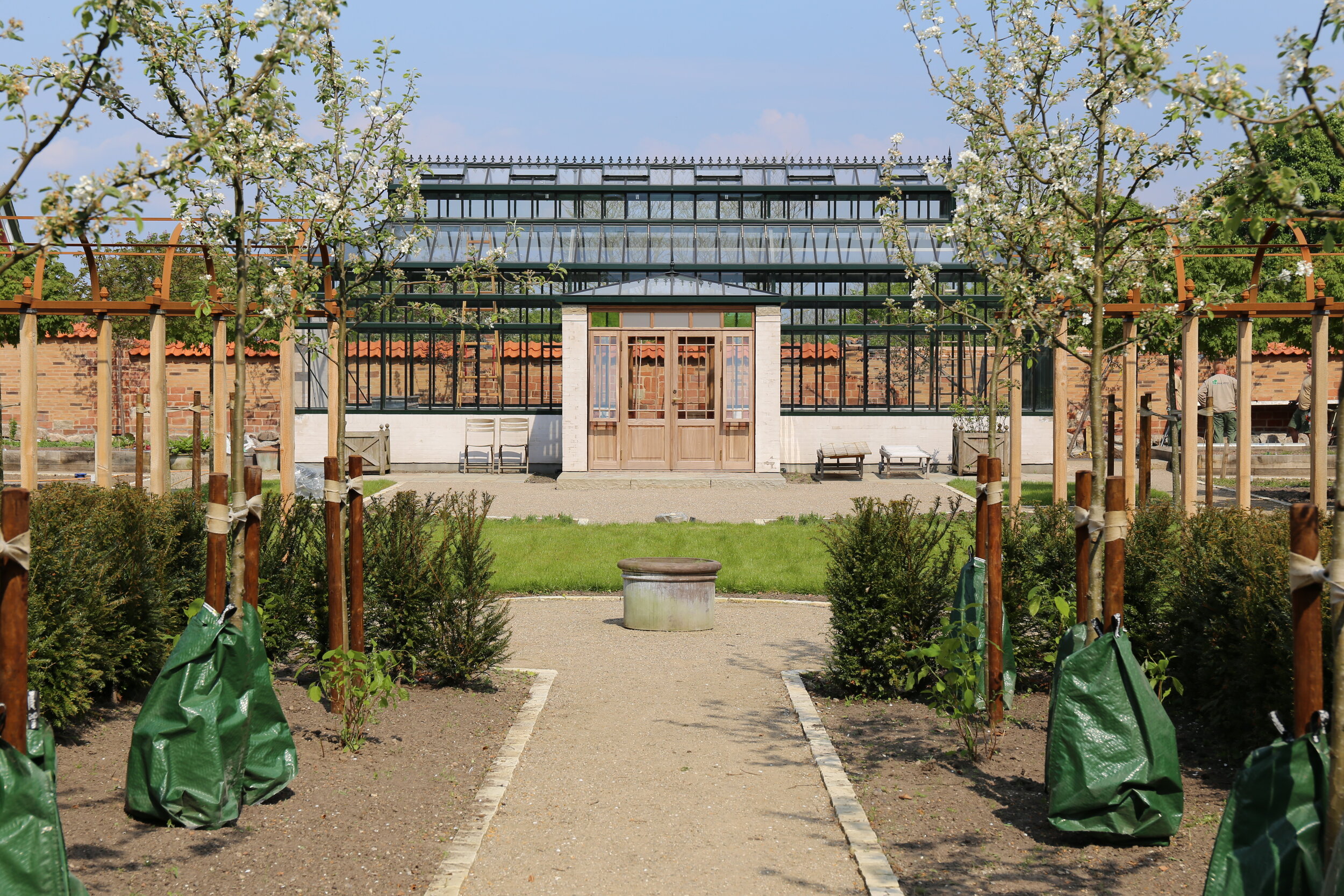
This completed estate garden in Kattrup transforms an open lawn beside historic red-brick buildings into a sequence of connected garden rooms. A custom orangery anchors the composition, while formal pathways, orchard trees, clipped hedges, pergola walks, and pollinator planting establish structure, seasonal character, and a clear relationship with the architecture.

LASD Studio’s Traditional Garden in Kattrup highlights heritage-driven design with precise detailing, timeless planting, and ecological resilience.
Rooted in European classical garden traditions and adapted to the Danish climate, the project combines symmetry and craftsmanship with ecological purpose. Every element, from the garden walls and herringbone brick floor to the planting and precisely coordinated drainage, was designed for long-term use and graceful maturation.
Project Description
The Kattrup Traditional Garden celebrates the clarity of classical design without treating nature as something static. Drawing on Baroque principles of axis, proportion, and spatial order, the garden is organized as a series of outdoor rooms connected to the estate's existing architecture. At the center is the orangery court. A formal orchard frames the principal approach, while pergola walks create rhythm along the garden's edges. Brick walls, clipped planting, and precisely aligned paths provide permanence; flowering borders, fruit trees, and pollinator planting soften that structure and allow the garden to change through the seasons. The result is a garden that feels disciplined at the scale of the plan and generous at the scale of daily life - structured in winter, fragrant and active during the growing season, and increasingly settled as the trees, hedges, and perennial borders mature.
The Orangery at the Heart of the Garden
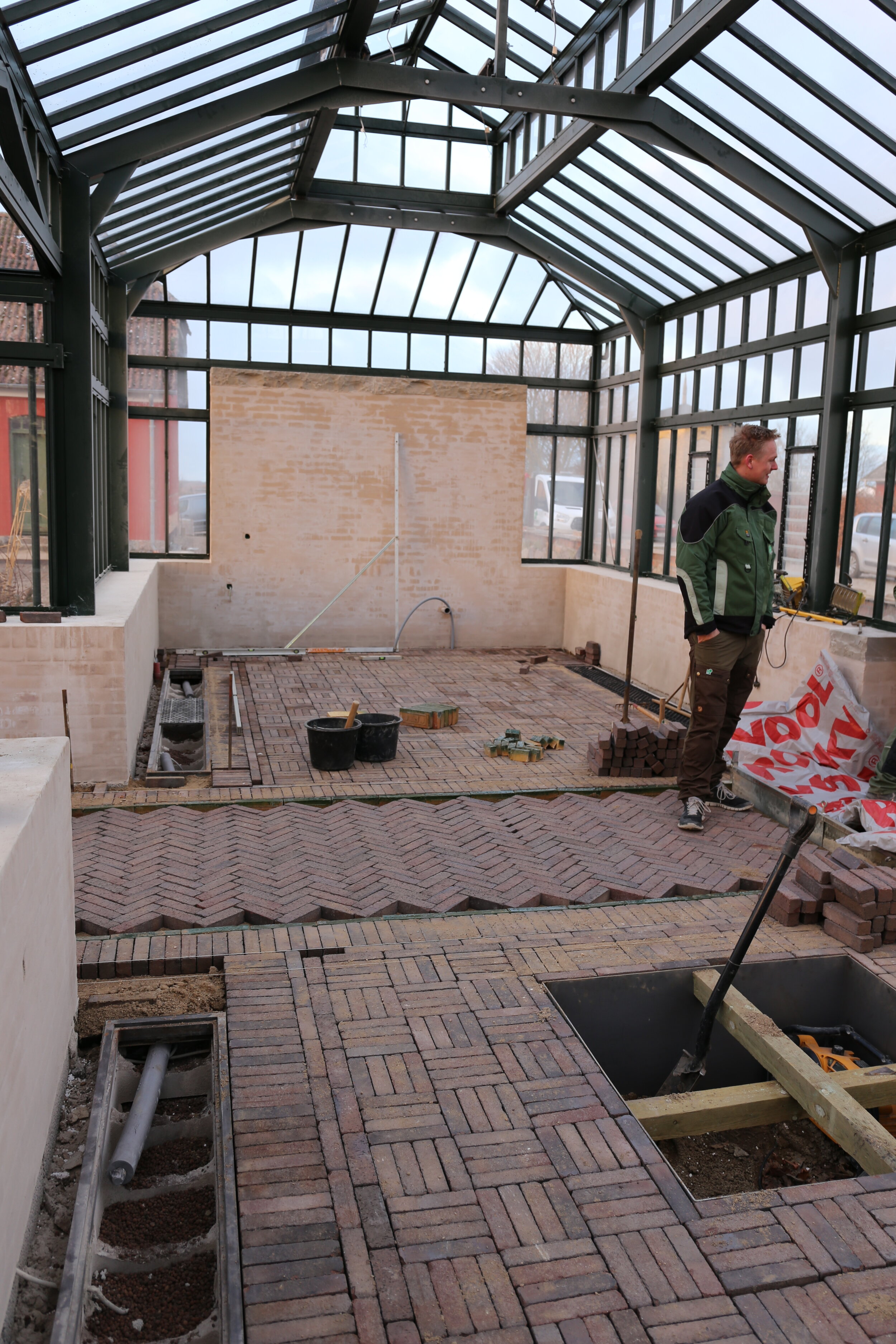
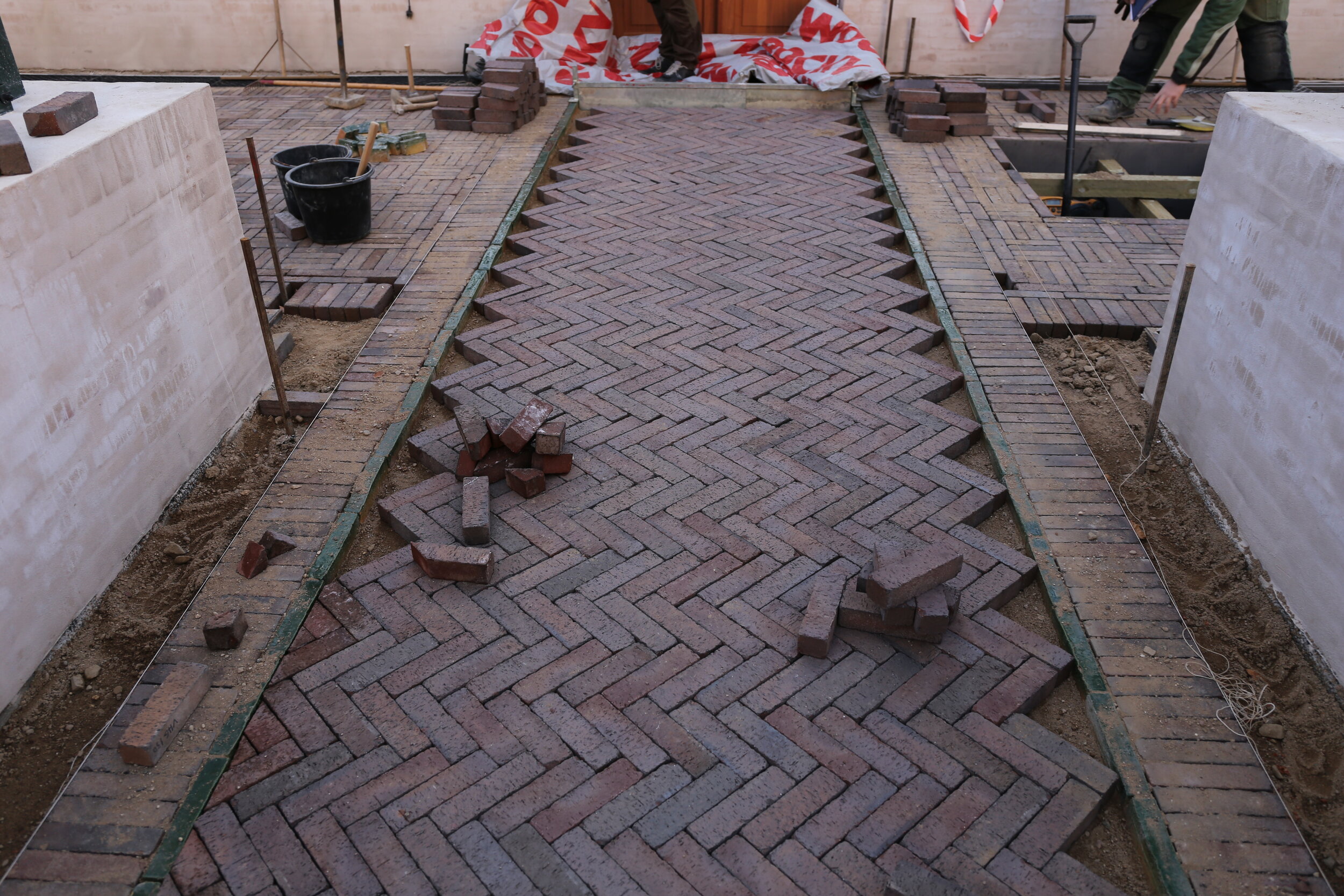
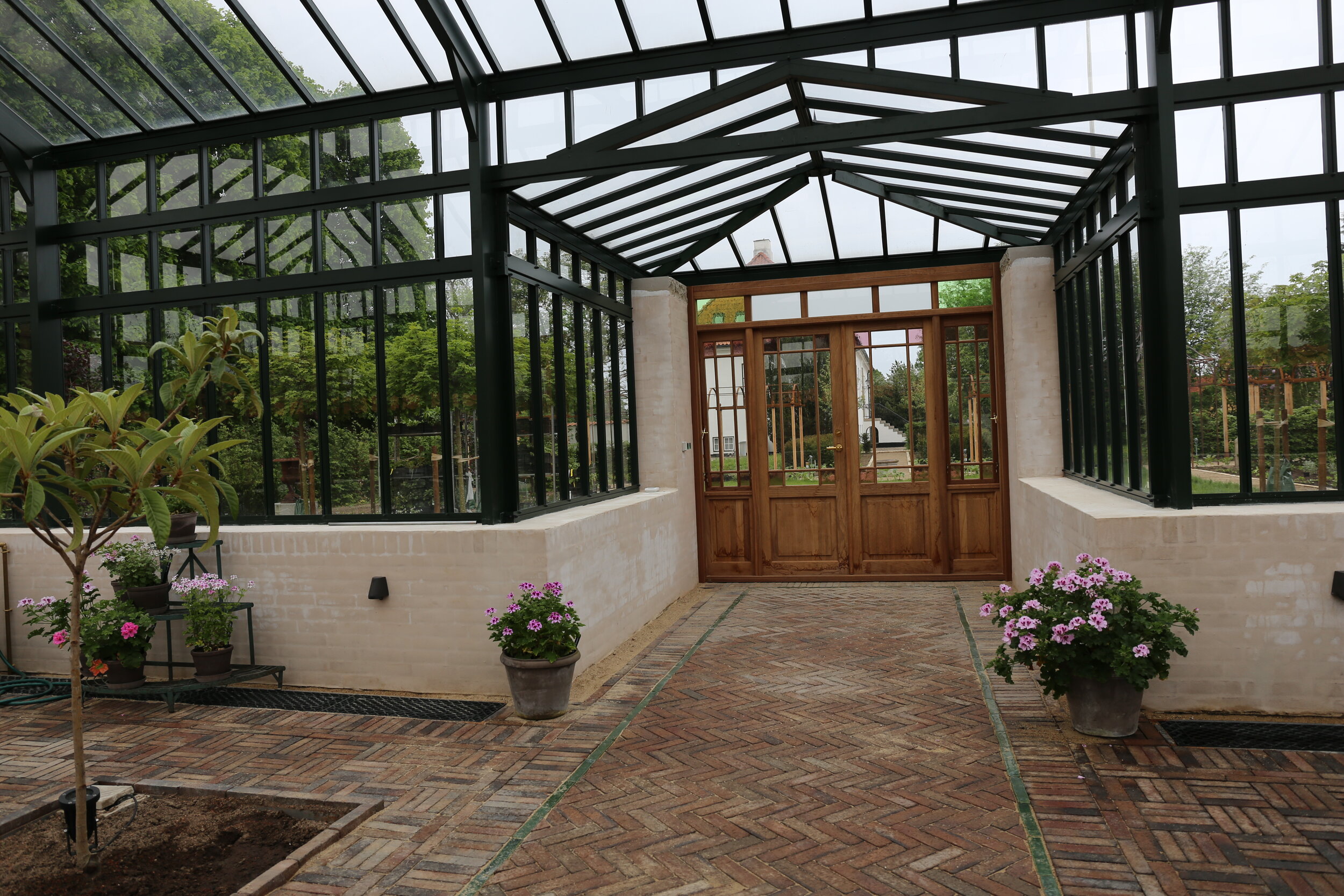
The custom orangery forms the architectural center of the project. Its glass-and-metal structure, masonry base, symmetrical façade, and carefully detailed entrance establish the garden's primary focal point. The surrounding court was designed as an extension of the building. The orangery aligns with the principal garden axis, while paths, orchard rows, hedges, and pergola structures reinforce its position within the wider composition. Inside, a hand-laid herringbone brick floor brings the material language of the estate into the glasshouse. The orangery is both practical and experiential: a protected place for plants, propagation, and seasonal use, as well as a destination from which the garden can be viewed throughout the year.
Planting Design: Structure, Season & Pollinators
The planting plan uses the garden's formal geometry as a framework for a more dynamic ecological composition. Clipped hedges, orchard rows, pergola bays, and repeated planting modules make the plan legible from a distance. Within that structure, perennials, bulbs, ferns, herbs, roses, and fruiting plants form layered communities that change through the seasons.
This approach shares principles with the European naturalistic planting tradition associated with Piet Oudolf: repetition creates rhythm, plants are valued for structure as well as flower, and seasonal change is treated as part of the design rather than something to conceal. The reference is conceptual rather than stylistic imitation. Kattrup remains a classical Danish estate garden, with a stronger architectural framework, productive planting, and clearly defined garden rooms.
A woodland-edge matrix
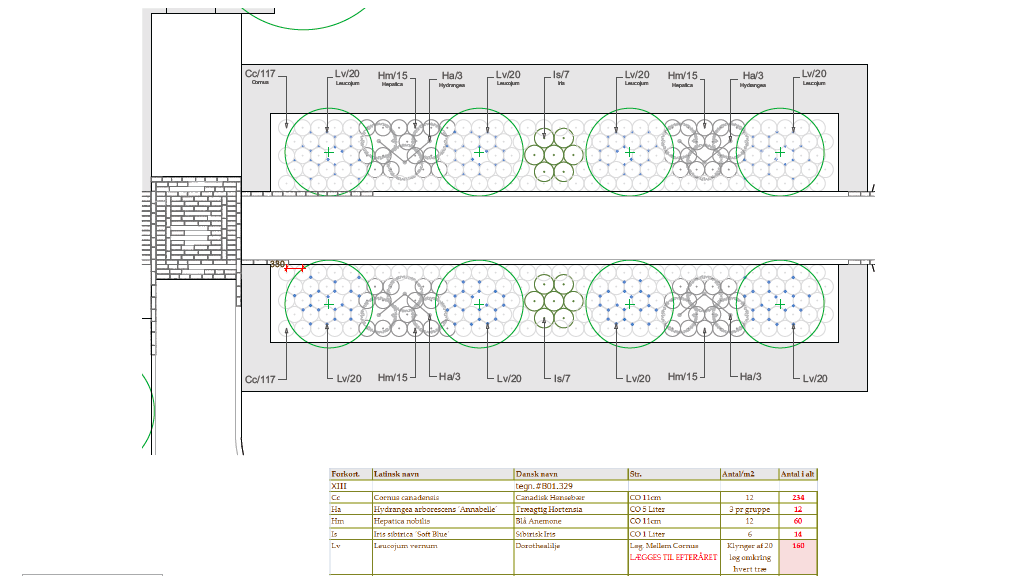
In the cooler and more sheltered beds, low groundcover forms a continuous planted floor beneath larger accents. *Cornus canadensis* — bunchberry, or canadisk hønsebær — repeats as the matrix, interwoven with *Hepatica nobilis* — liverleaf, or blå anemone — and *Leucojum vernum* — spring snowflake, or dorothealilje. These early plants establish the first seasonal layer before the larger perennials reach full growth.
Repeated groups of *Iris sibirica* 'Soft Blue' — Siberian iris, or sibirisk iris — add upright foliage and blue flowers, while *Hydrangea arborescens* 'Annabelle' — smooth hydrangea, or træagtig hortensia — acts as a larger flowering anchor. Elsewhere, drifts of *Pulmonaria* — lungwort, or lungeurt — *Brunnera macrophylla* 'Jack Frost' — Siberian bugloss, or kærmindesøster — *Epimedium* — barrenwort, or bispehue — *Hosta* — plantain lily, or funkia — and *Polygonatum* — Solomon's seal, or storkonval — build a resilient woodland character. Ferns, including *Blechnum spicant* — hard fern, or kambregne — and *Dryopteris* species — wood ferns, or mangeløv — complete the shade-tolerant layer.
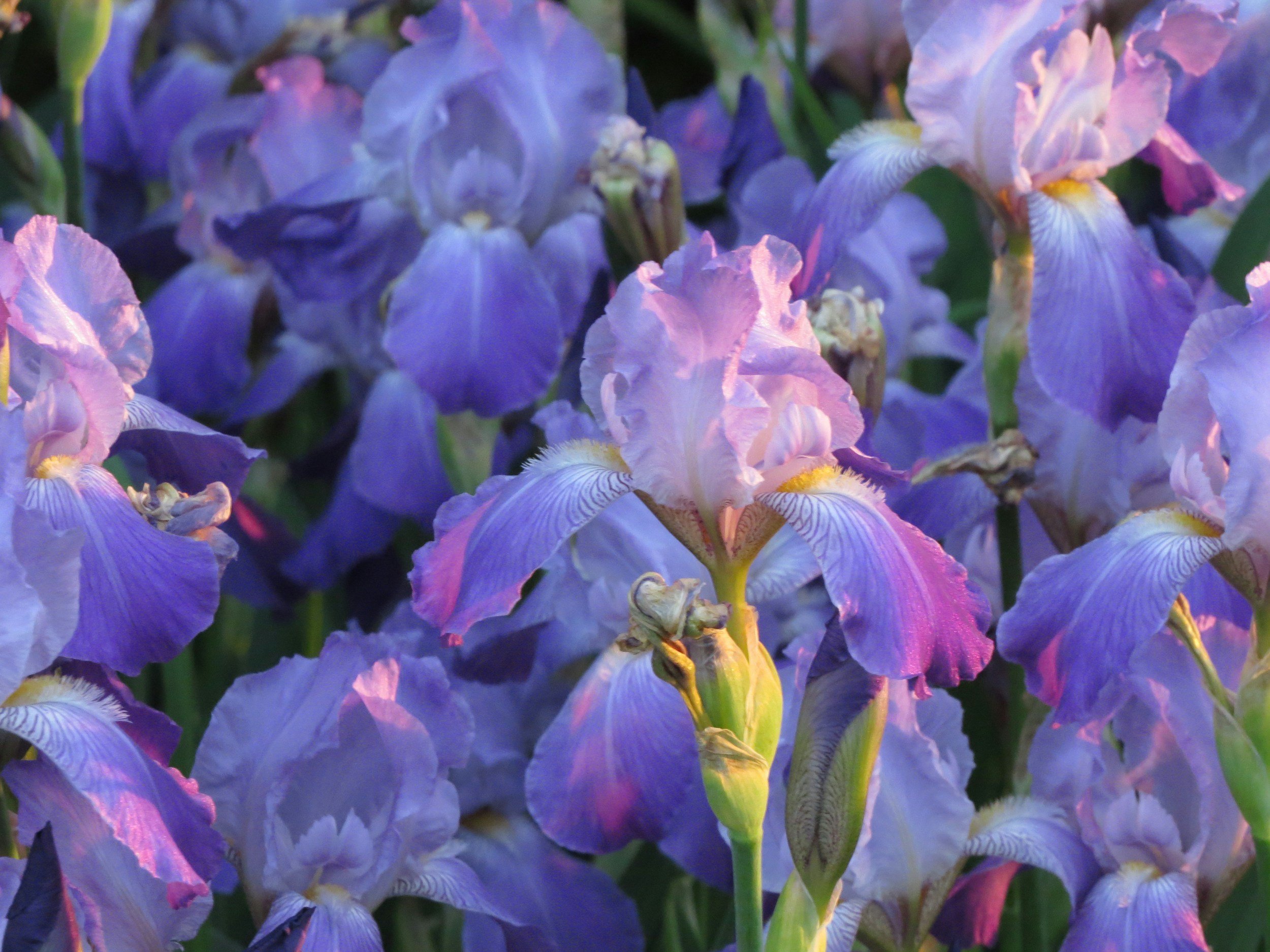
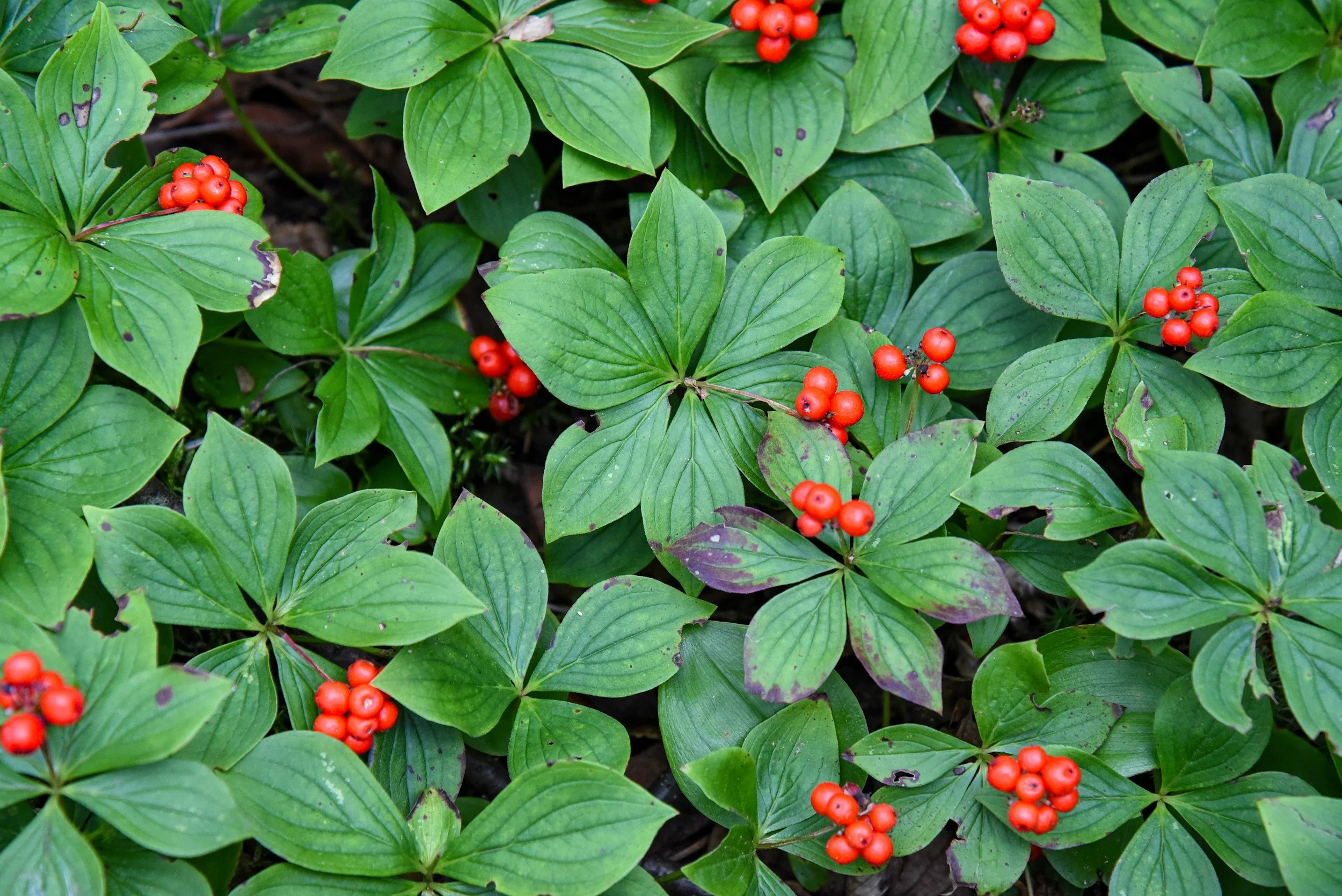
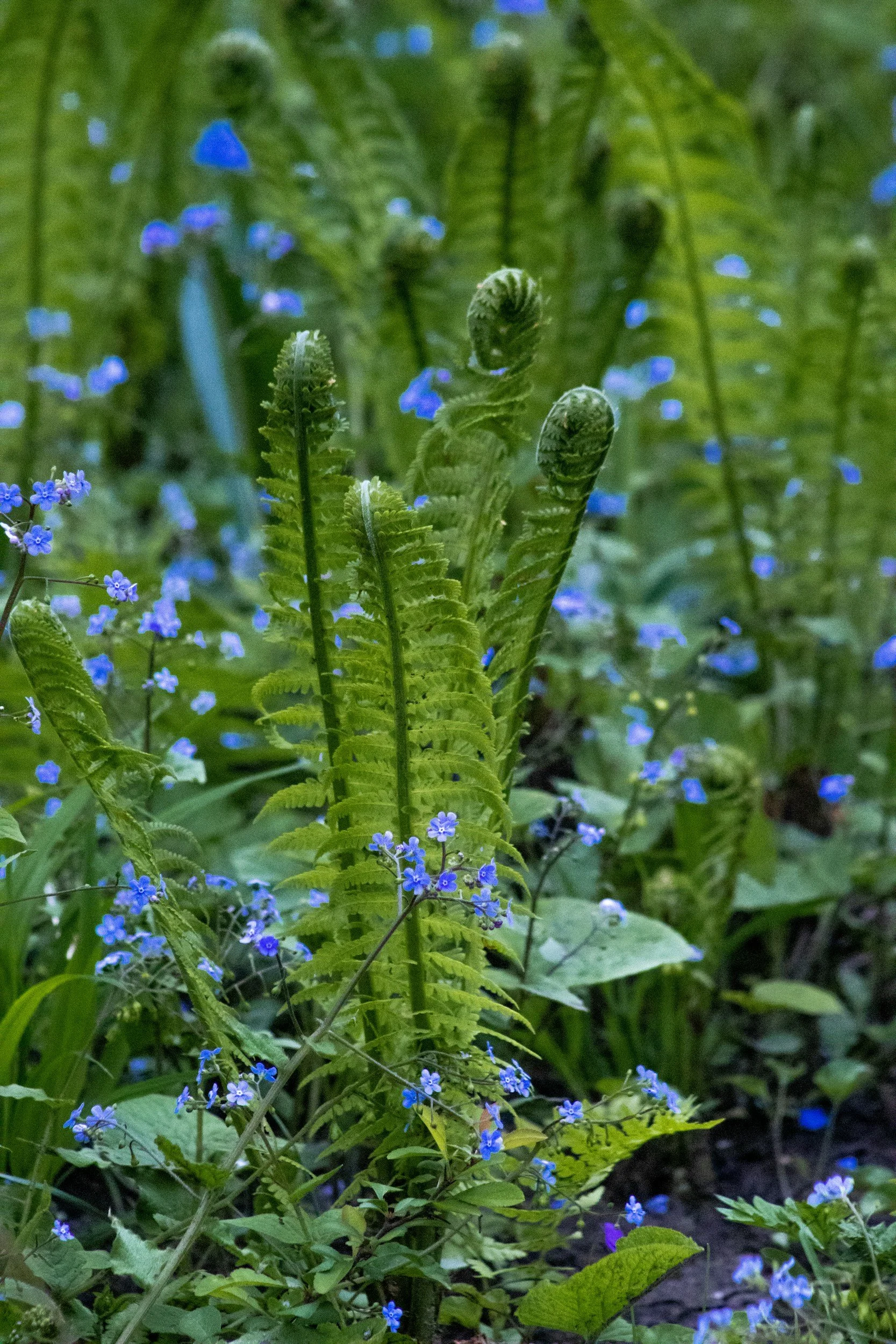
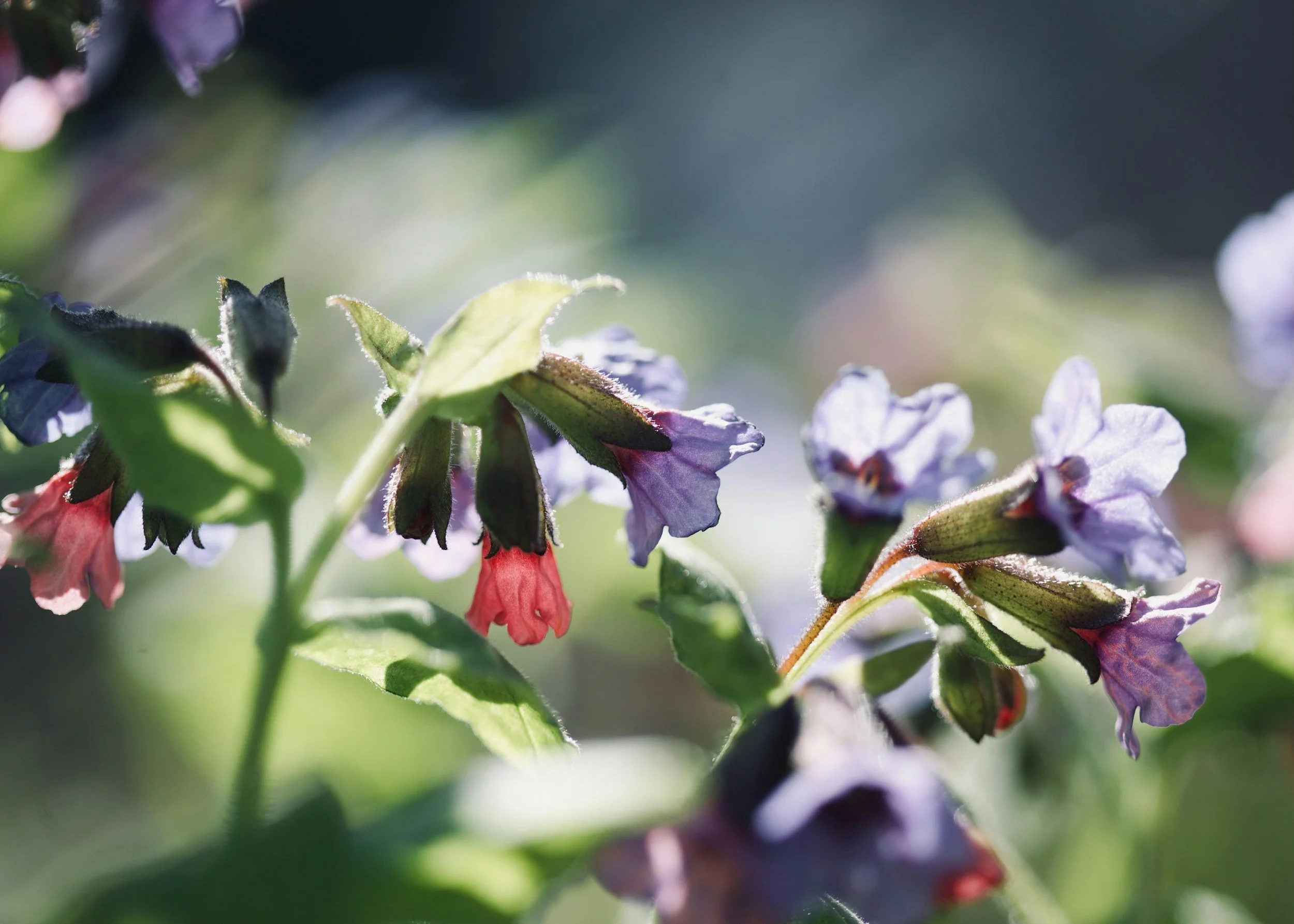
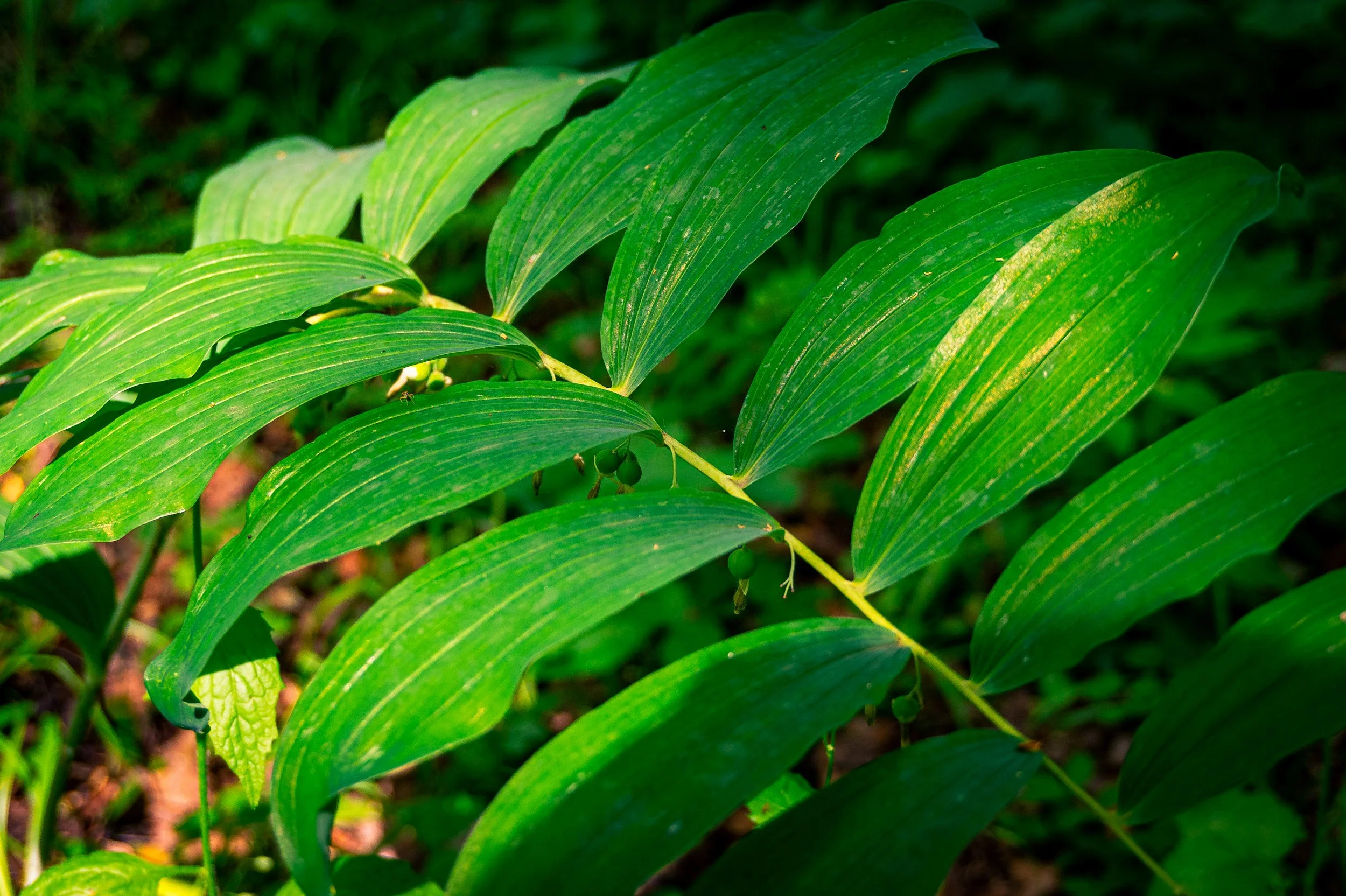
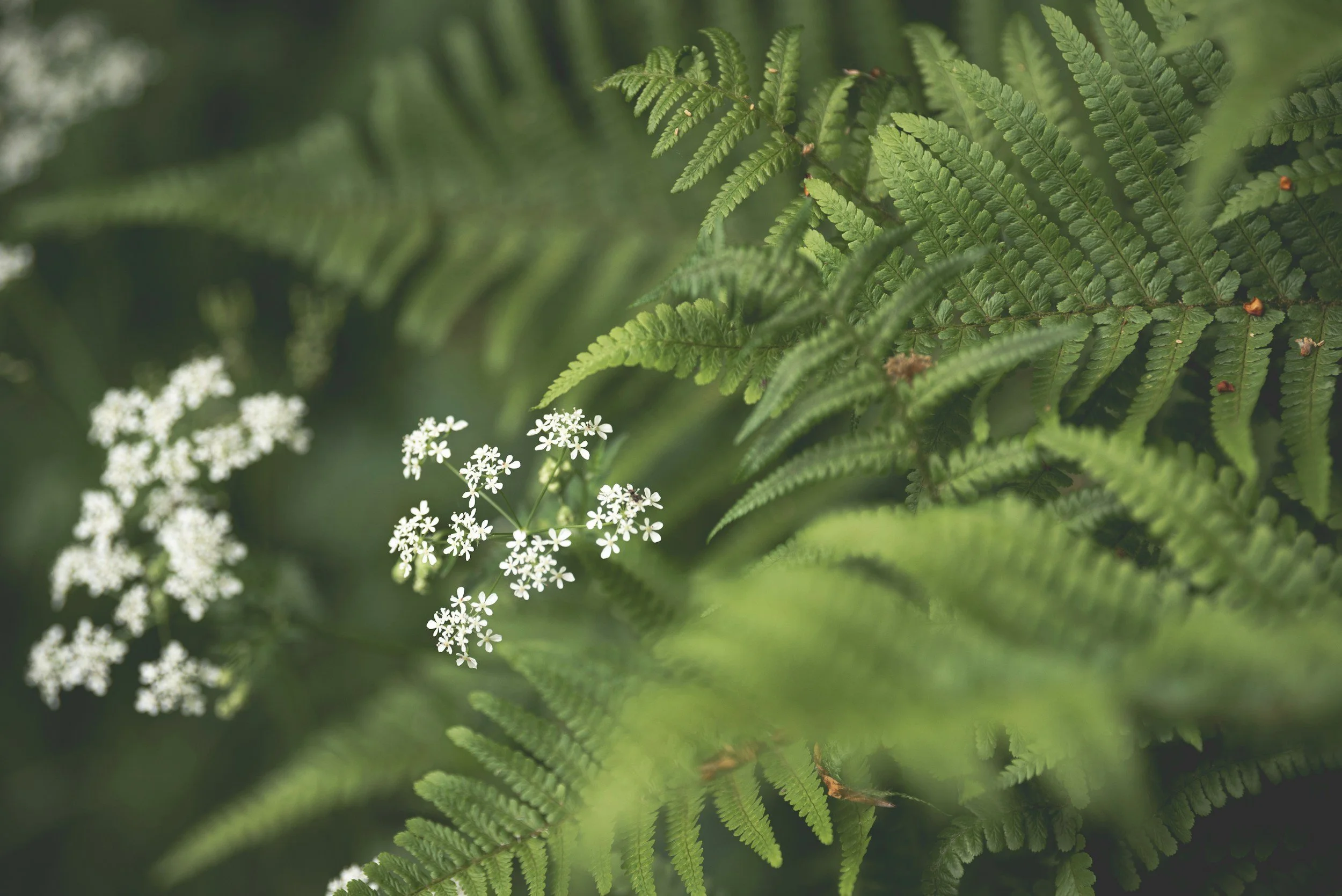
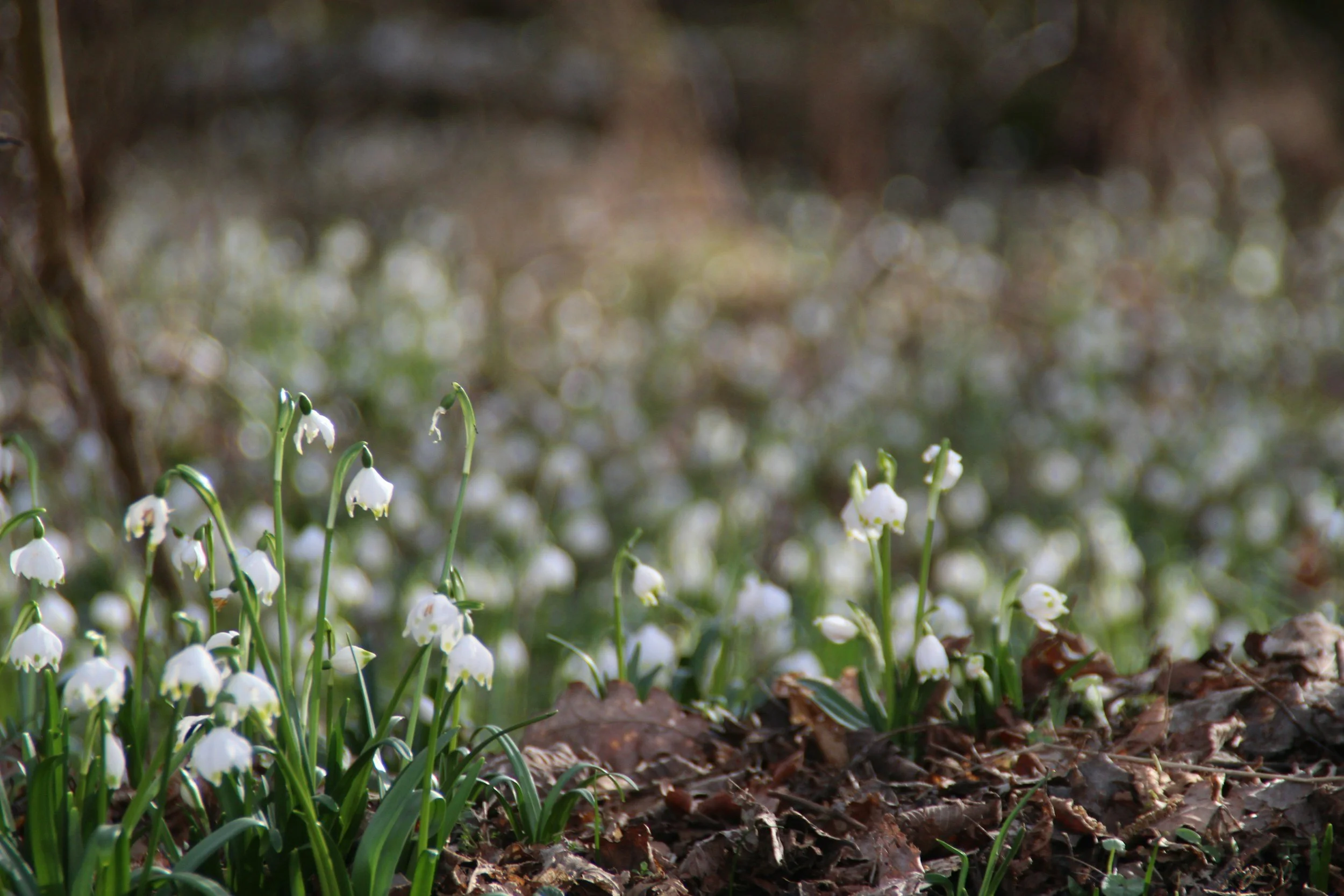
The ecological logic is density and succession: the soil is covered, moisture is conserved, and one group takes visual importance as another recedes. The design relies less on isolated specimens and more on repeated plant communities that can knit together as the garden matures.
Roses, perennials, and pollinator accents
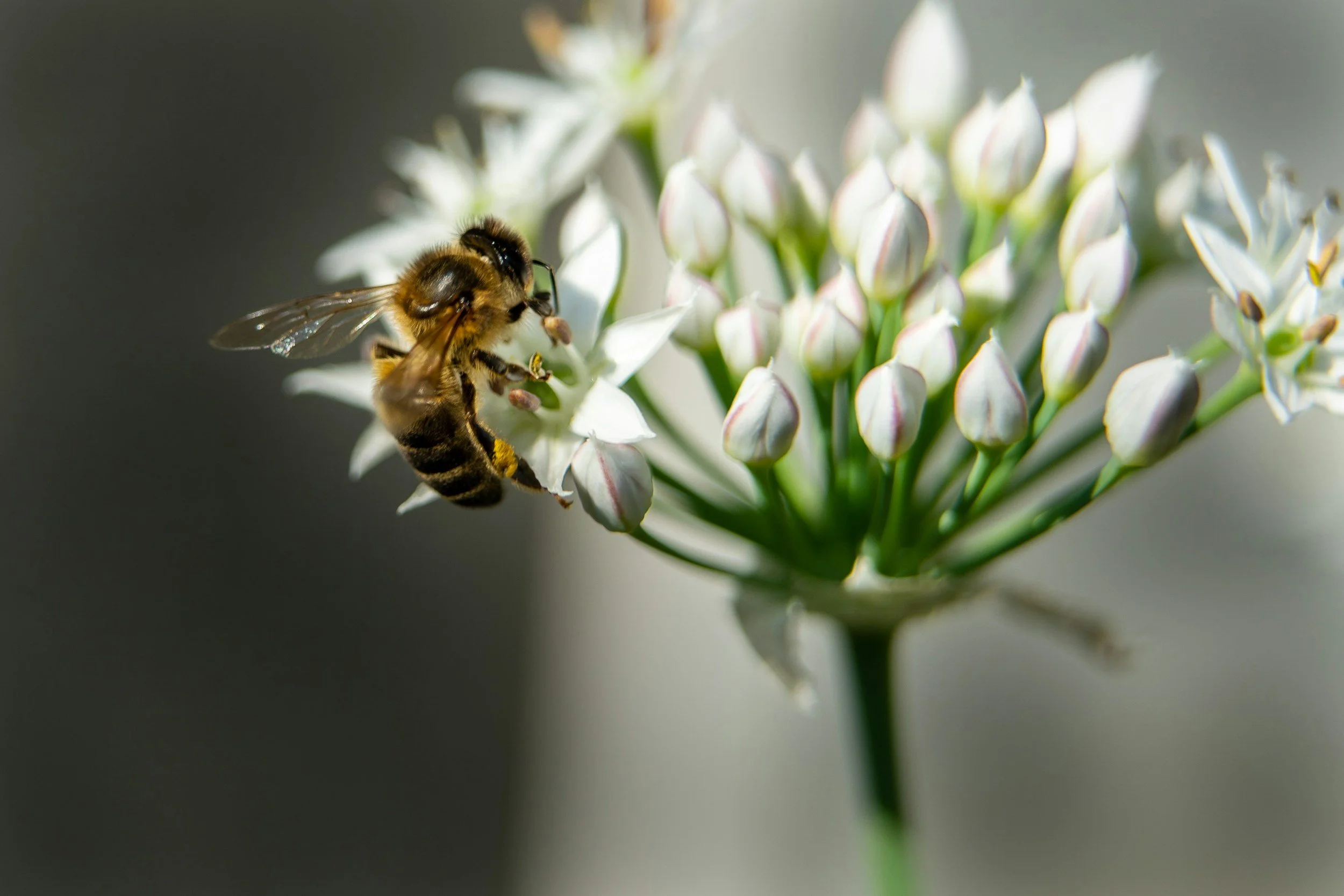
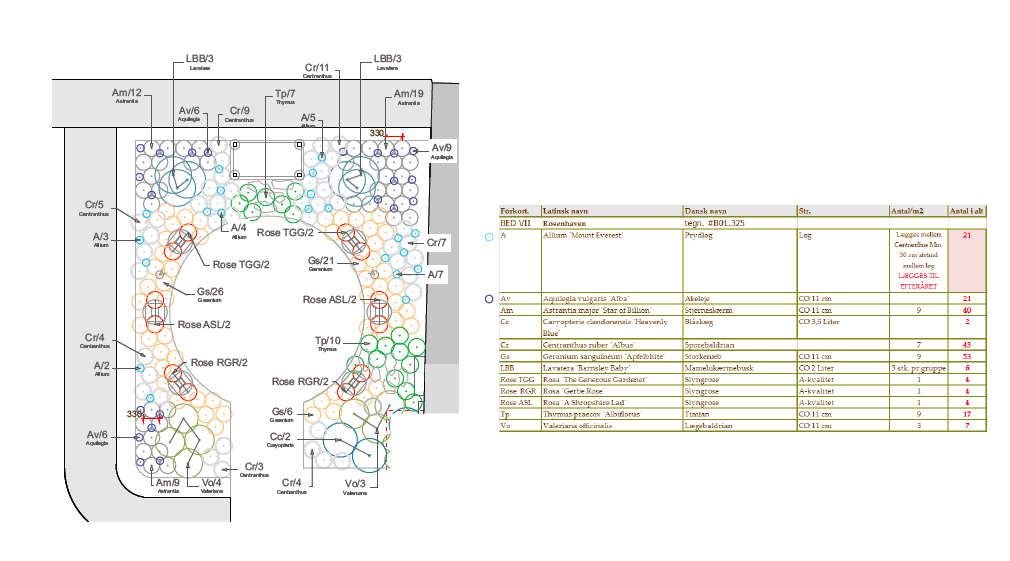
The rose garden uses a pale flowering palette structured around climbing roses: *Rosa* 'The Generous Gardener', *Rosa* 'Gerbe Rose', and *Rosa* 'A Shropshire Lad' — slyngroser in Danish. Their larger seasonal display is extended by vertical and airy perennials rather than surrounded by bare soil. *Allium* 'Mount Everest' — ornamental onion, or prydløg — rises above the lower planting in early summer. *Aquilegia vulgaris* 'Alba' — white columbine, or akeleje — and *Astrantia major* 'Star of Billion' — masterwort, or stjerneskærm — bring a looser, meadow-like quality. *Centranthus ruber* 'Albus' — white valerian, or sporebaldrian — *Geranium sanguineum* 'Apfelblüte' — bloody cranesbill, or storkenæb — and *Thymus praecox* 'Albiflorus' — creeping thyme, or timian — extend the flowering layer closer to the ground. Later accents of *Caryopteris × clandonensis* 'Heavenly Blue' — bluebeard, or blåskæg — and *Valeriana officinalis* — common valerian, or lægebaldrian — broaden the seasonal sequence. Together, these plants provide varied flower forms, heights, and flowering periods for bees and other visiting insects. The roses remain the principal accents, while the surrounding perennials create continuity before and after the main rose display.
A productive garden within the ornamental plan
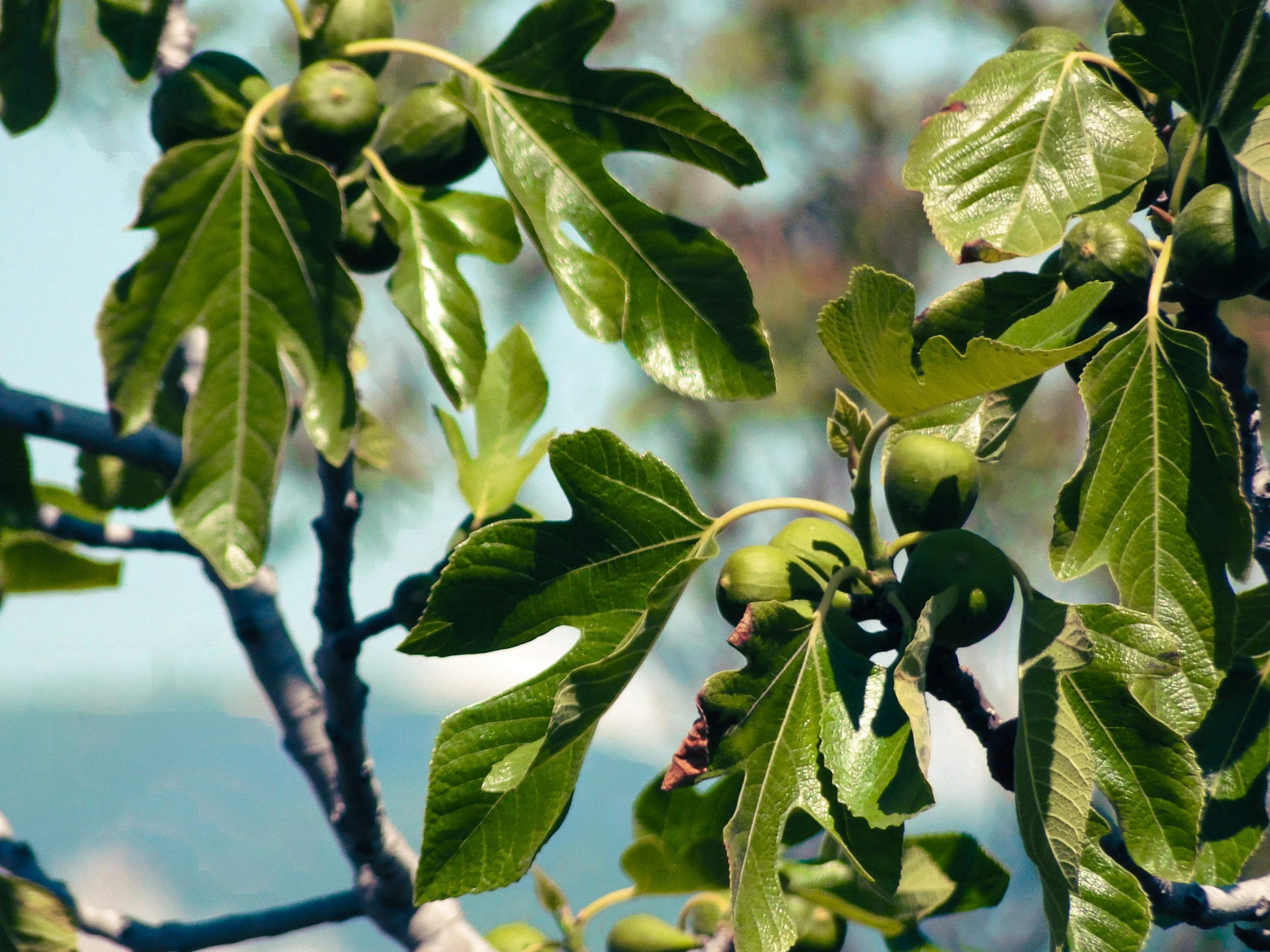
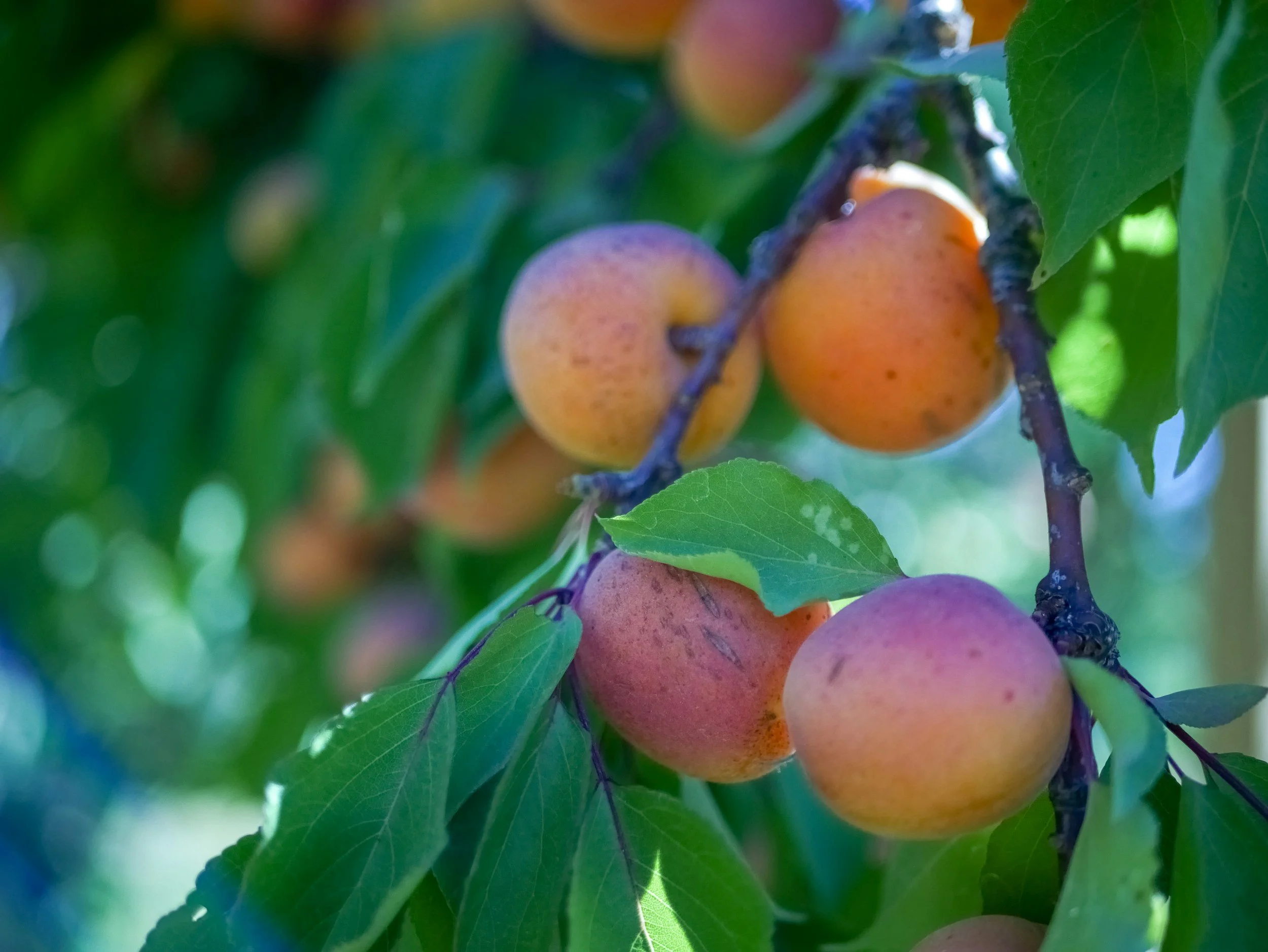
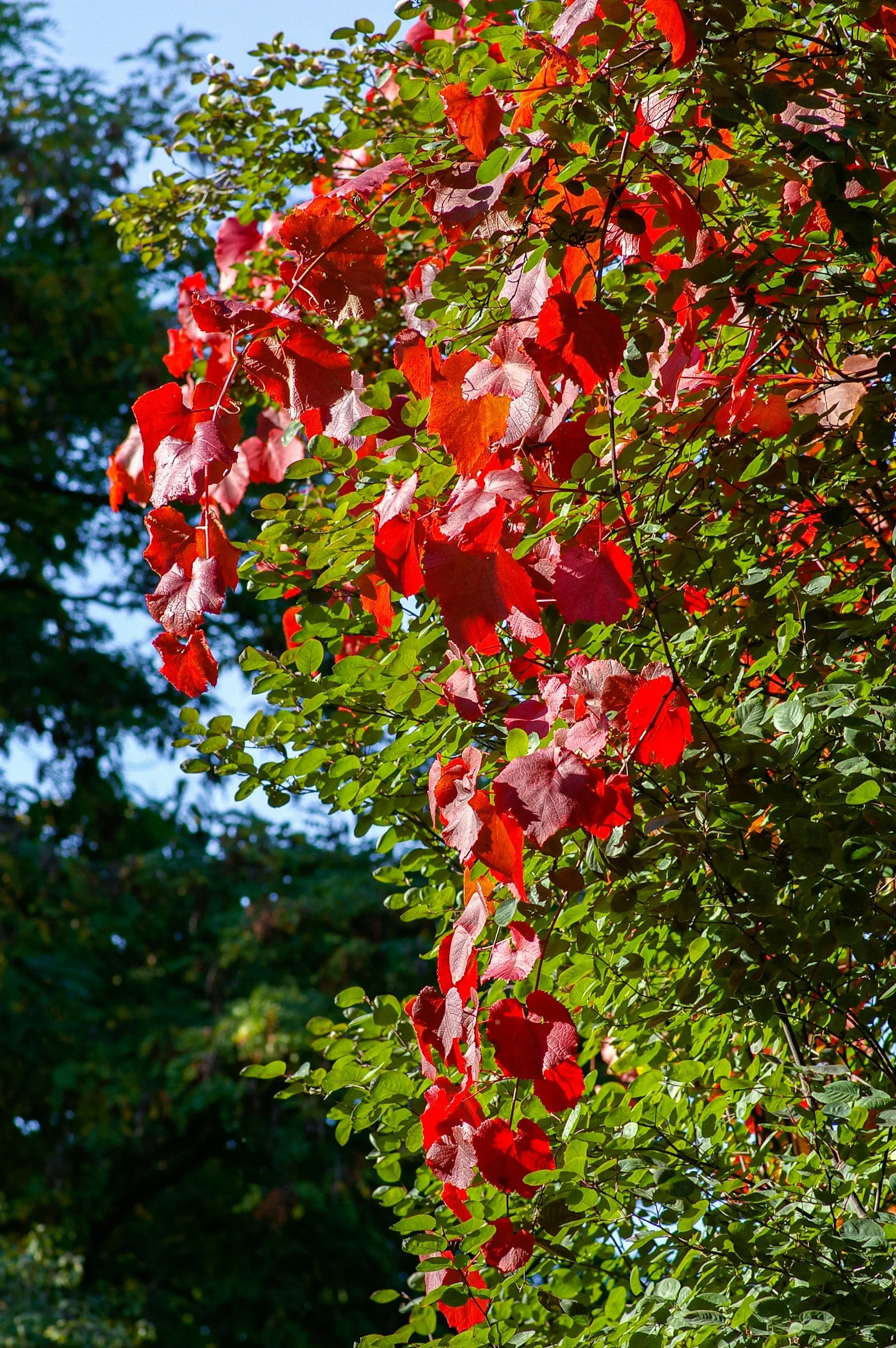
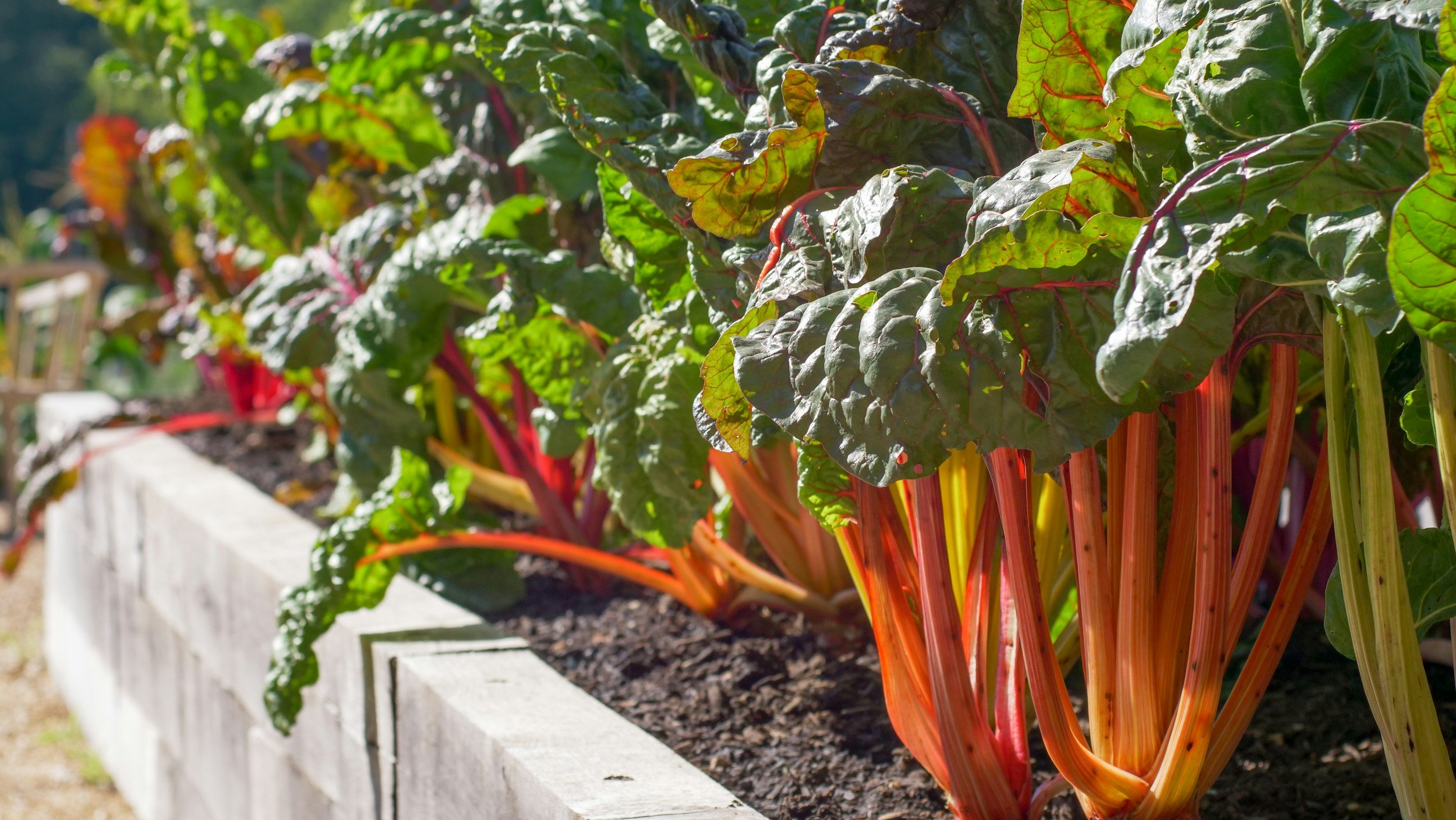
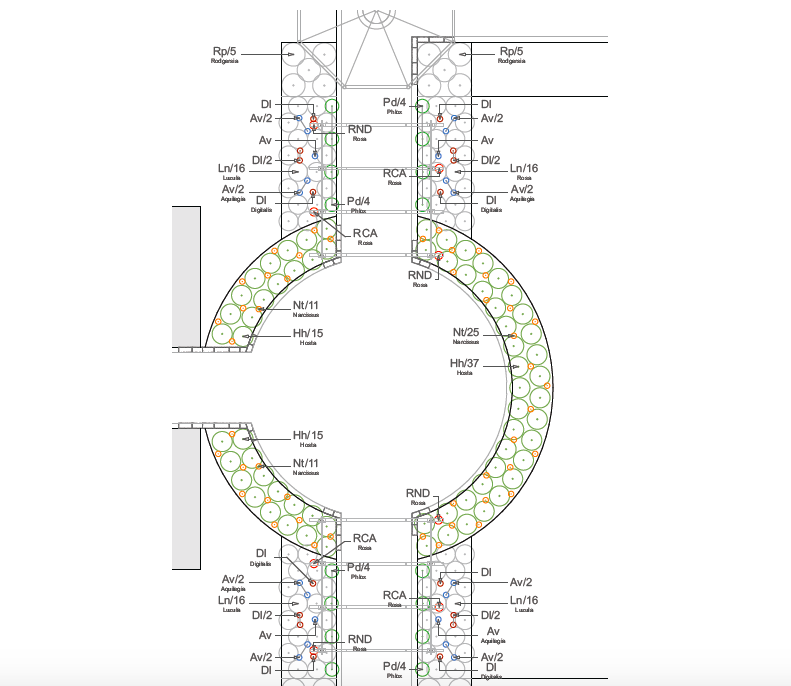
The planting also treats food production as part of the garden's beauty. The wall garden combines fruit and berries with herbs, climbers, flowering shrubs, and shade-tolerant foliage. The palette includes *Actinidia arguta* 'Issai' — hardy kiwi, or stikkelsbærkiwi — *Ficus carica* — fig, or bornholmsk figen — *Prunus armeniaca* — apricot, or abrikos — and *Prunus persica* — peach, or fersken.
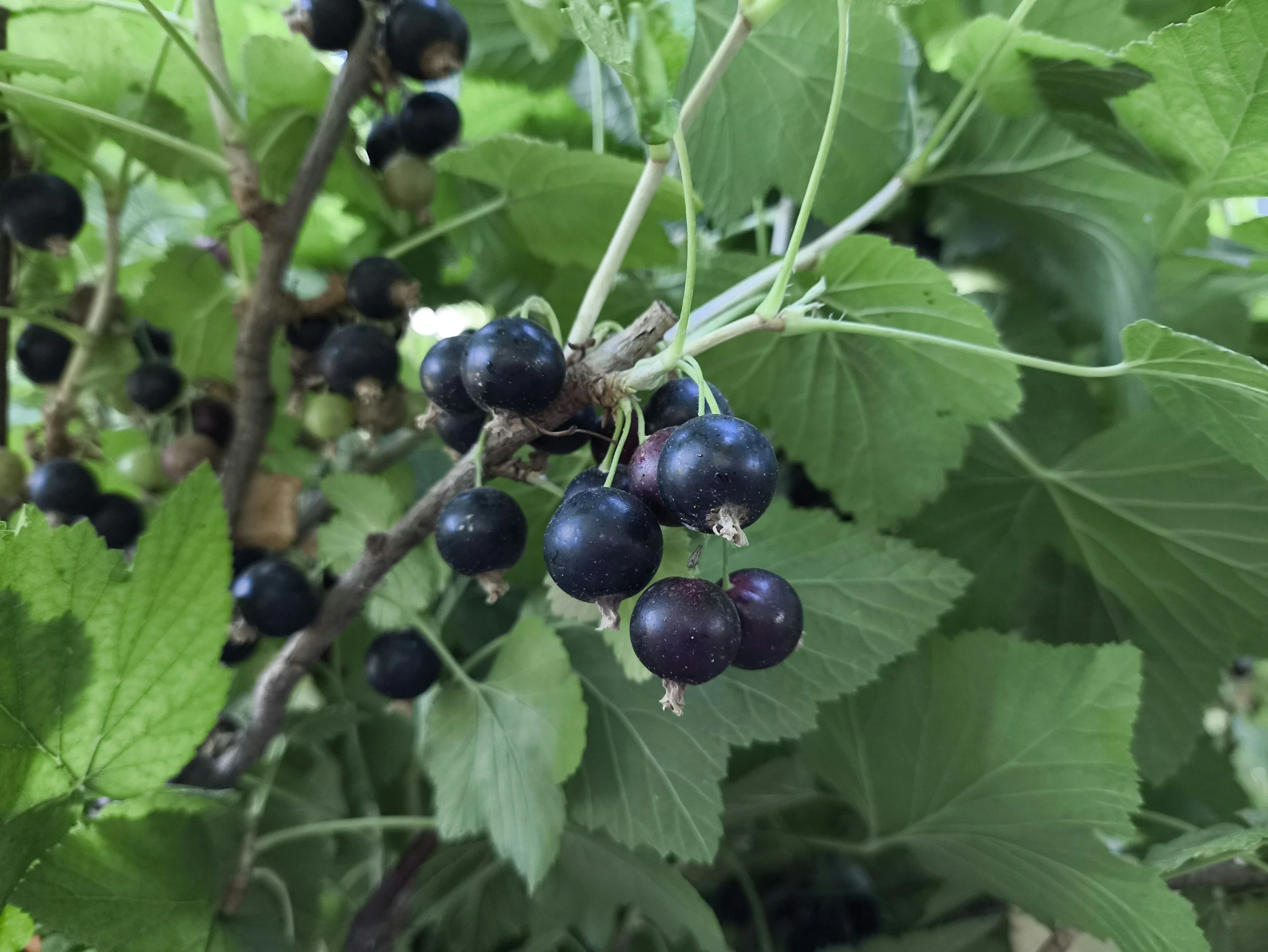
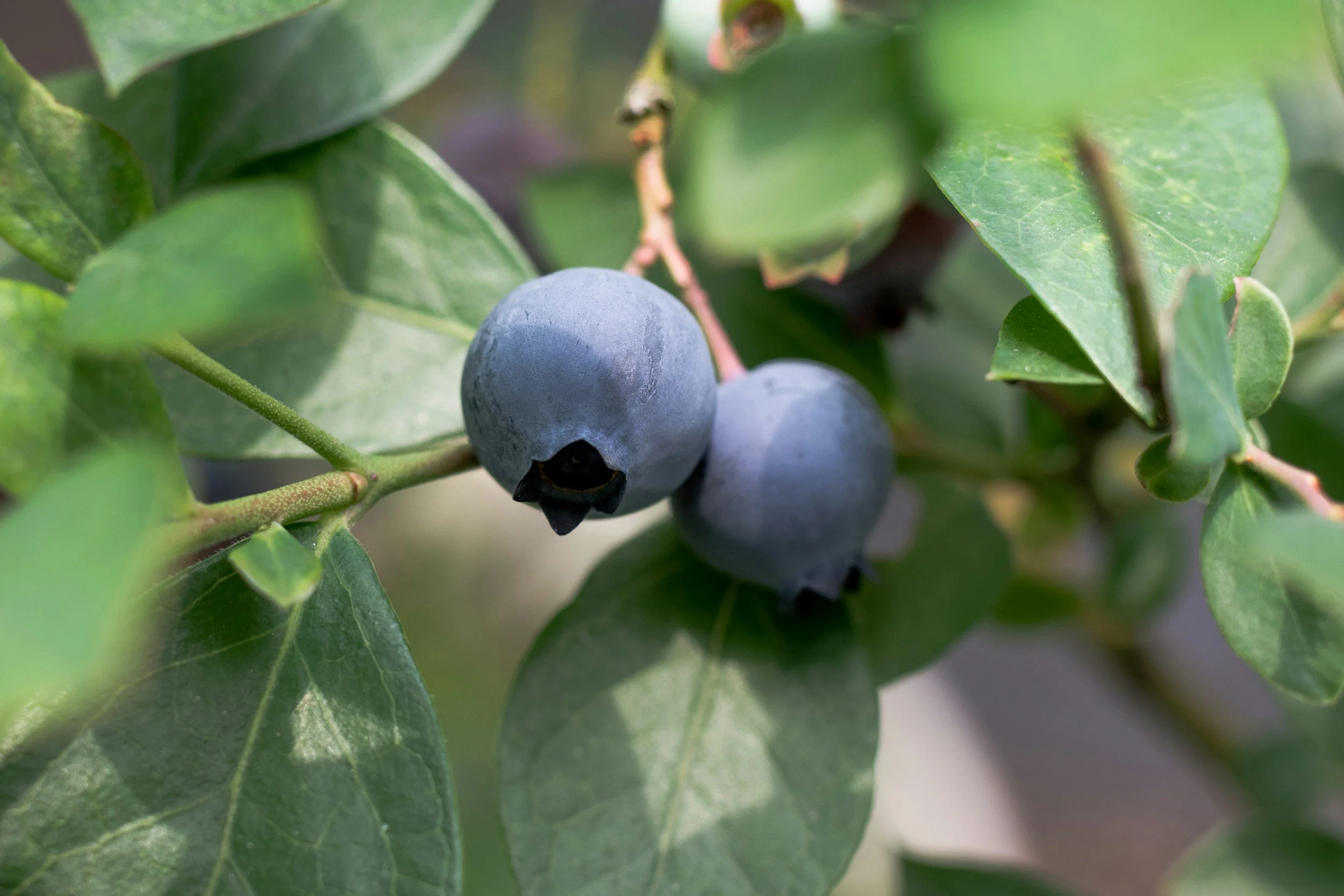
Currants and gooseberries create a productive shrub layer: *Ribes nigrum* — blackcurrant, or solbær — *Ribes rubrum* — red or white currant, ribs or hvide ribs — and *Ribes uva-crispa* — gooseberry, or stikkelsbær. Cultivated blueberries, *Vaccinium* 'Bluecrop', 'Duke', 'Elliott', and 'Goldtraube' — blåbær — extend the harvest, while rhubarb, *Rheum* cultivars — rabarber — and *Allium tuberosum* — garlic chives, or kinesisk purløg — bring edible planting down to the herbaceous layer.
The productive plants are not separated from the ornamental composition. Fruit blossom contributes an early source of forage, herbs are allowed to flower, and roses, hydrangeas, ferns, and groundcovers connect the edible beds visually to the rest of the estate garden.
Seasonal and ecological logic
The result is a garden of controlled contrasts: clipped forms and loose perennials, productive rows and ornamental drifts, persistent structure and seasonal change. Early woodland flowers and fruit blossom lead into aquilegia, alliums, geraniums, roses, astrantia, thyme, valerian, and late bluebeard. Seed heads, hydrangea flowers, grasses, stems, and evergreen structure continue the composition beyond the peak flowering season.
This is not a claim that every plant is native to Denmark. Its ecological value comes from diversity, long seasonal continuity, layered habitat, extensive soil cover, and a planting strategy adapted to distinct garden microclimates. The accents create memorable moments; the matrix planting is what gives the garden resilience and coherence.
Craftsmanship, Construction & Documentation
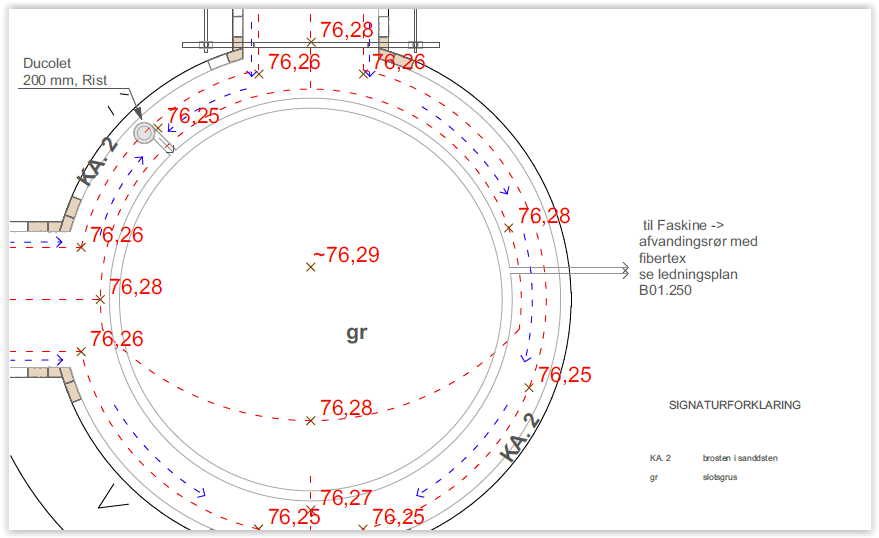
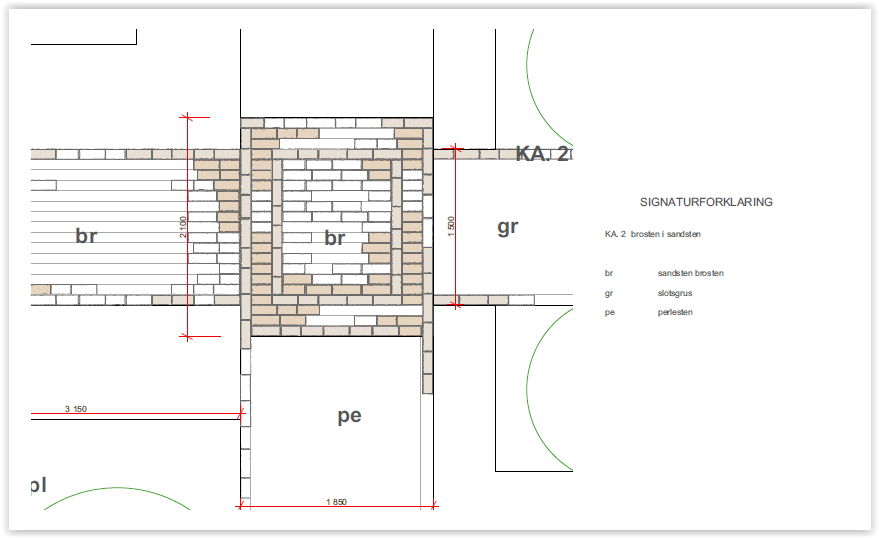
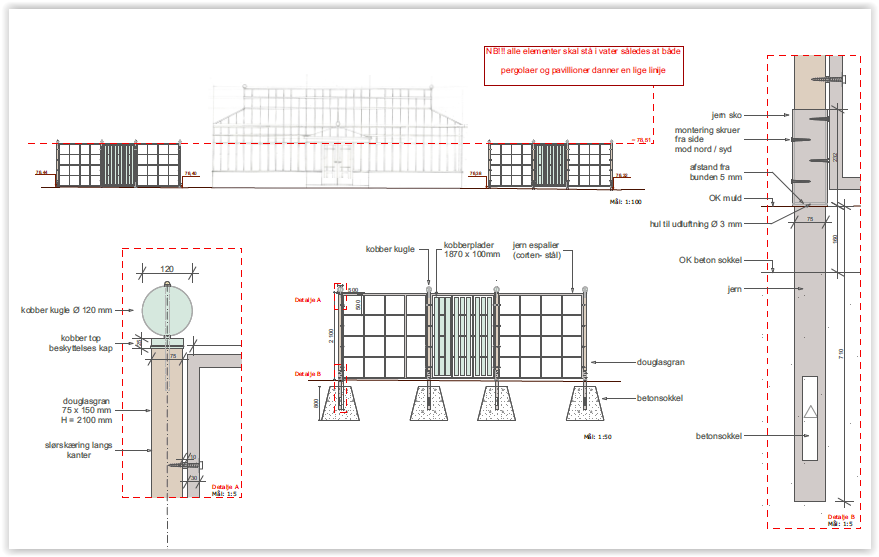
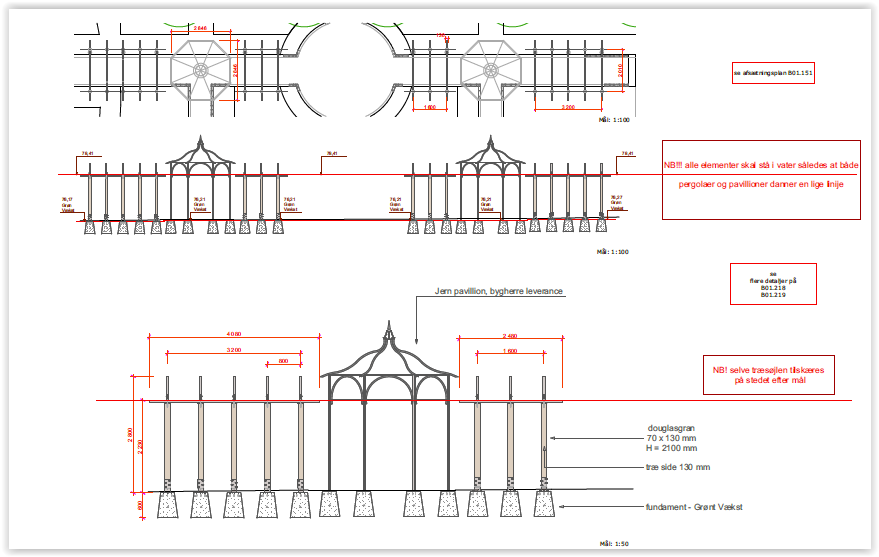
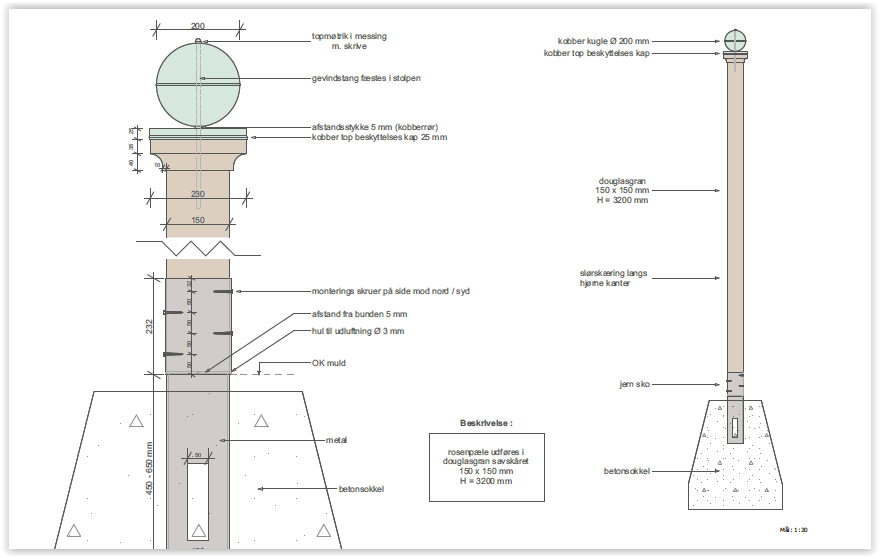
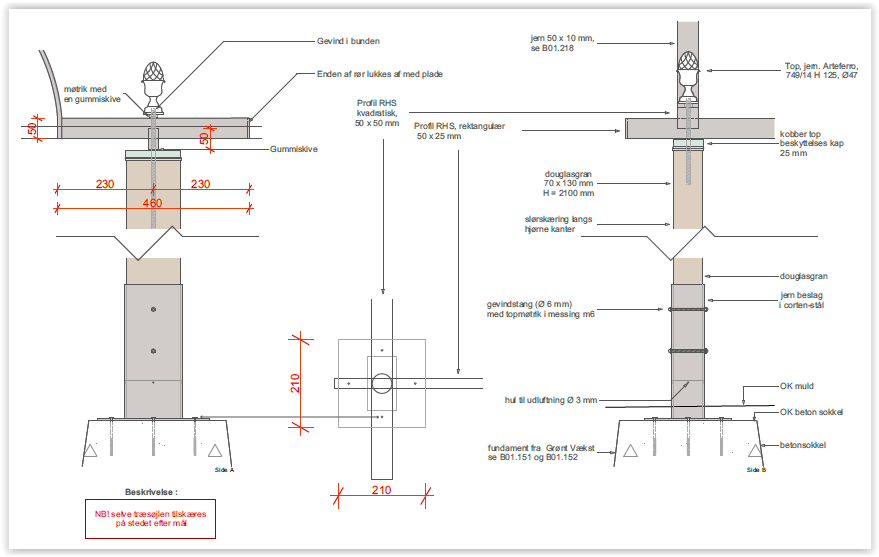
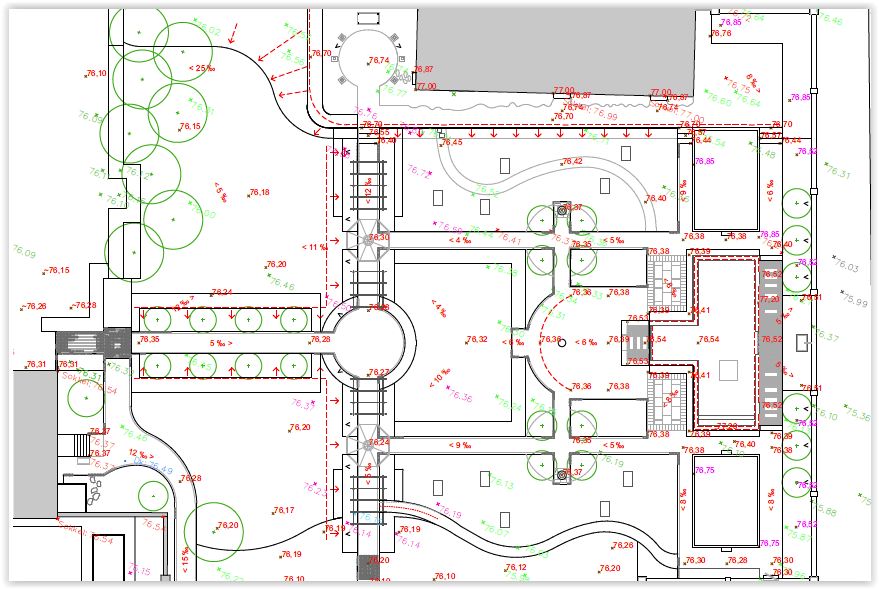
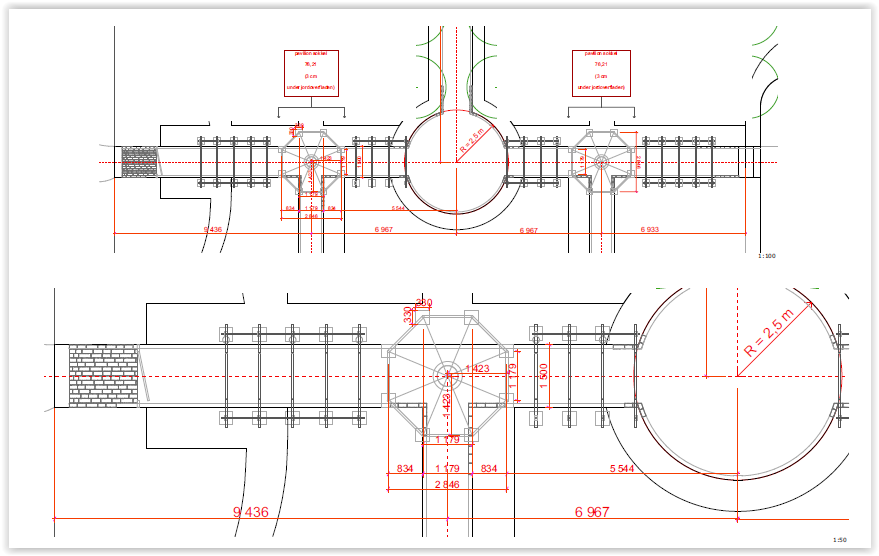
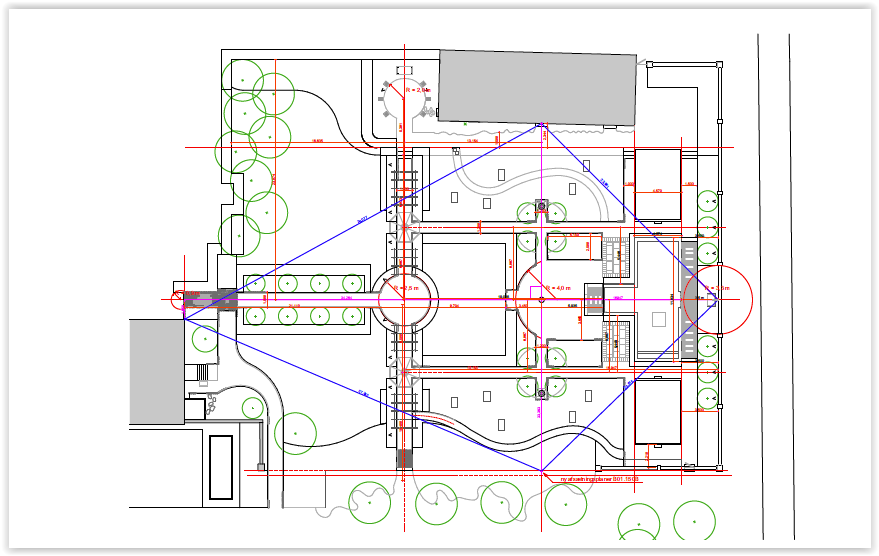
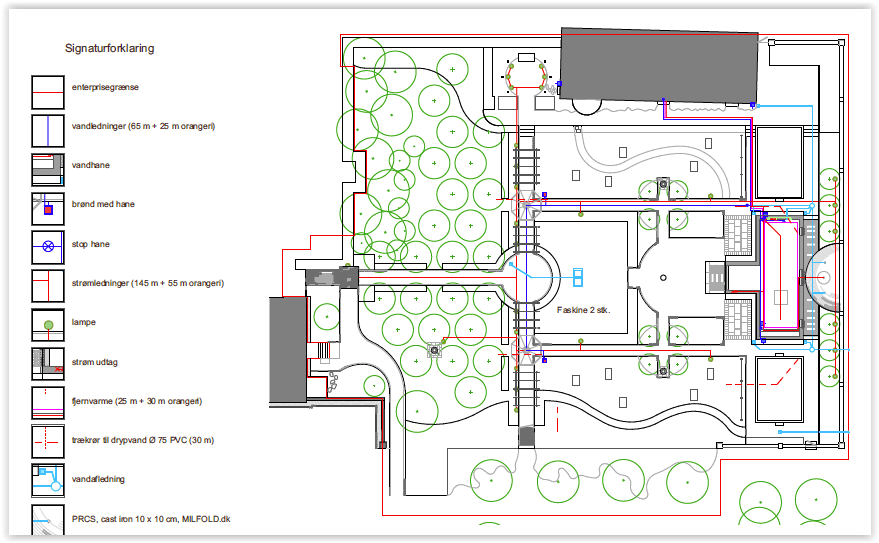
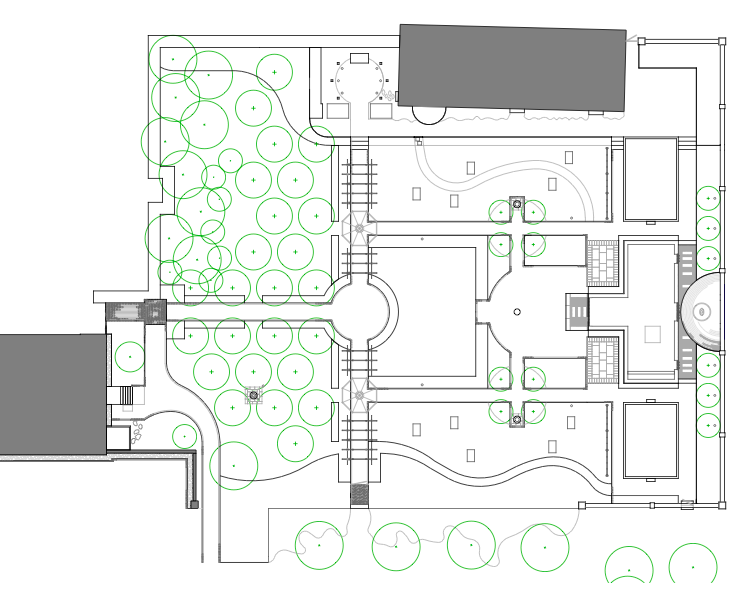
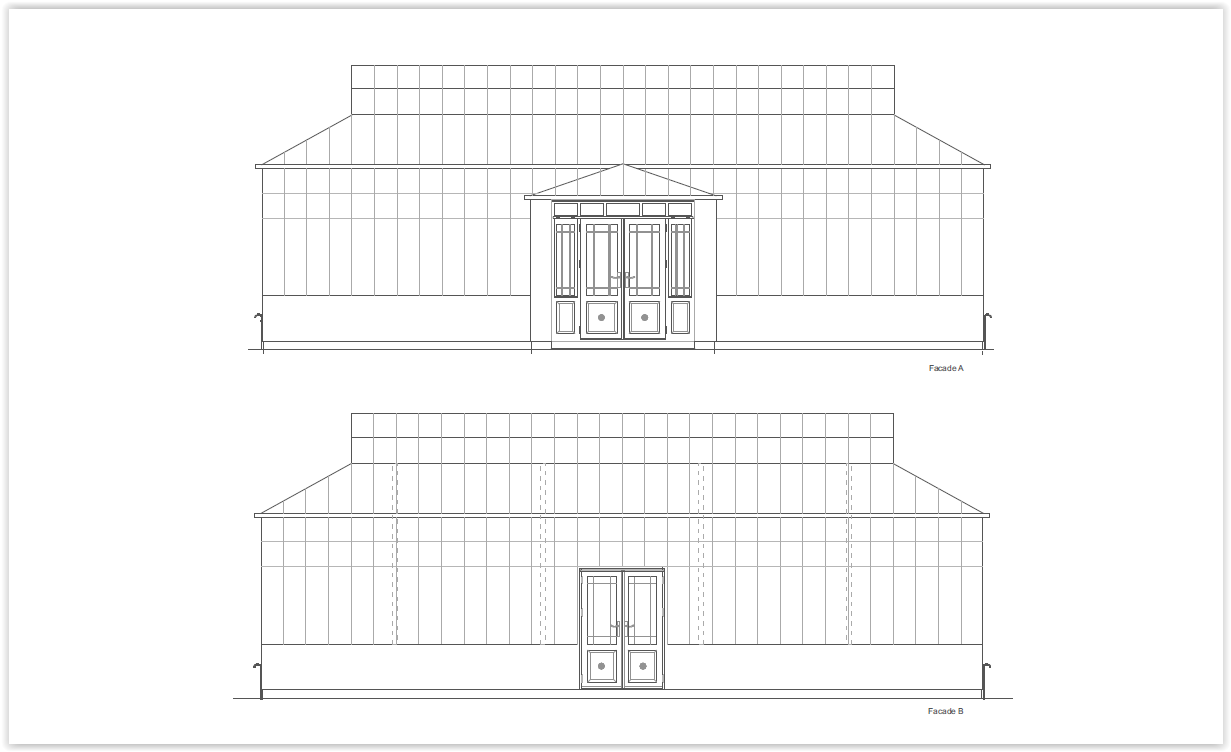
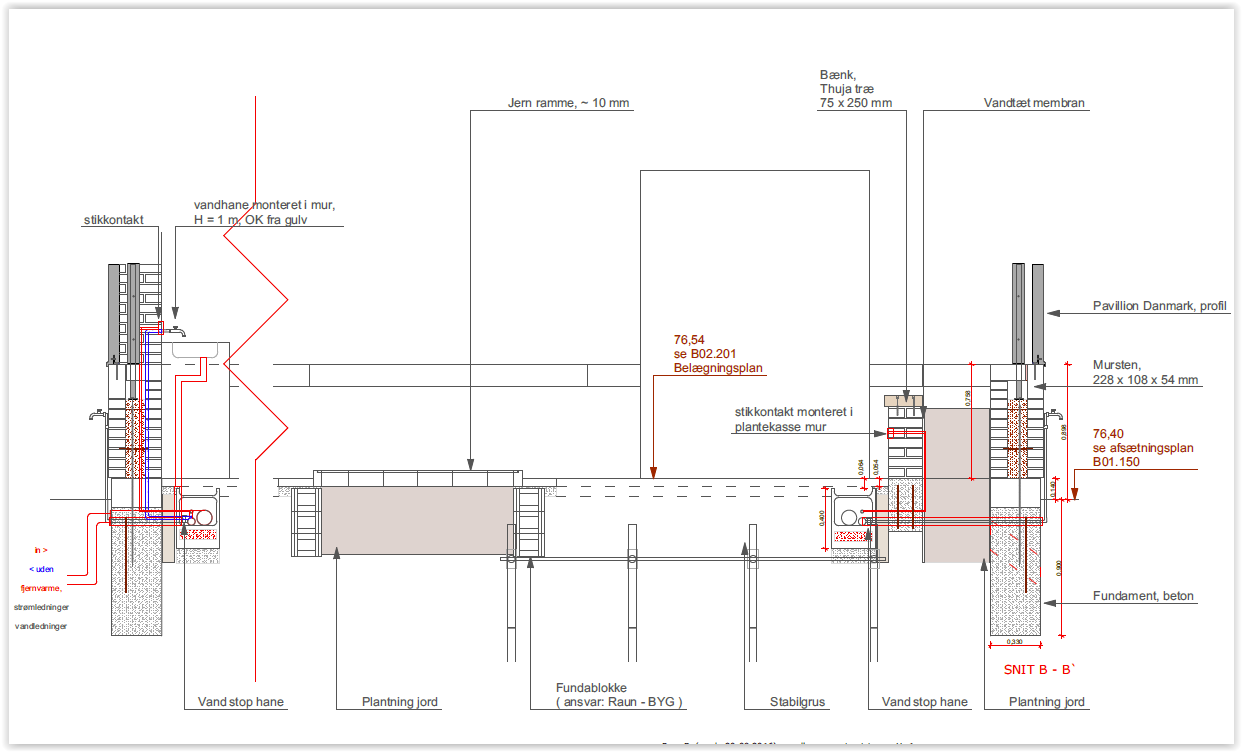
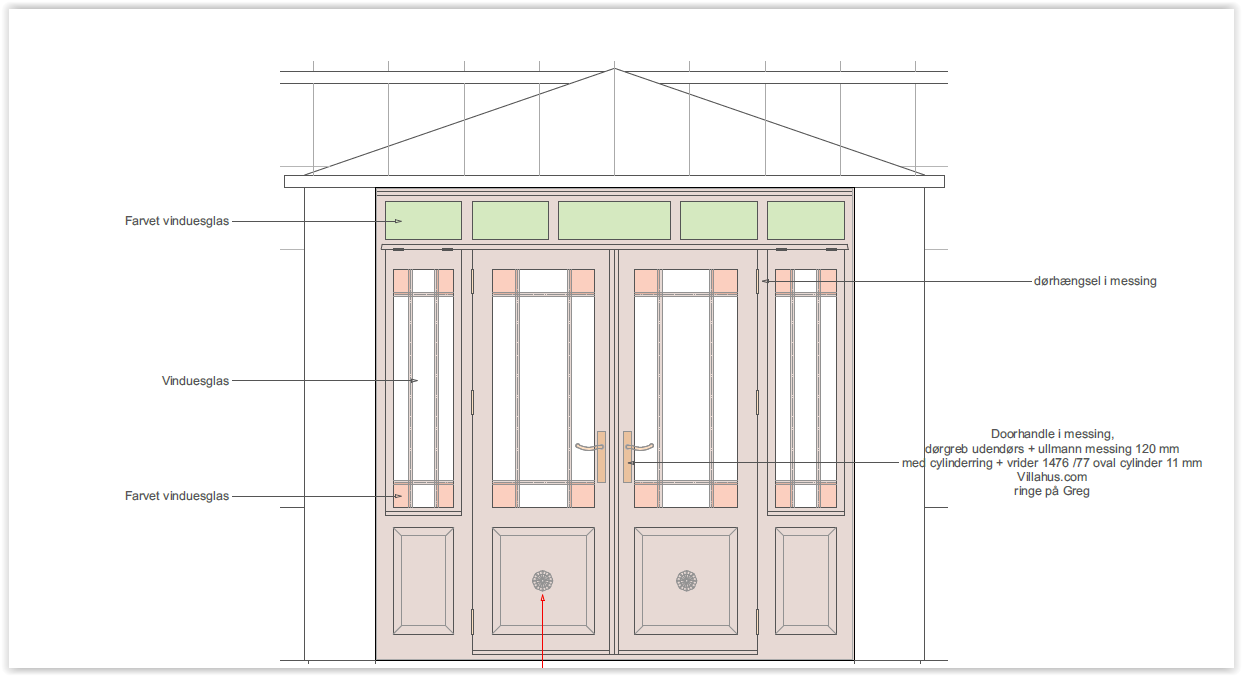
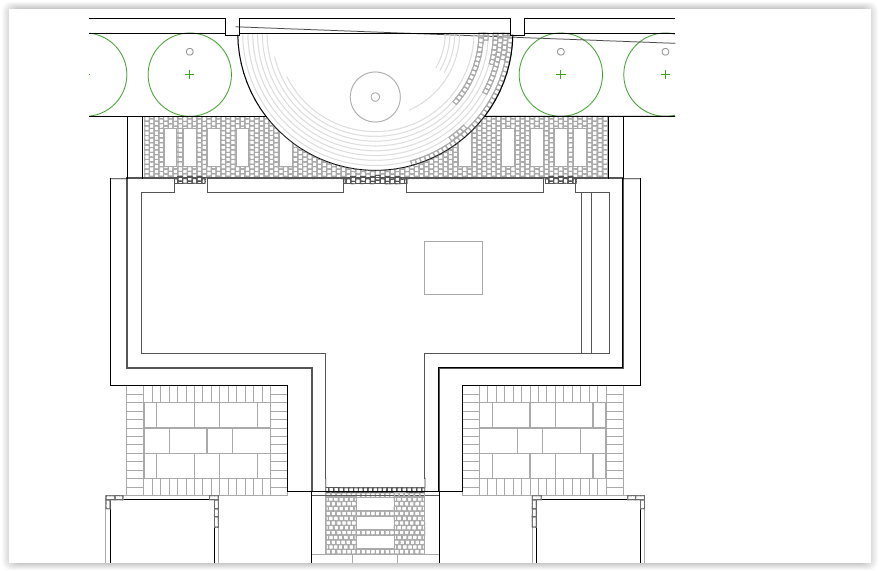
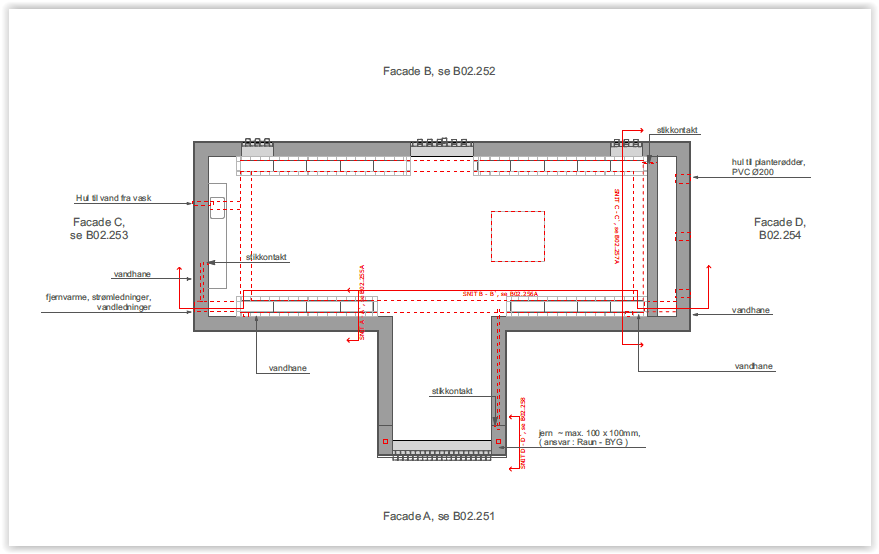
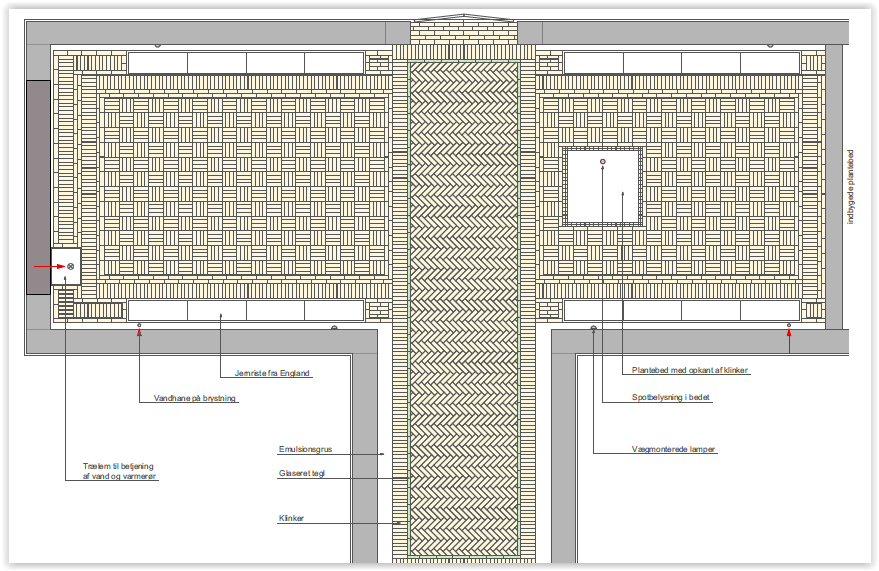
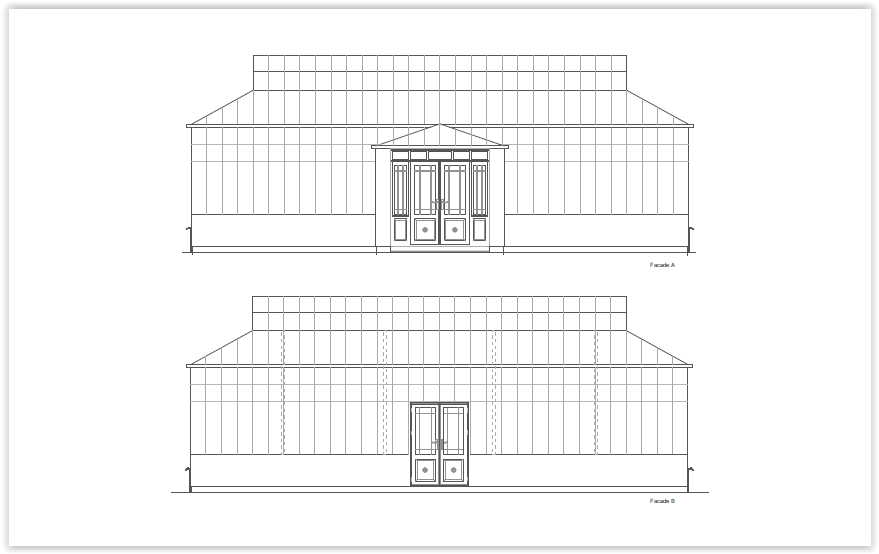
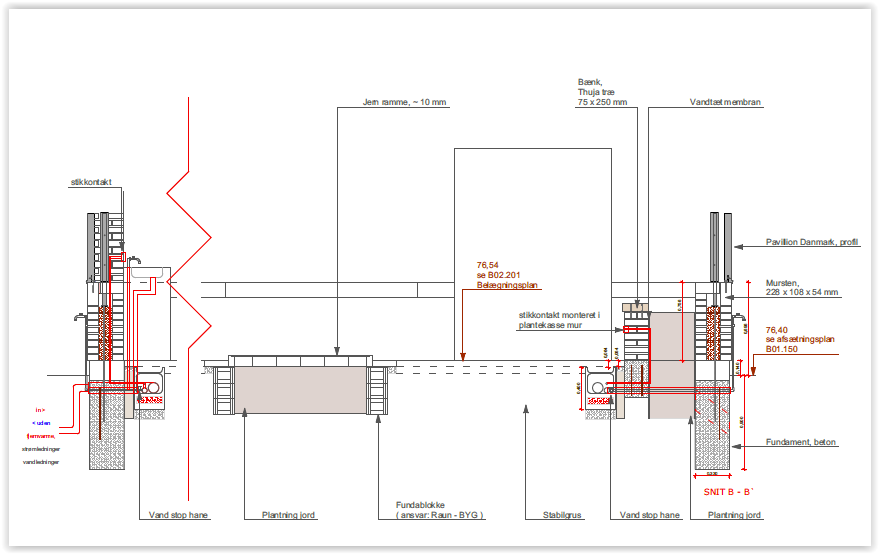
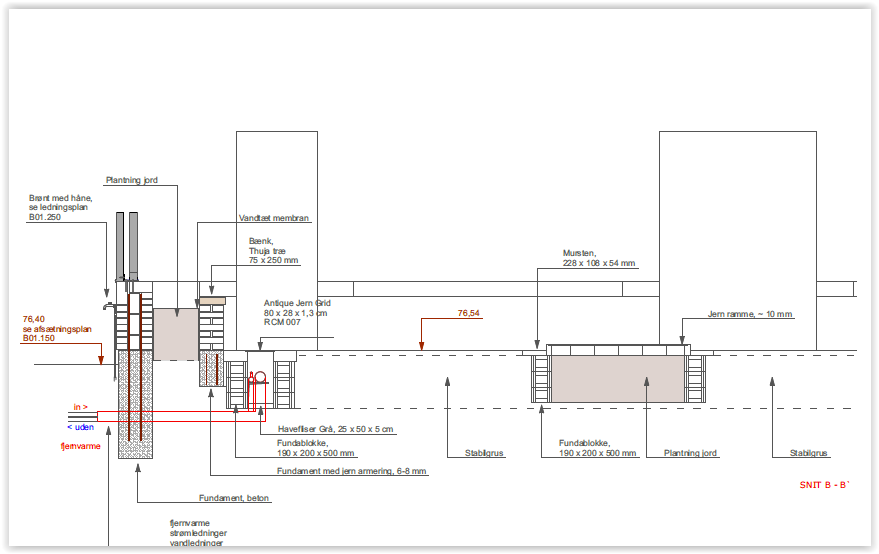
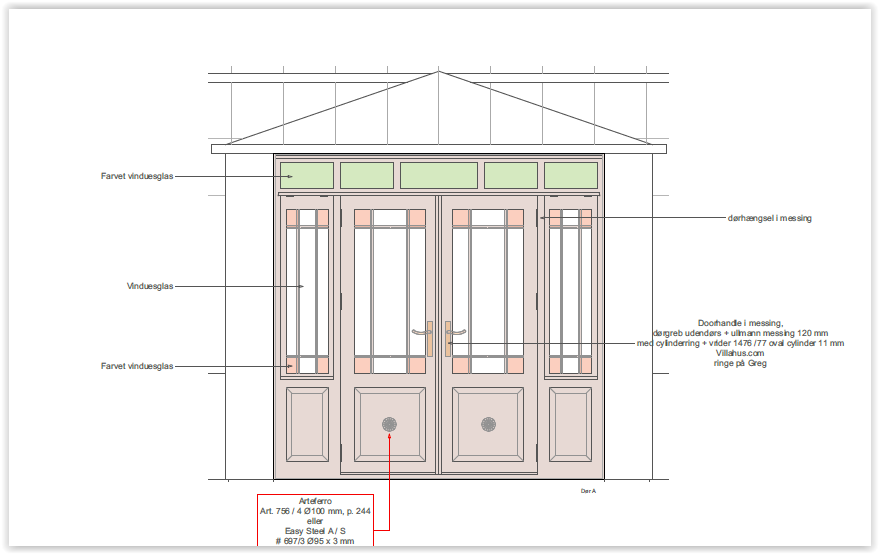
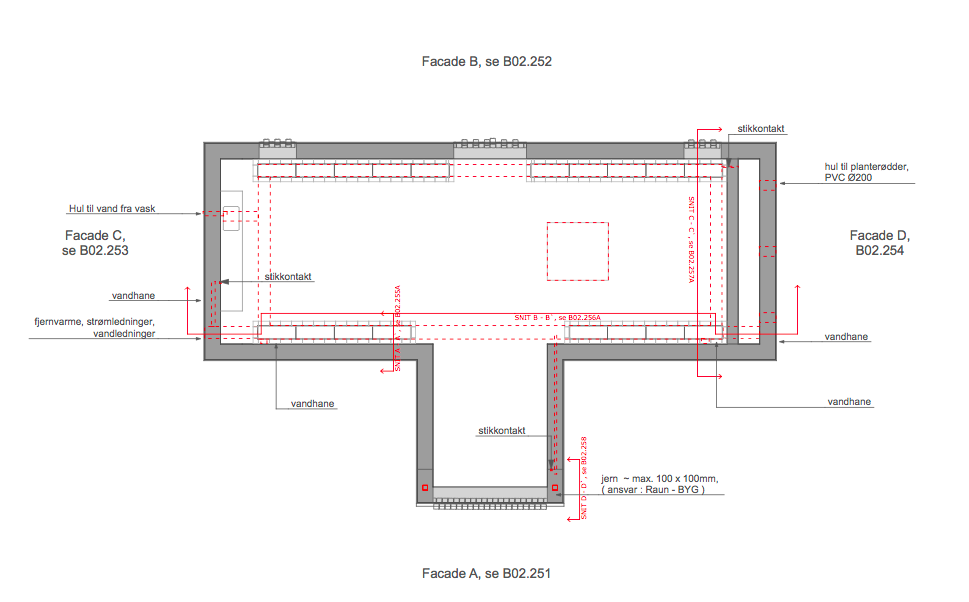
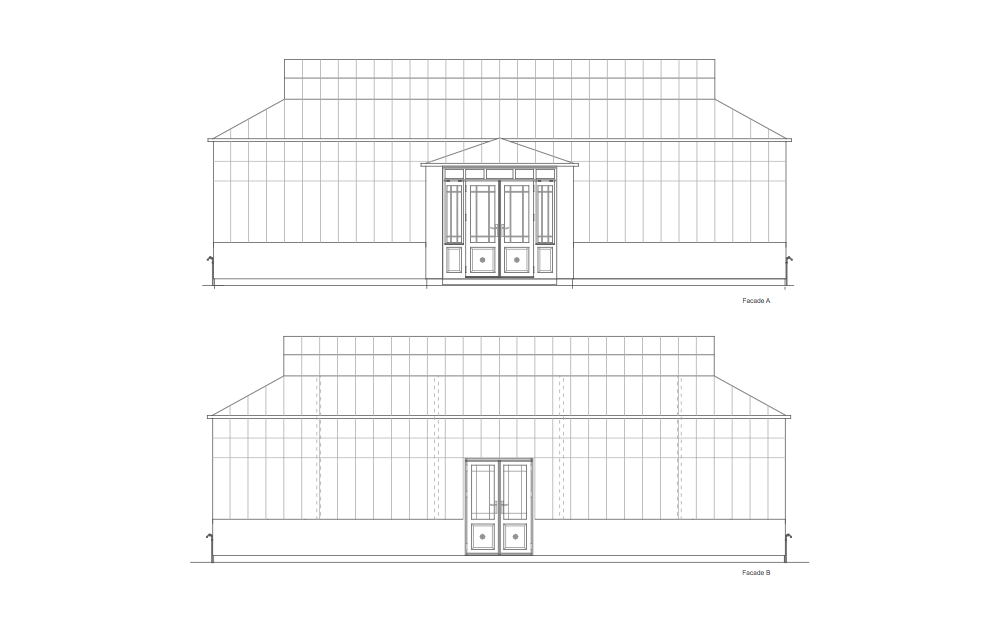
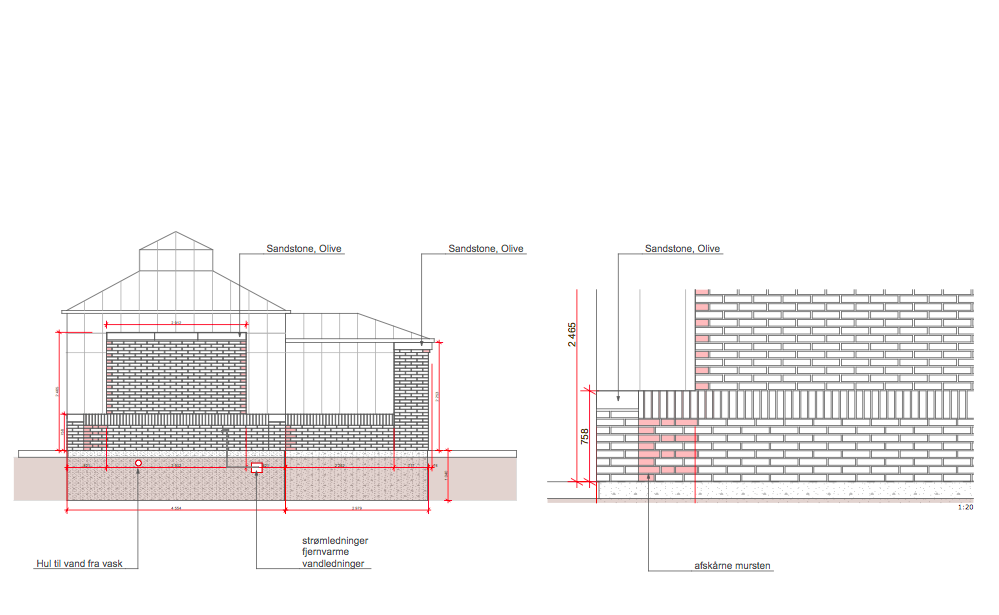
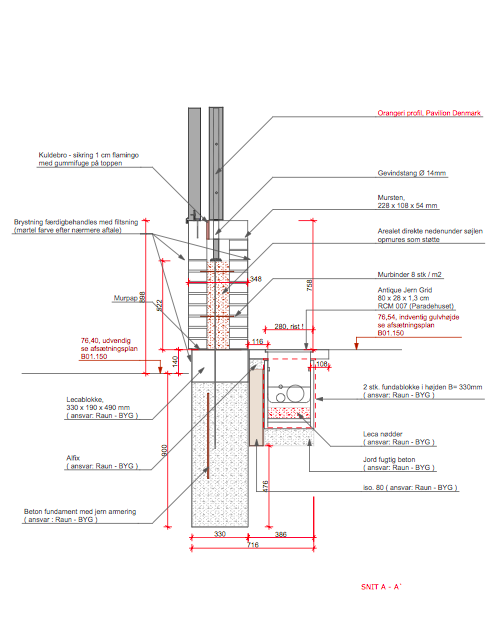
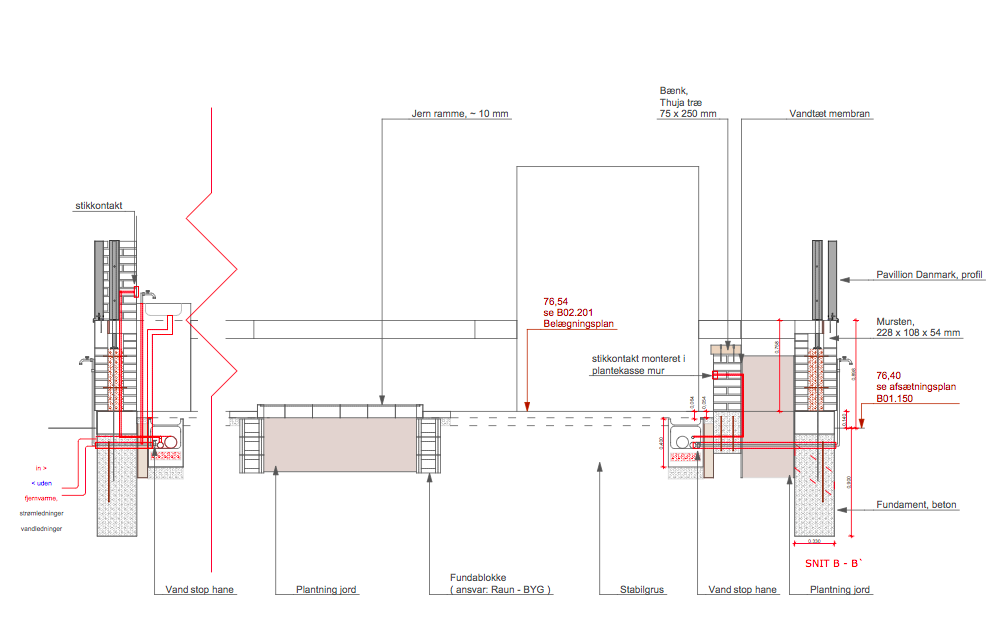
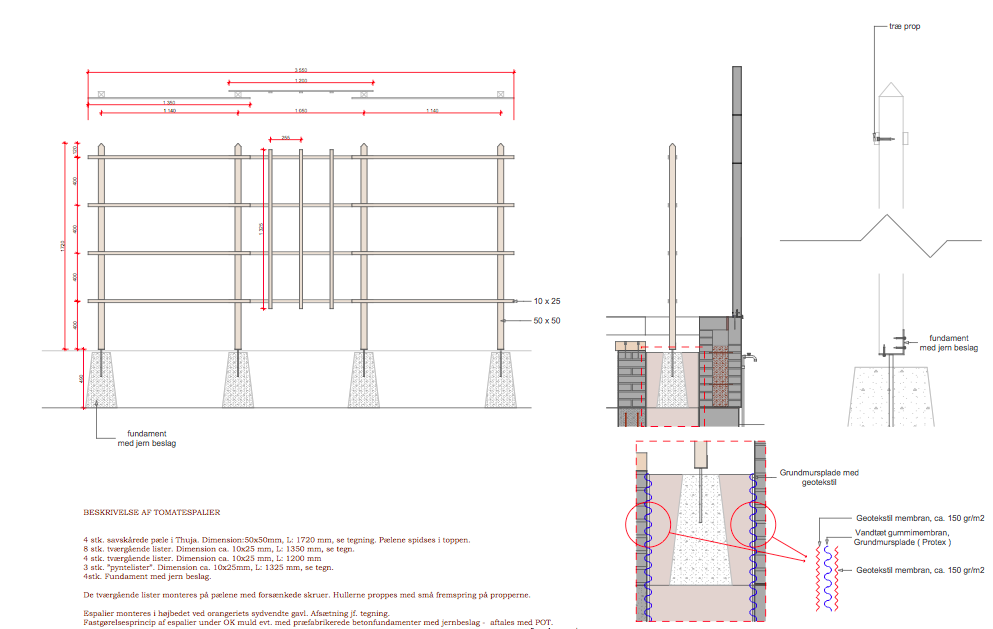
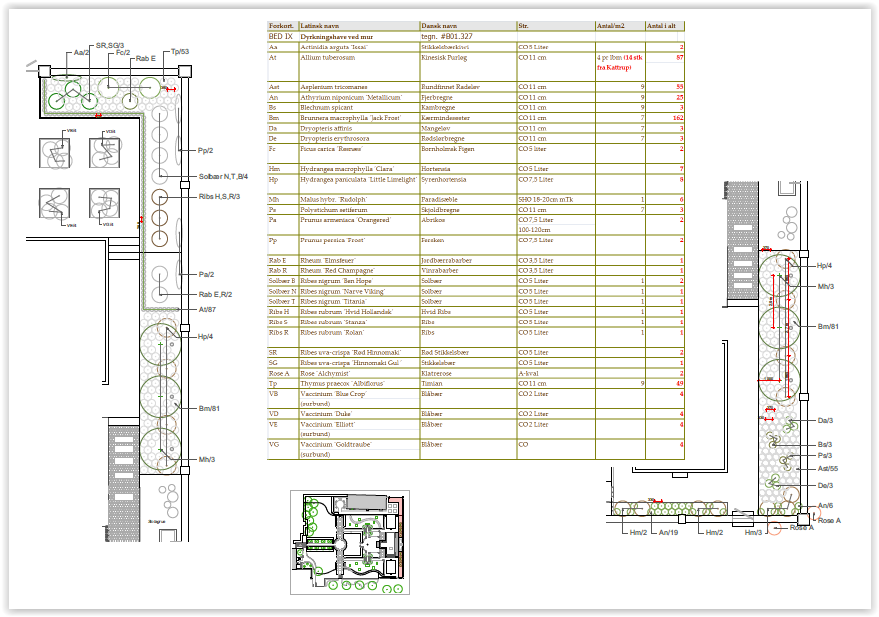
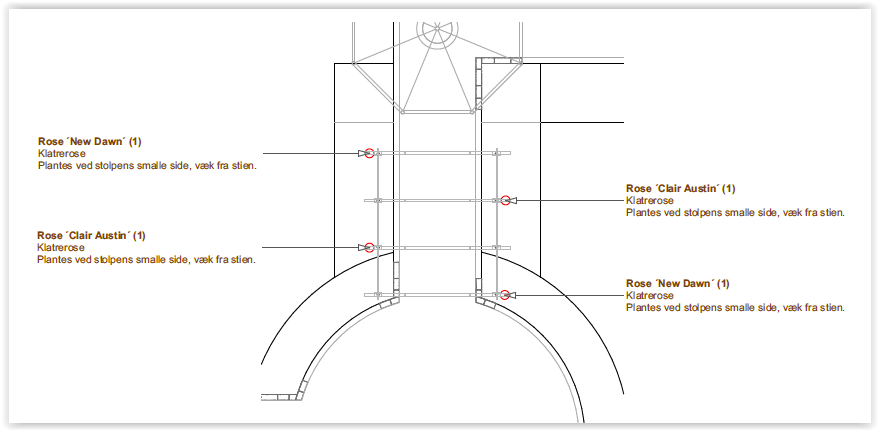
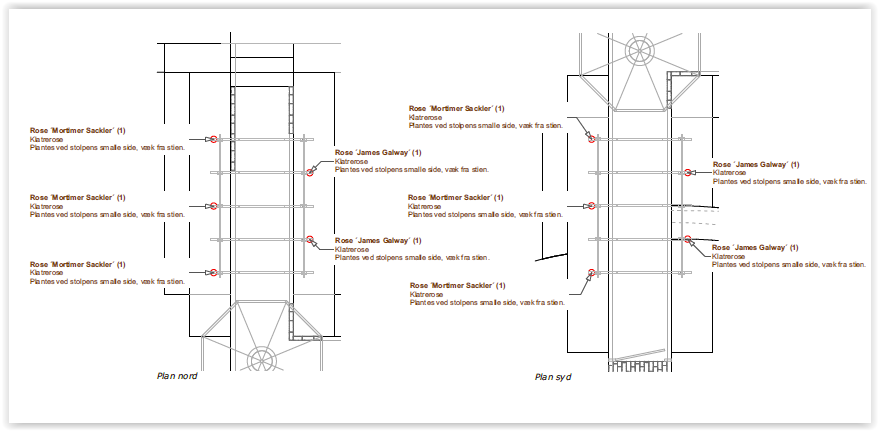
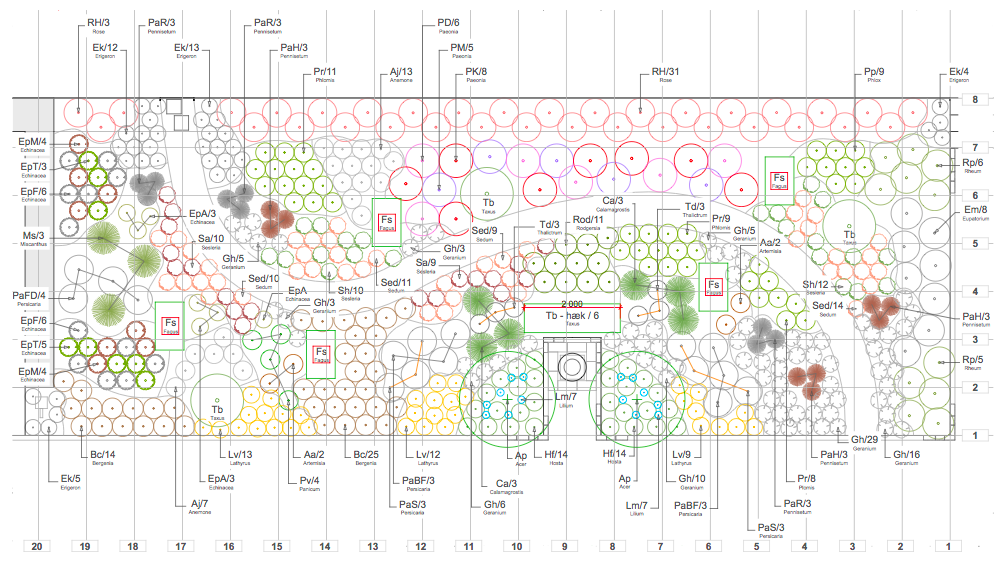
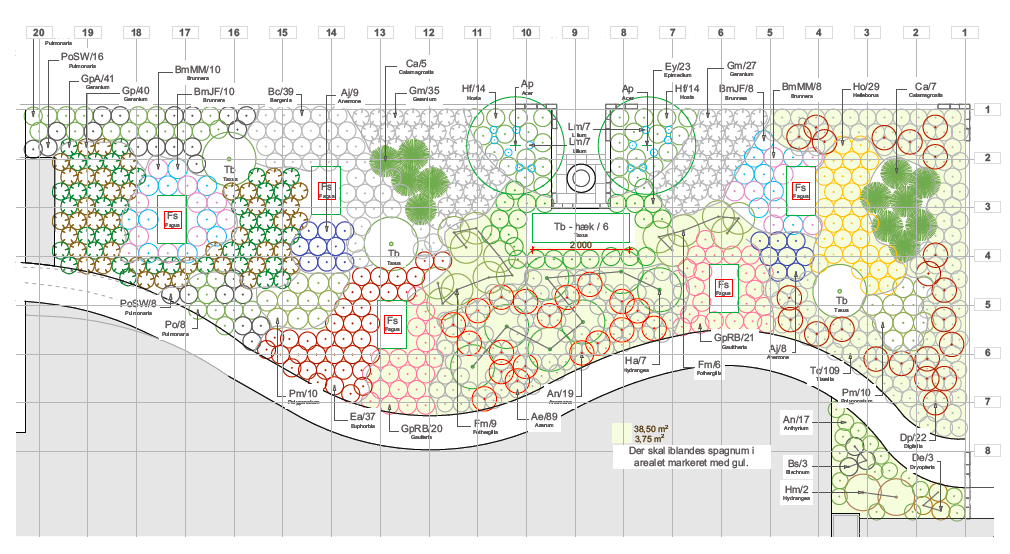
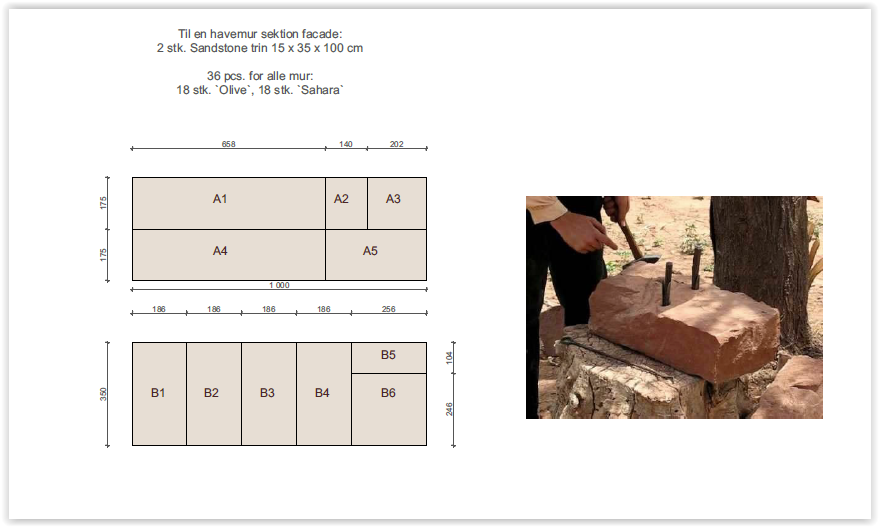
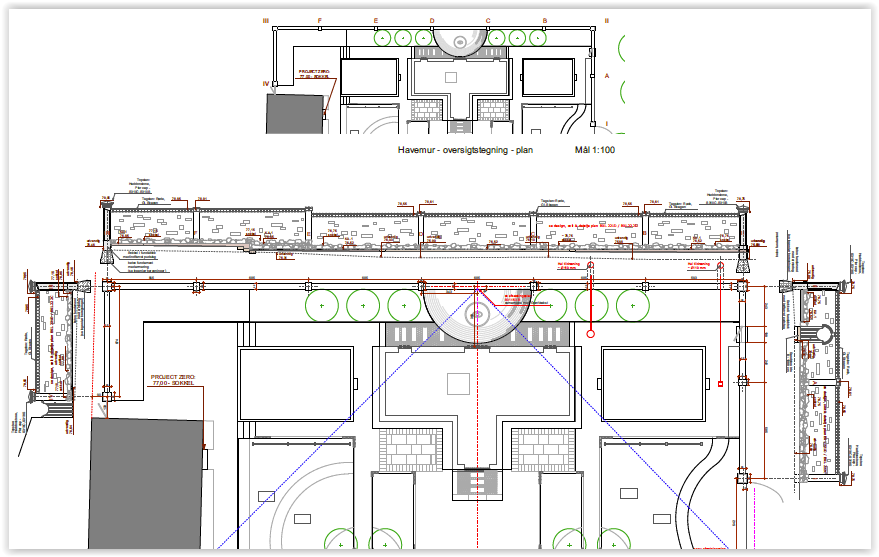
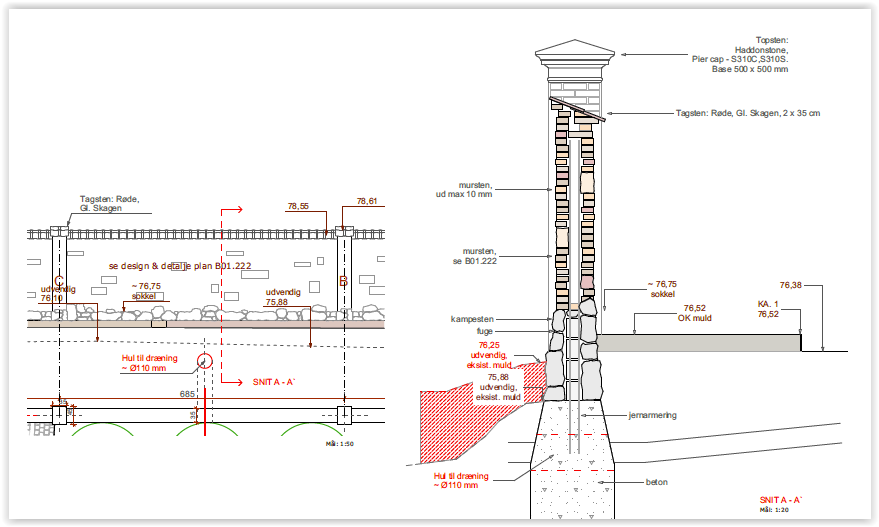
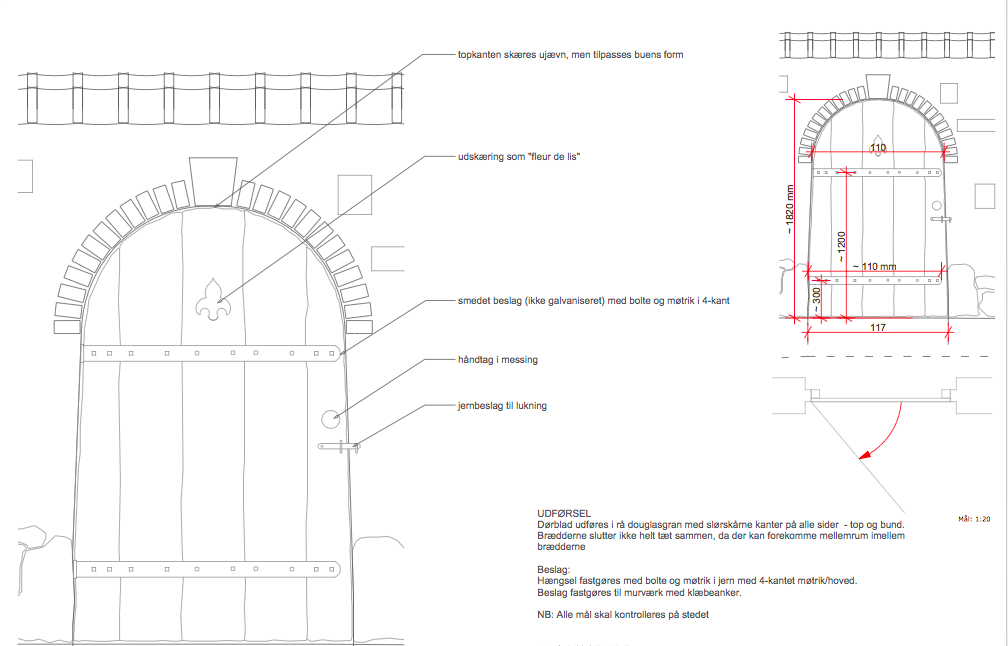
The garden's character depends as much on construction detail as on its overall composition.
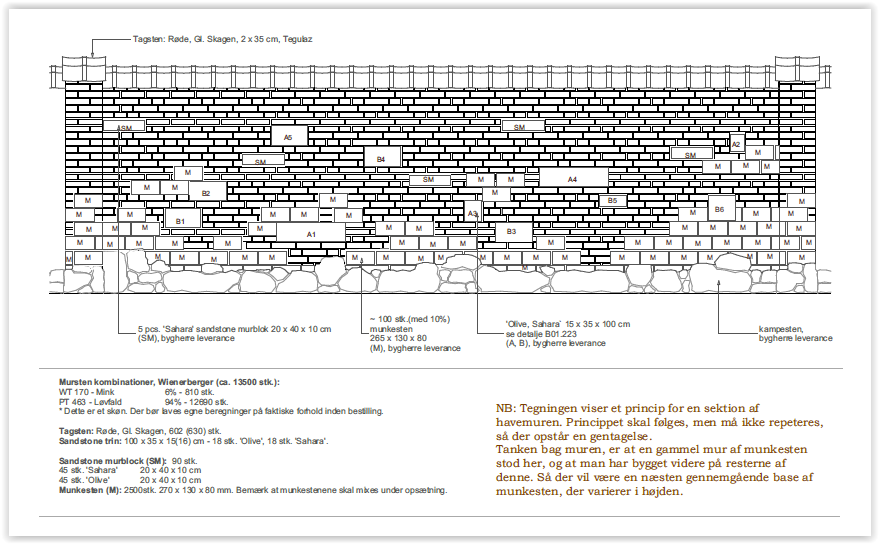
- Walls and foundations: Traditional red-brick garden walls built on stone foundations, detailed to sit naturally beside the estate's existing buildings.
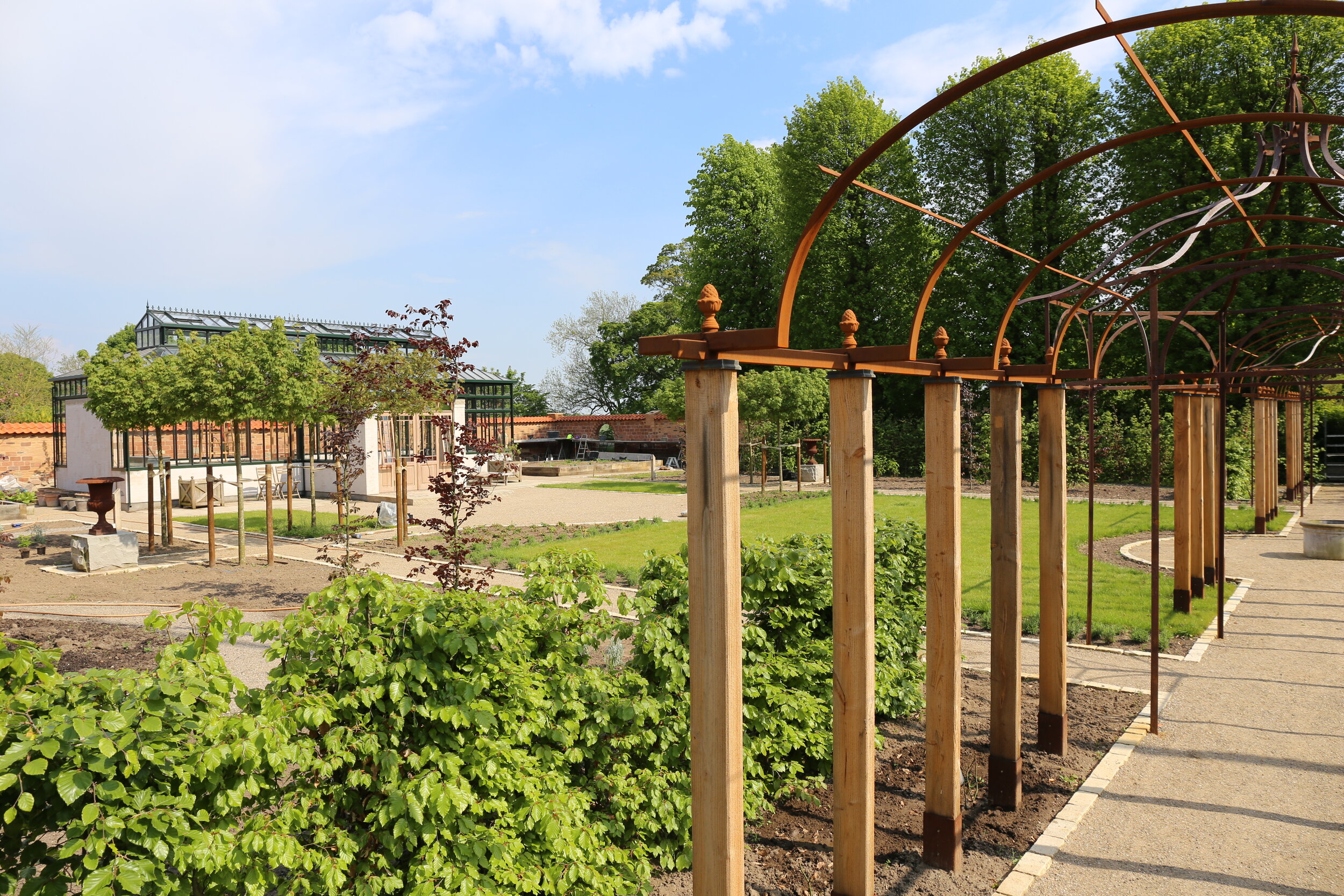
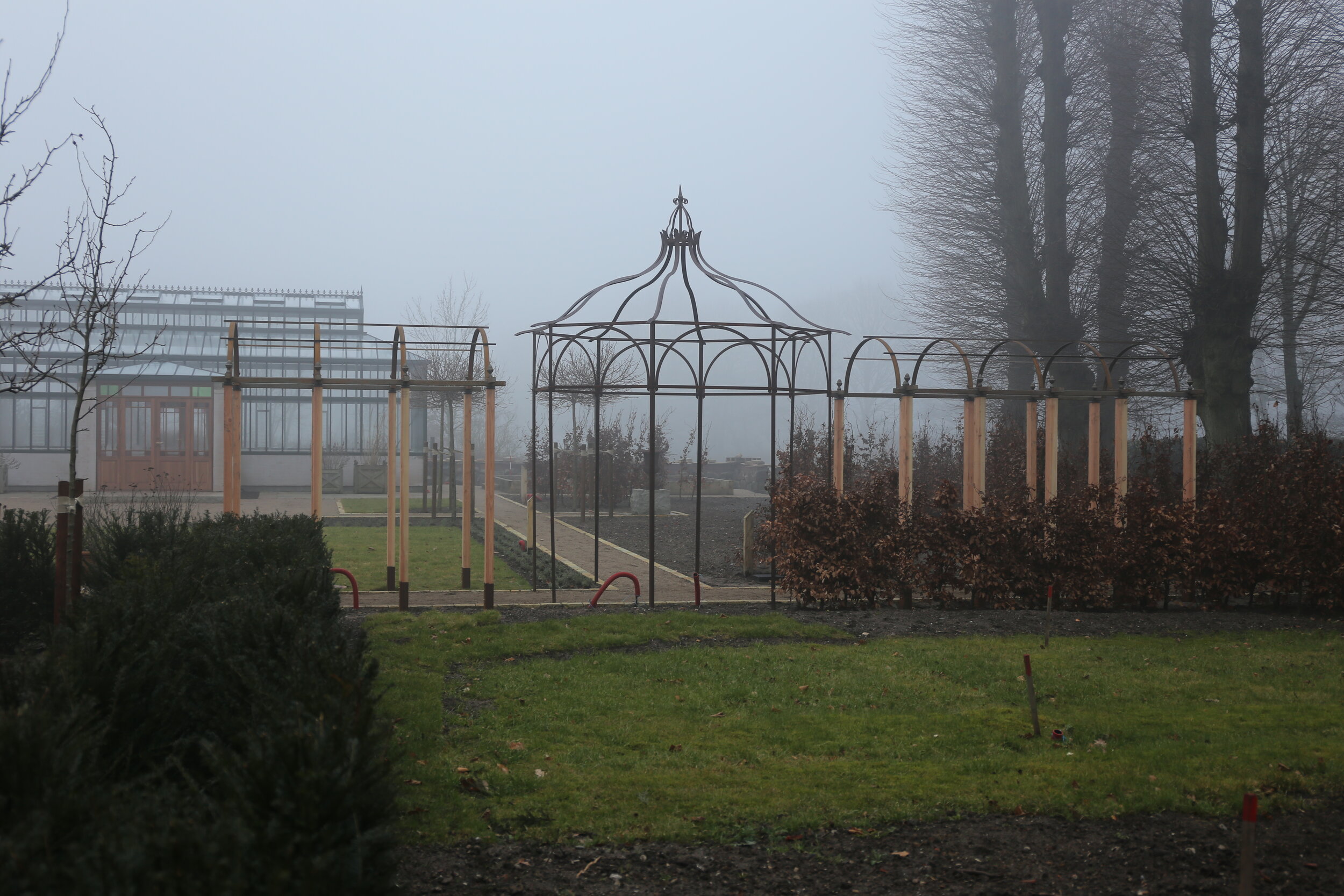
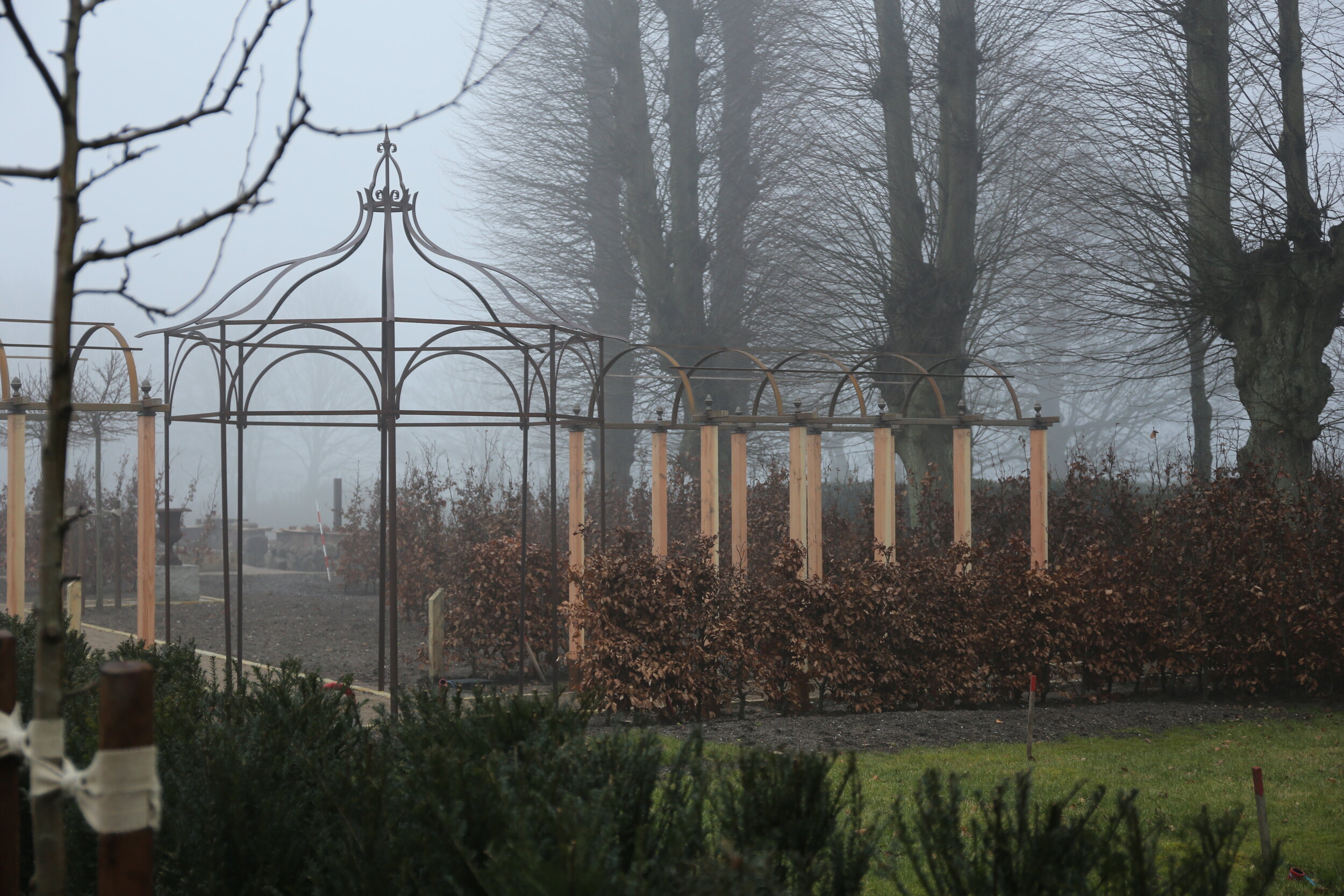
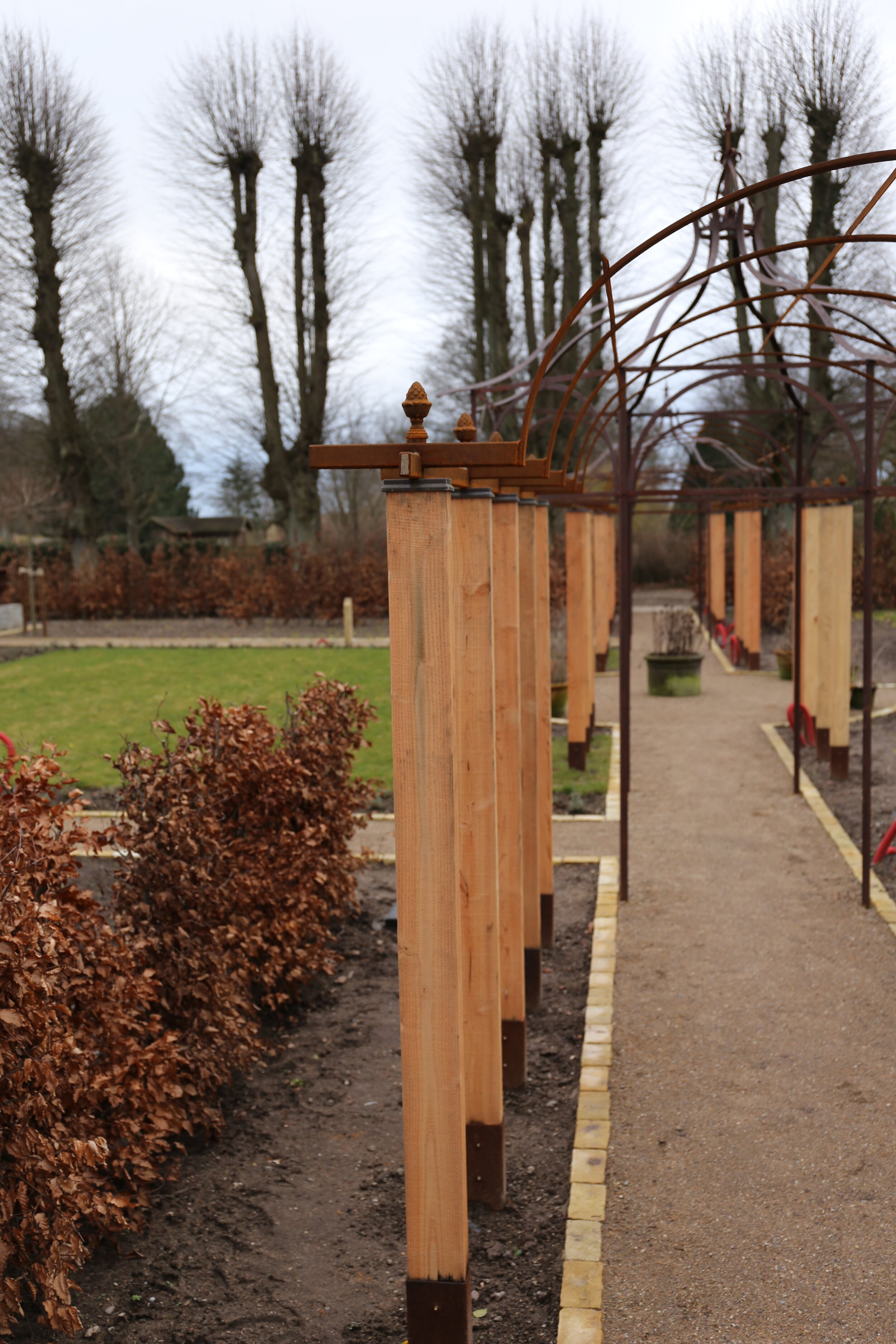
- Pergolas: Custom structures combining timber posts and shaped metal arches, creating rhythm along the paths and support for climbing plants.
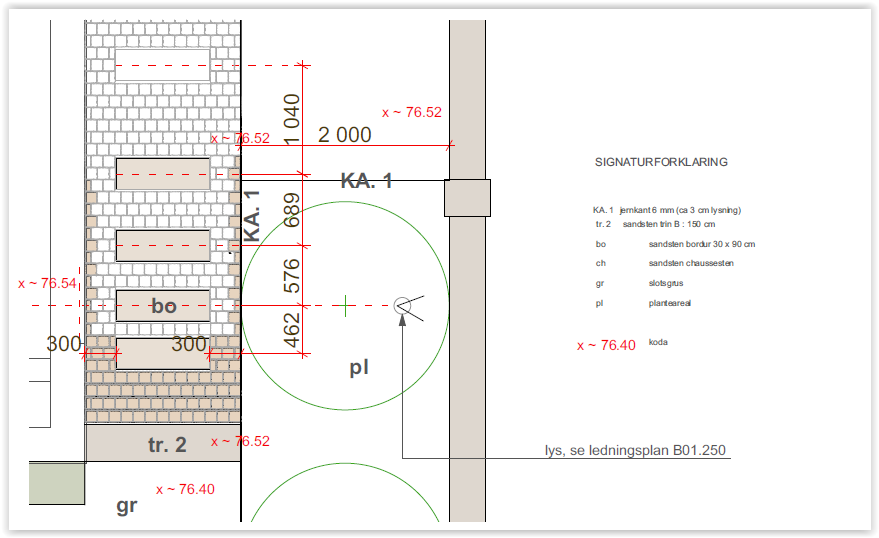
- Paths and floors: Formal gravel routes with precise edging throughout the garden and a herringbone brick floor inside the orangery.
- Water and drainage: Carefully coordinated levels, falls, and drainage details integrated into the hardscape to protect the garden, planting, and structures through wet and freezing conditions.
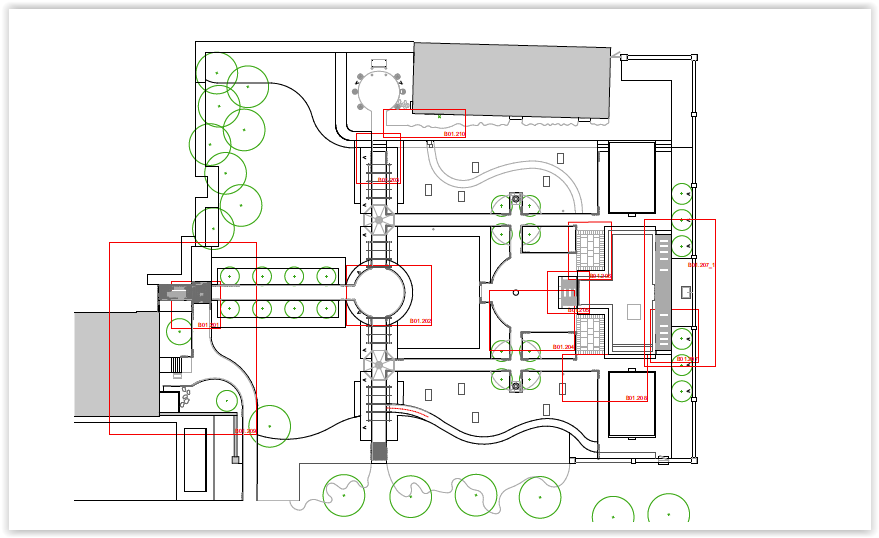
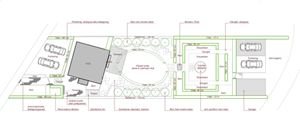
- Documentation and supervision: LASD Studio prepared the master plan, elevations, sections, construction and assembly details, material specifications, and planting documentation, and supervised the work through ground preparation, construction, and planting. The project drawings shown below reveal the coordination behind the finished garden. Architecture, hardscape, drainage, garden structures, and planting were developed as one connected system rather than as separate decorative layers.
Visit our special project series - Styles and Epochs of Art that Influences Landscape Architecture.
Project Context & Credits
This project forms part of Yura Lotonenko's earlier professional design work in Denmark and helped shape the integrated approach to architecture, planting, and technical documentation later carried into LASD Studio's international practice. Landscape design and detailed project documentation: Yura Lotonenko, working as a freelance collaborator Collaborating practice: Paradehusets Tegnestue, Gisselfeld, Denmark Project collaborators: Landscape architect Greg Kobett and Cecilie, Paradehuset
EXISTING CONDITION BEFORE LANDSCAPE INSTALLATION
Before construction, the site was primarily open lawn beside the estate's existing red-brick buildings. The new plan used this open ground to establish a clear relationship between the historic architecture, the orangery, and a sequence of productive and ornamental garden spaces.
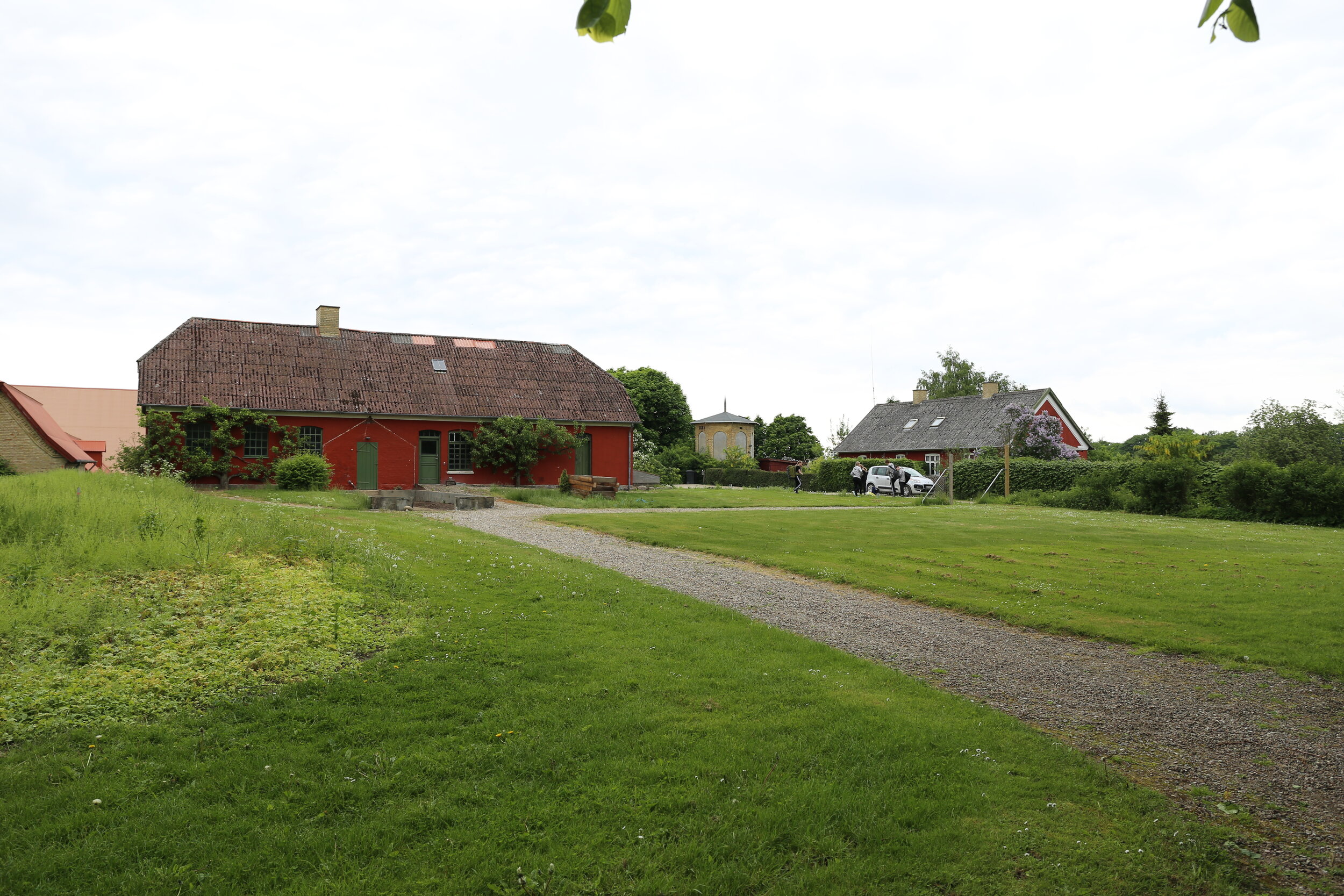
Existing Condition - before landscape installation
WORK IN PROGRESS & SUPERVISION
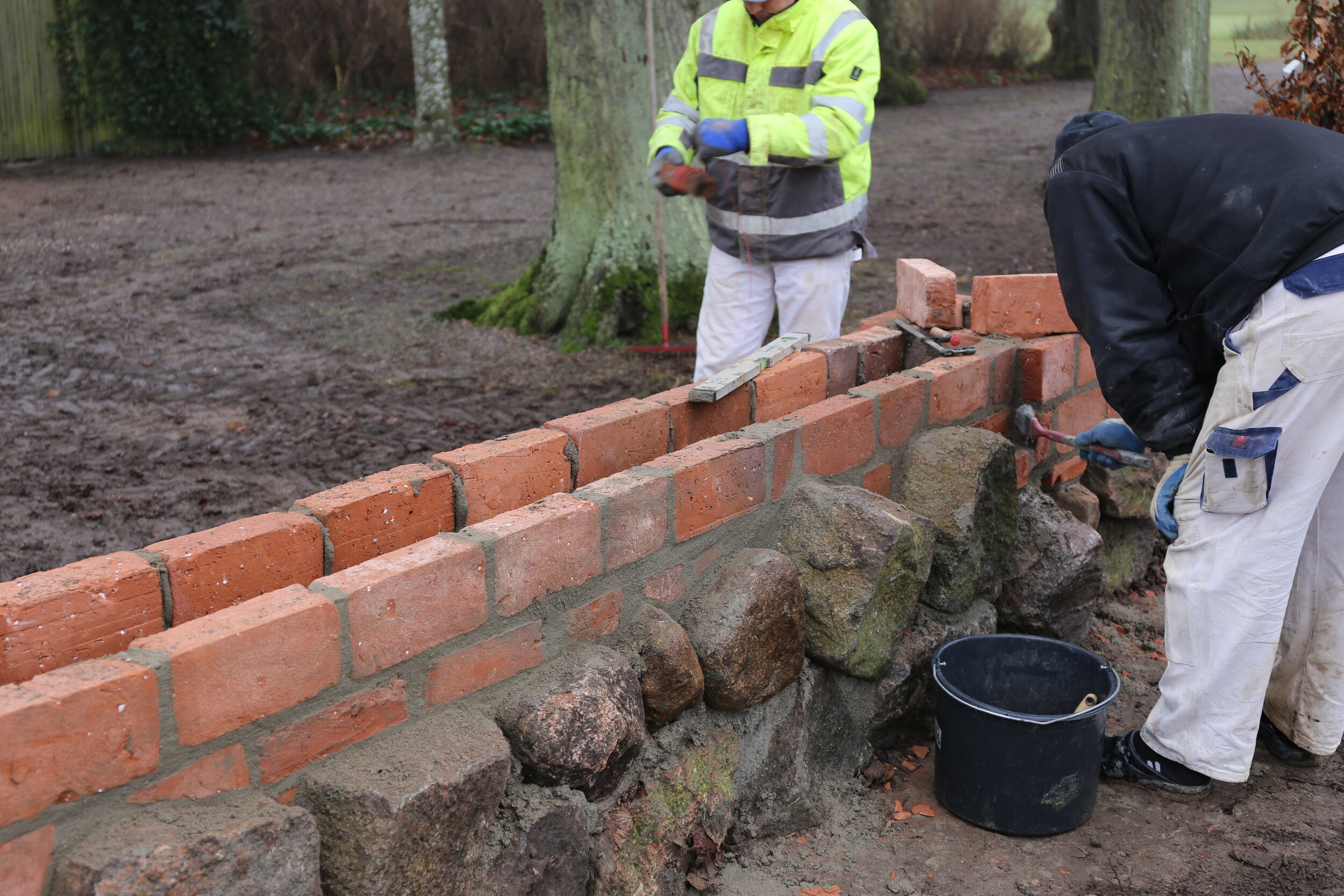
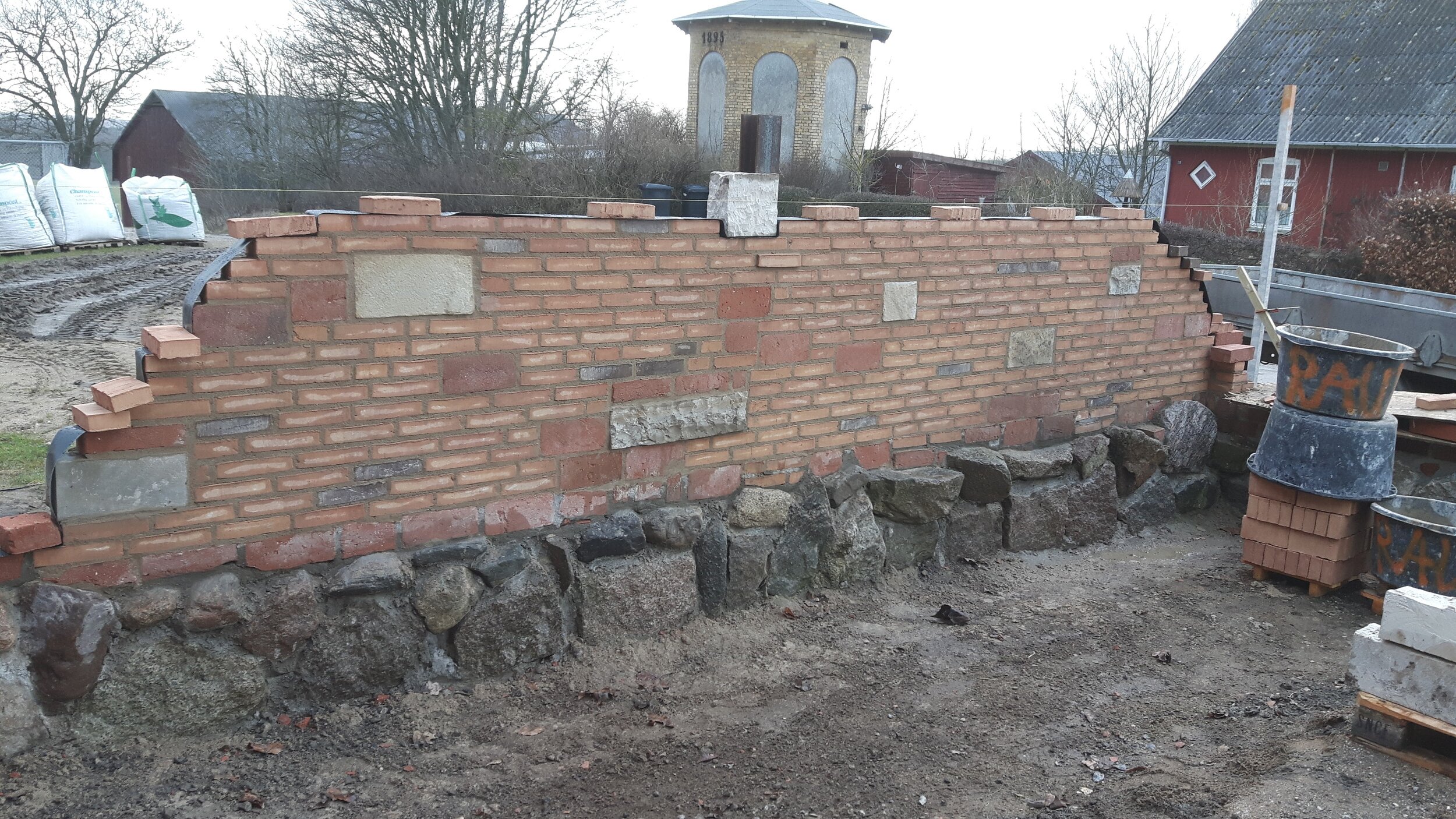
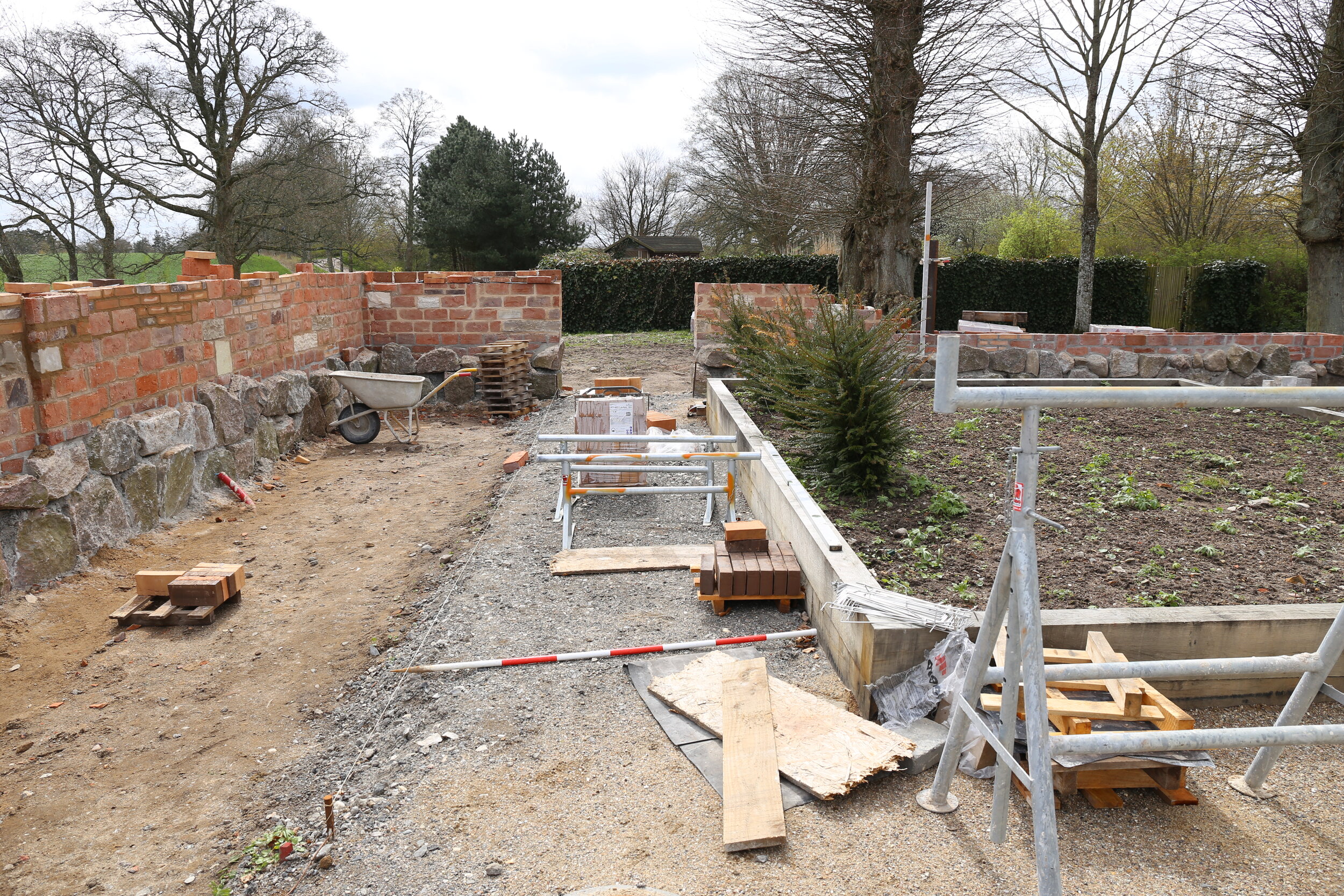
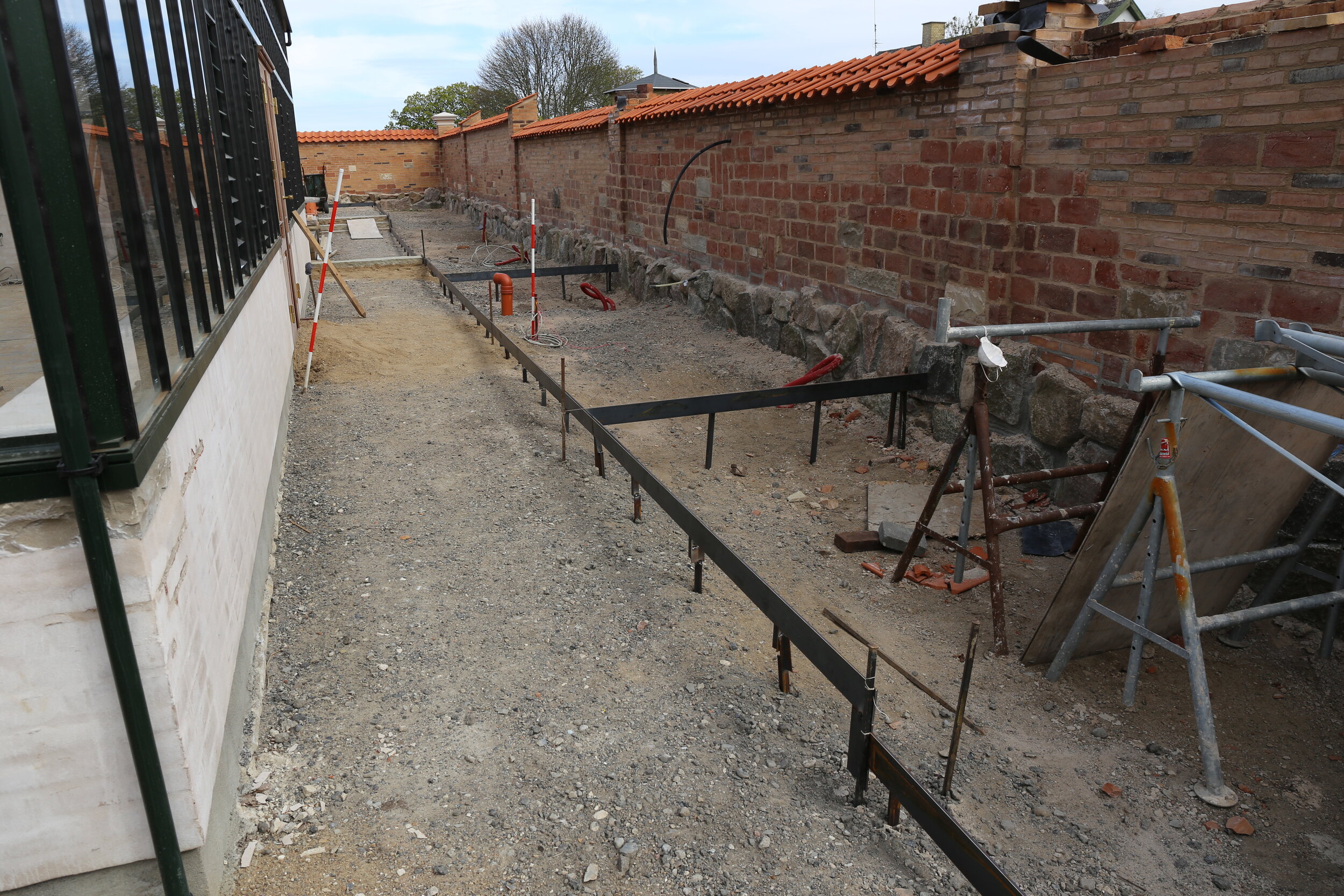
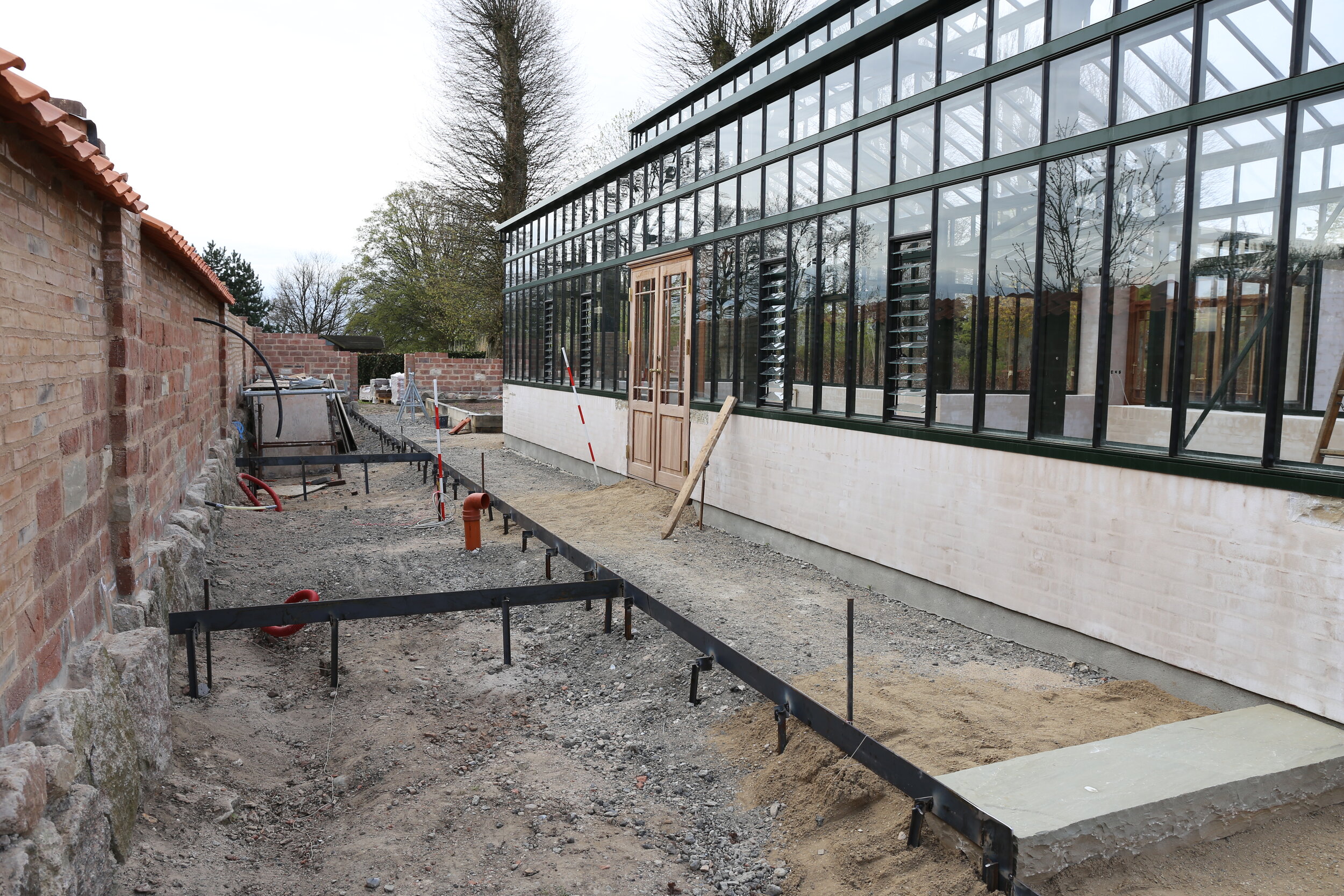
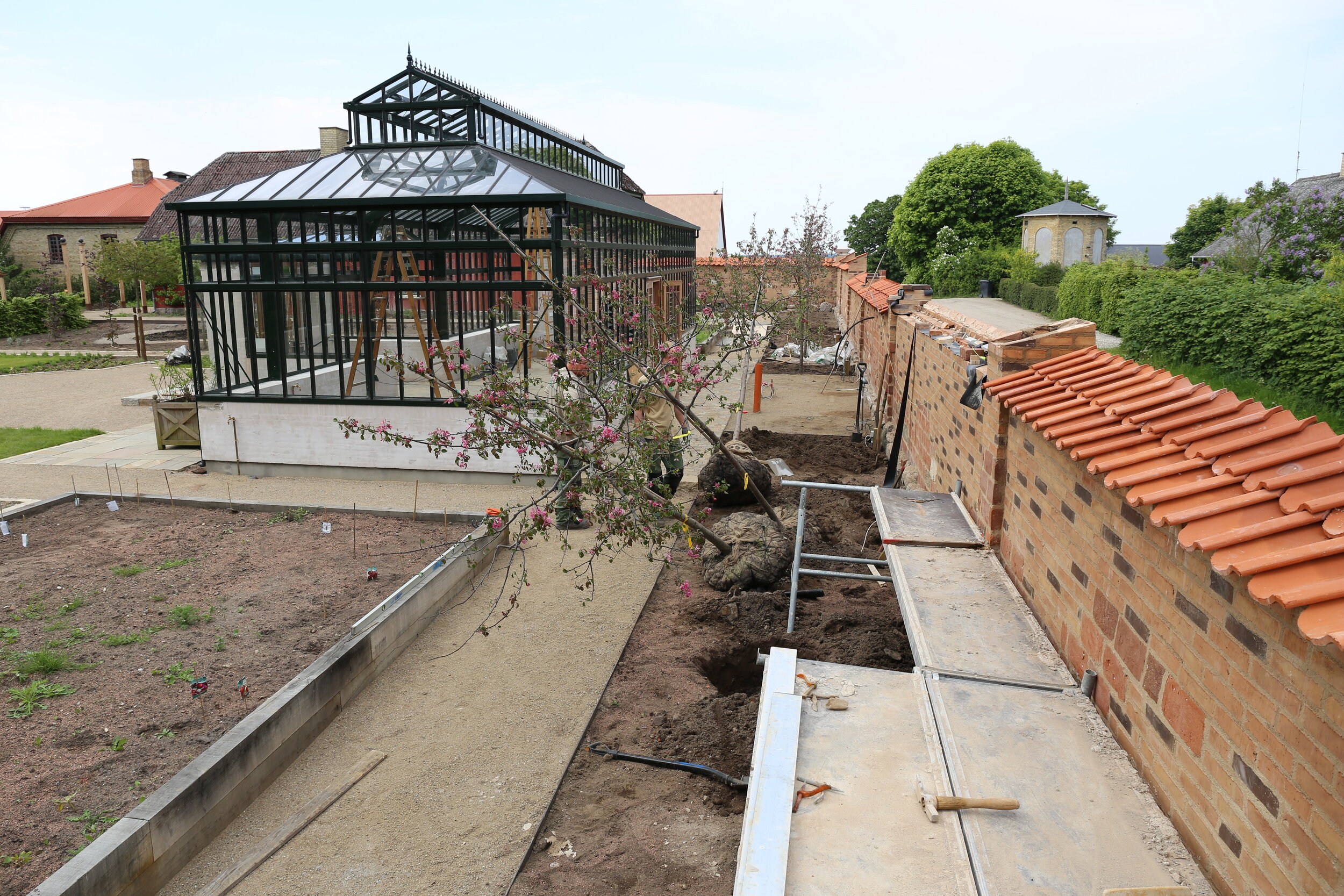
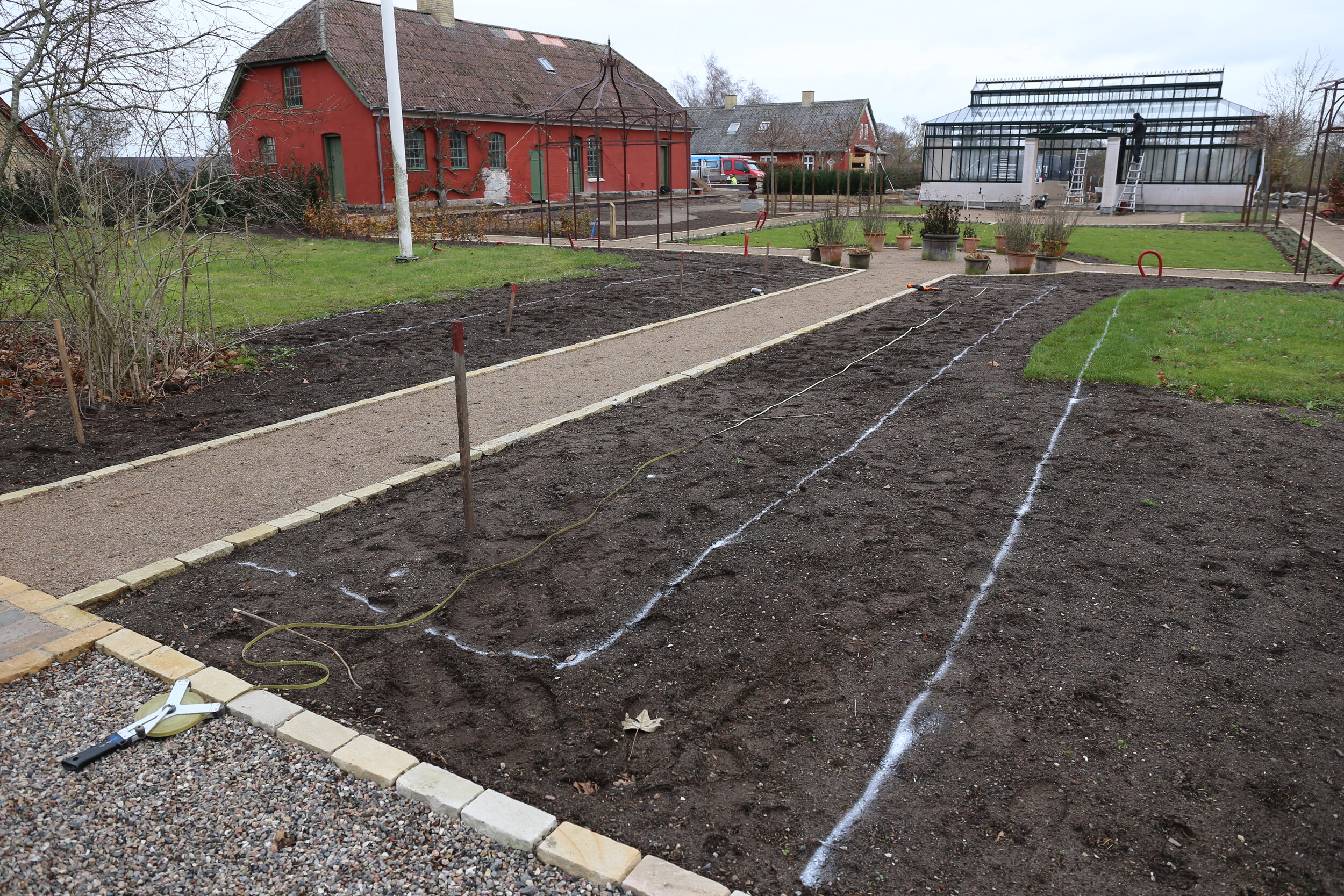
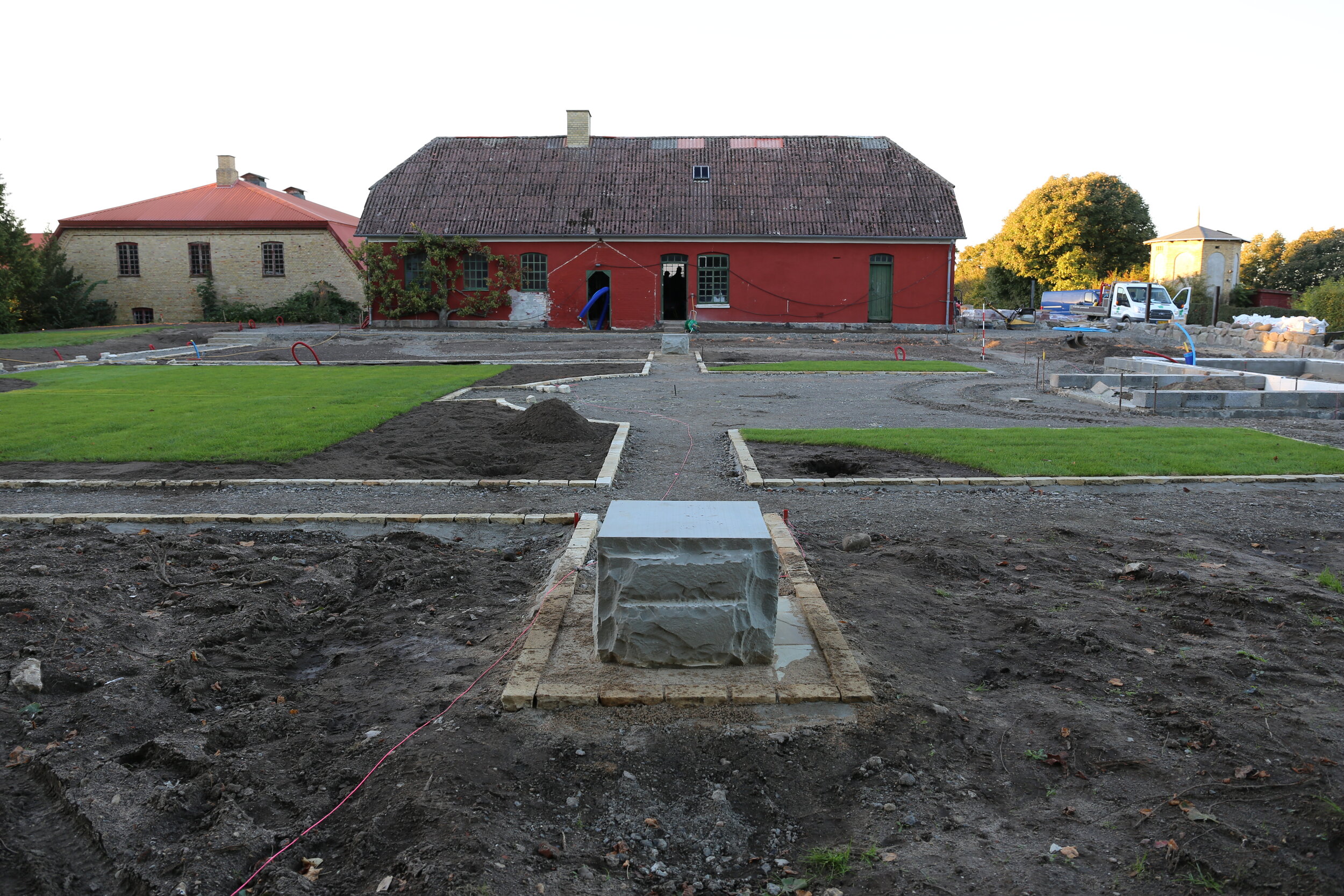
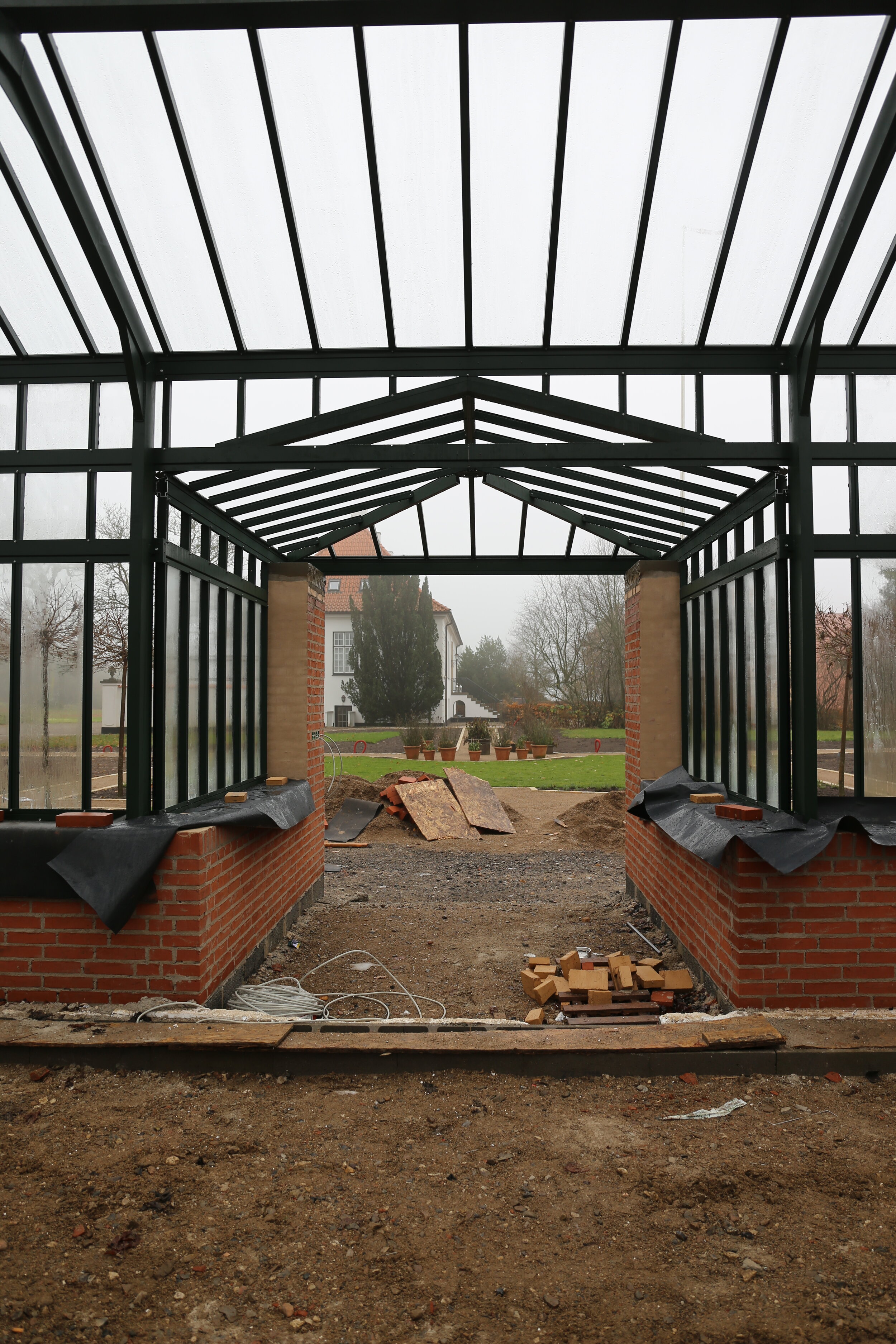
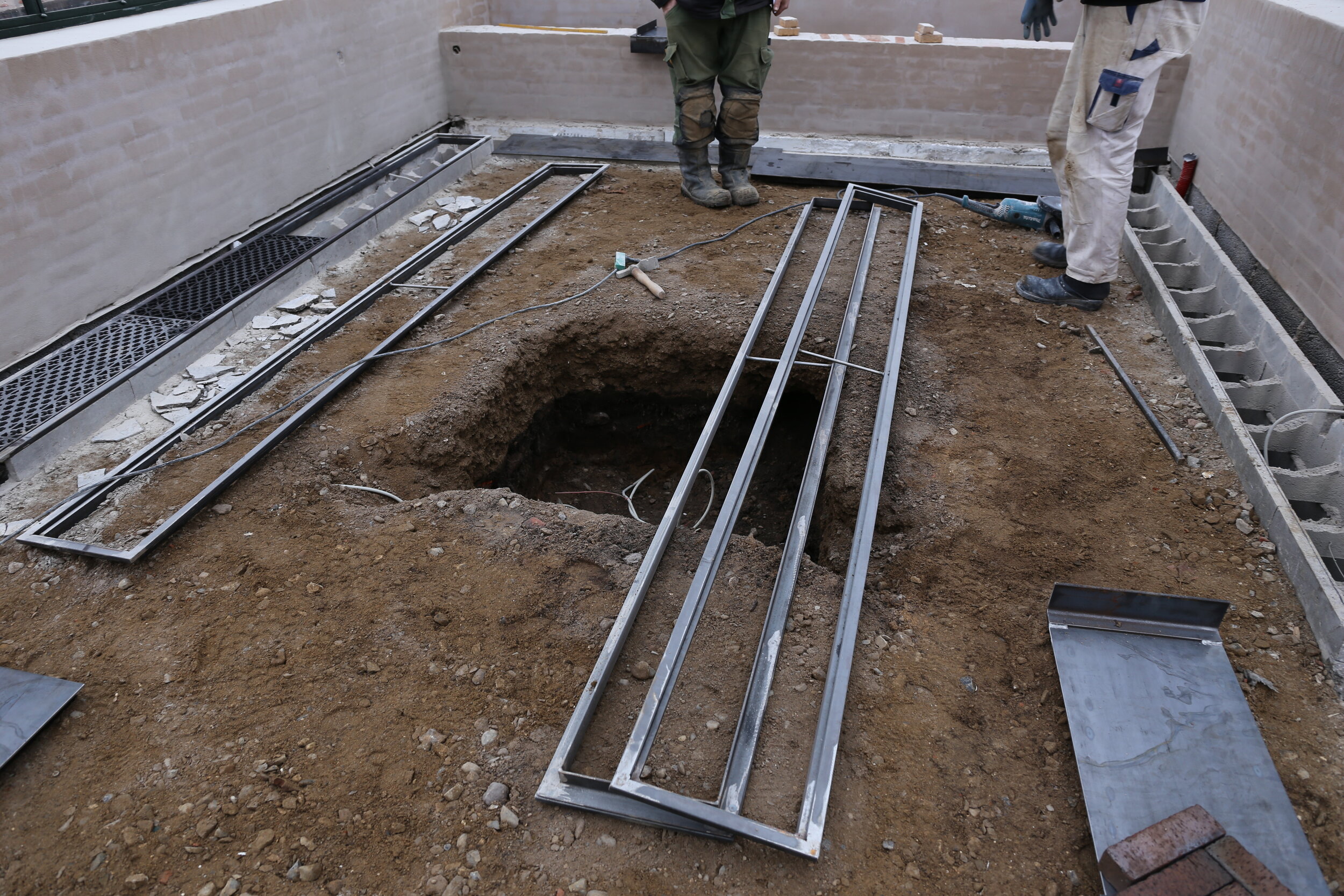
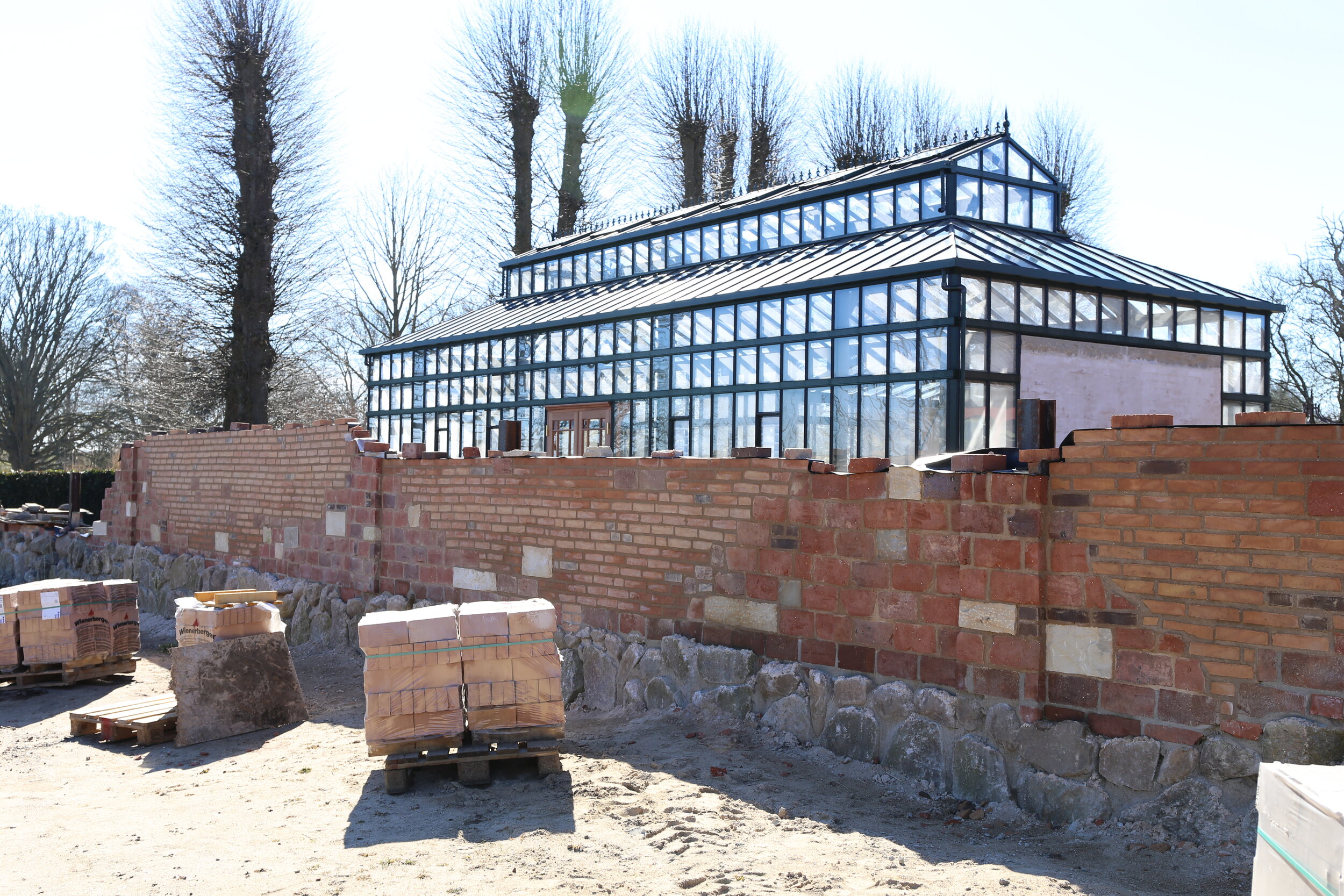
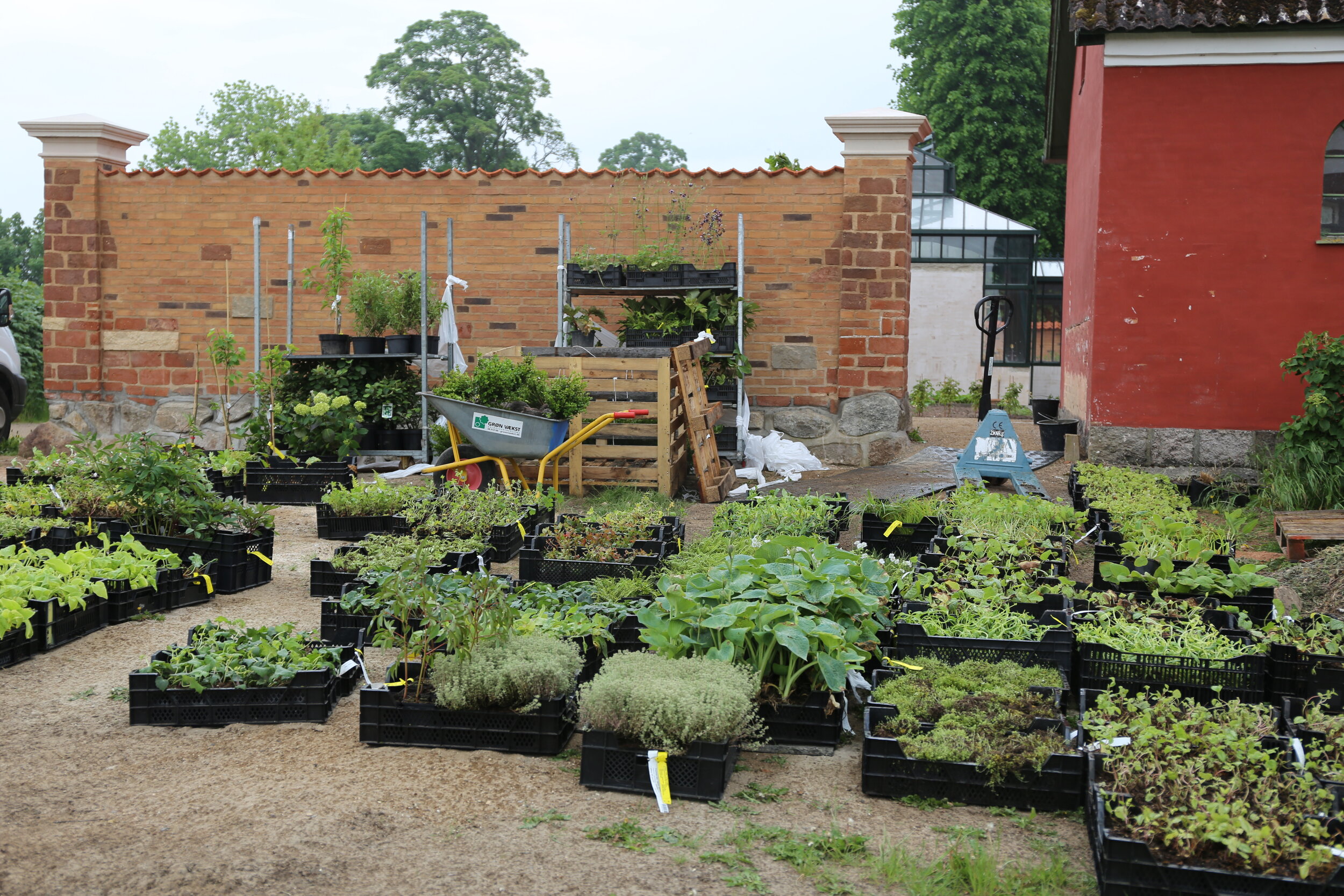
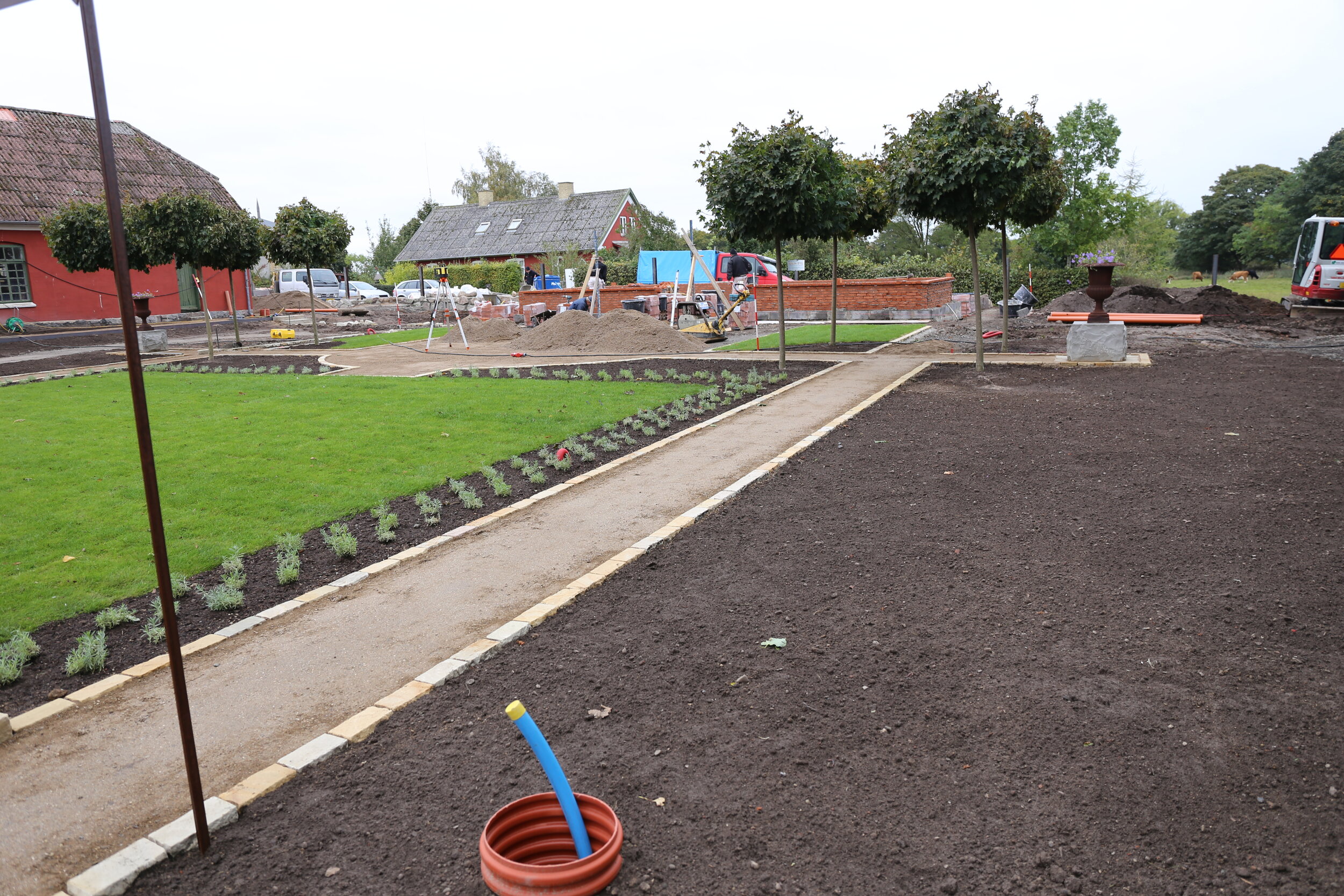
Construction was documented from excavation and setting-out through foundations, brickwork, orangery assembly, path construction, drainage, and planting. Continuous coordination allowed the geometry of the master plan and the fine construction details to remain aligned as the garden moved from drawing to built form.
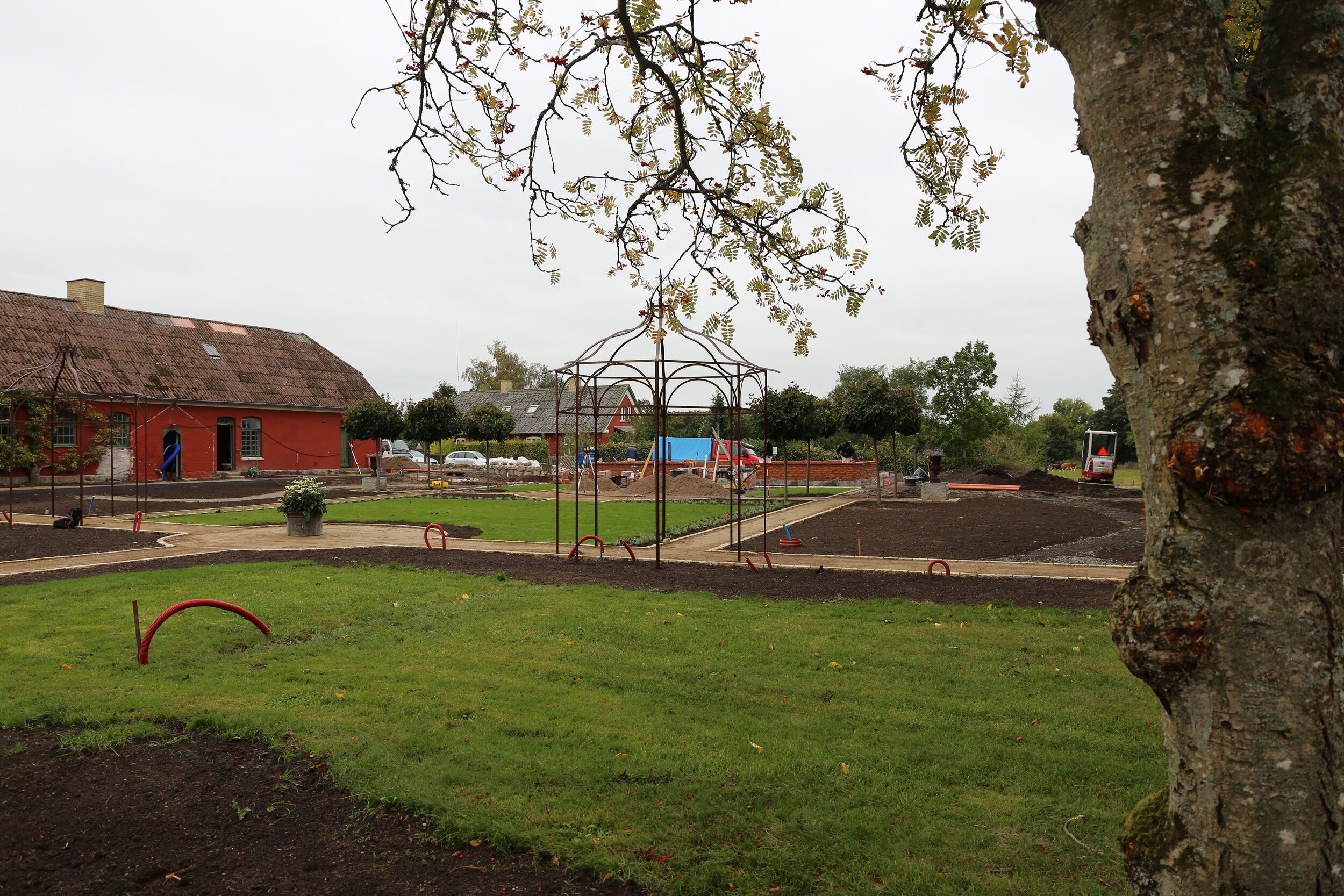
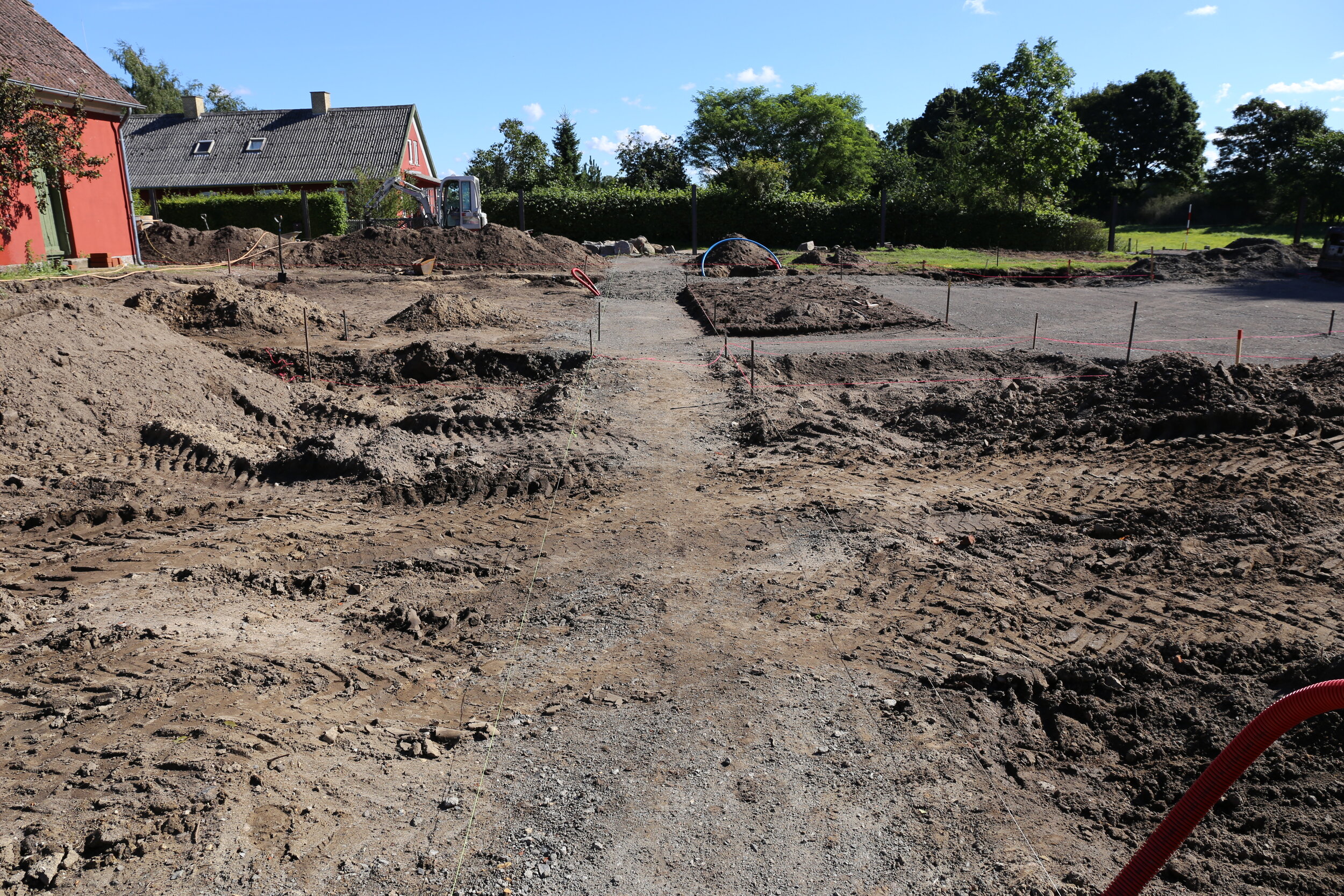
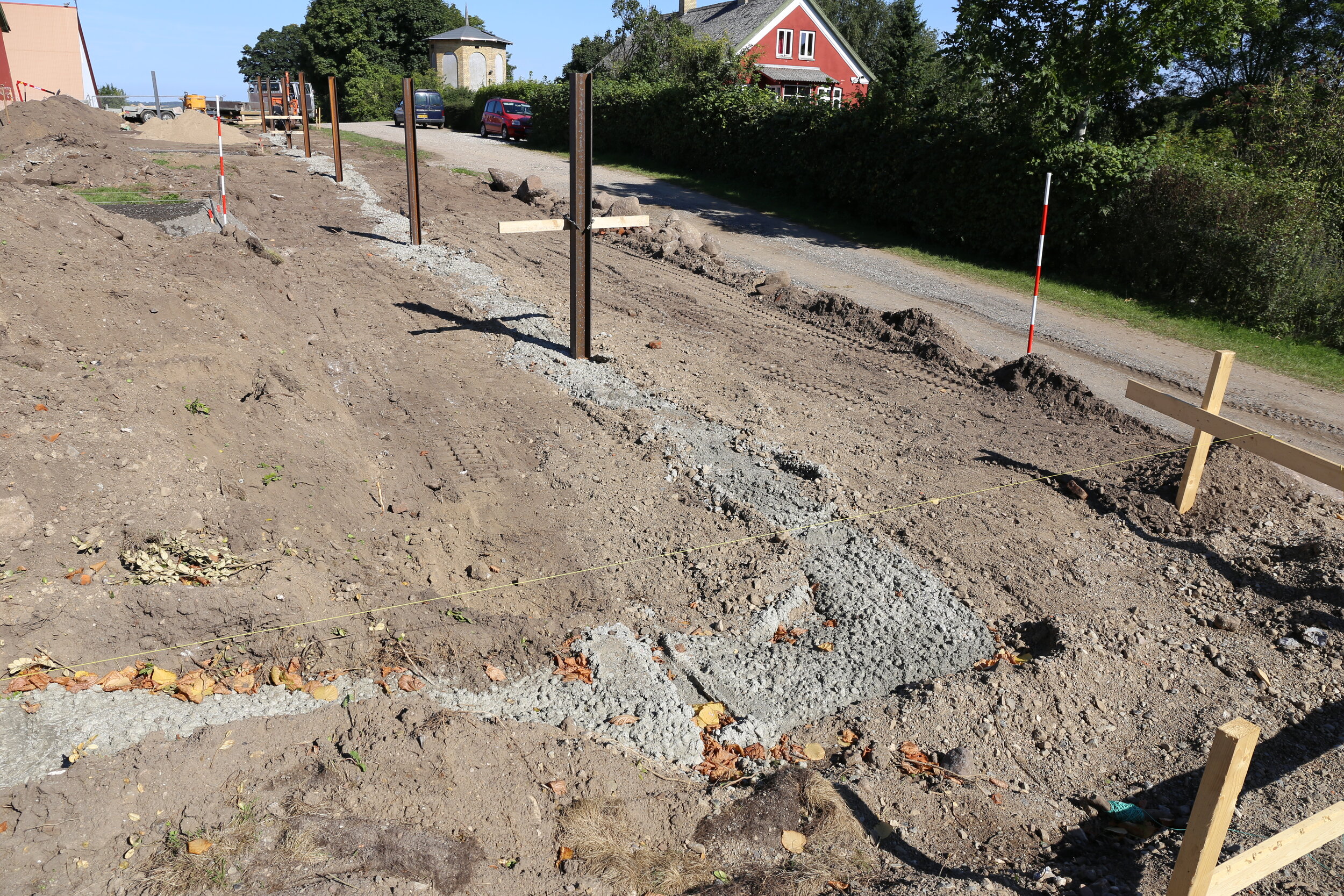
ORANGERY, ORCHARD, POLLINATOR GARDEN DESIGN IN DENMARK
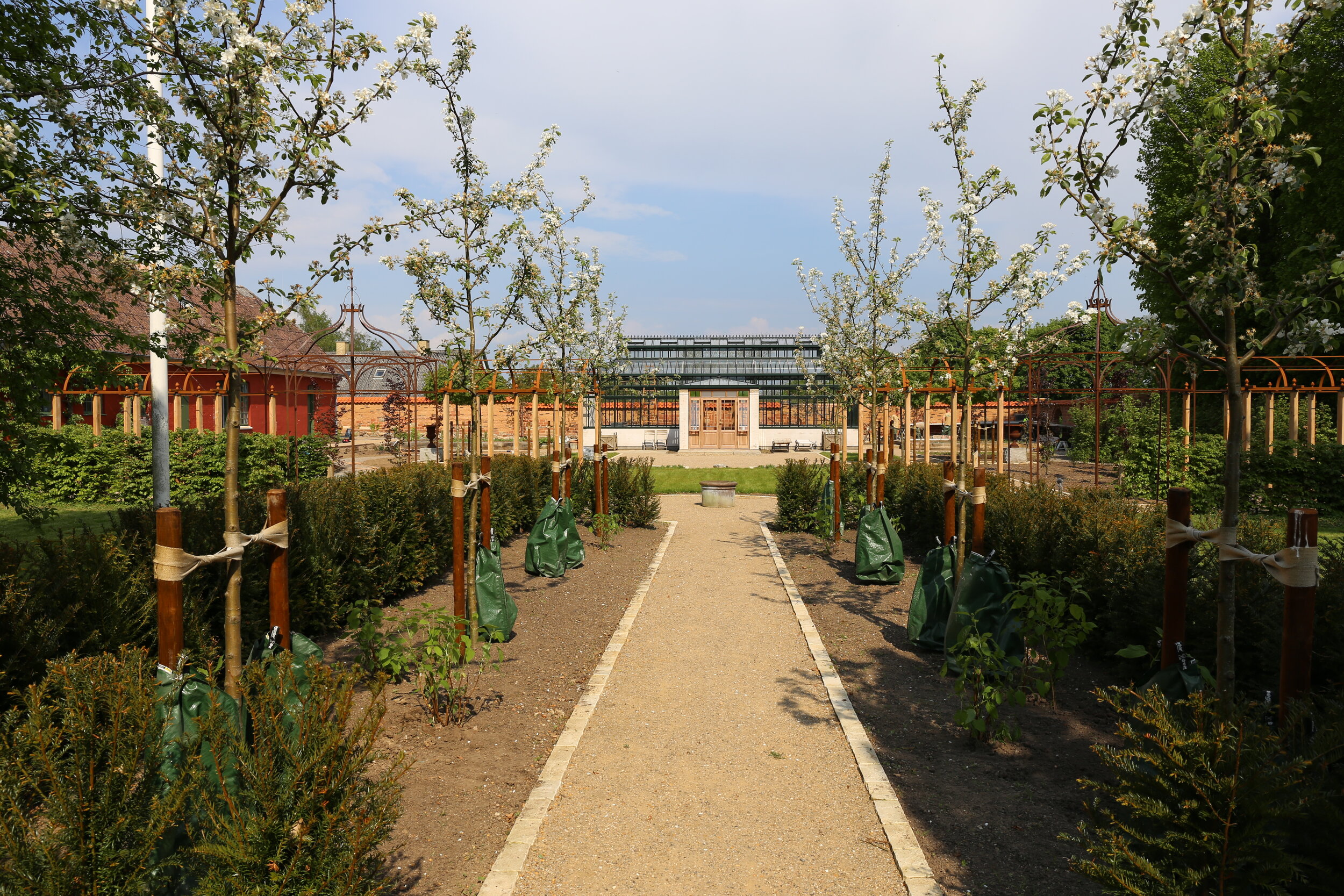
The completed garden brings together the project's central ideas: a strong architectural axis, a productive orchard, crafted pergola walks, formal evergreen structure, and planting that supports seasonal change and pollinator activity. From the main pathway, the orangery reads as the garden's destination. Closer views reveal the material details, changing silhouettes, blossom, foliage, and intimate spaces that allow the garden to be experienced differently throughout the year.
Traditional Garden Design for Øle - Munkebo, Denmark.
A private garden in Munkebo, Denmark, designed for a coastal site with stormwater challenges. With multi-level terraces, orchards, and outdoor living spaces, the design transforms a narrow site into a resilient and beautiful retreat.
“A Coastal Garden Balancing Stormwater, Elevation, and Sea Views”
The Øle Garden in Munkebo, Denmark, was designed for a long, narrow coastal site with dramatic elevation changes and direct views toward the sea. The project addressed complex challenges of stormwater management, walkability, and multi-level circulation, transforming the property into a sequence of distinct outdoor experiences.

Site Plan and Section
Three main terraces structure the design:
Upper level: street access and parking
Middle level: house entrance and social gathering spaces
Lower level: garden, party zone, and service areas

Zoning Diagram
Phase-by-phase construction allowed flexibility while ensuring ecological solutions for drainage and site sustainability. Pathways, terraces, and plantings create a rhythm of transitions from private to open zones, enriching the garden’s sense of sequence and coastal identity.

Planting and Layout Plan
The result is a landscape that merges functionality, ecology, and aesthetics, reflecting LASD Studio’s philosophy of designing gardens as living systems in harmony with nature.
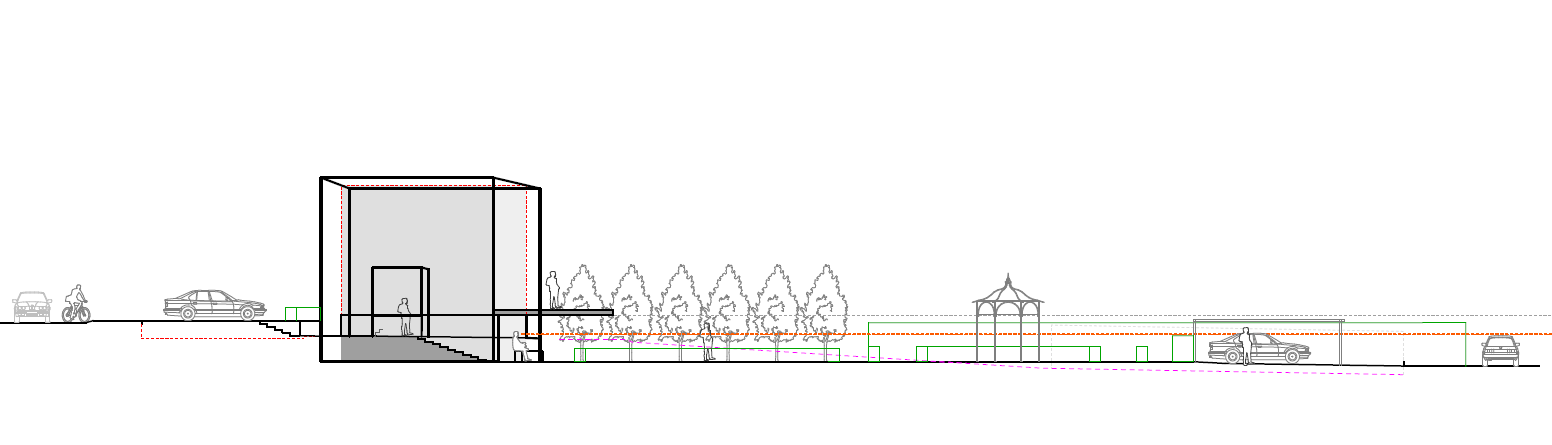
Longitudinal Section
Øle Have i Munkebo, Danmark
En kystnær have med fokus på natur, funktionalitet og æstetik
Denne private have i Munkebo ligger på en langstrakt grund med markante niveauforskelle og enestående udsigt over havet. Projektet er udviklet med vægt på kystnært havedesign, klimatilpasning og stormvandsløsninger, samtidig med at haven skaber smukke oplevelser gennem hele ejendommen.
Tre hovedniveauer i havens design
For at imødekomme grundens udfordringer er haven opdelt i tre primære terrasser:
Øverste niveau - adgang og parkering
Her er ankomsten organiseret med plads til parkering, let adgang til huset og et klart arkitektonisk udtryk.
Mellemste niveau - husets indgang og opholdszoner
Haven omkring huset er skabt til sociale aktiviteter med terrasser, stier og beplantning, som binder indgang og ophold sammen.
Nederste niveau - have, festområde og servicezoner
Det lavest beliggende niveau rummer større opholdsrum, haveliv, selskaber og funktionelle serviceområder, tæt forbundet til havudsigten.
Klimatilpasning og økologiske løsninger
En væsentlig del af projektet er håndtering af regnvand og erosion i det kuperede terræn. Stier, trapper og regnbede er designet til at lede vandet sikkert gennem grunden, samtidig med at planterne understøtter et sundt økosystem.
Havedesign med udsigt og sekvenser
Designet skaber en række oplevelsesrige overgange – fra det private til det åbne, fra intime gårdrum til store udsigtsrum. Beplantningen består af robuste arter, tilpasset det danske klima og den kystnære placering, som sikrer både biodiversitet og lavt vedligehold.
LASD Studio’s filosofi i praksis
Øle Have er et eksempel på, hvordan landskabsarkitektur, bæredygtighed og hverdagsliv kan forenes. Projektet afspejler LASD Studios vision om at skabe levende systemer, hvor natur, mennesker og arkitektur udvikler sig i balance.