
7 architectural elements of Spanish Colonial Revival Garden Style
Spanish Revival design brings the timeless beauty of Mediterranean and Colonial architecture to modern gardens. From white stucco walls to wrought-iron detailing, this guide explores the key design features - and how LASD Studio integrates them into contemporary landscapes across California and Spain.
LASD Studio - Modern Masters of Spanish Colonial Revival Landscape Design
LASD Studio specializes in Spanish Colonial Revival landscape architecture, reinterpreting Mediterranean traditions through ecological design and modern technology.
Founded in San Diego and led by Principal Designer Yura Lotonenko, who now lives and draws daily inspiration from the landscapes of Spain, LASD Studio connects two worlds — the birthplace of the style and the region where it flourished. This dual perspective allows our team to design authentic, historically grounded, and climate-resilient gardens that honor the past while embracing the future.
Whether designing a Mission Hills courtyard, a Coronado estate, Santa Barbara Historical Designation, Rancho Santa property, Beverly Hills family residence or Pasadena heritage, our work captures the essence of classic architecture while integrating water-wise planting and sustainable materials.
Our Spanish Revival Garden Projects
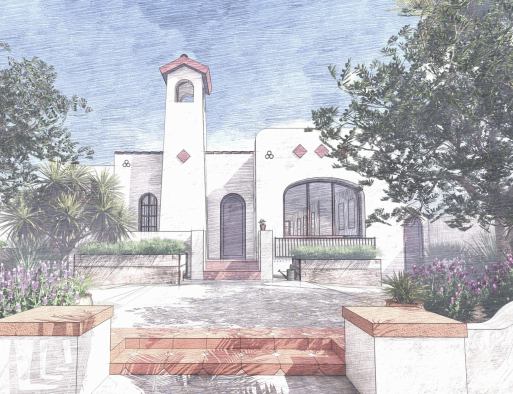
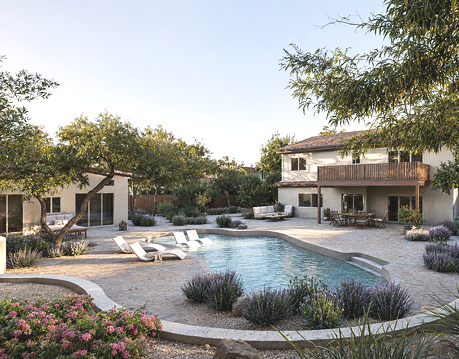


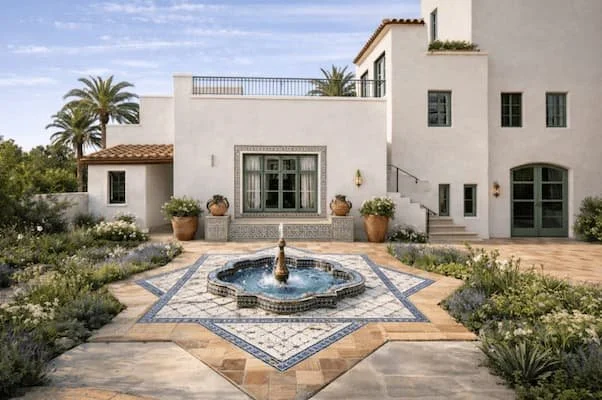
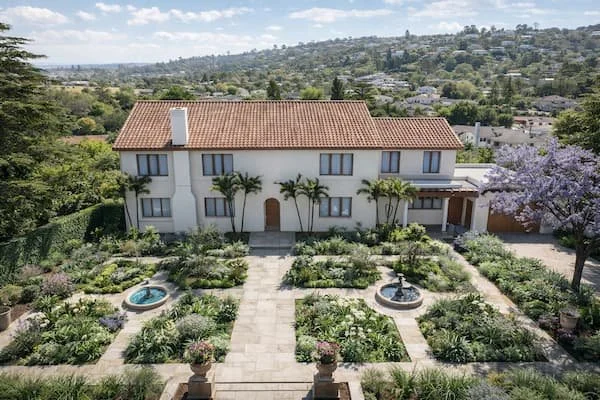
Bohemian Minimalism - Spanish Revival Garden in Mission Hills
A reinterpretation of early 20th-century elegance with modern drought-tolerant plantings and handcrafted detailing.
Mission Hills Sanctuary Garden - Spanish Colonial Revival Reimagined
A walled courtyard garden designed for serenity, texture, and Mediterranean biodiversity.
Spanish Revival Garden - Coronado, California
A coastal retreat balancing classical symmetry and native Californian flora.
Baroque Garden Design - Hillcrest, San Diego
A layered approach merging Spanish geometry with sculptural planting and artful expression.
Are you thinking of renovating your house? Are you bored of all the basic and cliché house designs that you see almost everywhere? Do you want your house to stand out among all the houses and be unique?
Well, there's a solution to all, and it's called 'Spanish Colonial Revival' Landscape architecture & Garden Design. You might want to get your house renovated in this exact way after you are done reading this blog!
However, the question that arises is:
What is Spanish Revival Garden Design?
Spanish-inspired homes built in the first decades of the 20th century are usually described as Spanish Colonial or Spanish Revival. The style emerged in California and Florida in the early 1900s, echoing the romantic spirit of Mediterranean villages, Andalusian courtyards, and Moorish craftsmanship.
Influenced by the Spanish Empire’s architectural traditions, Spanish Revival design became a bridge between continents - uniting European heritage and Californian light. Whitewashed walls, terracotta roofs, arched arcades, and lush gardens became hallmarks of this timeless aesthetic.
In landscape architecture, Spanish Revival gardens go beyond decoration. They embrace geometry, texture, and shade, creating enclosed courtyards, tiled fountains, and fragrant plantings of lavender, rosemary, olive, and citrus. Every element is designed to bring balance between architecture, climate, and nature - a principle that continues to inspire LASD Studio’s work today.

Example of Spanish Revival Architecture
What are the Key Elements of a Spanish Revival Garden Design?
Spanish décor is pretty easy to achieve in your home. In Spanish Revival architecture, multiple new features were added to the classic designs to create a well-defined look.
Let's now explore some of the exterior and interior elements that define the Spanish revival style.
The Mediterranean Color Palette
The Mediterranean style greatly influences the color scheme of Spanish revival homes. In addition to this, the color palette is greatly inspired by the coastline.

Example of the Mediterranean Color Palette - Spanish Revival
Some of the prominent colors you will see in Spanish revival homes are shades of blue, white, green, and brown. You will also notice the use of earthy and rusty tones such as taupe, chocolate brown, terracotta, red, yellow, mustard, and burnt orange.
Who would not fall for these colors?
White Stucco Exterior and Walls of the Garden
Stucco is used as a decorative coating for walls and ceilings, external building siding, and sculptural and artistic material in architecture.

Old Santa Barbara White Stucco Walls - aged patina
It is a hand-applied mixture of cement, water, and lime and adds a textured finish to the wall. Textured lime-based plaster keeps interiors cool and bright while harmonizing beautifully with gardens and tiled courtyards.
Additionally, stucco is also able to tolerate moisture and expansion up to a certain point. This roughly applied stucco is covered with white paint to give an overall aesthetic look.
Terracotta Roof Tiles
This is one of the most immediately recognizable traits of the Spanish revival style. Spanish Revival roofs are usually low-pitched and are often even flat. Iconic curved tiles symbolize craftsmanship and tradition, often with visible part of the wooden beams.

Typical Spanish Revival Roof
There is excessive use of Terracotta reds and oranges in the Spanish décor color theme, and this is usually very prominently highlighted on the roof tiles most of the time.
Balconies and Facades that enrich Garden Design
Balconies are also an essential element that you will find in almost every house built on the Spanish revival design.

Spanish Revival Balconies and Facades - culture rich, used by time and alive, as all in one compositing.
They are created to enjoy the fresh air and to see the beautiful view from your house. They are usually decorated with flowers and plants to give it a refreshing look.
Moreover, there is a lot of intricate and detailed work done on the balconies to make them appealing to the eye.
It is very hard not to fall in love with these balconies!
Ornamental Ironwork and detailing in Spanish Revival Garden
Another thing that you will notice when you step into a Spanish revival-style house is the use of wrought iron throughout the home, be it wooden gates, light fixtures, stair railings, window grills, or lanterns. You will find ironwork everywhere!

Artistic Ironwork - Spanish Revival Street Lantern
The iron lanterns are of significant importance in the Spanish revival style. They may be found at the entrance of the house and also inside the house.
Other than the lanterns, you may also see many potteries, candleholders, and carved wooden panels around the house.
All of this plays a significant role in Spanish interior design.
Spanish Courtyards and Patios
Spanish courtyards and patios are yet another crucial aspects of the Spanish revival décor.
Spanish-style patios are distinguished by the use of tiles, bricks, or flagstone flooring. Some may even be covered with wood. The walls are often made of stucco or brick and usually have a fireplace or planters.
These open-air rooms merge shade, water, and vegetation — LASD Studio often includes tiled fountains, olive trees, and drought-resilient plantings.
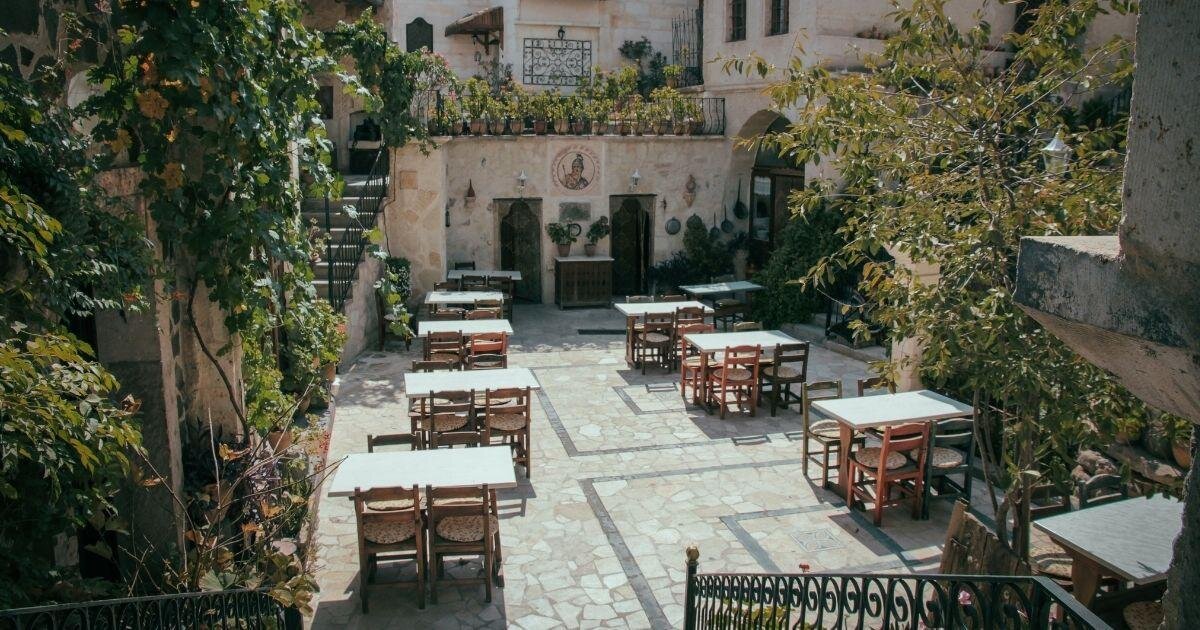
Example of Spanish Courtyards and Patios
Among some of the luxurious properties with Spanish-style patios and decks, most house owners also like to add an outdoor kitchen or cabinets with a Spanish theme.
The courtyards are not covered by a roof and are very spacious. You may also notice the extensive use of plantations on the courtyards and the patio.
Hand-crafted Furniture for Garden Design in Spanish Revival
Spanish Revival furniture is characterized by dark solid woods, hand-carved details, engraved turnings, sturdy trestle bases, and noticeable wrought iron scrollwork. Some dark wood choices include Mahogany, walnut, ebony, teak, rosewood, and butternut.
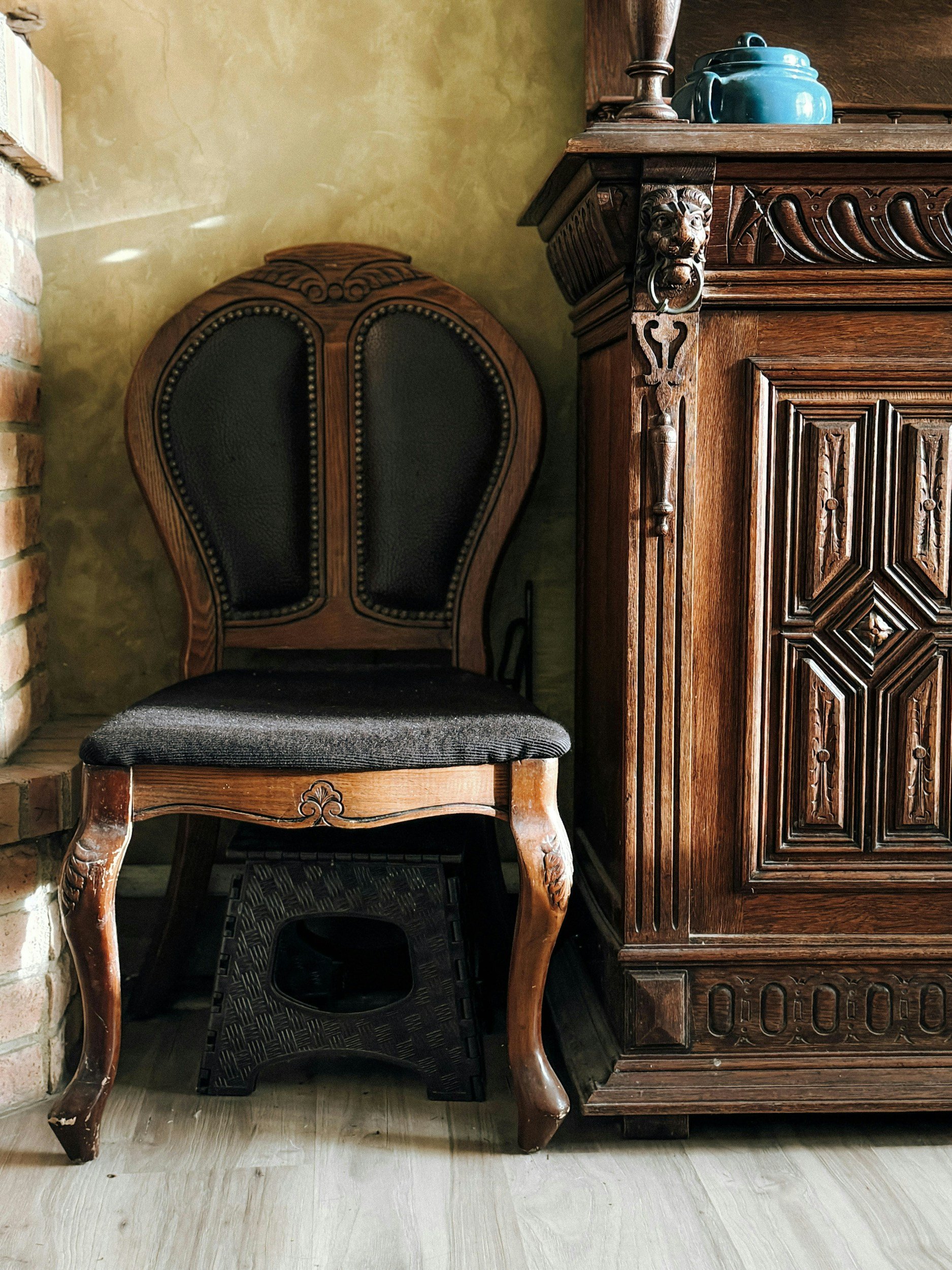
Example of Hand-crafted Furniture, Traditional Spanish
The entrance hall or the other open areas usually have a dark, straight-back trestle bench that is designed using distressed warm, brown leather
In kitchens and dining rooms, dark and distressed wood tables work really well, including those with chunky bases and twisted legs. Tables can be paired with Gothic straight-back chairs with richly colored, Baroque patterned fabric for Garden Design.
How LASD Studio Interprets Spanish Revival Today?
At LASD Studio, we see Spanish Colonial Revival not as a frozen historical style, but as a living dialogue between past and present - between California’s sunshine and Spain’s timeless craftsmanship.
Our work reimagines this heritage through what we call Bohemian Minimalism - a contemporary interpretation that preserves the soul of traditional Spanish Revival design while stripping away excess. The result is a refined, poetic simplicity: sunlit courtyards, handmade textures, olive trees and succulents dancing in the same garden, and architecture that breathes with the rhythm of nature.
Every project merges historic craftsmanship with ecological intelligence.
We use authentic materials - lime plaster, terracotta, wrought iron - but combine them with native and drought-tolerant planting for long-term sustainability.
Our proprietary BIM-based landscape system connects art, technology, and performance:
It integrates irrigation and water-use data directly into the design.
Calculates ecological performance and maintenance ROI.
And ensures precision from the first sketch to construction drawings.
This fusion of artistry and analytics allows us to create gardens that are both emotionally timeless and environmentally intelligent.
Start Your Transformation
From San Diego to Mallorca, LASD Studio designs landscapes rooted in Mediterranean beauty, sustainable innovation, and timeless artistry.
Each project tells a story of place, history, and emotion, where water, stone, and plants form a living architecture.
If you’re ready to elevate your home into a work of art, inspired by the spirit of Spanish Colonial Revival and reimagined for the 21st century, we’d love to guide you.