
~ Designing Landscapes as Evolutionary Systems ~
Foundational Research — Master’s Thesis, University of Copenhagen (2013)
This research represents the theoretical foundation of LASD Studio’s approach to landscape architecture as a living, evolving system, rather than a fixed aesthetic composition.
Developed as a Master’s thesis at the University of Copenhagen (2013), the work investigates how landscapes can be designed to adapt over time, absorb uncertainty, and operate as open systems shaped by ecological, social, and temporal processes.
The research builds upon and critically extends key theoretical positions in landscape architecture, including J. B. Jackson’s Landscape Three, R. P. Sieferle’s Total Landscape, Martin Prominski’s Designing Landscapes as Evolutionary Systems.
Rather than treating landscape as a static end product, the thesis proposes landscape as a dynamic framework for ongoing transformation.
Core Principles
The research identifies a set of design principles that define how we think about landscapes as evolutionary systems, such as:
1. Link to the Past
Landscape is understood as the outcome of accumulated processes. Design must acknowledge historical layers—ecological, cultural, and spatial—as active agents shaping future evolution.
2. Holism
Landscape is a coherent whole composed of interrelated components: natural processes, human activity, infrastructure, and time. No element can be designed in isolation.
3. Creativity
There is no universal design formula for evolving landscapes. Each project requires original, context-specific responses emerging from site conditions and systemic relationships.
4. Adaptability
Design operates under uncertainty. Evolutionary landscapes integrate time as a design dimension, allowing systems to adjust to unpredictable future conditions.
5. Formlessness
Form is not fixed or final. Landscape form emerges from processes rather than being imposed in advance. Openness to transformation is a core quality.
Methodological Framework
Based on these principles, the research proposes a five-stage design method for designing evolutionary landscapes.
Site Analysis
Identification of existing conditions and dominant processes shaping the landscape, including ecological, historical, and spatial dynamics.
Programming
Definition of a conceptual development strategy responding to identified issues and latent potentials within the landscape system.
Dynamic Implementation
Translation of programmatic themes into dynamic processes rather than static design objects.
Implementation Over Time
Phased realization across short-, medium-, and long-term horizons, acknowledging that landscape evolution unfolds over decades.
Design Evaluation
Qualitative assessment of landscape performance, focusing on systemic consequences rather than fixed outcomes.
This method shifts the role of the designer from form-giver to evolving process orchestrator.
Case Study: Chernobyl Exclusion Zone
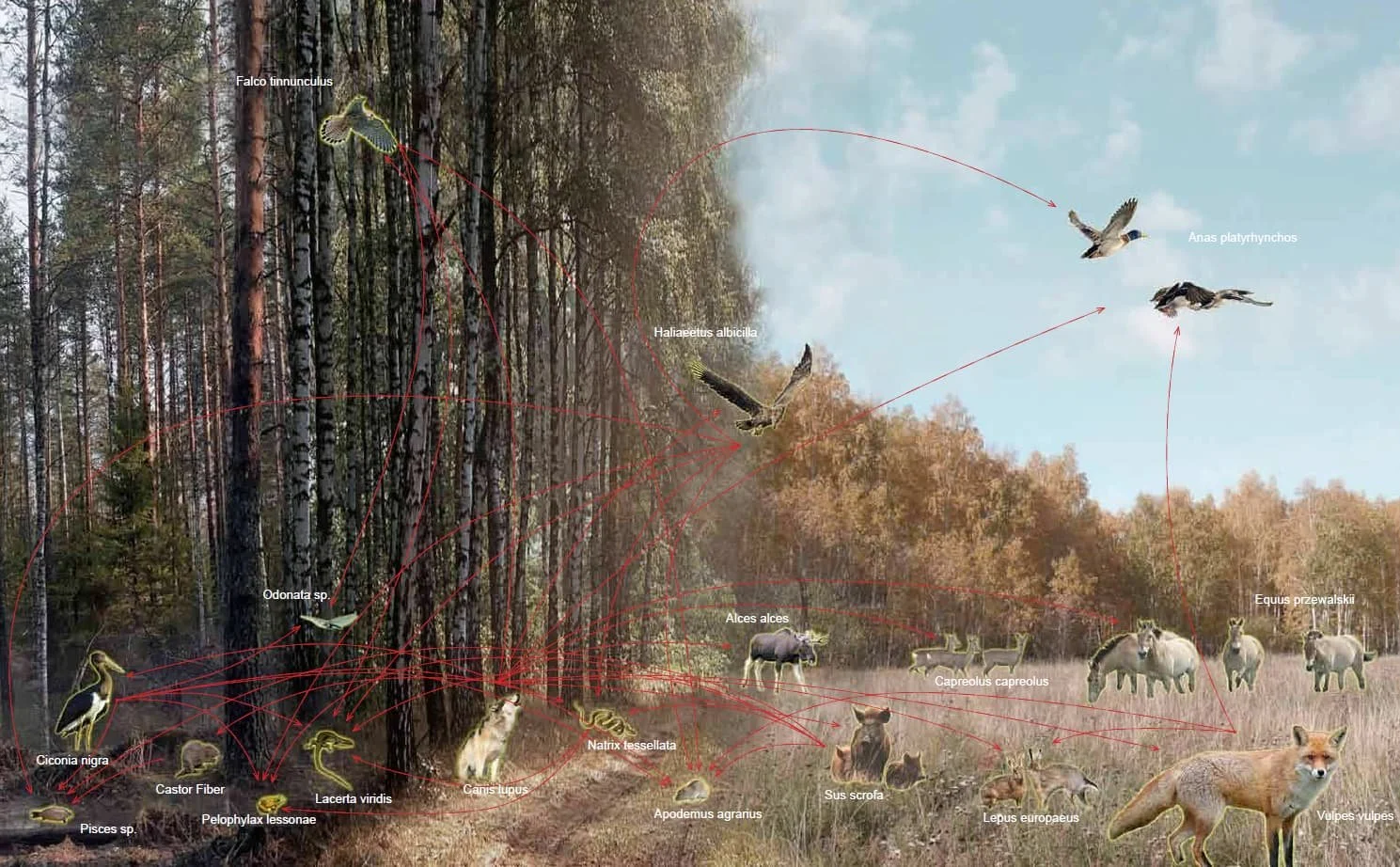
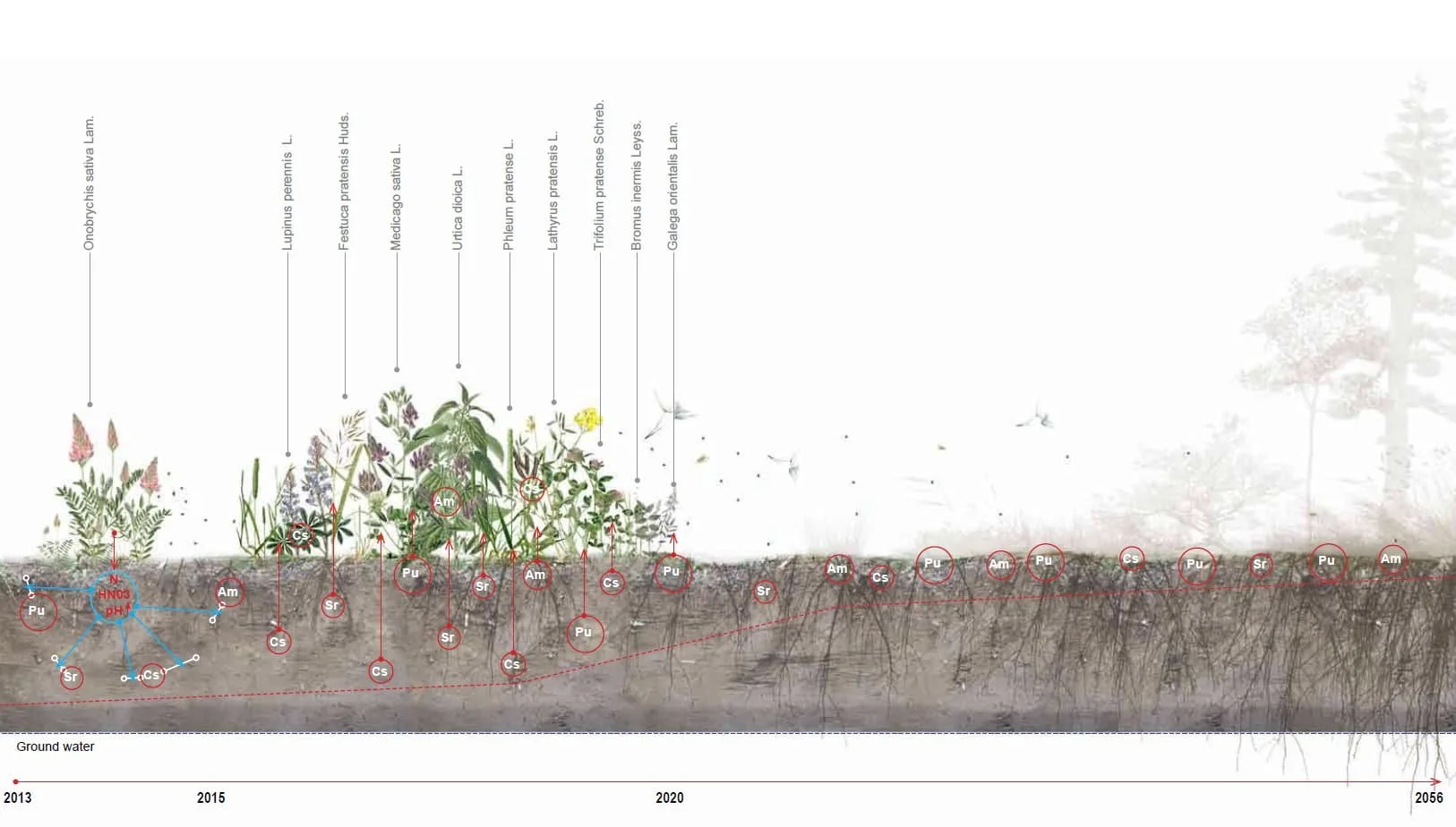
The theoretical framework is tested through a speculative design project for the Chernobyl Exclusion Zone, one of the most extreme post-industrial landscapes in the world.
Rather than remediation through control or reconstruction, the project explores how self-organizing ecological processes can be supported and guided over time.
The Chernobyl case demonstrates: Landscape evolution under minimal (post-apocalyptical) human intervention, The resilience of ecological systems, The role of design as a long-term strategic framework rather than a finished plan.
Publication & Access
This research was developed and submitted as a Master’s Thesis at the University of Copenhagen, Denmark (2013).
The full document is available via Academia.edu:
https://www.academia.edu/9612310/Designing_landscapes_as_evolutionary_system_Chernobyl
This work forms the conceptual foundation for later research, including Southern California Wildlife and Biodiversity Landscape Restoration (2026).
Relationship to LASD Studio Research
This thesis represents the origin point of LASD Studio’s research trajectory.
Subsequent work expands these ideas into applied ecological restoration, biodiversity-driven design, quantitative landscape performance frameworks, CAD-based automation of evolutionary processes.
This research forms the theoretical foundation of LASD Studio’s ongoing work in designing landscapes as evolving, intelligent systems.