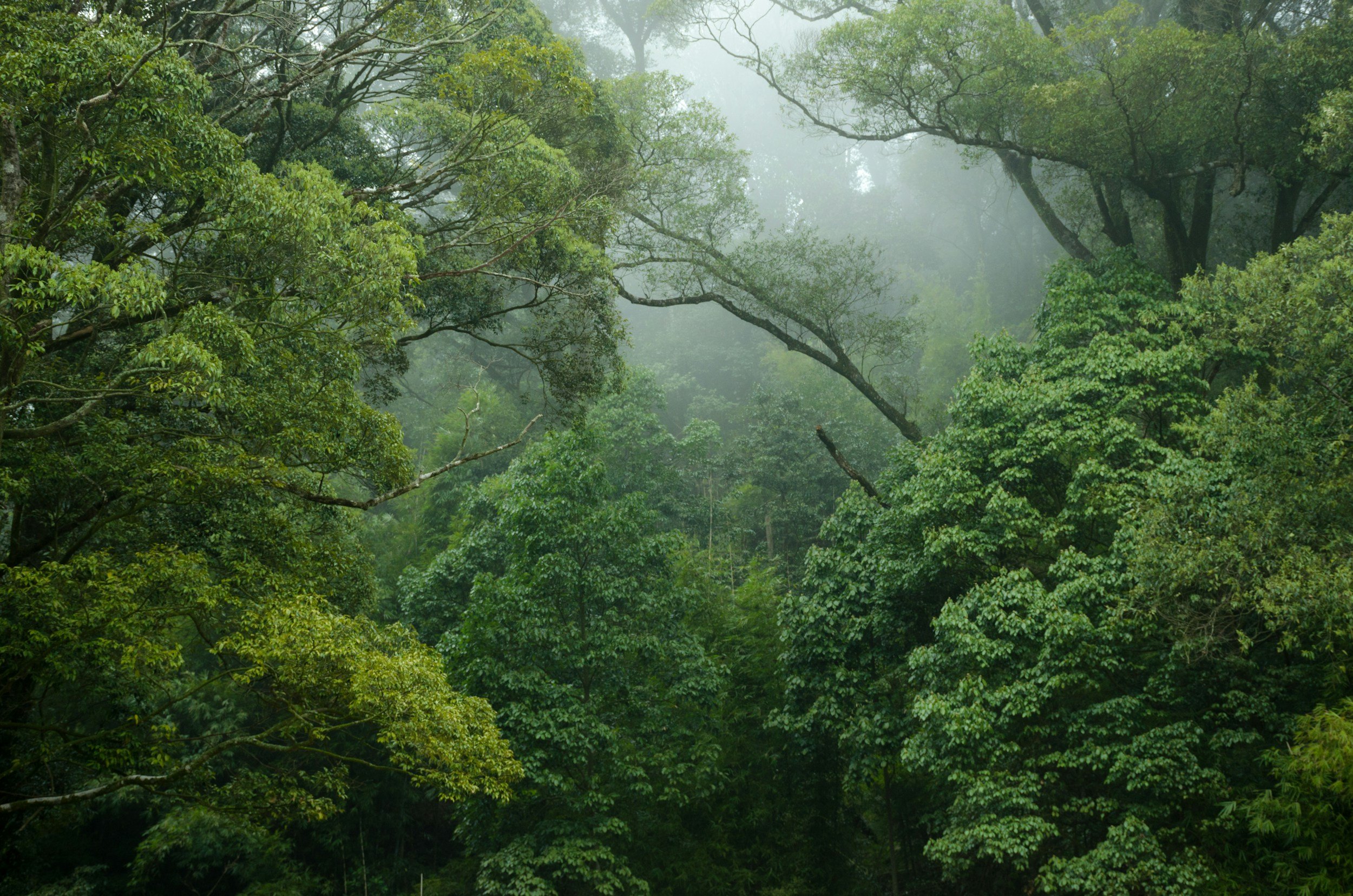
Mediterranean Campus Landscape Design in Southern California: Climate Logic, Low-Maintenance Systems, and Global Precedents
Mediterranean landscape design in Southern California is frequently reduced to a visual language.
In practice, it is a climatic response with measurable performance implications.
Along the Pacific edge, moderated temperature patterns, salt-laden air, and extended dry seasons create a specific set of environmental conditions. These conditions do not favor ornamental approaches. They favor systems.
For educational campuses - including schools, universities, and research environments - this distinction becomes critical. Landscape is required to perform under continuous use while remaining operationally and ecologically sustainable over long timeframes.
This article positions Mediterranean landscape design not as a style, but as a framework. It examines how climate logic, water efficiency, material durability, and spatial organization can be aligned to produce campus environments that remain stable, usable, and maintainable over time.
For many projects developed by LASD Studio in Rancho Santa Fe, La Jolla, and Point Loma, this perspective forms the underlying structure of the design process.
See ongoing practice based research by LASD Studio.
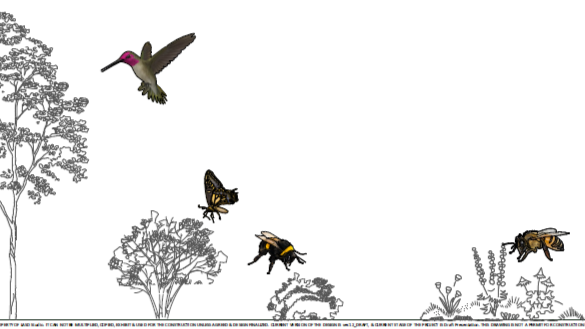
Mediterranean Climate as a Design Framework
The Mediterranean climate is typically defined by dry summers and wetter winters, found along western continental edges between roughly 30 and 45 degrees latitude (2).
Southern California follows this pattern, but the coastal edge adds complexity. Marine influence introduces cooler summers, intermittent fog, and salt-laden air. The result is not a stable condition, but a shifting one. Landscapes must operate across both dryness and coastal exposure.
To remain precise, it is useful to treat Mediterranean design not as a style, but as a set of interrelated systems.
Microclimate comes first.
Outdoor spaces are shaped through enclosure and shade so that they remain usable across more hours of the day and more periods of the year.
Water follows.
Planting and irrigation are aligned with seasonal demand, not fixed schedules. Soil is treated as an active component, not a neutral base.
Material is selected with time in mind.
Surfaces must endure constant use, resist slipping, drain correctly, and age without failure.
And finally, there is the role of landscape as a teaching environment.
On campuses, planting and water systems often carry an additional layer of meaning, quietly demonstrating ecological processes without requiring fragile or high-maintenance installations.
Performance on Educational Campuses
A campus landscape is successful when it continues to function years after installation.
The most common breakdown does not come from design intent. It comes from misalignment with operations.
Irrigation systems that cannot be managed. Planting that requires constant intervention. Materials that deteriorate under real use.
Grounds teams are responsible for maintaining these environments with finite resources. The landscape must therefore be designed with maintenance already embedded into its structure.
Paths must carry movement without conflict. Spaces must accommodate gathering without degradation. Planting must tolerate variation in care without collapse.
Shade becomes essential, not optional. It improves thermal comfort and extends the usability of outdoor space. Water use must be controlled not only for sustainability, but for operational predictability. Chemical dependency must be minimized.
If the landscape cannot be maintained within real schedules and budgets, it will slowly lose coherence.
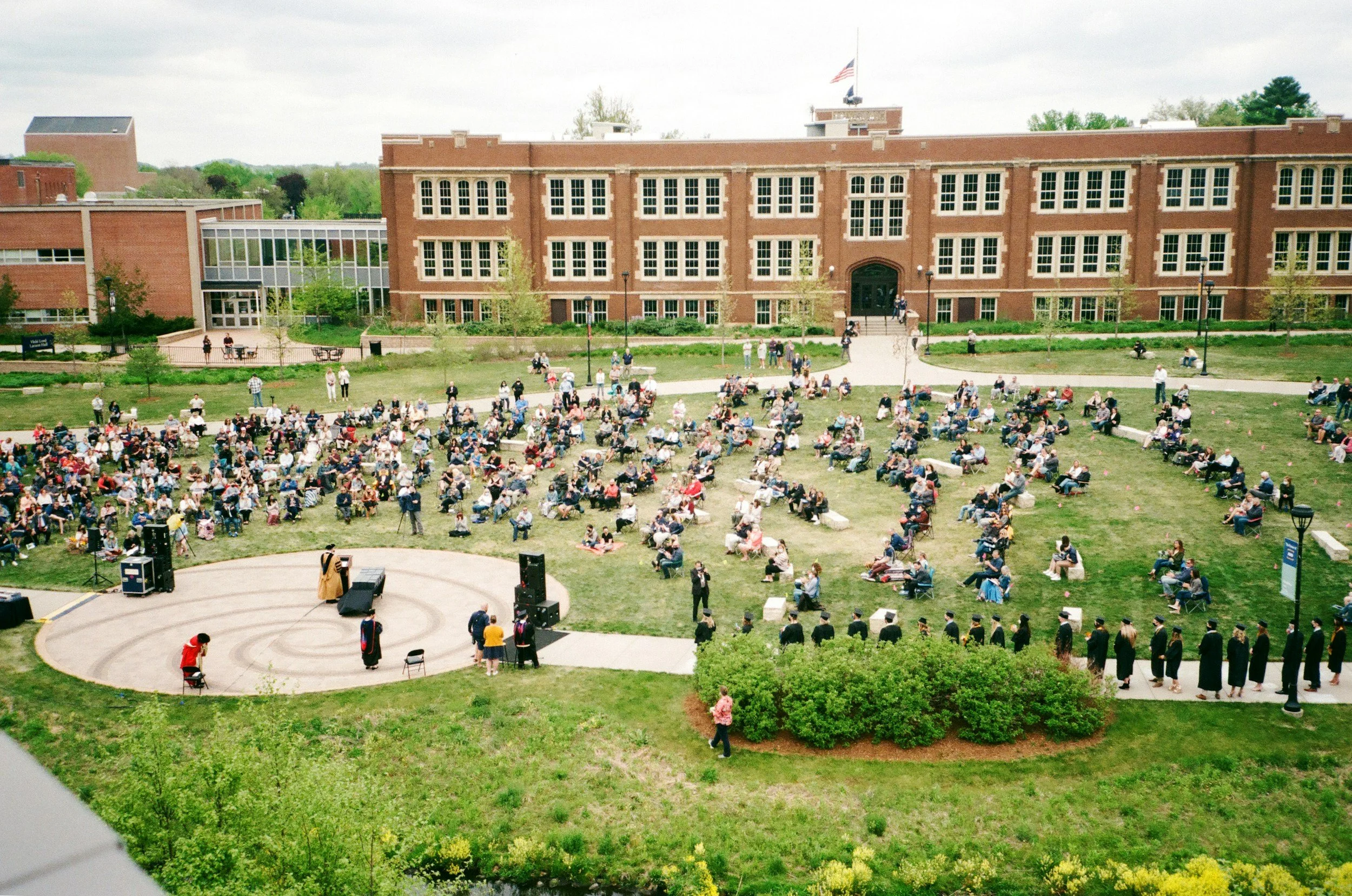
Coastal Conditions: Wind, Salt, and Soil
Coastal environments introduce a specific set of pressures that are often underestimated.
Wind shapes movement and exposure, salt affects plant tissue and material durability, and soils tend to drain quickly, reducing water retention.
Salt spray is not a surface issue. It is a biological constraint. Young growth is particularly vulnerable, especially in exposed zones such as entrances and main circulation corridors (10).
Wind and salt also affect infrastructure. They accelerate wear, shorten material life cycles, and increase long-term costs.
Research from the Food and Agriculture Organization emphasizes the importance of shelter systems in coastal environments. Vegetation and spatial enclosure can significantly reduce wind speed and salt exposure (10).
In practice, this leads to a quiet but important shift.
Enclosure is not only about privacy. It stabilizes the environment. Irrigation is not only about water delivery. It protects plant surfaces.
Planting is not selected individually. It is organized as a system of tolerance and compatibility (9).
See our Ecological Planting Plans
Water Movement and Landscape Hydrology
Water efficiency in California is not achieved through reduction alone. It is achieved through gentle, calculated coordination.
Planting, soil, irrigation equipment, and scheduling must operate together. When aligned, they reduce water use while improving long-term stability (4) and ecological sustainability, that further improve wildlife and biodiversity that lead to economical, social and environmental benefits.
The Model Water Efficient Landscape Ordinance establishes a framework where total water use must remain within defined limits based on climate and landscape type. Educational campuses fall directly within this structure.
Over time, two moments determine success.
The first is establishment. Plants require time to develop root systems. If this phase is rushed or under-supported, long-term failure becomes likely.
The second is ongoing calibration. Systems such as CIMIS provide climate data that allows irrigation to respond to actual conditions rather than assumptions (11). When used properly, they reduce water use, energy demand, and operational costs.
This is where Mediterranean logic becomes precise.
Not in appearance, but in adjustment.

Campus Landscape as System
When Mediterranean logic is applied to campuses, the landscape begins to organize itself into clear functional layers.
Courtyards become centers of daily life. They provide shade, enclosure, and stability. Circulation routes remain durable and legible, allowing movement without conflict. Outdoor learning areas remain flexible, able to adapt without requiring constant redesign. Ecological zones operate in the background, capturing water and supporting environmental performance.
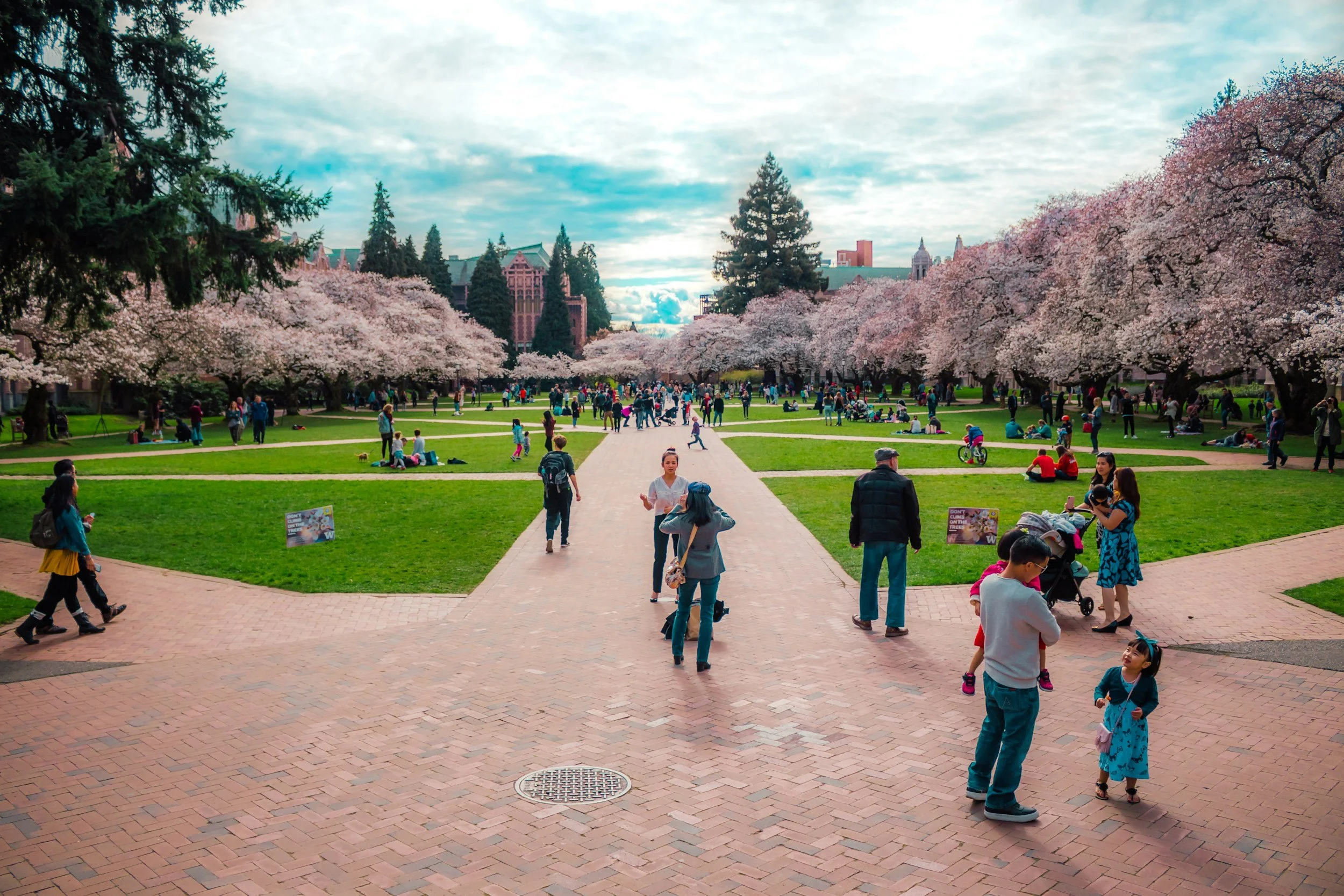
Global and Local Precedents
The strength of this approach becomes clearer when viewed across built examples.
At the University of California San Diego, landscape strategy has shifted toward drought-tolerant planting and water-efficient systems across large portions of the campus. This is supported by irrigation infrastructure upgrades and climate-responsive control systems (15)(16).
Nearby, the Salk Institute offers a different kind of reference. Its central courtyard is minimal, almost austere, yet it functions as a powerful social and spatial element. It is not decorative. It is structural to the experience of the place (17).
Internationally, similar patterns appear under different pressures.
At the University of Cape Town, water scarcity forced a move away from high-maintenance landscapes toward resilient planting and simplified systems (7).
Monash University integrates water-sensitive urban design at a campus scale, treating landscape as part of a broader hydrological system (18).
At the University of Western Australia, water management is embedded into campus operations, including the use of recycled water (19).
The Jardí Botànic de Barcelona offers a different perspective. It organizes planting according to global Mediterranean climates, demonstrating how ecological logic can structure landscape systems across regions (20).
LASD Studio Approach
A Mediterranean campus landscape should feel calm and resolved.
But beneath that calm, it must be precise.
At LASD Studio, landscape is developed as a system aligned with architecture, climate, and long-term use. Spatial structure, planting logic, soil behavior, and water systems are considered together, not separately.
This allows the project to remain consistent from concept through construction and into operation.
LASD Studio develops landscape architecture projects for campuses across San Diego County, Southern California, Spain and Worldwide.
Mediterranean landscape design, when applied rigorously, operates as infrastructure.
On educational campuses, it provides a framework for organizing space, regulating climate, and managing resources within long-term operational constraints. Its effectiveness lies not in visual identity, but in alignment between environmental conditions, human use, and maintenance capacity.
When these systems are resolved, the landscape becomes inseparable from the institution itself - supporting daily life while quietly shaping its performance over time.
References & Credits
National Weather Service. “San Diego Climate.”
Encyclopaedia Britannica. “Mediterranean Climate.”
AASHE. How to Guide: Promoting Sustainable Campus Landscapes.
California Department of Water Resources. Model Water Efficient Landscape Ordinance.
University of Alberta. Grounds Service Level Standards.
University of Cape Town News. “Tackling Water Shortages on Campus.”
UC Davis. Landscape Plant Selection Guide.
FAO. Protection from Wind and Salt Spray.
CIMIS. Irrigation Scheduling.
UC IPM. “Evapotranspiration.”
City of Del Mar. Water Efficient Landscape Guidelines.
U.S. EPA. “Green Infrastructure.”
UC San Diego. Drought Action Plan.
UC San Diego Sustainability. “Water.”
Salk Institute. “The Courtyard.”
Monash University. “Water Sensitive Urban Design.”
University of Western Australia. “Sustainable Campus.”
Government of Catalonia. “Botanical Gardens Barcelona.”
LASD Studio.