

Contemporary Landscape Design in Chula Vista, California
A pool-centered contemporary garden in Chula Vista where clean geometry, shaded outdoor rooms and climate-responsive planting support elegant daily life, privacy and biodiversity.
A pool-centered private garden where architectural clarity, outdoor life and ecological intelligence become one composition.
A successful contemporary landscape is not defined by how many features it contains. It is defined by how naturally every element belongs together.
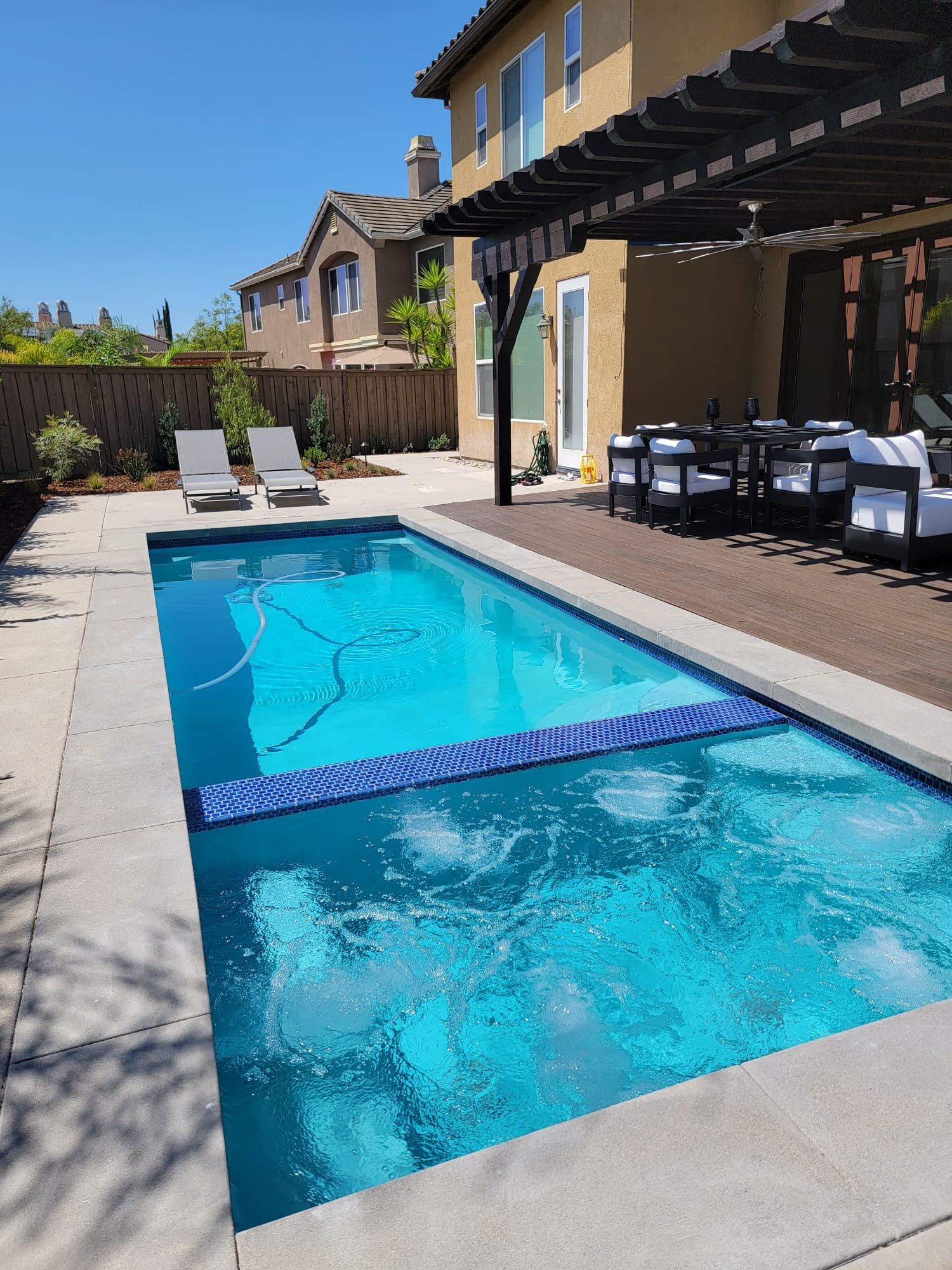
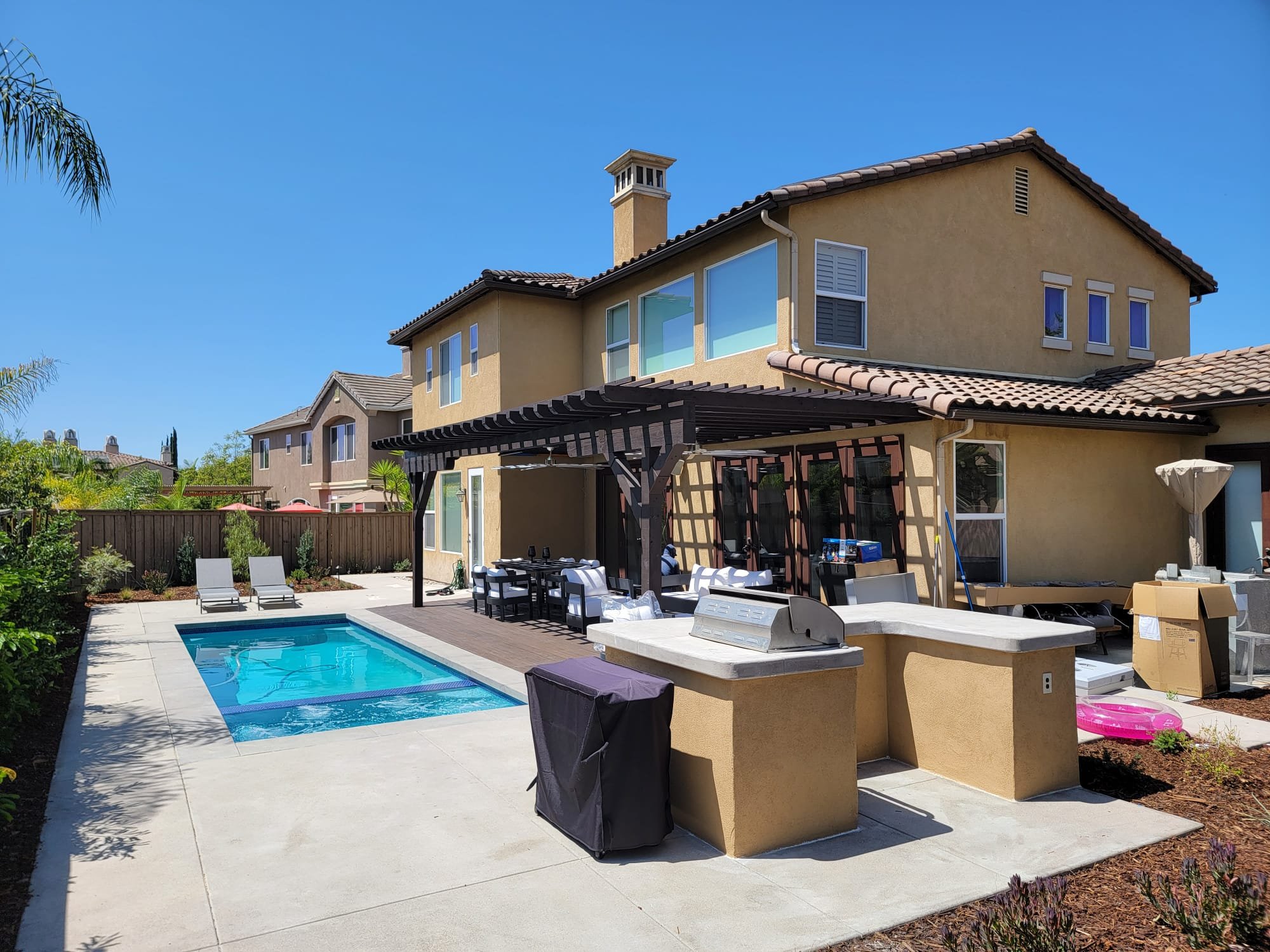
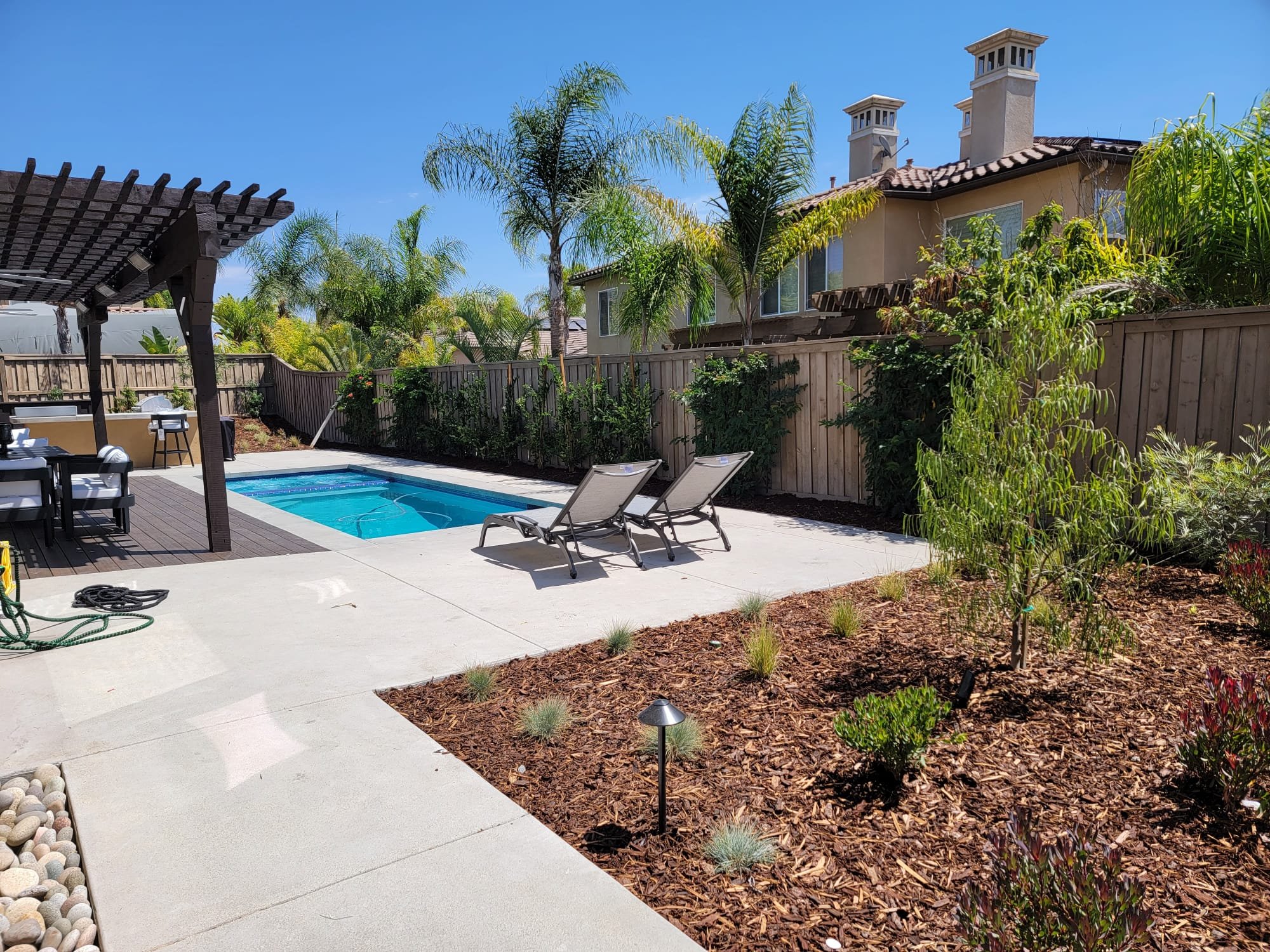
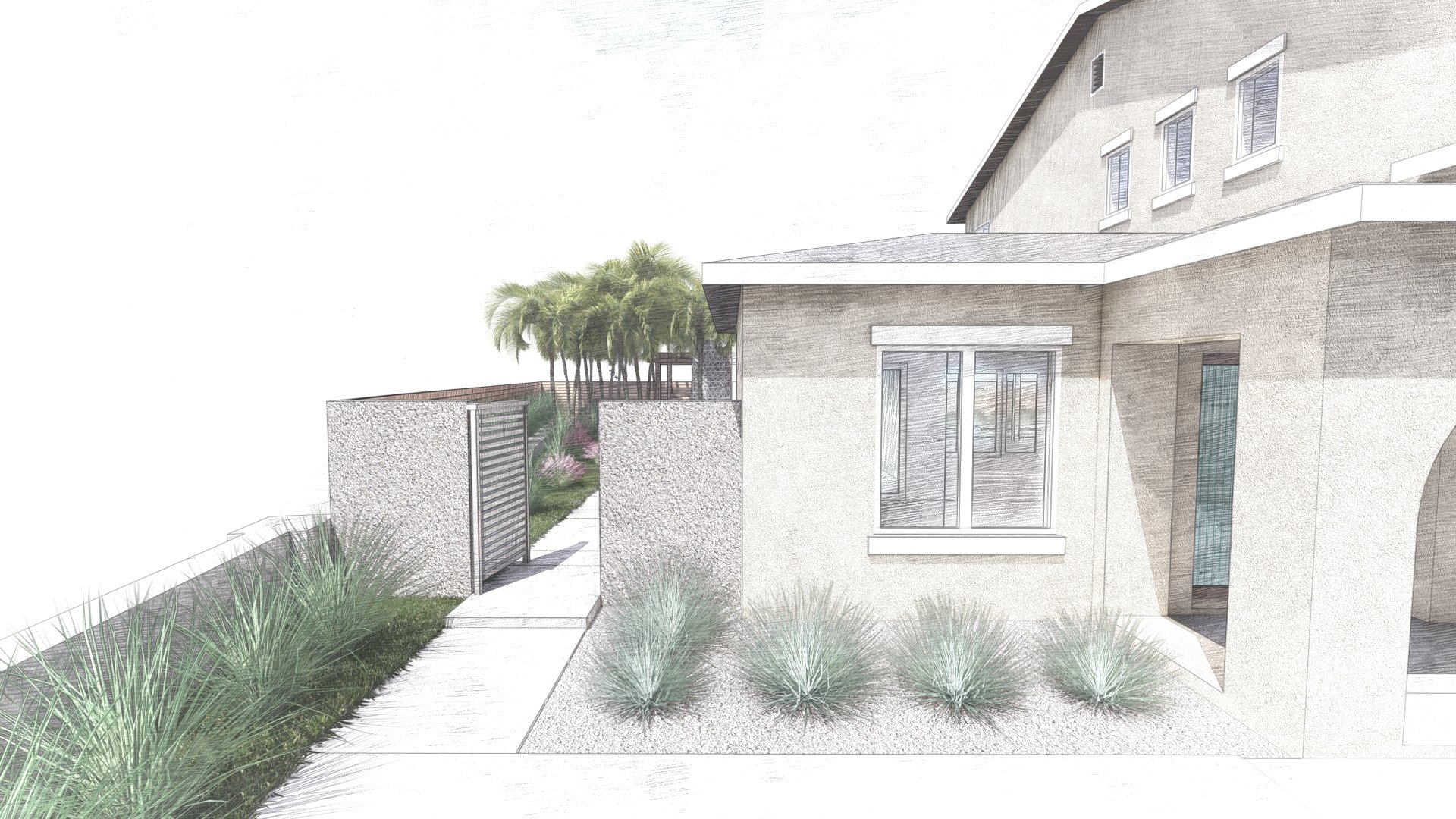
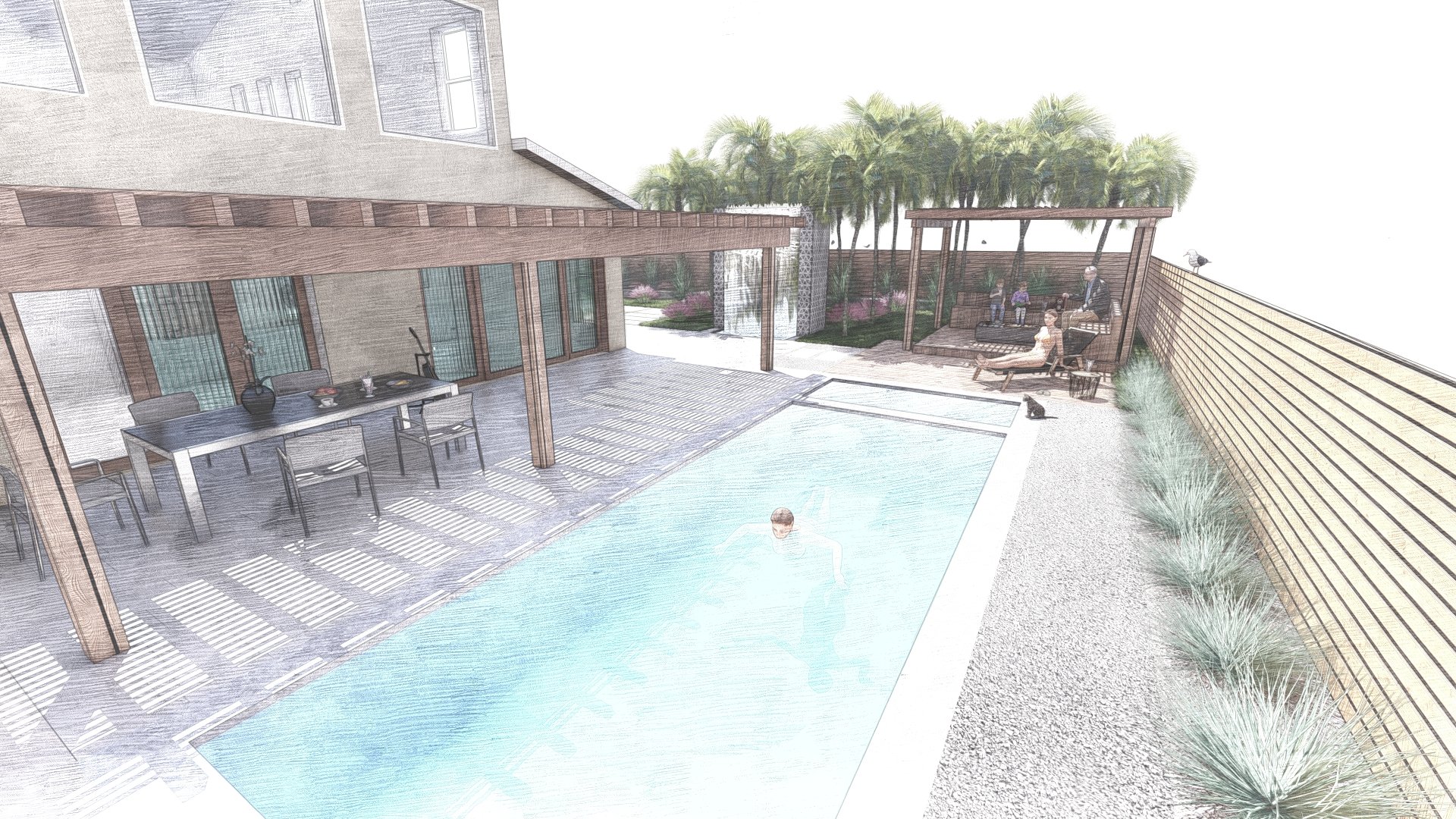
For this private Chula Vista property, LASD Studio organized the landscape around a clear architectural framework: a calm swimming pool, a generous terrace, a shaded pergola, an outdoor kitchen and layered perimeter planting. Rather than competing for attention, these elements work as one continuous environment for daily life, entertaining and quiet retreat.
The result is controlled without feeling sterile, refined without unnecessary ornament, and ecologically alive without losing its contemporary character.
Location: Chula Vista, California
Project Type: Private Residential Landscape, Contemporary Patio, Lounge Zone and Garden Design
Design Focus: Poolside living, shaded dining, outdoor kitchen, contemporary ecological planting, privacy, water and soil performance
Status: Built / Installed
Construction cost: $280,000
Design Studio: LASD Studio
One Clear Composition for the Entire Property
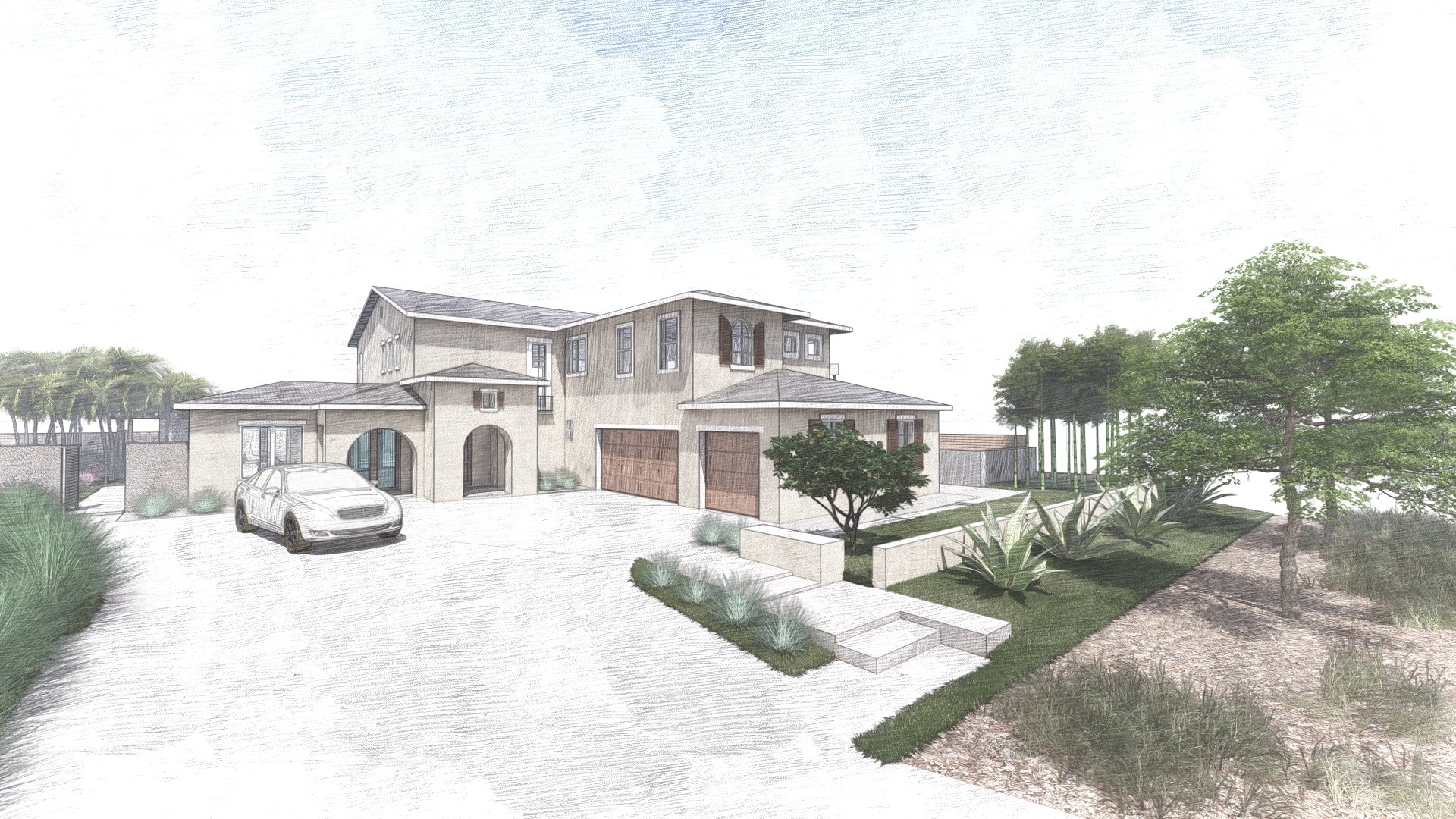
The house opens outward, and the garden begins at that threshold.
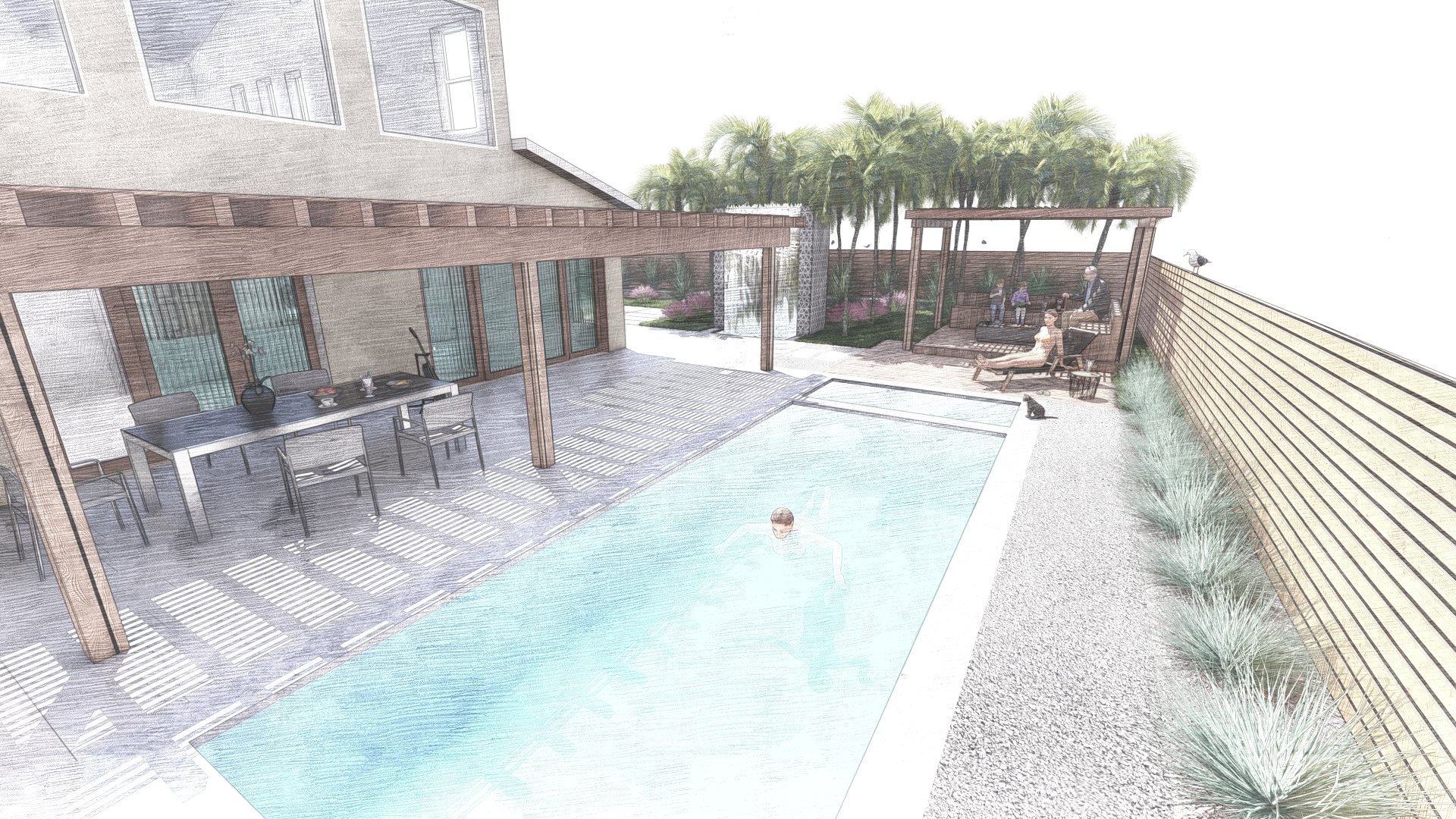
A visual line extends from the interior, crosses the long patio and continues toward the water. The pool becomes the central organizing plane: reflecting sky and architecture, bringing light into the composition and establishing a sense of calm across the property.
Terrace, pergola, lounge, outdoor dining, kitchen and planting are positioned in relationship to this center. Movement is direct and intuitive. Spaces feel generous because circulation is resolved before decorative elements are introduced.
This clarity matters on a substantial landscape project. Without a strong organizing idea, individual contractor decisions can gradually produce a collection of expensive but disconnected objects. Here, every decision reinforces the architecture and protects the coherence of the overall investment.
Outdoor Rooms Designed for Real Life
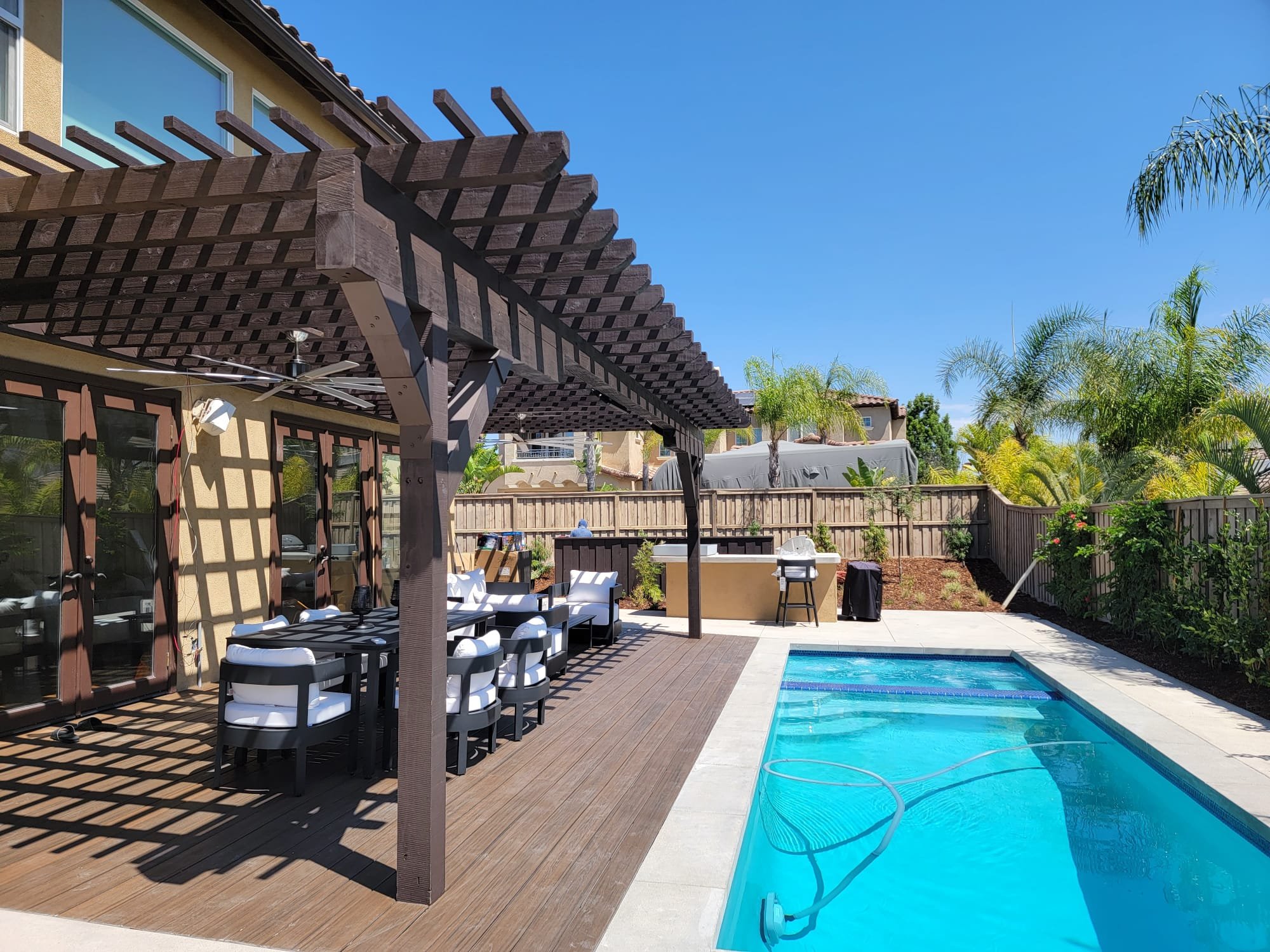
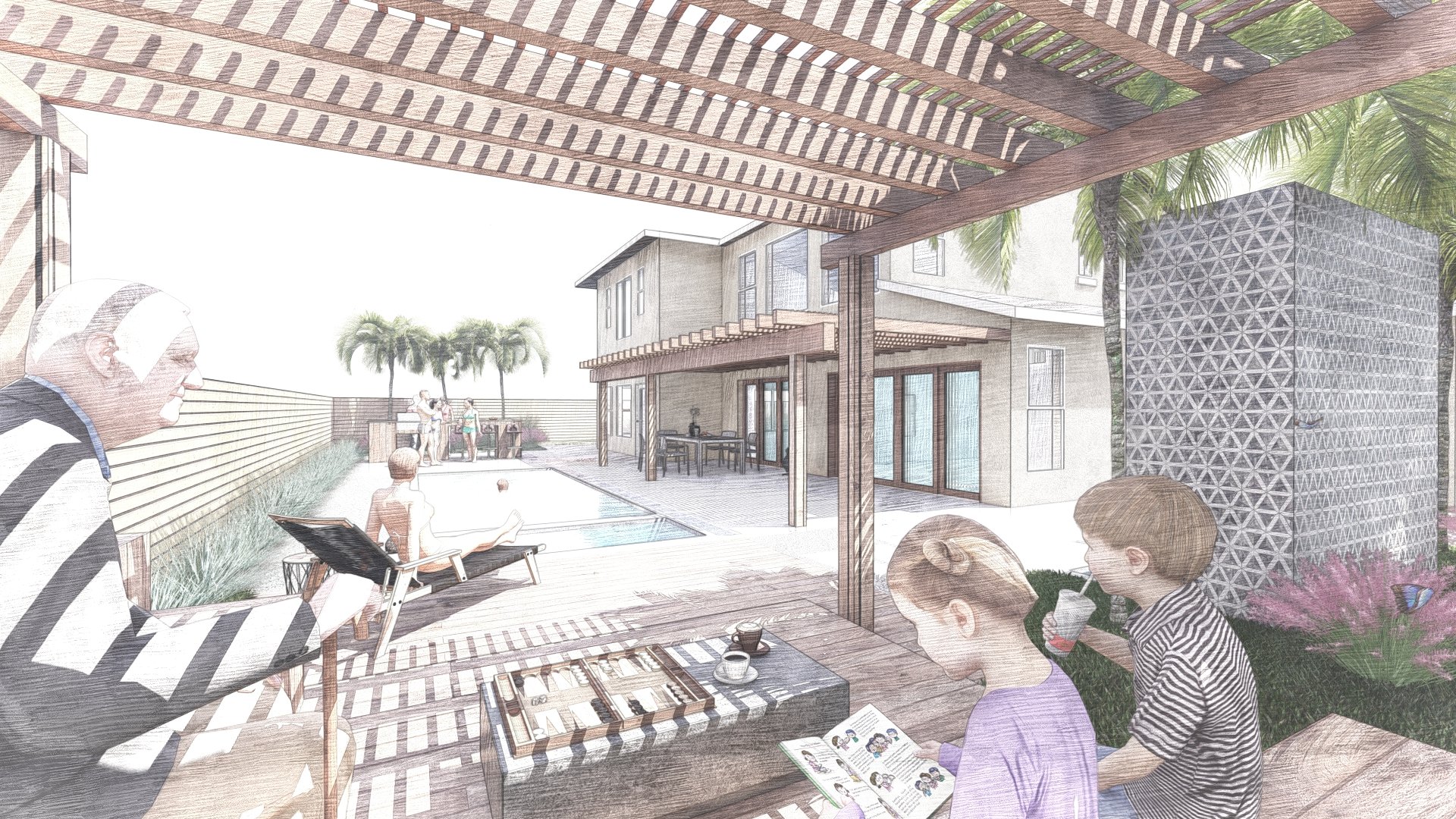
The pergola creates a room without walls.
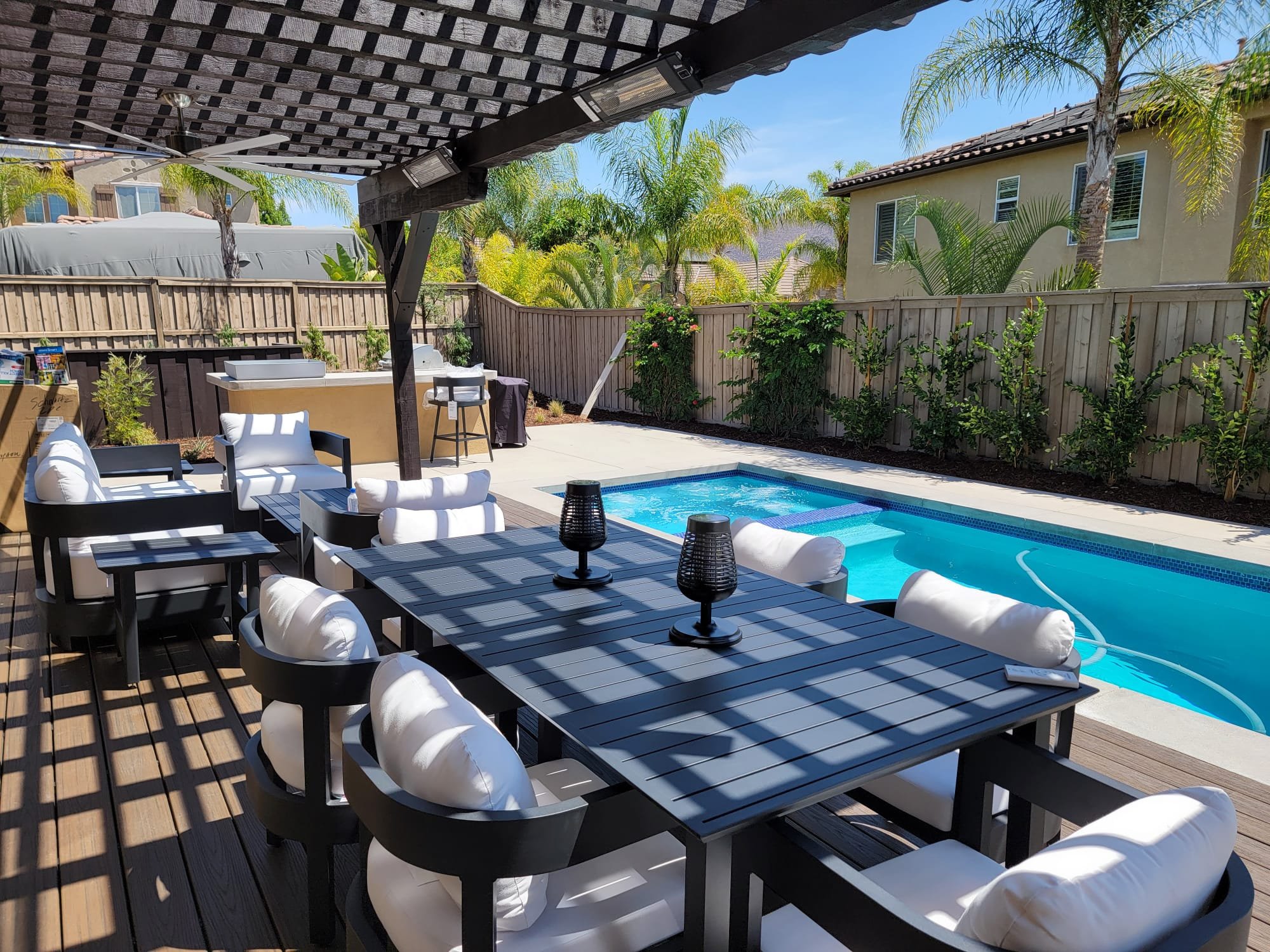
Its overhead structure introduces rhythm and moving shadow while preserving air, openness and connection to the pool. Morning light reaches across the dining area; midday shade makes the terrace comfortable; later in the day, shadows move gradually across wood, fabric and water.
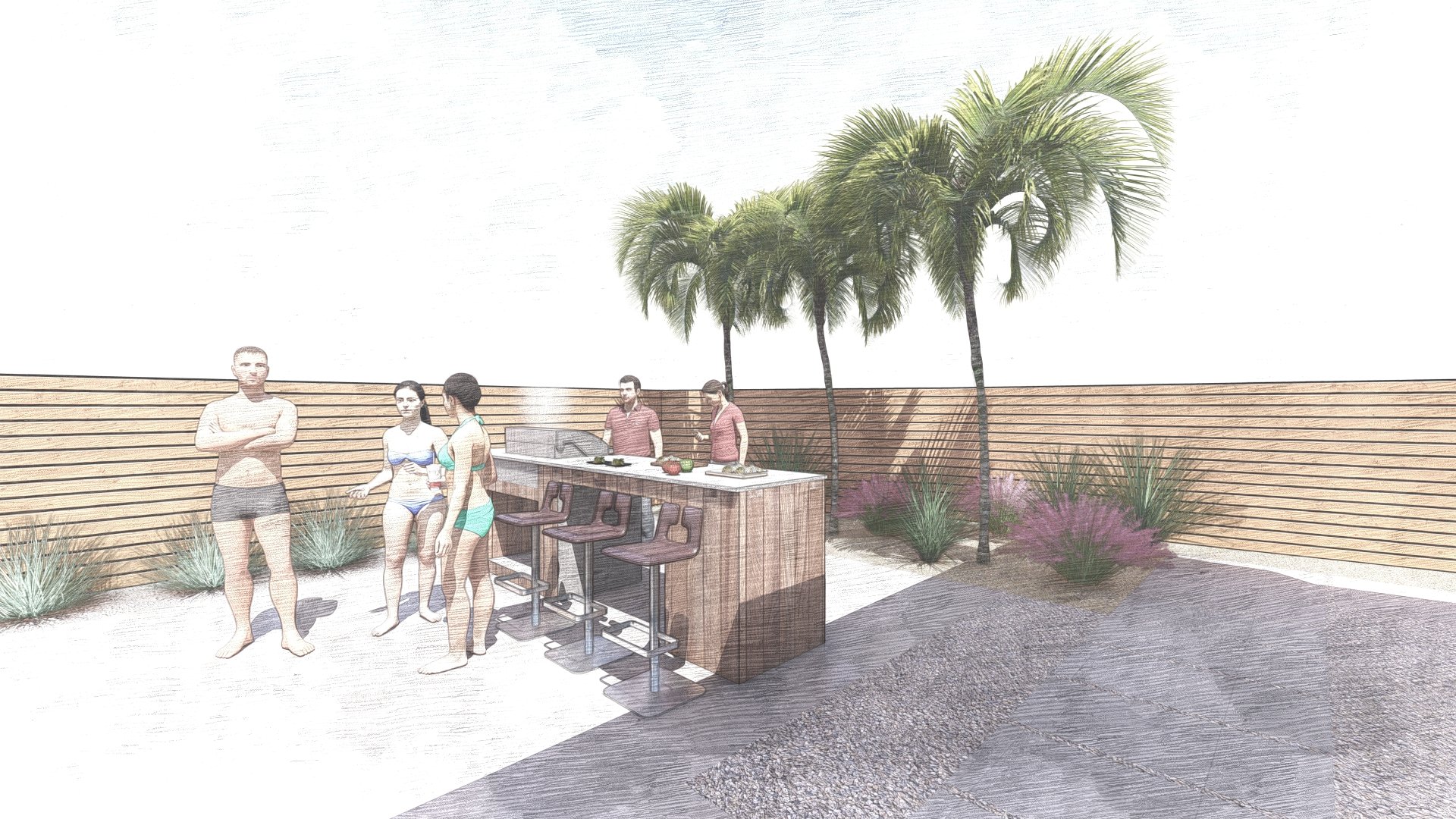
The outdoor kitchen is treated as an extension of the architecture rather than a freestanding appliance area. It supports family meals, larger gatherings and relaxed evenings without dominating the garden.
These spaces were conceived around the life that happens within them:
Quiet mornings beside the pool.
Comfortable outdoor dining protected from the strongest sun.
Informal gatherings around food, water and fire.
Open space for movement without visual clutter.
Privacy that does not make the garden feel enclosed.
The deeper luxury is not excess. It is resolution: a landscape that feels effortless because hundreds of decisions have been brought under one clear design direction.
Experience the Contemporary Garden in Chula Vista. A luxury estate design with modern pool, pergola, outdoor dining, and sustainable landscape architecture.
Materials That Create Calm and Continuity
Concrete establishes the primary ground plane. Its continuous geometry reinforces the contemporary architecture and gives the long patio visual order.
Wood introduces warmth and a more tactile human scale beneath the pergola and around the principal areas of use. The transition between concrete and wood is deliberately restrained—a change experienced through temperature, sound and movement rather than applied decoration.
Planting softens these architectural surfaces without obscuring them. The result is a balanced relationship between precision and growth, structure and seasonal change.
A Contemporary Garden Can Still Be Alive
Contemporary design does not need to produce a biologically empty landscape.
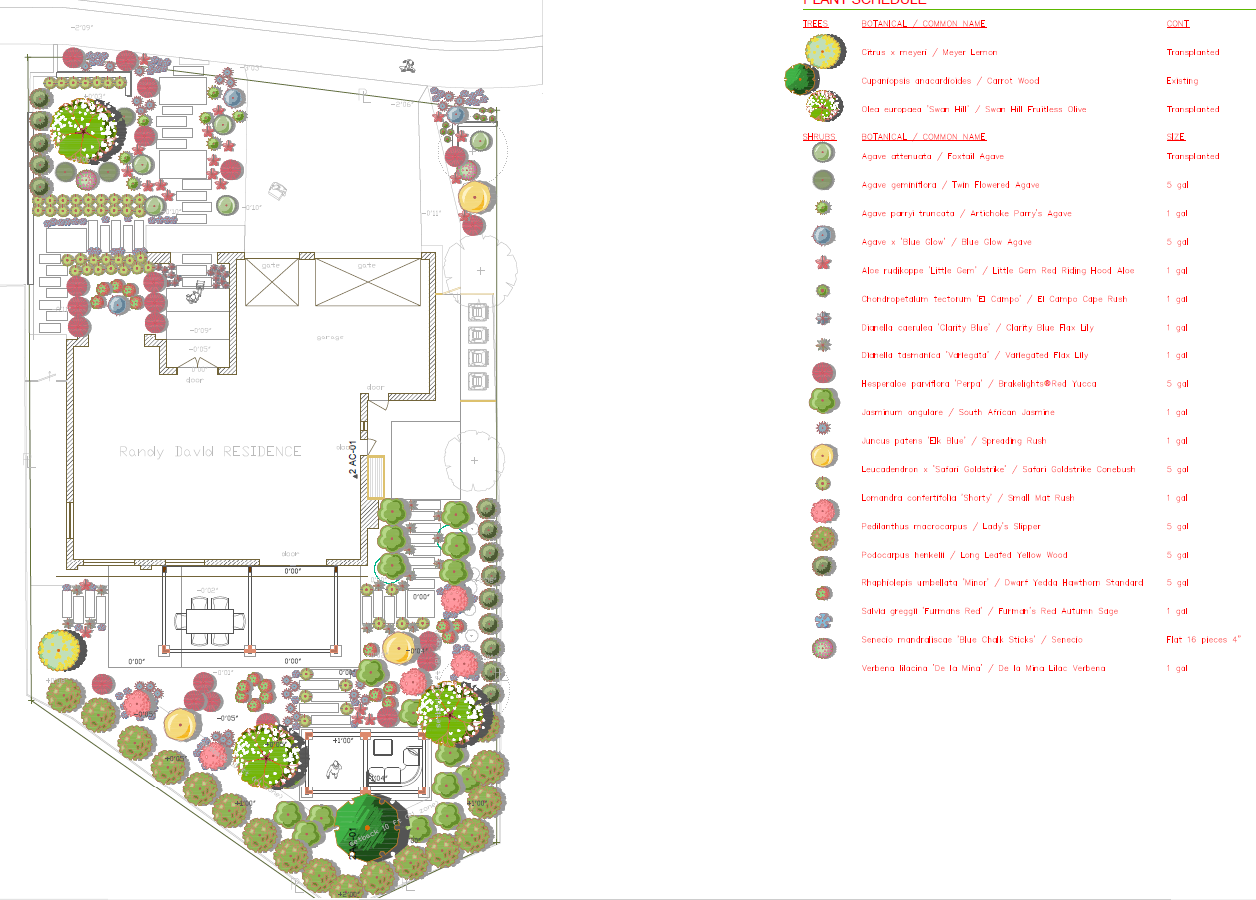
The open center of this garden is balanced by layered planting along its edges. Taller elements lift the canopy, shrubs create privacy and depth, and lower planting protects the soil surface while softening the boundary between hardscape and garden.
The planting strategy is conceived as a pollinator-supporting network rather than a collection of isolated ornamental specimens. A sequence of flowering plants can provide nectar and pollen through different parts of the season, while layered vegetation offers shelter and opportunities for wildlife movement.
This approach creates a garden that remains visually controlled while supporting butterflies, bees, hummingbirds and other beneficial species. Movement, sound and seasonal change become part of the experience of the property.
The California Department of Fish and Wildlife identifies pollinators as important contributors to plant reproduction and biodiversity. USDA Natural Resources Conservation Service guidance similarly emphasizes continuous and diverse bloom, nesting opportunities and protection from disturbance as fundamental components of pollinator habitat. California Department of Fish and Wildlife · USDA NRCS Pollinator Habitat Guidance
Water, Soil and Long-Term Landscape Performance
Ecological intelligence is not added to the project as a decorative narrative. It influences how the landscape performs. Planting is organized through hydrozoning so plants with compatible water requirements can be irrigated together. Soil strategy supports moisture retention where water is beneficial and drainage where roots require greater aeration. Groundcover helps reduce exposed soil and evaporation, while irrigation remains visually quiet within the composition. These principles align with California’s broader water-efficient landscape framework, which connects plant selection, hydrozones, irrigation efficiency, soil preparation and long-term water management. California Department of Water Resources — MWELO No universal water-saving percentage is claimed for this project. Actual performance depends on the final planting palette, irrigation equipment, installation, establishment period and ongoing management. The design objective is a landscape that uses water purposefully while maintaining shade, enclosure, seasonal interest and a genuinely garden-like atmosphere.
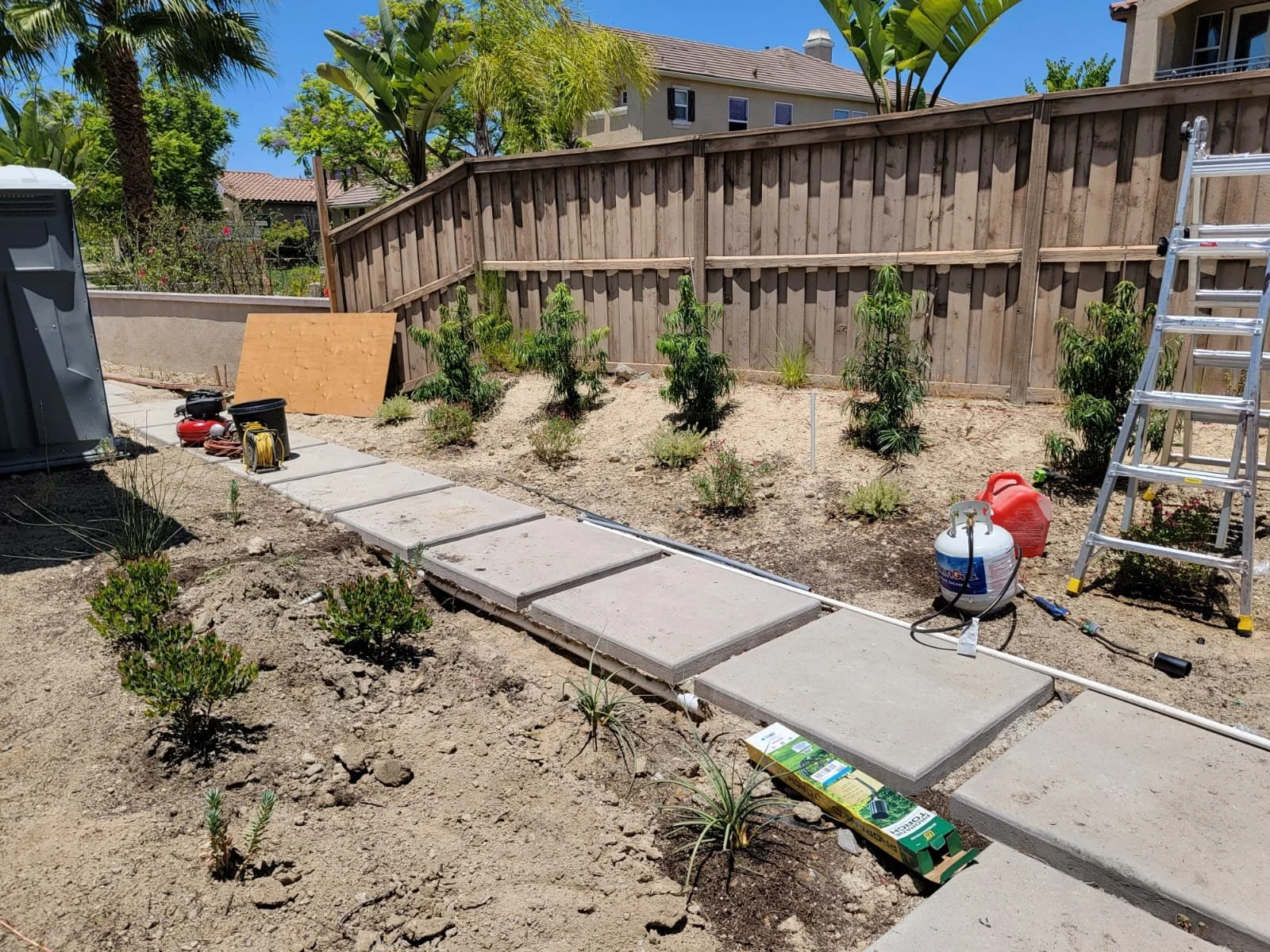
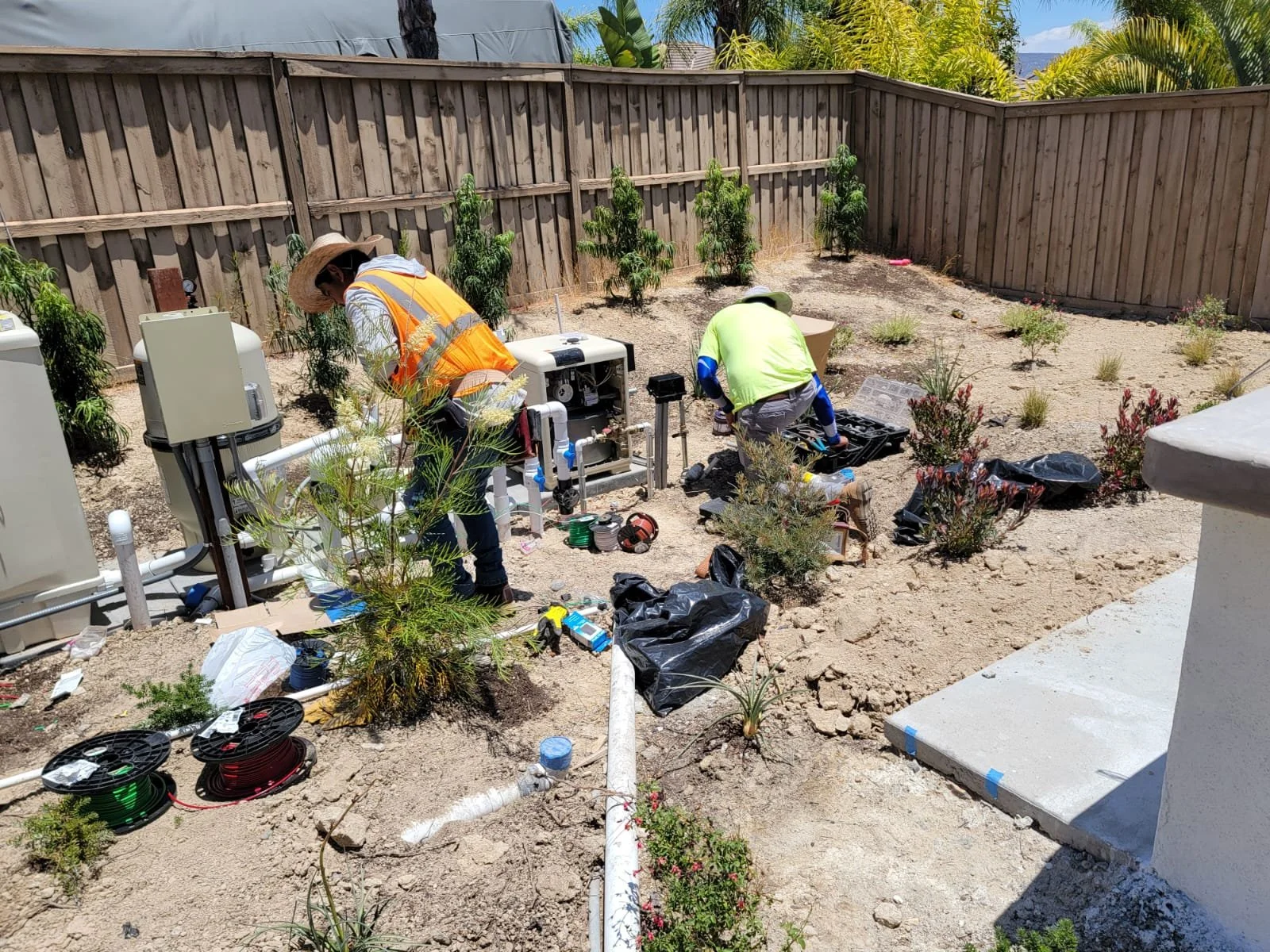
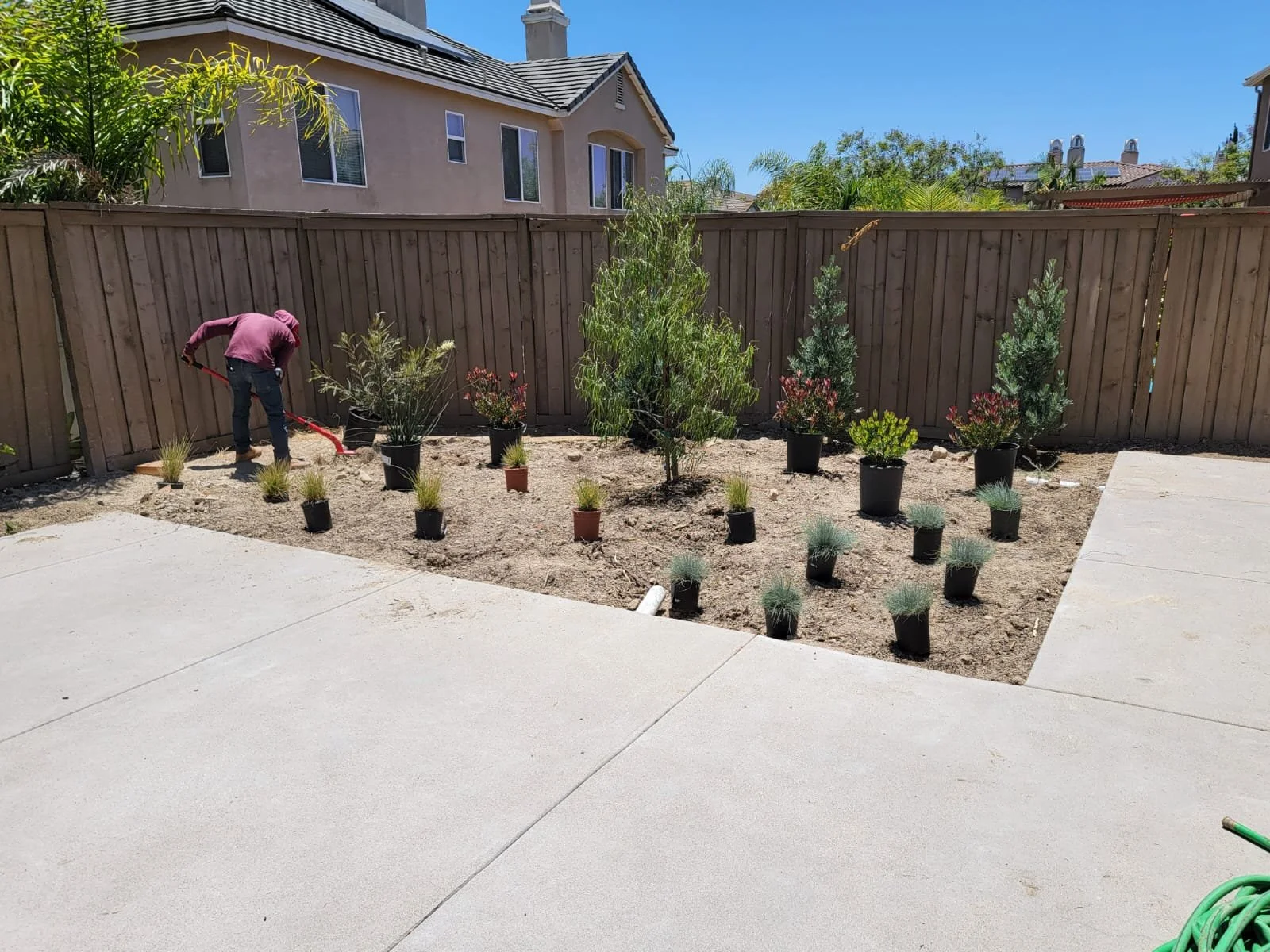
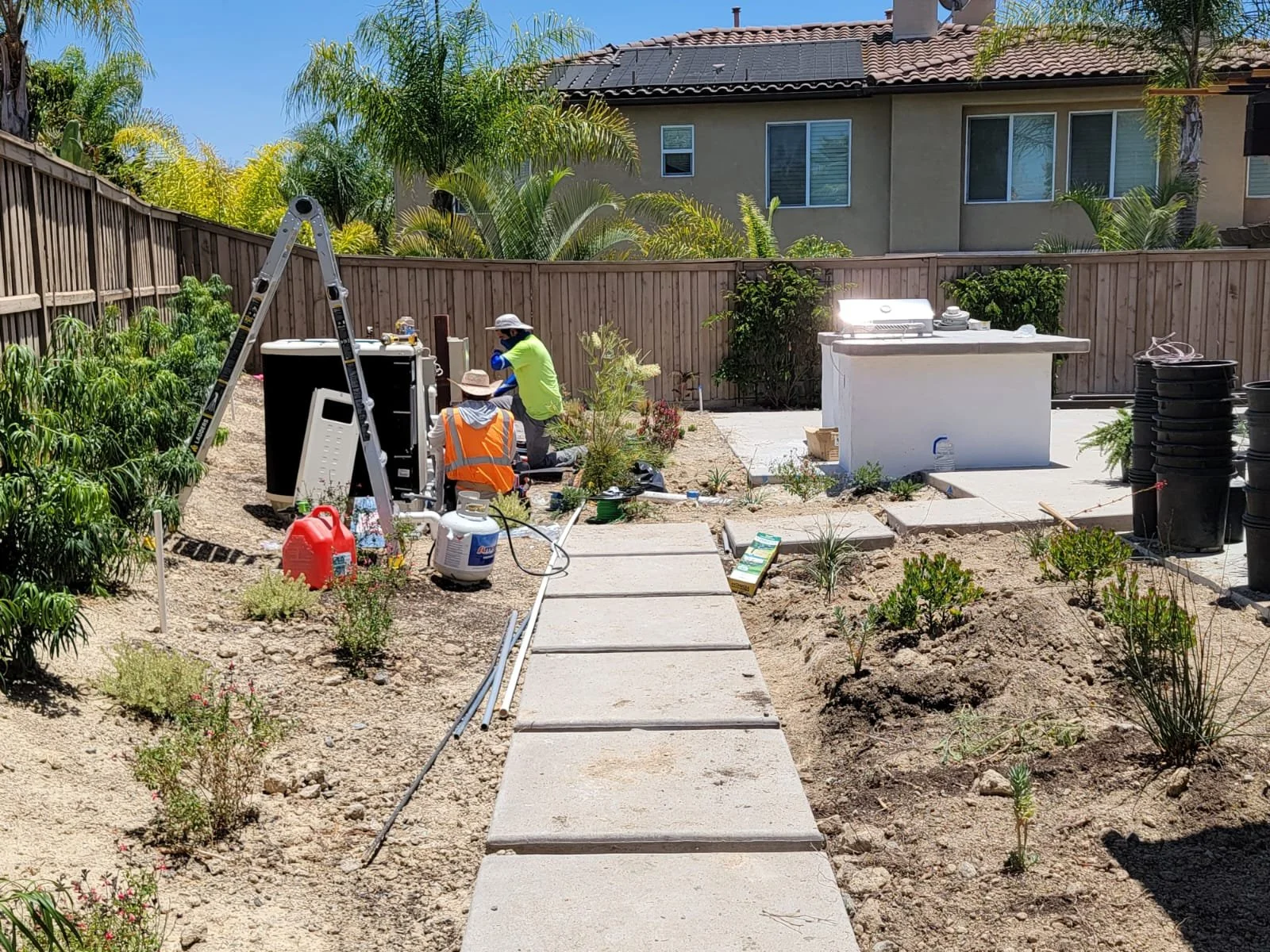
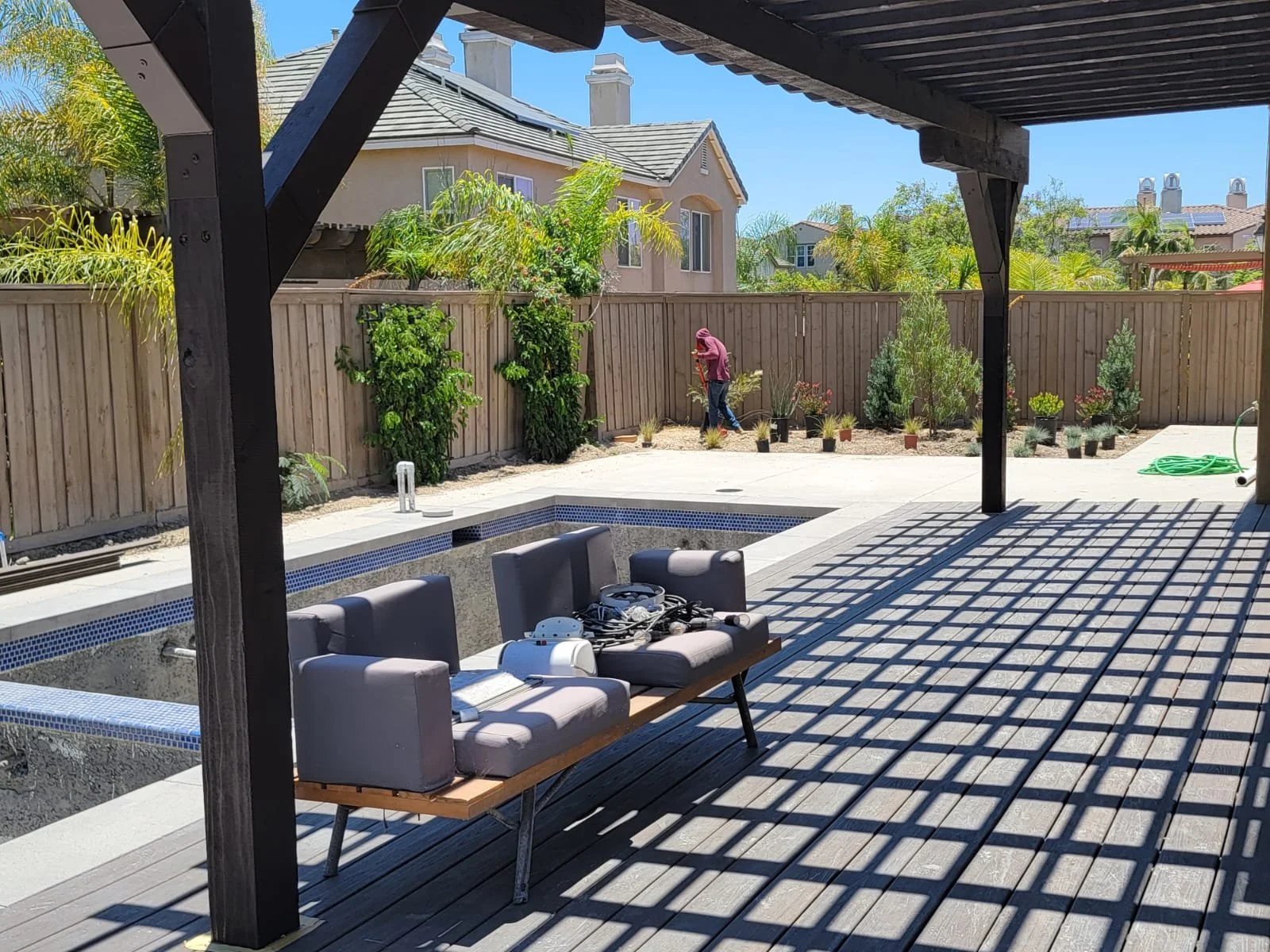
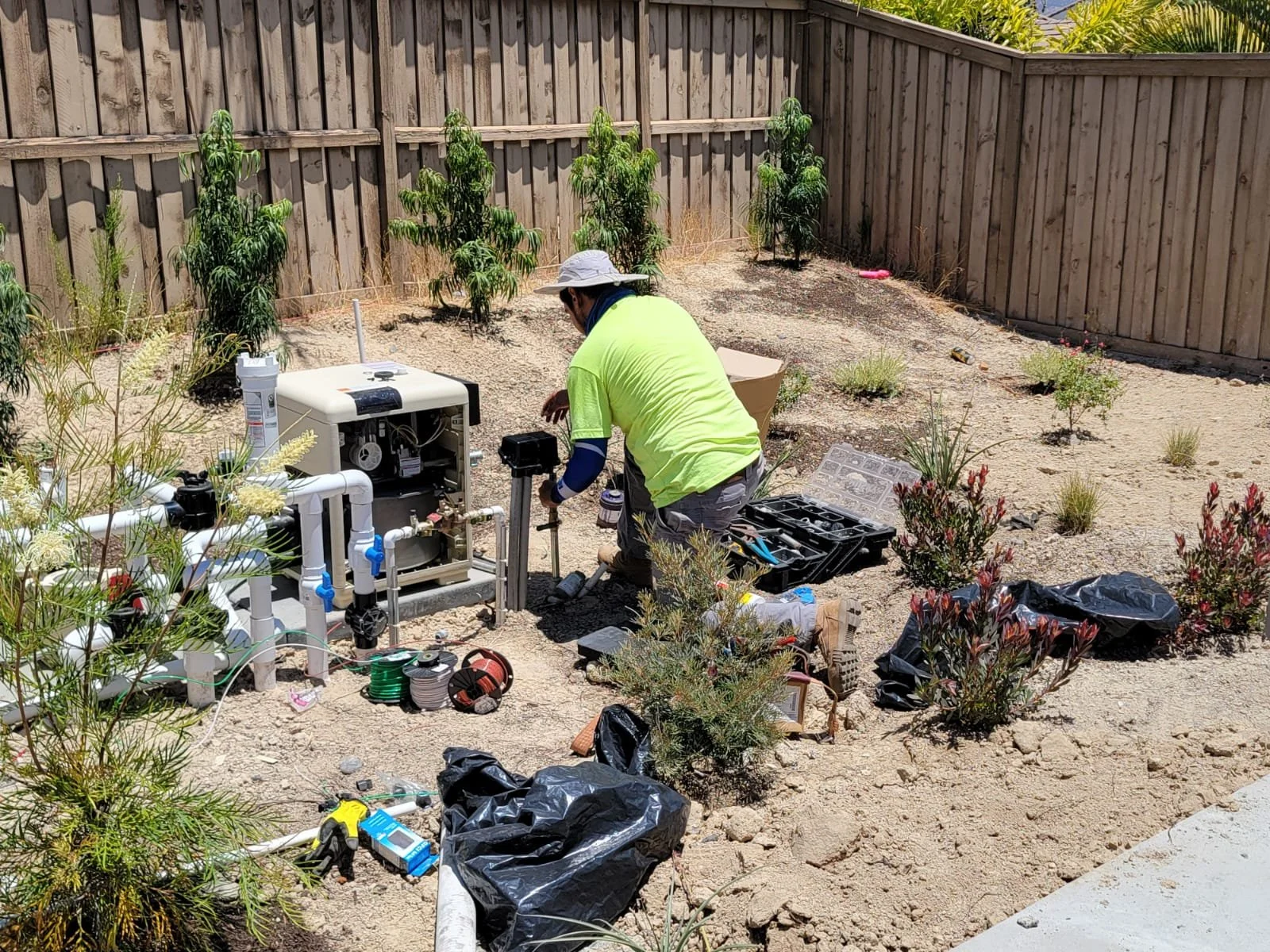
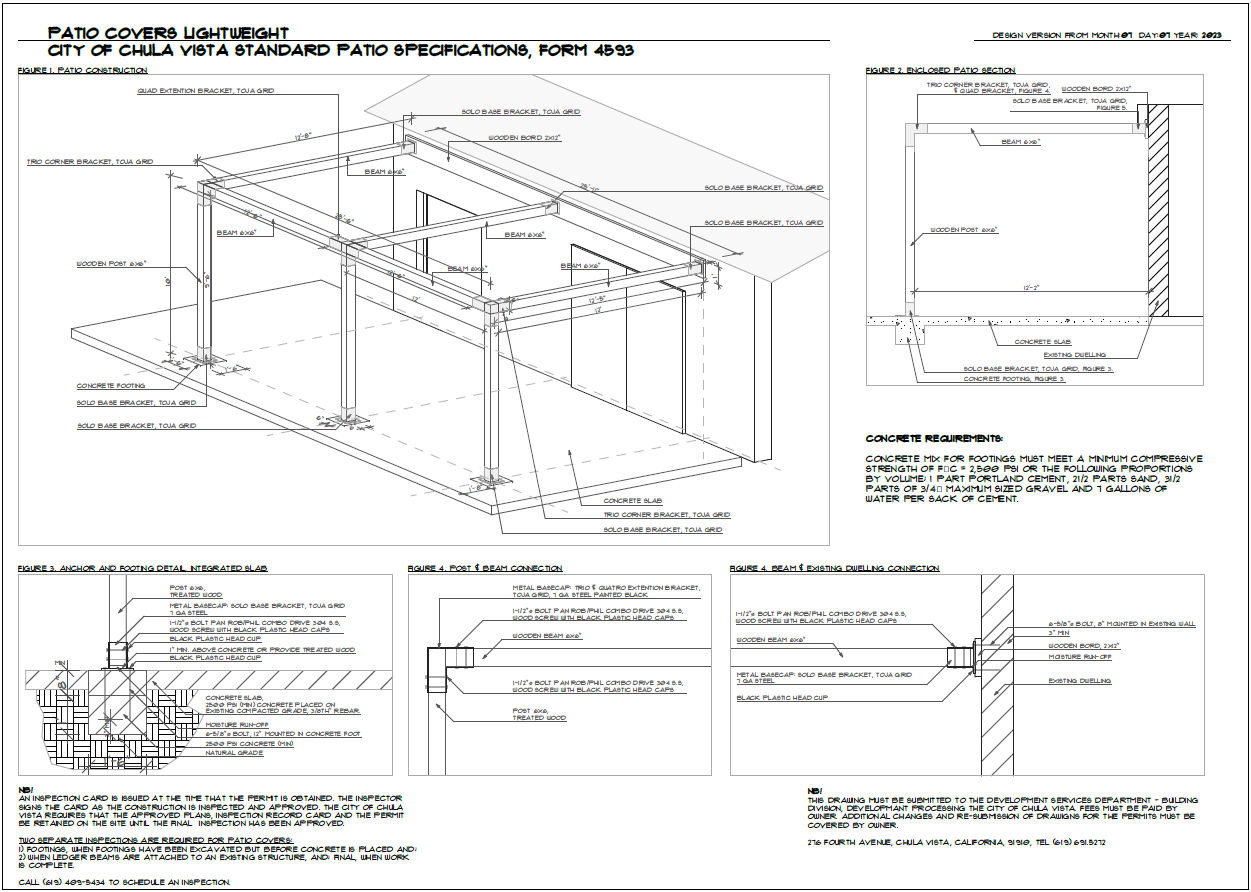
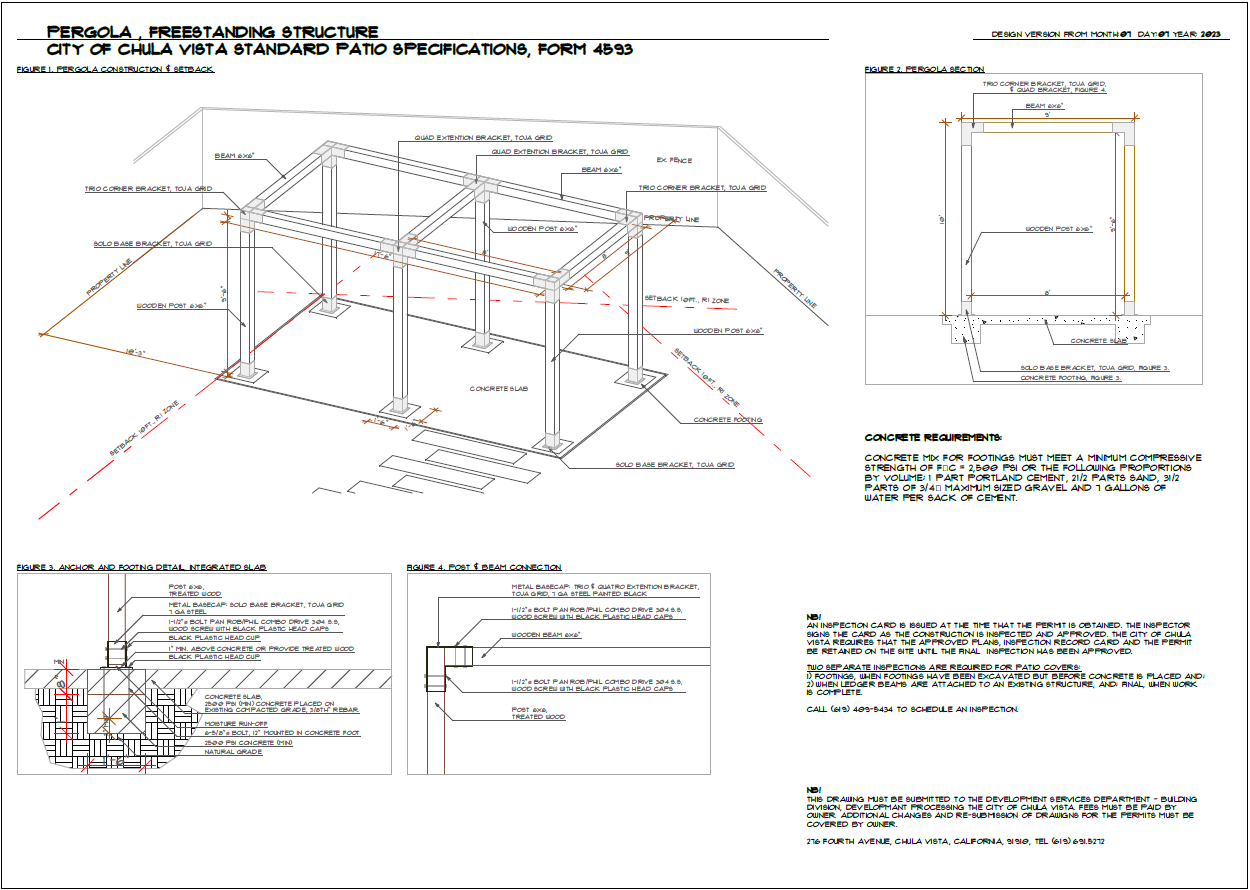
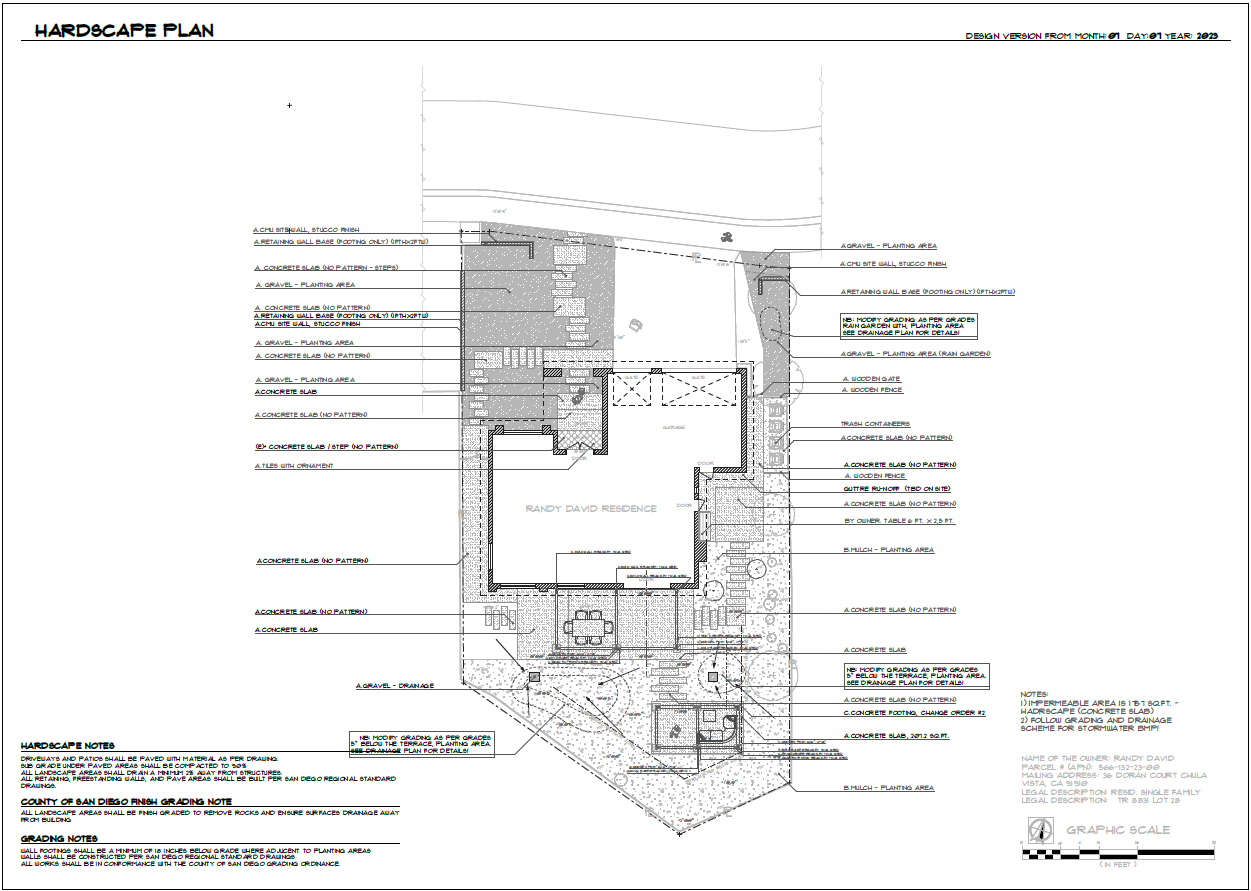
Work in Progress - Design Installation
Architecture, Ecology and Everyday Wellbeing
The garden is experienced in layers: water, shade, planting, fire, material and movement. Nothing is isolated.
From the pool, the architecture appears lighter. From the pergola, planting creates a soft frame around the open terrace. From inside the house, the garden becomes a composed view rather than an unrelated exterior area.
Over time, the planting can become fuller, habitat value can increase and the relationship between the built and living elements can grow richer. This is the principle behind LASD Studio’s approach to landscapes as evolving systems: the garden is not designed as a static installation-day image, but as a living trajectory.
The ultimate value is a property that feels clearer, calmer and more complete—beautiful for entertaining, comfortable for everyday life and capable of supporting a more resilient relationship with Southern California’s climate and living environment.
Begin with a Clear Direction
f you are considering a complete landscape transformation, LASD Studio begins with the architecture, the property and the way you want to live outdoors.
The preliminary consultation is a focused conversation with the Lead Designer about your goals, existing conditions, design direction, anticipated phases and estimated investment range.
Design and Ecological References
California Department of Water Resources — Model Water Efficient Landscape Ordinance
California Department of Fish and Wildlife — Pollinator Science
California Native Plant Society — Benefits of California Native Plants
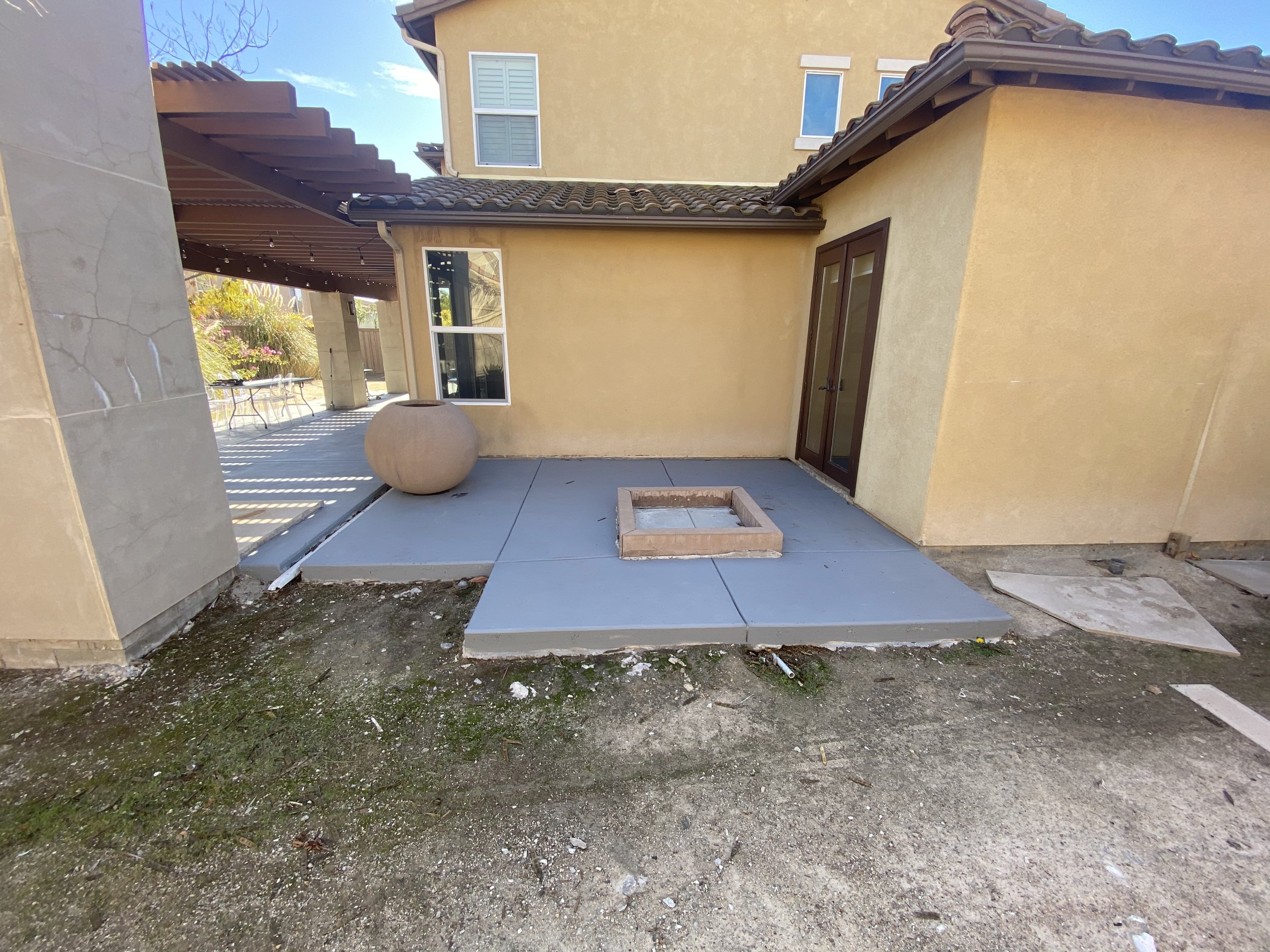
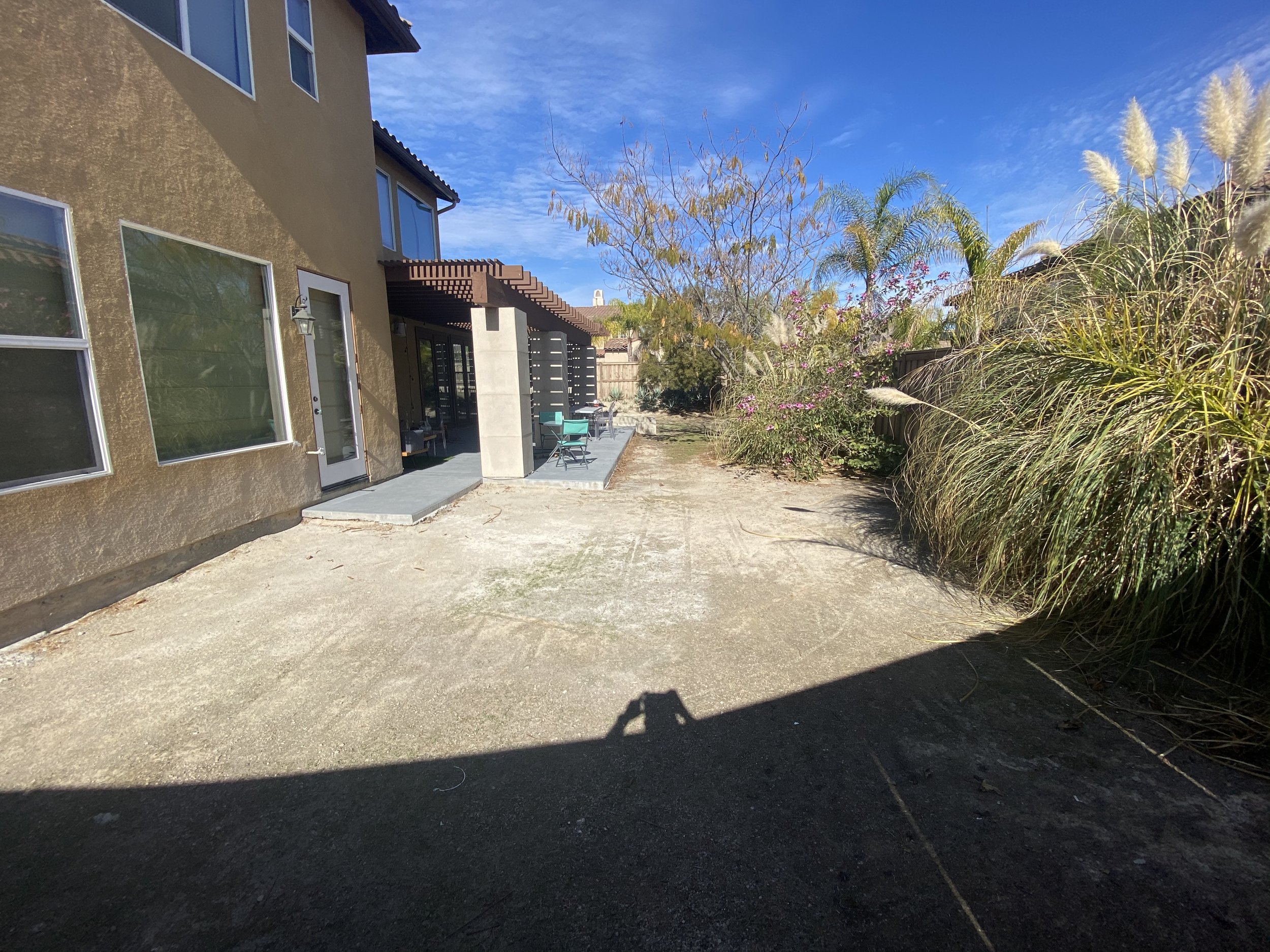
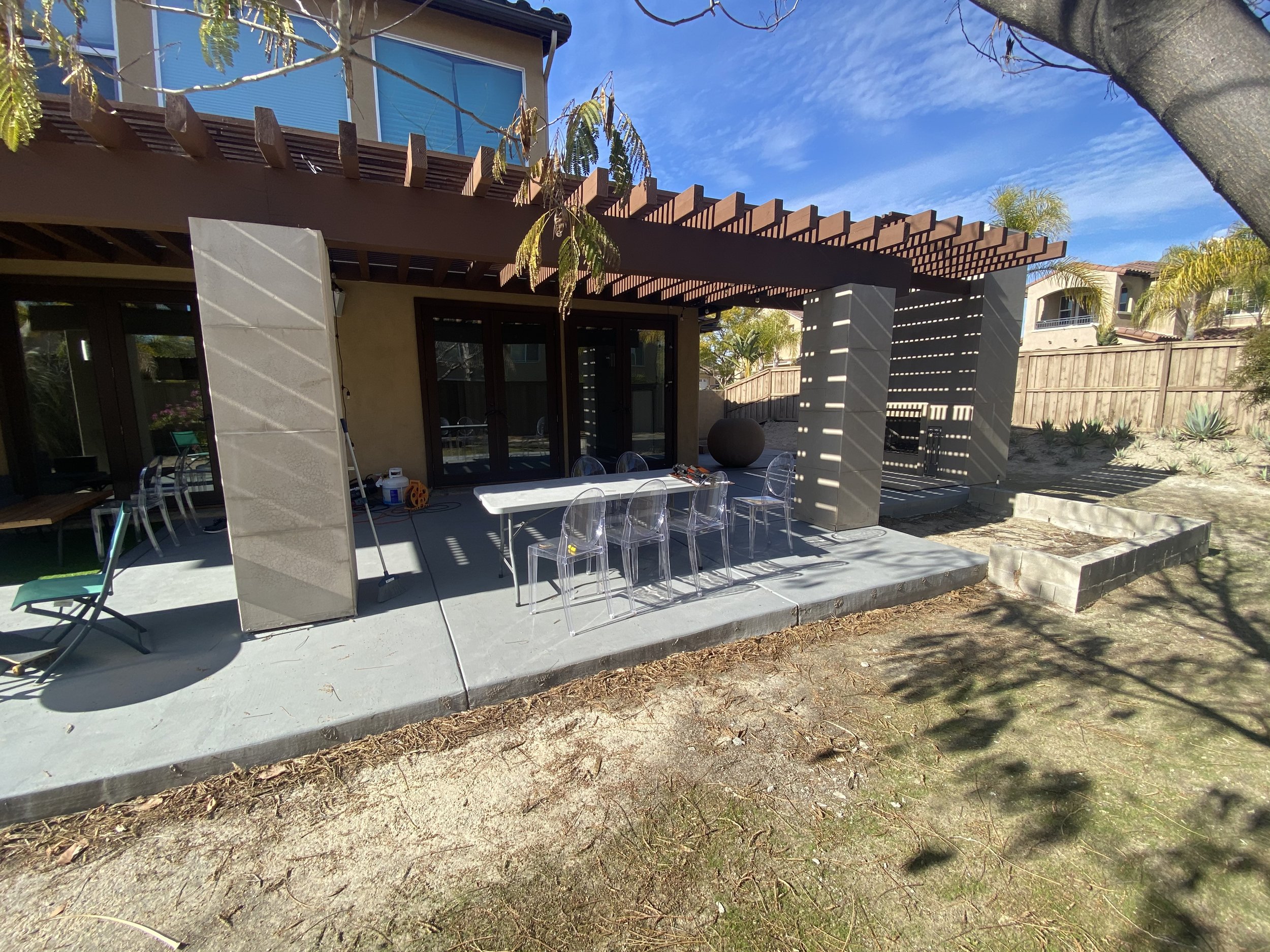
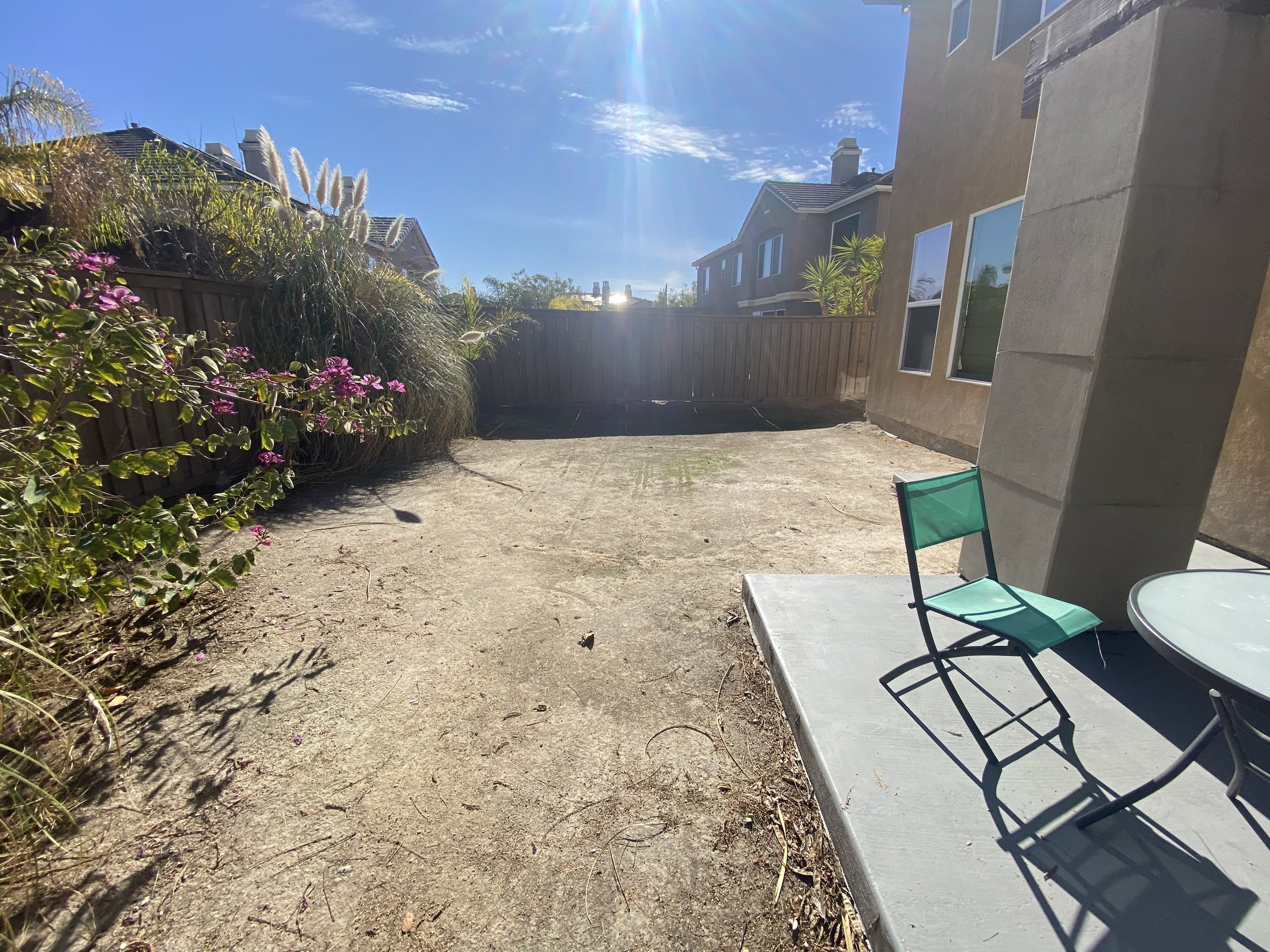
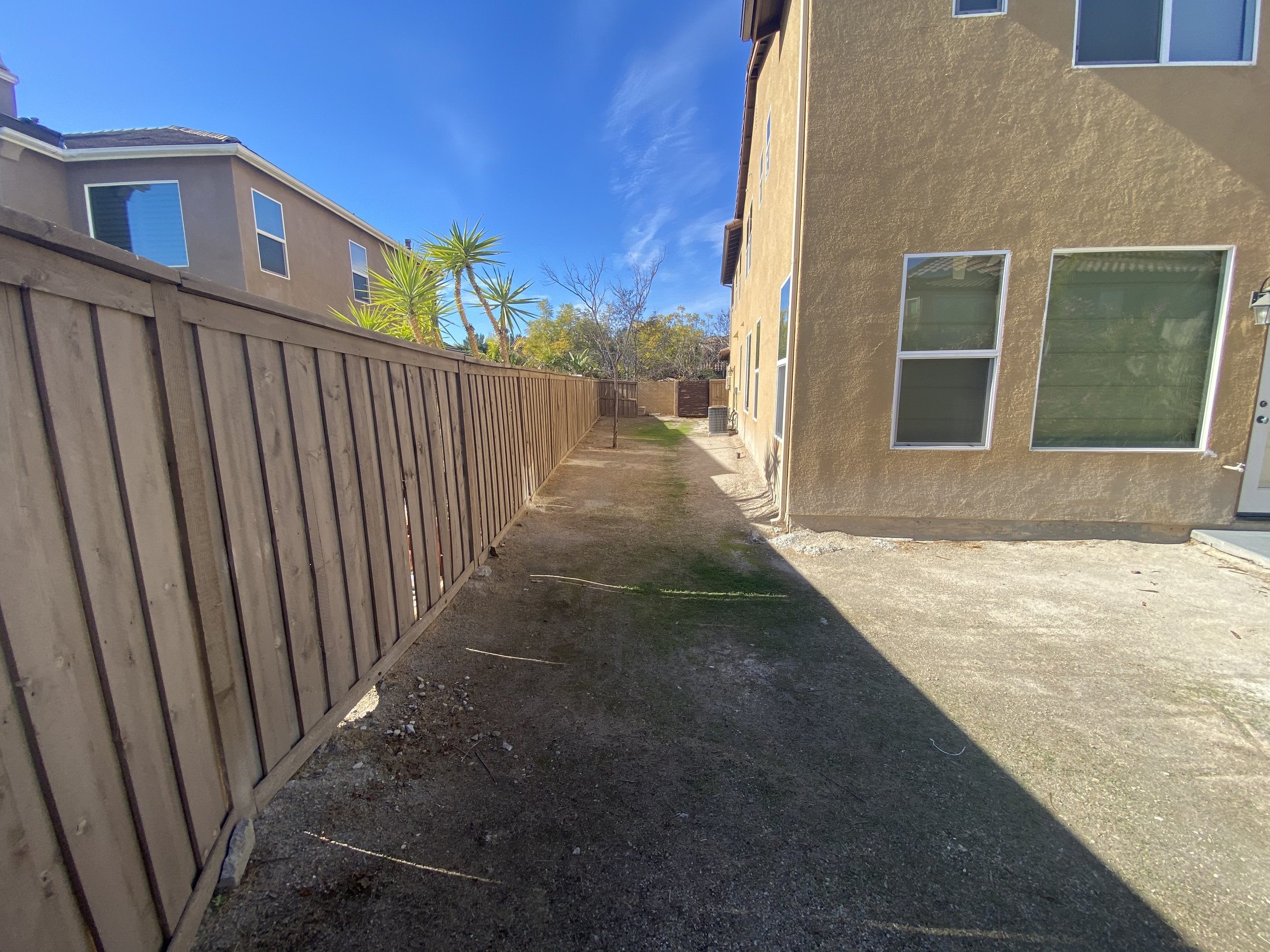
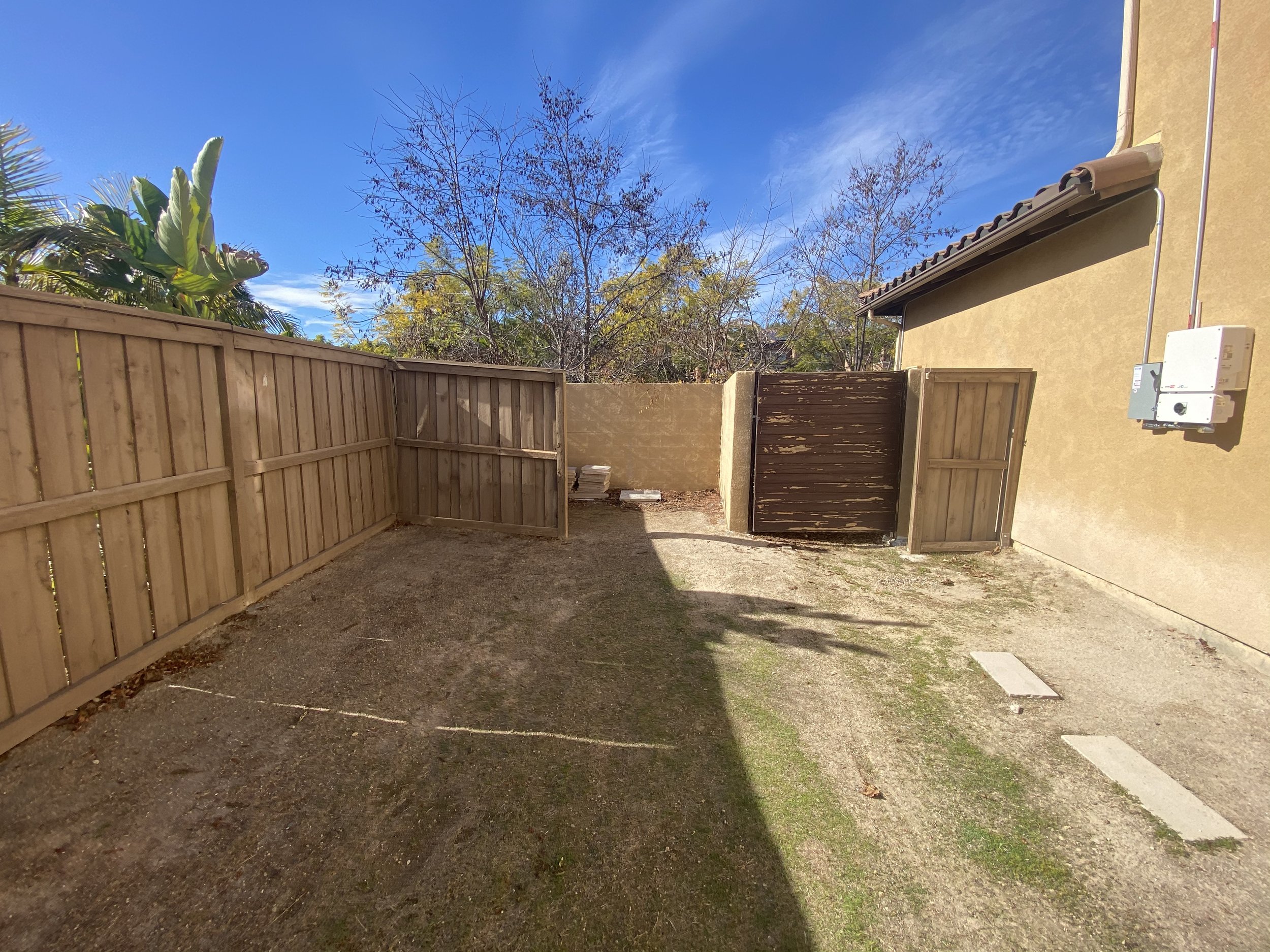
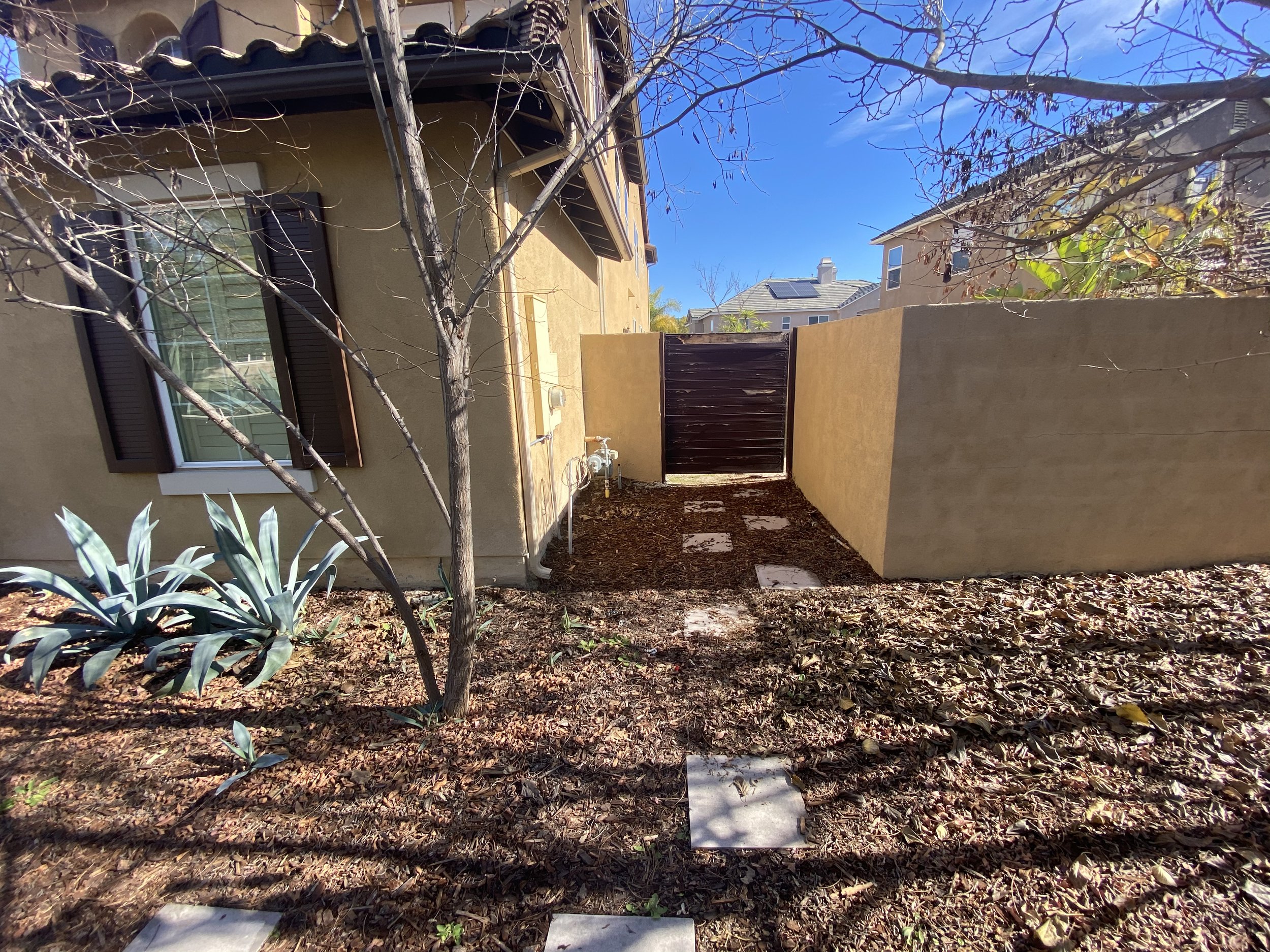
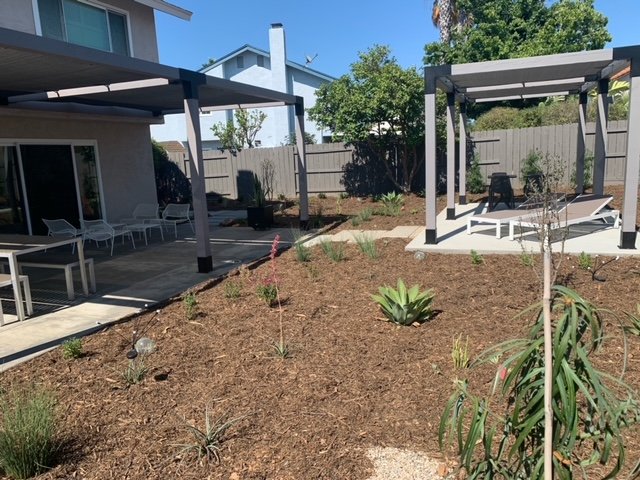
Existing Condition Situation - Before & Progress of Installation
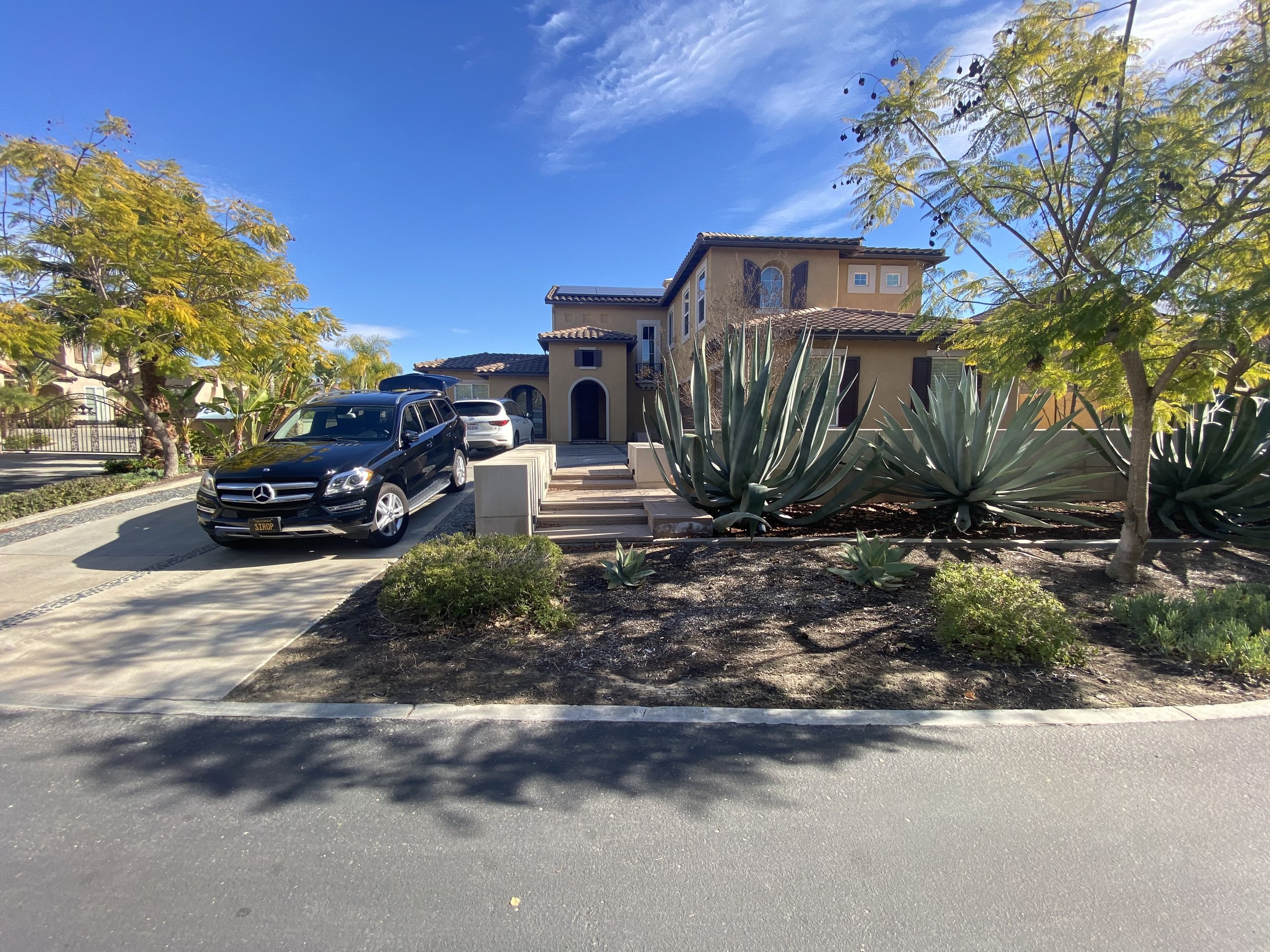
Chula Vista · Contemporary Landscape Design · Pool Garden · Outdoor Living · Climate-Responsive Design · Southern California
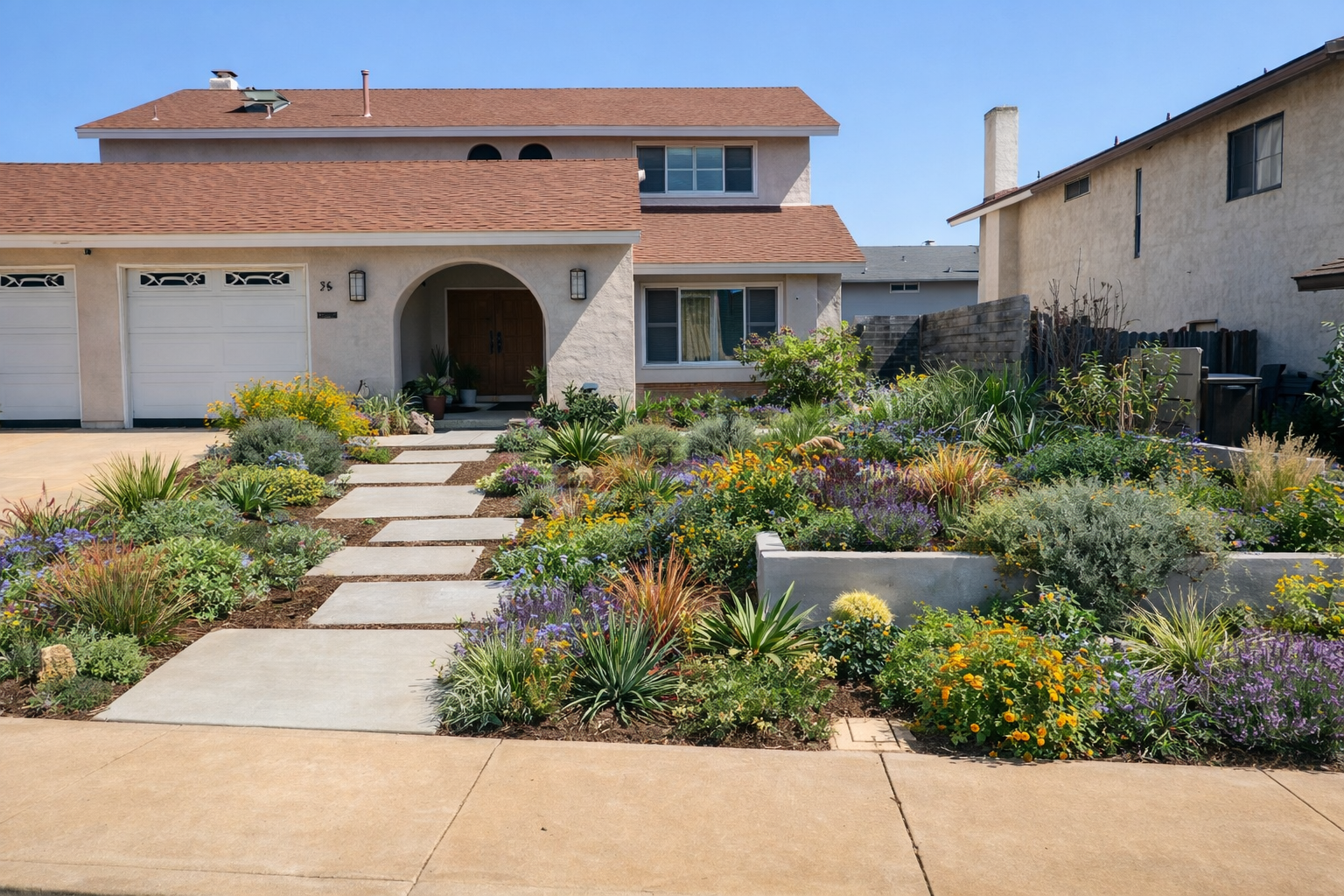
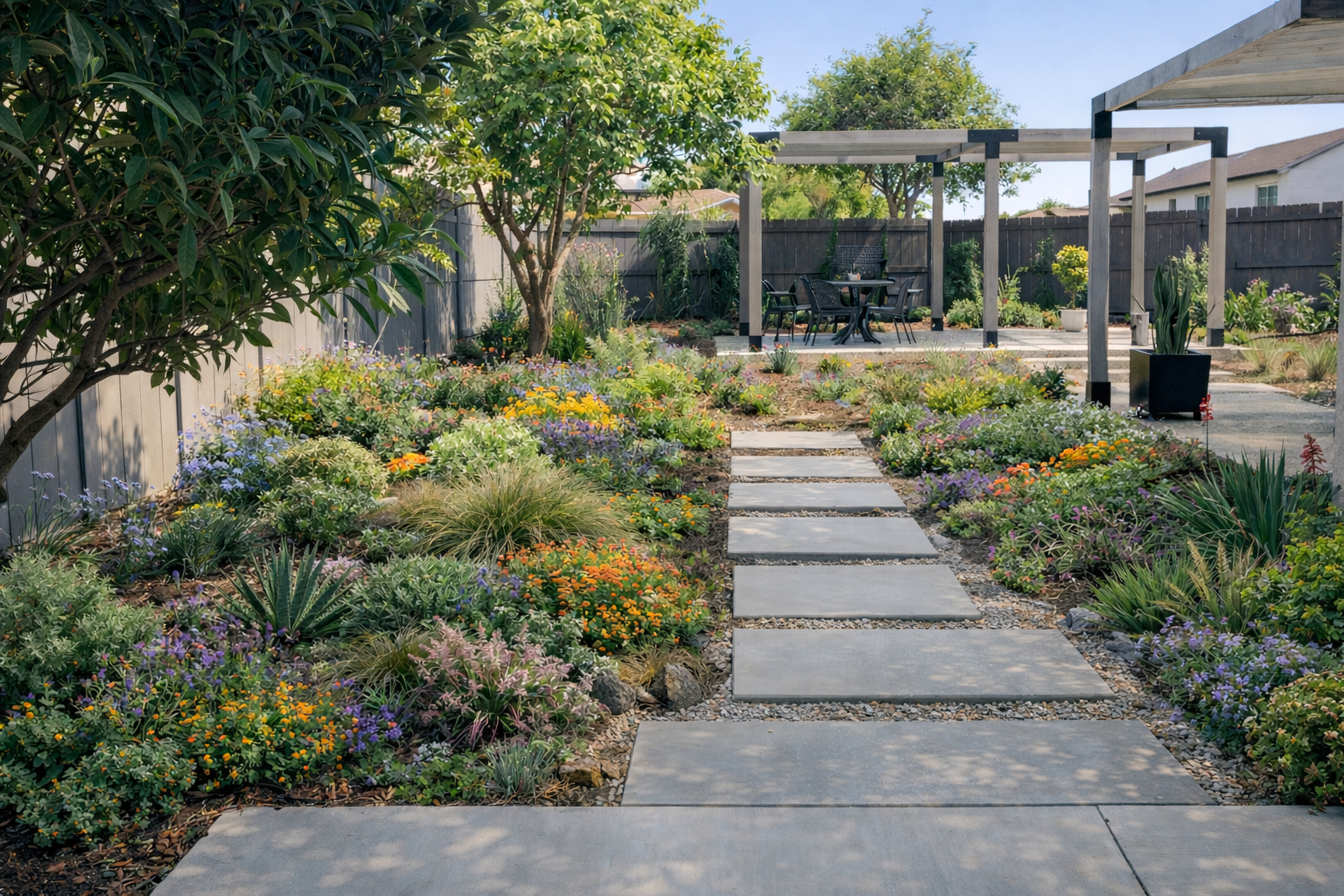
Simplicity as Sophistication - Modern Garden Design in Chula Vista, San Diego
A modernist garden design in Chula Vista, San Diego, inspired by simplicity and clean lines. Featuring poolside living, patios, and asymmetrical spaces, this project reflects the timeless influence of modernist landscape architecture.
“A contemporary backyard retreat inspired by modernist principles of clarity, functionality, and elegance.”
The Origins of Modernist Landscape Architecture
Modernist garden design emerged in the early 20th century alongside modernist art and architecture. Pioneers such as Le Corbusier and Frank Lloyd Wright championed simplicity, functionality, and a rejection of ornamentation. In landscape design, this translated into clean geometry, minimal material palettes, and functional outdoor rooms — spaces shaped for living, not decoration.
Simplicity as a Key Element
The heart of modern garden design lies in removing excess and allowing essential elements to define the experience. Straight lines, uncluttered patios, and geometric pools create a calm, structured setting. This simplicity highlights the beauty of materials, planting textures, and architectural form, resulting in spaces that are both efficient and deeply inviting.
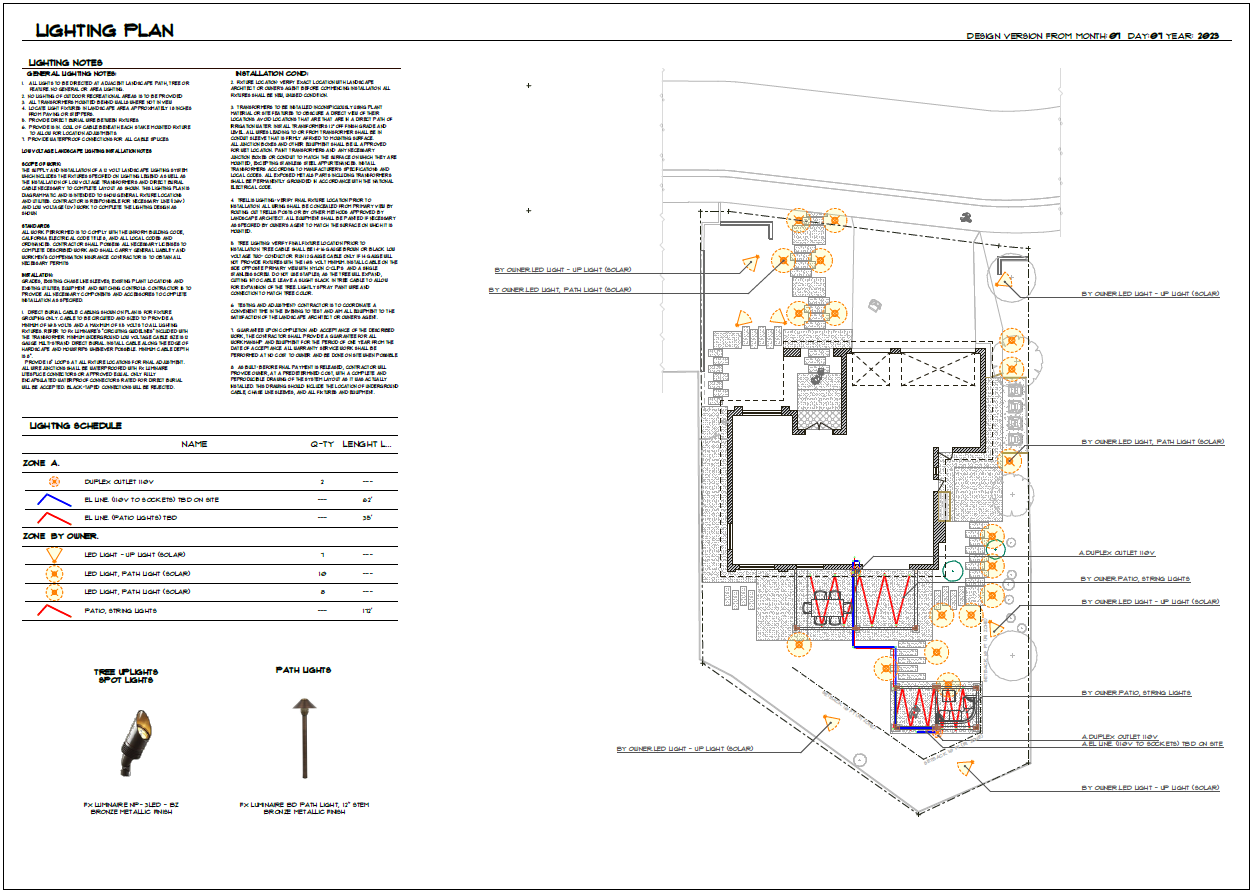
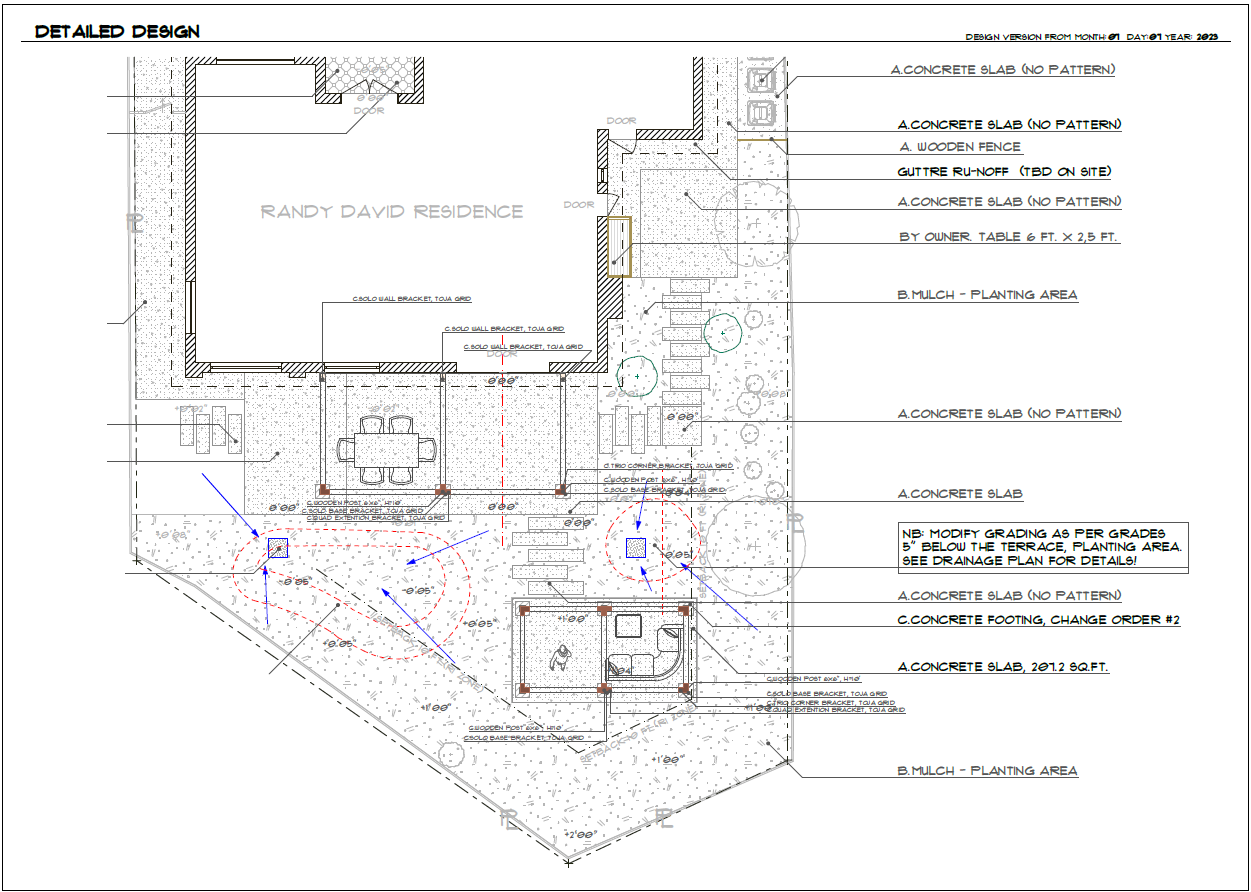
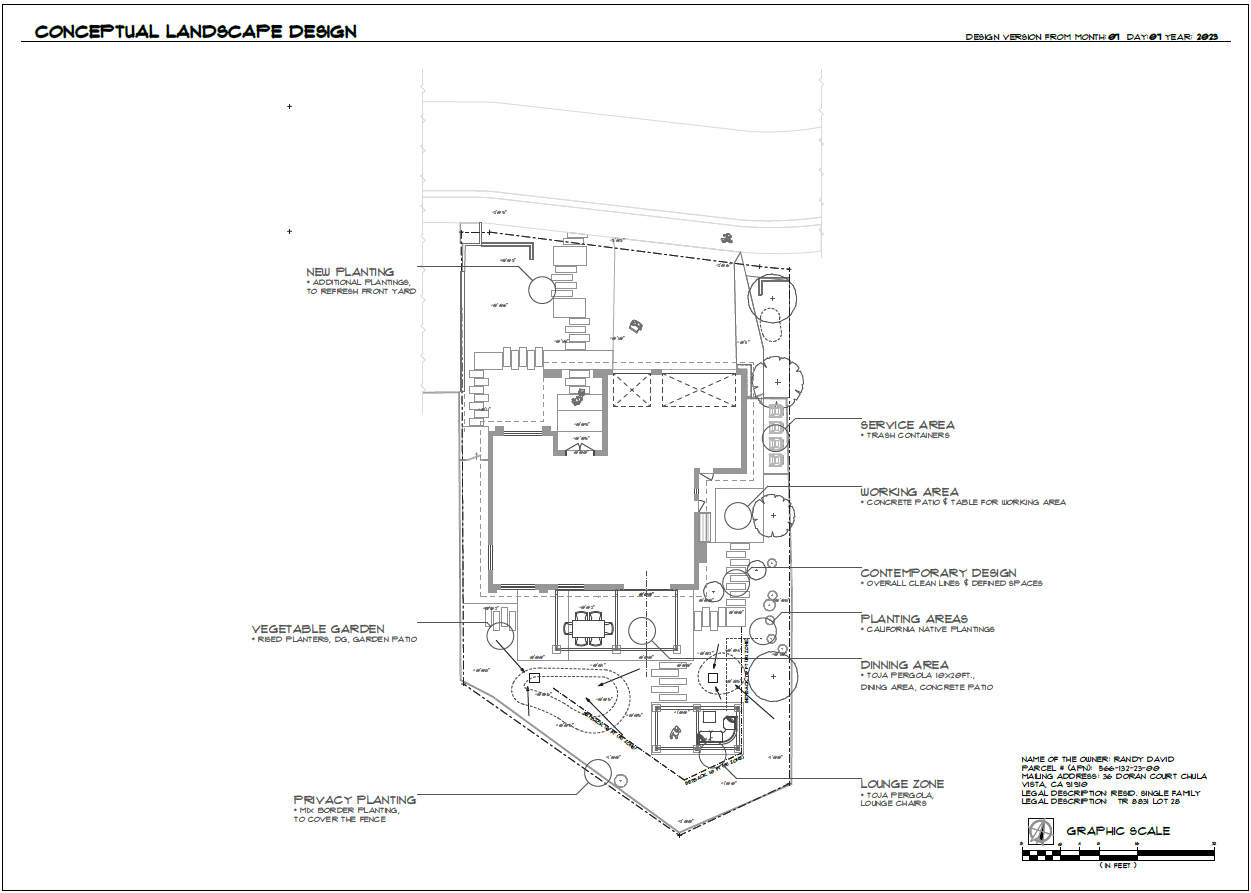
Patios: A Modernist Oasis
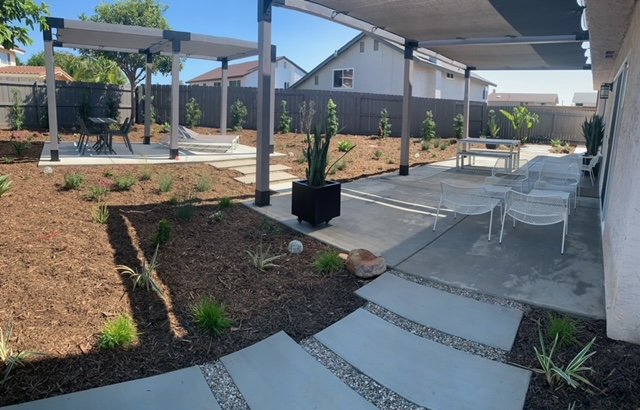
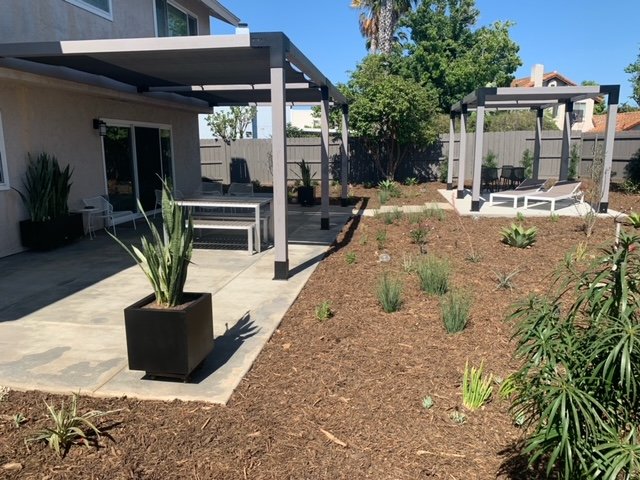
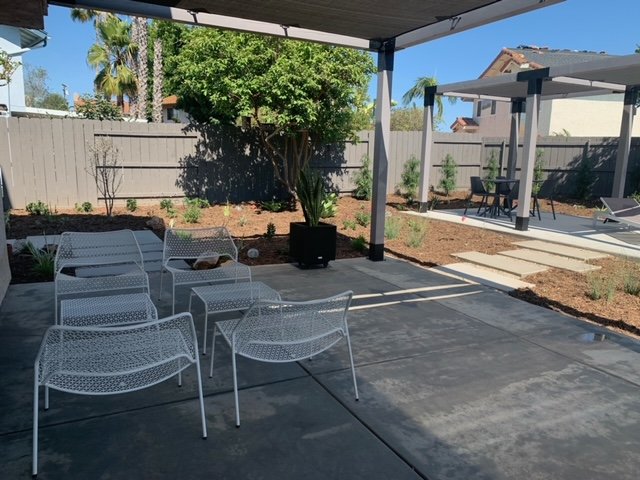
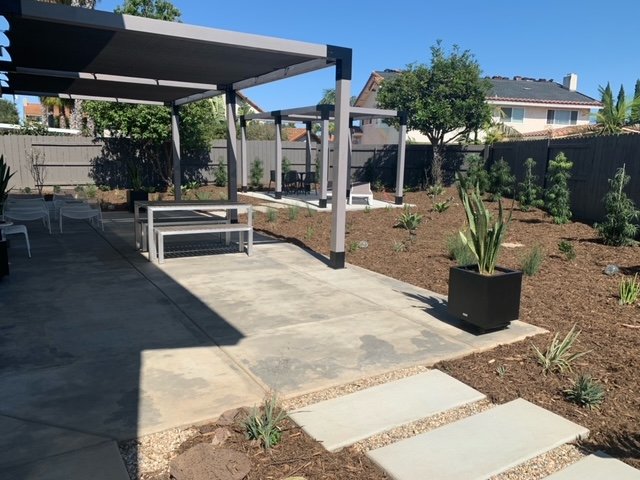
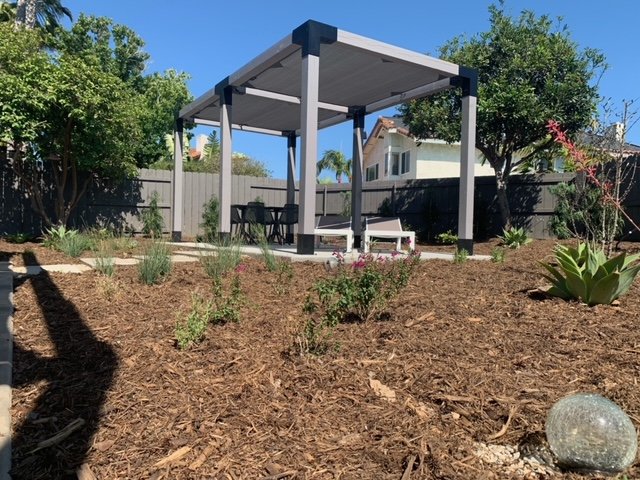
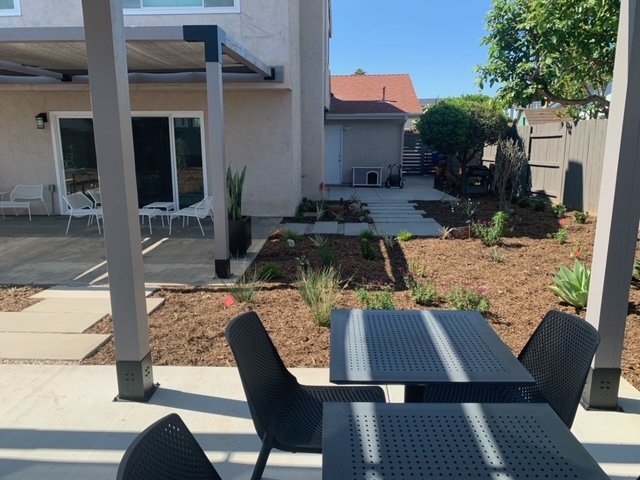
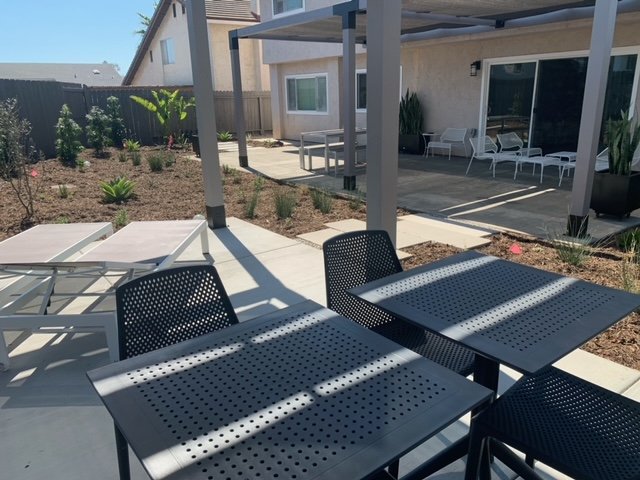
In this project, the patio becomes the seamless extension of indoor living. Paved with stone and concrete in clean lines, and framed with minimalist built-in seating, it flows effortlessly from house to garden. Designed for relaxation and gatherings, the patio represents modern garden design at its core — simple, open, and functional.
Spaces in Simple Architecture
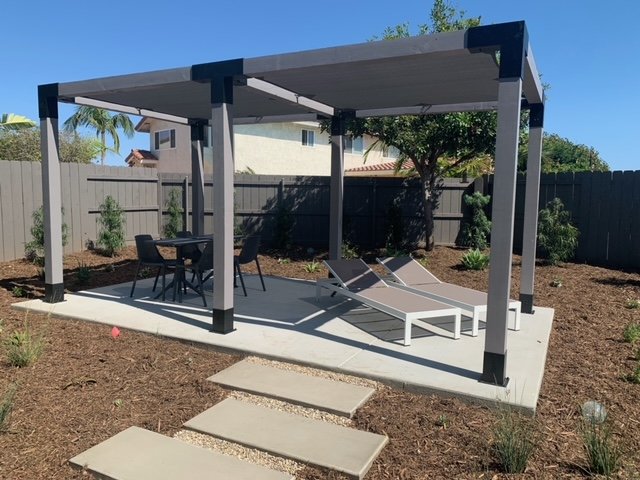
The garden extends beyond the pool and patio into a network of functional outdoor rooms: a fire pit lounge for evenings, a space for outdoor cooking, and contemplative corners inspired by zen gardens. Each area is carefully proportioned, balancing comfort with modernist clarity.
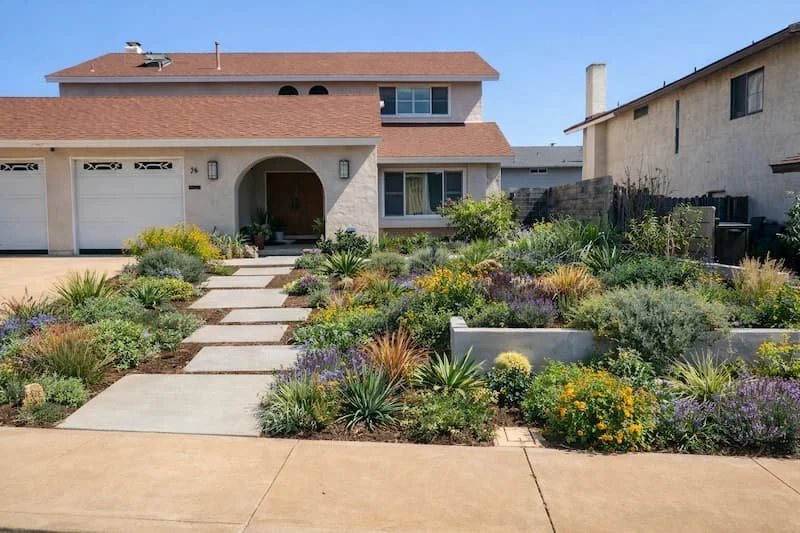
EXISTING CONDITION
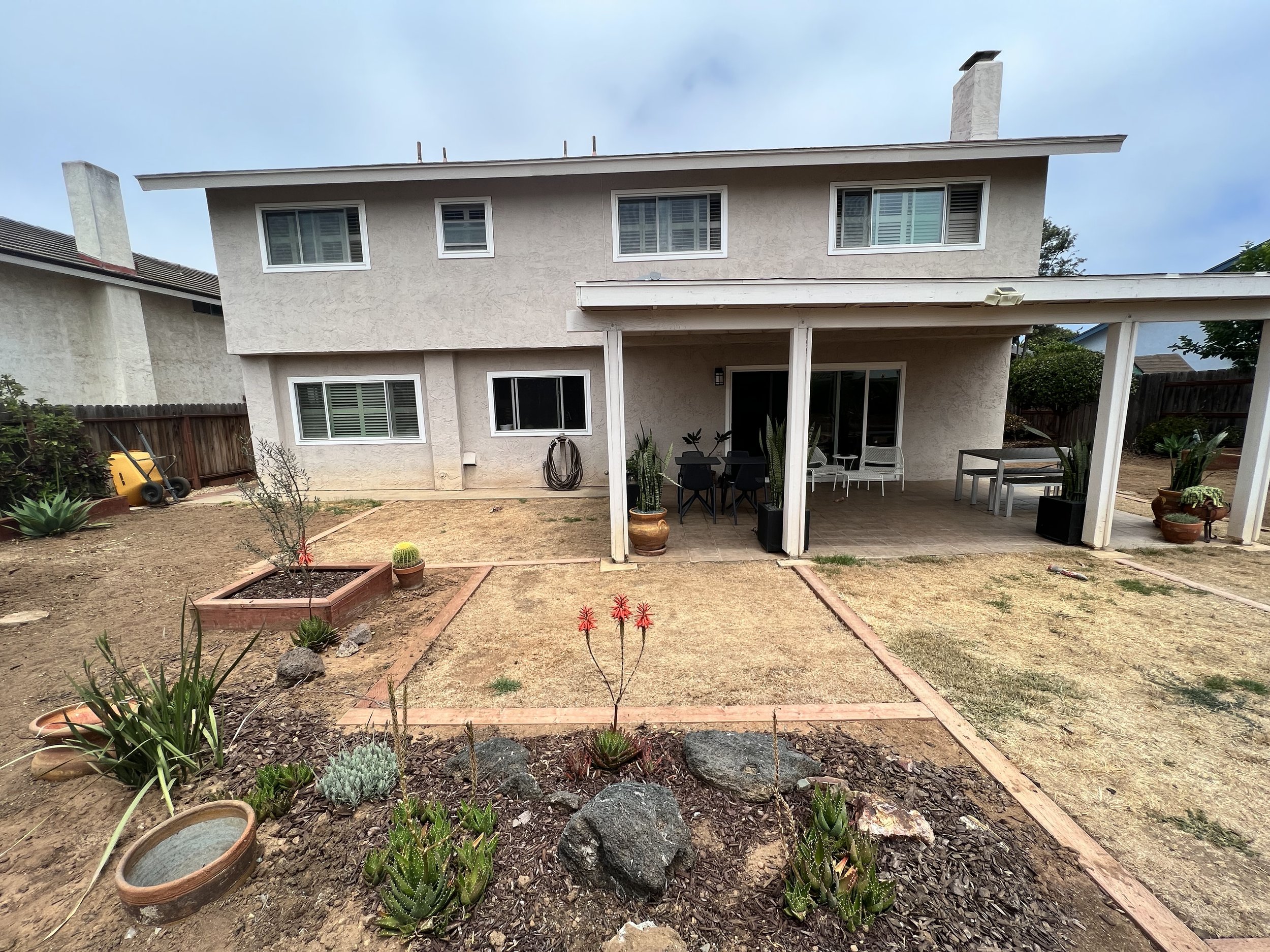
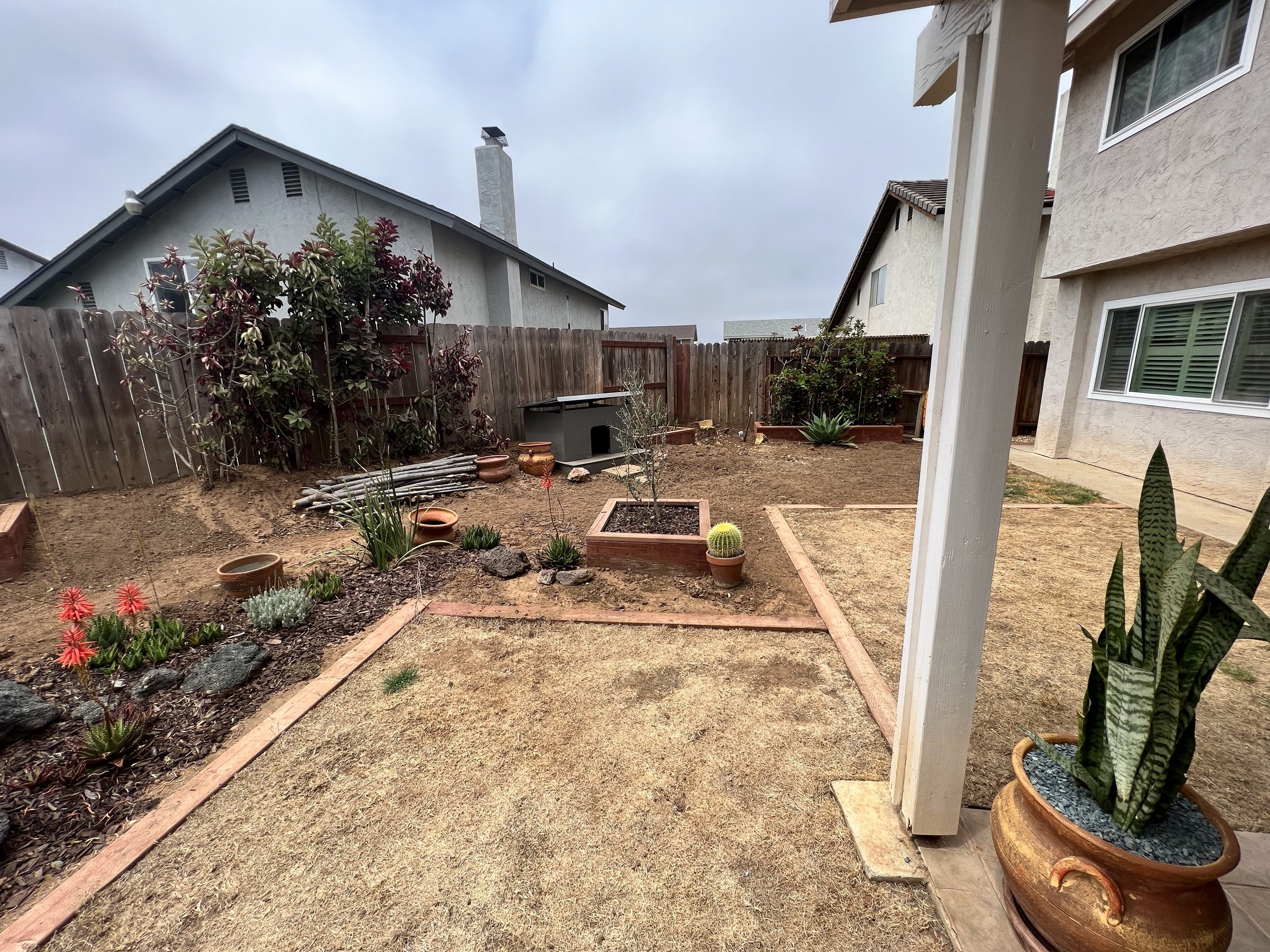
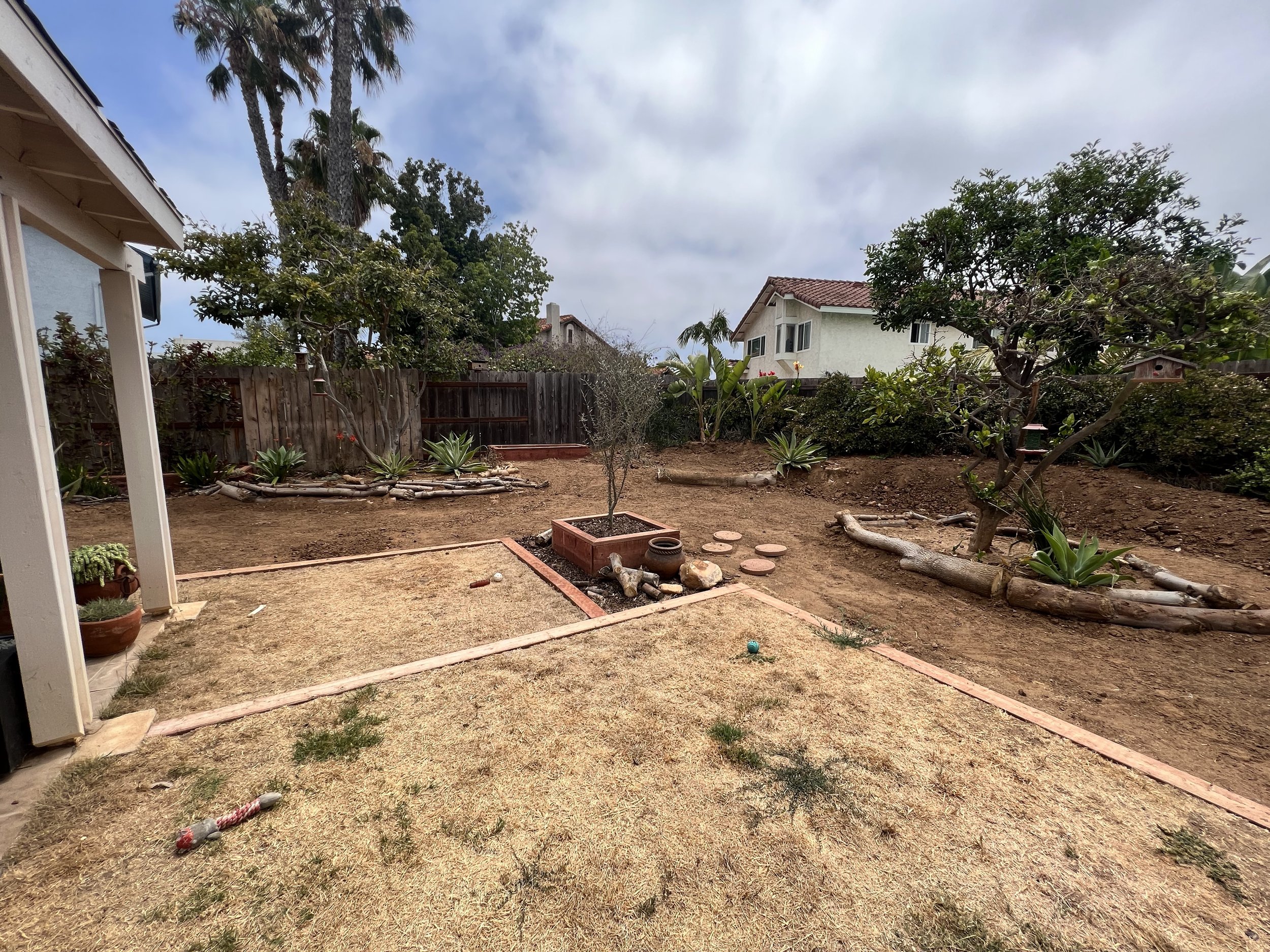
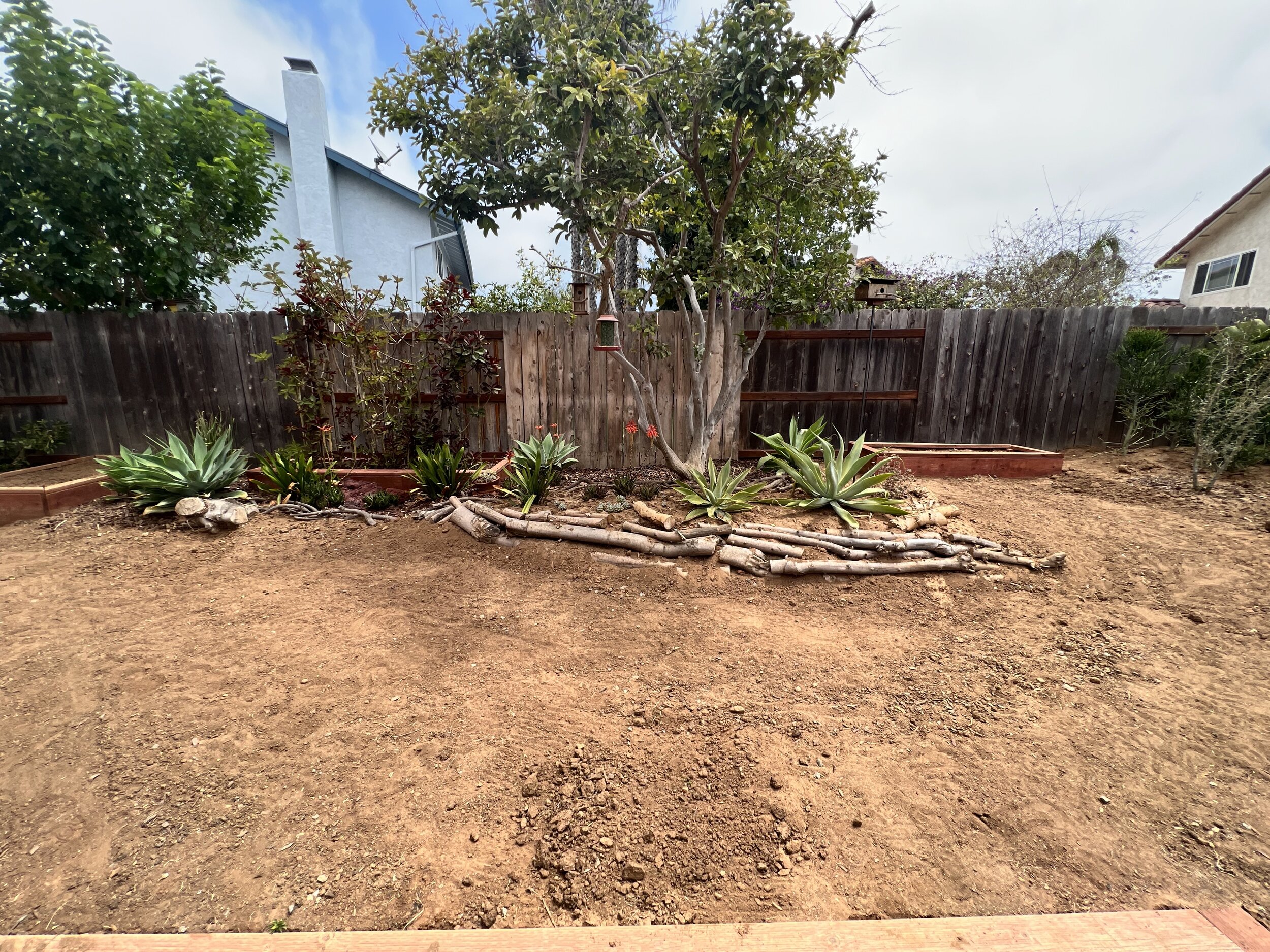
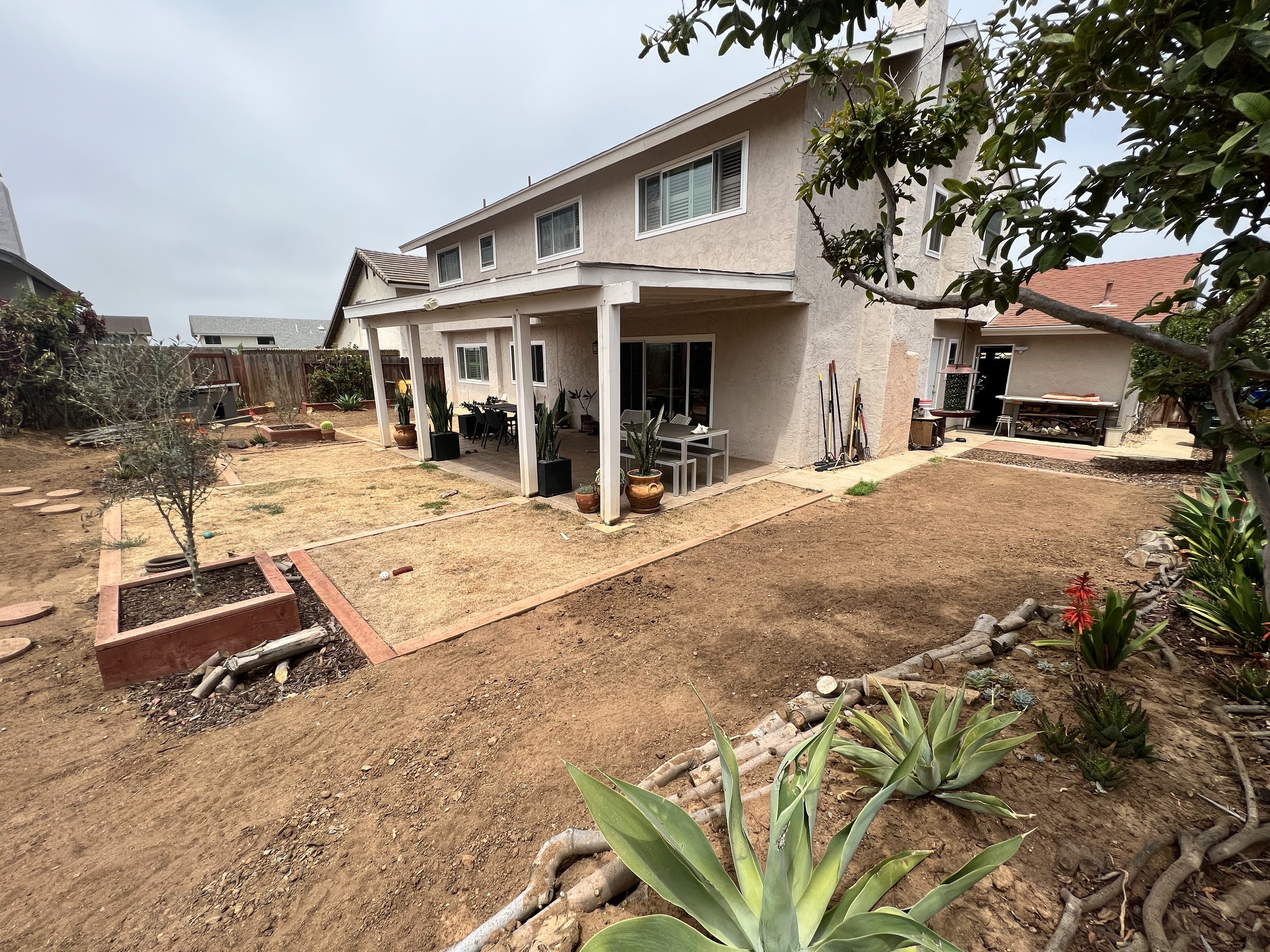
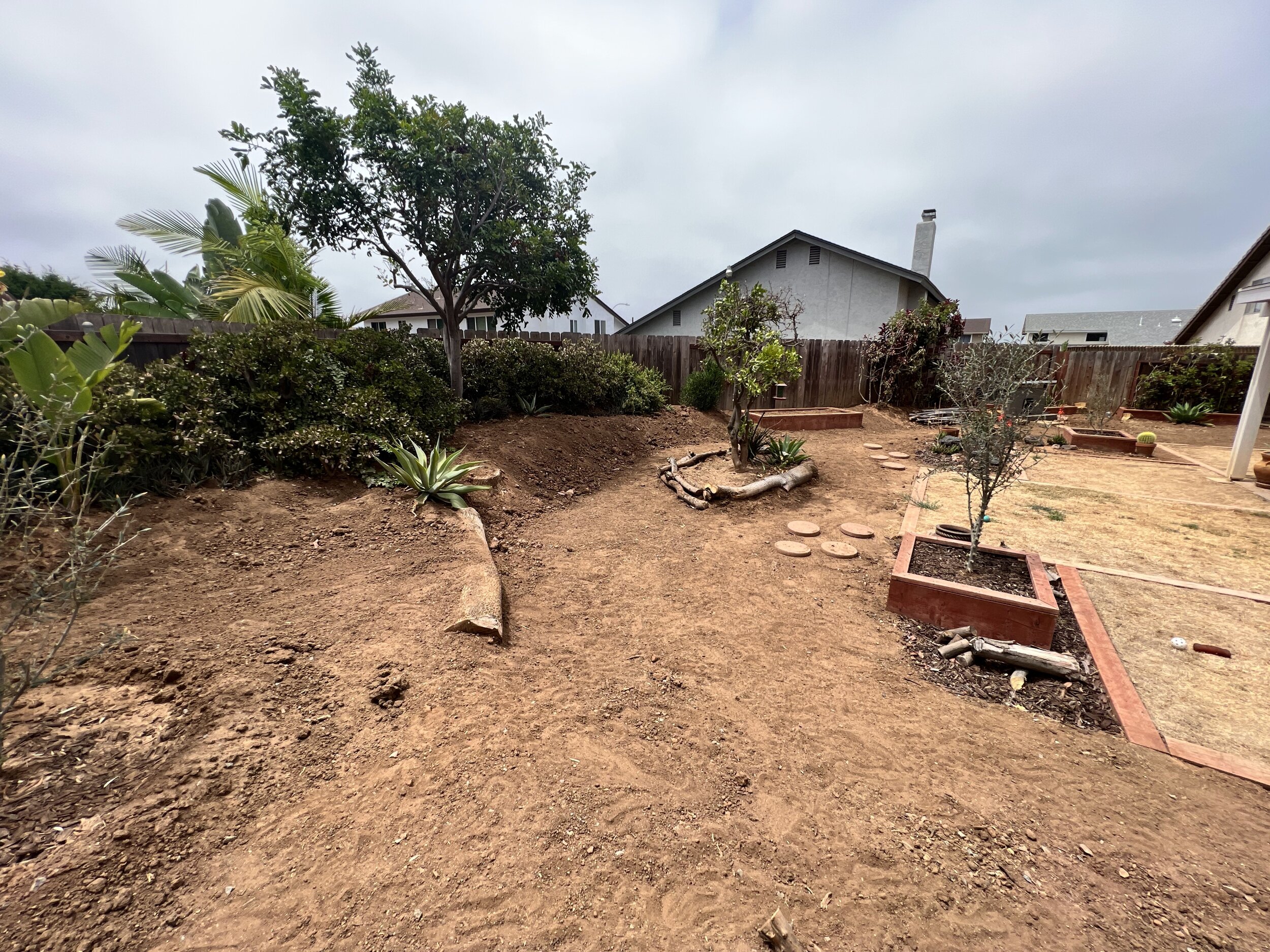
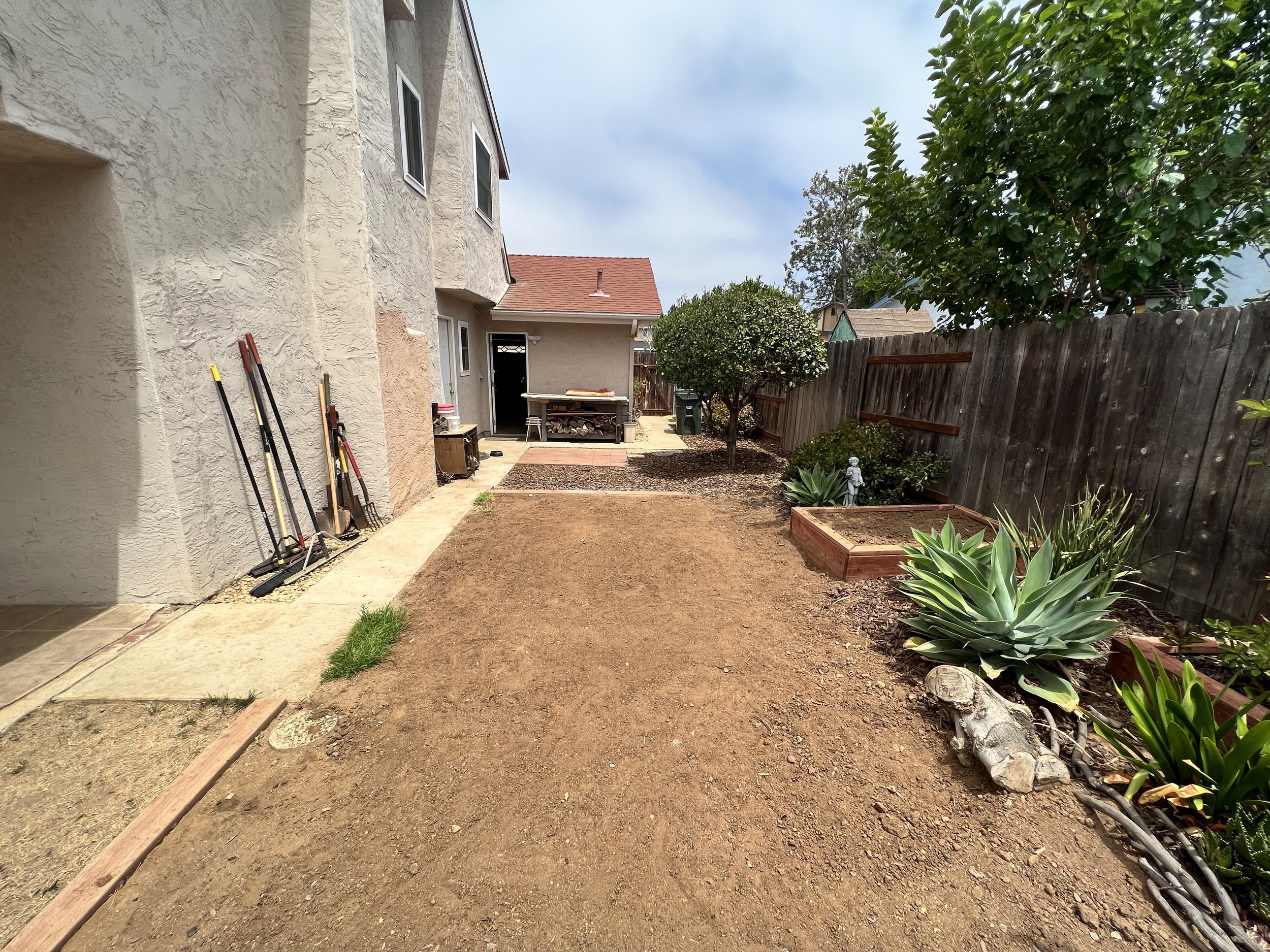
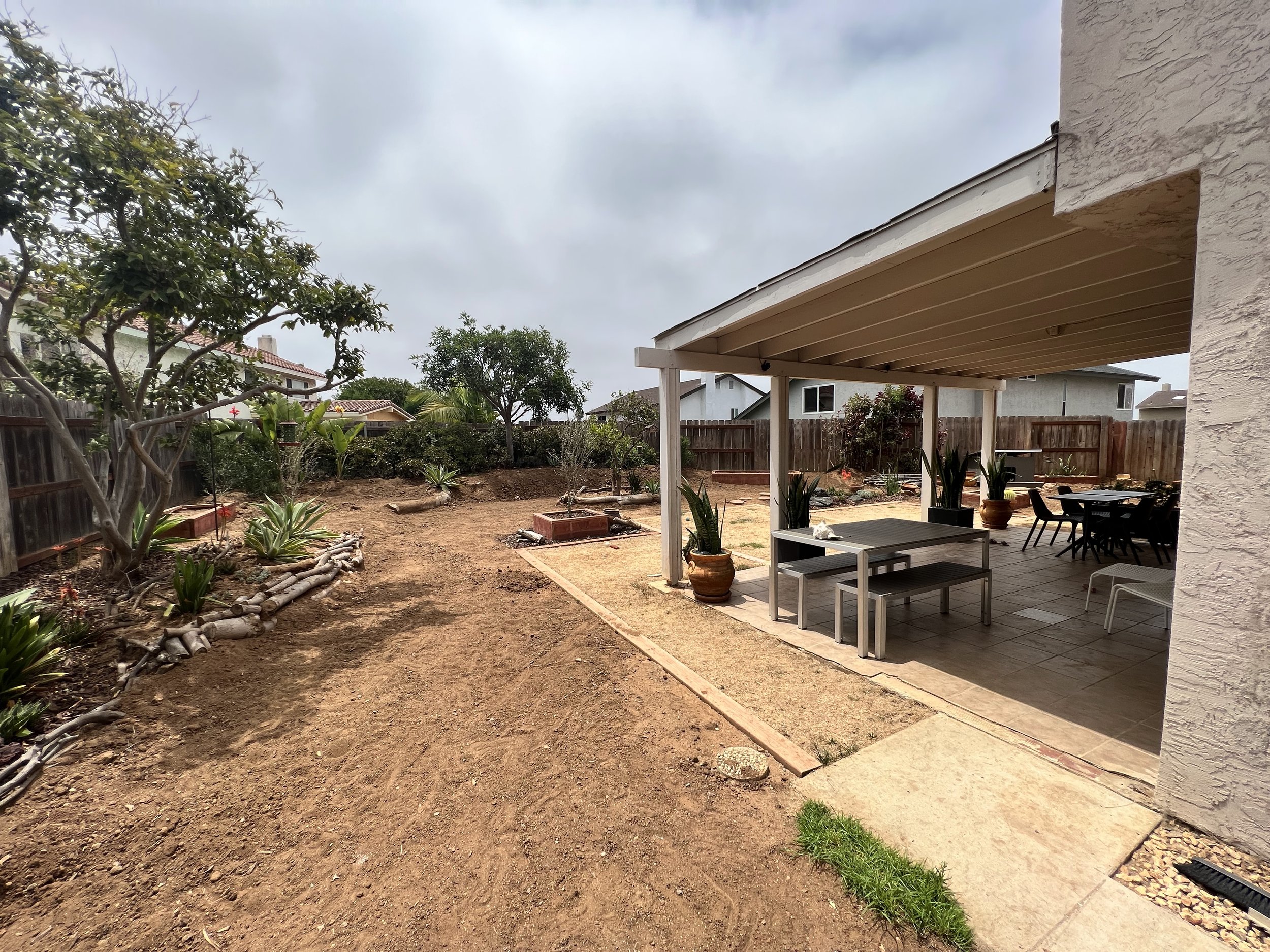
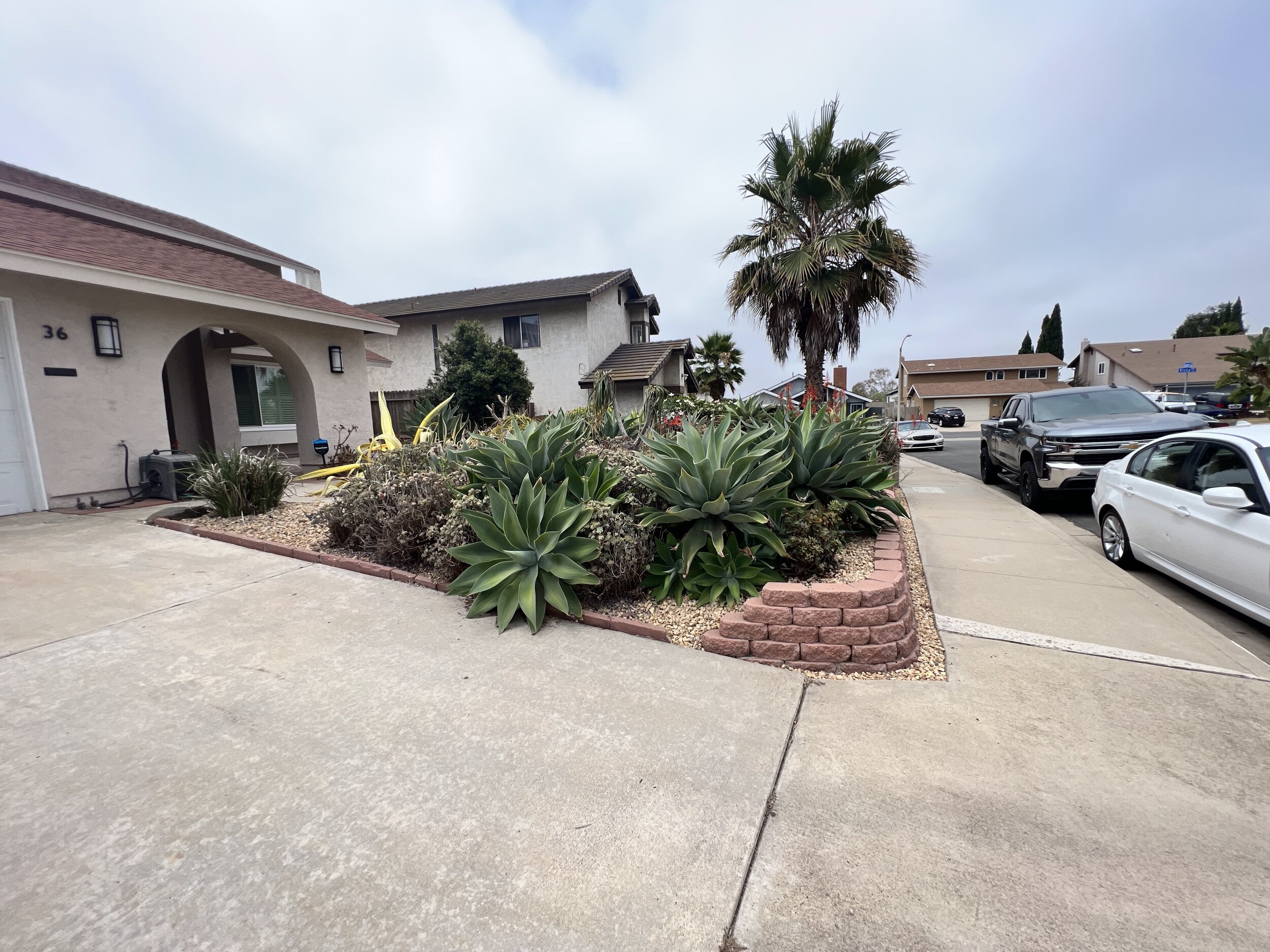
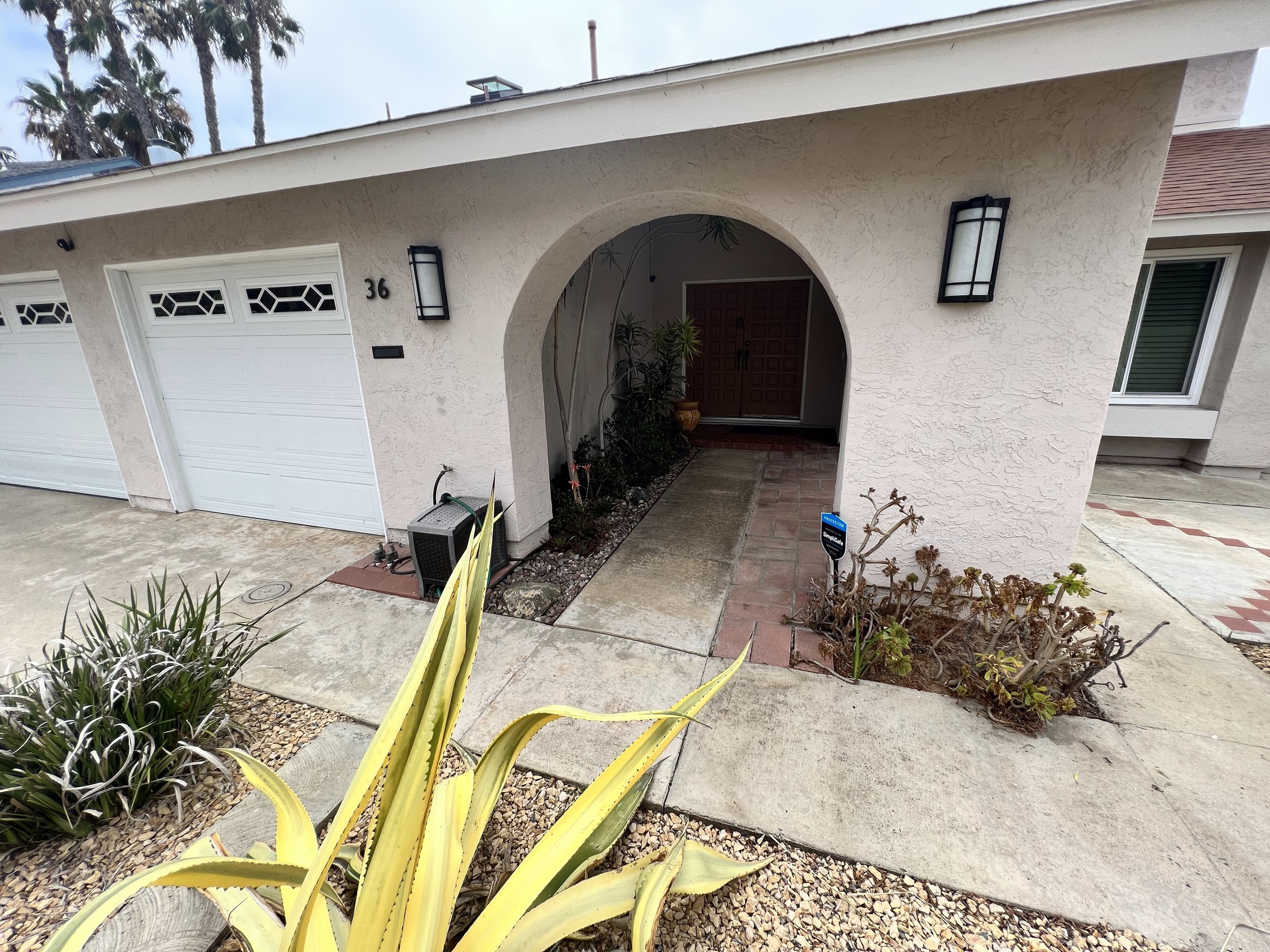
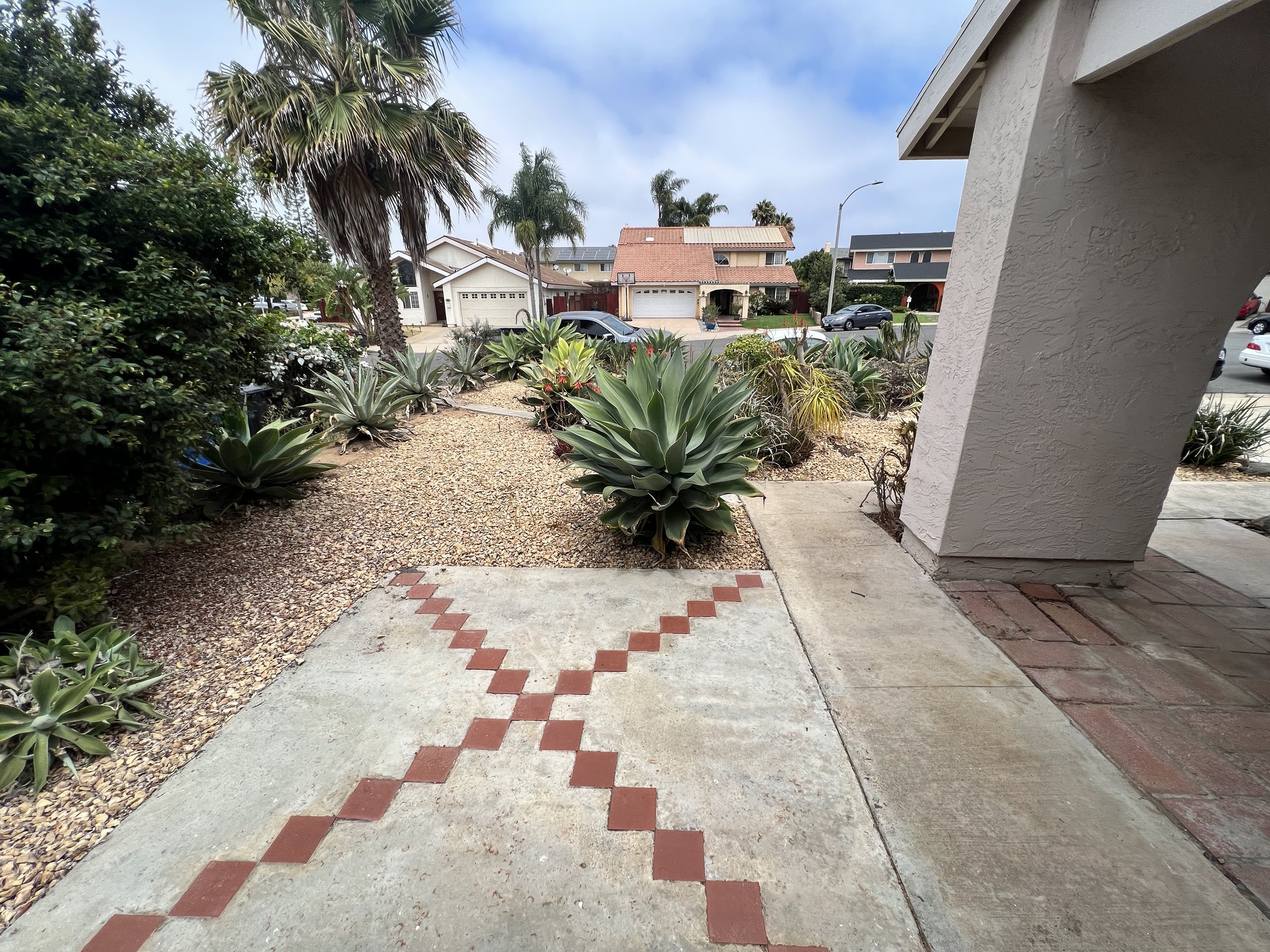
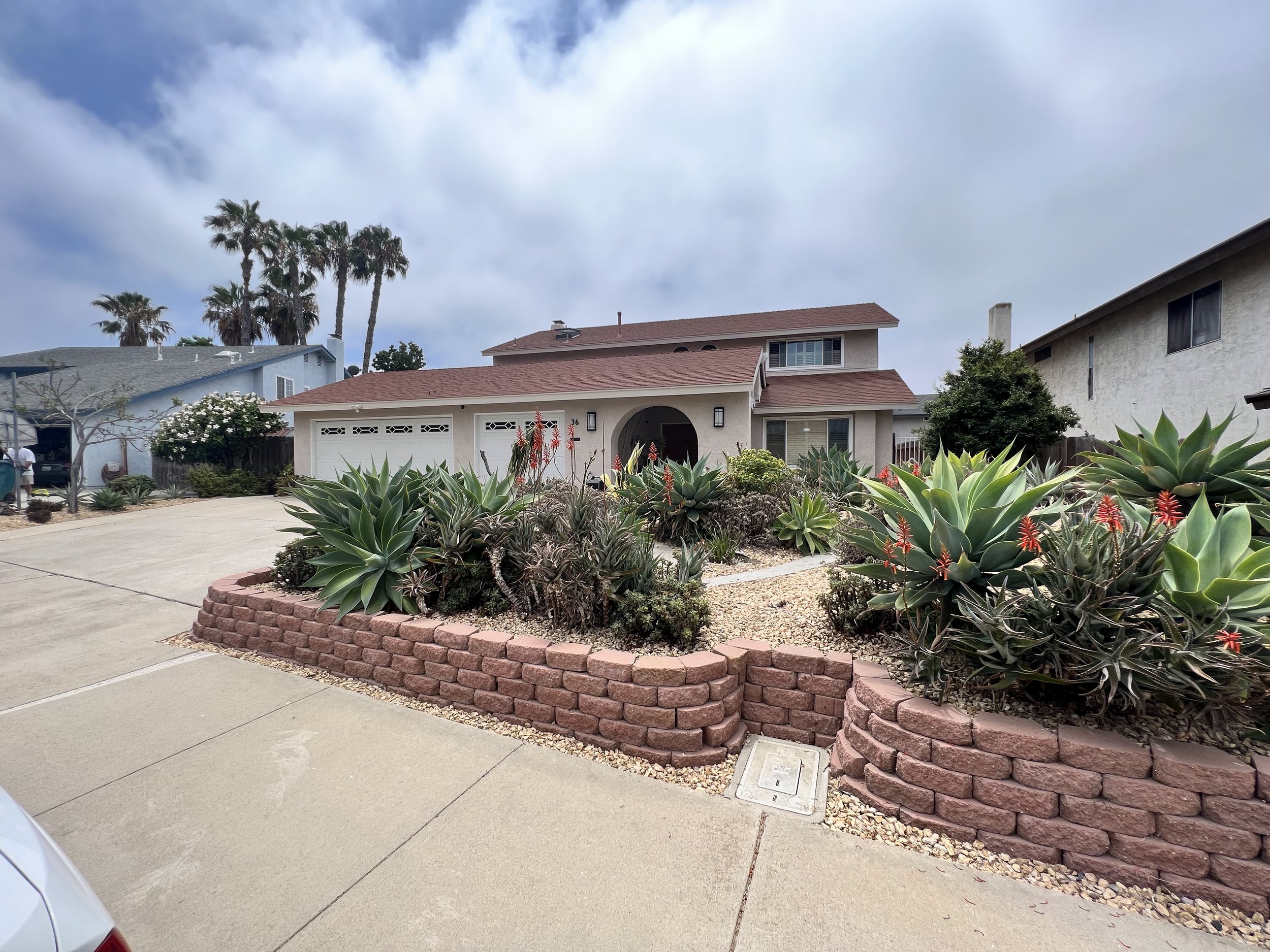
Existing Condition
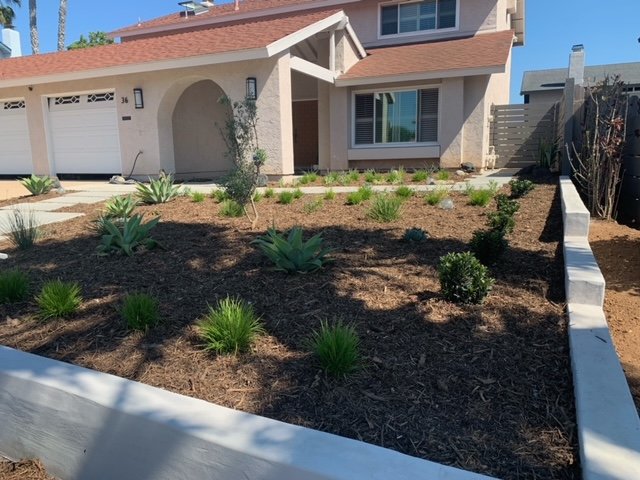
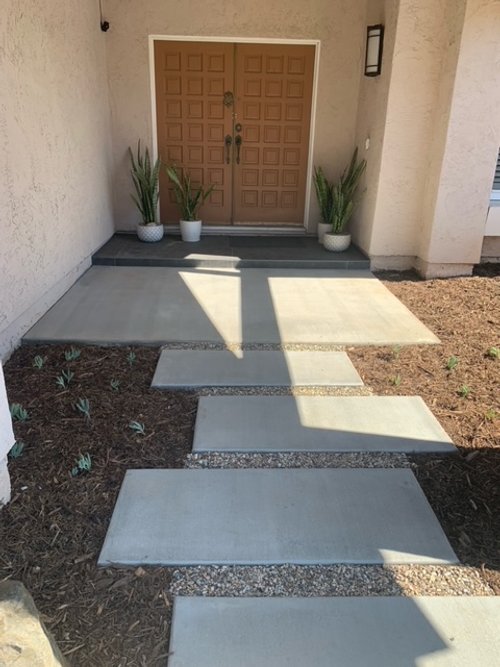
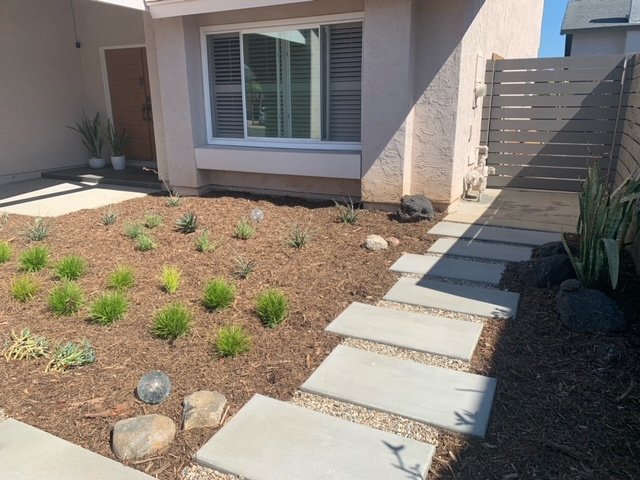
When LASD Studio began, the site was defined by underused lawn and disorganized planting. By reshaping the layout with strong geometry, drought-tolerant planting, and refined hardscape, the property has been transformed into a modernist retreat that reflects both the client’s lifestyle and San Diego’s climate.
The Influence of Modernist Garden Design on LASD Studio
Modernist principles strongly influence LASD Studio’s philosophy. Every project is a dialogue between architecture, ecology, and human life. In Chula Vista, these principles guided the creation of a garden that feels timeless and functional, contemporary and ecological - proving once more that simplicity is the ultimate sophistication.
Check out Styles in Landscape Architecture and Garden Design.

Capistrano HOA Urban Scape - San Diego, California
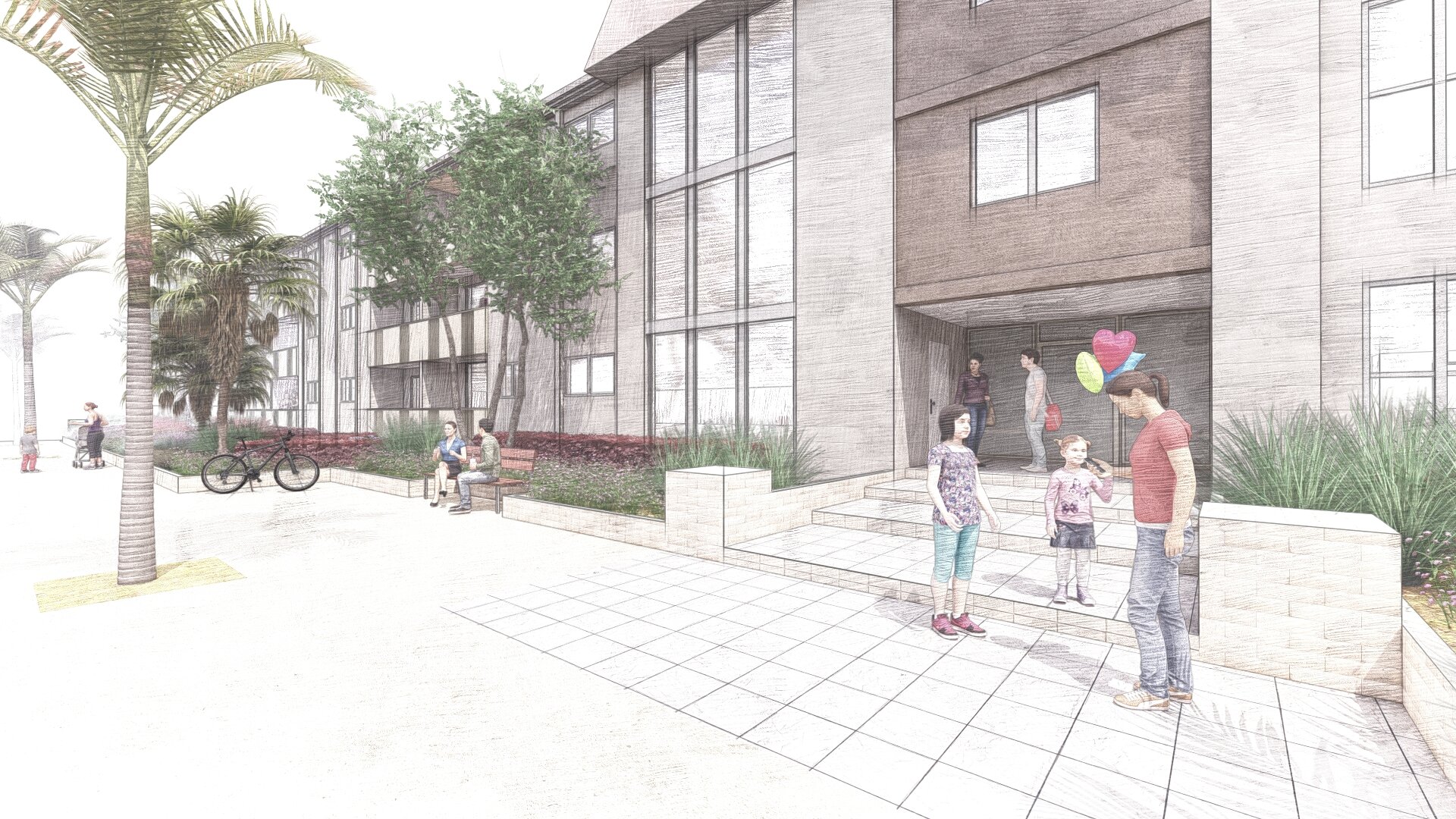
The Capistrano HOA Urban Scape in San Diego transforms streetscapes with bold planting and unified design. A purple Coprosma hedge frames diverse garden rooms, creating elegance, cohesion, and an enhanced neighborhood identity.
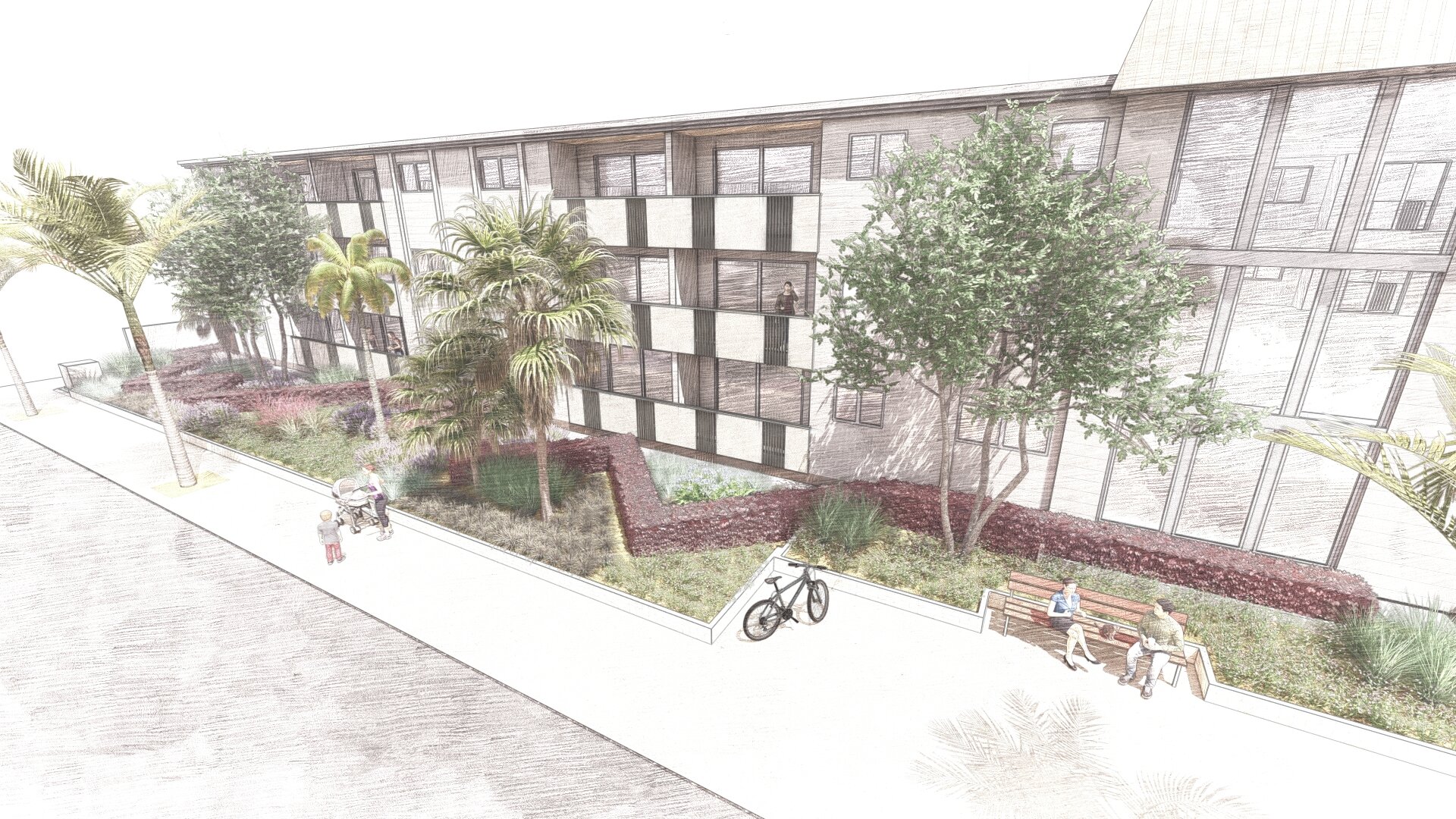
The Capistrano HOA Urban Scape is an example of how a single unifying design element can transform a community. By introducing Coprosma repens ‘Pacific Sunset’ hedges, LASD Studio created a bold yet elegant framework that ties the entire site together while leaving room for diversity and layered experiences.
Video presentation of LASD Studio’s Capistrano HOA Urban Scape in San Diego, featuring the bold use of Coprosma repens ‘Pacific Sunset’ hedges, redefined streetscapes, and ecological planting design that enhances community identity and urban biodiversity.
Design Philosophy
Urban landscapes are more than visual settings - they are shared ecosystems. Our approach focused on enhancing daily life for residents while addressing larger ecological needs. The hedge becomes both a design spine and ecological corridor, creating pockets of space where planting diversity can thrive.
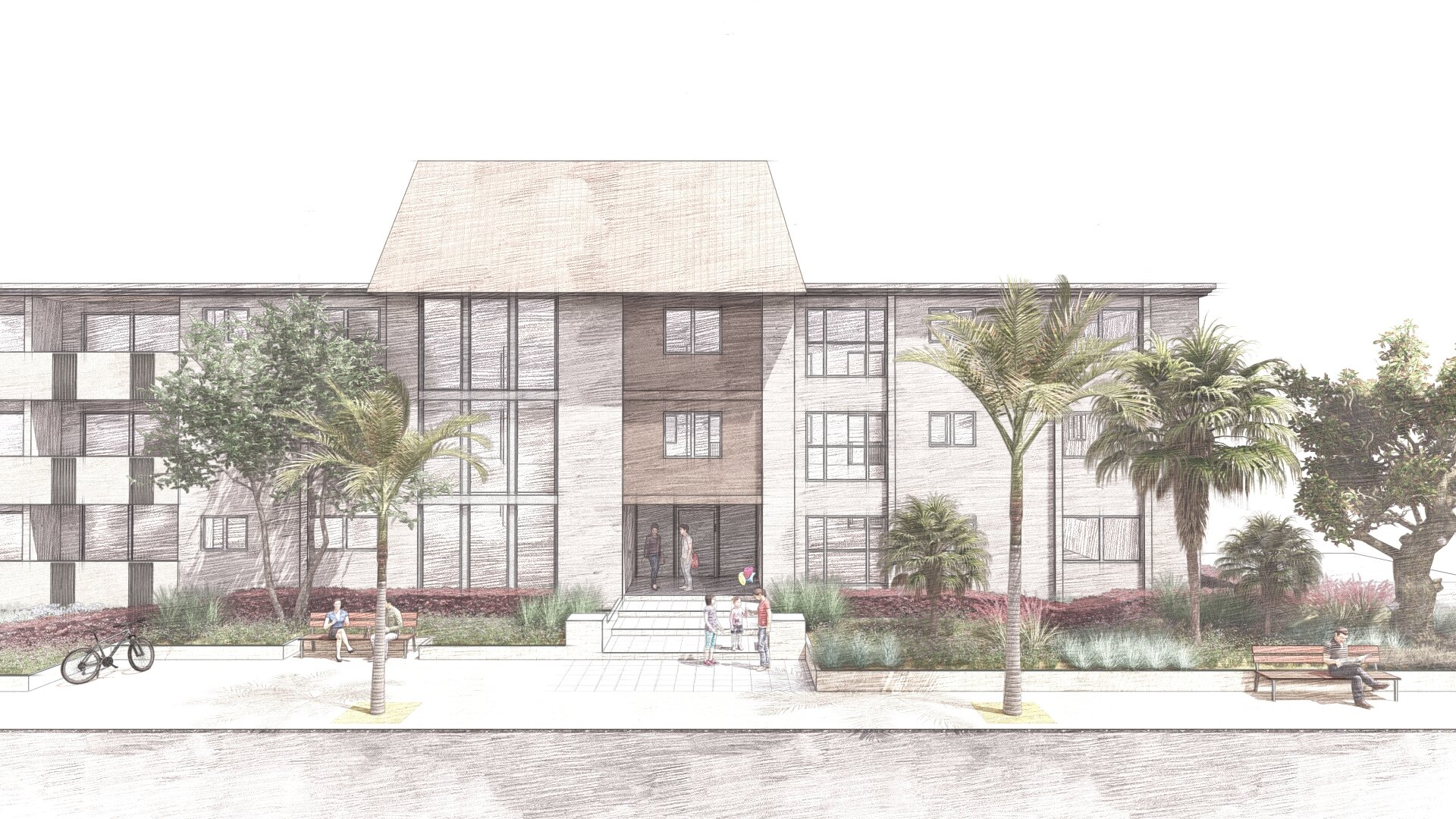
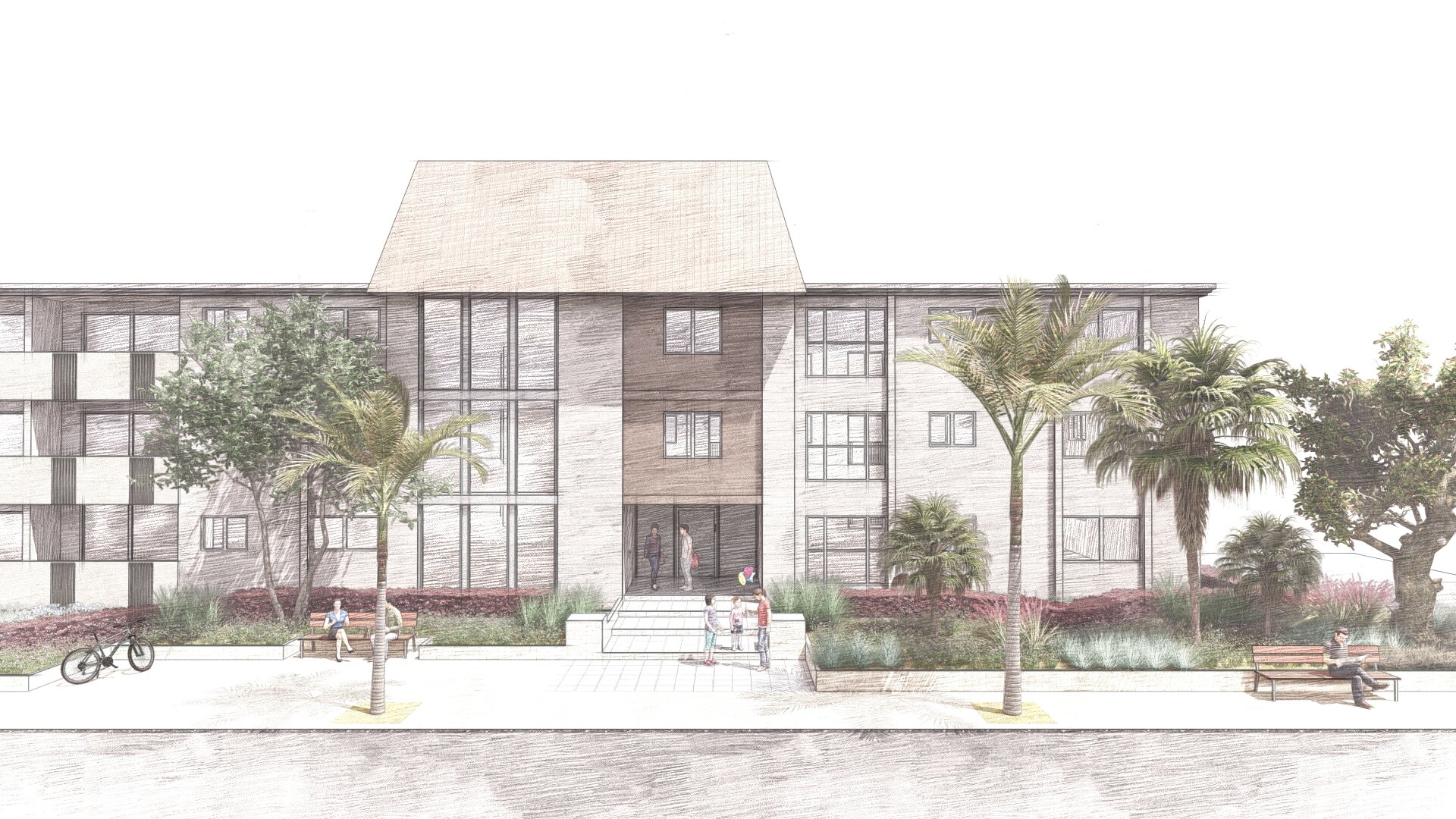
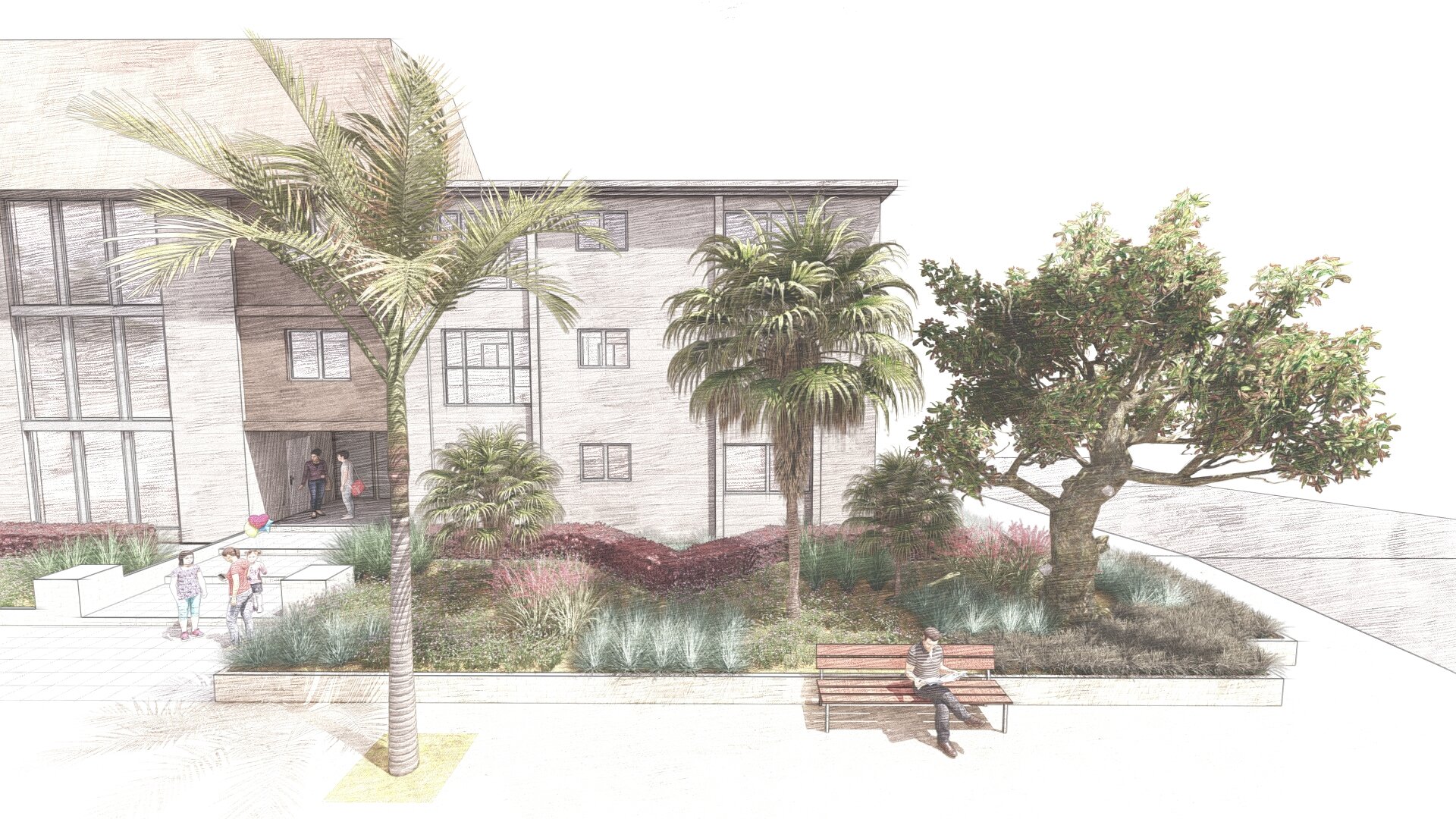
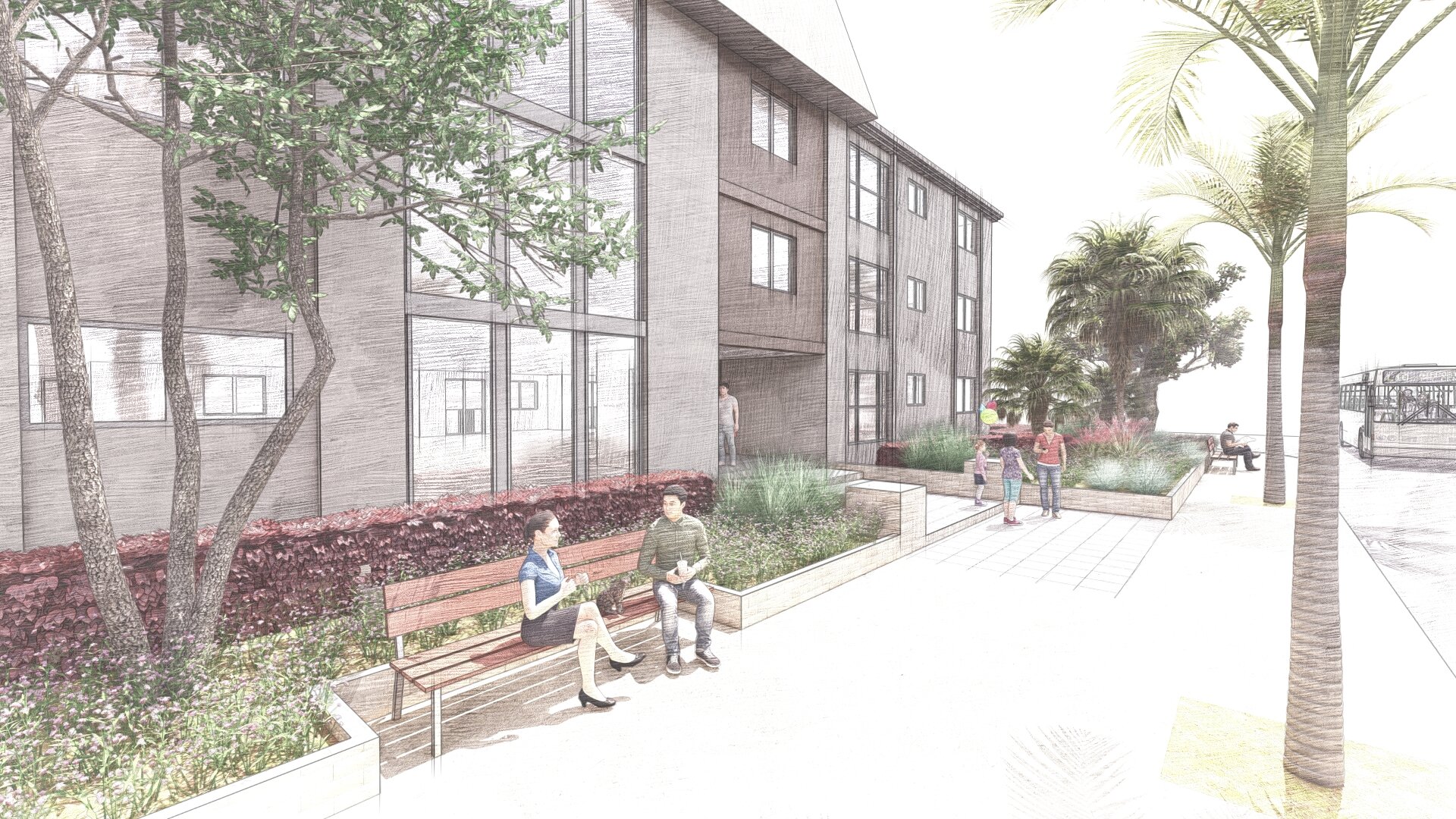
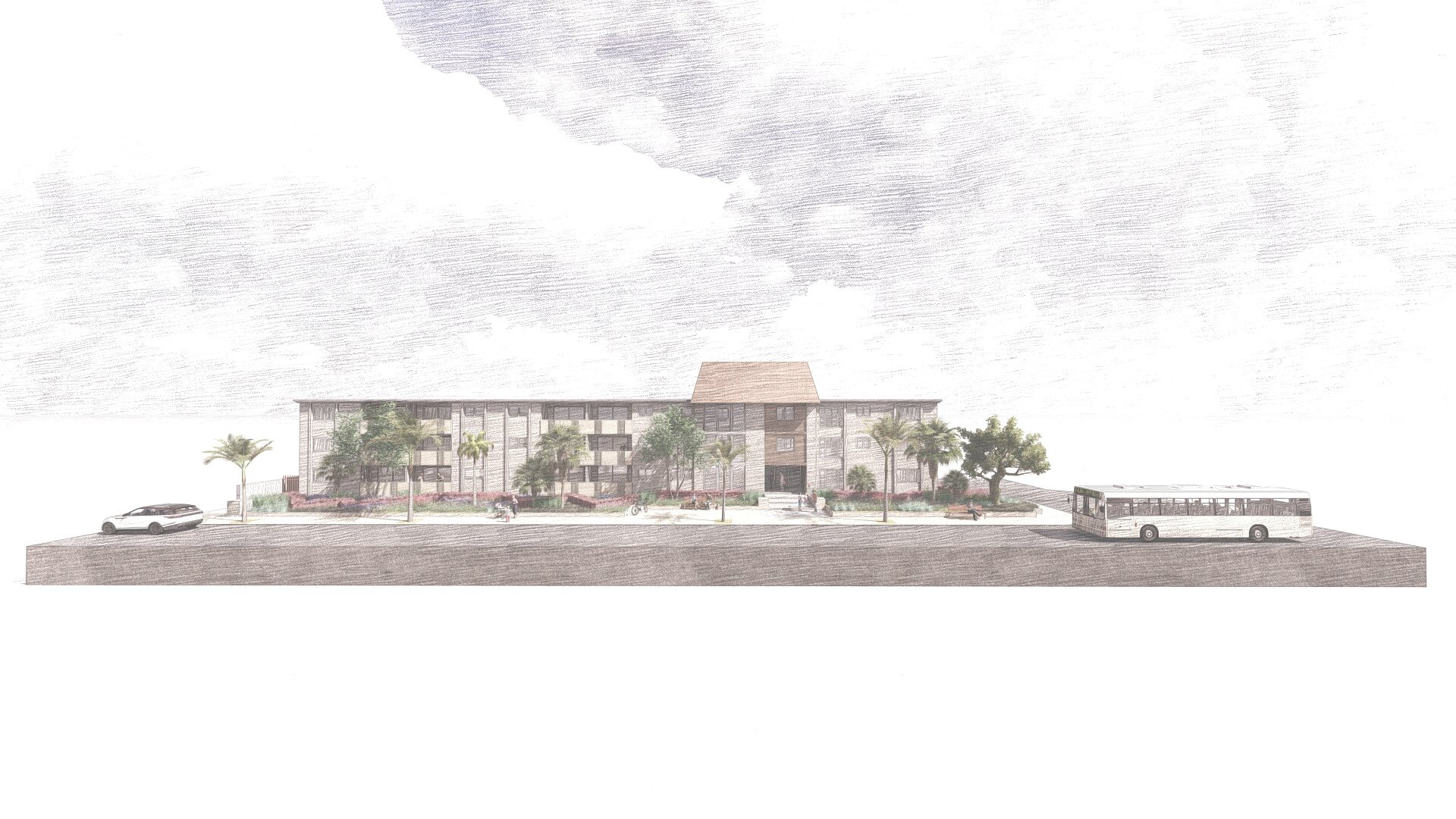
Perspective view of the Capistrano HOA urban scape project featuring California native planting, shaded benches, and sustainable pathways integrated into the residential building frontage.
Key Features of the Design:
Unifying Hedge Design
A continuous purple hedge acts as the backbone, framing the community and creating a recognizable identity.
Diverse Planting Pockets
Spaces within the framework allow for seasonal variation, native planting, and microhabitats that attract pollinators and wildlife.
Streetscape Redefined
Pathways, edges, and circulation are softened, reducing heat island effect and enhancing comfort for residents.
Community Identity
The project creates a shared aesthetic that strengthens pride and connection among residents.
Ecological Impact
Beyond aesthetics, the design supports urban biodiversity, soil restoration, and water efficiency. By reducing hardscape and increasing green mass, the project contributes to cleaner air, cooler streets, and healthier ecosystems in San Diego’s urban fabric.
PROJECT DRAWINGS & DOCUMENTATION

Concept plan for the Capistrano HOA landscape renovation in San Diego showing coherent design elements, waiting areas, service paths, and sustainable plantings for community use.

Detailed planting and hardscape plan for the Capistrano HOA urban scape project with decomposed granite paths, retaining walls, hedge planting areas, and drought-tolerant design.
HOA Landscape Renovation for Vibrant Community - San Diego, California.
Client Reflection
“We never really thought of red hedge. Such a simple and strong element creates a huge difference for the appearance and aesthetic of the building. Thank you for your effort in this design.”
- Capistrano board HOA
Contemporary Landscape Architecture & Garden Designer in Del Mar, California
A contemporary garden in Del Mar, California, inspired by abstract design and freedom of expression. Asymmetry, natural textures, and ecological planting create a landscape that balances modern living with timeless coastal beauty.
“A Modern Garden Inspired by Movement, Ecology, and Ocean Proximity”
Landscape design is the art of shaping land and living systems to enrich daily life. From private gardens to city parks, every designed landscape reflects the dialogue between nature, architecture, and people. In Del Mar, a coastal town where the ocean meets modern living, this Contemporary Garden was conceived as a living artwork: abstract, asymmetrical, and ever-changing.
What is Abstract Landscape Design?
Abstract landscape design breaks free from traditional symmetry and rigid geometry. Instead of identical hedges, mirrored axes, or a central focal point, the design embraces curvilinear lines, contrasts, asymmetry, and layered textures. A tall hedge may balance a short one; a curved pathway may guide the eye toward unexpected plant groupings. Every space tells its own story.
This approach creates a garden that feels alive, fluid, and dynamic - more like a forest or meadow than a structured parterre. Plants are not lined up in rigid rows but arranged in natural rhythms, with intentional randomness that mimics the patterns of wild landscapes.

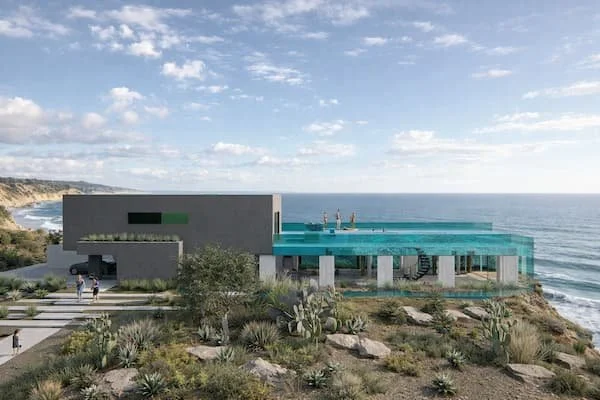
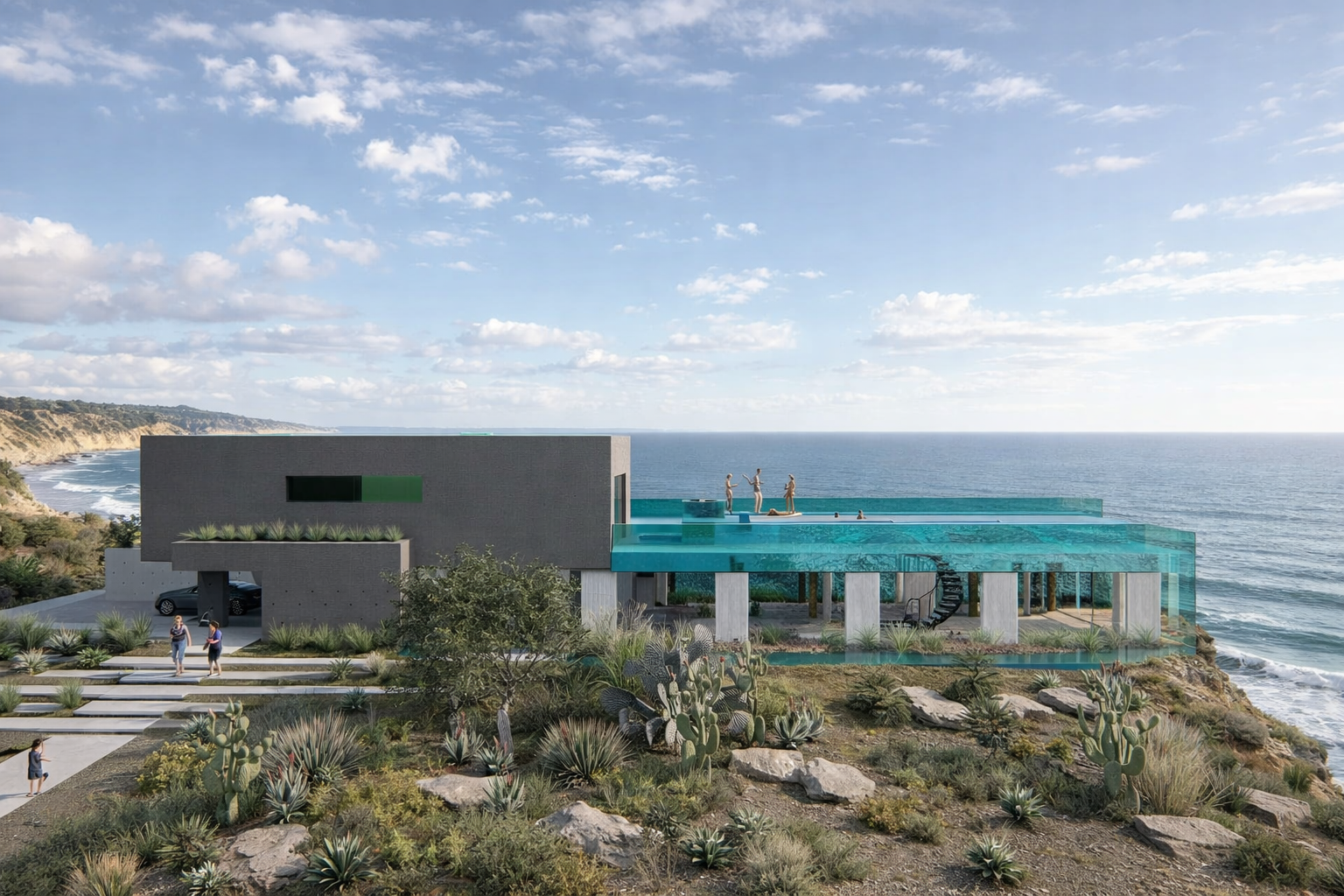
Lounge Area Under the Pool with Glass, Architectural visualization
Modern Garden Design Elements in Del Mar, California
Curved paths and fluid geometry that invite movement and discovery;
Asymmetry and contrast-each corner is distinct, offering new perspectives rather than uniformity;
Planting palettes with Mediterranean and native species, resilient in Del Mar’s coastal climate, reducing water use and supporting pollinators;
Play of textures and colors, from ornamental grasses to bold architectural shrubs, creating depth and visual rhythm;
Outdoor living zones, designed for relaxation, gatherings, and the enjoyment of sea breezes.
Ecology Meets Art
This garden is not just for beauty—it is sustainable and ecological. By selecting drought-tolerant and pollinator-friendly plants, the garden thrives with minimal maintenance while restoring balance to the coastal environment. Water management and soil health were carefully considered, ensuring the garden adapts and evolves with time.
Video presentation of Contemporary Garden in Del Mar, California, featuring abstract landscape design with asymmetry, sustainable Mediterranean planting, and modern outdoor living inspired by the ocean.
A Garden That Grows With You
Unlike static architecture, landscapes live, change, and transform. The Contemporary Garden in Del Mar captures this truth: plants grow, seasons shift, and light plays across pathways and textures. The result is a timeless garden, modern yet rooted in ecology, structured yet free, intimate yet expansive.
At its heart, this project reflects LASD Studio’s philosophy: landscapes as evolutionary intelligent systems, where people, art, and biodiversity evolve together in balance.

Heat-Resilient Urban Design in Abu Dhabi - Cooling Public Spaces – Shemagh Project
The Shemagh Project in Abu Dhabi is a holistic urban design that mitigates the urban heat island effect. Featuring urban coolers, pavilions, permeable pavements, and reflective surfaces, it creates healthier, cooler, and more livable public spaces.
A Vision for Cooler, Greener Cities
The Shemagh Urban Design Project in Abu Dhabi redefines how public plazas and urban spaces can adapt to climate challenges. Designed as a multifunctional system, it tackles the urban heat island effect by combining innovative technology with ecological principles. At the heart of the project stands the Urban Cooler, a solar-powered installation that cools, cleans, and revitalizes city air while creating shaded, biodiverse havens for people and wildlife.
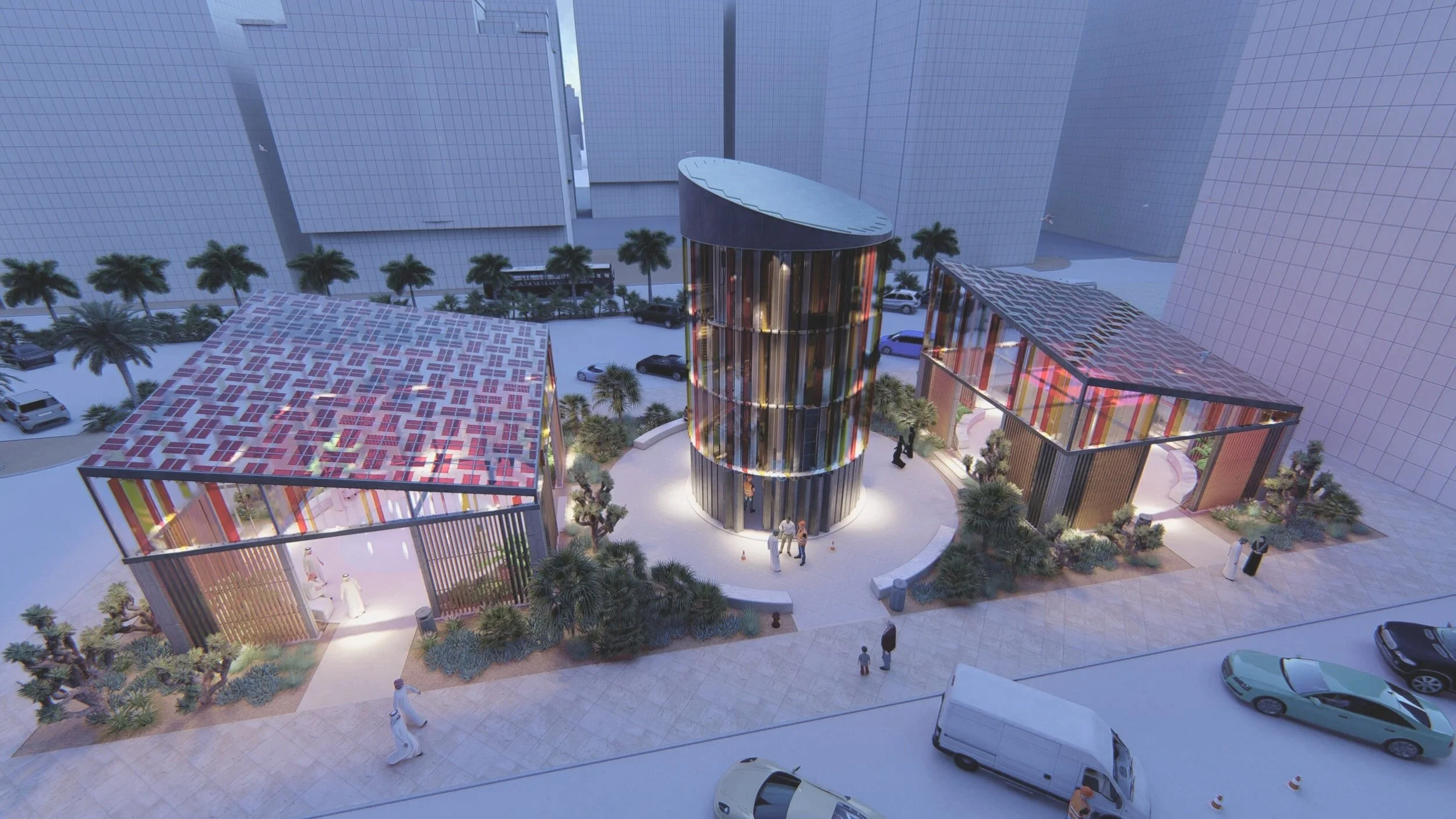
Visualization of plaza with red canopy pattern
The Urban Cooler - Cooling Cities, Cleaning Air
The Urban Cooler is a unique tower that captures solar energy through perovskite solar panels and uses it to power an advanced cooling system. Each tower can process more than 300,000 m³ of urban air per day, reducing temperatures in its surroundings by 7–13°C. At the same time, the cooler captures CO₂, filters pollutants, and removes harmful particles and bacteria, including viruses.
Video presentation of the Shemagh Urban Design project in Abu Dhabi, featuring the Urban Cooler tower and perovskite solar-powered pavilions. The film shows how the system reduces the urban heat island effect by cooling over 300,000 m³ of air per day, capturing CO₂, filtering dust and viruses, and providing shaded seating areas with integrated biodiversity planting. Designed as an innovative urban plaza, the project enhances public life while attracting pollinators and improving air quality.
Airflow is directed to two shaded pavilion areas, ensuring residents and visitors can enjoy comfortable, cooled public spaces even during the hottest months in Abu Dhabi. By integrating passive shading, reflective pavements, and permeable surfaces, the system creates a healthier microclimate while significantly reducing ground and air temperatures.
Designing for Biodiversity and Pollinators
More than a technological solution, the Shemagh Project embraces landscape architecture and ecological design. Surrounding the Urban Cooler, green planting zones are established to support pollinators, beneficial insects, and urban wildlife. Native and adaptive plant species provide nectar sources, food, and shelter, while shaded plazas encourage natural cooling through biodiverse planting layers.
This design not only improves urban resilience but also enhances ecological connectivity, helping pollinators and small wildlife thrive within the dense city environment. The planting palette and structured zones transform what would be a typical plaza into a living ecological corridor.

Project Overview plan – aerial grid
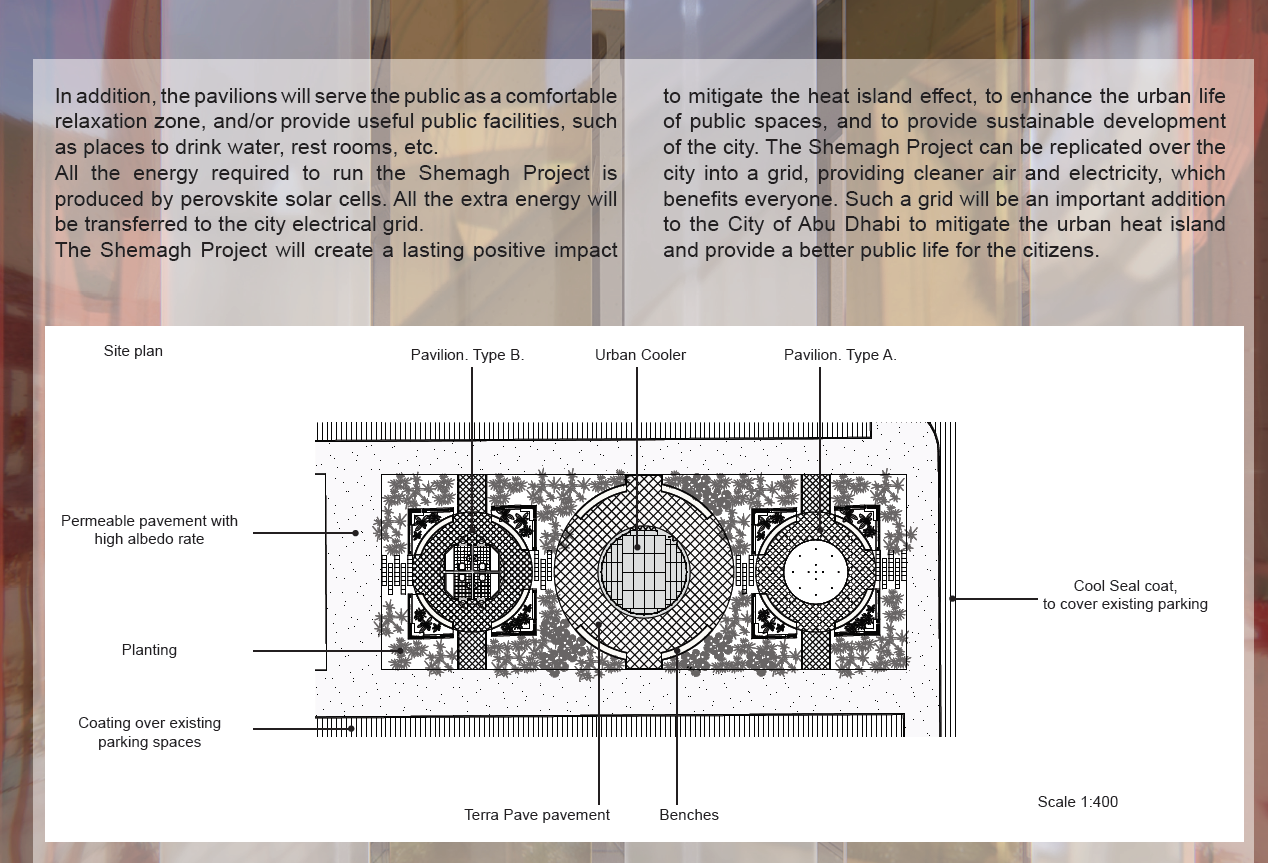
Project Overview plan – aerial grid
Public Life and Sustainable Energy
The Shemagh pavilions serve as multifunctional urban living rooms. Pavilion Type A is a relaxation zone with shaded seating, clean drinking water, and cooling water features. Pavilion Type B provides public facilities, rest areas, and storage space for community use.
All energy required is harvested from solar panels, with excess energy transferred to the city’s electrical grid, contributing to Abu Dhabi’s vision of a sustainable, carbon-smart future. By combining clean air, reduced CO₂, shaded plazas, and ecological planting, the project directly improves the quality of public life.

Robust Design – Urban Cooler cross-section

Urban Cooler airflow diagram (static, circular, directed flow)
Towards Resilient and Livable Cities
The Shemagh Urban Design for Abu Dhabi is more than an architectural installation — it’s a prototype for climate-adaptive urban design worldwide. It shows how integrating technology, biodiversity, and human comfort can create resilient, sustainable, and inspiring urban spaces.

Surfaces and local climate graph
By reducing air temperatures, filtering pollution, and supporting pollinators and wildlife, the project addresses climate stress while reconnecting people with nature. This innovative design sets a model for how cities in arid climates can transform their plazas into healthier, cooler, and more livable environments.