
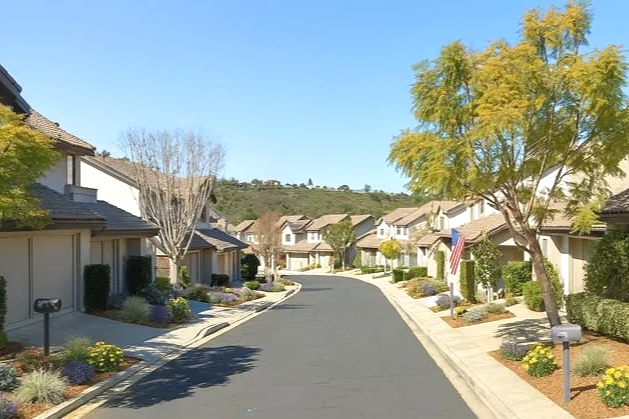
University Canyon West HOA, Turf Replacement, Rebate Strategy & Wildfire-Resilient Landscape Design in San Diego
University Canyon West HOA is a water-wise landscape design project in San Diego featuring HOA turf replacement, California native planting, wildfire-resilient landscape design, stormwater strategies, irrigation planning, biodiversity restoration, and turf rebate coordination for long-term community sustainability.
University Canyon West HOA in San Diego is being reimagined through a long-term landscape strategy that replaces non-functional turf with a layered, water-wise, fire-conscious, and ecologically richer planting system. The project aligns community beautification with California’s changing water regulations, turf replacement rebate opportunities, wildfire defensible space principles, irrigation efficiency, stormwater performance, and urban heat island mitigation.
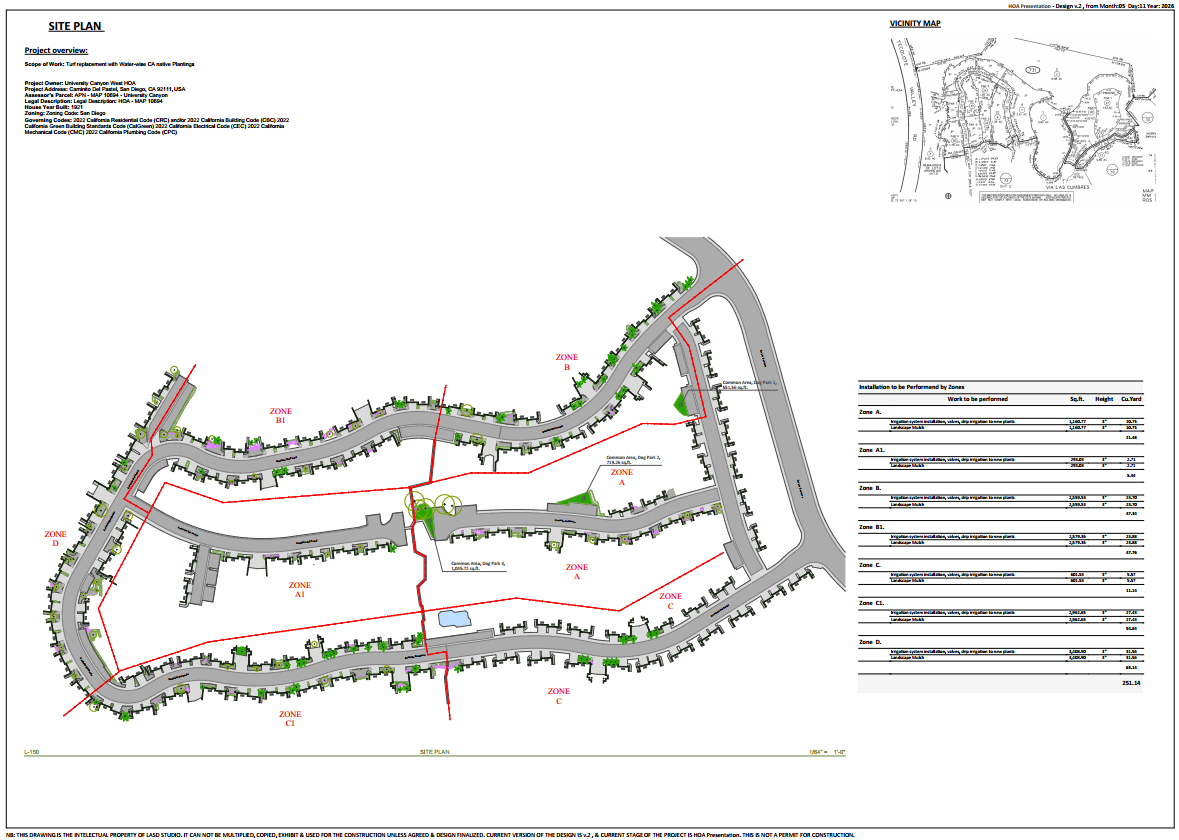
Project Overview
Project: University Canyon West HOA
Location: San Diego, California
Client Type: Homeowners Association / Common Area Landscape
Project Type: Turf Replacement, Rebate Strategy, Planting Design, Irrigation Planning, Wildfire-Resilient Landscape Design
Approximate Turf Replacement Area: 13,500–13,800 sq. ft.
Design Focus: Water conservation, rebate eligibility, biodiversity, defensible space, stormwater, heat island mitigation, long-term maintenance efficiency
Status: Construction
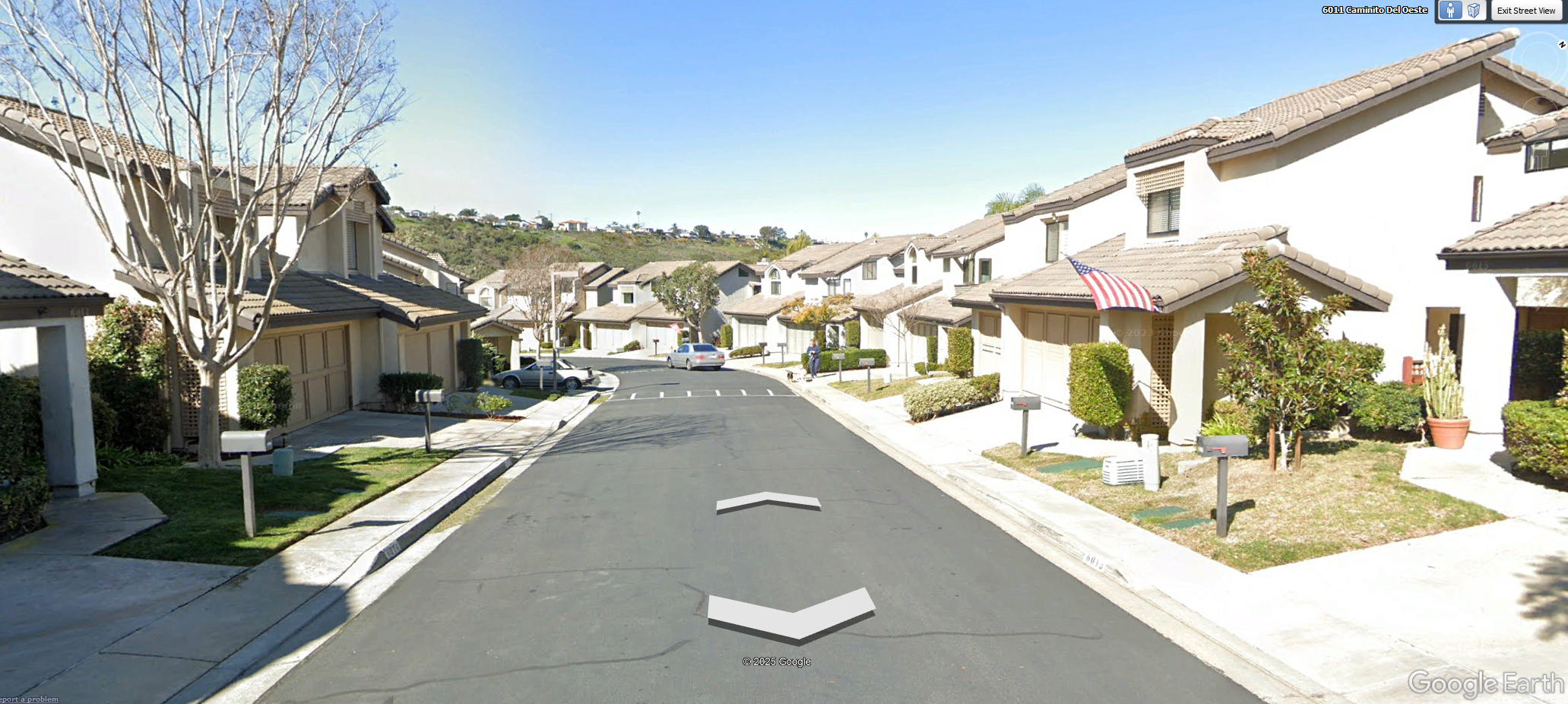
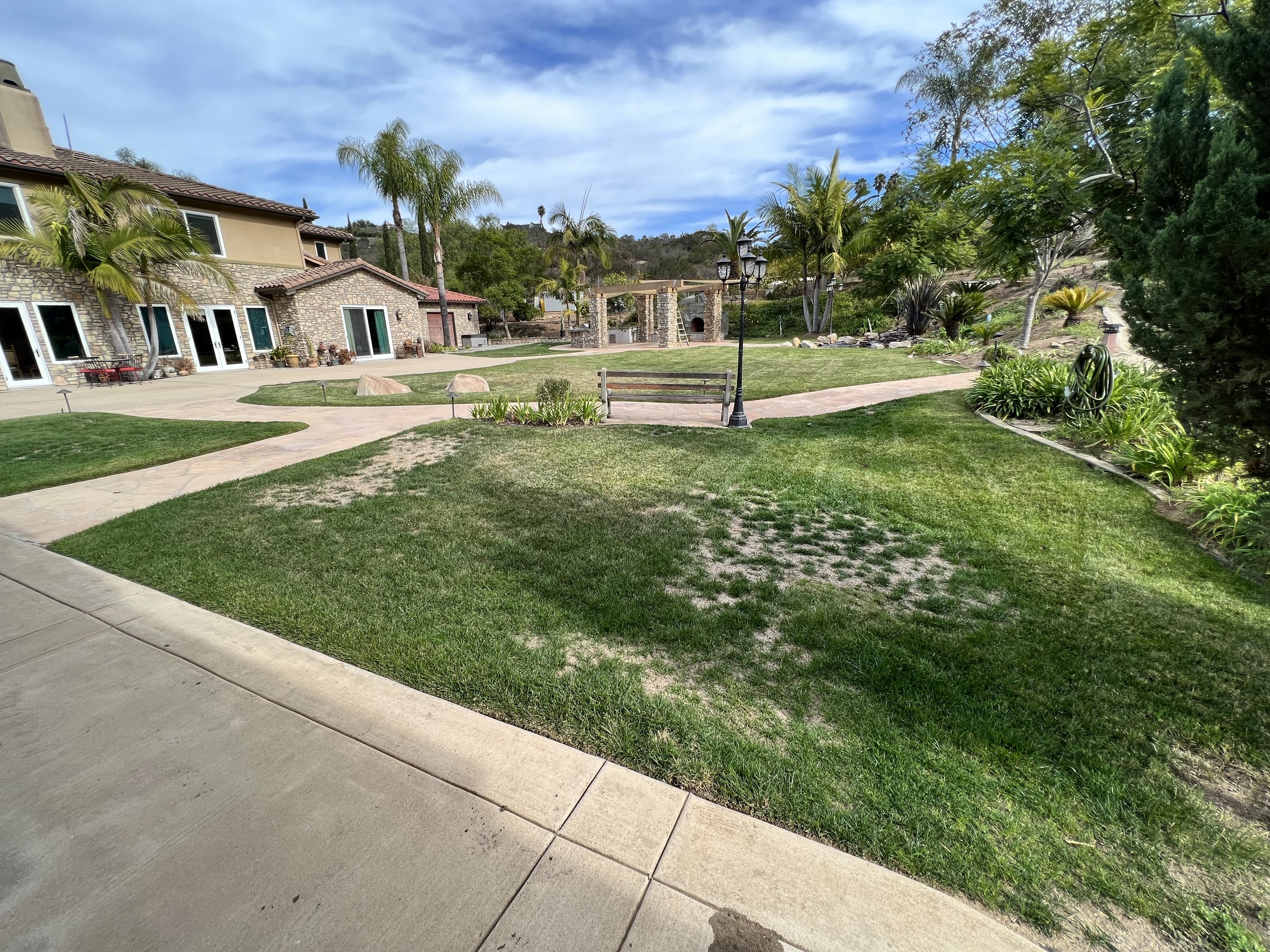
University Canyon West HOA represents a common challenge facing many communities across Southern California: large areas of ornamental turf that require significant irrigation, provide limited ecological value, increase maintenance demands, and may no longer align with California’s long-term water conservation direction.
LASD Studio developed a comprehensive landscape strategy to help the HOA transition from high-water-use lawn areas toward a more resilient, lower-water, and visually cohesive landscape system. The work included existing condition documentation, drone-assisted site measurement, CAD drafting, 3D coordination, demolition takeoffs, planting area calculations, turf rebate strategy, irrigation planning, and detailed planting design for phased construction implementation.
Rather than treating turf removal as a simple rebate exercise, the project uses the opportunity to create a healthier and more durable neighborhood landscape, one that supports pollinators and local biodiversity, reduces exposed heat-absorbing surfaces, improves water efficiency, and responds to wildfire defensible space concerns.
Why This Project Matters?
California’s AB 1572 phases in a permanent prohibition on the use of potable water for irrigating non-functional turf in commercial, industrial, institutional, and HOA common-area landscapes. For HOA common areas, the phased date is 2029, which means communities now have a practical window to plan, budget, apply for rebates, and transition before compliance pressure increases.
Social Benefits: Spaces that Bring People Together
At University Canyon West HOA, the design approach begins with precise documentation of existing turf, planting areas, walls, walks, entries, slopes, utilities, and community edges. From there, LASD Studio prepared a measured and phased landscape strategy that can support rebate coordination, contractor pricing, HOA review, and future implementation.
The goal is not simply to remove lawn. The goal is to replace it with a landscape that performs.
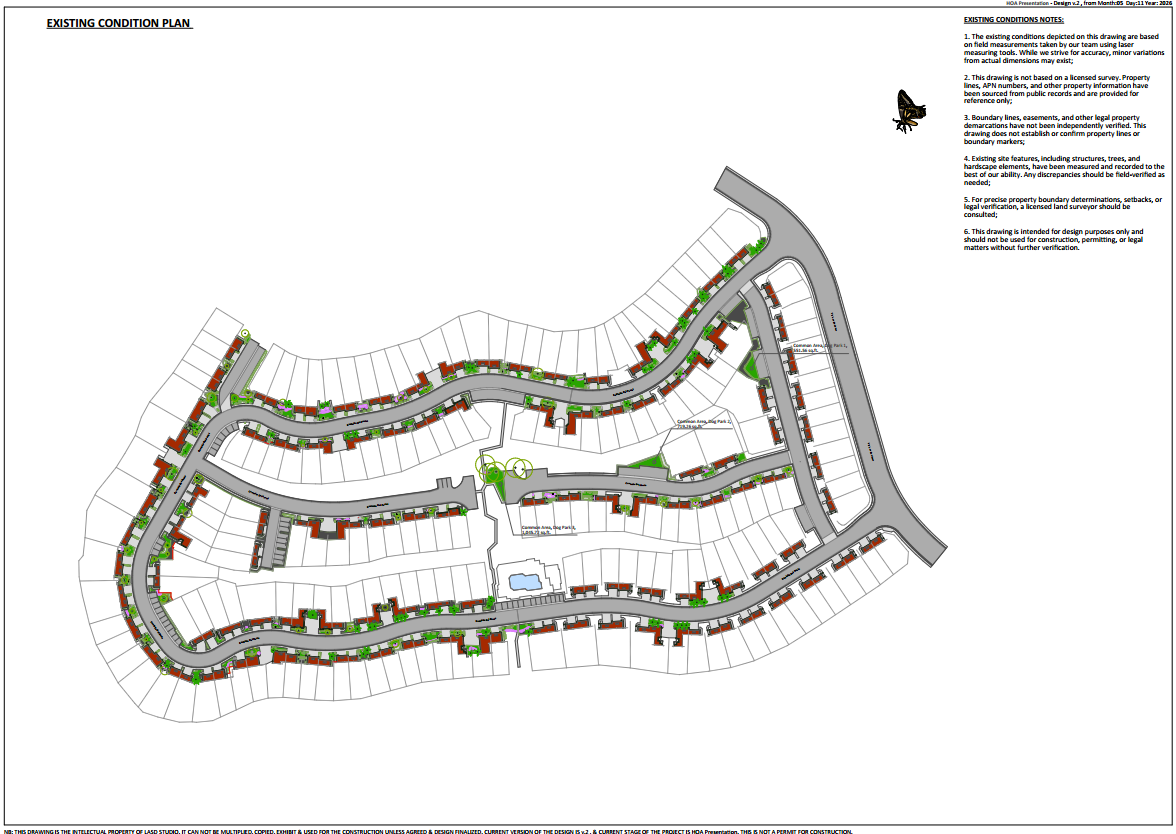
Existing Conditions & Site Documentation
The first step was to document the existing community landscape with enough accuracy to support design decisions, rebate calculations, and future contractor coordination. LASD Studio’s team recorded existing landscape conditions, measured turf and planting zones, mapped existing site elements, and translated the information into a CAD-based drawing set.
This documentation allowed the design team to identify which lawn areas could be removed, where planting strategies needed to change by zone, how irrigation could be reorganized, and how the community could phase work without losing control of cost, maintenance, or visual consistency.
Turf Rebate Strategy, AB 1572
The project studies approximately 13,500–13,800 square feet of turf replacement opportunity across multiple HOA zones. At the time of project review, this area created a significant potential rebate scenario; however, final rebate values depend on the applicable water agency, current funding, project eligibility, pre-approval, inspections, and program requirements.
LASD Studio’s role is to help organize the design package around rebate logic: identifying eligible turf areas, preparing planting density strategies, coordinating irrigation conversion, documenting quantities, and assisting with correspondence with the appropriate water district or rebate program administrator.
The design is not based on minimum compliance alone. Many rebate programs require a baseline plant density, such as three plants per 100 square feet, but a minimal approach can result in sparse landscapes, exposed ground, higher weed pressure, and weak visual impact. This project uses a more complete planting strategy to create a lush, cohesive, water-wise landscape from the beginning.
SoCal Water-Smart requires existing turf, pre-approval before removal, minimum planting density, stormwater retention, and permeable conditions for turf replacement projects; San Diego County programs may provide additional or enhanced incentives depending on property type, water agency, native planting, and location.
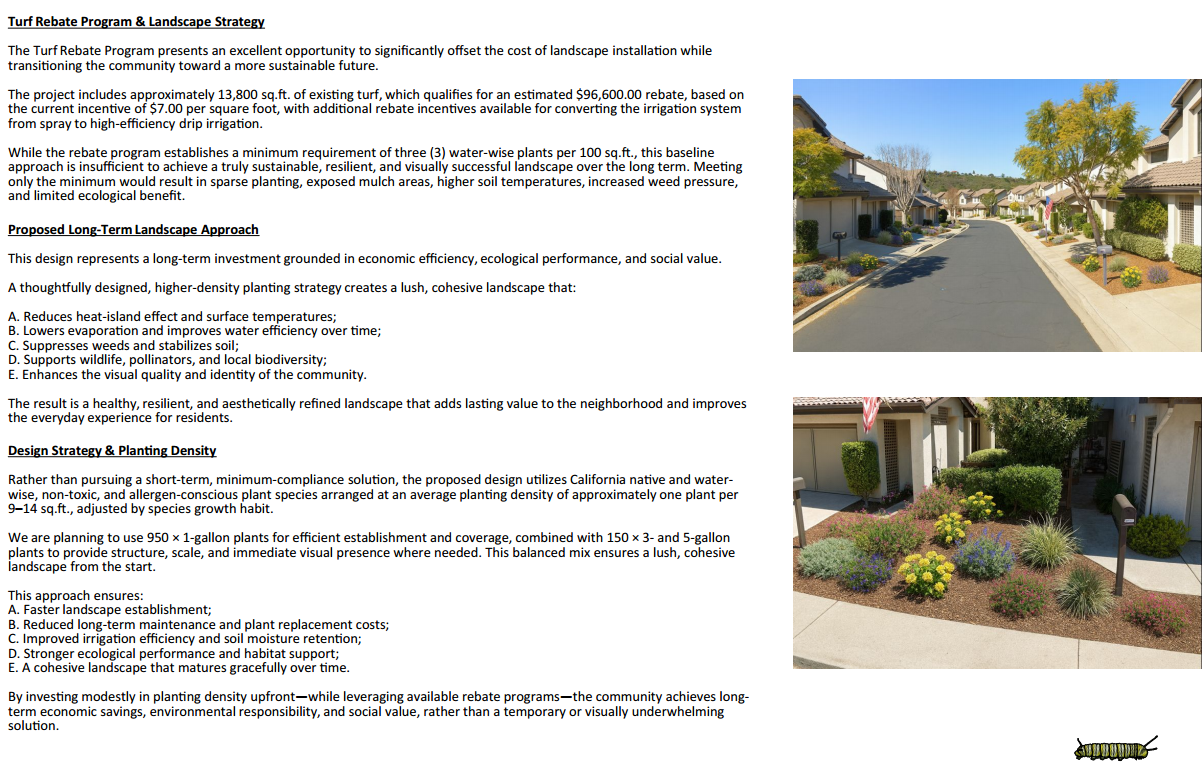
Planting Strategy - Layered Planting for Biodiversity, Color & Long-Term Coverage
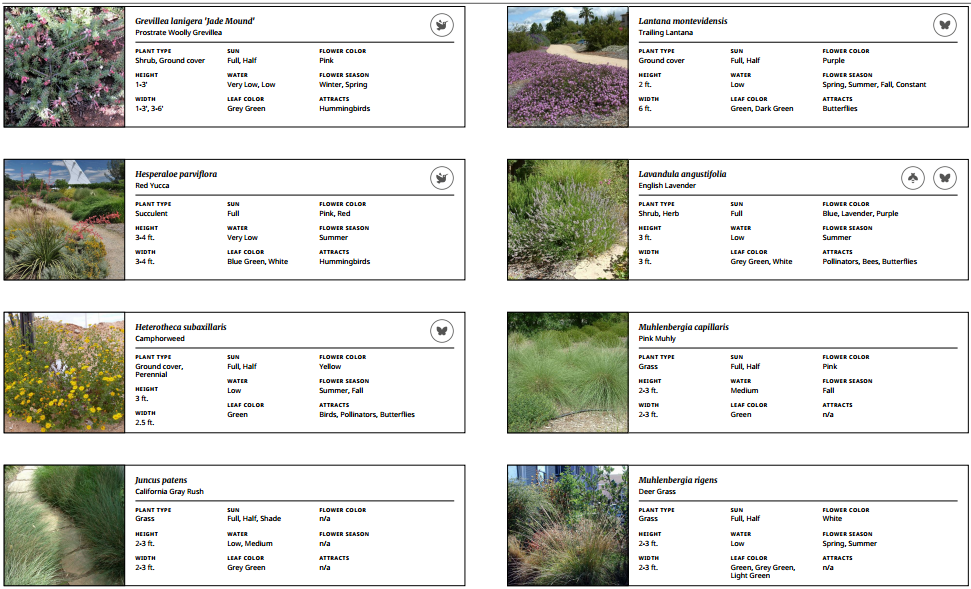
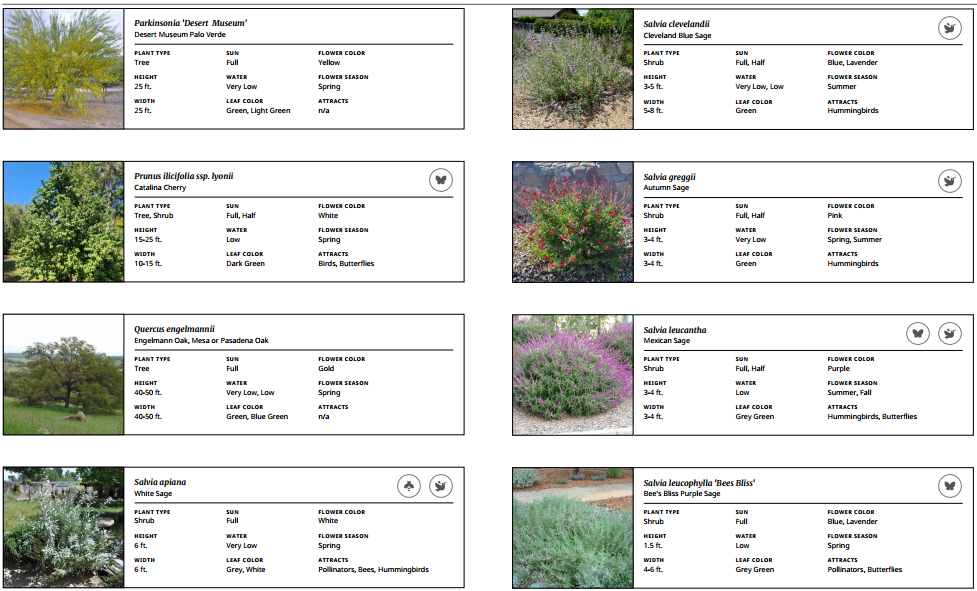
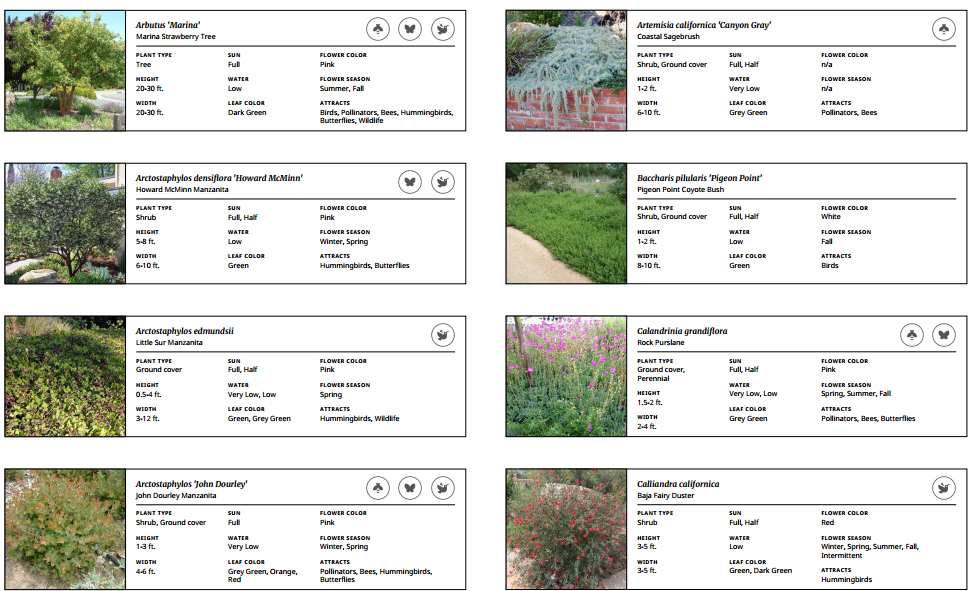
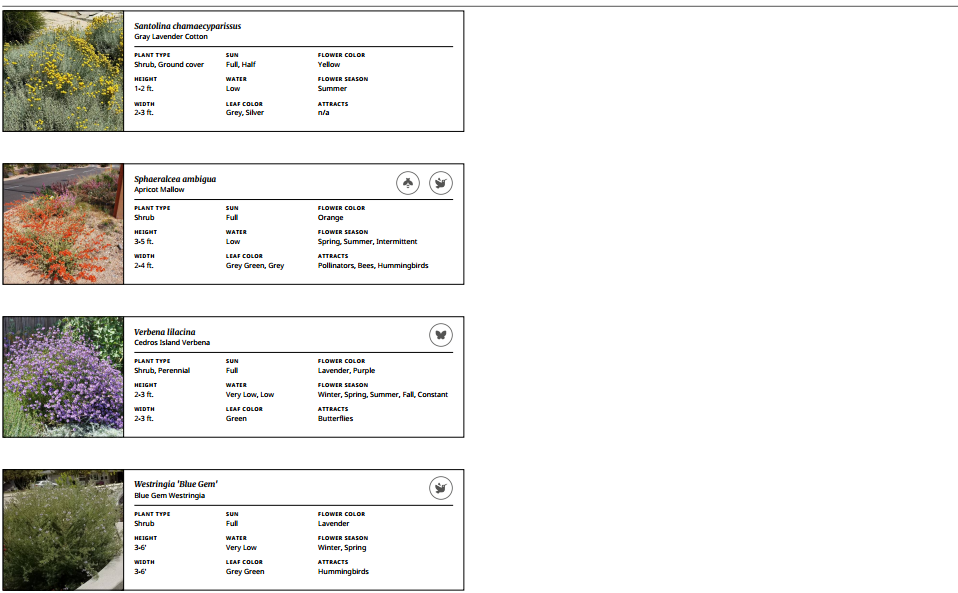
The planting strategy replaces ornamental turf with a layered matrix of California native, California-adapted, drought-tolerant, and habitat-supportive plants. Instead of using isolated shrubs in large mulch fields, the design organizes plants into communities with groundcovers, grasses, perennials, flowering shrubs, and accent species.
The proposed palette includes species selected for water efficiency, seasonal color, texture, pollinator value, hummingbird attraction, slope stability, and long-term visual identity. Planting density is intentionally stronger than minimum rebate standards so that the landscape can establish quickly, suppress weeds, reduce exposed soil, and create a more complete neighborhood character.
The design supports:
Reduced irrigation demand, Improved seasonal color and curb appeal, Pollinator and hummingbird habitat, Better soil coverage and erosion resistance, Reduced weed pressure, Lower long-term maintenance compared with weak, sparse planting, Stronger neighborhood identity.
Planting Plan selection
Wildfire-Resilient Landscape Design & Fuel Modification
In Southern California, turf replacement must also be considered through the lens of wildfire resilience. This project integrates defensible space thinking, fuel modification principles, and fire-conscious material choices into the planting and groundcover strategy.
Where planting areas occur near buildings, entries, walls, and residential edges, the design prioritizes lower-fuel plant selection, spacing, maintenance access, and non-combustible mineral mulch conditions. The visualizations will be updated to replace organic mulch with crushed gravel or other non-combustible mineral mulch where required by fire department guidance.
California’s defensible space framework includes Zone 0, the first five feet around structures, which focuses on intense fuel reduction against ember ignition; AB 3074 directed the state to establish an ember-resistant zone, and CAL FIRE currently recommends gravel, pavers, or concrete instead of combustible mulch in this area.
Urban Heat Island Reduction & Albedo-Aware Materials
Replacing turf does not mean replacing living landscape with heat. A responsible turf conversion must consider surface temperature, shade, soil coverage, evapotranspiration, and material reflectivity.
This design uses planting density, living groundcover, light-toned mineral mulch, and organized shrub layers to reduce bare exposed surfaces and improve thermal comfort. The strategy considers the albedo effect, the ability of surfaces to reflect solar energy, while avoiding excessive hardscape and maintaining landscape permeability.
The result is a landscape that conserves water without creating a hotter, harsher environment. Plant cover, gravel selection, and stormwater-sensitive detailing work together to support a cooler and more comfortable community edge.
EPA guidance notes that cool pavement and reflective surface strategies can contribute to heat island mitigation, especially when combined with stormwater and broader site-performance benefits.
Stormwater, Irrigation & Long-Term Water Efficiency
Turf replacement is most successful when planting design, irrigation design, and stormwater strategy are developed together. The project anticipates irrigation conversion from inefficient overhead spray toward more targeted water delivery, with planting zones organized by water needs, exposure, slope, and establishment requirements.
The design also supports stormwater retention and infiltration principles by limiting impermeable surfaces and using planting areas as part of the site’s water-management system. Rather than moving water away as quickly as possible, the landscape is designed to slow, absorb, and reuse rainfall where feasible.
Green infrastructure approaches can help manage wet weather impacts by reducing and treating stormwater at its source while providing environmental and community benefits.
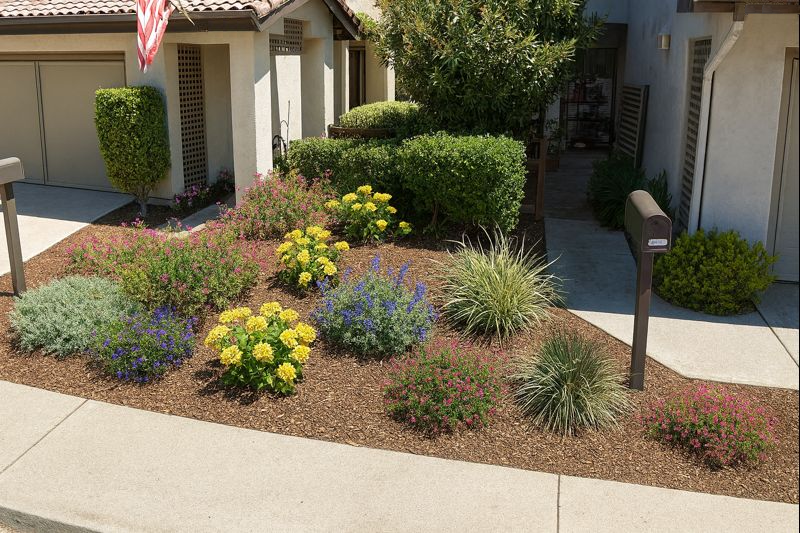
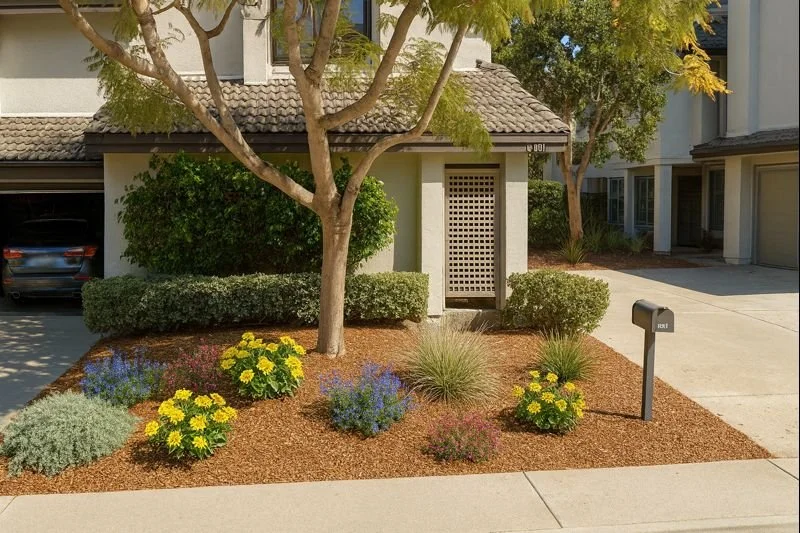
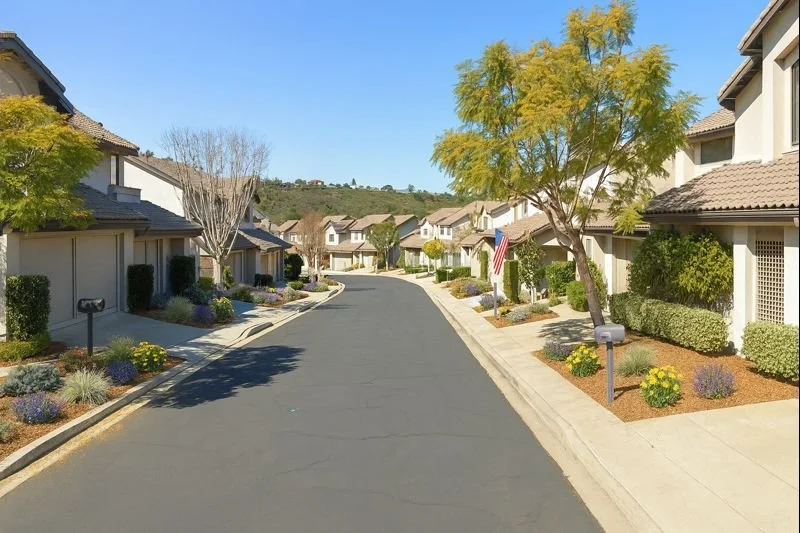
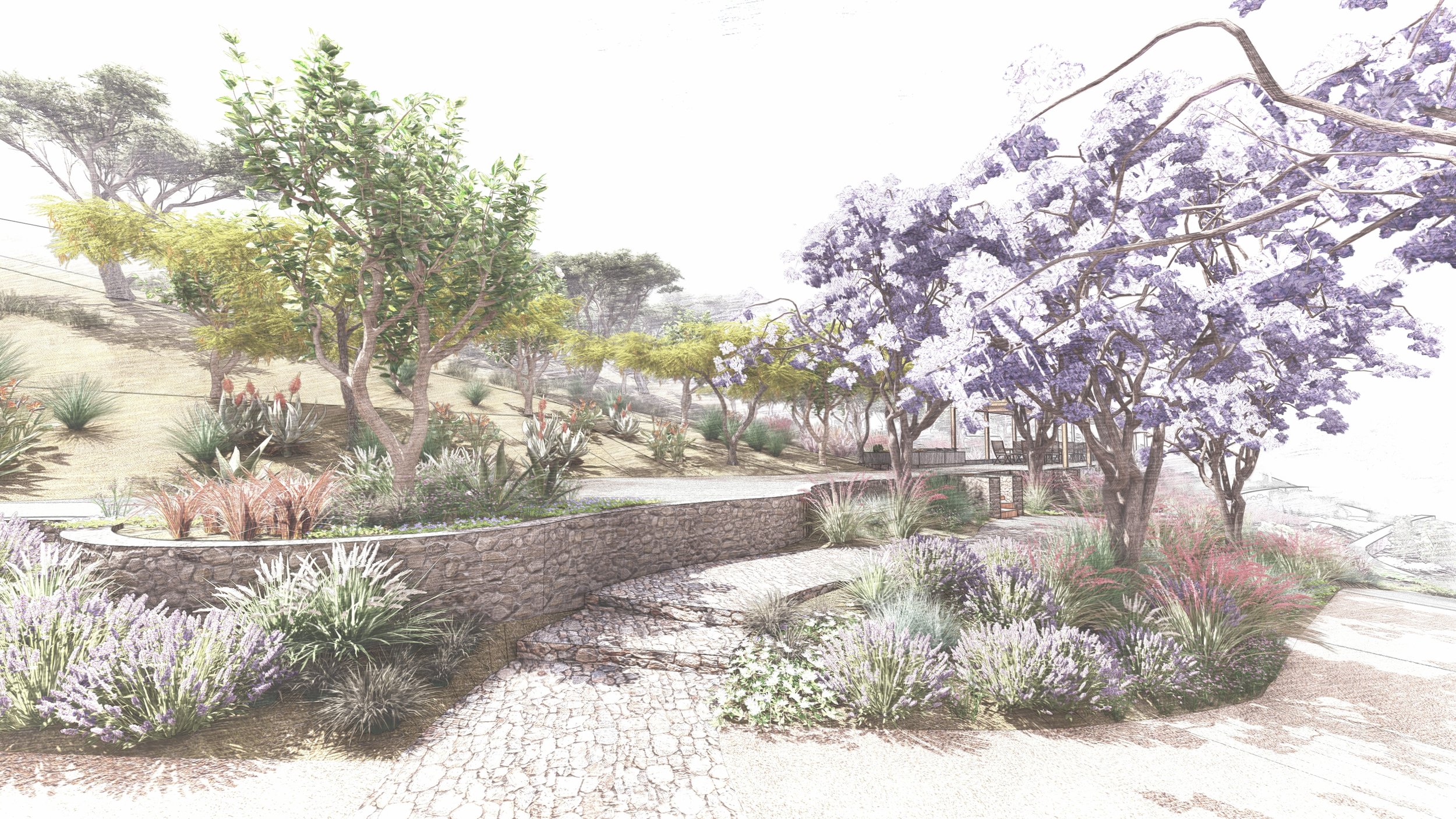
Proposed Landscape Character
The proposed landscape character is intentionally calm, durable, and neighborhood-scaled. The design avoids a temporary “rebate landscape” appearance and instead creates a more established, refined, and ecologically meaningful HOA identity.
The visualizations show the intended planting density, color rhythm, and community character. Final material coordination will replace organic mulch with crushed gravel or other fire-conscious mineral groundcover where required.
University Canyon West HOA demonstrates how turf replacement can become more than a rebate project. With the right planning, it can become a long-term community investment, reducing water demand, improving neighborhood identity, supporting biodiversity, preparing for AB 1572, responding to wildfire concerns, and creating a more resilient landscape for the future.
LASD Studio works with HOAs, community associations, property managers, and water agencies to develop turf replacement strategies, planting plans, irrigation coordination, rebate documentation, fuel modification strategies, and phased implementation packages for Southern California communities.

HOA Landscape Design in San Diego: Sustainable Community Transformation
A comprehensive HOA landscape design in San Diego that balances aesthetics, sustainability, and long-term value. Featuring drought-tolerant planting, community gathering spaces, and ecological water-smart systems, the project enhances livability while reducing costs.
Reimagining St. Malo Heights as a living system: a landscape that reduces costs, restores ecology, and enriches community life.
A short film presenting LASD Studio’s transformation of St. Malo Heights HOA in San Diego — from water-intensive turf to a sustainable community landscape. The design combines native planting, ecological systems, and artful outdoor spaces, reducing costs while enhancing beauty, biodiversity, and quality of life for residents.
Location: Point Loma, San Diego, California
Project Type: HOA, Community enhancement through design intervention
Design Scope: Concept Development, Design Development, Project Permitting, Construction Documentation, Turf rebate application and supervision.
Status: in Construction, under community review
Construction cost: $420,000
Design Studio: LASD Studio

This HOA landscape renovation in San Diego redefines community living. Designed by LASD Studio, the project blends California native plants, water-smart strategies, and artful design to create a resilient, low-maintenance, and inspiring environment for all residents.
By cutting water use by up to 50% and maintenance costs by 70%, the design not only saves resources but also adds long-term value to every property. Beyond numbers, the project restores ecological balance, enhances social interaction, and transforms St. Malo Heights into a model of sustainable community design.
Economic Benefits: Smarter, Lower-Cost Landscaping
The design incorporates drought-tolerant native species and efficient irrigation systems to reduce water consumption by 50% and maintenance costs by 70%, ensuring long-term economic savings for the community.
By enhancing the visual appeal with carefully selected plants that thrive throughout the seasons, the project aims to elevate the market attractiveness of St. Malo Heights, benefiting property values.
Social Benefits: Spaces that Bring People Together
Zone A (Main Island) is envisioned as a vibrant community hub, featuring inviting paths, shaded seating areas, and fragrant plantings to foster social interaction and leisure.
The project targets a reduction in the Heat Island Effect by 2-3 degrees, creating a more comfortable outdoor environment for residents.
A focus on non-allergenic, non-toxic plant selections ensures a safe and inclusive landscape for all community members, from children to seniors.
Environmental Benefits: Restoring Ecology & Biodiversity
The introduction of diverse California native plants will create a lush, natural environment that flourishes year-round, offering seasonal color and texture while requiring minimal water. These native species will support local wildlife, enhance biodiversity, and promote a thriving ecosystem.
The planting strategy emphasizes a balanced ecological microsystem that evolves organically over time, fostering resilience, self-sufficiency, and a dynamic landscape that continues to beautify and enrich the community.
Project Zones: A Design for Every Corner of the Community
The renovation project is thoughtfully divided into zones to maximize usability, sustainability, and aesthetic value, ensuring each area contributes to the overall vision of a flourishing, green, and welcoming St. Malo Heights.
The project consists of three main zones:
Zone A: Main Island, serving as a community space.
Zone B: Front Yard Landscape.
Zone C: Streetscape along Grandview St. and Couch St.
Zone D: Slope
General Design Intent: From Turf to Thriving Landscape
The primary goal of the design is to transform the existing space, which includes turf, some invasive trees, and an outdated irrigation system into a beautiful sanctuary that has a high level of efficiency and performance. The new landscape will feature California native plants with low water requirements, bioswales to capture rainwater, and a drip irrigation system.
Maintenance costs are projected to be reduced in designing area (Zone A, B) by 70%.
Water consumption is projected to be reduced by 50%.
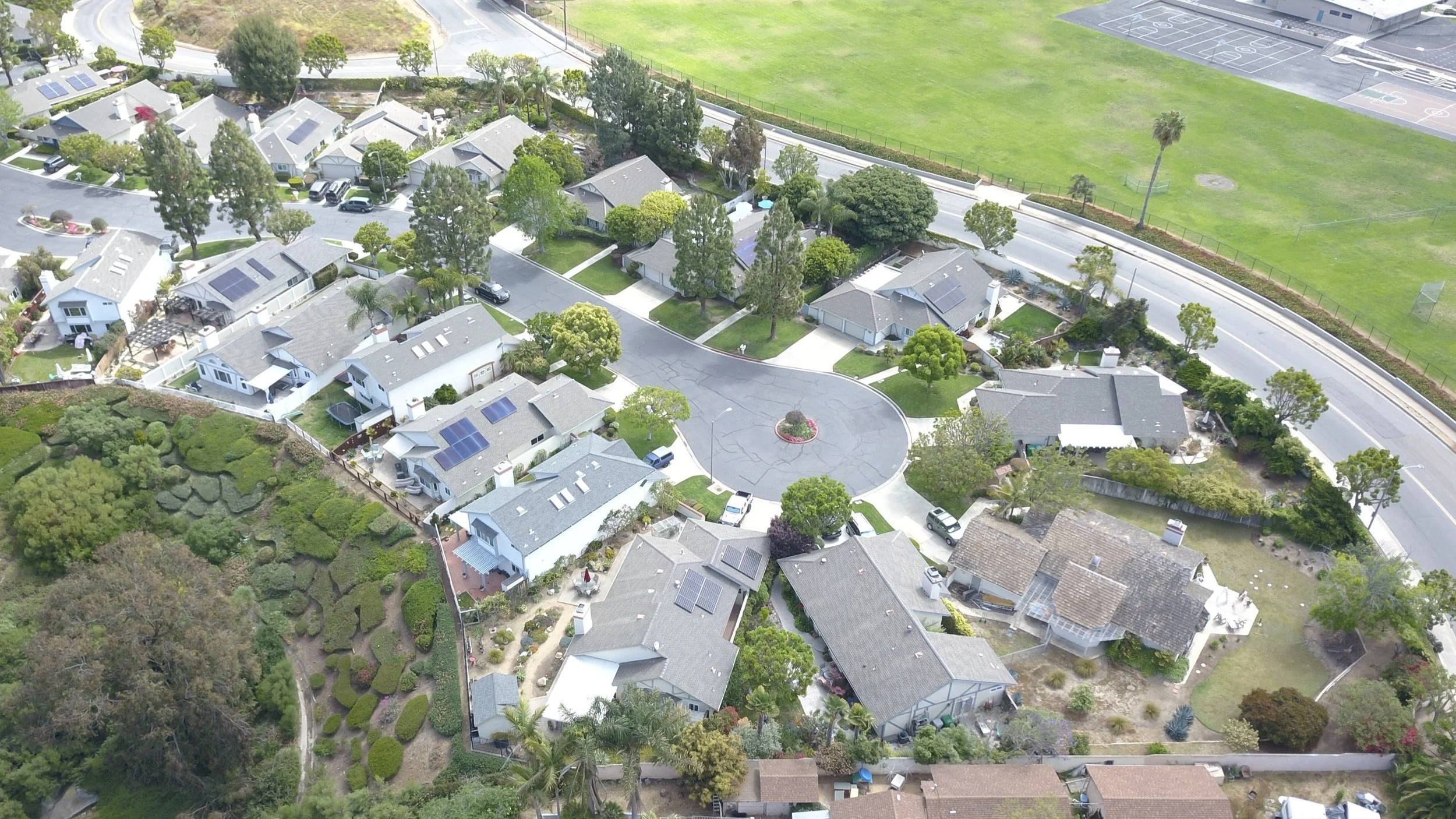
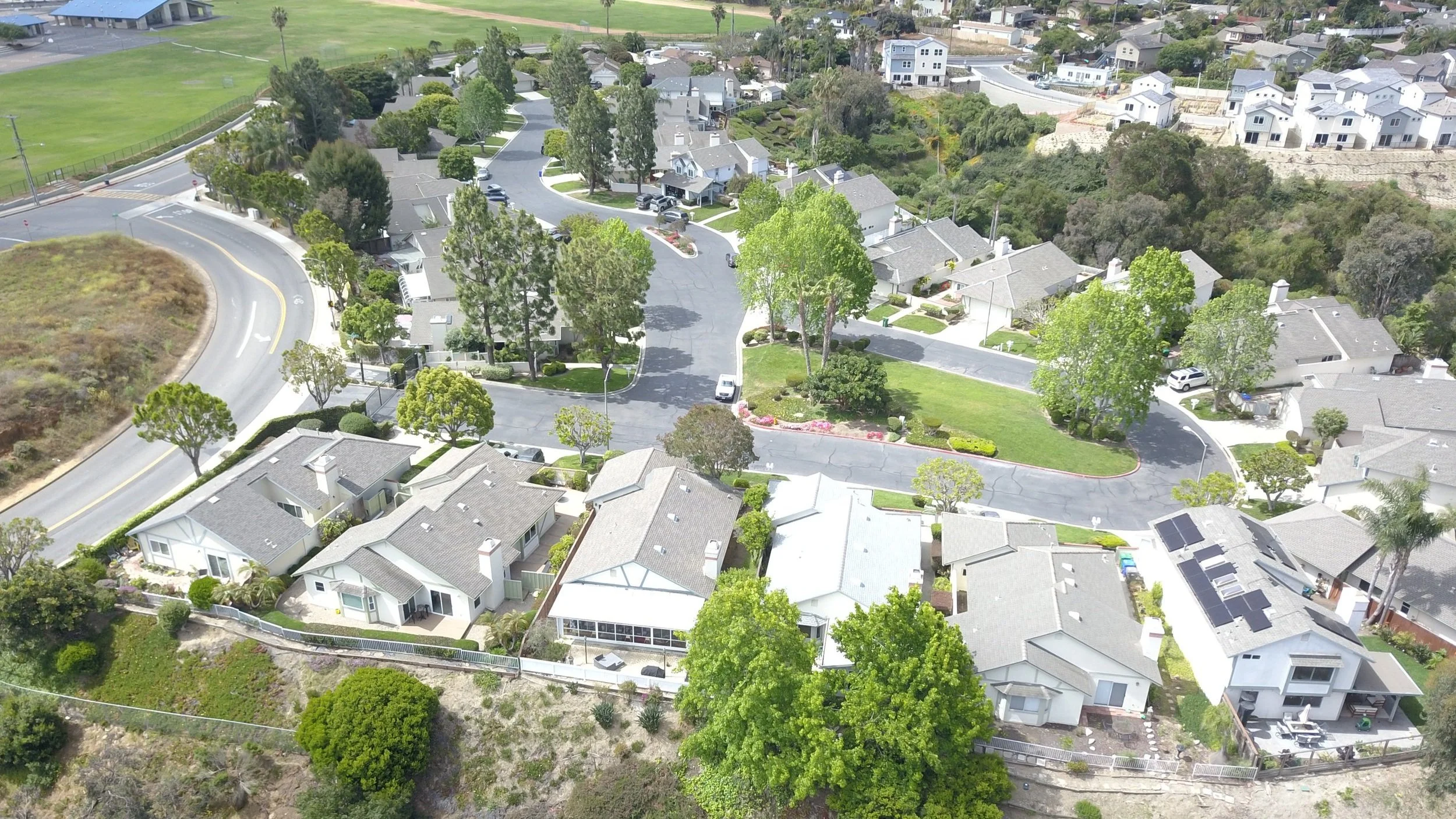
Existing Condition Drone Images
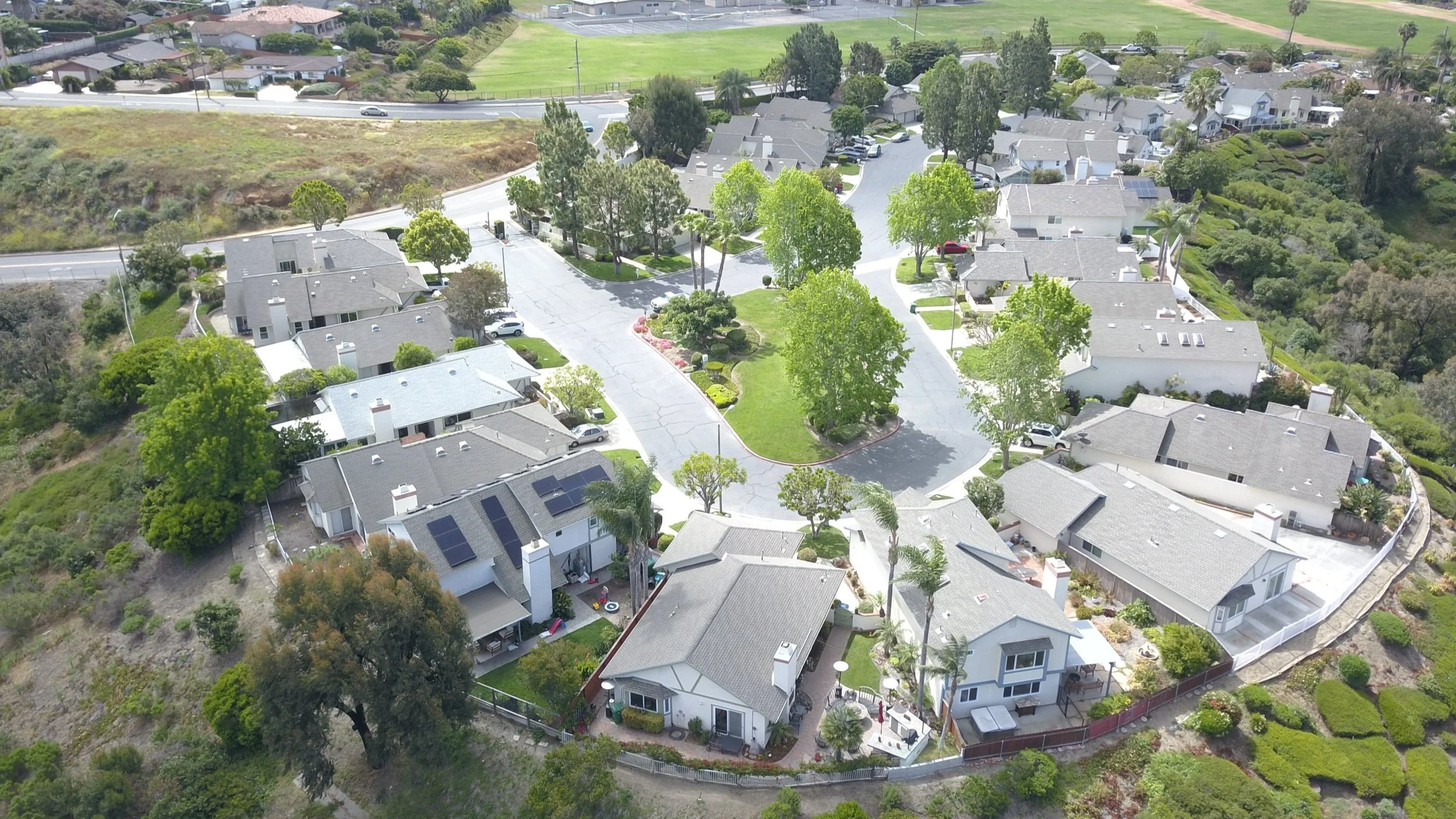
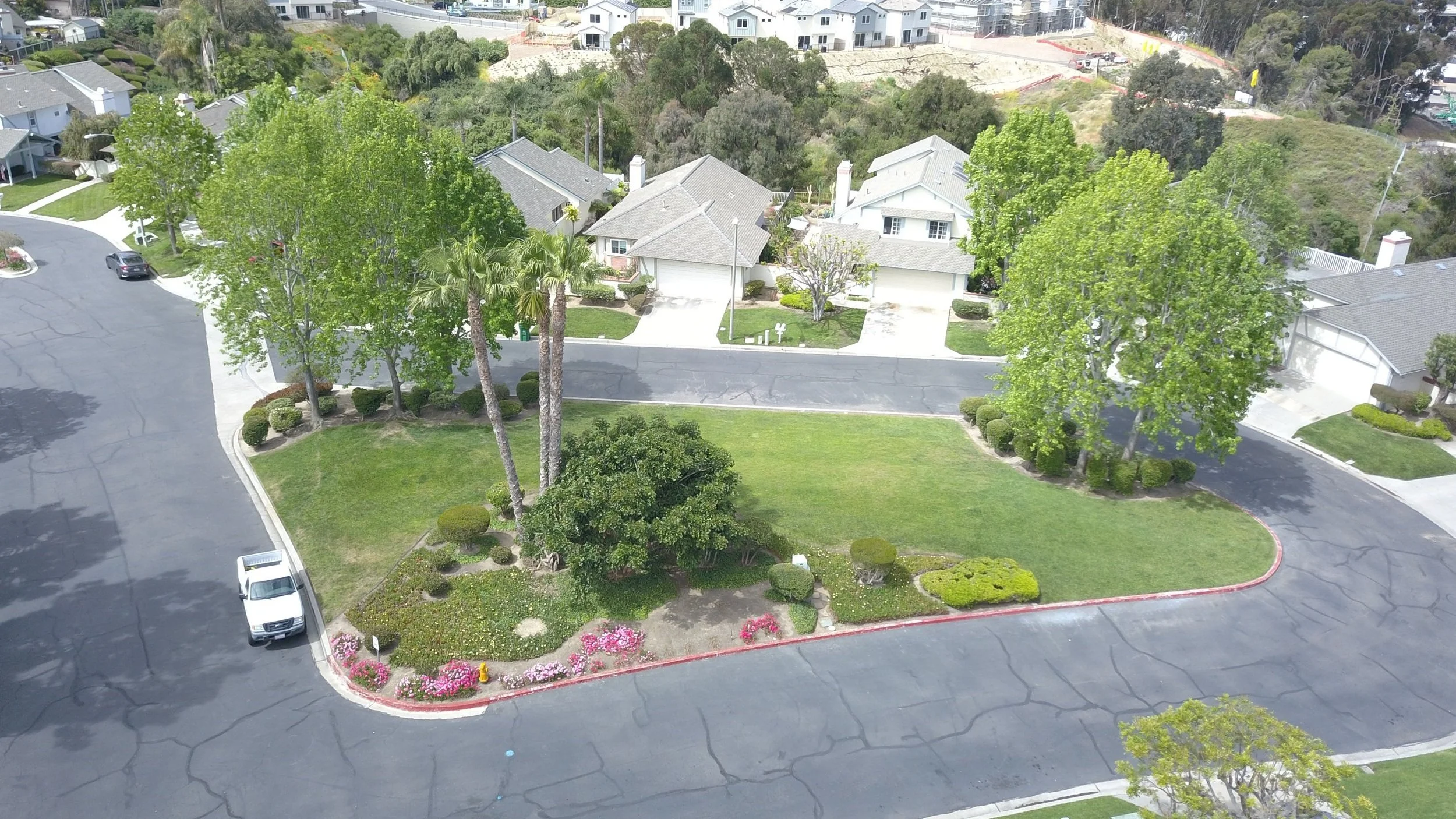
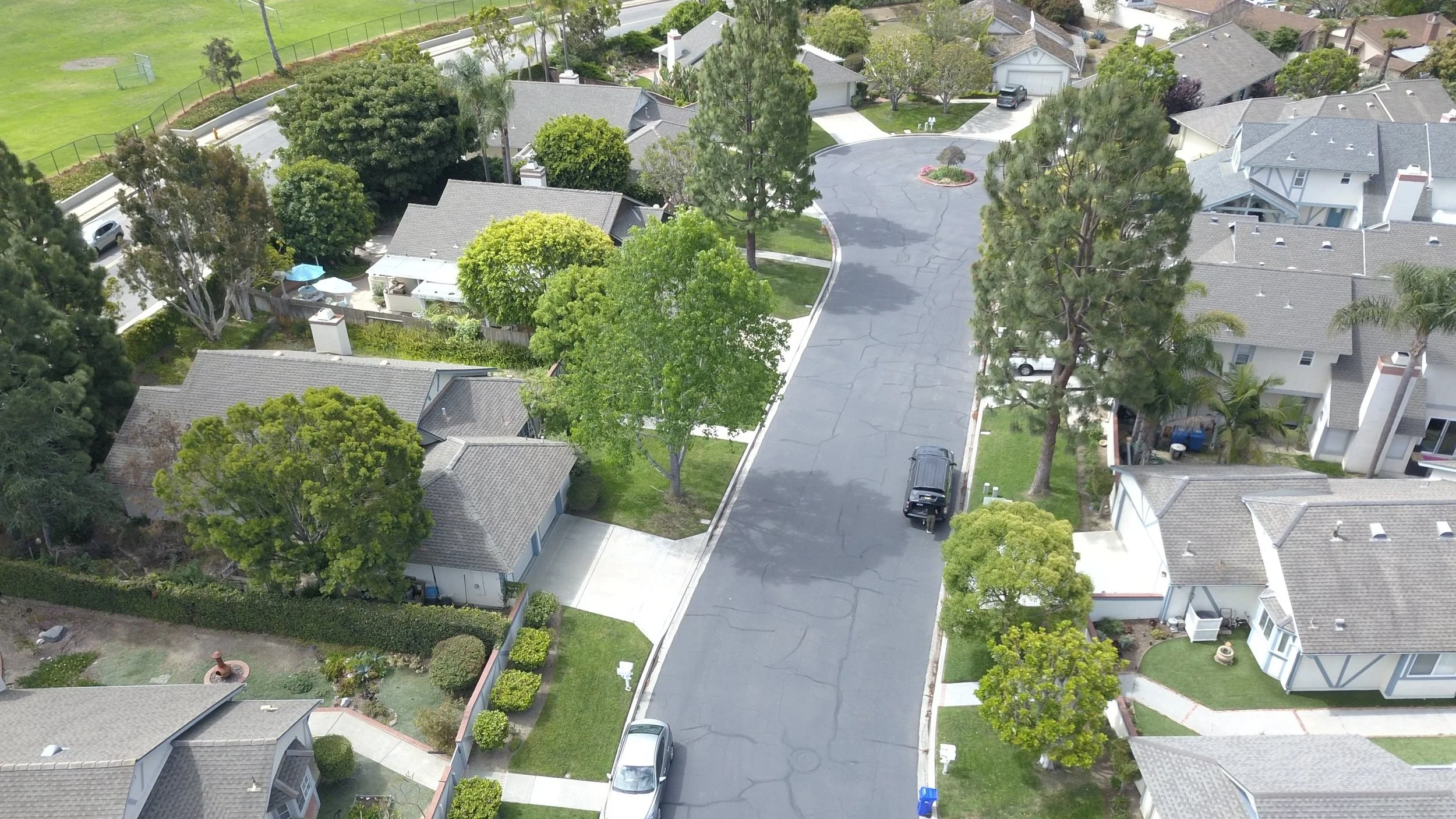
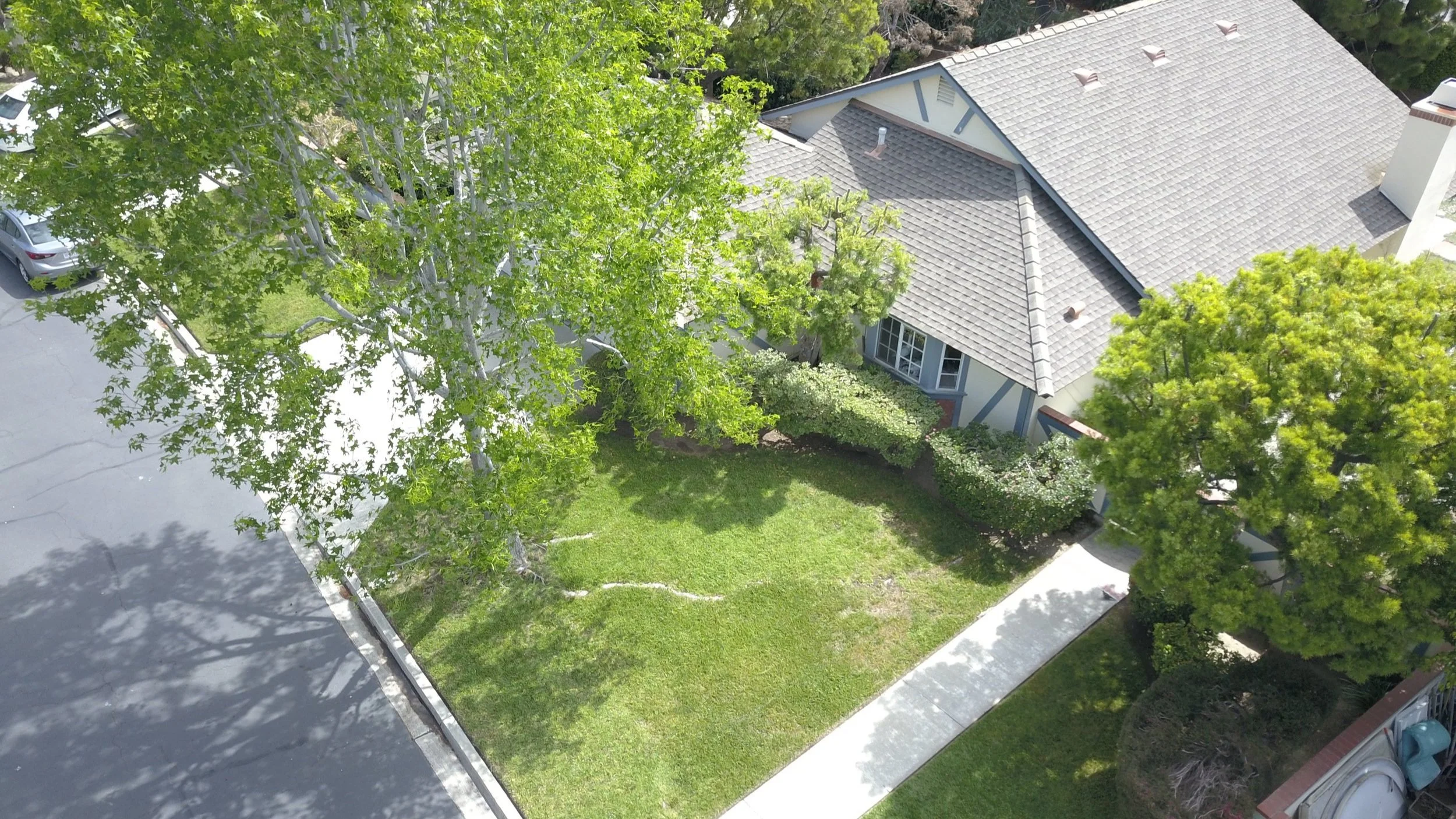
Existing Condition Analysis
Overall Current Landscape Performance
St. Malo Heights HOA is currently facing high maintenance, repair, and water consumption bills each year. The existing Landscape Architectural Plan, developed in 1985, no longer meets today's needs. The current landscape includes numerous topiary-shaped bushes requiring extensive maintenance. Additionally, many trees have invasive root systems that damage concrete driveways, pedestrian walkways, and potentially building foundations. This issue needs urgent attention. (reference to Appendix 3, 4)
Moreover, the existing irrigation system is outdated, characterized by very high water consumption, frequent repair needs, and insufficient coverage.
Projected Financial Impacts of Maintaining the Current Landscape Design
Given the current environmental and economic conditions, it is essential to consider the financial implications of maintaining our existing landscape. In Southern California, rising inflation and escalating water costs are expected to significantly increase the expenses associated with landscape maintenance and water usage.
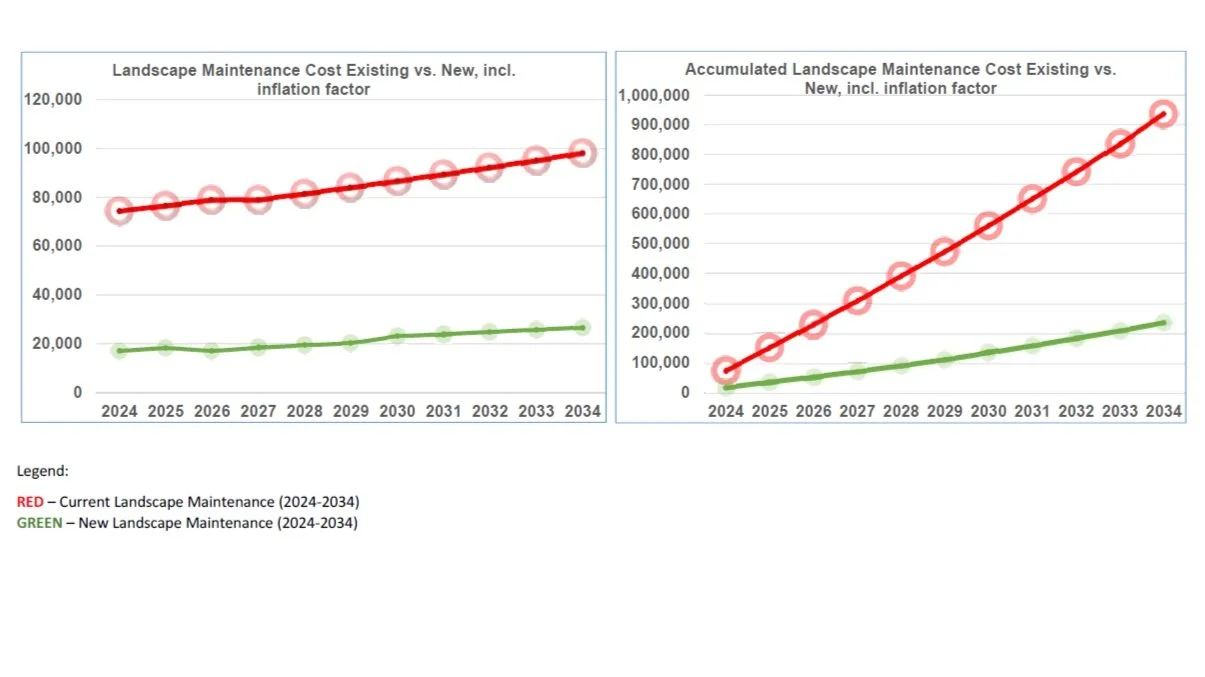
As of today, the annual cost for maintenance, water bills, and necessary repairs amounts to $74,255. However, this figure is projected to rise each year due to the compounding effects of inflation and the increasing costs of water resources. Without changes to the landscape, these financial burdens will continue to grow, placing an even greater strain on our budget over time.
HOA Challenges
Given the current state of the landscape and associated liabilities, we can anticipate that the annual budget for maintenance, repairs, and water bills will continue to rise. Considering inflation and the increasing costs in construction, it is reasonable to assume that any future landscape adjustments at St. Malo Heights HOA will be more expensive compared to today's prices.
Proactive landscape improvements now could help mitigate these rising costs, ensuring a more sustainable and cost‐effective approach for the community moving forward.
3D Visuals
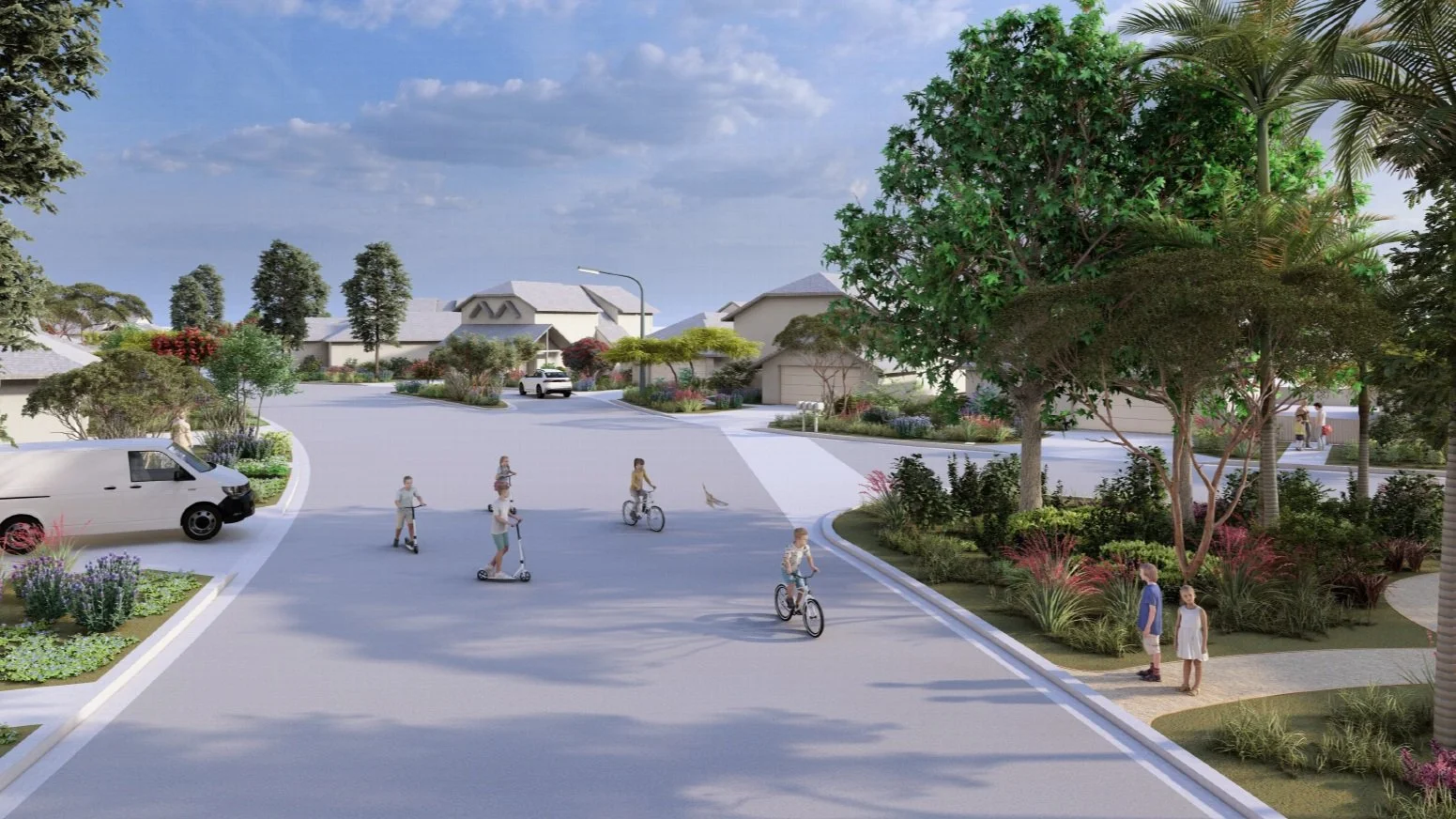
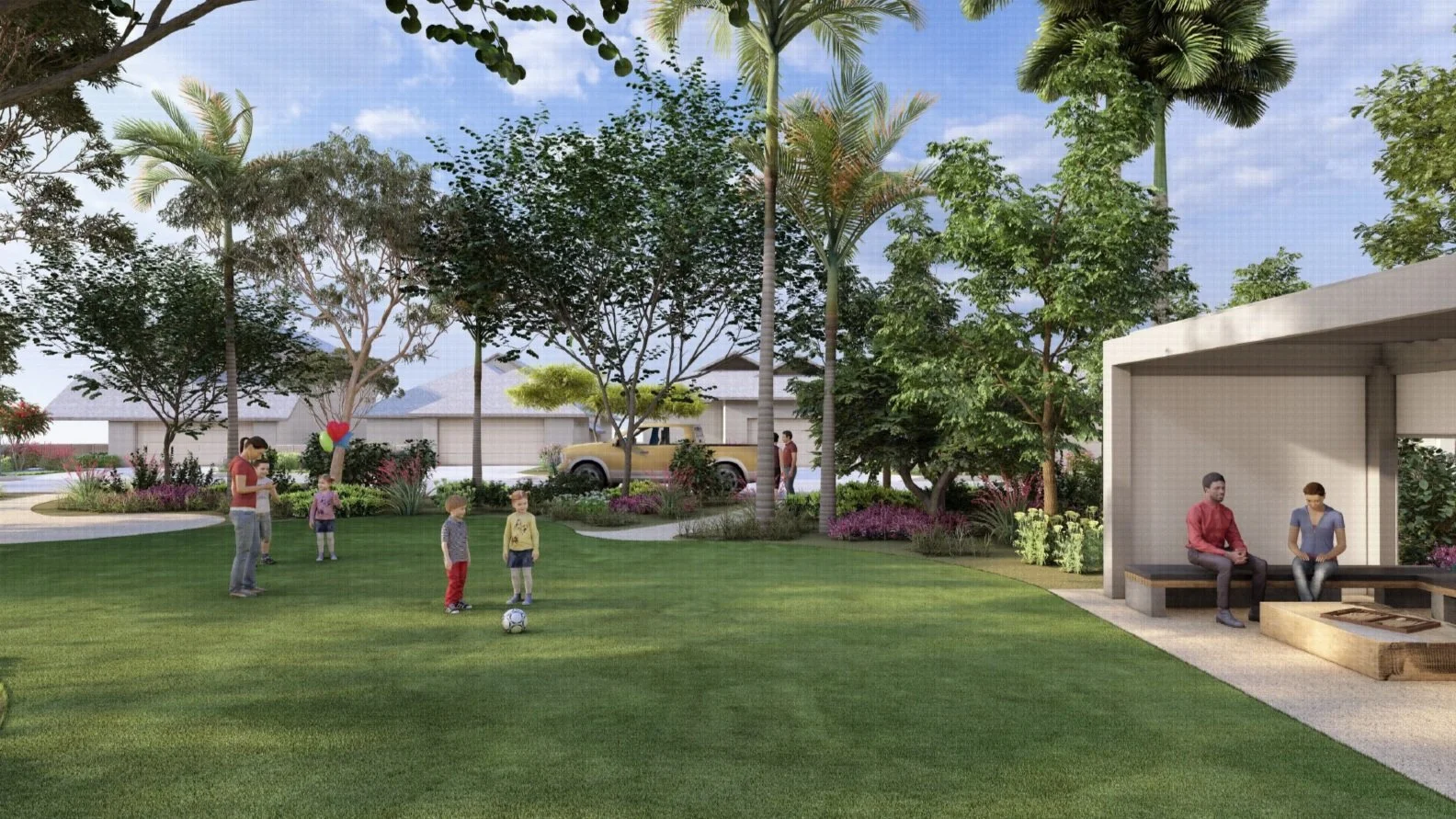
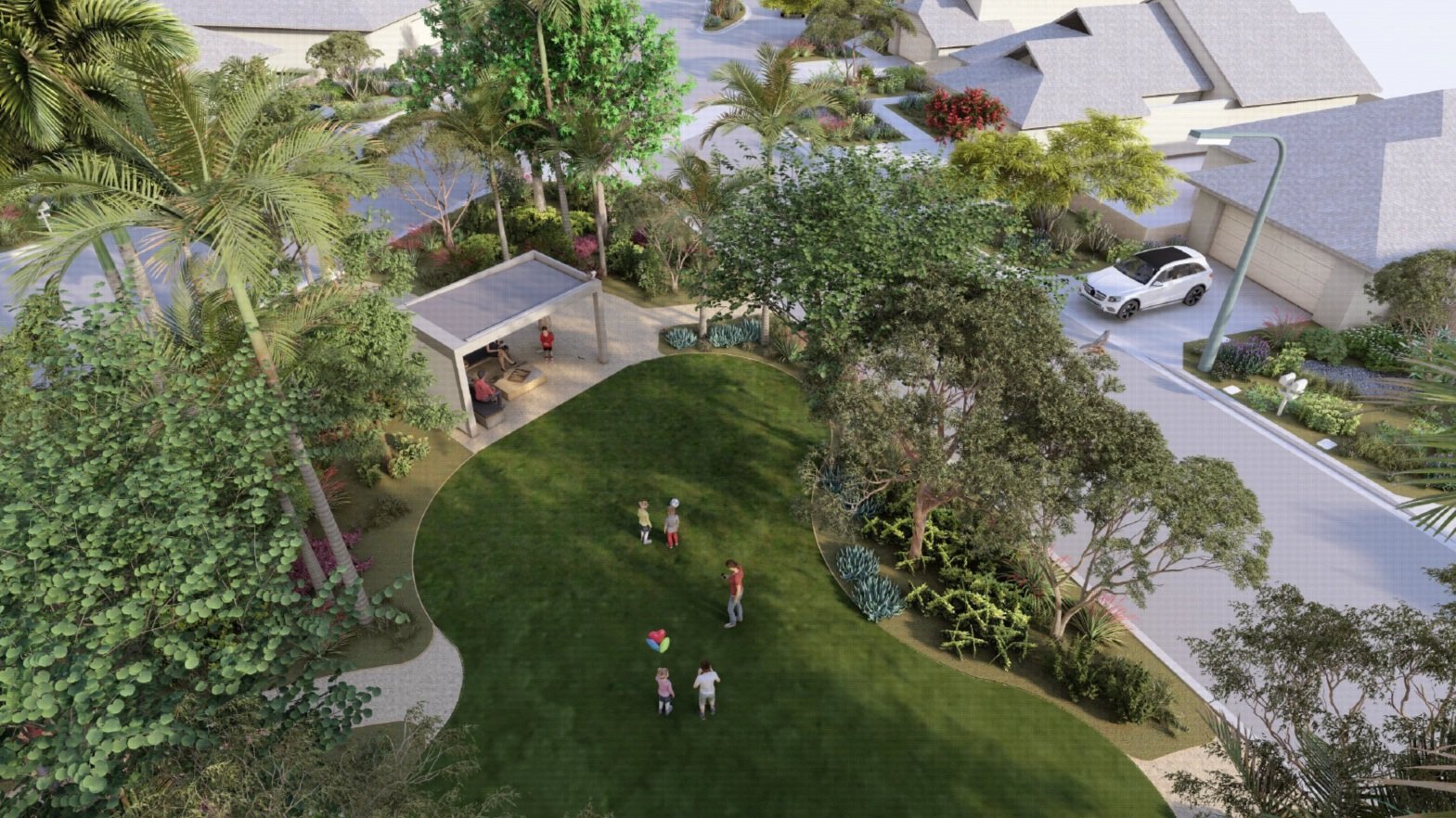
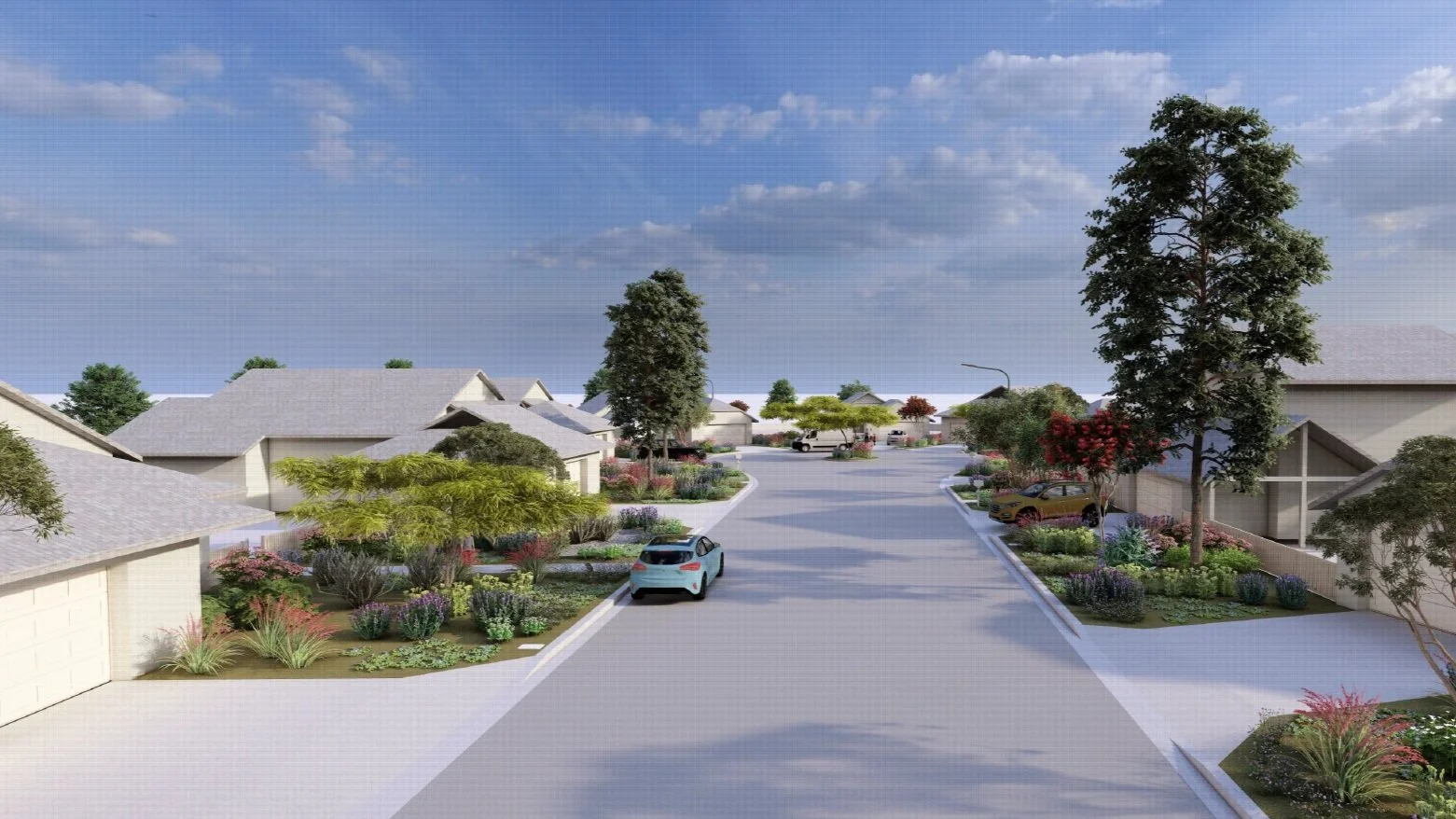
Planting Plan selection
The new design introduces California native species, including native lawns, to the main common area (Zone A). Initially, these plants will require regular watering during their establishment
phase, but after two years from installation, we plan to significantly reduce water consumption.
By selecting plants with very low to low water requirements, we ensure that we avoid significant financial liabilities. It's also important to note that the chosen plant varieties require minimal
maintenance. For the first two years after installation, maintenance will be limited to occasional leaf collection and routine checks. After the second year, maintenance will involve trimming
some plants once or twice a year, which represents a significant cost reduction compared to the current landscape maintenance requirements.
Additionally, by utilizing a variety of plant heights, the new landscape will provide more shade, help cool the environment, and refresh the air.
Based on our estimates, we project that by 2030 (2031 with Asphalt sealing), the cost of implementing and maintaining a new landscape design will be comparable to the current
expenses of maintaining the existing landscape.
Are you looking for Landscape Architect firm that would help to convert your HOA into a Sustainable Beauty incl. economical, environmental and social aspects? Then you are in a right place.

Sanctuary of YUM: Exotic Orchards & Wellness Programs. Bonsall, California.
The Sanctuary of YUM in Bonsall, San Diego, is a landscape of exotic orchards, healing gardens, and wellness programs. Designed as a retreat, it integrates ecological intelligence with community, art, and regenerative farming practices.
A private estate reimagined as a sanctuary of wellness, exotic orchards, and ritual spaces.
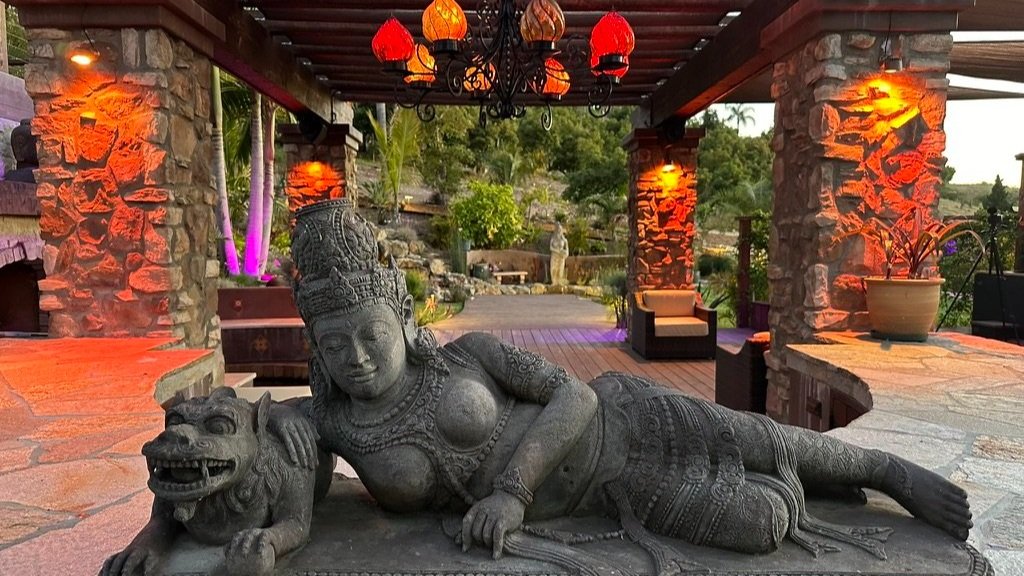
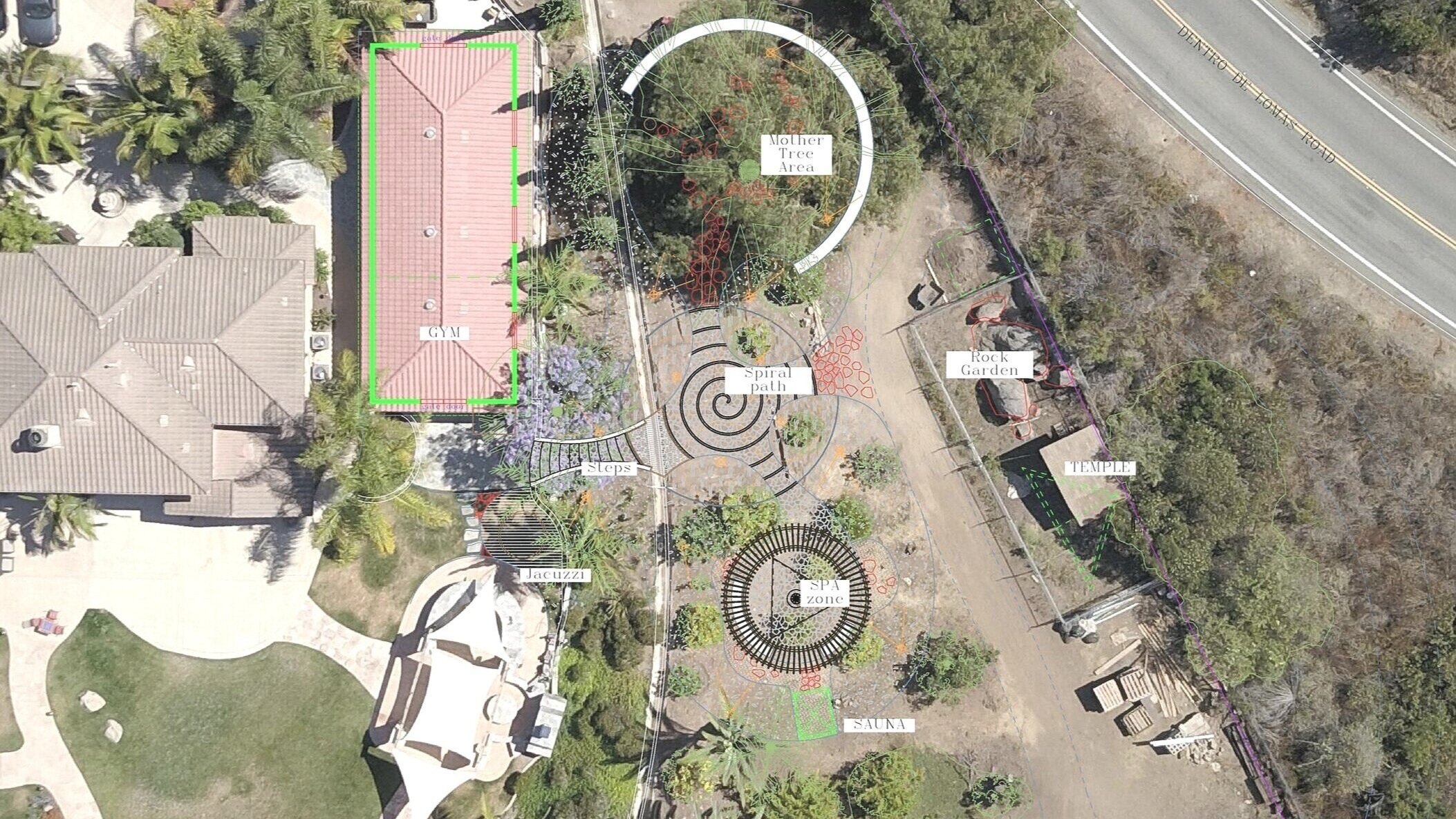
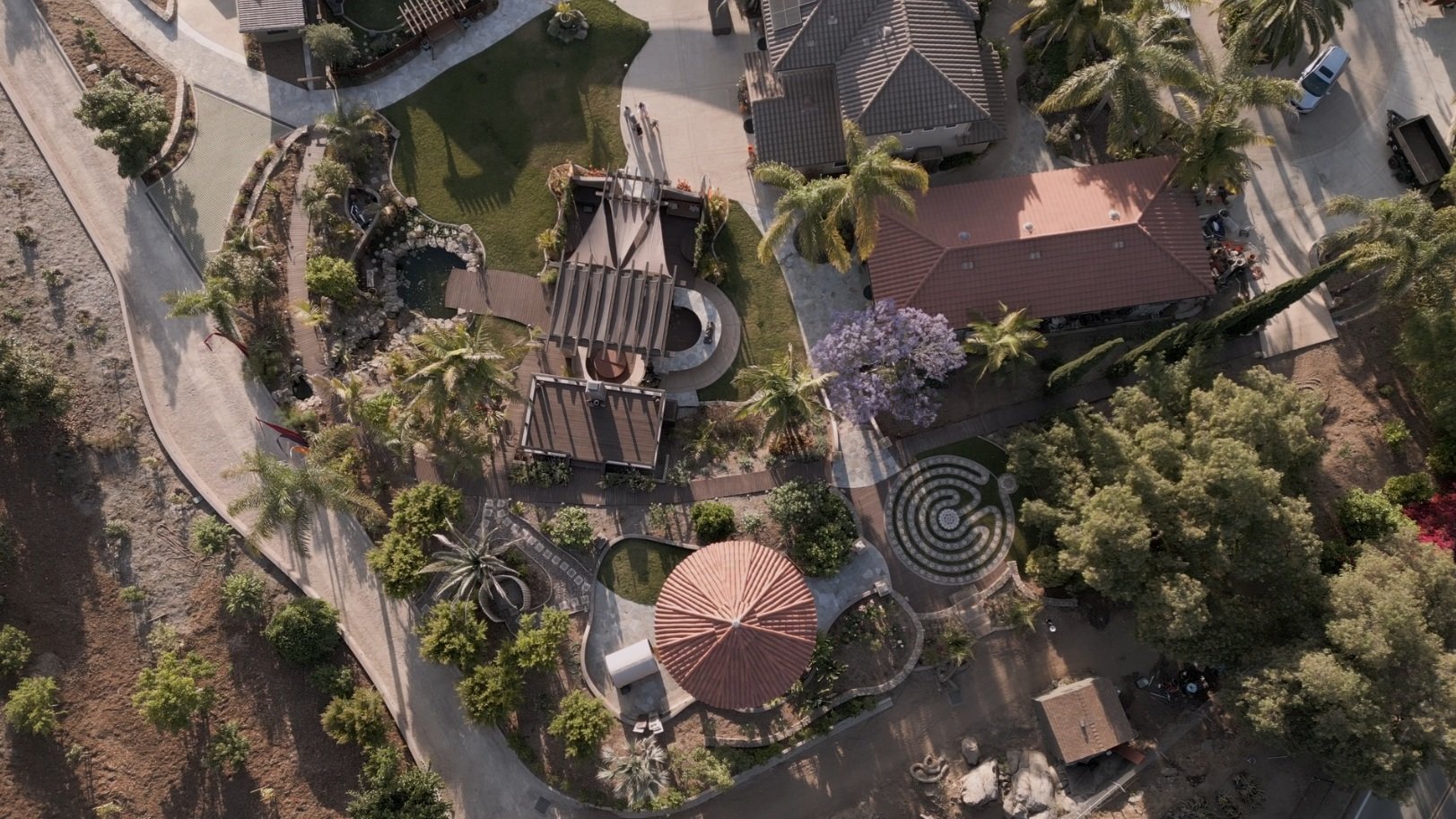
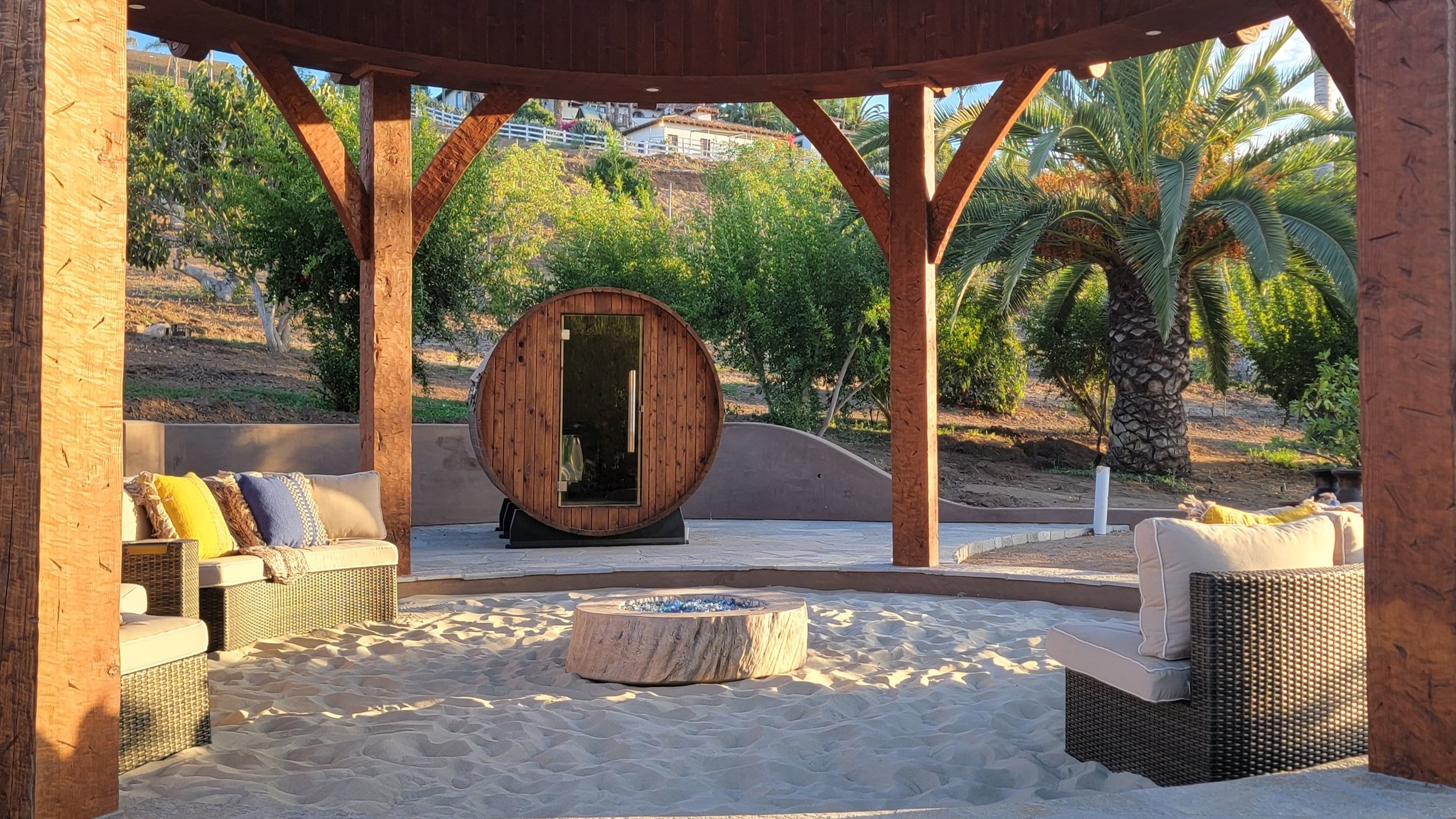
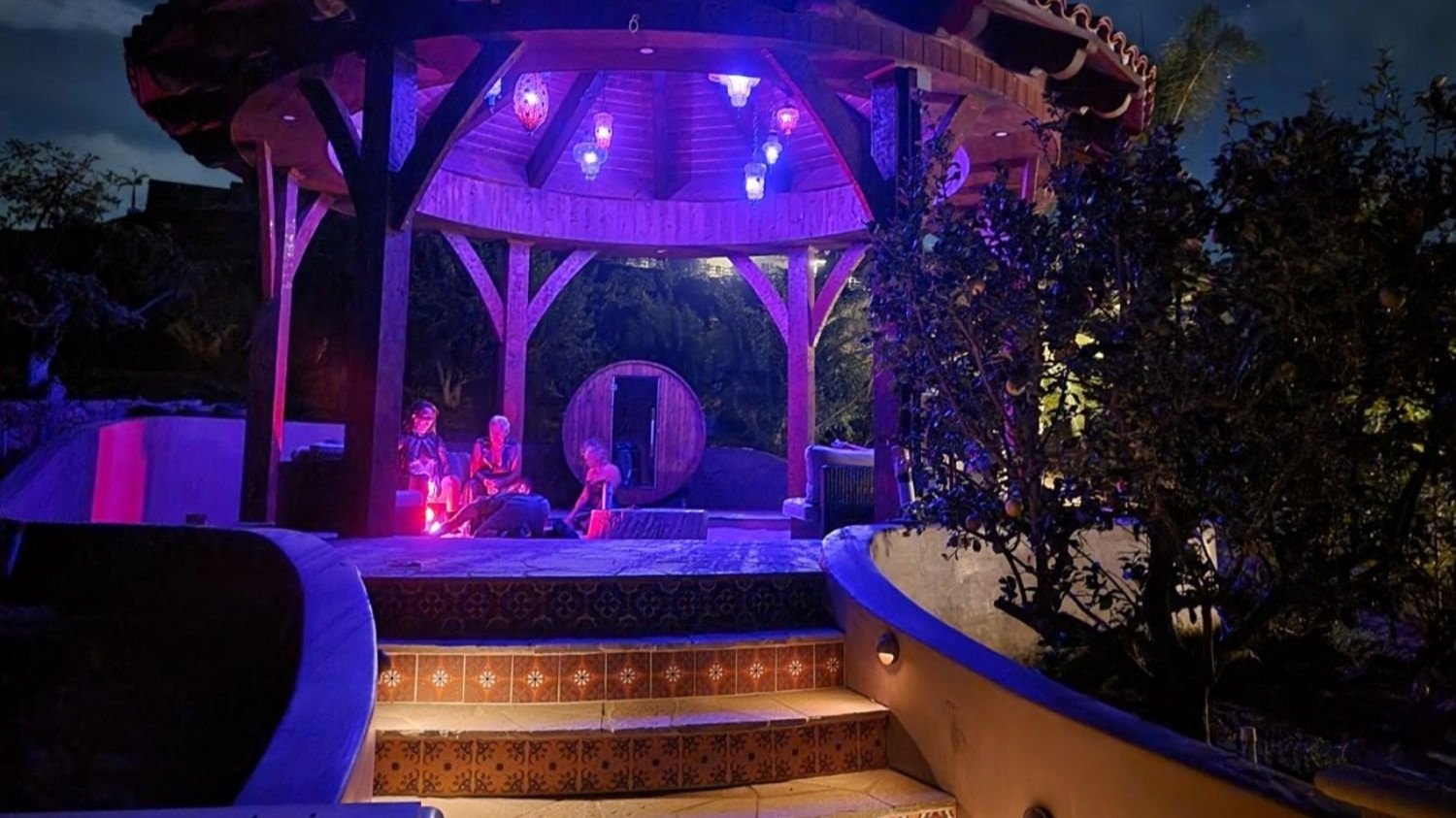
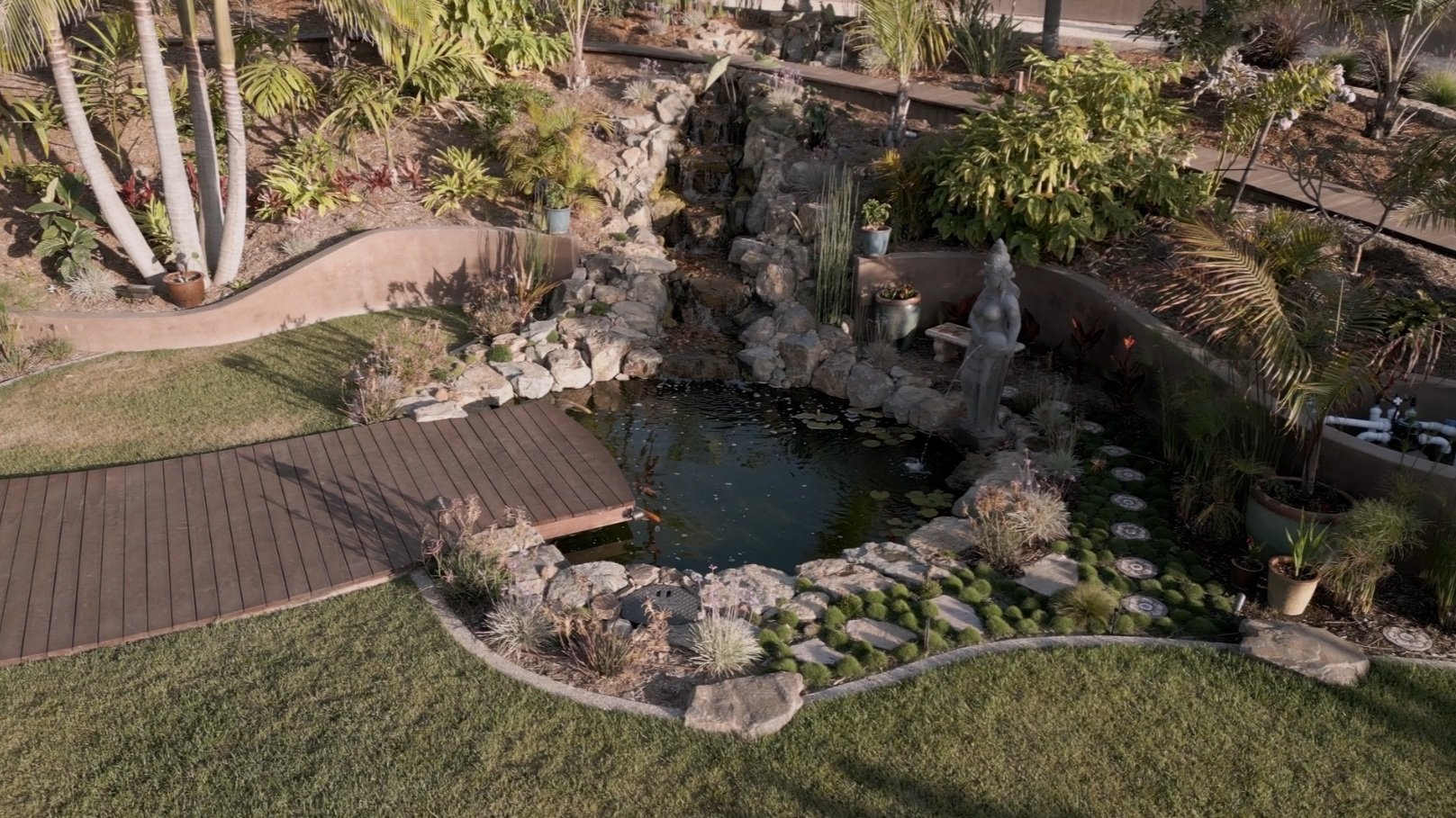
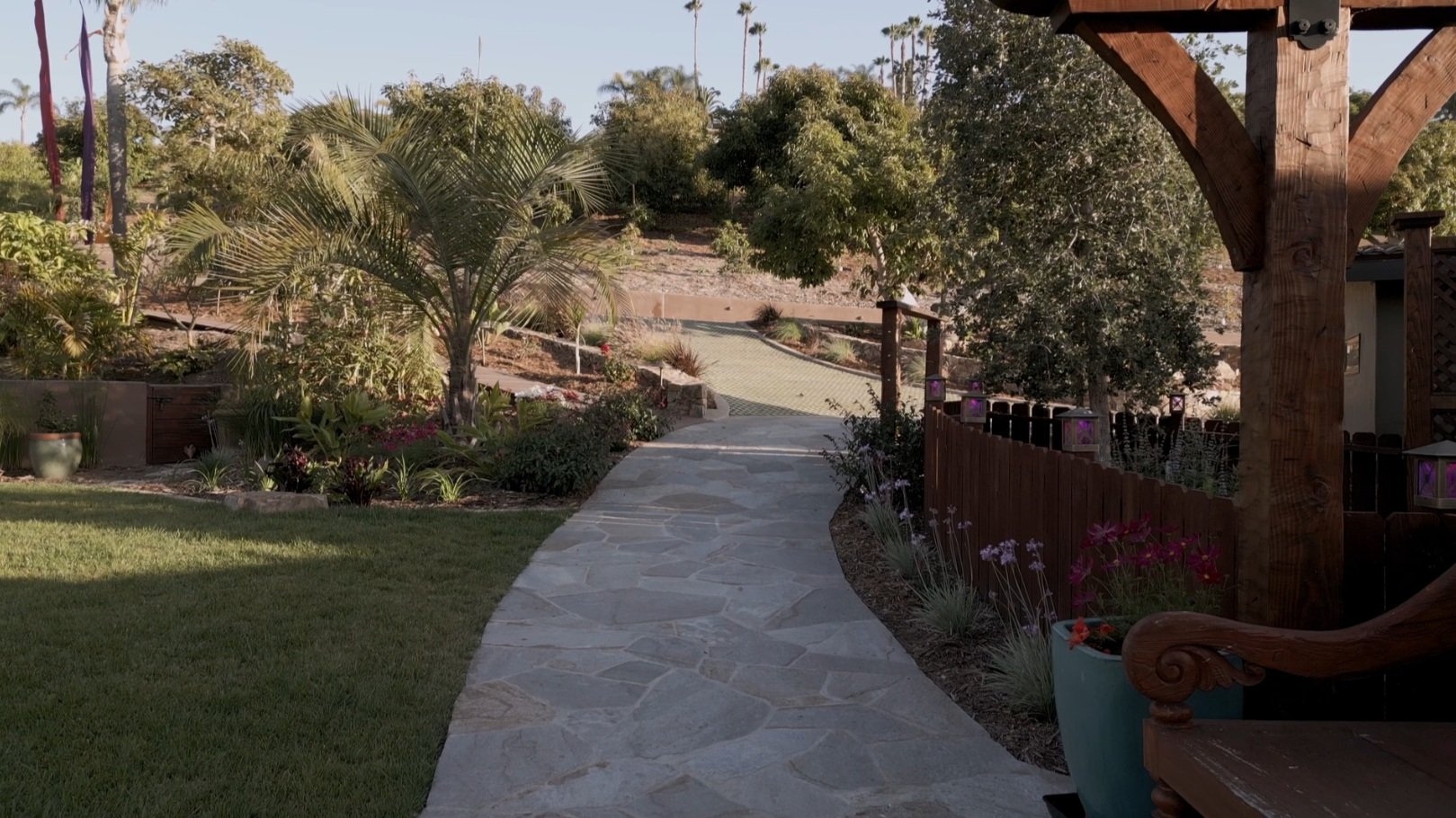
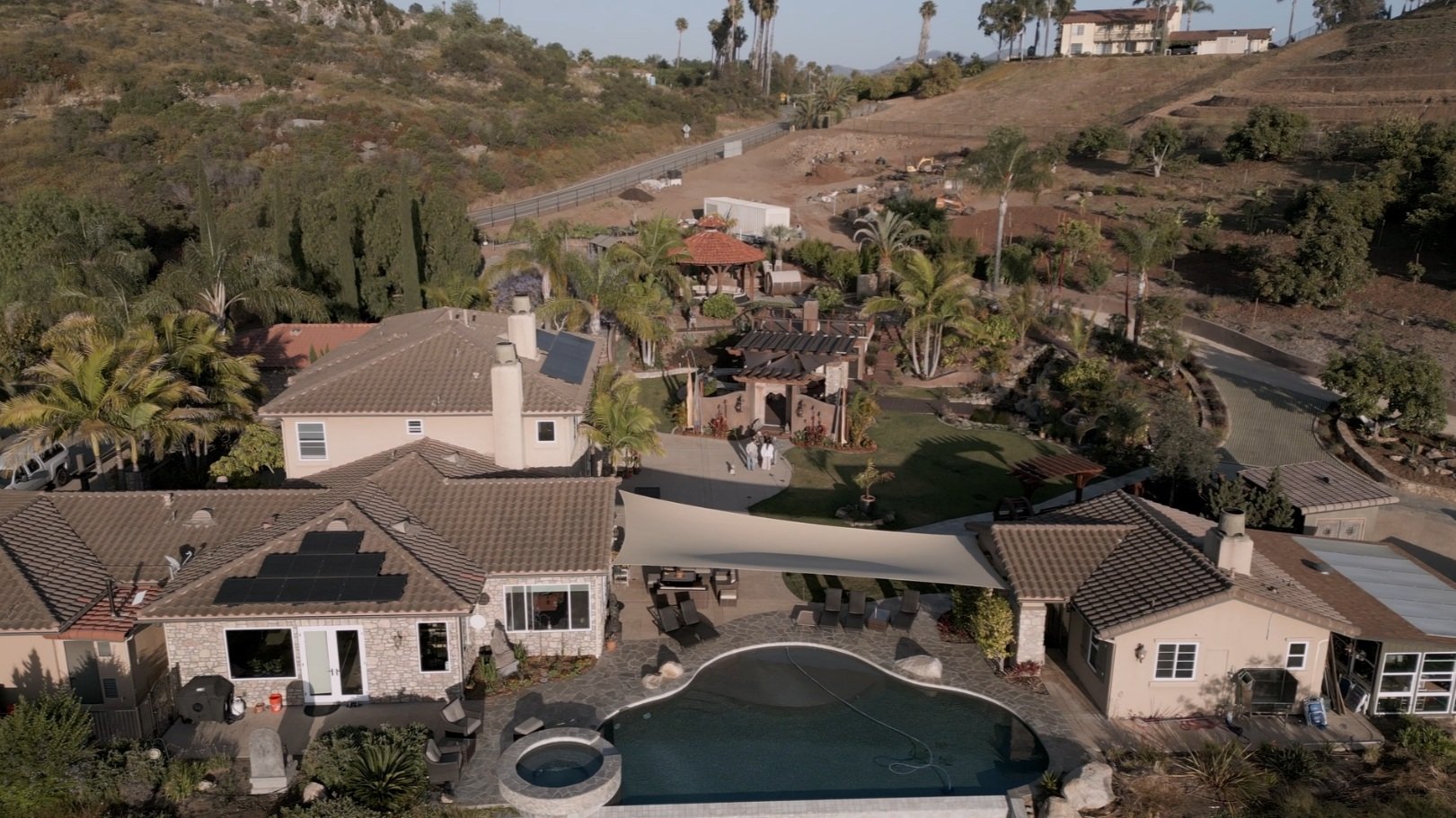
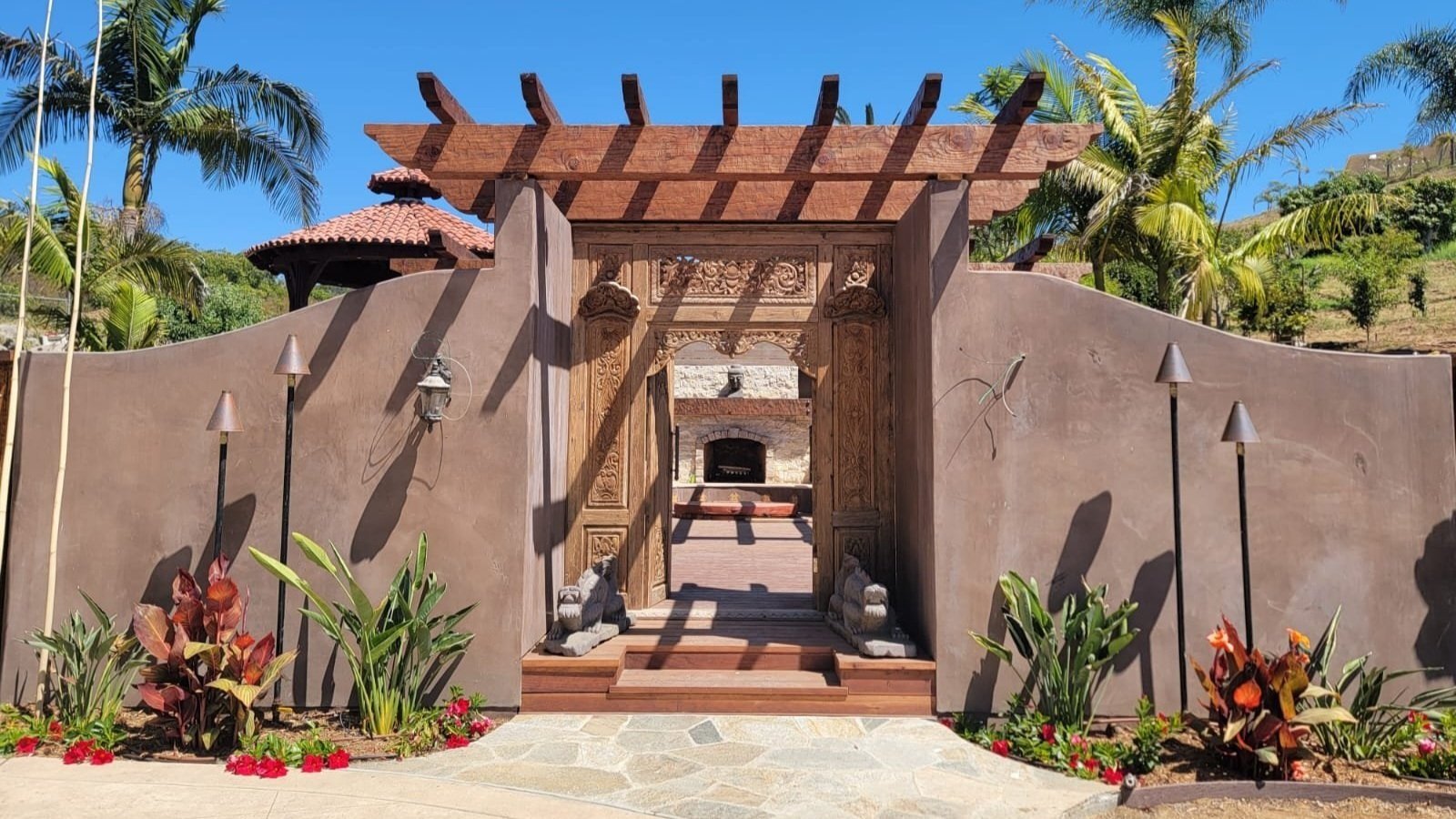
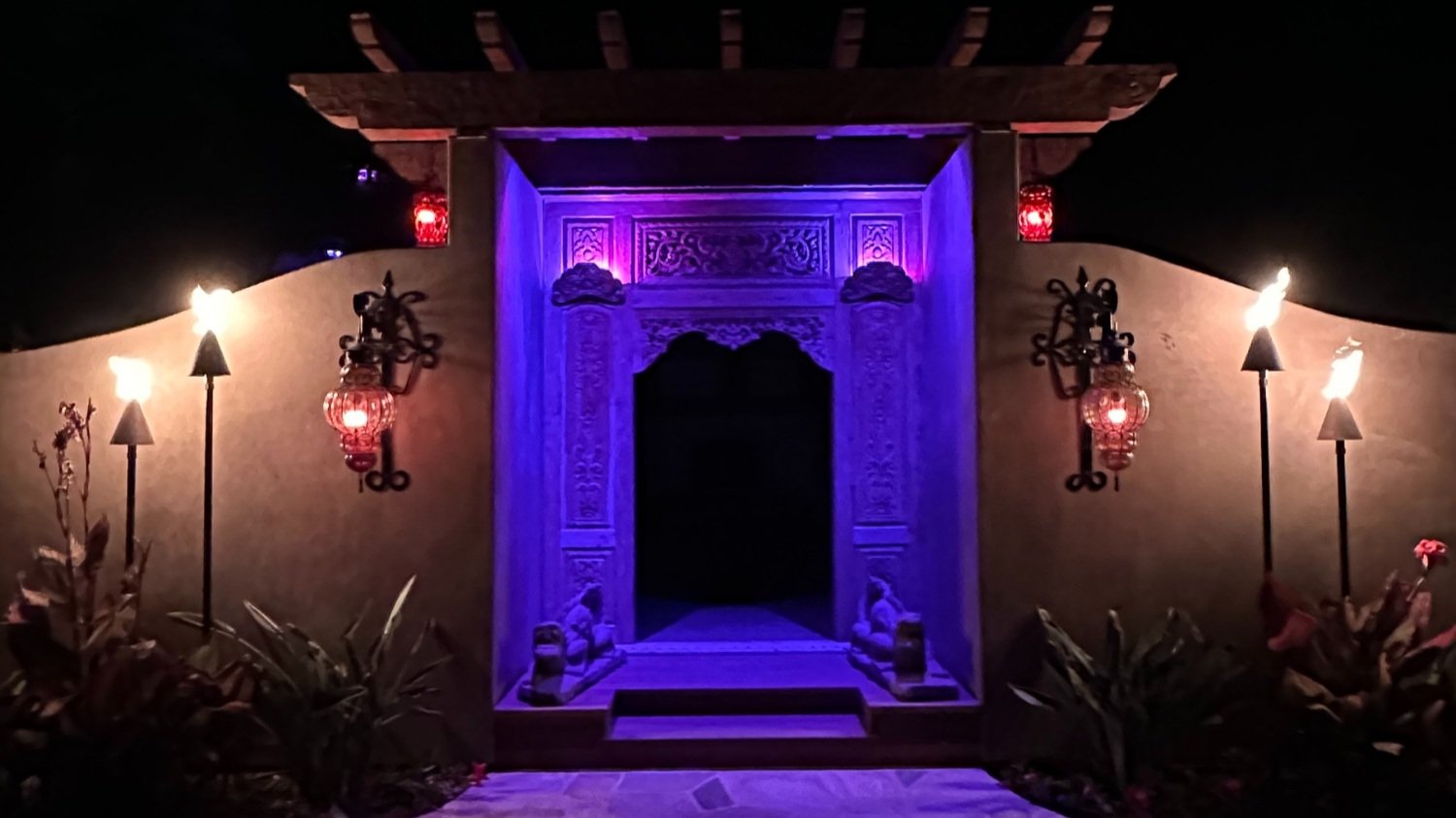
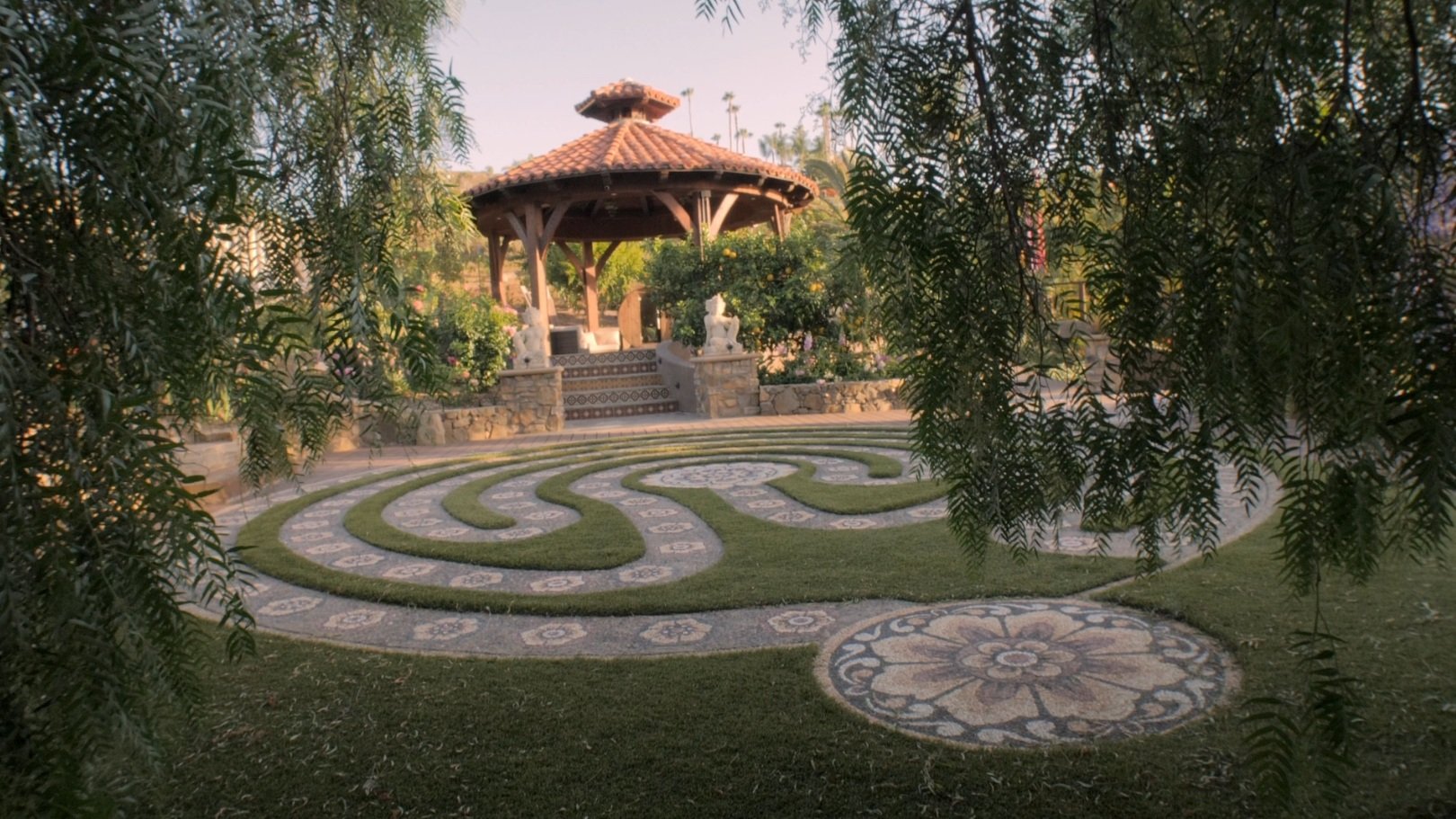
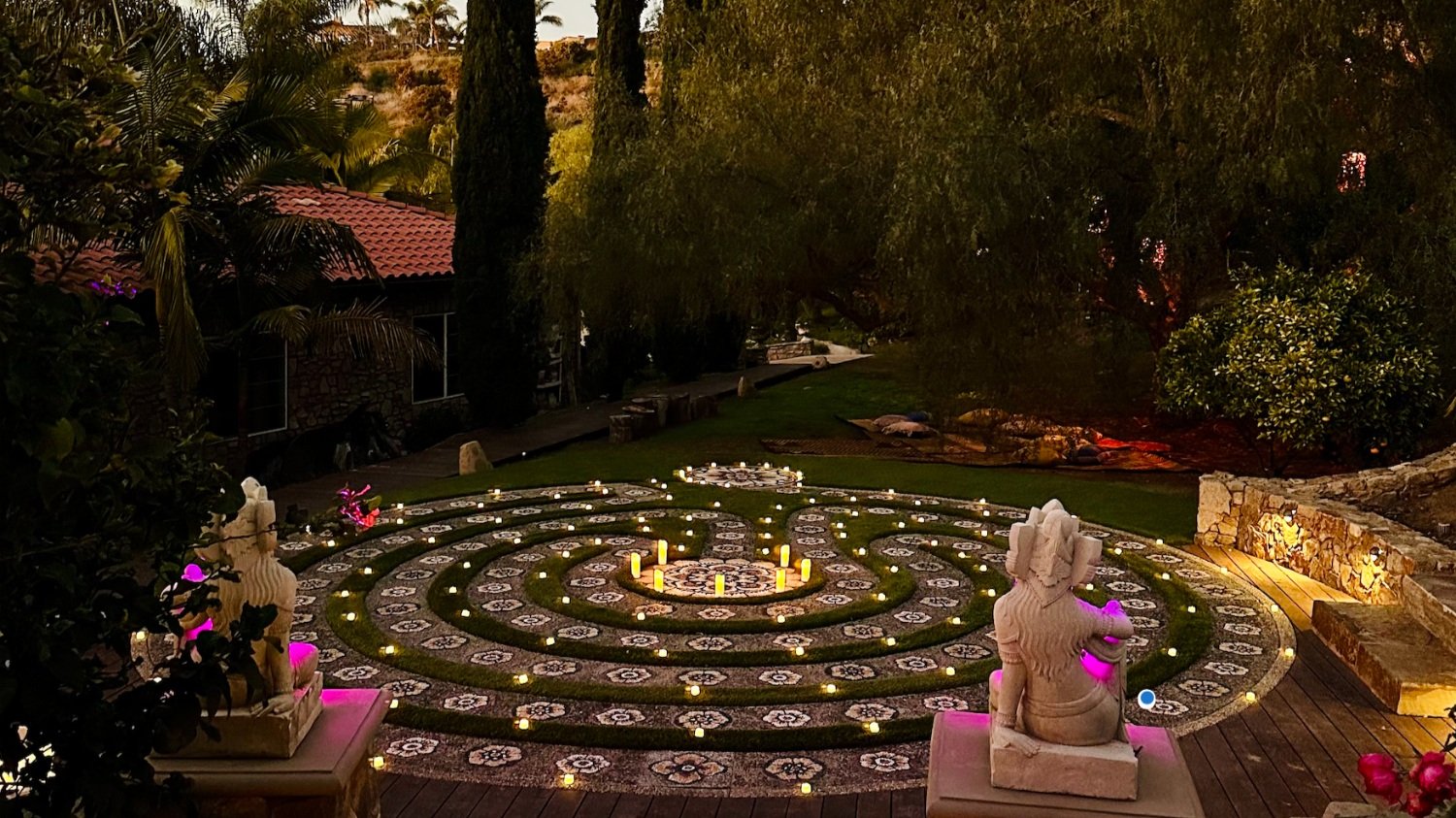
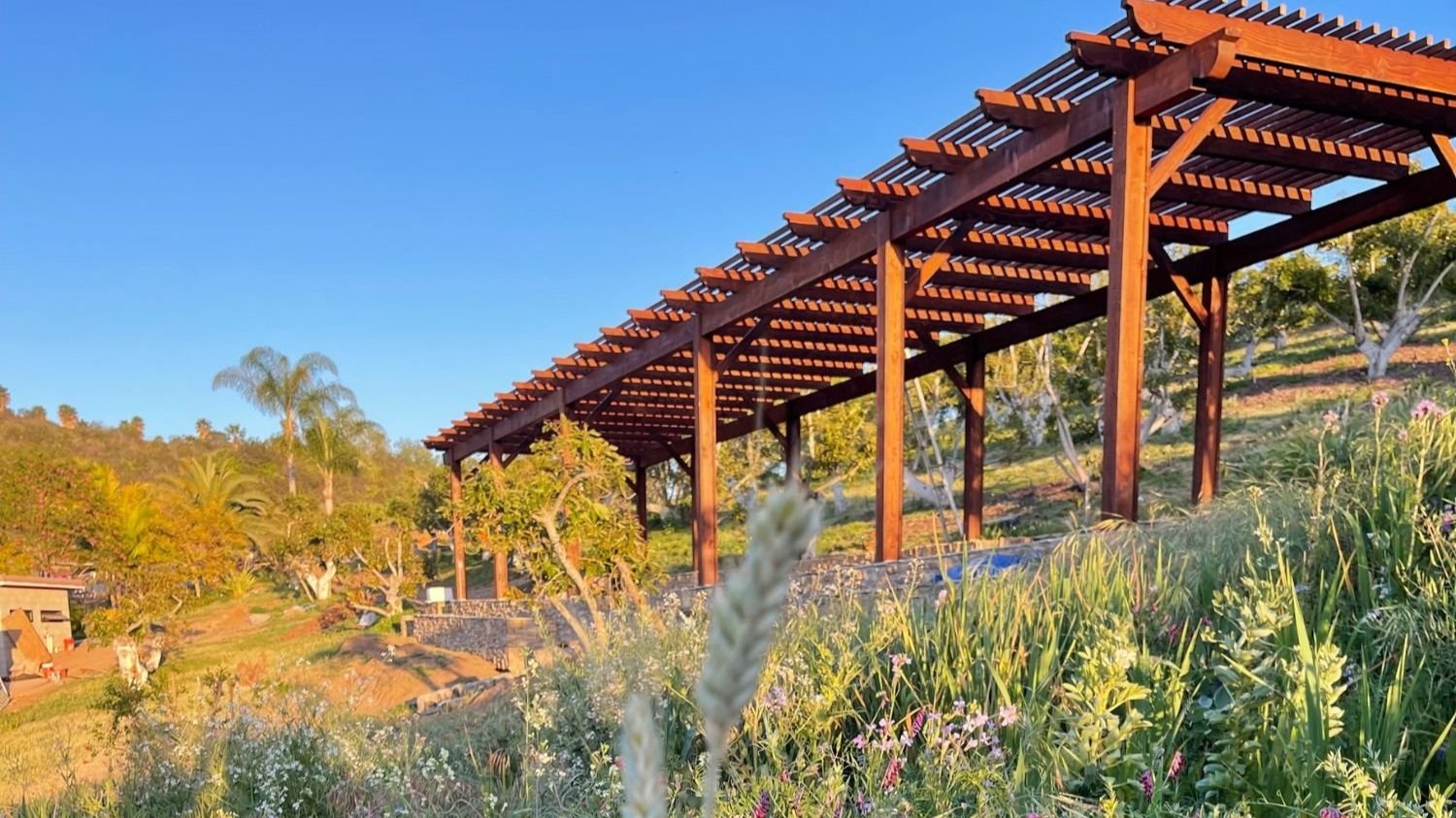
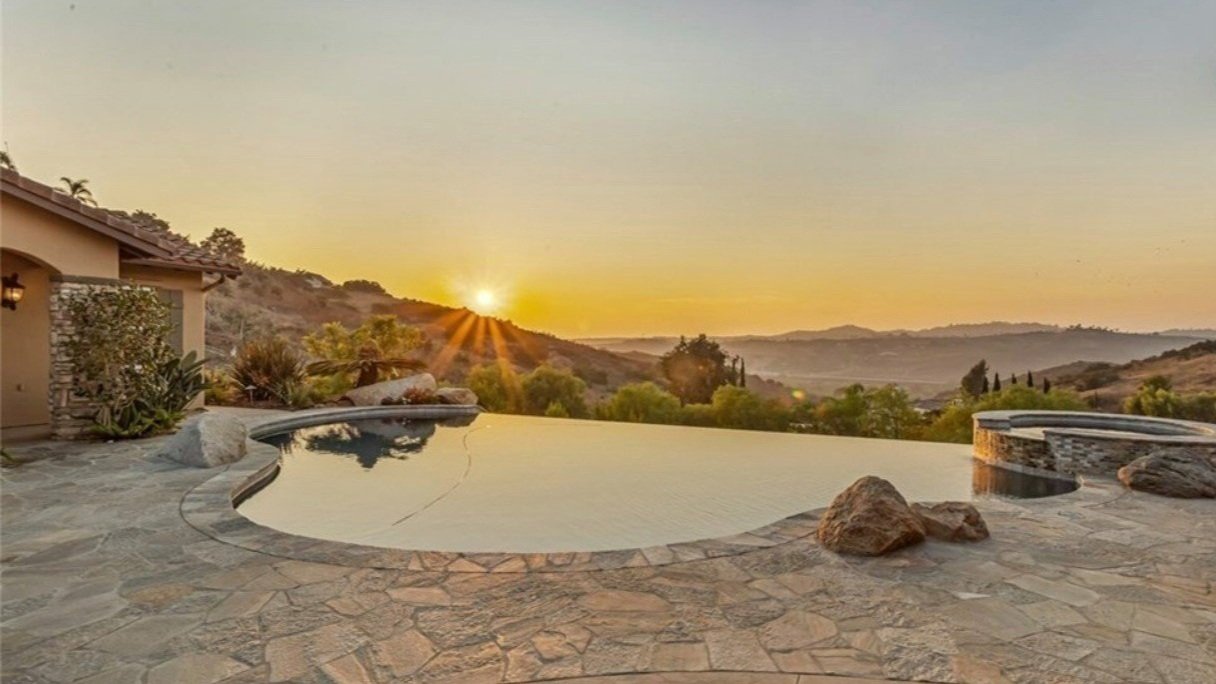
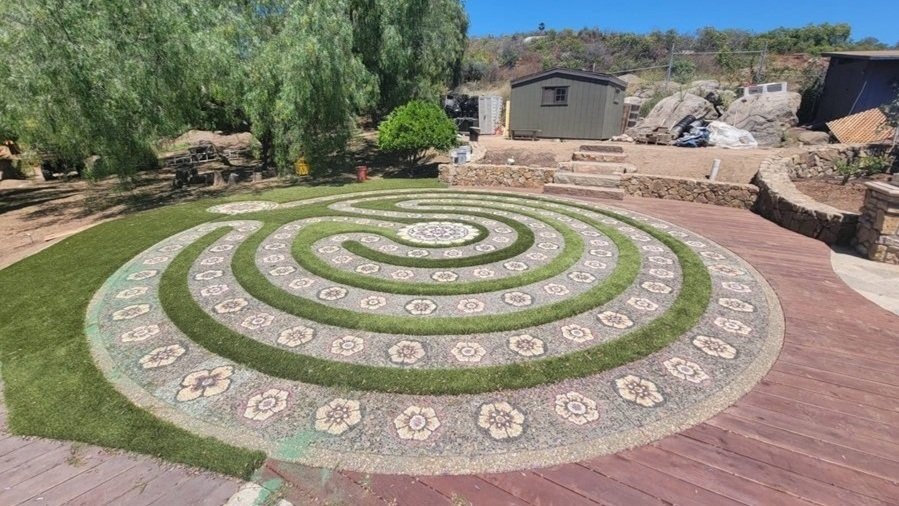
The Sanctuary of YUM in Bonsall, California is a landscape designed to nourish both body and spirit. Blending exotic orchards with native California systems, the garden creates a place where food, art, and wellness come together. At its heart lies a ritual labyrinth, a space for walking meditation and reflection. Every element is designed as part of an evolutionary intelligent system, supporting ecological cycles while providing spaces for contemplation, community, and healing.
A short film of the Sanctuary of YUM in Bonsall, a four-acre retreat blending exotic orchards, a meditation labyrinth, wellness spaces, and farm-to-table gardens. Designed by LASD Studio, it is a living sanctuary for restoration, community, and ecological beauty.
Concept Vision: Landscape as Healing Sanctuary
The Sanctuary of YUM was imagined as more than a garden - it is a living sanctuary where every element contributes to restoration, wellness, and beauty. The design draws inspiration from both ancient ritual landscapes and contemporary ecological science, creating a place where visitors feel grounded in nature while connected to something larger than themselves. Pathways, water, and planting flow as one continuous system, offering an experience of balance, serenity, and renewal.
Exotic Orchards & Edible Gardens
At the heart of the design lies an orchard of exotic and Mediterranean fruit trees, weaving productivity with artistry. Citrus, figs, olives, pomegranates, and subtropical species form a lush edible landscape, supporting both culinary delight and ecological resilience. Interplanted herbs and pollinator-friendly groundcovers attract bees and butterflies, ensuring that the garden is as alive with biodiversity as it is with flavor. The orchard becomes a daily ritual of nourishment - a reminder of the cycles of growth and harvest.
Ritual Labyrinth: Path of Reflection
The labyrinth is conceived as a sacred journey - a place for meditation, mindfulness, and personal reflection. Inspired by traditional forms yet adapted for this site, its spiraling path encourages slow movement and inner focus. Surrounded by aromatic planting and shaded by native trees, the labyrinth serves as the spiritual core of the sanctuary, a space where landscape, body, and spirit come into alignment.
Outdoor Living & Wellness Programs
The estate is structured around a series of outdoor rooms designed for wellness, family life, and celebration. Shaded terraces, yoga decks, water features, and contemplative seating areas invite both activity and stillness. Every gathering space is framed by views of orchards and hills, reinforcing the connection between healthy living and ecological abundance. The garden becomes not only a place to inhabit, but a lifestyle rooted in nature’s rhythms.
Ecological Foundations: Water, Soil, and Biodiversity
Beneath its beauty, the Sanctuary of YUM is built on strong ecological foundations. Advanced irrigation systems optimize water use, while soil restoration techniques improve fertility and resilience. Native California species are interwoven with exotic plantings to support biodiversity and ensure long-term sustainability. By aligning horticultural practices with ecological intelligence, the landscape thrives as a self-sustaining system that evolves gracefully over time.
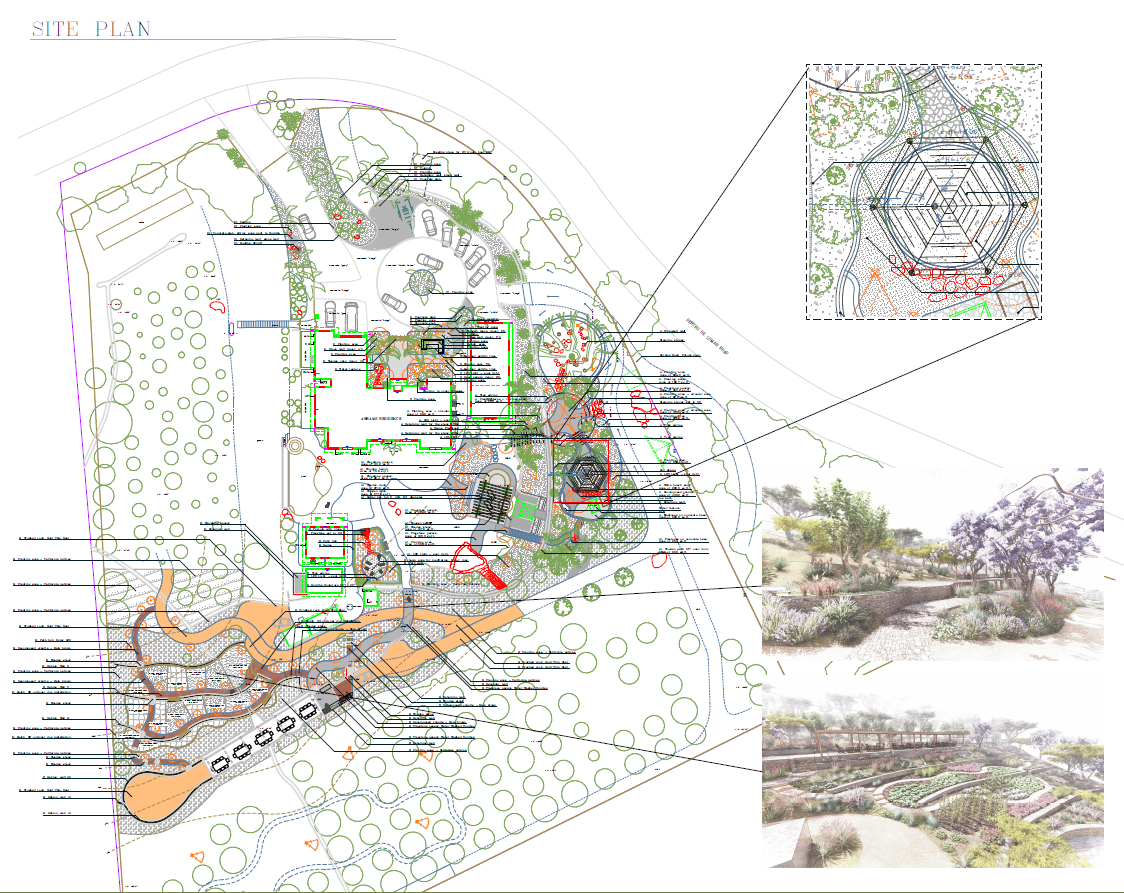
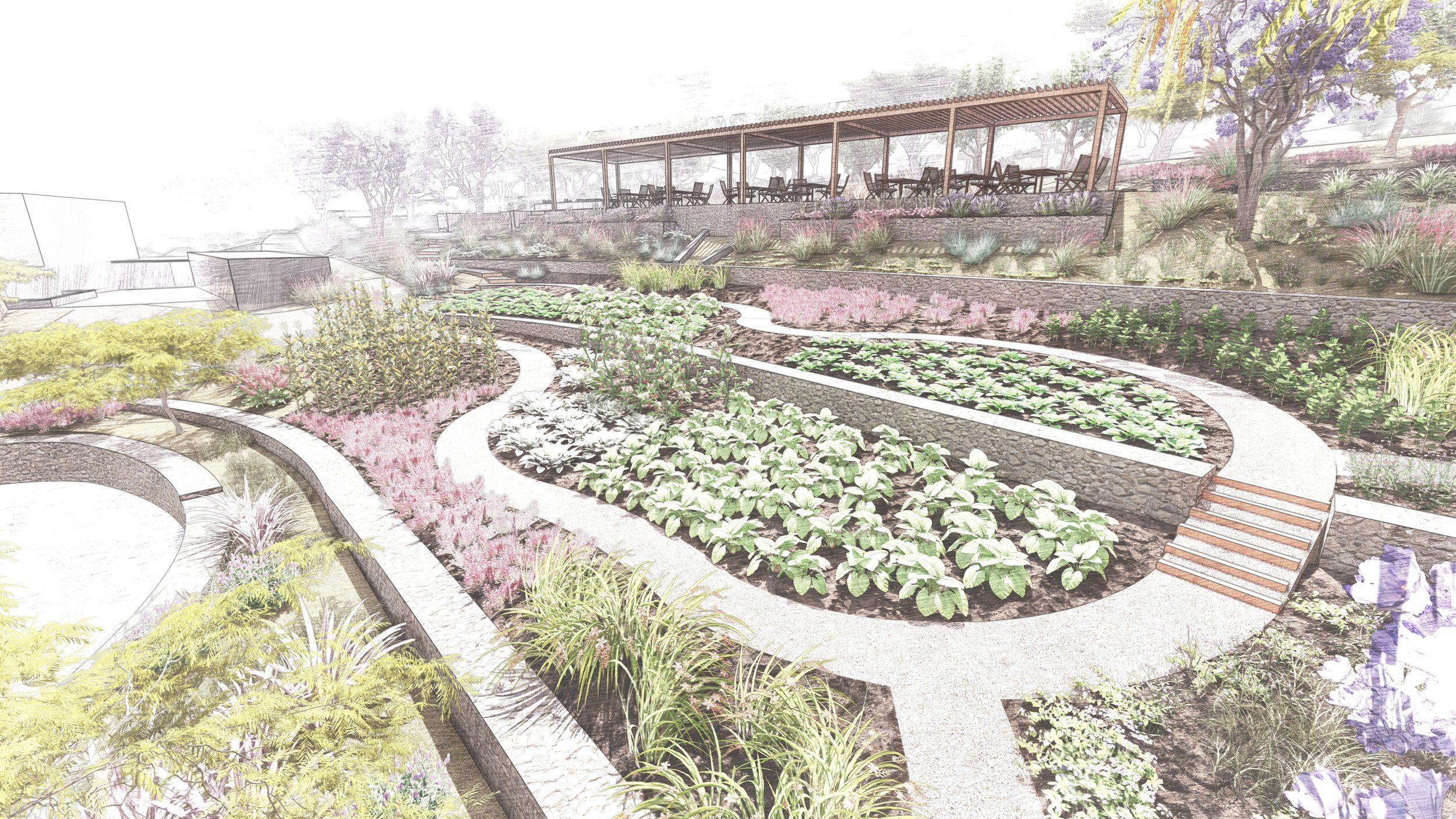
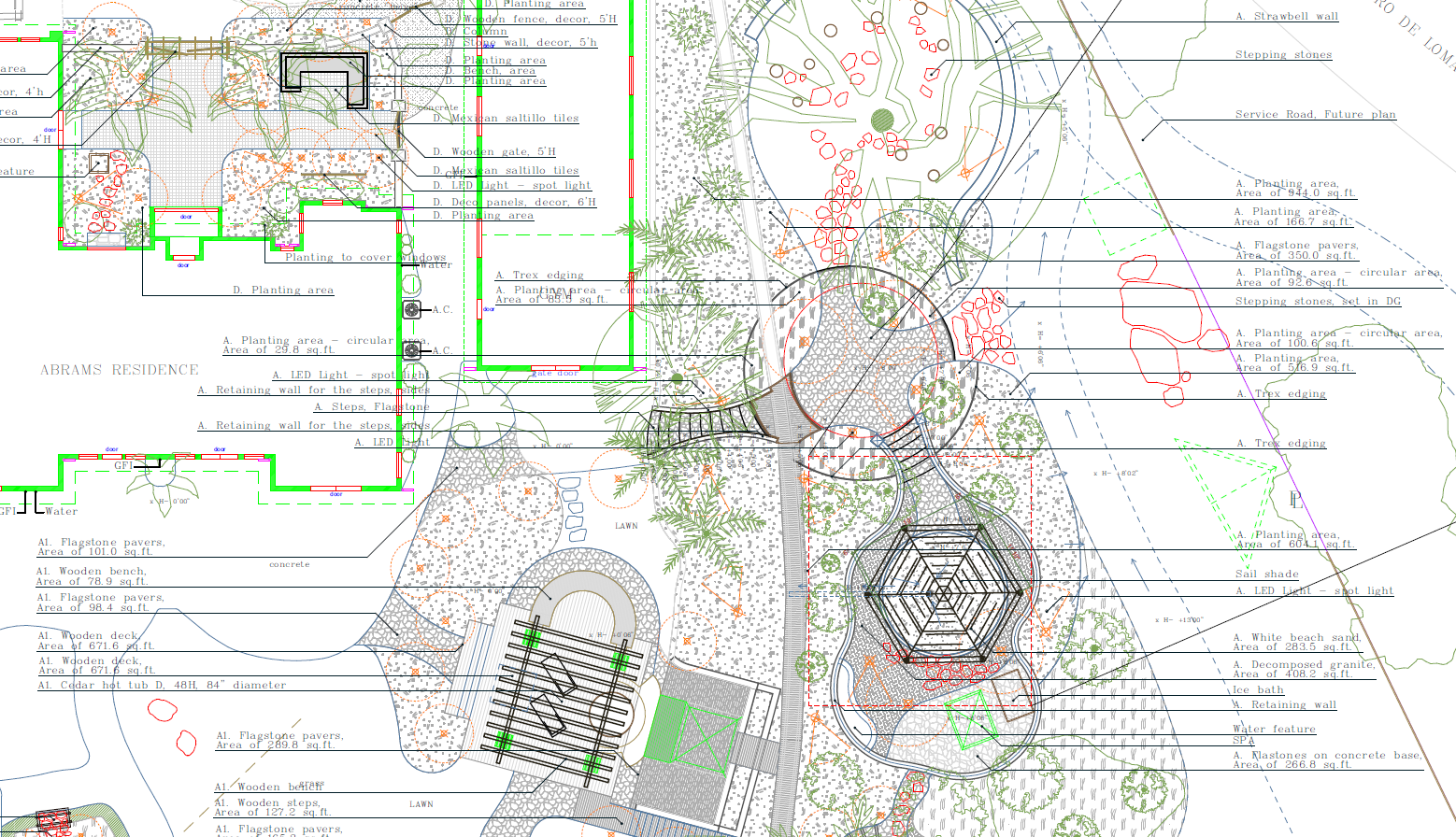
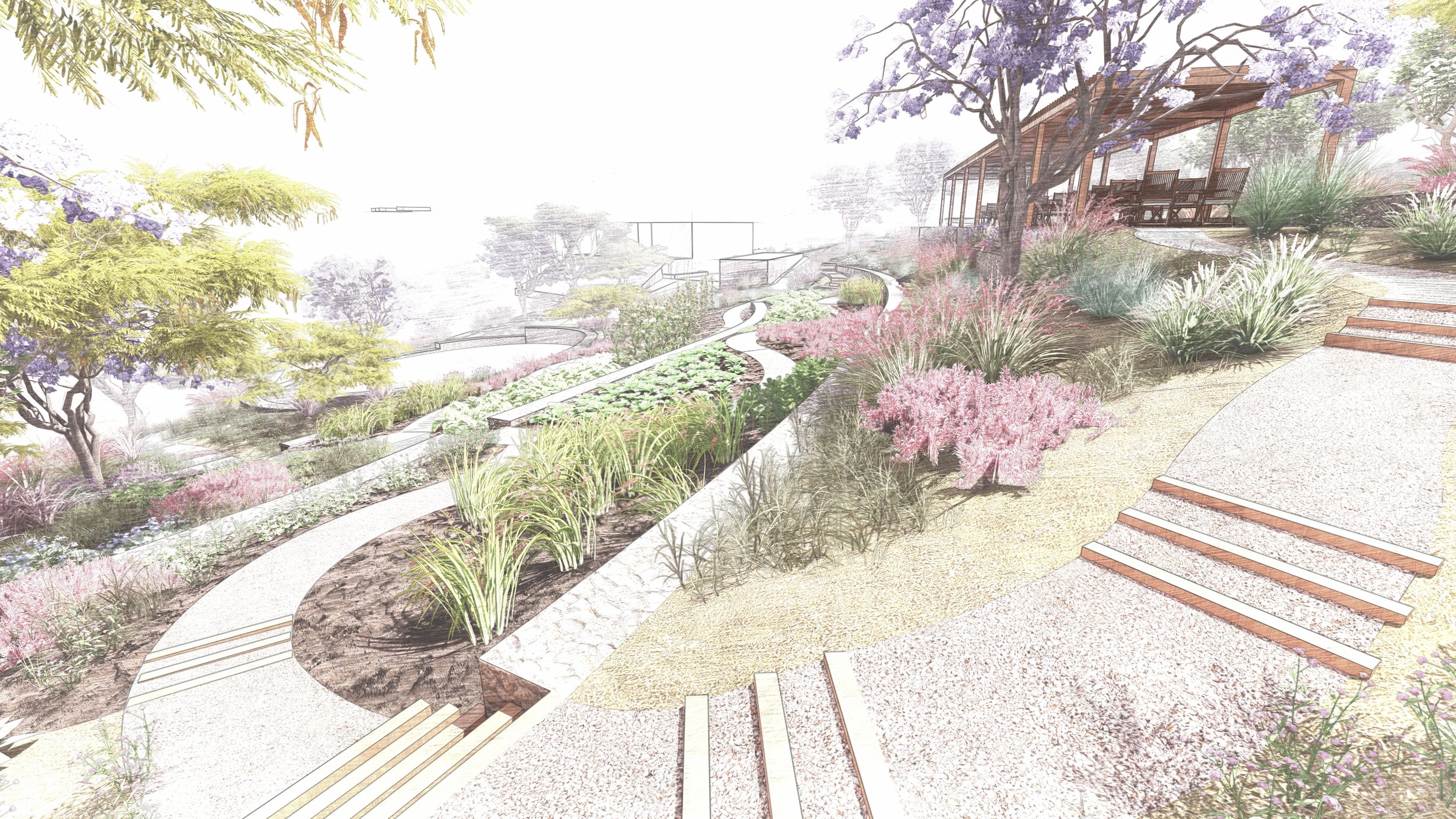


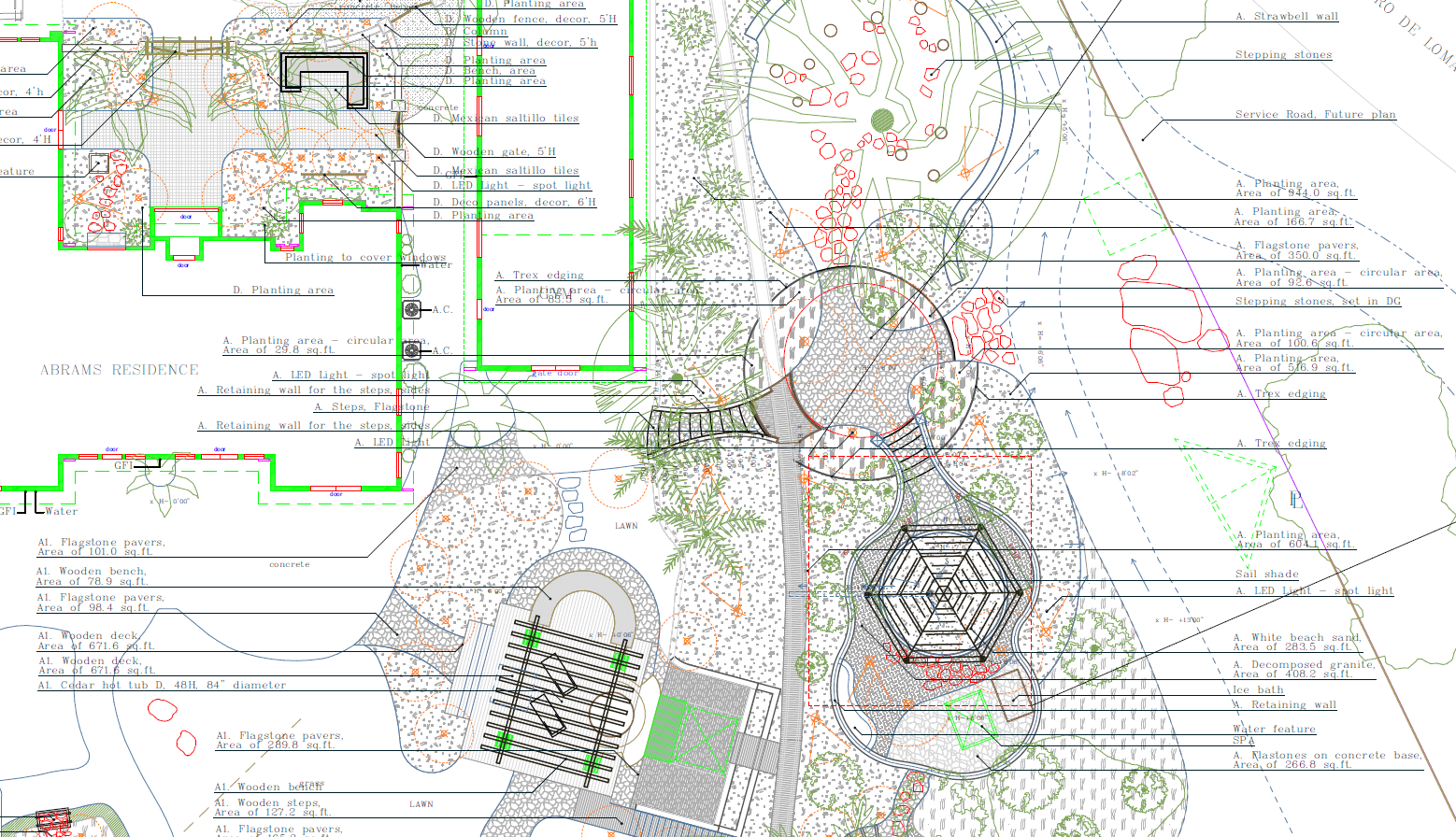
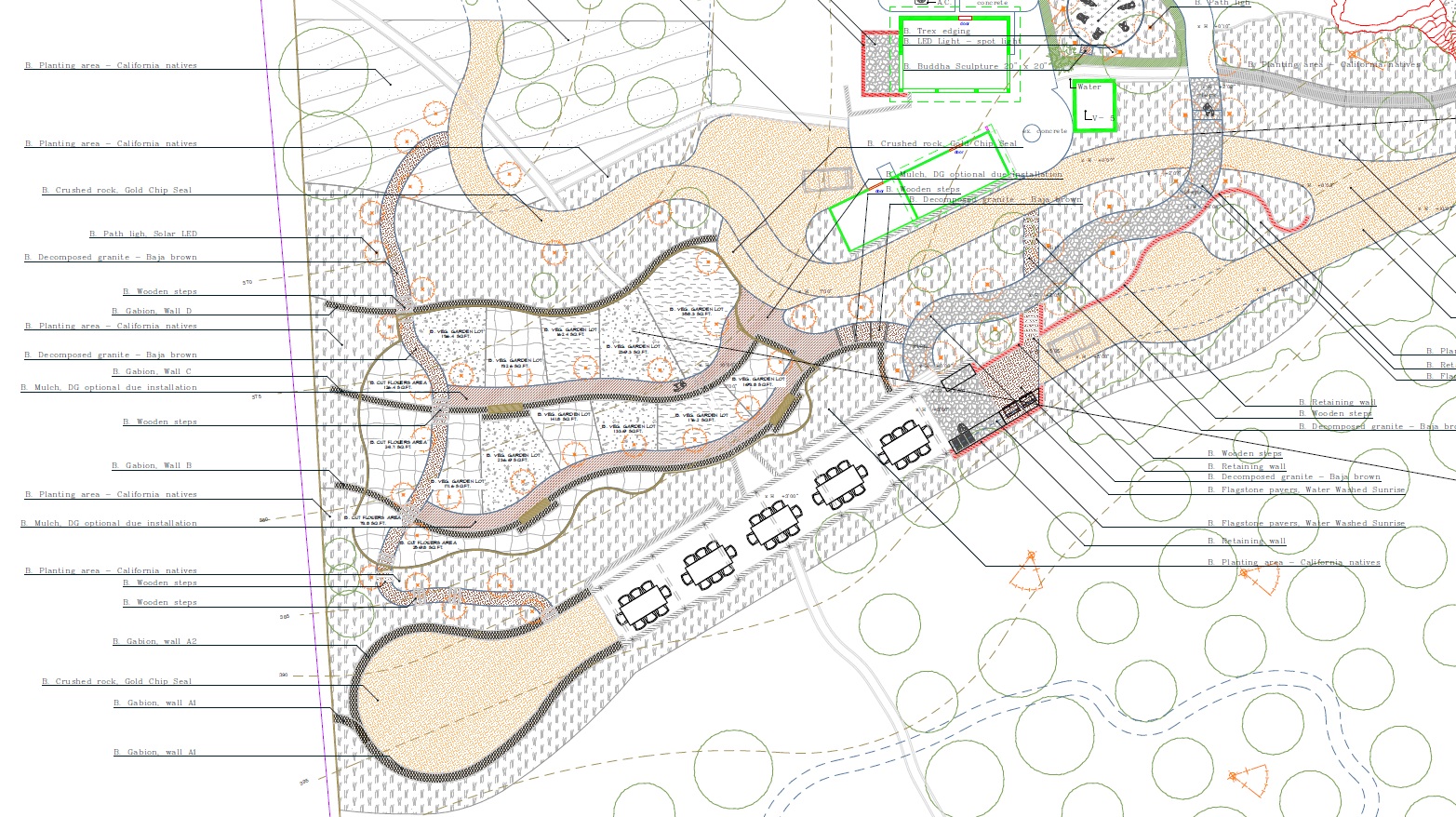
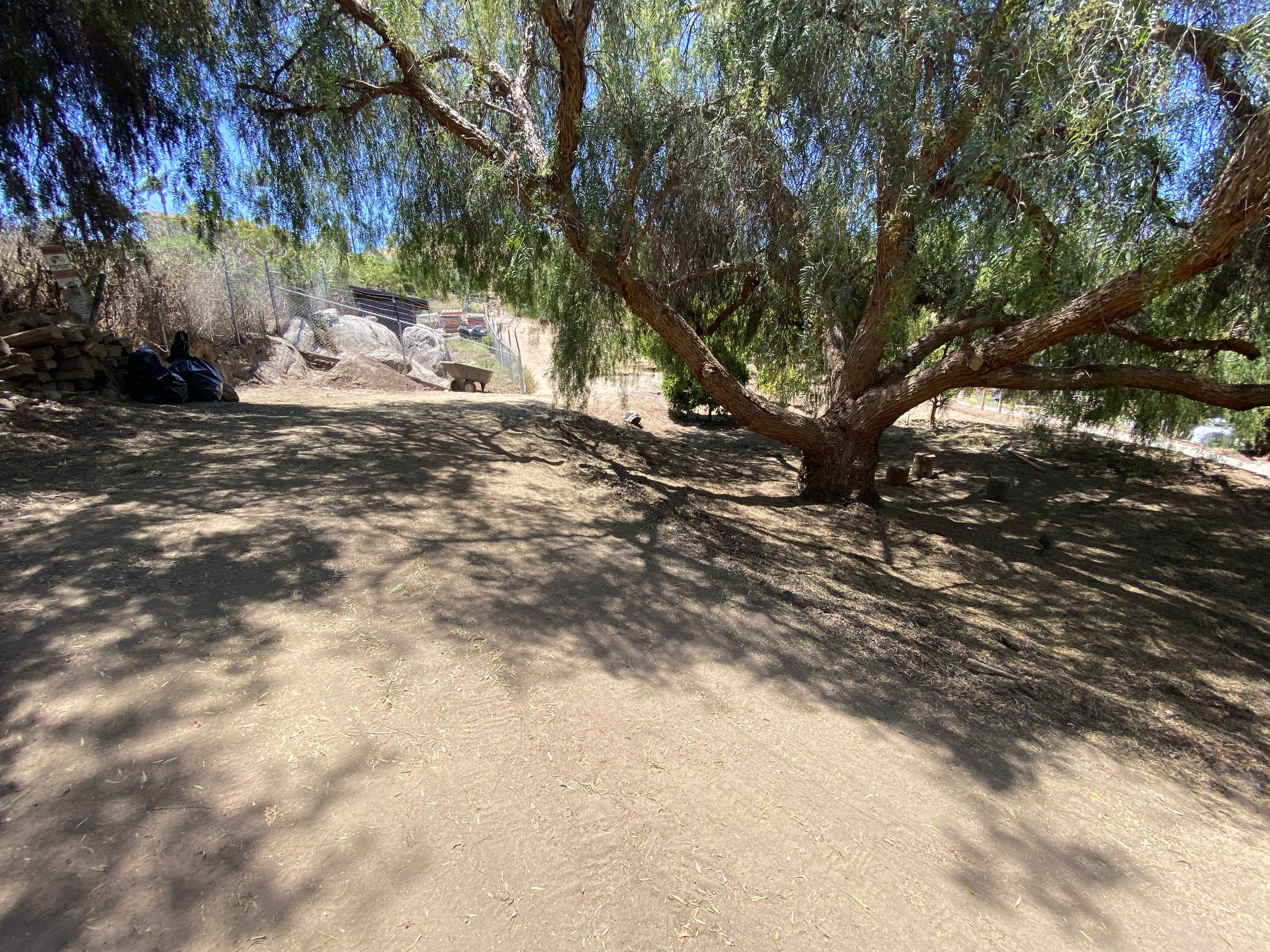
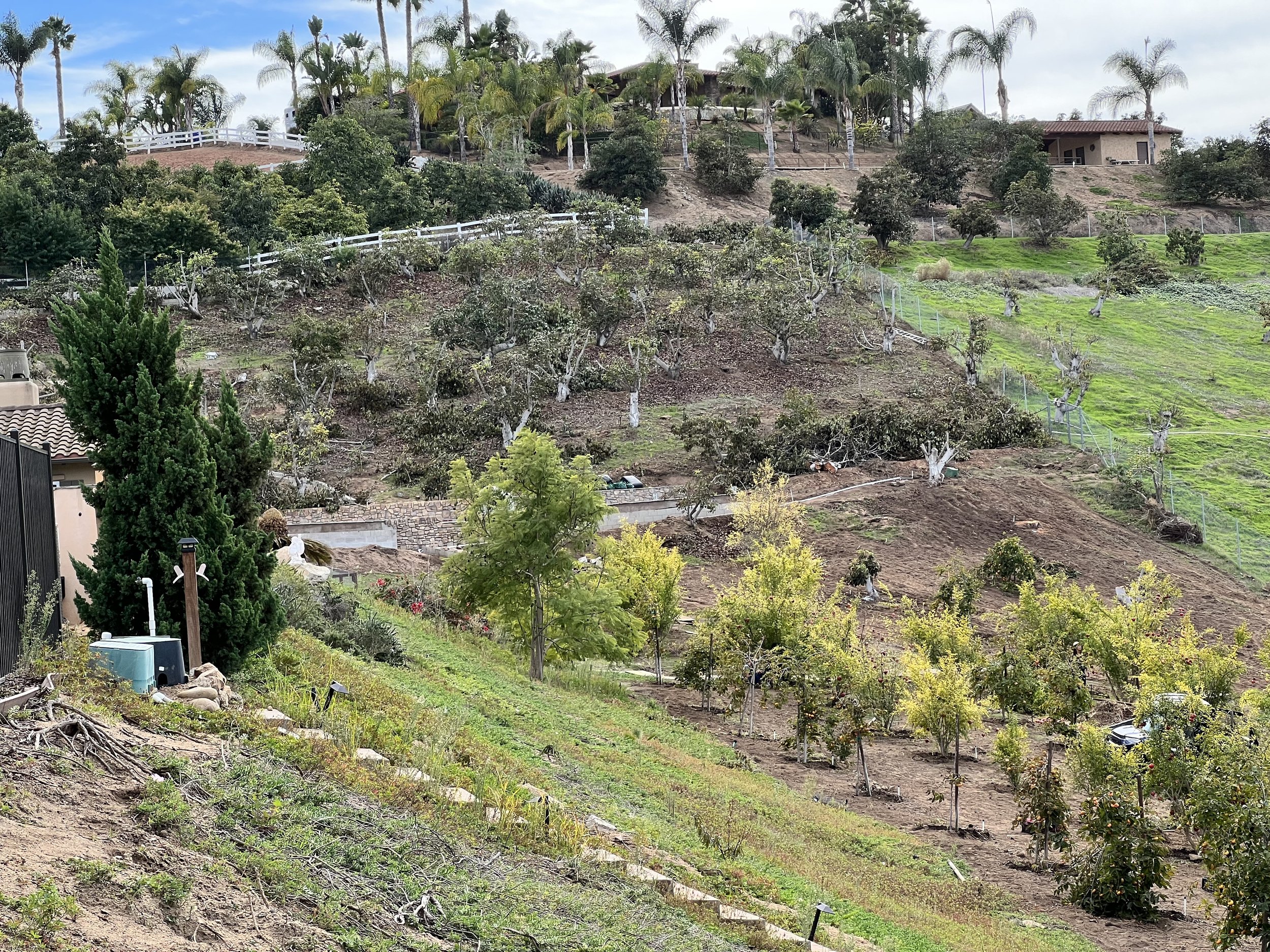
EXISTING CONDITION






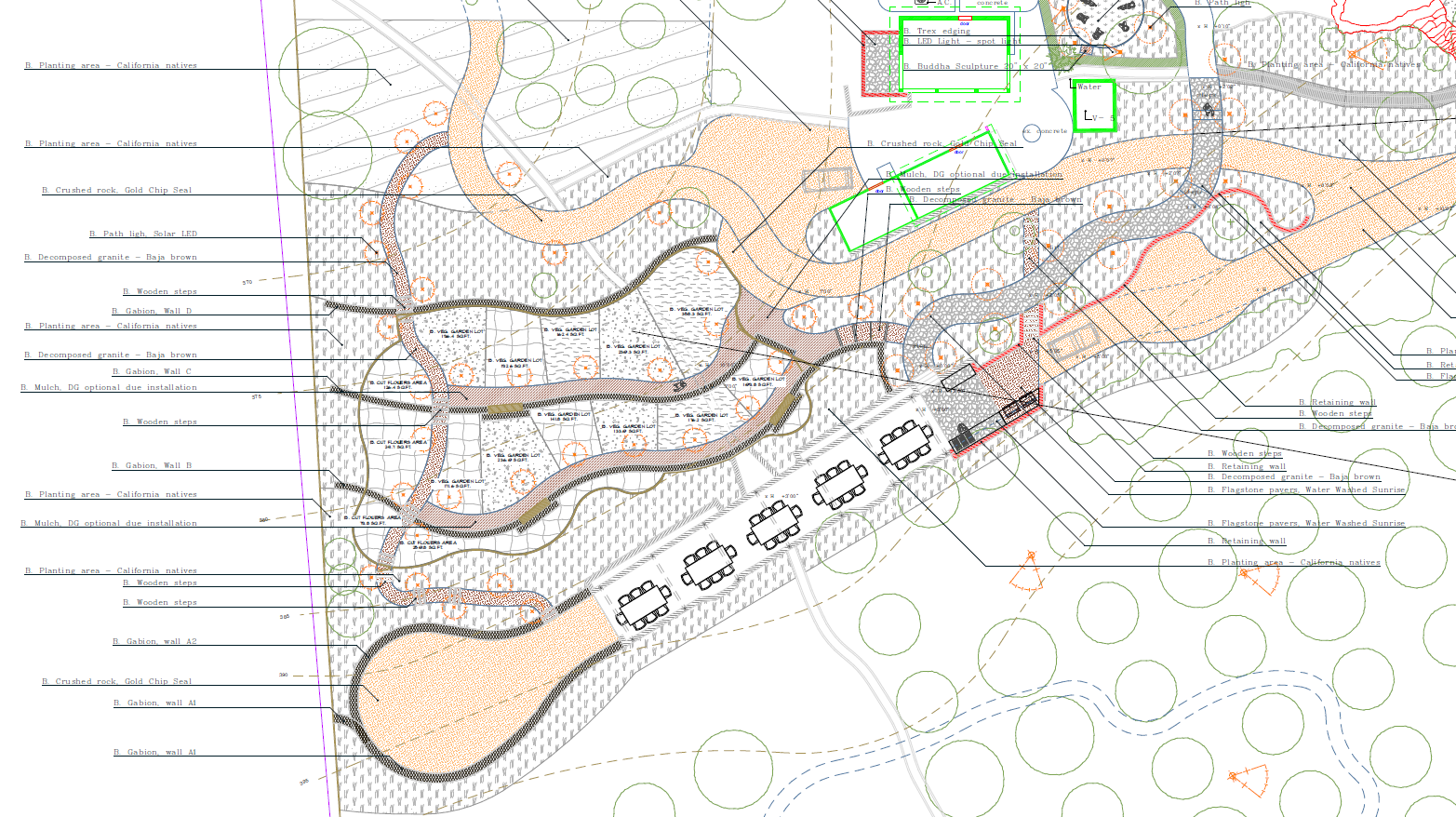
PROJECT DESCRIPTION
This four-acre estate in Bonsall has been transformed into a sanctuary of exotic orchards and wellness programs, designed to host both private and group retreats. Our collaboration began in 2020, when owners Laurence and Yulia reached out with a dream of creating a retreat center but were unsure how to bring it to life.
Together, we developed a holistic vision for the landscape. Over the course of two years and many thoughtful refinements, that vision evolved into the sanctuary you see today. What impressed us most was the passion of Laurence and Yulia - not only did they understand the design intentions, they became deeply engaged in shaping every step of the process.
Originally, the land held fifty-year-old avocado and pomegranate orchards in decline. Through careful pruning, planting of cover crops, and natural methods to attract pollinators, the owners lovingly restored these orchards. We complemented their work with new design layers:
A temple garden for meditation and spiritual practice
The Dragon’s Den, a multipurpose retreat space with hot/cold tubs, dining and dance areas, and a Balinese entryway
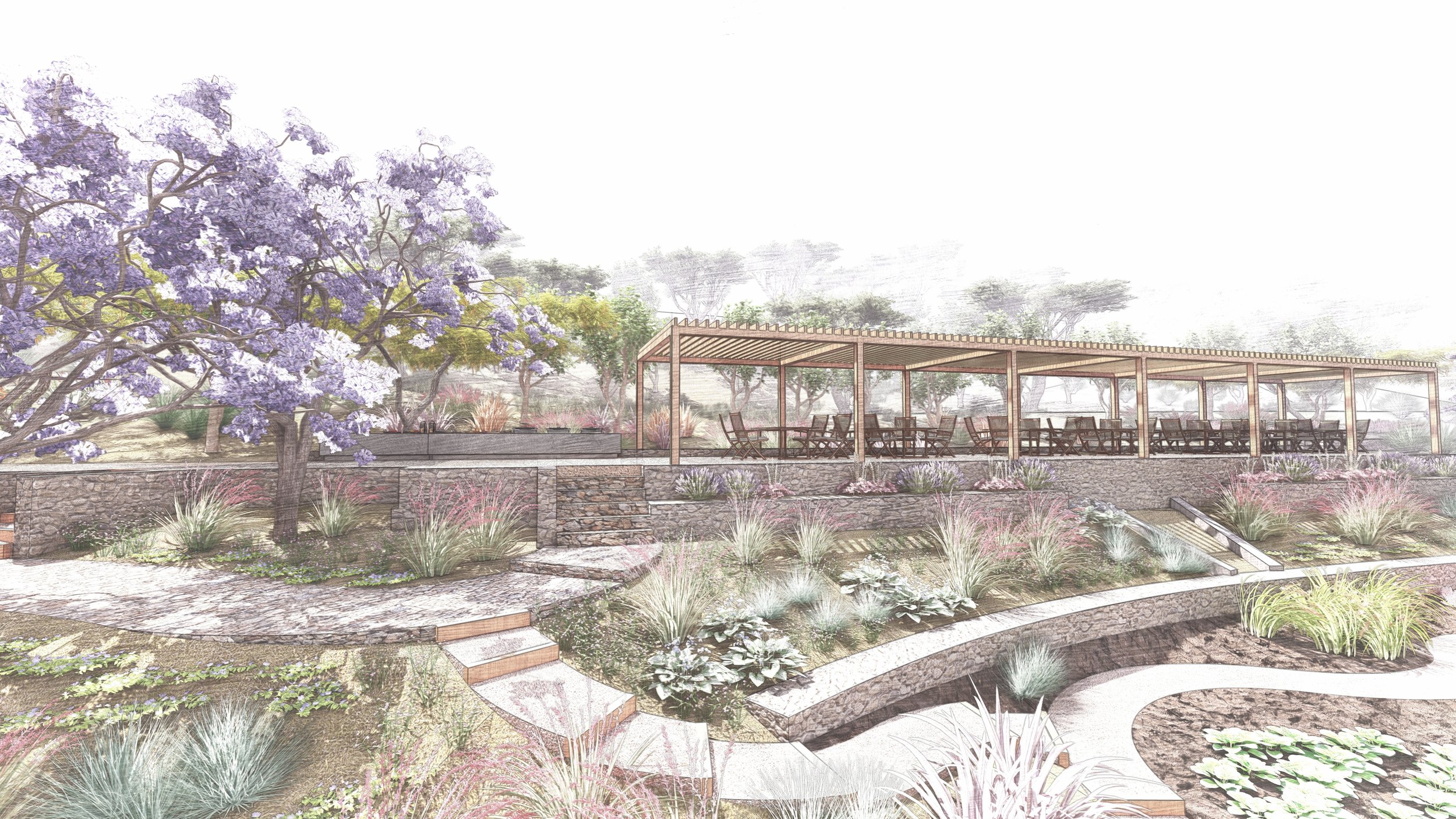
An eighty-foot pergola farm table for farm-to-table events
Over 3,000 square feet of vegetable and flower terraces
A new waterfall and pond adding movement and reflection to the landscape
Today, the Sanctuary of YUM is a true oasis, a place where people come to restore energy, celebrate life, and connect with nature through food, art, and community.
Please check Sanctuary of YUM - https://sanctuaryofyum.com/

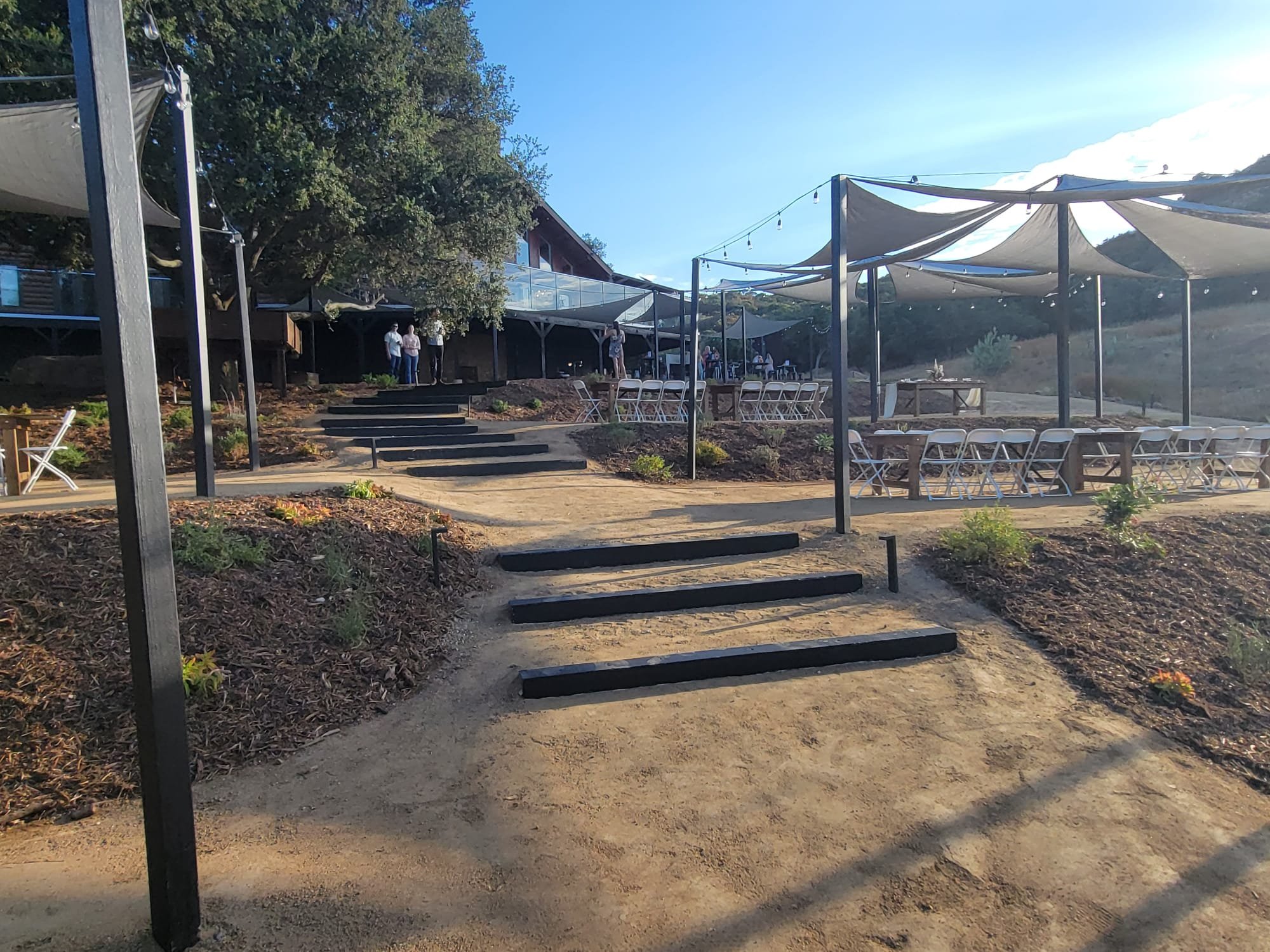
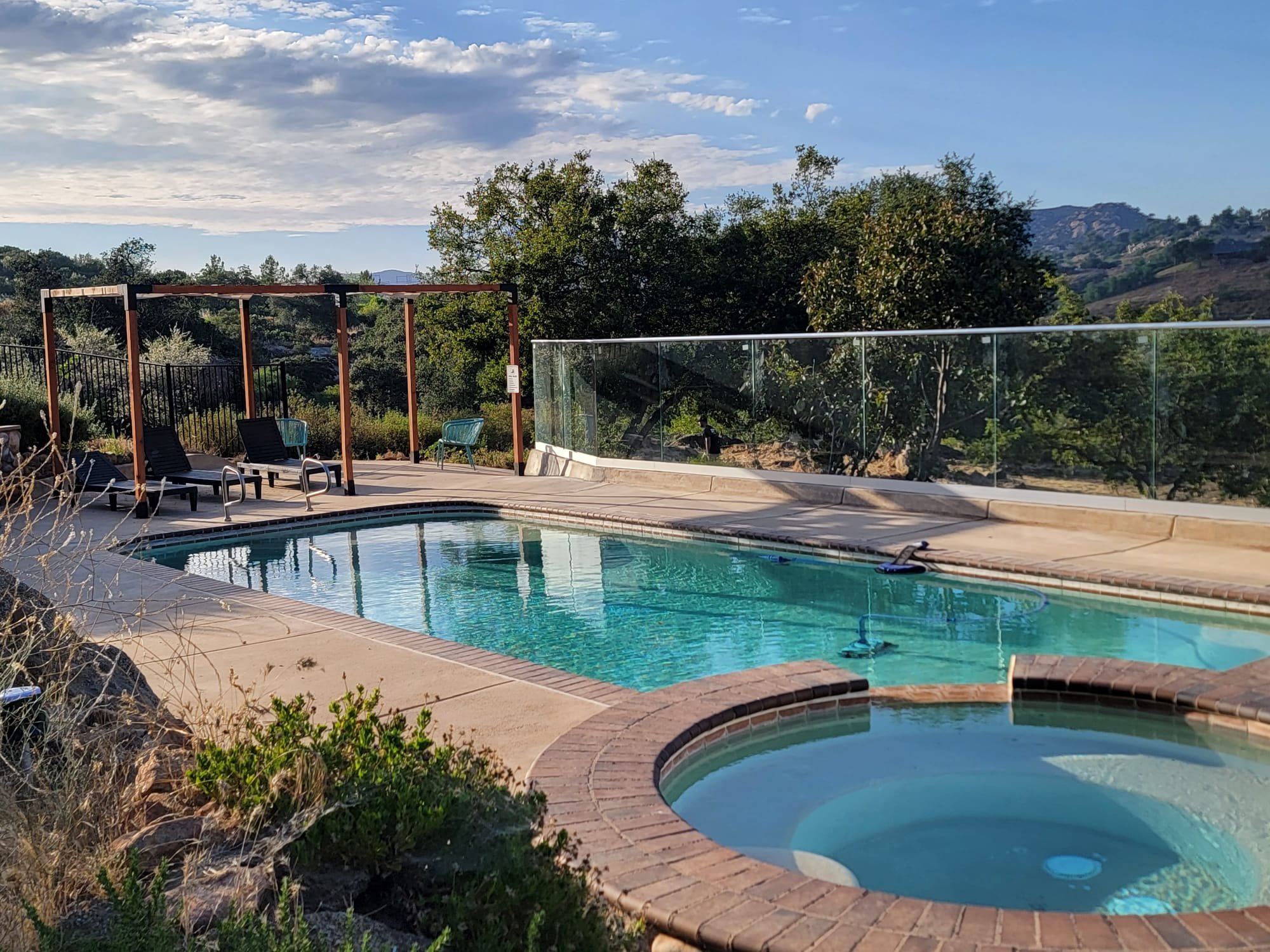
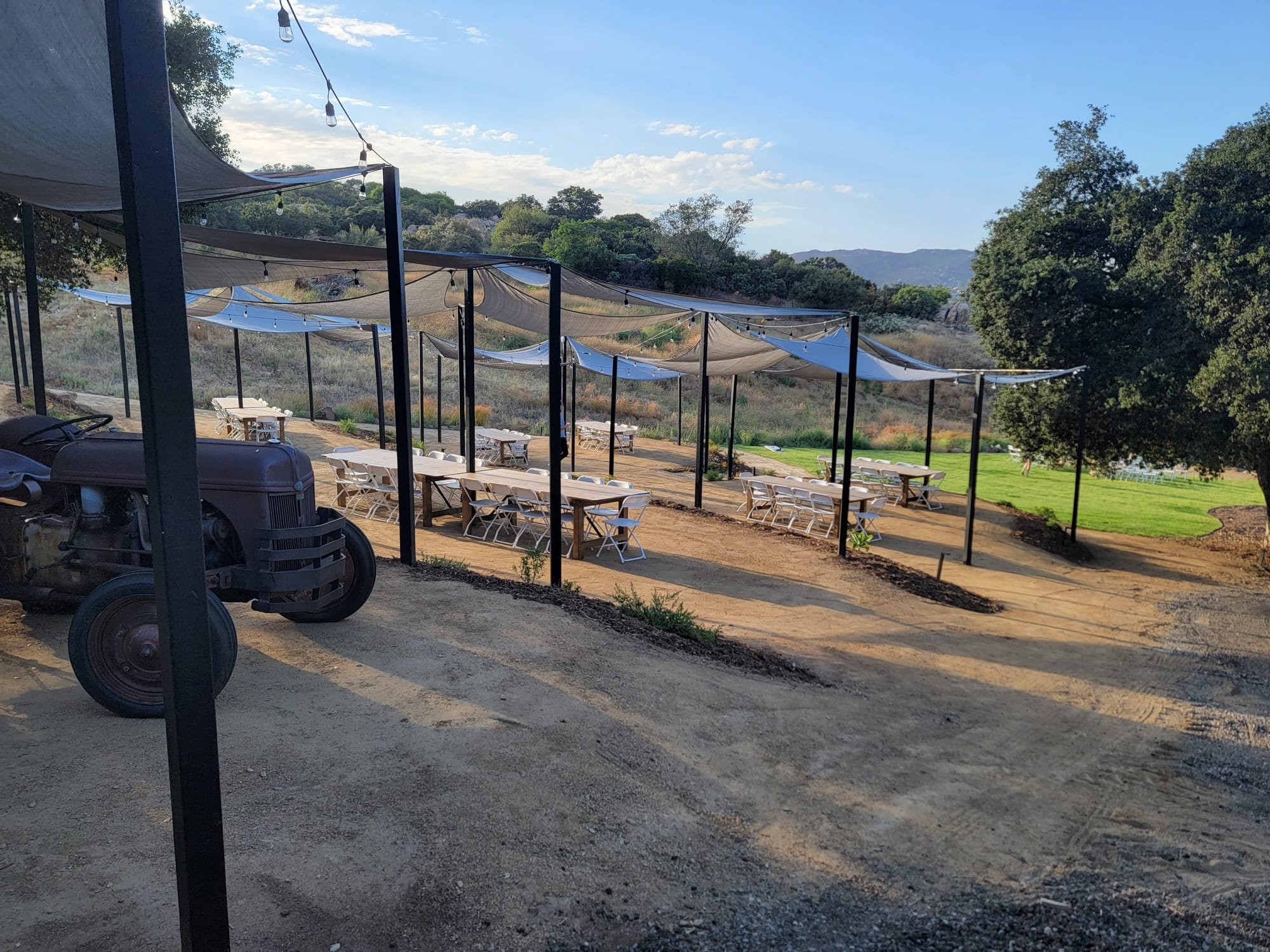
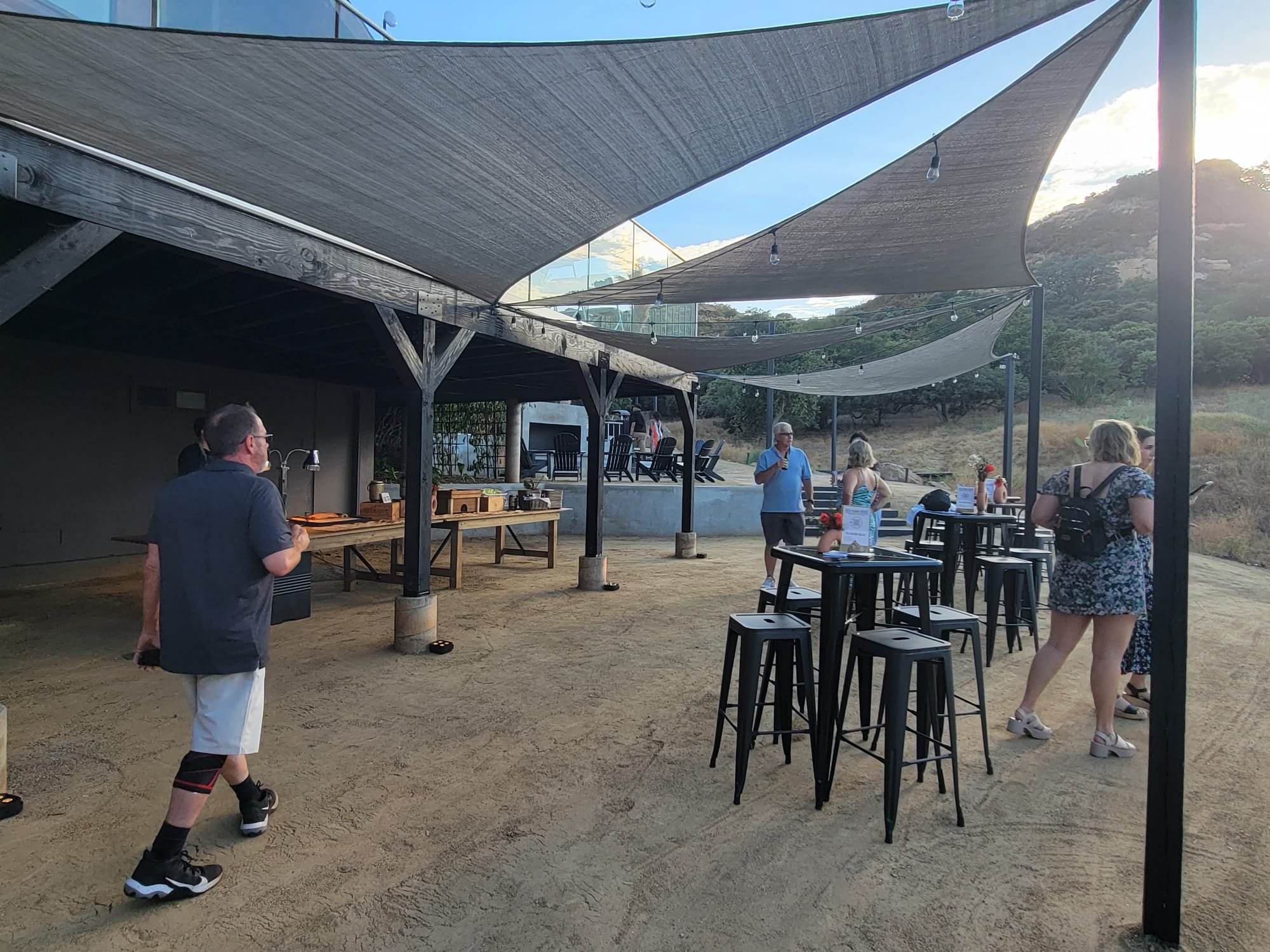
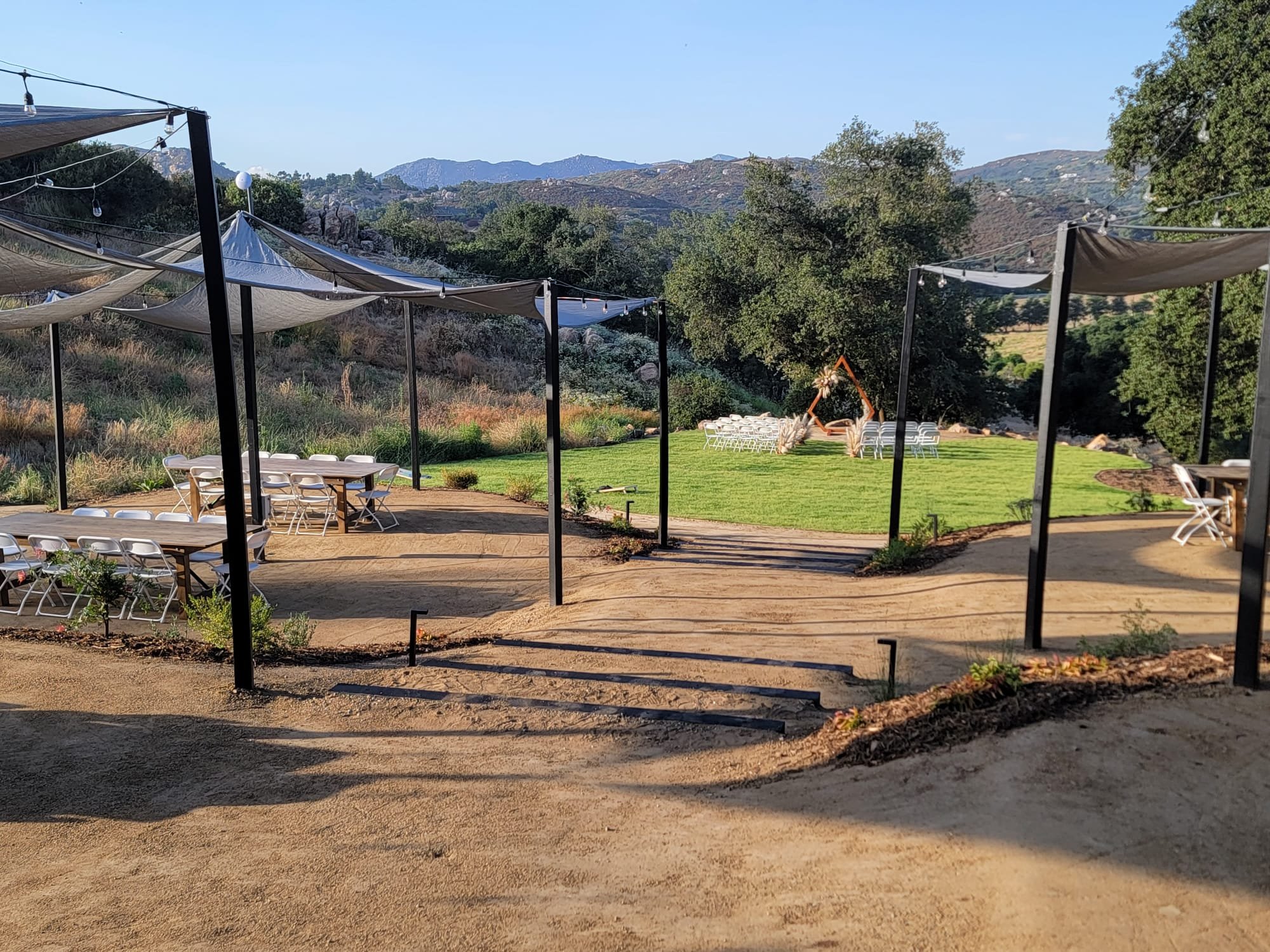
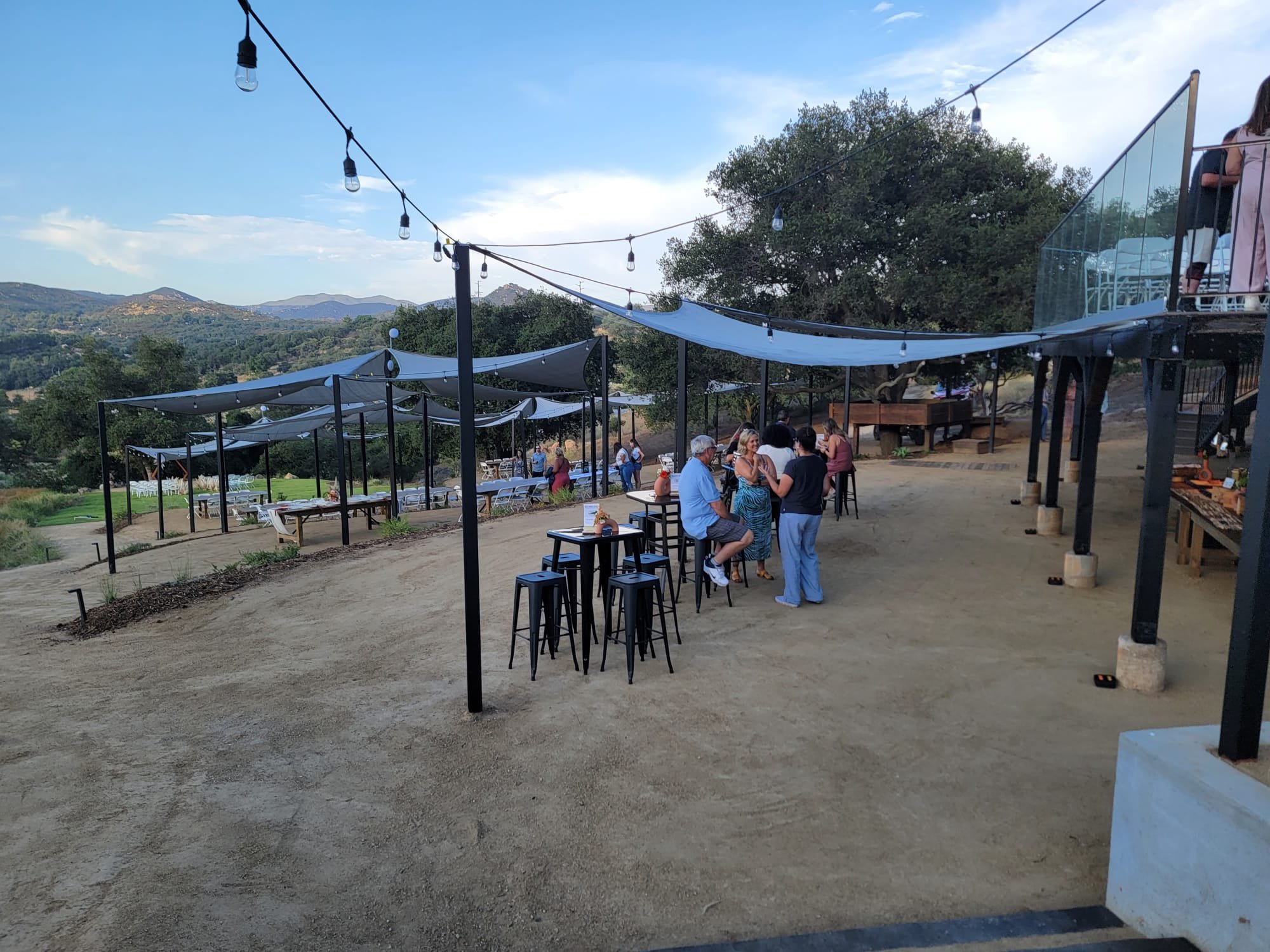
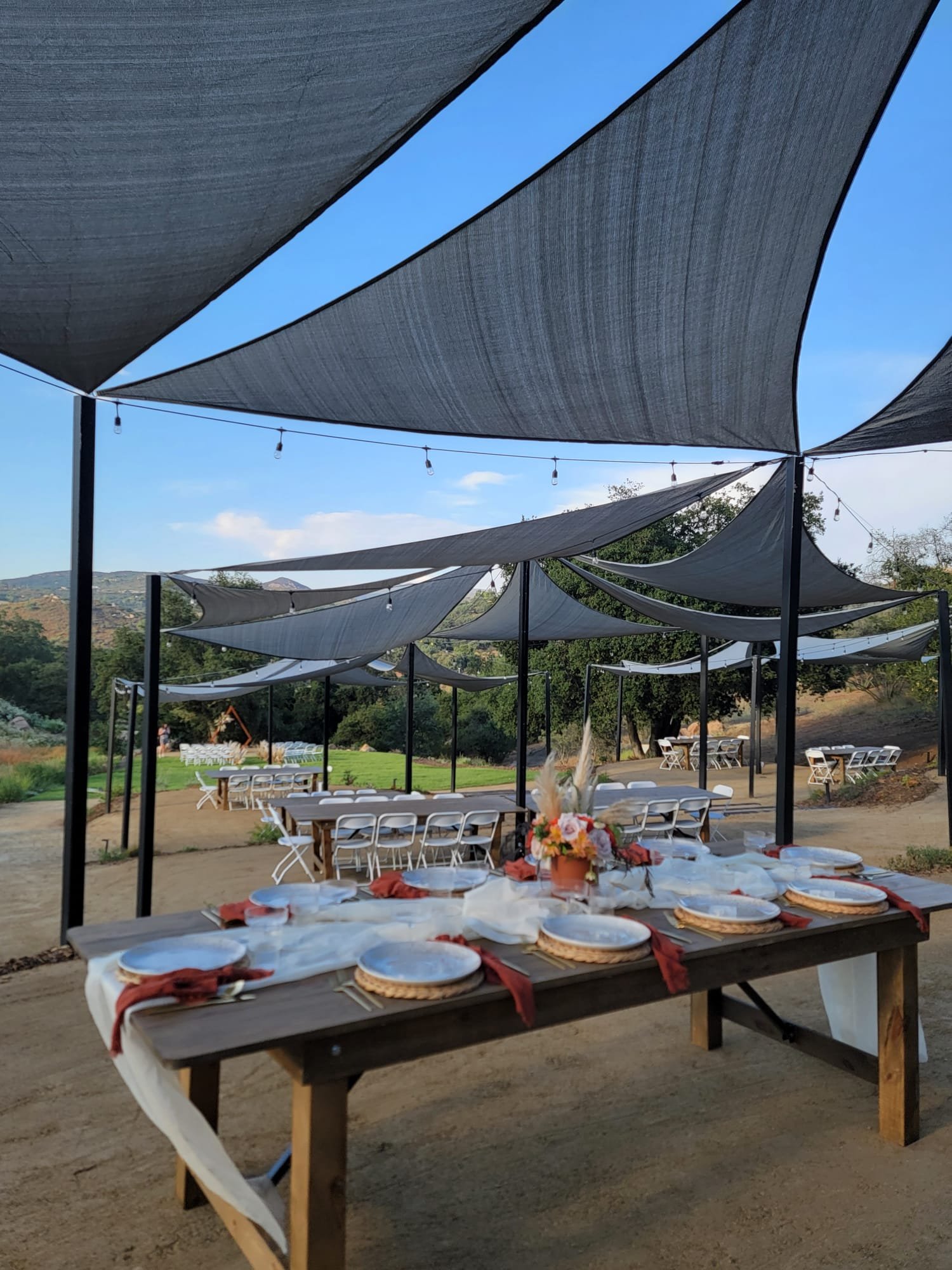
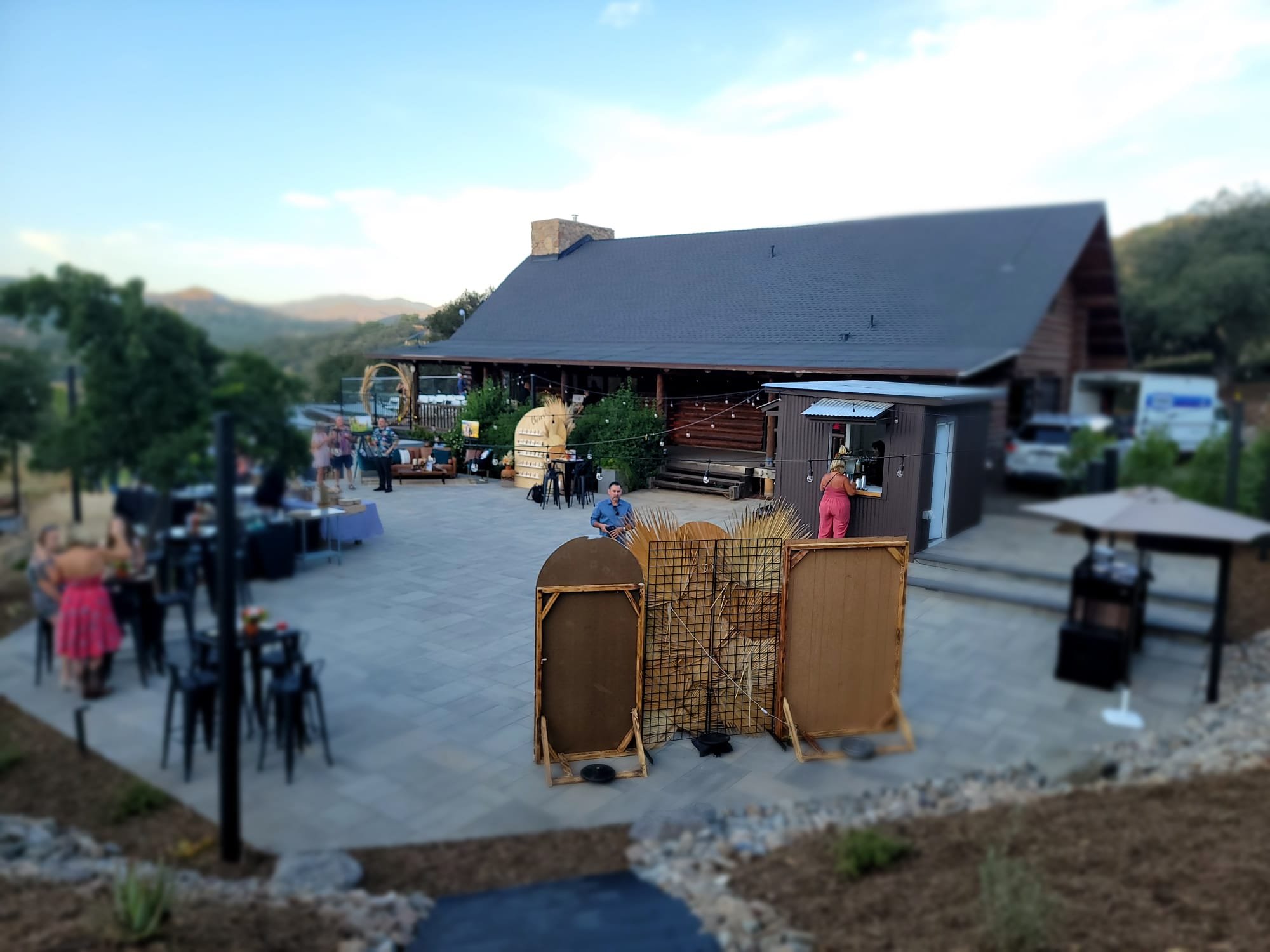
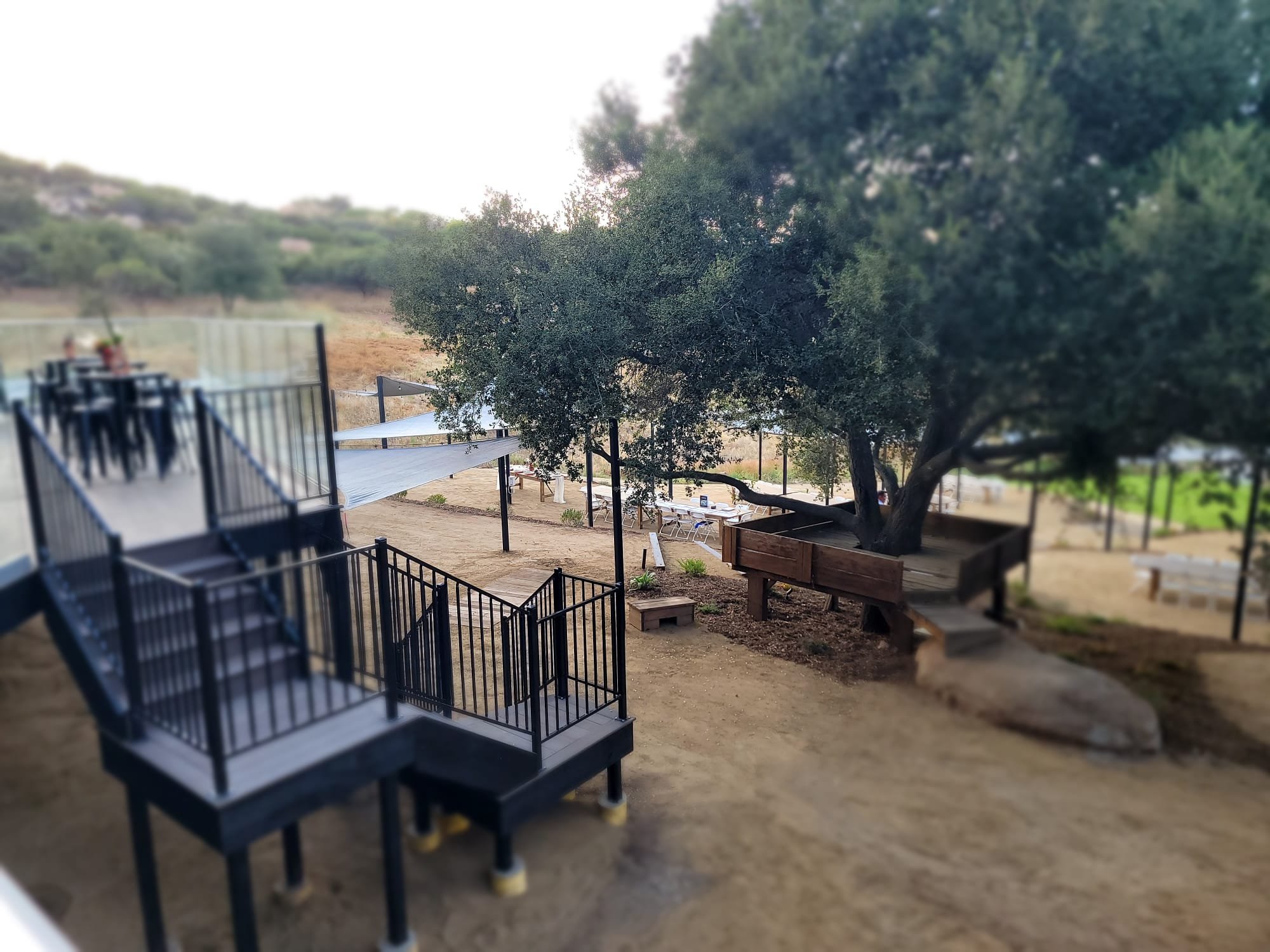
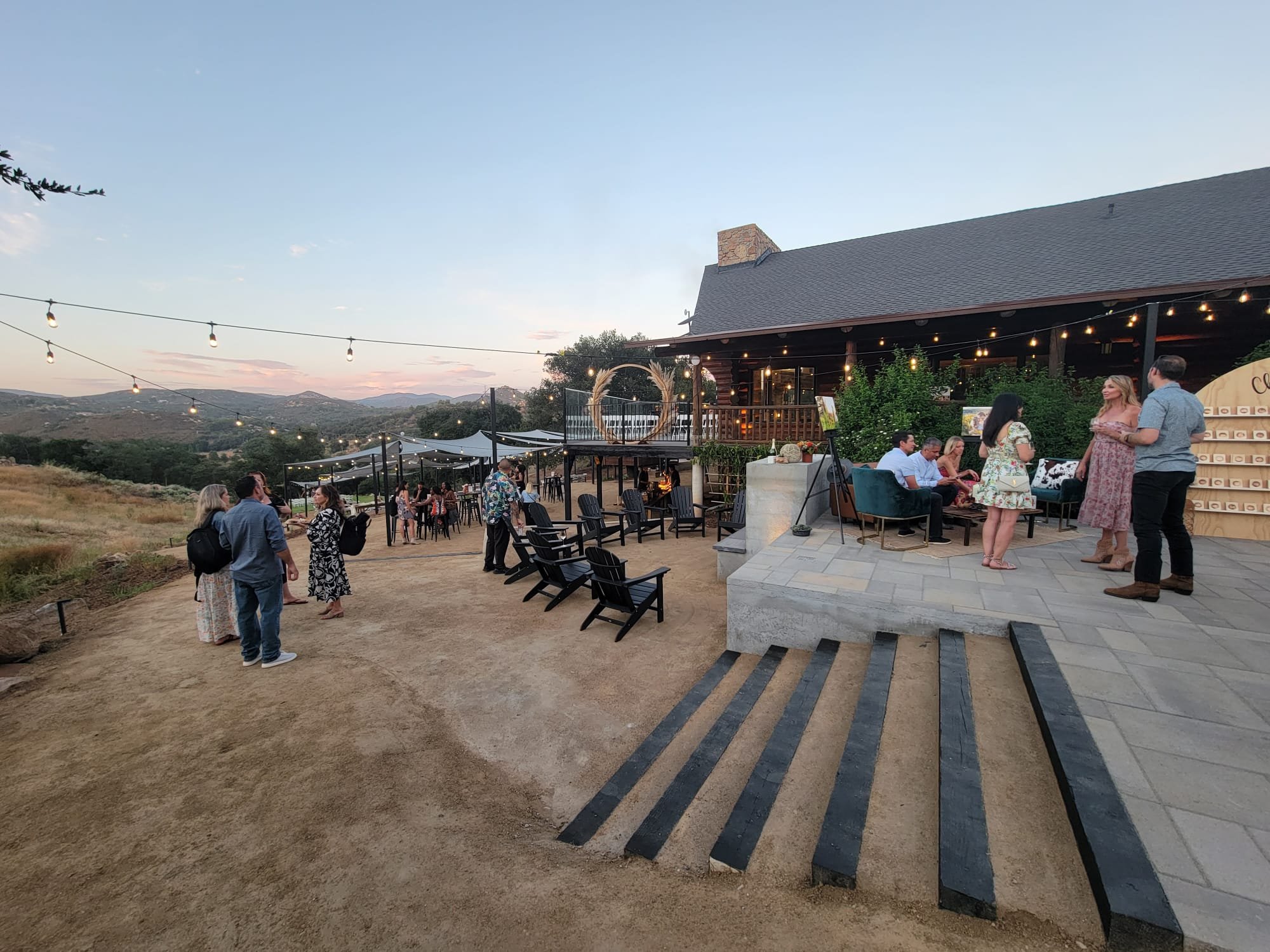
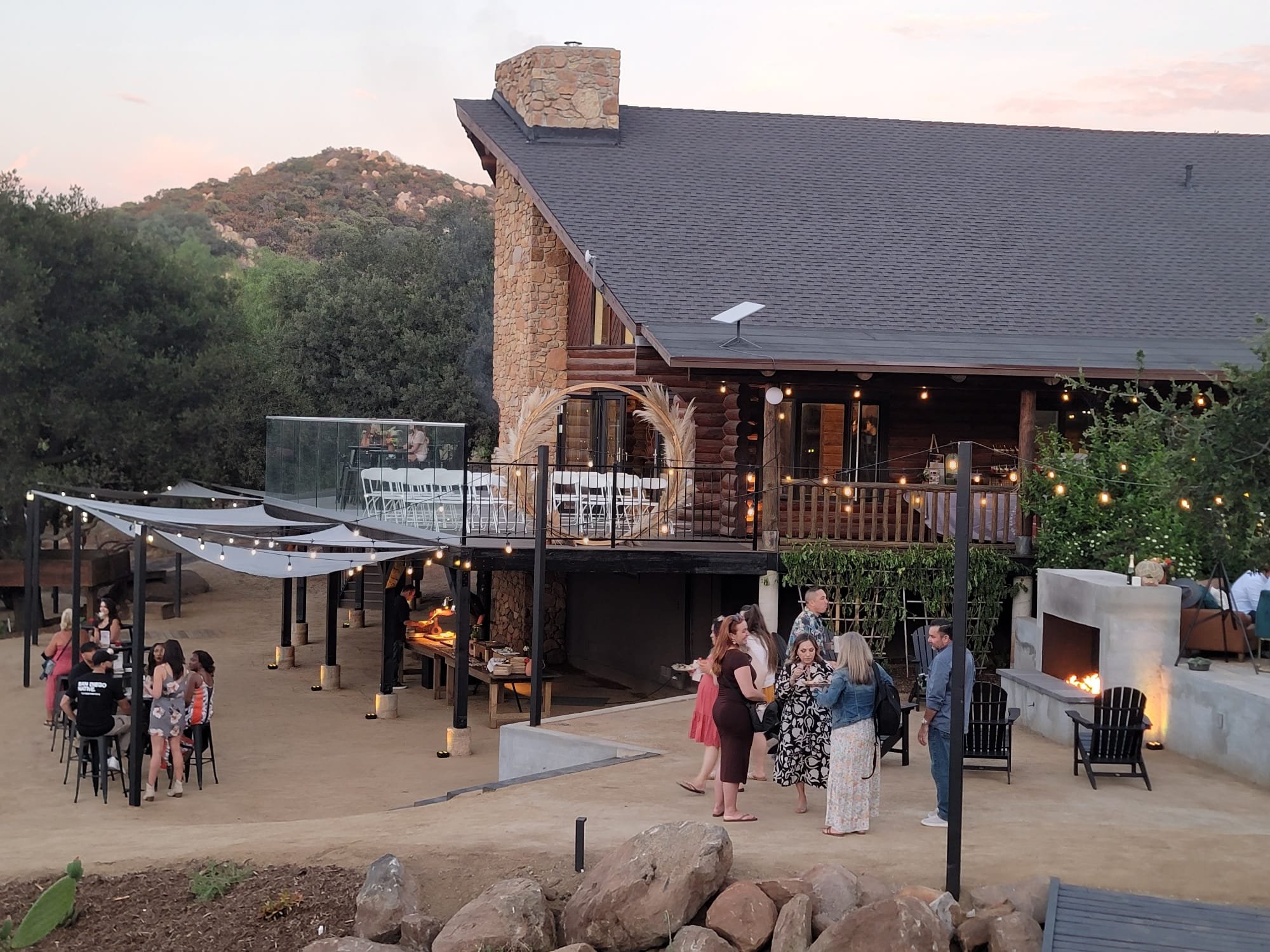
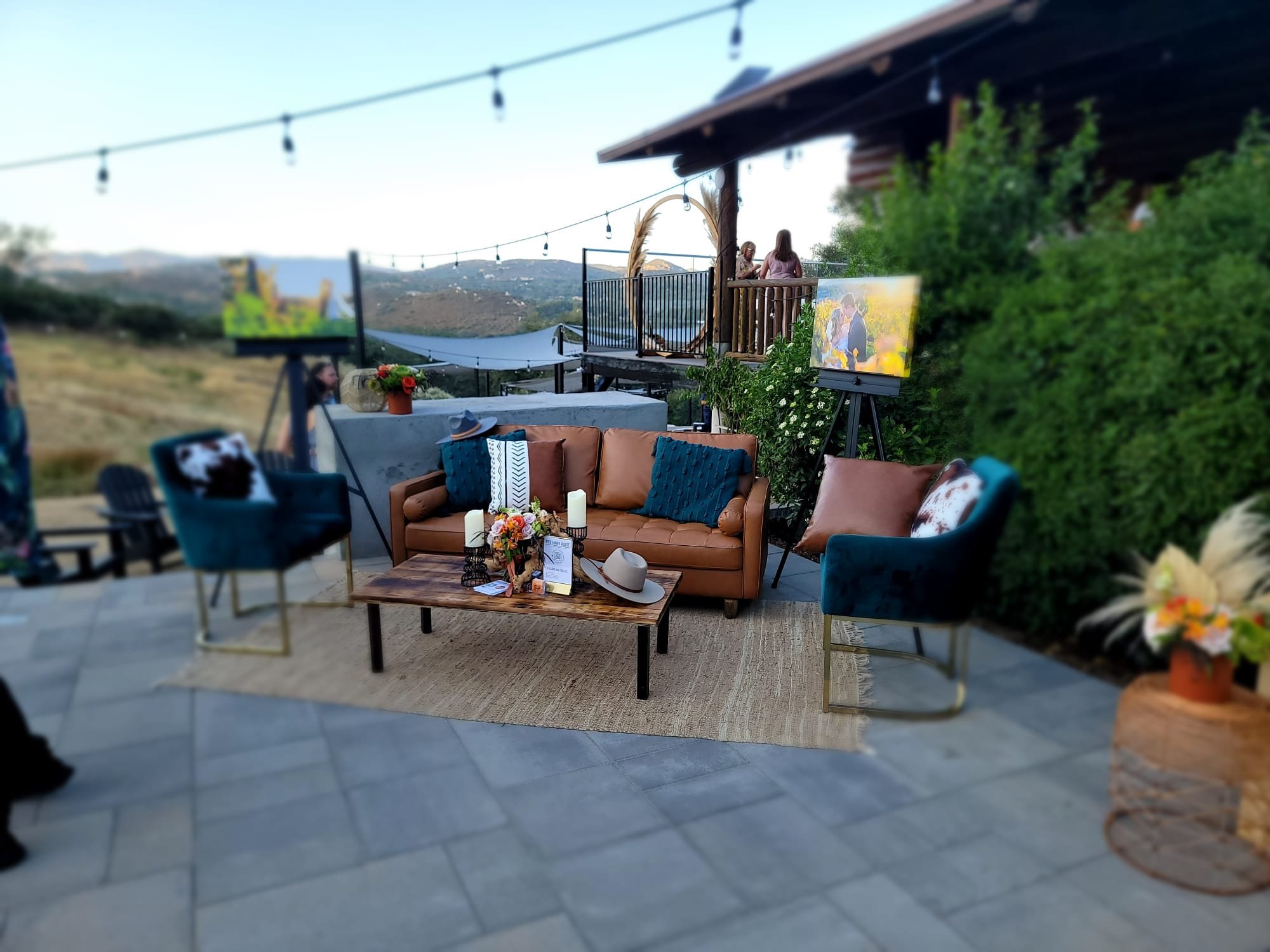
Wedding Garden Design - Red Hawk Ridge, Alpine, San Diego County
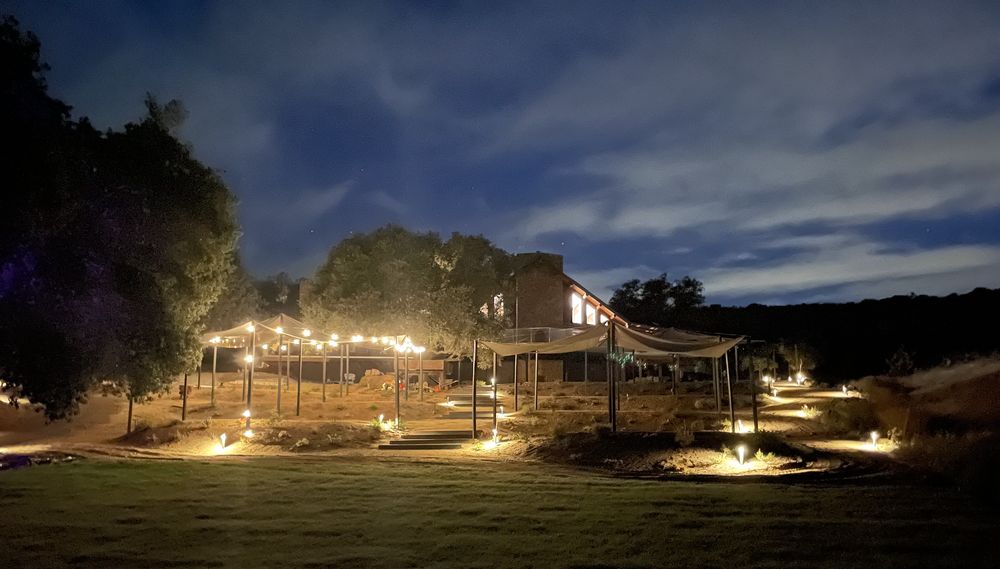
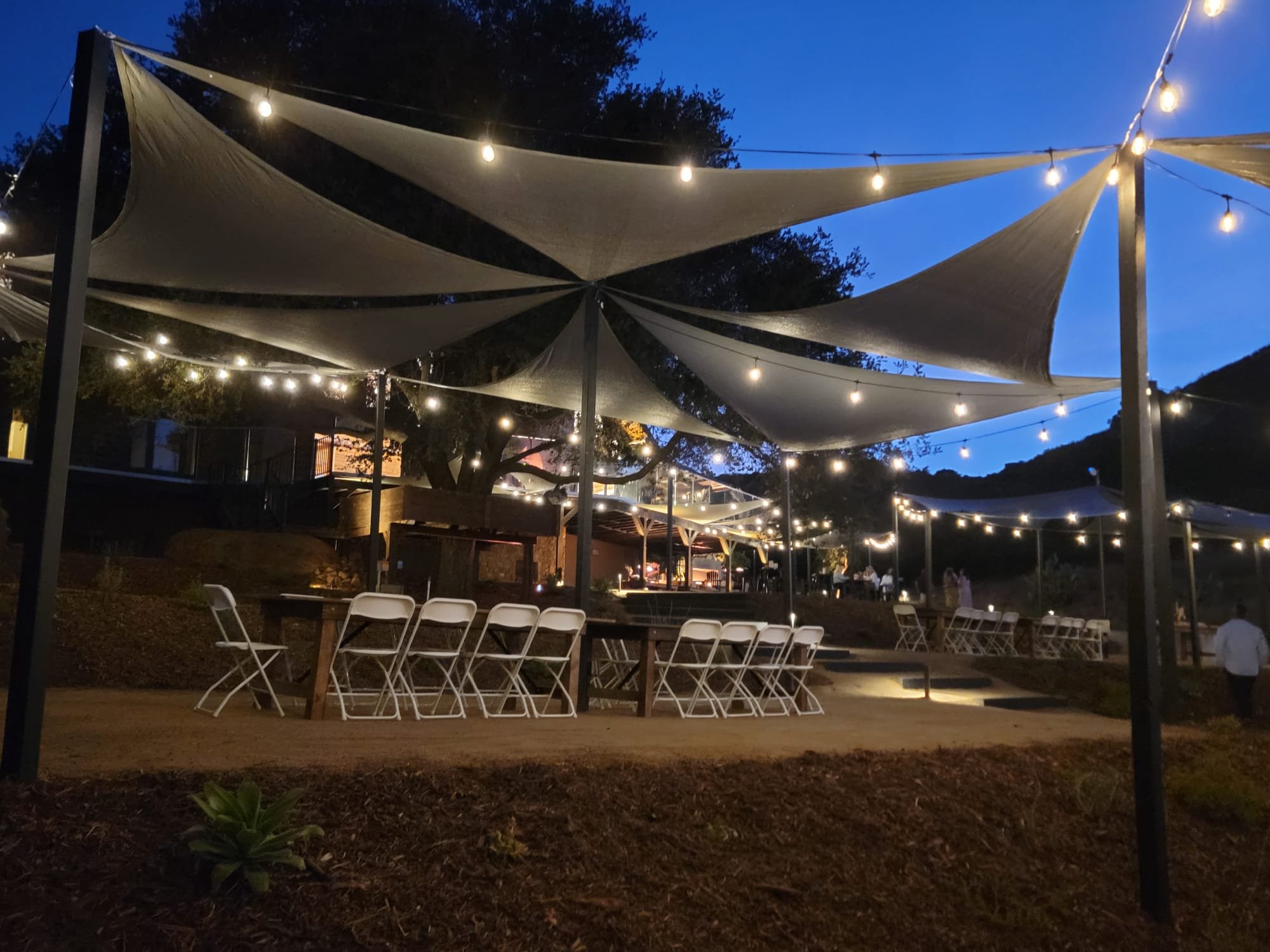
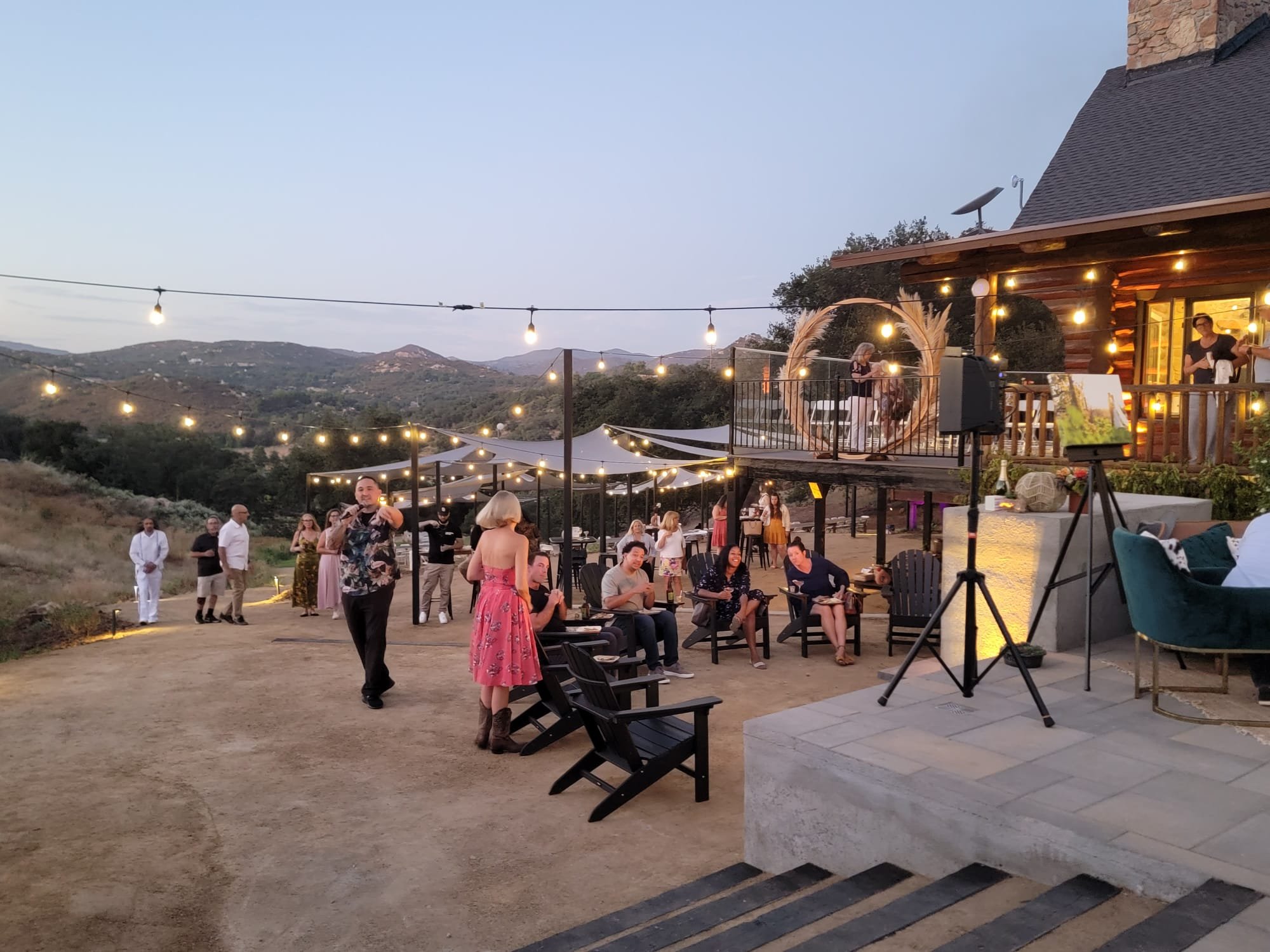
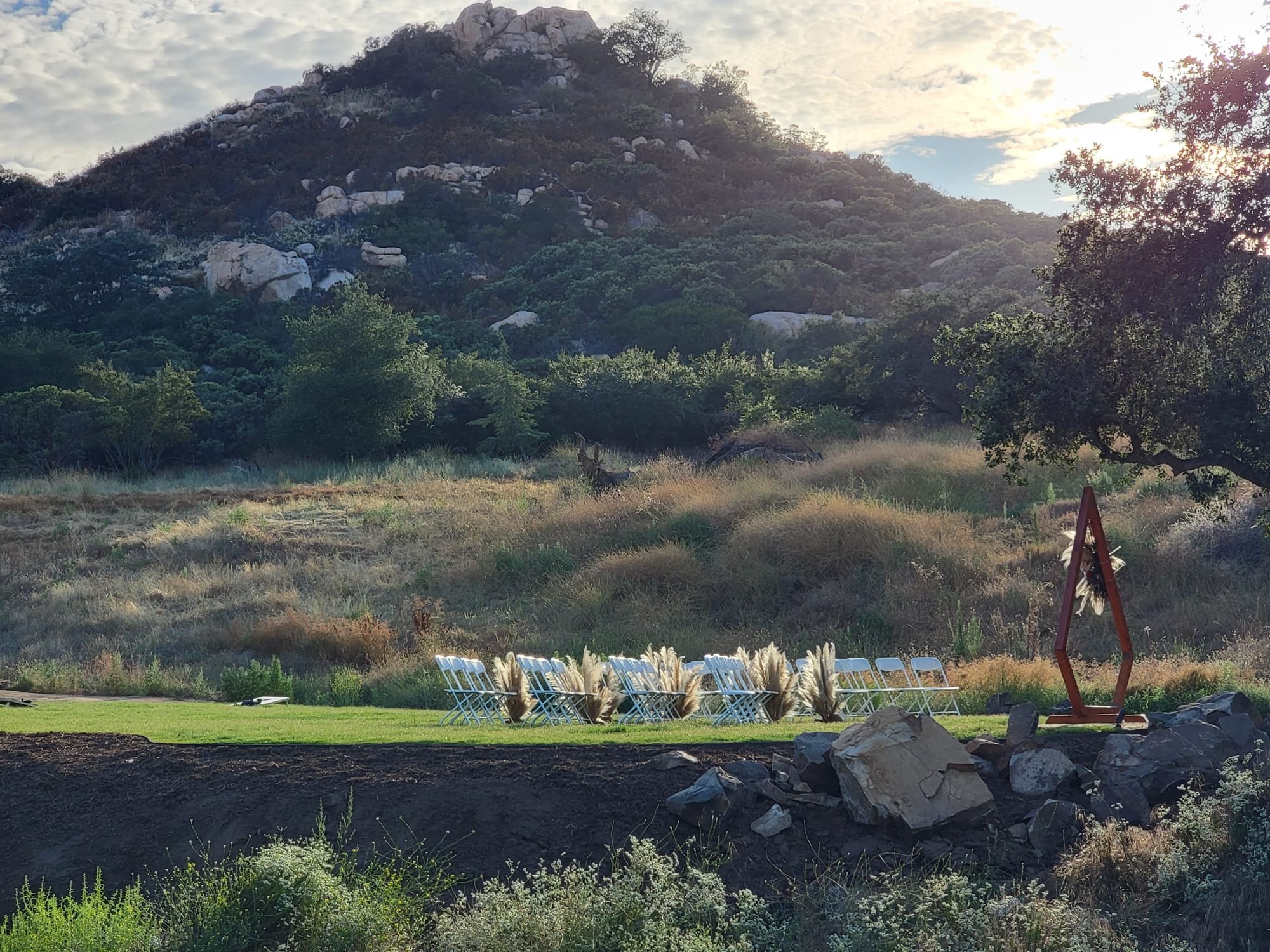
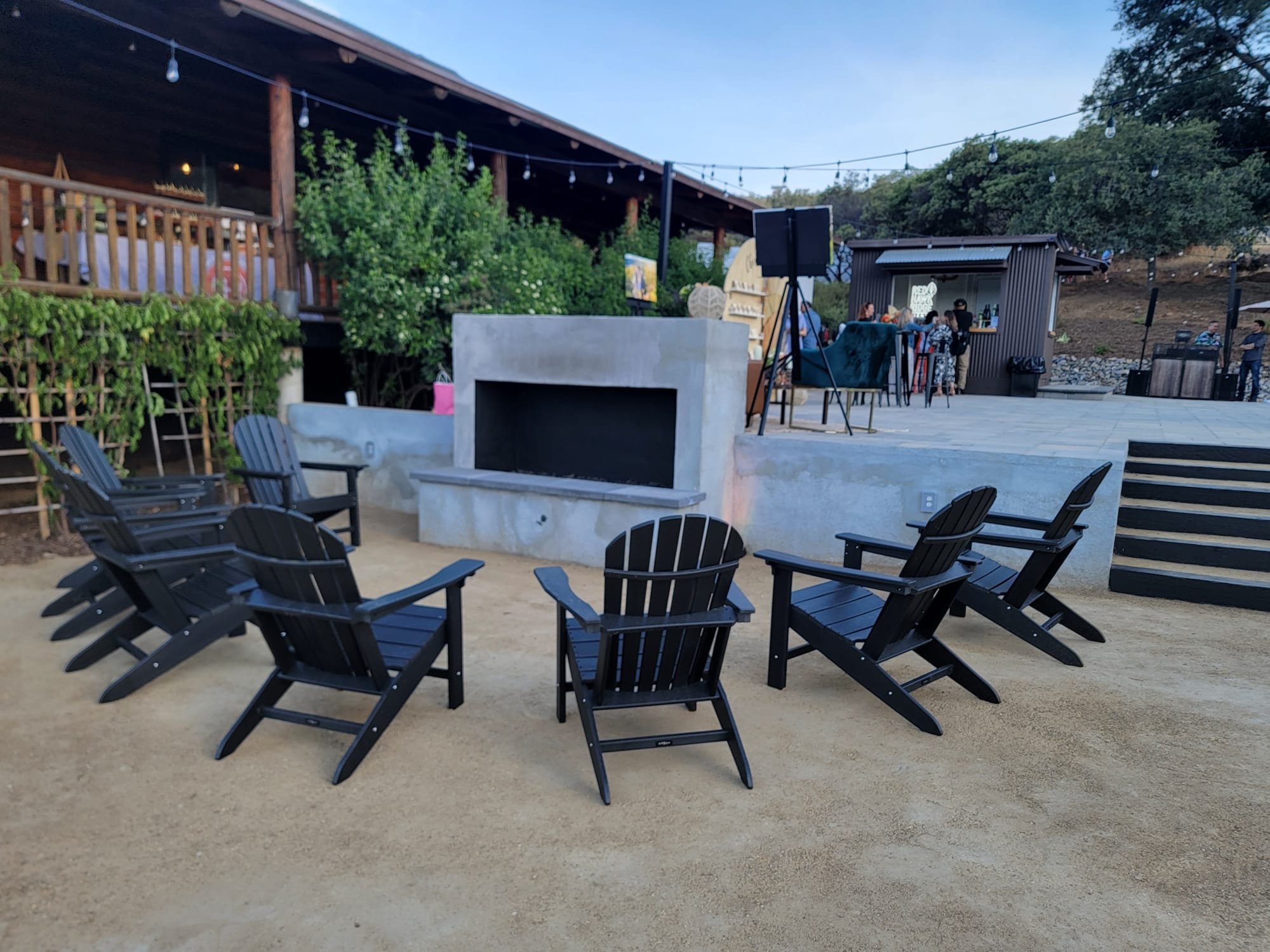
A wedding ceremony garden in Alpine, San Diego, blending contemporary design with Craftsman traditions. Designed as a living sanctuary for celebration, it combines timeless architecture, native planting, and open views at Red Hawk Ridge.
“A private estate transformed into a ceremonial landscape, blending California’s rugged beauty with timeless elegance for weddings and gatherings.”
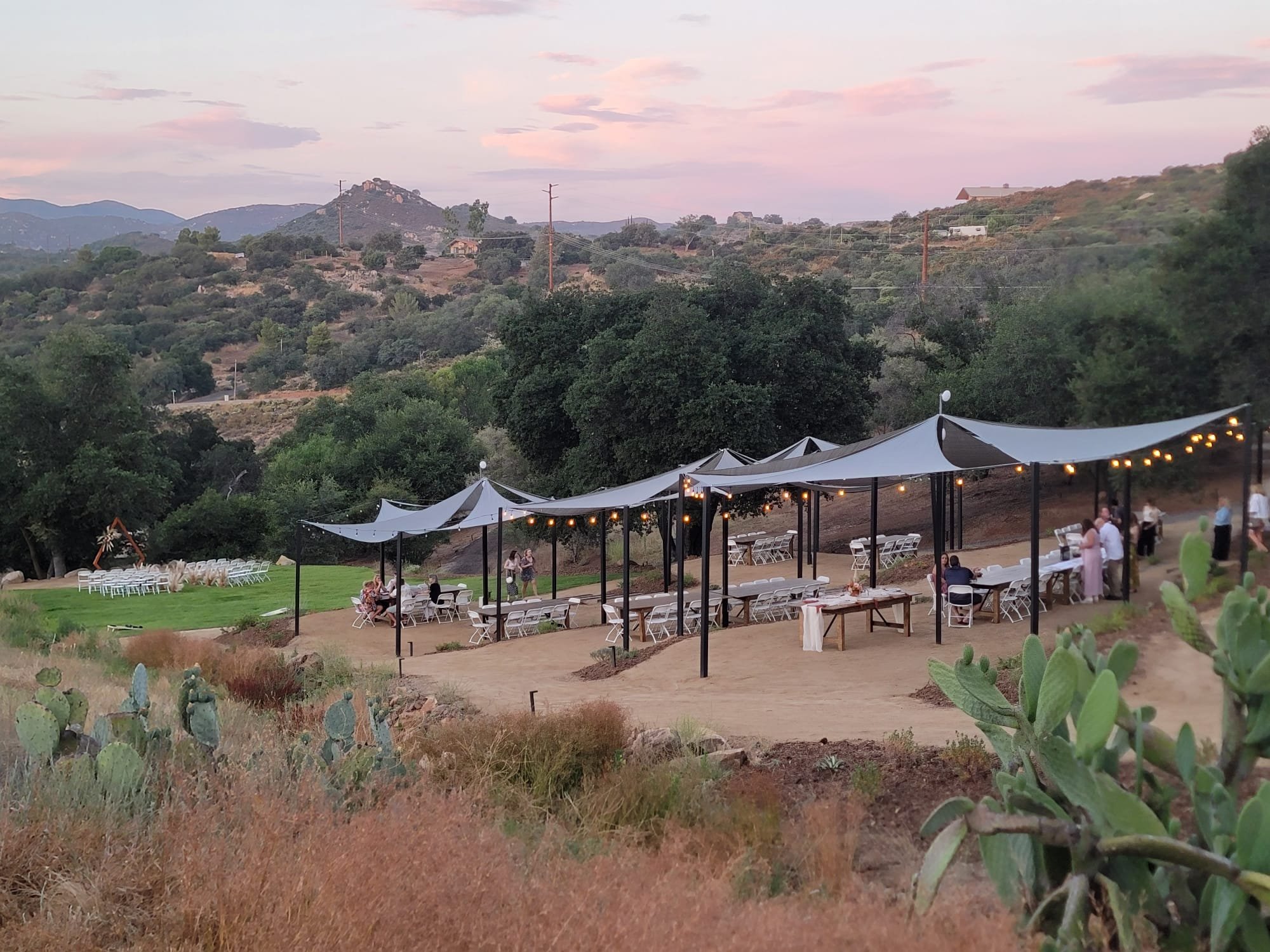
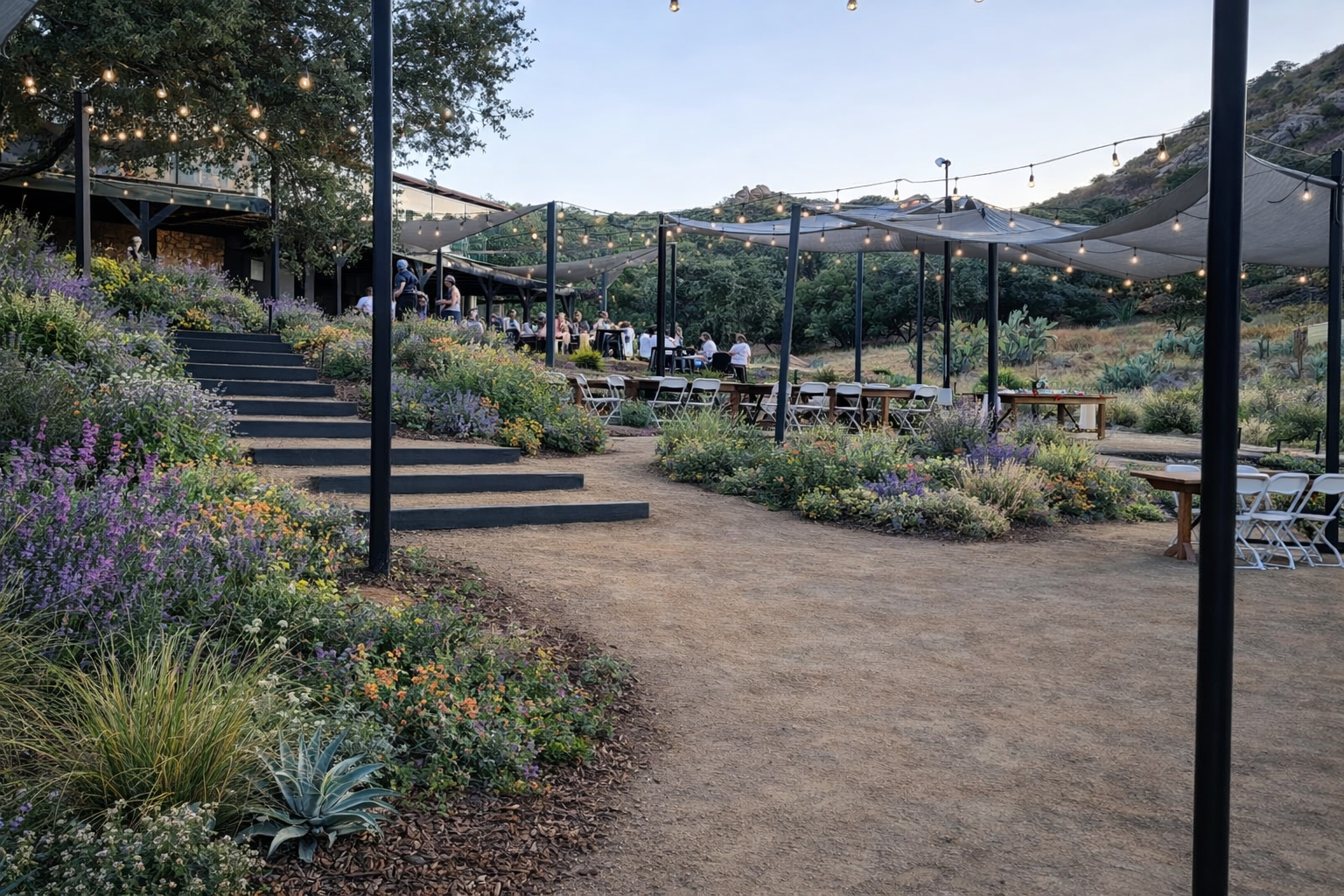
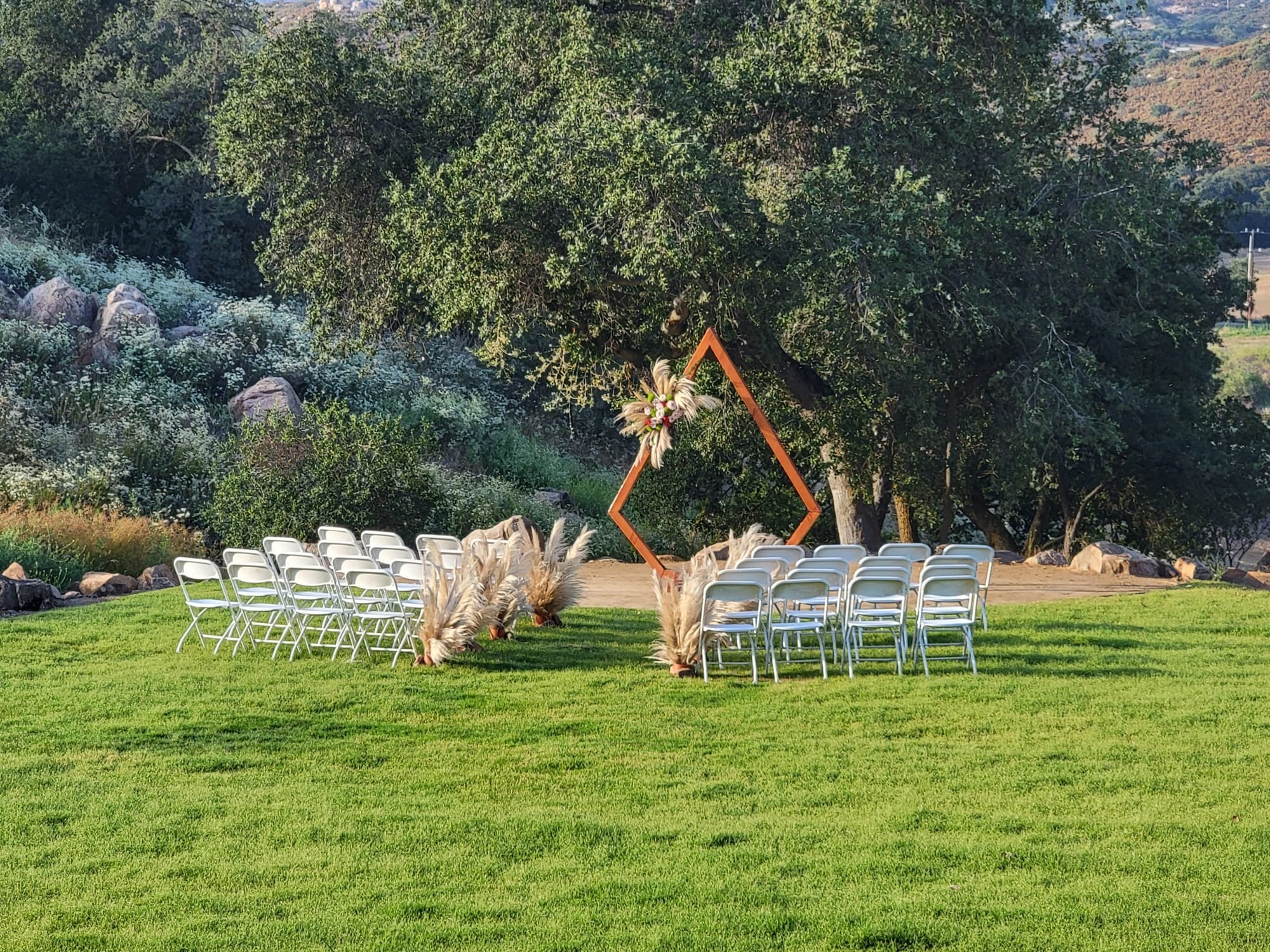
3D VIDEO CONCEPTUAL PRESENTATION
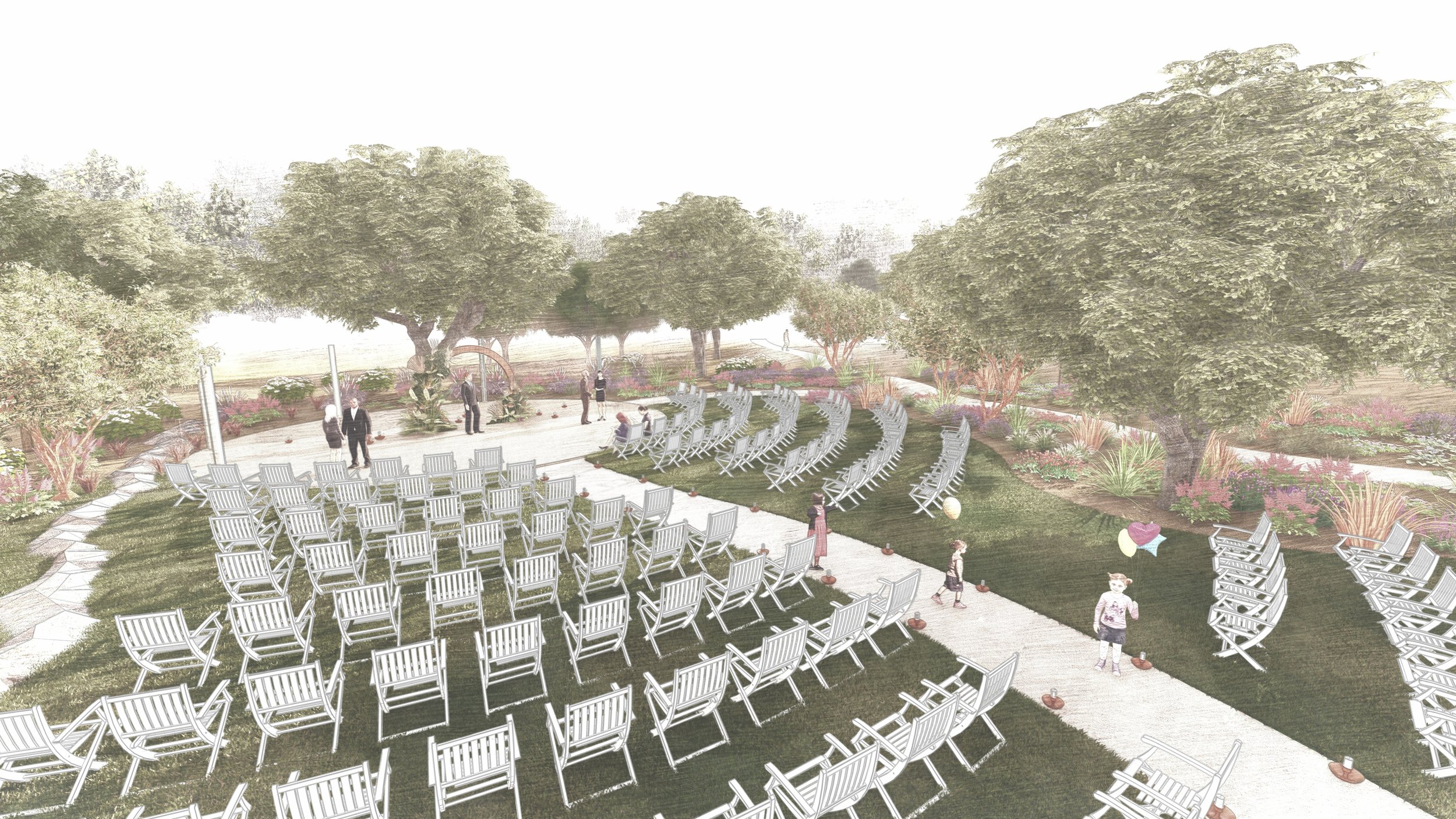
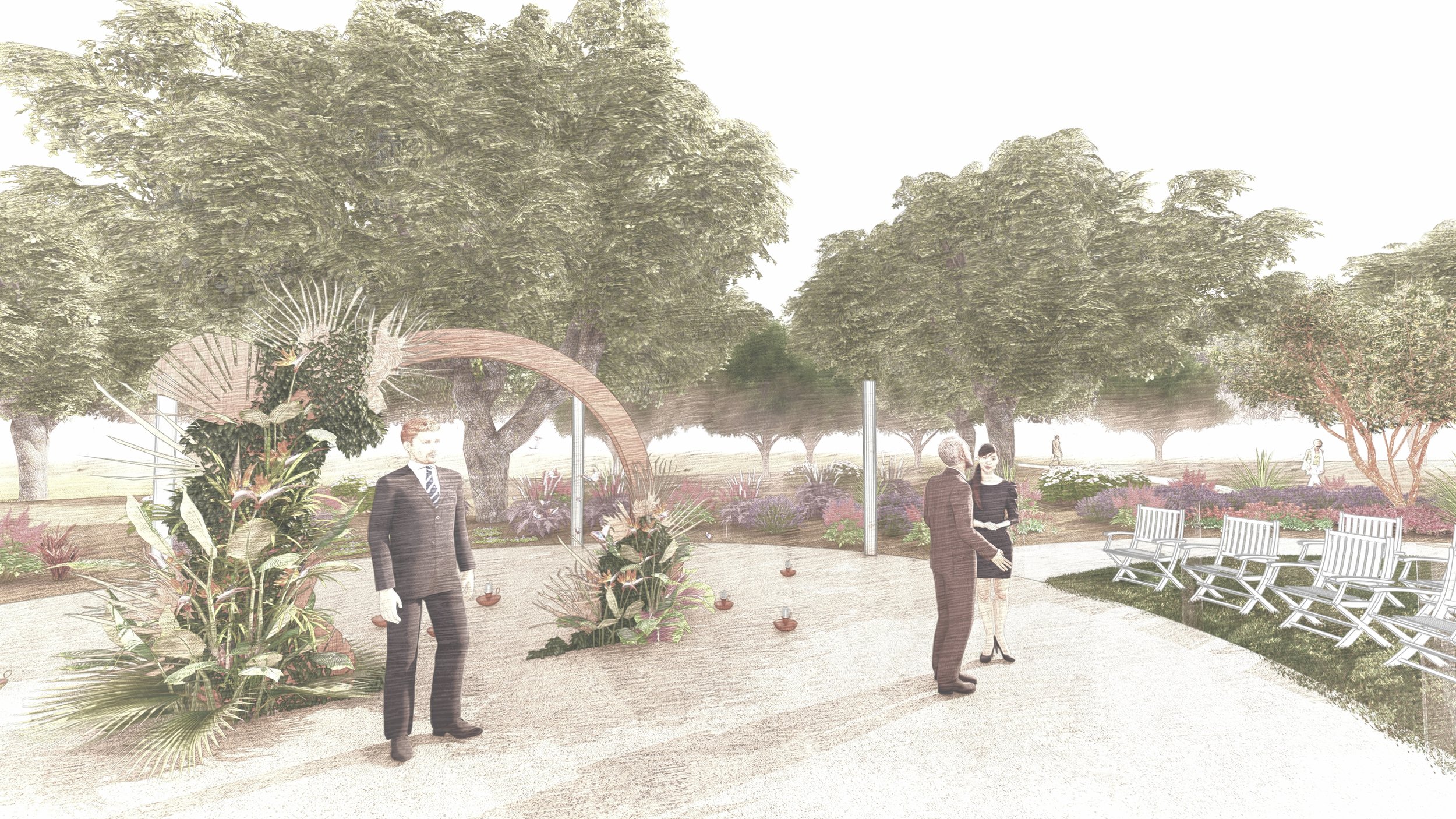
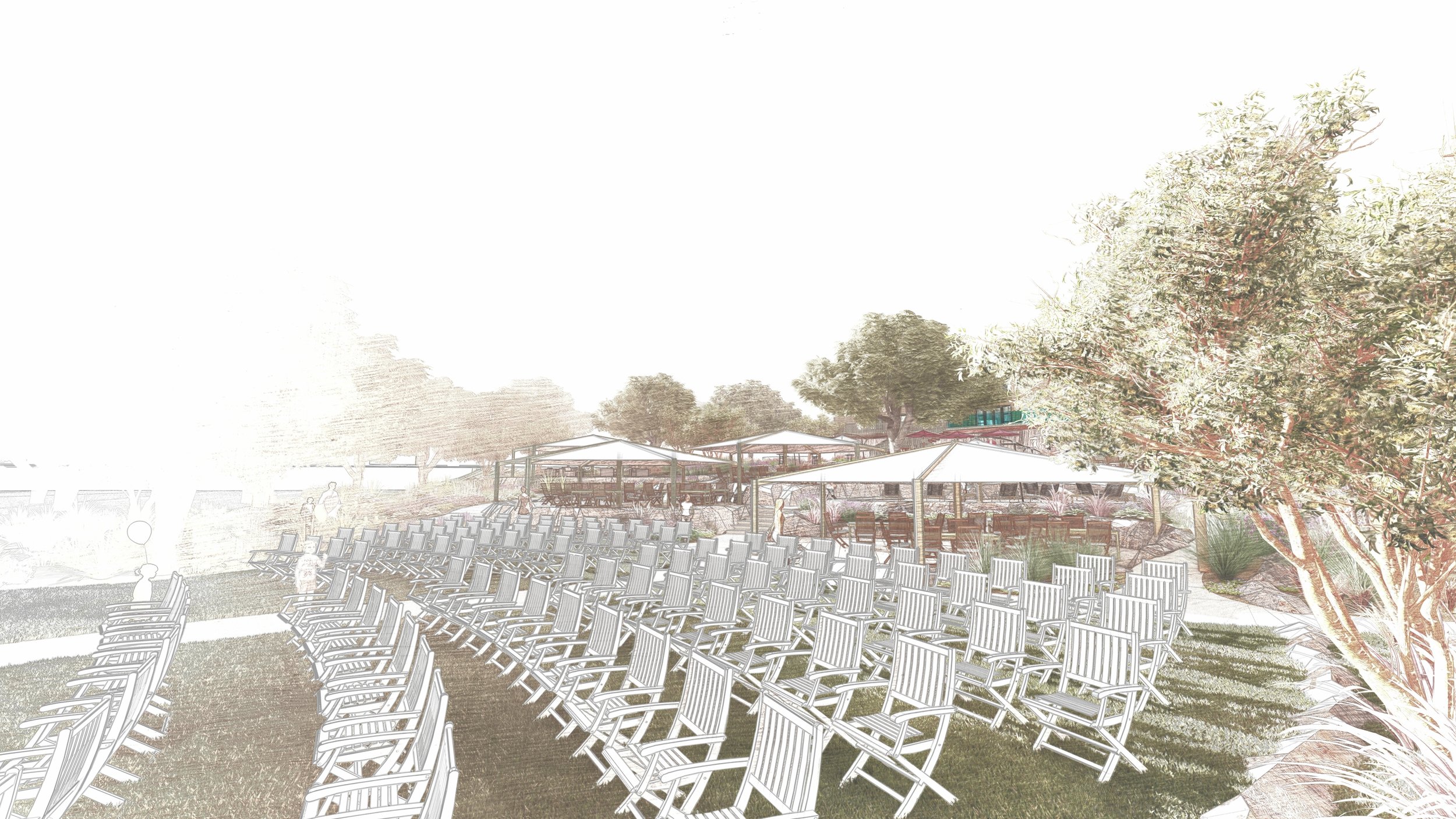
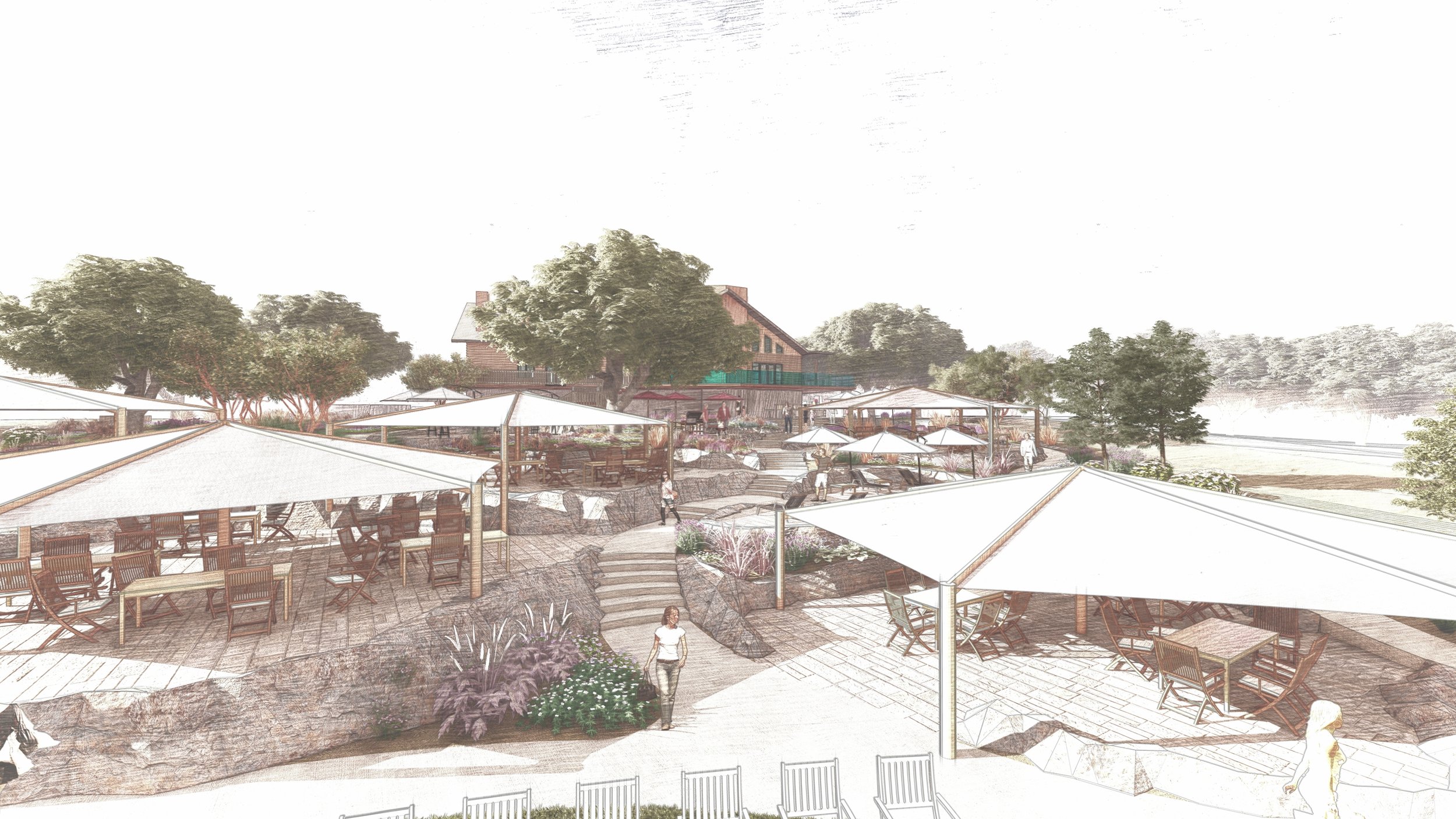
A short 3D film of LASD Studio’s landscape architectural design: Wedding Garden at Red Hawk Ridge in Alpine, a private estate transformed into a ceremonial and reception landscape. Featuring a wide ceremonial lawn, reception terraces, Mediterranean planting, and evening lighting, the garden offers a timeless setting for weddings and celebrations against the backdrop of San Diego’s mountains.
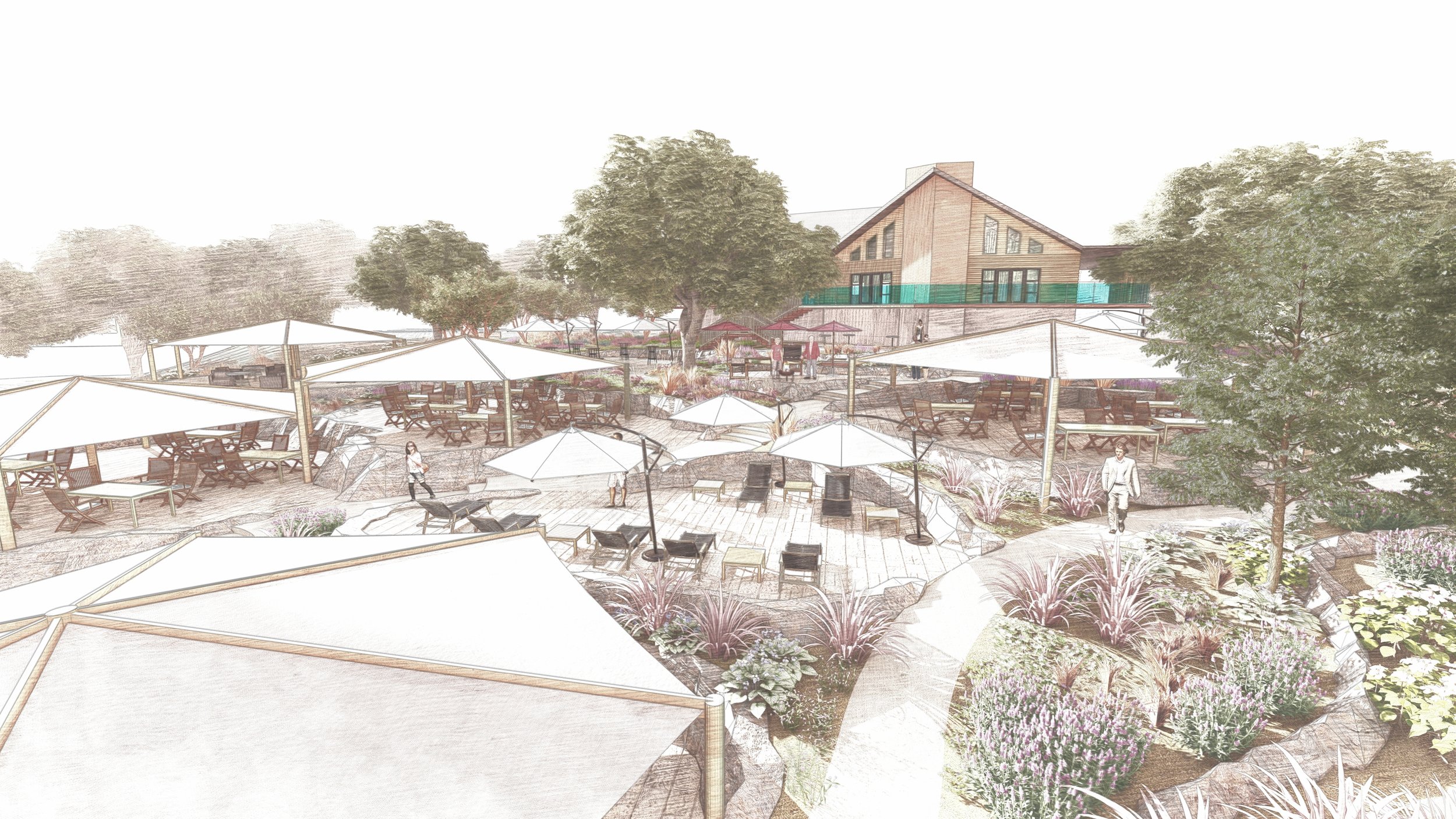
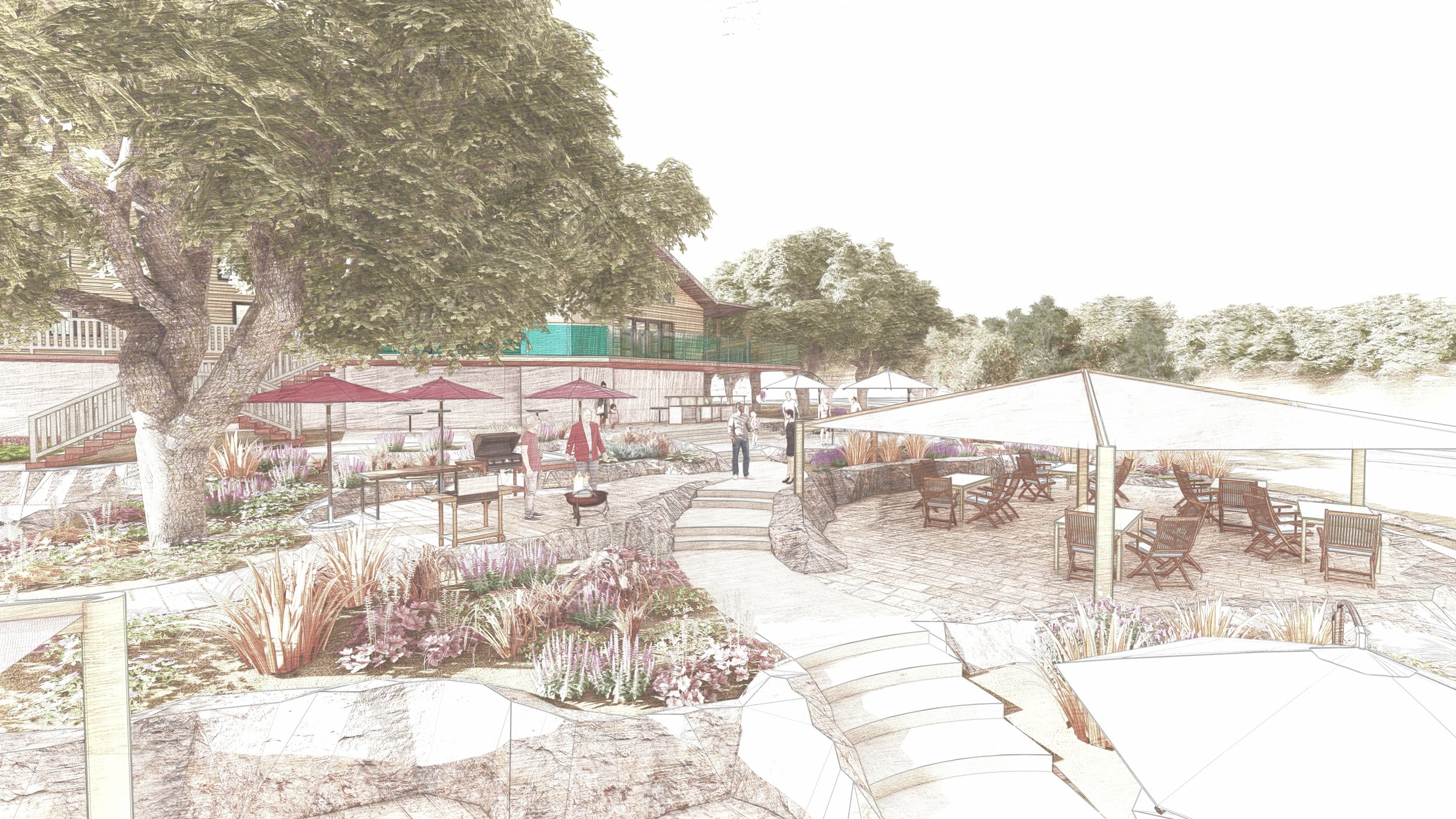
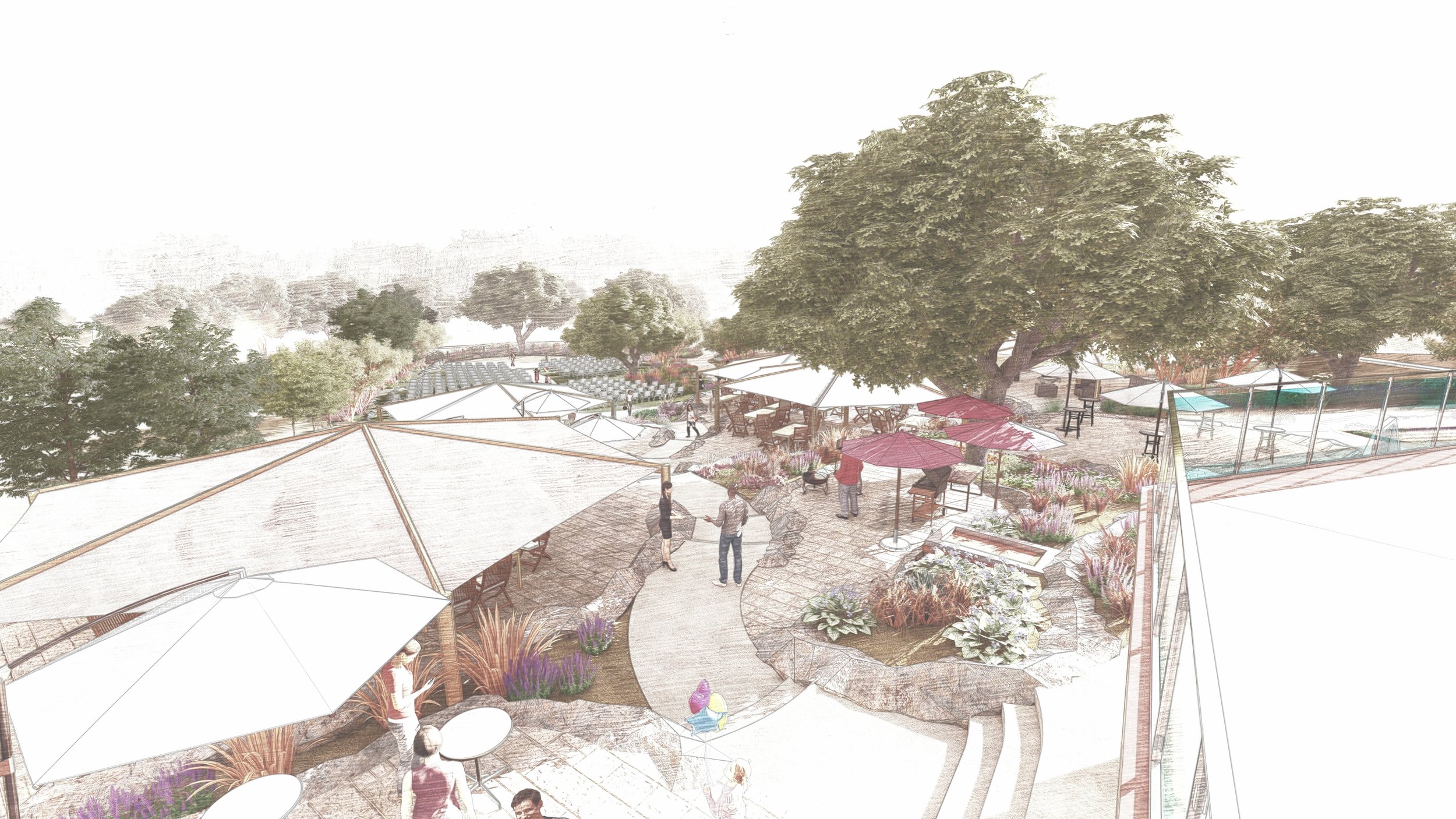
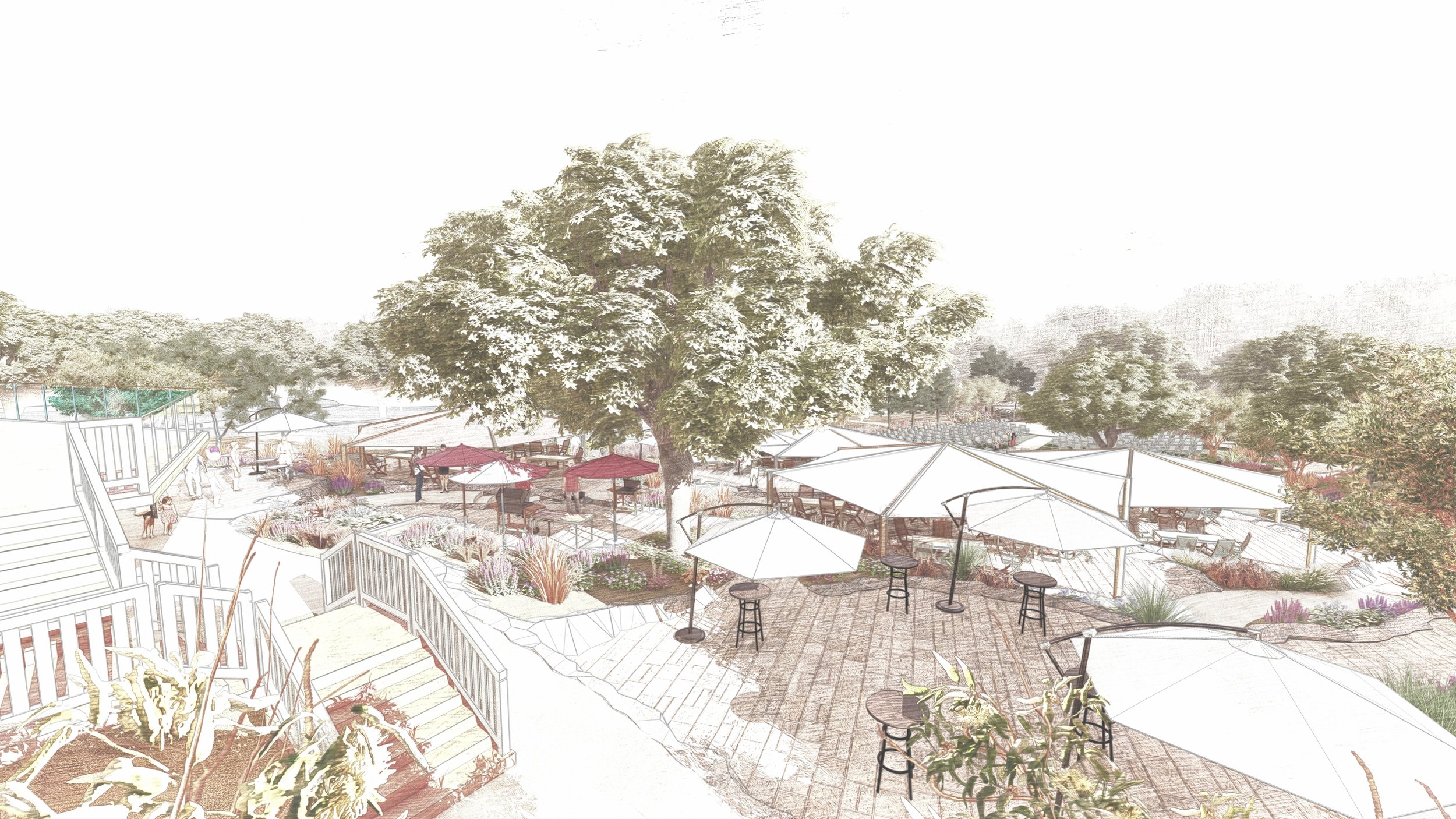
3D VISUALIZATION OF PROPOSED VENUE DESIGN
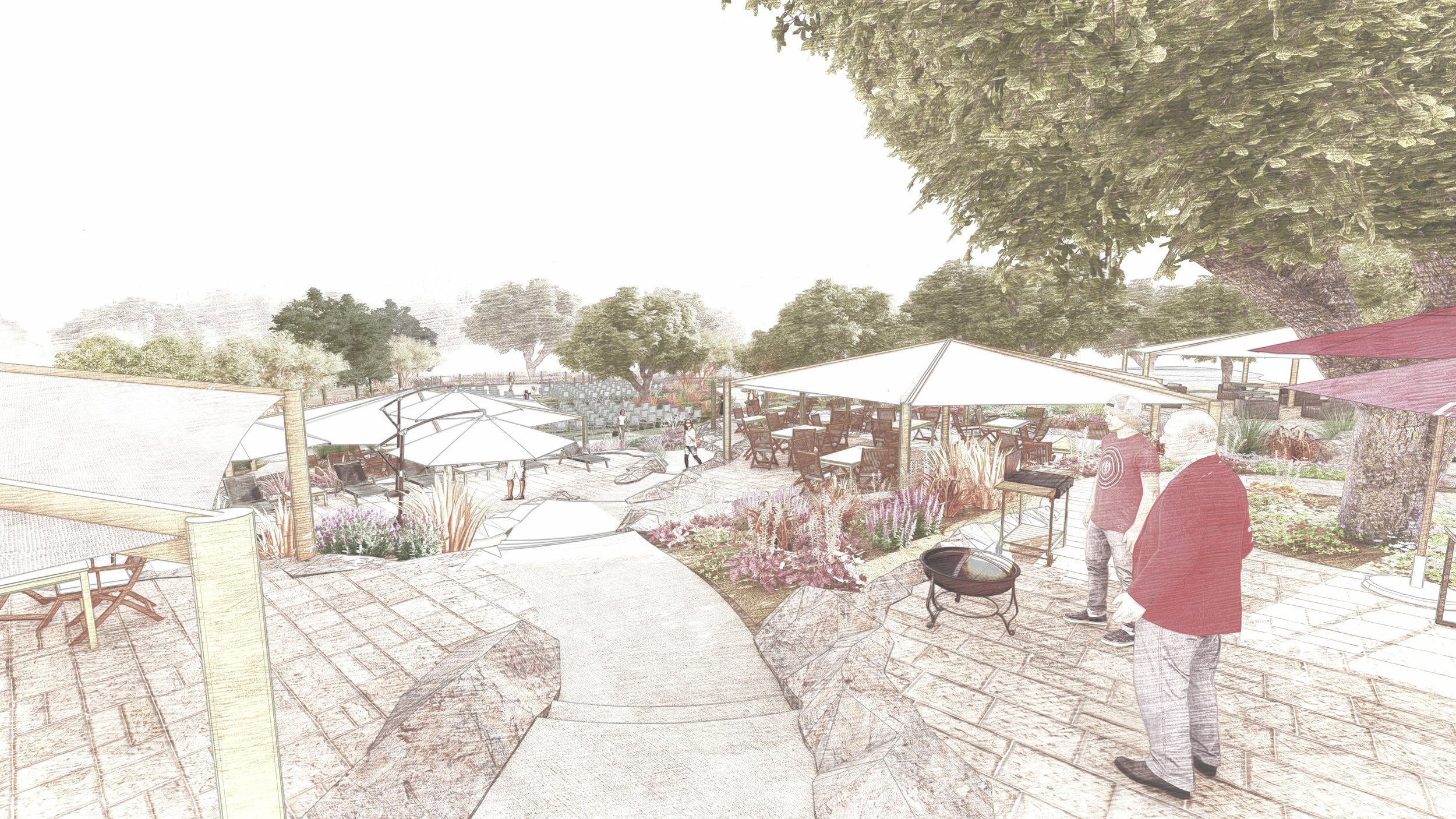
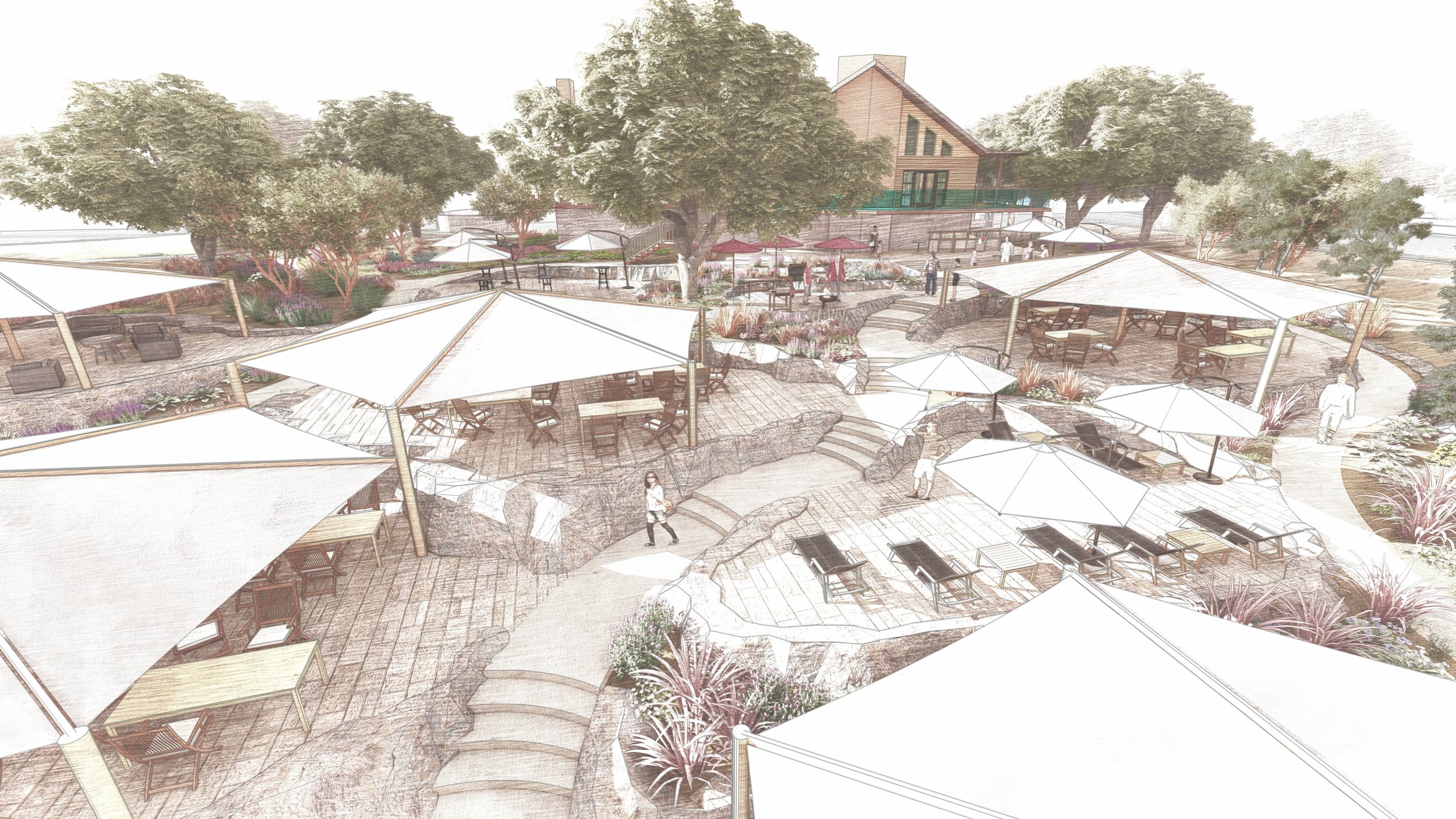
Design Concept
The garden was envisioned as a celebratory landscape - a place where architecture, planting, and open space frame life’s most important moments.
Ceremonial Lawn
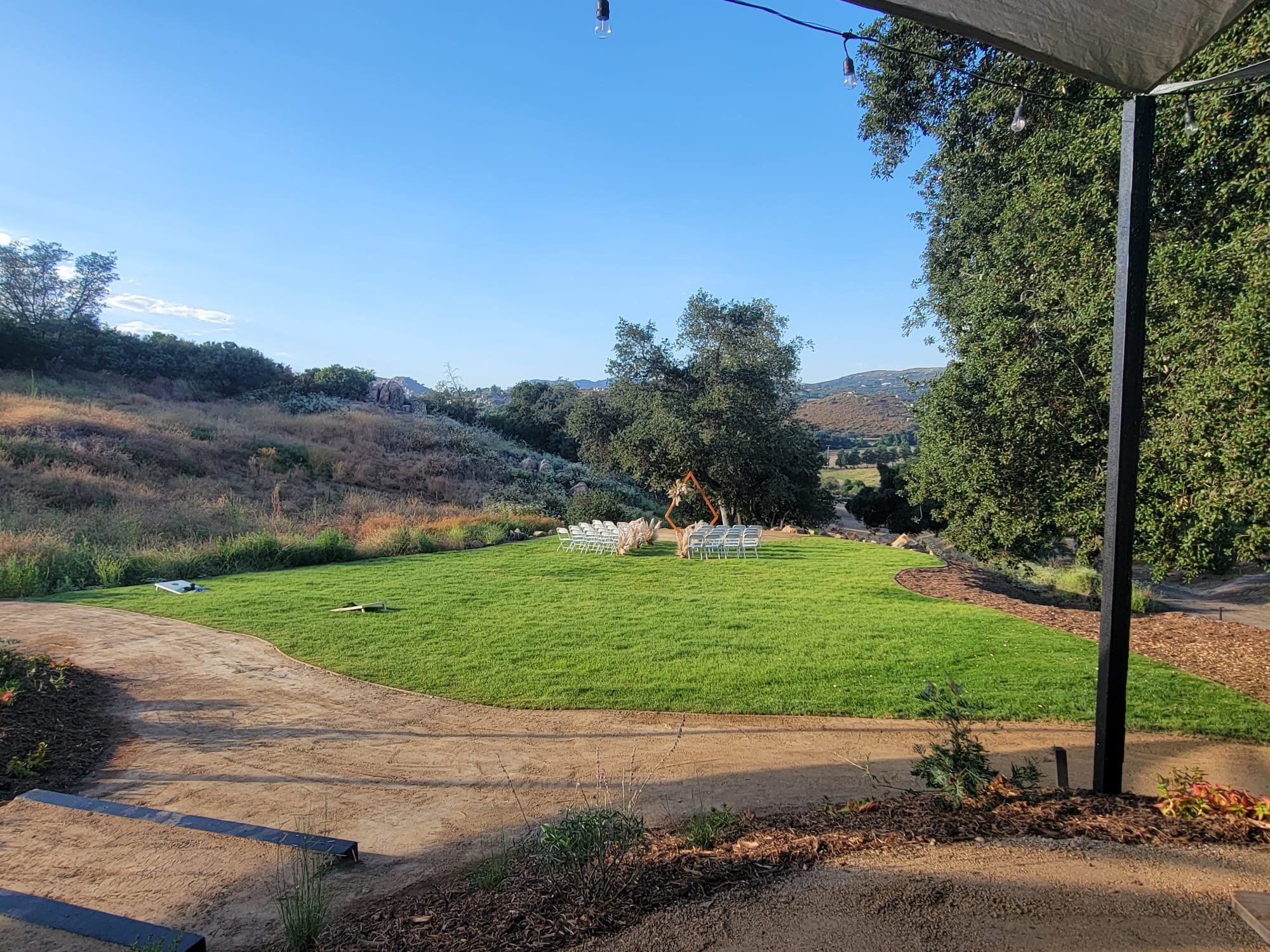
A wide, enclosed green framed with shrubs and trees creates a stage for weddings and events, offering views of the surrounding mountains.
Reception Terraces
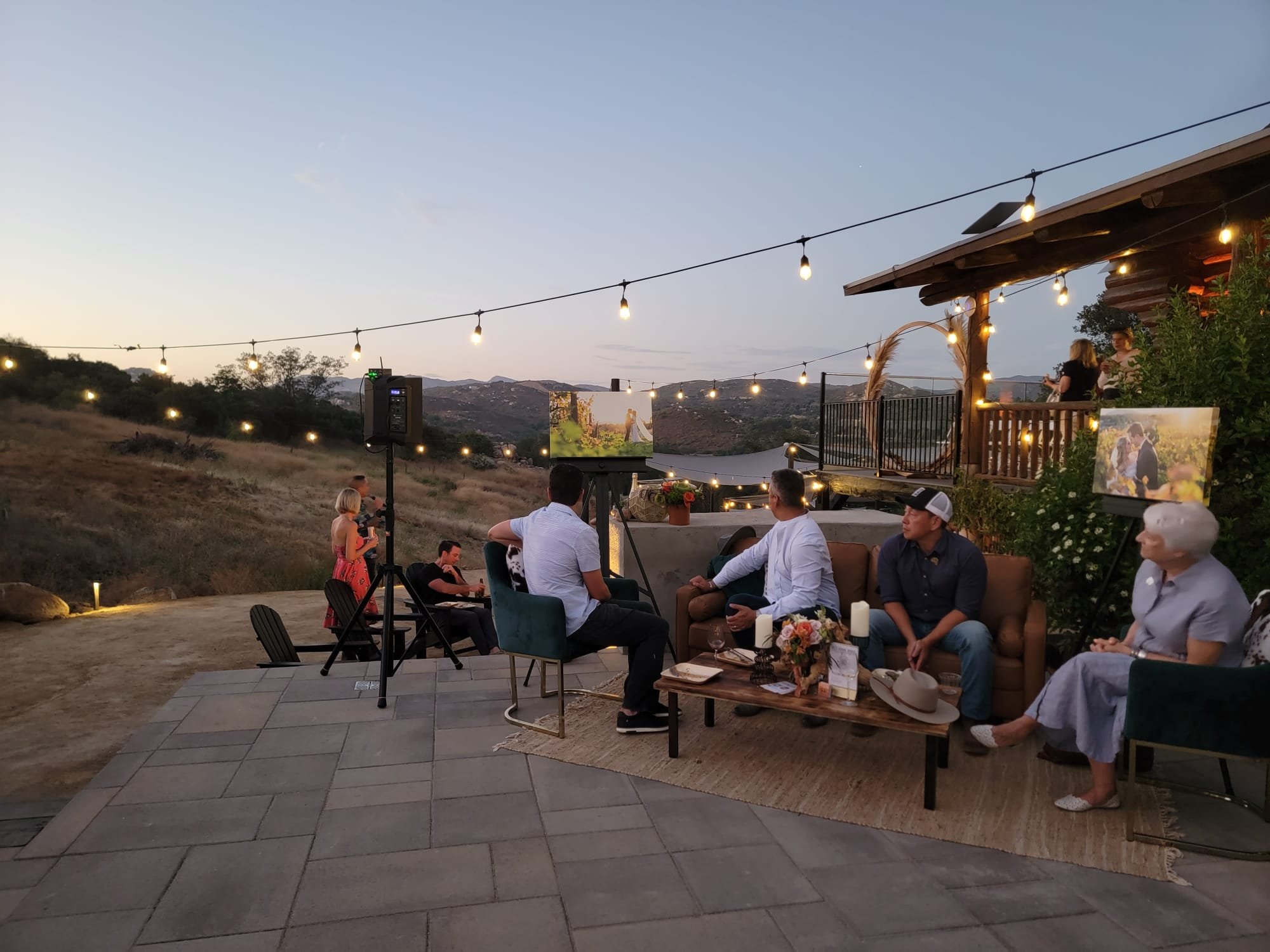
Generous terraces provide flexible areas for dining, dancing, and gathering, designed to accommodate both intimate and large celebrations.
Planting Palette
Native California plants mix with Mediterranean perennials and roses, ensuring year-round beauty, fragrance, and resilience.
Evening Ambience
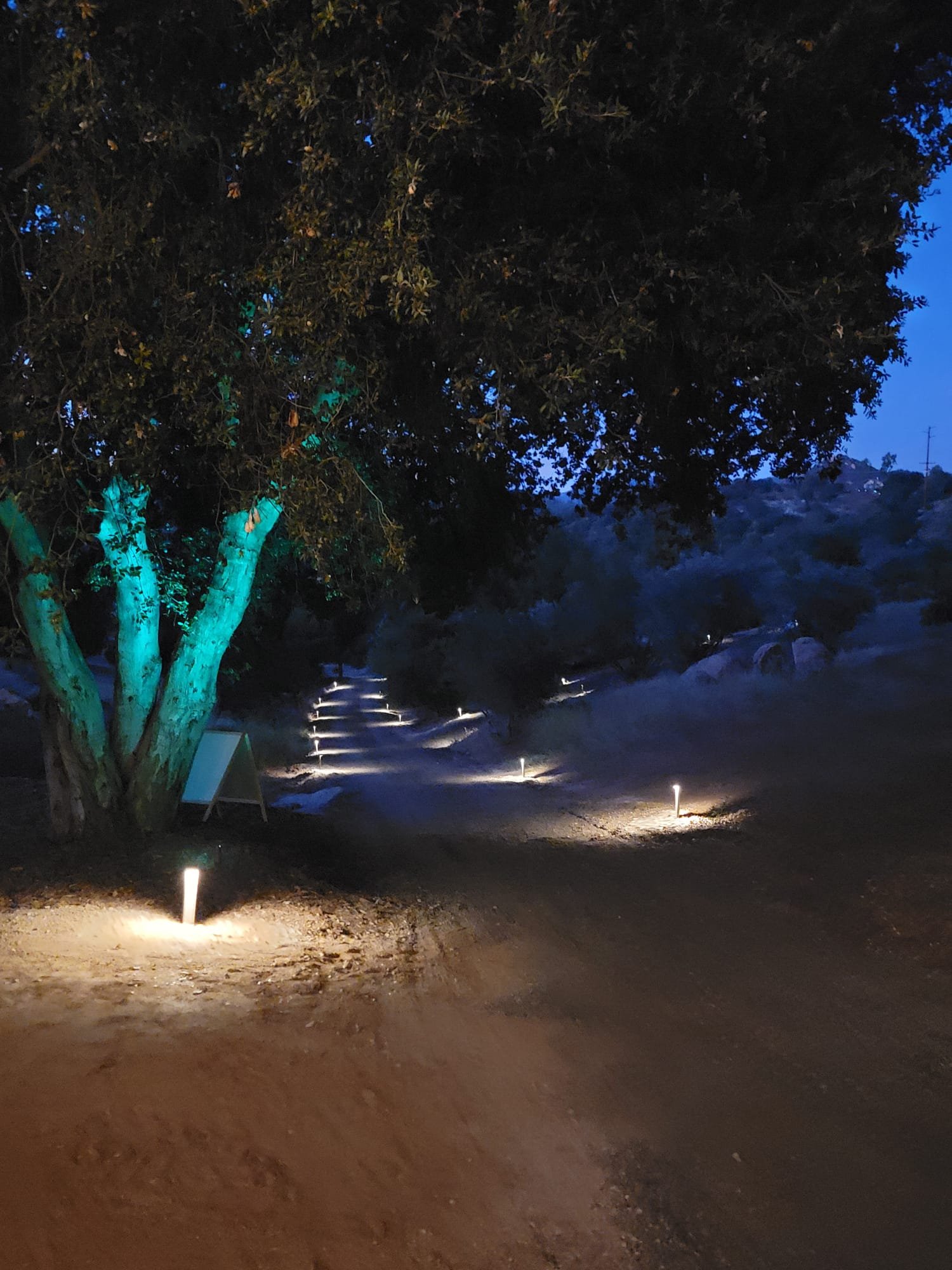
Subtle lighting transforms the garden into a romantic night setting, with illuminated pathways, trees, and terraces creating a magical experience.
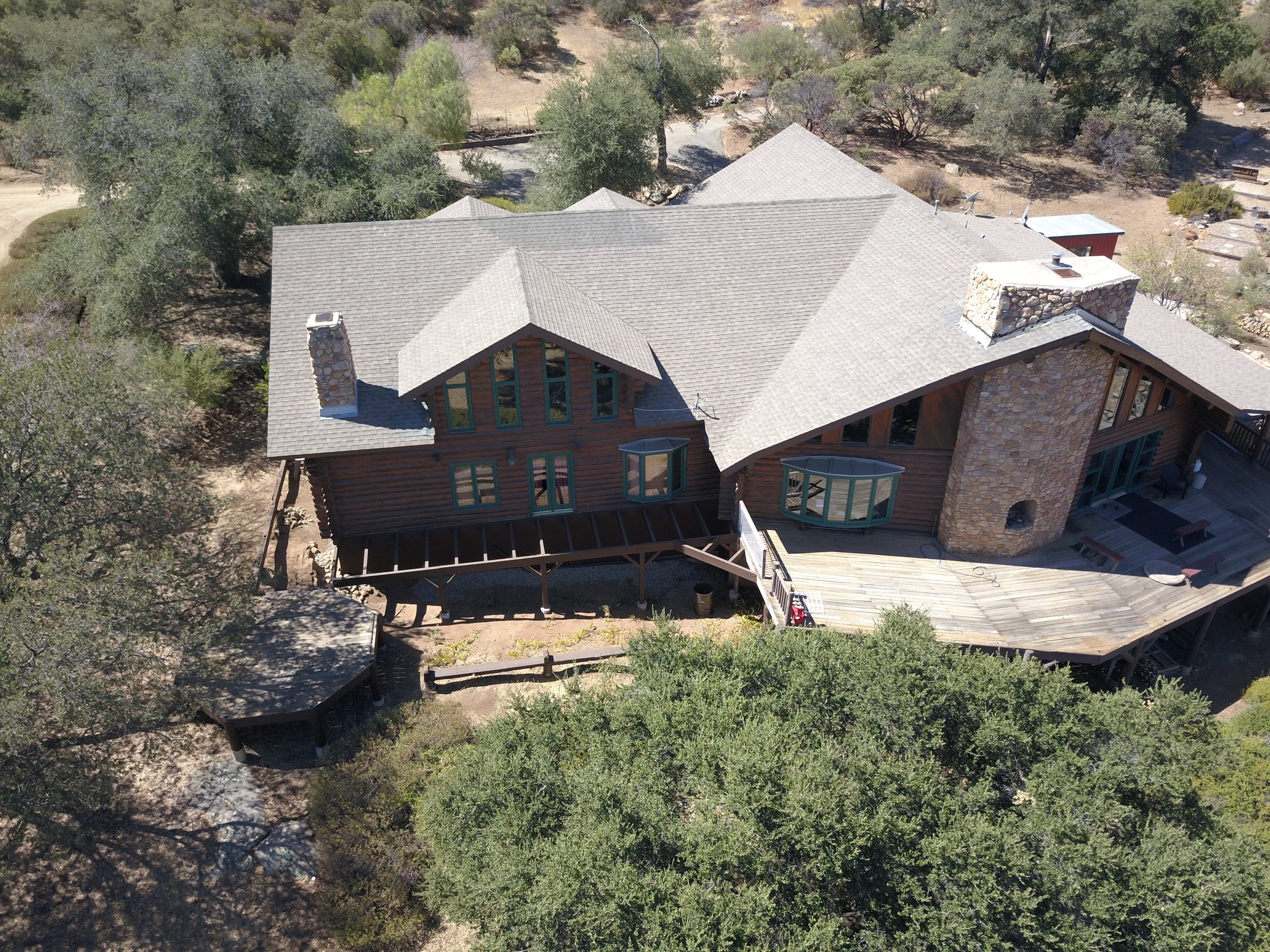
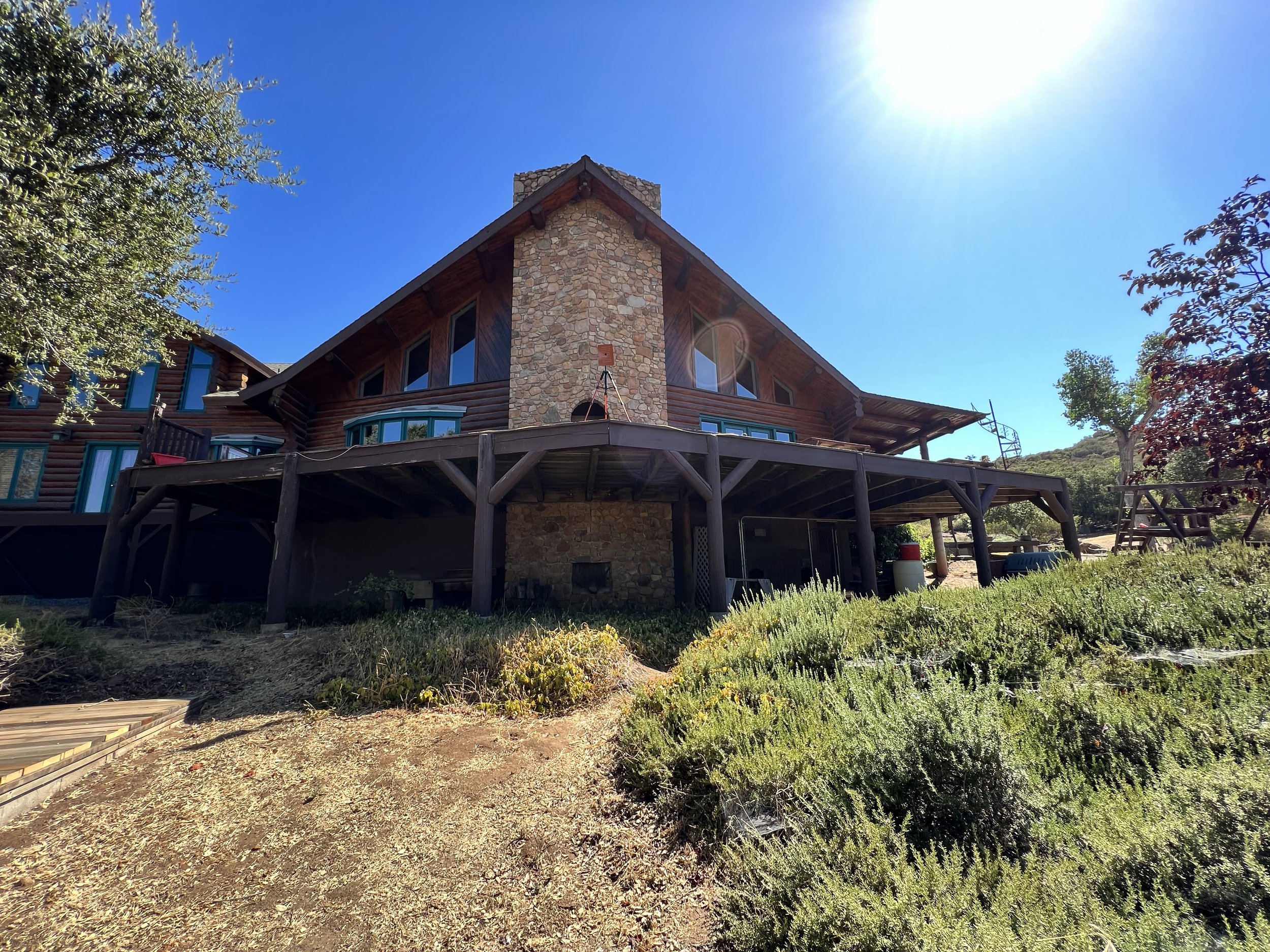
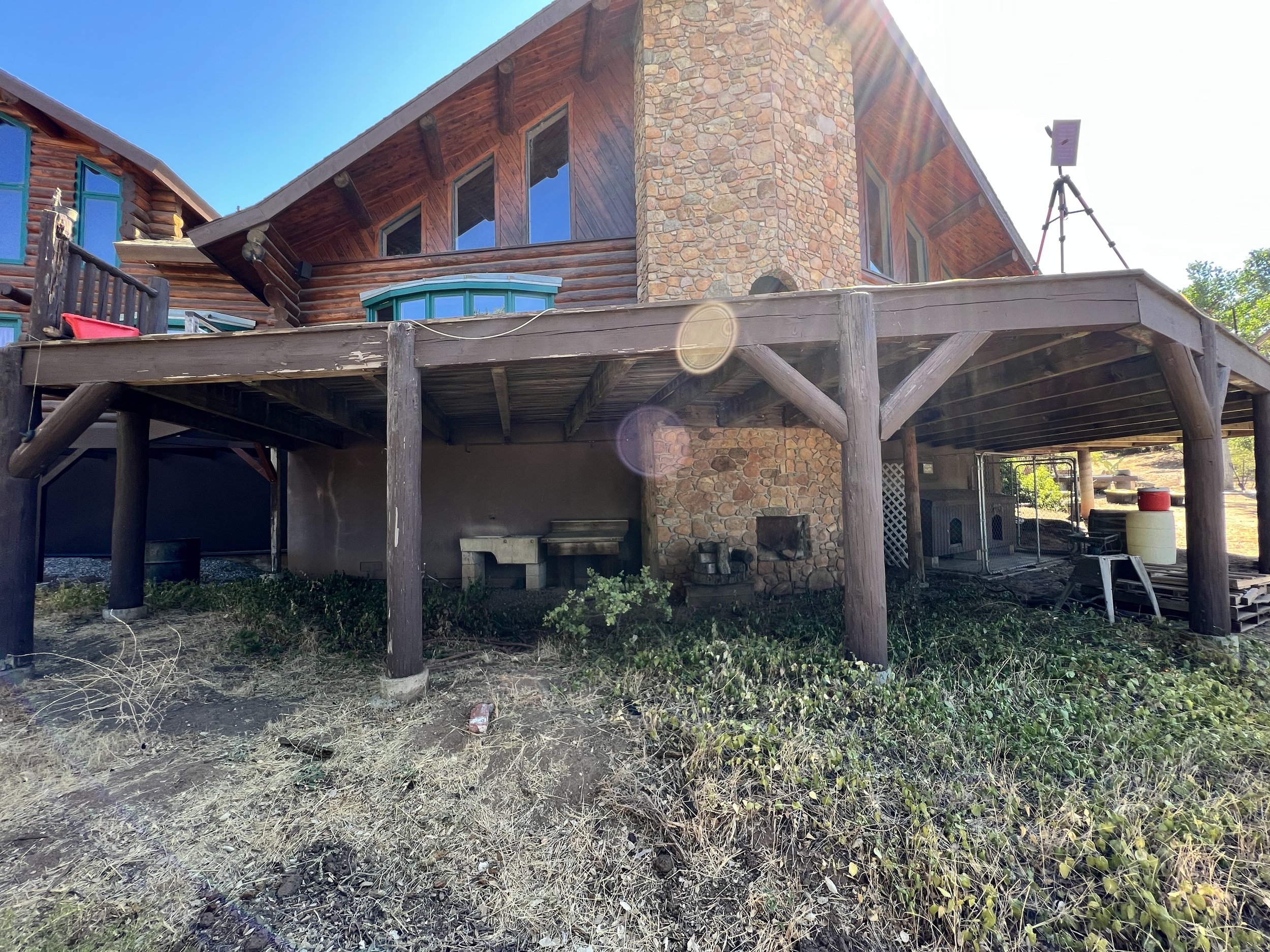
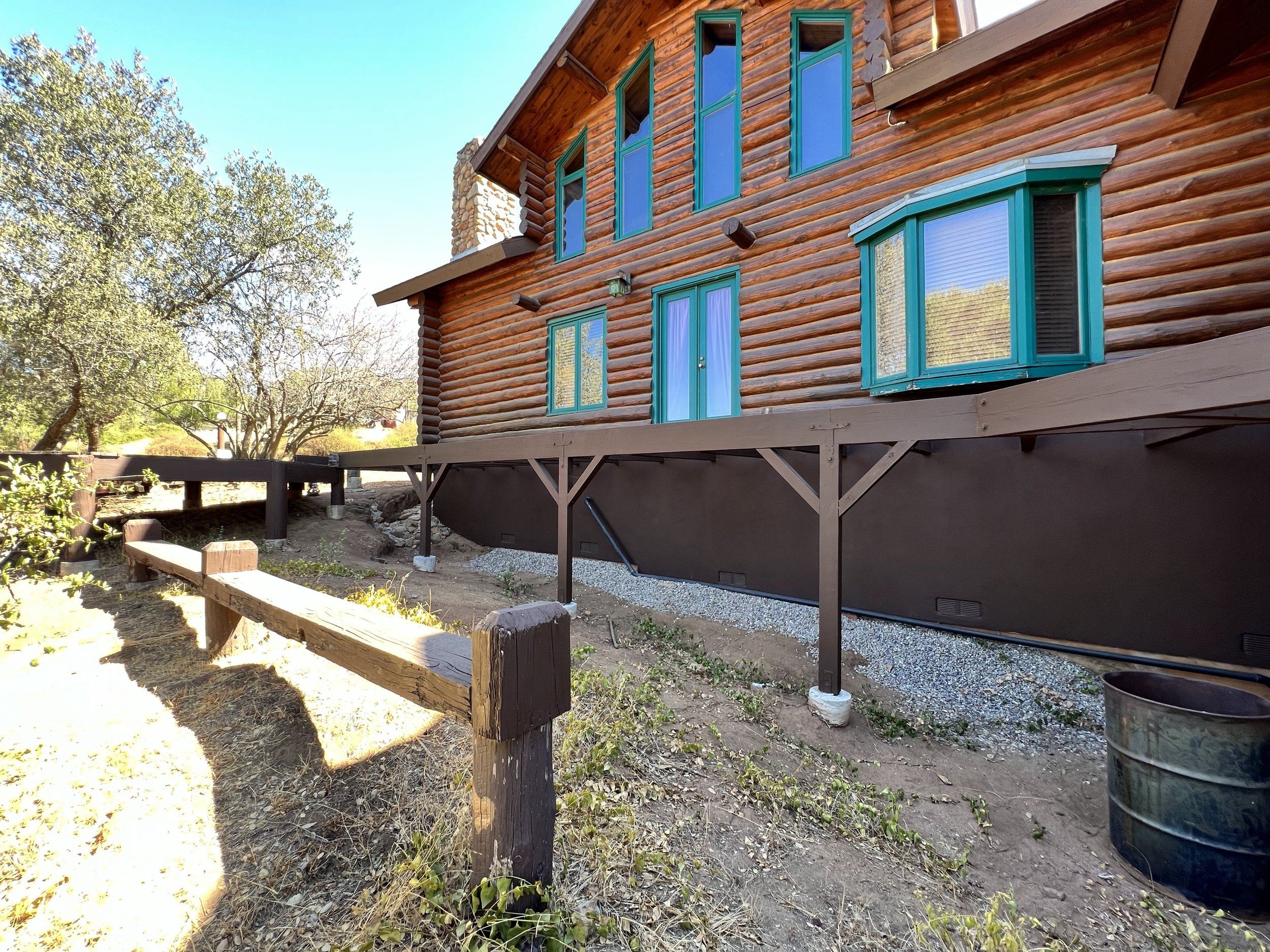
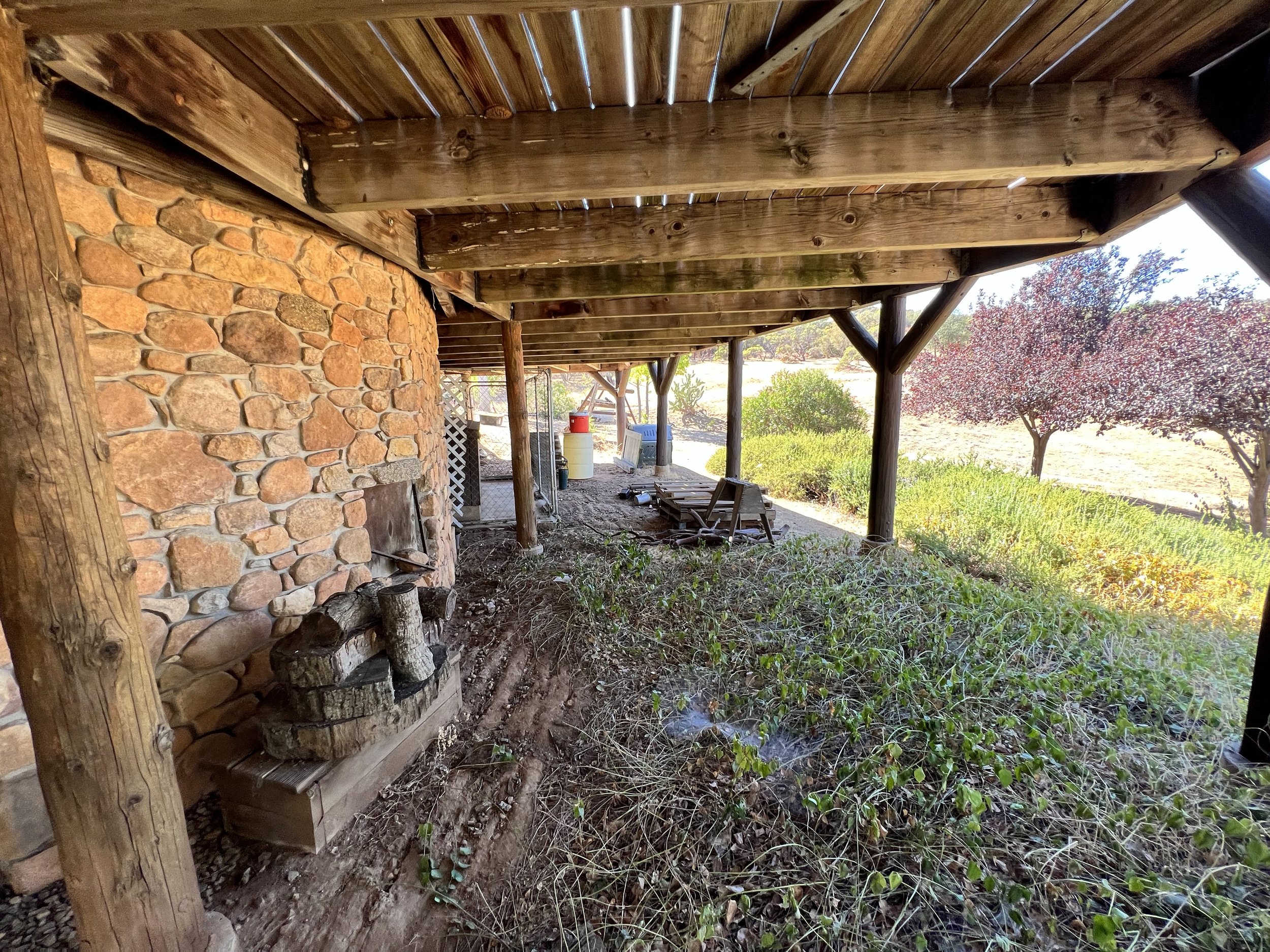
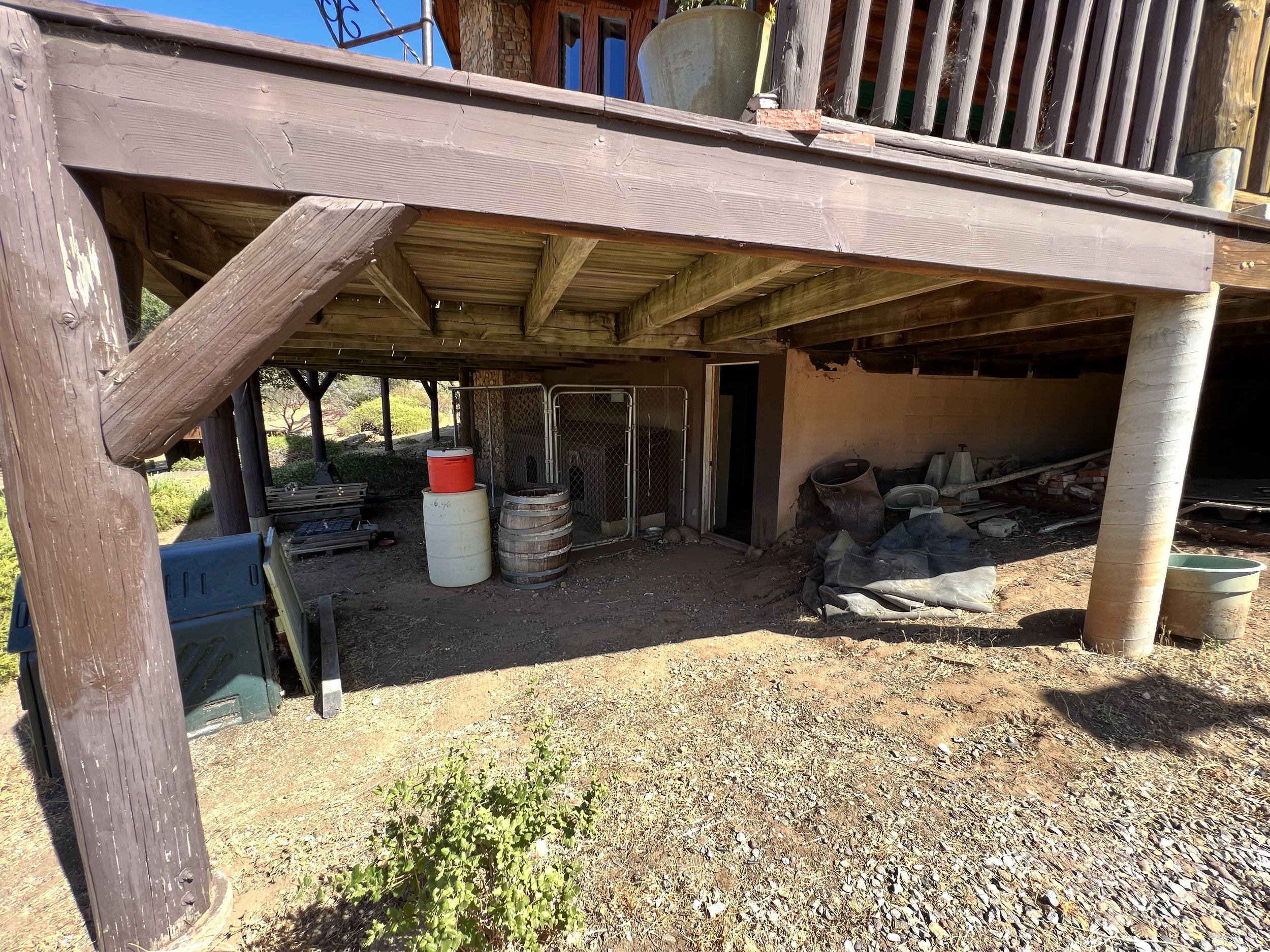
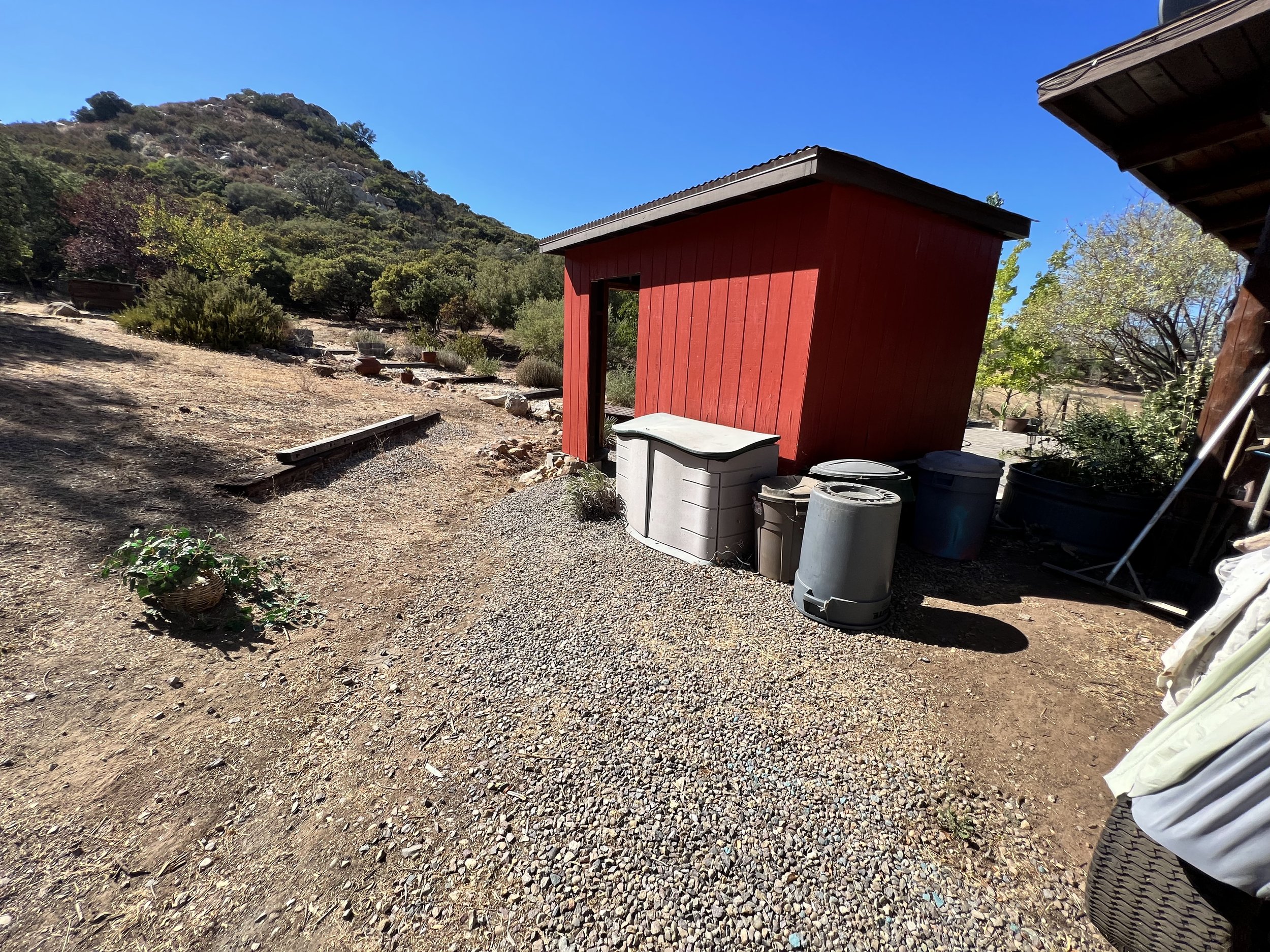
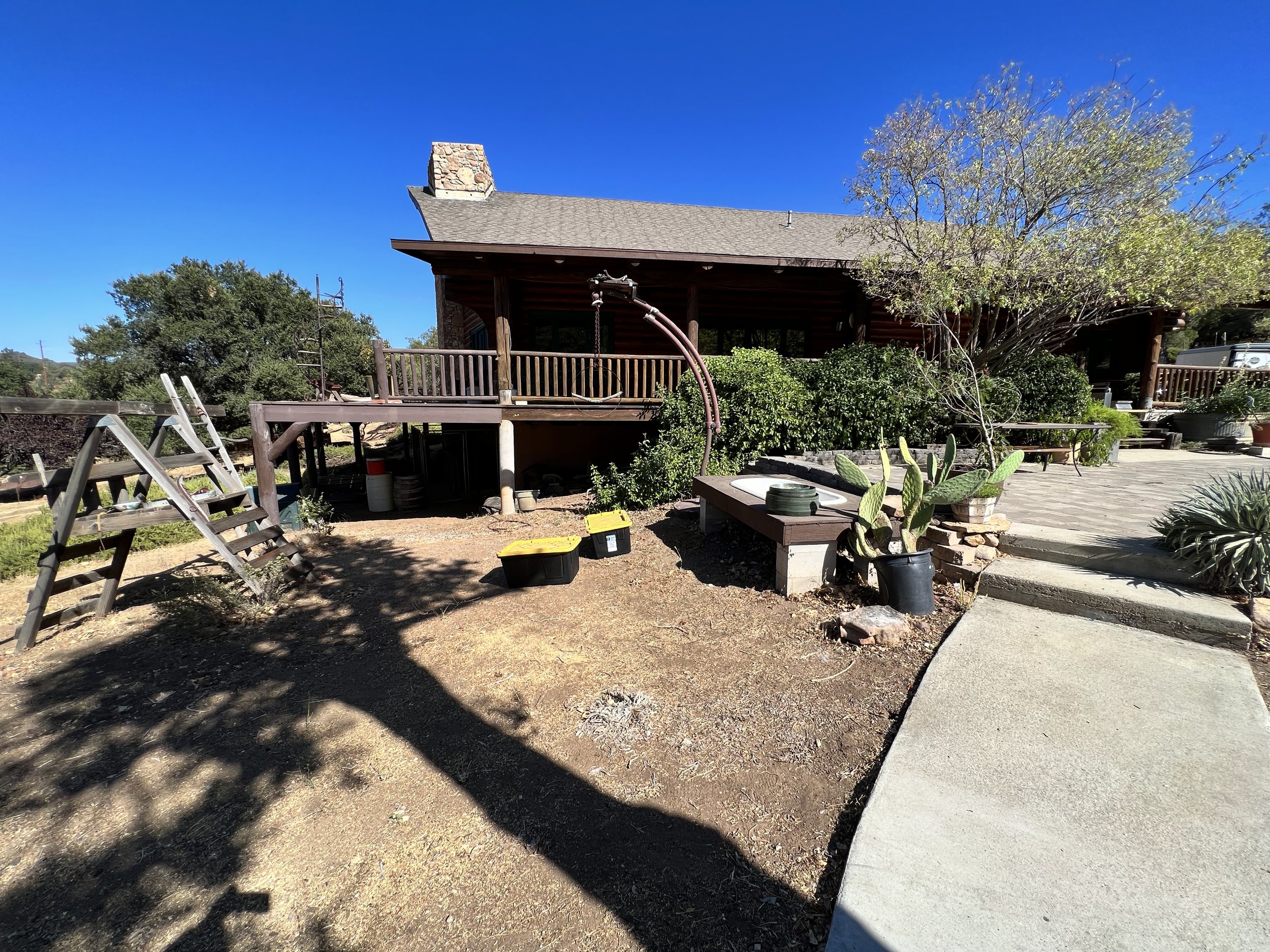
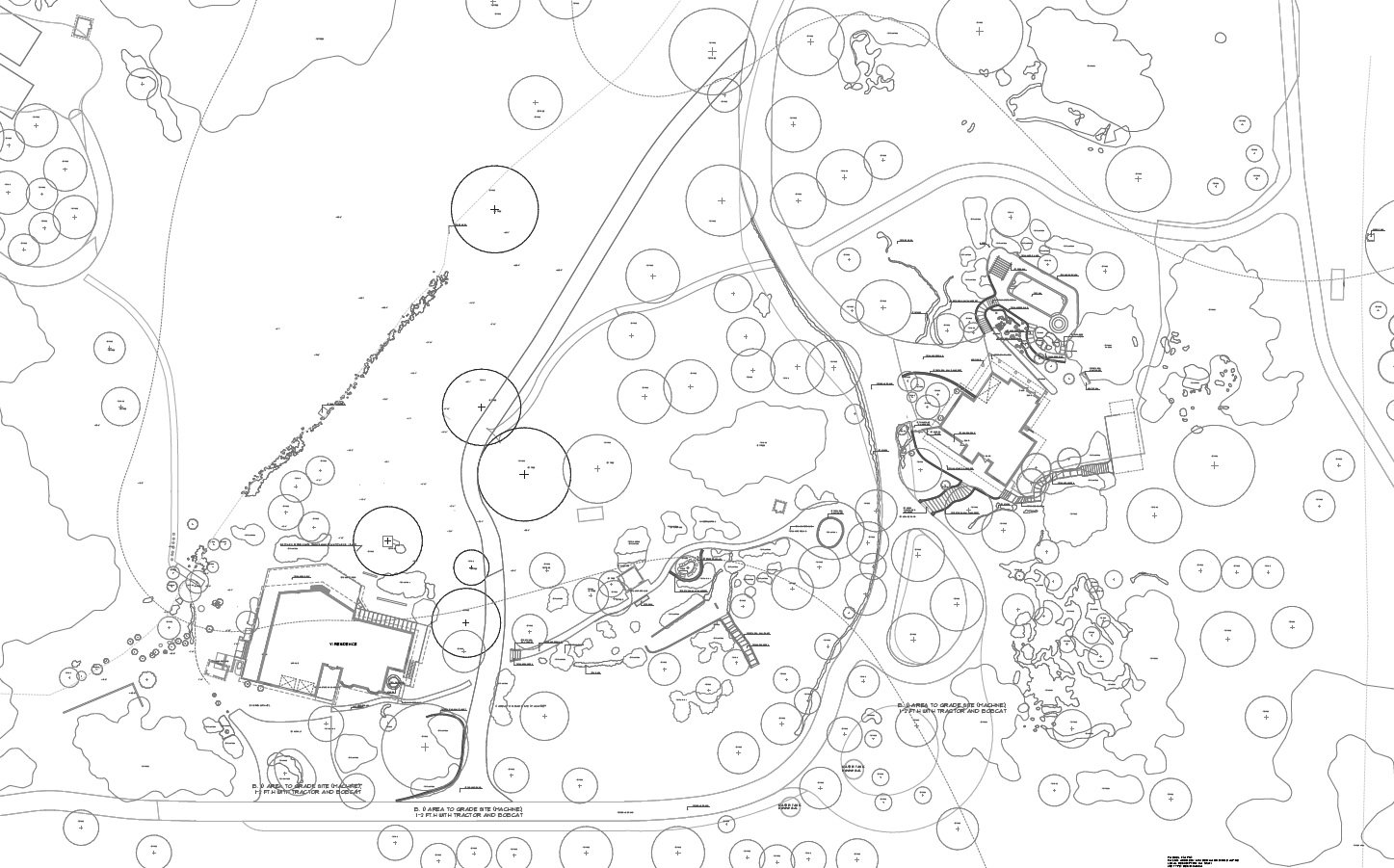
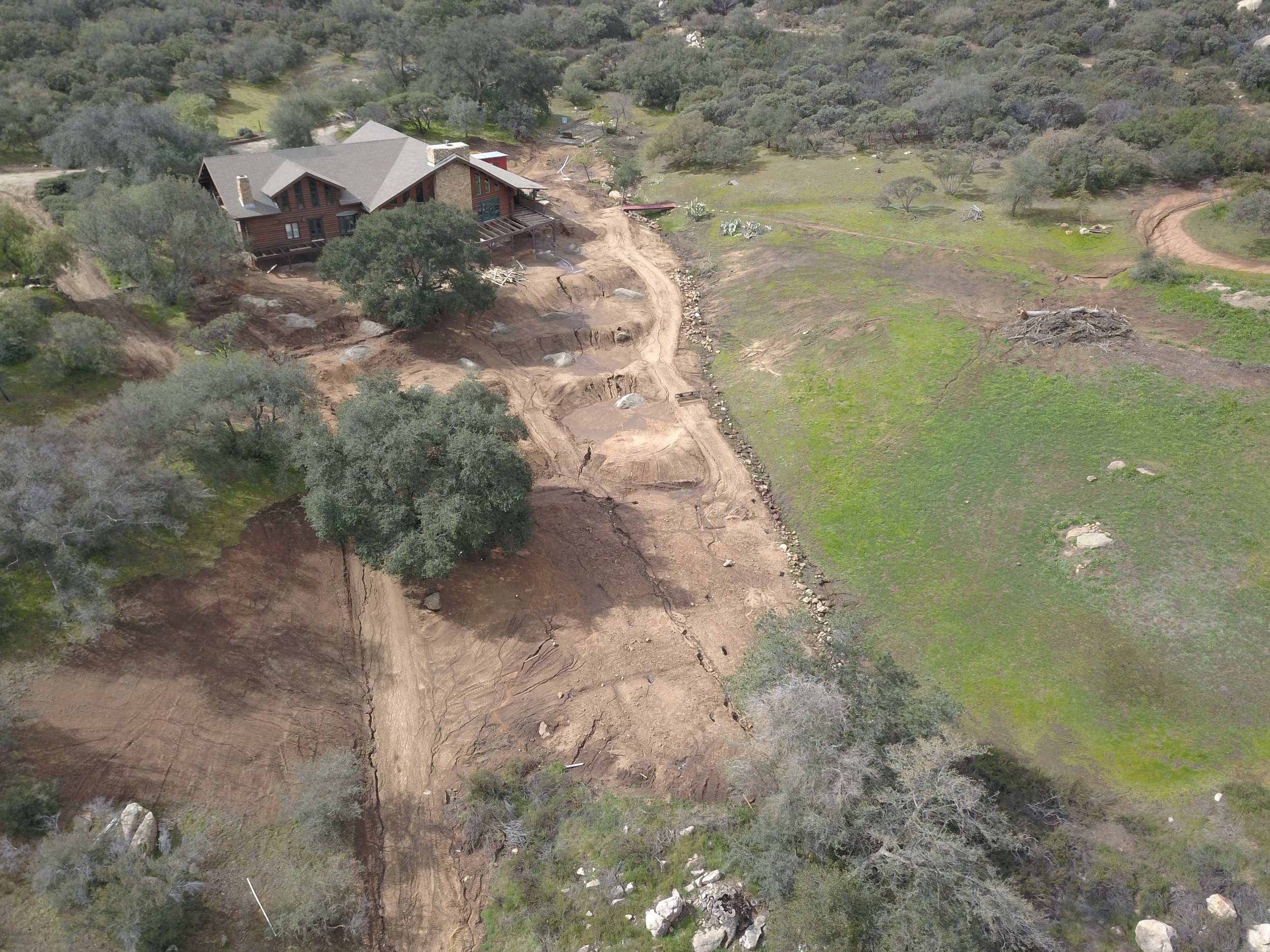
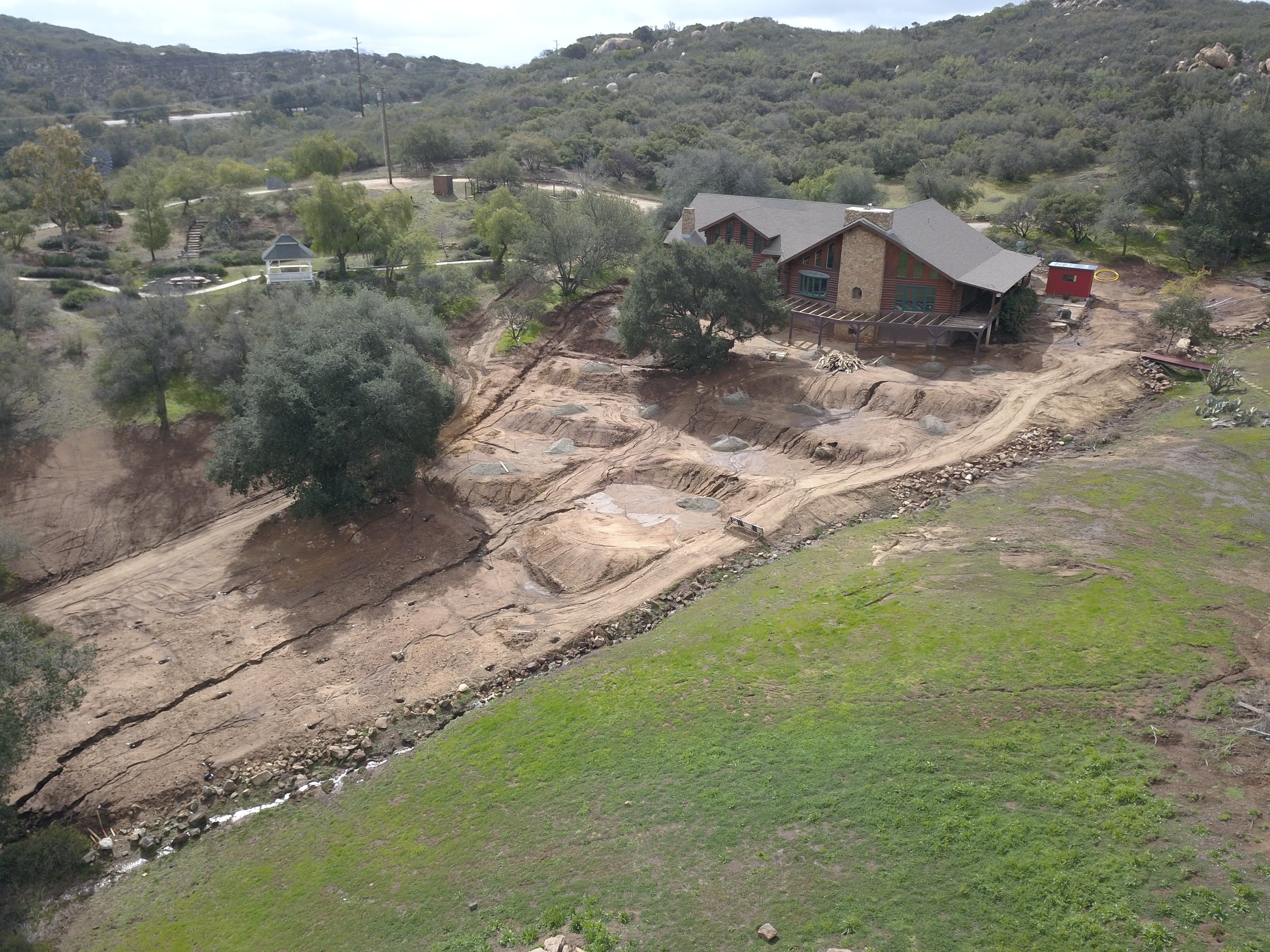
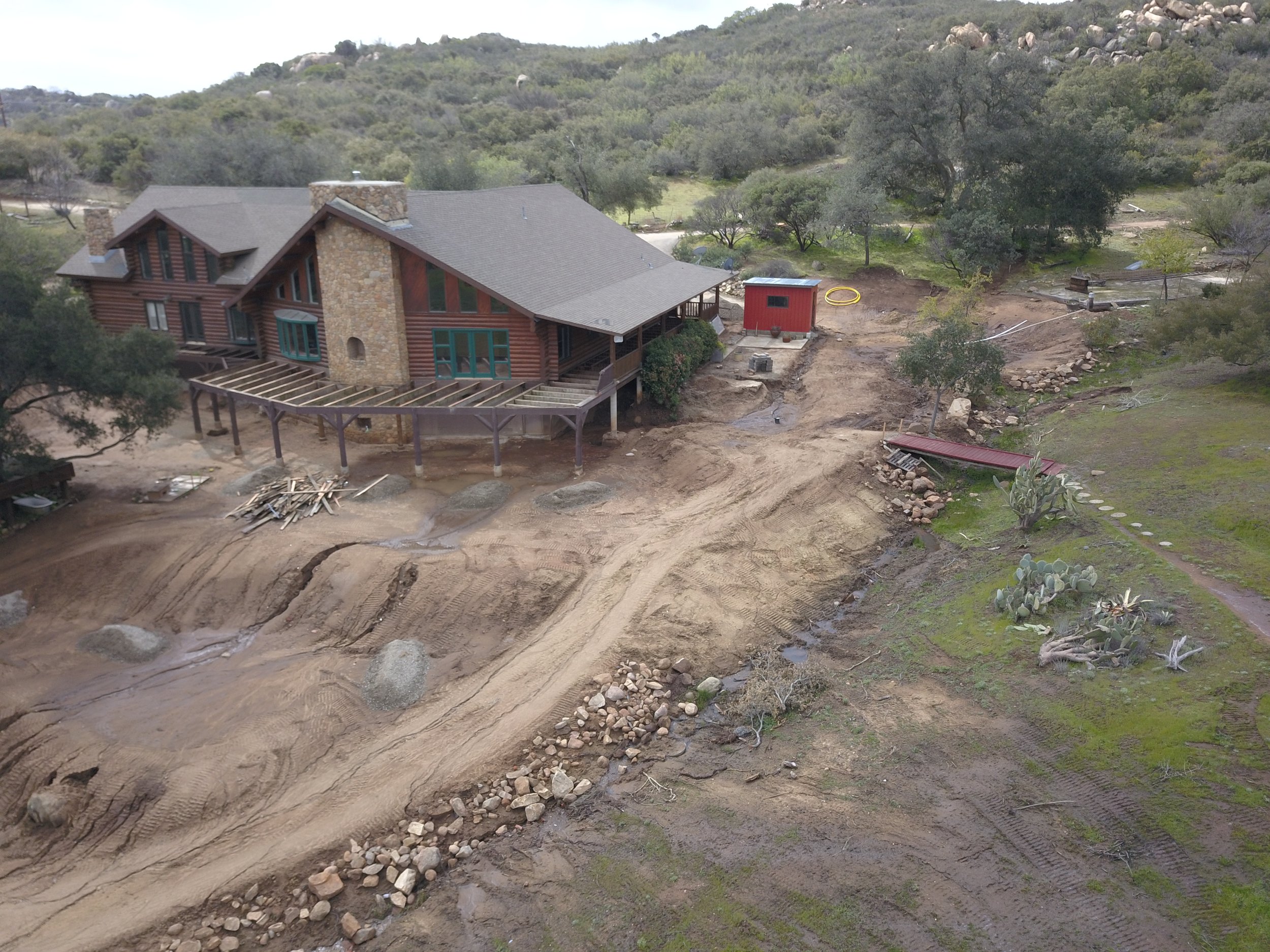
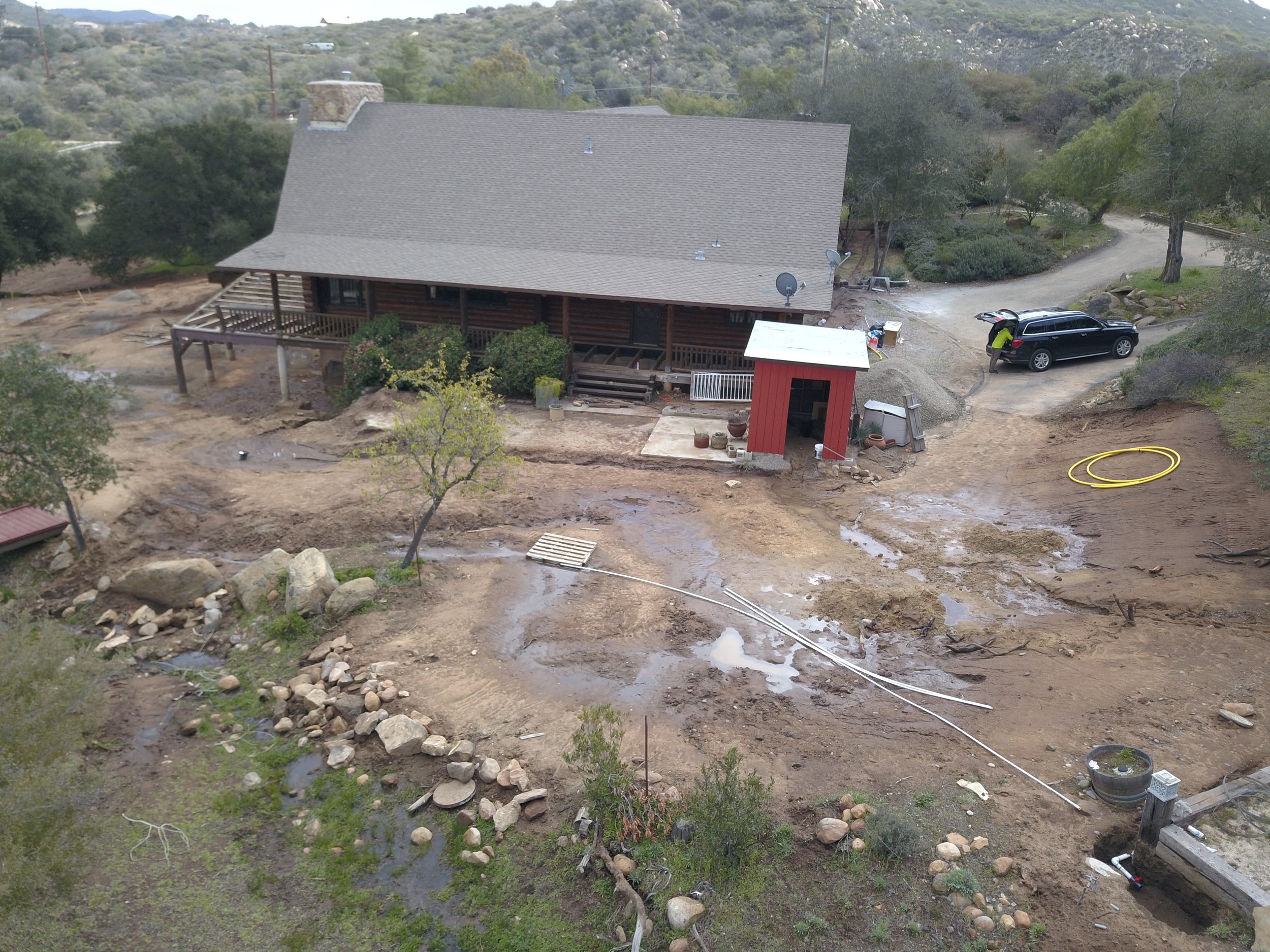
EXISTING LANDSCAPE CONDITION
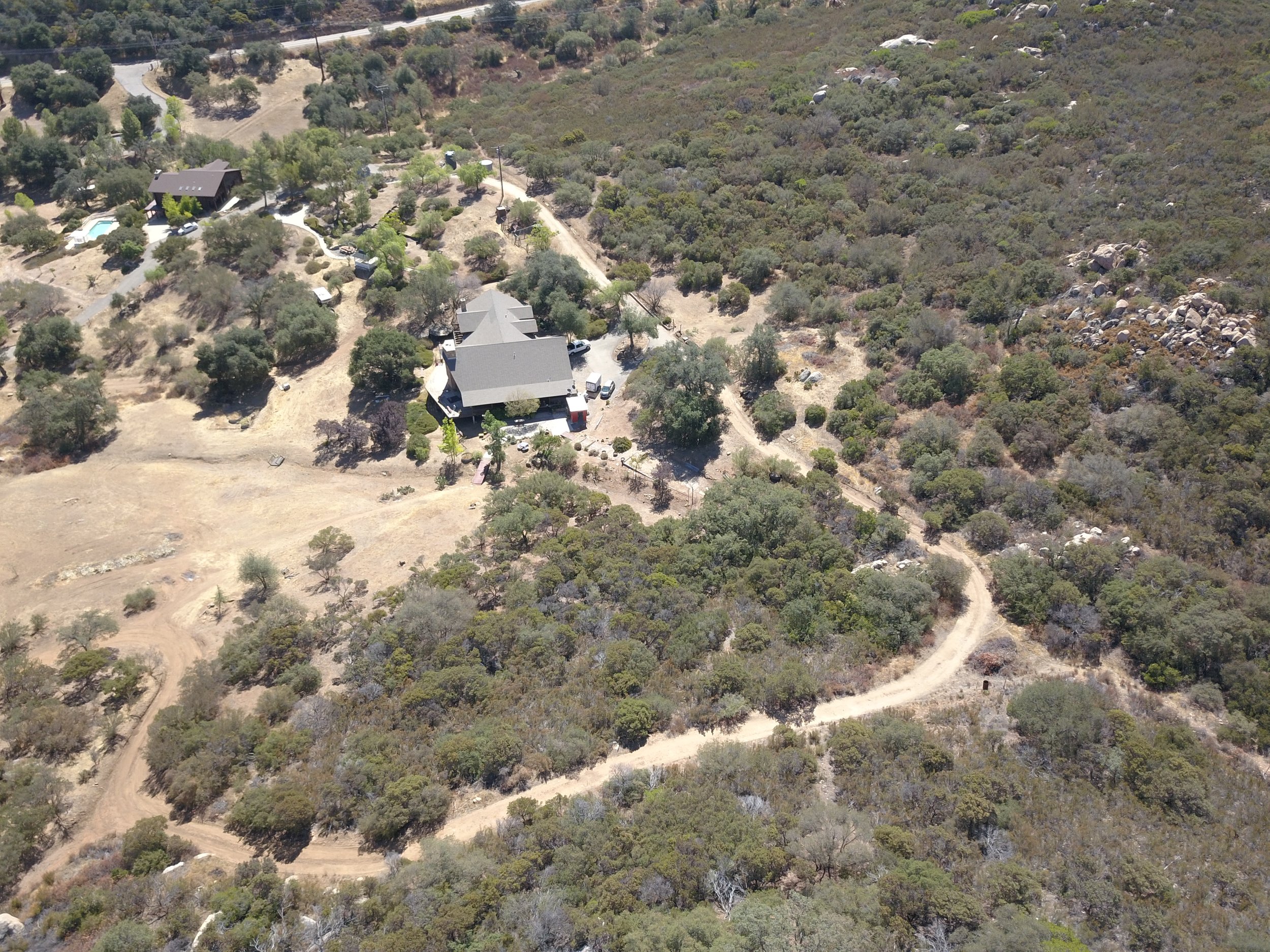
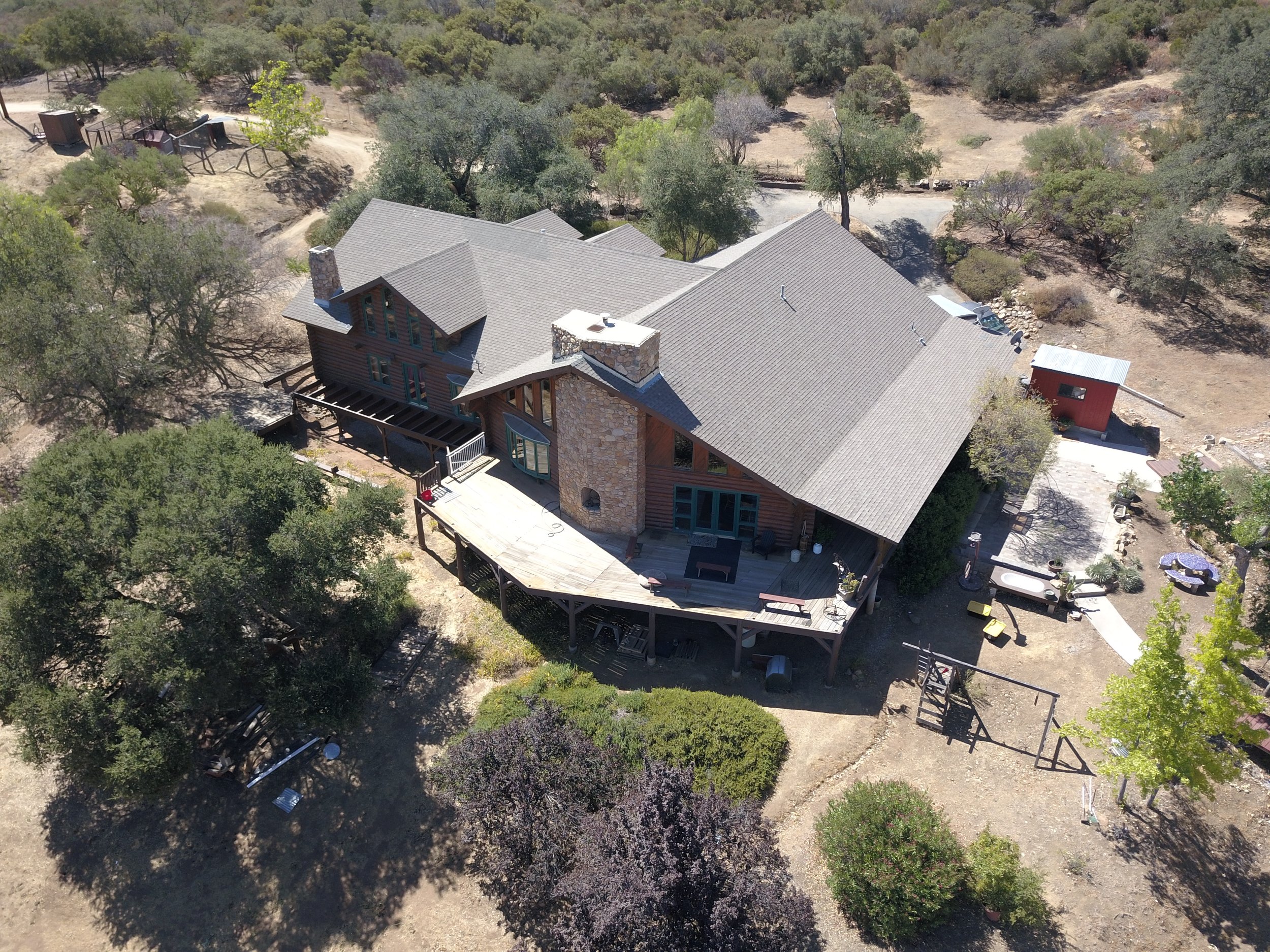

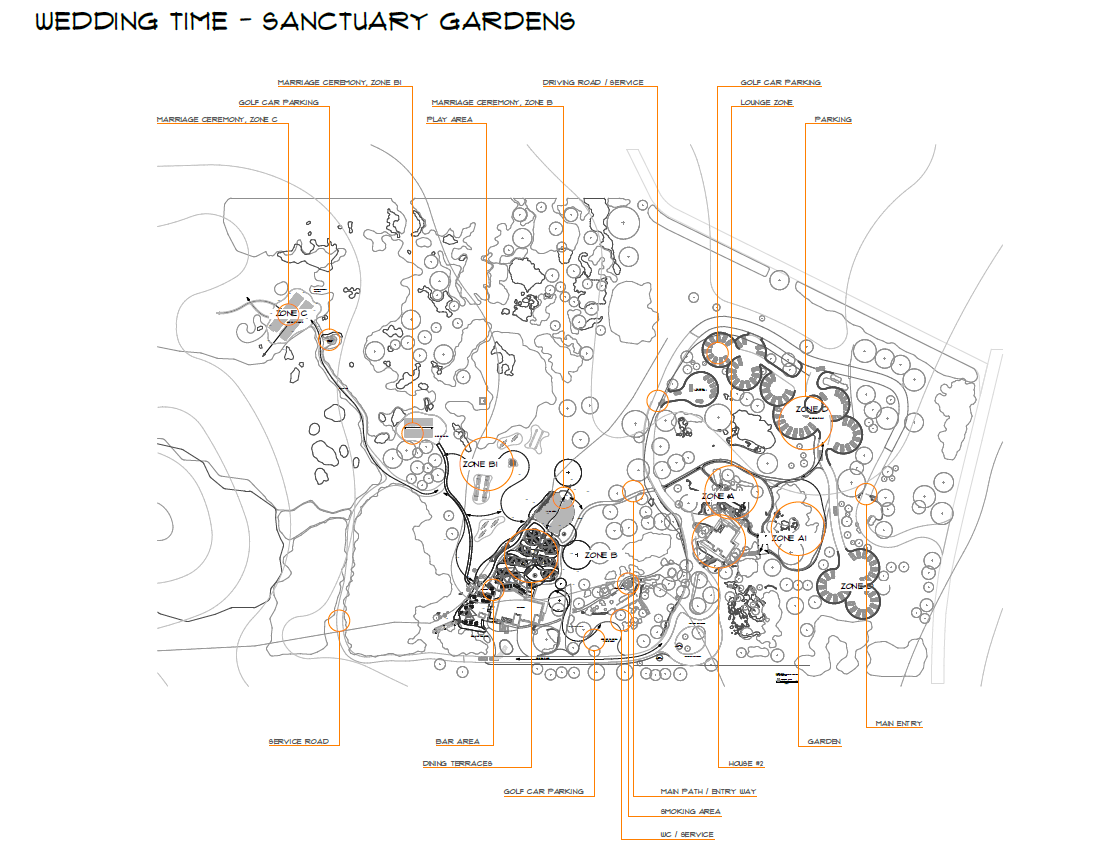
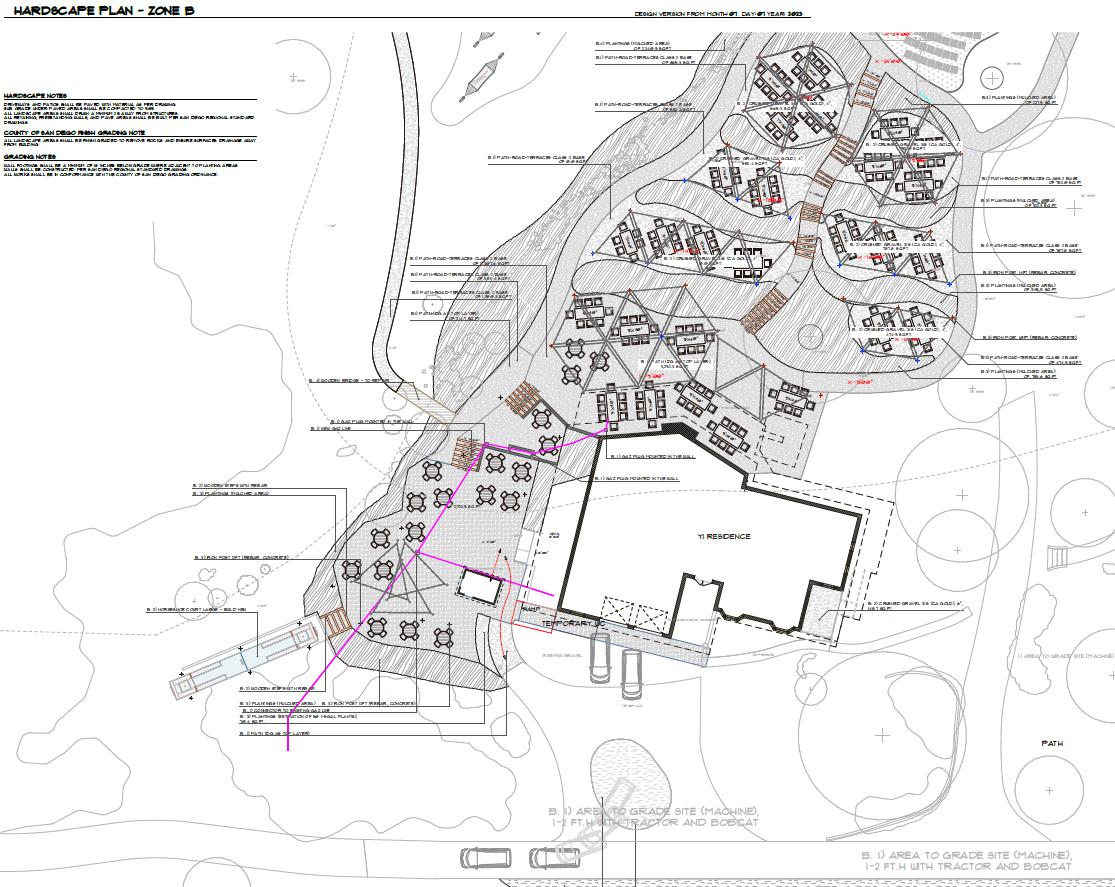
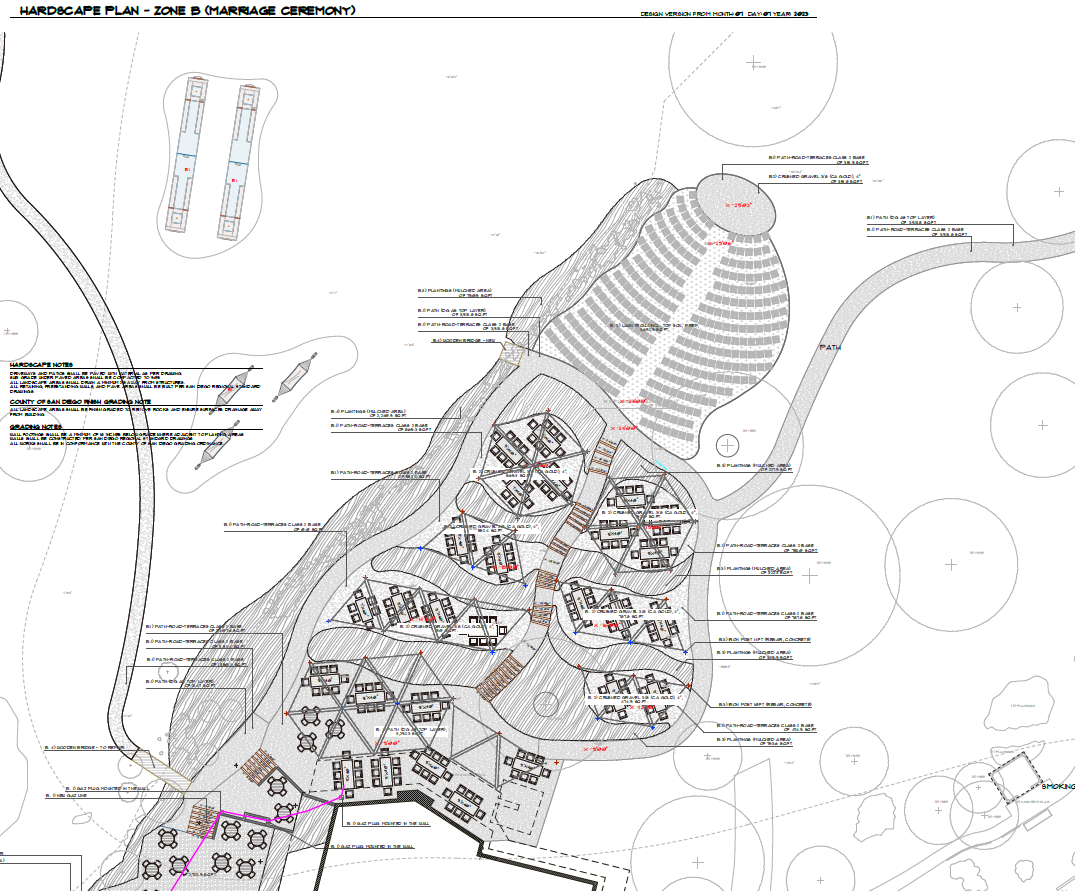
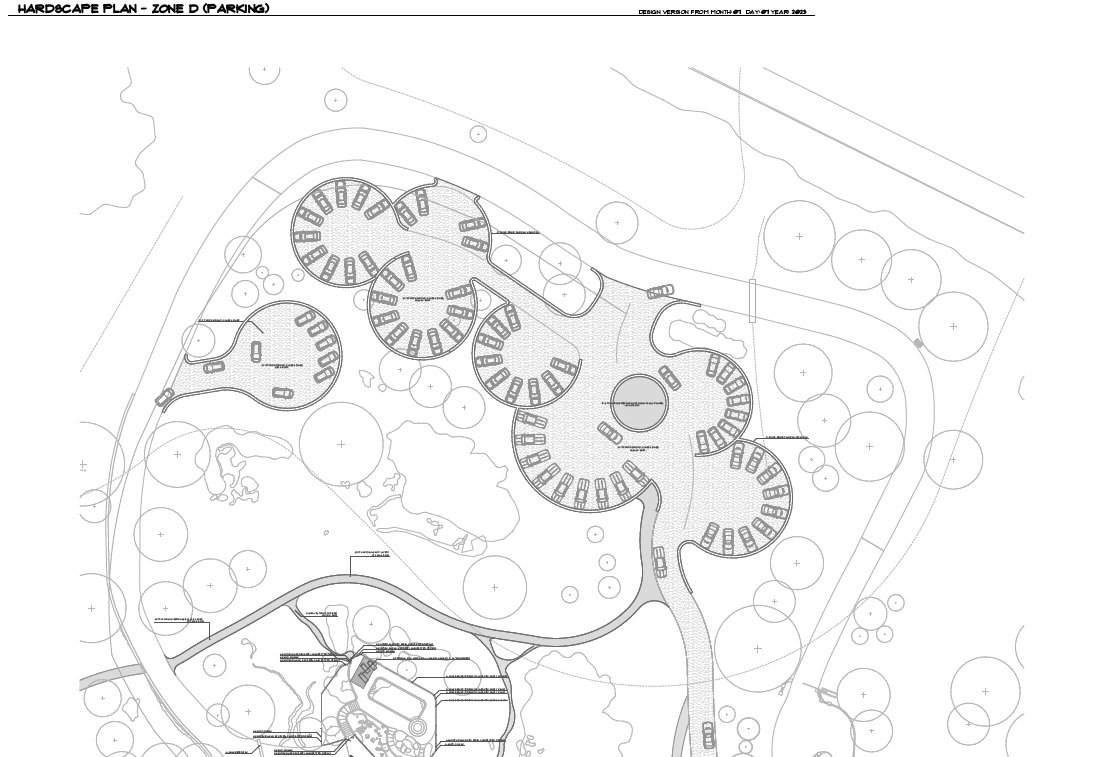
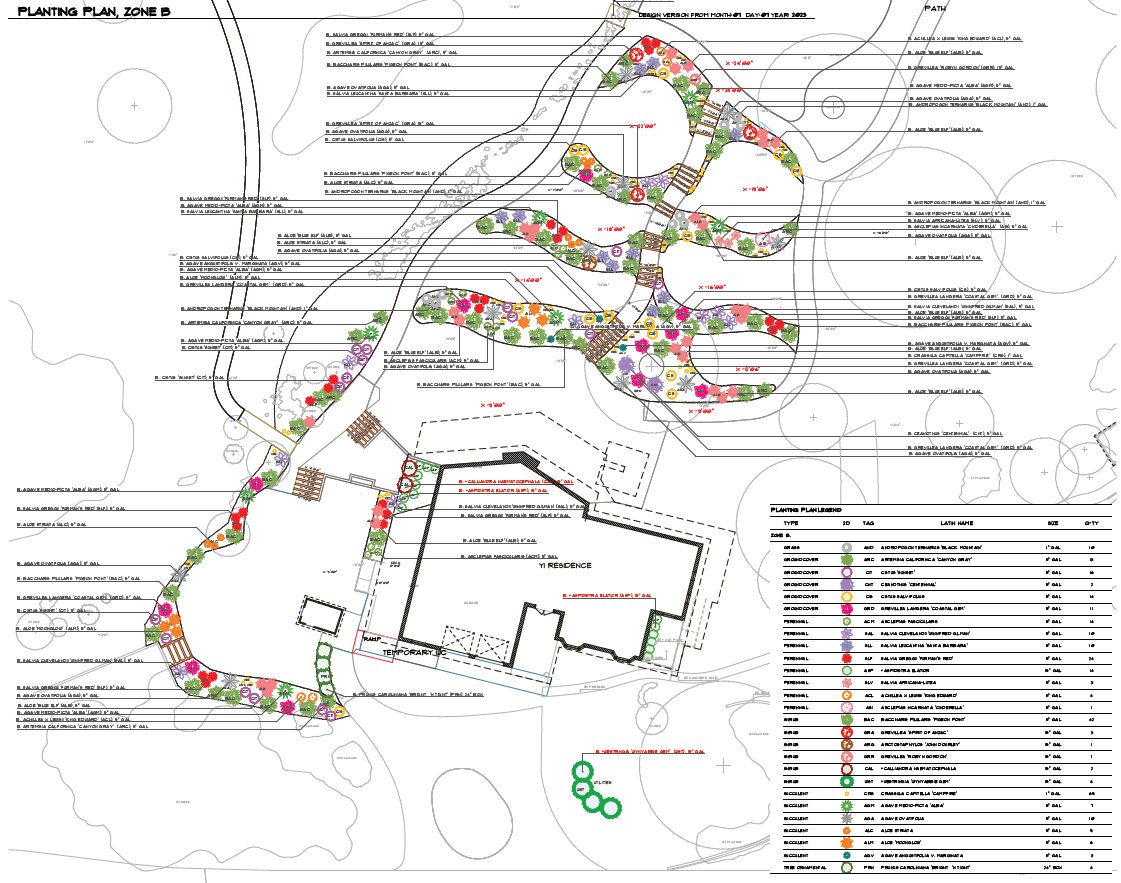
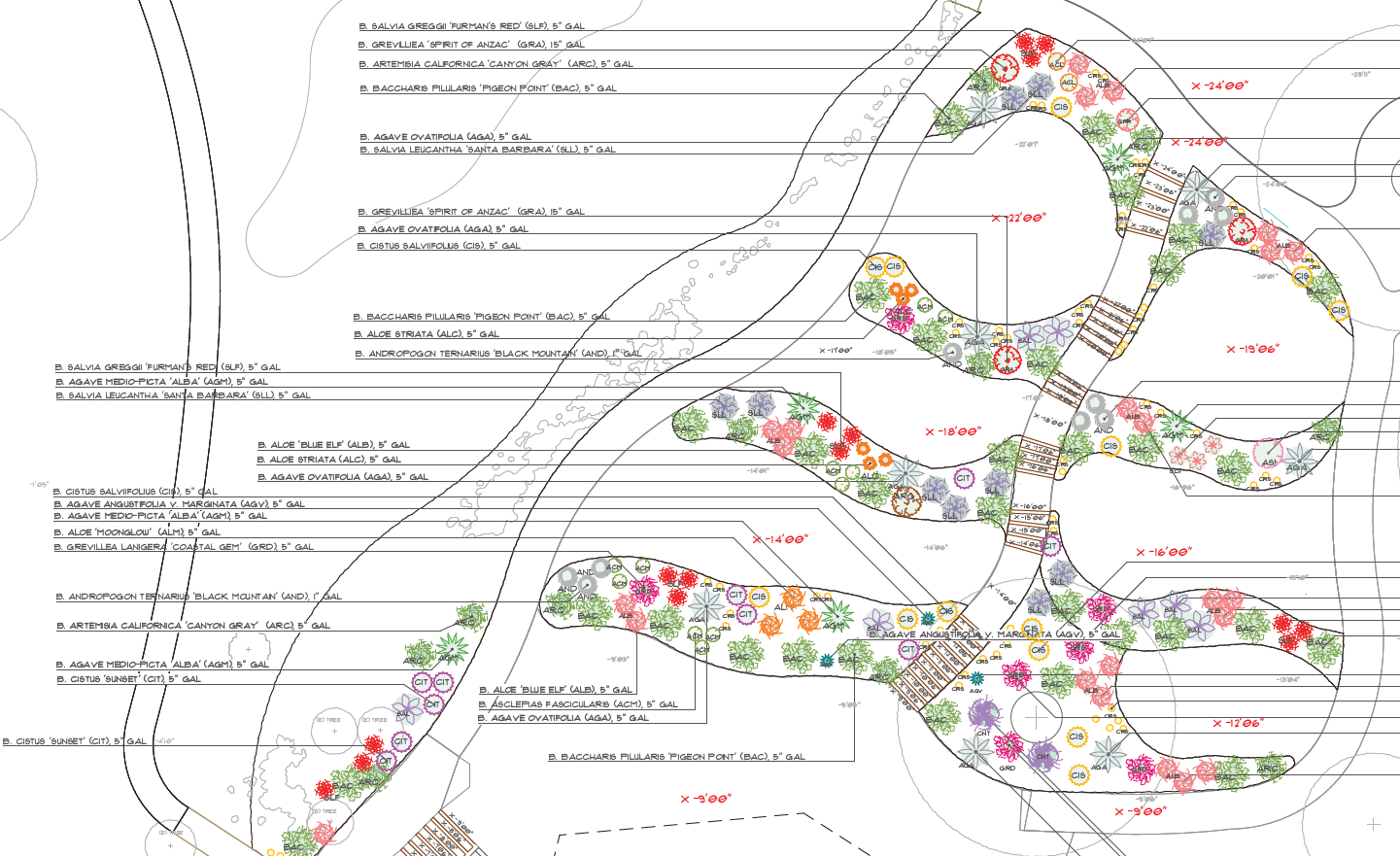
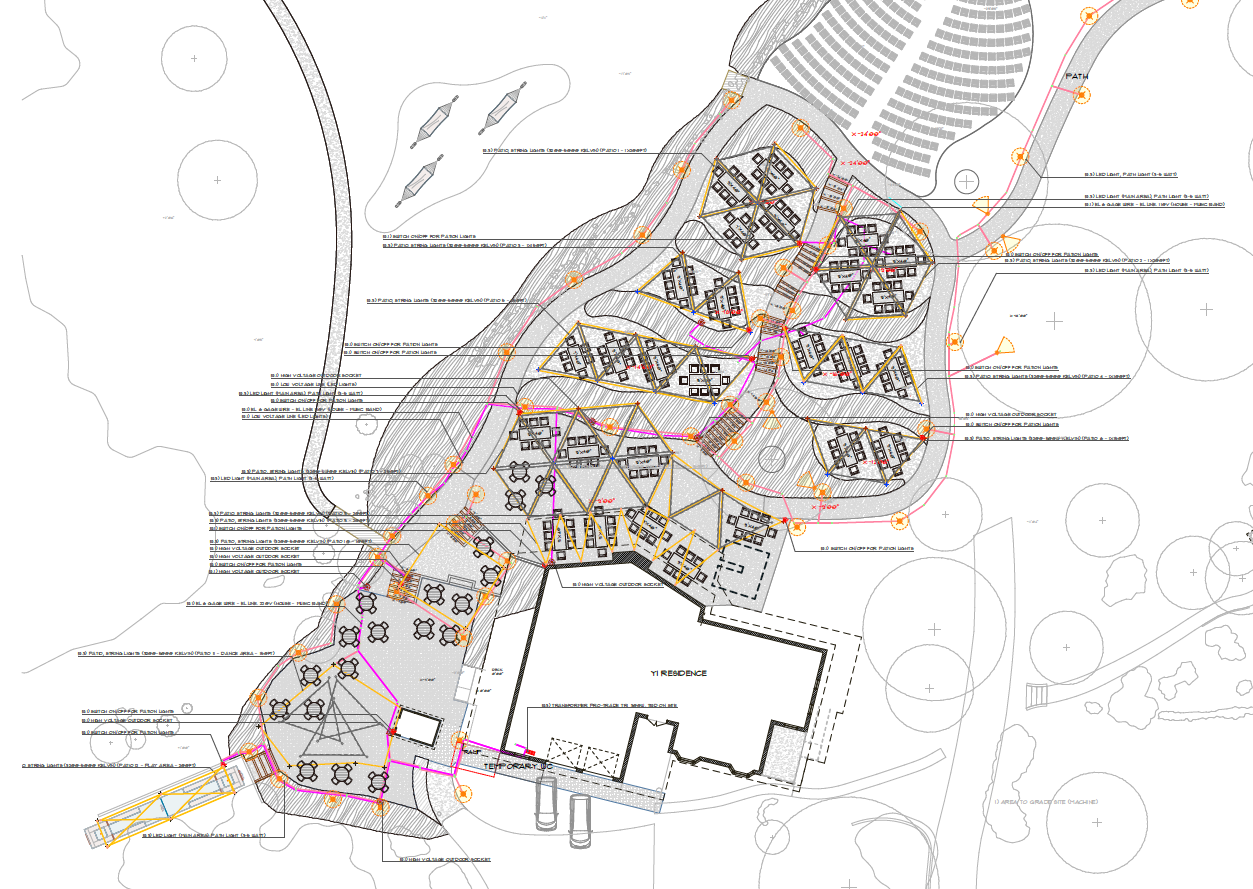
PROJECT DESIGN DRAWINGS
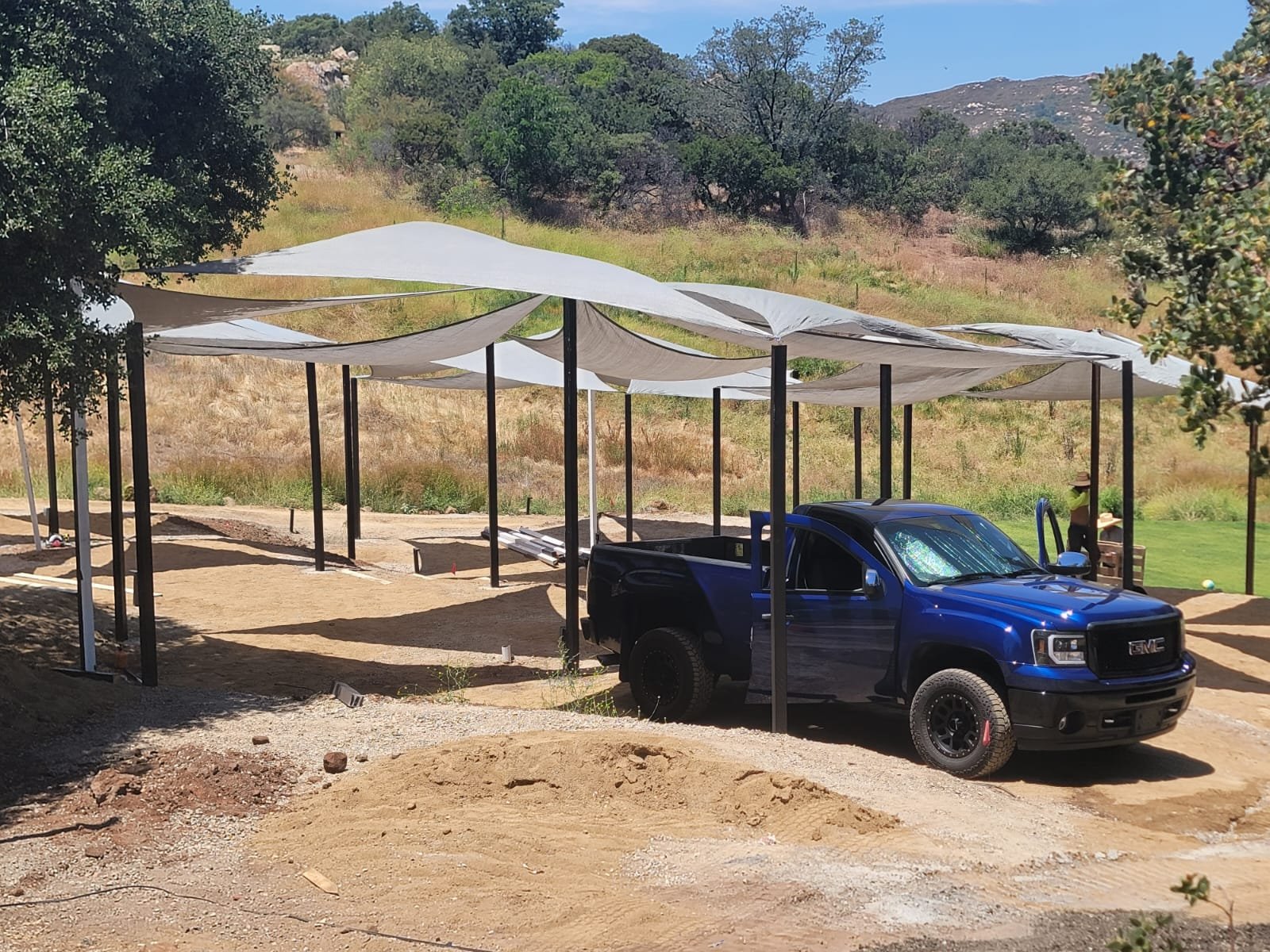
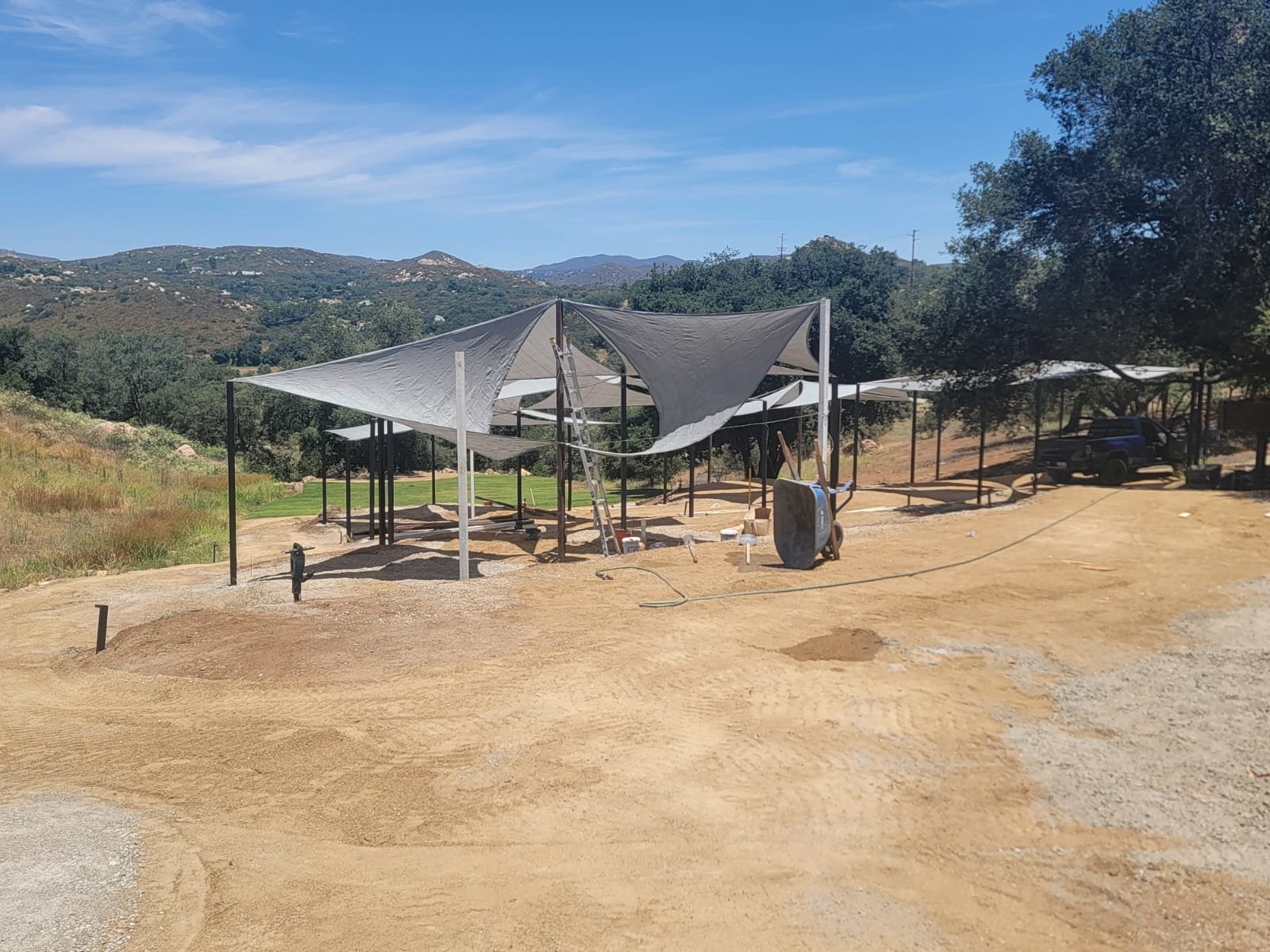
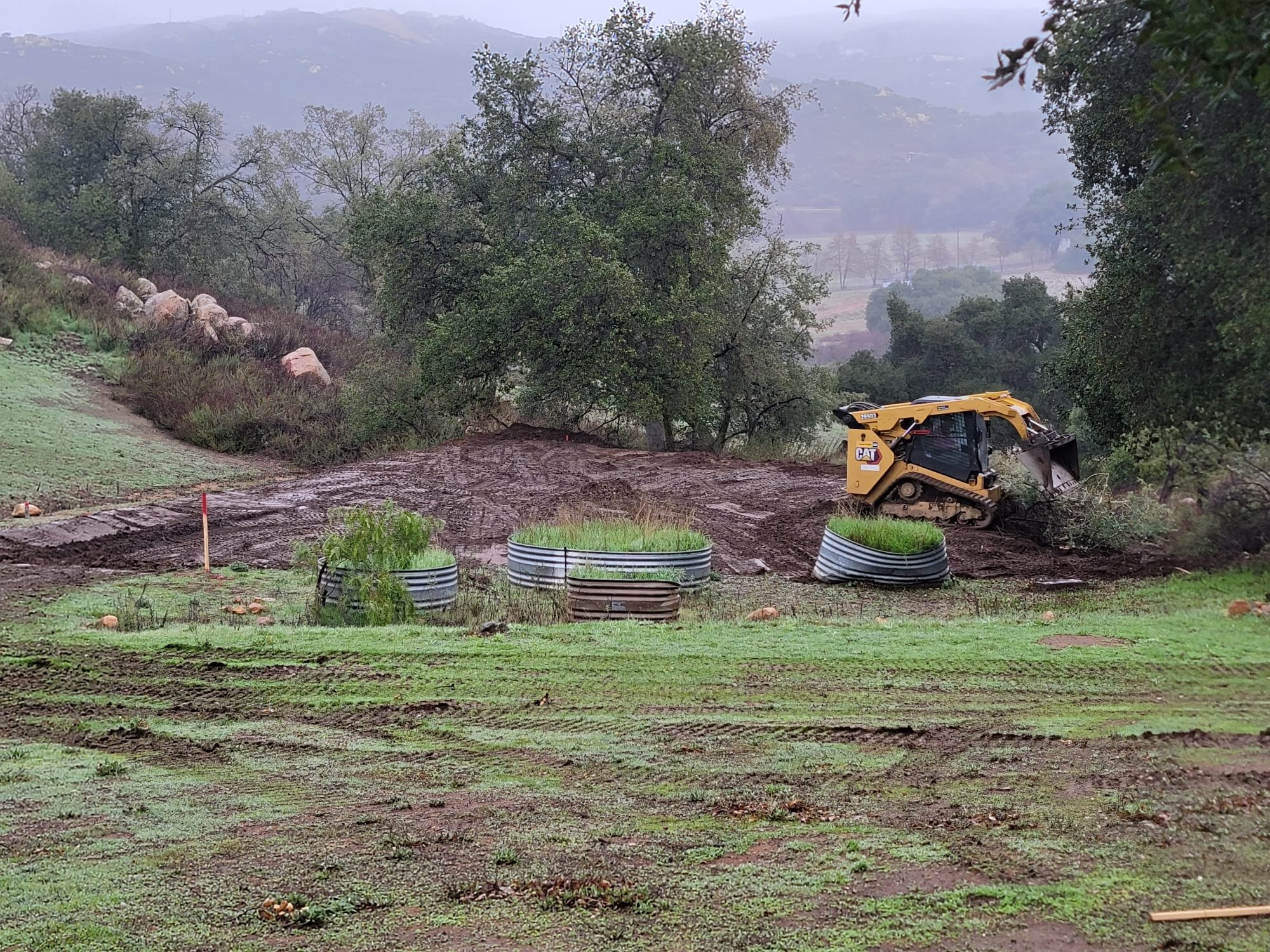
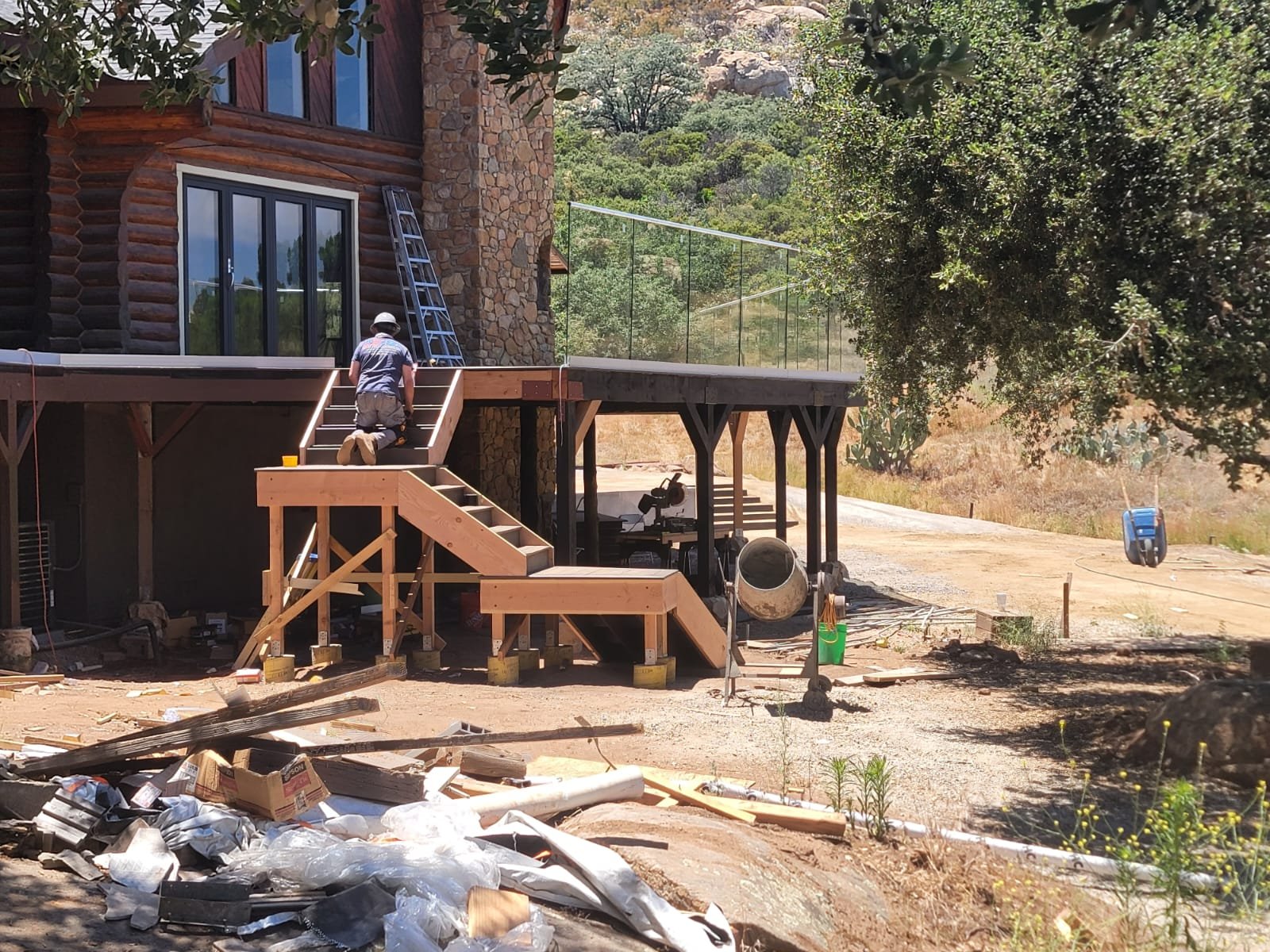
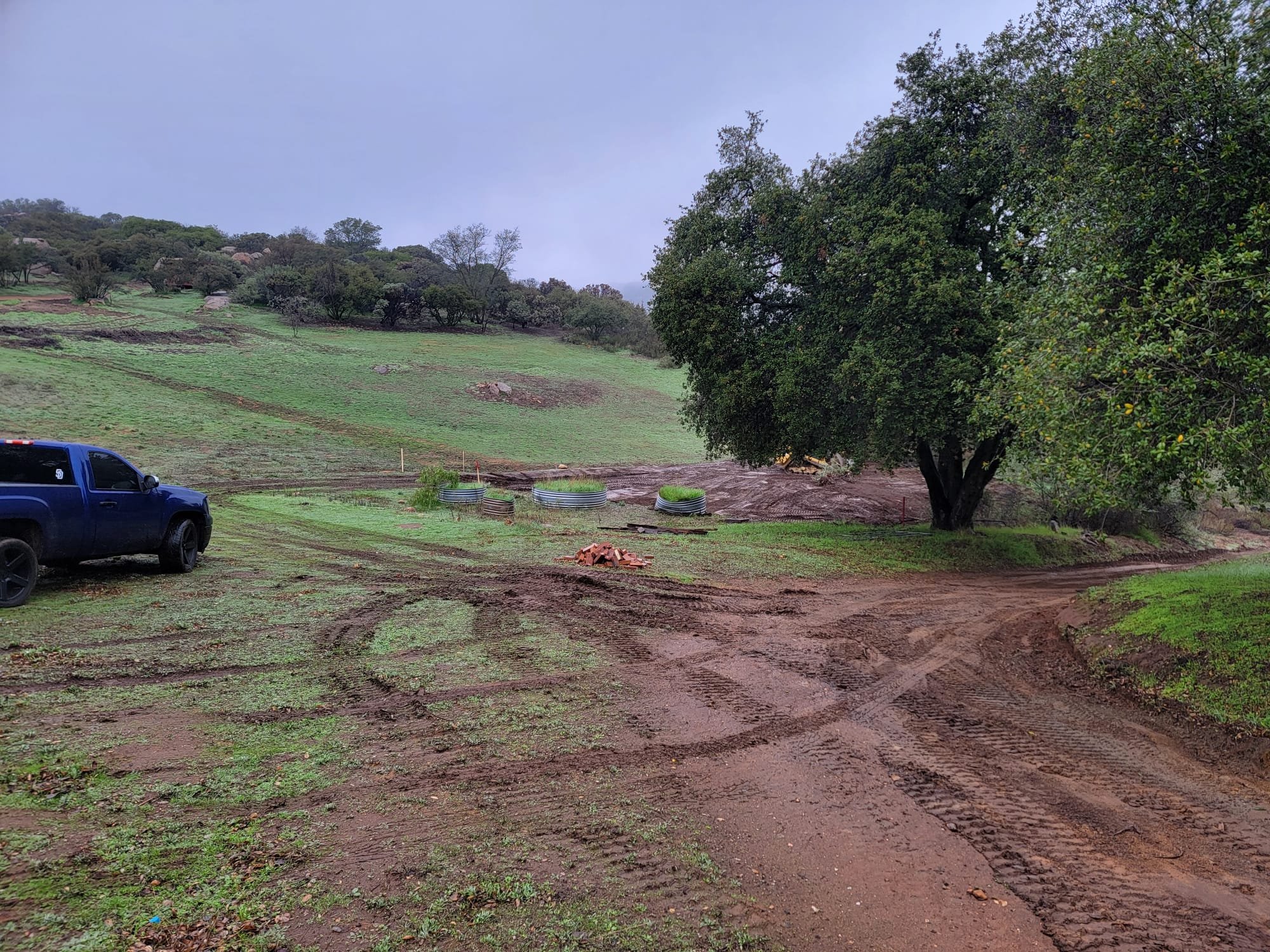
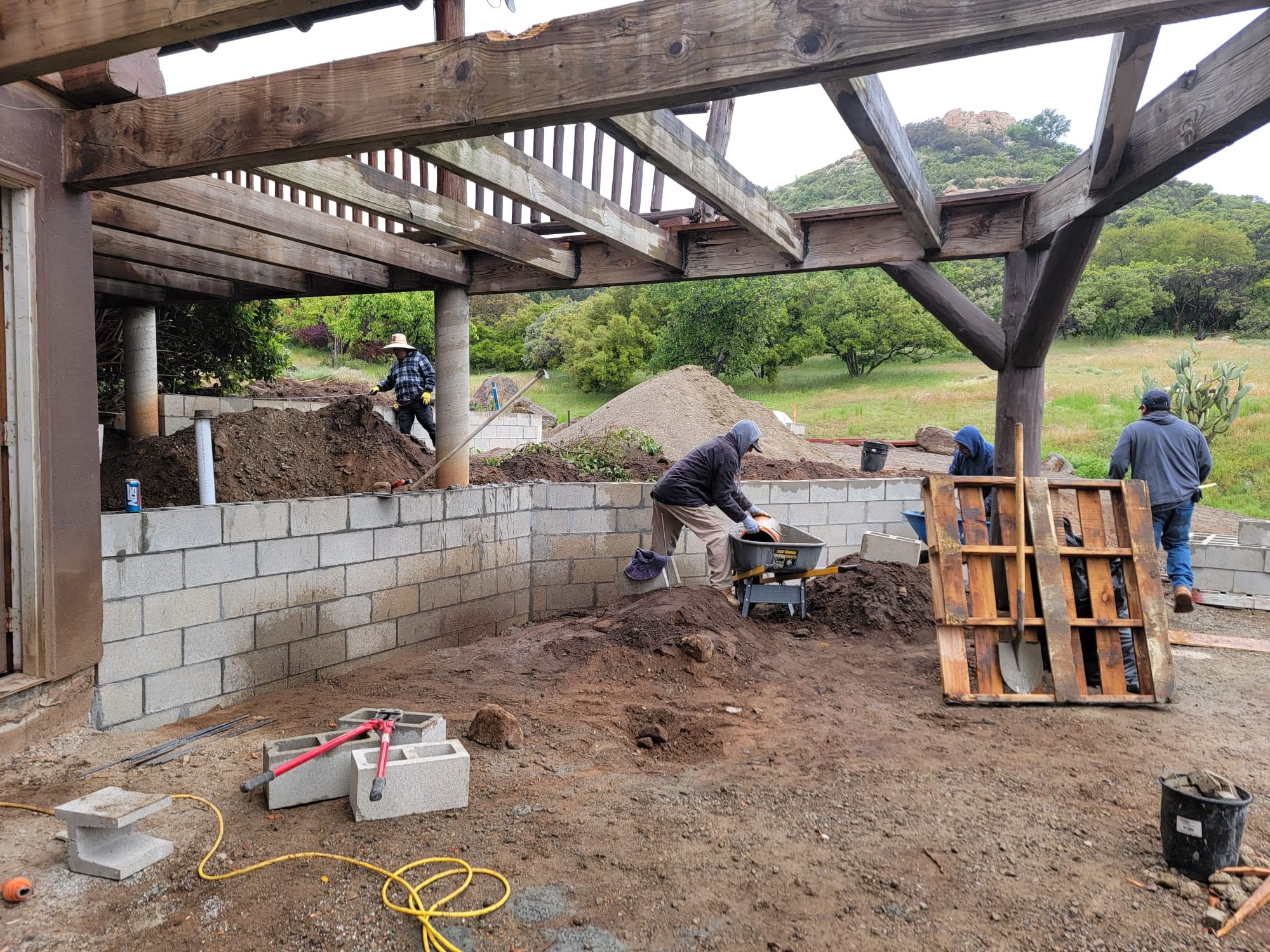
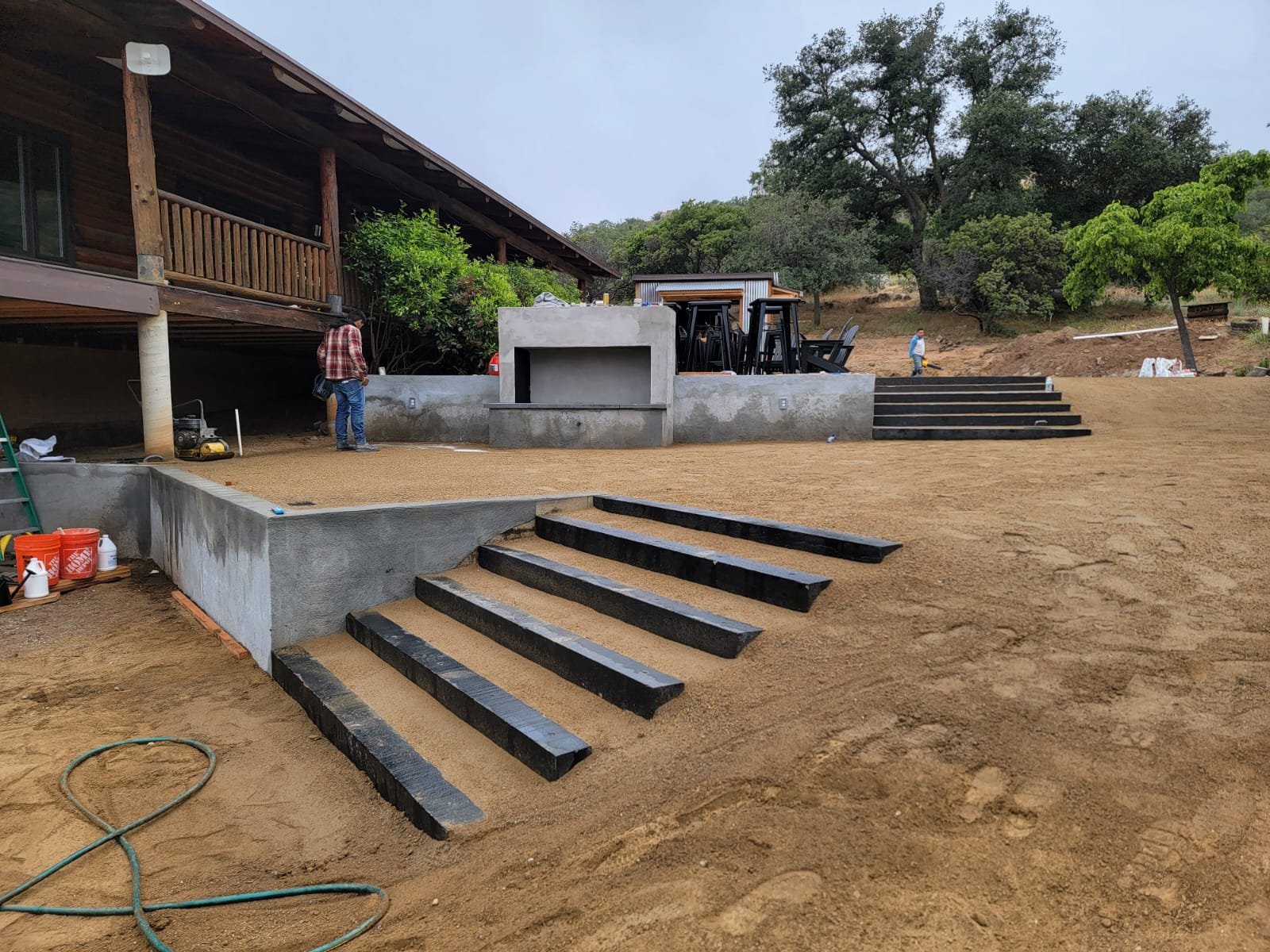
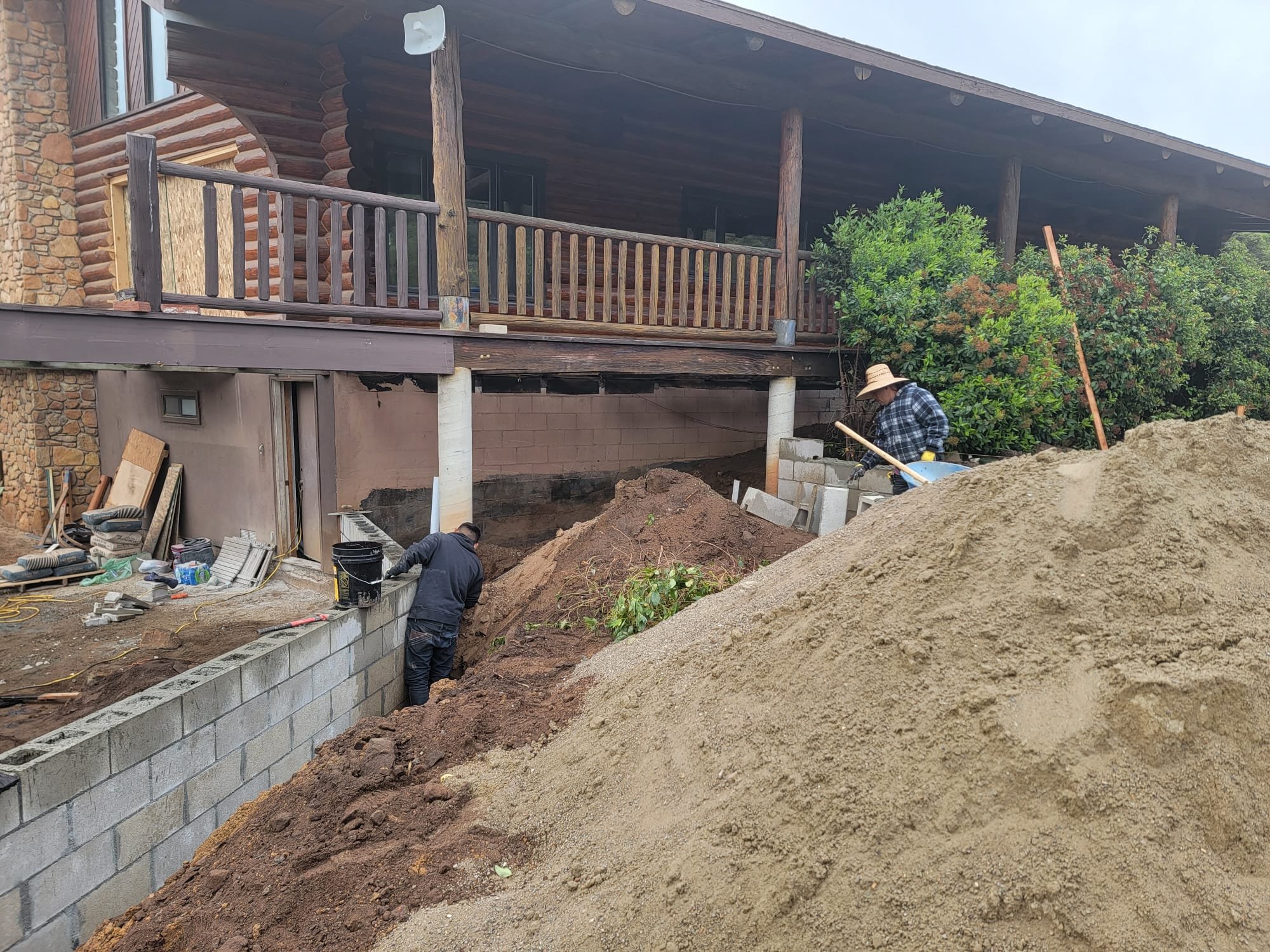
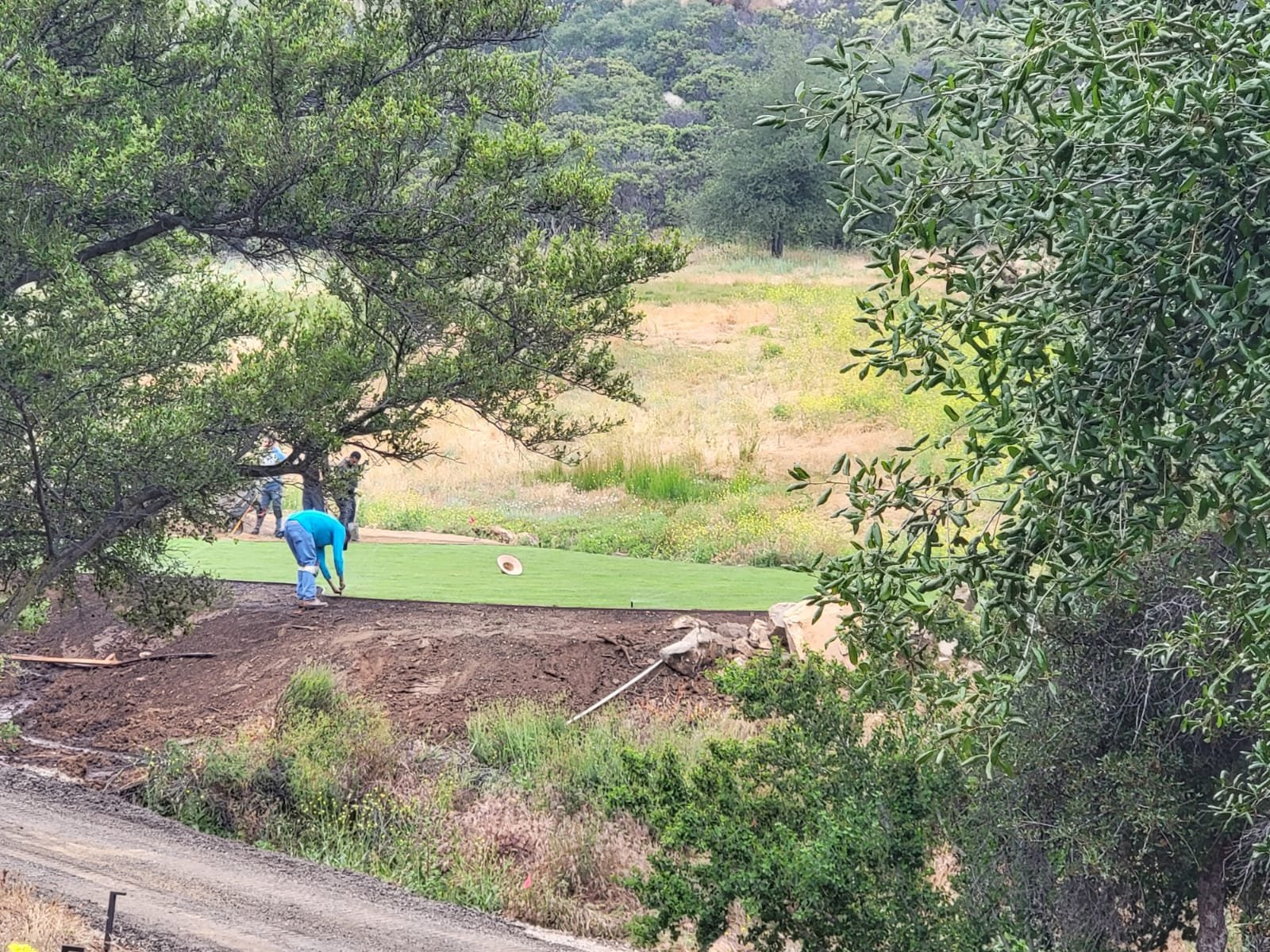
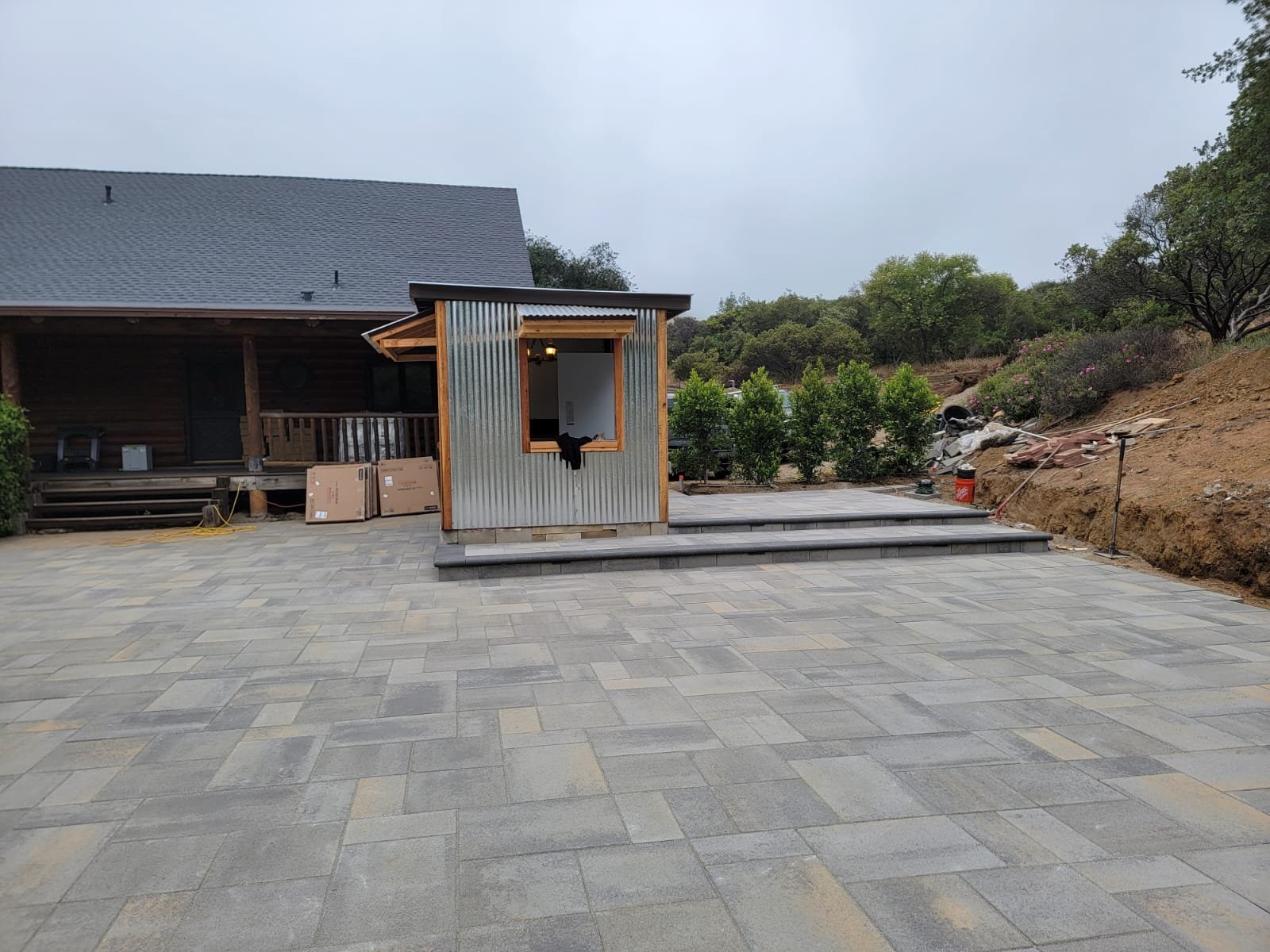
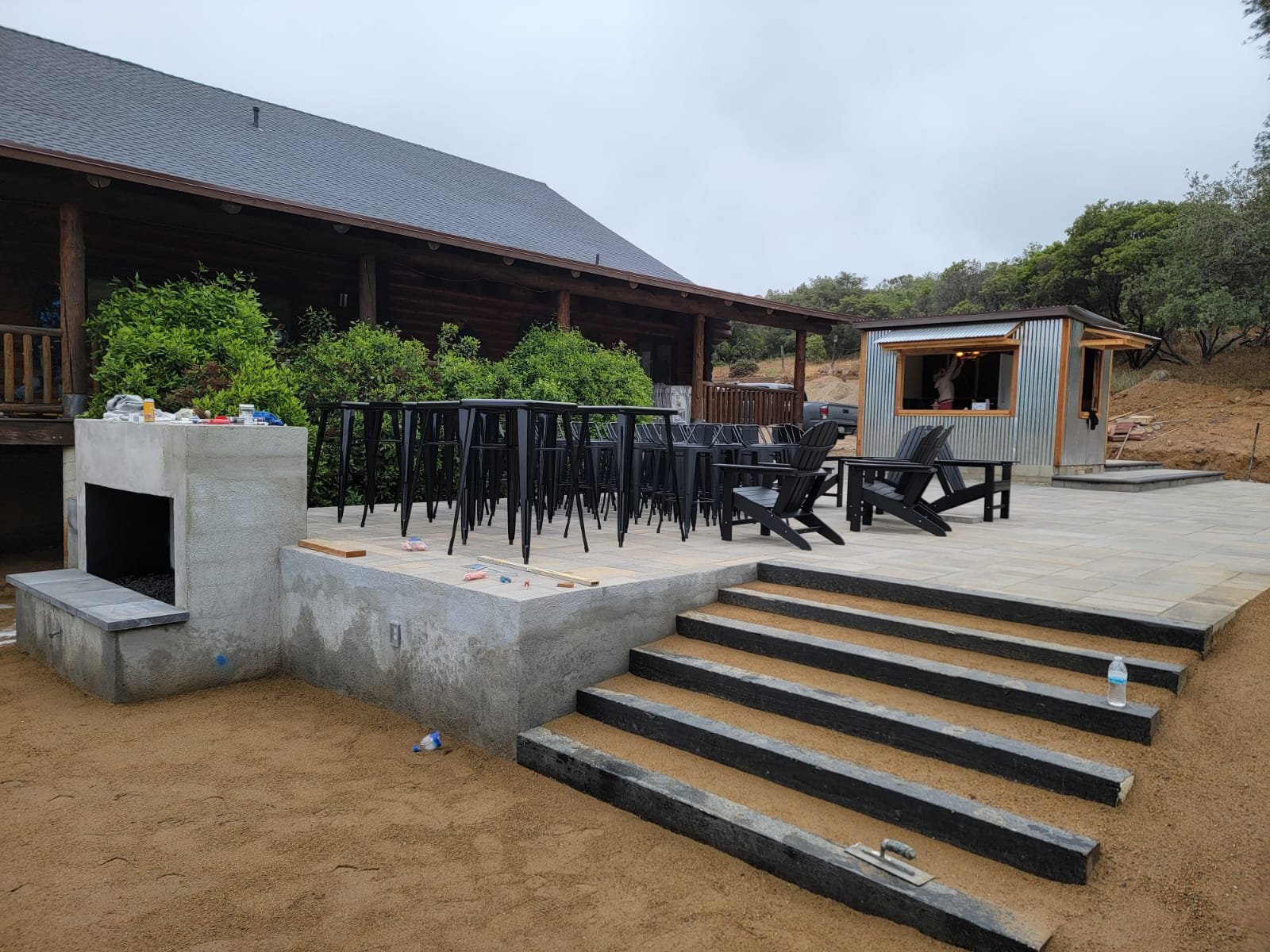
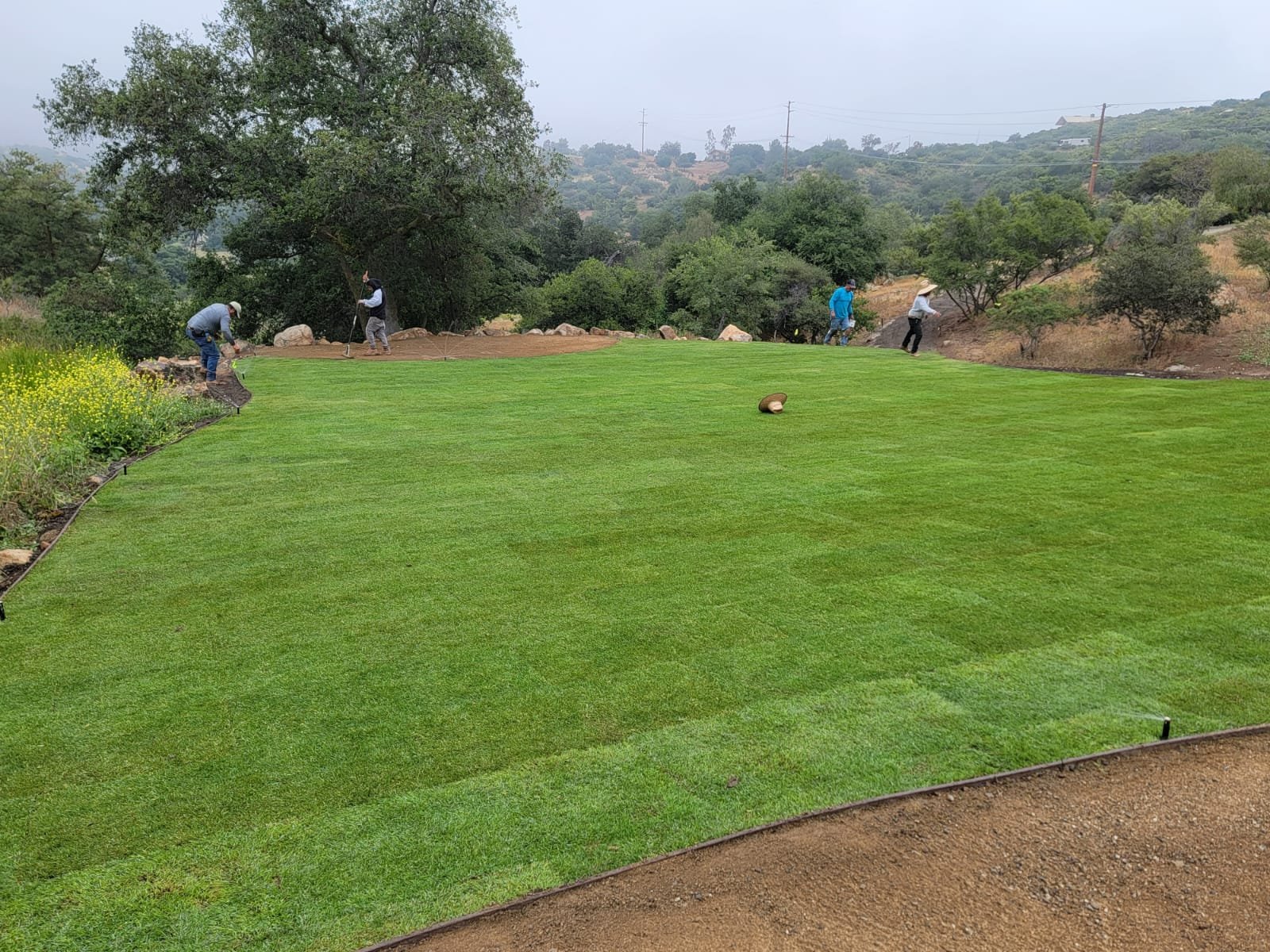
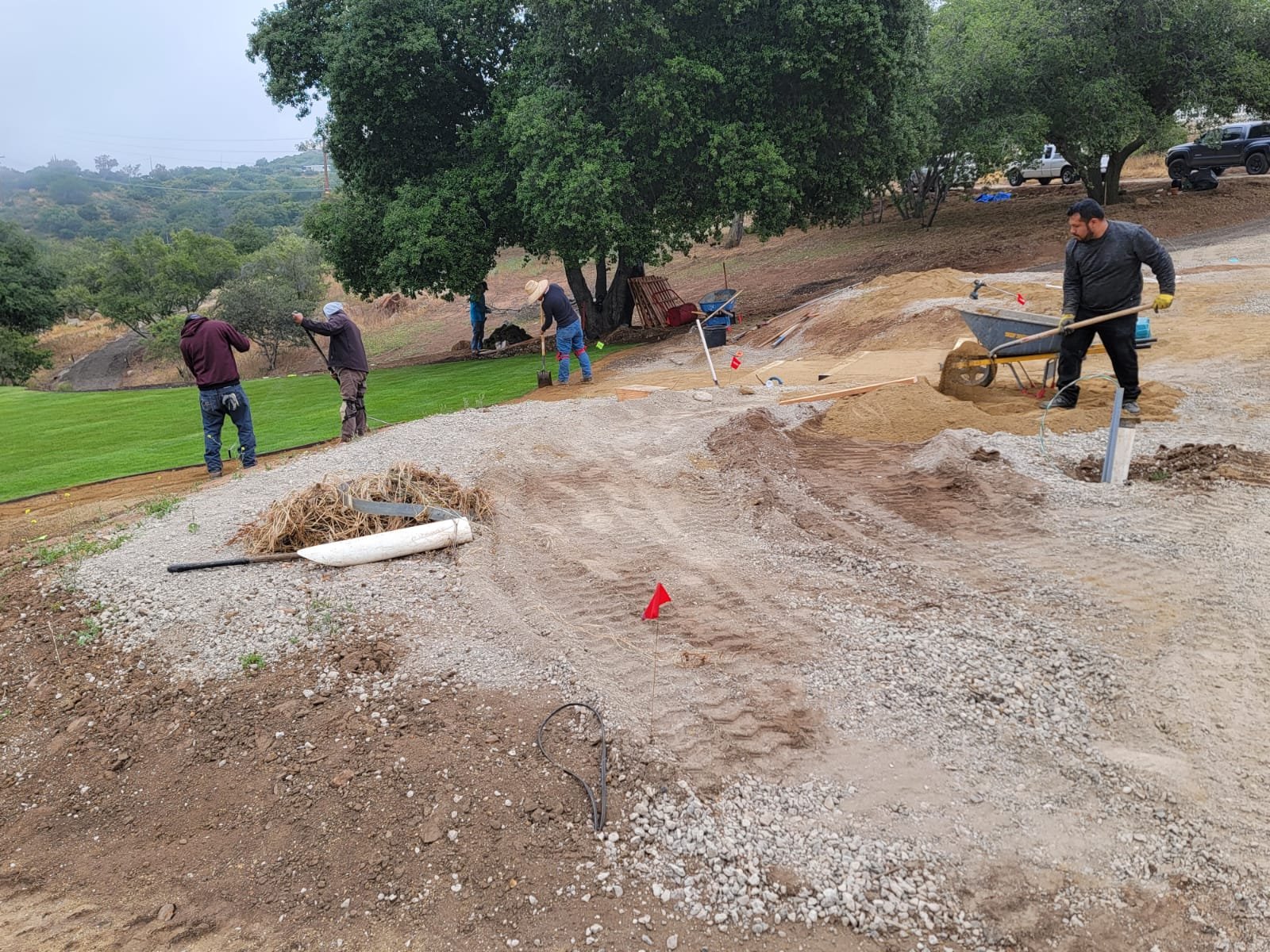
INSTALLATION, LANDSCAPE DESIGN WORK IN PROGRESS

Please check Red Hawk Ridge - https://www.redhawkridgeevents.com/

Capistrano HOA Urban Scape - San Diego, California
The Capistrano HOA Urban Scape in San Diego transforms streetscapes with bold planting and unified design. A purple Coprosma hedge frames diverse garden rooms, creating elegance, cohesion, and an enhanced neighborhood identity.
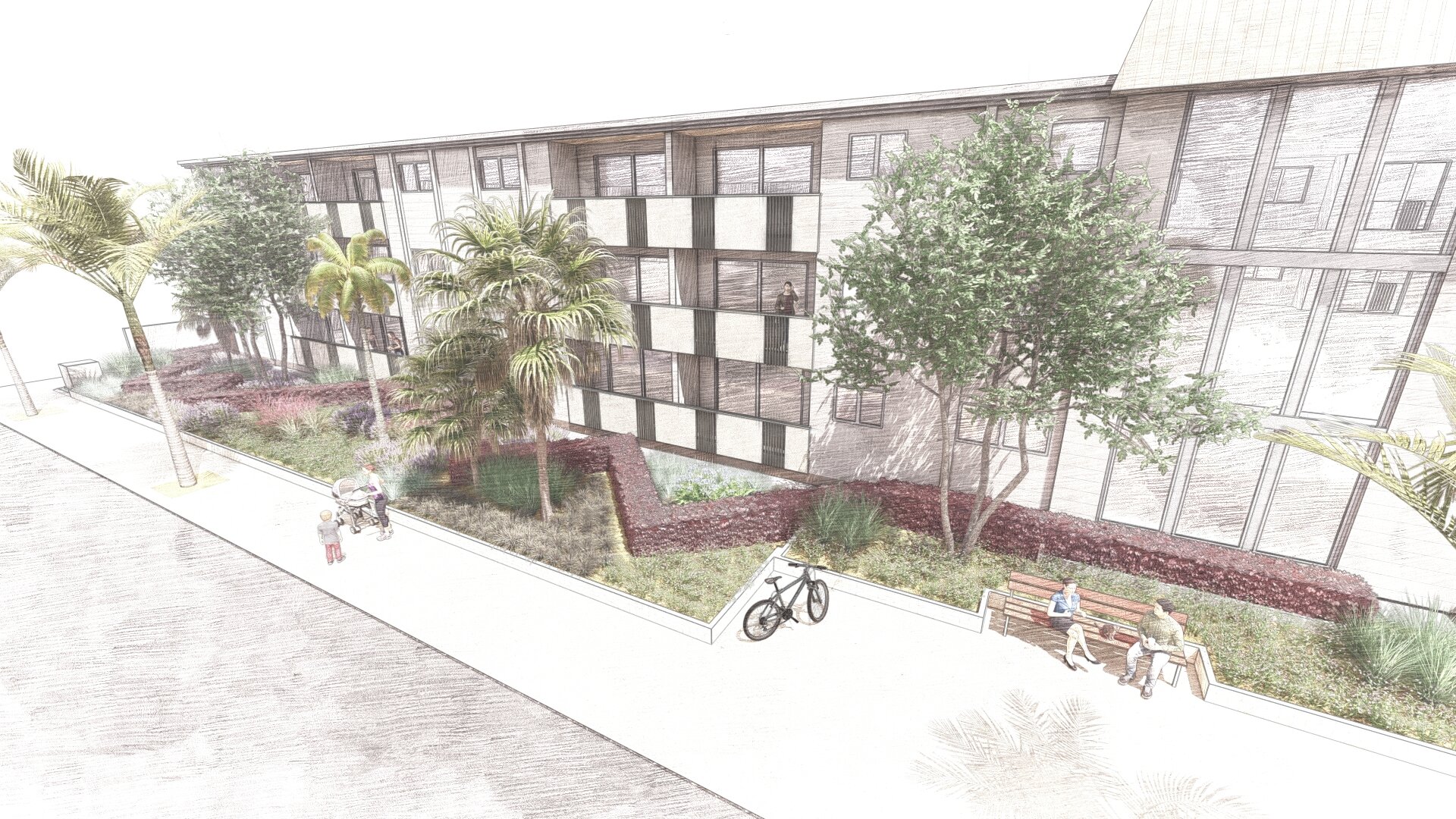
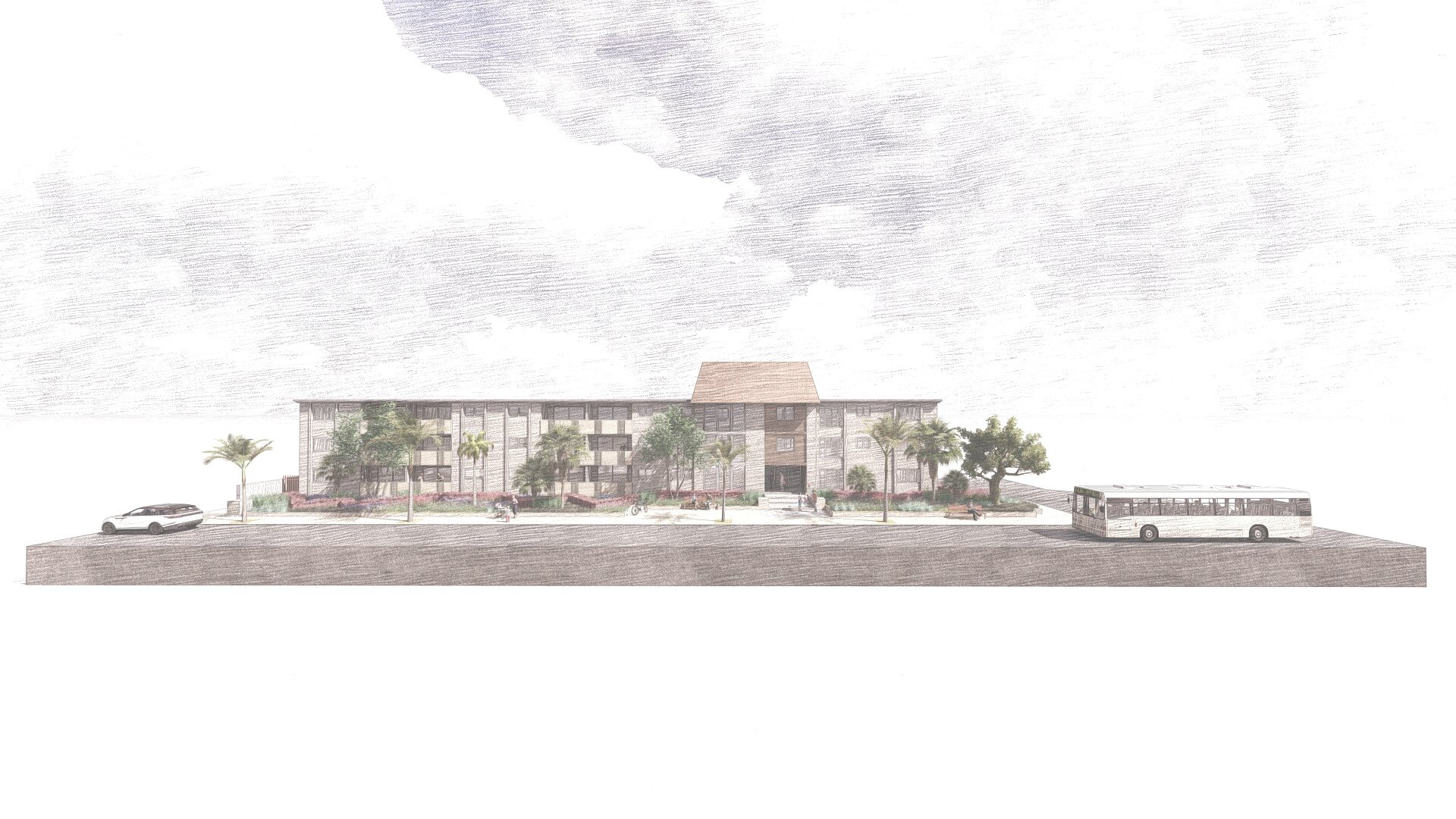
The Capistrano HOA Urban Scape is an example of how a single unifying design element can transform a community. By introducing Coprosma repens ‘Pacific Sunset’ hedges, LASD Studio created a bold yet elegant framework that ties the entire site together while leaving room for diversity and layered experiences.
Video presentation of LASD Studio’s Capistrano HOA Urban Scape in San Diego, featuring the bold use of Coprosma repens ‘Pacific Sunset’ hedges, redefined streetscapes, and ecological planting design that enhances community identity and urban biodiversity.
Design Philosophy
Urban landscapes are more than visual settings - they are shared ecosystems. Our approach focused on enhancing daily life for residents while addressing larger ecological needs. The hedge becomes both a design spine and ecological corridor, creating pockets of space where planting diversity can thrive.
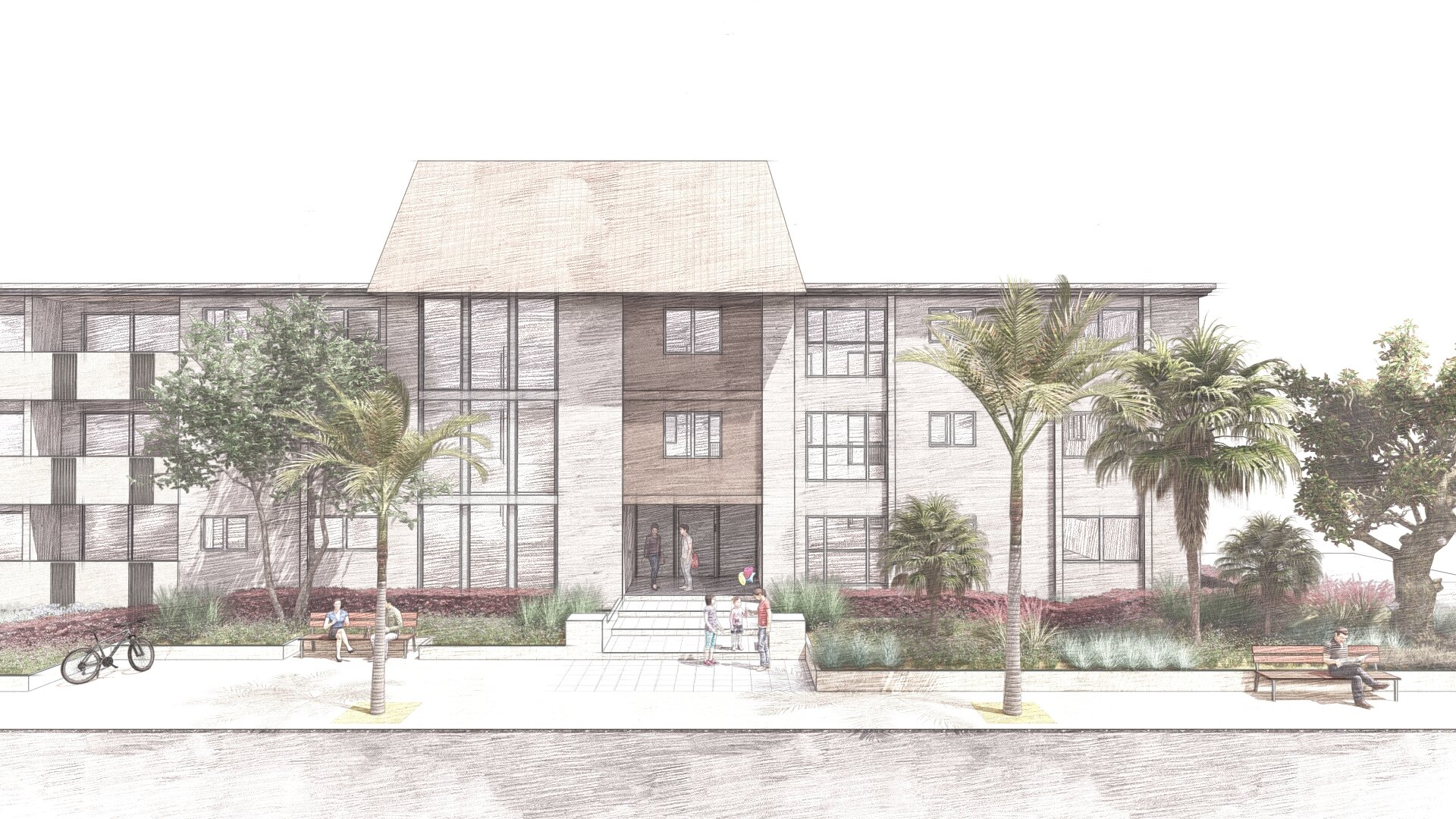
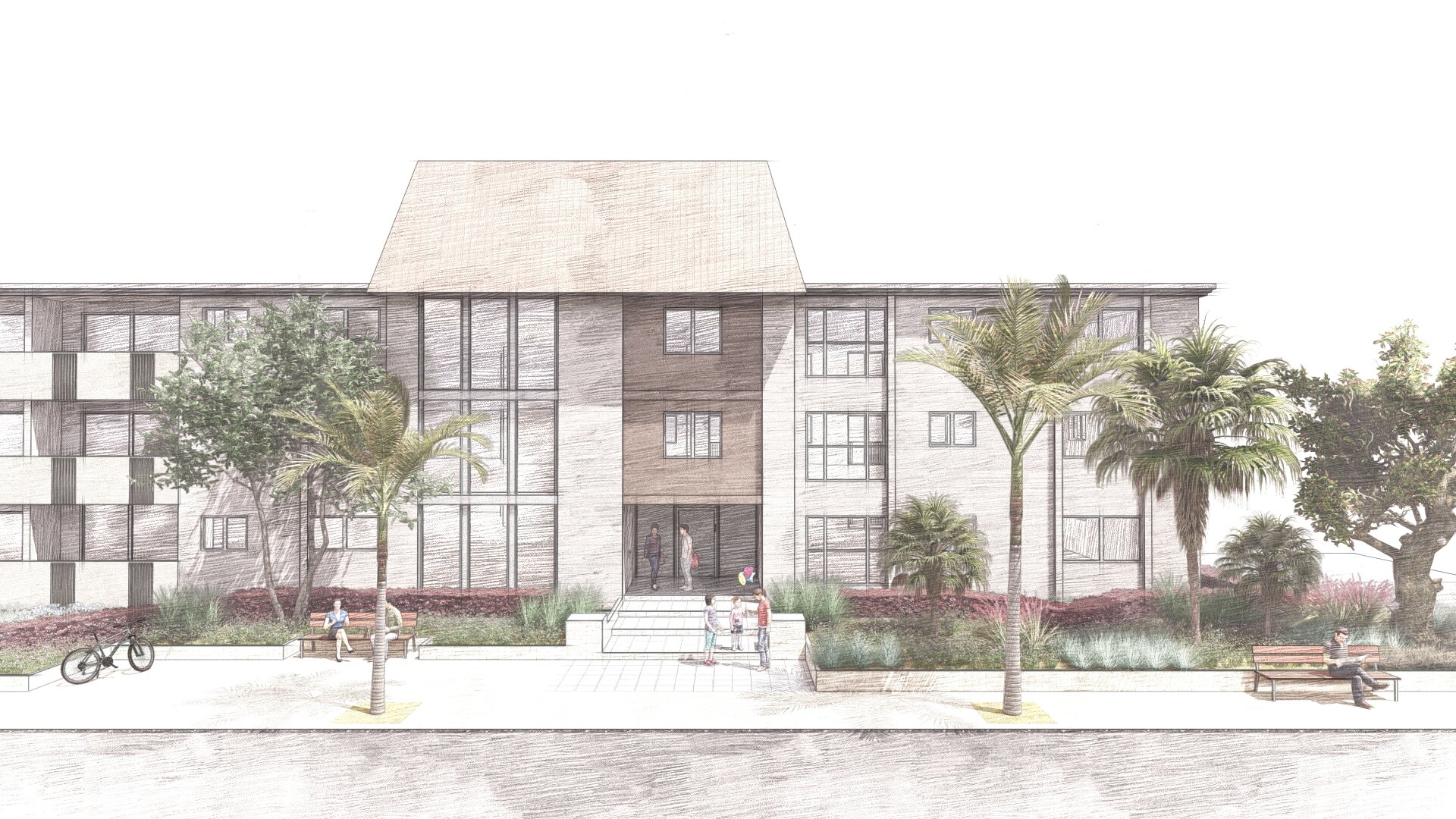
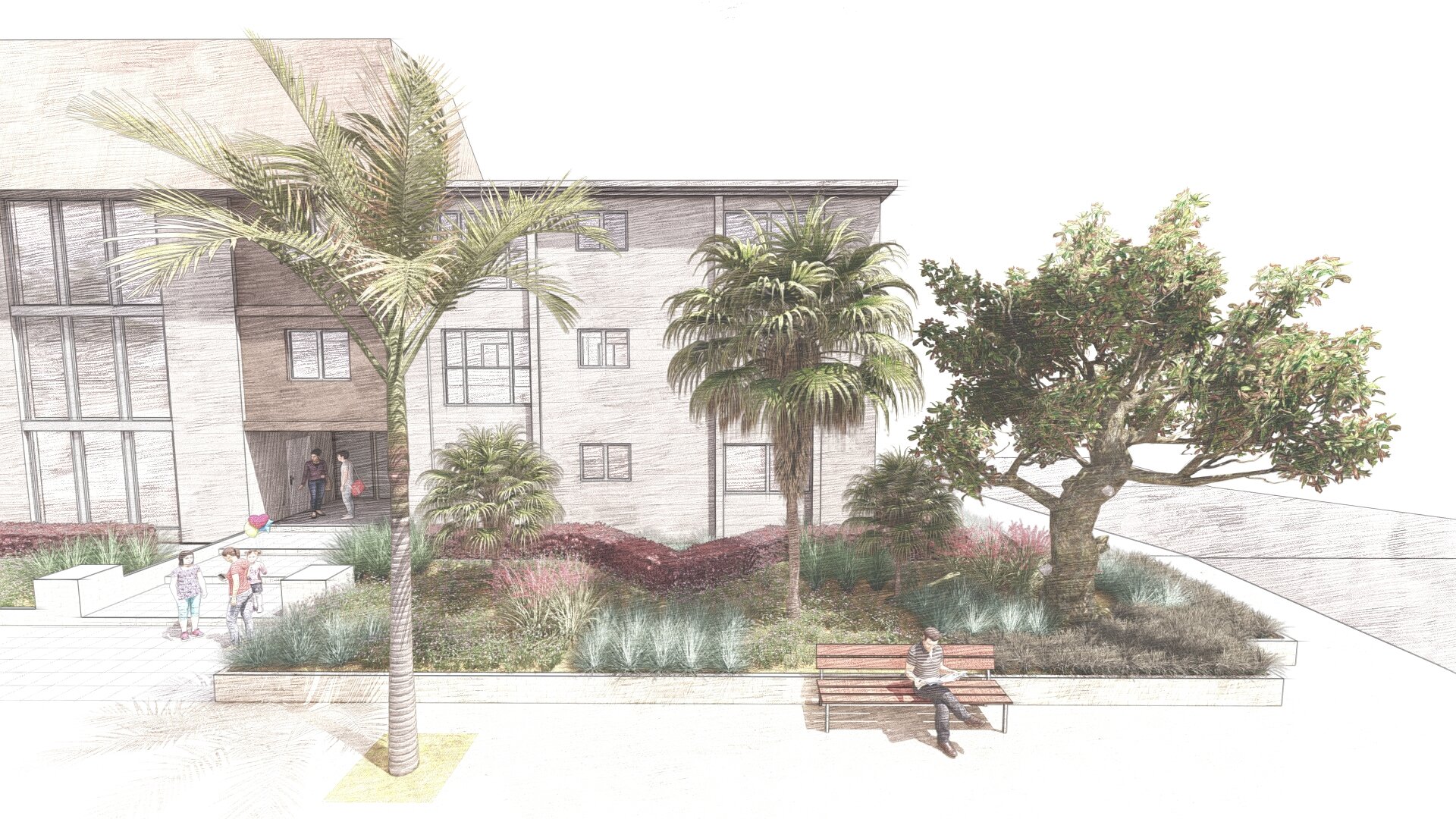
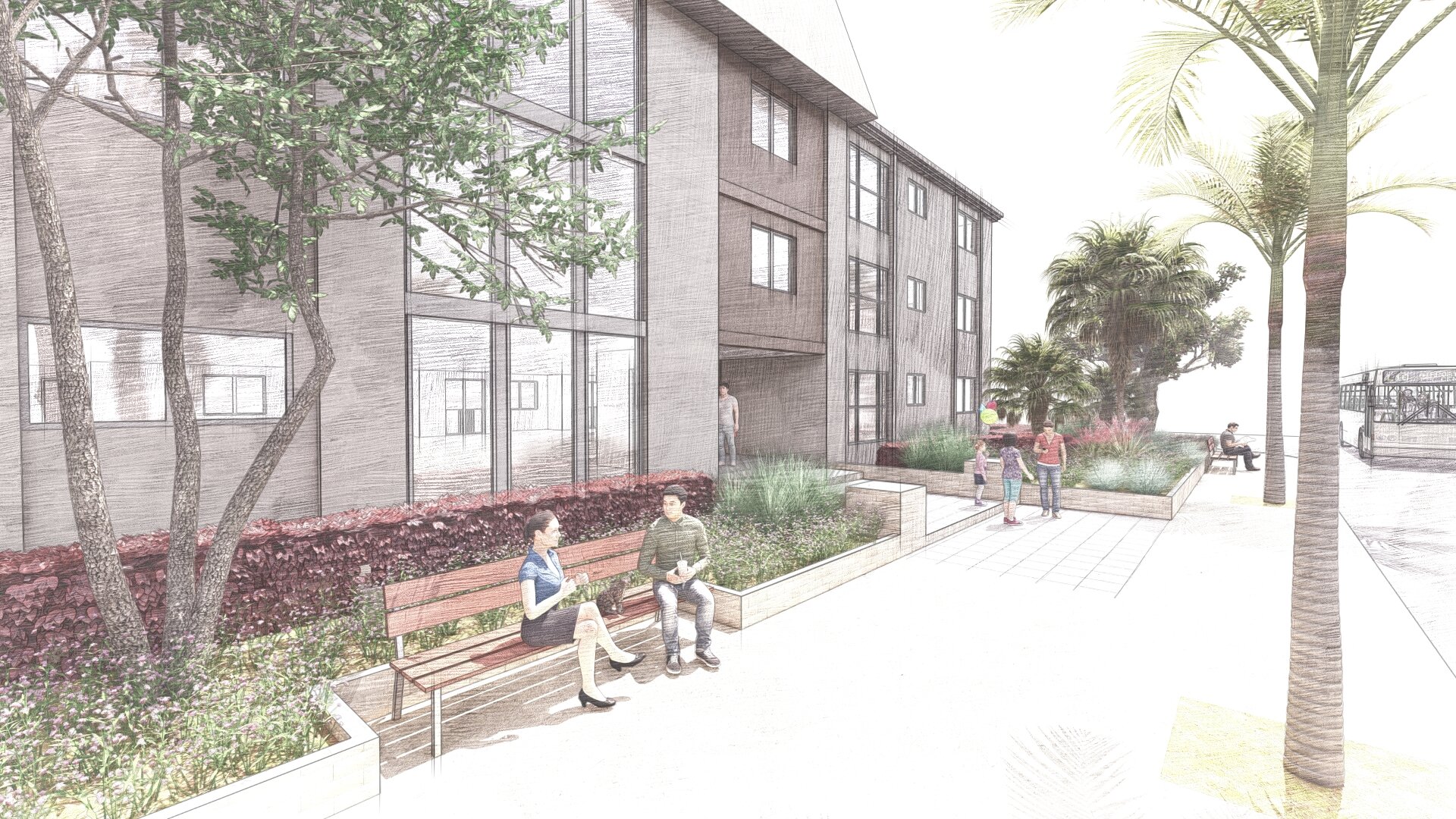
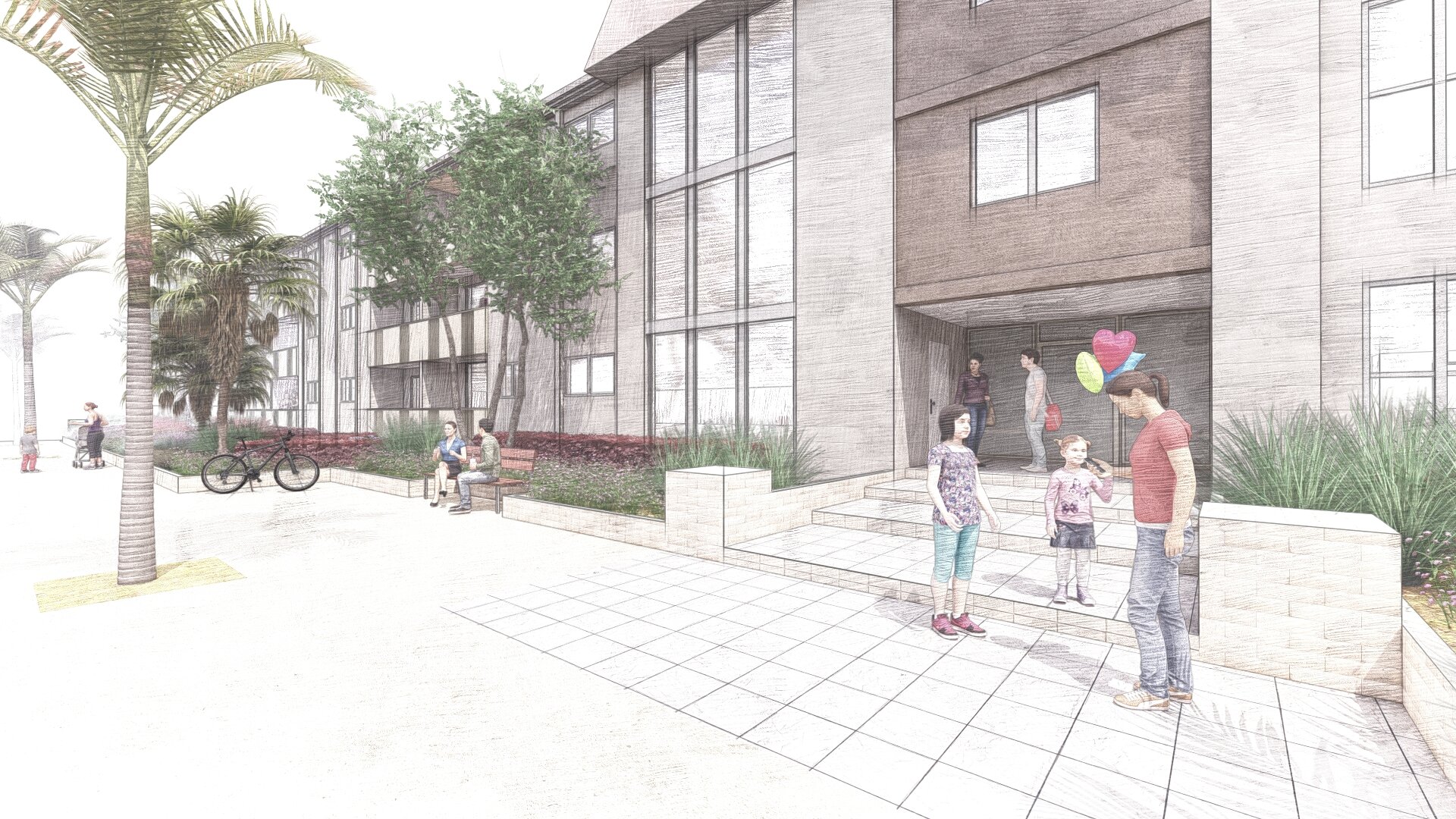
Perspective view of the Capistrano HOA urban scape project featuring California native planting, shaded benches, and sustainable pathways integrated into the residential building frontage.
Key Features of the Design:
Unifying Hedge Design
A continuous purple hedge acts as the backbone, framing the community and creating a recognizable identity.
Diverse Planting Pockets
Spaces within the framework allow for seasonal variation, native planting, and microhabitats that attract pollinators and wildlife.
Streetscape Redefined
Pathways, edges, and circulation are softened, reducing heat island effect and enhancing comfort for residents.
Community Identity
The project creates a shared aesthetic that strengthens pride and connection among residents.
Ecological Impact
Beyond aesthetics, the design supports urban biodiversity, soil restoration, and water efficiency. By reducing hardscape and increasing green mass, the project contributes to cleaner air, cooler streets, and healthier ecosystems in San Diego’s urban fabric.
PROJECT DRAWINGS & DOCUMENTATION

Concept plan for the Capistrano HOA landscape renovation in San Diego showing coherent design elements, waiting areas, service paths, and sustainable plantings for community use.

Detailed planting and hardscape plan for the Capistrano HOA urban scape project with decomposed granite paths, retaining walls, hedge planting areas, and drought-tolerant design.
HOA Landscape Renovation for Vibrant Community - San Diego, California.
Client Reflection
“We never really thought of red hedge. Such a simple and strong element creates a huge difference for the appearance and aesthetic of the building. Thank you for your effort in this design.”
- Capistrano board HOA

Ethno Village – Reykjavik, Iceland
Ethno Village in Reykjavik, Iceland, is a free-form cultural and ecological campus. Featuring spherical traveler pods, a carnival center with a green roof, and an outdoor concert area, it offers space for festivals, retreats, and sustainable community living.
“A Cultural Landscape of Connection, Nature, and Community”

Ethno Village Reykjavik Cultural Landscape Vision
A Living Sanctuary in Icelandic Nature
Ethno Village is envisioned as a free-form cultural landscape where visitors can fully connect with the natural rhythms of Reykjavik. Designed for both locals and travelers, the space offers opportunities for weekend retreats, ethnic festivals, meditation and yoga classes, team-building, and cultural events.
Concept video of Ethno Village in Reykjavik, Iceland, presenting a futuristic cultural retreat with spherical eco-pods, geothermal steam, and communal gathering spaces, designed by LASD Studio.
Design Features
Spherical Traveler Pods – movable eco-pods that offer unique accommodation in harmony with the land.
Carnival Center – a main facility building with a green roof, blending architecture and ecology.
Concert & Event Area – an open-air gathering space for music, art, and community celebrations.
Sustainable Vision
The design embodies flexibility, ecological balance, and cultural storytelling. With relocatable pods and natural zoning, Ethno Village evolves over time, responding to the needs of its visitors while maintaining biodiversity and minimal impact on the land.
Global Relevance
Ethno Village reflects LASD Studio’s philosophy: creating landscapes that balance human culture with ecological continuity. It is both a destination and a living artwork — where tourism, community, and sustainability converge.