

Contemporary Landscape Design in Chula Vista, California
A pool-centered contemporary garden in Chula Vista where clean geometry, shaded outdoor rooms and climate-responsive planting support elegant daily life, privacy and biodiversity.
A pool-centered private garden where architectural clarity, outdoor life and ecological intelligence become one composition.
A successful contemporary landscape is not defined by how many features it contains. It is defined by how naturally every element belongs together.
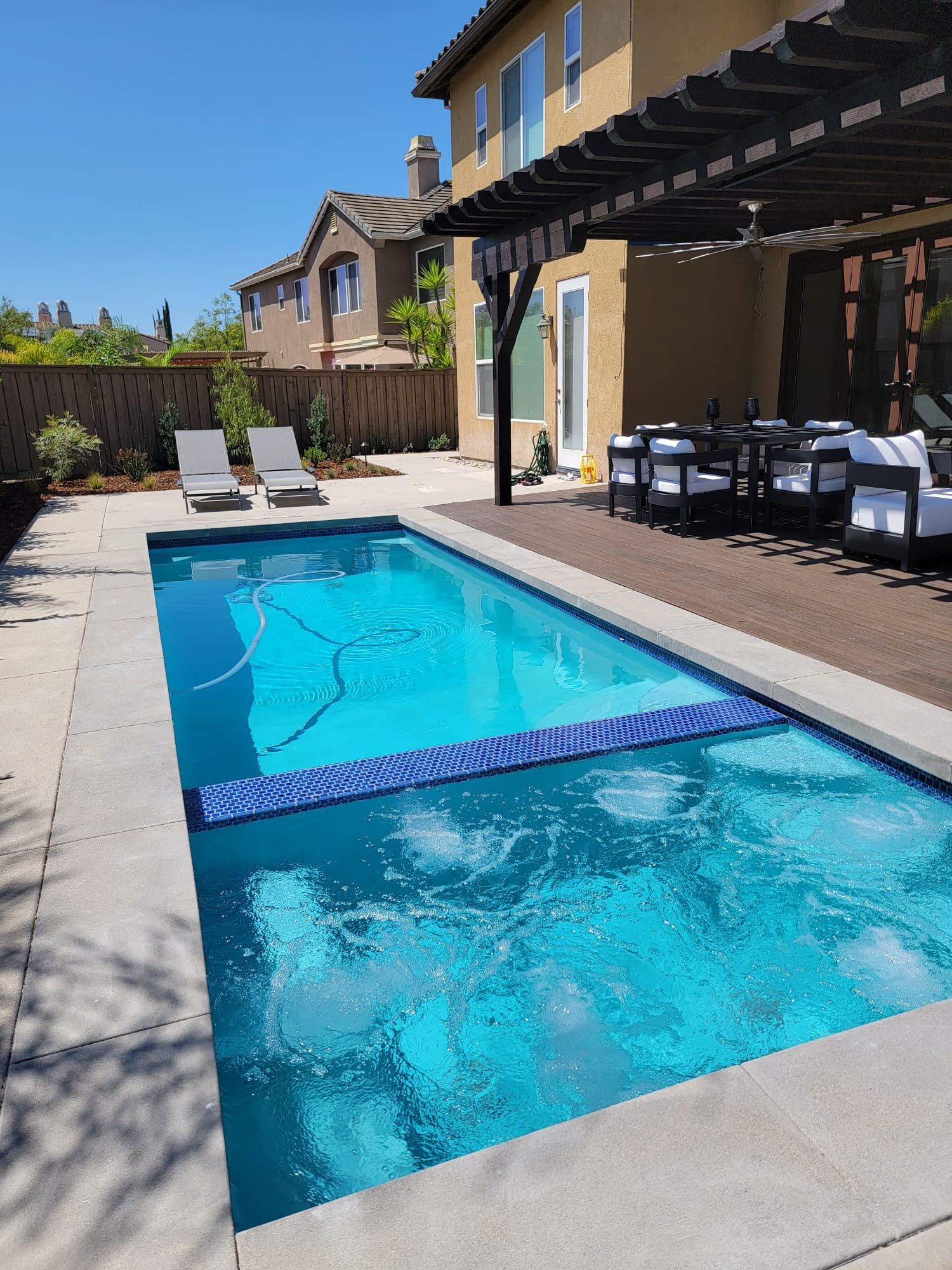
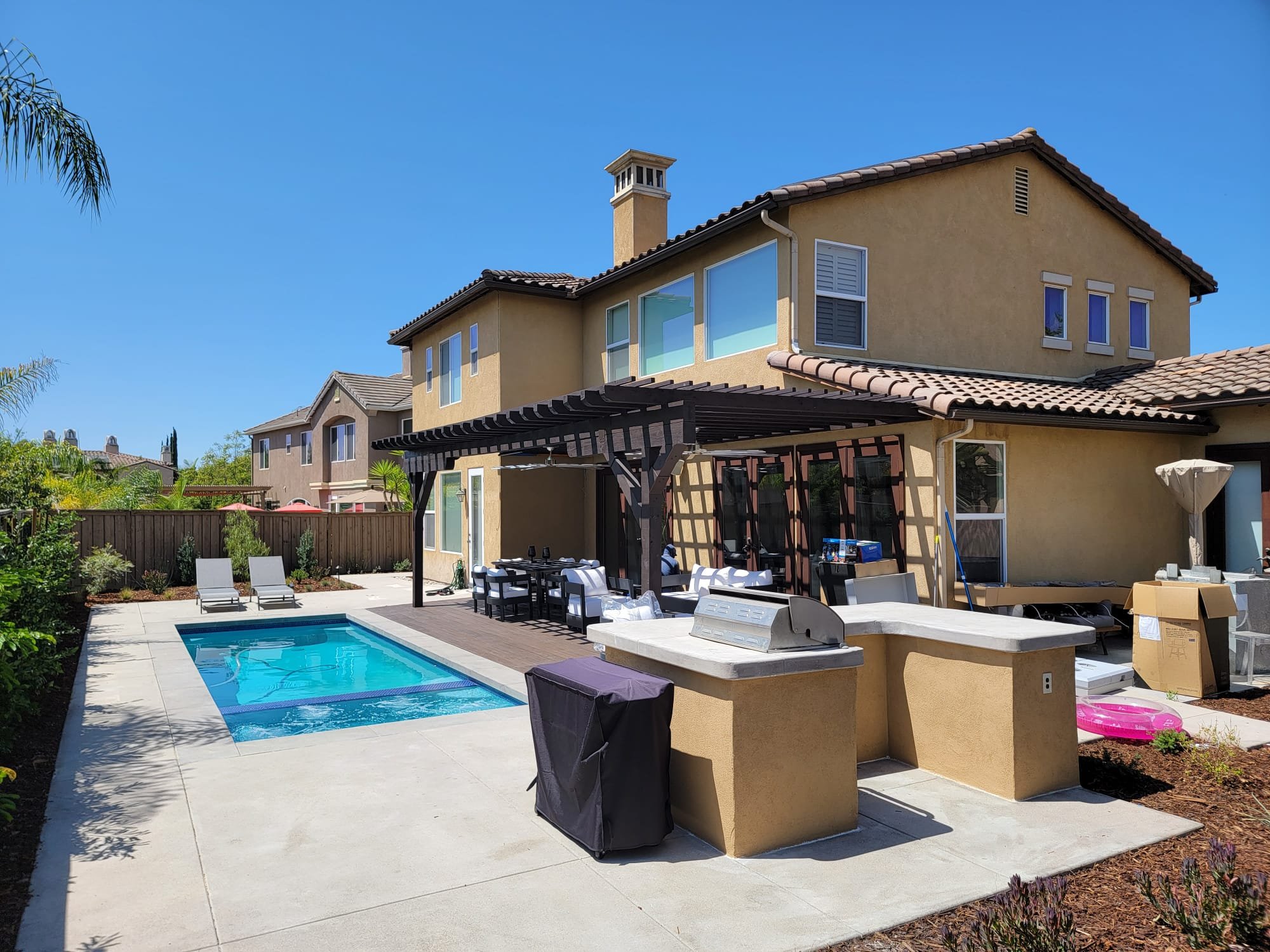
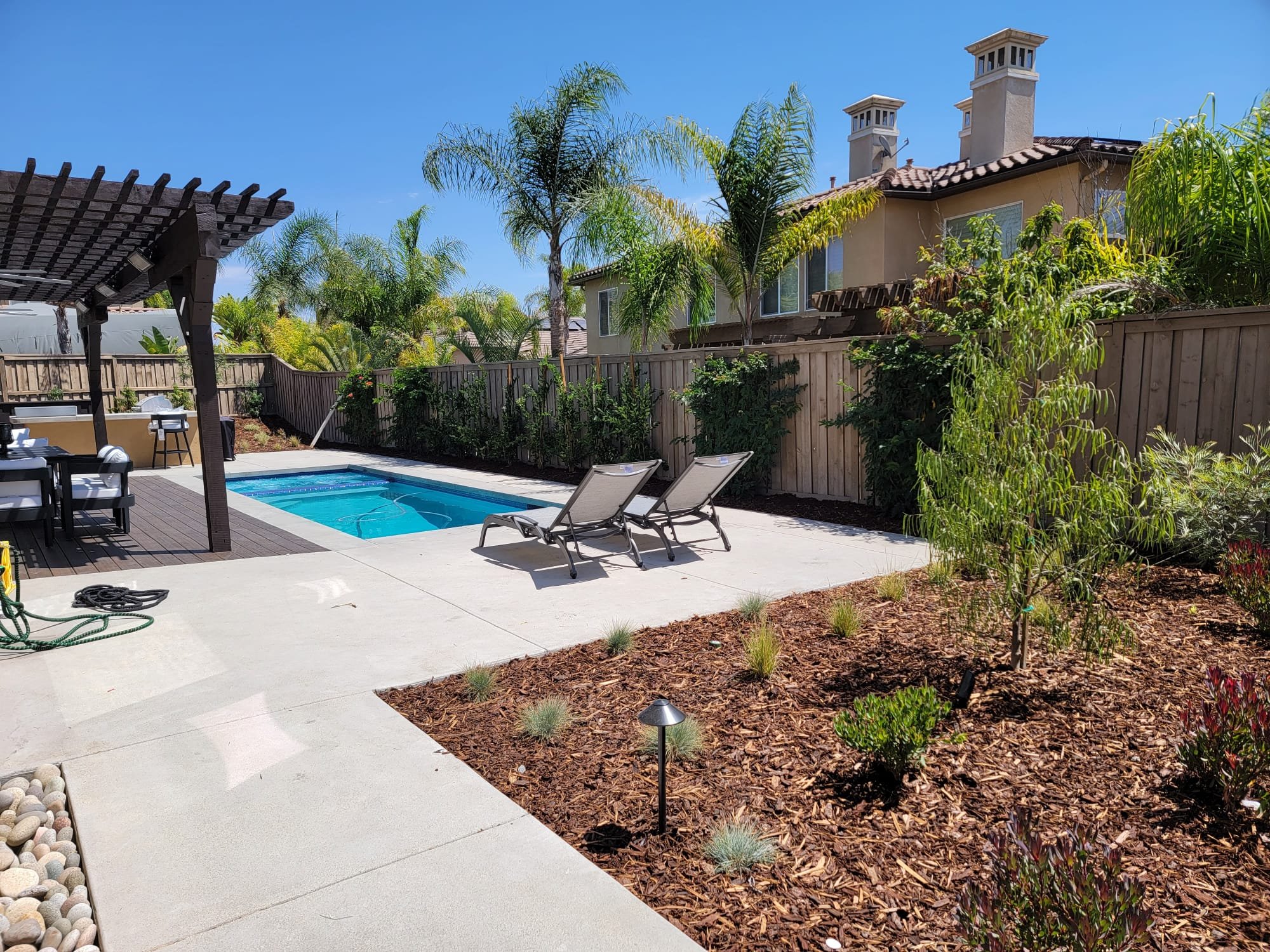
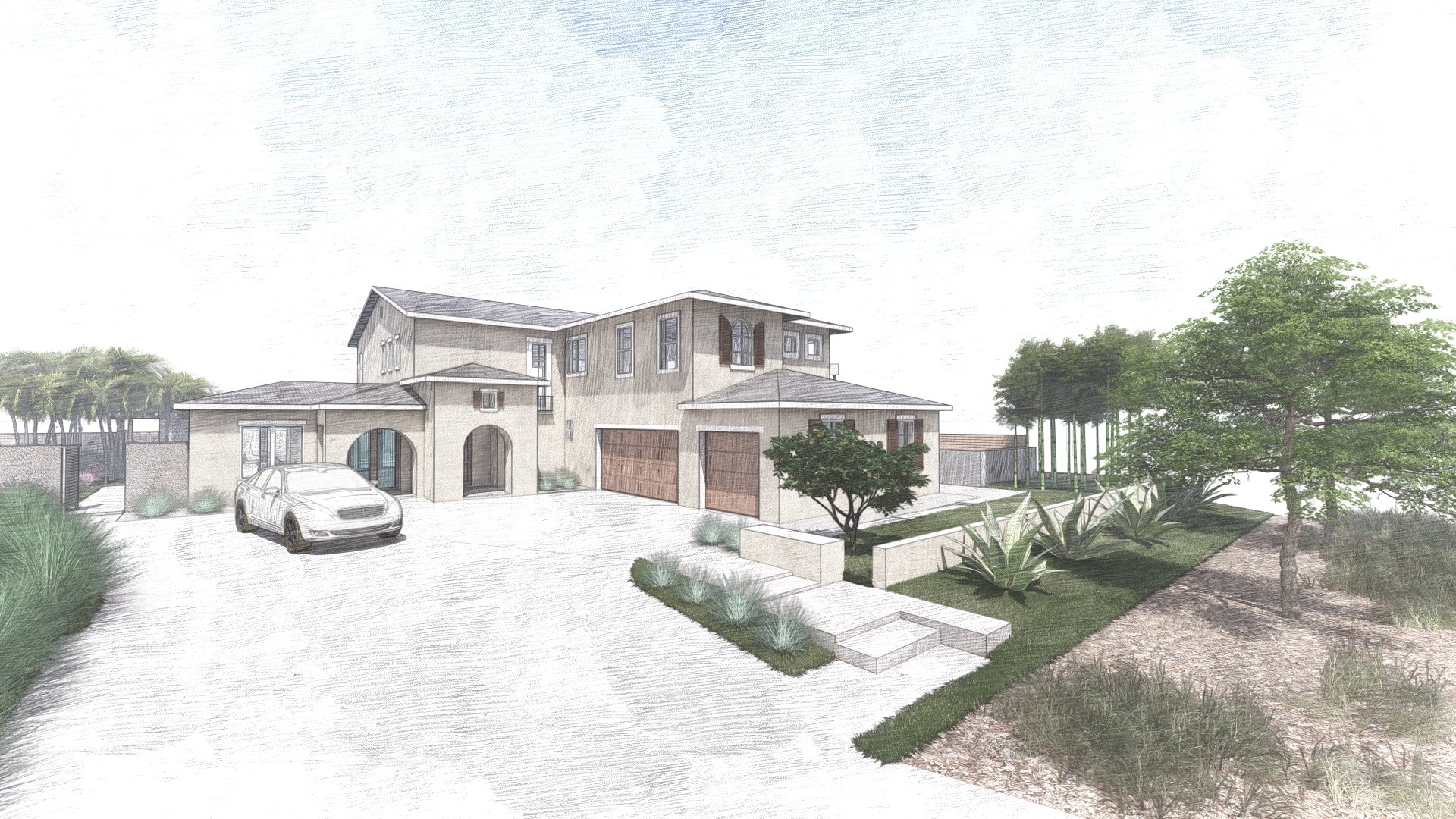
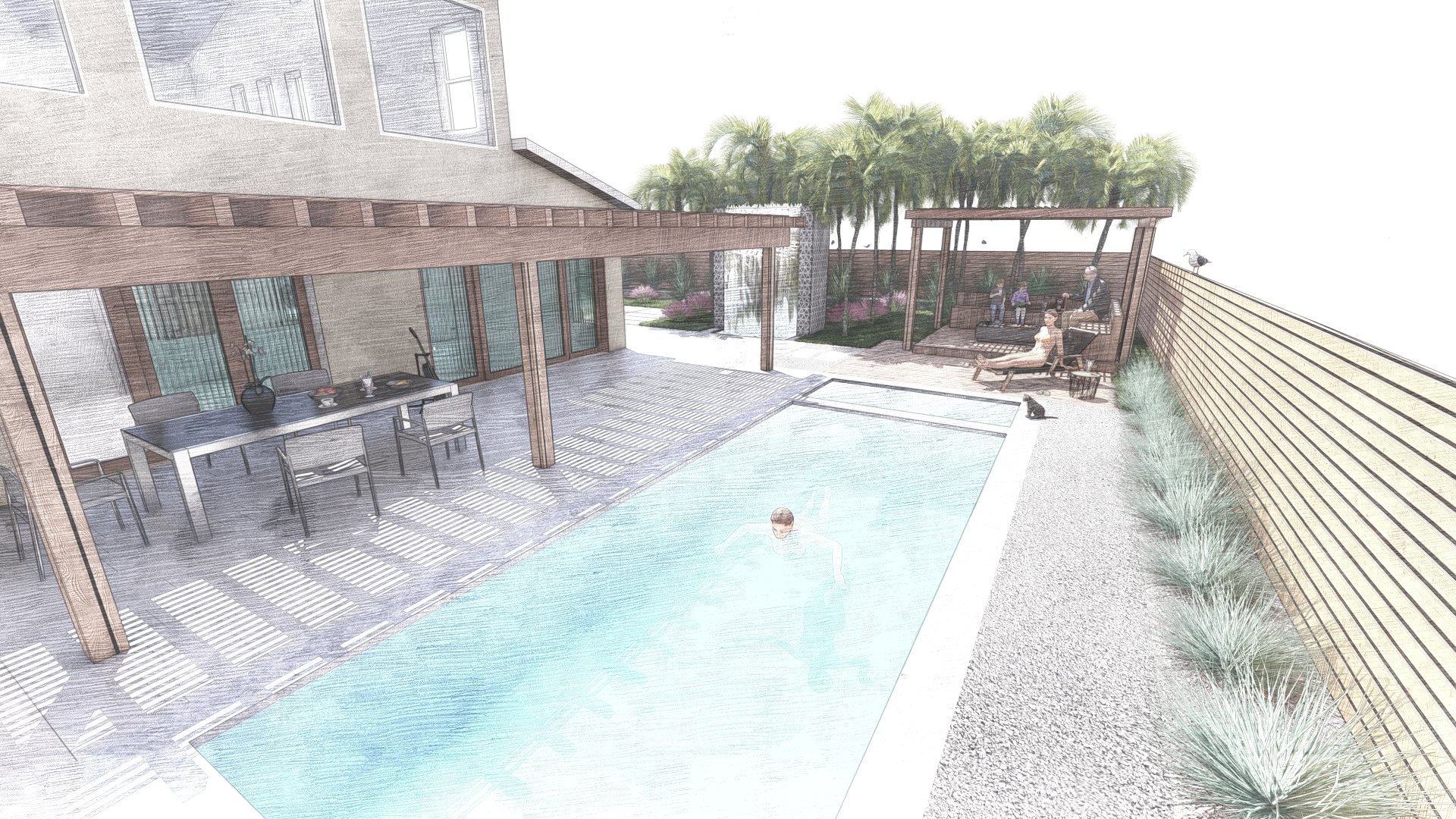
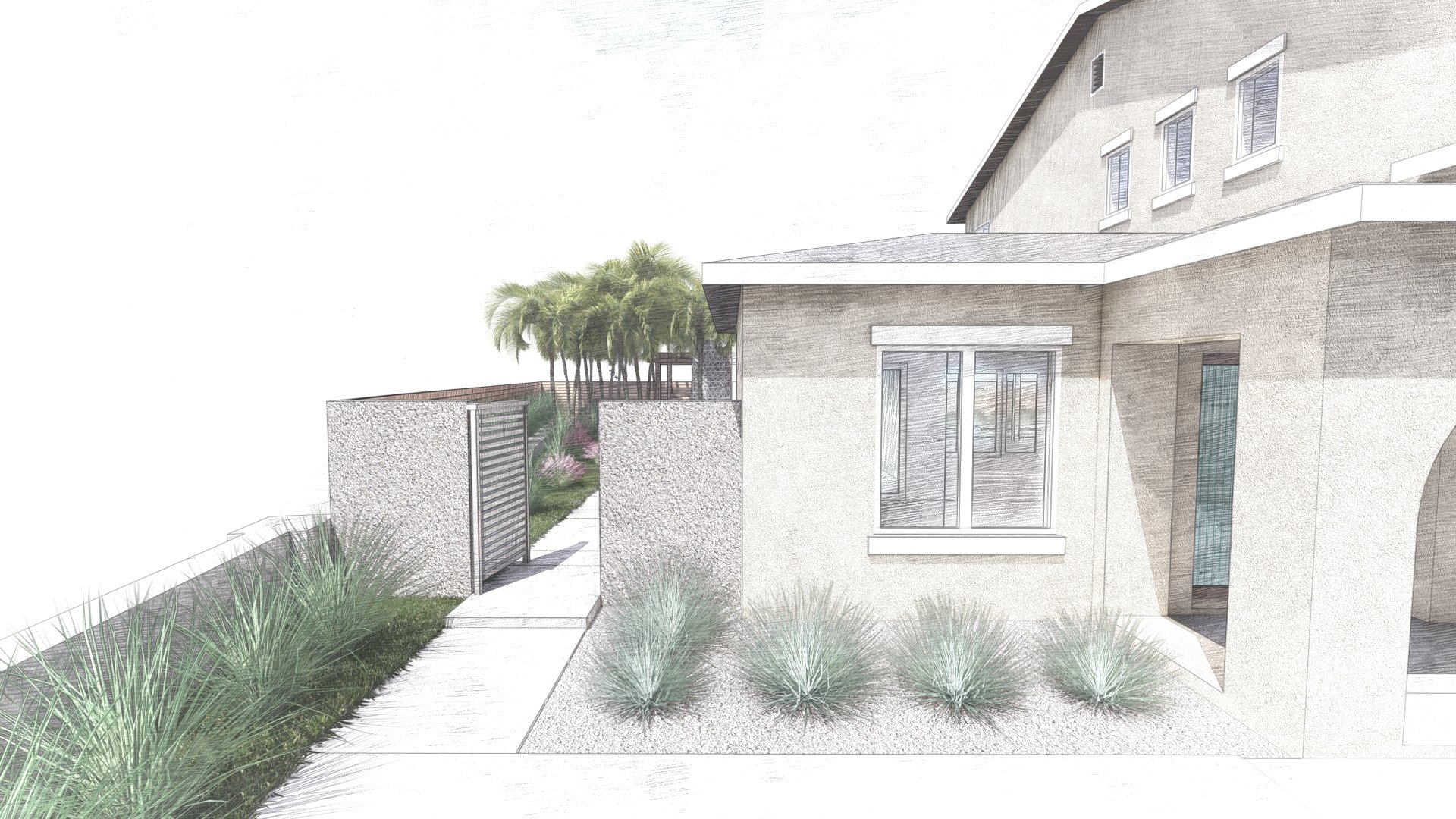
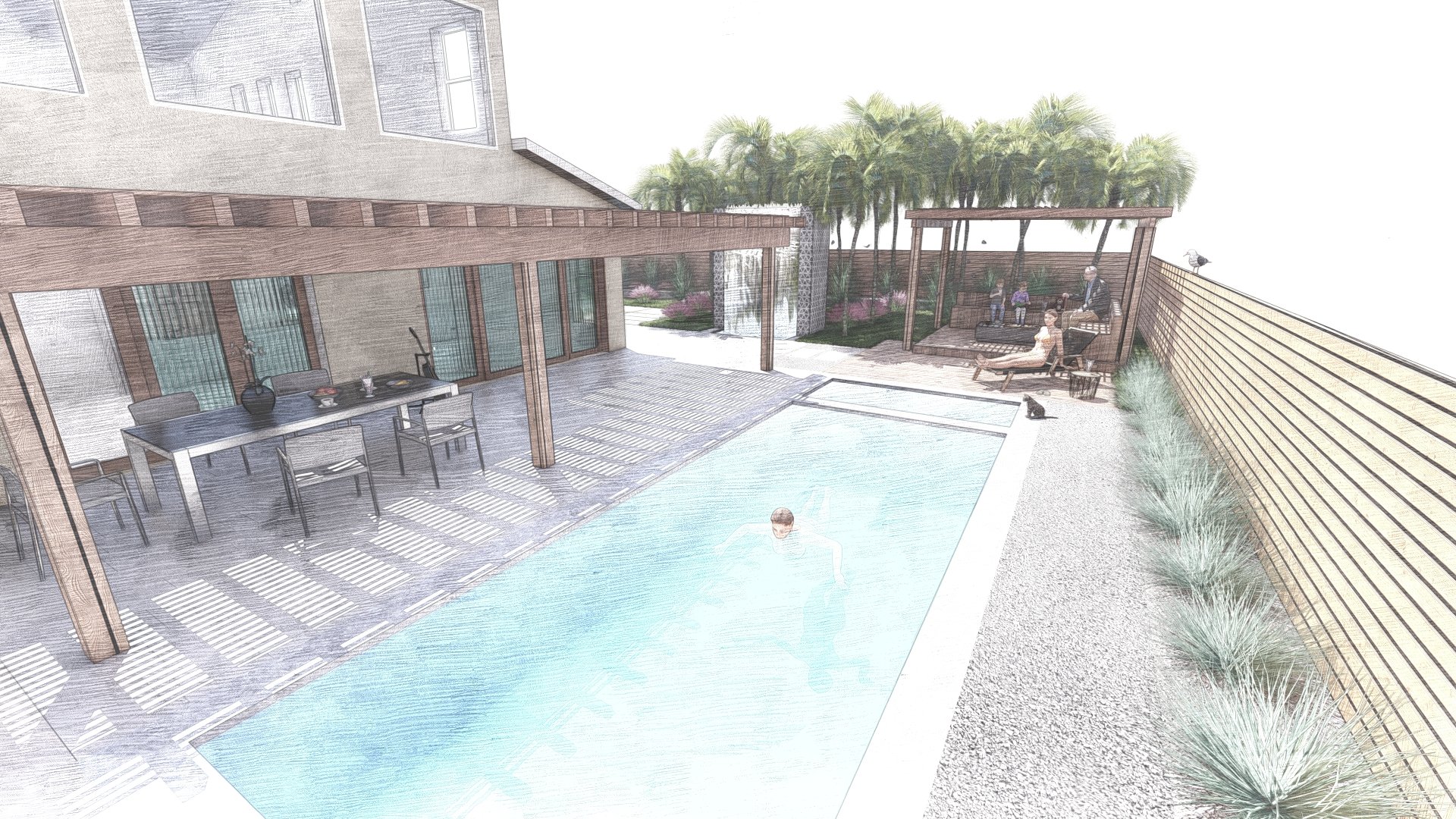
For this private Chula Vista property, LASD Studio organized the landscape around a clear architectural framework: a calm swimming pool, a generous terrace, a shaded pergola, an outdoor kitchen and layered perimeter planting. Rather than competing for attention, these elements work as one continuous environment for daily life, entertaining and quiet retreat.
The result is controlled without feeling sterile, refined without unnecessary ornament, and ecologically alive without losing its contemporary character.
Location: Chula Vista, California
Project Type: Private Residential Landscape, Contemporary Patio, Lounge Zone and Garden Design
Design Focus: Poolside living, shaded dining, outdoor kitchen, contemporary ecological planting, privacy, water and soil performance
Status: Built / Installed
Construction cost: $280,000
Design Studio: LASD Studio
One Clear Composition for the Entire Property
The house opens outward, and the garden begins at that threshold.
A visual line extends from the interior, crosses the long patio and continues toward the water. The pool becomes the central organizing plane: reflecting sky and architecture, bringing light into the composition and establishing a sense of calm across the property.
Terrace, pergola, lounge, outdoor dining, kitchen and planting are positioned in relationship to this center. Movement is direct and intuitive. Spaces feel generous because circulation is resolved before decorative elements are introduced.
This clarity matters on a substantial landscape project. Without a strong organizing idea, individual contractor decisions can gradually produce a collection of expensive but disconnected objects. Here, every decision reinforces the architecture and protects the coherence of the overall investment.
Outdoor Rooms Designed for Real Life
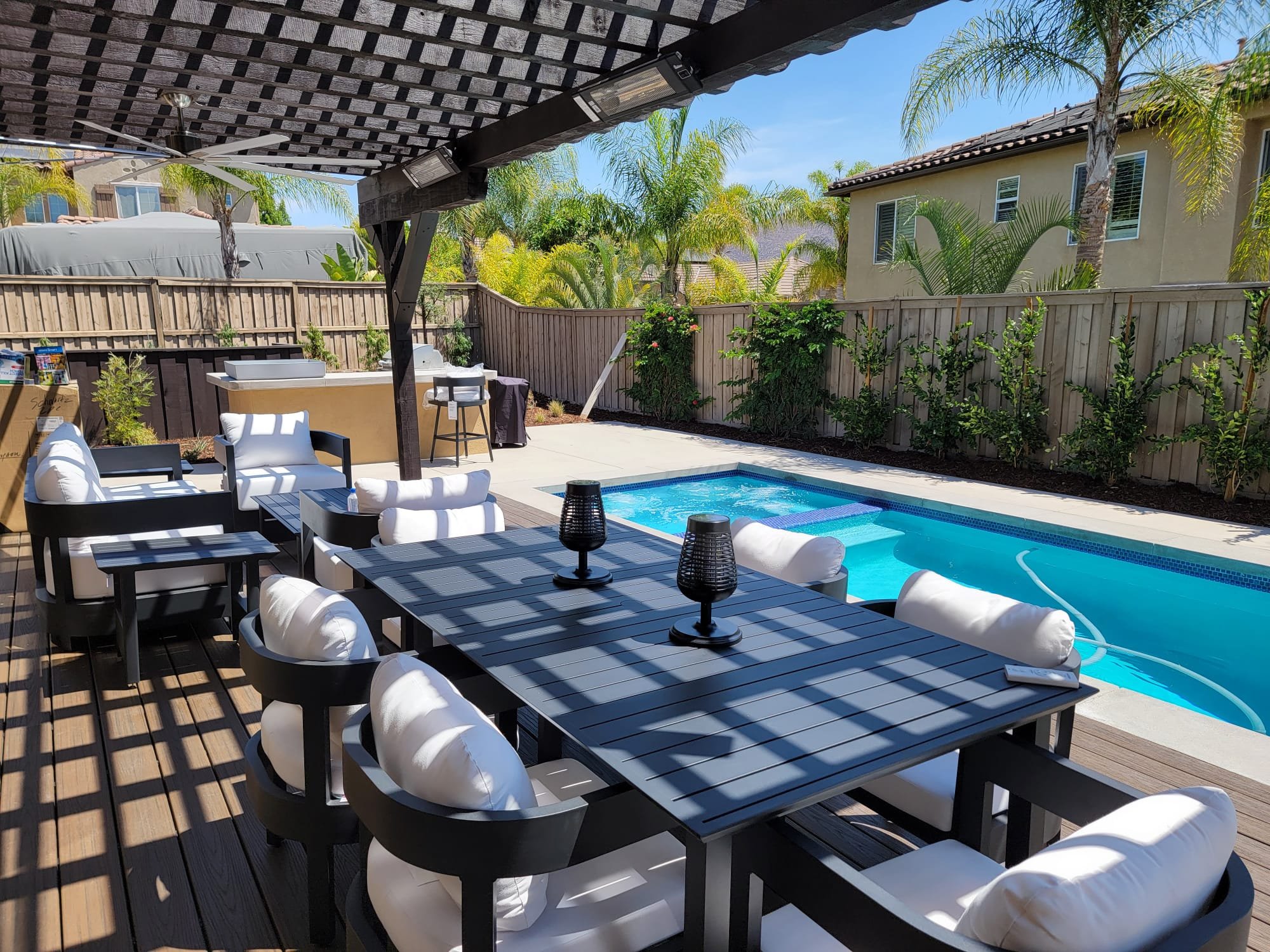
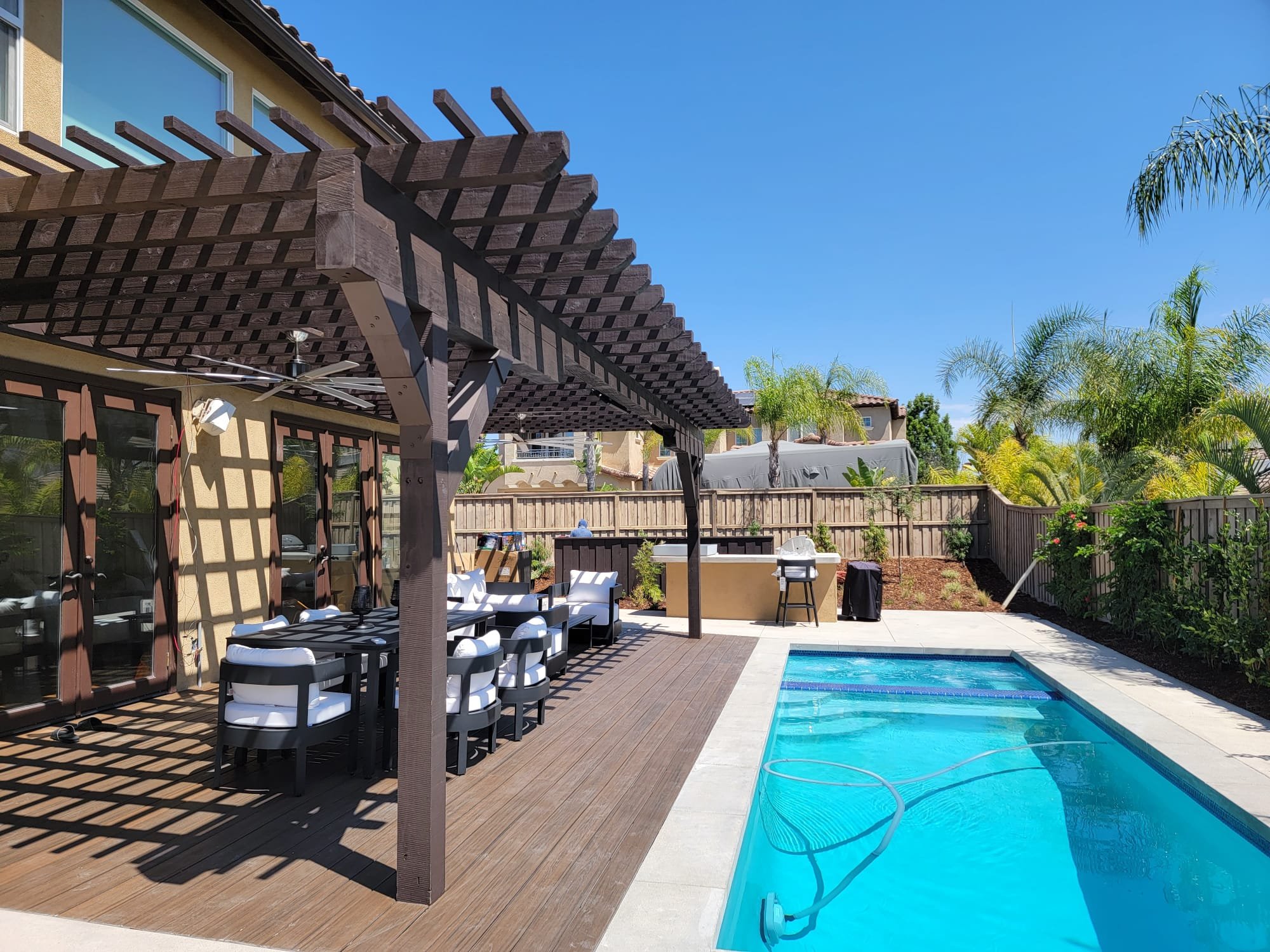
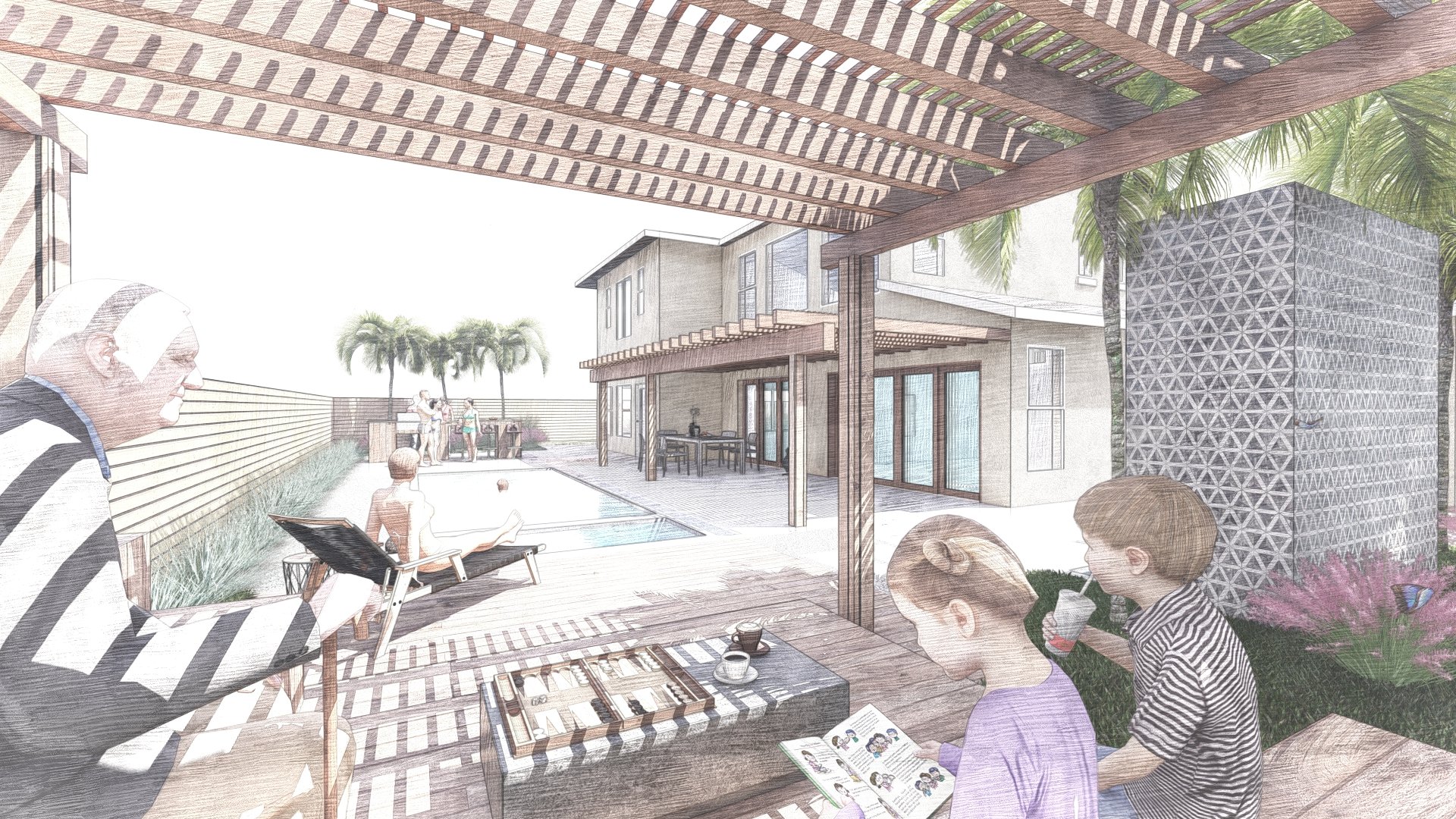
The pergola creates a room without walls.
Its overhead structure introduces rhythm and moving shadow while preserving air, openness and connection to the pool. Morning light reaches across the dining area; midday shade makes the terrace comfortable; later in the day, shadows move gradually across wood, fabric and water.
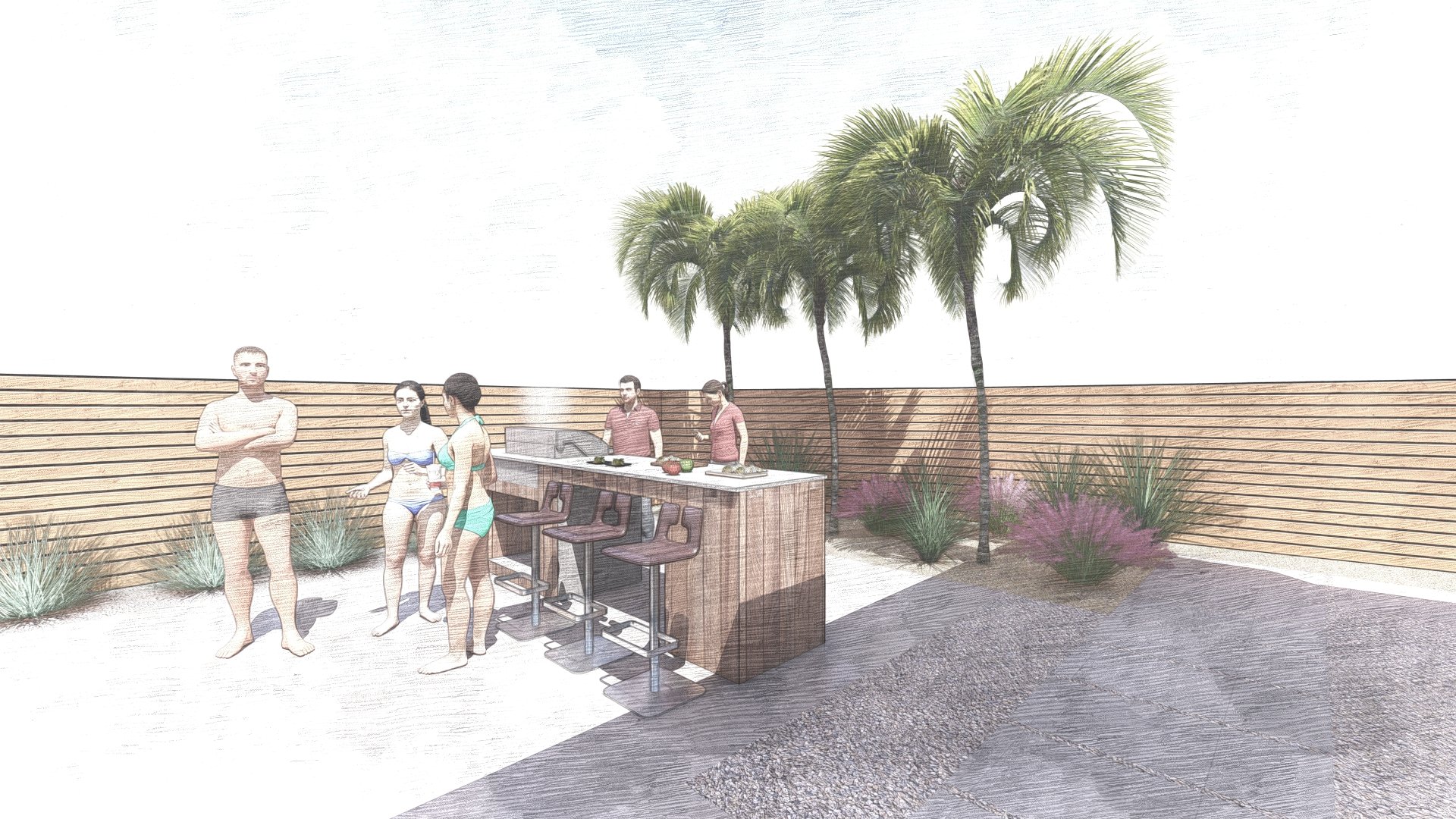
The outdoor kitchen is treated as an extension of the architecture rather than a freestanding appliance area. It supports family meals, larger gatherings and relaxed evenings without dominating the garden.
These spaces were conceived around the life that happens within them:
Quiet mornings beside the pool.
Comfortable outdoor dining protected from the strongest sun.
Informal gatherings around food, water and fire.
Open space for movement without visual clutter.
Privacy that does not make the garden feel enclosed.
The deeper luxury is not excess. It is resolution: a landscape that feels effortless because hundreds of decisions have been brought under one clear design direction.
Experience the Contemporary Garden in Chula Vista. A luxury estate design with modern pool, pergola, outdoor dining, and sustainable landscape architecture.
Materials That Create Calm and Continuity
Concrete establishes the primary ground plane. Its continuous geometry reinforces the contemporary architecture and gives the long patio visual order.
Wood introduces warmth and a more tactile human scale beneath the pergola and around the principal areas of use. The transition between concrete and wood is deliberately restrained—a change experienced through temperature, sound and movement rather than applied decoration.
Planting softens these architectural surfaces without obscuring them. The result is a balanced relationship between precision and growth, structure and seasonal change.
A Contemporary Garden Can Still Be Alive
Contemporary design does not need to produce a biologically empty landscape.
The open center of this garden is balanced by layered planting along its edges. Taller elements lift the canopy, shrubs create privacy and depth, and lower planting protects the soil surface while softening the boundary between hardscape and garden.
The planting strategy is conceived as a pollinator-supporting network rather than a collection of isolated ornamental specimens. A sequence of flowering plants can provide nectar and pollen through different parts of the season, while layered vegetation offers shelter and opportunities for wildlife movement.
This approach creates a garden that remains visually controlled while supporting butterflies, bees, hummingbirds and other beneficial species. Movement, sound and seasonal change become part of the experience of the property.
The California Department of Fish and Wildlife identifies pollinators as important contributors to plant reproduction and biodiversity. USDA Natural Resources Conservation Service guidance similarly emphasizes continuous and diverse bloom, nesting opportunities and protection from disturbance as fundamental components of pollinator habitat. California Department of Fish and Wildlife · USDA NRCS Pollinator Habitat Guidance
Water, Soil and Long-Term Landscape Performance
Ecological intelligence is not added to the project as a decorative narrative. It influences how the landscape performs. Planting is organized through hydrozoning so plants with compatible water requirements can be irrigated together. Soil strategy supports moisture retention where water is beneficial and drainage where roots require greater aeration. Groundcover helps reduce exposed soil and evaporation, while irrigation remains visually quiet within the composition. These principles align with California’s broader water-efficient landscape framework, which connects plant selection, hydrozones, irrigation efficiency, soil preparation and long-term water management. California Department of Water Resources — MWELO No universal water-saving percentage is claimed for this project. Actual performance depends on the final planting palette, irrigation equipment, installation, establishment period and ongoing management. The design objective is a landscape that uses water purposefully while maintaining shade, enclosure, seasonal interest and a genuinely garden-like atmosphere.
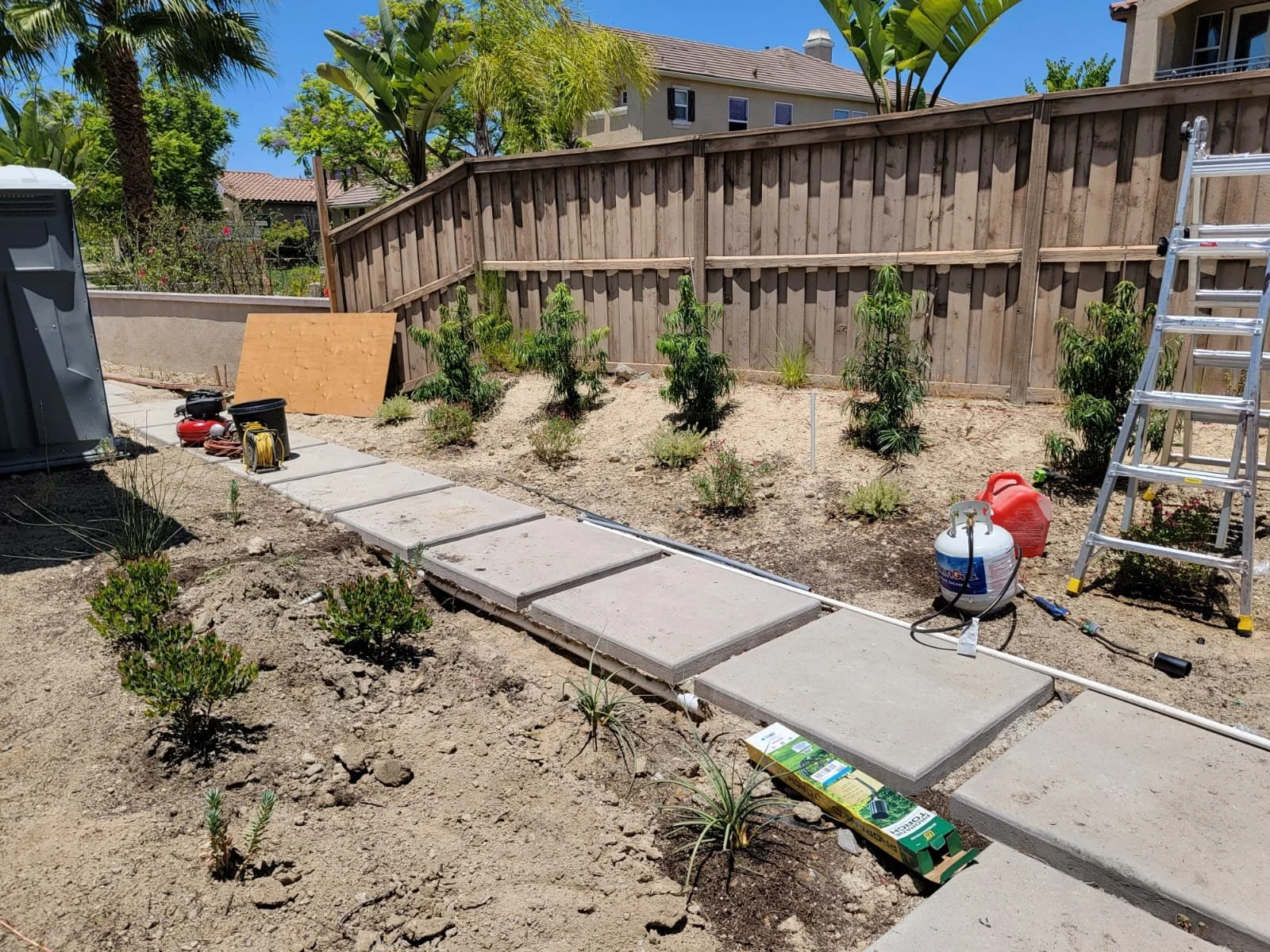
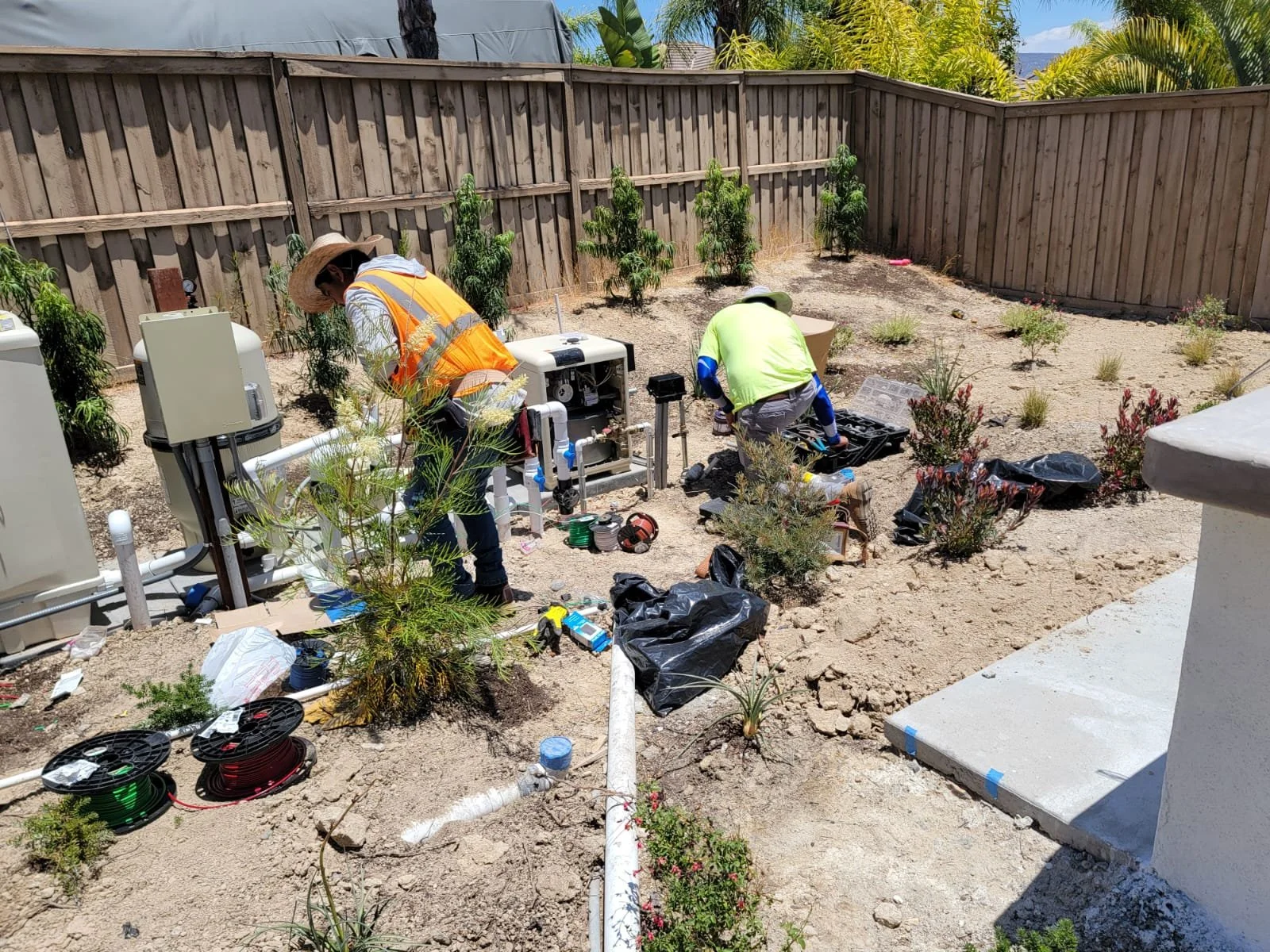
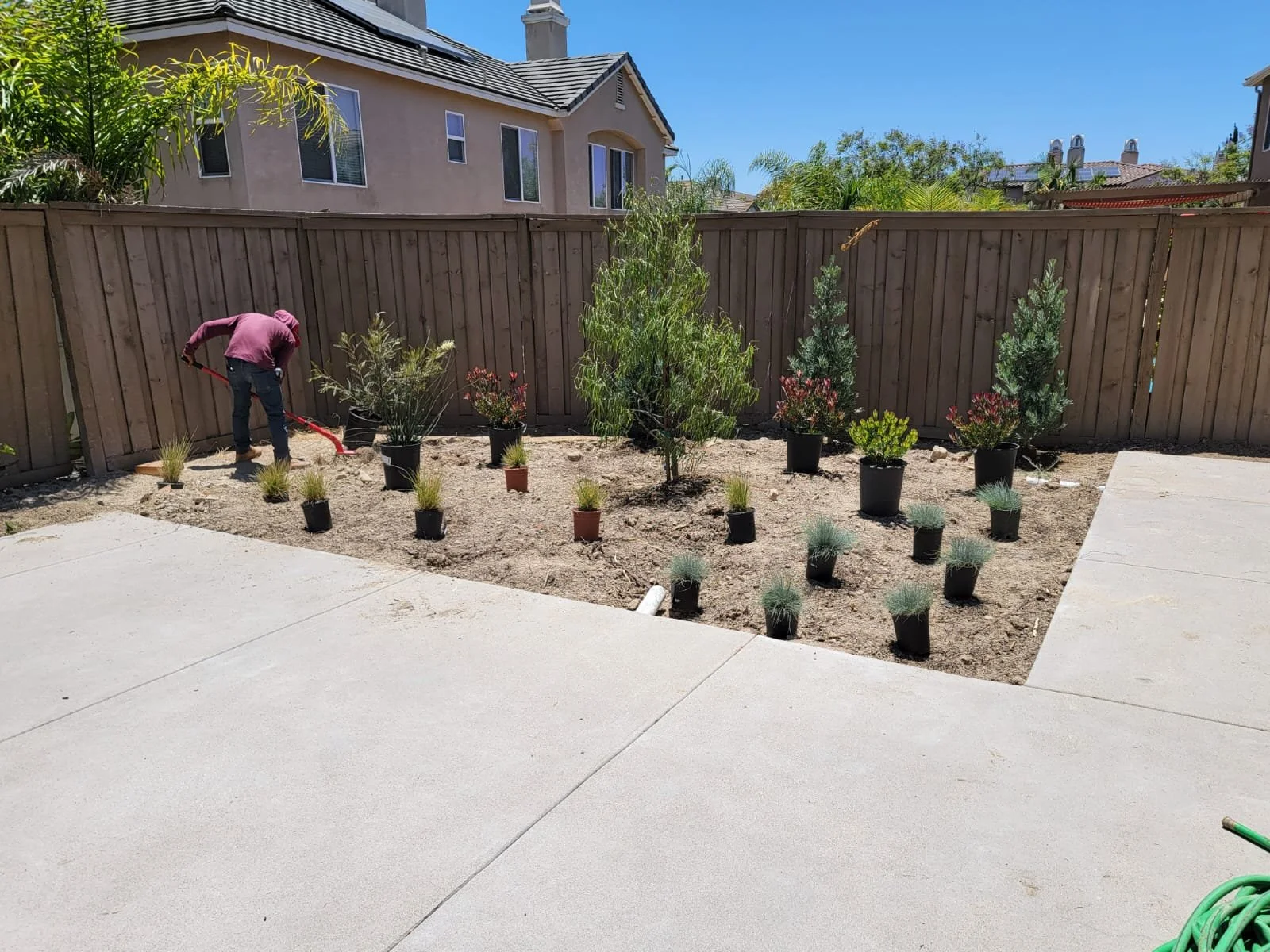
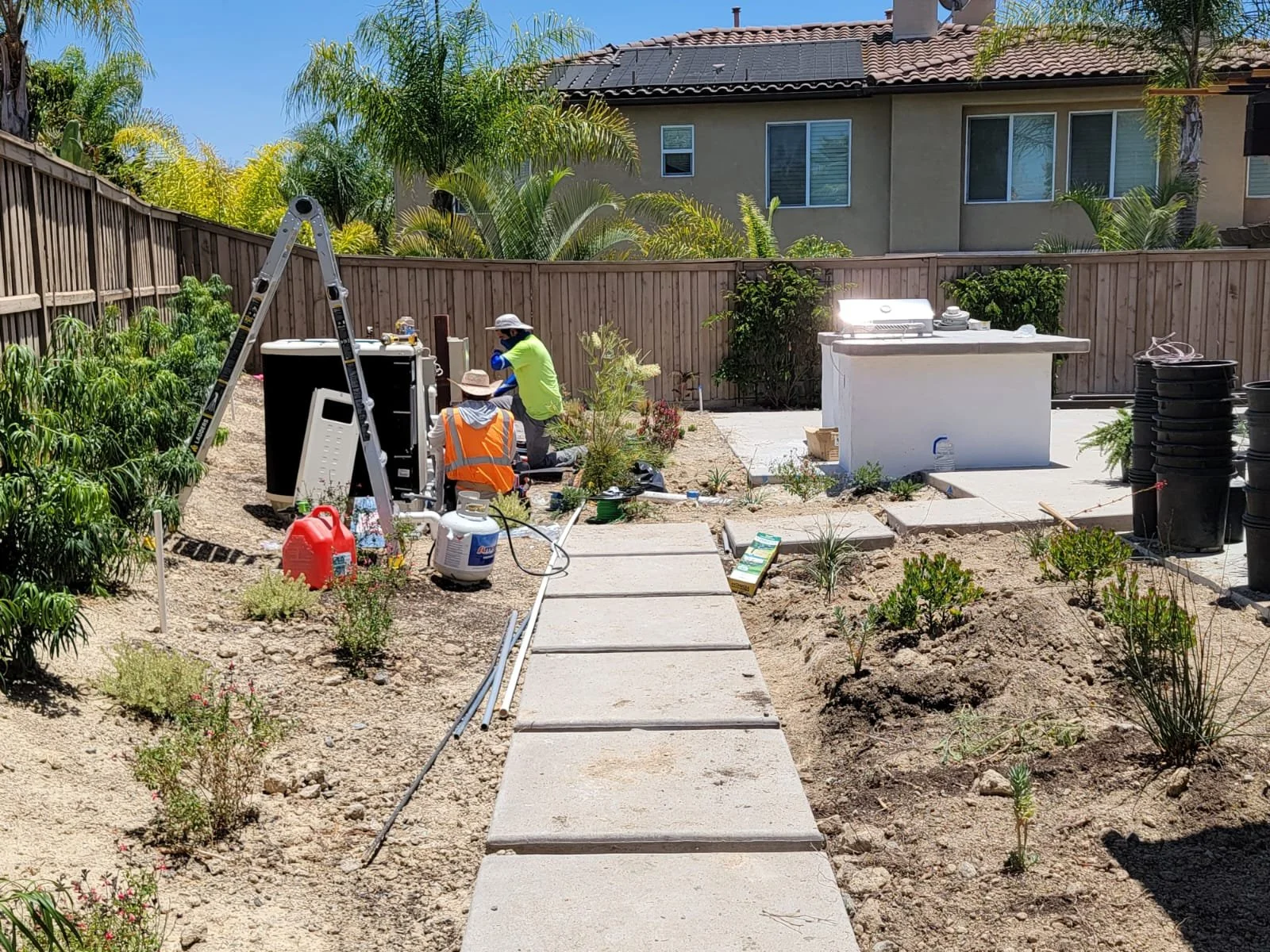
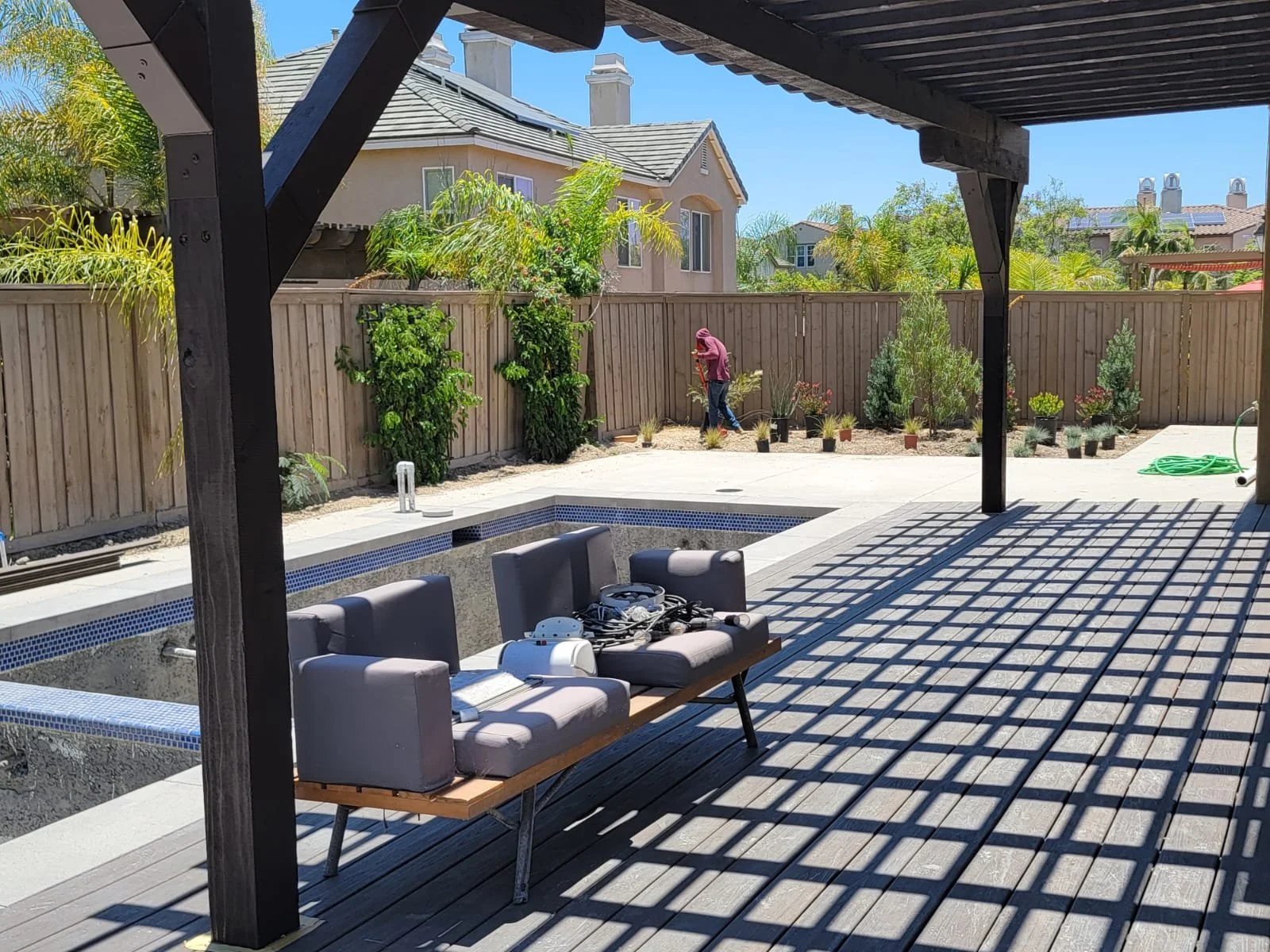
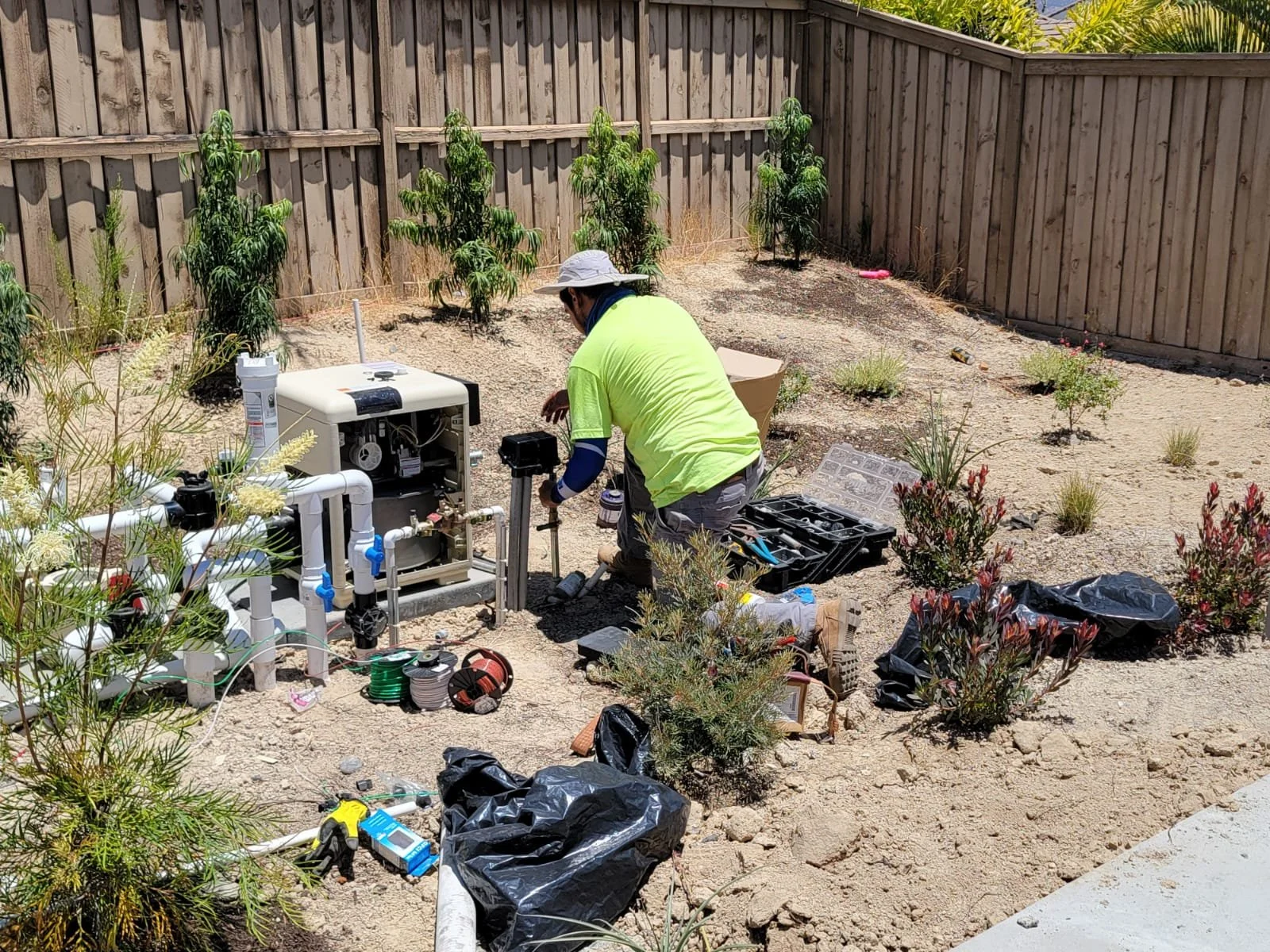
Work in Progress - Design Installation
Architecture, Ecology and Everyday Wellbeing
The garden is experienced in layers: water, shade, planting, fire, material and movement. Nothing is isolated.
From the pool, the architecture appears lighter. From the pergola, planting creates a soft frame around the open terrace. From inside the house, the garden becomes a composed view rather than an unrelated exterior area.
Over time, the planting can become fuller, habitat value can increase and the relationship between the built and living elements can grow richer. This is the principle behind LASD Studio’s approach to landscapes as evolving systems: the garden is not designed as a static installation-day image, but as a living trajectory.
The ultimate value is a property that feels clearer, calmer and more complete—beautiful for entertaining, comfortable for everyday life and capable of supporting a more resilient relationship with Southern California’s climate and living environment.
Begin with a Clear Direction
f you are considering a complete landscape transformation, LASD Studio begins with the architecture, the property and the way you want to live outdoors.
The preliminary consultation is a focused conversation with the Lead Designer about your goals, existing conditions, design direction, anticipated phases and estimated investment range.
Design and Ecological References
California Department of Water Resources — Model Water Efficient Landscape Ordinance
California Department of Fish and Wildlife — Pollinator Science
California Native Plant Society — Benefits of California Native Plants
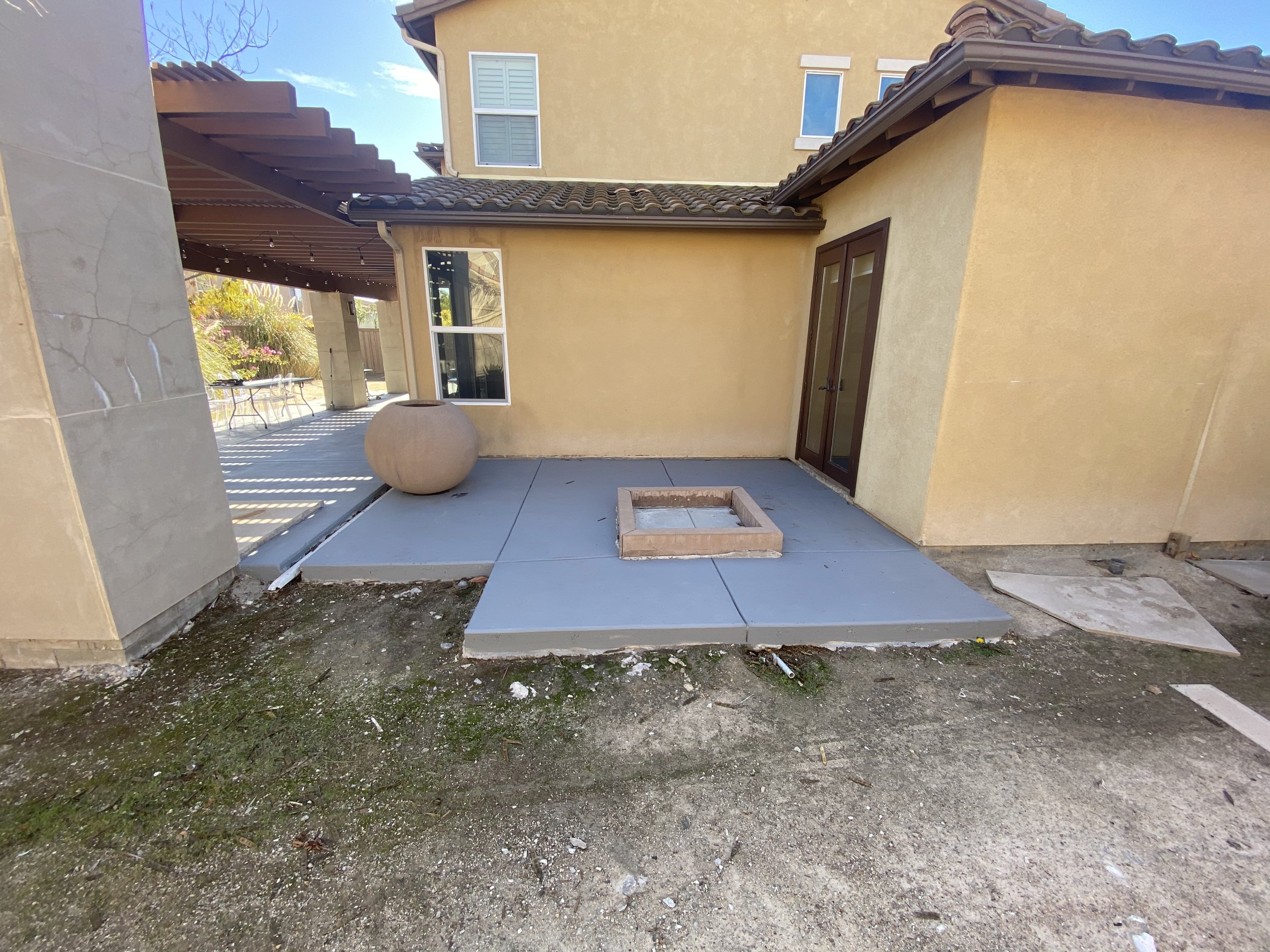
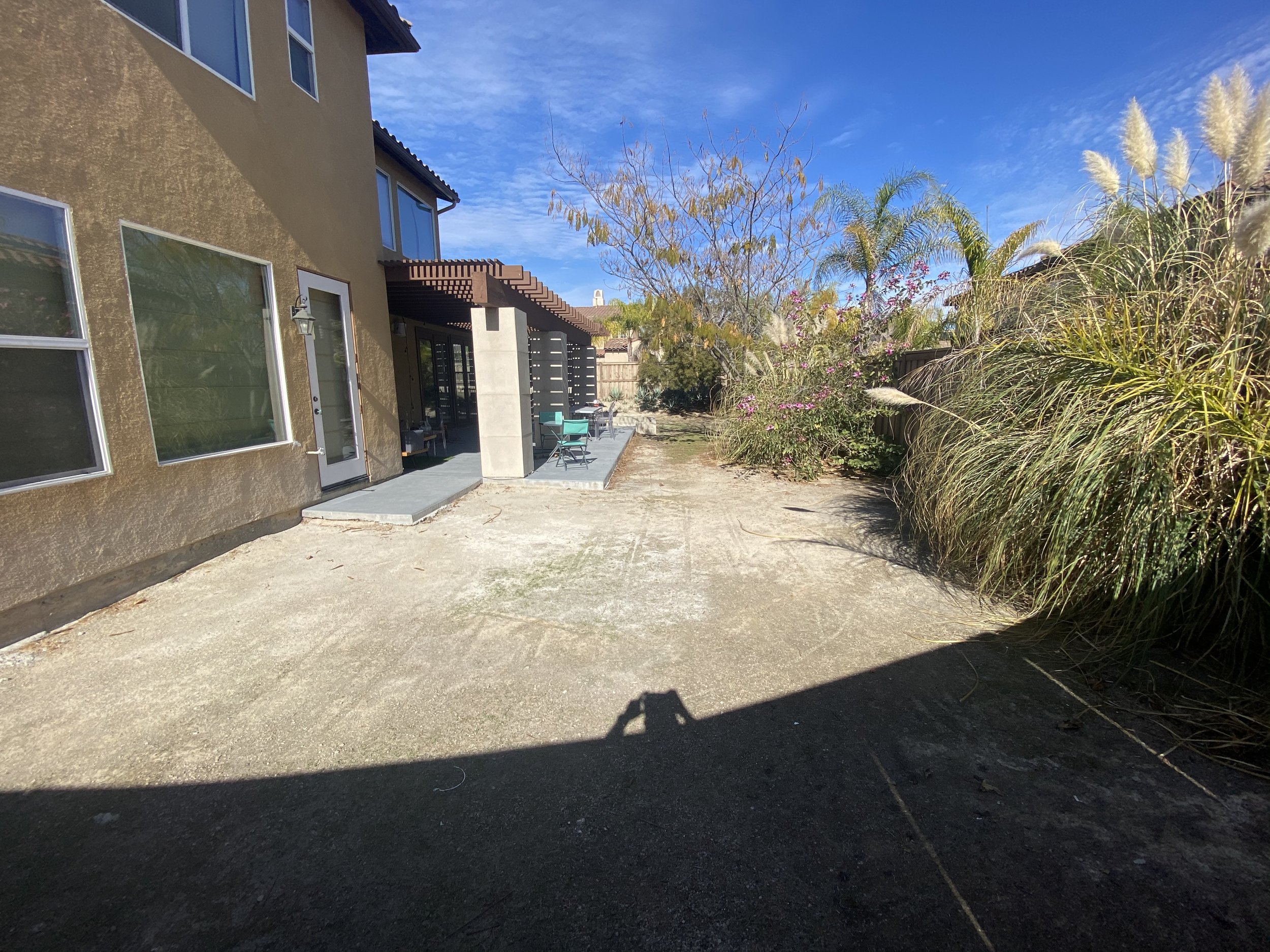
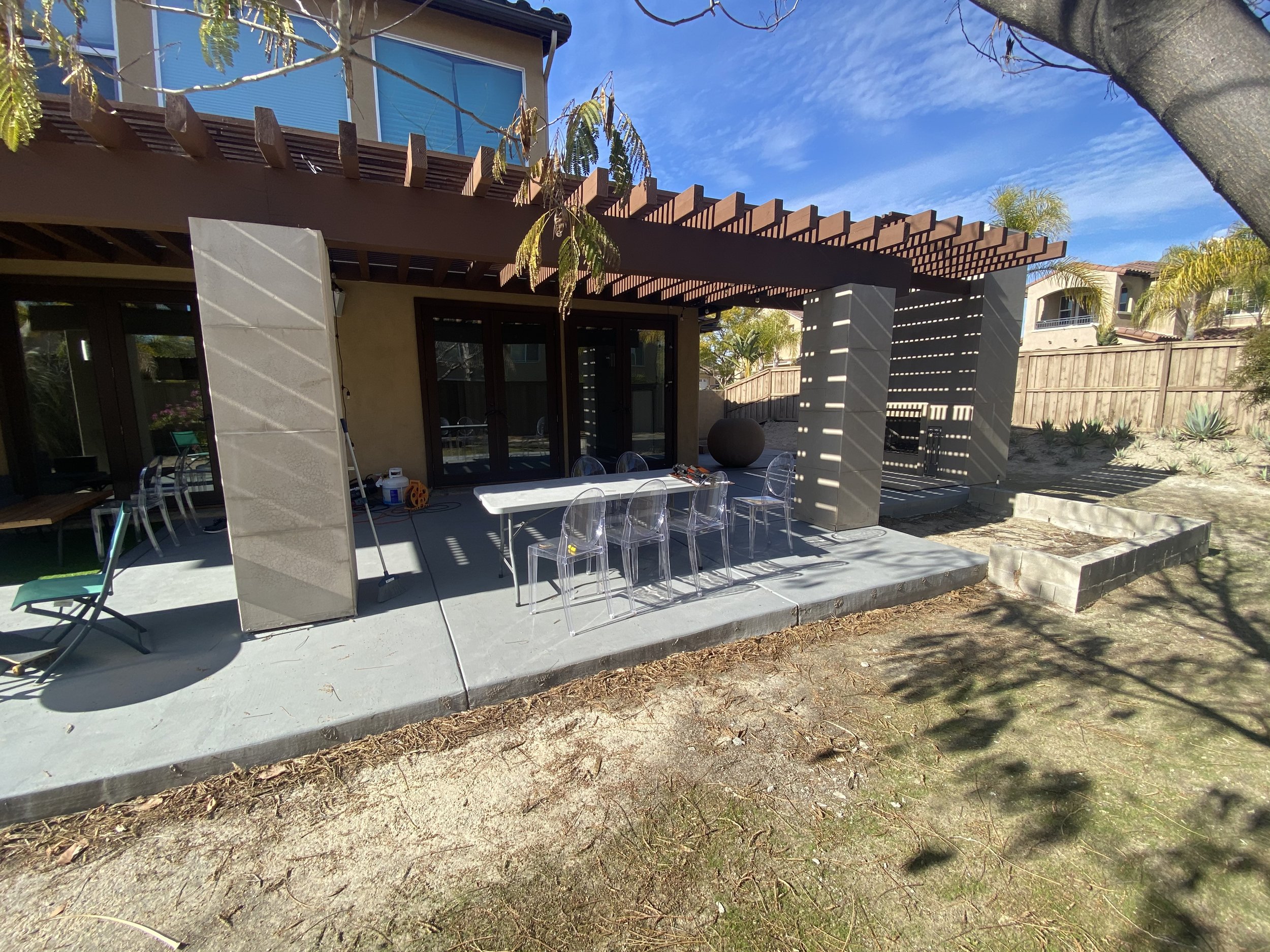
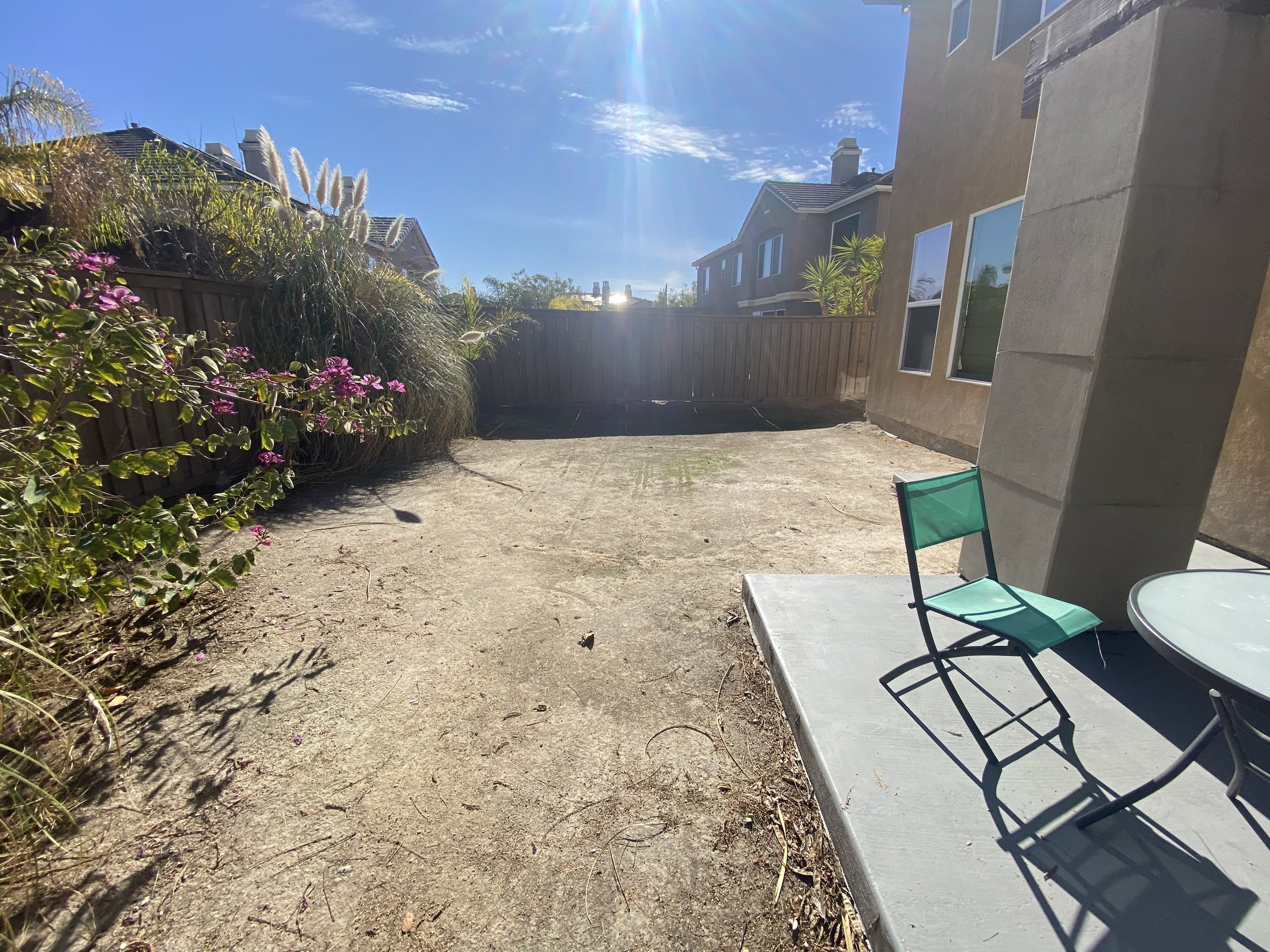
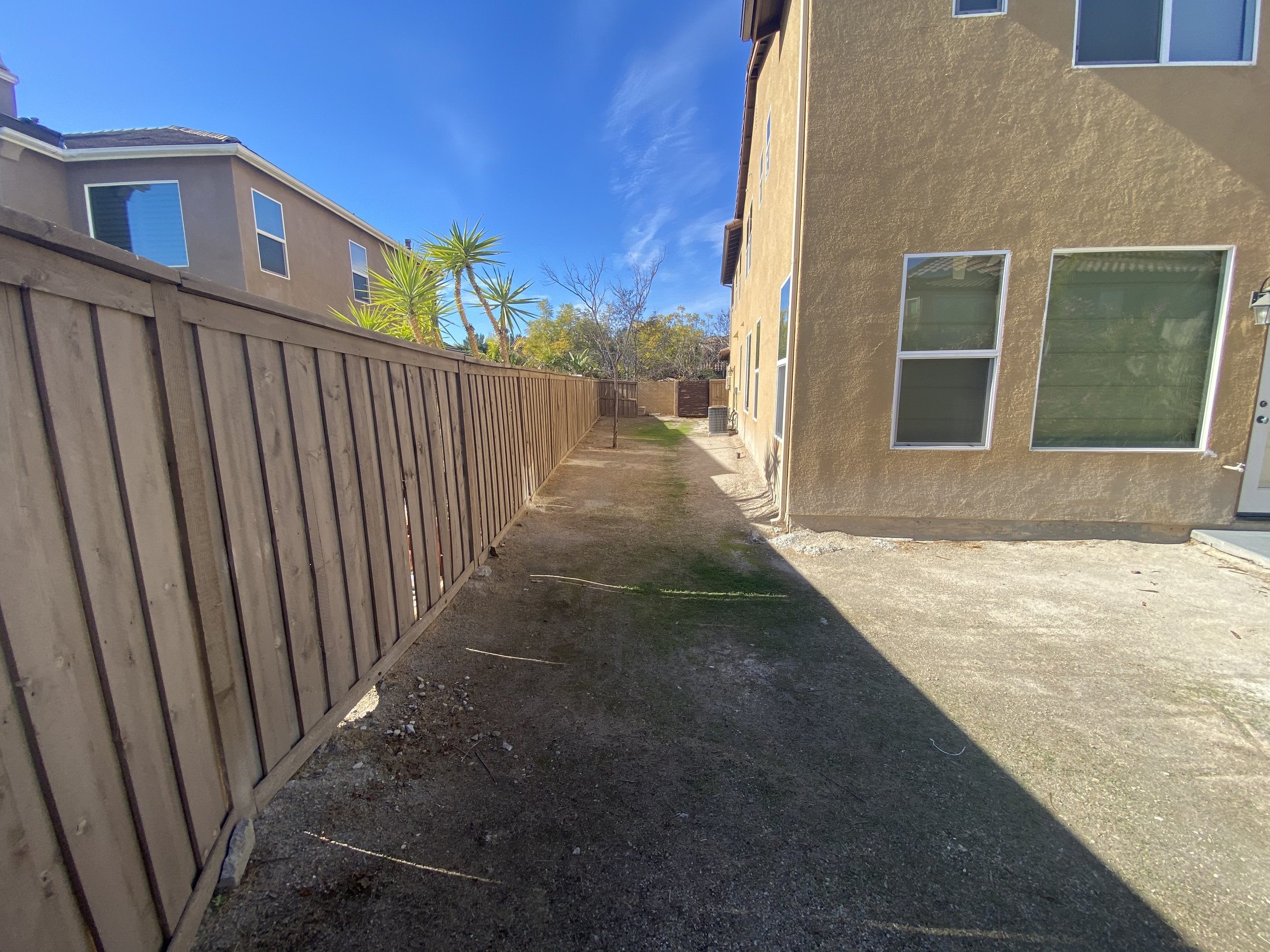
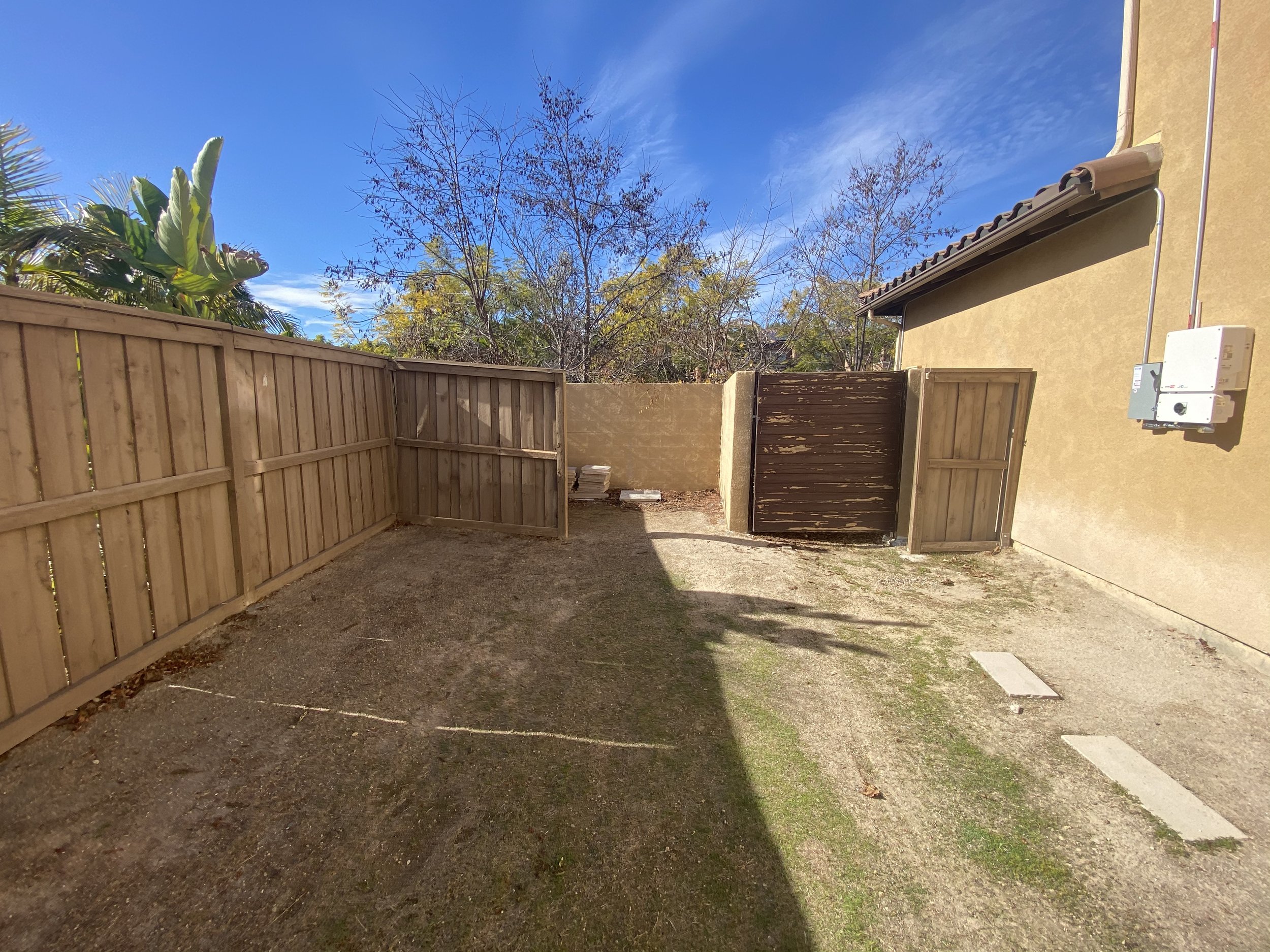
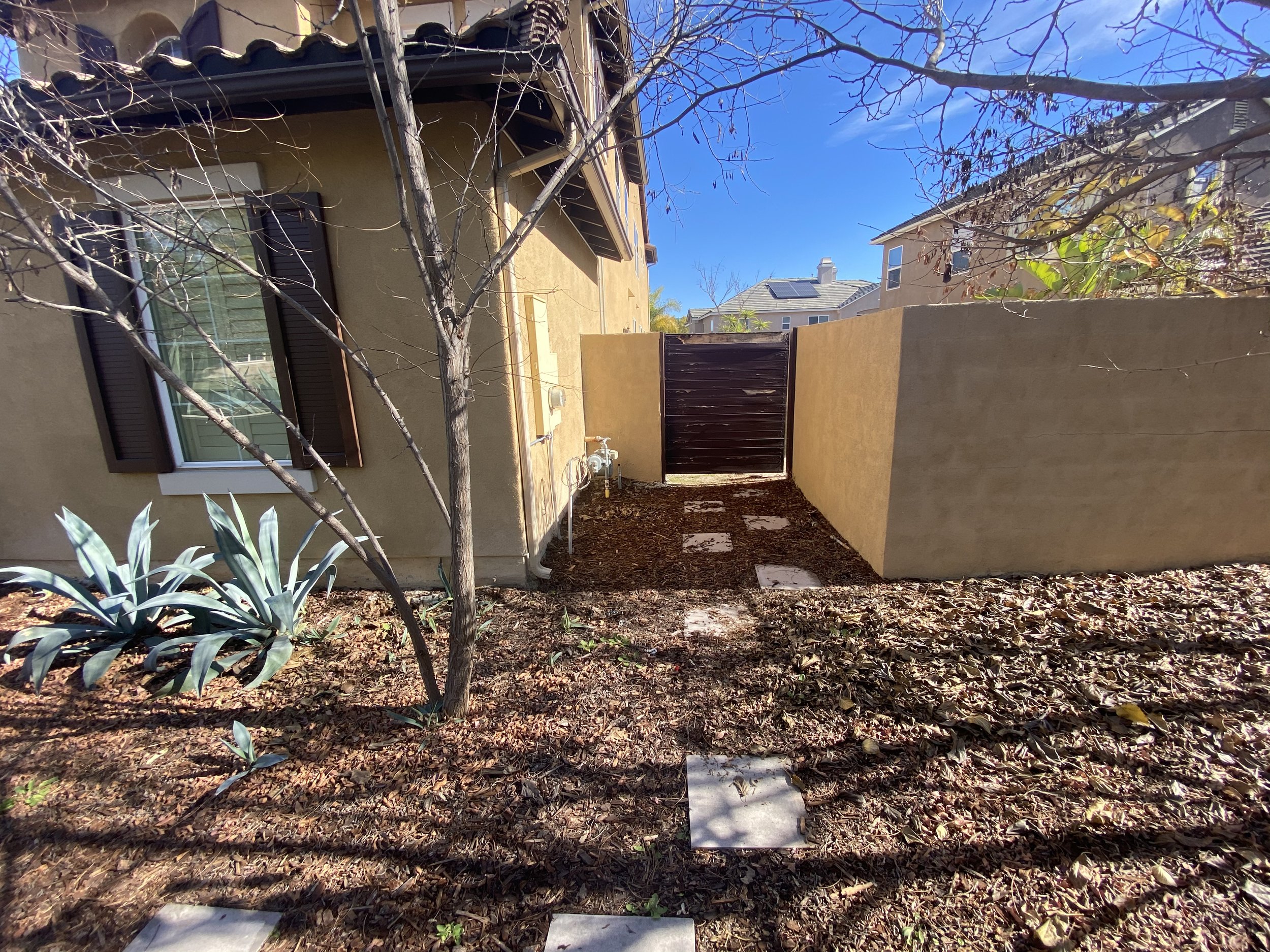
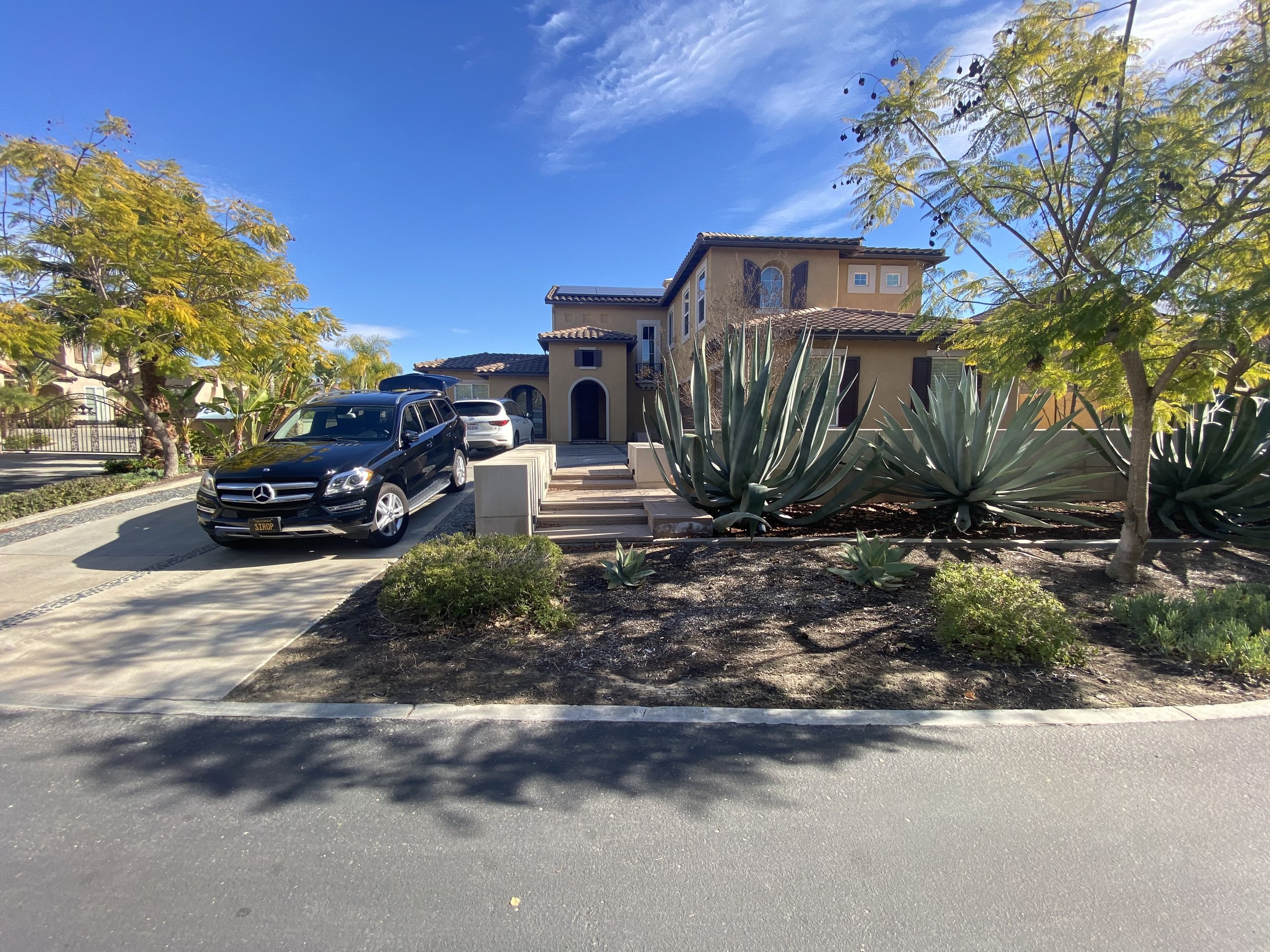
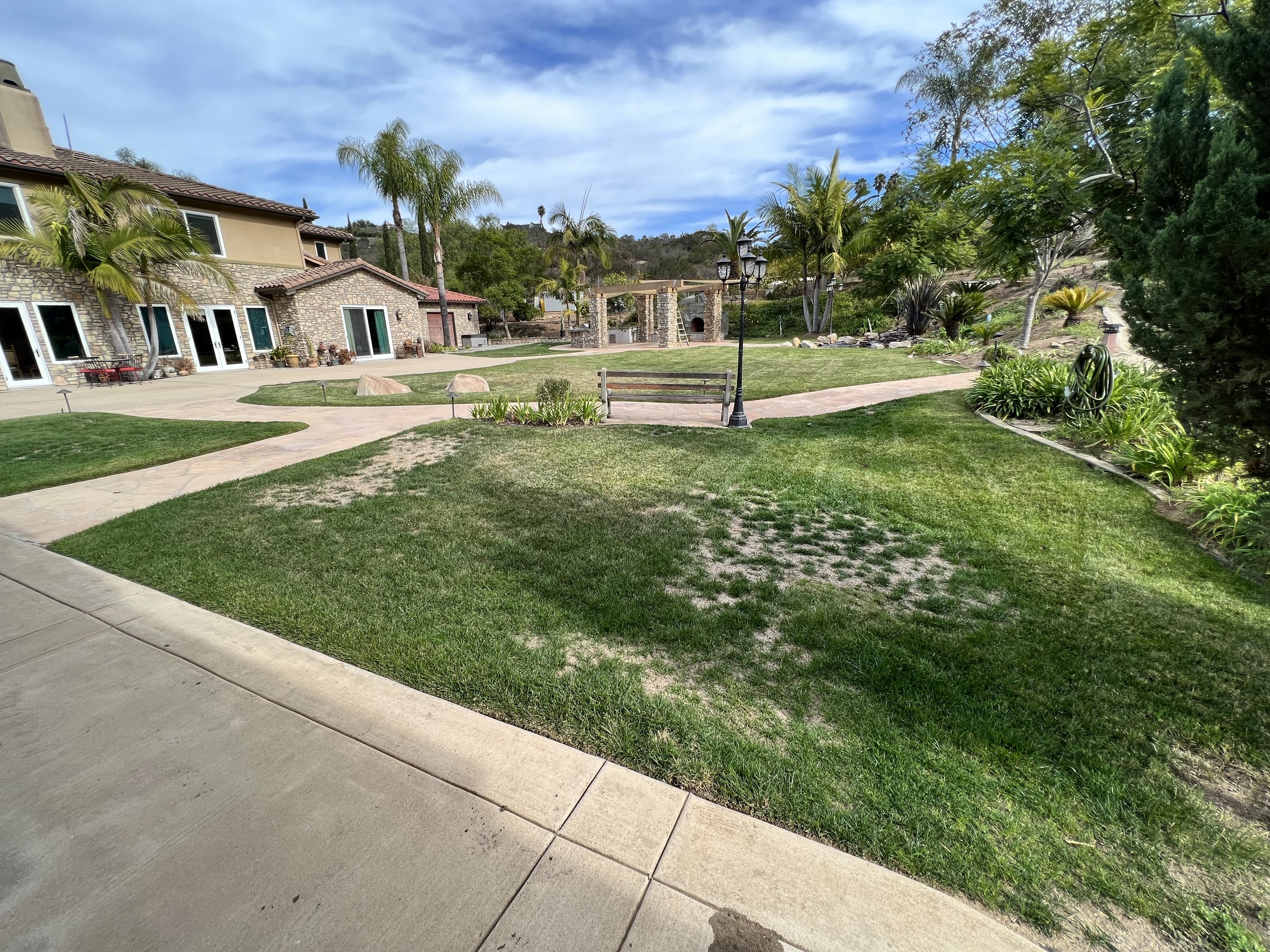
Existing Condition Situation - Before & Progress of Installation
Chula Vista · Contemporary Landscape Design · Pool Garden · Outdoor Living · Climate-Responsive Design · Southern California
Spiritual Rebirth: Ecological Sanctuary Estate - Landscape design in Encinitas, California
A Sanctuary Garden in Encinitas, California, designed as a vision of spiritual rebirth. Featuring meadows, meditation gardens, bioretention ponds, and native plantings, this landscape merges ecology, art, and wellness into a living sanctuary.
Where Art and Nature Evolve into Living Legacy
Location: Knightsbridge, Olivenhain, Encinitas, California
Project Type: Private Ecological Sanctuary Estate. Evolving Estate Landscapes & Ecological Sanctuary
Design Scope: Complete Garden Design, Planting Design, Hardscape Coordination, Irrigation Strategy, Stormwater Planning, Construction Documentation
Status: Built / Installed
Construction: Contractor & Project Management by Client.
Construction cost: ~ $340,000
Design Studio: LASD Studio
A Living Landscape for Restoration and Renewal
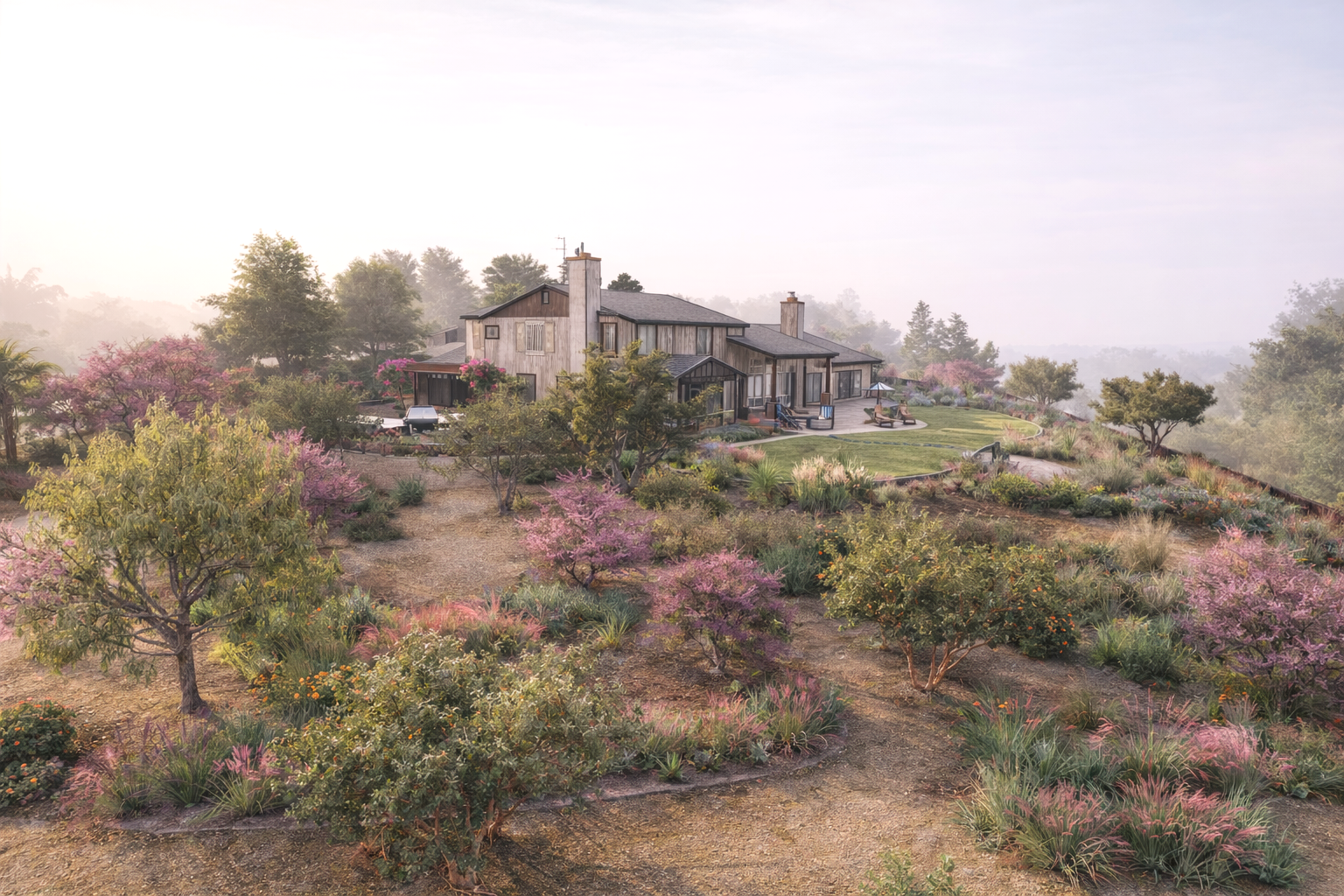
The Spiritual Rebirth Sanctuary Estate was conceived as more than a private garden. It is a living landscape designed to help its inhabitants slow down, reconnect with natural rhythms and experience the property as a continuous journey.
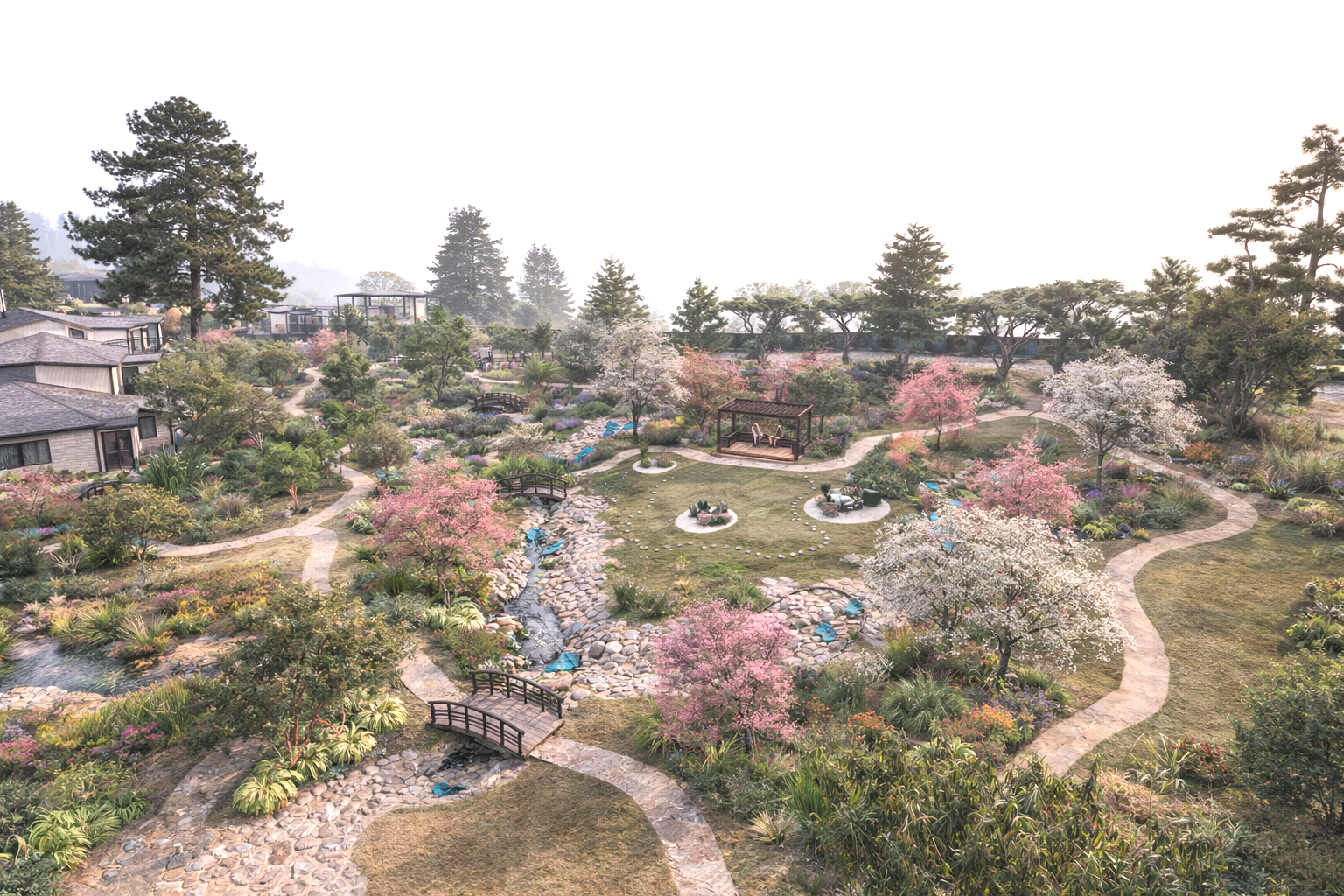
Set within the semi-rural landscape of Olivenhain in Encinitas, the garden brings together ecological California planting, productive garden spaces, water, sculpture and places for quiet daily life. The result is not one large decorative composition, but a sequence of distinct garden worlds held together by a gentle, continuous presence.
The idea of spiritual rebirth is expressed through movement and transition: from architecture into planting, from open lawn into intimate habitat, from dry stone into water, and from the productive landscape of herbs and fruit trees into spaces intended only for observation and stillness.
At LASD Studio, we believe gardens can become sanctuaries - places where people reconnect with nature, art, and themselves. The Spiritual Rebirth Sanctuary Garden in Encinitas was envisioned as more than a private garden: it is a living landscape of healing, renewal, and ecological balance.
Video presentation of the Spiritual Rebirth Sanctuary Garden in Encinitas, California - a meditative landscape design by LASD Studio featuring flowing pathways, water features, ecological planting for pollinators, and contemplative spaces that unite spirituality, biodiversity, and modern garden design.
An Estate Composed as a Journey
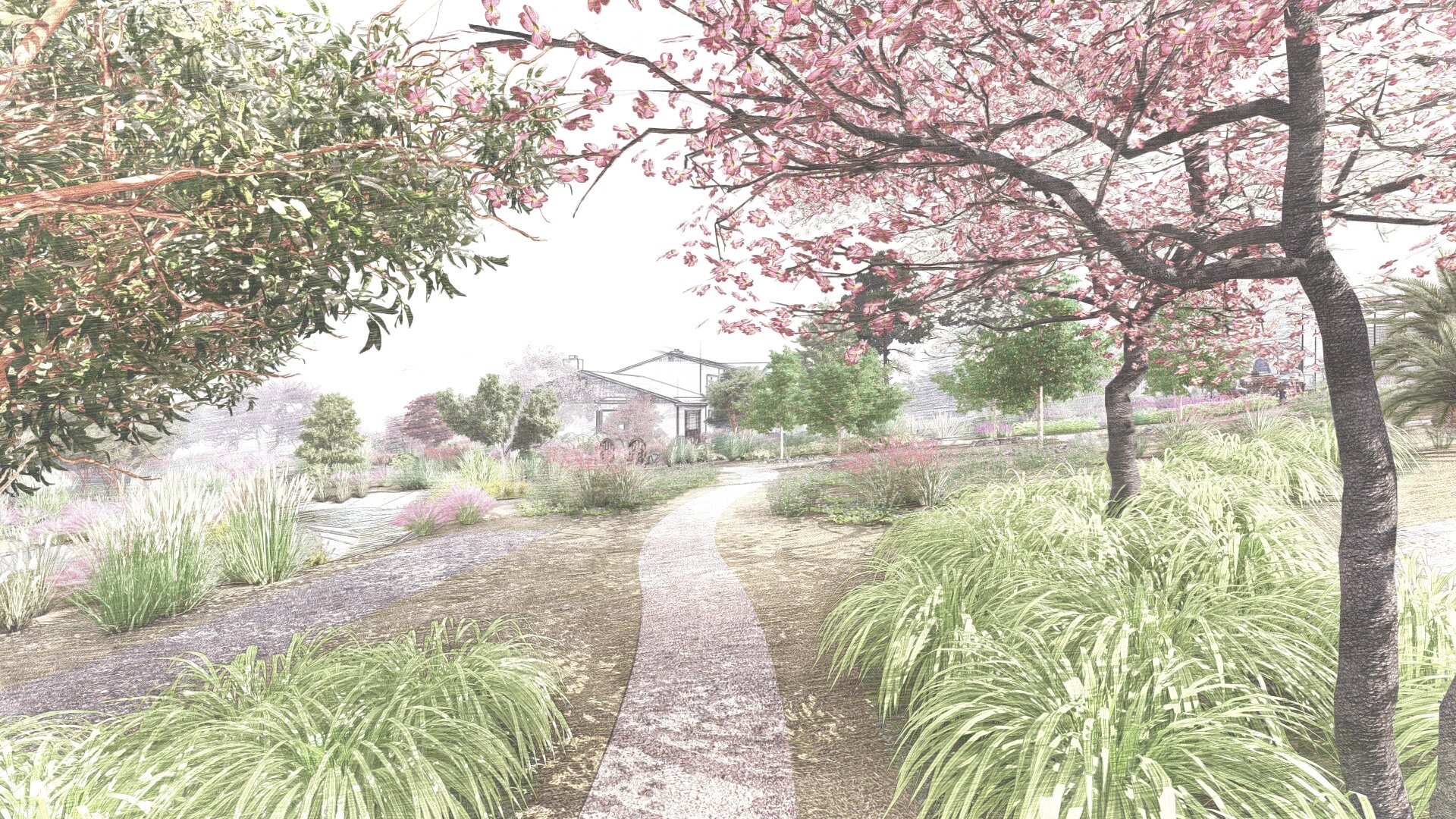
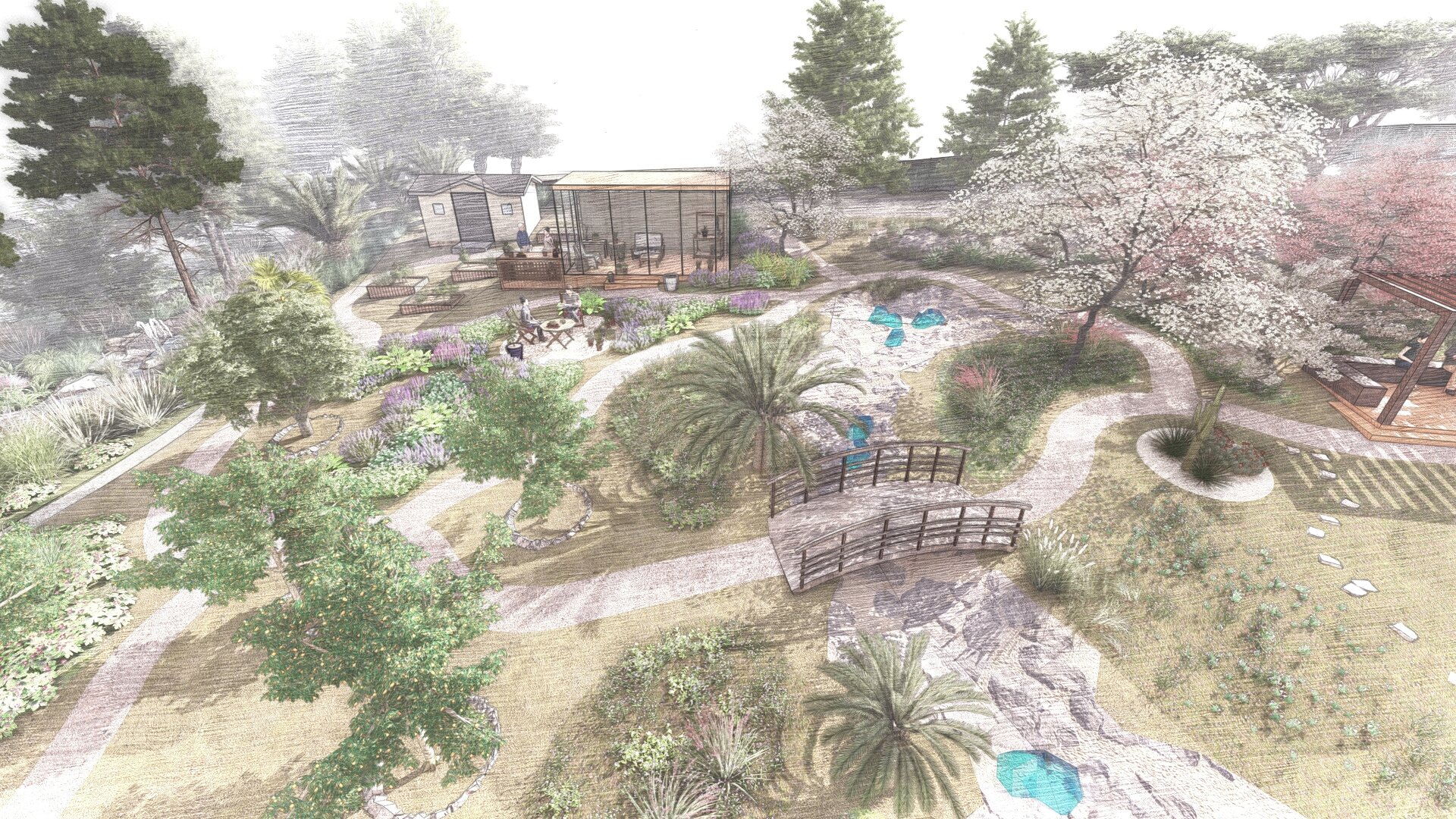
Rather than revealing the entire property at once, the design unfolds gradually with spaces and garden rooms.
Curved paths travel through the main garden and continually alter the visitor’s view. A flowering tree, pond, sculptural rock or distant terrace disappears and reappears as one moves. This principle of partial revelation gives the estate a sense of depth and discovery that a straight path could not create.
The primary path forms a continuous loop around the garden. It can be used as everyday circulation, but it also becomes a meditative walk: a place to move without a destination, decompress after a demanding day and allow the mind to return to a calmer rhythm.
There are no visual tunnels or long, static corridors. Every turn introduces a new relationship between planting, water, stone, architecture and sky.
Five Garden Worlds Within One Landscape
Herb Garden, Terrace and Orangery
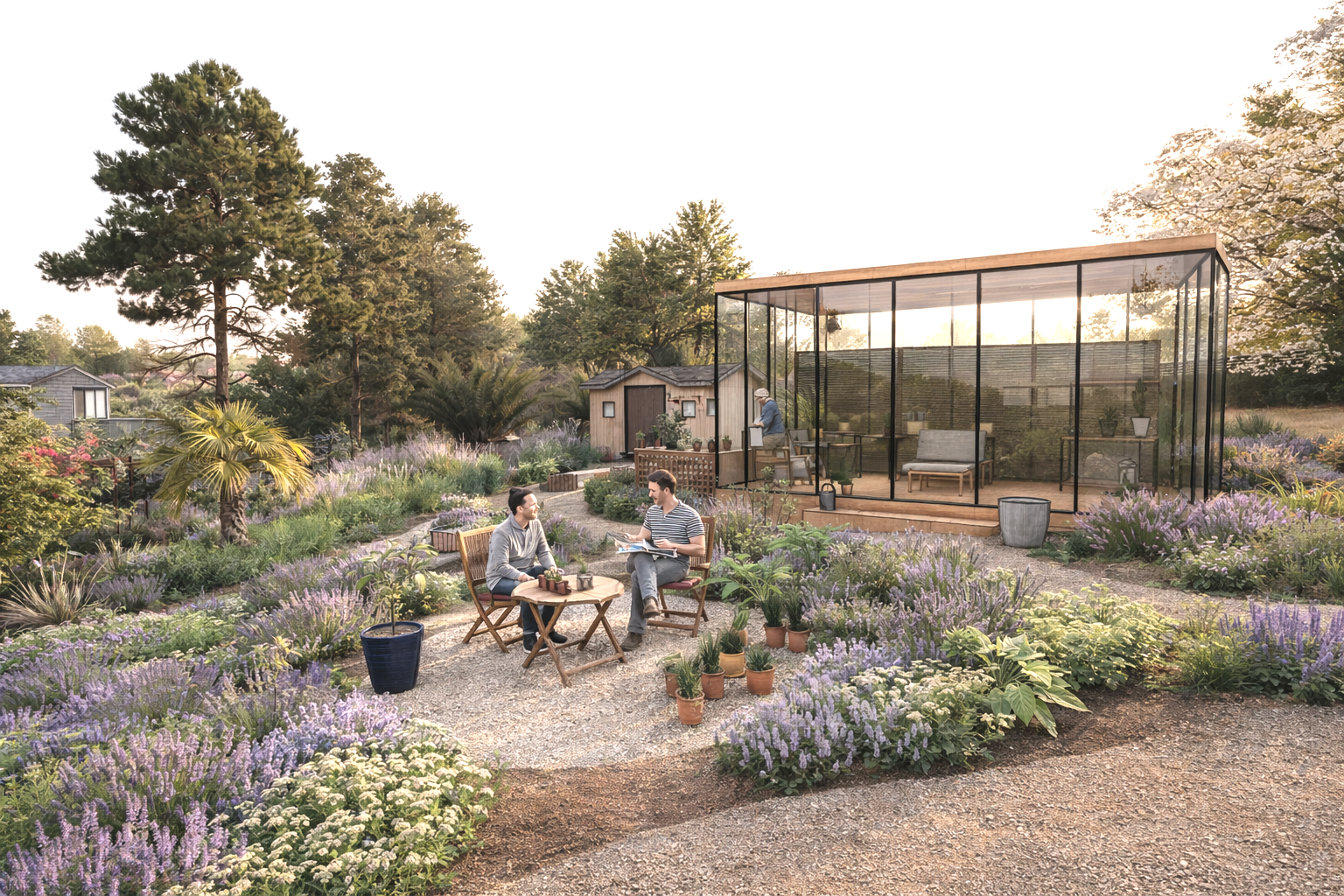
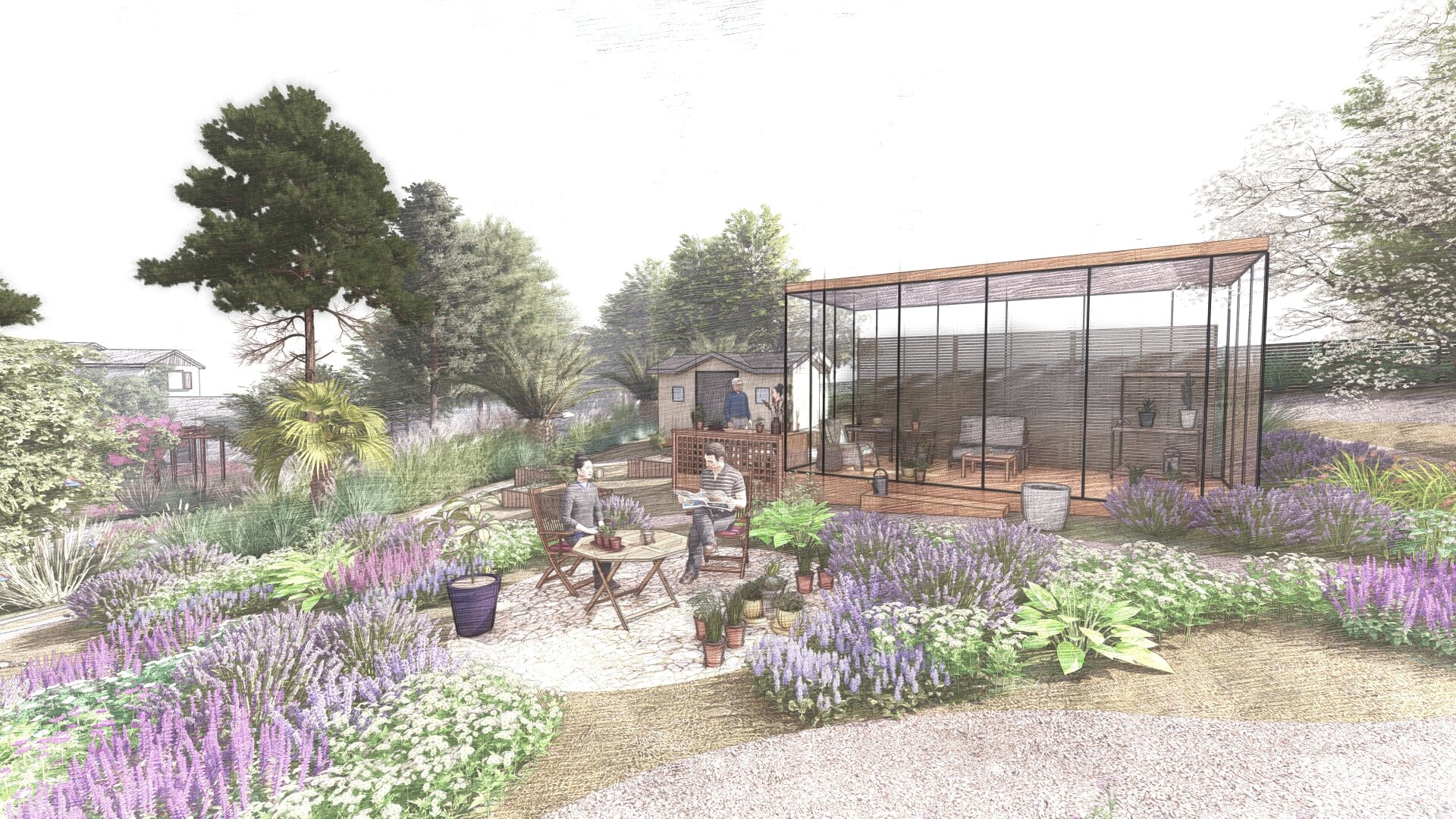
The productive heart of the estate combines a herb garden, outdoor terrace and glass orangery.
The orangery extends the growing season and creates a protected place for plants, work and quiet observation. Outside, herbs and flowering plants surround a terrace where cultivation becomes part of daily life. The composition is productive, but never utilitarian: scent, texture, flowers and seasonal change transform the kitchen garden into one of the estate’s most atmospheric gathering places.
Lounge Lawn Beside the Residence
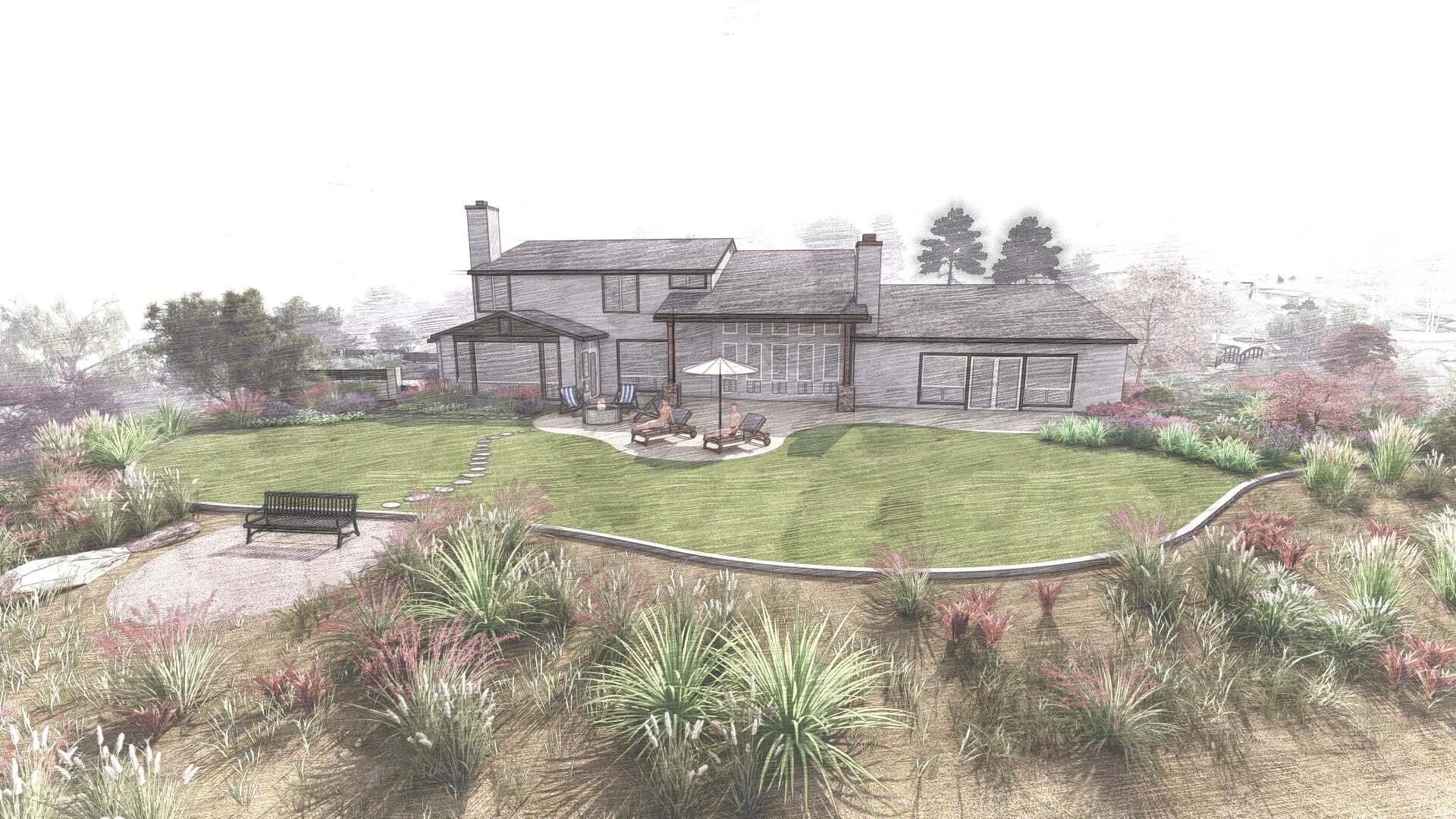
Close to the house, a purposeful lawn creates a clear and comfortable place for lounging, informal gatherings and time with family.
Instead of spreading lawn across the entire property, the design concentrates it where an open, soft surface contributes directly to how the garden is used. This restrained green plane provides visual calm beside the architecture and creates a deliberate contrast with the looser ecological planting beyond.
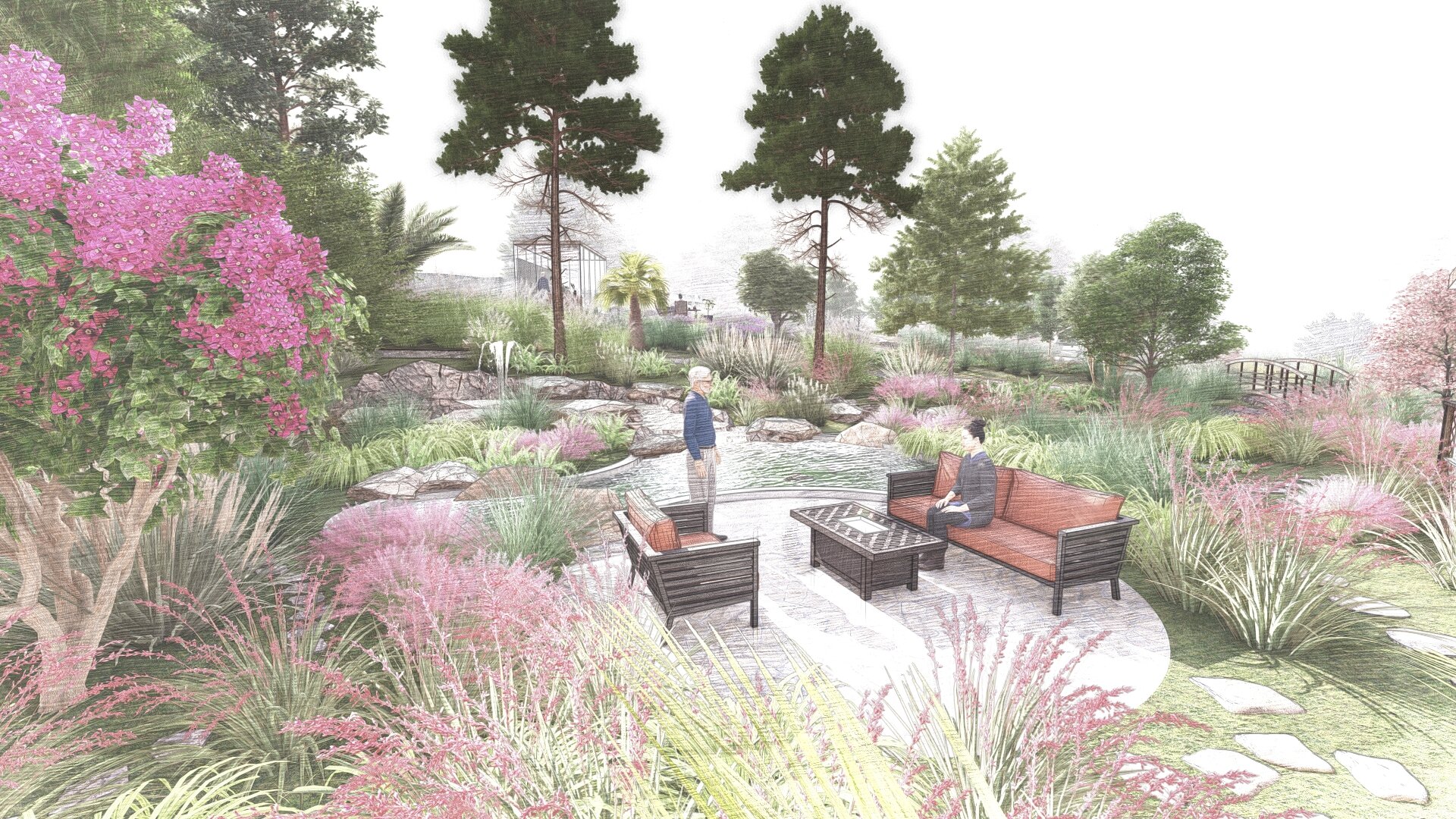
Pond and Biodiversity Garden
The pond forms one of the landscape’s quietest ecological zones.
Water, rocks, marginal vegetation and layered planting create different conditions for insects, birds and other wildlife. The surrounding landscape is allowed to feel softer and less controlled, giving the pond the character of a small habitat rather than a conventional ornamental feature.
From the walking path, the pond becomes a place to pause and observe reflections, movement and changing light. It brings another rhythm into the estate - slower, cooler and more contemplative.
Succulent Garden
A succulent garden introduces a more sculptural expression of Southern California’s dry climate.
Strong plant silhouettes, mineral surfaces and carefully positioned rocks create a composition that is visually precise without becoming sterile. This area offers a quieter seasonal structure and contrasts with the softer movement of flowering perennials and grasses elsewhere in the garden.
Orchard
The orchard gives the estate another productive and temporal layer.
Fruit trees provide blossom, summer shade, harvest and a visible record of the passing seasons. Over time, their canopies will become increasingly important to the spatial structure of the property, creating a garden that becomes richer and more established as it matures.
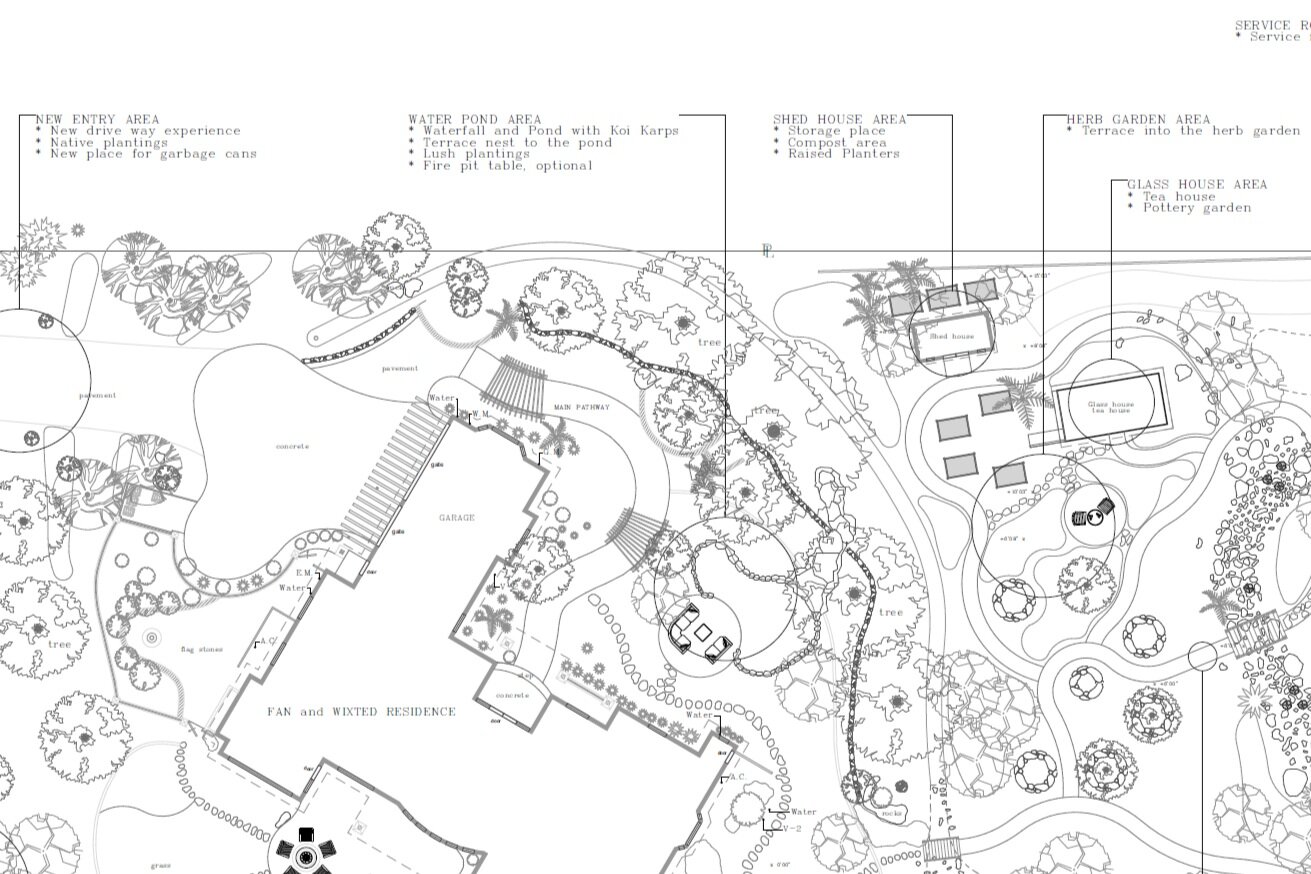
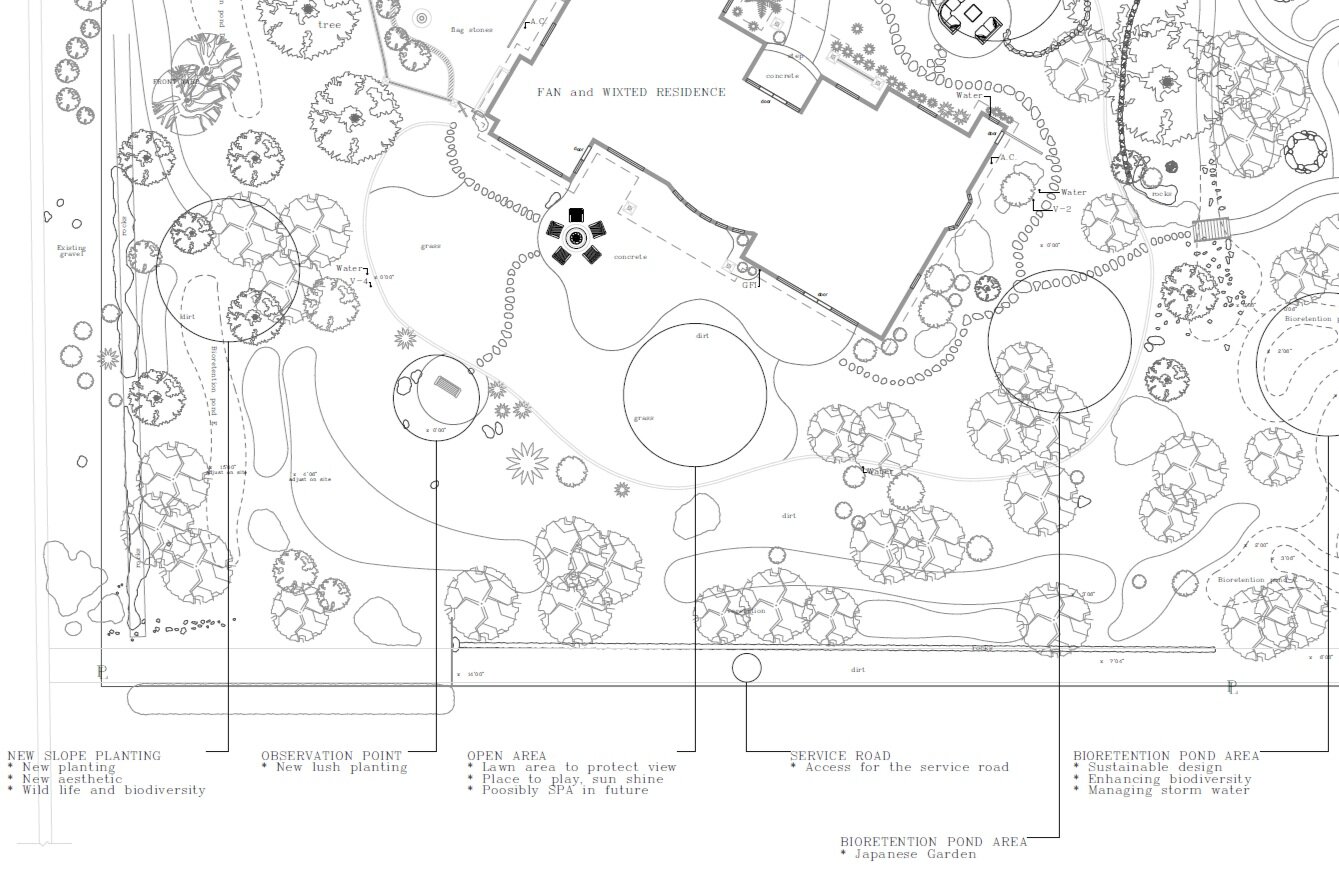
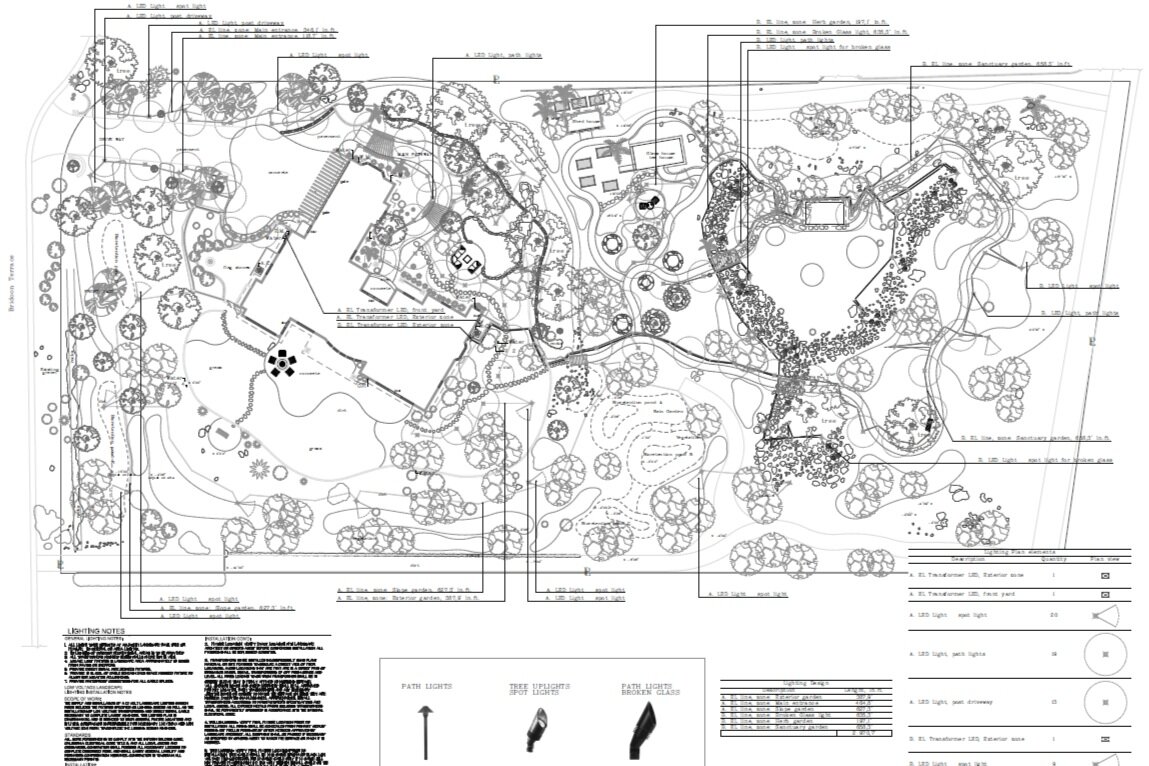
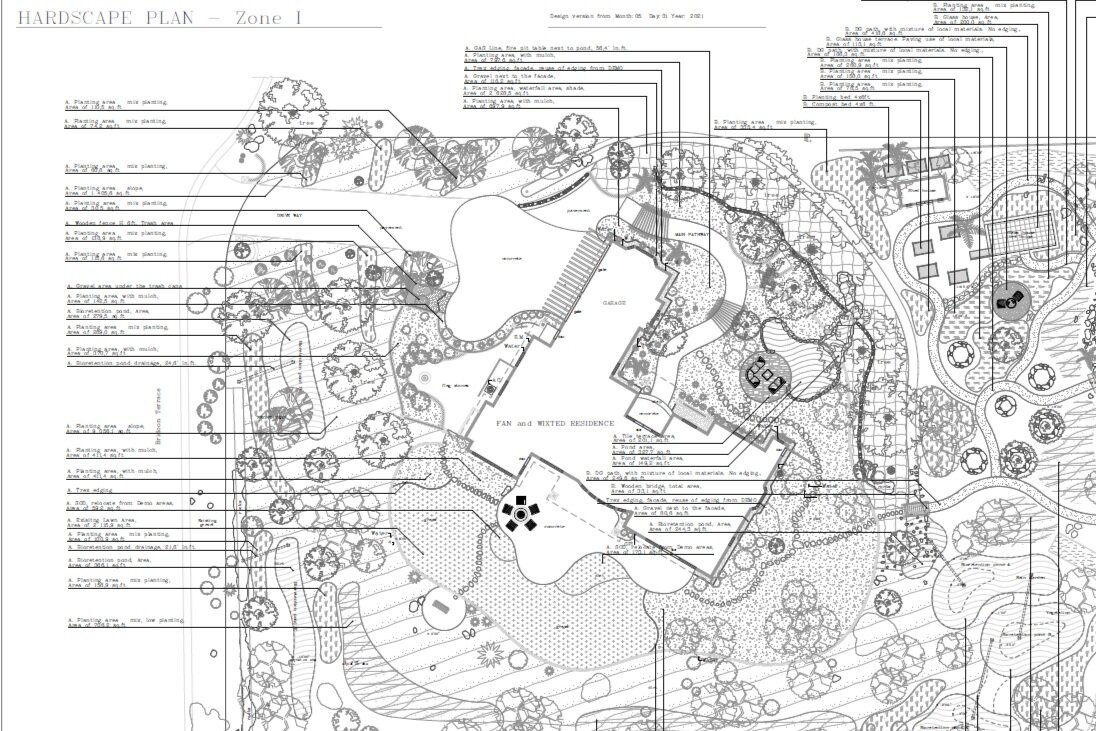
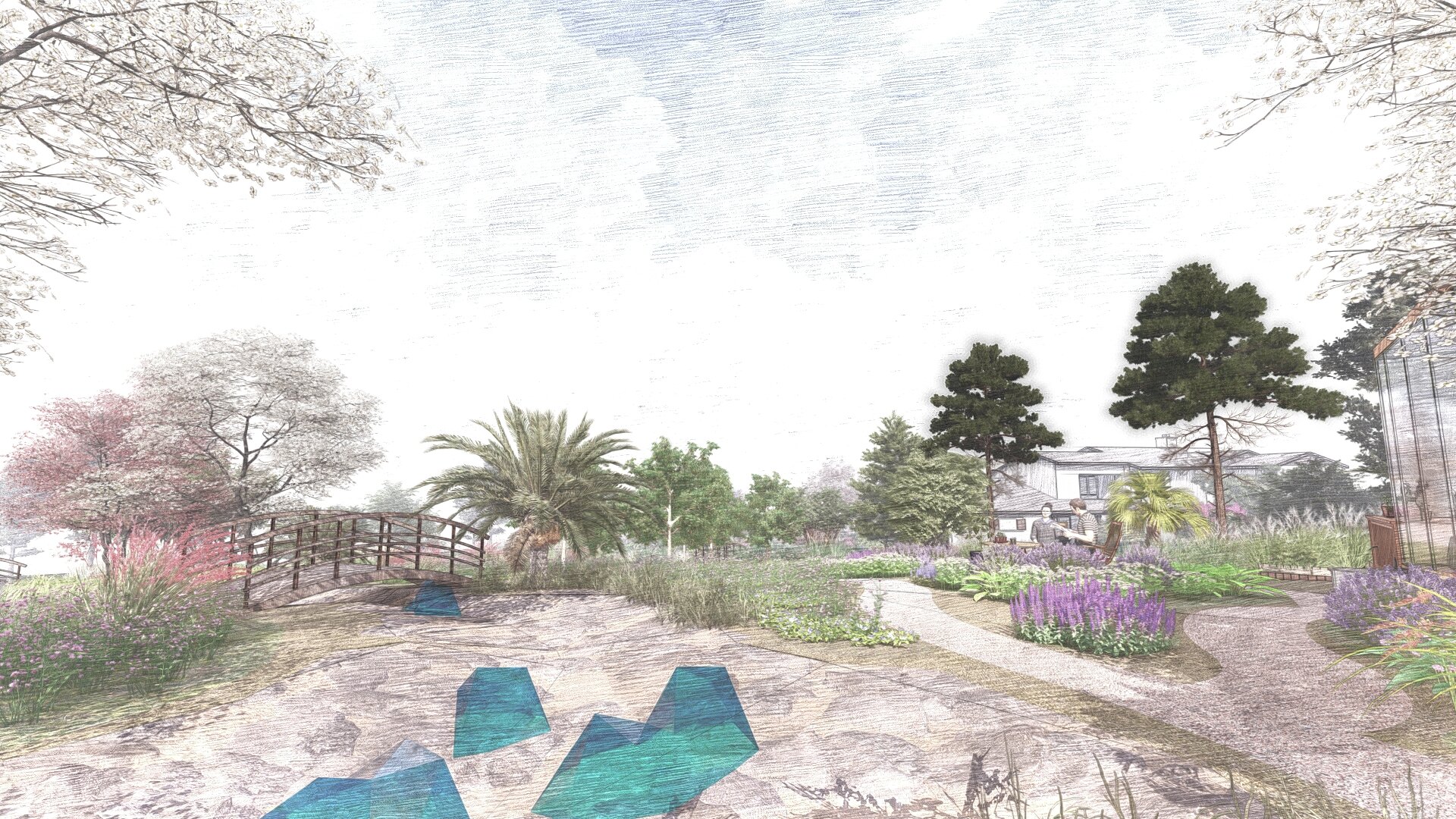
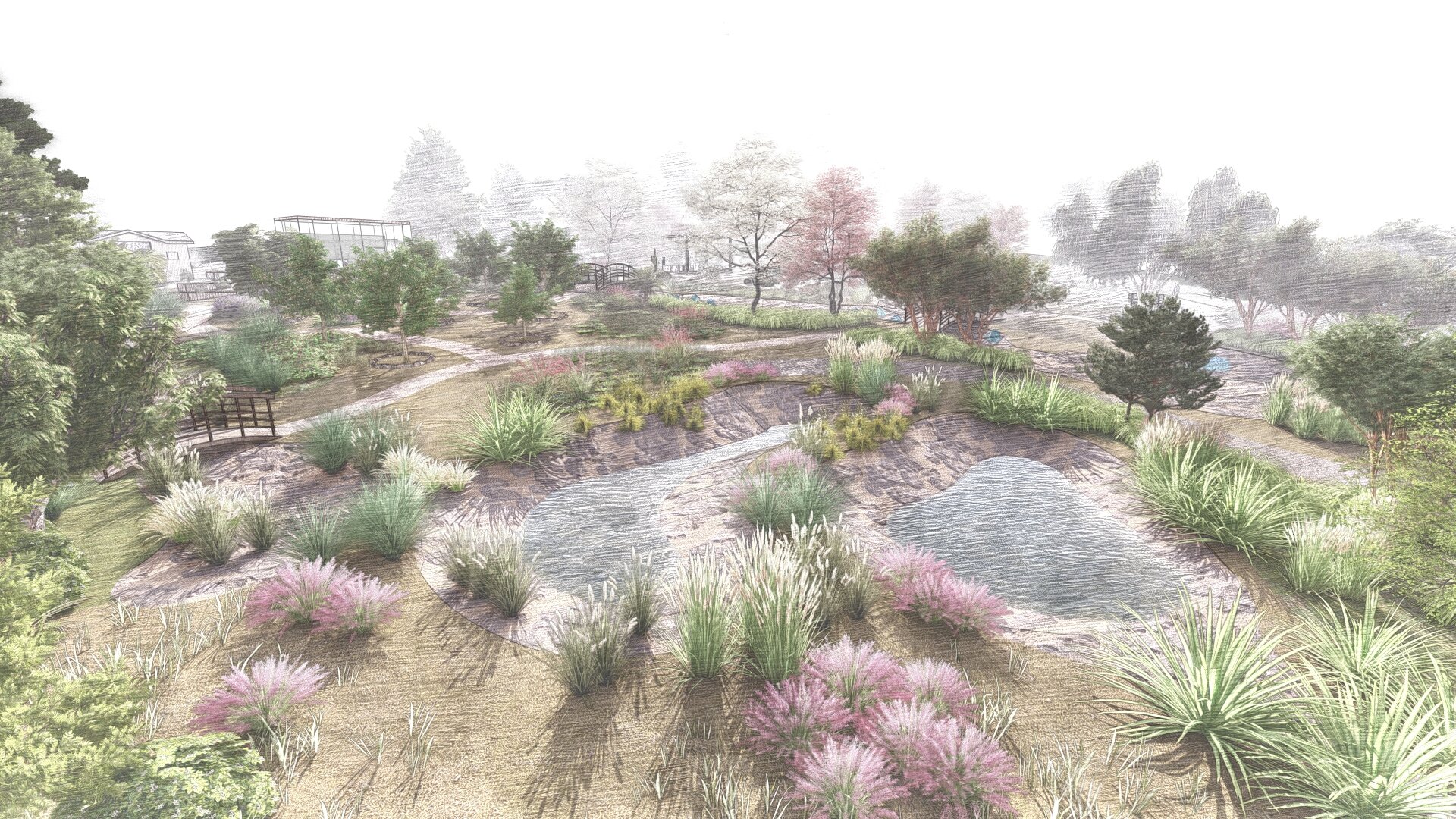
A dry rock river moves through the garden and connects its different zones.
Functionally, it forms part of the site’s stormwater strategy. Visually, it becomes a continuous geological thread - a dry canyon passing through planting, paths and gathering spaces.
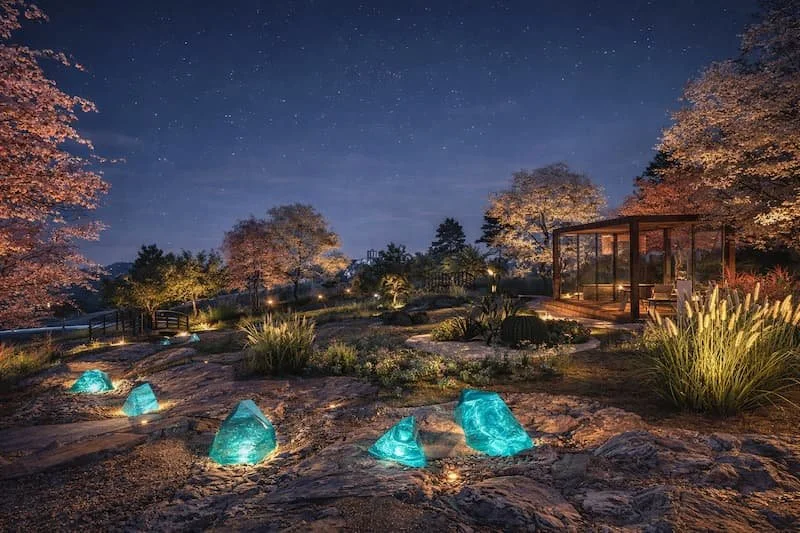
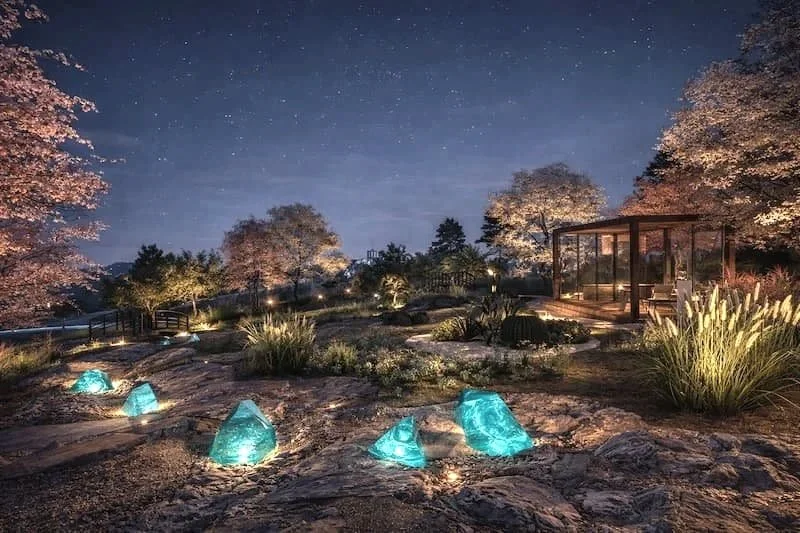
Large pieces of Turkish-blue sculptural glass are positioned among the boulders and illuminated after dark. During the day, the glass catches sunlight and introduces flashes of translucent color between the stone. In the evening, the pieces begin to glow, transforming the dry river into an atmospheric field of blue light.
This artistic intervention elevates the rock river beyond conventional drainage infrastructure. Stone, glass, shadow and reflected light create an almost celestial atmosphere, allowing the garden to remain alive and compelling after sunset.
Holding Stormwater Within the Estate
Stormwater is treated as a resource belonging to the landscape rather than something to be removed as quickly as possible.
Rainwater is directed toward the dry creek system, where its movement can be slowed and guided across the property. From there, water is collected within a larger retention area, reducing rapid discharge toward municipal drains or neighboring land.
This creates more time for water to settle and, where site and soil conditions permit, return gradually to the ground. The system combines practical stormwater management with the visual language of a natural Southern California canyon.
During dry weather, the rock river remains an important spatial and sculptural element. During rain, it becomes active infrastructure. The same landscape therefore performs differently in response to changing environmental conditions.
Planting as an Evolving California Ecology
The planting composition is lush, calm and contemporary, while remaining connected to the ecology of coastal Southern California.
California native and climate-adapted plants are arranged in layered communities rather than isolated decorative specimens. Groundcovers protect and soften the soil. Perennials and flowering shrubs create seasonal nectar and seed. Grasses introduce movement, while trees and larger shrubs provide shade, shelter and long-term structure.
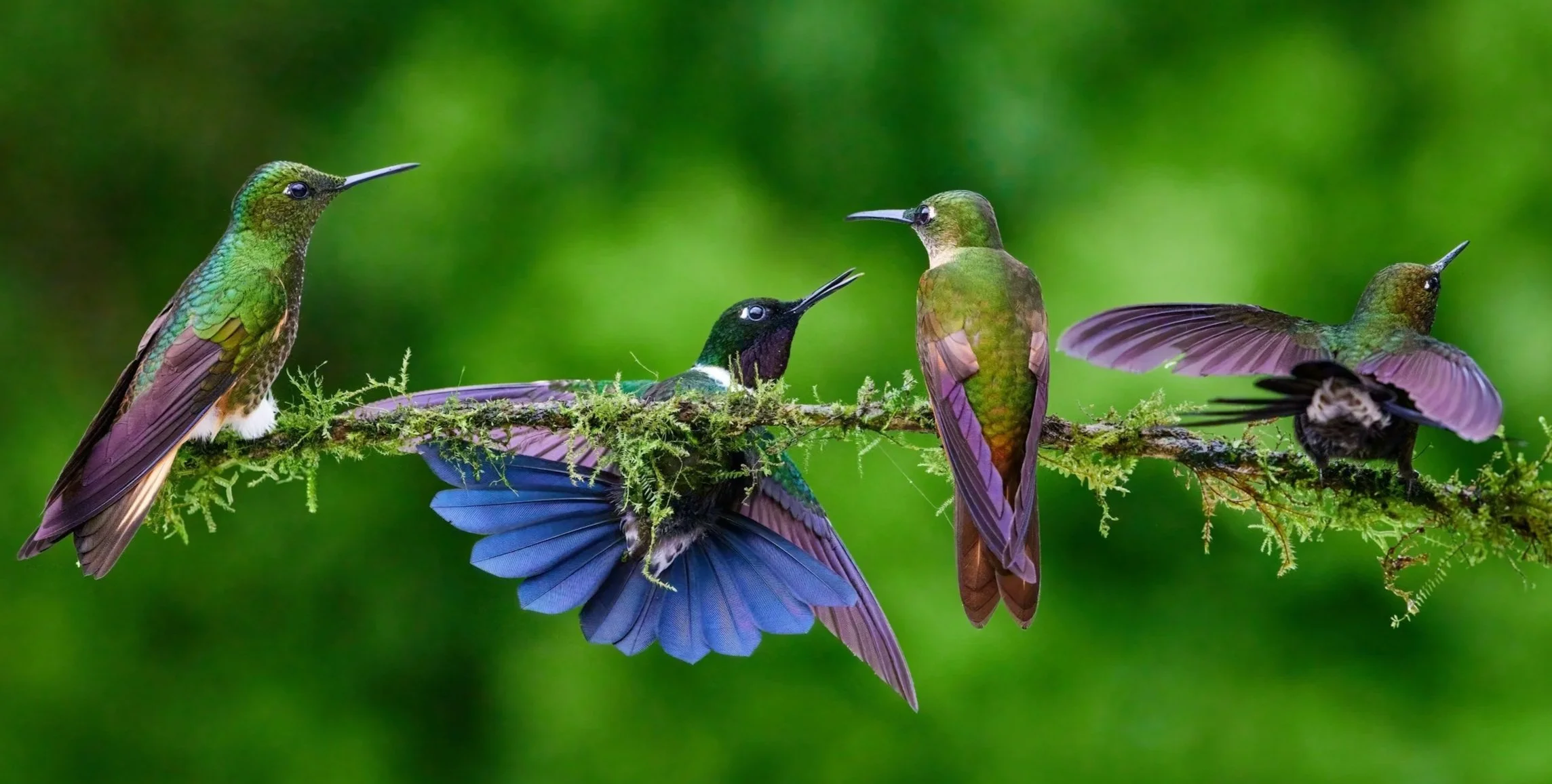
Bloom is distributed across the seasons so the garden can offer changing color and forage over an extended period. Depending on the final plant palette and surrounding habitat, this kind of planting can support monarchs, painted ladies and swallowtails, as well as native bees and other beneficial insects.
Anna’s and Allen’s hummingbirds may visit nectar-rich flowers, while black phoebes, house finches and lesser goldfinches can use the garden for insects, seeds, water and shelter.
At the upper levels of the local food web, the wider Olivenhain habitat mosaic may also be visited by Cooper’s hawks or red-tailed hawks. Their presence cannot be manufactured as a decorative effect. It becomes possible when the lower trophic levels- soil life, plants, insects, seeds, water and smaller birds, are functioning together.
This is the foundation of LASD Studio’s approach to Designing Landscapes as Evolutionary Systems. The objective is not to install a frozen picture, but to establish the conditions from which a richer living system can continue to develop.
Considering an Ecological Estate or Sanctuary Garden?
LASD Studio designs private landscapes that bring architecture, daily life, water, planting and ecological processes into one coherent experience.
A preliminary conversation can help determine how your property could become a more restorative, biodiverse and enduring landscape.

Contemporary Japanese Garden Design in San Diego: The Art of Simplicity
A traditional Japanese garden in San Diego, designed with timeless elegance and ecological intelligence. Stone, water, and plants are arranged to create balance, harmony, and a meditative retreat within the Southern California landscape.
Where traditional Japanese garden philosophy meets modern Southern California living.
This project reimagines a San Diego residence as a traditional Japanese garden - a tranquil retreat where art, ecology, and simplicity converge. Inspired by the timeless work of Japanese masters, the garden blends stone, water, and plants into a living composition that evolves with the seasons. From koi ponds and bamboo screens to moss-covered stones and sculptural prunings, every element is designed to balance harmony and contemplation.
A short film of LASD Studio’s Japanese Garden in San Diego - a tranquil retreat blending koi pond, rock garden, bamboo, and seasonal planting. The design reflects the timeless philosophy of Japanese gardens while adapting to the Southern California climate, creating a living sanctuary of harmony, simplicity, and contemplation.
Location: Mission Hills, San Diego, California
Project Type: Japanese Contemporary Garden, Theme garden - Japanese Contemporary Exterior Design
Design Scope: Concept development, Project Documentation, Permitting, Construction Documentation
Construction cost: $320,000
Design Studio: LASD Studio
Welcome to our Traditional Japanese Garden, a serene oasis inspired by the renowned Japanese garden designer, Moso Sosoki. As you step into this tranquil space, you embark on a journey where nature seamlessly blends with meticulously crafted architectural forms, creating a harmonious retreat for the senses.
Our garden's centerpiece is a cozy sitting area, where a table and traditional Japanese chairs invite you to relax and immerse yourself in the surroundings. This heart of the garden is enveloped by various captivating elements that embody the essence of Japanese design.
Enchi Water Pond & Koi Habitat
First, let's stroll over to the water pond, known as Enchi. Here, the gentle ripples of the water are graced by the elegant presence of koi carp, their vibrant colors shimmering beneath the surface. Water lilies float gracefully, adding a touch of tranquility and beauty to this serene aquatic haven.
Karesansui Rock Garden: A Meditative Space
Next, we move to the Karesansui, or rock garden, a masterful composition where the entire space merges into a unified, meditative whole. Larger moss-covered boulders stand as garden sculptures, complemented by a carefully arranged tapestry of flat pebbles, flagstone materials, and varied gravels. These elements intermingle with lush plants, creating a dynamic yet peaceful landscape that invites contemplation.
Japanese Veranda (En): Transition Between Worlds
A unique addition to the house is the Japanese veranda, or 'En.' This elegant space serves as a vital transition, gracefully bridging the interior and exterior worlds. From the veranda, you can experience the garden's beauty while remaining sheltered, making it a perfect spot for quiet reflection or enjoying the changing seasons. Enhancing the garden's aesthetic, our wall decorations feature traditional Japanese bamboo fencing and garden trellises with intricate square slots. These elements not only provide structure but also add a touch of timeless elegance to the surroundings.
Evening Illumination: A Garden Alive at Night
As night falls, the garden comes alive with a thoughtfully designed lighting scheme, transforming it into an enchanting evening retreat. Soft, ambient lights highlight the garden's features, creating a magical atmosphere that invites you to linger and enjoy the tranquility of the night.
Planting Philosophy: Elegance in Every Branch
The plantings throughout the garden have been meticulously selected for their branch structures, leaf shapes, growth patterns, and simple natural aesthetics. Each plant contributes to the garden's overall harmony, ensuring a seamless blend with the architectural elements. We invite you to explore and experience the peaceful beauty of our Traditional Japanese Garden, where every detail has been crafted to offer a serene and harmonious escape from the everyday world.


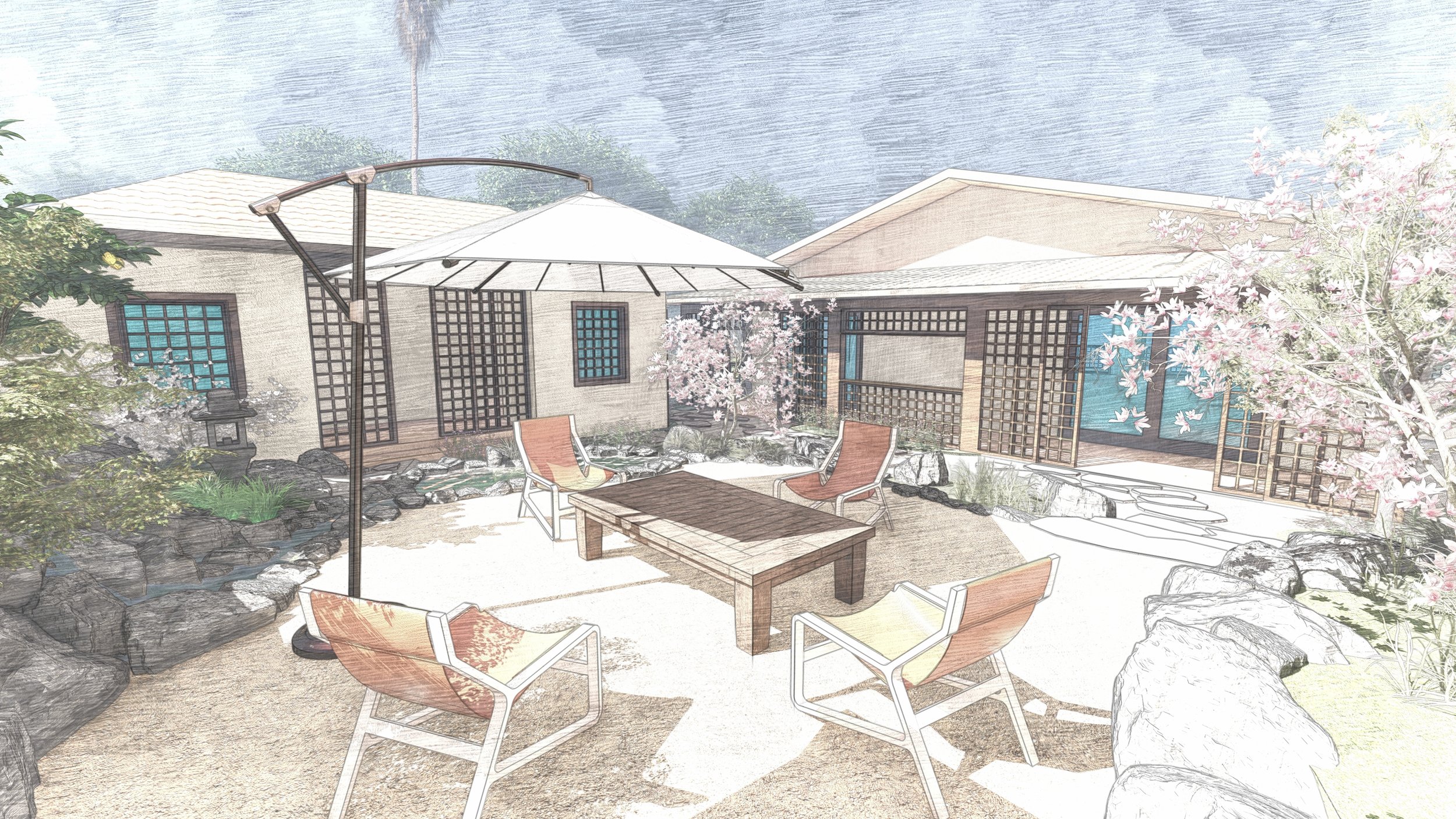


Step into a world where time-honored Japanese garden philosophy meets the elegance of modern design. In this tranquil space, the boundaries between indoor and outdoor blur, allowing nature to flow seamlessly into everyday life.
The wooden lattice screens, with their intricate patterns, invite dappled sunlight to dance across the floors, creating a serene interplay of light and shadow. Outside, a meticulously crafted garden awaits, a sanctuary of stone pathways, gently flowing water, and blossoming trees that whisper the essence of tranquility.
This is more than a garden; it is a harmonious blend of simplicity and sophistication. Here, the ancient art of Japanese landscaping finds new life in contemporary forms, offering a space where you can pause, breathe, and reconnect with the natural world. The presence of modern furniture within this traditional setting is not a clash, but a conversation, a dialogue between the past and present, inviting you to experience the beauty of both.
Every element, from the carefully placed rocks to the thoughtfully designed seating, is an invitation to linger, reflect, and appreciate the delicate balance between nature and human artistry. In this space, the hustle of the outside world fades away, leaving you with a profound sense of peace and a deeper connection to the art of simplicity.
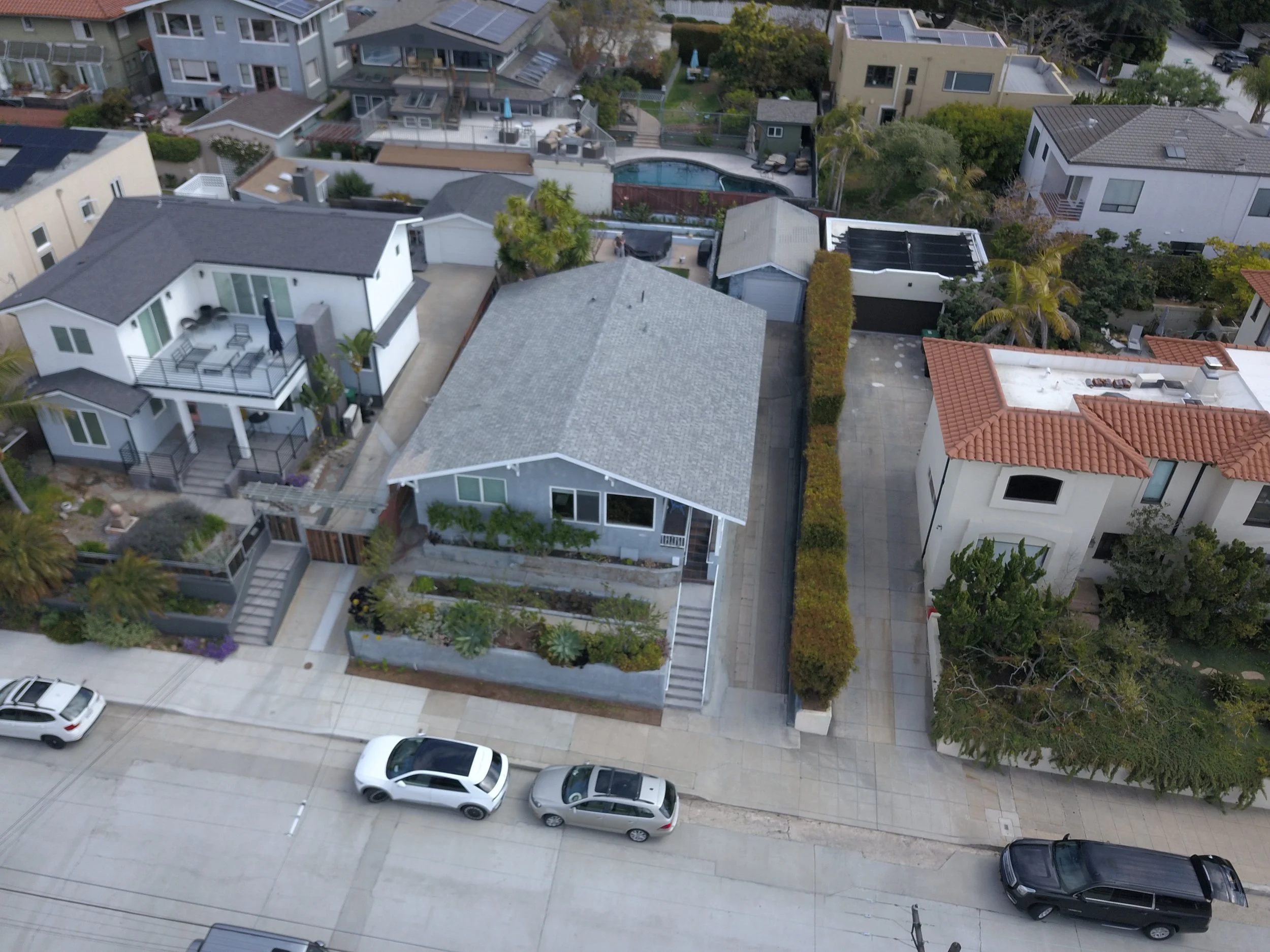
EXISTING CONDITION

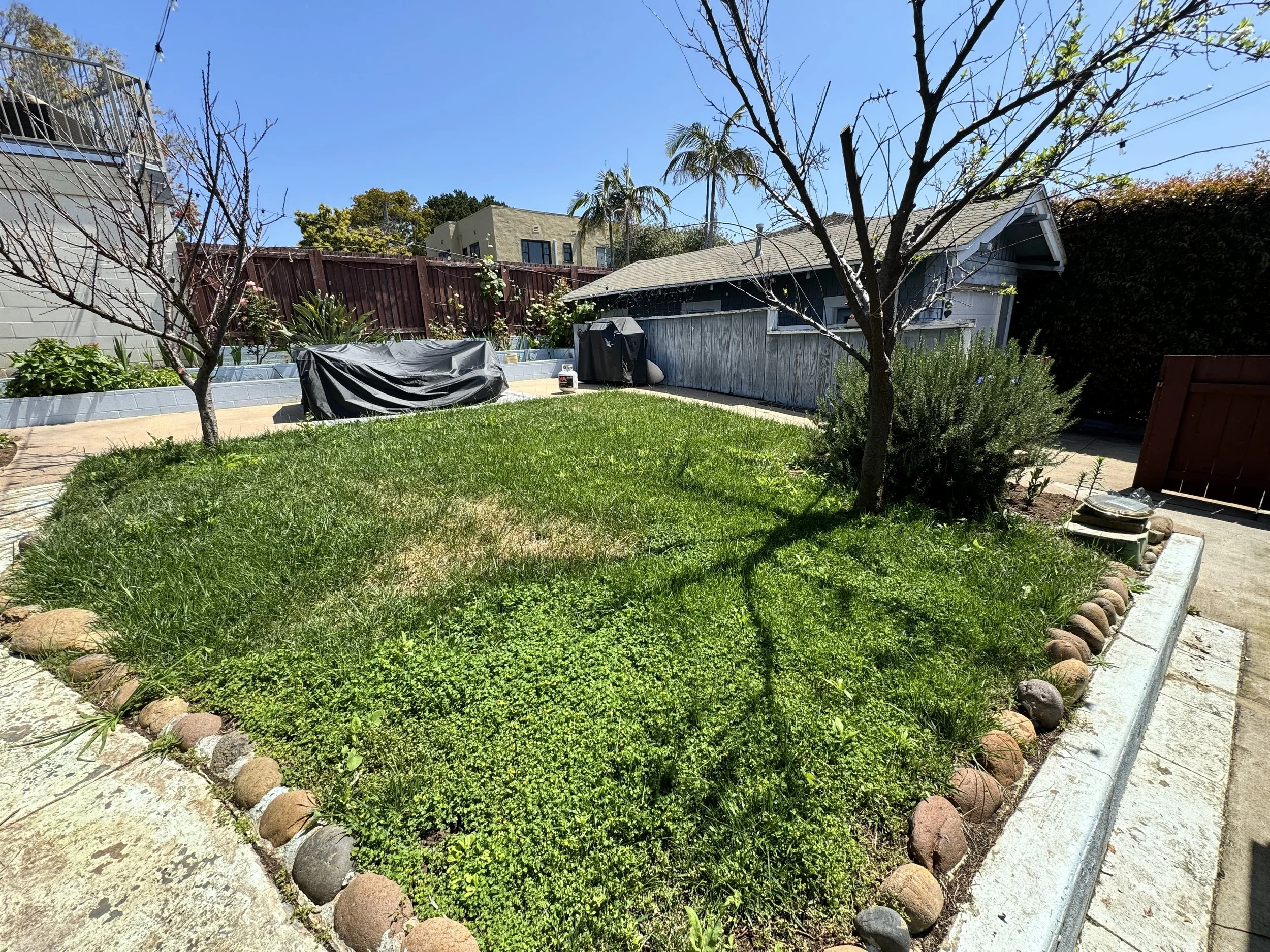


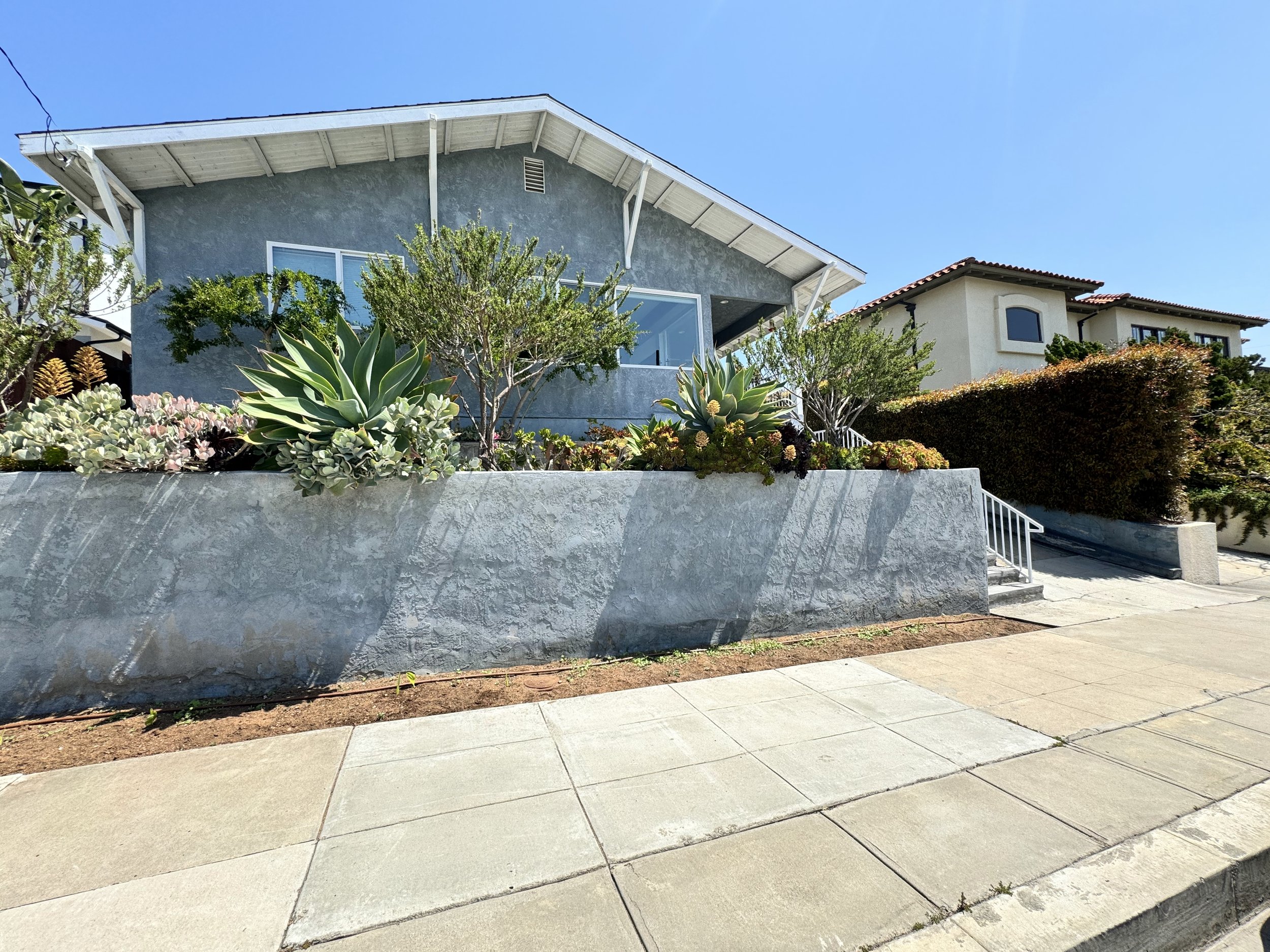

PROJECT DESIGN DRAWINGS


LASD Studio taking project from beginning, through permitting process and construction, whether it is new construction of historical designation or landscape renovation private and comercial properties.

Bohemian Minimalism - Spanish Colonial Revival Garden Design in Mission Hills
A unique landscape design blending Bohemian Minimalism with the timeless character of Spanish Revival architecture. This project celebrates simplicity, texture, and ecological intelligence, creating a garden that feels both artistic and enduring.
Honoring historic Spanish Colonial Revival architecture with a modern, minimalist landscape design.
This Mission Hills project reimagines a historic Spanish Colonial Revival estate through the lens of Bohemian Minimalism. The garden celebrates the architecture’s heritage while introducing fresh, contemporary rhythms that connect indoor and outdoor life. Drought-tolerant Mediterranean plants, sculptural hardscape, and layered textures create a space that is both timeless and forward-looking, a living work of art that evolves with the family and the land.
For context, see our Journal essay on Spanish Revival gardens in Southern California - Design with Soul.
A short film presenting LASD Studio’s transformation of a Spanish Colonial Revival estate in Mission Hills. The design blends Bohemian Minimalism with Mediterranean resilience - drought-tolerant planting, sculptural hardscape, and timeless architectural dialogue. The result is a garden that honors history while embracing contemporary outdoor living, creating a sanctuary where heritage and modernity coexist in harmony.
Location: Mission Hills, San Diego, California
Project Type: Private Residential Garden, Colonial Spanish Revival & Bohemian minimalism, Historical & Cultural Heritage Property
Design Scope: Concept Development, Design Developemnt: Hardscape design, Irrigation, Drainage, Wall, Lighting plan design, Stormwater, Construction Documentation, Permitting with Building Department of San Diego and Historical Designation, Construction Supervision.
Status: Front yard Built / Installed, backyard in progress
Construction contractor: Barrios Landscape, Michael Gustafson, contractor sources by client
Construction cost: $220,000
Design Studio: LASD Studio
The Spirit of Spanish Revival: Architecture and Landscape in Dialogue
At the heart of our work is the art of listening-listening to our clients, to the architecture, and to the natural surroundings. We were entrusted with a remarkable project: a historic Spanish Colonial Revival property in Mission Hills, originally built in the early 20th century.
Minimalist Geometry Meets Bohemian Flow
Our design challenge was to create a landscape that not only harmonizes with the architectural style of this Spanish Revival home but also establishes its own distinctive voice. Clean lines and minimalist geometry provide structure, while layered textures and bohemian flow bring warmth and movement. The balance of order and spontaneity allows the garden to feel curated yet alive — a setting where history and contemporary living evolve together.
Planting Palette: Mediterranean Resilience and Elegance
The planting palette draws inspiration from Mediterranean resilience: drought-tolerant shrubs, sculptural succulents, flowering perennials, and aromatic herbs create a garden that thrives in San Diego’s climate. Manzanitas, sages, rosemary, and grasses combine with modern groundcovers to soften architectural edges while respecting the spirit of Spanish Revival heritage. Seasonal shifts bring fragrance, color, and texture, making the garden a living, evolving artwork. This project has become one of our favorites, embodying how thoughtful design can both preserve tradition and spark renewal.
Outdoor Living: Spaces for Contemplation and Gathering
Beyond planting and form, this landscape was envisioned as a framework for life. Shaded terraces and intimate alcoves invite quiet moments of reflection, while open courtyards and garden rooms welcome family gatherings, celebrations, and artful living. The garden flows with the rhythms of daily life, equally suited for private contemplation and social connection. By blending historic elegance with modern comfort, the outdoor spaces extend the home’s architecture into a sanctuary where people, art, and nature coexist.
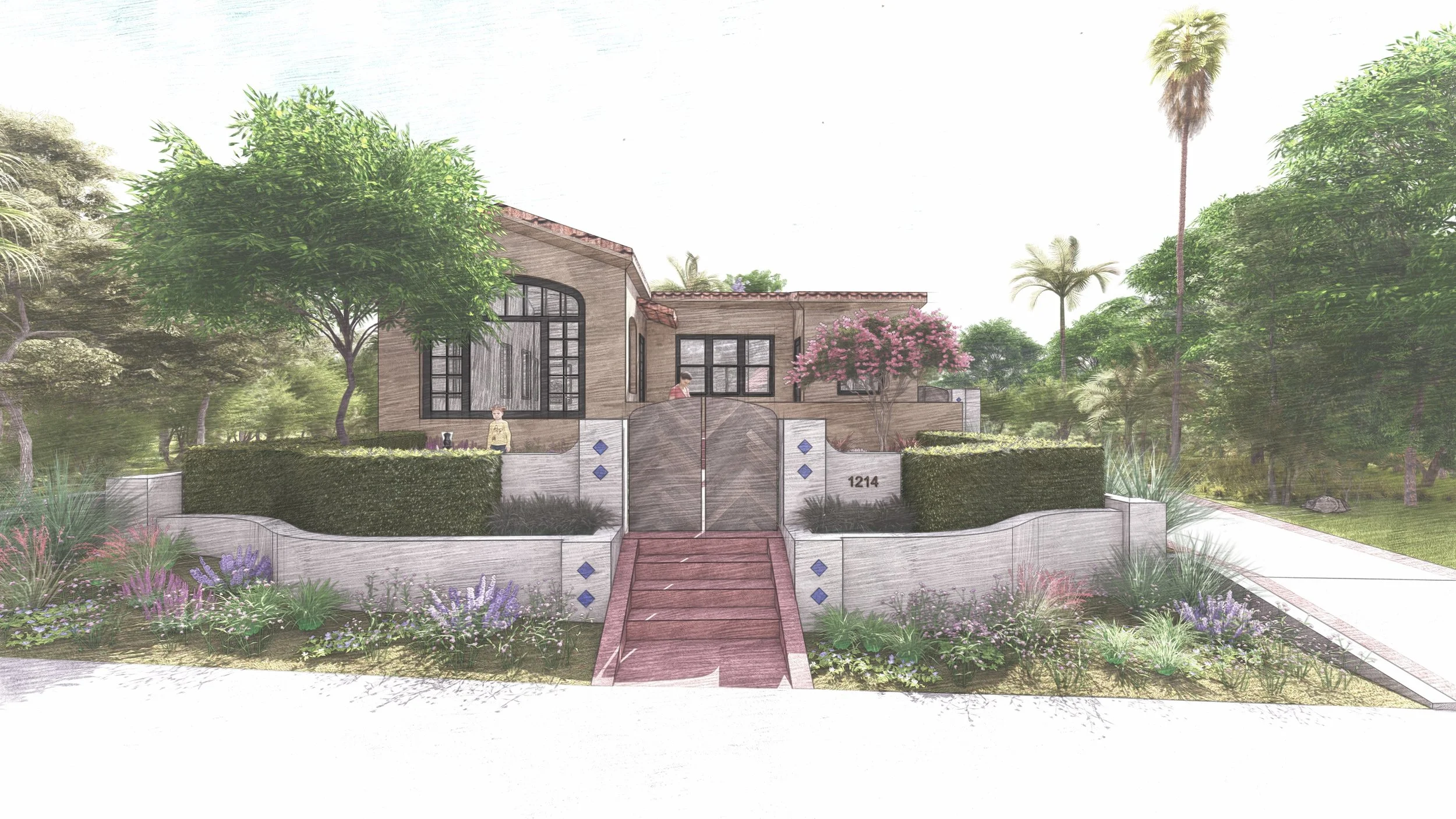


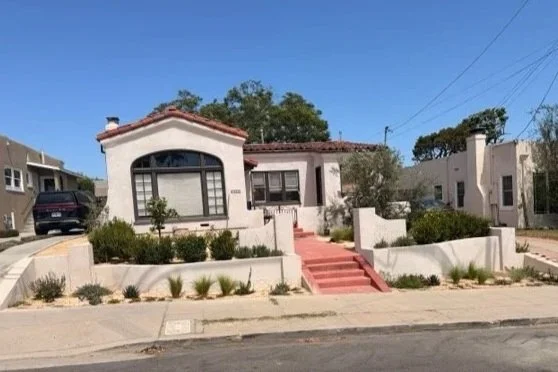
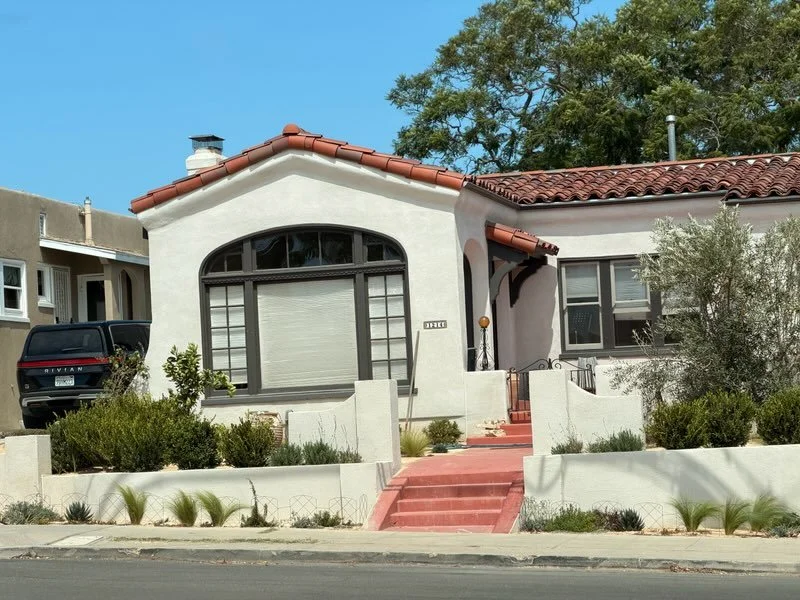
Existing Condition: From Heritage to Renewal


PROJECT DESIGN DRAWINGS


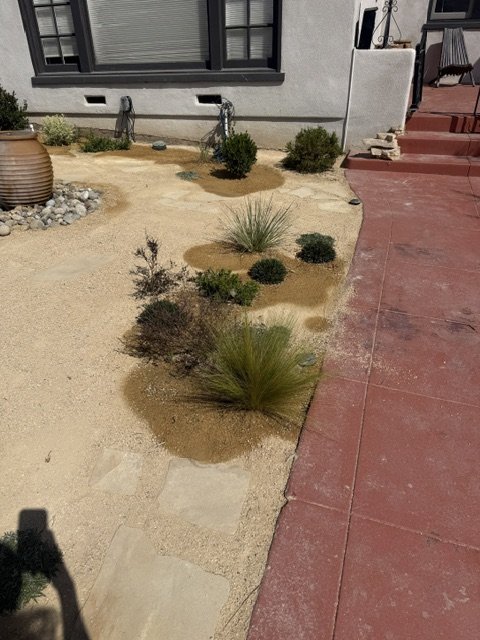
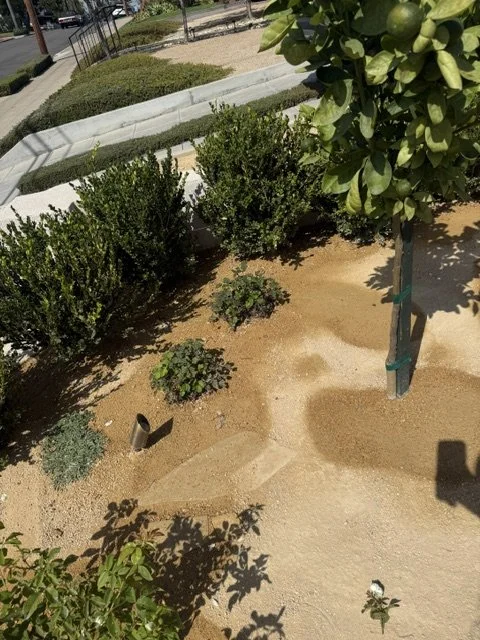
Construction phase - work in progress
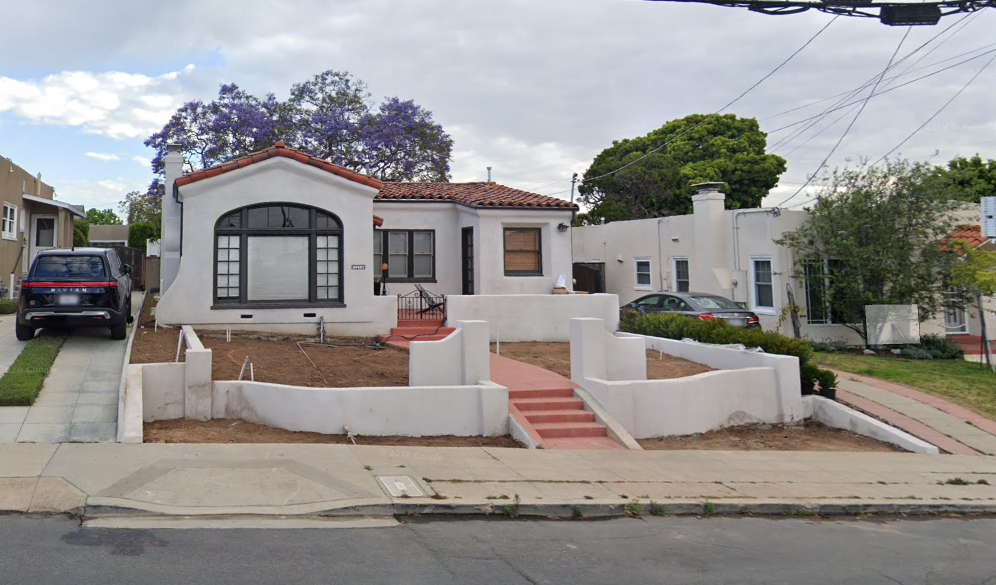
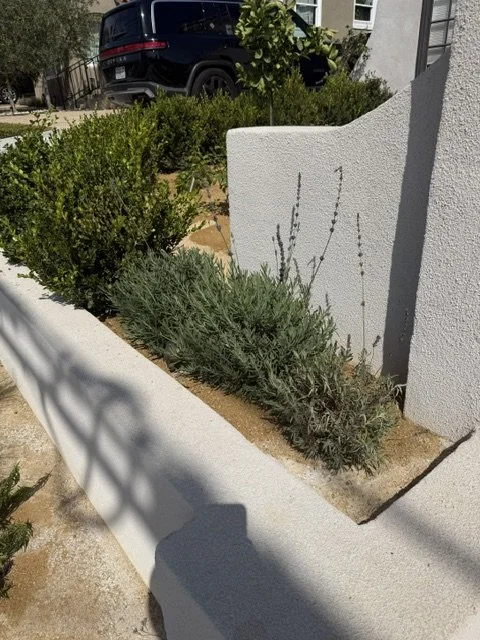
A Design Is Only as Strong as Its Implementation
A landscape does not end when the drawings are complete. The way a garden is built, irrigated, planted, and cared for during its first months can determine how it performs for many years.
On this project, the final installation was carried out by a contractor outside the LASD Studio team and without our construction administration. Over time, several plants began to struggle and some were ultimately lost, during first 3 month.
Plant decline after installation can have many causes, including irrigation problems, improper planting depth, soil compaction around the root zone, unsuitable plant material, root problems originating at the nursery, or insufficient establishment care. Without continued construction oversight, these issues can be difficult to identify and correct before permanent damage occurs.
For this reason, whenever possible, we recommend carrying a project from design through installation with contractors we know and trust, with LASD Studio remaining involved during construction. It allows the original design intent, technical specifications, planting methods, and long-term health of the garden to be protected throughout the process.
For us, landscape design is not simply about creating an image. It is about creating a living system that can establish, adapt, and grow well over time.
LASD Studio taking project from beginning, through permitting process until full realization. whether it is new construction of historical designation or landscape renovation private and comercial properties.

Sanctuary of YUM: Exotic Orchards & Wellness Programs. Bonsall, California.
The Sanctuary of YUM in Bonsall, San Diego, is a landscape of exotic orchards, healing gardens, and wellness programs. Designed as a retreat, it integrates ecological intelligence with community, art, and regenerative farming practices.
A private estate reimagined as a sanctuary of wellness, exotic orchards, and ritual spaces.
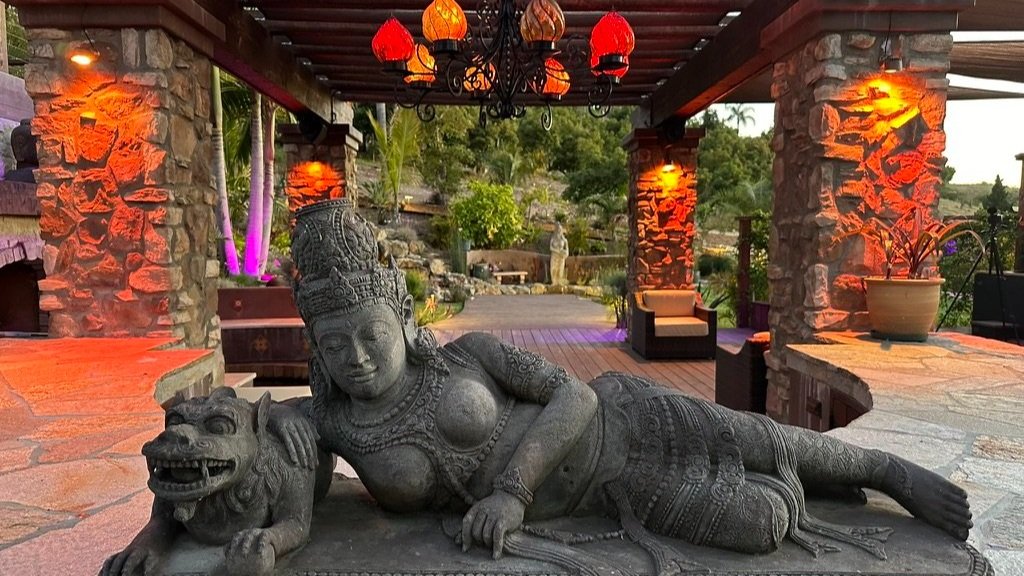
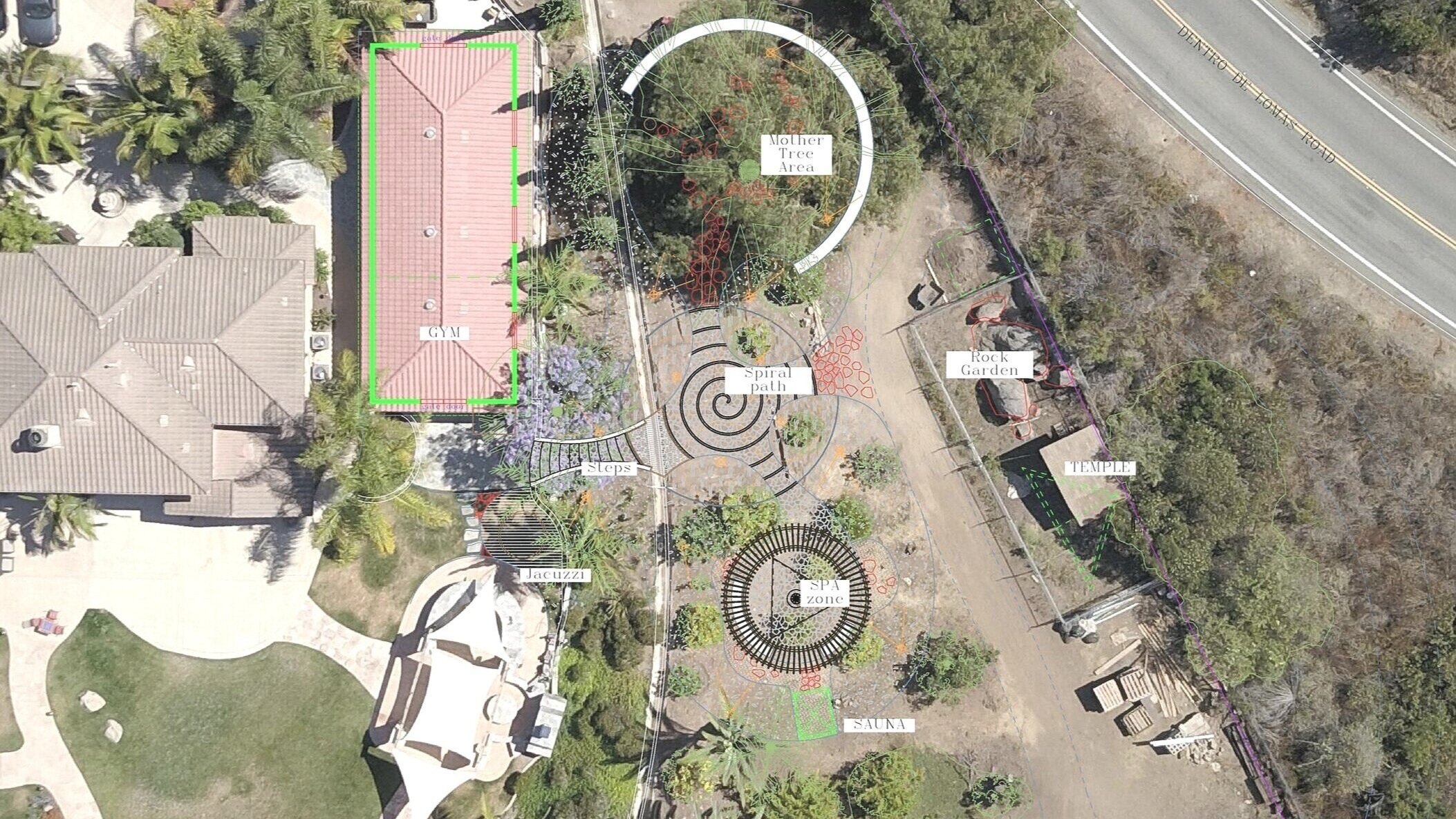
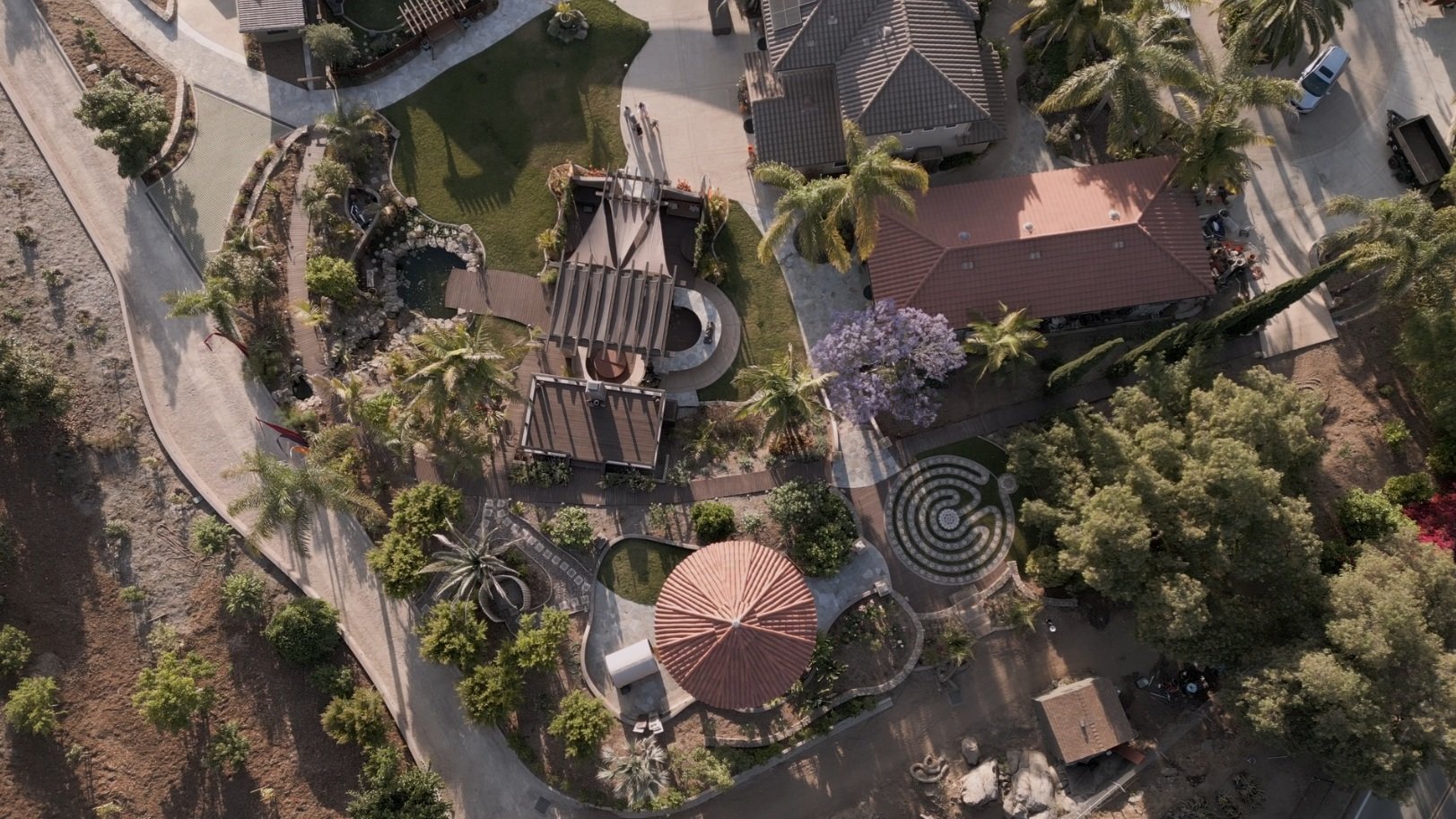
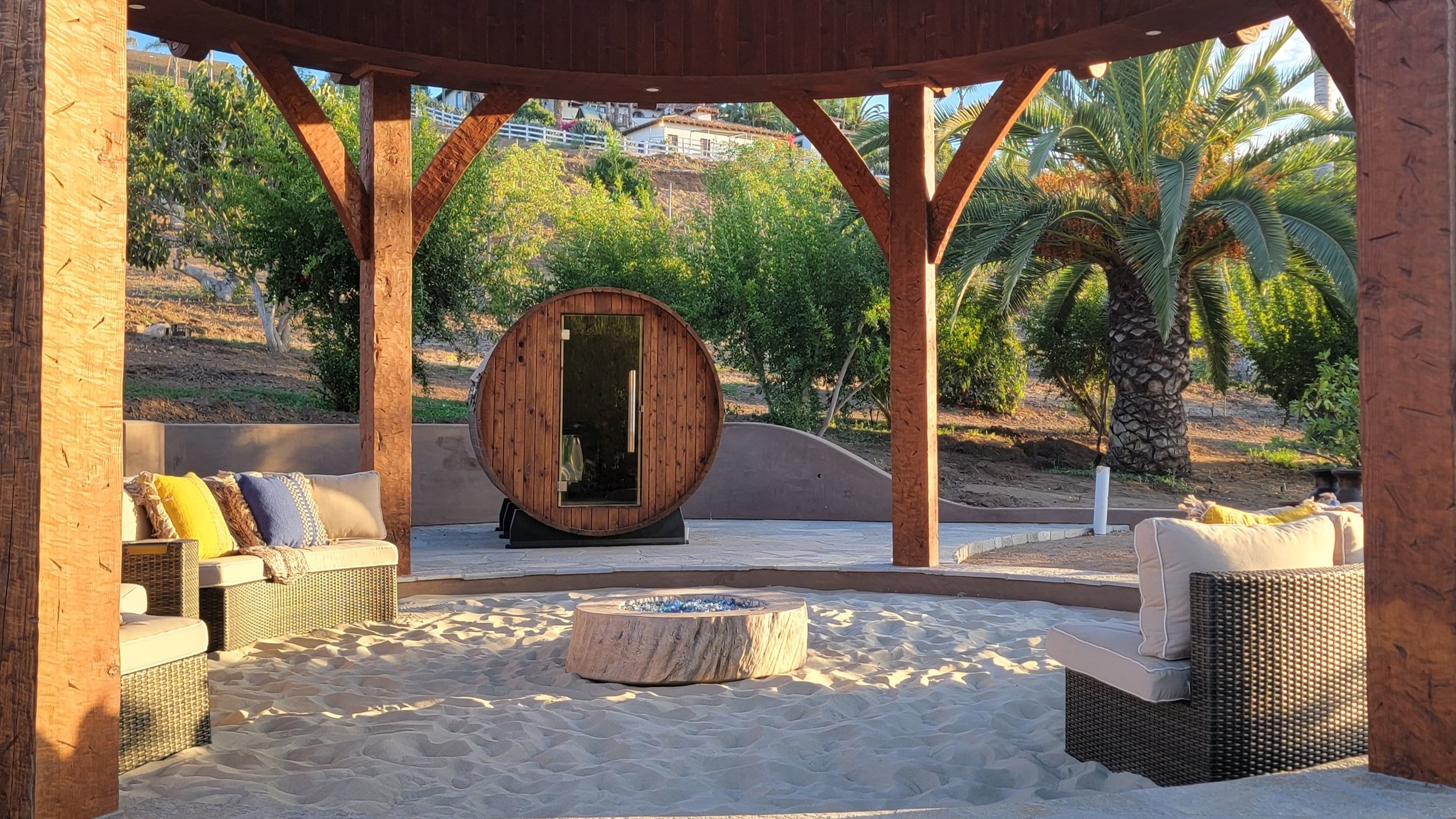
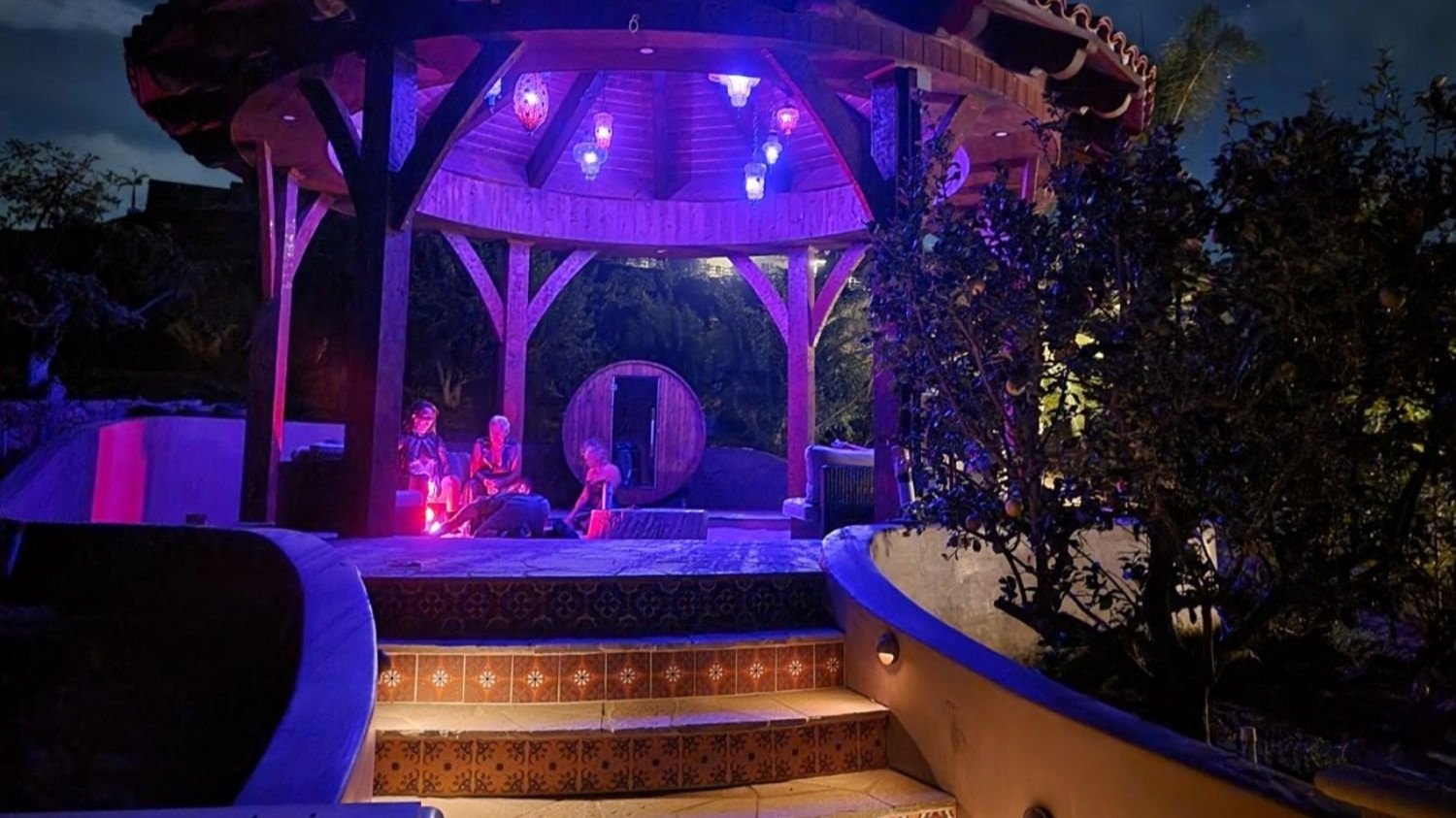
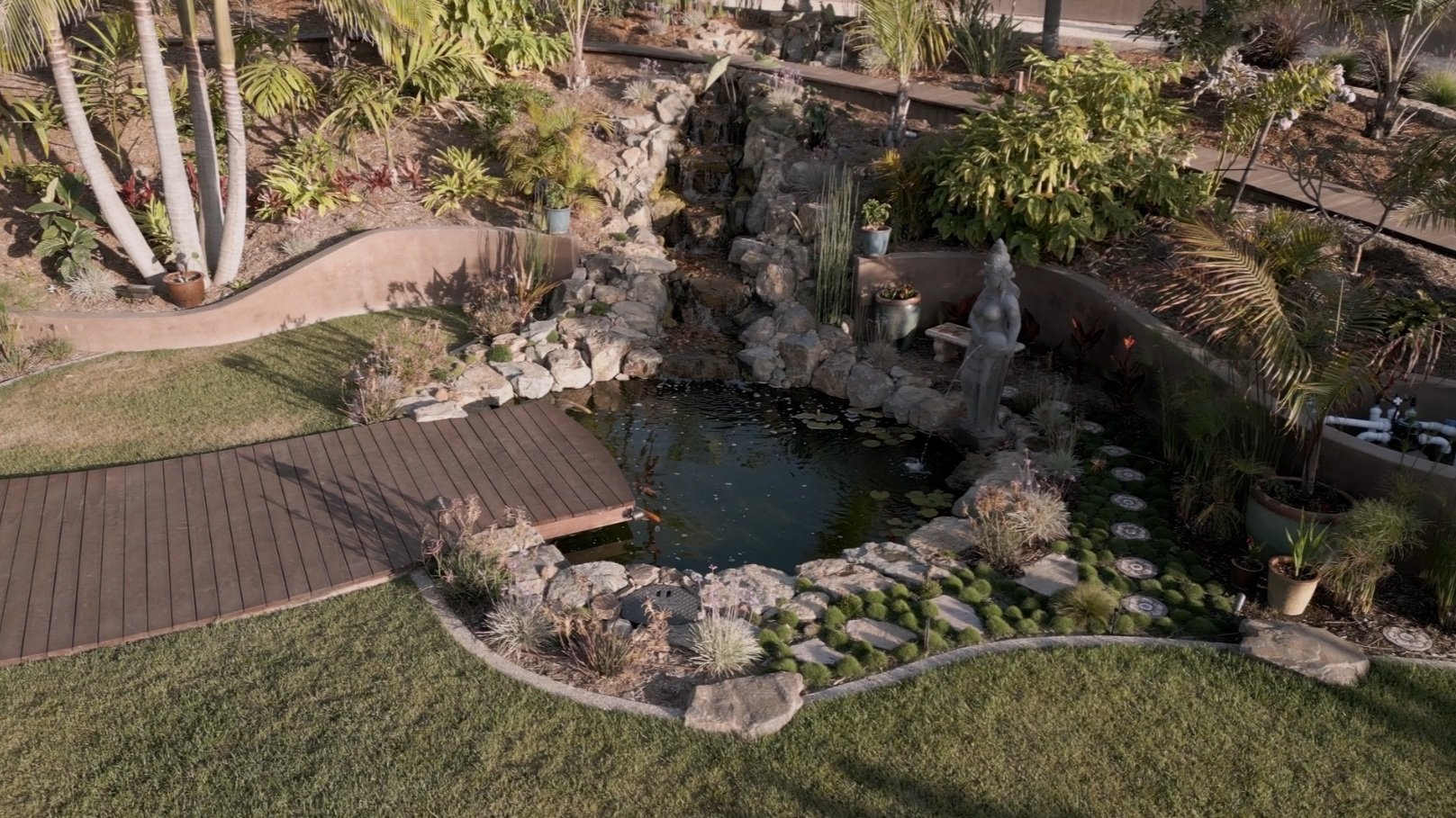
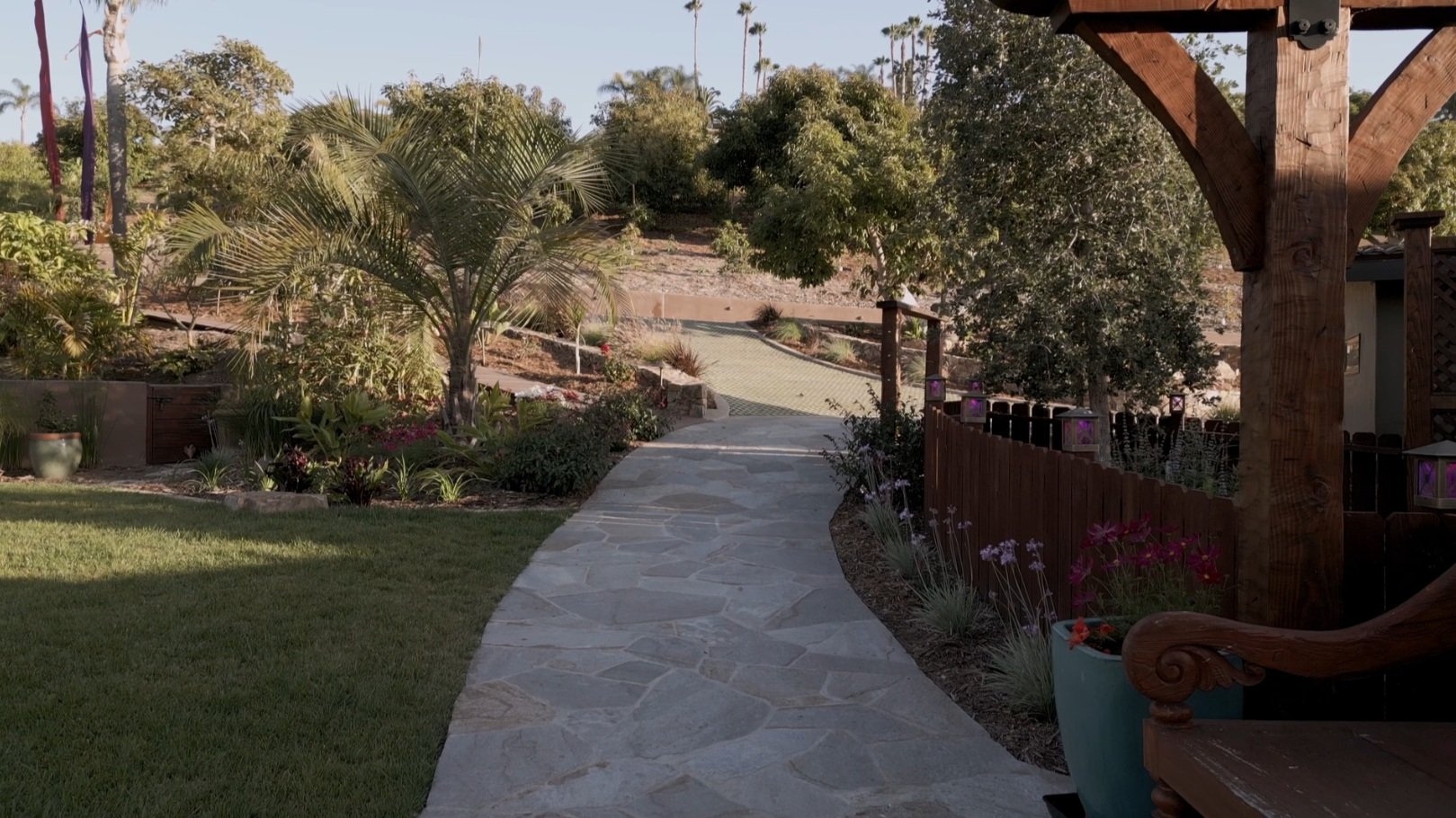
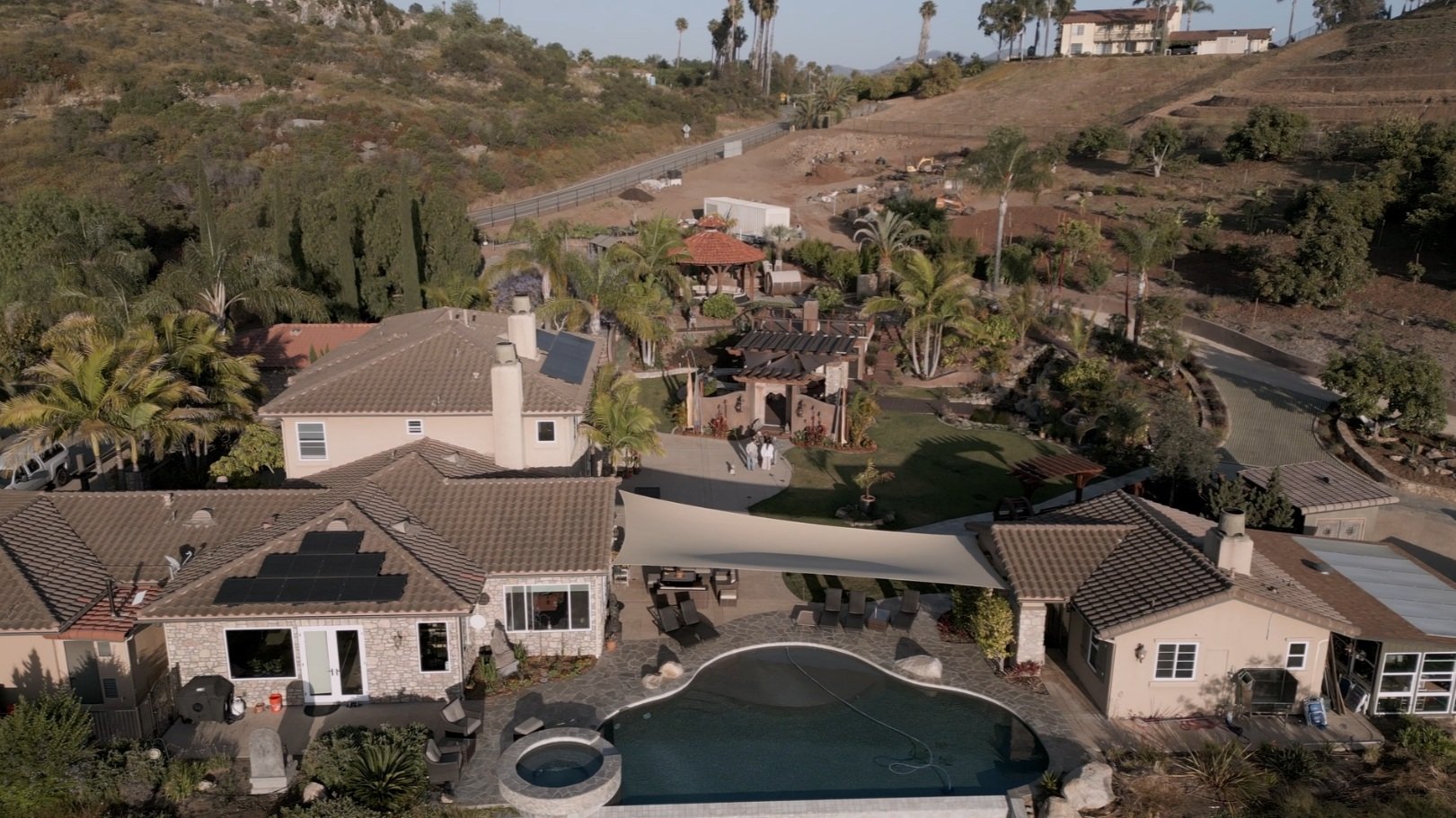
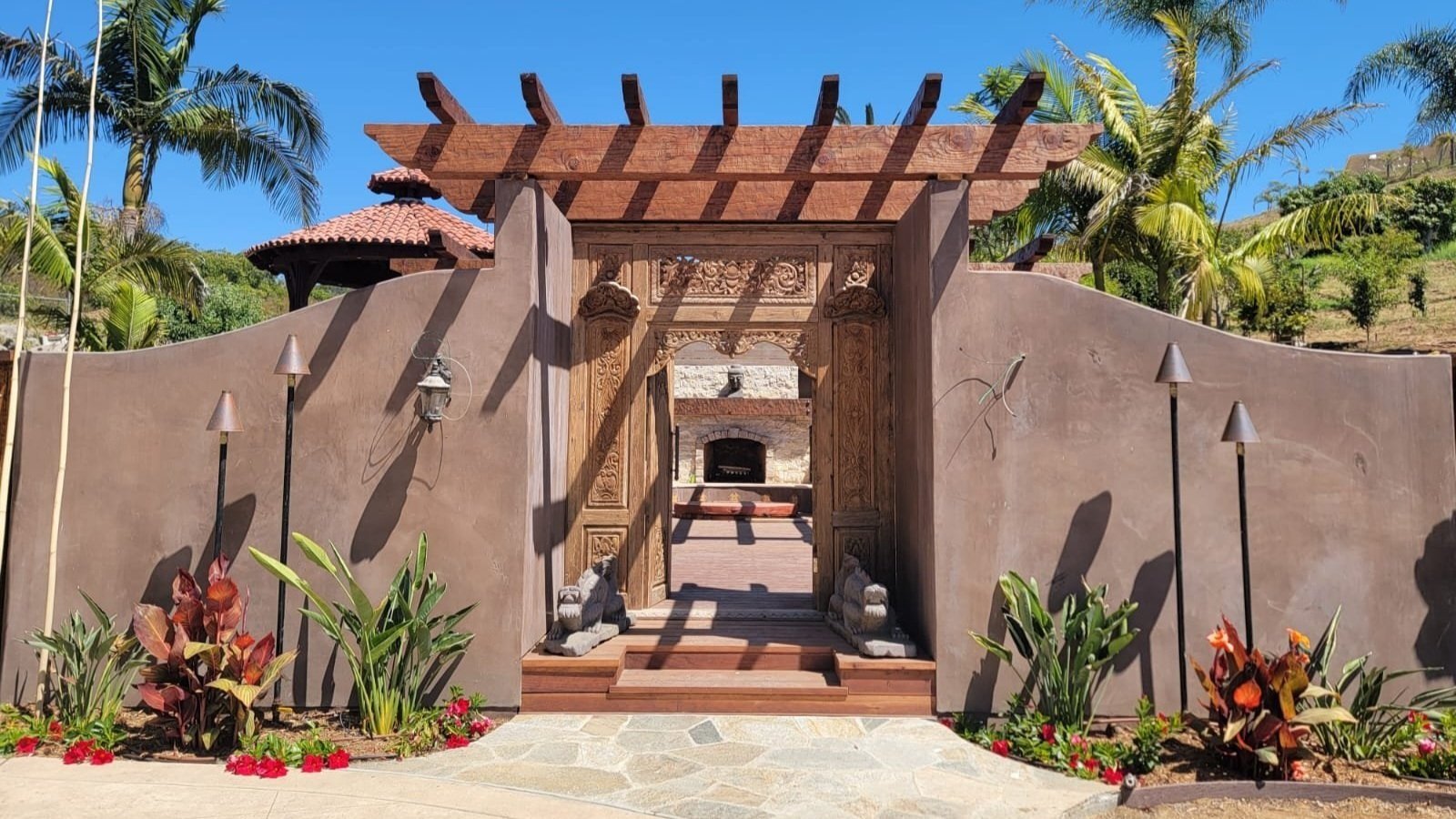
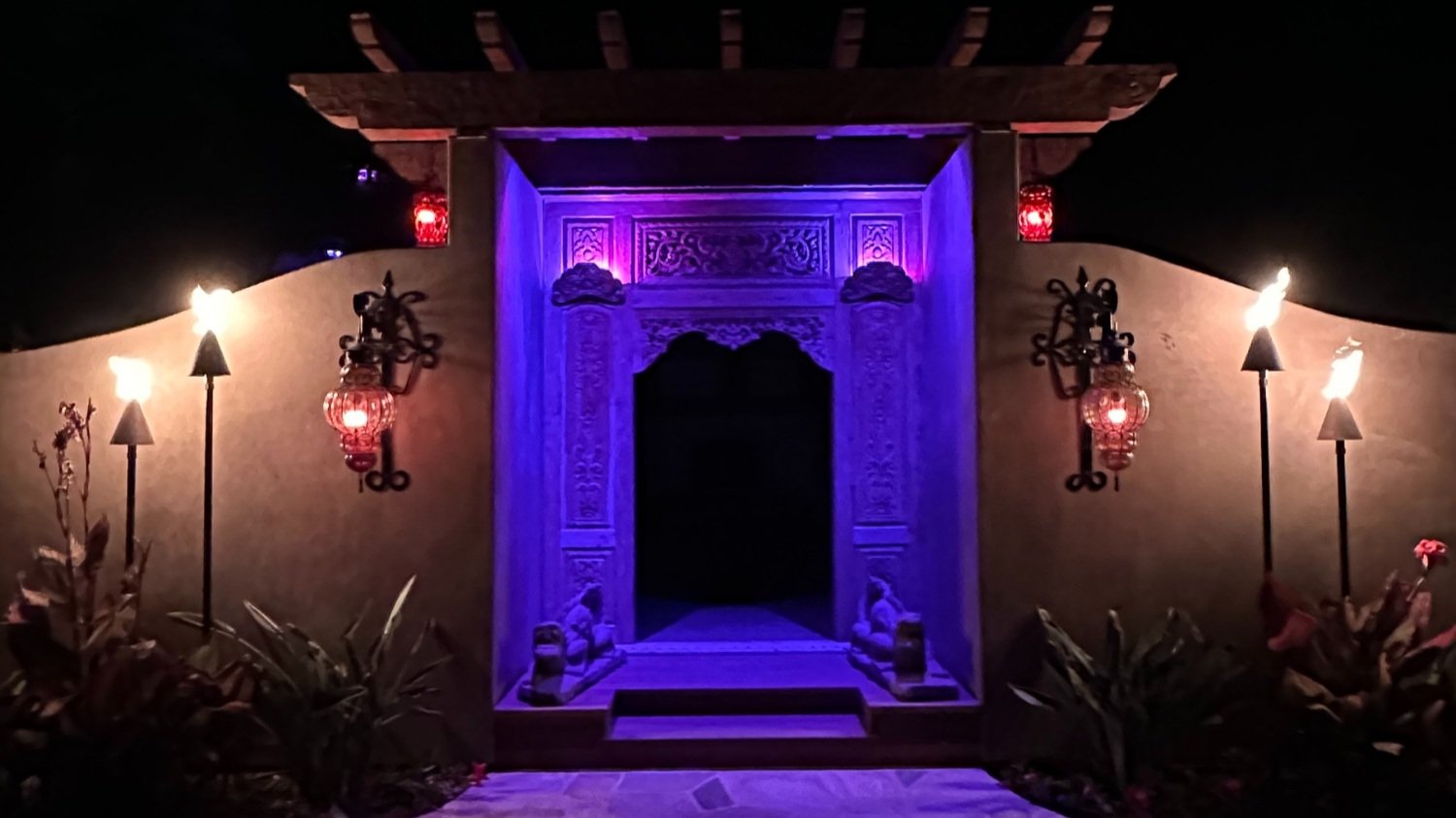
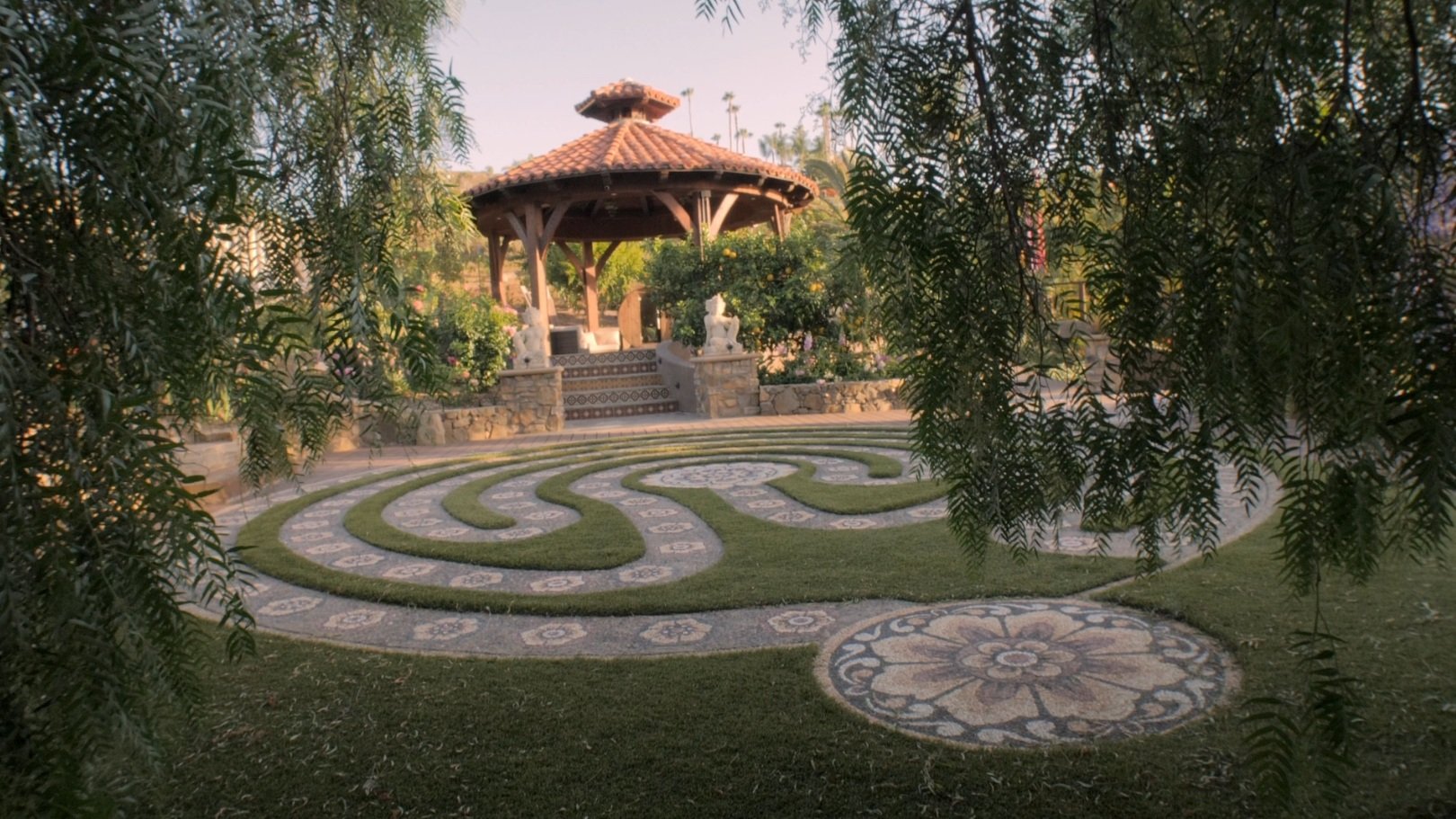
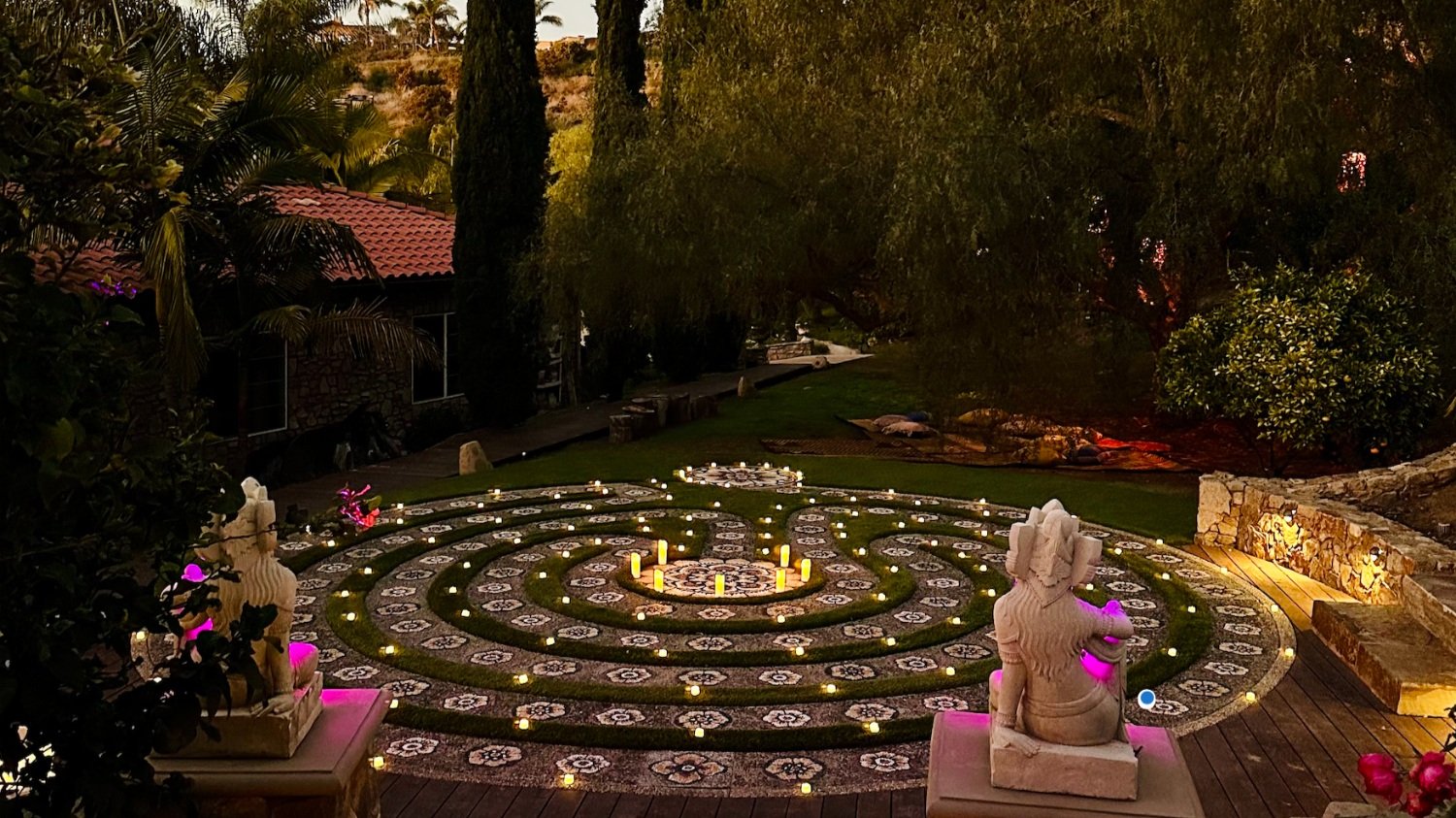
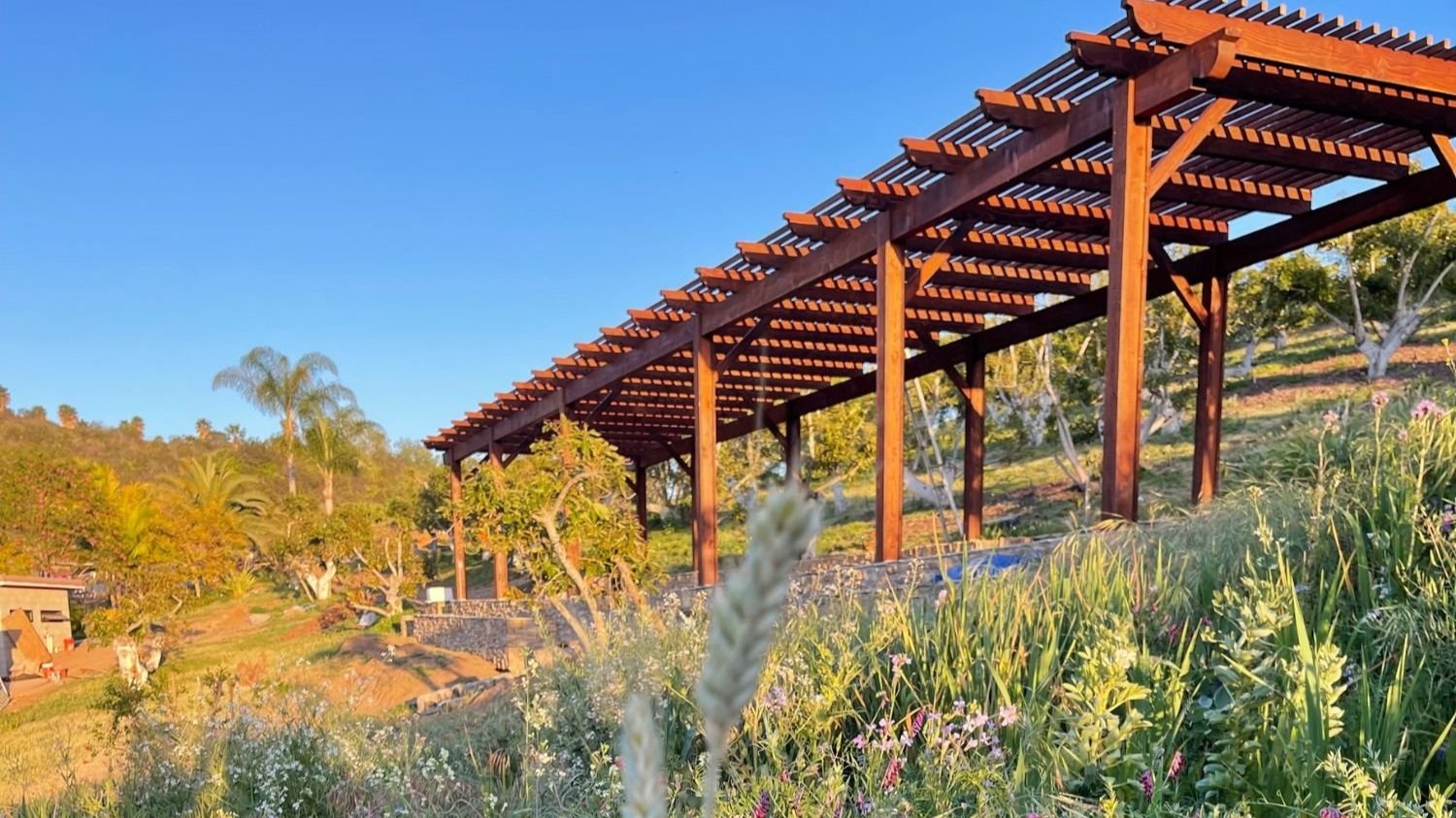
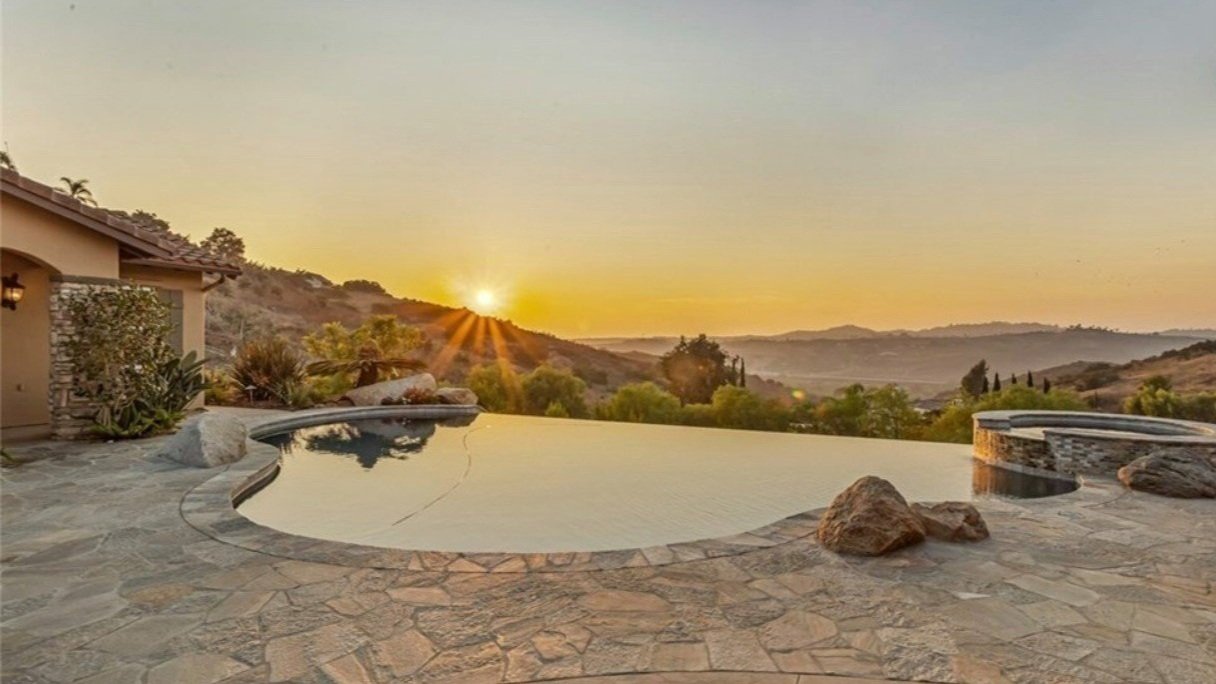
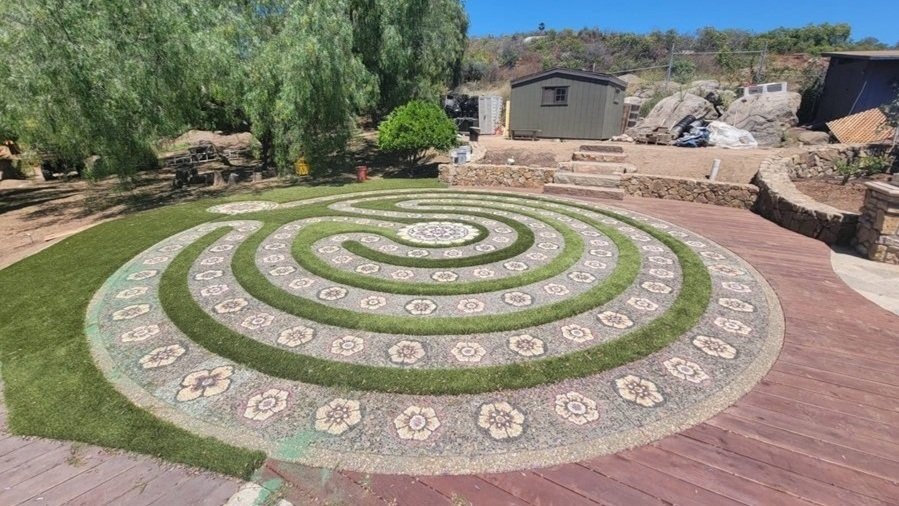
The Sanctuary of YUM in Bonsall, California is a landscape designed to nourish both body and spirit. Blending exotic orchards with native California systems, the garden creates a place where food, art, and wellness come together. At its heart lies a ritual labyrinth, a space for walking meditation and reflection. Every element is designed as part of an evolutionary intelligent system, supporting ecological cycles while providing spaces for contemplation, community, and healing.
A short film of the Sanctuary of YUM in Bonsall, a four-acre retreat blending exotic orchards, a meditation labyrinth, wellness spaces, and farm-to-table gardens. Designed by LASD Studio, it is a living sanctuary for restoration, community, and ecological beauty.
Concept Vision: Landscape as Healing Sanctuary
The Sanctuary of YUM was imagined as more than a garden - it is a living sanctuary where every element contributes to restoration, wellness, and beauty. The design draws inspiration from both ancient ritual landscapes and contemporary ecological science, creating a place where visitors feel grounded in nature while connected to something larger than themselves. Pathways, water, and planting flow as one continuous system, offering an experience of balance, serenity, and renewal.
Exotic Orchards & Edible Gardens
At the heart of the design lies an orchard of exotic and Mediterranean fruit trees, weaving productivity with artistry. Citrus, figs, olives, pomegranates, and subtropical species form a lush edible landscape, supporting both culinary delight and ecological resilience. Interplanted herbs and pollinator-friendly groundcovers attract bees and butterflies, ensuring that the garden is as alive with biodiversity as it is with flavor. The orchard becomes a daily ritual of nourishment - a reminder of the cycles of growth and harvest.
Ritual Labyrinth: Path of Reflection
The labyrinth is conceived as a sacred journey - a place for meditation, mindfulness, and personal reflection. Inspired by traditional forms yet adapted for this site, its spiraling path encourages slow movement and inner focus. Surrounded by aromatic planting and shaded by native trees, the labyrinth serves as the spiritual core of the sanctuary, a space where landscape, body, and spirit come into alignment.
Outdoor Living & Wellness Programs
The estate is structured around a series of outdoor rooms designed for wellness, family life, and celebration. Shaded terraces, yoga decks, water features, and contemplative seating areas invite both activity and stillness. Every gathering space is framed by views of orchards and hills, reinforcing the connection between healthy living and ecological abundance. The garden becomes not only a place to inhabit, but a lifestyle rooted in nature’s rhythms.
Ecological Foundations: Water, Soil, and Biodiversity
Beneath its beauty, the Sanctuary of YUM is built on strong ecological foundations. Advanced irrigation systems optimize water use, while soil restoration techniques improve fertility and resilience. Native California species are interwoven with exotic plantings to support biodiversity and ensure long-term sustainability. By aligning horticultural practices with ecological intelligence, the landscape thrives as a self-sustaining system that evolves gracefully over time.
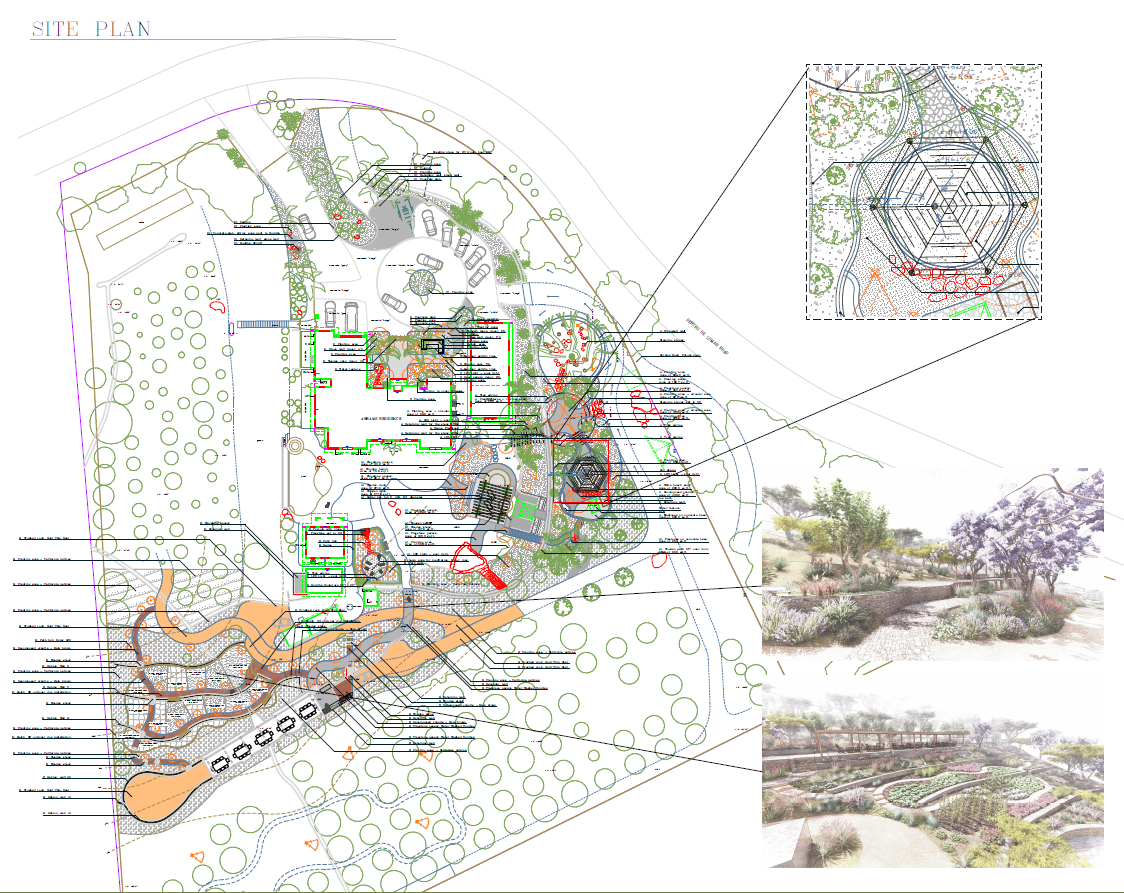
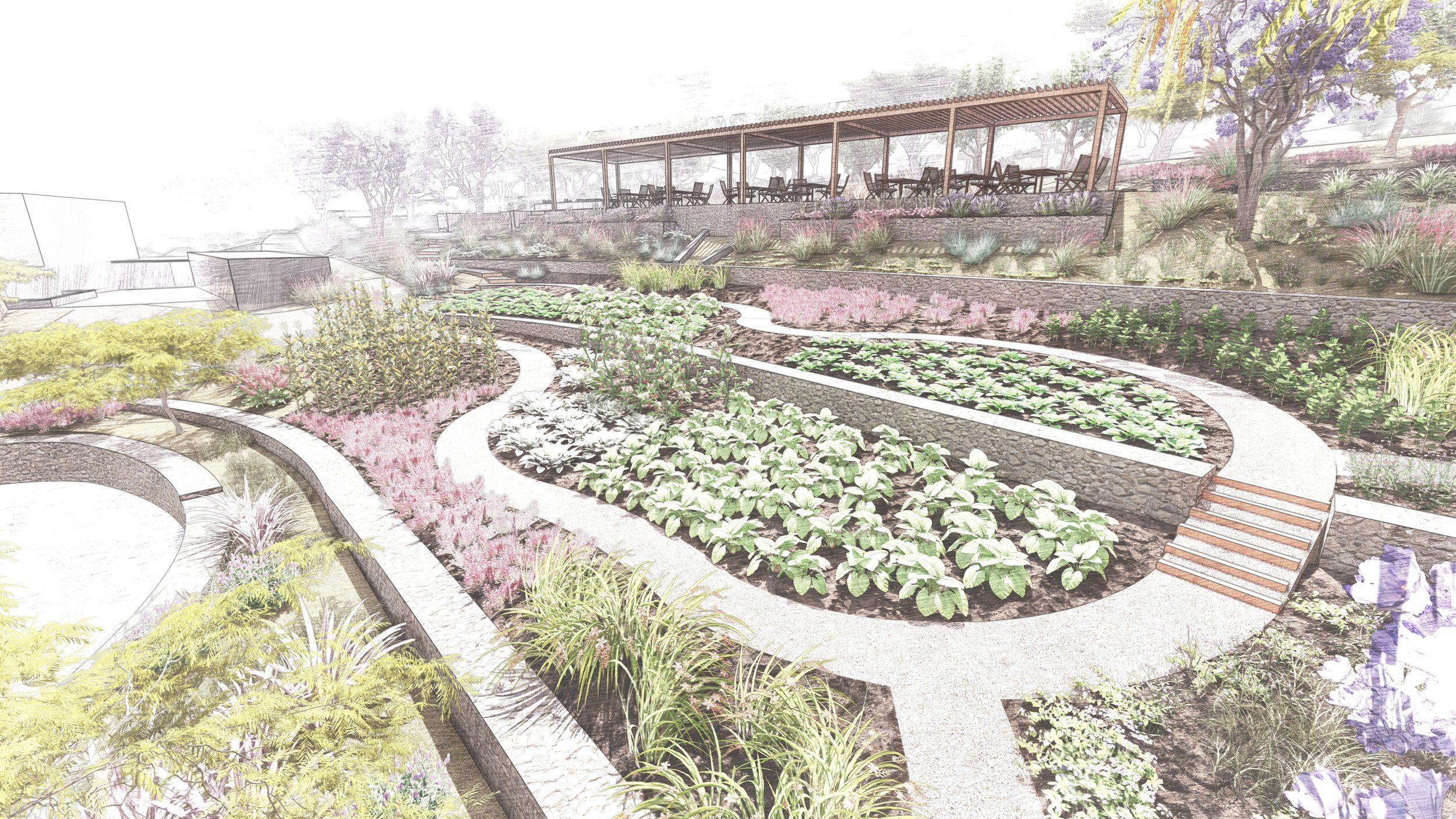
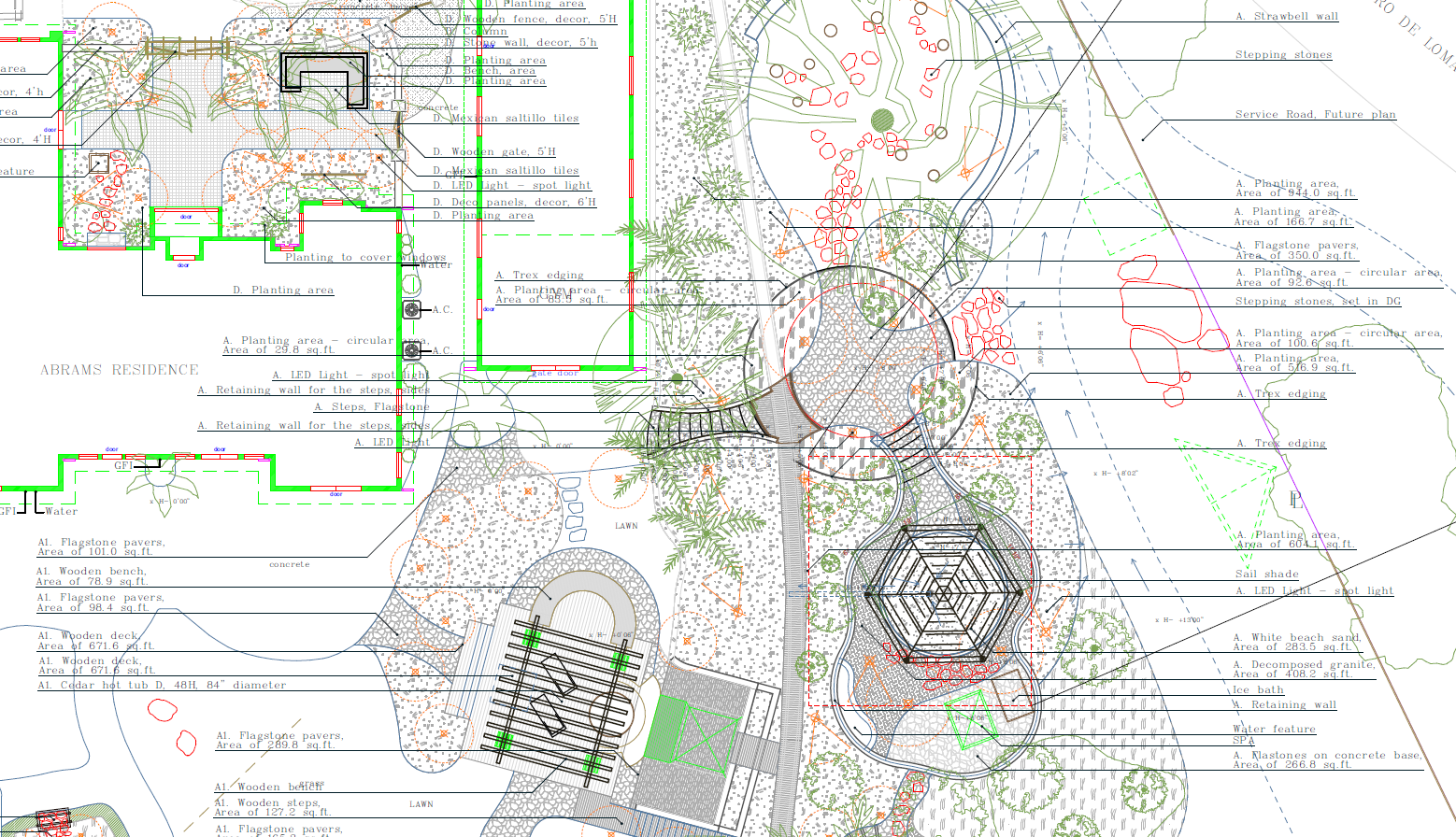
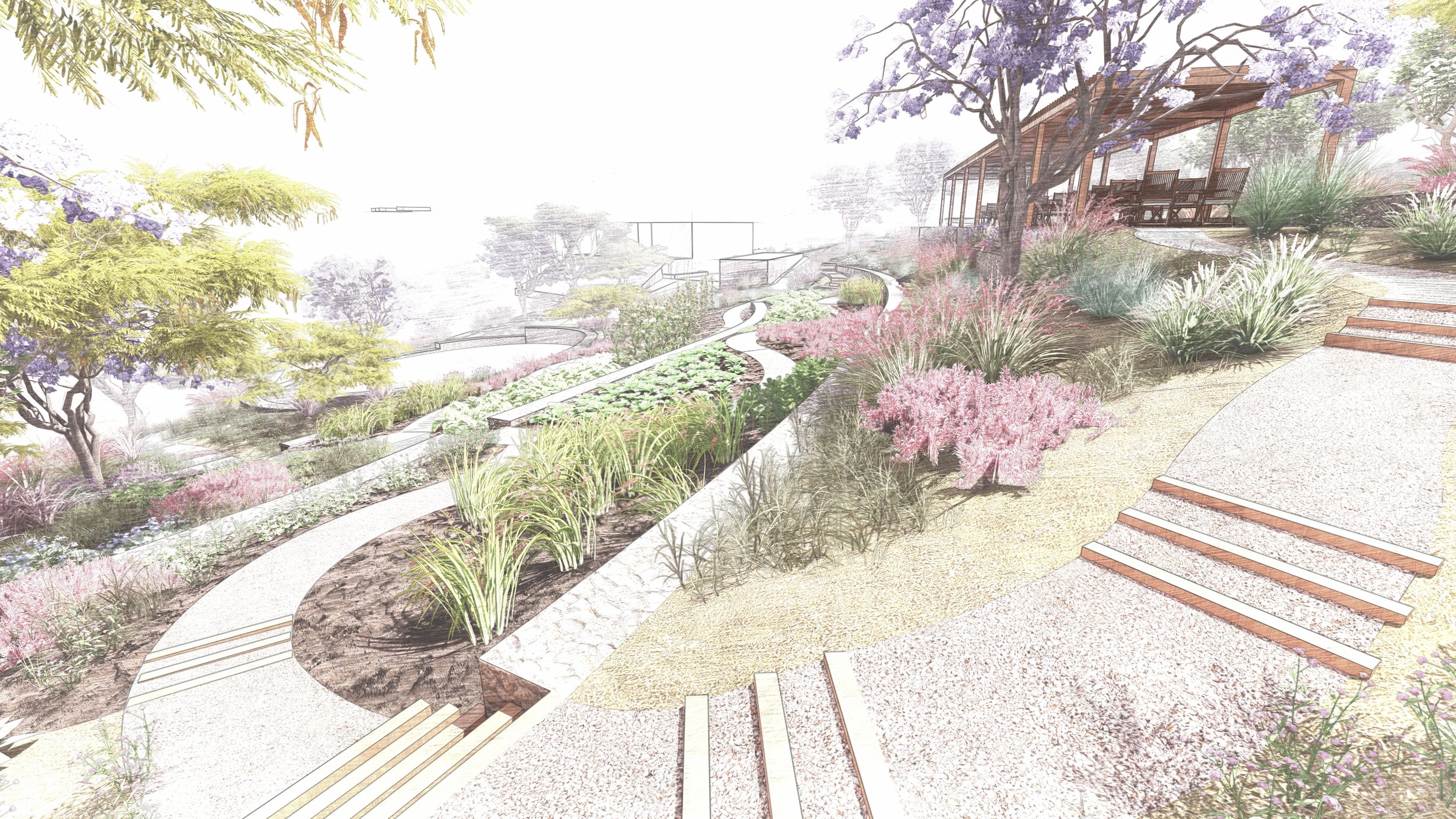

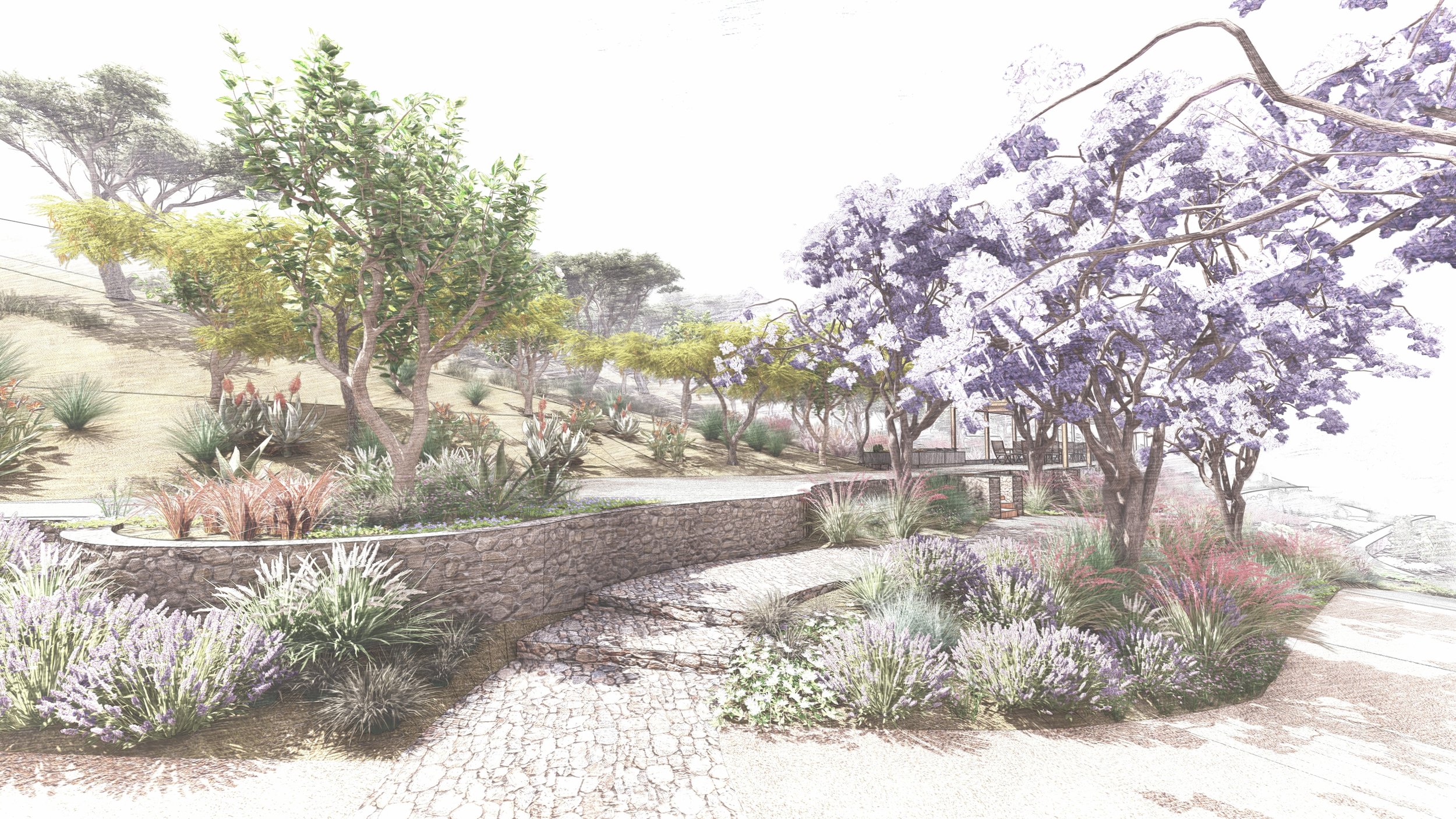
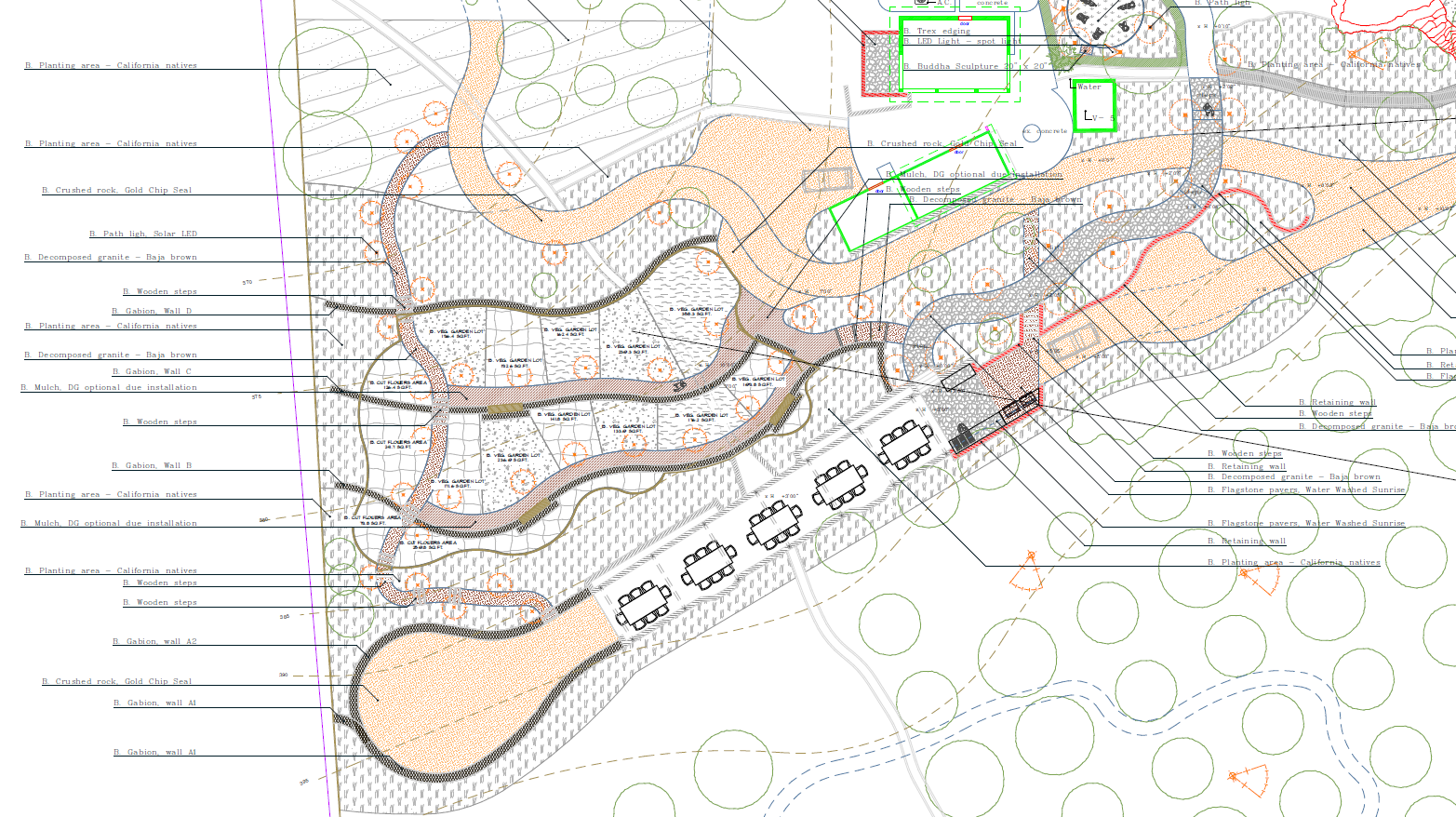
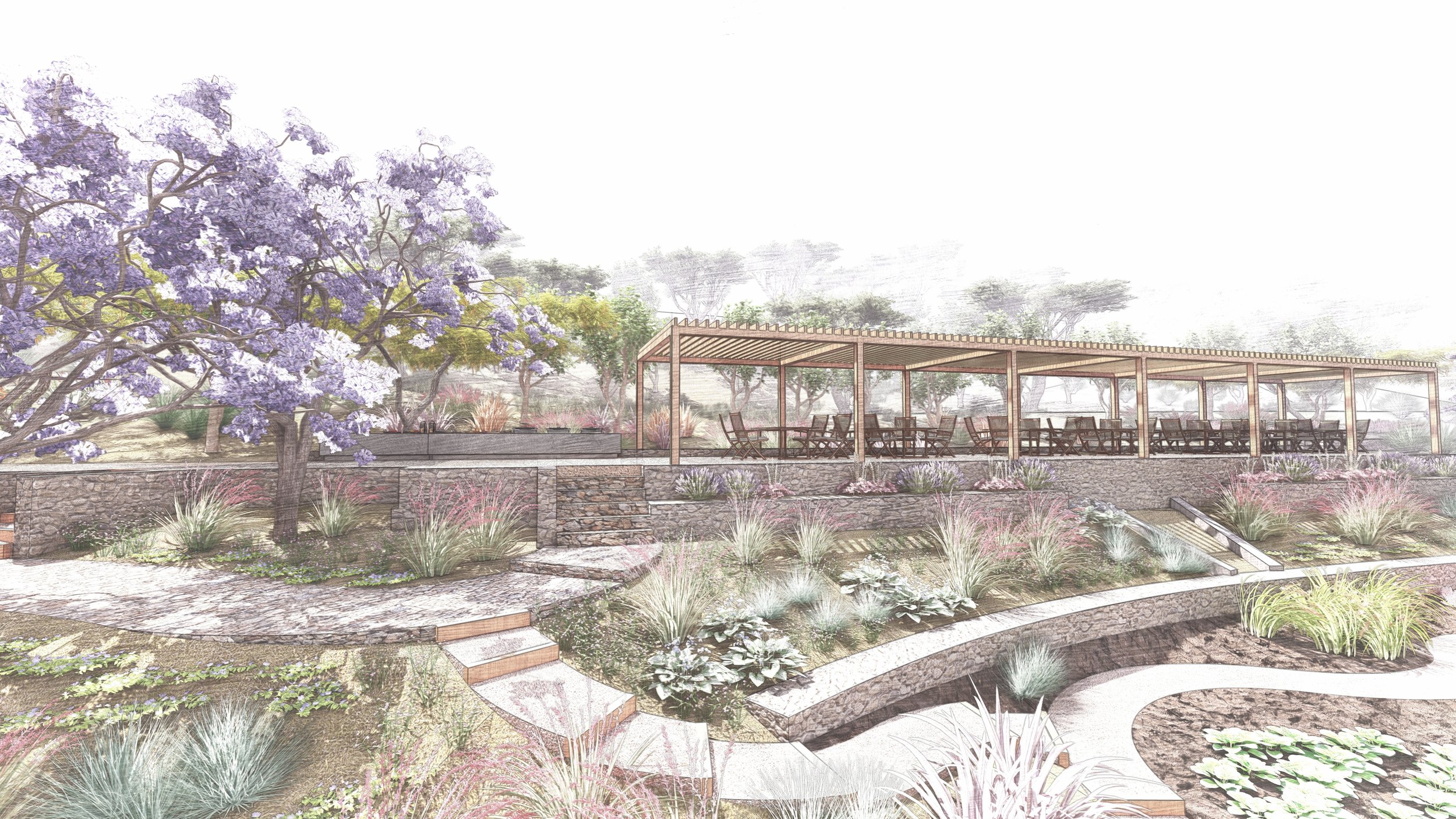

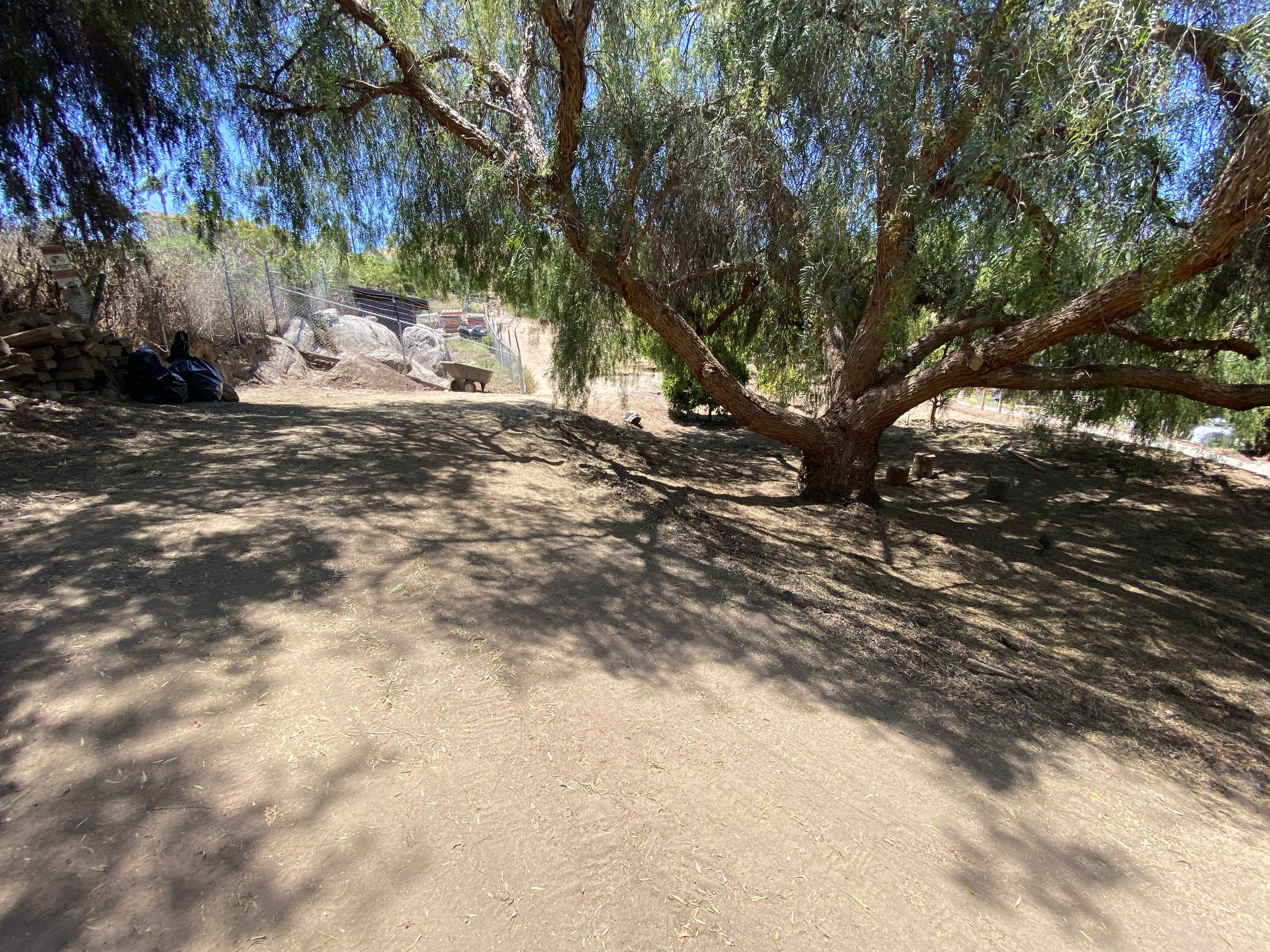
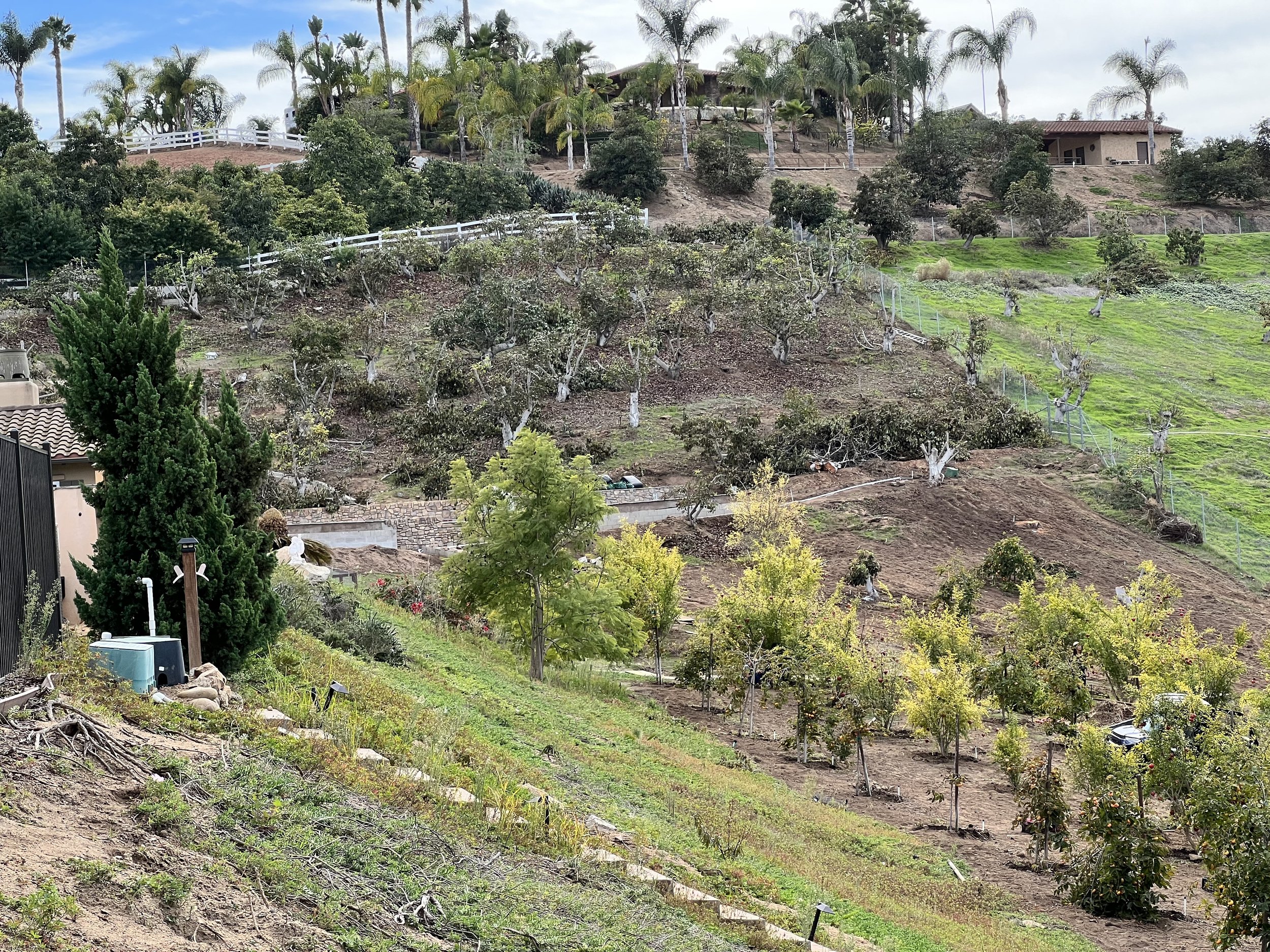
EXISTING CONDITION






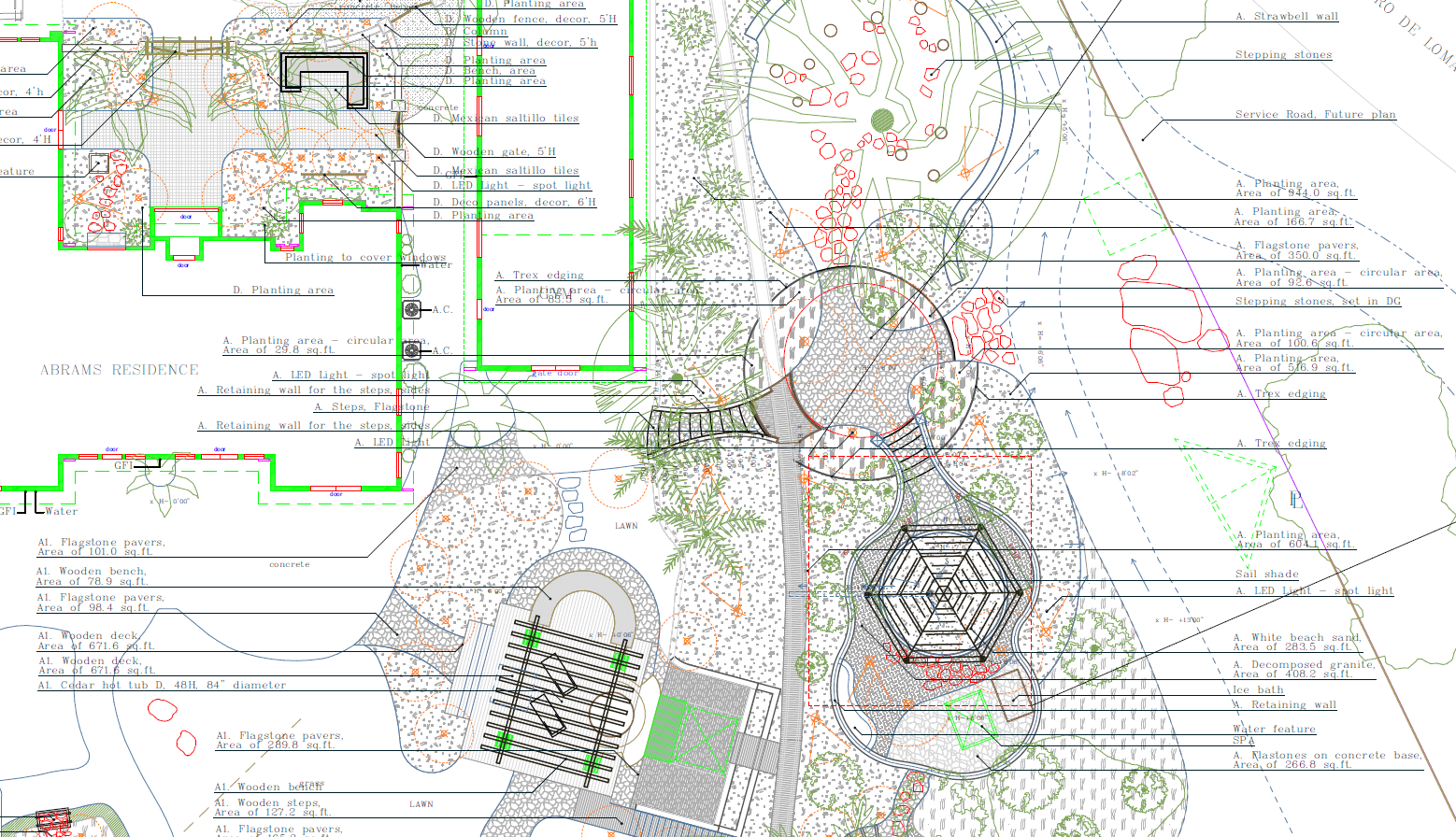
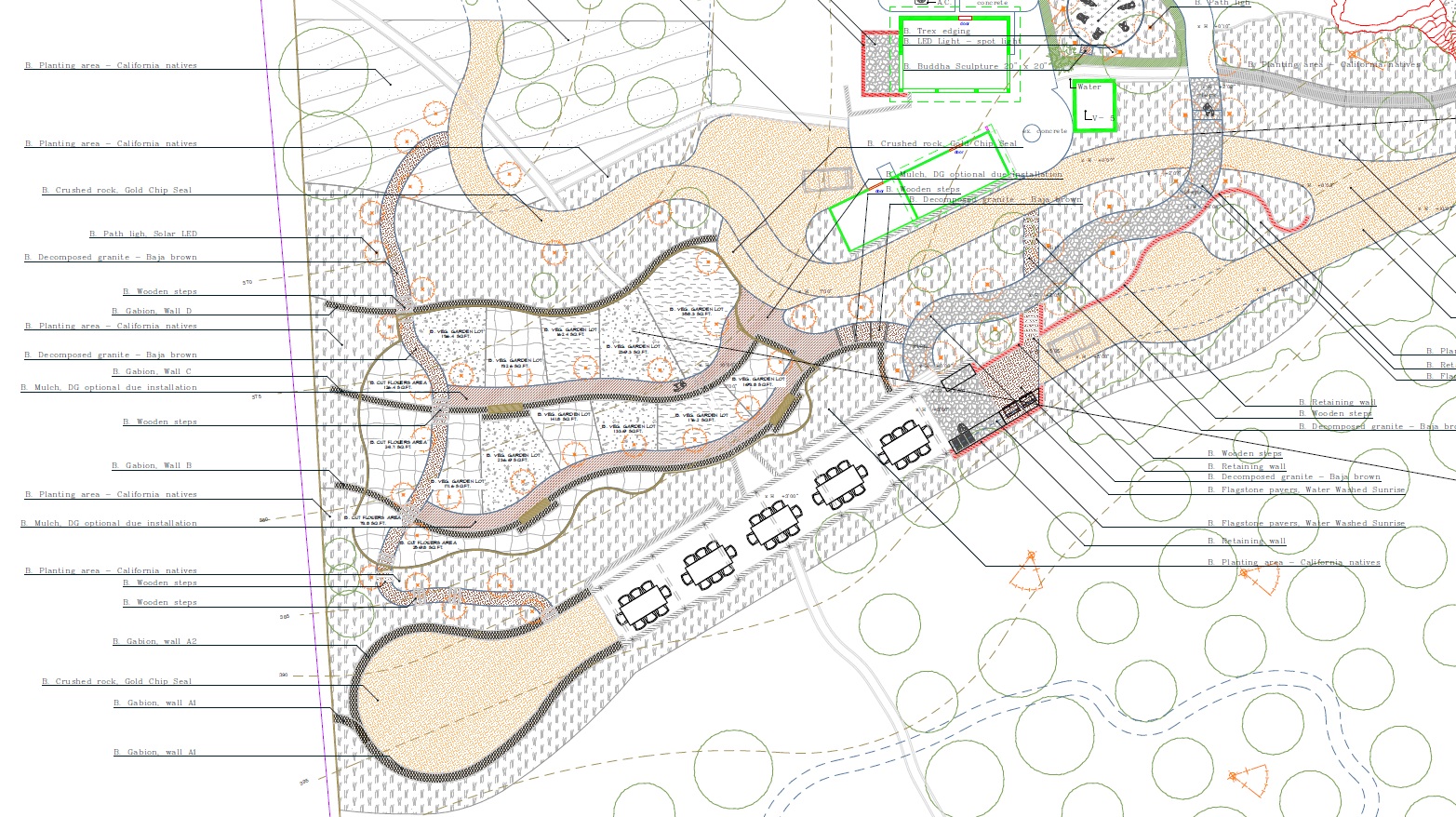
PROJECT DESCRIPTION
This four-acre estate in Bonsall has been transformed into a sanctuary of exotic orchards and wellness programs, designed to host both private and group retreats. Our collaboration began in 2020, when owners Laurence and Yulia reached out with a dream of creating a retreat center but were unsure how to bring it to life.
Together, we developed a holistic vision for the landscape. Over the course of two years and many thoughtful refinements, that vision evolved into the sanctuary you see today. What impressed us most was the passion of Laurence and Yulia - not only did they understand the design intentions, they became deeply engaged in shaping every step of the process.
Originally, the land held fifty-year-old avocado and pomegranate orchards in decline. Through careful pruning, planting of cover crops, and natural methods to attract pollinators, the owners lovingly restored these orchards. We complemented their work with new design layers:
A temple garden for meditation and spiritual practice
The Dragon’s Den, a multipurpose retreat space with hot/cold tubs, dining and dance areas, and a Balinese entryway
An eighty-foot pergola farm table for farm-to-table events
Over 3,000 square feet of vegetable and flower terraces
A new waterfall and pond adding movement and reflection to the landscape
Today, the Sanctuary of YUM is a true oasis, a place where people come to restore energy, celebrate life, and connect with nature through food, art, and community.
Please check Sanctuary of YUM - https://sanctuaryofyum.com/
Post-Classicism in Transition to Modernism. Omaha, Nebraska
A private garden in Omaha, Nebraska, designed as a dialogue between classical traditions and modernist innovation. Pergolas, pools, sculptural planting, and outdoor rooms create a landscape where history transitions into contemporary living.
“A Modern Garden Design in Omaha”
Philosophy of the Design
The Omaha Modernist Garden is a living dialogue between Post-Classical architecture and contemporary landscape design. Our goal was not to fix the property within a rigid historical style but to allow it to evolve - freeing the Post-Classical home to transition gracefully toward Modernism.
This vision dissolves boundaries, opening space for eclectic combinations of styles that celebrate unpredictability and the richness of future transformations. The result is a landscape that is both a sanctuary for people and a living system for nature.
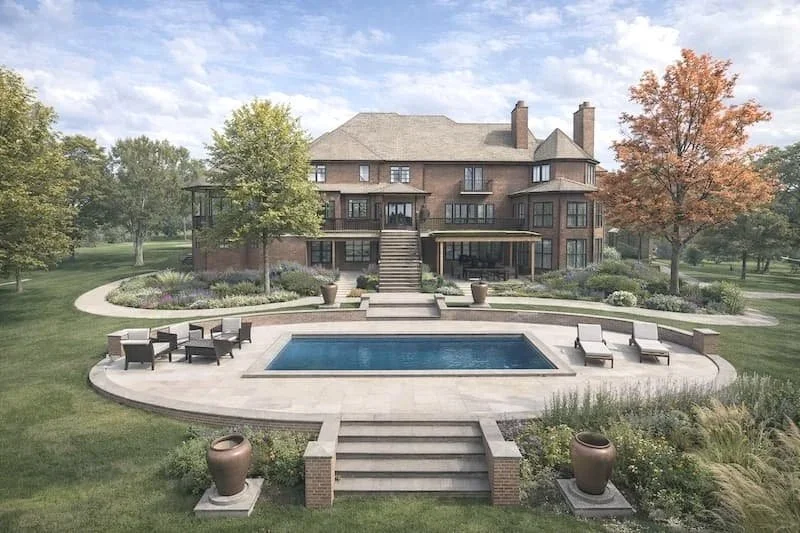
Elegant rear garden design with rectangular pool on an oval terrace, bold steps, sculptural urns, and outdoor lounge seating, blending post-classical symmetry with modernist garden design principles.
Post-Classicism in transition to Modernism 3D visualization
A cinematic presentation of LASD Studio’s Post-Classicism Modernist Garden in Omaha, where architecture, art, and ecology converge. The film reveals a garden that transitions from classical order to modernist freedom — with pergolas, water features, organic forms, and ecological planting creating a living system that unites people and nature.
Guiding Principles
The design is grounded in global ecological thought and a lineage of visionary designers, architects, and scientists:
Design with Nature - Following Ian McHarg’s groundbreaking philosophy, we place ecological systems at the center of design.
Evolutionary Landscapes - Nature is never static; it evolves. Our design embraces flux, change, and interconnectedness.
Regeneration & Recovery - The garden aids the land’s healing from human impact, restoring ecological processes.
Do No Harm - Materials and methods respect the earth, ensuring resources for future generations.
Integrated Systems - Humans and nature are not separate; this garden functions as a single living organism.
Aesthetic Simplicity - Inspired by natural forms, the design language is bold yet understated, where elegance meets sustainability.
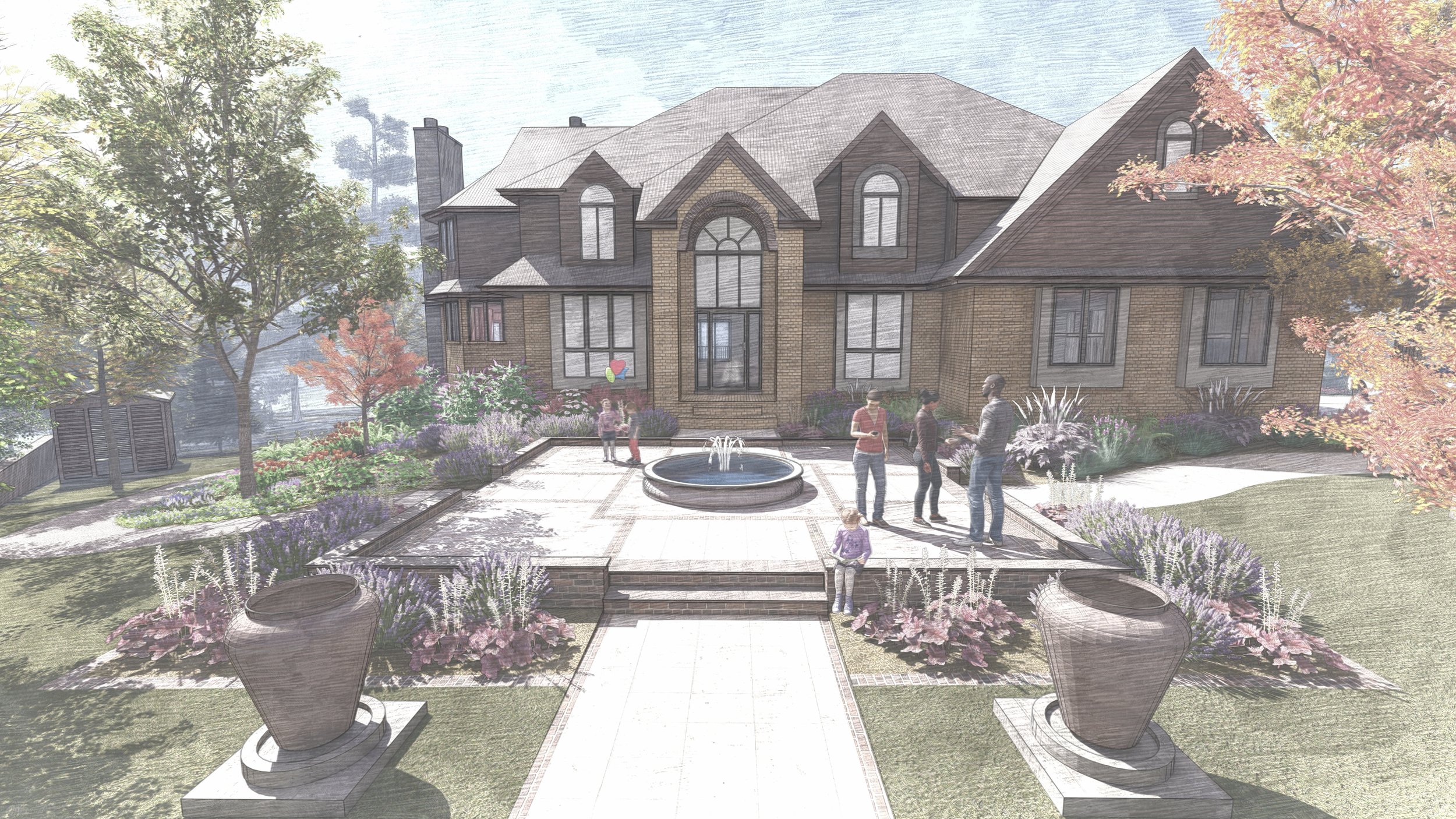
Landscape architecture rendering of a front entry garden featuring a central fountain, formal axis, urn planters, and layered planting beds, expressing the transition from post-classicism to modernism.
Pergolas as Transitional Elements
Pergolas have always played both a functional and aesthetic role in garden design. They act as focal points, create vertical definition above patios and pathways, support climbing vines, and provide shaded areas for seating. Rooted in classical traditions, pergolas are essential features of historical gardens. In this Omaha project, LASD Studio reinterpreted the pergola for contemporary living — framing an outdoor dining space that seamlessly connects the interior and exterior, embodying the modernist principle of fluid transitions between house and garden. Check our special project series - Styles and Epochs of Art that influenced Landscape Architecture and Garden Design.
Water as Sculpture and Experience
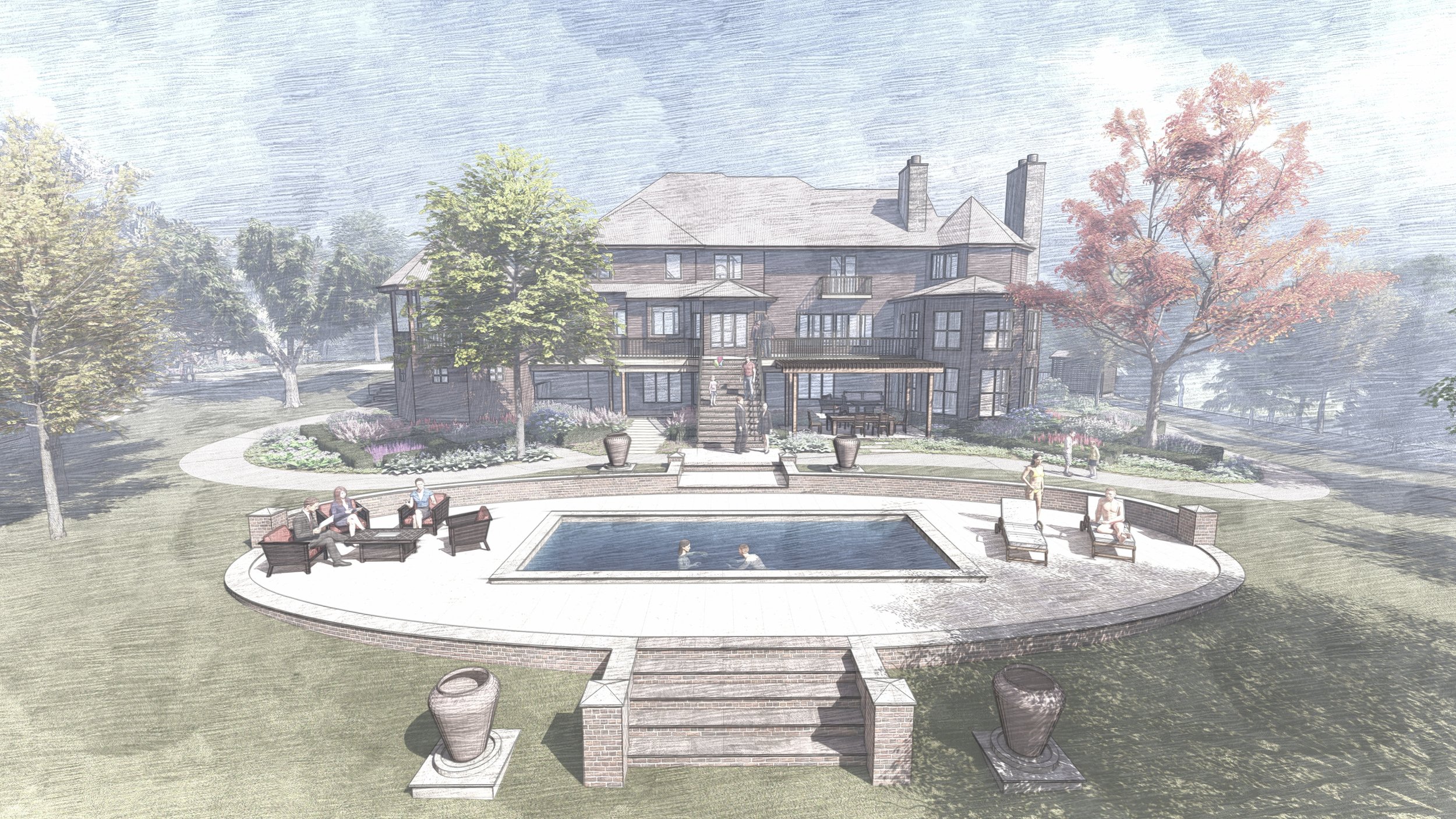
Water features have long been central to garden design, from the Renaissance and Neoclassical estates of Italy to modernist landscapes. They provide reflection, movement, and sensory delight. At the Omaha residence, water elements were placed at both the front and rear of the home: a circular pool welcomes guests at the entry, while in the back, a rectangular pool set within an oval platform disrupts rigid geometry, creating a bold sculptural gesture characteristic of modernist garden design.
Modernist Principles: Function and Simplicity
Authentic Modernist gardens are defined by their strong link between house and garden, often structured around pools, terraces, barbecues, and outdoor dining. Ornament is minimal, detail is pared back, and the garden functions as an extension of everyday life. In Omaha, this approach shaped spaces that are not about decoration but about clarity, usability, and experiential flow — landscapes where simplicity itself becomes luxury.
Classical Influences: Kenneth Lynch and Garden Art
The tradition of sculpture and fountains in landscape design is continued here through references to Kenneth Lynch, who in the 1950s brought European garden artistry to the United States. His reproductions of limestone fountains and statues made classical craftsmanship accessible to American landscapes. By integrating such references, the Omaha project situates itself within a continuum of garden history - from European tradition to modern reinterpretation.
Organic Forms and Abstract Geometry
Earlier Modernist designs often combined severe linear grids with organic curves, creating tension between order and freedom. In Omaha, this dialogue is visible in the kidney-shaped pool, abstract sculptural elements, and curved garden margins. Such biomorphic forms, fashionable in mid-20th-century America, were inspired by Surrealist art, Cubist theory, and the idea that space can be perceived simultaneously from multiple viewpoints. Here, geometry becomes a language of modern art expressed in landscape.
Space as the Core of Modernist Landscape Architecture
If architecture defines buildings, modernist garden design defines volumes of space. Trees, shrubs, and structures are used not simply as decoration but as spatial walls — shaping outdoor rooms, linking house and garden, and creating depth and perspective. In this Omaha project, space itself becomes the medium, echoing modern architecture’s focus on volume, openness, and continuity.
Genius Loci - A Garden of Place and Spirit
Every site carries a genius loci - a spirit of place. LASD Studio’s design honors the climate, geography, and vegetation of Omaha, ensuring the garden is not an imported style but an ecological interpretation of its setting. The result is a landscape that encourages a relaxed way of living, integrating new materials, building techniques, and ecological awareness. It is both a modernist sanctuary and an evolutionary system, where architecture, art, and nature form a single living composition.

Back garden perspective with large pergola dining area, central stairway, formal hedging, perennial borders, and pool terrace, designed as part of LASD Studio’s Post-Classicism Modernist Garden in Omaha.
A New Entrance Experience
The entry sequence blends classical formality with modern abstraction. A large water feature and sculptural element anchor the arrival, offering a bold statement that resonates with the architecture while inviting guests into a renewed spatial narrative.
Garden Paths as Experiences
Curved and linear pathways guide visitors through a series of garden experiences, where each transition evokes unity and flow. Walking becomes an act of contemplation, a choreography of space, light, and seasonal change.
Winter Garden & Pottery Retreat
Designed for year-round use, the Winter Garden provides shelter and intimacy. With pottery, seating, and observation points, it becomes a sanctuary during colder months - a place for stillness and reflection.
Outdoor Dining & Social Spaces
The dining terrace and private lounge extend living outdoors, framed by ecological planting and subtle architectural gestures. These are spaces of gathering and sanctuary - equally vibrant in summer’s abundance or winter’s quietude.
Parterre Garden: Classical Meets Contemporary
A reinterpreted parterre garden bridges the classical and the modern. Trees, evergreen plantings, and herbs weave geometric structure with ecological depth, creating a timeless dialogue between order and wildness.
Stairs as Central Axis
A new grand stairway organizes the garden as a central line of movement. Bold, wide steps lead from the home to the landscape, transforming circulation into a ceremonial descent into nature.
Pool and Open Terrace
The pool area forms a luminous open space, a threshold between architecture and ecology. Here, post-classicism transforms into modernist clarity, framed by water, art, and sky.

3D visualization of the front entry courtyard with a circular fountain, formal paving layout, layered perennial planting, and mature trees, designed as part of a Post-Classicism Modernist Garden in Omaha.
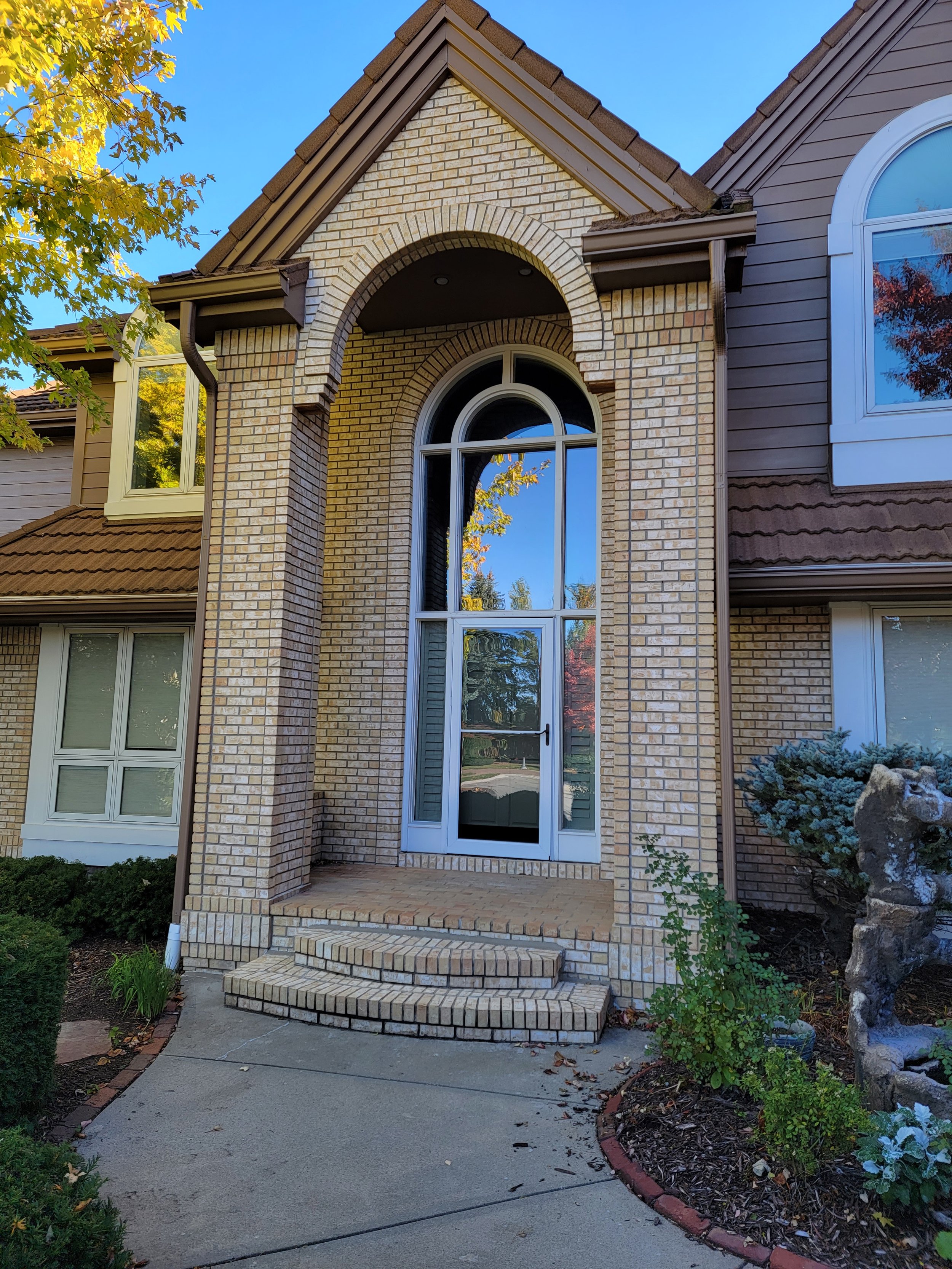
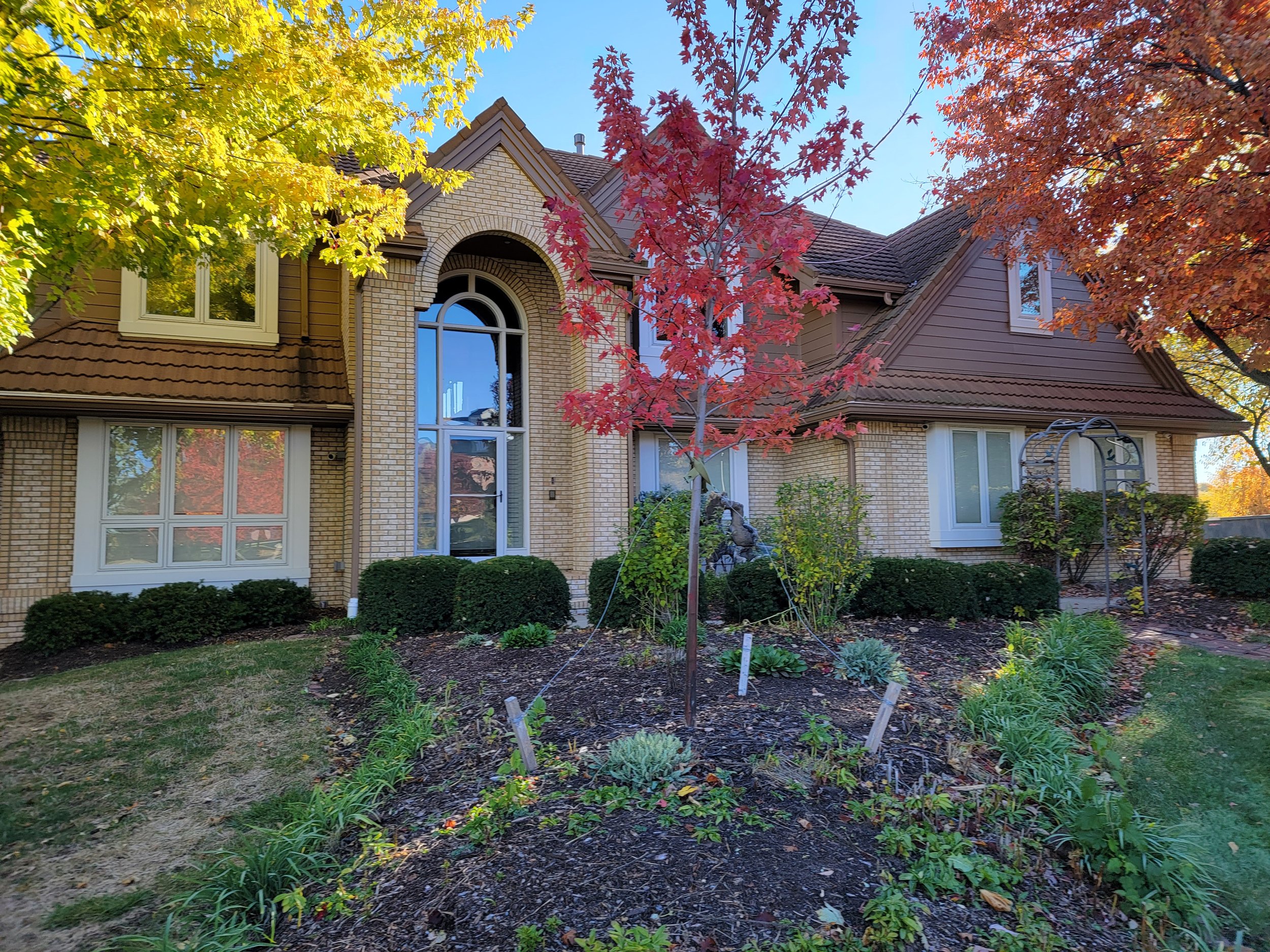
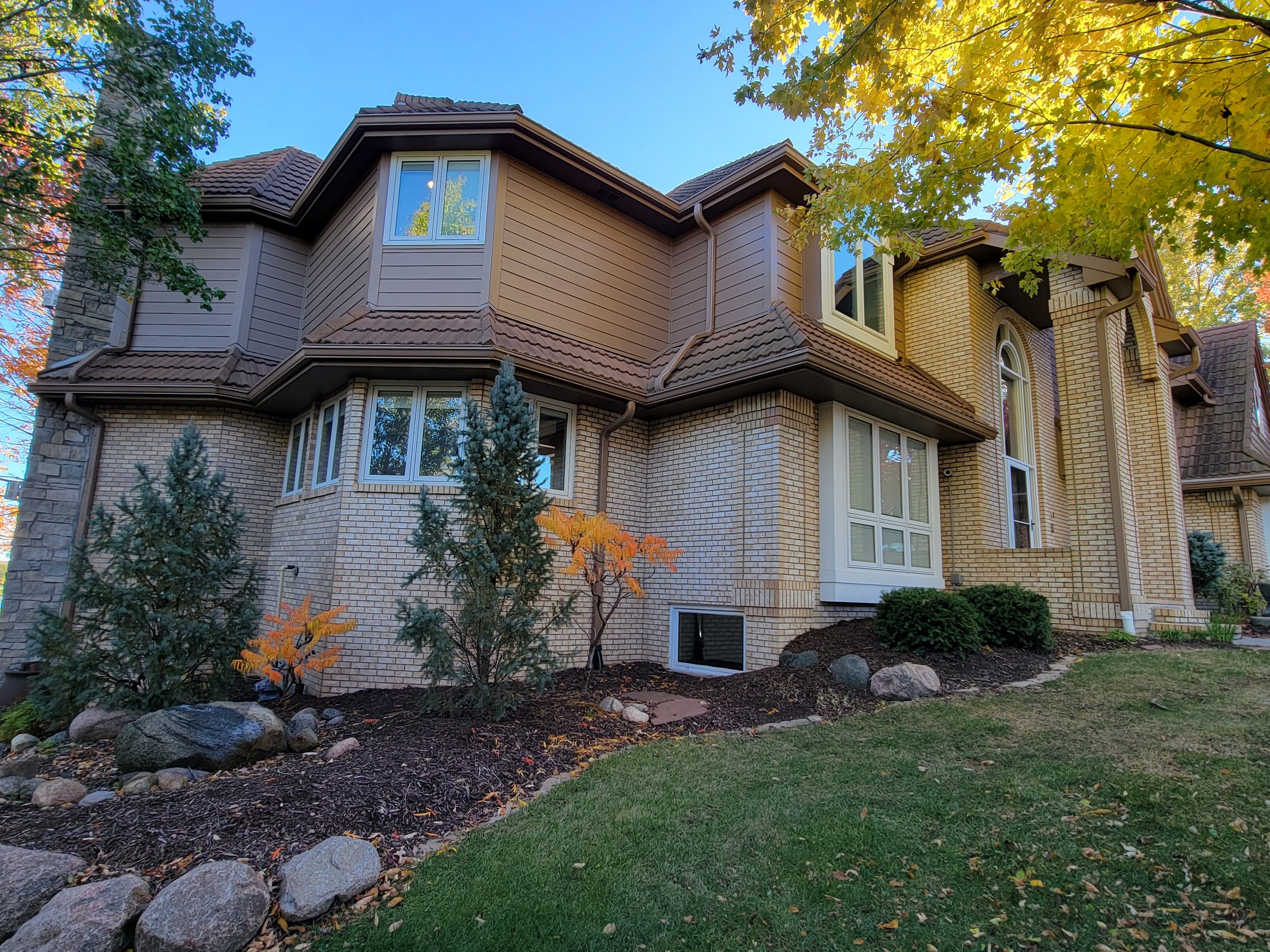
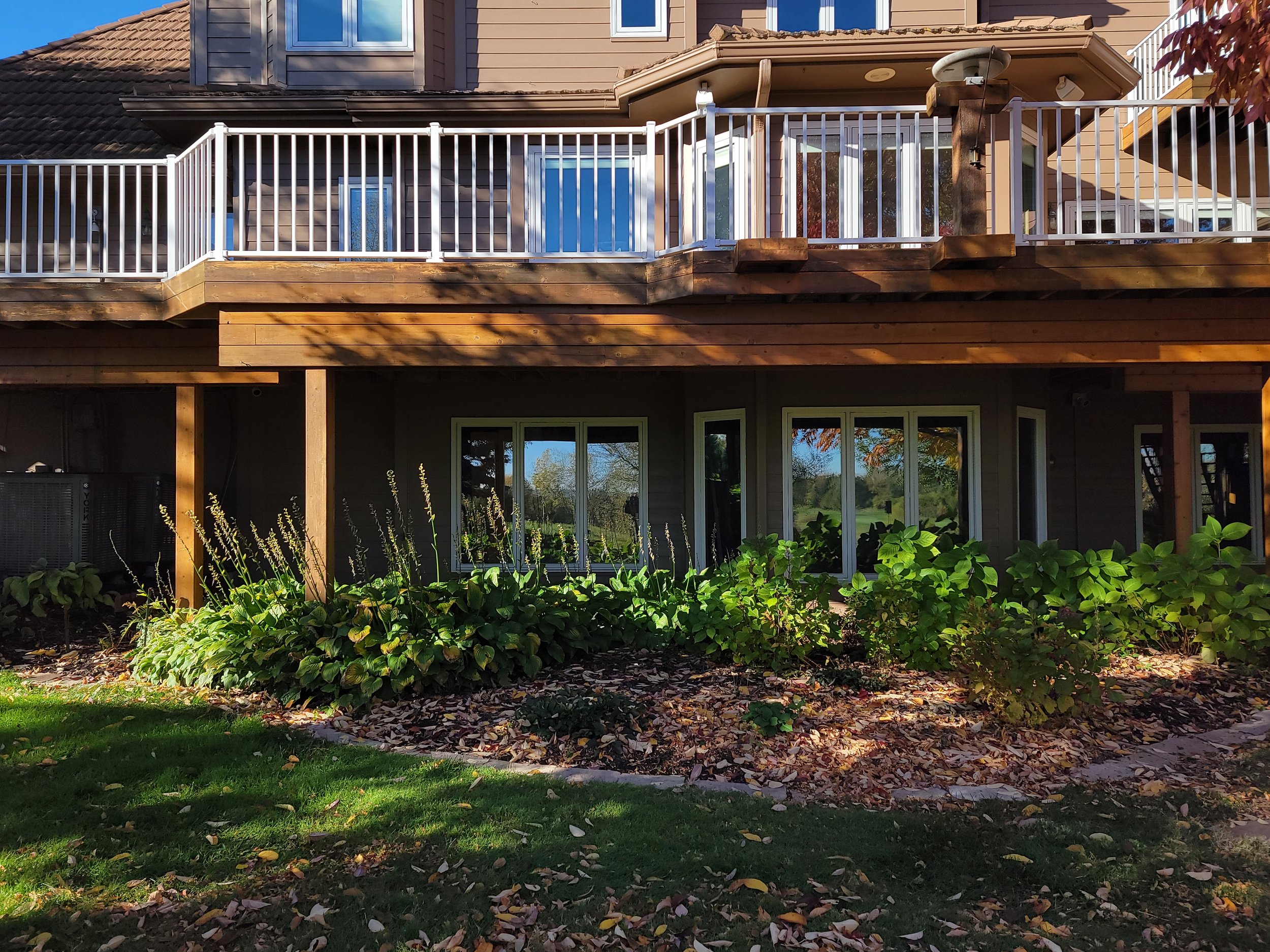
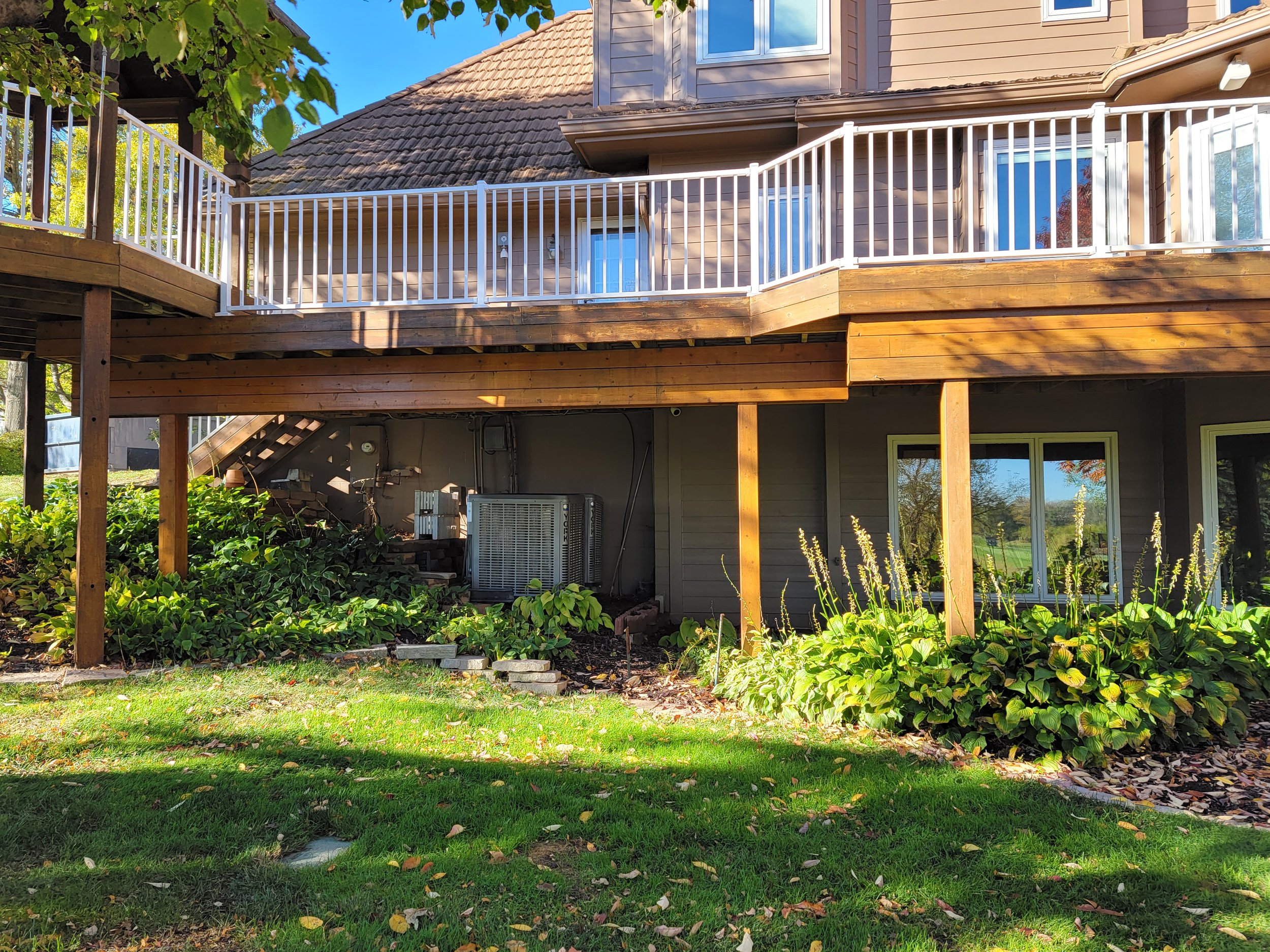
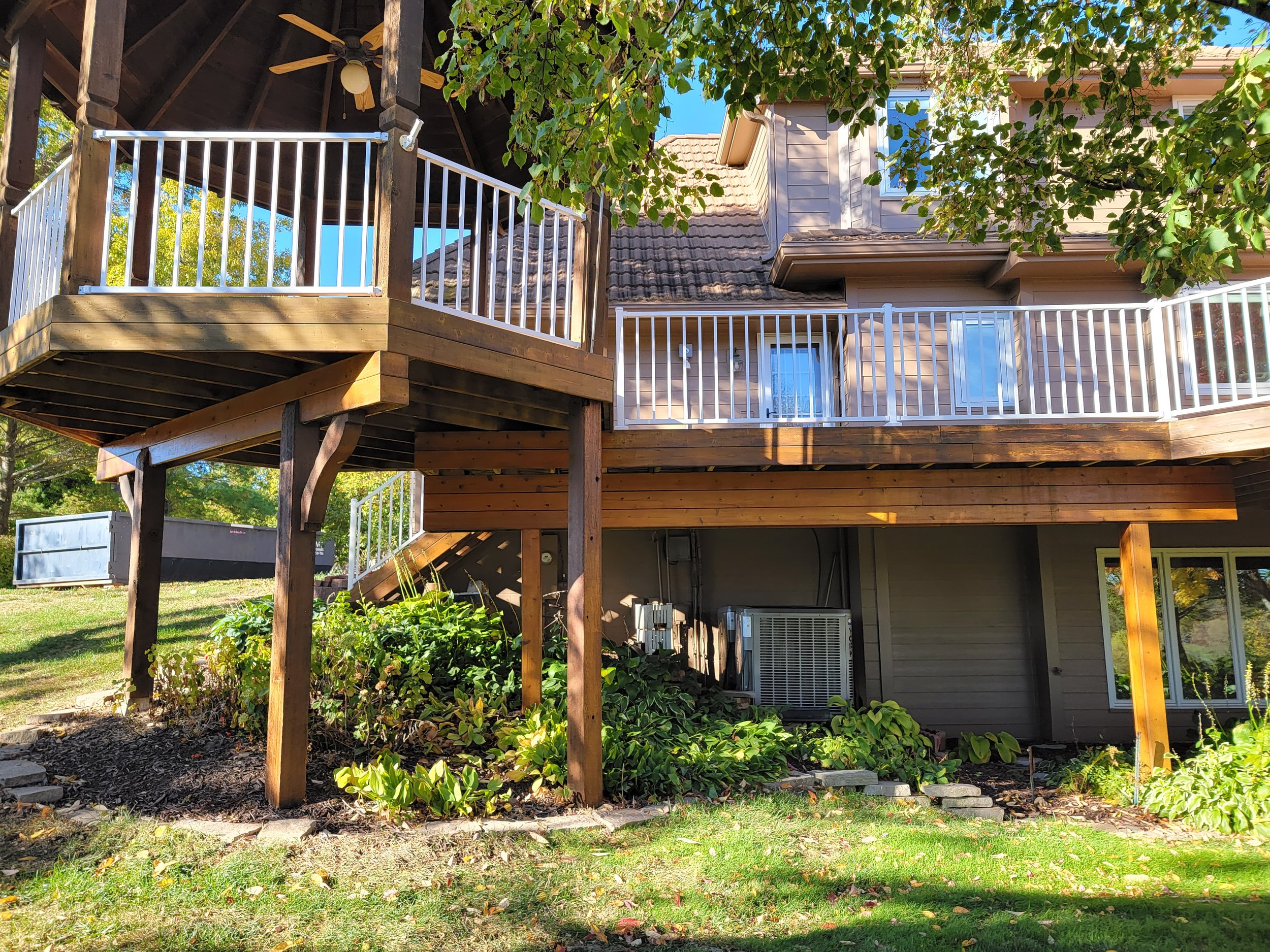
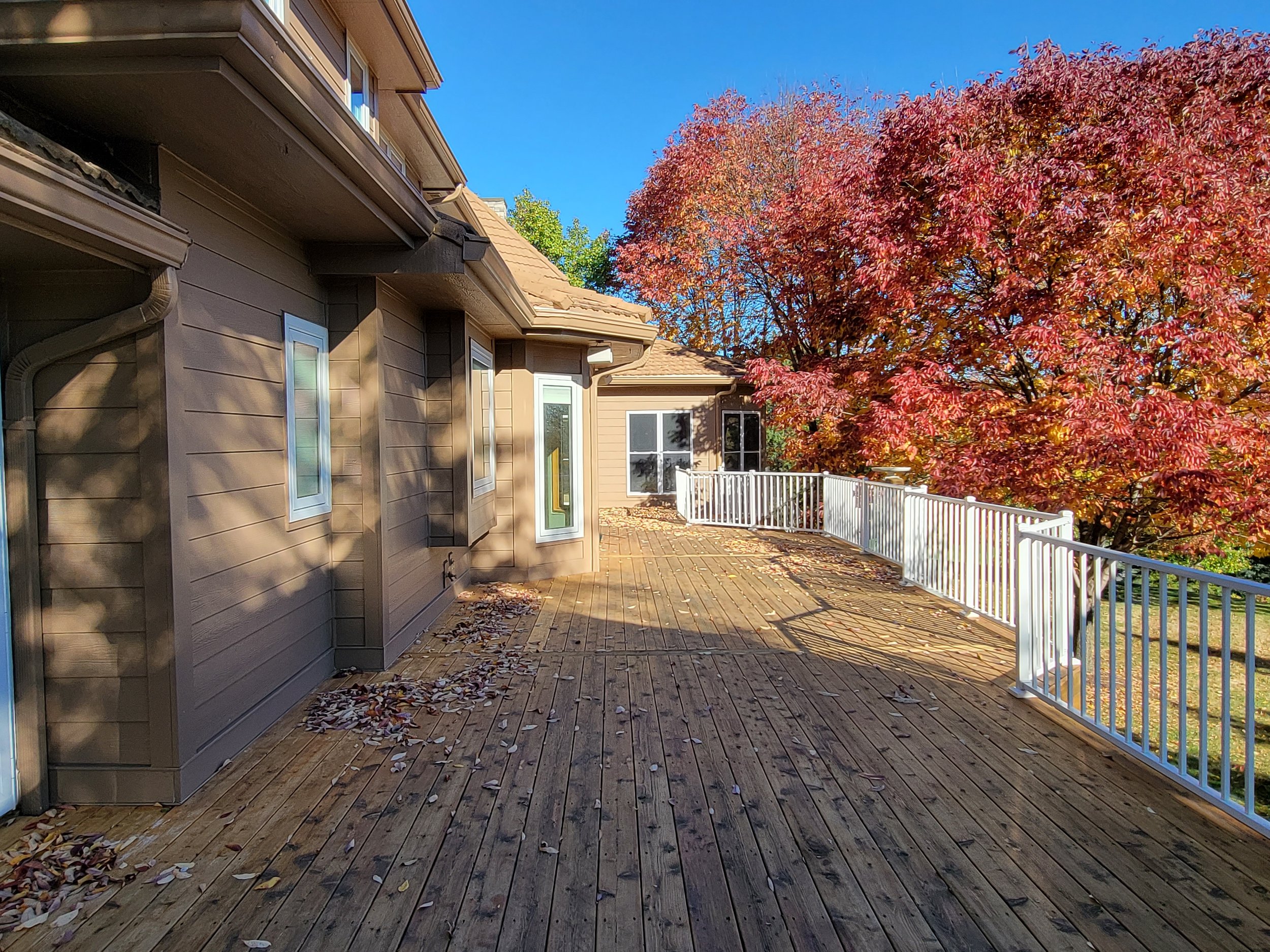
EXISTING CONDITION
A Living System of Art and Ecology
This Omaha garden is not only a design; it is an installation of life itself. Each space is both art and ecology, where sculpture, planting, and architecture converge into one evolutionary whole.
By freeing Post-Classical architecture into the openness of Modernist landscapes, the project becomes more than a garden — it is a cultural statement and an ecological restoration. It embodies the LASD Studio philosophy:
Designing Landscapes as Evolutionary Systems - where people, art, and biodiversity evolve together.

A Coastal Landscape Architectural Design in Del Mar, California
“Heaven” is a sanctuary garden in Del Mar, San Diego, inspired by Claude Lorrain’s pastoral visions. With contemporary structures, lush planting, and timeless philosophy, the design creates unity between people and nature.
The Heaven: Blending Sustainable Design, Native Planting, and Coastal Living

The Heaven Del Mar Sanctuary Garden transforms a coastal property into a living sanctuary where architecture, ecology, and lifestyle seamlessly connect. Designed by LASD Studio, this project balances California coastal resilience with a refined garden aesthetic, creating spaces for relaxation, biodiversity, and sustainable living.
A cinematic video tour of the Heaven Del Mar Sanctuary Garden in California, showcasing outdoor living areas, pergolas, water features, and coastal native planting that supports biodiversity and sustainable living.
Project Description
Nestled in the coastal town of Del Mar, this sanctuary garden is designed to embrace both the natural rhythms of the ocean and the refined character of a private residence. The design integrates multiple functional and ecological layers, making the garden both timeless and forward-looking.
The project is divided into interconnected zones:
Entry Garden
A welcoming approach framed by native and drought-tolerant planting, setting a serene tone.
Living Spaces
Outdoor dining under pergolas, a BBQ island, and family lounge areas that extend the indoor lifestyle into the garden.
Water and Biodiversity
Reflecting pools and planted slopes that attract pollinators, birds, and butterflies while managing stormwater.
Coastal Plant Palette
Native California and Mediterranean plants selected for resilience, seasonal color, and ecological function.
PROJECT DESIGN DOCUMENTATION

The plan integrates Mediterranean and California-native species, including olive trees, manzanita, and Ginkgo, designed for resilience, biodiversity, and timeless beauty.
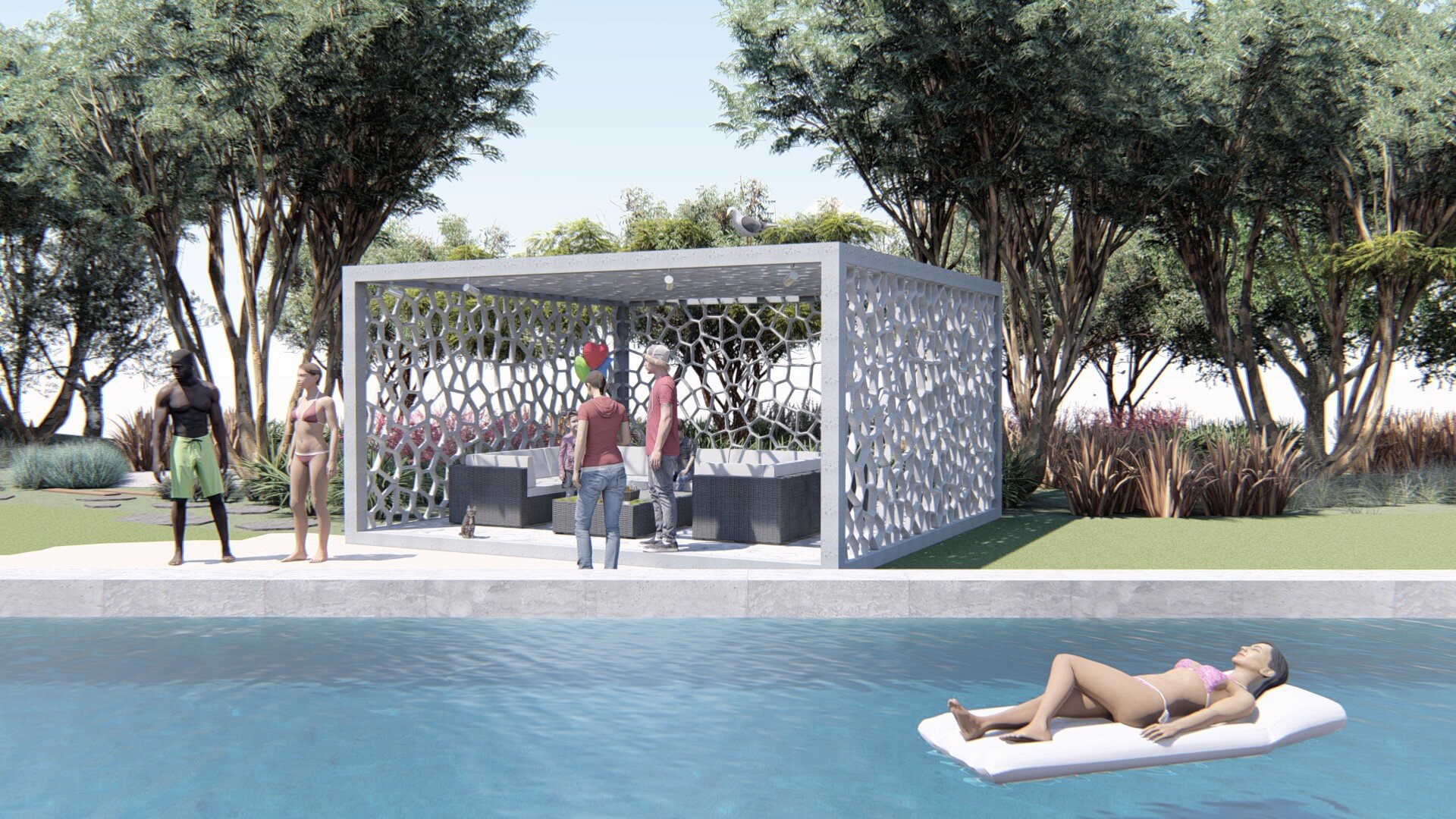
3D Landscape Design Perspectives - Del Mar, San Diego, California.
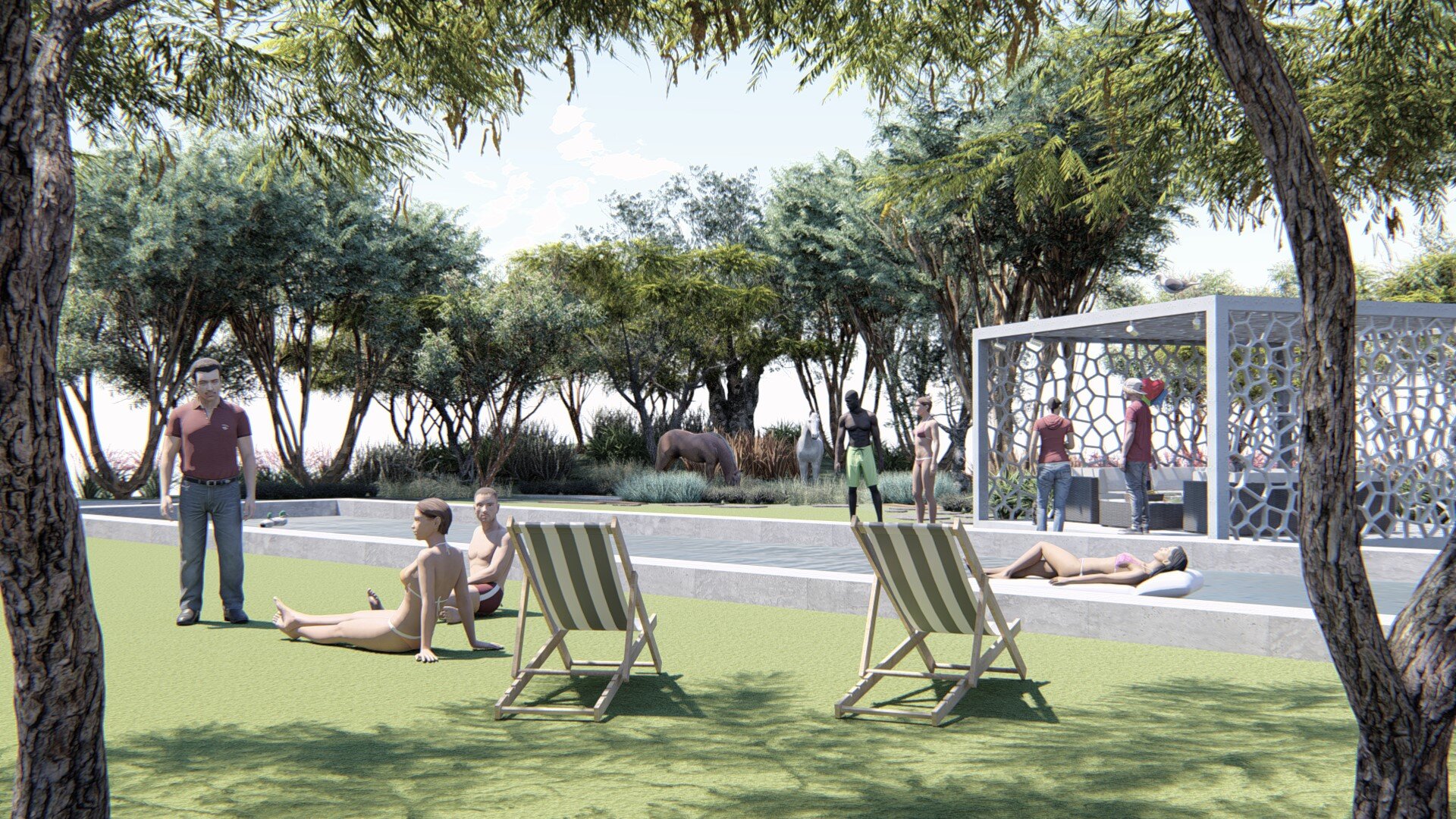
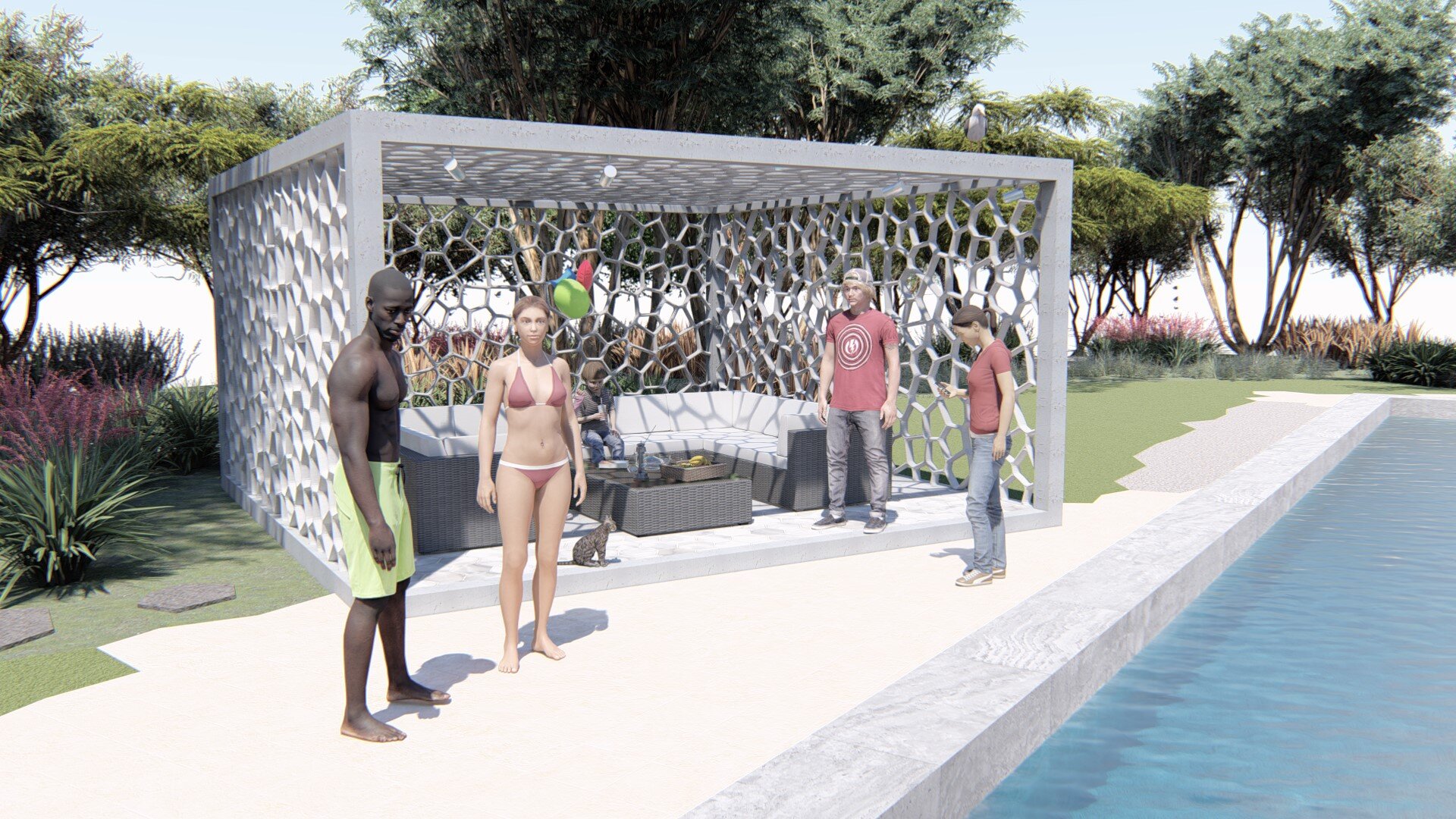
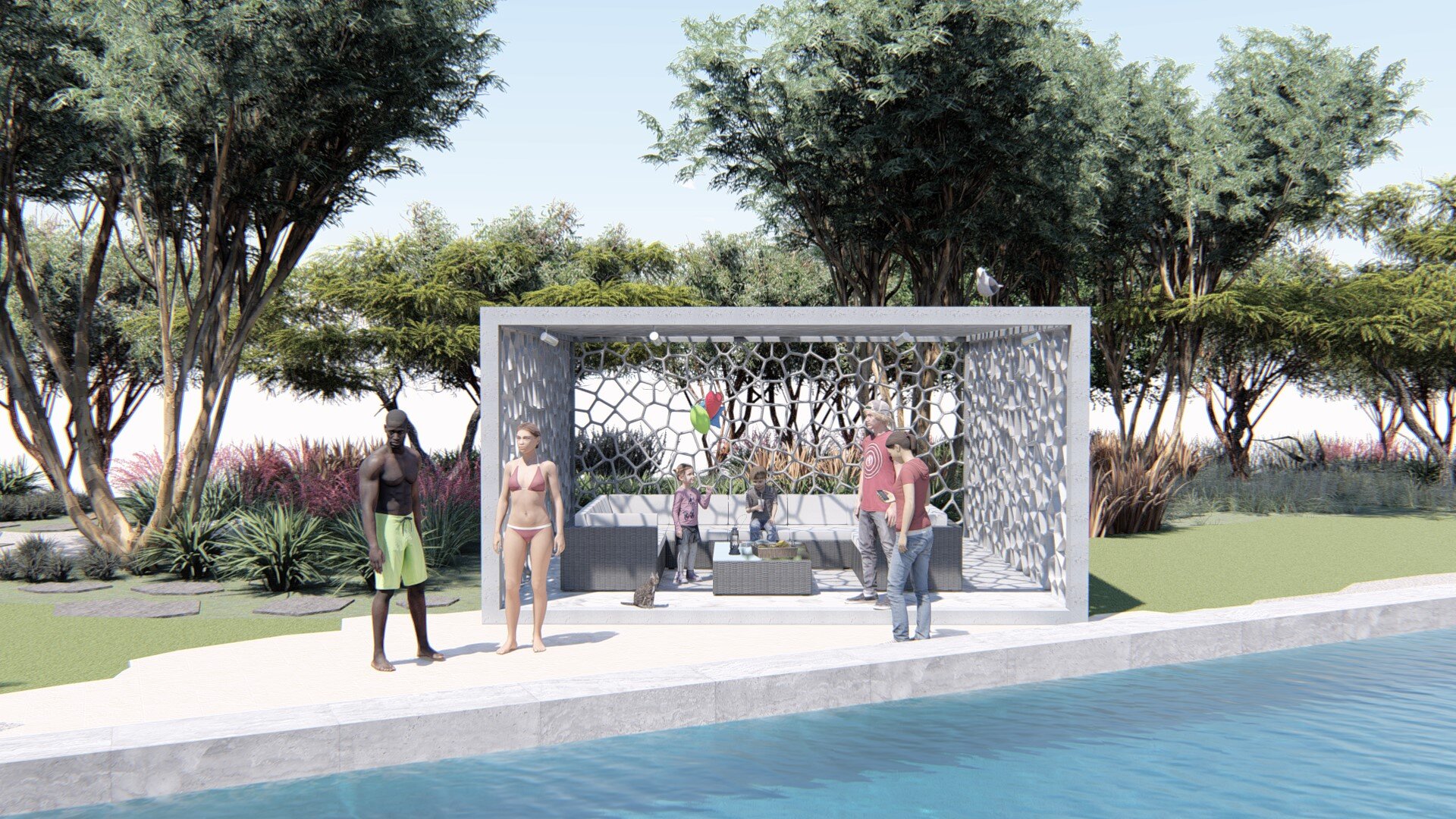
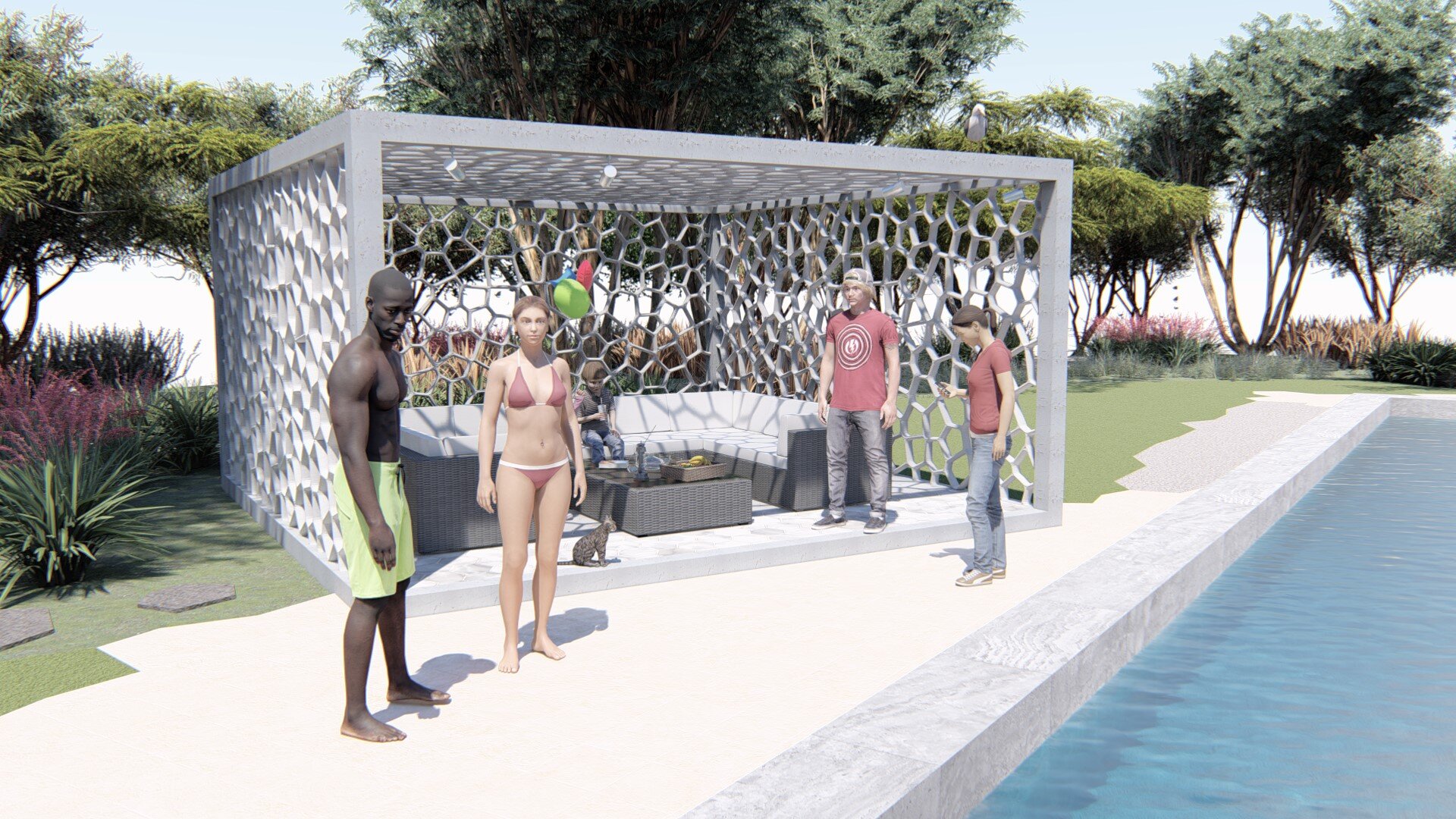
By weaving together these layers, LASD Studio created a sanctuary where people and wildlife thrive side by side. The garden is not just designed for today - it is a living, evolving system that will continue to mature, adapt, and give back to the land for generations.