
Fire-Conscious Landscape Architecture in Coastal, Inland San Diego, and Southern California
A Design Responsibility
Wildfires are an inherent part of Southern California’s landscape. Fire-conscious landscape architecture addresses this reality by shaping outdoor environments that reduce wildfire risk while remaining functional, sustainable, and visually coherent.
In regions such as San Diego County, where coastal communities meet inland hills and chaparral landscapes, design decisions play an important role in property protection and long-term resilience.
Understanding San Diego’s Fire Environment
San Diego presents a complex wildfire landscape. Coastal communities often benefit from marine moisture and milder temperatures. Inland areas, however, experience hotter and drier conditions where native vegetation can ignite more easily.
Seasonal wind events, particularly the Santa Ana winds, can carry embers over considerable distances. This means that even properties located away from open brush are not entirely protected.
For this reason, thoughtful landscape design becomes an important part of wildfire preparedness. Across communities such as Rancho Santa Fe, Poway, and Del Mar, landscape planning often incorporates fire-conscious strategies that respond to the surrounding terrain and vegetation, especially in private gardens and estates where tailored solutions are essential.
Creating Defensible Space Through Design
One of the most widely recognized principles in wildfire protection is defensible space. This concept describes the buffer between structures and surrounding vegetation that helps slow or reduce the spread of fire.
Guidelines developed by CAL FIRE recommend managing vegetation within specific distances from structures.
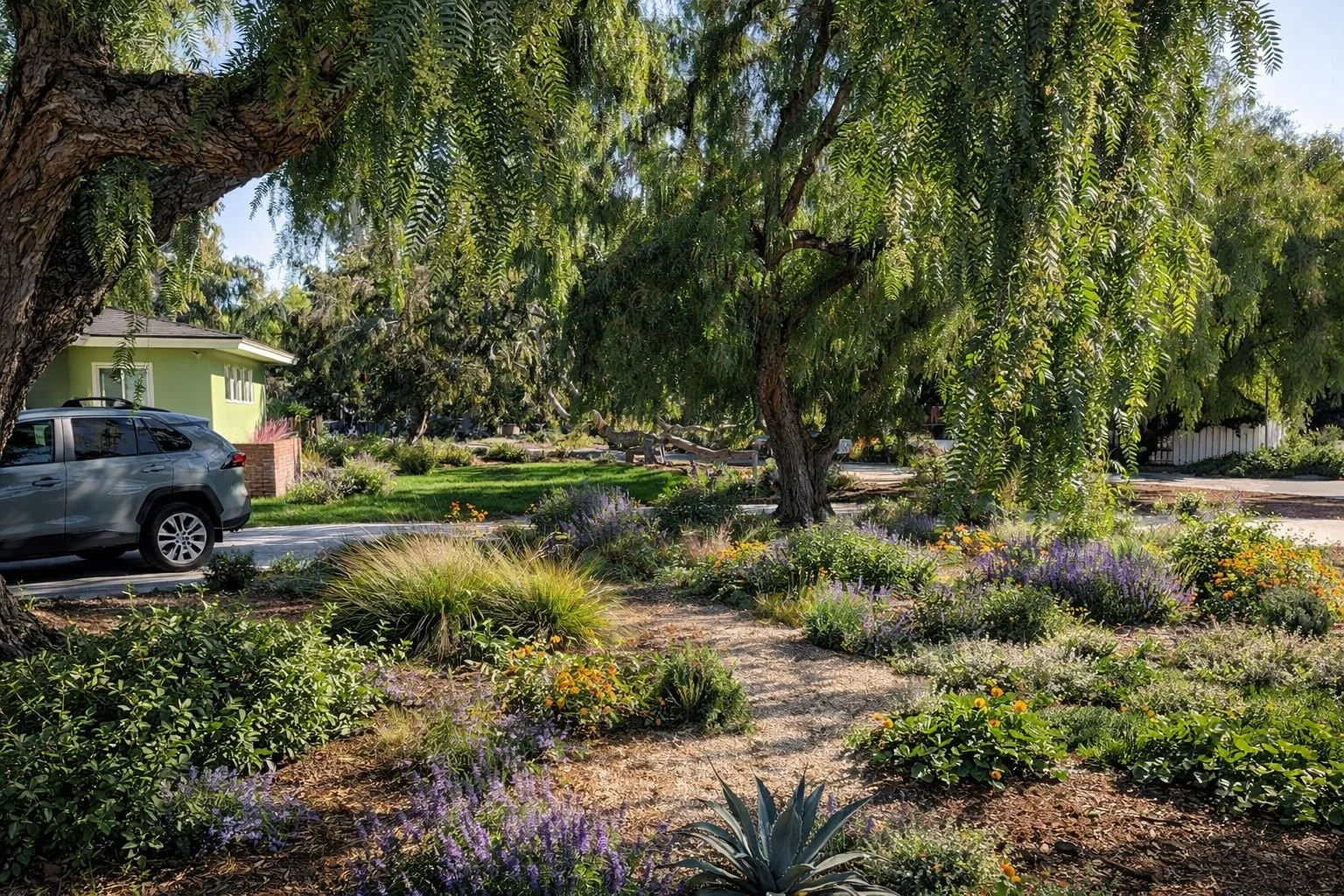
From a design perspective, defensible space often includes careful plant spacing to reduce fuel continuity, avoiding dense shrub masses near buildings, introducing non-combustible surfaces such as stone, gravel, or concrete, maintaining clear zones adjacent to structures.
These strategies used by landscape architects reduce the potential for vegetation to carry fire toward buildings.
Selecting Climate-Appropriate and Lower-Flammability Plants
Plant selection also influences wildfire resilience. While no plant is entirely fireproof, some species present lower ignition potential due to their structure and moisture content.
In inland zones, drought-tolerant species are particularly important. Plants that become dry and brittle during extended dry seasons can increase fire risk if not managed carefully.
Even in coastal environments where humidity is higher, plant placement and maintenance remain essential, often guided by carefully developed planting plans that balance ecological suitability with long-term safety.
Check Rancho Santa Fe Project Design
Integrating Hardscape as Fire Breaks
Landscape architecture extends beyond planting. Hardscape elements can play an important role in interrupting potential fire pathways.
Features such as driveways, patios, retaining walls, and terraces can function as physical breaks within the landscape.
On sloped sites, terracing and erosion control structures may also reduce vegetation density while stabilizing soil conditions. Gravel borders and stone pathways can help define clear zones that separate structures from surrounding plantings.
When carefully integrated, these elements contribute to both safety and visual structure.
Responsibility in Landscape Design
Fire-conscious landscape architecture reflects more than regulatory compliance. It represents a responsibility toward the broader community.
As climate conditions shift and wildfire events become more frequent across California, thoughtful landscape planning becomes increasingly important. The placement of vegetation, choice of materials, and spatial arrangement of outdoor areas can influence how a property responds during extreme conditions.
A landscape that is carefully designed can contribute to resilience not only for an individual property but also for the surrounding neighborhood.
Designing for Safety and Beauty
Designing with wildfire awareness does not mean sacrificing beauty or creativity. In many cases it encourages a more thoughtful and disciplined approach to space.
Layered planting, open areas, durable materials, and clear spatial structure can create landscapes that are both visually compelling and resilient.
In regions such as San Diego County, landscape architecture increasingly reflects this balance between environmental responsibility and the experience of outdoor living.
Fire-conscious landscape architecture supports safer, more resilient outdoor environments while preserving visual appeal. Thoughtful planning, material selection, and responsible design help properties adapt to wildfire risks across San Diego County. For expert guidance tailored to your landscape needs, contact us to discuss solutions that prioritize safety, sustainability, and beauty.