
Landscape Architecture in Rancho Santa Fe
Rancho Santa Fe occupies a rare position in Southern California.
It is a place where architectural lineage, agricultural heritage, equestrian culture, and Mediterranean climate intersect. The estates of Rancho Santa Fe, along with properties in La Jolla, Del Mar, Montecito, and Malibu, represent more than residential development. They are cultural landscapes.
To design within this context requires more than aesthetic fluency. It requires historical awareness, ecological intelligence, and a deep understanding of climate volatility.
Landscape architecture in Rancho Santa Fe cannot be reduced to planting palettes and paving details. It must respond to the region’s architectural traditions while addressing the environmental realities of Southern California: drought cycles, fire regimes, soil degradation, invasive pressures, and hydrological instability.
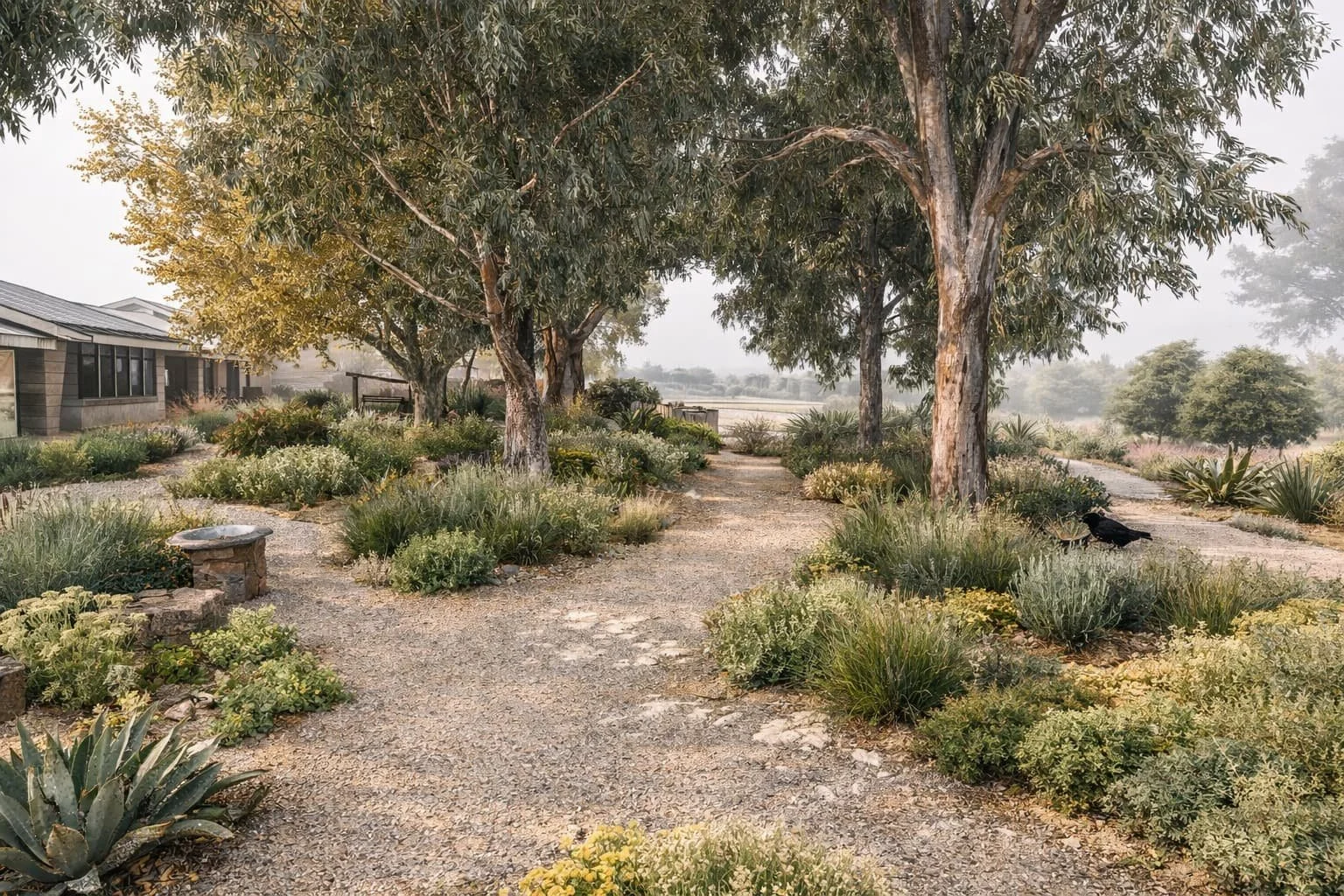
Rancho Santa Fe: Architectural Heritage and Landscape Responsibility
Rancho Santa Fe is historically defined by Spanish Colonial Revival architecture, influenced by Mediterranean precedents and adapted to Southern California’s climate.
White stucco walls, clay tile roofs, courtyards, arcades, shaded loggias, and axial compositions were never purely stylistic choices. They were climate-responsive decisions. Thick walls moderated heat. Courtyards created microclimates. Arcades generated shade transitions. Materials aged with dignity under sun exposure.
Landscape architecture must respect this lineage.
A Spanish Colonial Revival estate in Rancho Santa Fe should not be surrounded by plant selections that ignore ecological logic. Nor should Mediterranean-inspired architecture be paired with landscapes dependent on excessive irrigation and constant chemical input.
Architectural coherence must extend into the soil.
The Ecological Context of Southern California Estates
Southern California is one of the most biodiverse coastal regions in North America. Yet it is also one of the most fragmented and environmentally stressed.
Urban expansion, simplified planting traditions, disrupted fire regimes, altered hydrology, and invasive species dominance have weakened many landscapes across the region.
As outlined in our research on Southern California Wildlife & Biodiversity Landscape Restoration SOCAL, the prevailing problem is not aesthetic deficiency. It is ecological simplification.
Many estate landscapes are constructed as finished images, visually resolved, but biologically fragile. Beneath ornamental surfaces, soils are compacted. Microbial life is reduced. Root systems struggle. Biodiversity signals are weak.
Under drought stress or heat extremes, these systems often require increasing intervention to maintain appearance.
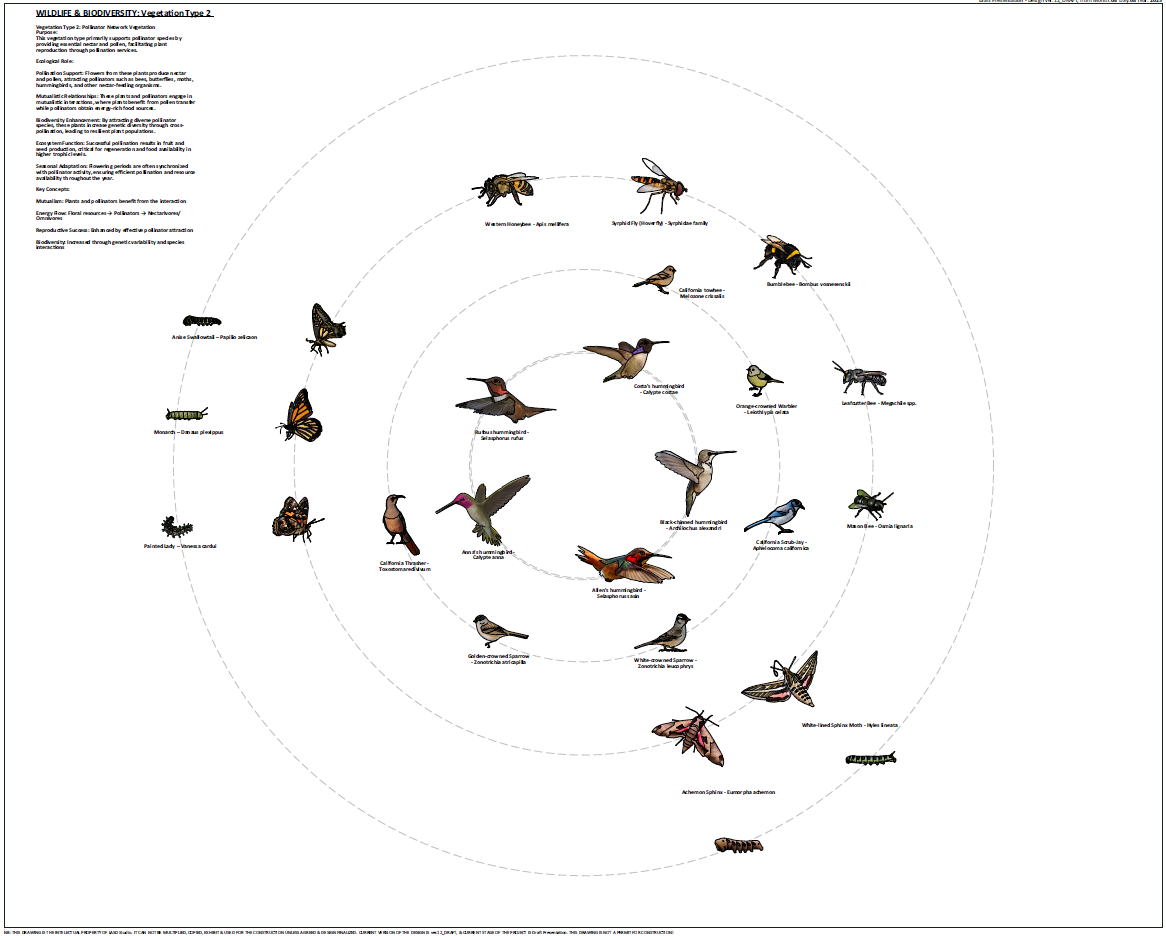
Soil as Foundation: The Invisible Layer of Estate Design
In Rancho Santa Fe and surrounding areas, soil conditions frequently reveal compaction, acidity fluctuations, aluminum toxicity, disrupted carbon cycles, and microbial imbalance.
Without healthy soil structure and biology, even the most carefully curated planting plan remains superficial.
Landscape architecture must begin with soil restoration.
Mechanical aeration to improve oxygen flow, pH stabilization through lime or gypsum amendments when appropriate, biological inoculation with mycorrhizal fungi, organic matter enhancement, and infiltration strategies that mimic natural hydrological patterns form the foundation of long-term stability.
In our framework SOCAL, soil is treated not as a medium for decoration, but as living infrastructure.
When soil health improves: Root systems deepen, Plant resilience increases, Irrigation demand decreases, Nutrient cycling stabilizes, Microbial diversity strengthens, Pathogen pressure reduces.
Above-ground elegance depends on below-ground intelligence.
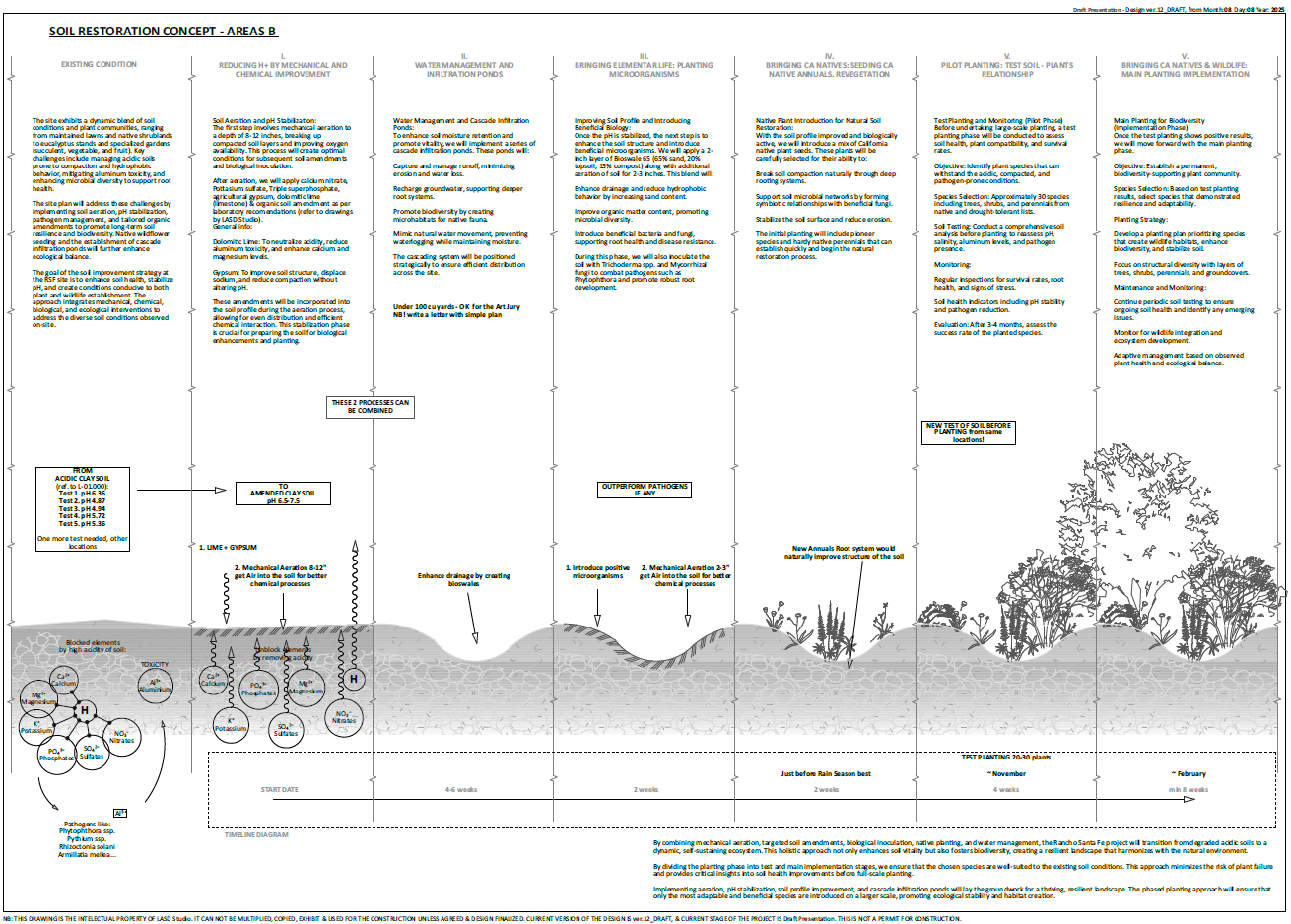
Water Management in a Mediterranean Climate
Rancho Santa Fe and the coastal regions of Southern California operate within a Mediterranean climate defined by contrast. Winters can be episodically wet, sometimes intensely so. Summers are prolonged, dry, and increasingly shaped by heat extremes. This seasonal duality has historically influenced architecture, agriculture, and settlement patterns throughout the Mediterranean world. Yet contemporary landscape practices often override this rhythm rather than work with it.
Conventional irrigation systems tend to treat water as a constant, uniform supply. Lawns are maintained at peak green through the height of summer, and planting plans are sustained through mechanical intervention rather than climatic adaptation. The result is dependency rather than resilience.
Climate-intelligent landscape architecture reverses this logic.
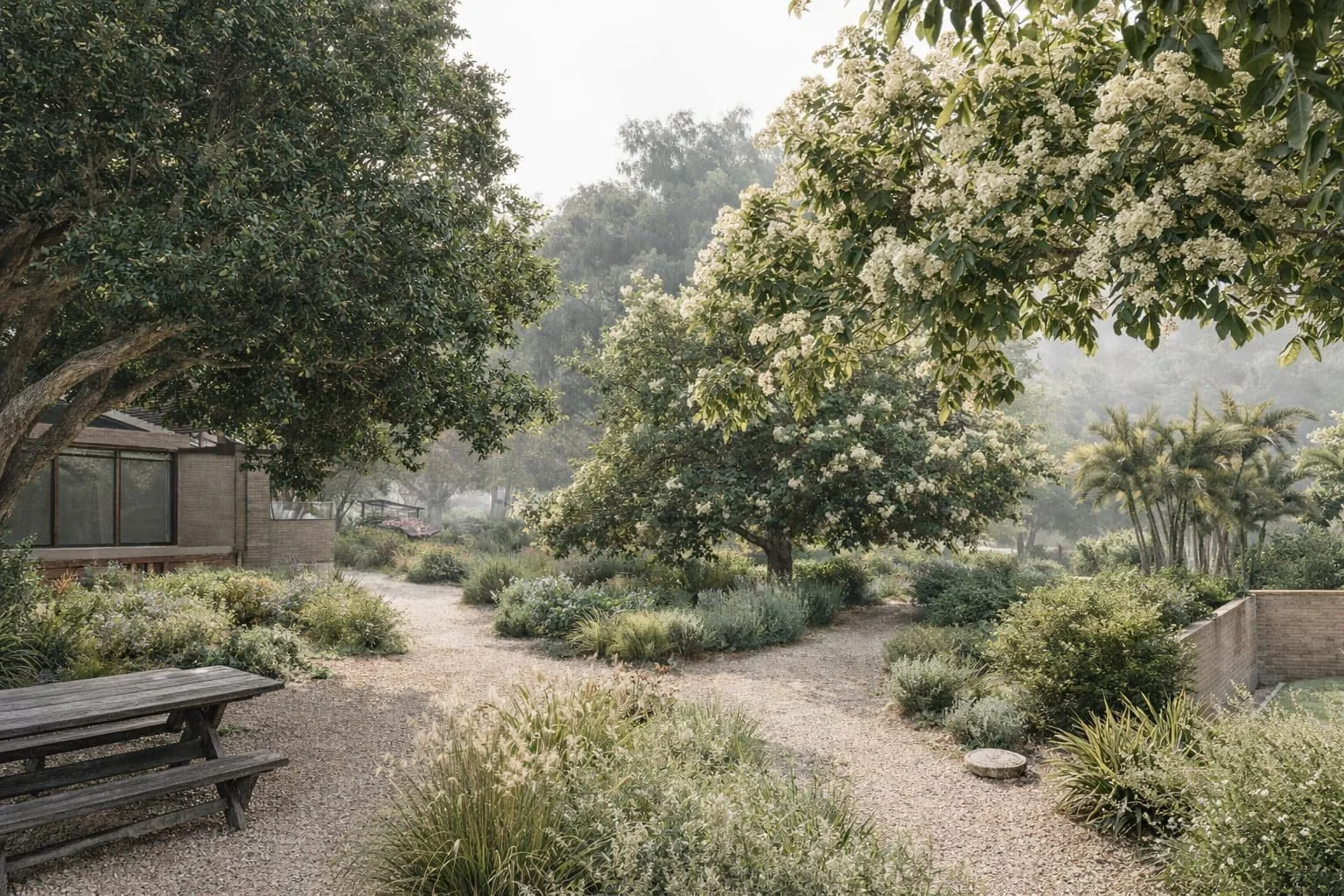
Water is not approached as an unlimited resource to be distributed evenly. It is understood as cyclical - seasonal, episodic, and strategic. Design anticipates abundance in winter and scarcity in summer, shaping the land to capture, infiltrate, and gradually release rainfall in ways that align with ecological processes.
In Rancho Santa Fe, this often begins with topography. Subtle grading and landform modulation guide winter rainfall toward infiltration zones rather than rapid runoff. Bioswales, permeable surfaces, and cascade infiltration areas allow water to slow, spread, and penetrate the soil profile. These systems are integrated seamlessly into the composition of the estate, reinforcing both aesthetic continuity and ecological function.
When winter rainfall is captured and redistributed, soil moisture reservoirs deepen, root systems extend more extensively, surface erosion decreases, and irrigation demand in summer declines. Rather than relying entirely on supplemental irrigation, the landscape begins to operate in dialogue with natural cycles.
This approach reflects a historical precedent. Mediterranean landscapes traditionally adapted to seasonal water rhythms. Courtyards were shaded to reduce evaporation, stone moderated temperature, and plant palettes were selected for drought endurance and structural longevity. Water was stored, redirected, and valued.
Rancho Santa Fe can reinterpret these principles within a contemporary framework.
Reducing expansive turf areas is often part of this transition. Large lawns, particularly on slopes or exposed sites, require significant irrigation while contributing little ecological complexity. Selective turf reduction allows for structural planting, trees, shrubs, and native grasses, that stabilize soil and moderate microclimates.
Vegetation, when organized as layered structure rather than isolated ornament, becomes ecological infrastructure. Canopy trees such as Coast Live Oak provide shade and reduce evaporation. Understory shrubs and perennials intercept rainfall and slow runoff. Native grasses anchor slopes and strengthen root networks. Together, these layers enhance moisture retention, improve soil health, and contribute to fire resilience.
Wildfire risk in Southern California is an undeniable reality. Intelligent plant spacing, defensible space planning, and careful species selection can reduce ignition potential without compromising architectural integrity. Fire-conscious design and ecological richness are not mutually exclusive; they require calibration.
Over time, landscapes designed in this way deepen rather than degrade. Soil stabilizes, plant communities mature, biodiversity strengthens, and irrigation demand moderates. Seasonal rhythms become visible and meaningful.
Water management, therefore, is not an isolated technical concern. It is foundational to the long-term performance of estate landscapes in Rancho Santa Fe, La Jolla, Del Mar, Montecito, and Malibu.
When climate intelligence guides design, the result is not simply conservation. It is durability - a landscape that evolves in step with the Mediterranean environment it inhabits.