
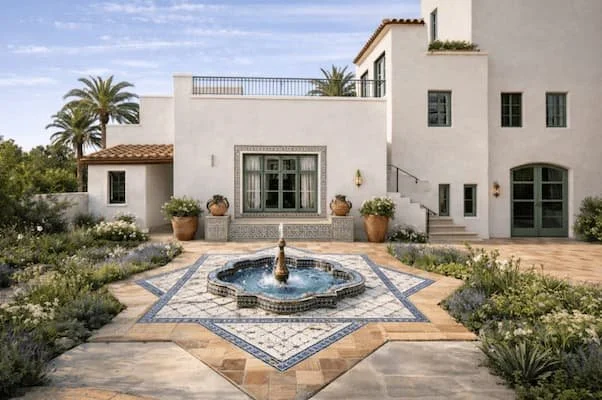
Spanish Revival Garden Design in Coronado, California
A Spanish Colonial Revival garden in Coronado, California, blending Moorish details, courtyards, fountains, and lush planting. This design complements historic architecture with timeless Mediterranean elegance.
Where heritage meets modern life style
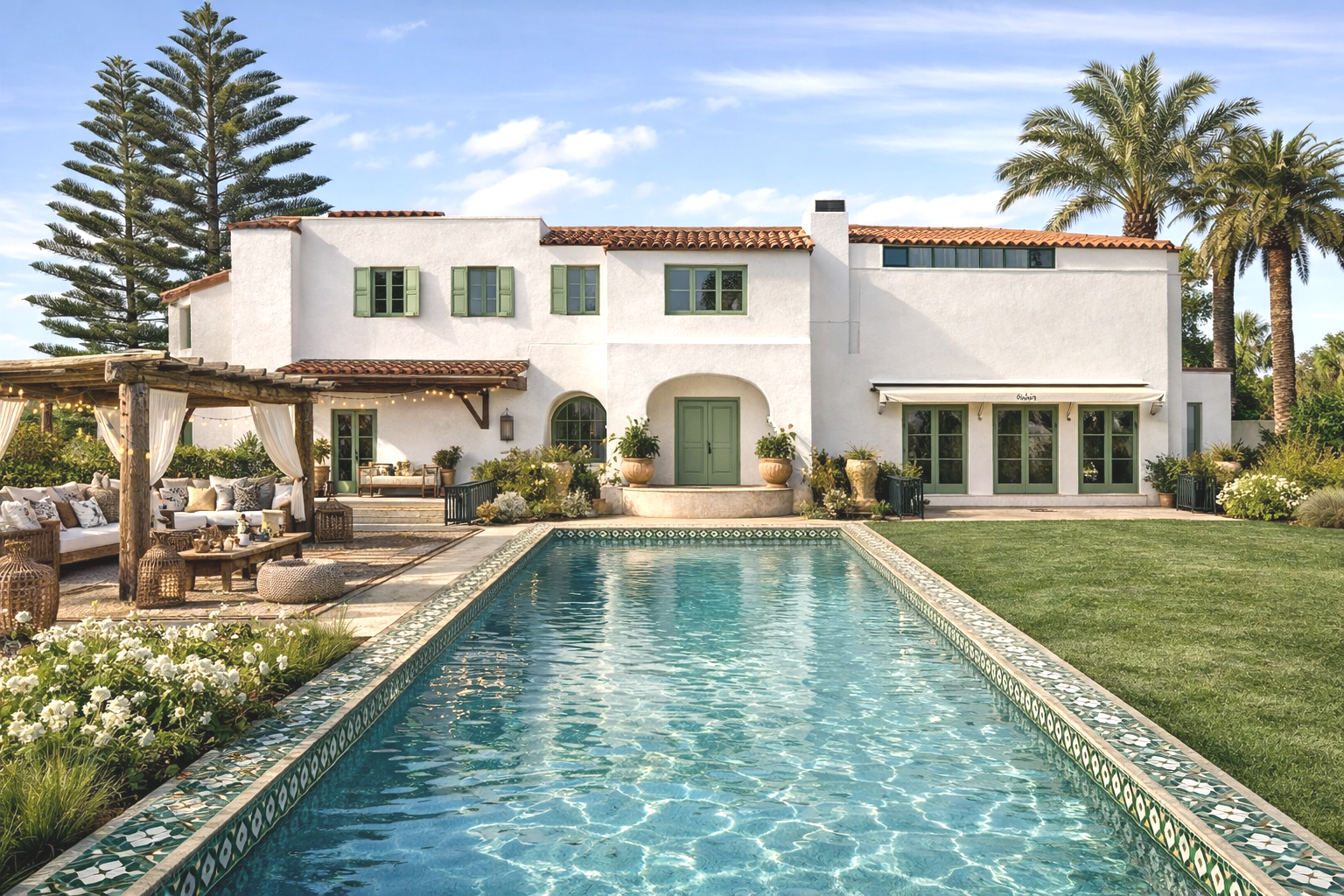
This Coronado estate reinterprets the elegance of Spanish Revival architecture through a carefully composed garden design. Rooted in the traditions of Mediterranean, Moorish, and Gothic influences, the landscape features courtyards, pergolas with vines, colorful tiles, and terracotta details that harmonize with the home’s historic architecture. A grand swimming pool, shaded outdoor rooms, and lush fruit tree plantings create both beauty and functionality, offering serene transitions from the street to private living spaces. Designed as a living cultural landscape, the garden merges history, ecology, and comfort, reflecting LASD Studio’s commitment to creating landscapes in balance with nature.
For context, see our Journal essay on Spanish Revival gardens in Southern California - Design with Soul.
We began this journey by looking at historical documents about the property and dive into Spanish Revival essence.
Spanish Revival (Colonial Revival) 1915-1931 …
This style appears in North America during Panama - California Exposition. This is eclectic combination of early Spanish colonization of North and South America, started in Florida and California. Roots of this style coming from traditional Spanish, Mediterranean architecture with earlier influence of Moorish and Gothic architecture. This style became known as Spanish Revival, Colonial Revival or Spanish Eclectic. The main elements of this style are: Curves and arches, white stucco exterior and wall, colored tiles with Spanish ornament, terracotta roof tiles, plenty of balconies with beautiful ironwork, wooden doors and gates, cozy courtyards and patios with large terracotta pots small fountains. Sometimes we can see influence of Moorish architecture like lanterns with colorful glass and pavement of with special ornament.
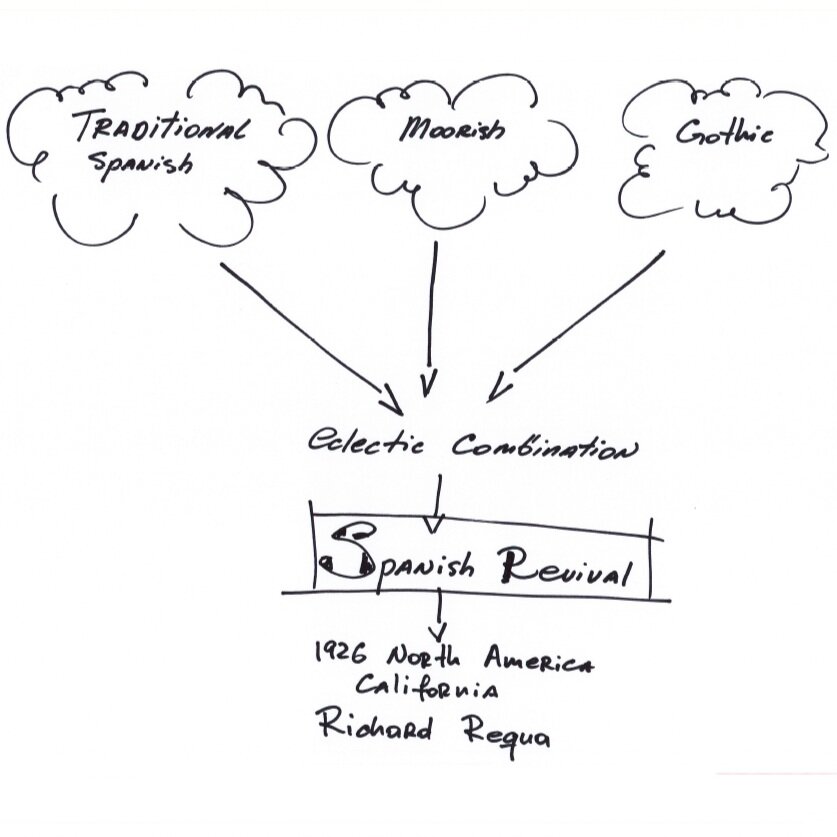
Spanish Revival Style Diagram

Referred to as Spanish Revival, Colonial Revival, or Spanish Eclectic, this architectural language is read through form before ornament; curved walls, shallow arcs, and thresholds that soften the transition between interior and exterior.
Surfaces are continuous; lime-toned stucco holding light across the day. Rooflines settle in terracotta; tiles repeating in measured rhythm, absorbing heat, releasing it slowly.
Detail is precise, but never isolated. Hand-painted ceramic tiles introduce color at moments of contact; risers, fountains, edges where water meets stone. Wrought iron defines boundaries lightly; balconies, gates, railings that filter rather than close. Wood carries weight at the threshold; doors set deep within walls, marking entry through shadow.
The courtyard remains the center; enclosed, scaled to the body, shaped by proportion rather than size. Water sits within it; a fountain, contained, reflective, cooling the air as it moves.
Moorish influence appears in pattern; geometry underfoot, light passing through lanterns, repetition creating order without rigidity.
In Coronado, this project works within that lineage; not as replication, but as continuation. The language remains, yet the space adjusts to present use; open, inhabited, aligned with contemporary life while holding its architectural origin intact.

Historic Site Plan and Garden Details

Historic Architectural Elevations
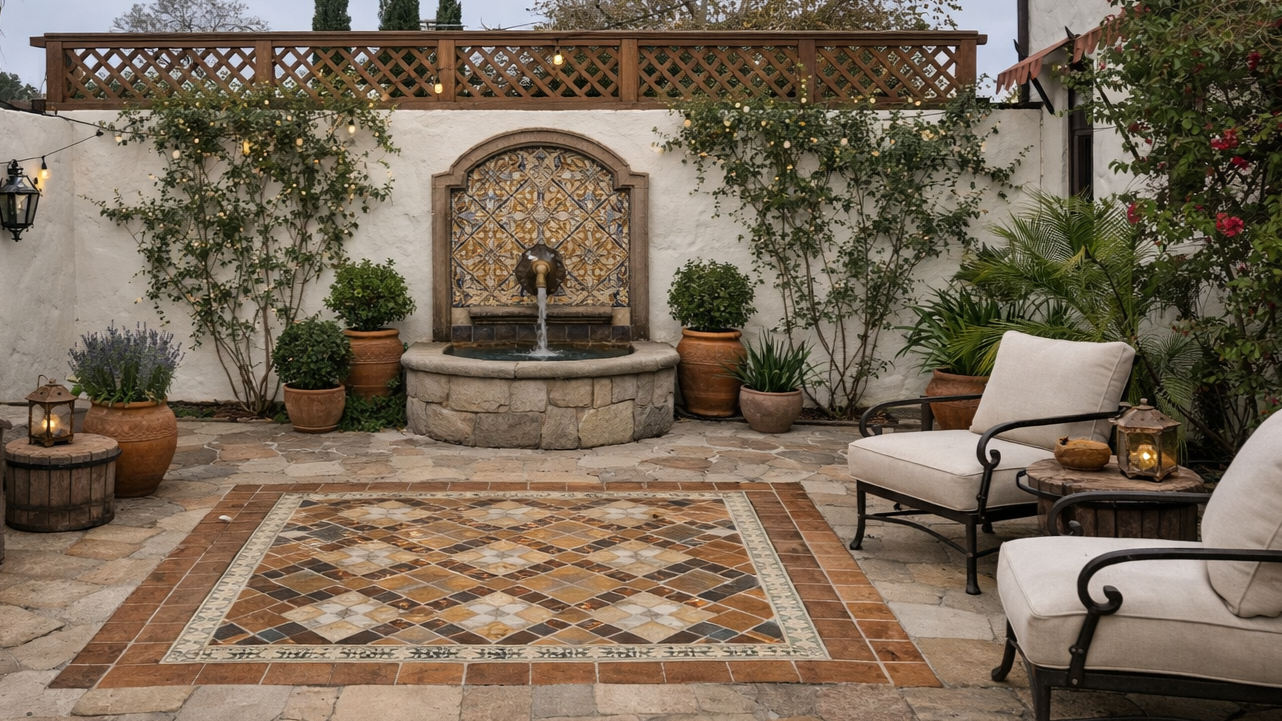
Intimate side-yard private patio with Santa Barbara stucco walls, traditional Spanish fountain and satillo tiles as carpet.
Historical Research and Foundations
Our journey began by studying historical documents and original architectural drawings of the property. This research allowed us to fully immerse ourselves in the essence of Spanish Revival, ensuring that the garden design would not only complement the home but also expand on its cultural narrative.
Visual boards and material palettes were prepared to experience the spirit of the style before design development began. From tiles to lanterns, from pergola structures to Mediterranean planting, every element was carefully selected to harmonize with the house.

Herb Garden Mood Board

Hardscape & Paving Mood Board

Herb Garden Mood Board
~ 7 architectural elements of Spanish Revival Garden Style ~
Designing Transitions and Garden Zones for life
One of the main responsibilities of this design was to respect and enhance the architecture while creating fluid outdoor transitions. Key design strategies included:
Main entrance courtyard. A welcoming sequence with fruit trees and a pergola covered in vines, leading visitors toward the front door with the sound of a small fountain.
Street buffer. Planting fruit trees along the street edge creates privacy, reduces noise, and strengthens the sense of arrival.
Garden circulation. From the entrance, pathways extend toward the main garden, vegetable garden, guest house, and outdoor dining terrace.
Private courtyard & pool. A secluded courtyard integrates a 40-foot swimming pool, surrounded by Mediterranean and Moorish-inspired planting. Pergolas and shaded seating areas create comfortable gathering spaces for family and guests.
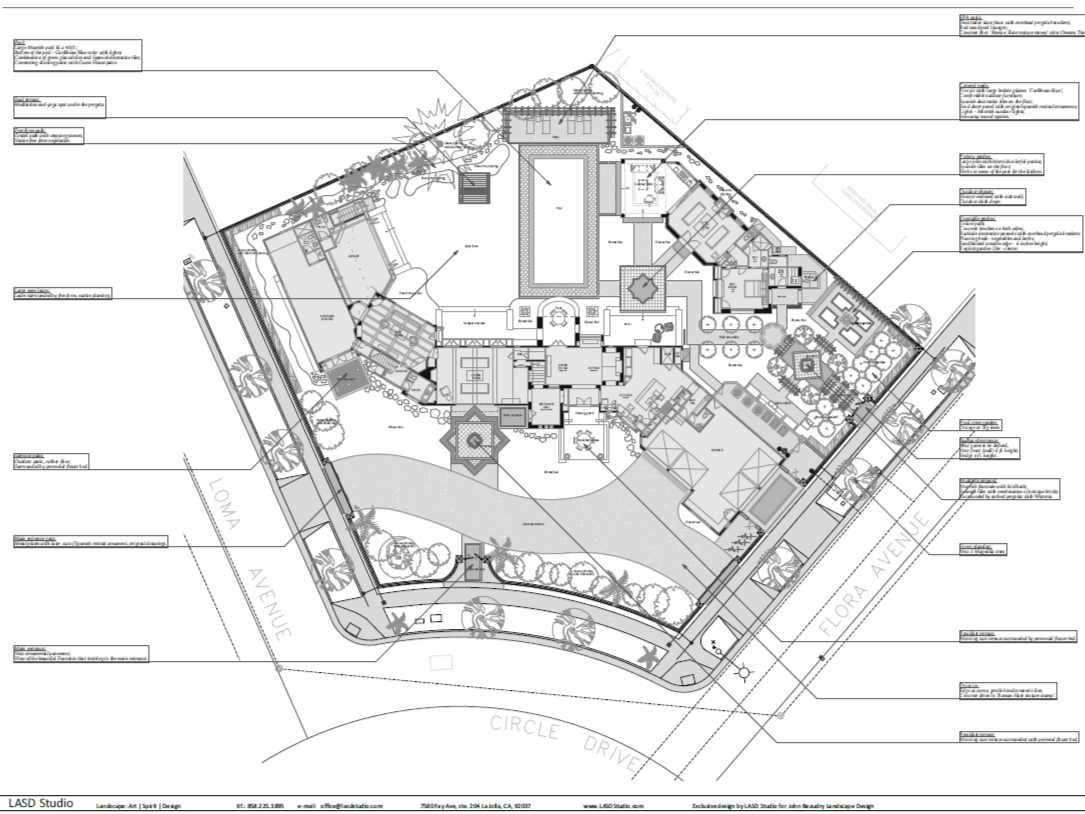
Spanish Colonial Revival - Full Site Masterplan - Coronado, Southern California
Moorish Influences
Under Moorish influence, the space begins to operate differently; not through objects, but through relationships.
The ground carries a quiet geometry. Patterns unfold beneath each step, sometimes noticed, often only felt; a subtle order that steadies movement without announcing itself.
Light drifts through the structure and catches on detail. Lanterns temper its intensity, breaking it into fragments that move across plaster and stone; by afternoon, shadow deepens, edges soften, the space becomes more intimate without closing.
Color gathers where use brings attention. At the edge of water, along a low wall, within tile set into the surface; blues, ochres, and earth tones held close, never extended too far, allowing the eye to rest.
There is a distant echo of the courtyards of Alhambra; not in replication, but in proportion and atmosphere. Water cools, shade protects, pattern gives clarity. The garden and the architecture are not separate conditions; they are read as one.
These references are absorbed rather than applied. They settle into the project, adjusting to its climate, its scale, its daily use.
What remains is a layered space, where history is present but quiet, and where light, material, and movement continue to shape the experience over time.

Entrance Courtyard Detail
LASD Studio Philosophy
At LASD Studio, we design landscapes as living cultural systems, shaped by history, but always evolving with ecology. Every project aims to close the cycle of clean water, fresh air, fertile soil, and biodiversity for future generations.
Our Spanish Revival Garden in Coronado reflects this vision: it honors architectural tradition, enriches ecological performance, and creates a timeless sanctuary where people and nature thrive together.

Entrance Courtyard Perspective
Here we solved important issue of the traffic from the street by planting a fruit trees. Pergolas with vines will create a great transition, that will be followed by little additional courtyard fountain.
What a great way to come home.
From here, we can go to main garden, vegetable garden, guest house and garden table.

Garden Axis Plan with Fountain
Private courtyard shared with guests. Here we will have 40ft size swimming pool.

Pool and Patio Plan - enclosed patio - Spanish Revival Garden Design