
Spiritual Rebirth: Ecological Sanctuary Estate - Landscape design in Encinitas, California
A Sanctuary Garden in Encinitas, California, designed as a vision of spiritual rebirth. Featuring meadows, meditation gardens, bioretention ponds, and native plantings, this landscape merges ecology, art, and wellness into a living sanctuary.
Where Art and Nature Evolve into Living Legacy
Location: Knightsbridge, Olivenhain, Encinitas, California
Project Type: Private Ecological Sanctuary Estate. Evolving Estate Landscapes & Ecological Sanctuary
Design Scope: Complete Garden Design, Planting Design, Hardscape Coordination, Irrigation Strategy, Stormwater Planning, Construction Documentation
Status: Built / Installed
Construction: Contractor & Project Management by Client.
Construction cost: ~ $340,000
Design Studio: LASD Studio
A Living Landscape for Restoration and Renewal
The Spiritual Rebirth Sanctuary Estate was conceived as more than a private garden. It is a living landscape designed to help its inhabitants slow down, reconnect with natural rhythms and experience the property as a continuous journey.
Set within the semi-rural landscape of Olivenhain in Encinitas, the garden brings together ecological California planting, productive garden spaces, water, sculpture and places for quiet daily life. The result is not one large decorative composition, but a sequence of distinct garden worlds held together by a gentle, continuous presence.
The idea of spiritual rebirth is expressed through movement and transition: from architecture into planting, from open lawn into intimate habitat, from dry stone into water, and from the productive landscape of herbs and fruit trees into spaces intended only for observation and stillness.
At LASD Studio, we believe gardens can become sanctuaries - places where people reconnect with nature, art, and themselves. The Spiritual Rebirth Sanctuary Garden in Encinitas was envisioned as more than a private garden: it is a living landscape of healing, renewal, and ecological balance.
Video presentation of the Spiritual Rebirth Sanctuary Garden in Encinitas, California - a meditative landscape design by LASD Studio featuring flowing pathways, water features, ecological planting for pollinators, and contemplative spaces that unite spirituality, biodiversity, and modern garden design.
An Estate Composed as a Journey
Rather than revealing the entire property at once, the design unfolds gradually with spaces and garden rooms.
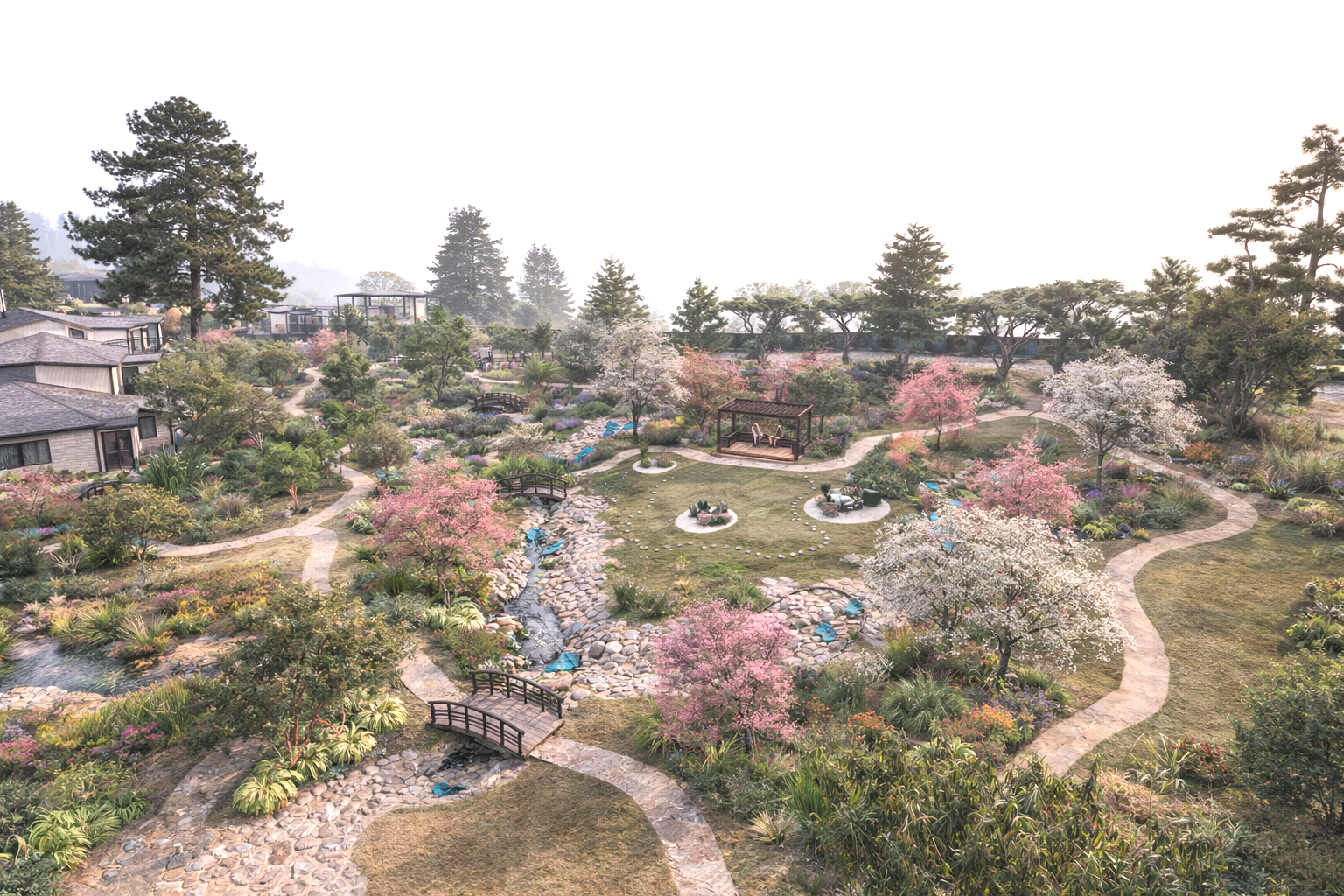
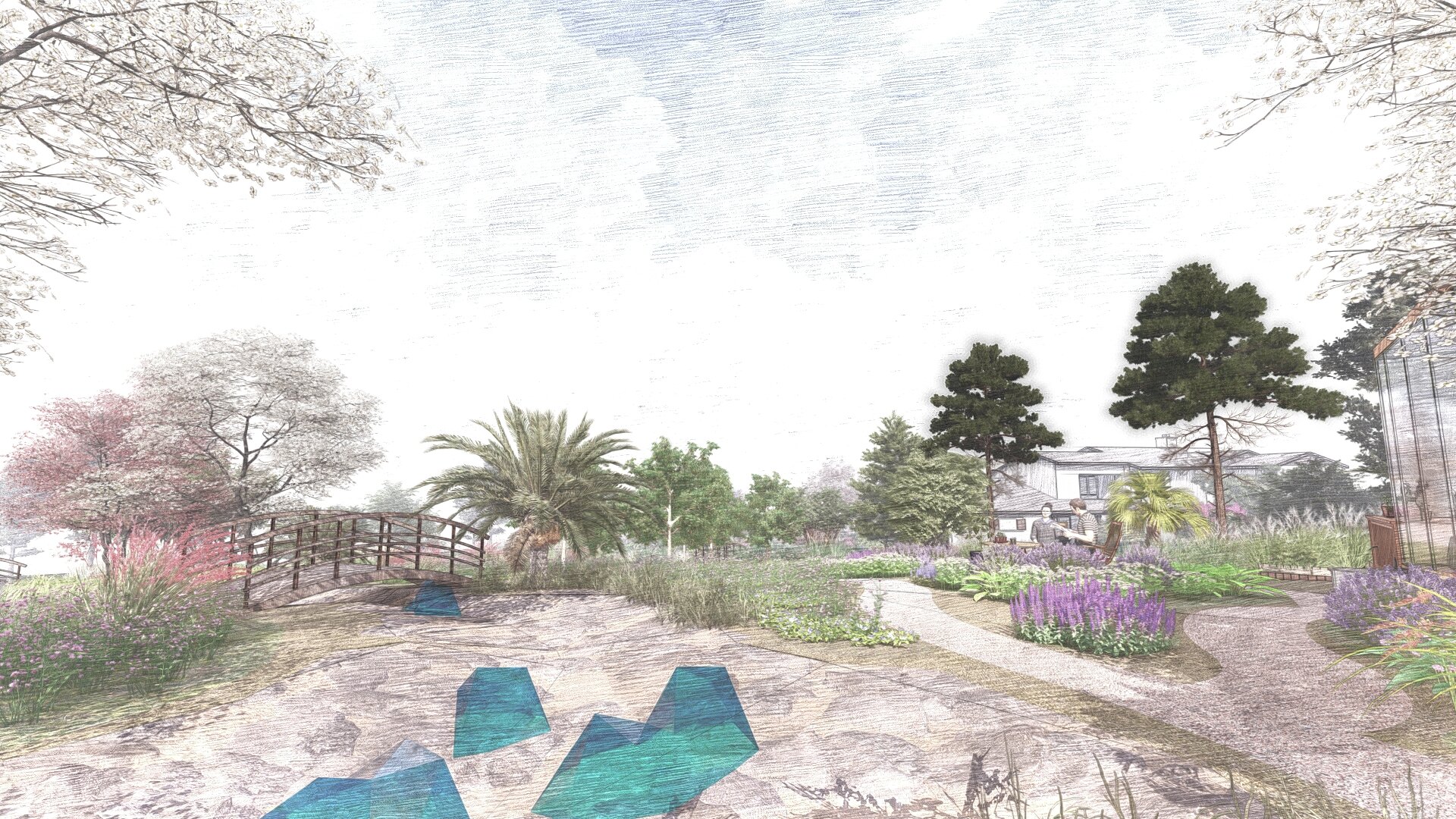
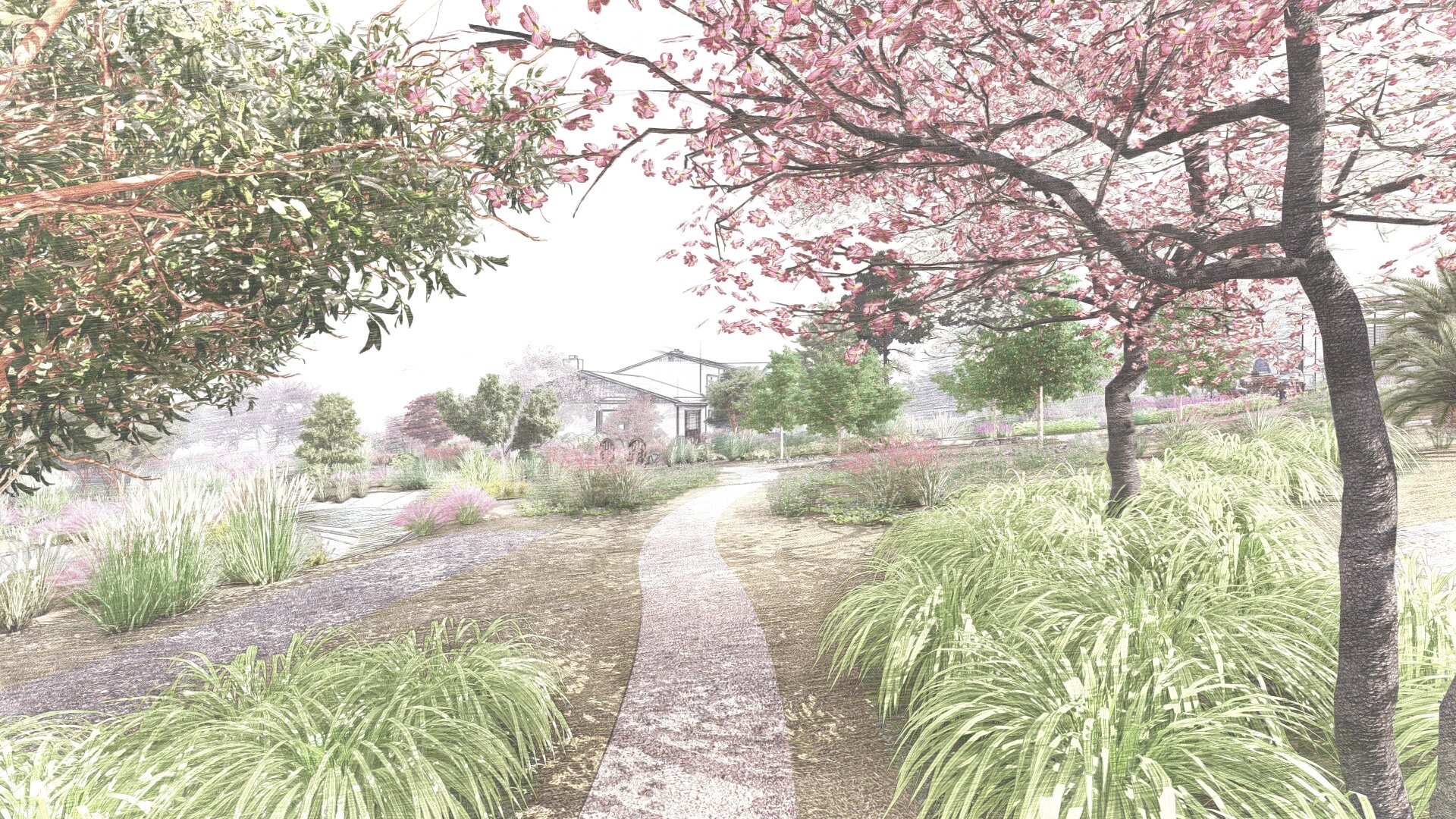
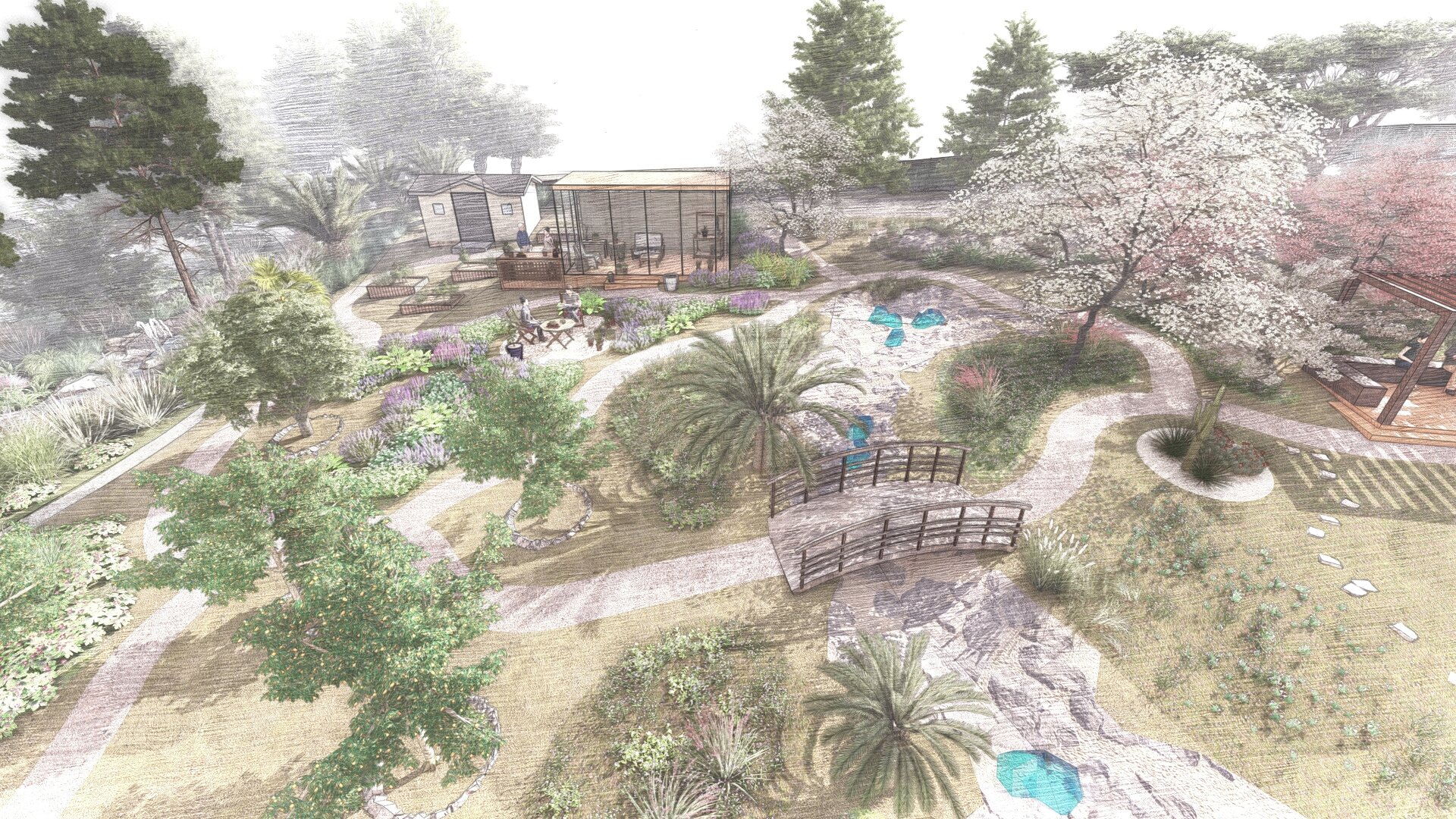
Curved paths travel through the main garden and continually alter the visitor’s view. A flowering tree, pond, sculptural rock or distant terrace disappears and reappears as one moves. This principle of partial revelation gives the estate a sense of depth and discovery that a straight path could not create.
The primary path forms a continuous loop around the garden. It can be used as everyday circulation, but it also becomes a meditative walk: a place to move without a destination, decompress after a demanding day and allow the mind to return to a calmer rhythm.
There are no visual tunnels or long, static corridors. Every turn introduces a new relationship between planting, water, stone, architecture and sky.
Five Garden Worlds Within One Landscape
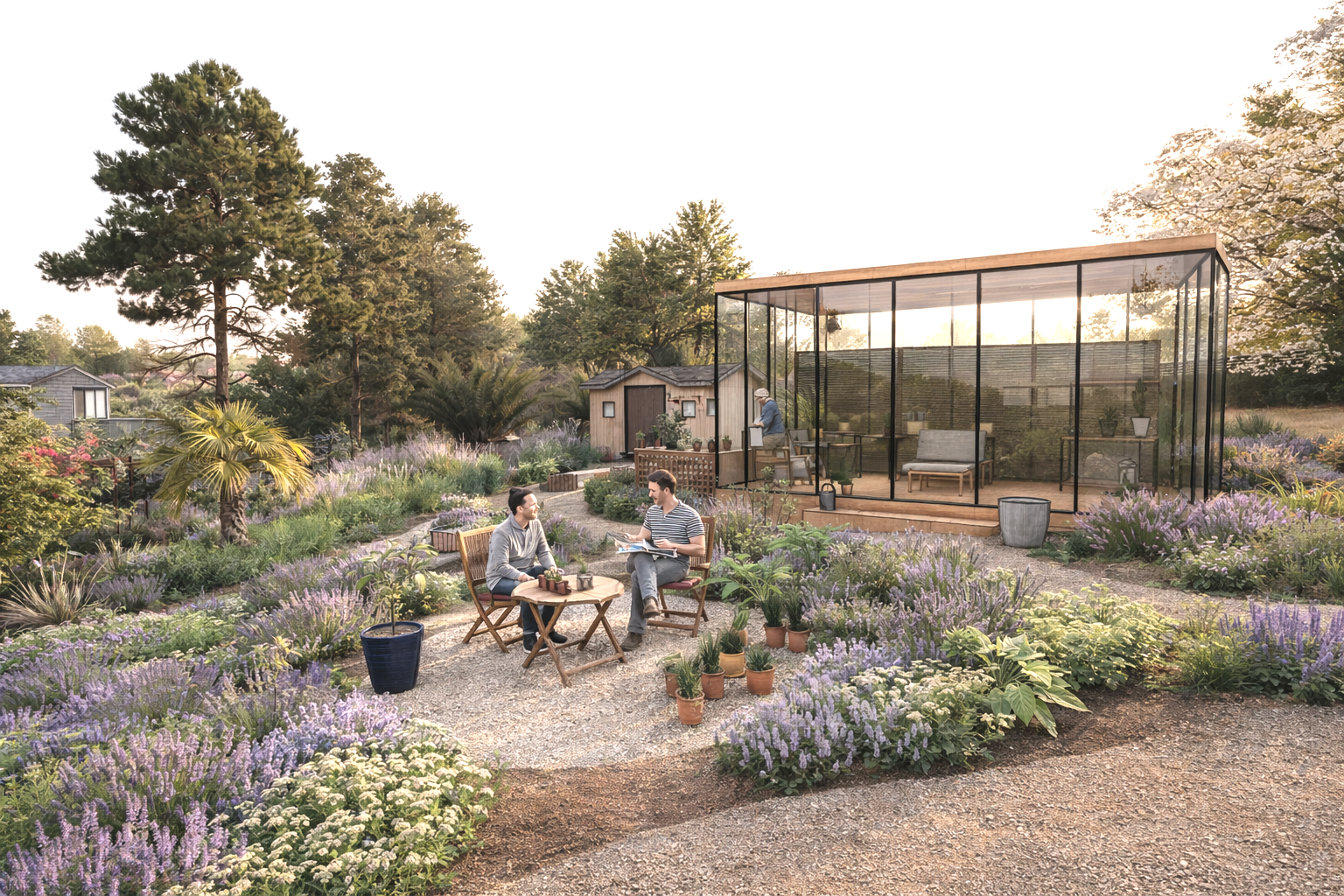
Herb Garden, Terrace and Orangery
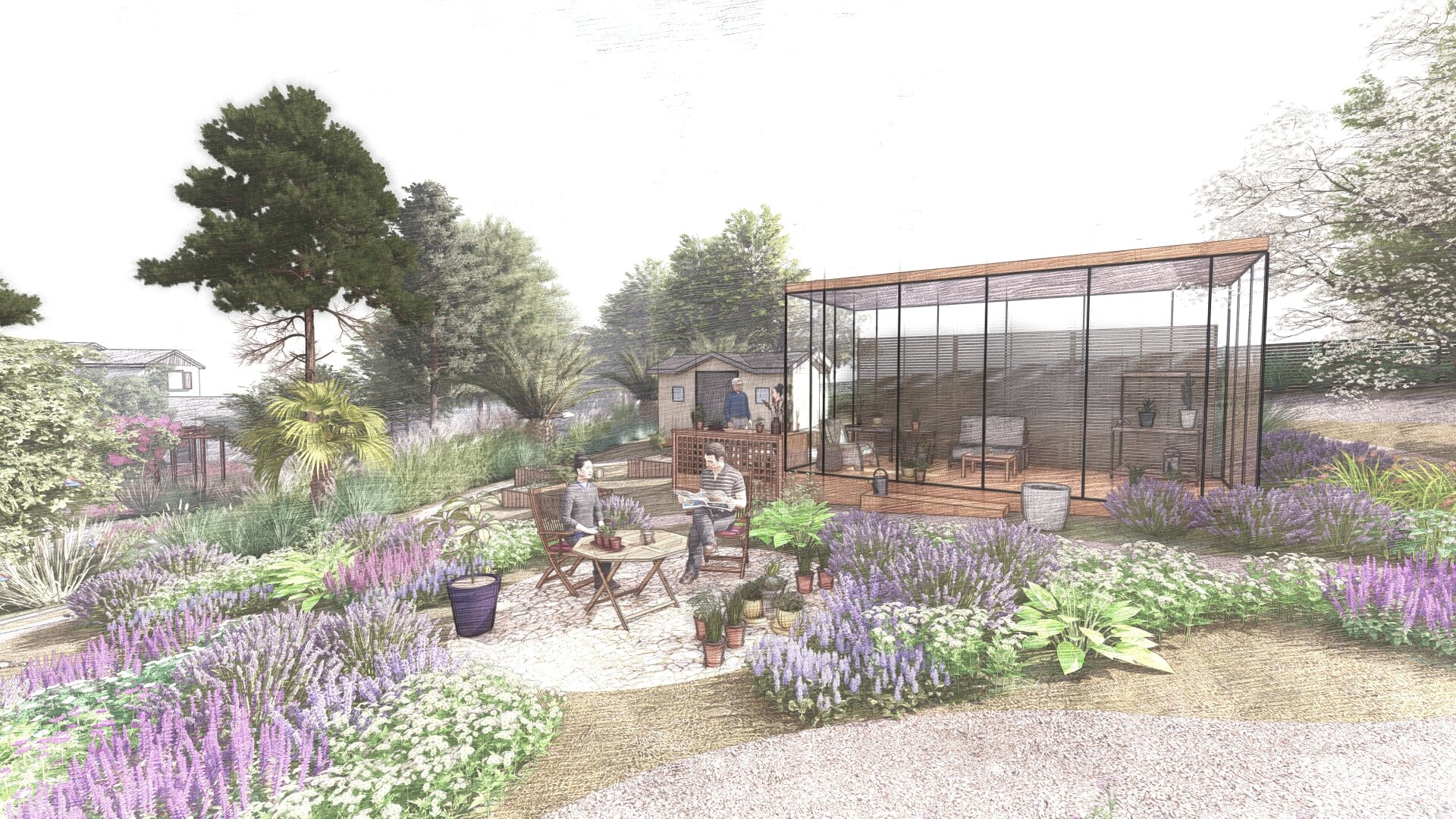
The productive heart of the estate combines a herb garden, outdoor terrace and glass orangery.
The orangery extends the growing season and creates a protected place for plants, work and quiet observation. Outside, herbs and flowering plants surround a terrace where cultivation becomes part of daily life. The composition is productive, but never utilitarian: scent, texture, flowers and seasonal change transform the kitchen garden into one of the estate’s most atmospheric gathering places.
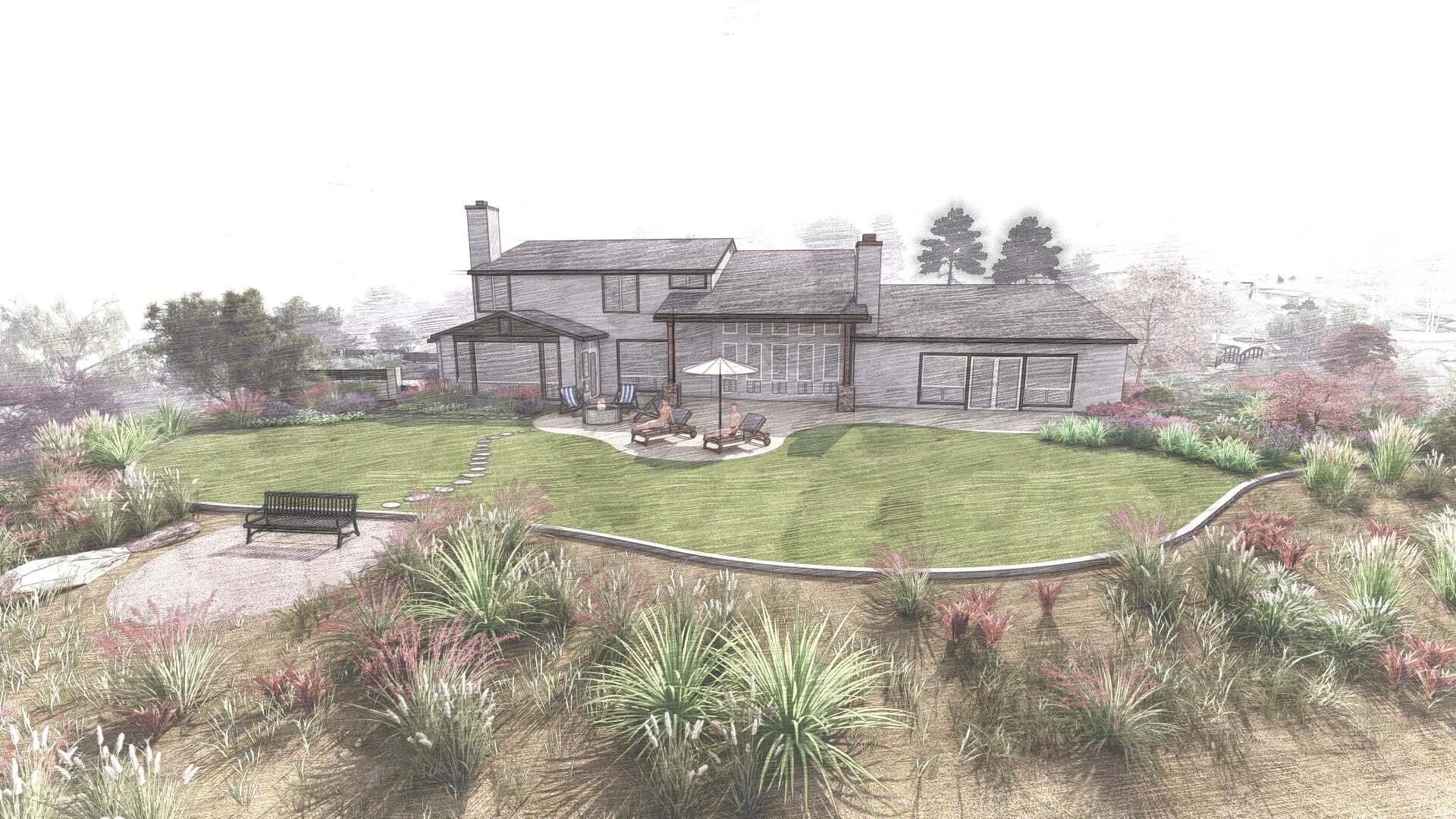
Lounge Lawn Beside the Residence
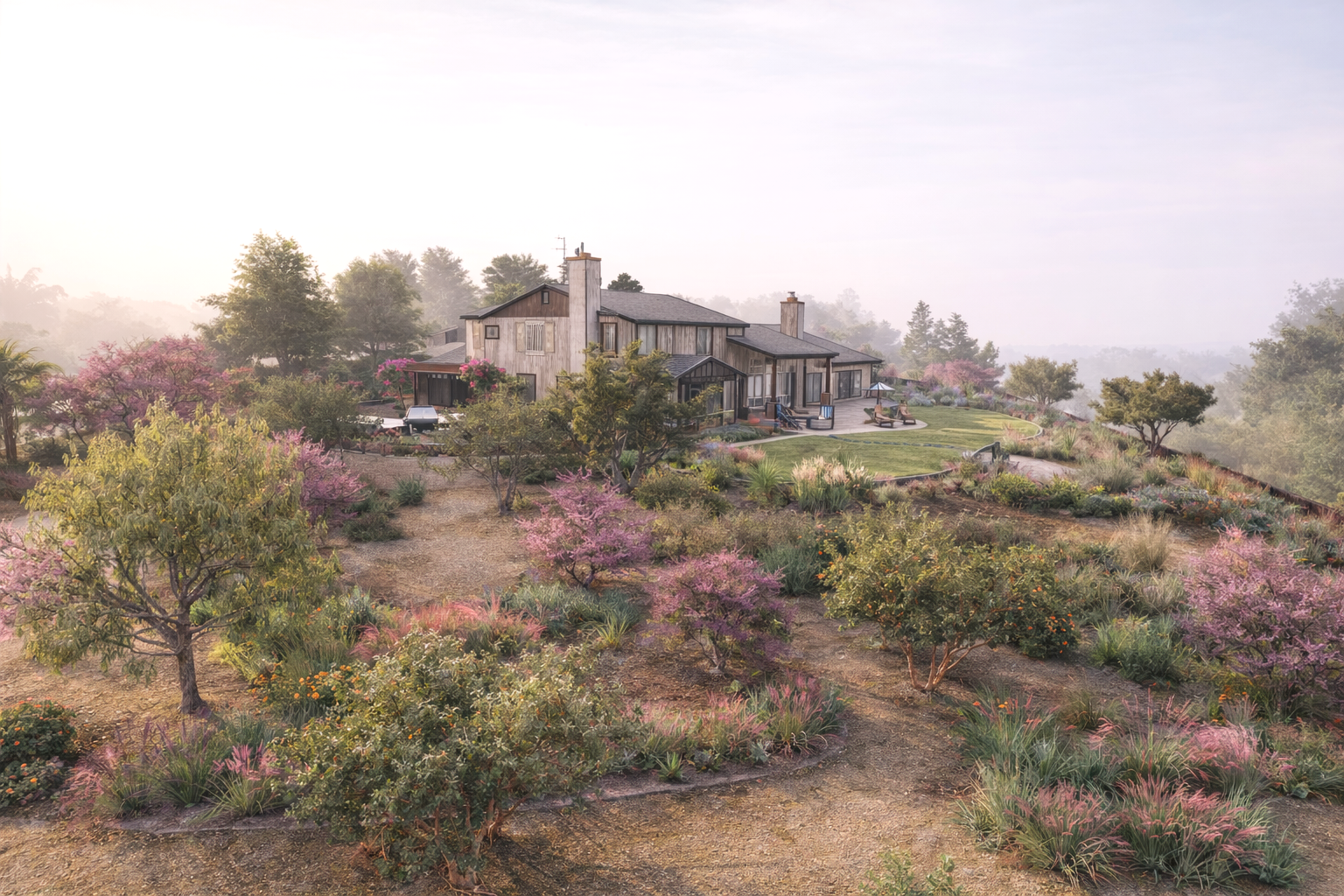
Close to the house, a purposeful lawn creates a clear and comfortable place for lounging, informal gatherings and time with family.
Instead of spreading lawn across the entire property, the design concentrates it where an open, soft surface contributes directly to how the garden is used. This restrained green plane provides visual calm beside the architecture and creates a deliberate contrast with the looser ecological planting beyond.
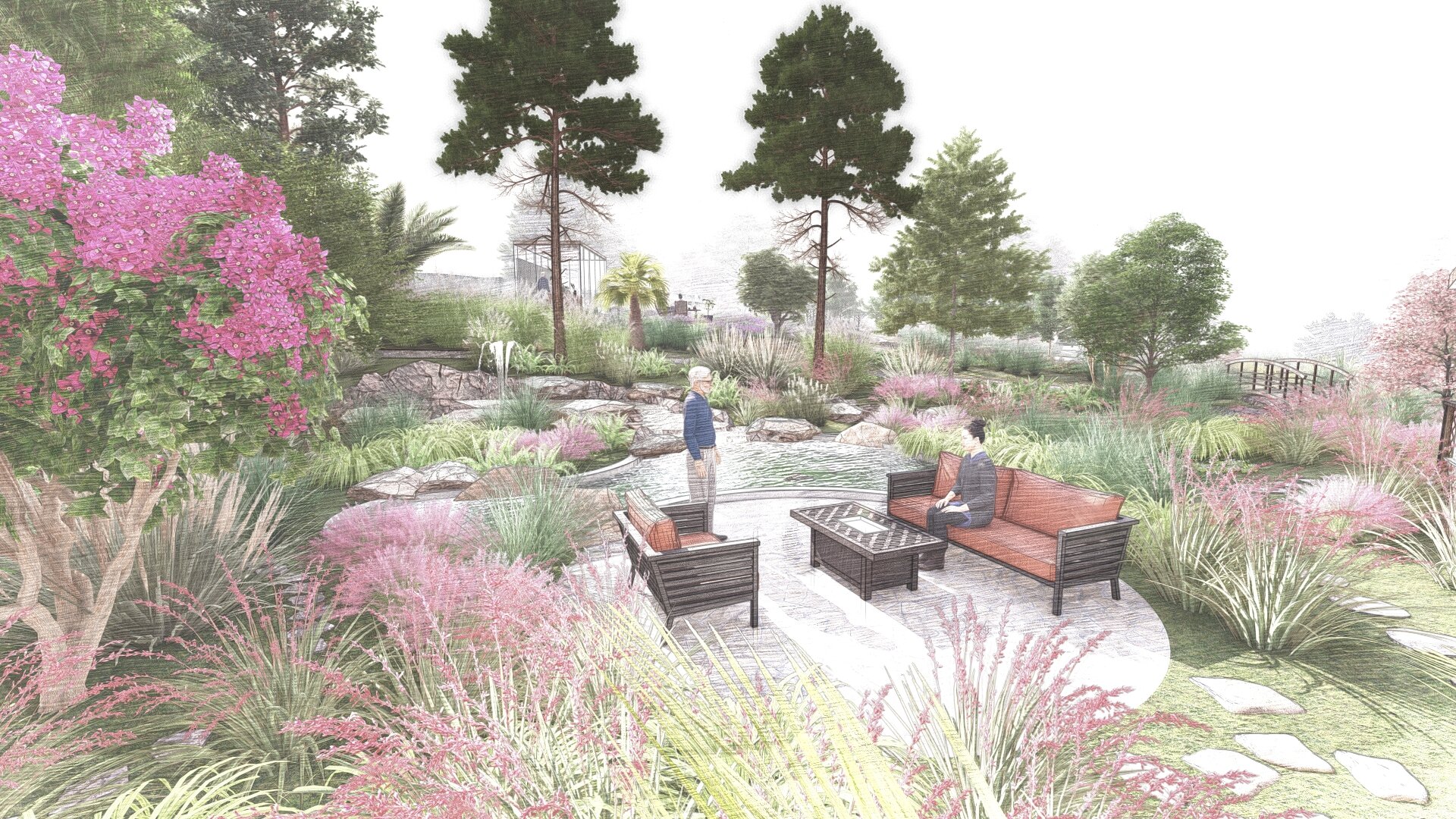
Pond and Biodiversity Garden
The pond forms one of the landscape’s quietest ecological zones.
Water, rocks, marginal vegetation and layered planting create different conditions for insects, birds and other wildlife. The surrounding landscape is allowed to feel softer and less controlled, giving the pond the character of a small habitat rather than a conventional ornamental feature.
From the walking path, the pond becomes a place to pause and observe reflections, movement and changing light. It brings another rhythm into the estate - slower, cooler and more contemplative.
Succulent Garden
A succulent garden introduces a more sculptural expression of Southern California’s dry climate.
Strong plant silhouettes, mineral surfaces and carefully positioned rocks create a composition that is visually precise without becoming sterile. This area offers a quieter seasonal structure and contrasts with the softer movement of flowering perennials and grasses elsewhere in the garden.
Orchard
The orchard gives the estate another productive and temporal layer.
Fruit trees provide blossom, summer shade, harvest and a visible record of the passing seasons. Over time, their canopies will become increasingly important to the spatial structure of the property, creating a garden that becomes richer and more established as it matures.
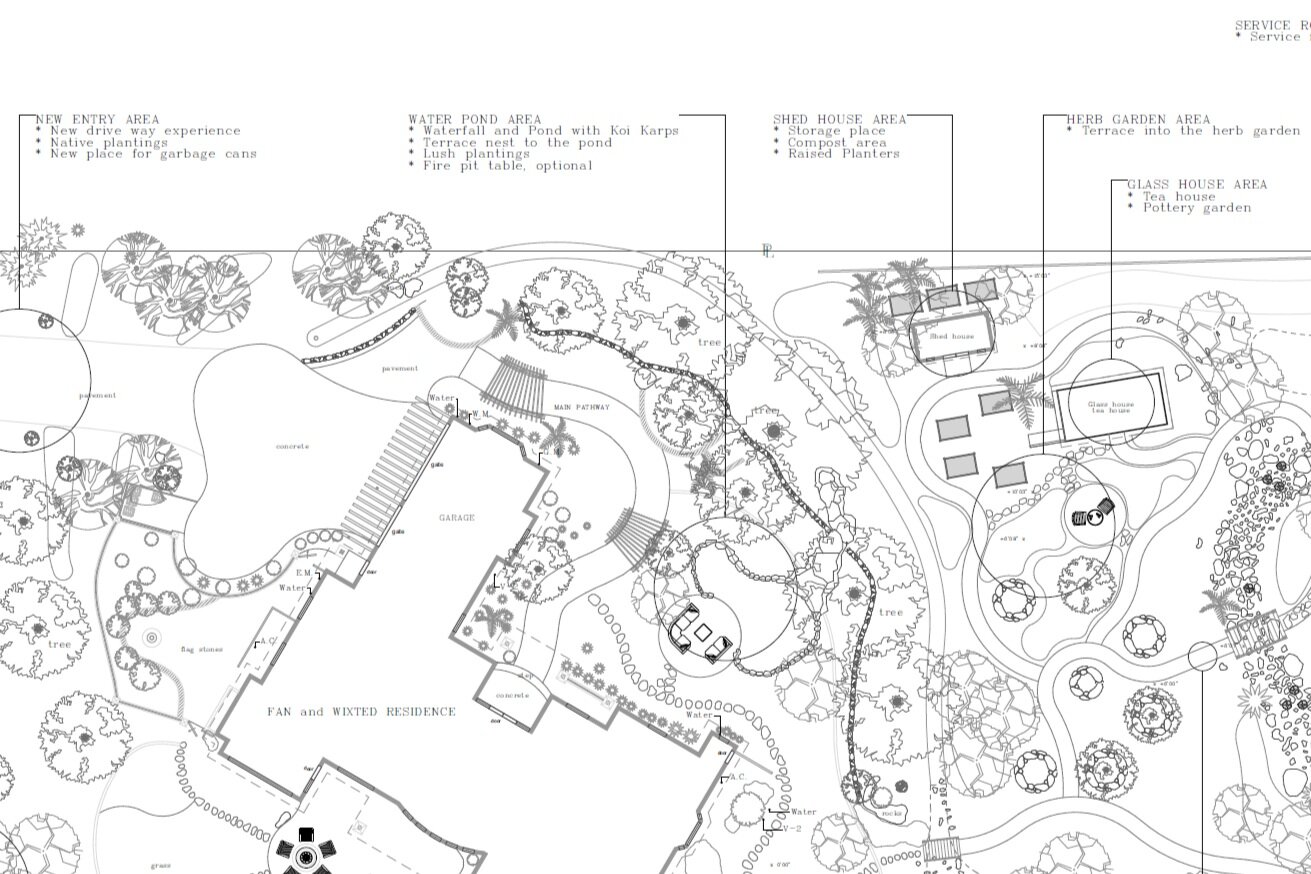
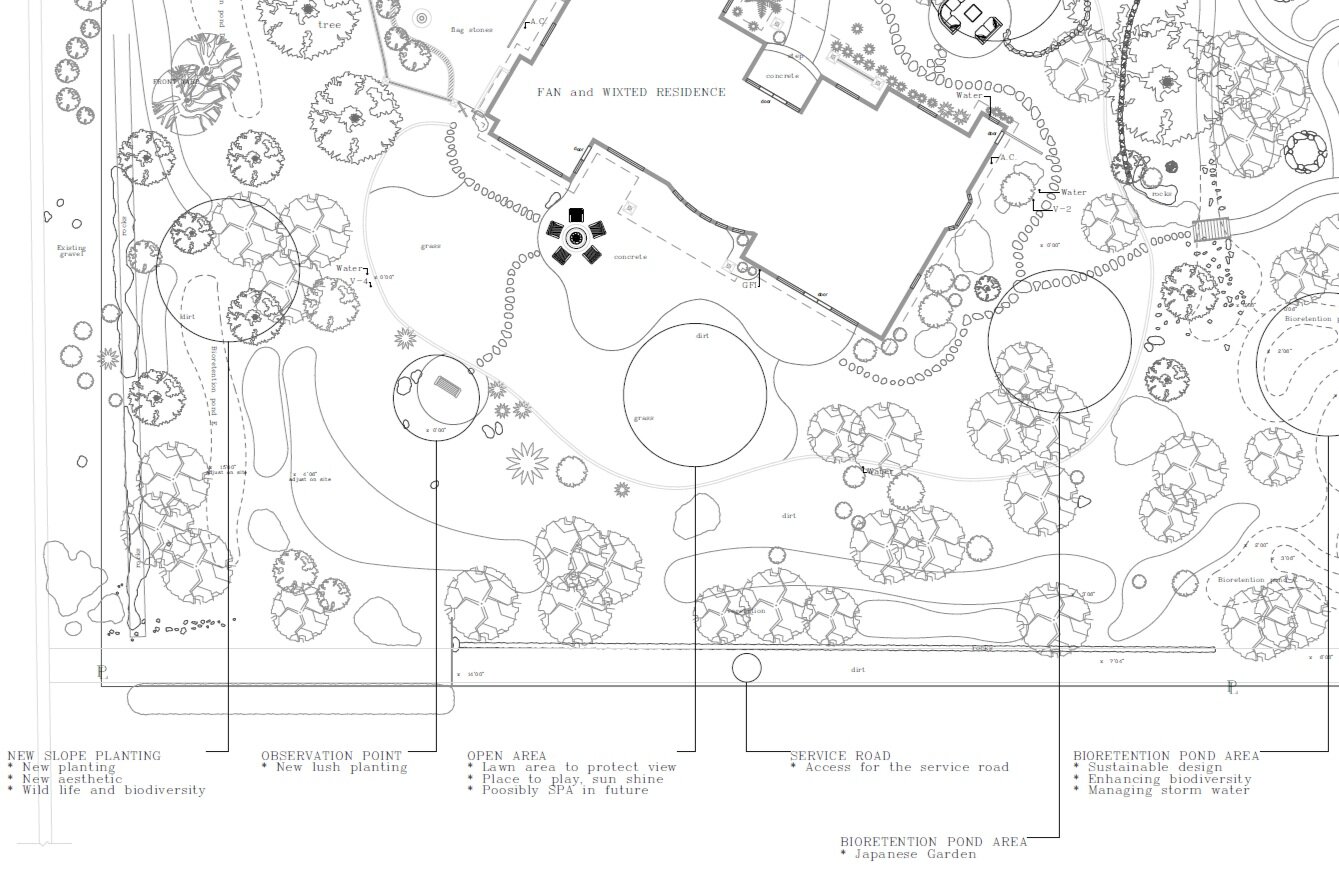
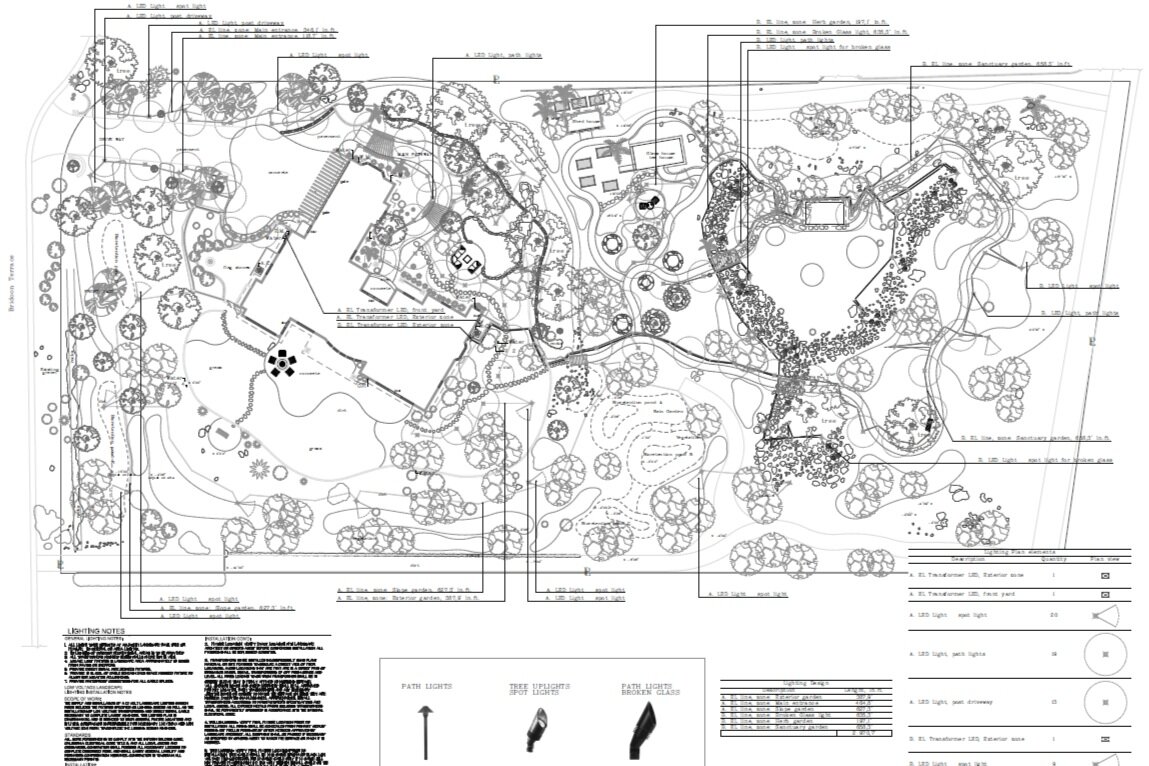
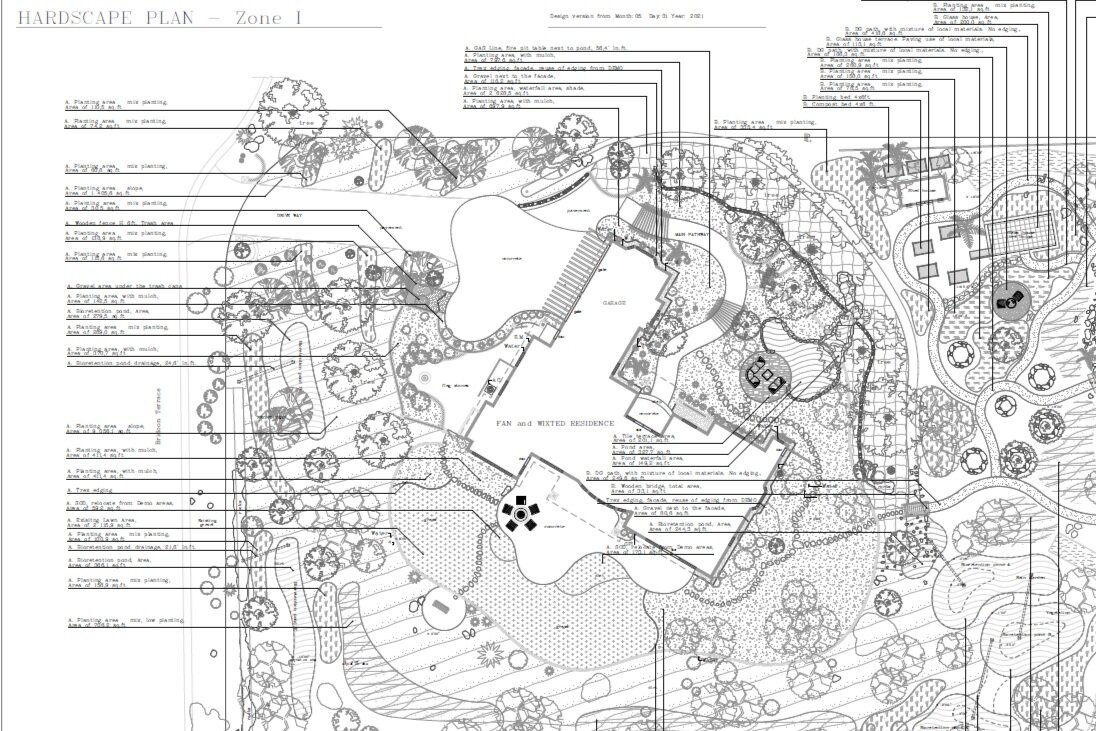
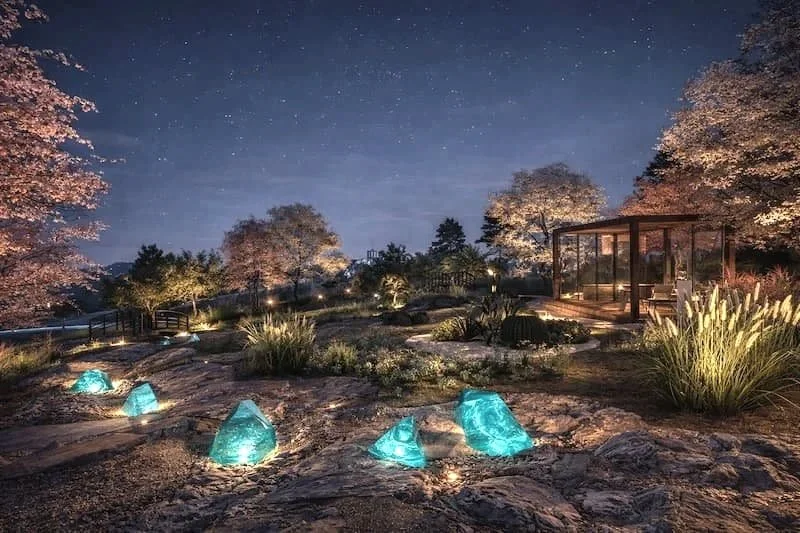
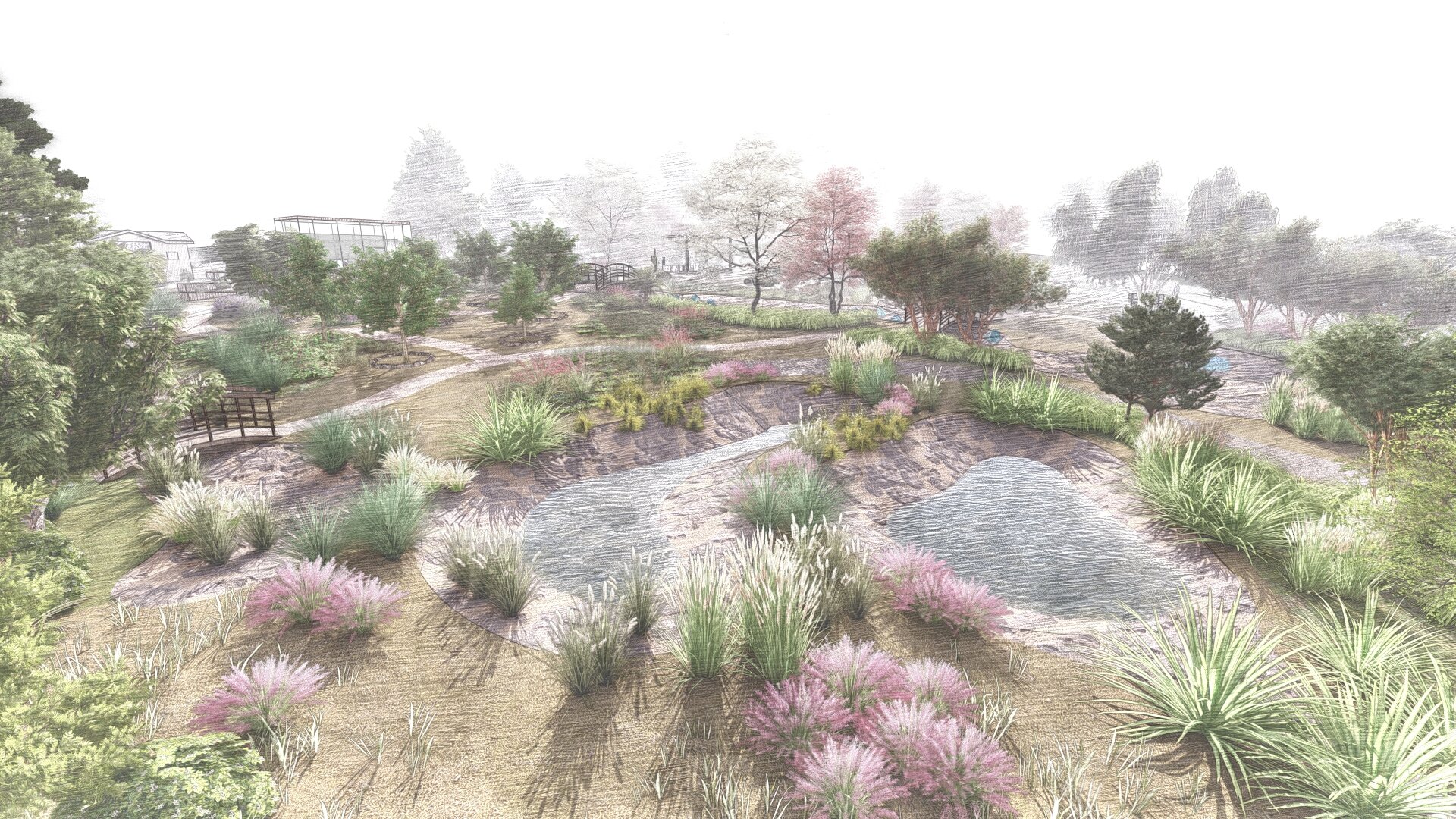
A dry rock river moves through the garden and connects its different zones.
Functionally, it forms part of the site’s stormwater strategy. Visually, it becomes a continuous geological thread - a dry canyon passing through planting, paths and gathering spaces.
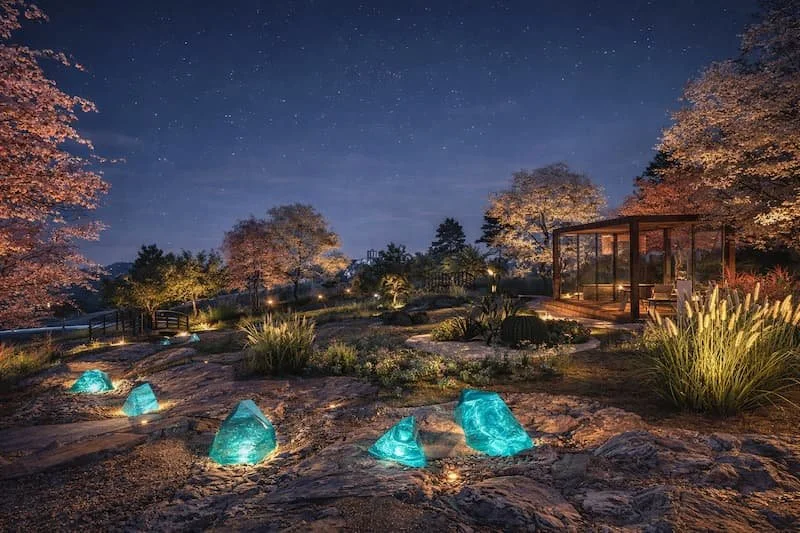
Large pieces of Turkish-blue sculptural glass are positioned among the boulders and illuminated after dark. During the day, the glass catches sunlight and introduces flashes of translucent color between the stone. In the evening, the pieces begin to glow, transforming the dry river into an atmospheric field of blue light.
This artistic intervention elevates the rock river beyond conventional drainage infrastructure. Stone, glass, shadow and reflected light create an almost celestial atmosphere, allowing the garden to remain alive and compelling after sunset.
Holding Stormwater Within the Estate
Stormwater is treated as a resource belonging to the landscape rather than something to be removed as quickly as possible.
Rainwater is directed toward the dry creek system, where its movement can be slowed and guided across the property. From there, water is collected within a larger retention area, reducing rapid discharge toward municipal drains or neighboring land.
This creates more time for water to settle and, where site and soil conditions permit, return gradually to the ground. The system combines practical stormwater management with the visual language of a natural Southern California canyon.
During dry weather, the rock river remains an important spatial and sculptural element. During rain, it becomes active infrastructure. The same landscape therefore performs differently in response to changing environmental conditions.
Planting as an Evolving California Ecology
The planting composition is lush, calm and contemporary, while remaining connected to the ecology of coastal Southern California.
California native and climate-adapted plants are arranged in layered communities rather than isolated decorative specimens. Groundcovers protect and soften the soil. Perennials and flowering shrubs create seasonal nectar and seed. Grasses introduce movement, while trees and larger shrubs provide shade, shelter and long-term structure.
Bloom is distributed across the seasons so the garden can offer changing color and forage over an extended period. Depending on the final plant palette and surrounding habitat, this kind of planting can support monarchs, painted ladies and swallowtails, as well as native bees and other beneficial insects.
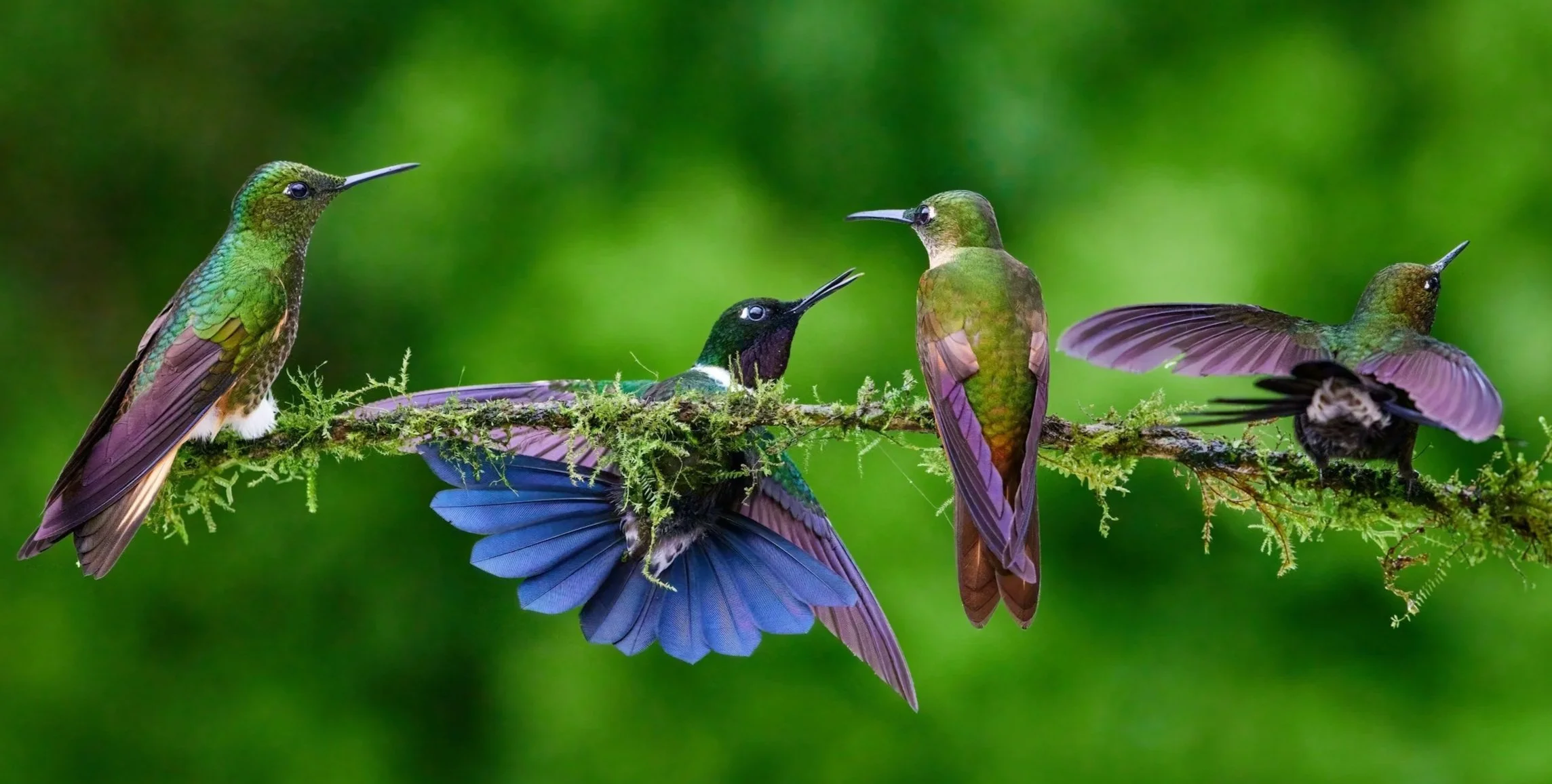
Anna’s and Allen’s hummingbirds may visit nectar-rich flowers, while black phoebes, house finches and lesser goldfinches can use the garden for insects, seeds, water and shelter.
At the upper levels of the local food web, the wider Olivenhain habitat mosaic may also be visited by Cooper’s hawks or red-tailed hawks. Their presence cannot be manufactured as a decorative effect. It becomes possible when the lower trophic levels- soil life, plants, insects, seeds, water and smaller birds, are functioning together.
This is the foundation of LASD Studio’s approach to Designing Landscapes as Evolutionary Systems. The objective is not to install a frozen picture, but to establish the conditions from which a richer living system can continue to develop.
Considering an Ecological Estate or Sanctuary Garden?
LASD Studio designs private landscapes that bring architecture, daily life, water, planting and ecological processes into one coherent experience.
A preliminary conversation can help determine how your property could become a more restorative, biodiverse and enduring landscape.