Spiritual Rebirth: Ecological Sanctuary Estate - Landscape design in Encinitas, California
A Sanctuary Garden in Encinitas, California, designed as a vision of spiritual rebirth. Featuring meadows, meditation gardens, bioretention ponds, and native plantings, this landscape merges ecology, art, and wellness into a living sanctuary.
Where Art and Nature Evolve into Living Legacy
Location: Knightsbridge, Olivenhain, Encinitas, California
Project Type: Private Ecological Sanctuary Estate. Evolving Estate Landscapes & Ecological Sanctuary
Design Scope: Complete Garden Design, Planting Design, Hardscape Coordination, Irrigation Strategy, Stormwater Planning, Construction Documentation
Status: Built / Installed
Construction: Contractor & Project Management by Client.
Construction cost: ~ $340,000
Design Studio: LASD Studio
A Living Landscape for Restoration and Renewal
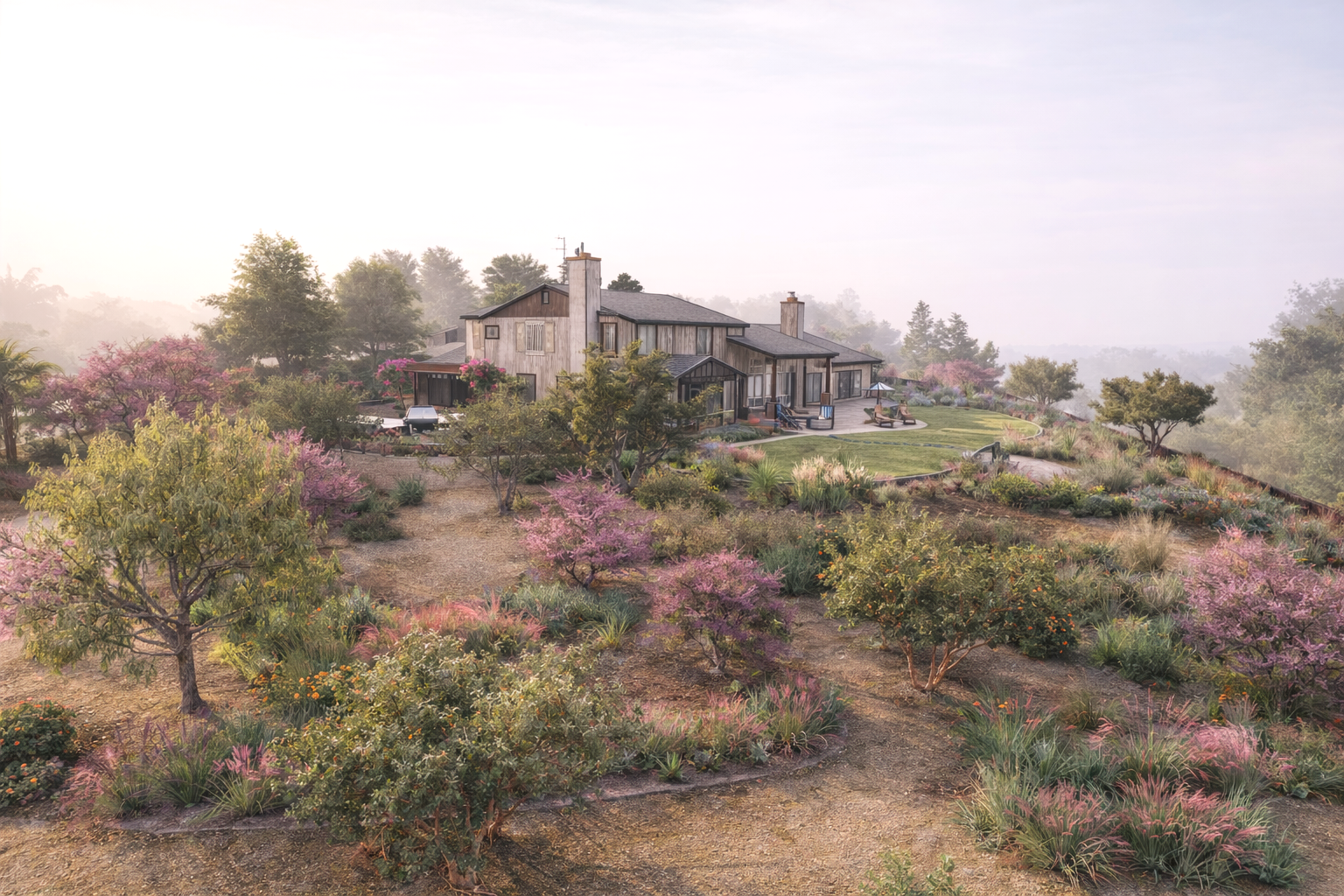
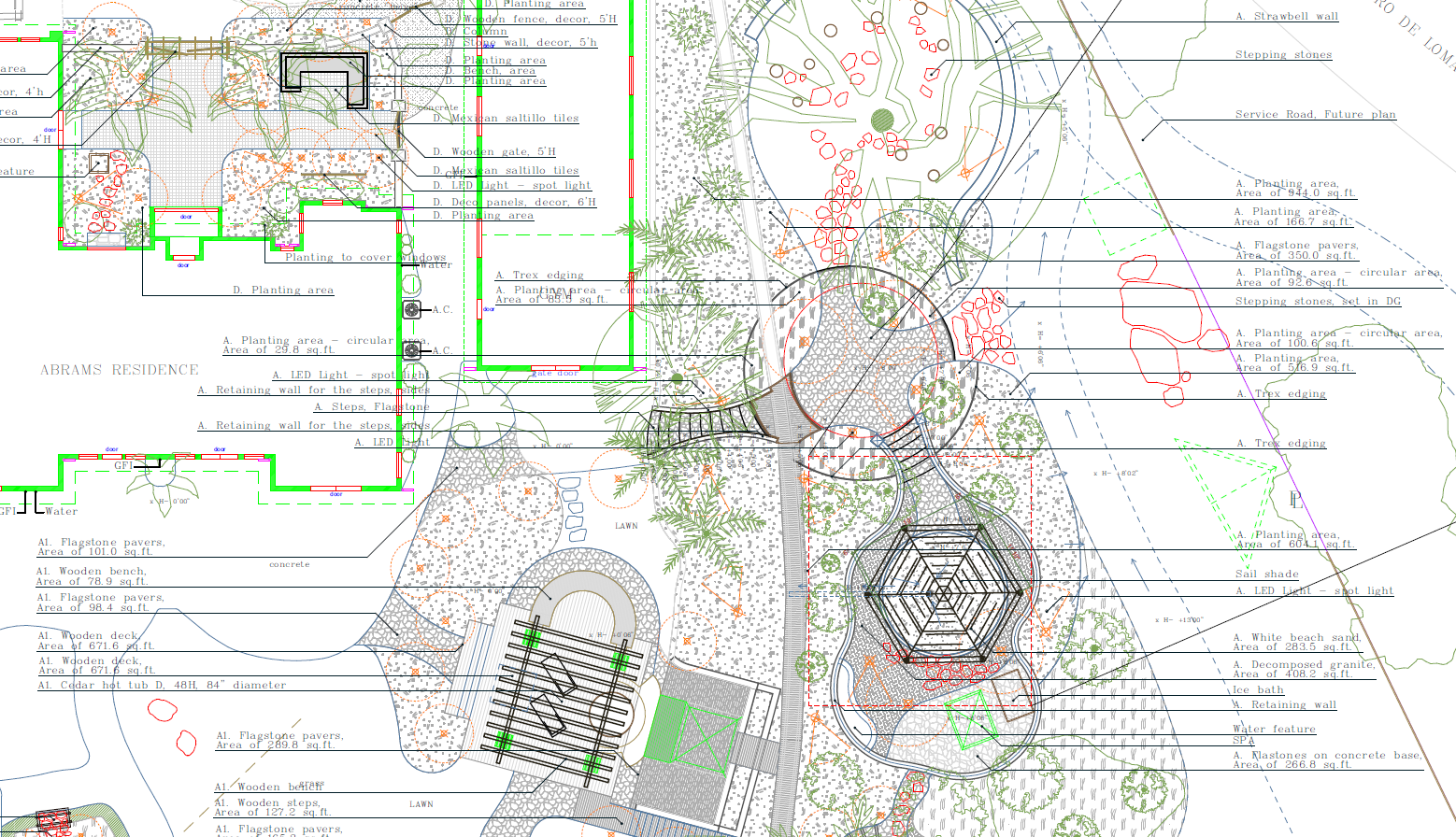
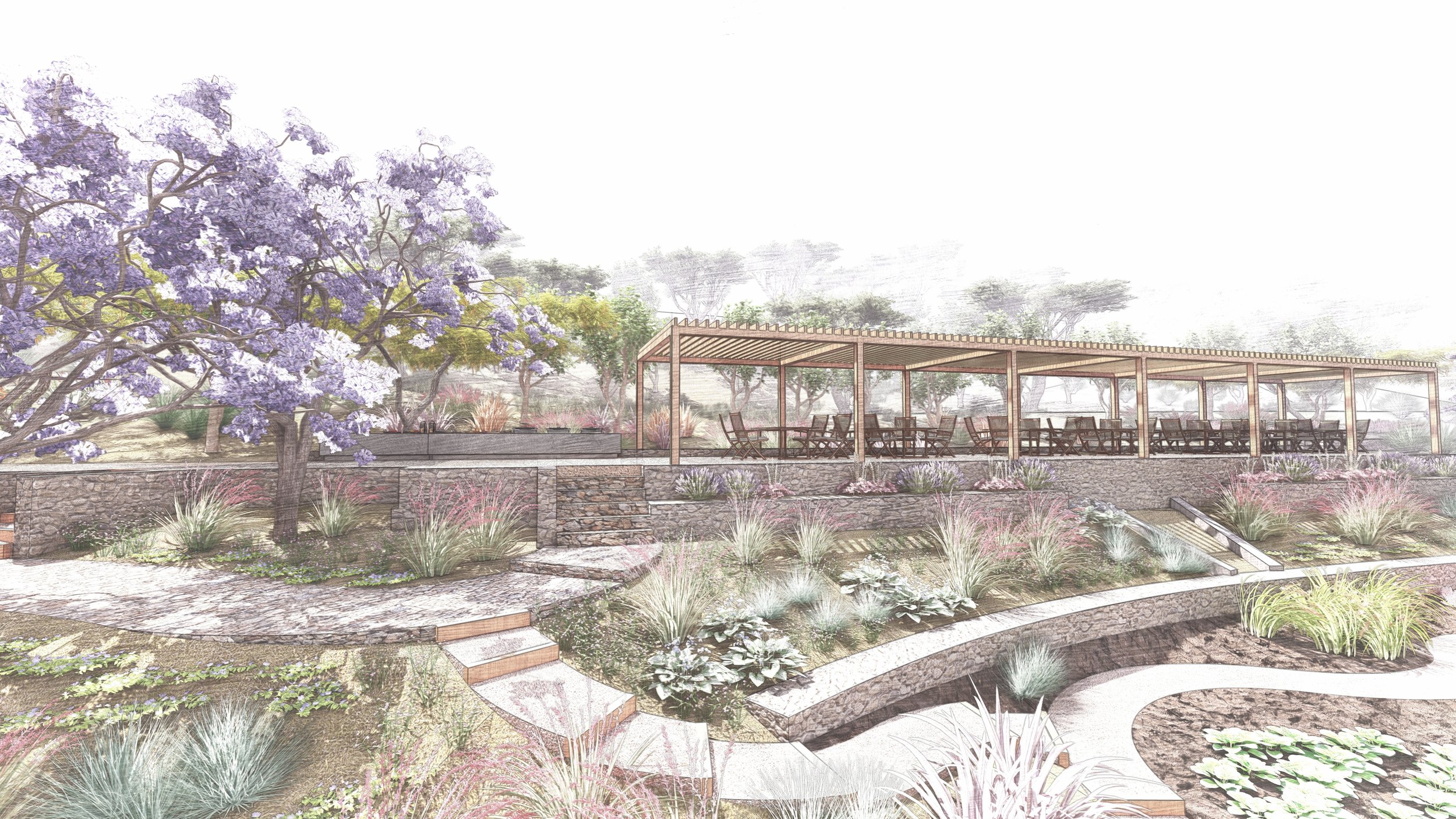
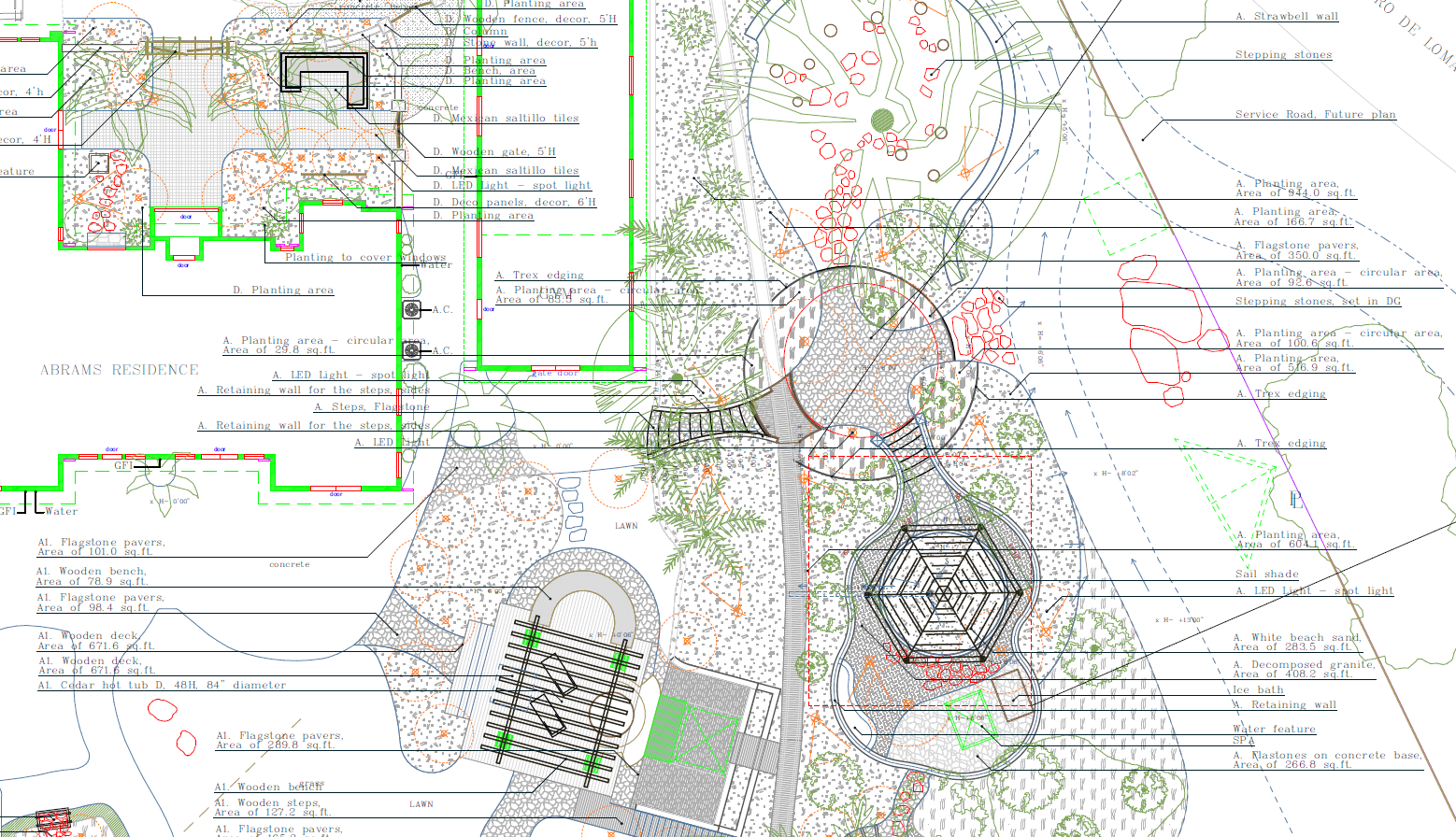
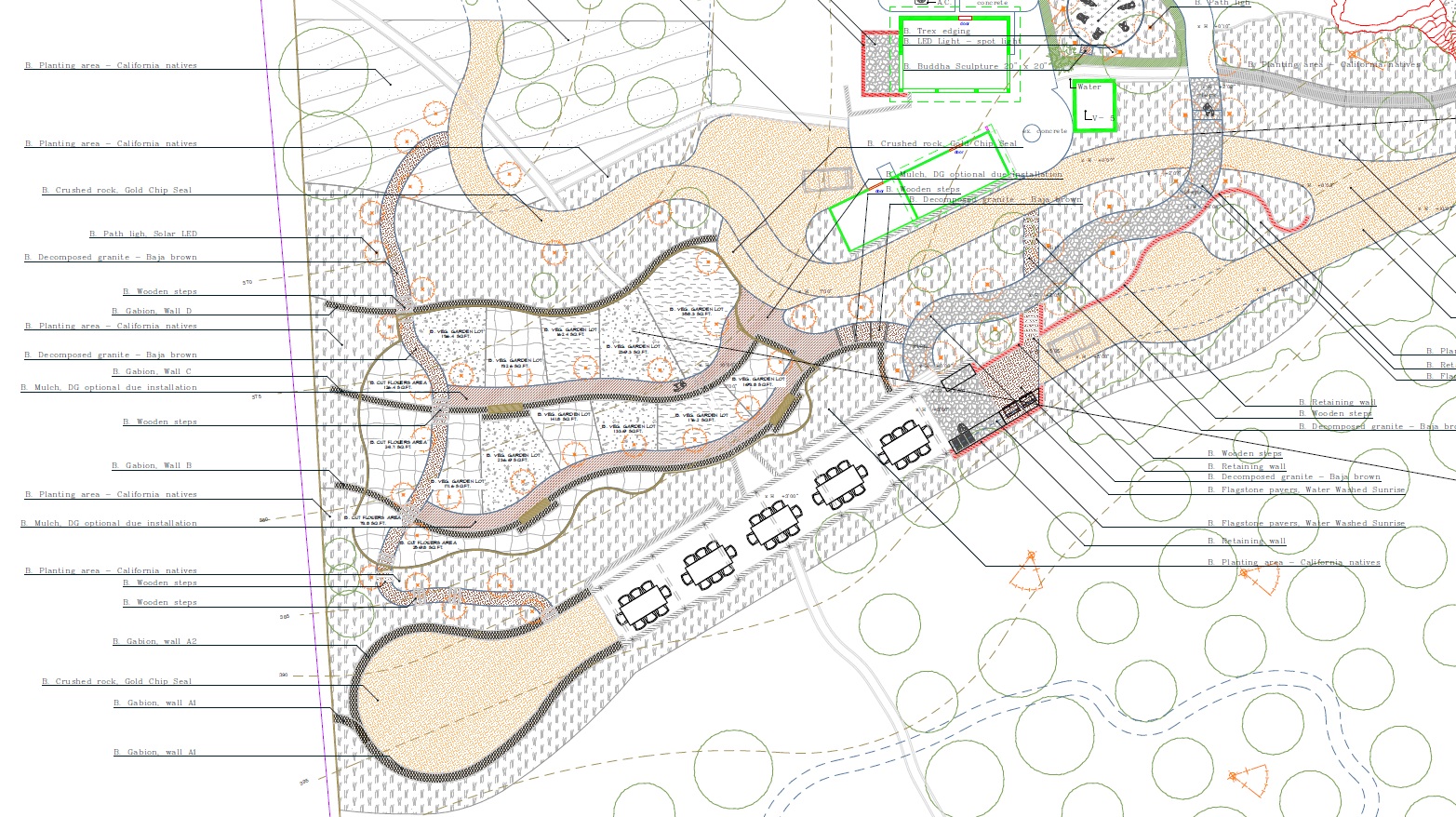
The Spiritual Rebirth Sanctuary Estate was conceived as more than a private garden. It is a living landscape designed to help its inhabitants slow down, reconnect with natural rhythms and experience the property as a continuous journey.
Set within the semi-rural landscape of Olivenhain in Encinitas, the garden brings together ecological California planting, productive garden spaces, water, sculpture and places for quiet daily life. The result is not one large decorative composition, but a sequence of distinct garden worlds held together by a gentle, continuous presence.
The idea of spiritual rebirth is expressed through movement and transition: from architecture into planting, from open lawn into intimate habitat, from dry stone into water, and from the productive landscape of herbs and fruit trees into spaces intended only for observation and stillness.
At LASD Studio, we believe gardens can become sanctuaries - places where people reconnect with nature, art, and themselves. The Spiritual Rebirth Sanctuary Garden in Encinitas was envisioned as more than a private garden: it is a living landscape of healing, renewal, and ecological balance.
Video presentation of the Spiritual Rebirth Sanctuary Garden in Encinitas, California - a meditative landscape design by LASD Studio featuring flowing pathways, water features, ecological planting for pollinators, and contemplative spaces that unite spirituality, biodiversity, and modern garden design.
An Estate Composed as a Journey
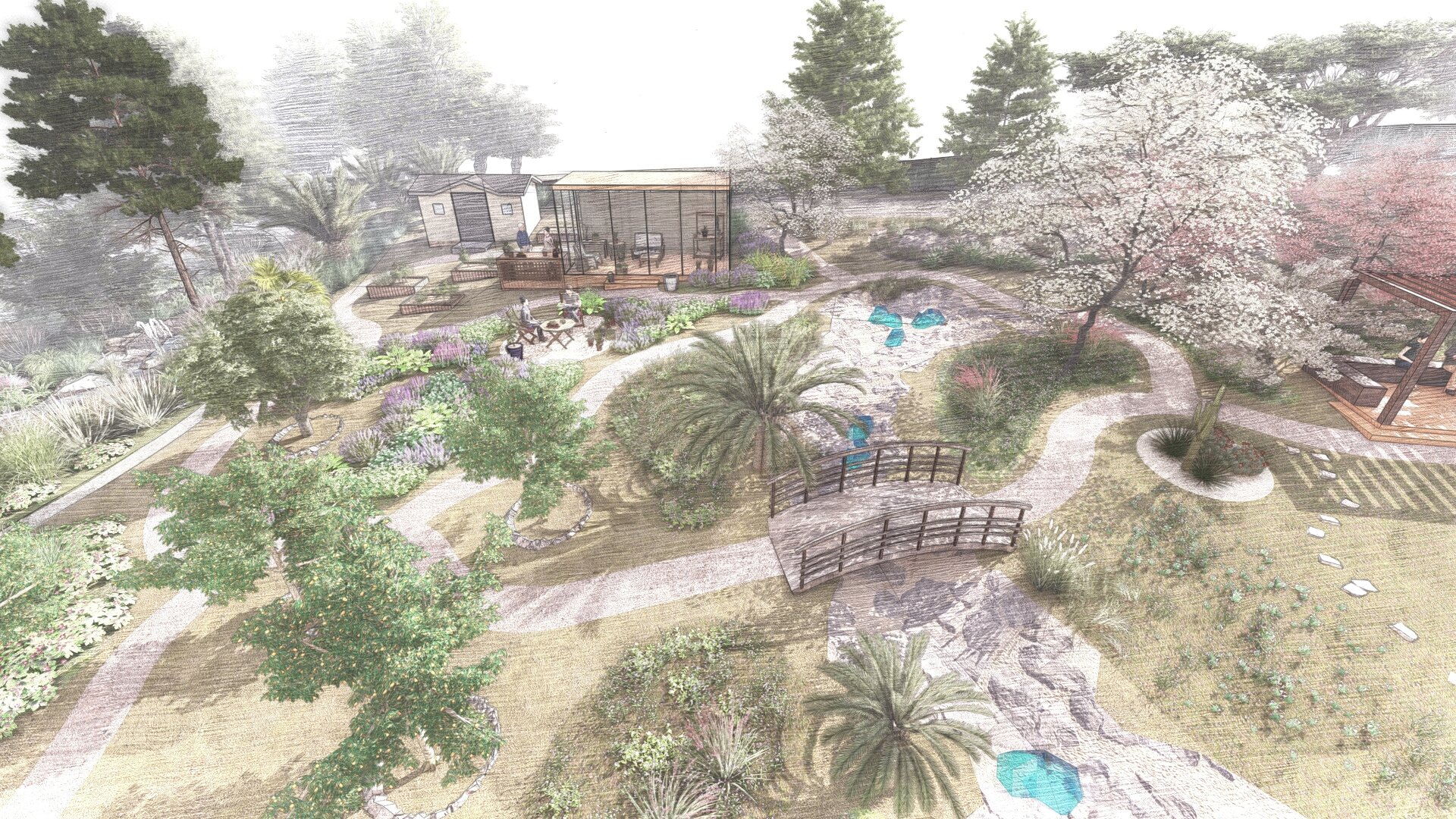
Rather than revealing the entire property at once, the design unfolds gradually with spaces and garden rooms.
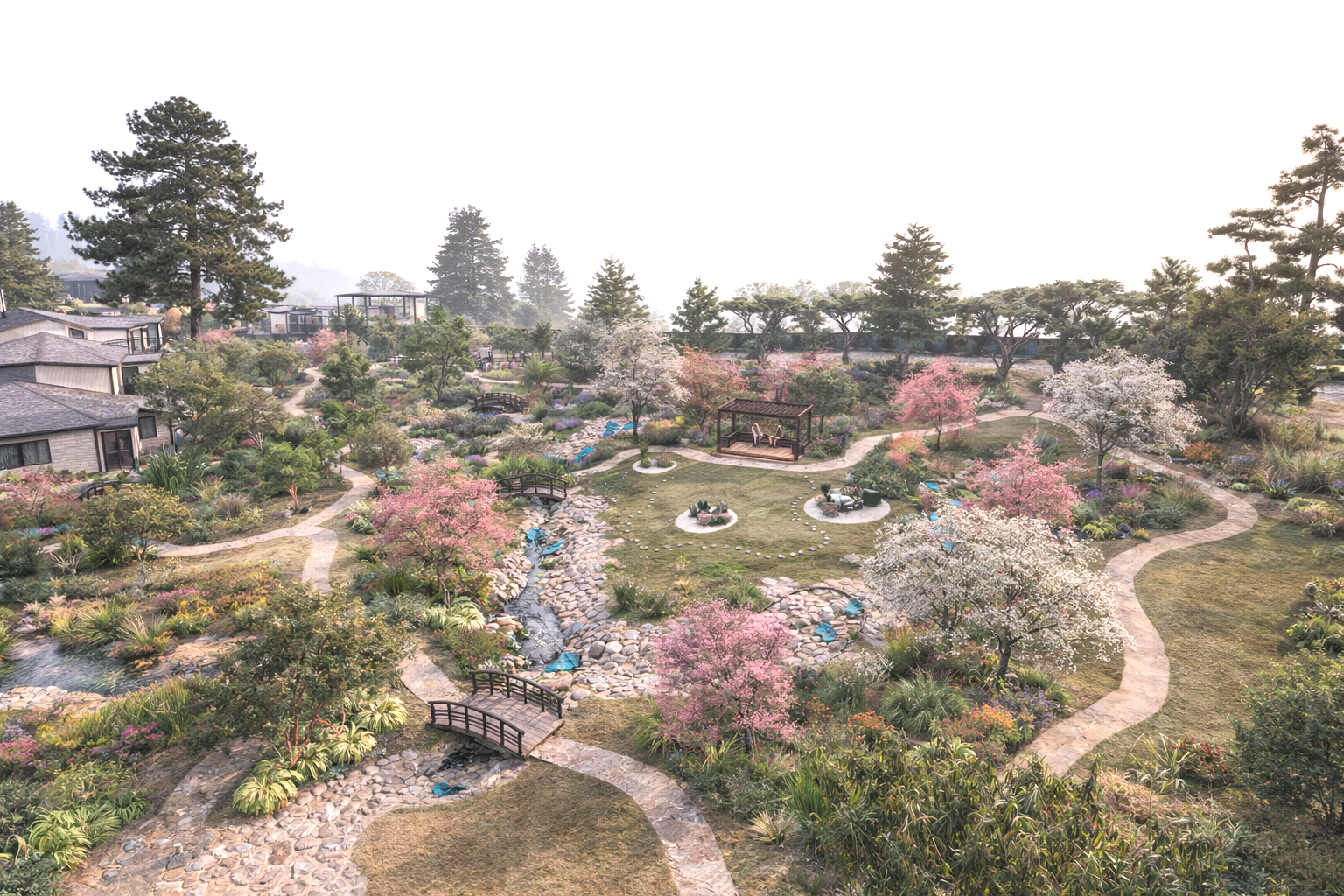
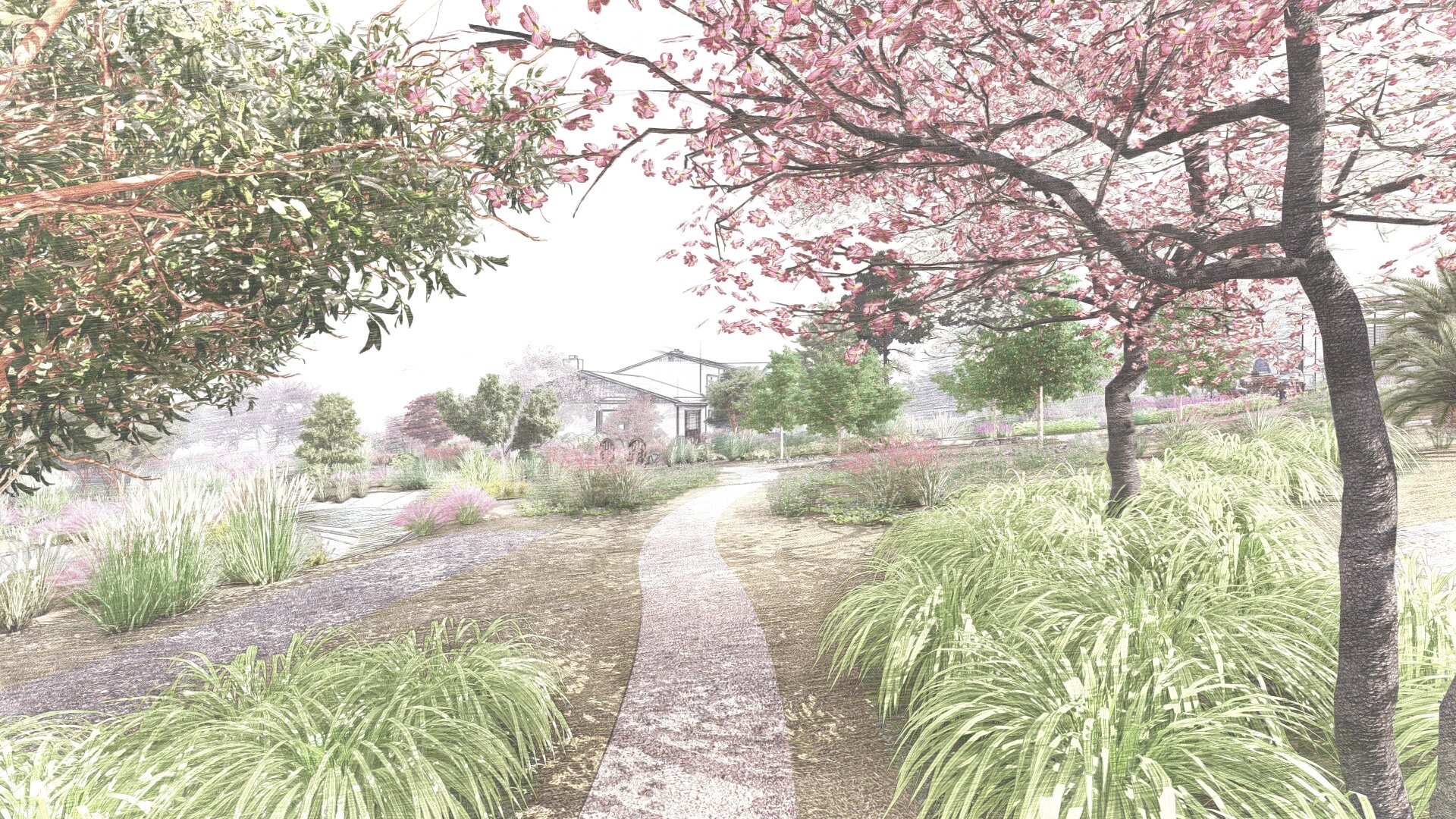
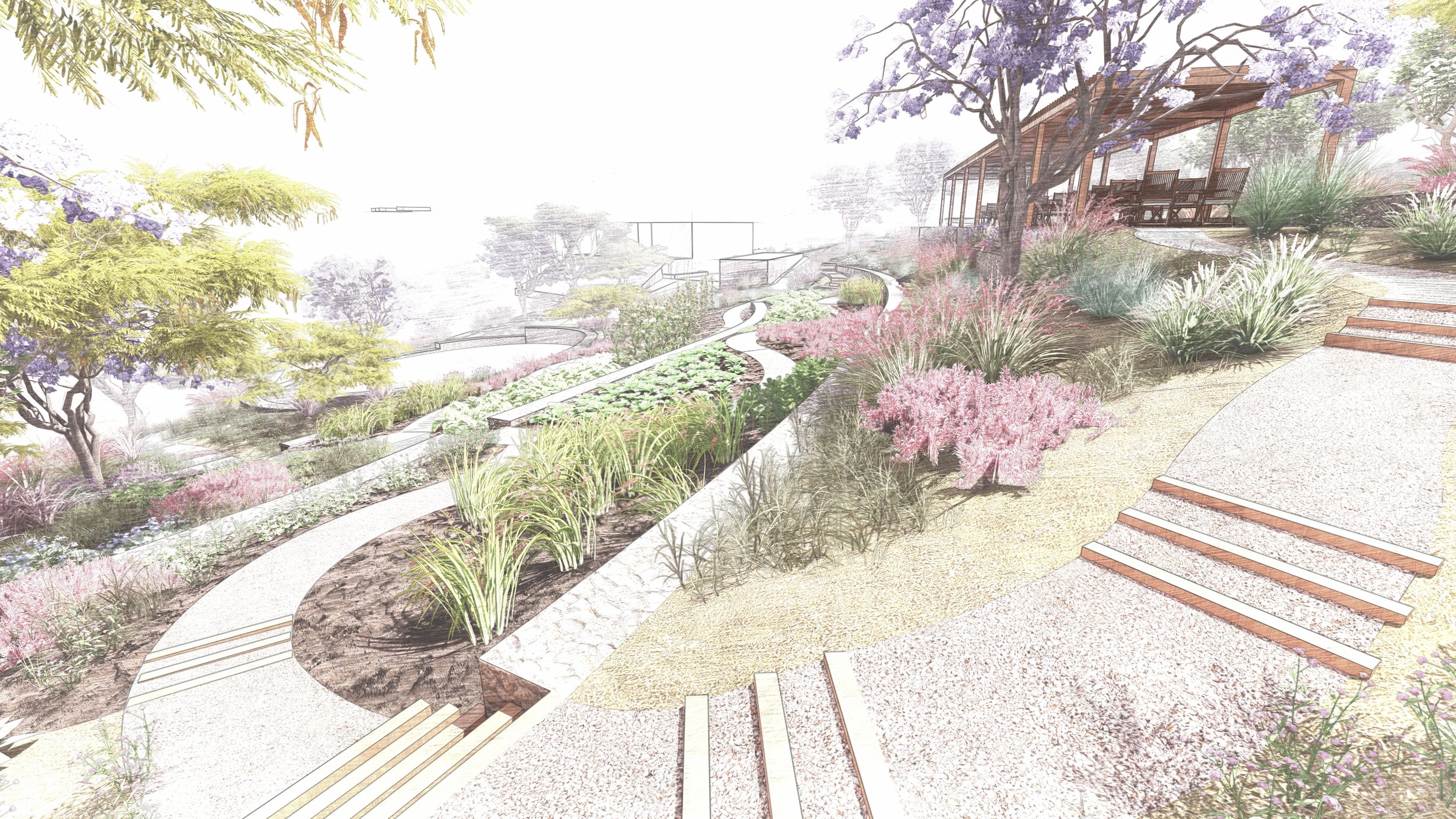
Curved paths travel through the main garden and continually alter the visitor’s view. A flowering tree, pond, sculptural rock or distant terrace disappears and reappears as one moves. This principle of partial revelation gives the estate a sense of depth and discovery that a straight path could not create.
The primary path forms a continuous loop around the garden. It can be used as everyday circulation, but it also becomes a meditative walk: a place to move without a destination, decompress after a demanding day and allow the mind to return to a calmer rhythm.
There are no visual tunnels or long, static corridors. Every turn introduces a new relationship between planting, water, stone, architecture and sky.
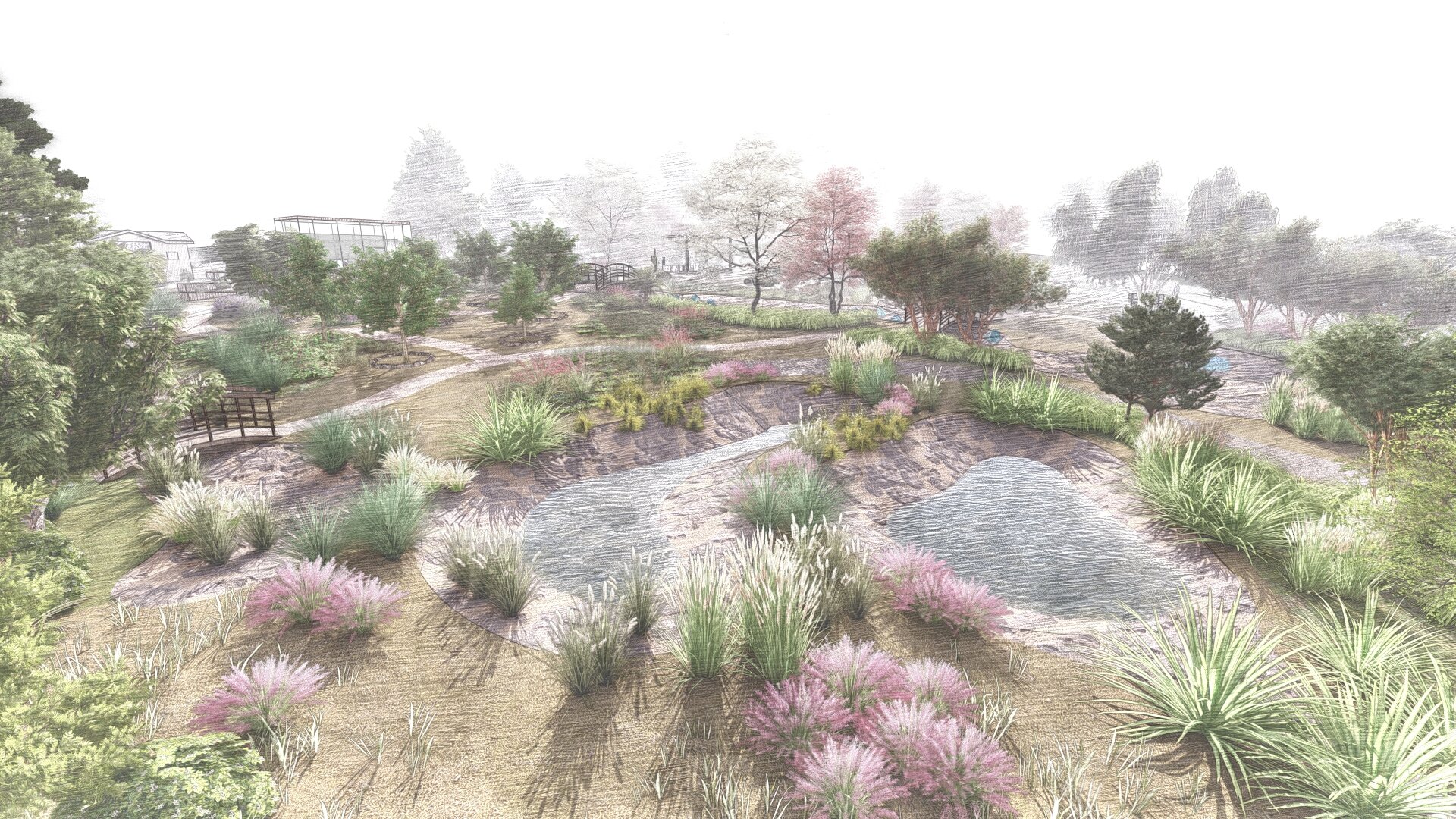
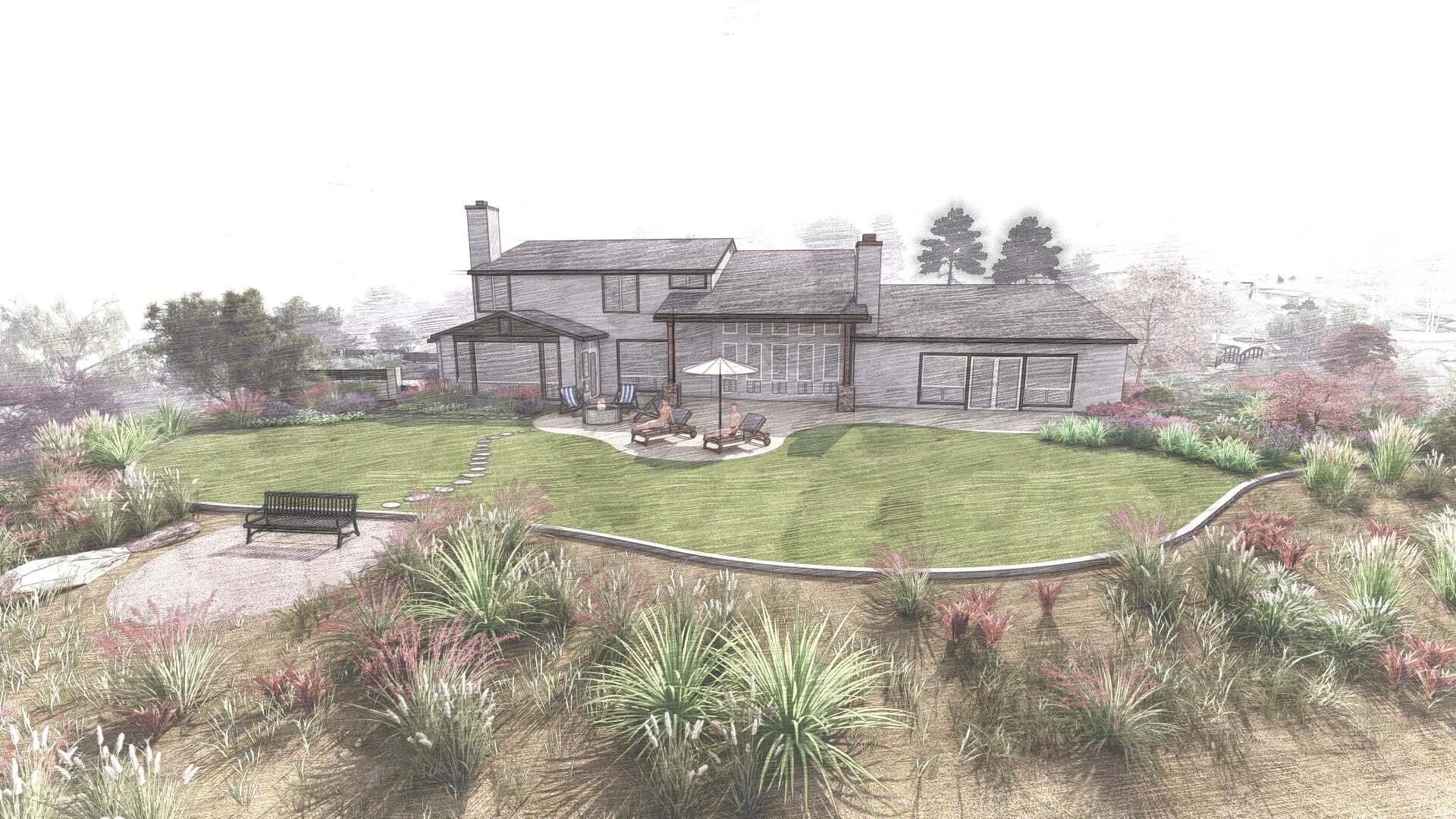
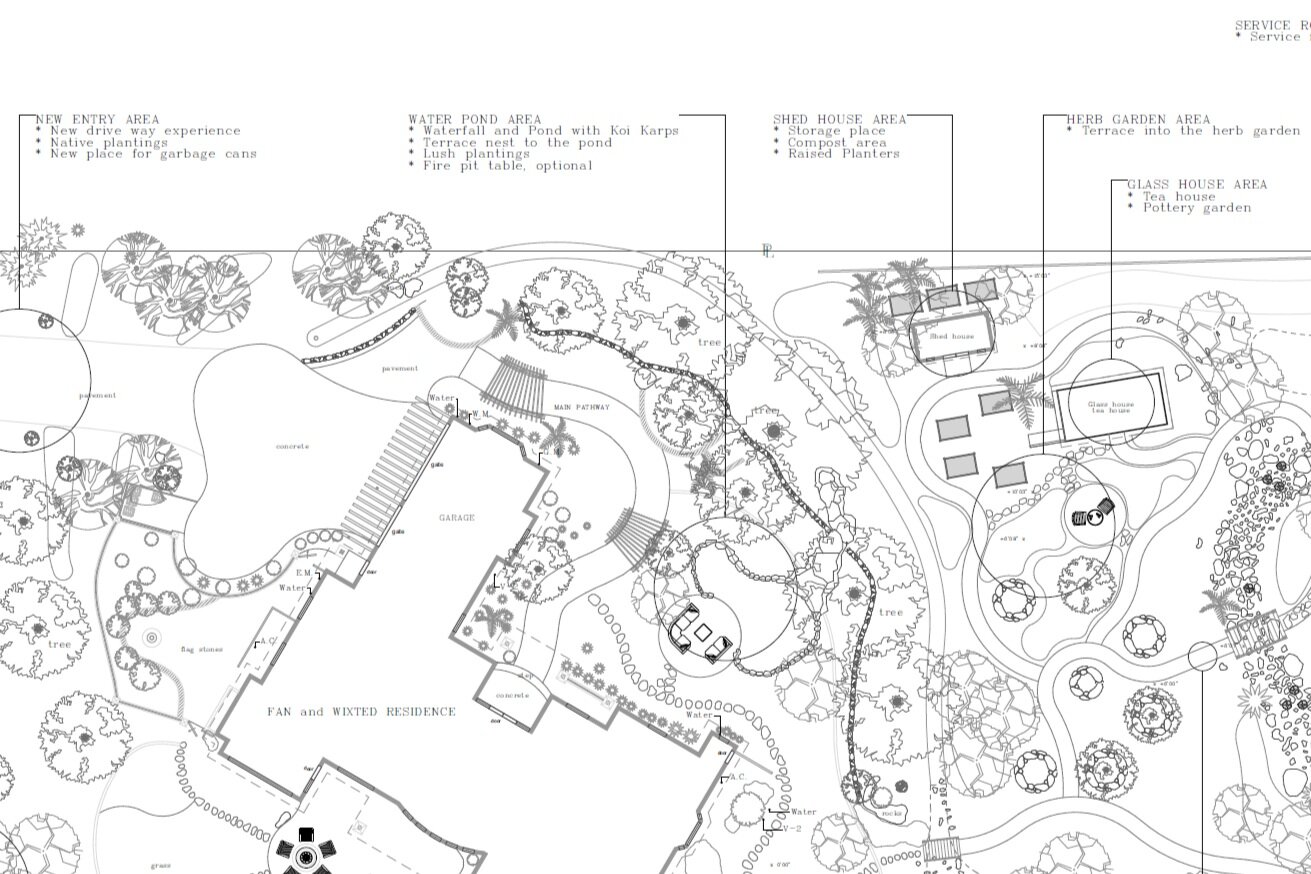
Five Garden Worlds Within One Landscape
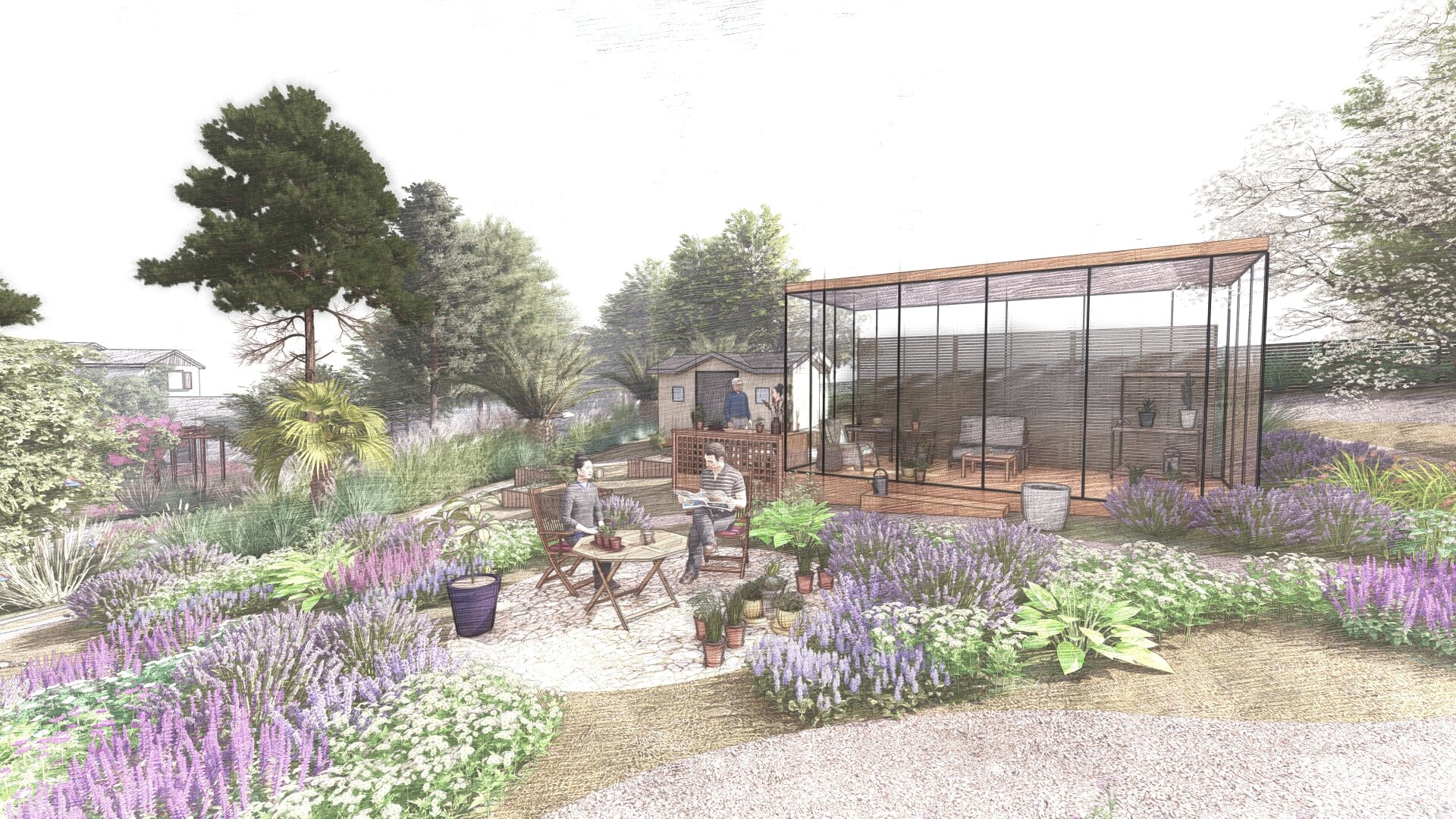
Herb Garden, Terrace and Orangery
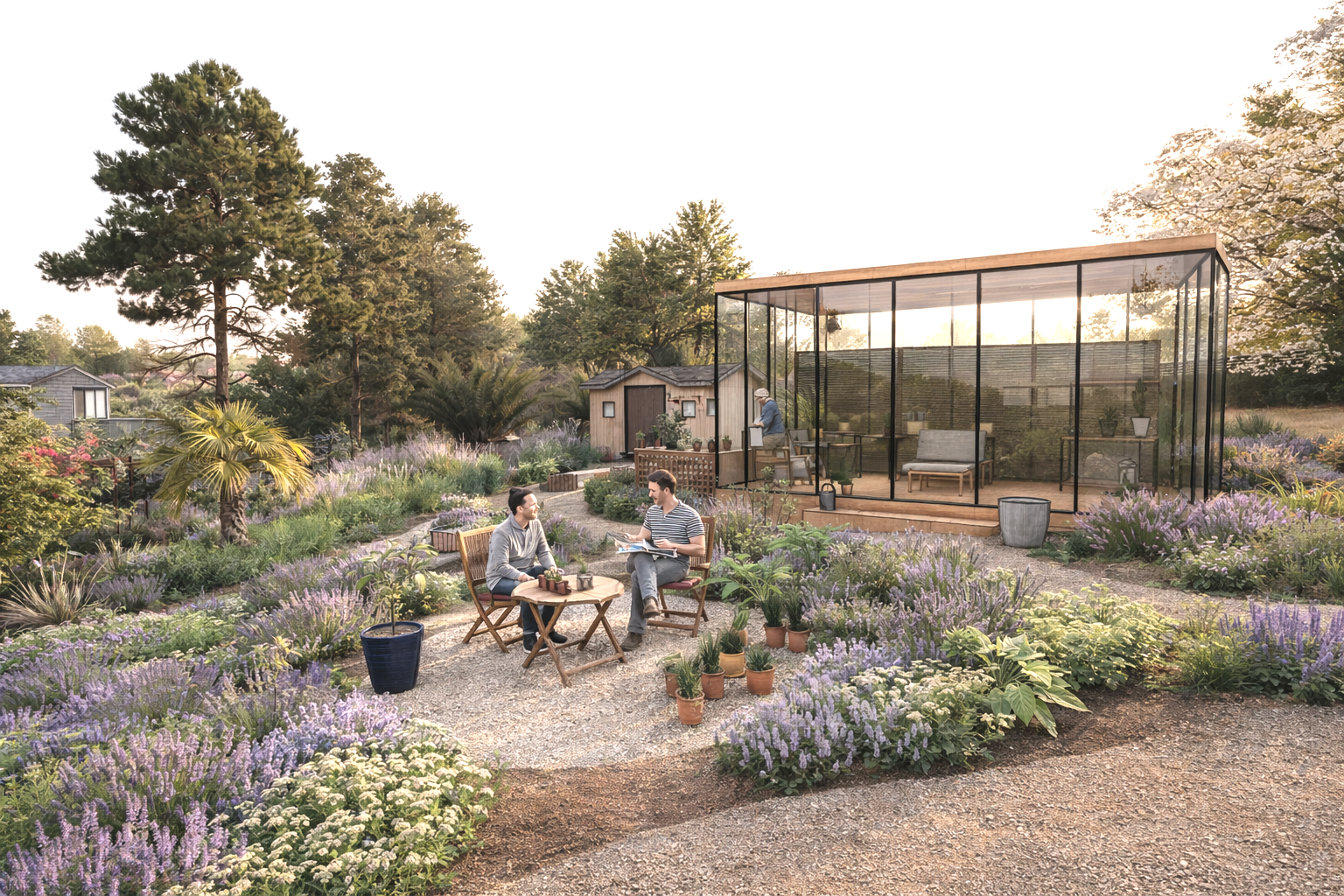
The productive heart of the estate combines a herb garden, outdoor terrace and glass orangery.
The orangery extends the growing season and creates a protected place for plants, work and quiet observation. Outside, herbs and flowering plants surround a terrace where cultivation becomes part of daily life. The composition is productive, but never utilitarian: scent, texture, flowers and seasonal change transform the kitchen garden into one of the estate’s most atmospheric gathering places.
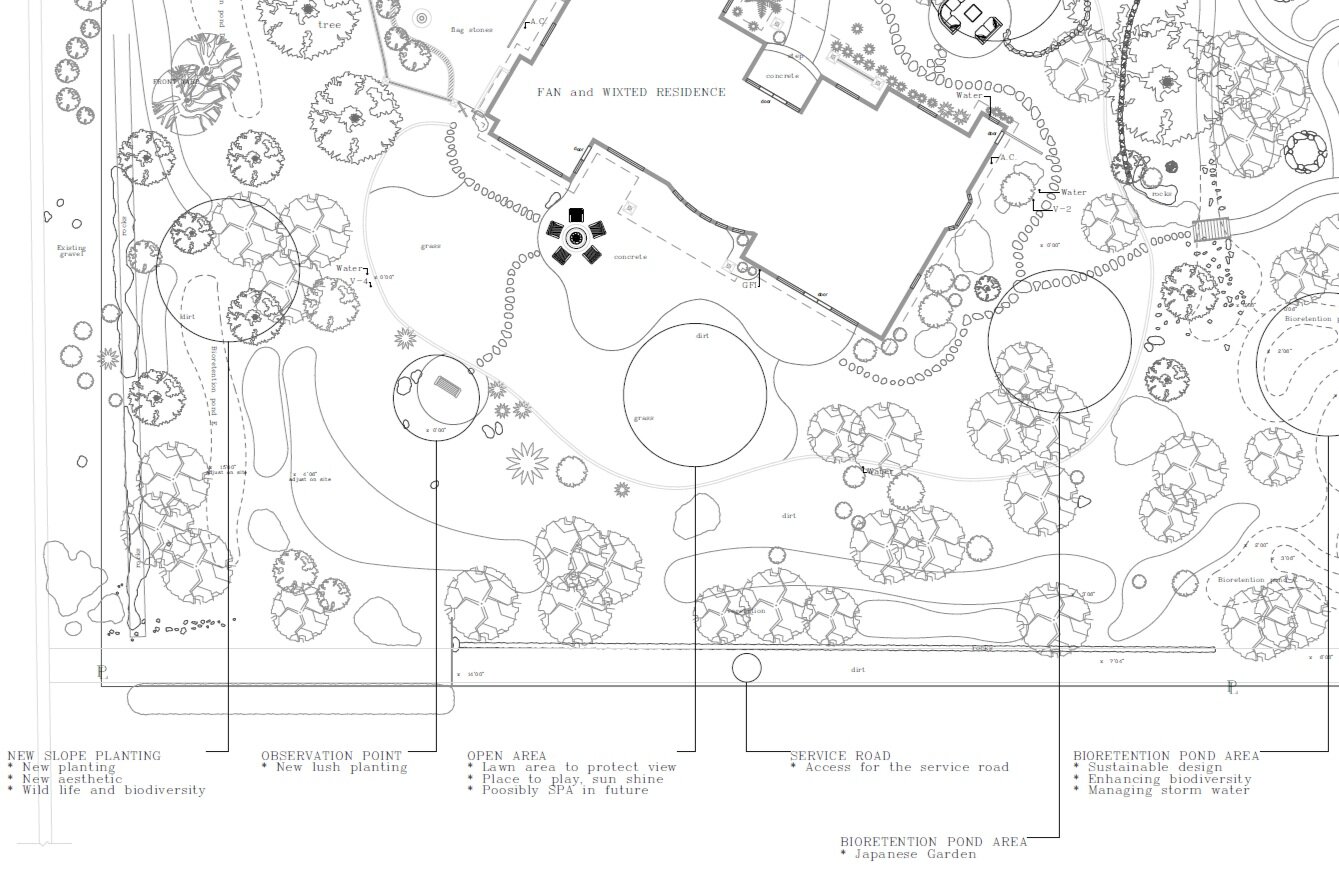
Lounge Lawn Beside the Residence
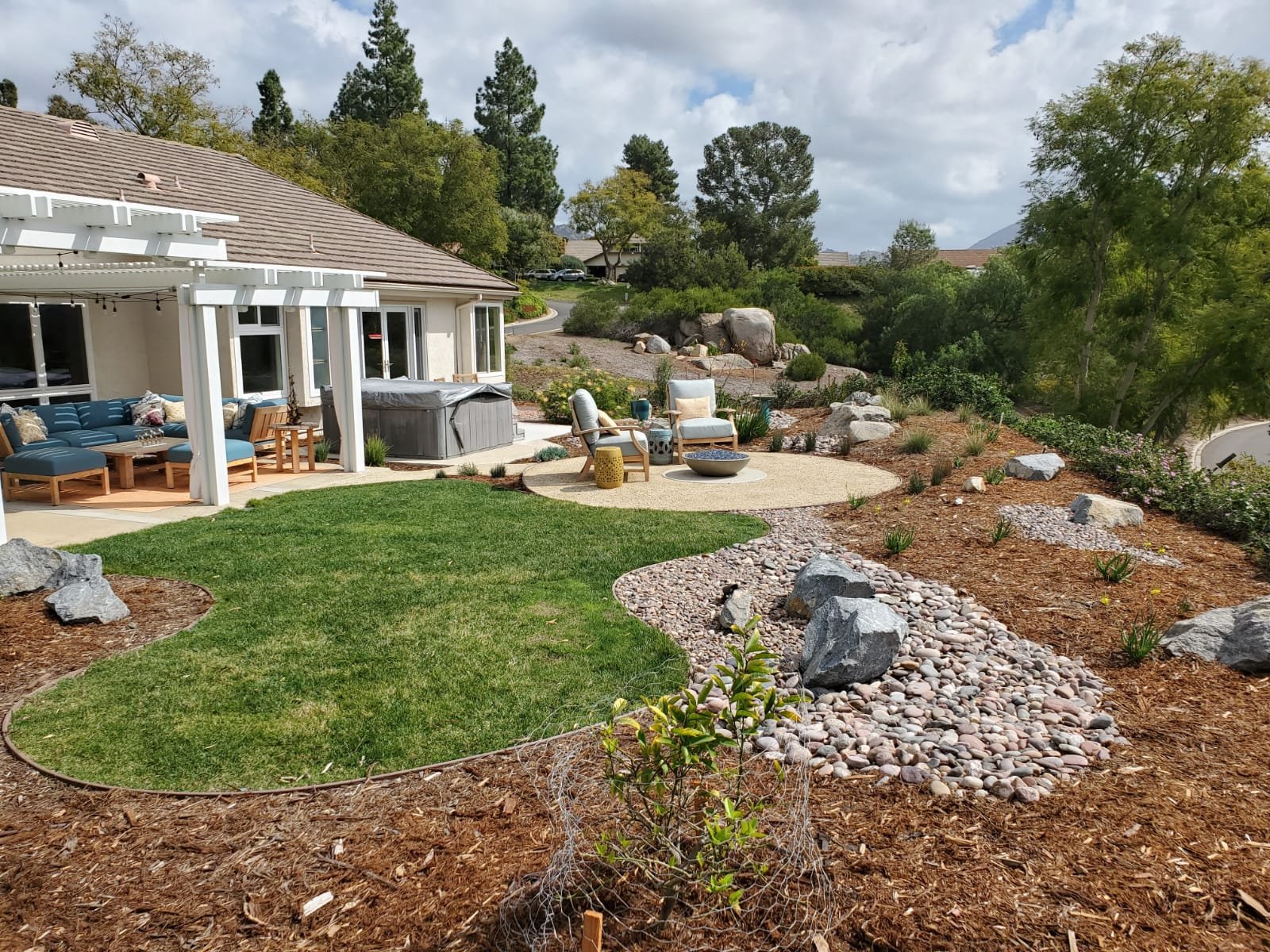
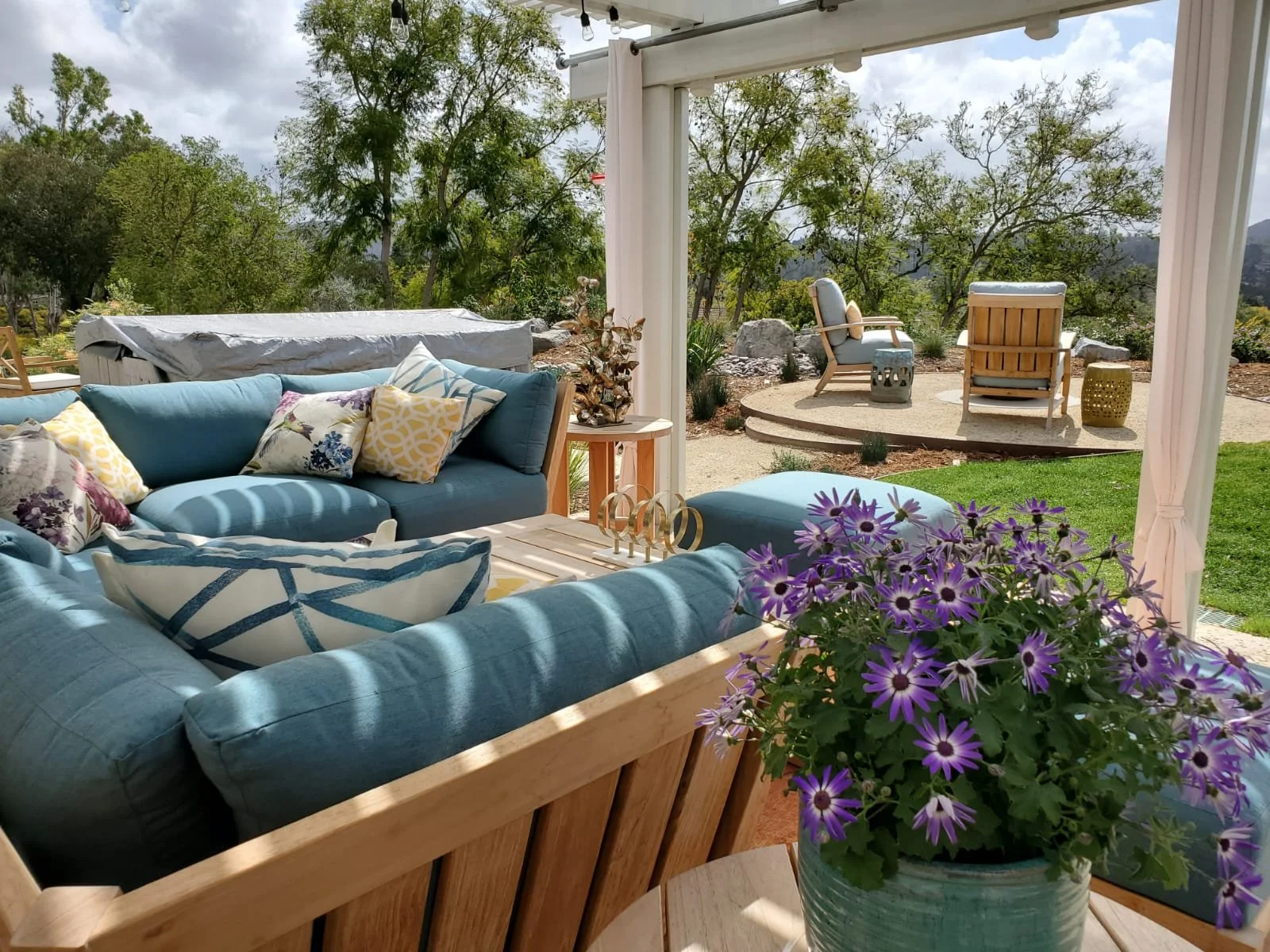
Close to the house, a purposeful lawn creates a clear and comfortable place for lounging, informal gatherings and time with family.
Instead of spreading lawn across the entire property, the design concentrates it where an open, soft surface contributes directly to how the garden is used. This restrained green plane provides visual calm beside the architecture and creates a deliberate contrast with the looser ecological planting beyond.
Pond and Biodiversity Garden
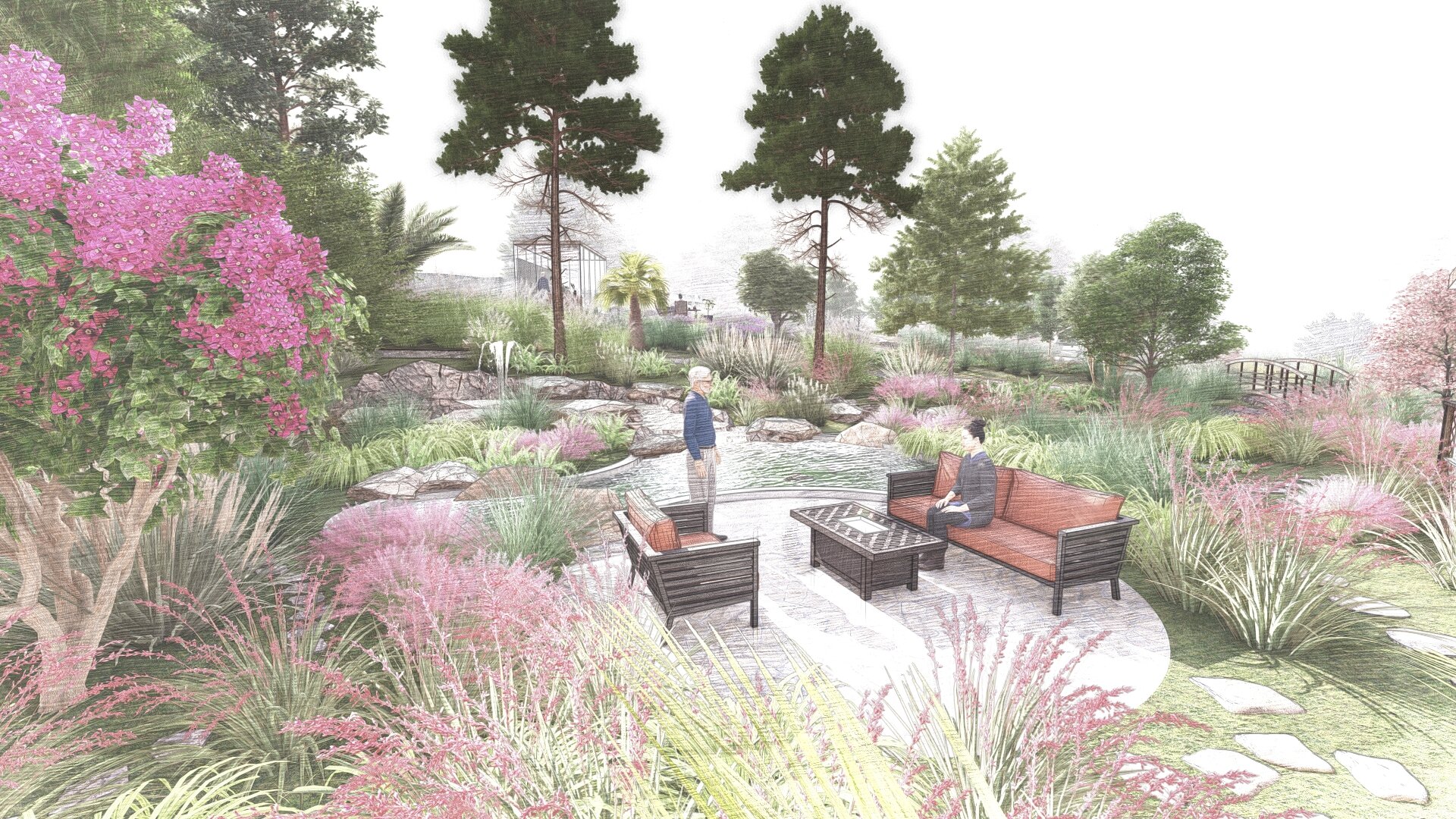
The pond forms one of the landscape’s quietest ecological zones.
Water, rocks, marginal vegetation and layered planting create different conditions for insects, birds and other wildlife. The surrounding landscape is allowed to feel softer and less controlled, giving the pond the character of a small habitat rather than a conventional ornamental feature.
From the walking path, the pond becomes a place to pause and observe reflections, movement and changing light. It brings another rhythm into the estate - slower, cooler and more contemplative.
Succulent Garden
A succulent garden introduces a more sculptural expression of Southern California’s dry climate.
Strong plant silhouettes, mineral surfaces and carefully positioned rocks create a composition that is visually precise without becoming sterile. This area offers a quieter seasonal structure and contrasts with the softer movement of flowering perennials and grasses elsewhere in the garden.
Orchard
The orchard gives the estate another productive and temporal layer.
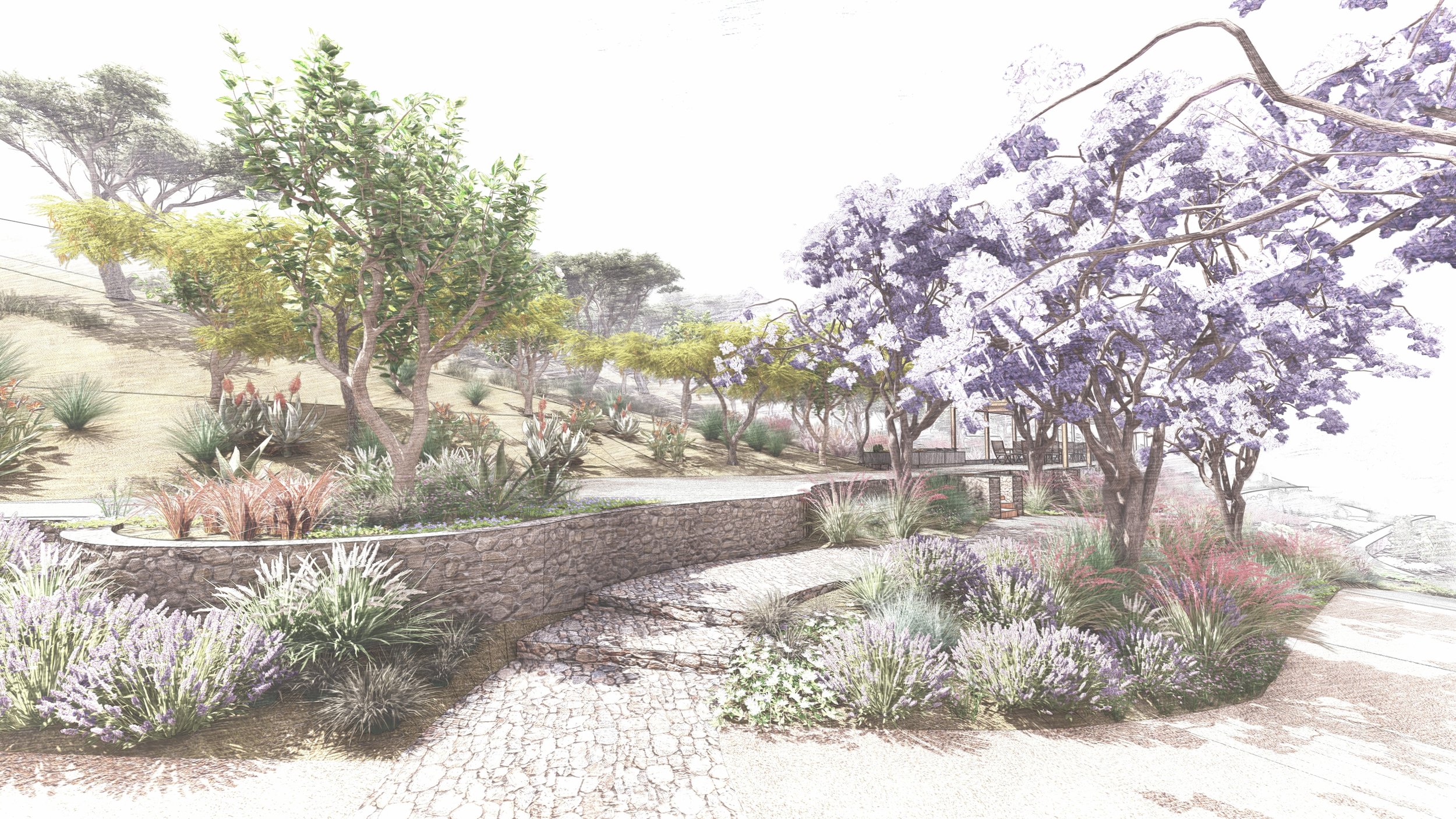
Fruit trees provide blossom, summer shade, harvest and a visible record of the passing seasons. Over time, their canopies will become increasingly important to the spatial structure of the property, creating a garden that becomes richer and more established as it matures.
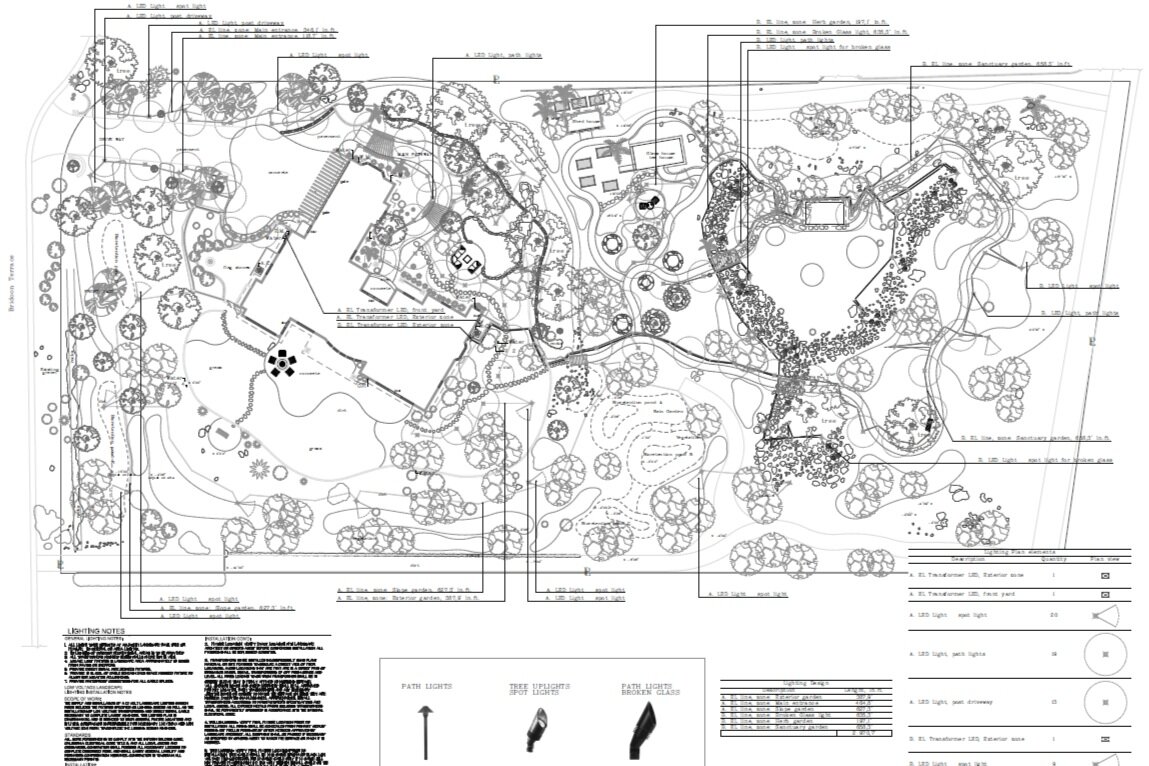
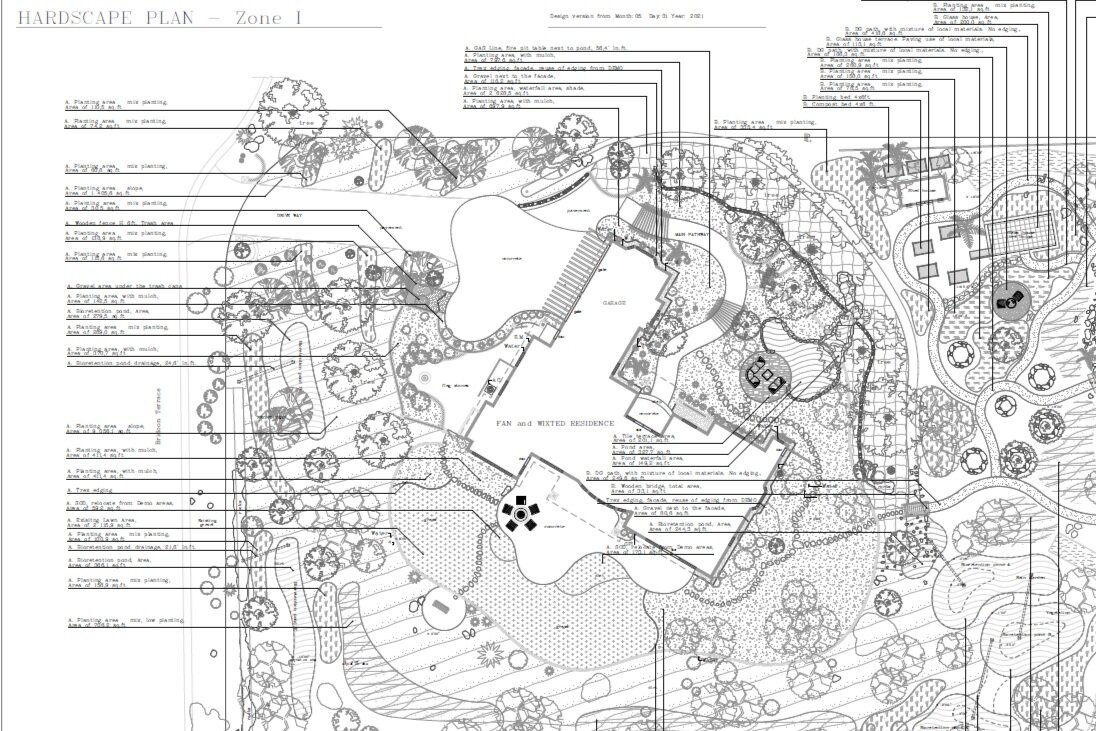
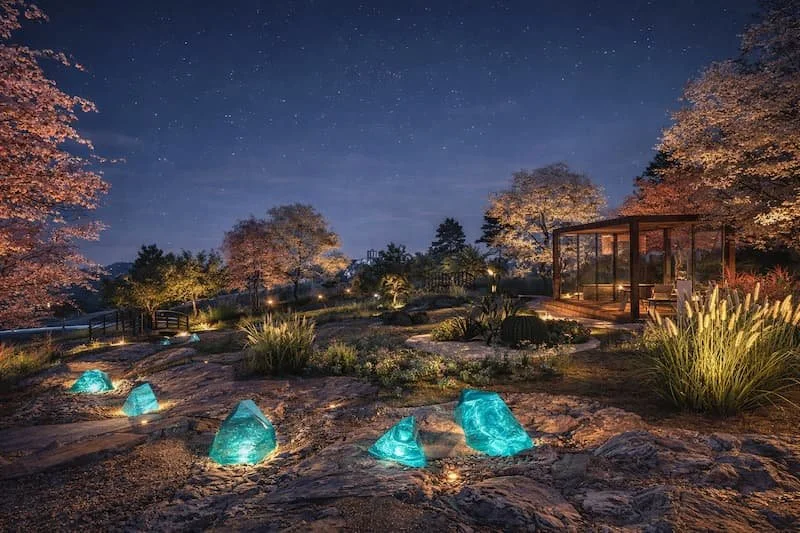
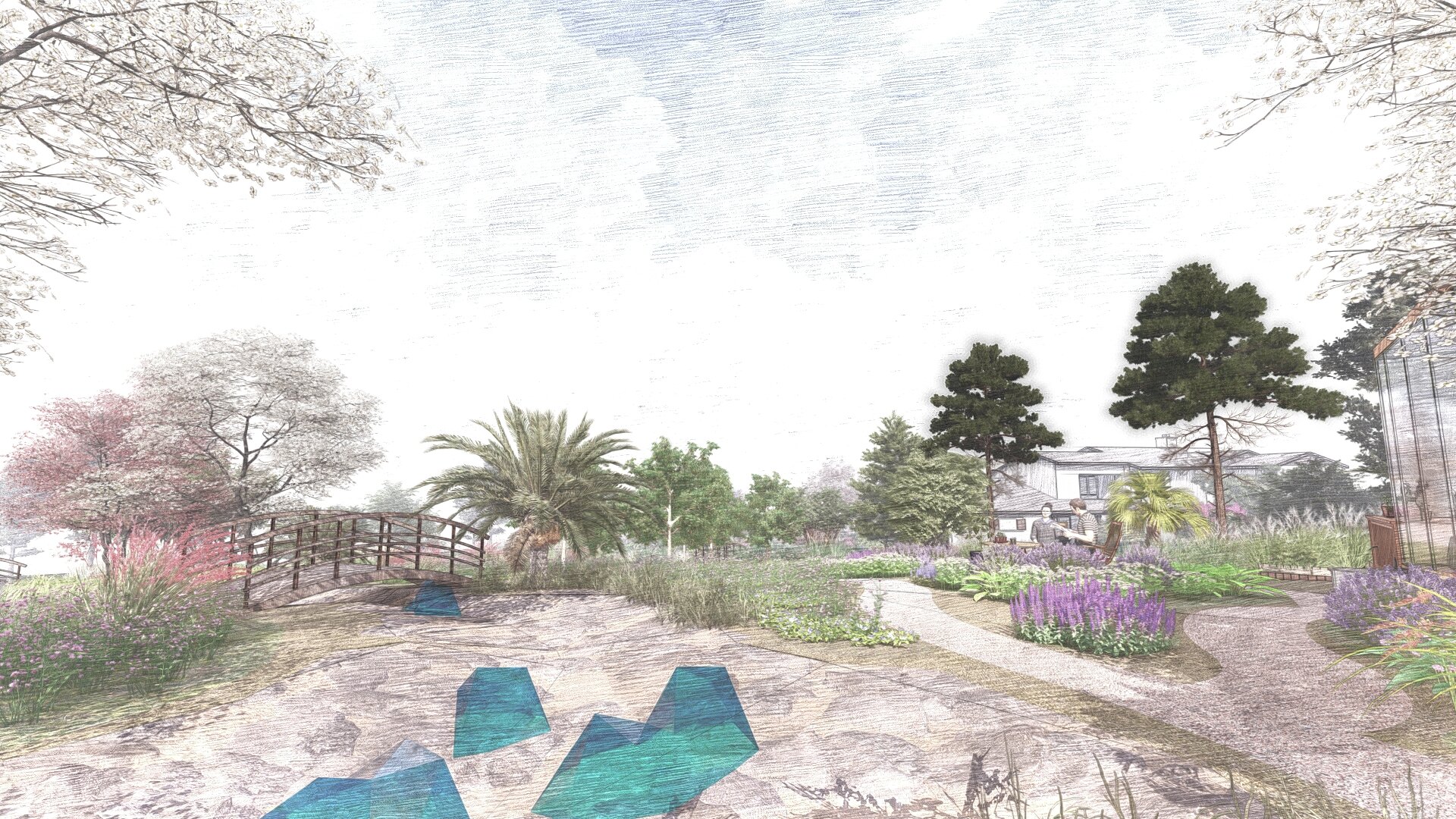
A dry rock river moves through the garden and connects its different zones.
Functionally, it forms part of the site’s stormwater strategy. Visually, it becomes a continuous geological thread - a dry canyon passing through planting, paths and gathering spaces.
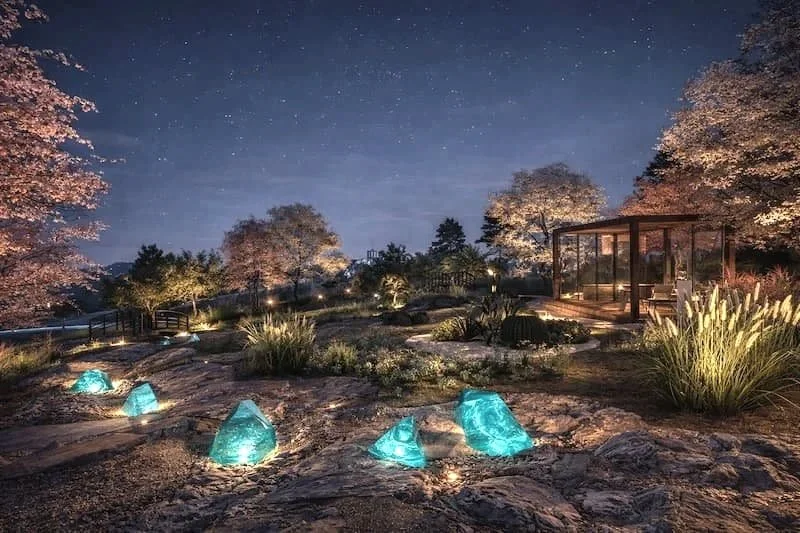
Large pieces of Turkish-blue sculptural glass are positioned among the boulders and illuminated after dark. During the day, the glass catches sunlight and introduces flashes of translucent color between the stone. In the evening, the pieces begin to glow, transforming the dry river into an atmospheric field of blue light.
This artistic intervention elevates the rock river beyond conventional drainage infrastructure. Stone, glass, shadow and reflected light create an almost celestial atmosphere, allowing the garden to remain alive and compelling after sunset.
Holding Stormwater Within the Estate
Stormwater is treated as a resource belonging to the landscape rather than something to be removed as quickly as possible.
Rainwater is directed toward the dry creek system, where its movement can be slowed and guided across the property. From there, water is collected within a larger retention area, reducing rapid discharge toward municipal drains or neighboring land.
This creates more time for water to settle and, where site and soil conditions permit, return gradually to the ground. The system combines practical stormwater management with the visual language of a natural Southern California canyon.
During dry weather, the rock river remains an important spatial and sculptural element. During rain, it becomes active infrastructure. The same landscape therefore performs differently in response to changing environmental conditions.
Planting as an Evolving California Ecology
The planting composition is lush, calm and contemporary, while remaining connected to the ecology of coastal Southern California.
California native and climate-adapted plants are arranged in layered communities rather than isolated decorative specimens. Groundcovers protect and soften the soil. Perennials and flowering shrubs create seasonal nectar and seed. Grasses introduce movement, while trees and larger shrubs provide shade, shelter and long-term structure.
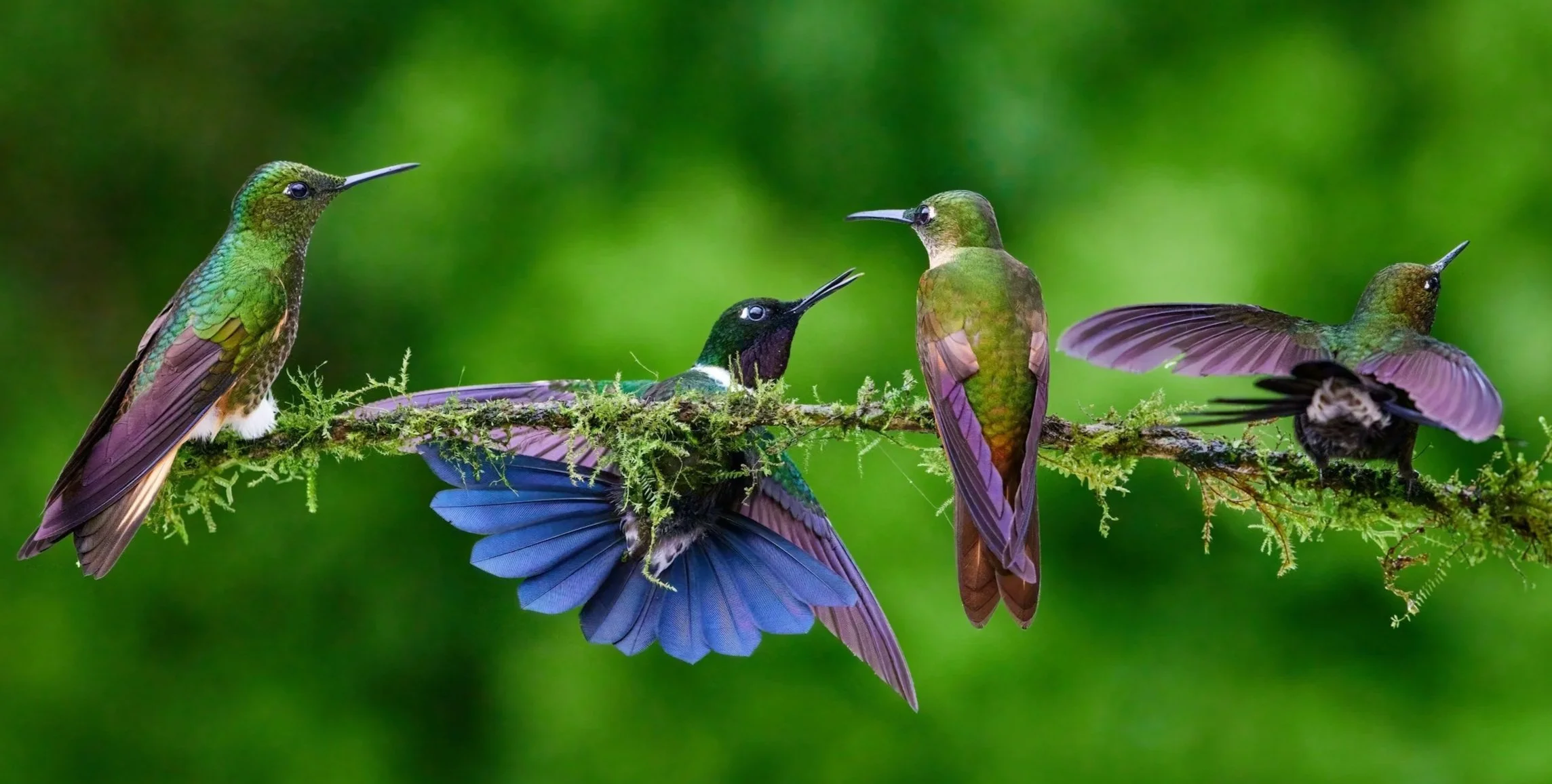
Bloom is distributed across the seasons so the garden can offer changing color and forage over an extended period. Depending on the final plant palette and surrounding habitat, this kind of planting can support monarchs, painted ladies and swallowtails, as well as native bees and other beneficial insects.
Anna’s and Allen’s hummingbirds may visit nectar-rich flowers, while black phoebes, house finches and lesser goldfinches can use the garden for insects, seeds, water and shelter.
At the upper levels of the local food web, the wider Olivenhain habitat mosaic may also be visited by Cooper’s hawks or red-tailed hawks. Their presence cannot be manufactured as a decorative effect. It becomes possible when the lower trophic levels- soil life, plants, insects, seeds, water and smaller birds, are functioning together.
This is the foundation of LASD Studio’s approach to Designing Landscapes as Evolutionary Systems. The objective is not to install a frozen picture, but to establish the conditions from which a richer living system can continue to develop.
Considering an Ecological Estate or Sanctuary Garden?
LASD Studio designs private landscapes that bring architecture, daily life, water, planting and ecological processes into one coherent experience.
A preliminary conversation can help determine how your property could become a more restorative, biodiverse and enduring landscape.

Sanctuary of YUM: Exotic Orchards & Wellness Programs. Bonsall, California.
The Sanctuary of YUM in Bonsall, San Diego, is a landscape of exotic orchards, healing gardens, and wellness programs. Designed as a retreat, it integrates ecological intelligence with community, art, and regenerative farming practices.
A private estate reimagined as a sanctuary of wellness, exotic orchards, and ritual spaces.
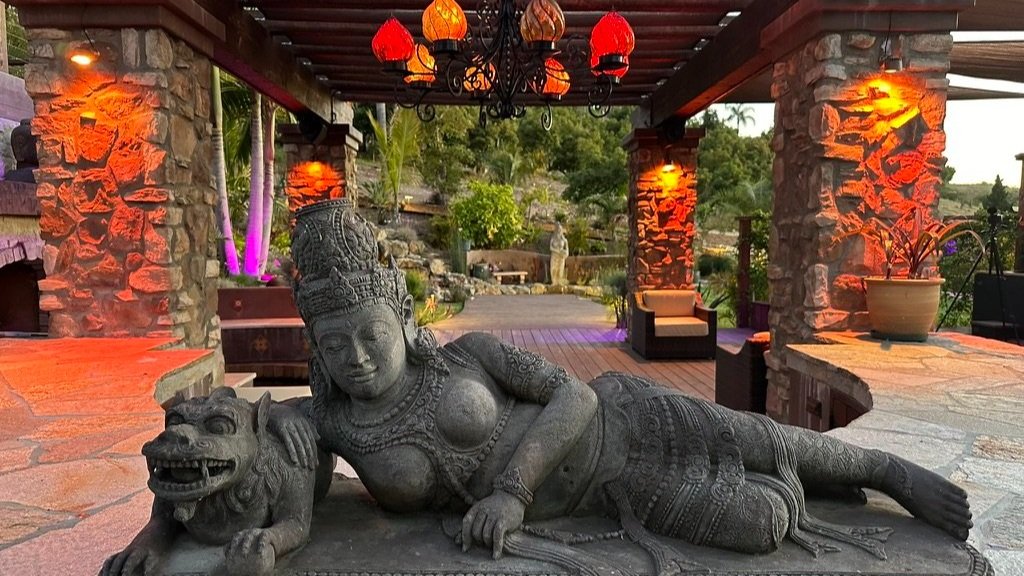
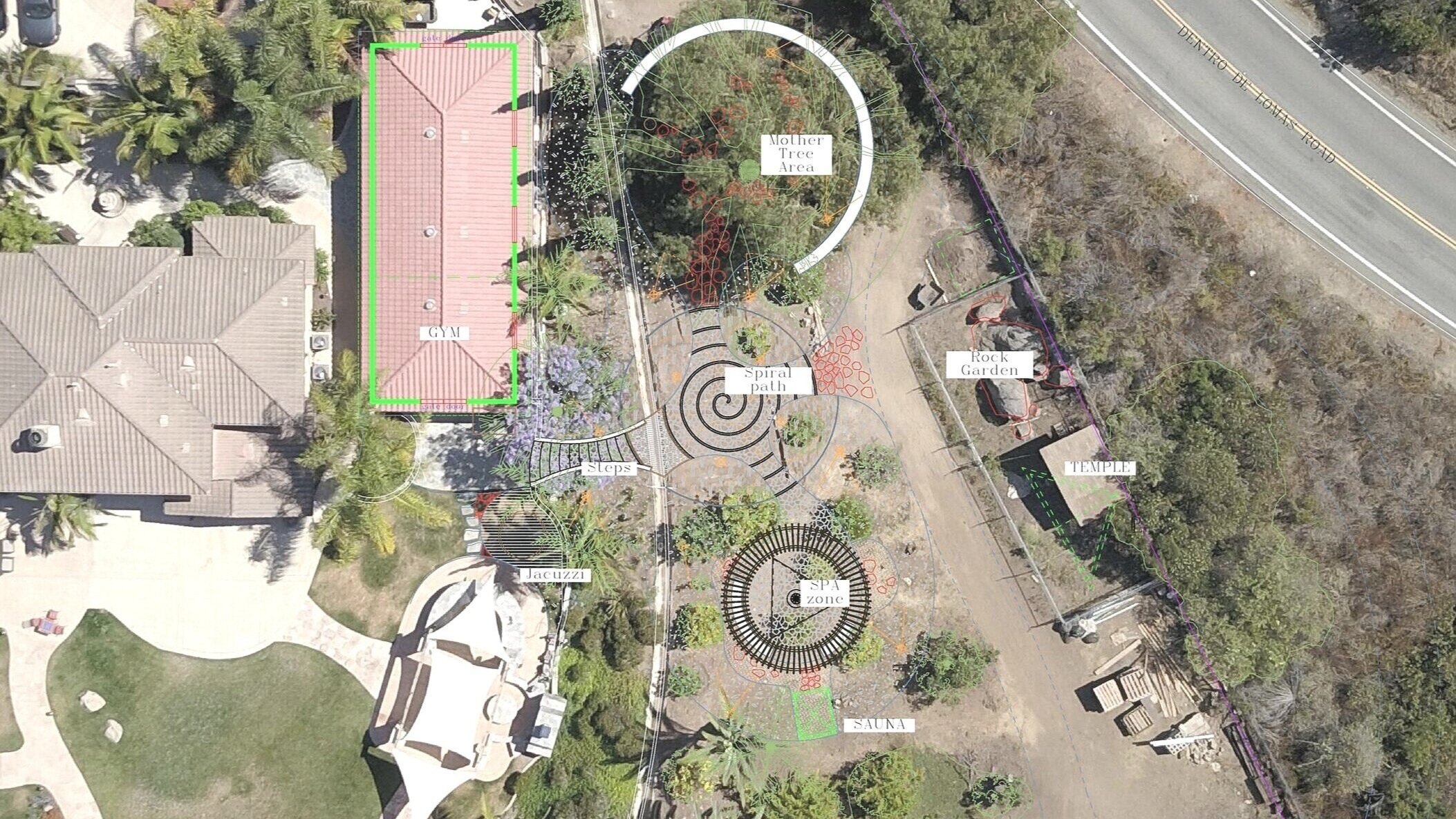
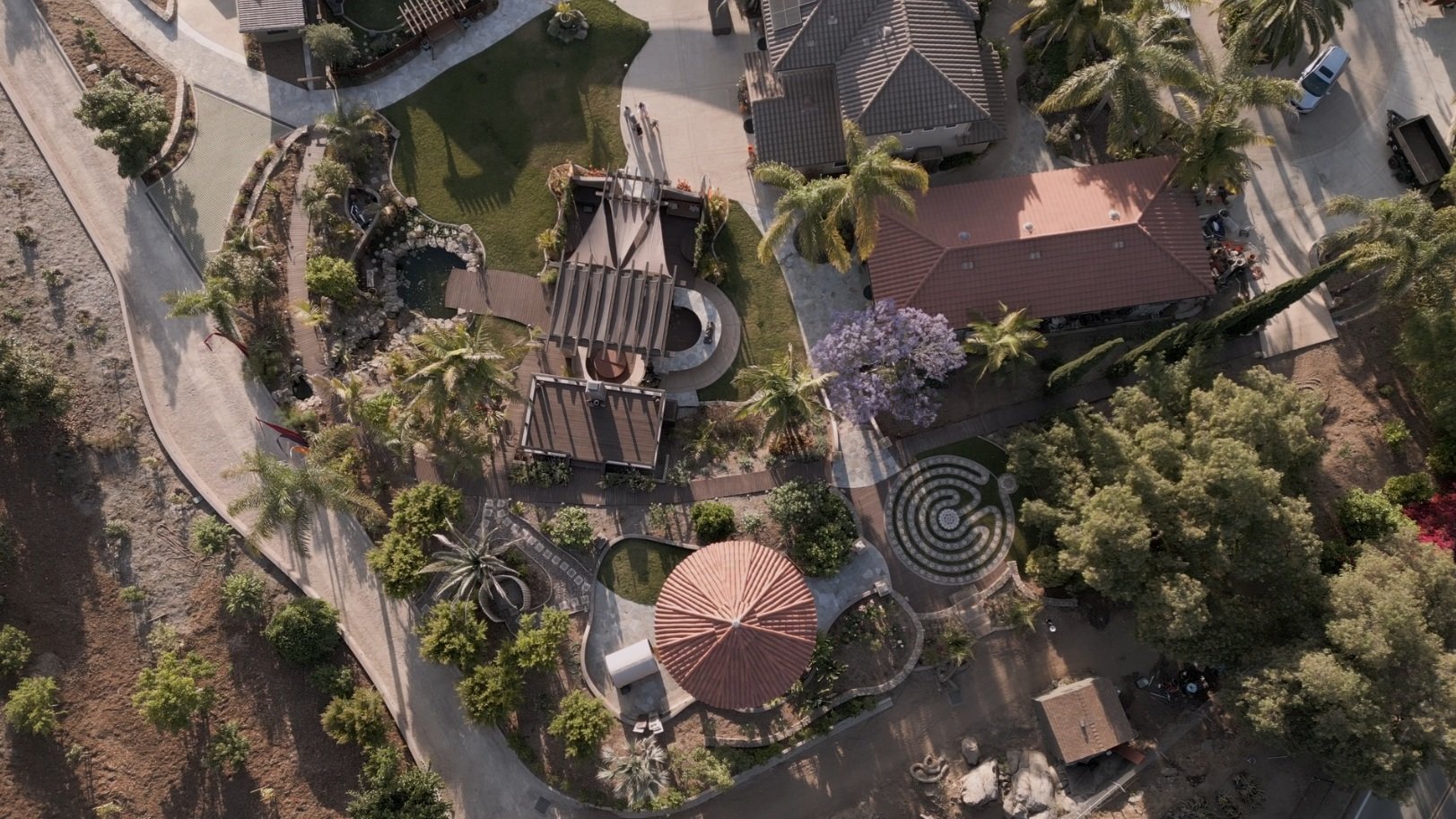
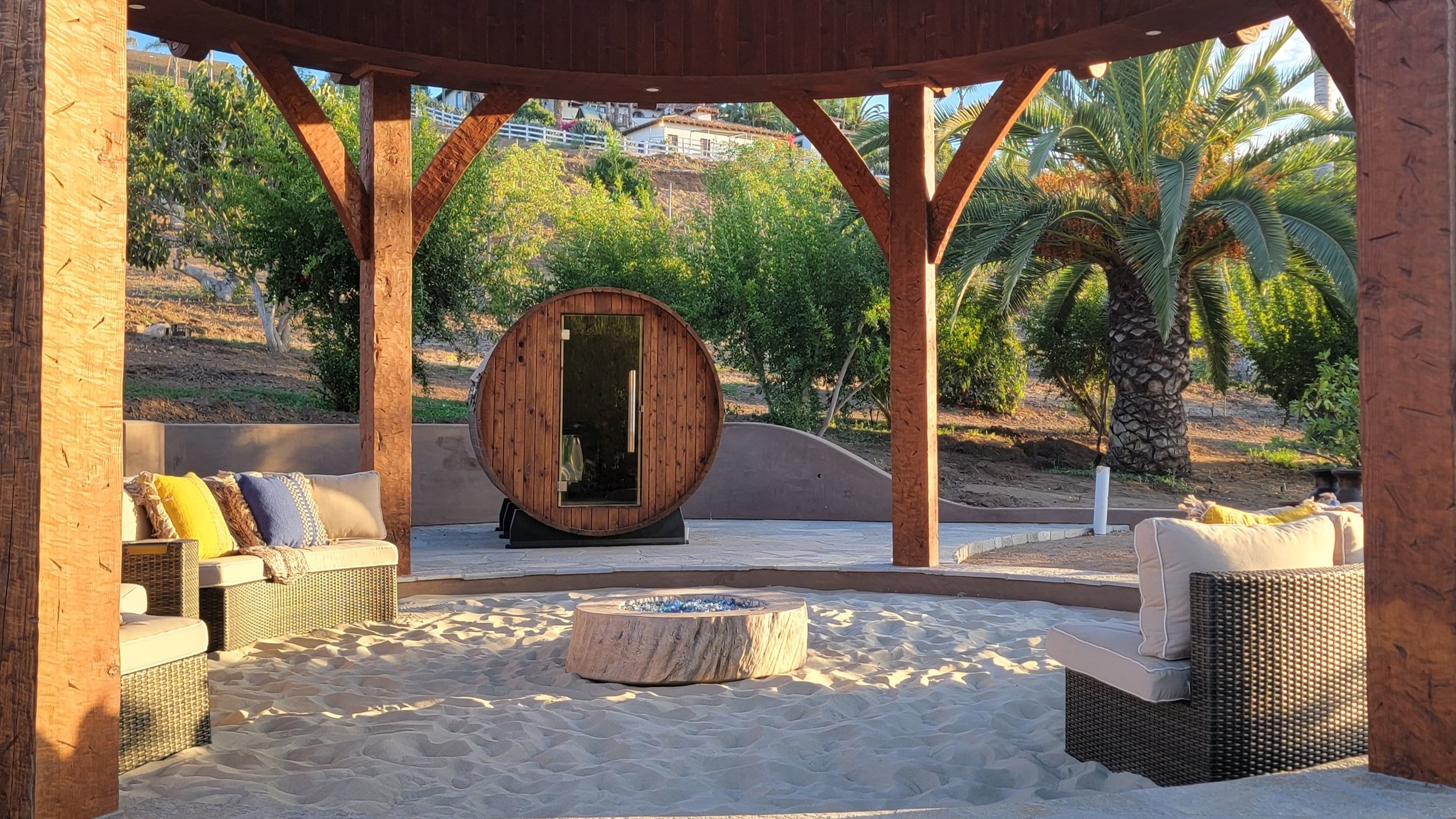
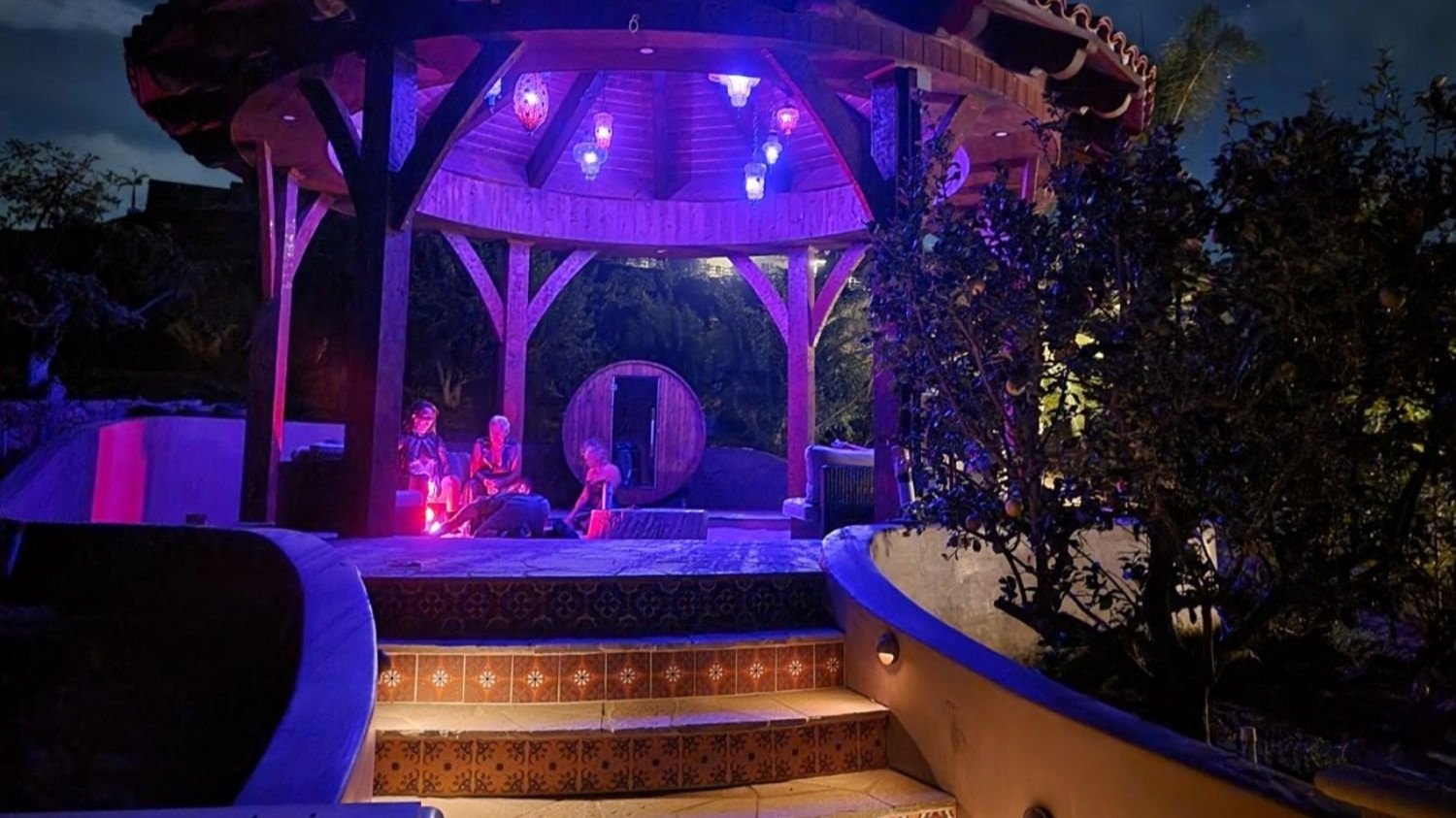
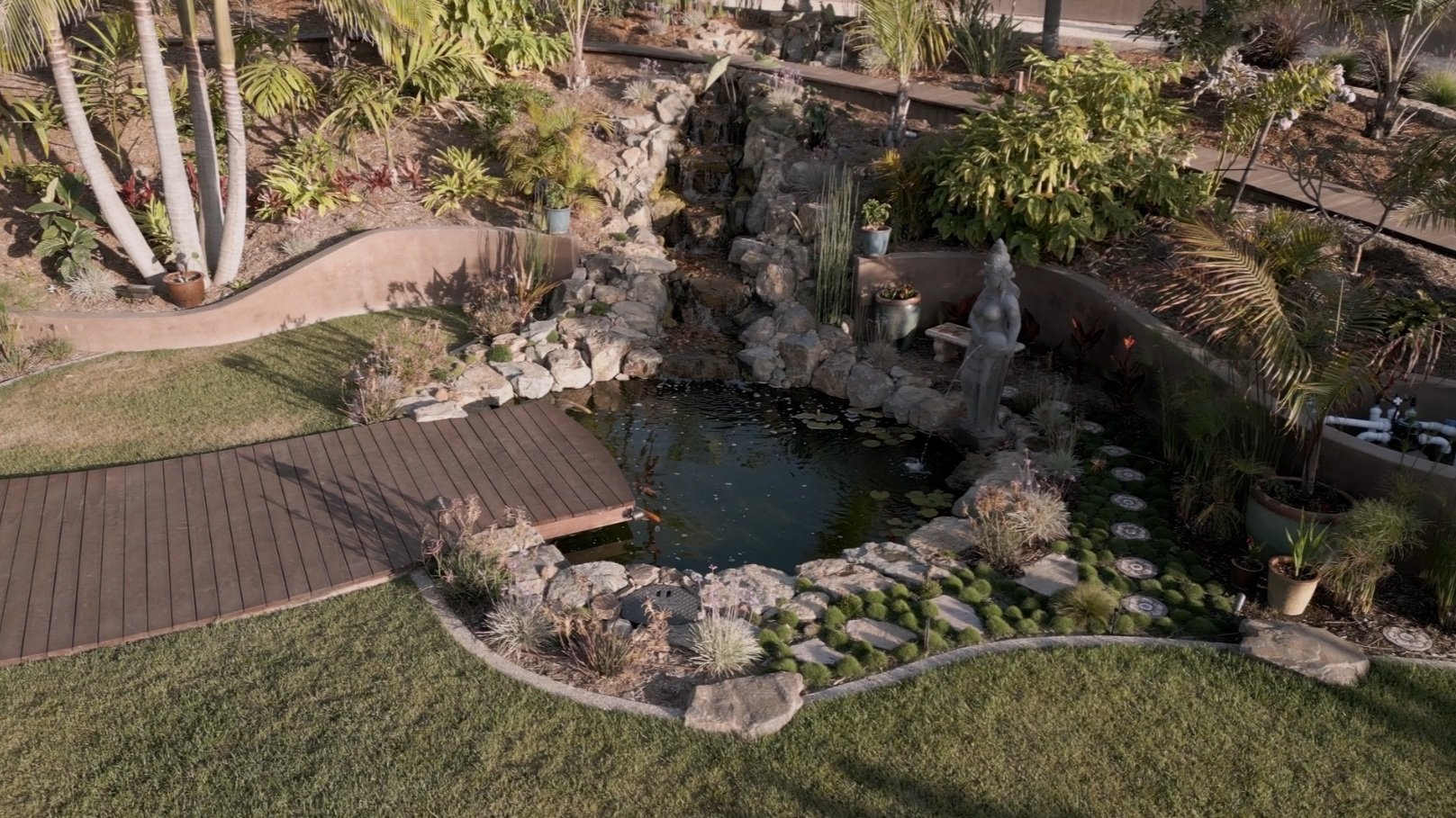
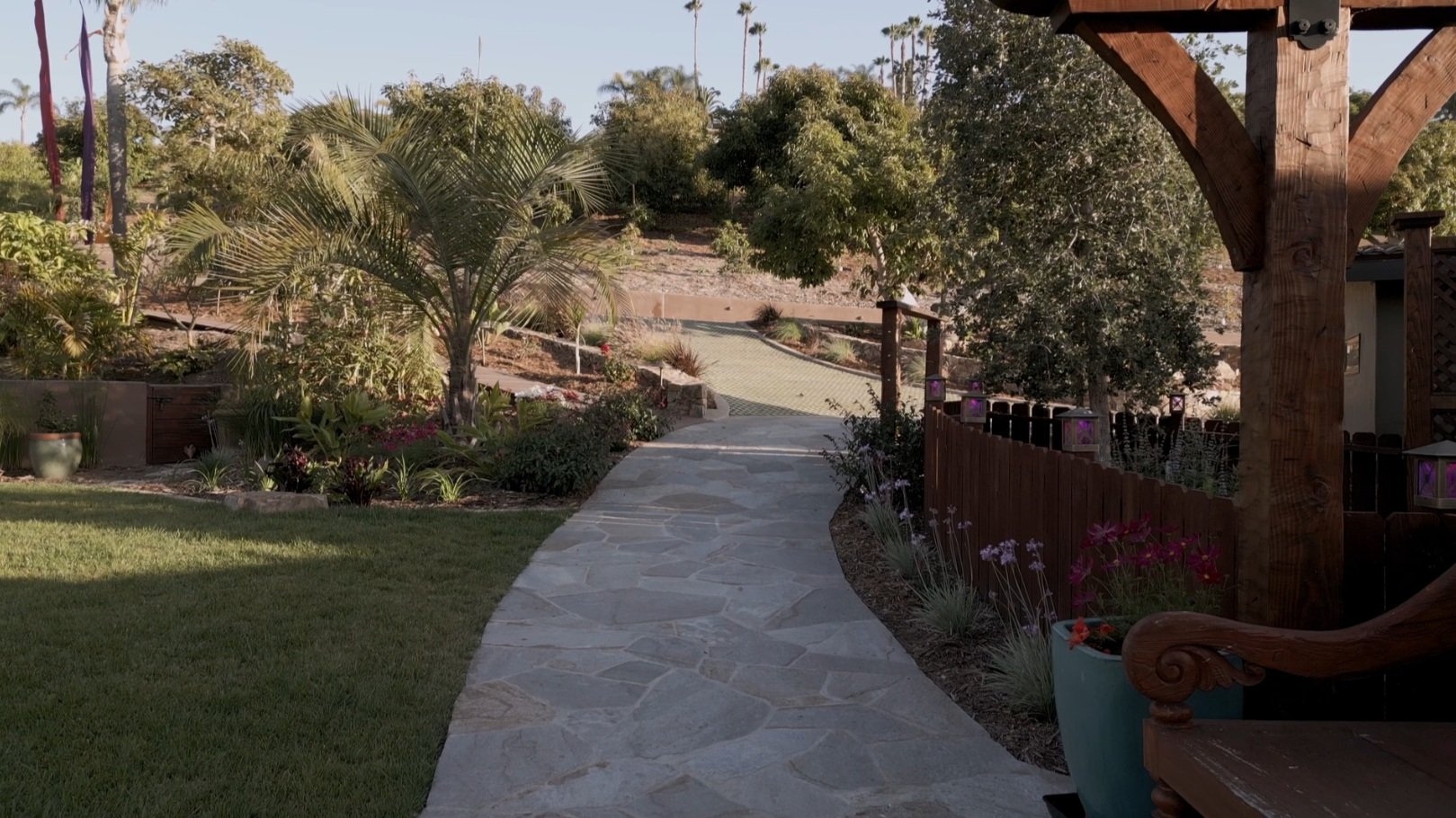
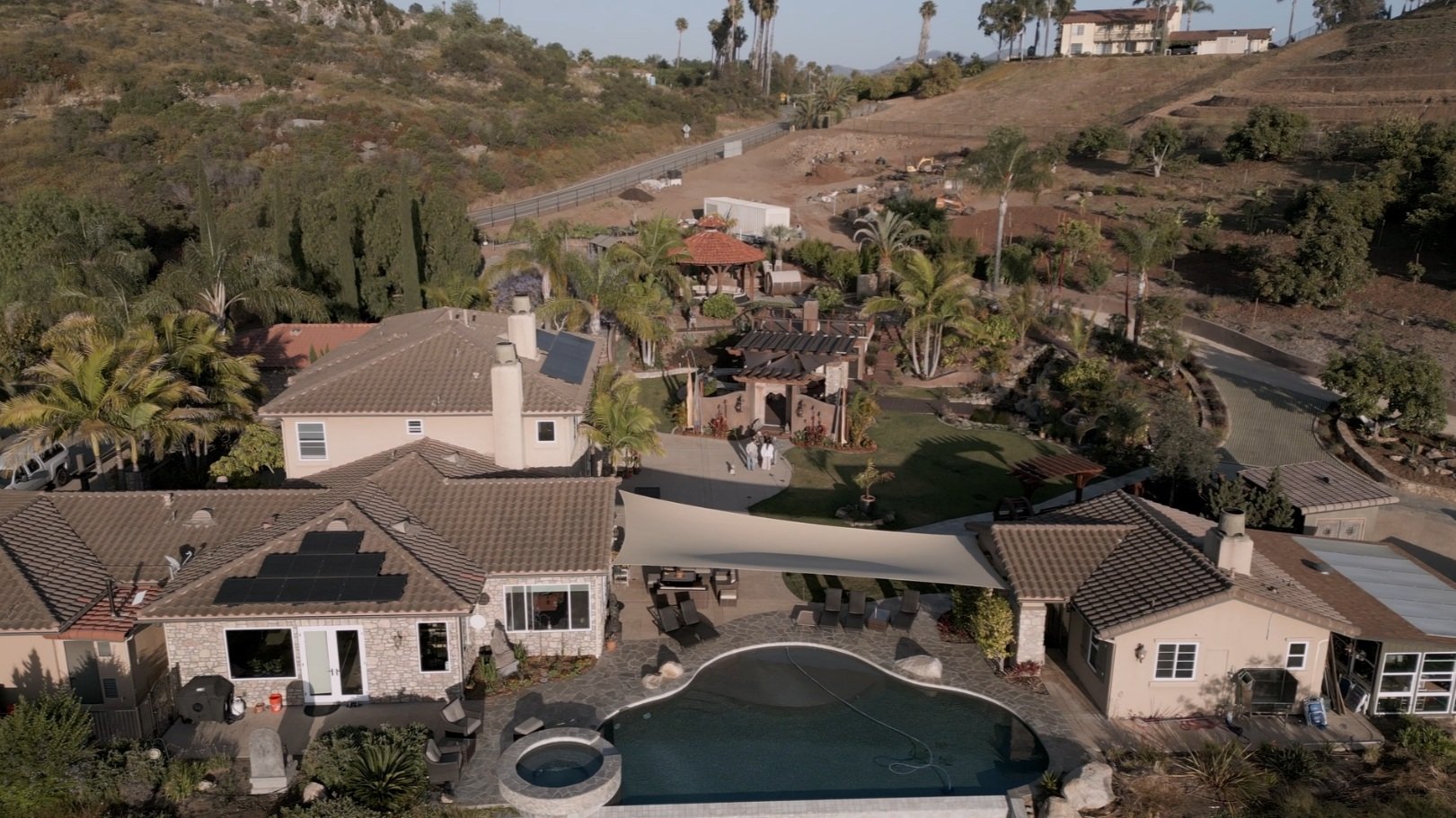
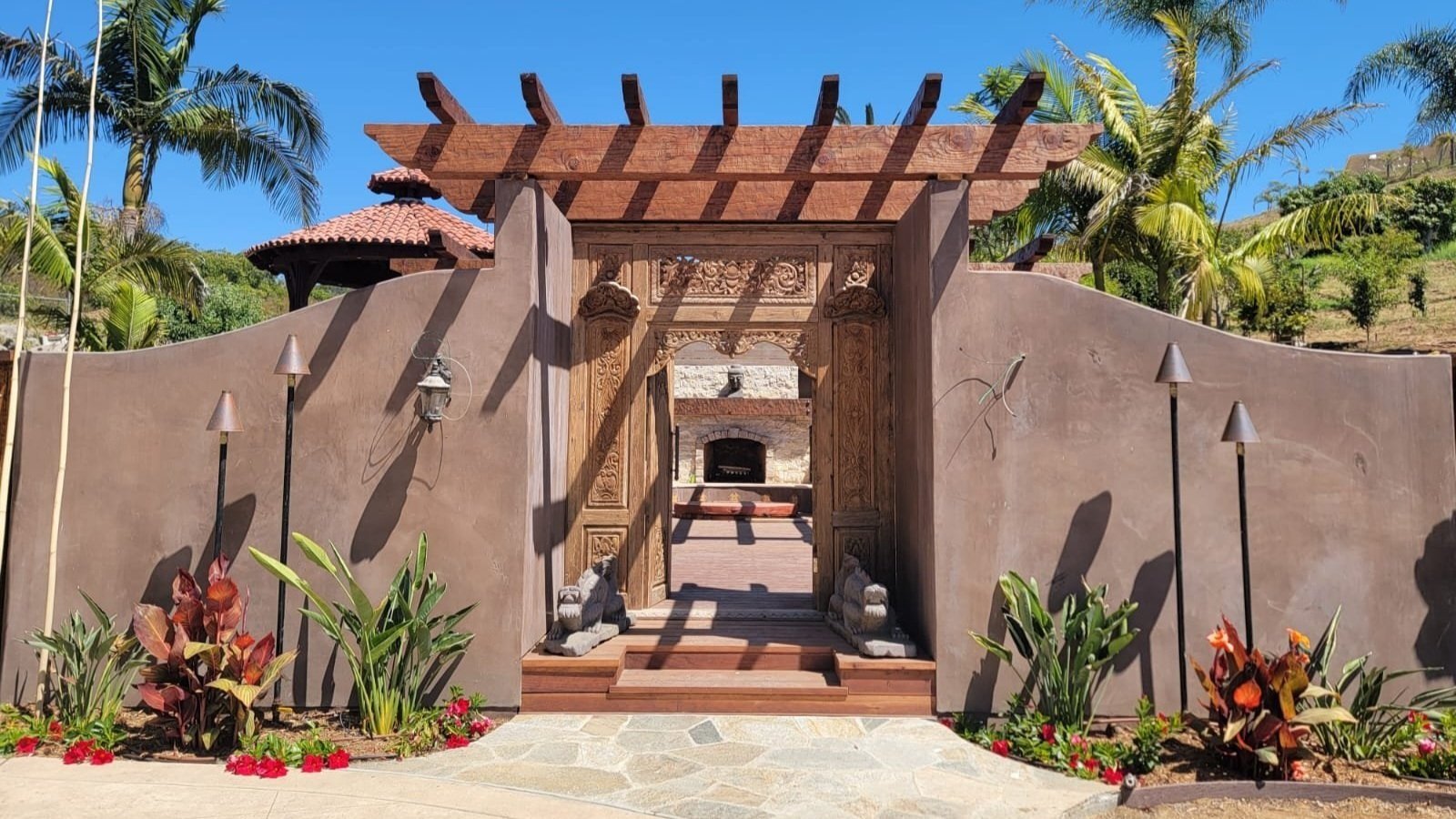
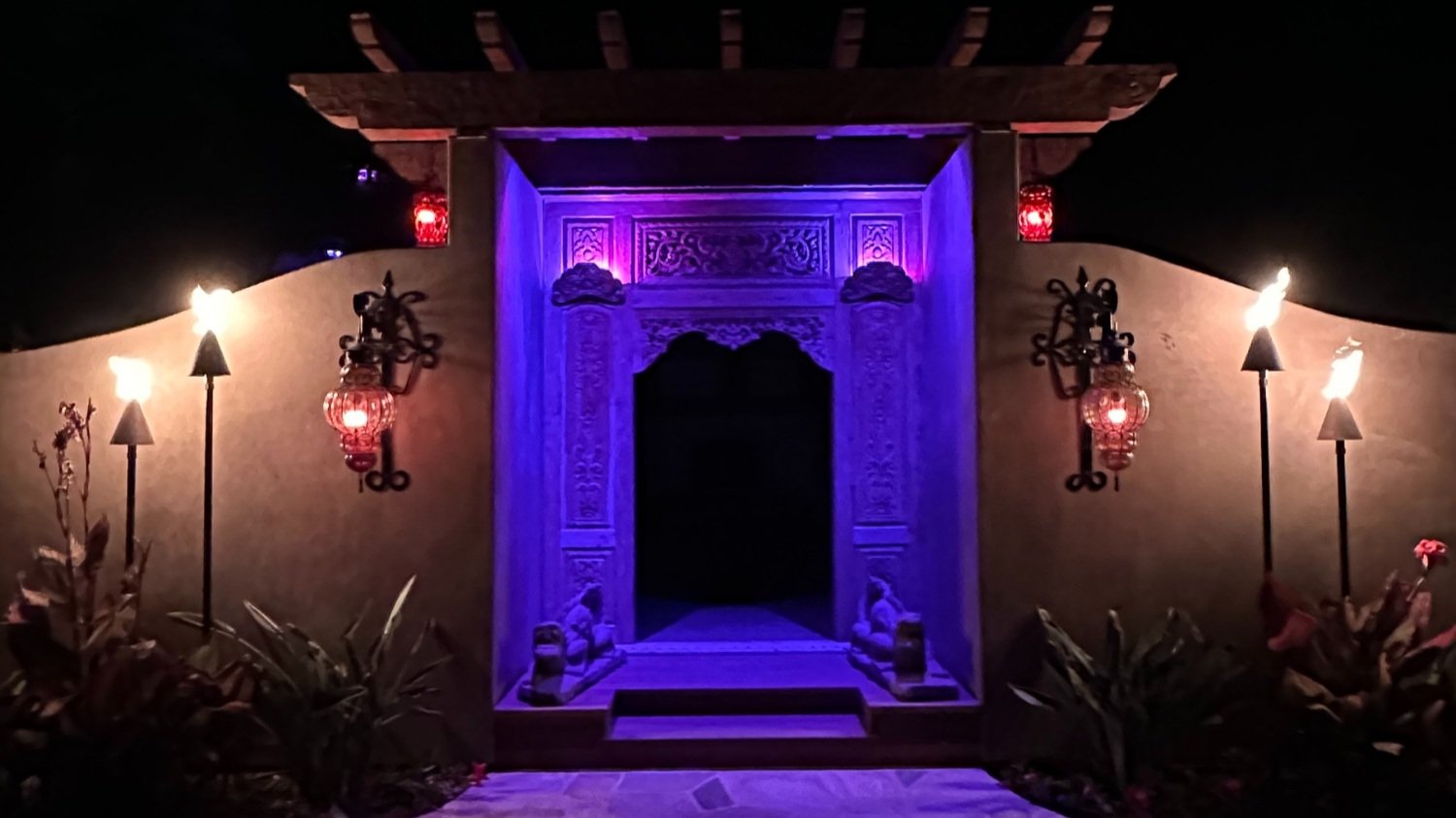
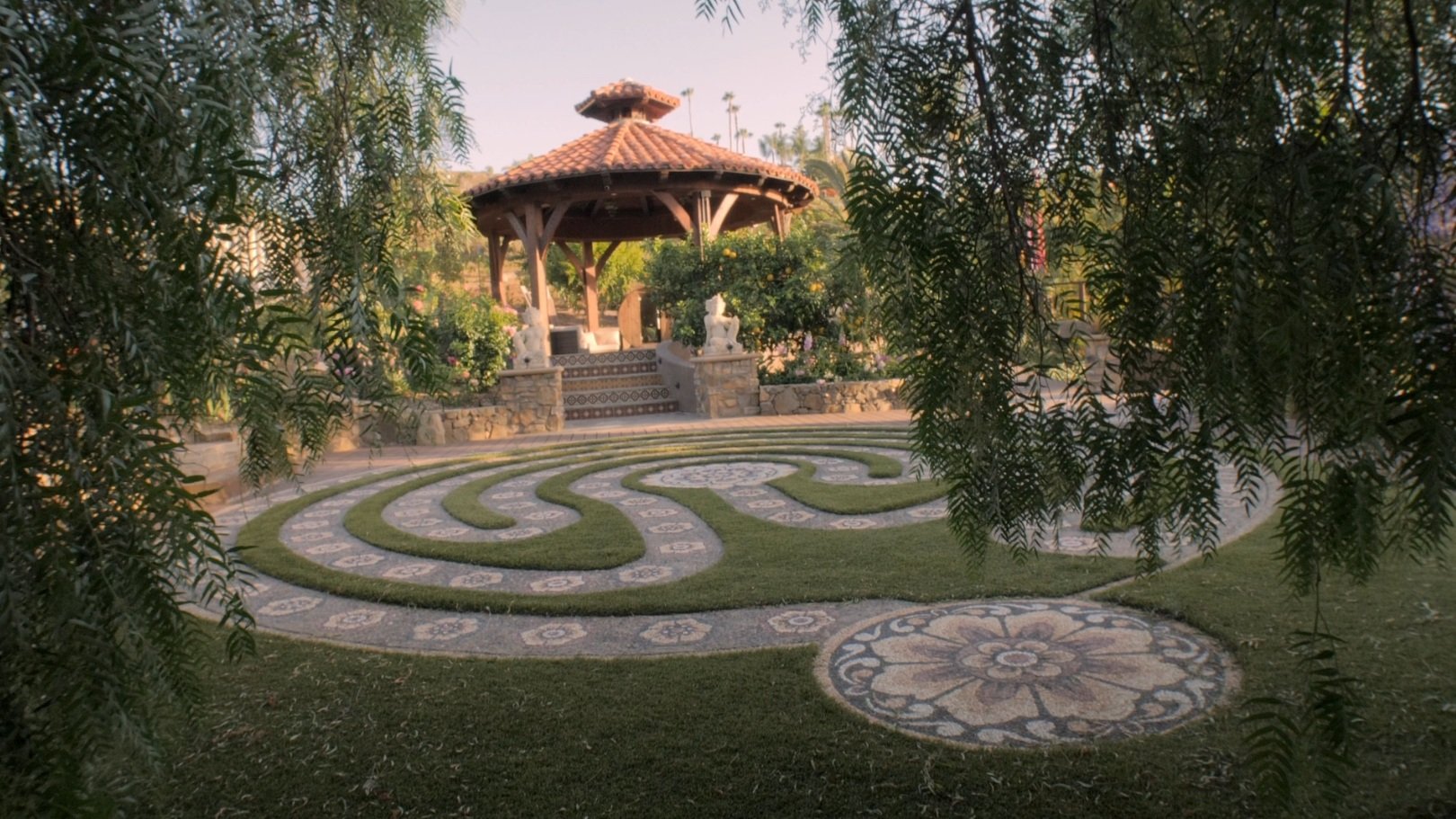
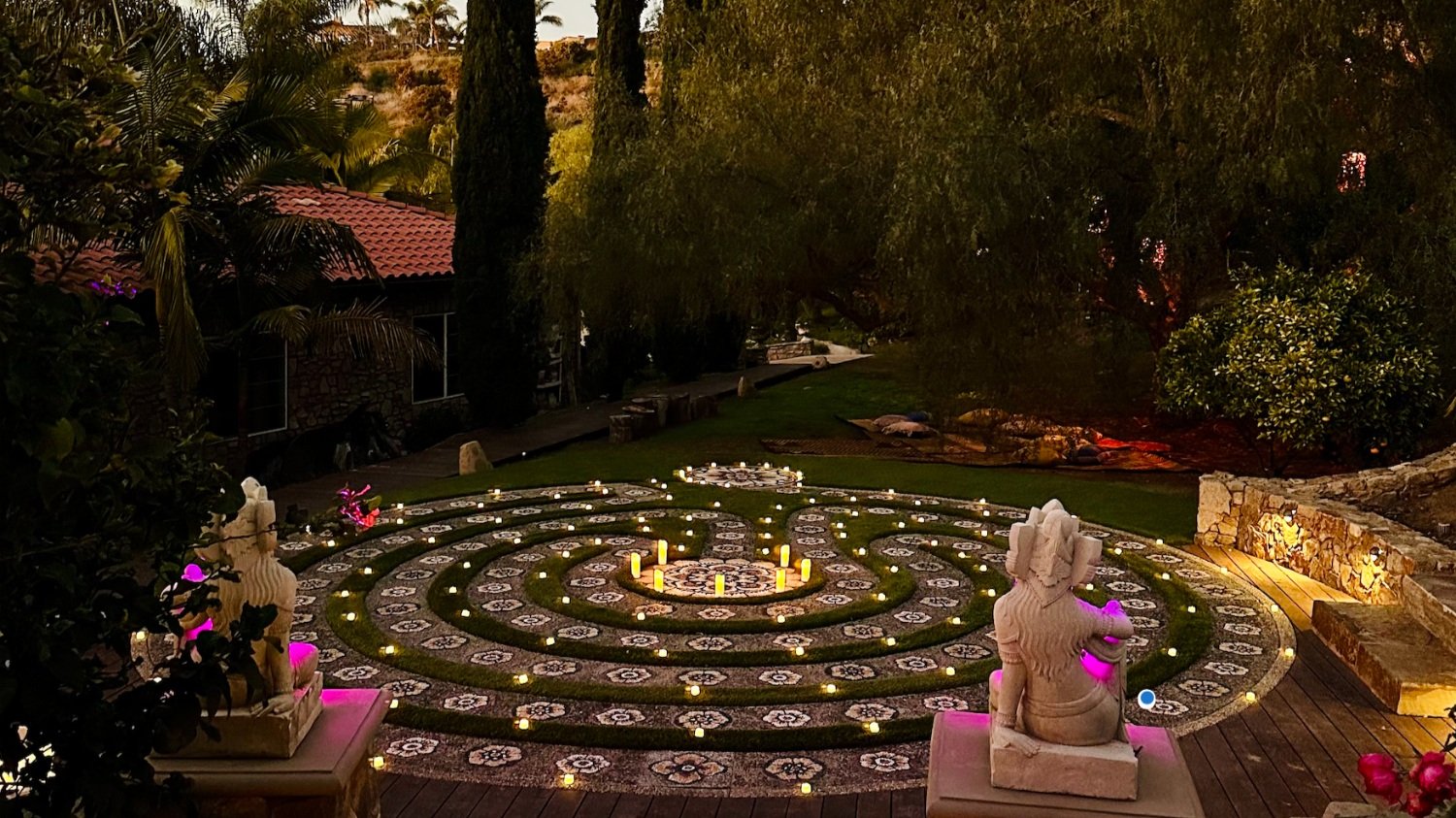
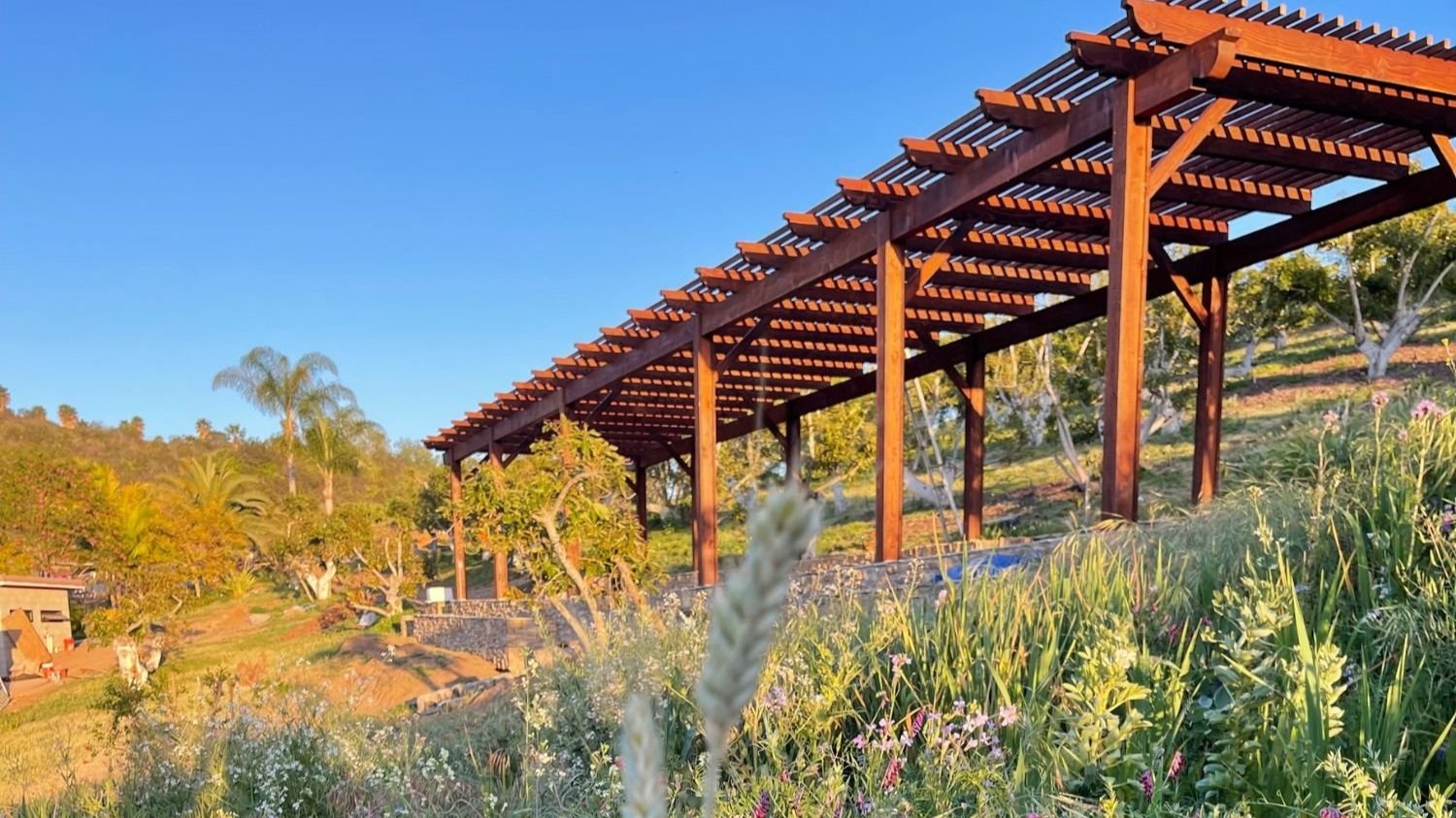
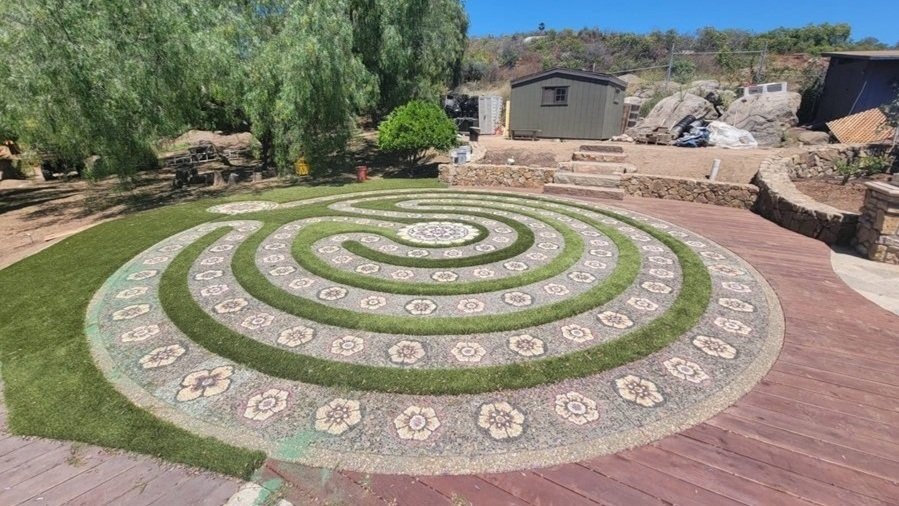
The Sanctuary of YUM in Bonsall, California is a landscape designed to nourish both body and spirit. Blending exotic orchards with native California systems, the garden creates a place where food, art, and wellness come together. At its heart lies a ritual labyrinth, a space for walking meditation and reflection. Every element is designed as part of an evolutionary intelligent system, supporting ecological cycles while providing spaces for contemplation, community, and healing.
A short film of the Sanctuary of YUM in Bonsall, a four-acre retreat blending exotic orchards, a meditation labyrinth, wellness spaces, and farm-to-table gardens. Designed by LASD Studio, it is a living sanctuary for restoration, community, and ecological beauty.
Concept Vision: Landscape as Healing Sanctuary
The Sanctuary of YUM was imagined as more than a garden - it is a living sanctuary where every element contributes to restoration, wellness, and beauty. The design draws inspiration from both ancient ritual landscapes and contemporary ecological science, creating a place where visitors feel grounded in nature while connected to something larger than themselves. Pathways, water, and planting flow as one continuous system, offering an experience of balance, serenity, and renewal.
Exotic Orchards & Edible Gardens
At the heart of the design lies an orchard of exotic and Mediterranean fruit trees, weaving productivity with artistry. Citrus, figs, olives, pomegranates, and subtropical species form a lush edible landscape, supporting both culinary delight and ecological resilience. Interplanted herbs and pollinator-friendly groundcovers attract bees and butterflies, ensuring that the garden is as alive with biodiversity as it is with flavor. The orchard becomes a daily ritual of nourishment - a reminder of the cycles of growth and harvest.
Ritual Labyrinth: Path of Reflection
The labyrinth is conceived as a sacred journey - a place for meditation, mindfulness, and personal reflection. Inspired by traditional forms yet adapted for this site, its spiraling path encourages slow movement and inner focus. Surrounded by aromatic planting and shaded by native trees, the labyrinth serves as the spiritual core of the sanctuary, a space where landscape, body, and spirit come into alignment.
Outdoor Living & Wellness Programs
The estate is structured around a series of outdoor rooms designed for wellness, family life, and celebration. Shaded terraces, yoga decks, water features, and contemplative seating areas invite both activity and stillness. Every gathering space is framed by views of orchards and hills, reinforcing the connection between healthy living and ecological abundance. The garden becomes not only a place to inhabit, but a lifestyle rooted in nature’s rhythms.
Ecological Foundations: Water, Soil, and Biodiversity
Beneath its beauty, the Sanctuary of YUM is built on strong ecological foundations. Advanced irrigation systems optimize water use, while soil restoration techniques improve fertility and resilience. Native California species are interwoven with exotic plantings to support biodiversity and ensure long-term sustainability. By aligning horticultural practices with ecological intelligence, the landscape thrives as a self-sustaining system that evolves gracefully over time.
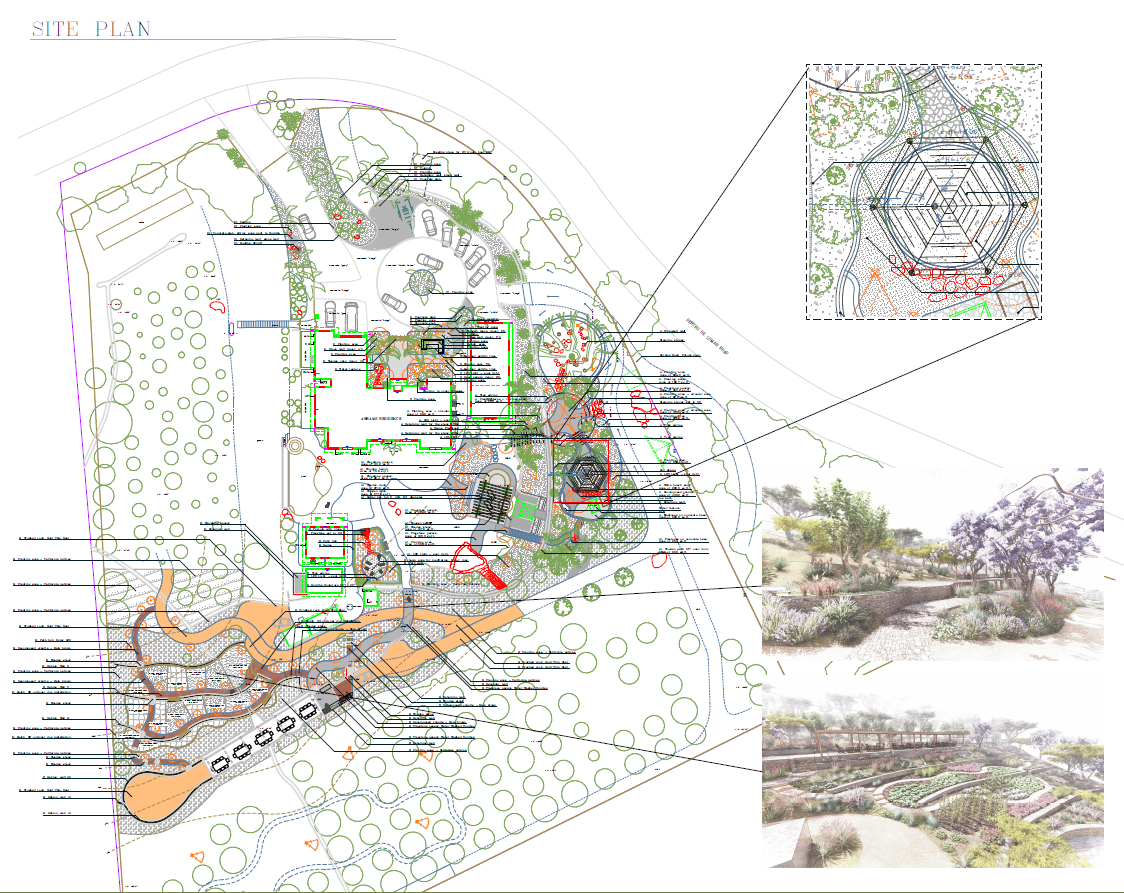
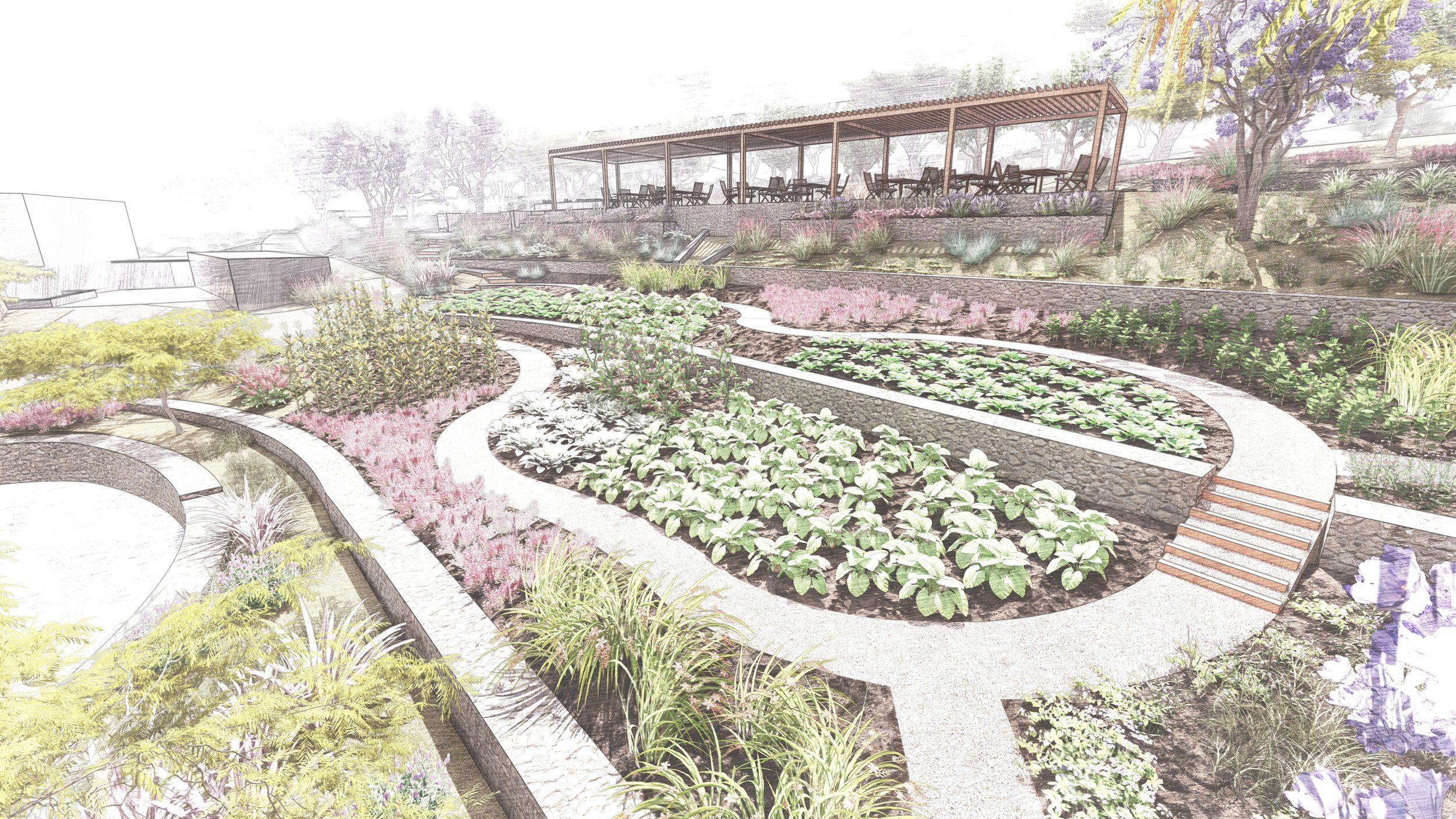


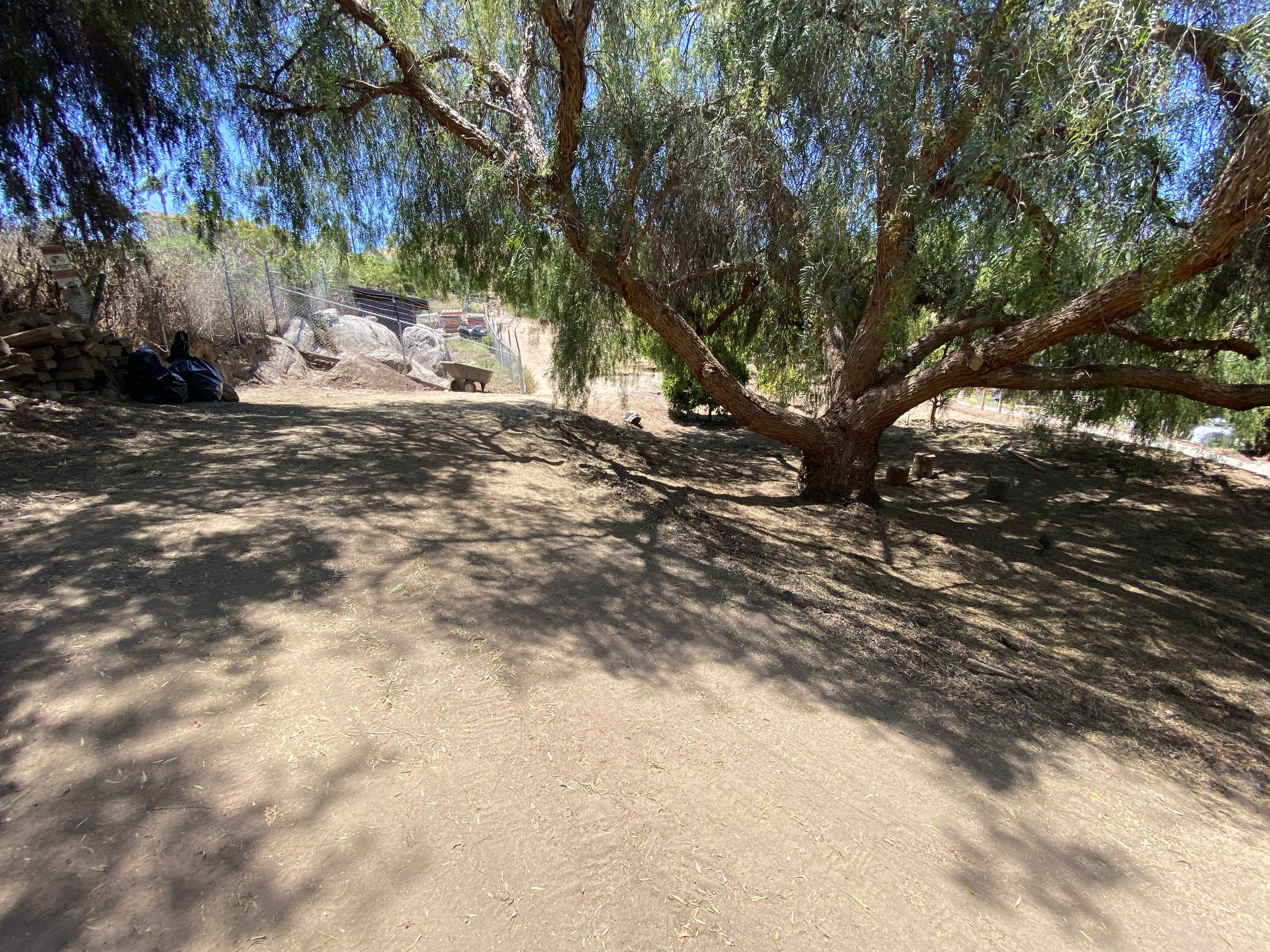
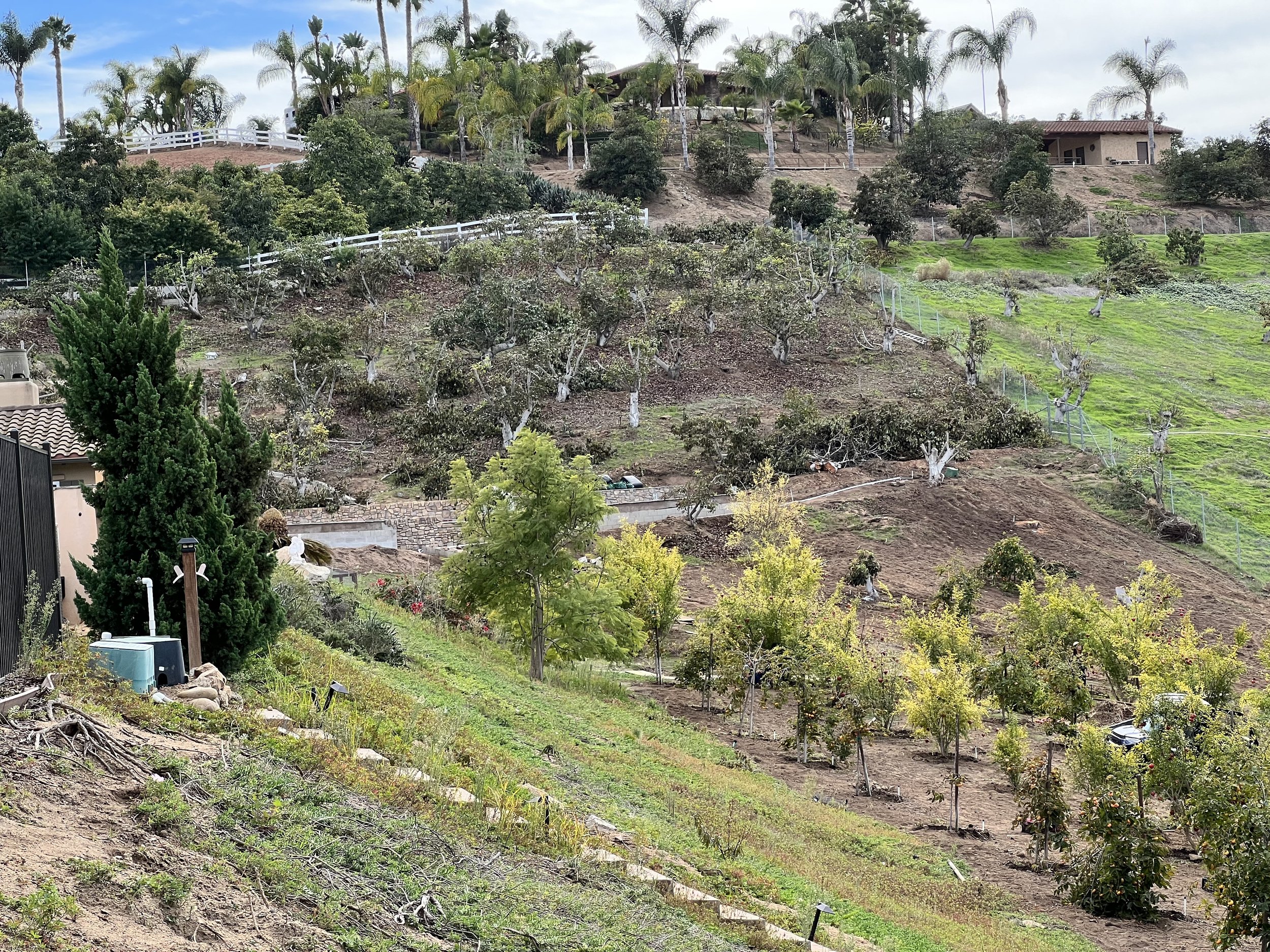
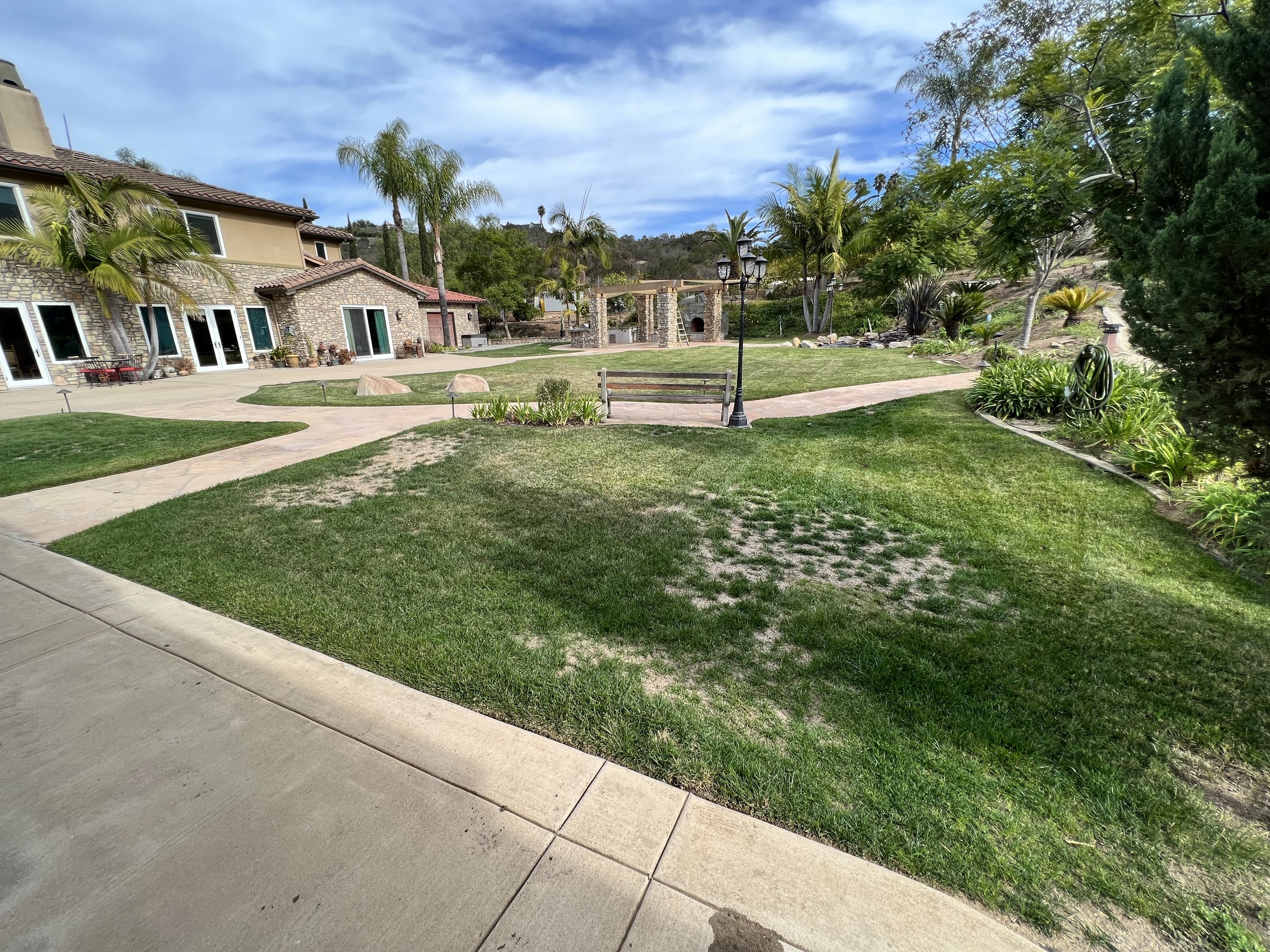
EXISTING CONDITION






PROJECT DESCRIPTION
This four-acre estate in Bonsall has been transformed into a sanctuary of exotic orchards and wellness programs, designed to host both private and group retreats. Our collaboration began in 2020, when owners Laurence and Yulia reached out with a dream of creating a retreat center but were unsure how to bring it to life.
Together, we developed a holistic vision for the landscape. Over the course of two years and many thoughtful refinements, that vision evolved into the sanctuary you see today. What impressed us most was the passion of Laurence and Yulia - not only did they understand the design intentions, they became deeply engaged in shaping every step of the process.
Originally, the land held fifty-year-old avocado and pomegranate orchards in decline. Through careful pruning, planting of cover crops, and natural methods to attract pollinators, the owners lovingly restored these orchards. We complemented their work with new design layers:
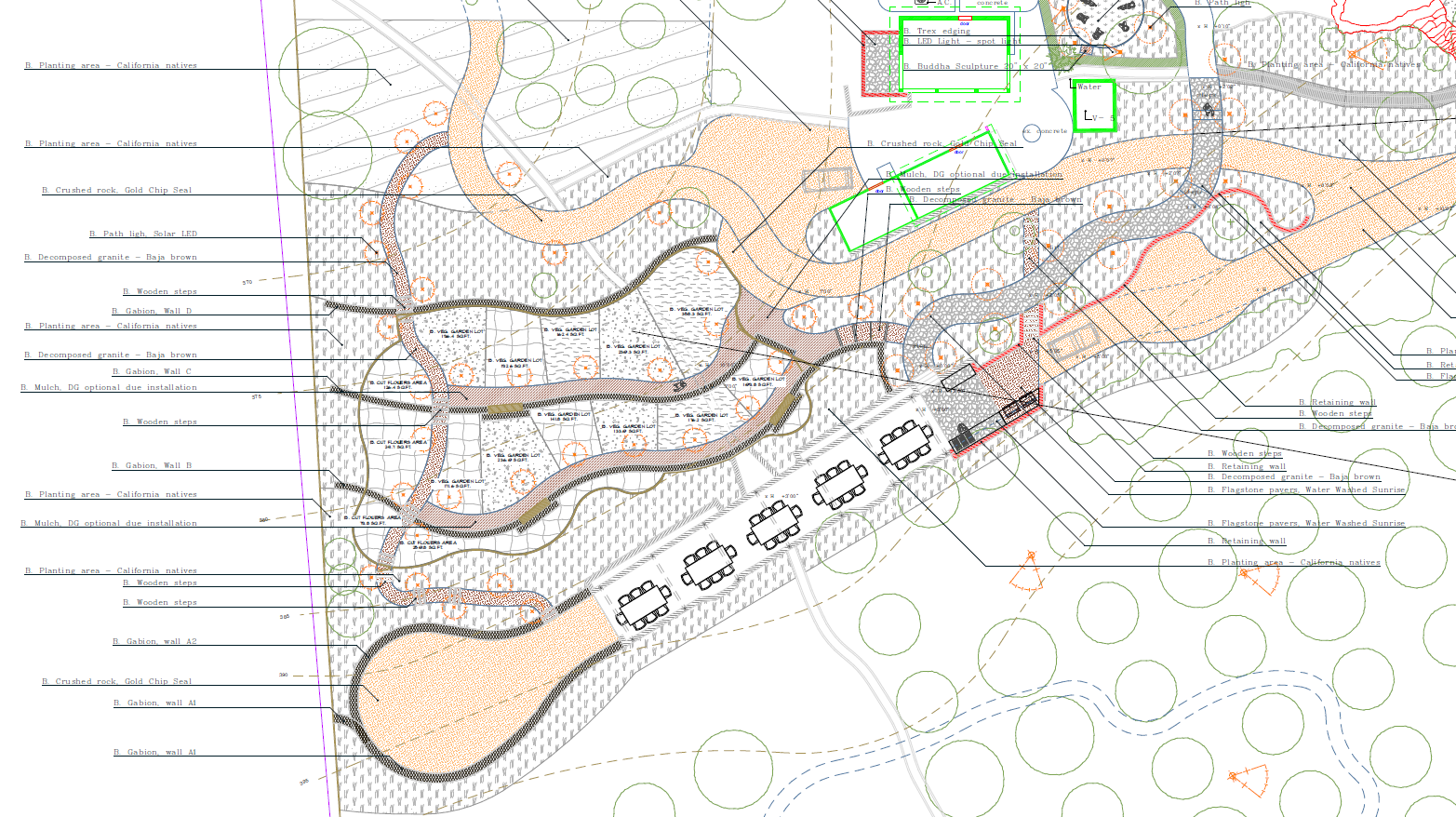
A temple garden for meditation and spiritual practice
The Dragon’s Den, a multipurpose retreat space with hot/cold tubs, dining and dance areas, and a Balinese entryway
An eighty-foot pergola farm table for farm-to-table events
Over 3,000 square feet of vegetable and flower terraces
A new waterfall and pond adding movement and reflection to the landscape
Today, the Sanctuary of YUM is a true oasis, a place where people come to restore energy, celebrate life, and connect with nature through food, art, and community.
Please check Sanctuary of YUM - https://sanctuaryofyum.com/

Ethno Village – Reykjavik, Iceland
Ethno Village in Reykjavik, Iceland, is a free-form cultural and ecological campus. Featuring spherical traveler pods, a carnival center with a green roof, and an outdoor concert area, it offers space for festivals, retreats, and sustainable community living.
“A Cultural Landscape of Connection, Nature, and Community”

Ethno Village Reykjavik Cultural Landscape Vision
A Living Sanctuary in Icelandic Nature
Ethno Village is envisioned as a free-form cultural landscape where visitors can fully connect with the natural rhythms of Reykjavik. Designed for both locals and travelers, the space offers opportunities for weekend retreats, ethnic festivals, meditation and yoga classes, team-building, and cultural events.
Concept video of Ethno Village in Reykjavik, Iceland, presenting a futuristic cultural retreat with spherical eco-pods, geothermal steam, and communal gathering spaces, designed by LASD Studio.
Design Features
Spherical Traveler Pods – movable eco-pods that offer unique accommodation in harmony with the land.
Carnival Center – a main facility building with a green roof, blending architecture and ecology.
Concert & Event Area – an open-air gathering space for music, art, and community celebrations.
Sustainable Vision
The design embodies flexibility, ecological balance, and cultural storytelling. With relocatable pods and natural zoning, Ethno Village evolves over time, responding to the needs of its visitors while maintaining biodiversity and minimal impact on the land.
Global Relevance
Ethno Village reflects LASD Studio’s philosophy: creating landscapes that balance human culture with ecological continuity. It is both a destination and a living artwork — where tourism, community, and sustainability converge.

Award-Winning Butterfly & Bird Garden in Poway, California
A small ecological restoration garden in Poway, California, designed as a private sanctuary for butterflies, pollinators, wildlife and people.
An early LASD Studio garden where extensive lawn was transformed into an intimate living sanctuary for butterflies, birds, pollinators and people.
The Butterfly Garden in Poway, California, is a small ecological restoration project that transforms a neglected, dry landscape into a living private sanctuary for butterflies, pollinators, wildlife and people, designed as a living ecosystem.
Designed entirely by LASD Studio founder Yura Lotonenko, this was one of his first gardens in Southern California, and one of the projects that began shaping the studio’s ecological design philosophy.
The completed landscape received multiple awards through San Diego-area garden tours, but its deeper achievement is quieter. A neglected, water-demanding yard became a place where people could sit among grasses, flowers, stone and birdsong while a small but increasingly complex habitat developed around them.
From Water-Intensive Lawn to Living Habitat
Before the habitat garden could begin, a substantial portion of the existing lawn had to be removed.
This was not simply a visual change. Conventional turf occupied valuable ground while offering limited structural diversity for butterflies, birds and other wildlife. Replacing it created room for a layered landscape of milkweed, nectar-rich flowers, ornamental grasses, shrubs, groundcovers, boulders, permeable gravel and a dry creek.
The transformation reduced the dominance of one uniform surface and introduced multiple ecological conditions: flowers for nectar and pollen, host planting for butterfly life cycles, seeds for birds, protected soil, perching points, shallow water and spaces of shelter.
What had been an open, depleted ground plane became a sequence of living relationships.

Butterfly garden at sunset with birdbath and seating, Poway, California
Art and Ecology in One Composition
The garden is carefully composed, but it is not static.
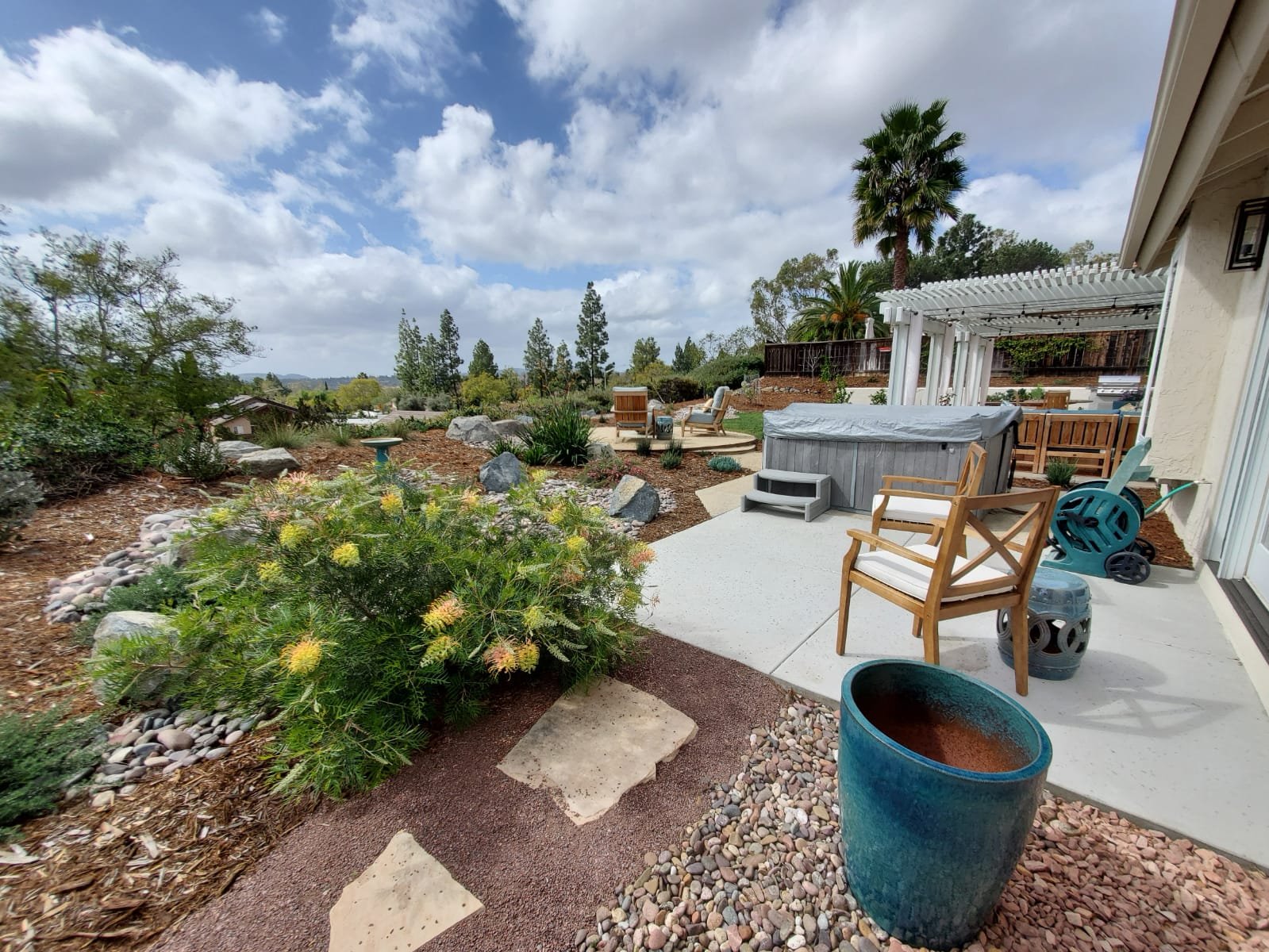
Pink grasses catch the low evening light. Boulders hold the structure of the landscape while plants move around them. Gravel and rounded creek stone establish a calm ground plane, and the dry creek traces a natural line through the garden.
During rain, the channel can receive and guide runoff, slowing the movement of water through the property. In dry weather, it remains as a visible memory of water - a sculptural element that organizes the planting and gives the garden a sense of depth.
Paths are suggested through openings between plant masses rather than imposed as rigid corridors. The seating area settles within the planting, oriented toward the garden, birdbath and changing sunset rather than away from them.
This is the project’s artistic and ecological synergy: every practical element contributes to the atmosphere, and every beautiful element participates in how the garden functions.
Our vision was to create more than a decorative garden - it is a synergetic system where plants, pollinators, and people coexist. Carefully selected planting palettes ensure year-round color, fragrance, and habitat. The dry creek feature provides both an aesthetic focal point and a functional stormwater solution, creating a microclimate that cools the backyard naturally.

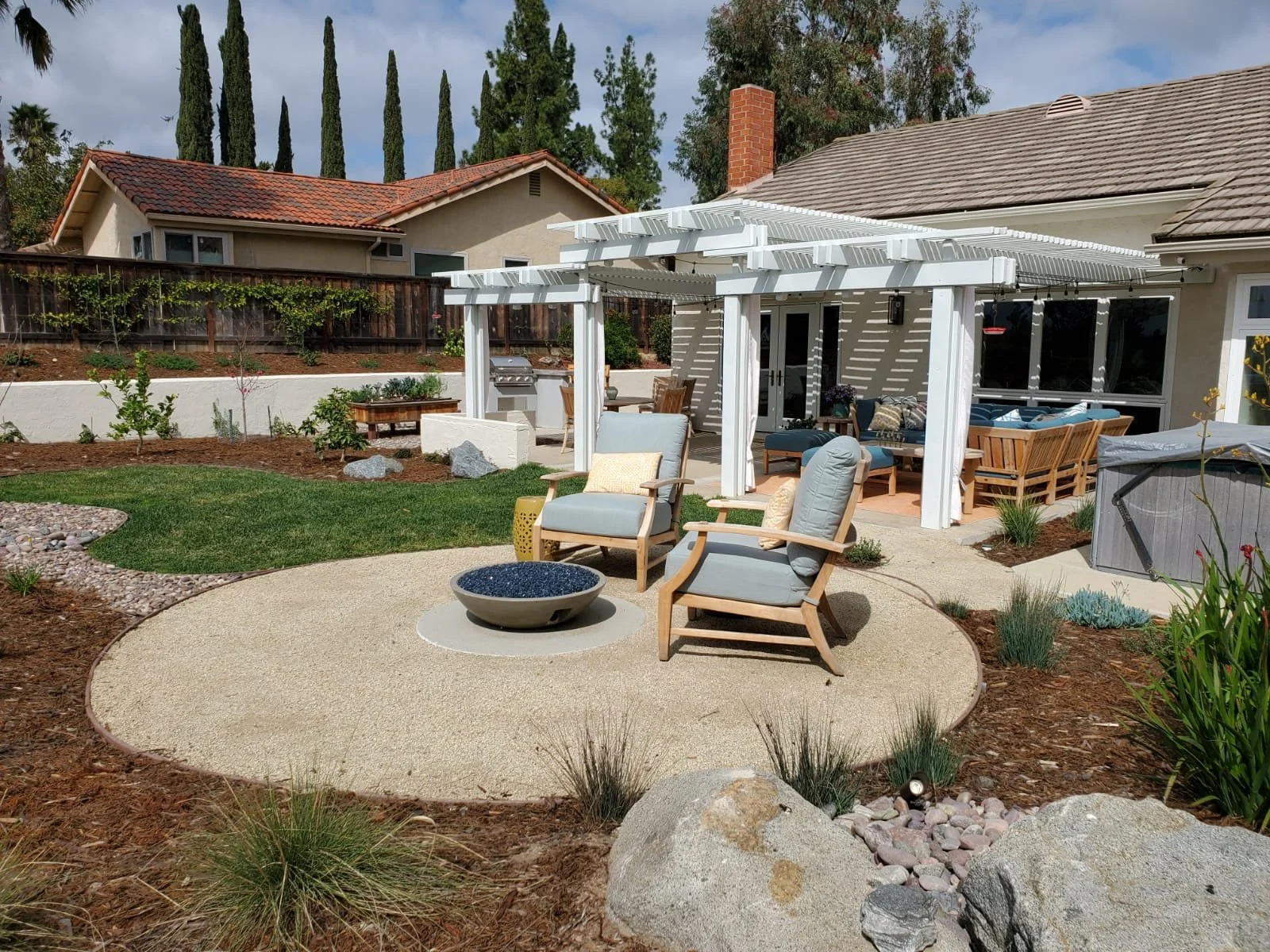
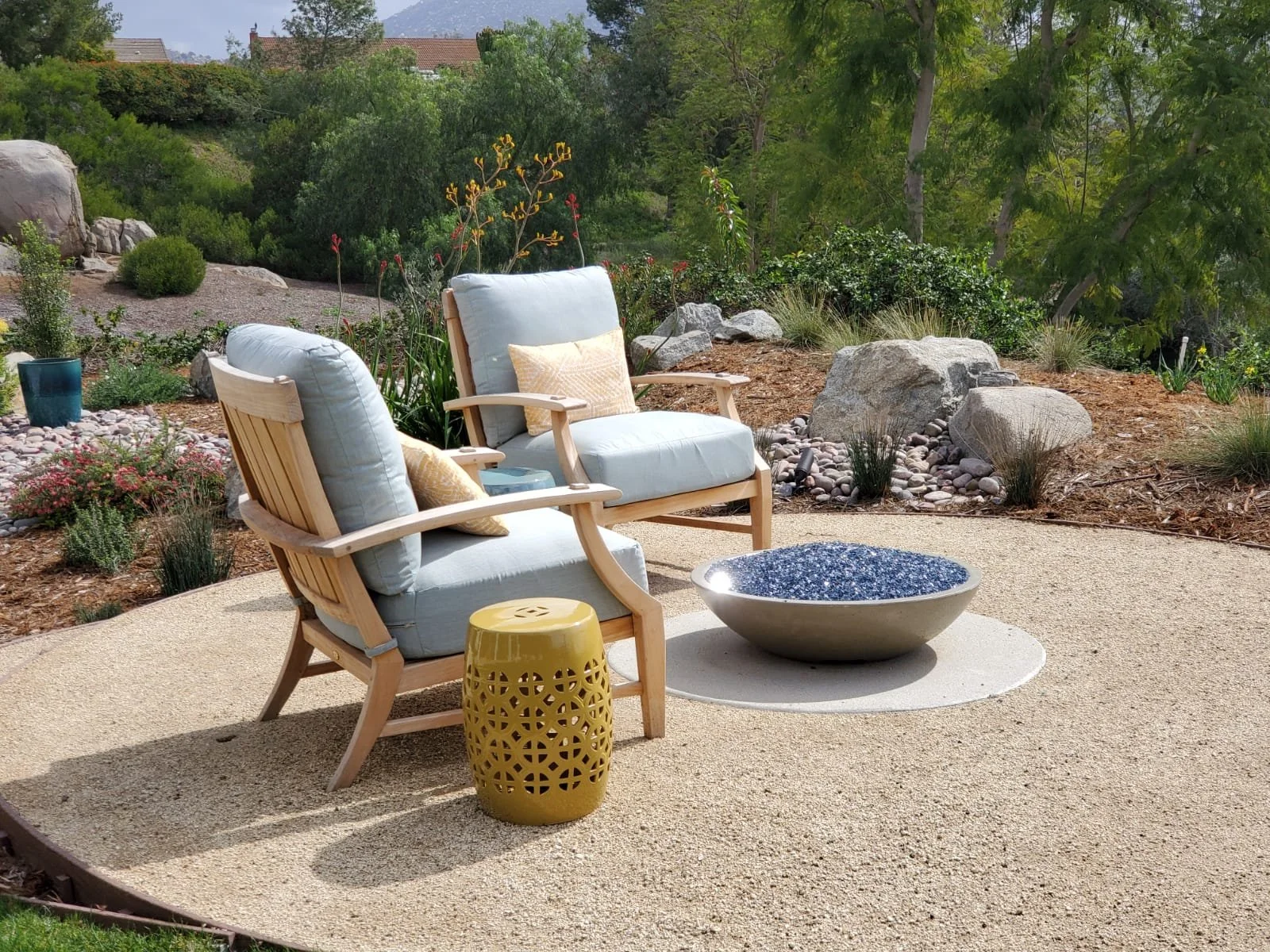
Cozy seating patio with fire bowl in butterfly garden, Poway, California
A Garden for the Butterfly Life Cycle
A butterfly garden cannot be created with flowers alone.
Adult butterflies need nectar, but caterpillars require particular host plants. Milkweed is therefore more than a colorful garden accent: it supports the breeding cycle of monarch butterflies (Danaus plexippus). A longer seasonal sequence of nectar-producing flowers helps extend the garden’s value beyond a single flush of bloom.
Butterflies recorded across San Diego County that may visit suitable Poway gardens include: Monarch - Danaus plexippus, Gulf fritillary - Agraulis vanillae, Western tiger swallowtail - Papilio rutulus, Anise swallowtail - Papilio zelicaon, Common buckeye - Junonia coenia, Painted lady - Vanessa cardui, Orange sulphur - Colias eurytheme.
Their presence depends on season, weather, surrounding habitat and the availability of appropriate nectar and host plants. These species are potential regional visitors rather than a claim that every one has been formally recorded within this garden. The San Diego County butterfly checklist documents the remarkable diversity found across the region.
Bees, moths, hoverflies and other beneficial insects also use flowering landscapes, often performing less visible but equally important work within the garden.
A Birdwatching Garden in the City
The garden was designed not only for butterflies but also as a place for observing birds.
A birdbath provides an open place to drink and bathe, while layered planting offers seeds, insects, perches and protected spaces. Nectar-producing flowers can attract hummingbirds; seed-bearing plants support small songbirds; and insect-rich planting gives wrens and other insectivorous birds somewhere to forage.
Potential visitors within Poway’s wider landscape include: Anna’s hummingbird - Calypte anna, Black-chinned hummingbird - Archilochus alexandri, California quail - Callipepla californica, California towhee - Melozone crissalis, Spotted towhee - Pipilo maculatus, Bushtit - Psaltriparus minimus, Bewick’s wren - Thryomanes bewickii, Lesser goldfinch - Spinus psaltria.
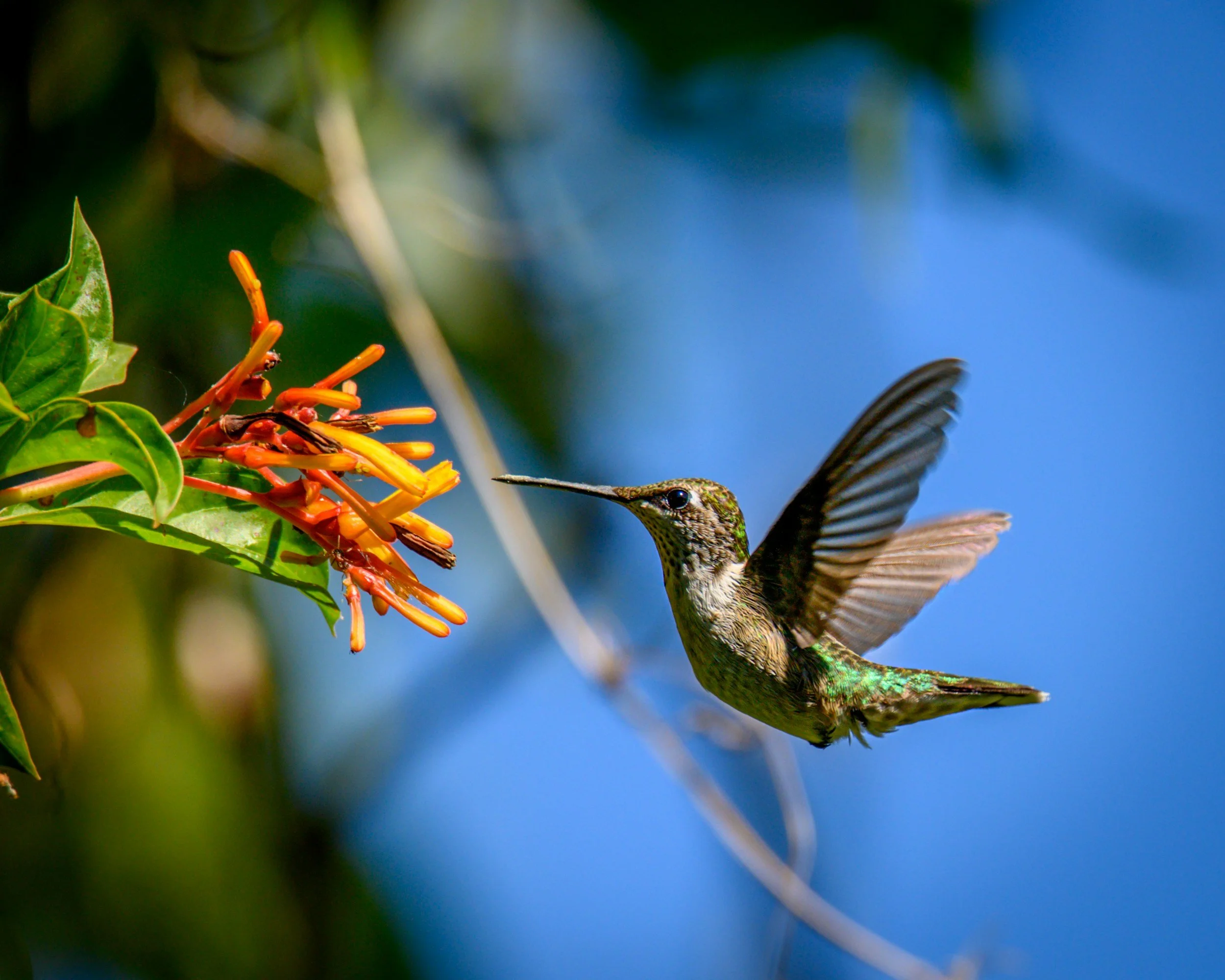
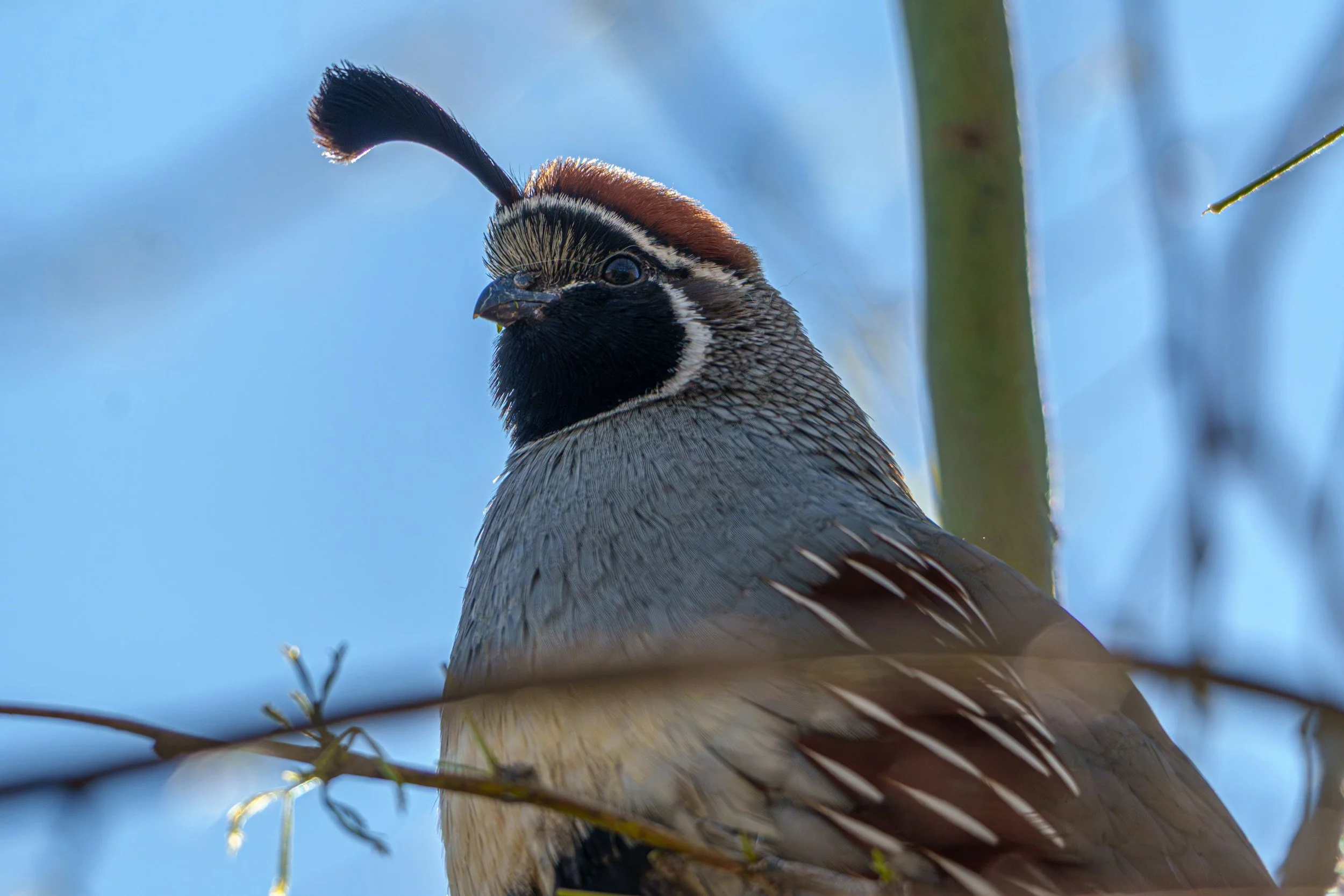
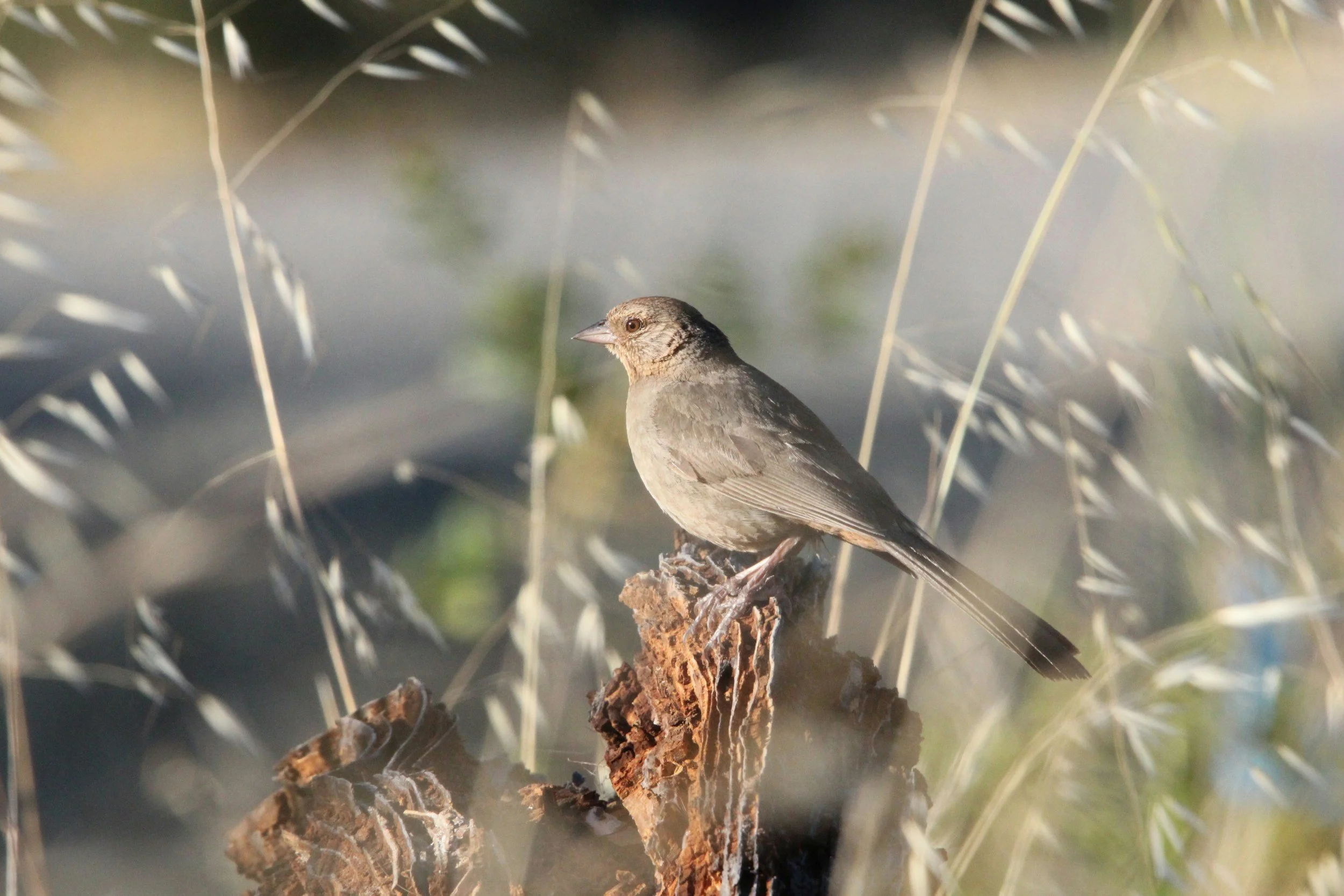
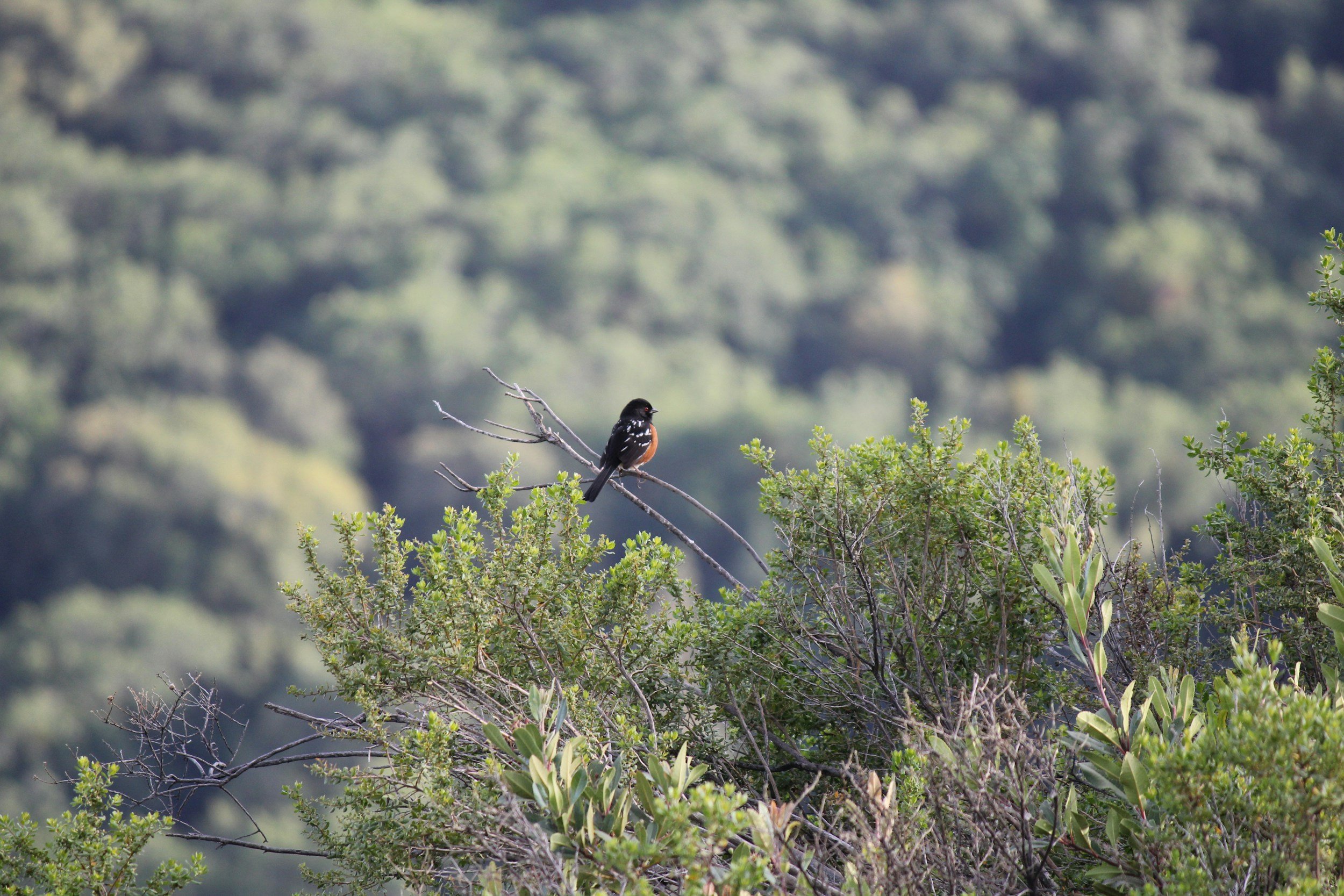
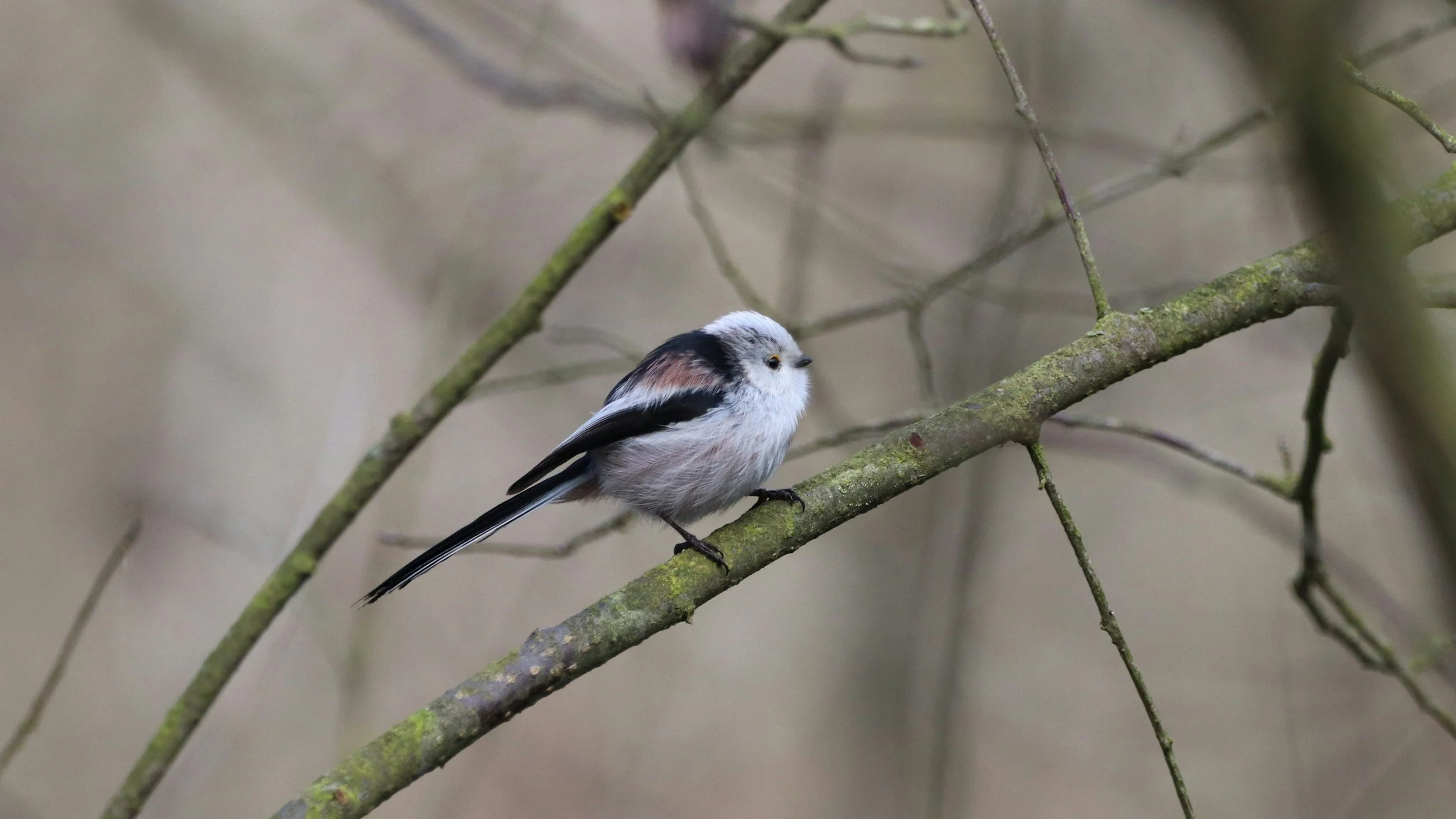
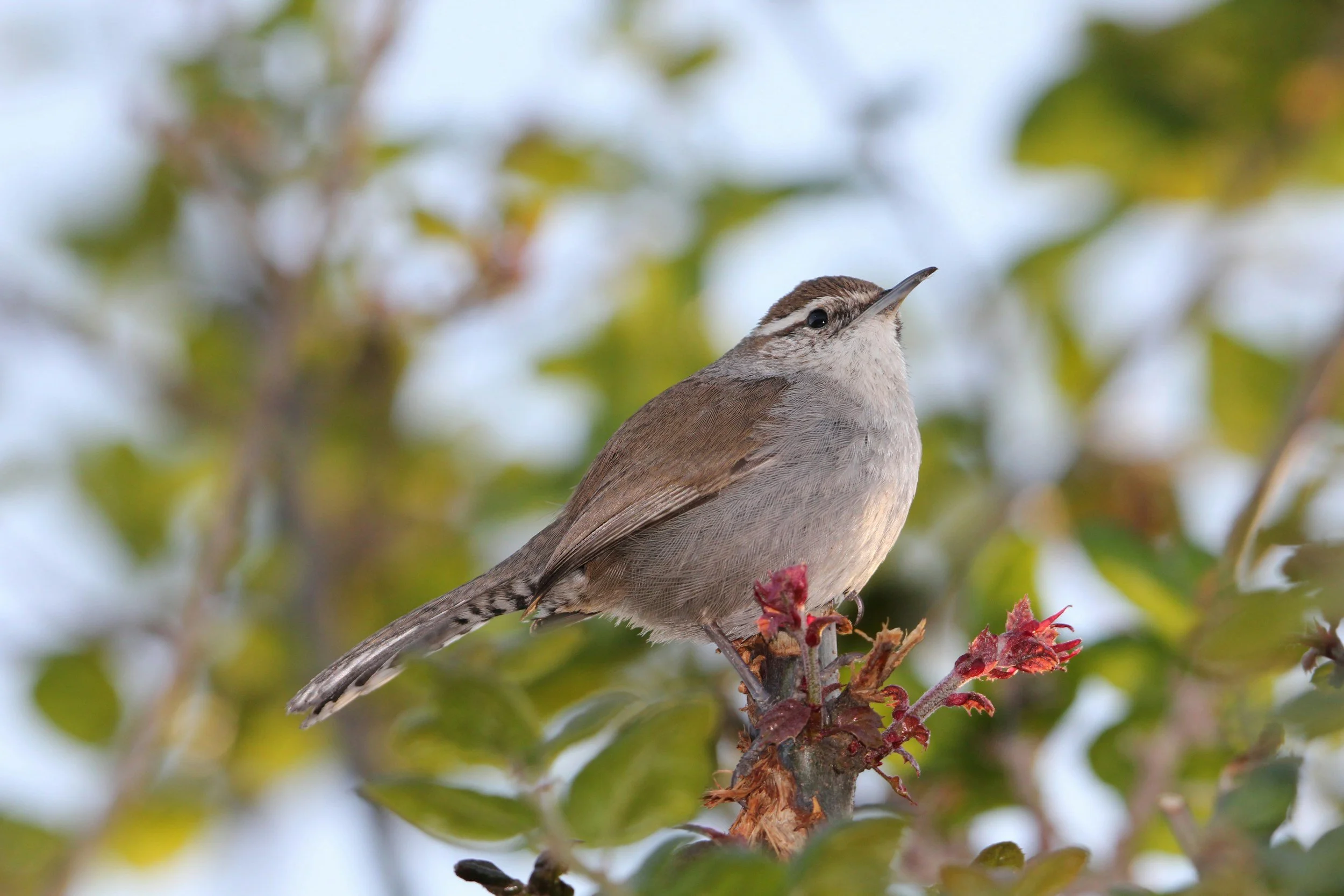
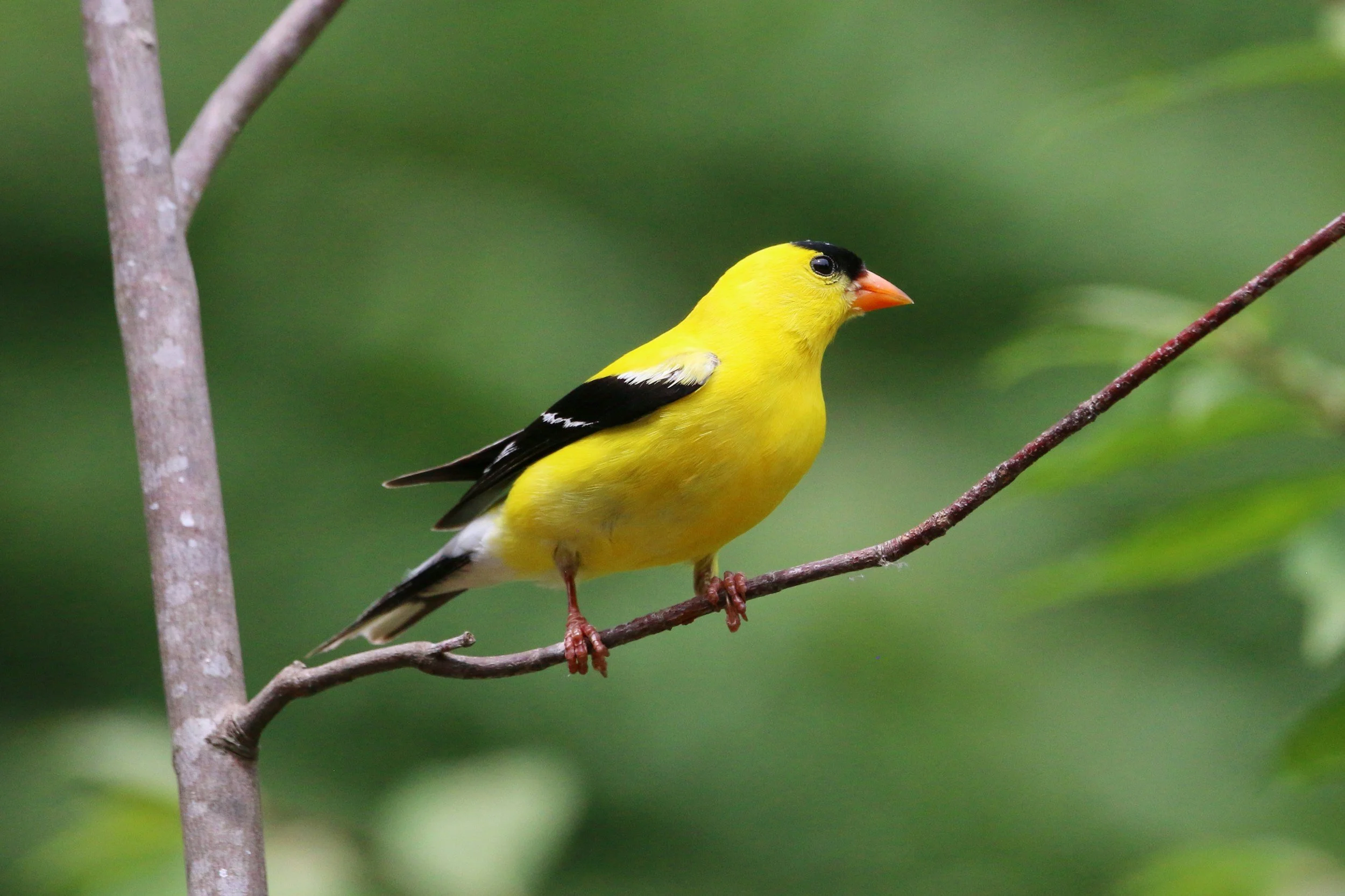
Nearby Blue Sky Ecological Reserve contains riparian woodland, coastal scrub and mixed chaparral, illustrating the wider mosaic of habitat surrounding Poway. Local birding guidance identifies towhees, bushtits, wrens, quail and hummingbirds among the birds expected within this landscape. California Department of Fish and Wildlife · San Diego Bird Alliance
Not every bird is a pollinator. Hummingbirds may carry pollen between tubular flowers, while wrens and other insect-eating birds contribute differently—by participating in the garden’s food web. Together, they bring movement, sound and changing patterns of activity throughout the day.
The Hidden Ecological Challenge: Argentine Ants
One of the garden’s most important lessons appeared only after installation.
The later discovery of invasive Argentine ants (Linepithema humile) revealed that creating habitat involves much more than selecting attractive flowers. A garden may look abundant above ground while less visible pressures are altering its ecological relationships below.
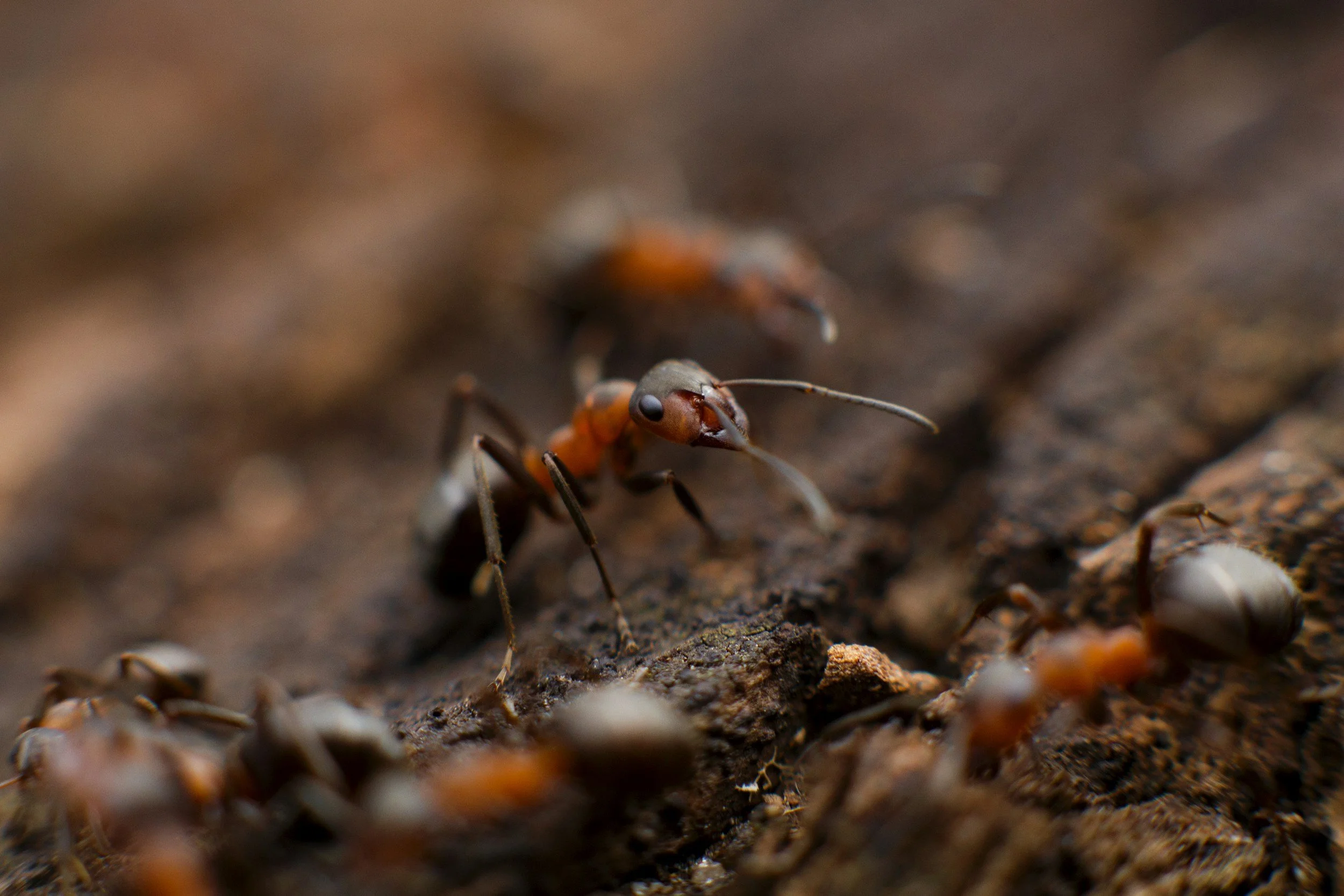
Argentine ants can reach high densities in irrigated urban landscapes. They displace native ant species, interact with honeydew-producing insects such as aphids and scale, and can affect wider arthropod communities. Southern California research has documented their strong effects on native ant communities, particularly near developed landscape edges. Ecology study · UC Riverside Center for Invasive Species Research.
Their presence made observation and carefully targeted management part of the project’s continuing stewardship. Broad, indiscriminate pesticide use could harm the same butterflies and beneficial insects the garden was created to support. The response must therefore be informed, specific and compatible with the larger habitat objective.
This discovery did not diminish the project. It made its ecological purpose more truthful. A living landscape is never finished; it must be watched, understood and guided as relationships change.
A Garden That Evolves with Time
The first year of a habitat garden is primarily about establishment. Roots expand, soil begins responding and the planting learns the site.
During the second and third years, the composition becomes denser and more interconnected. Flowering cycles lengthen, grasses acquire greater presence, birds discover dependable water and forage, and the garden begins to develop its own recognizable rhythms.
Maintenance consequently changes from control to guidance: selective pruning, seasonal adjustment, observation, irrigation refinement and careful responses to emerging pressures.
Over time, the garden becomes less like an installation and more like a place with its own life.
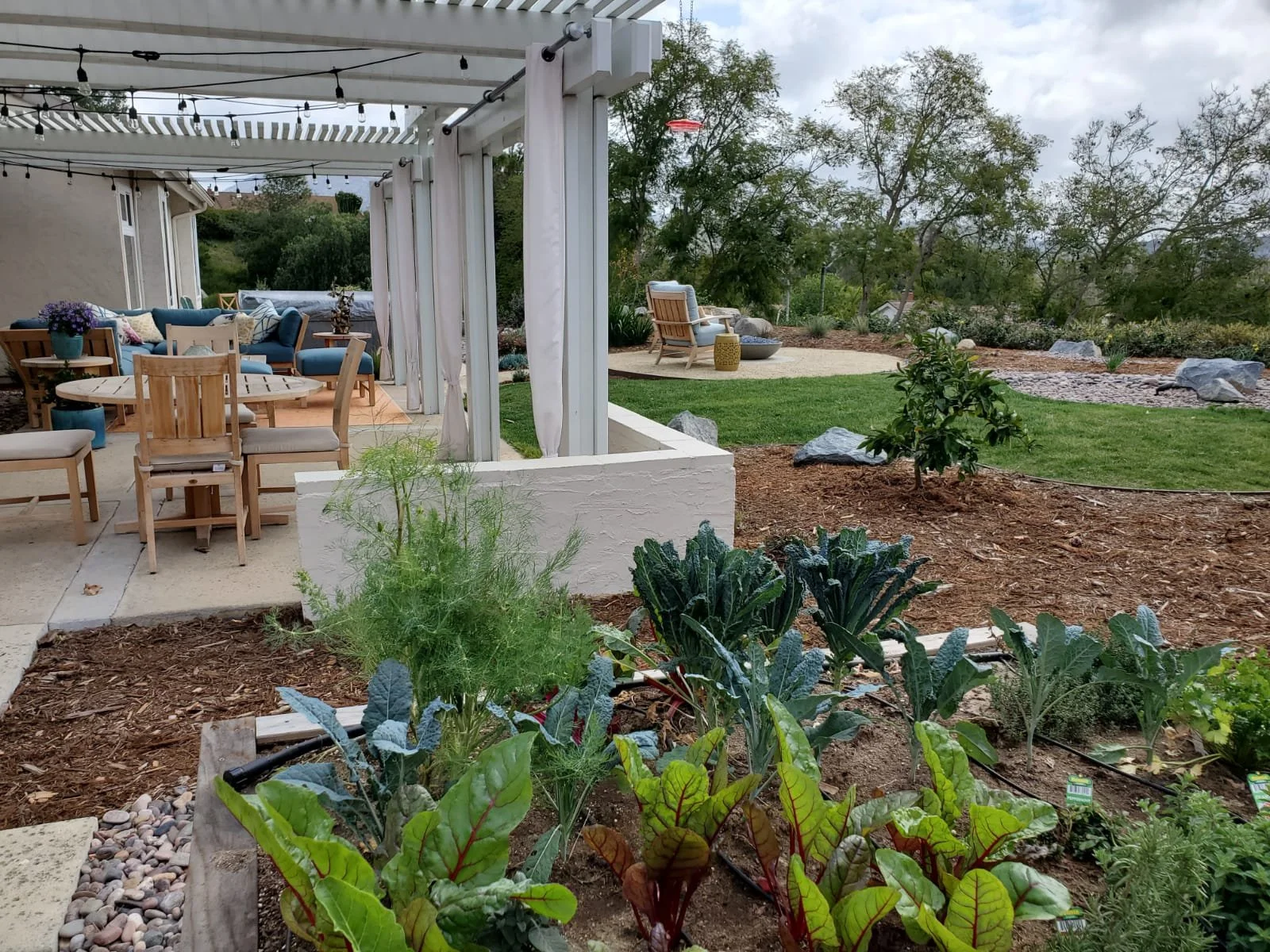
First Year Pictures after the Garden Installation