
~ BLOG ~
How Landscape Architecture Reflects Architectural Heritage and Climate Awareness
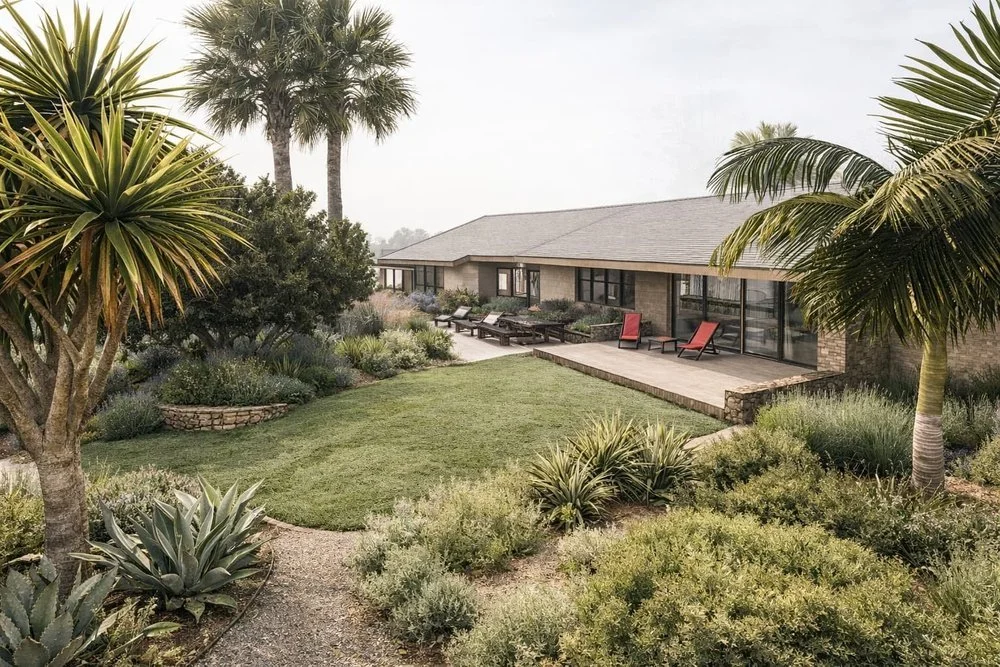
Landscape architecture shapes the relationship between architecture, land, and climate. In regions such as Rancho Santa Fe, thoughtful landscape design reflects architectural heritage while responding to drought, wildfire risk, and the realities of Southern California’s Mediterranean climate.
Landscape architecture at the estate scale is an exercise in balance. It respects architectural heritage, responds to climate realities, and integrates ecological intelligence. In regions such as Rancho Santa Fe, thoughtful landscape design brings architecture, land, and climate into a coherent whole.
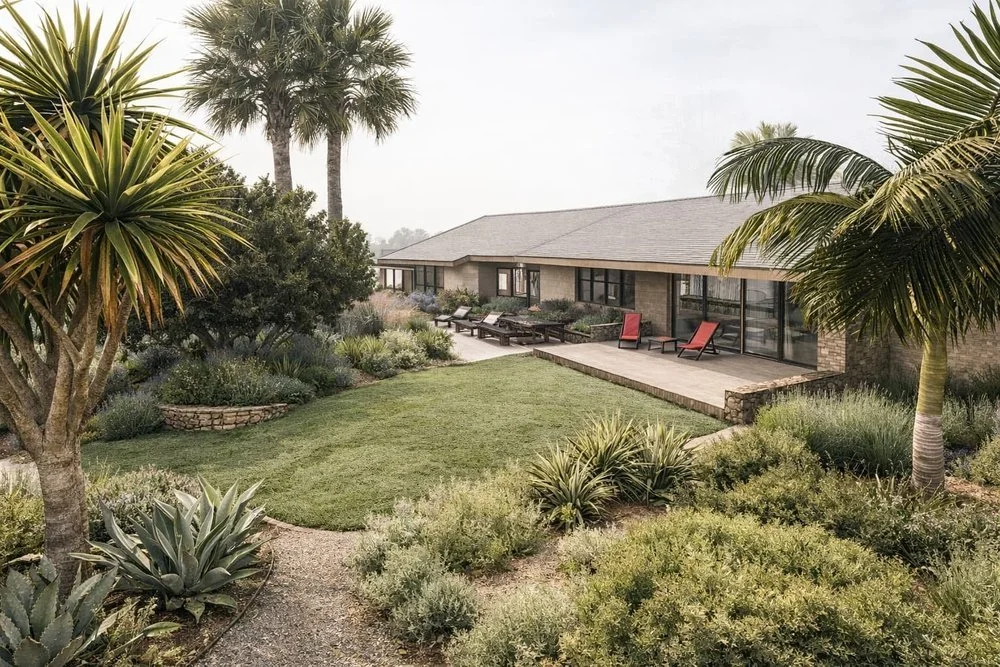
Historic & Heritage Properties with CA Native Plantings - Landscape Restoration
When Landscape Belongs to the Architecture
There is an important difference between a landscape that simply decorates a property and one that truly belongs to it. In estate settings, the landscape is not just greenery surrounding a house. It becomes part of the architectural composition itself. Outdoor spaces extend the logic of the building and shape how people move, gather, and experience the environment.
The most successful landscapes feel inevitable. They appear as if they emerged naturally from the architecture and the land. In Southern California this relationship becomes particularly meaningful because design must also respond to very specific climate patterns. A thoughtful landscape does not impose itself on a place. Instead it grows from the character of the property.
The Role of Landscape Architecture in Rancho Santa Fe in Architectural Lineage and Climate Intelligence
Understanding the Property Before Designing the Garden
Every property carries its own architectural language. Before shaping the landscape, a designer studies the structure carefully. Rooflines, materials, proportions, and the rhythm of architectural spaces all influence how the garden should be composed.
Landscape design should not compete with architecture. It should quietly support it. Outdoor rooms often extend interior spaces so that terraces, courtyards, and shaded pathways feel like natural continuations of the home. In places such as Rancho Santa Fe, this approach often leads to landscapes that blend Mediterranean influences with regional traditions and contemporary ecological awareness.
They ensure that a landscape does not compete with a property; it complements the property. A skilled landscape architect in Rancho Santa Fe understands that outdoor spaces should feel like natural extensions of the architectural plan - while also fostering biodiversity and creating a balanced, living environment that thrives naturally over time.
Interpreting Historical Landscape Traditions
Many estate landscapes are shaped by historical precedents. Mediterranean courtyards, European garden traditions, and early California ranch landscapes all contribute to the visual language of outdoor spaces.
Successful landscape architecture rarely copies historical styles directly. Instead it interprets them and adapts their spatial ideas to contemporary life. Courtyards, terraces, and shaded walkways may echo traditional forms while responding to modern needs and environmental realities.
Historical awareness allows a garden to feel authentic rather than stylistic. It creates continuity between the past and the present without becoming nostalgic or rigid.
Spanish Revival Landscape Architecture as Living Heritage
Spanish Revival architecture remains one of the defining architectural traditions in Southern California. Landscapes designed for these homes often emphasize enclosure, texture, and calm spatial composition.
Courtyards framed by plaster walls, fountains that introduce gentle sound, and groves of olive or citrus trees create an atmosphere of intimacy and refuge. Terracotta materials and textured paving further strengthen the connection between architecture and garden.
These landscapes work especially well within the Mediterranean climate of coastal California. They create comfortable outdoor environments that remain visually restrained while offering richness in texture, light, and seasonal change.
The designer includes terracotta pots, drought-tolerant plantings, and filtered light. Through this approach, they create gardens that feel rooted in tradition and also withstand contemporary climates.
Climate Awareness as a New Form of Luxury
Climate awareness has become an essential dimension of contemporary landscape design. Today, luxury is increasingly defined by intelligence and restraint rather than excess.
Thoughtful gardens respond carefully to water availability, solar exposure, and soil conditions. Plant palettes often include drought adapted species, ornamental grasses, native shrubs, and sculptural succulents. These plants provide texture and seasonal interest while requiring significantly less irrigation than traditional lawn based landscapes.
In high quality landscape architecture, restraint often produces the most refined result. The garden becomes both environmentally responsible and visually enduring.
The designer incorporates drought-resilient planting design, such as ornamental grasses, native shrubs, and sculptural succulents. It means you can create depth and seasonal beauty with minimal water demand. In high-end estate garden design, restraint often produces the most refined aesthetic.
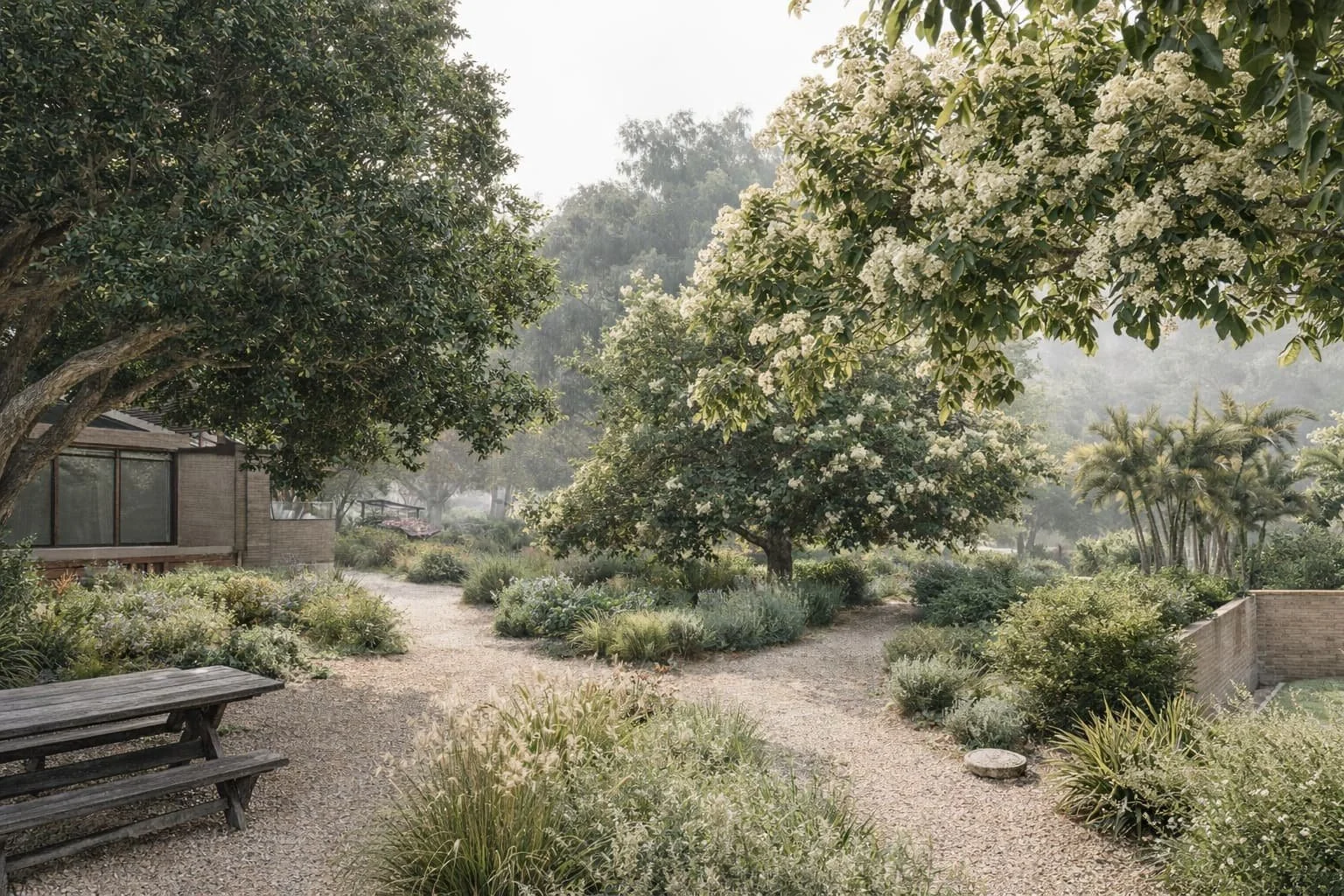
Ecological Landscape Design with LASD Studio
Designing with Fire-Conscious Intelligence
Wildfire awareness also plays an important role throughout many parts of Southern California. Landscape design in fire prone environments must consider both safety and aesthetics.
In communities such as Rancho Santa Fe, landscape architects often incorporate fire conscious strategies into the spatial composition of the garden. Vegetation is arranged thoughtfully, spacing between plant groups is increased, and materials such as gravel, stone, and paving create subtle protective zones near buildings.
When integrated carefully, these strategies strengthen resilience while maintaining the beauty and character of the landscape.
Designing Landscapes as Living Legacies
The most memorable estate landscapes are not static compositions. They are environments that evolve over time. Trees mature and gradually shape space. Plant communities shift through seasons and years. Materials develop texture and depth as they respond to sun, wind, and moisture.
This gradual transformation strengthens the relationship between architecture, land, and memory. A carefully designed landscape becomes part of the story of a place.
When architectural understanding meets climate awareness, landscapes gain a lasting quality. They age gracefully and remain deeply connected to their surroundings for generations.
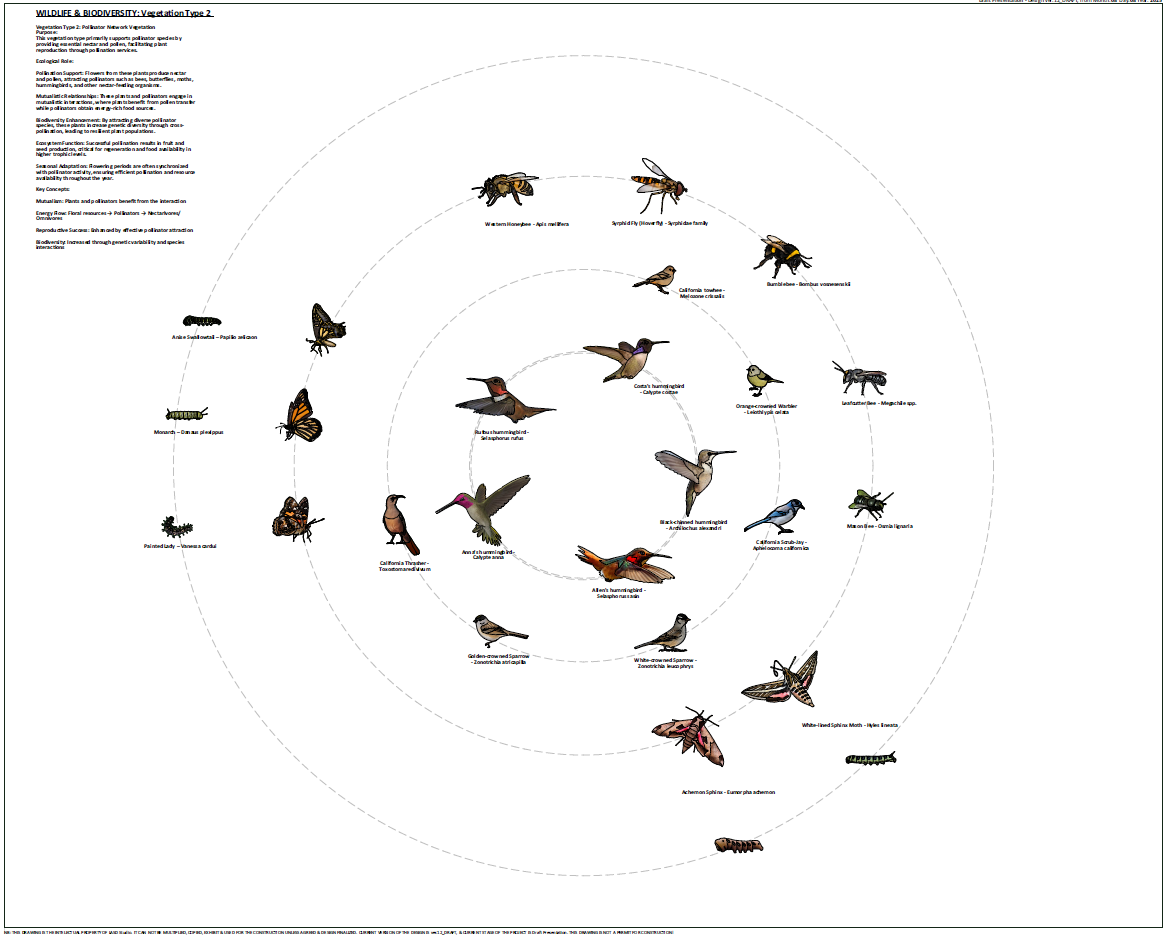
Landscape wildlife and biodiversity of Rancho Santa Fe, California