
Contemporary Landscape Design in Chula Vista, California
A pool-centered contemporary garden in Chula Vista where clean geometry, shaded outdoor rooms and climate-responsive planting support elegant daily life, privacy and biodiversity.
A pool-centered private garden where architectural clarity, outdoor life and ecological intelligence become one composition.
A successful contemporary landscape is not defined by how many features it contains. It is defined by how naturally every element belongs together.
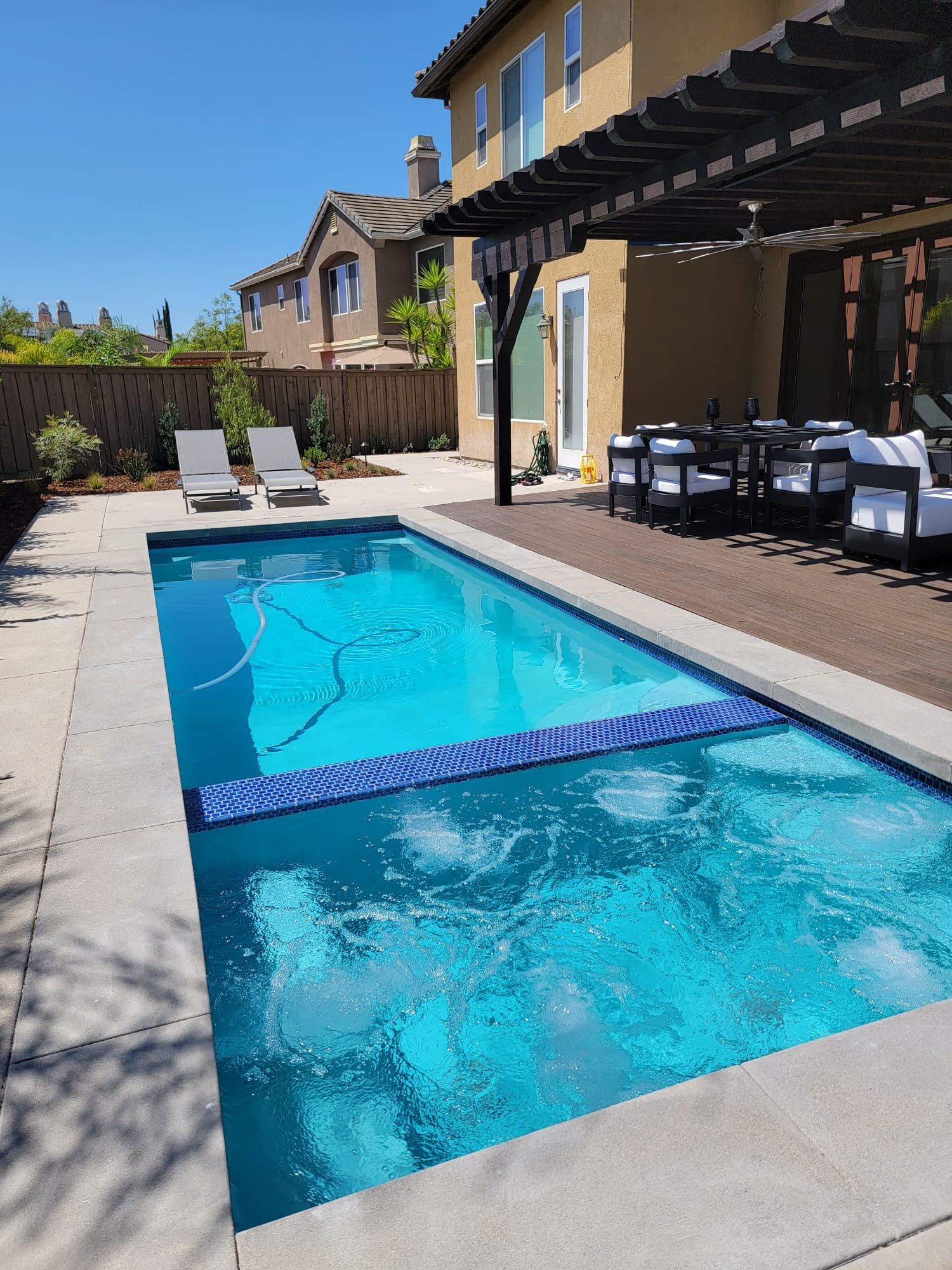
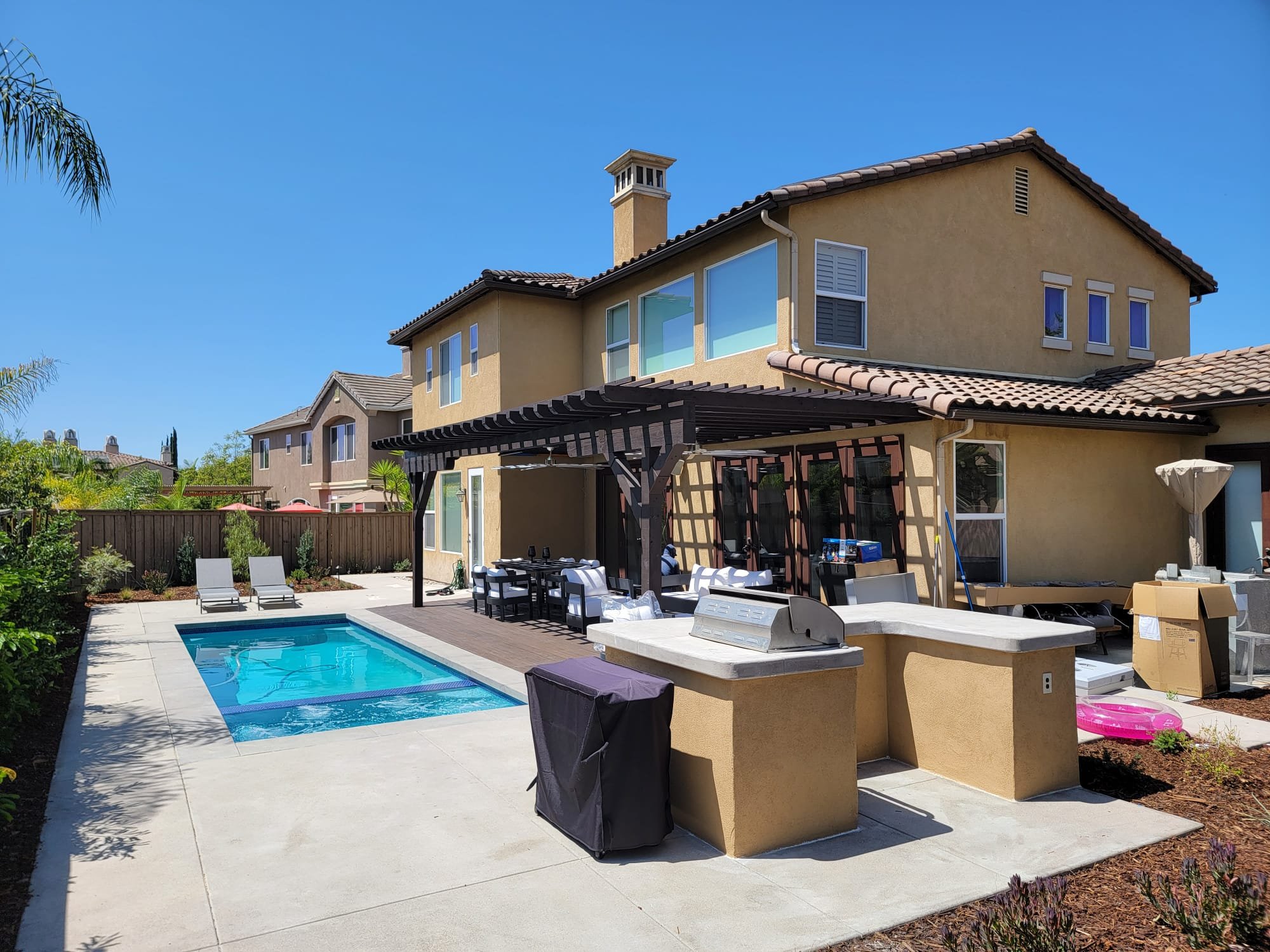
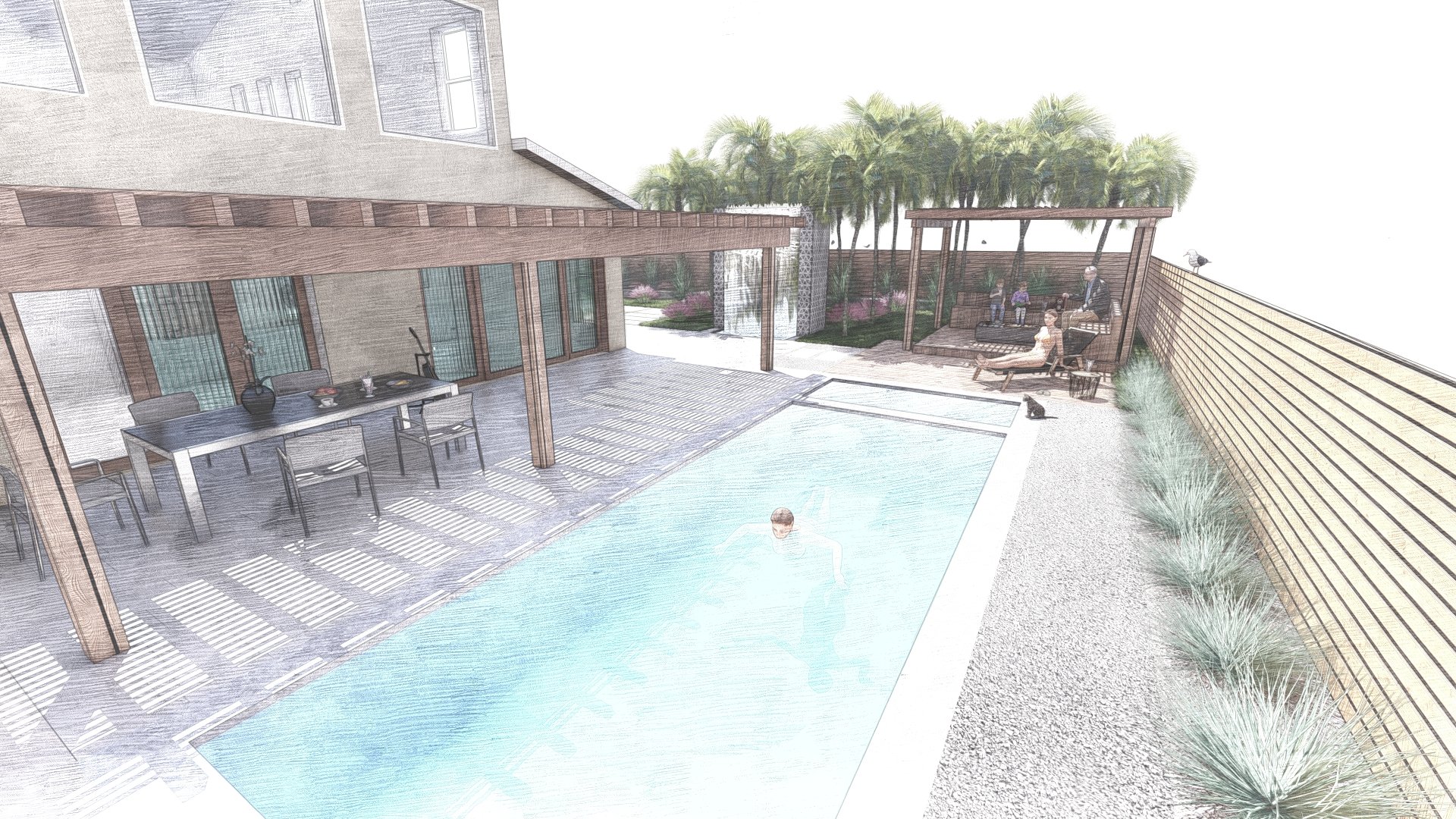
For this private Chula Vista property, LASD Studio organized the landscape around a clear architectural framework: a calm swimming pool, a generous terrace, a shaded pergola, an outdoor kitchen and layered perimeter planting. Rather than competing for attention, these elements work as one continuous environment for daily life, entertaining and quiet retreat.
The result is controlled without feeling sterile, refined without unnecessary ornament, and ecologically alive without losing its contemporary character.
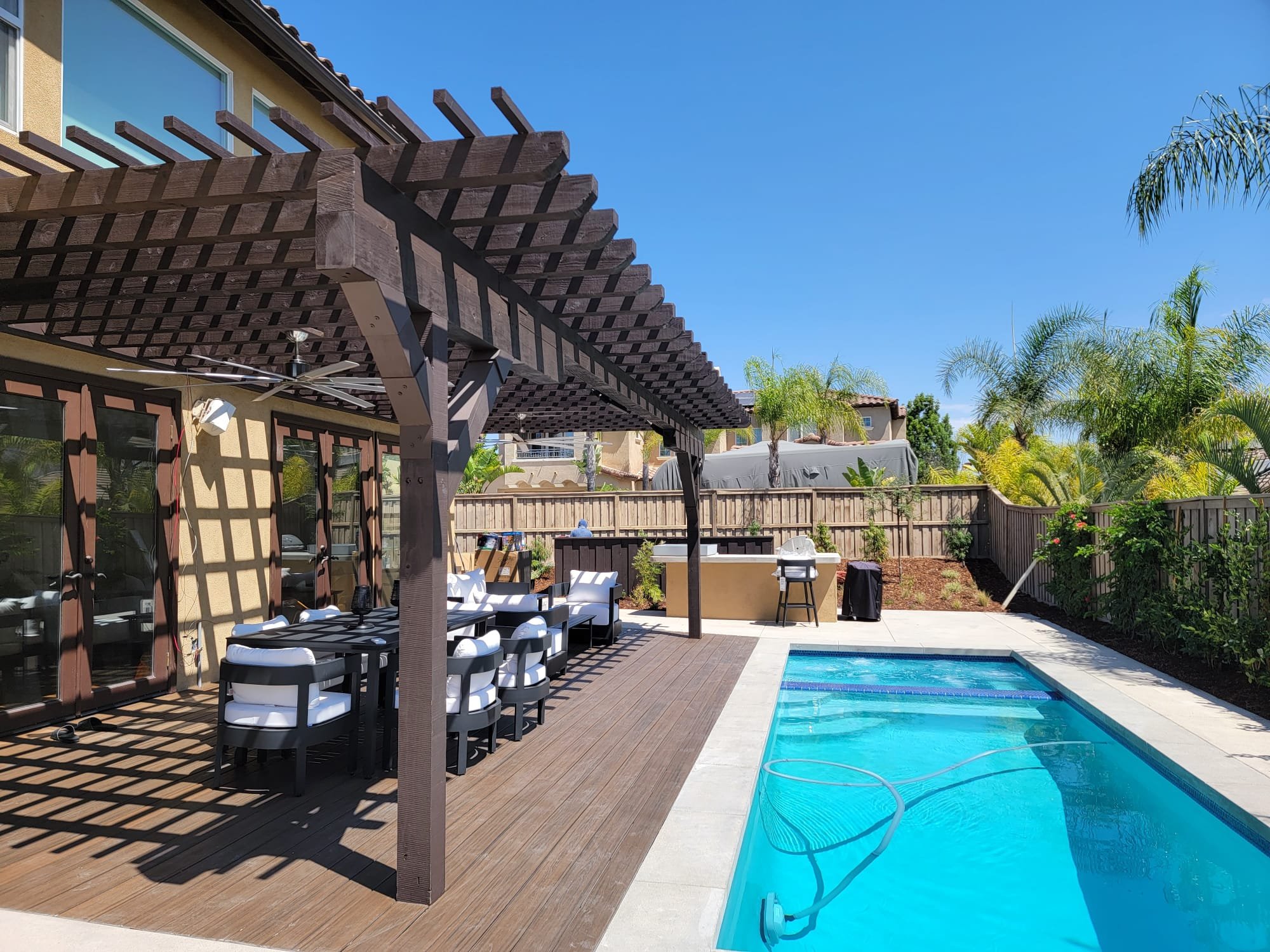
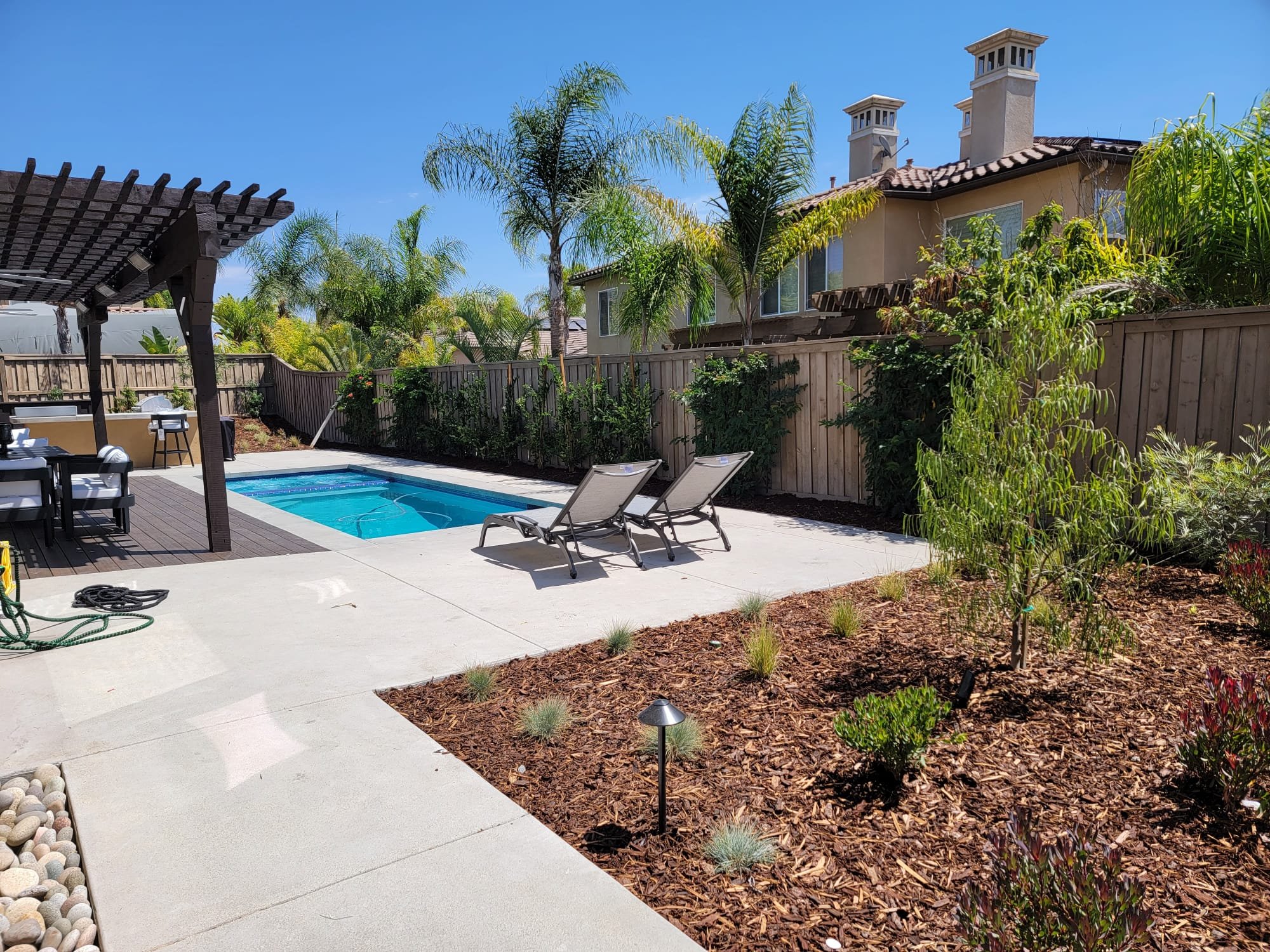
Location: Chula Vista, California
Project Type: Private Residential Landscape, Contemporary Patio, Lounge Zone and Garden Design
Design Focus: Poolside living, shaded dining, outdoor kitchen, contemporary ecological planting, privacy, water and soil performance
Status: Built / Installed
Construction cost: $280,000
Design Studio: LASD Studio
One Clear Composition for the Entire Property
The house opens outward, and the garden begins at that threshold.
A visual line extends from the interior, crosses the long patio and continues toward the water. The pool becomes the central organizing plane: reflecting sky and architecture, bringing light into the composition and establishing a sense of calm across the property.
Terrace, pergola, lounge, outdoor dining, kitchen and planting are positioned in relationship to this center. Movement is direct and intuitive. Spaces feel generous because circulation is resolved before decorative elements are introduced.
This clarity matters on a substantial landscape project. Without a strong organizing idea, individual contractor decisions can gradually produce a collection of expensive but disconnected objects. Here, every decision reinforces the architecture and protects the coherence of the overall investment.
Outdoor Rooms Designed for Real Life
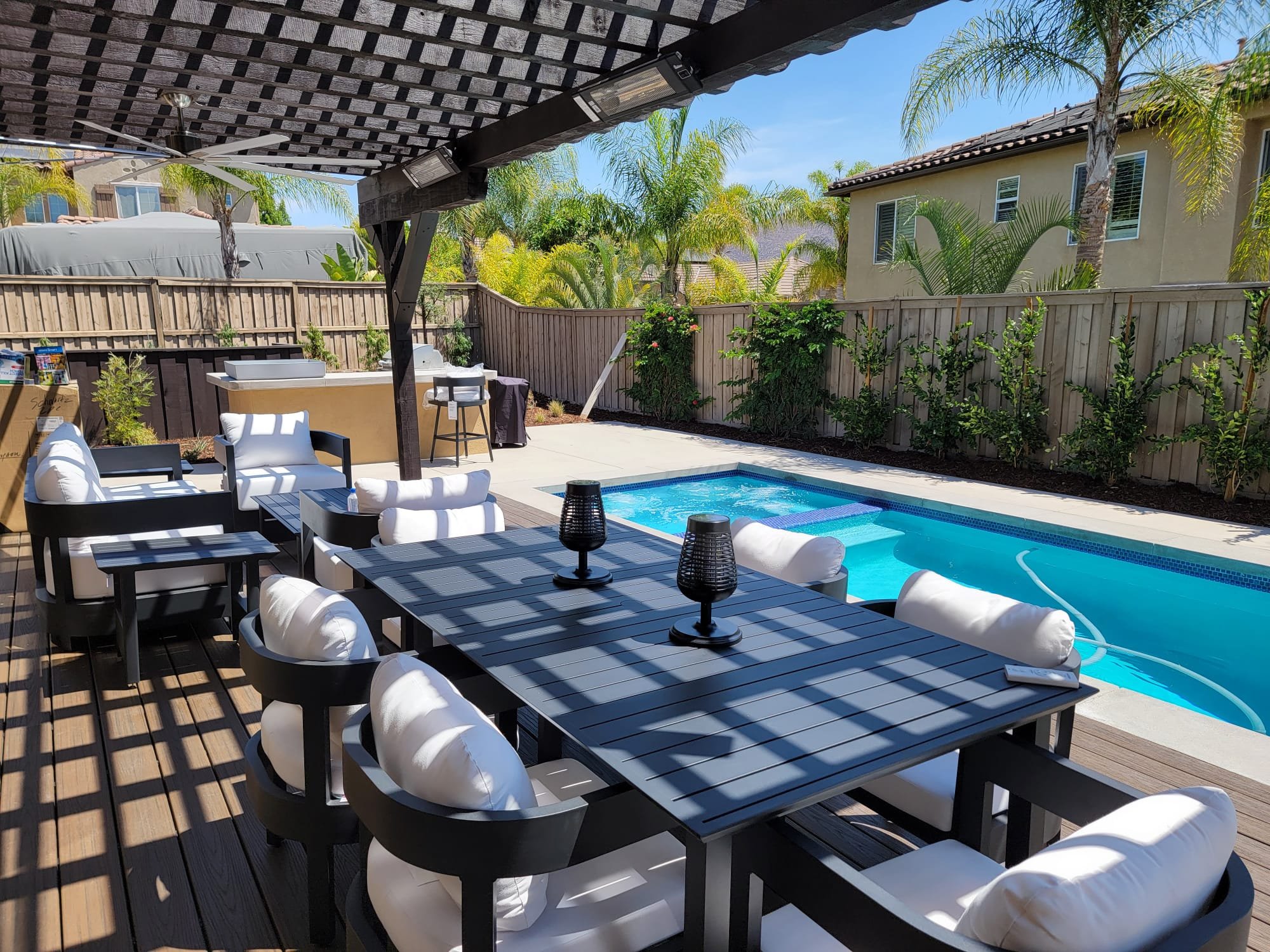
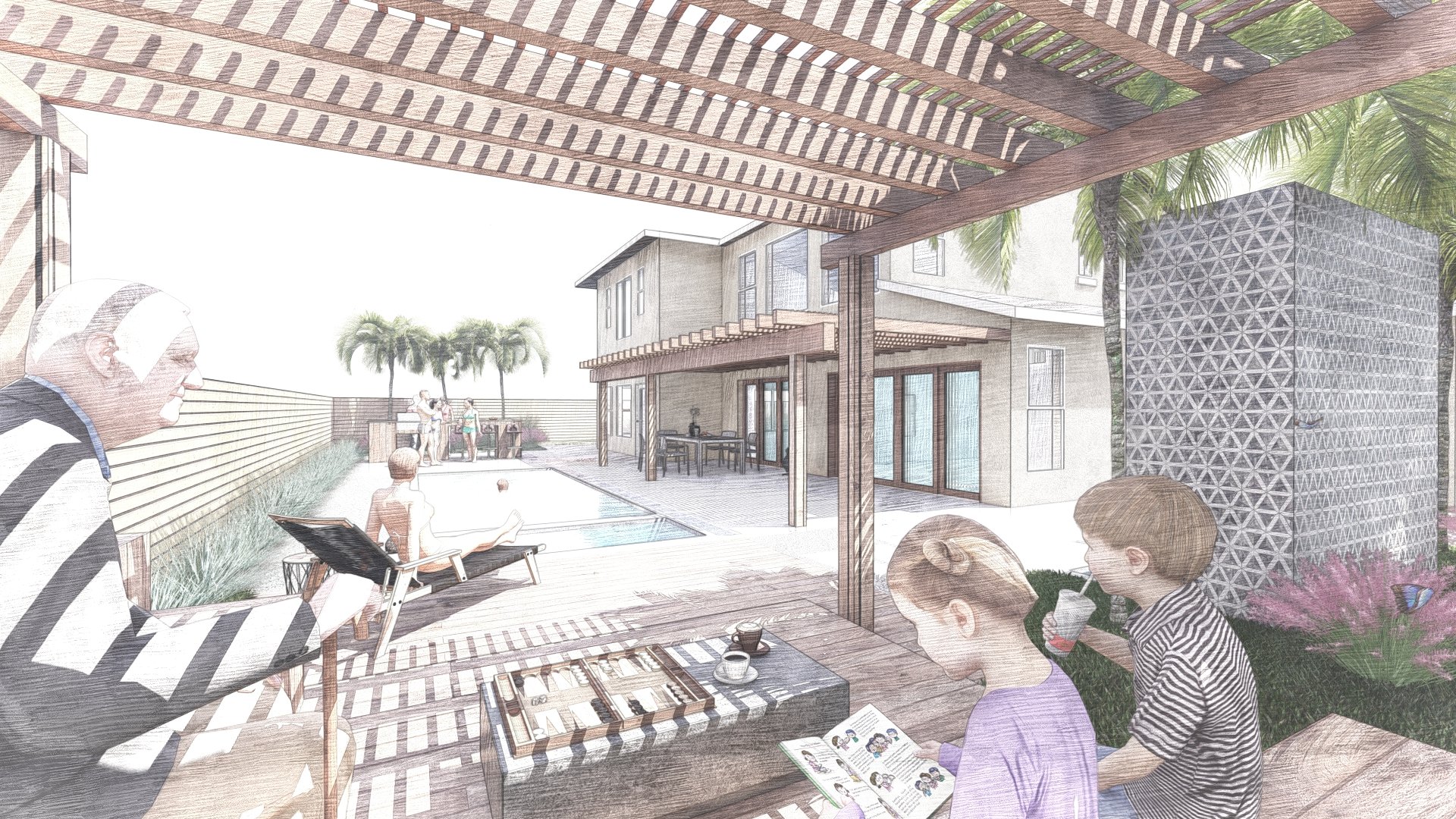
The pergola creates a room without walls.
Its overhead structure introduces rhythm and moving shadow while preserving air, openness and connection to the pool. Morning light reaches across the dining area; midday shade makes the terrace comfortable; later in the day, shadows move gradually across wood, fabric and water.
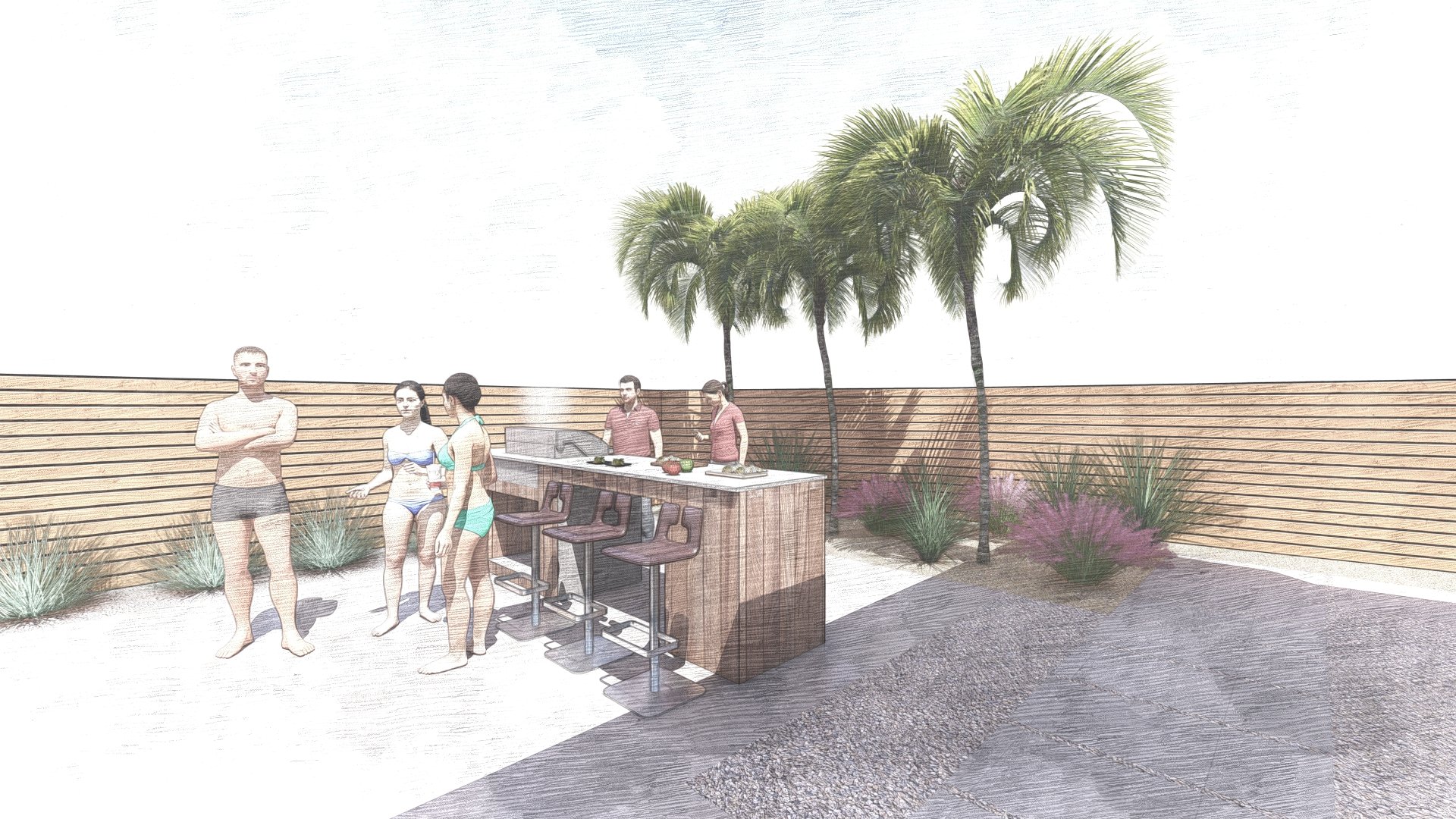
The outdoor kitchen is treated as an extension of the architecture rather than a freestanding appliance area. It supports family meals, larger gatherings and relaxed evenings without dominating the garden.
These spaces were conceived around the life that happens within them:
Quiet mornings beside the pool.
Comfortable outdoor dining protected from the strongest sun.
Informal gatherings around food, water and fire.
Open space for movement without visual clutter.
Privacy that does not make the garden feel enclosed.
The deeper luxury is not excess. It is resolution: a landscape that feels effortless because hundreds of decisions have been brought under one clear design direction.
Experience the Contemporary Garden in Chula Vista. A luxury estate design with modern pool, pergola, outdoor dining, and sustainable landscape architecture.
Materials That Create Calm and Continuity
Concrete establishes the primary ground plane. Its continuous geometry reinforces the contemporary architecture and gives the long patio visual order.
Wood introduces warmth and a more tactile human scale beneath the pergola and around the principal areas of use. The transition between concrete and wood is deliberately restrained—a change experienced through temperature, sound and movement rather than applied decoration.
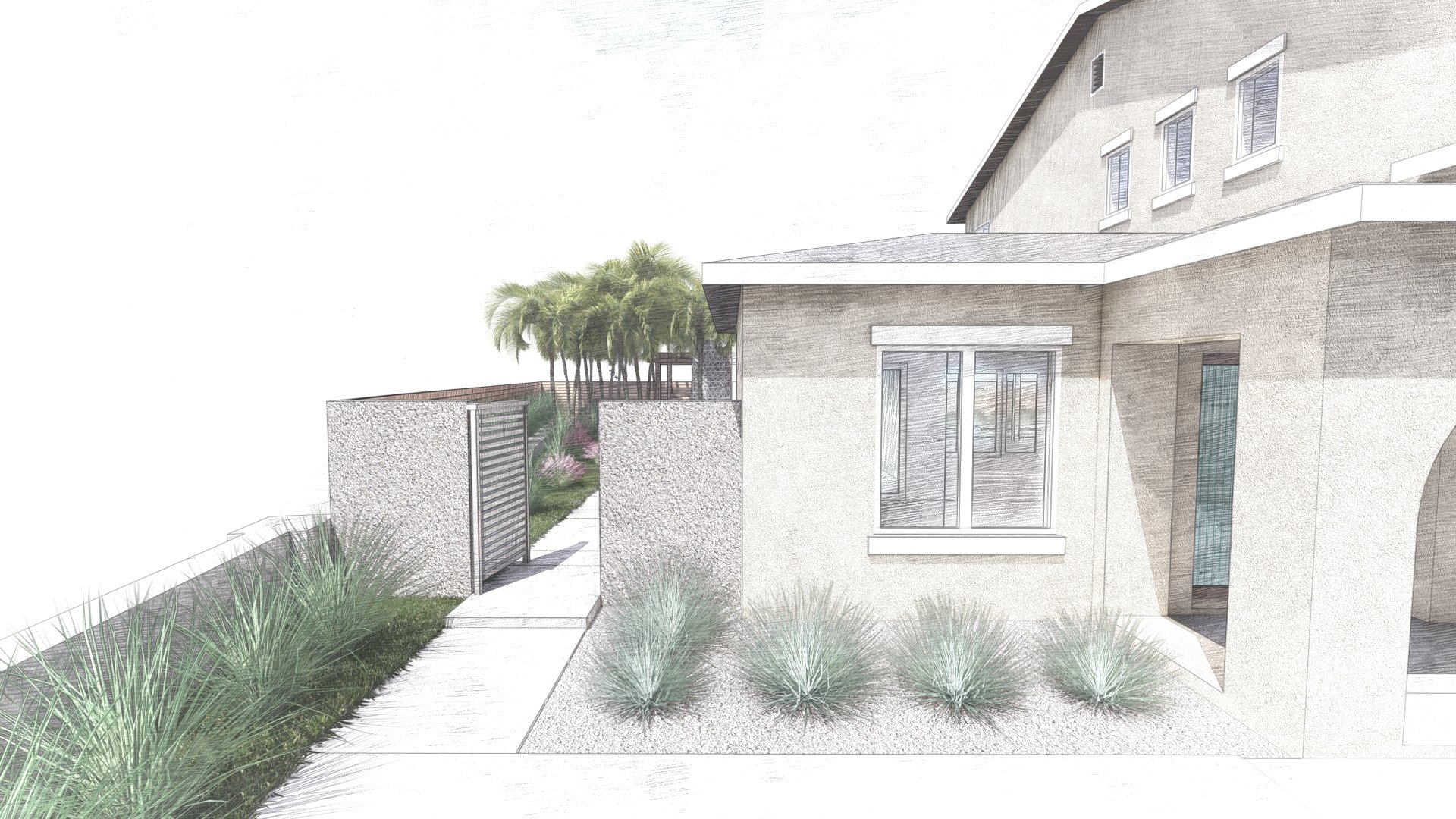
Planting softens these architectural surfaces without obscuring them. The result is a balanced relationship between precision and growth, structure and seasonal change.
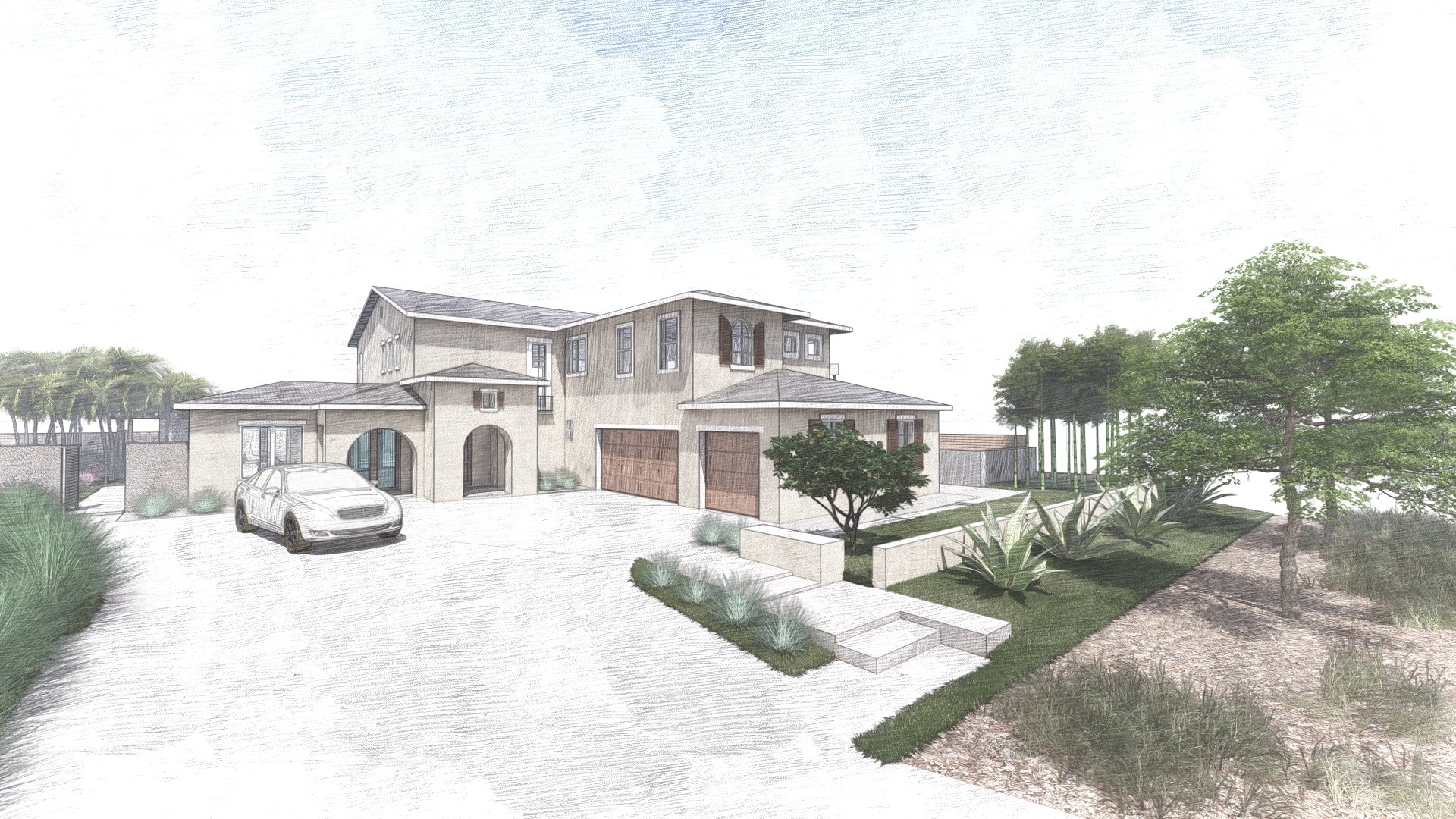
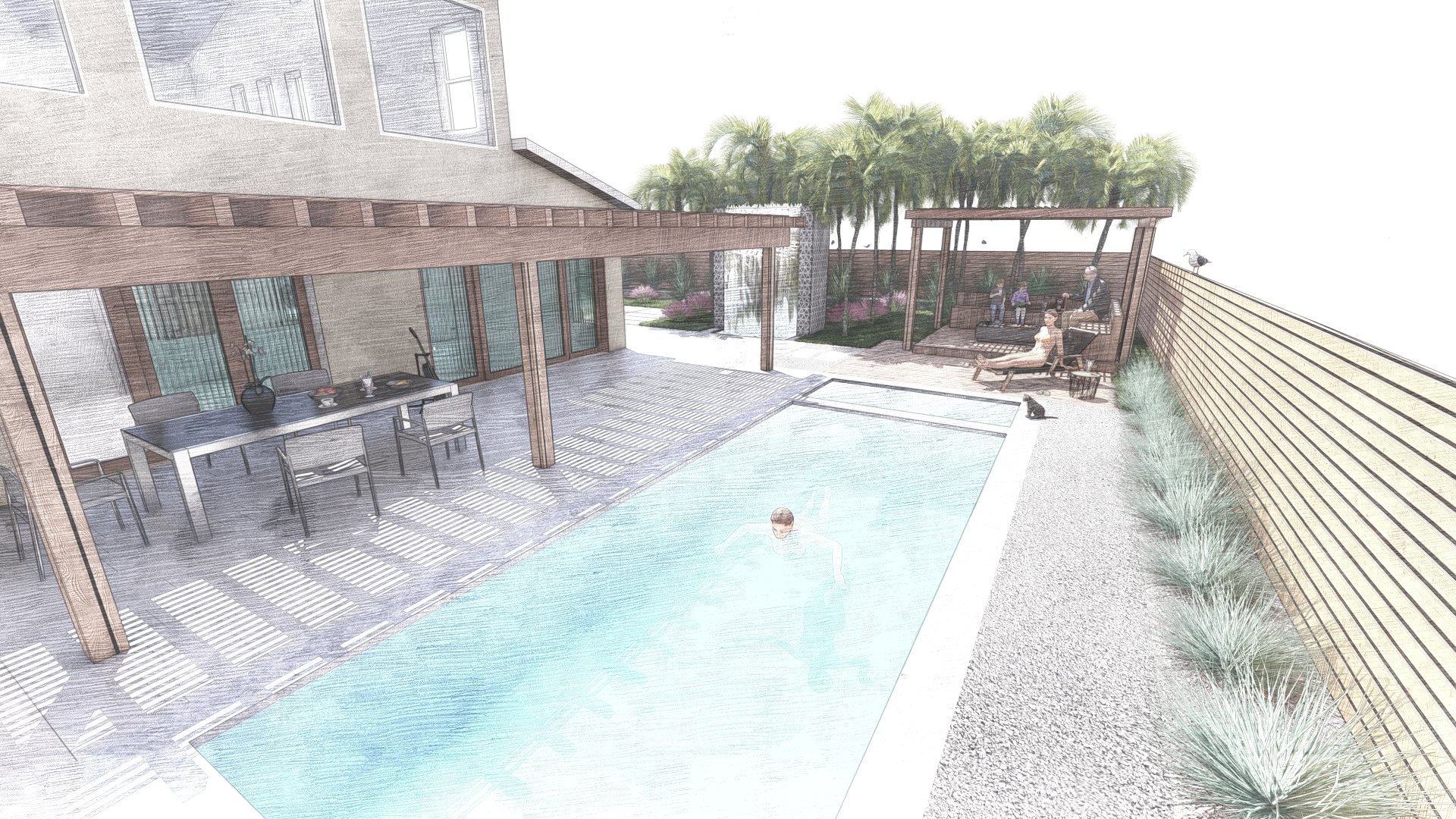
A Contemporary Garden Can Still Be Alive
Contemporary design does not need to produce a biologically empty landscape.
The open center of this garden is balanced by layered planting along its edges. Taller elements lift the canopy, shrubs create privacy and depth, and lower planting protects the soil surface while softening the boundary between hardscape and garden.
The planting strategy is conceived as a pollinator-supporting network rather than a collection of isolated ornamental specimens. A sequence of flowering plants can provide nectar and pollen through different parts of the season, while layered vegetation offers shelter and opportunities for wildlife movement.
This approach creates a garden that remains visually controlled while supporting butterflies, bees, hummingbirds and other beneficial species. Movement, sound and seasonal change become part of the experience of the property.
The California Department of Fish and Wildlife identifies pollinators as important contributors to plant reproduction and biodiversity. USDA Natural Resources Conservation Service guidance similarly emphasizes continuous and diverse bloom, nesting opportunities and protection from disturbance as fundamental components of pollinator habitat. California Department of Fish and Wildlife · USDA NRCS Pollinator Habitat Guidance
Water, Soil and Long-Term Landscape Performance
Ecological intelligence is not added to the project as a decorative narrative. It influences how the landscape performs. Planting is organized through hydrozoning so plants with compatible water requirements can be irrigated together. Soil strategy supports moisture retention where water is beneficial and drainage where roots require greater aeration. Groundcover helps reduce exposed soil and evaporation, while irrigation remains visually quiet within the composition. These principles align with California’s broader water-efficient landscape framework, which connects plant selection, hydrozones, irrigation efficiency, soil preparation and long-term water management. California Department of Water Resources — MWELO No universal water-saving percentage is claimed for this project. Actual performance depends on the final planting palette, irrigation equipment, installation, establishment period and ongoing management. The design objective is a landscape that uses water purposefully while maintaining shade, enclosure, seasonal interest and a genuinely garden-like atmosphere.
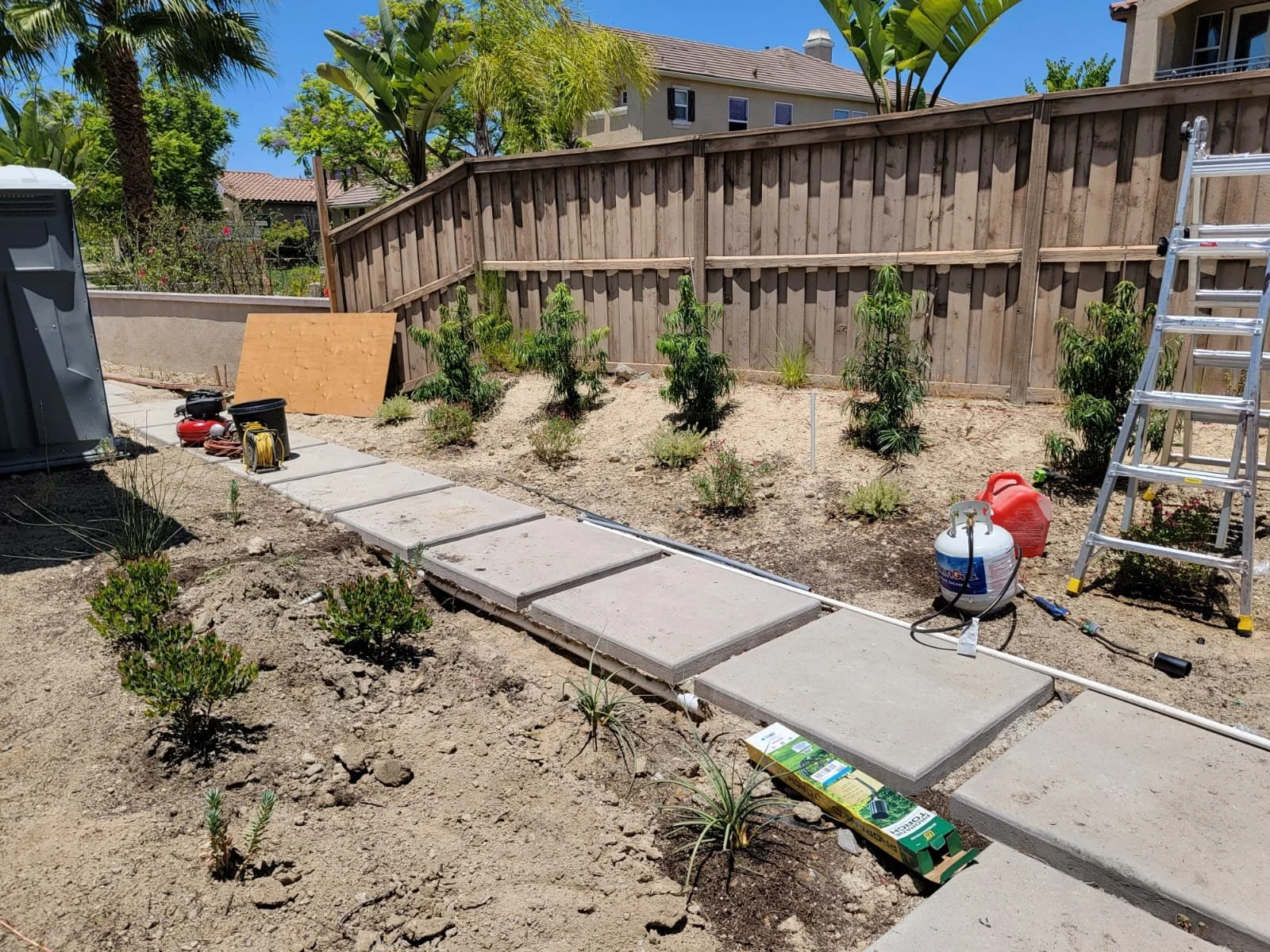
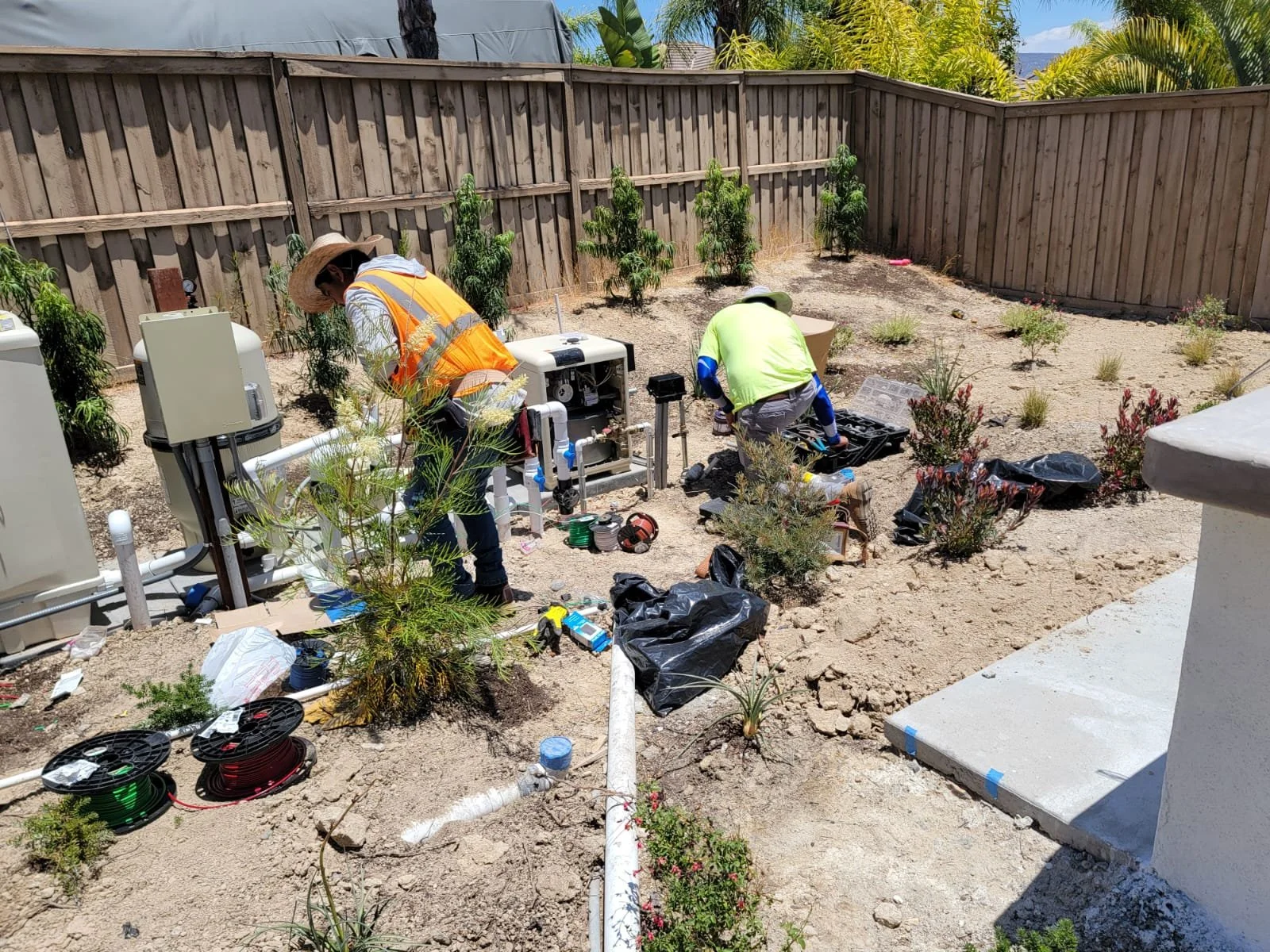
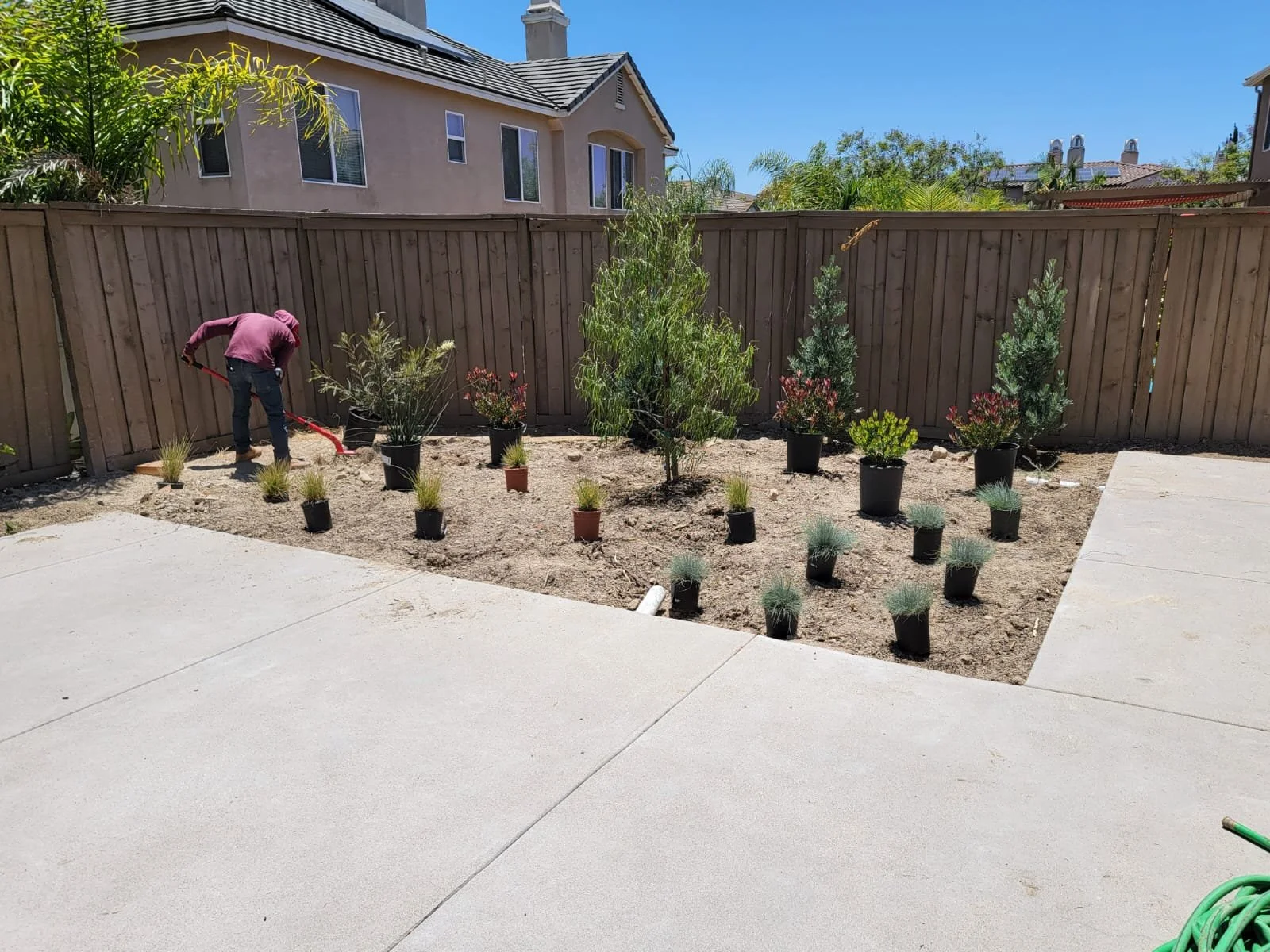
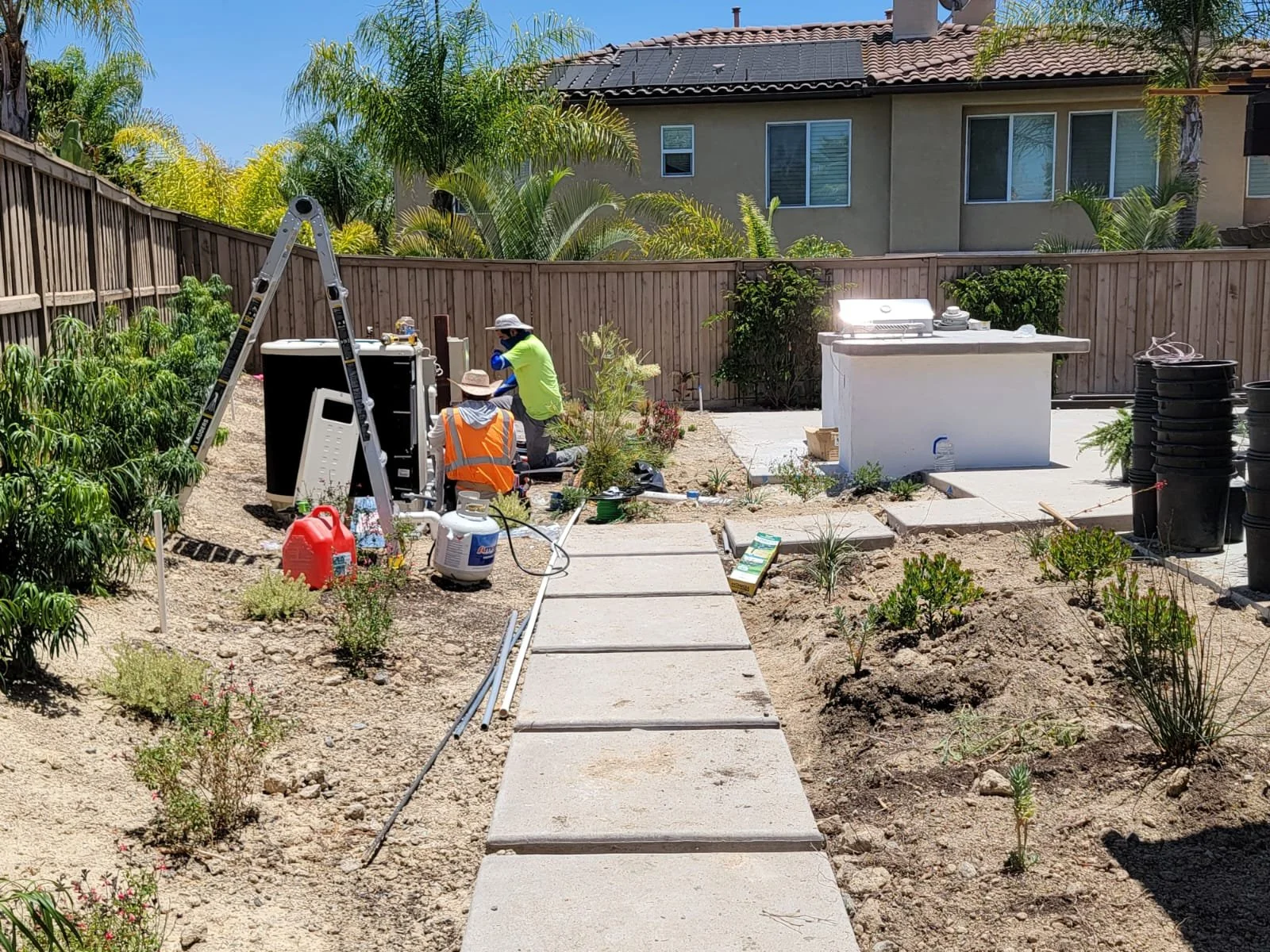
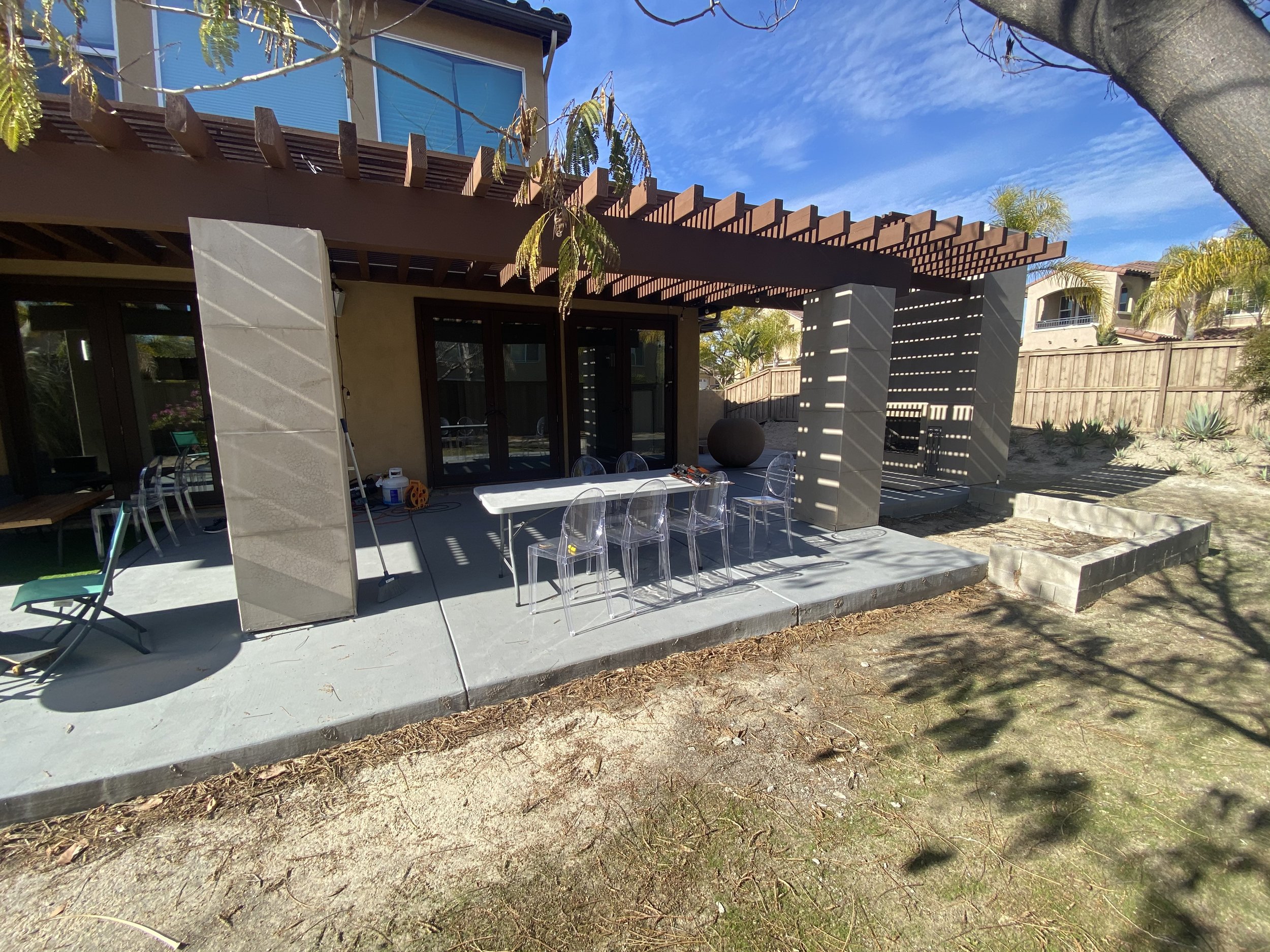
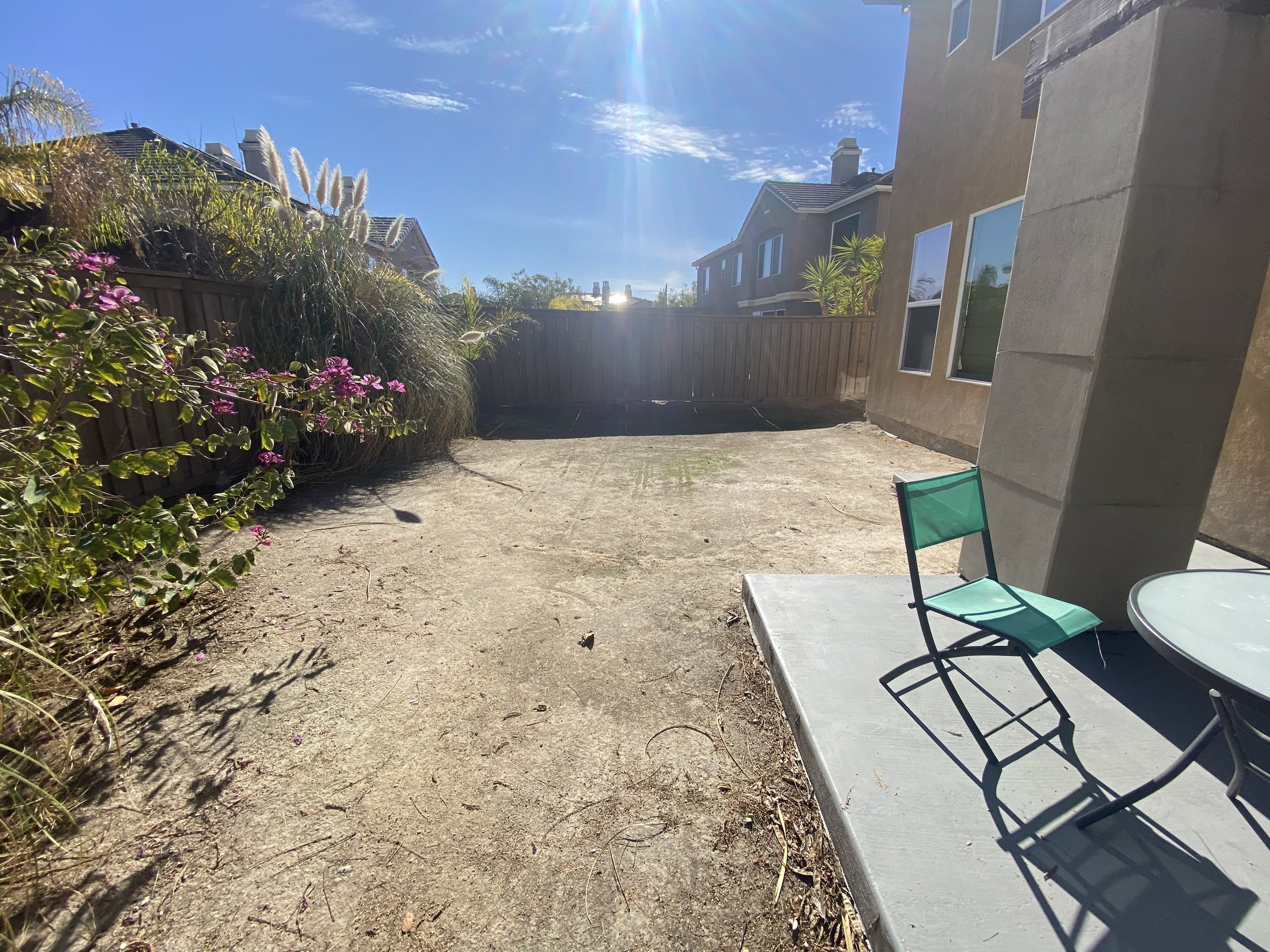
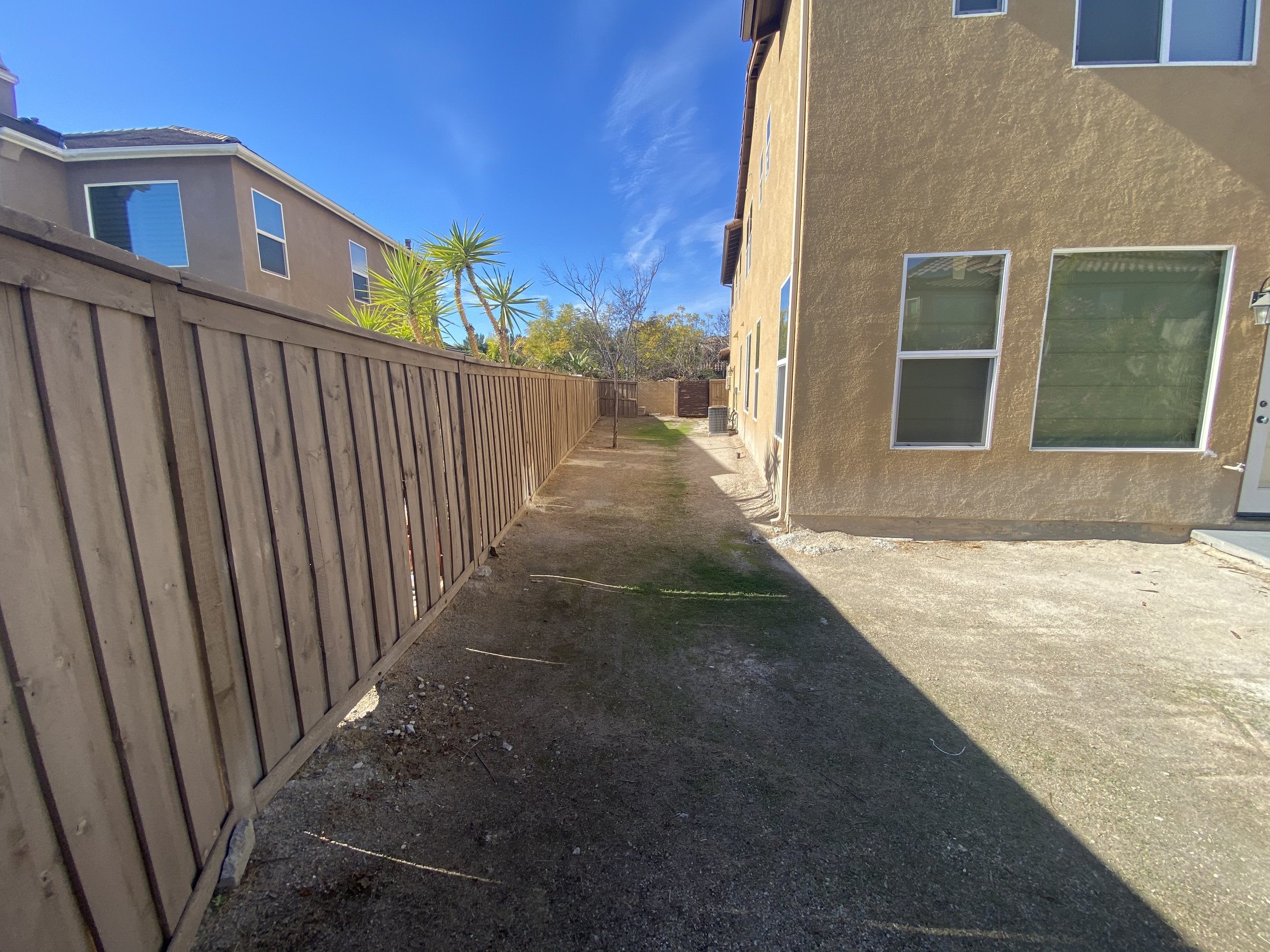
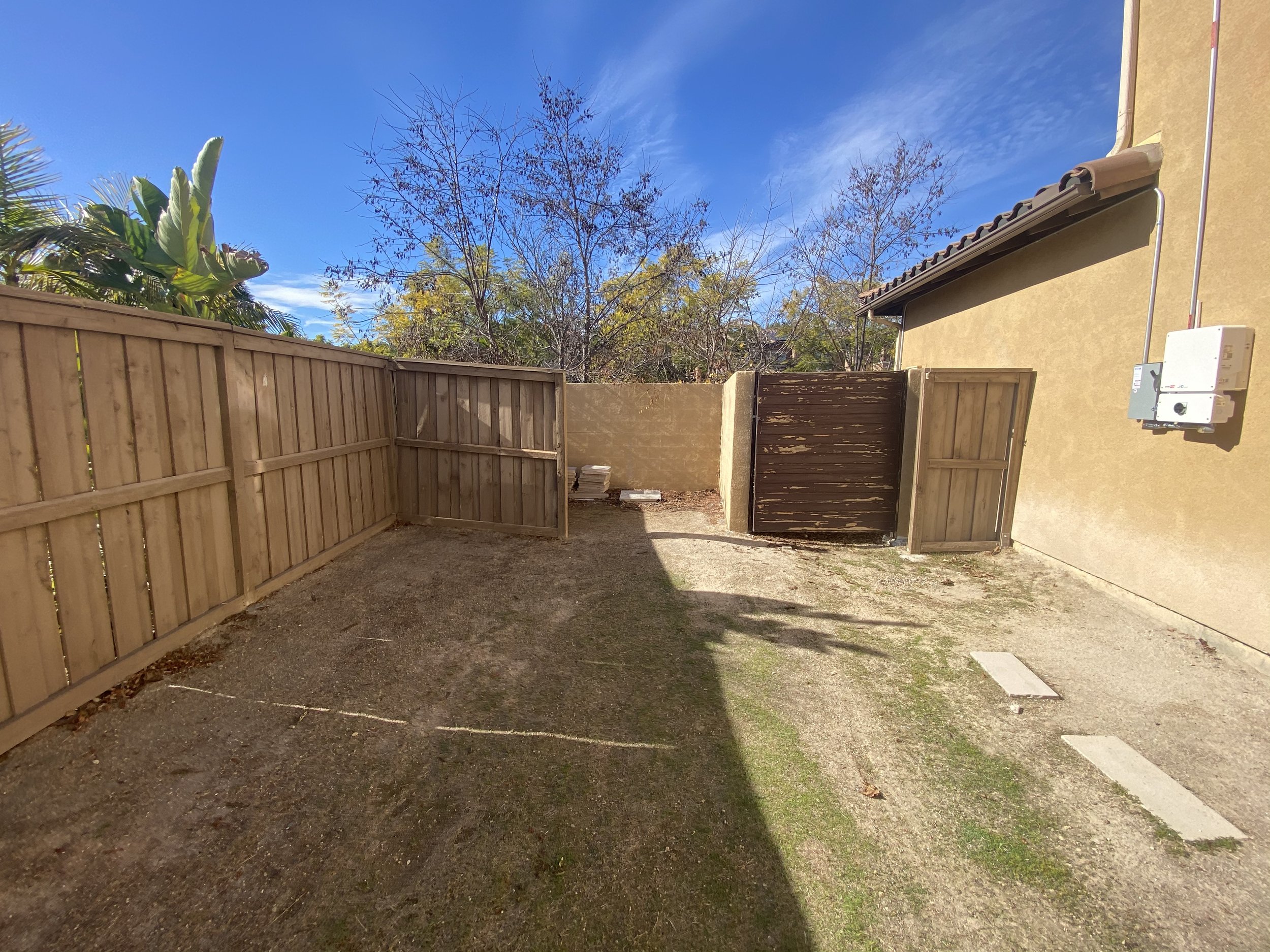
Work in Progress - Design Installation
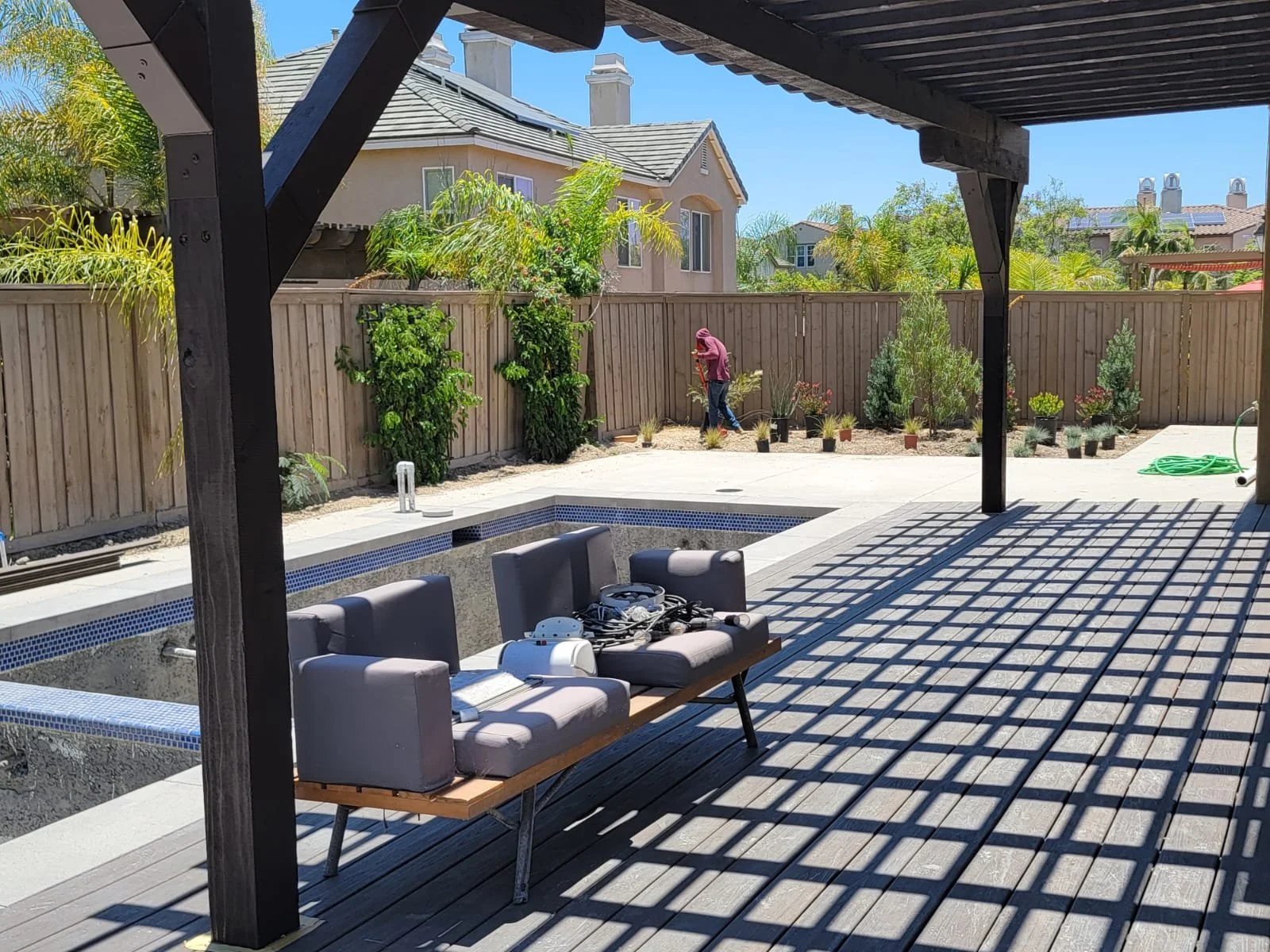
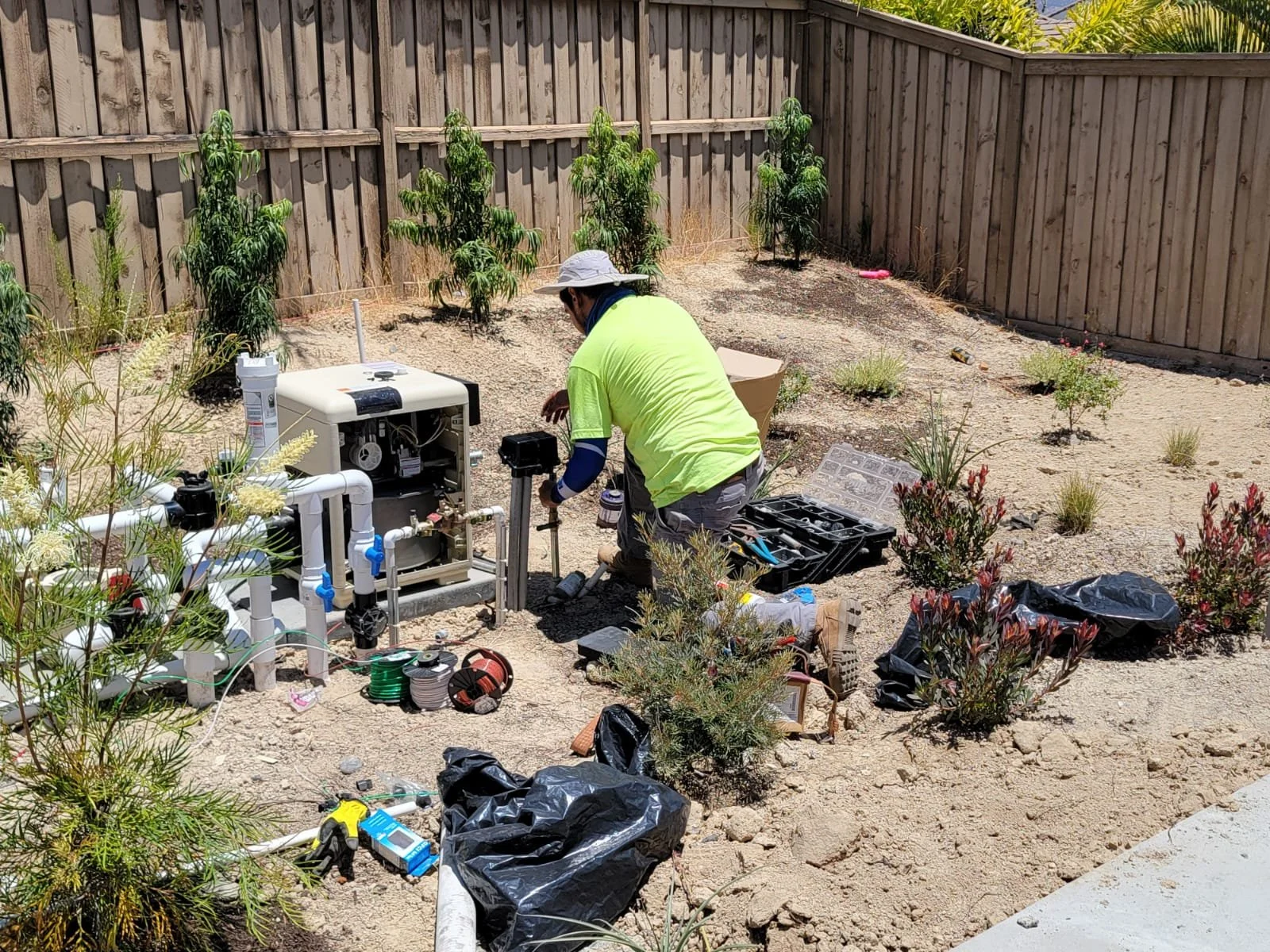
Architecture, Ecology and Everyday Wellbeing
The garden is experienced in layers: water, shade, planting, fire, material and movement. Nothing is isolated.
From the pool, the architecture appears lighter. From the pergola, planting creates a soft frame around the open terrace. From inside the house, the garden becomes a composed view rather than an unrelated exterior area.
Over time, the planting can become fuller, habitat value can increase and the relationship between the built and living elements can grow richer. This is the principle behind LASD Studio’s approach to landscapes as evolving systems: the garden is not designed as a static installation-day image, but as a living trajectory.
The ultimate value is a property that feels clearer, calmer and more complete—beautiful for entertaining, comfortable for everyday life and capable of supporting a more resilient relationship with Southern California’s climate and living environment.
Begin with a Clear Direction
f you are considering a complete landscape transformation, LASD Studio begins with the architecture, the property and the way you want to live outdoors.
The preliminary consultation is a focused conversation with the Lead Designer about your goals, existing conditions, design direction, anticipated phases and estimated investment range.
Design and Ecological References
California Department of Water Resources — Model Water Efficient Landscape Ordinance
California Department of Fish and Wildlife — Pollinator Science
California Native Plant Society — Benefits of California Native Plants
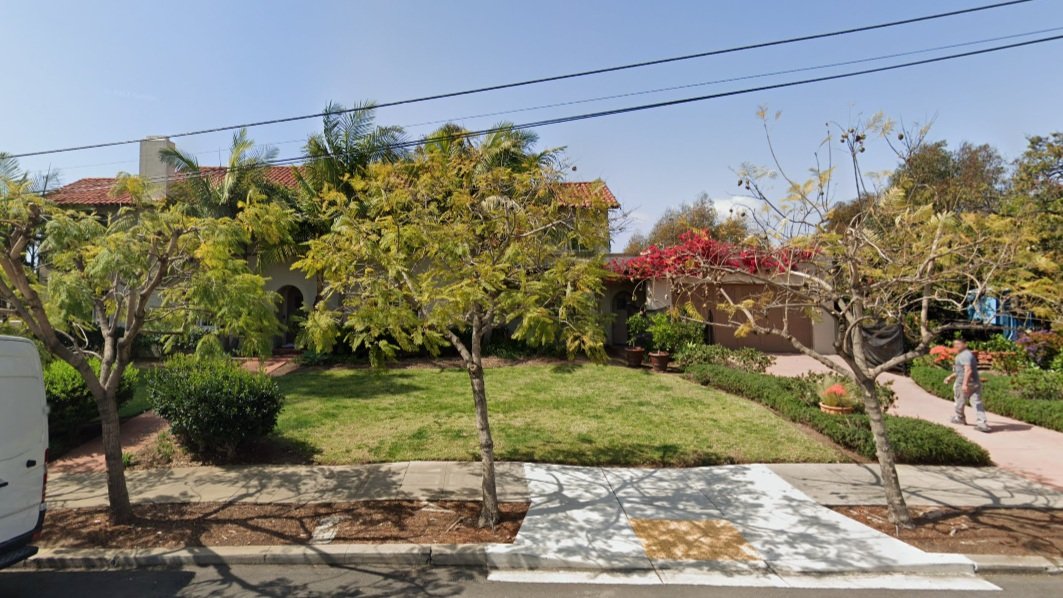
Existing Condition Situation - Before & Progress of Installation
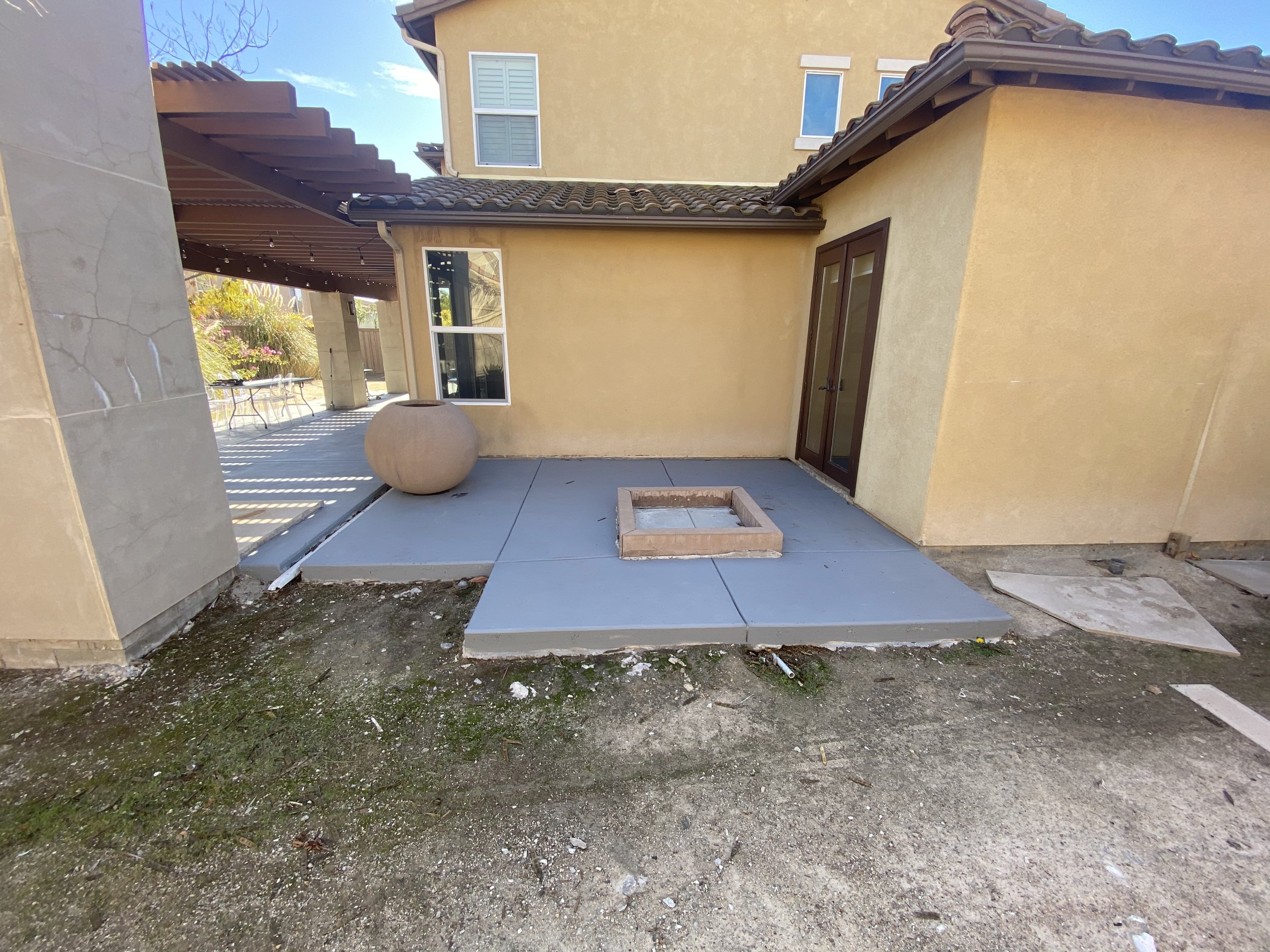
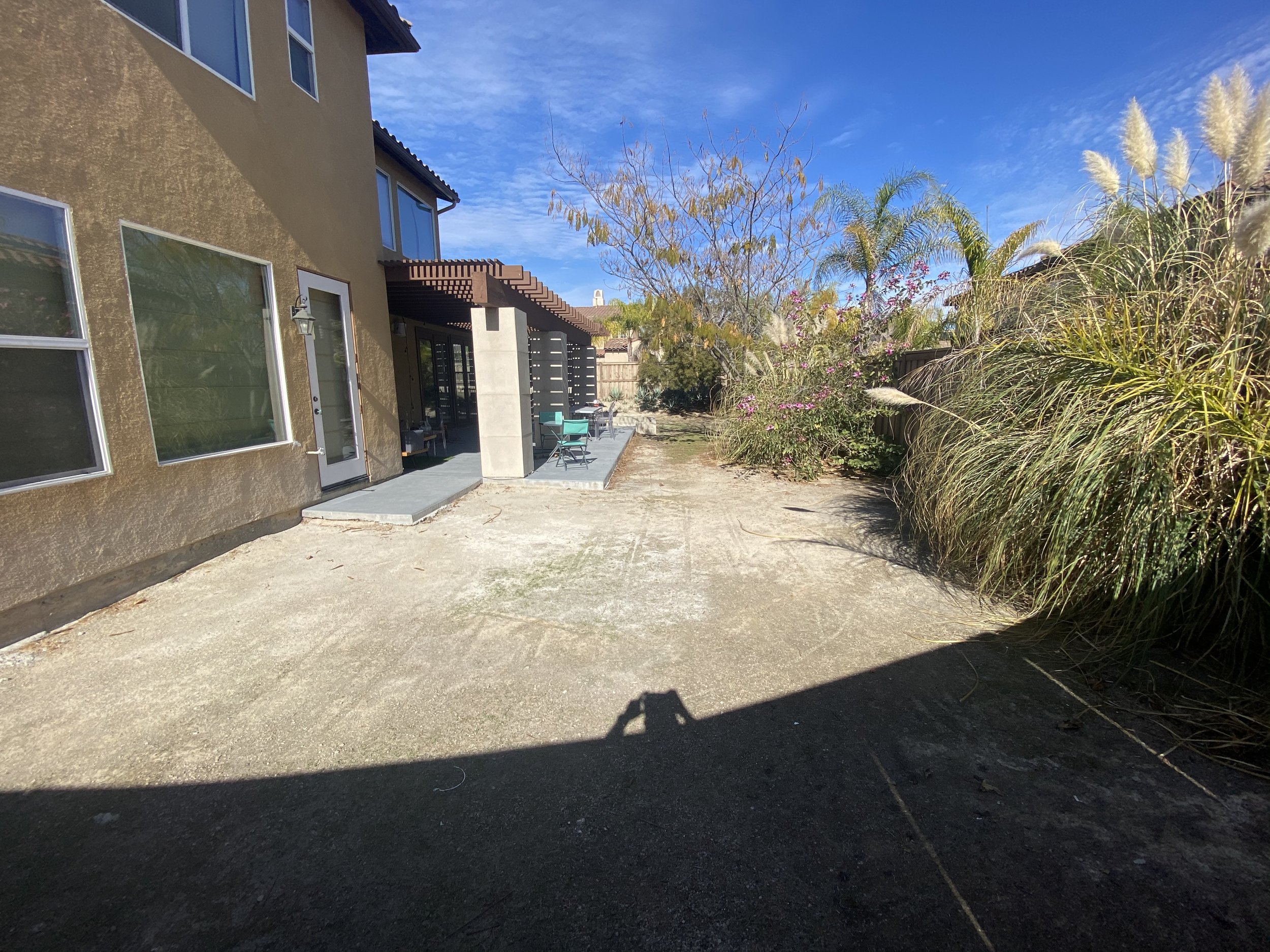
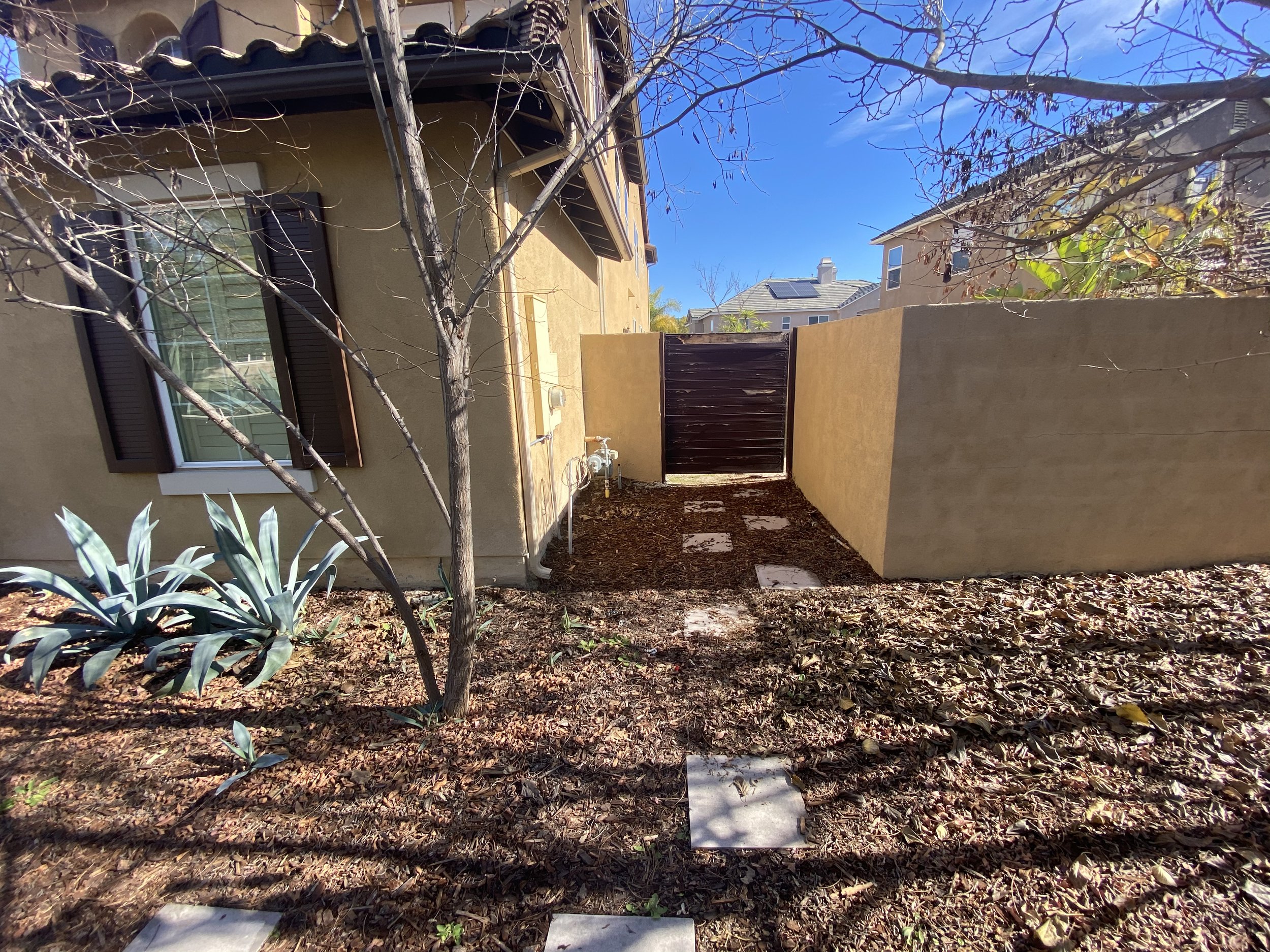
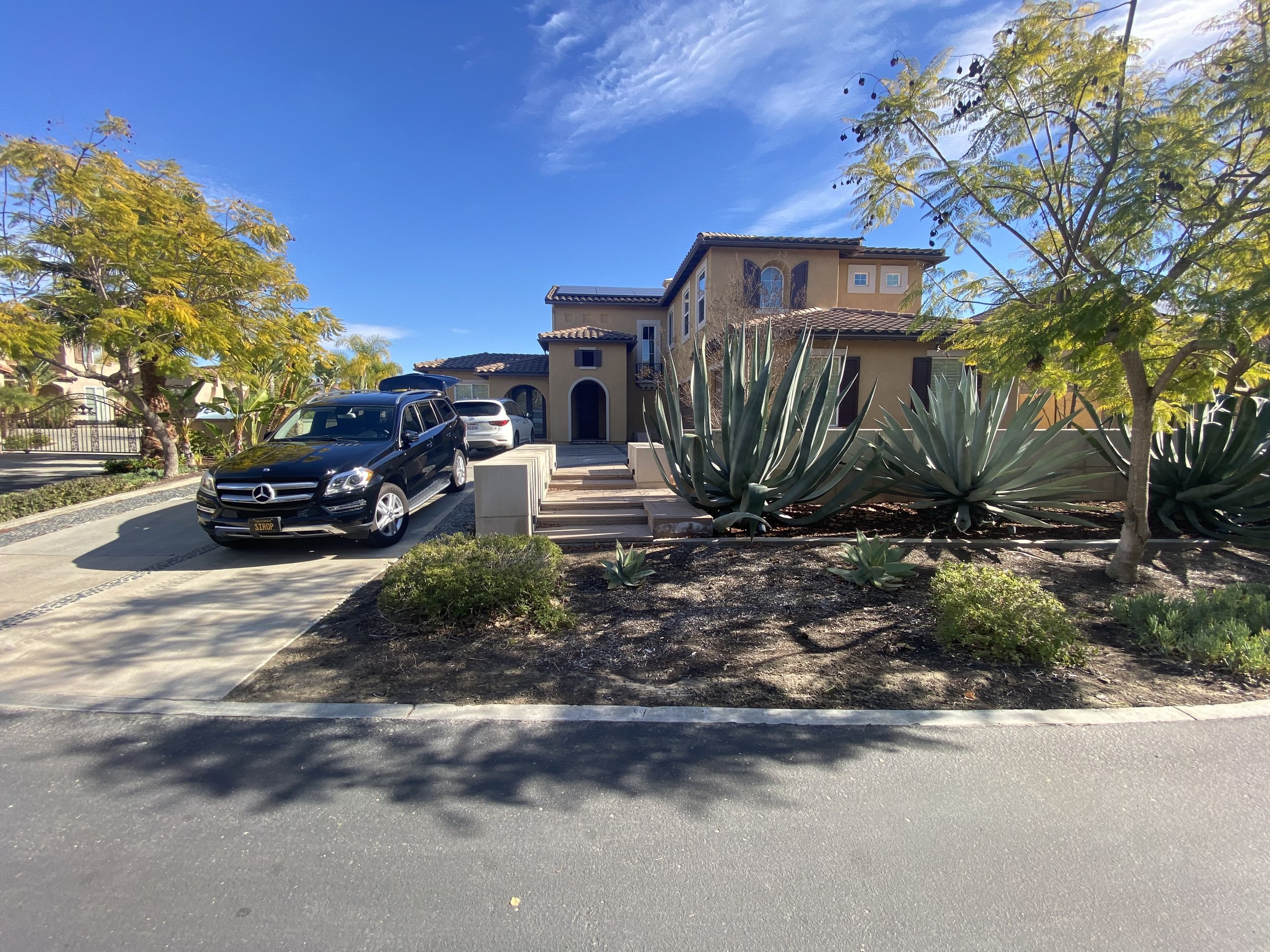
Chula Vista · Contemporary Landscape Design · Pool Garden · Outdoor Living · Climate-Responsive Design · Southern California

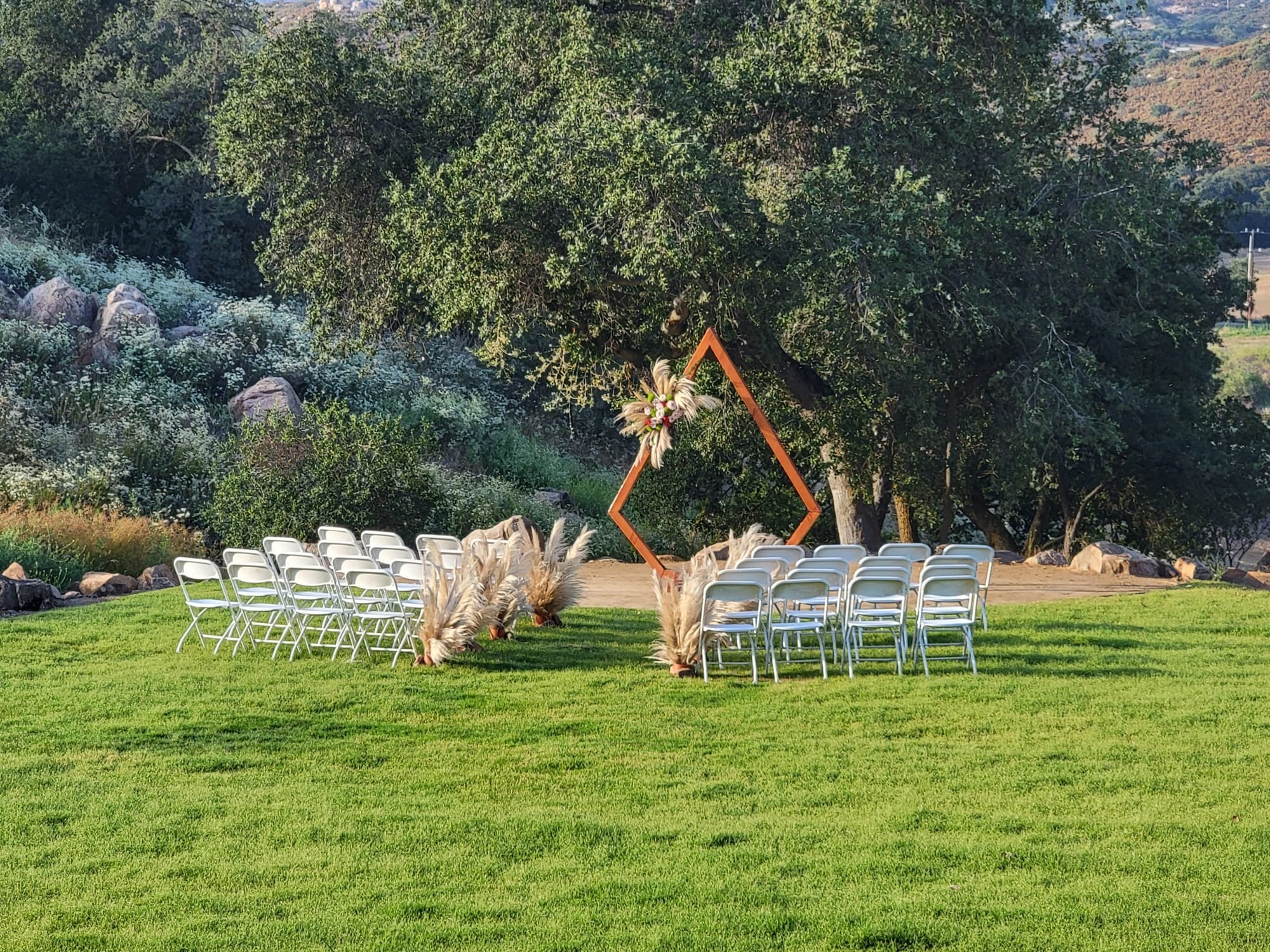
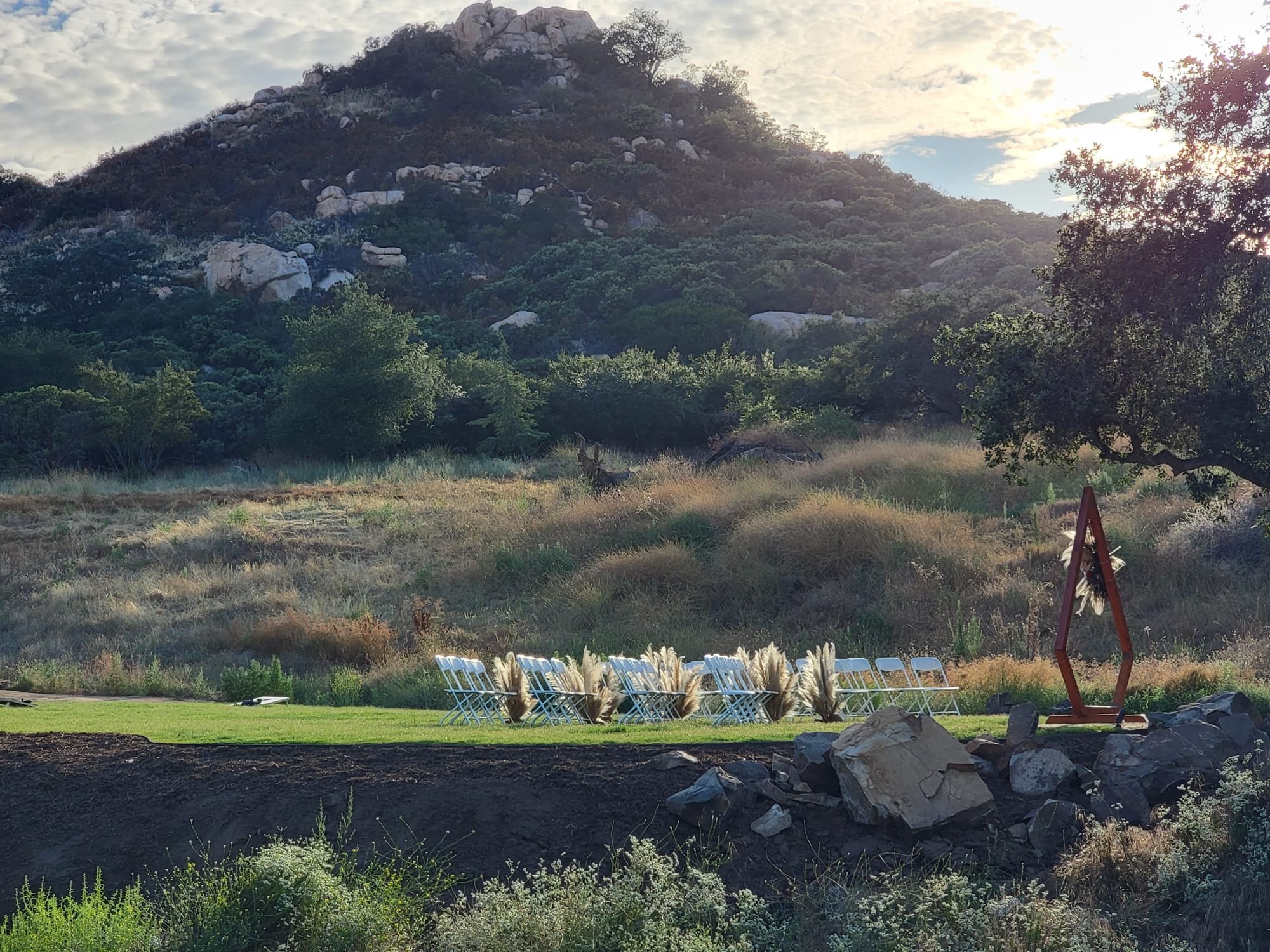
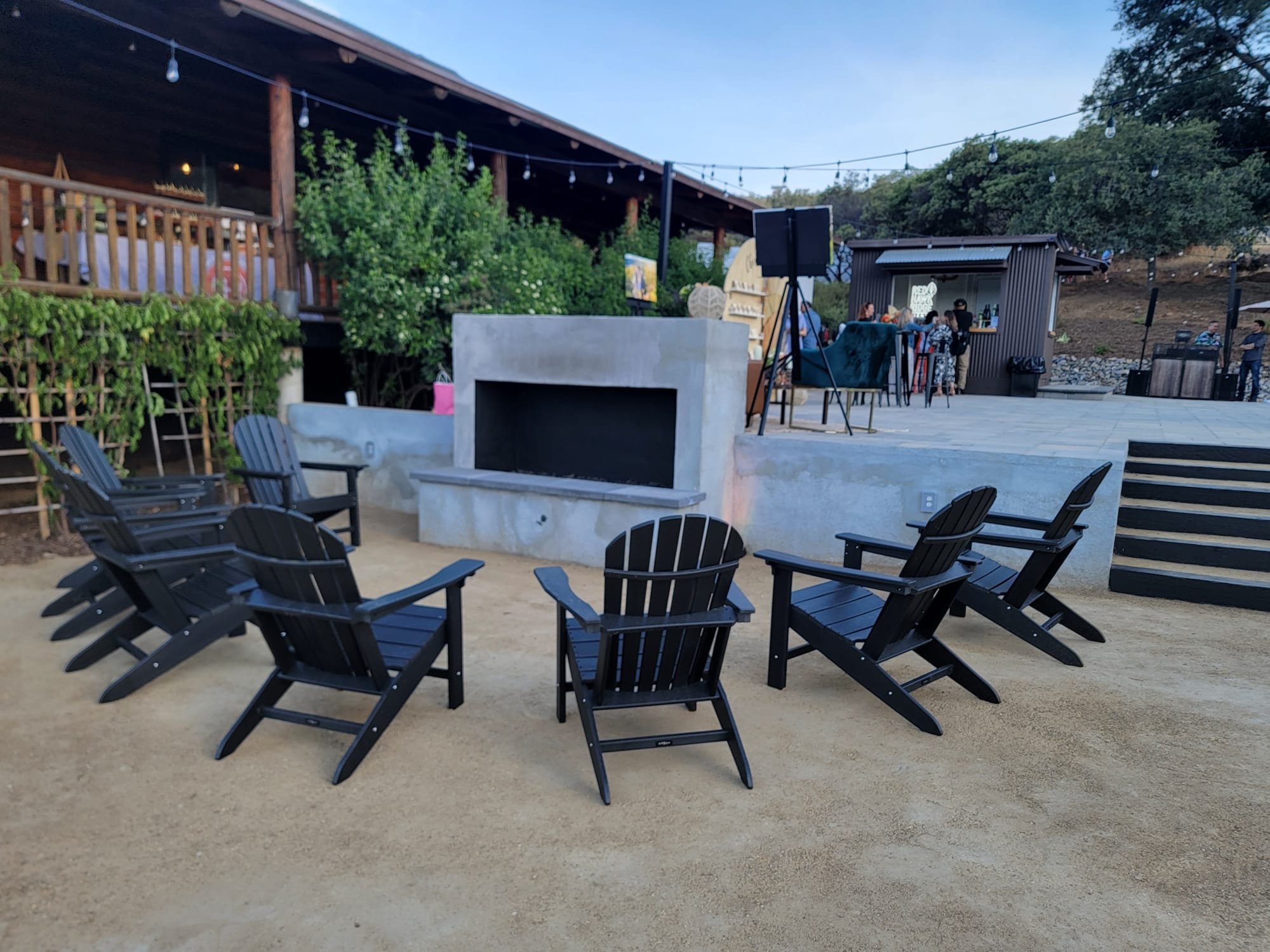
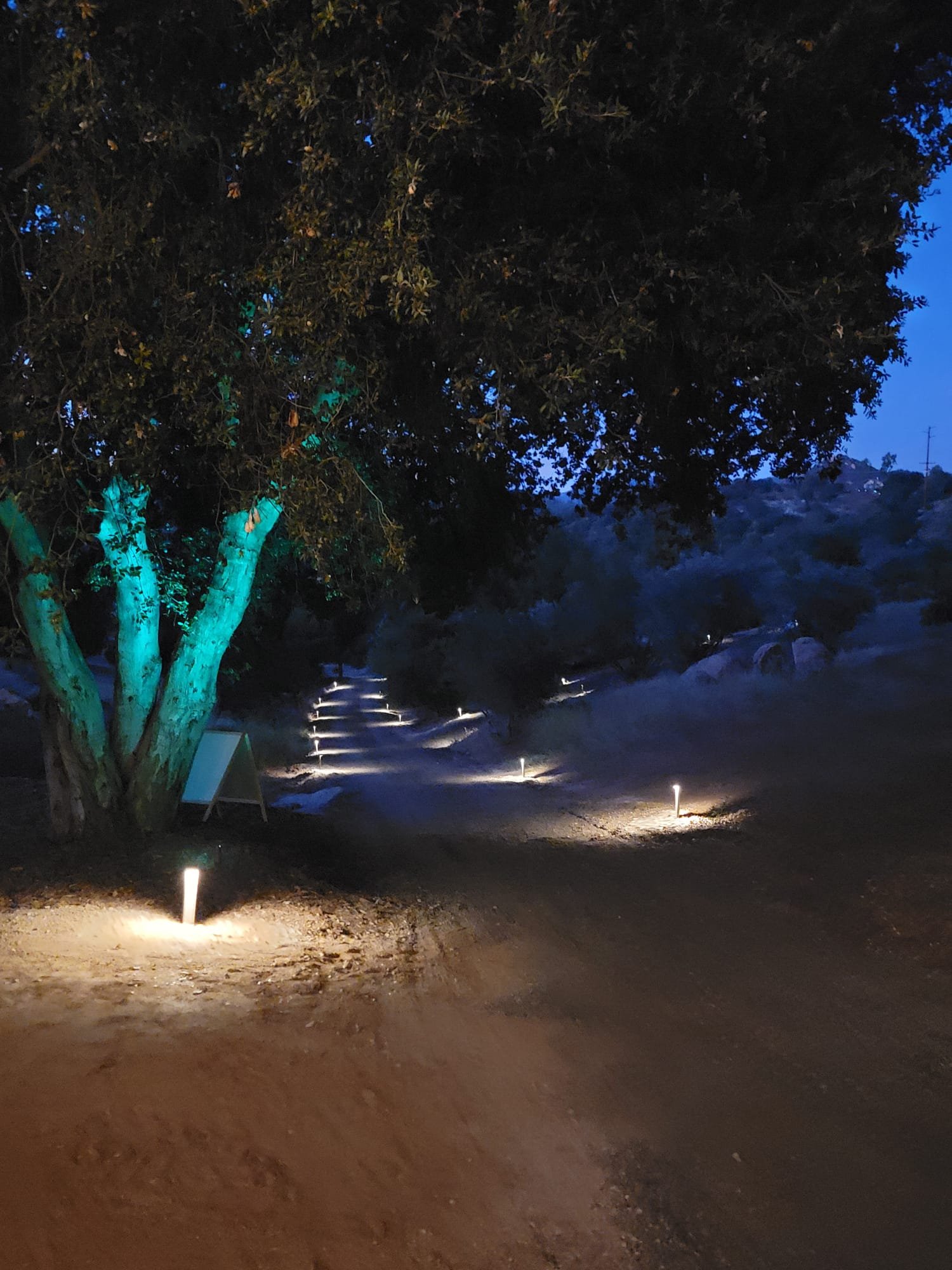
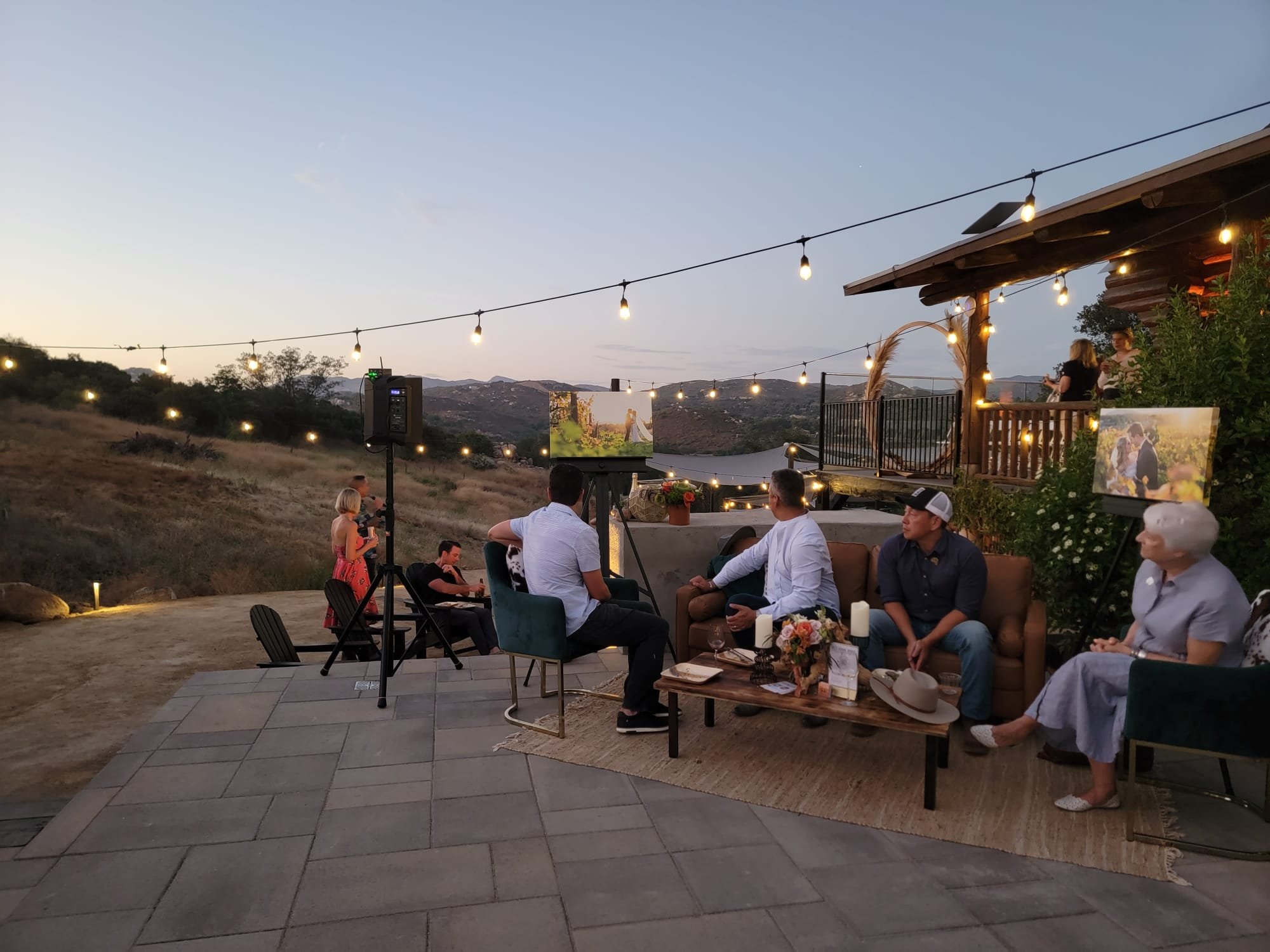
Wedding Garden Design - Red Hawk Ridge, Alpine, San Diego County
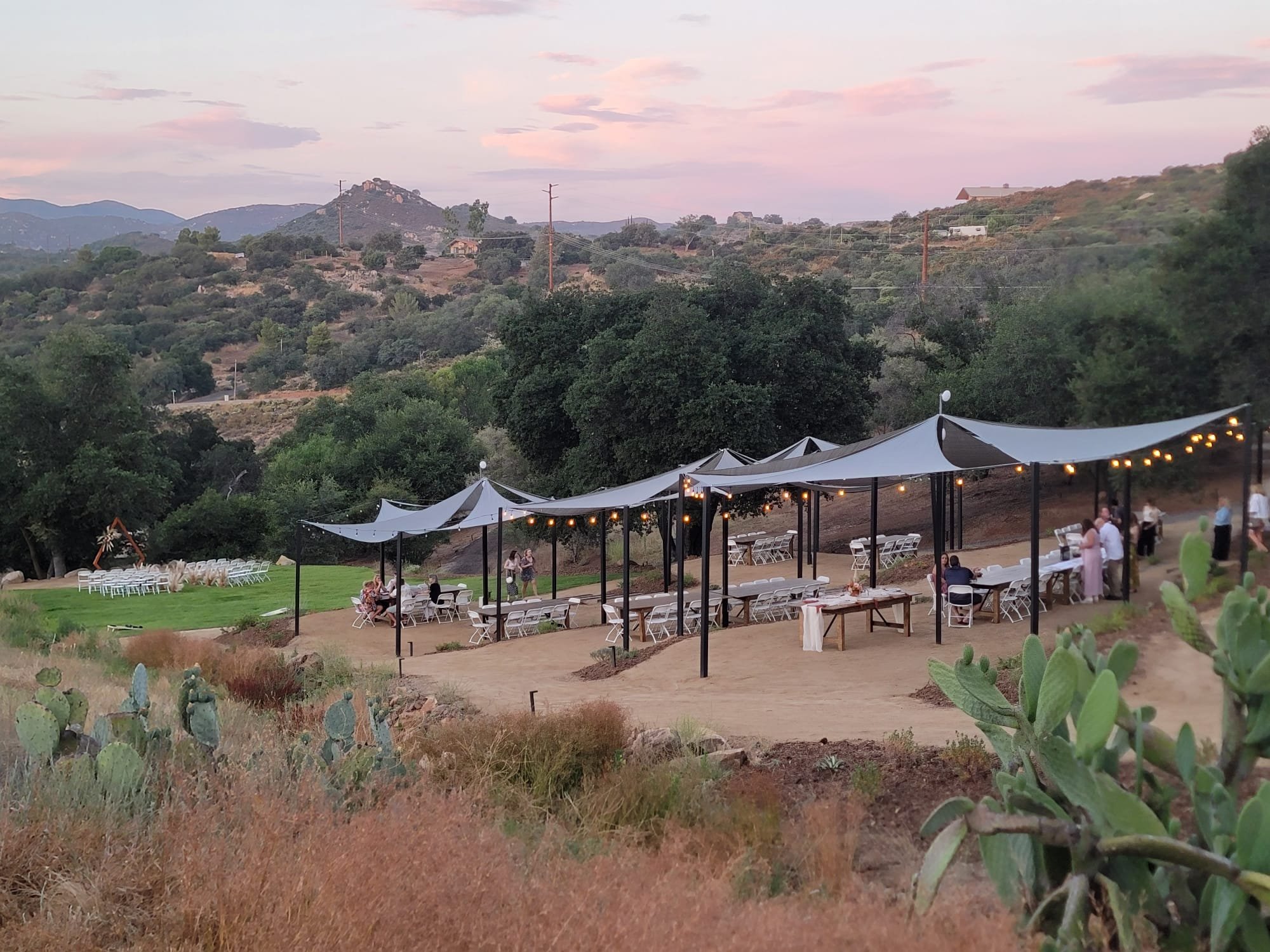
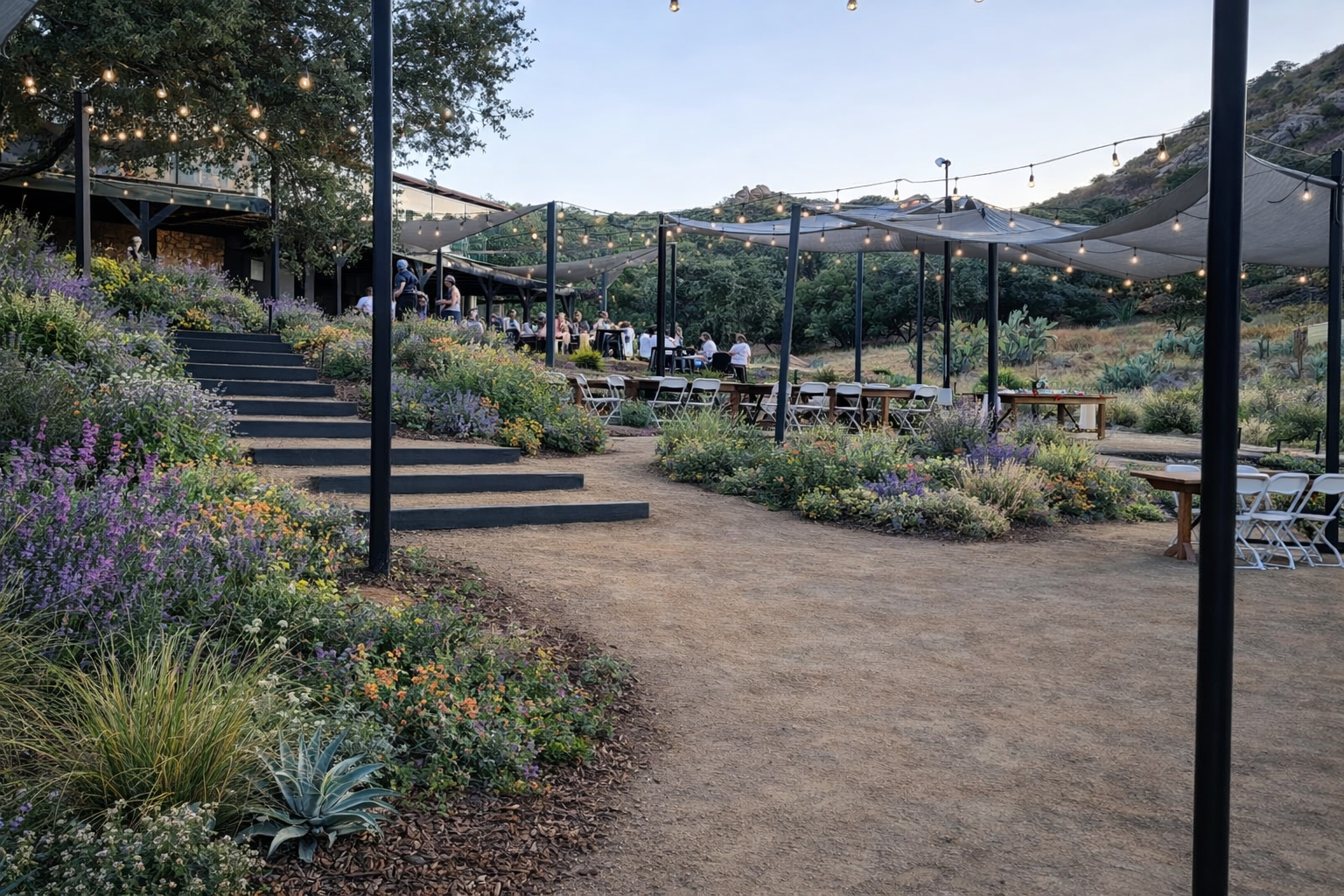
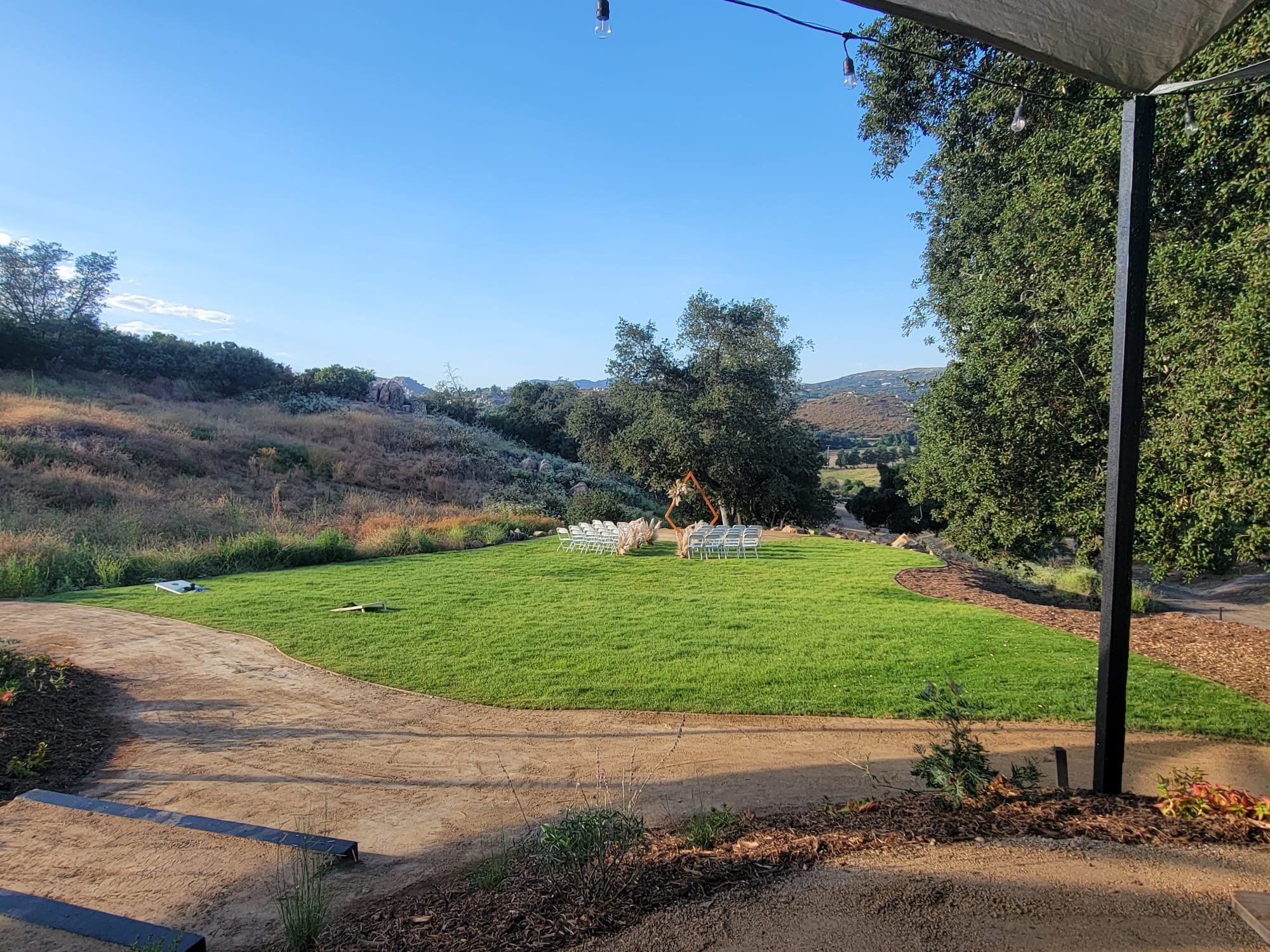
A wedding ceremony garden in Alpine, San Diego, blending contemporary design with Craftsman traditions. Designed as a living sanctuary for celebration, it combines timeless architecture, native planting, and open views at Red Hawk Ridge.
“A private estate transformed into a ceremonial landscape, blending California’s rugged beauty with timeless elegance for weddings and gatherings.”
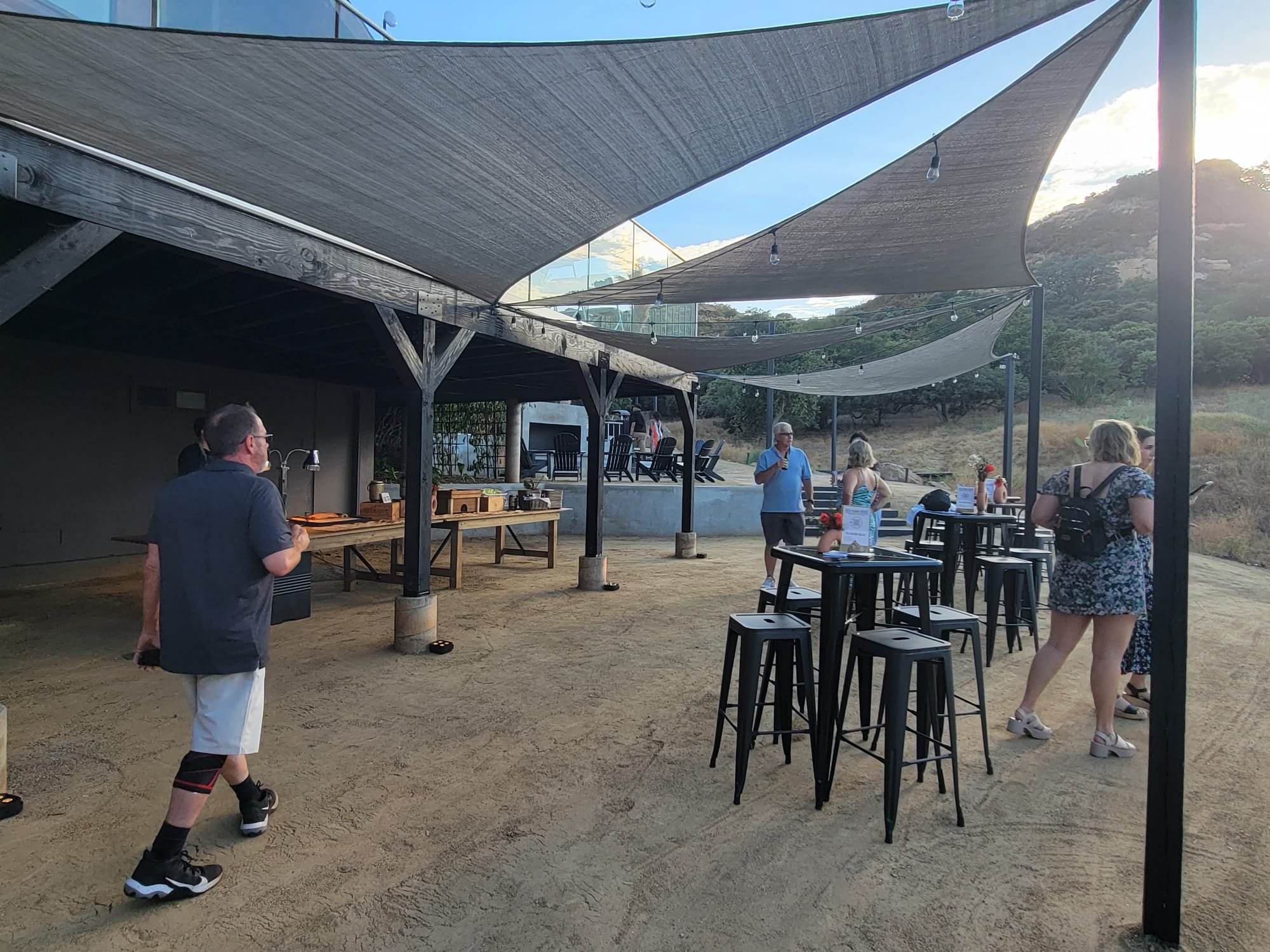
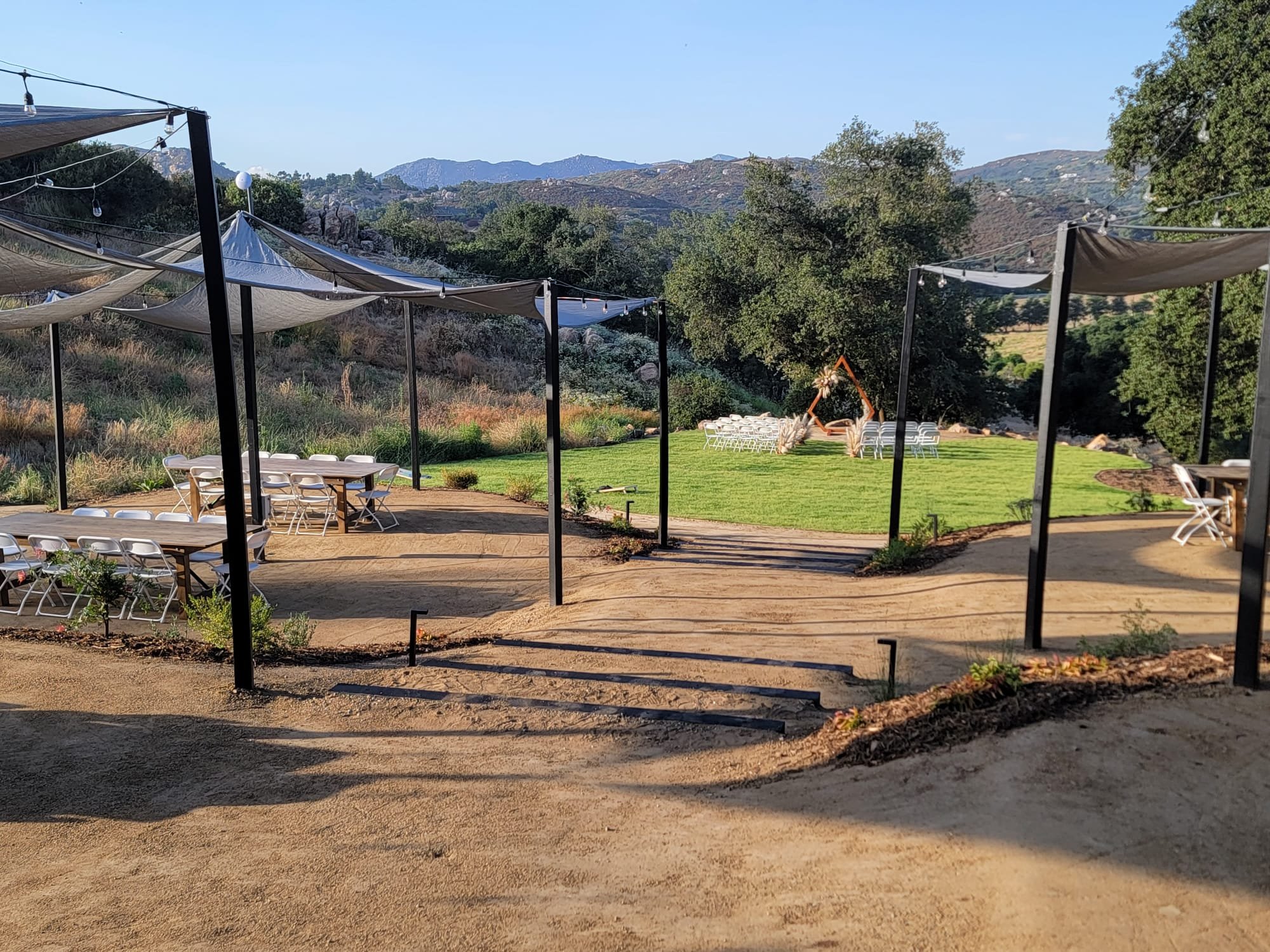
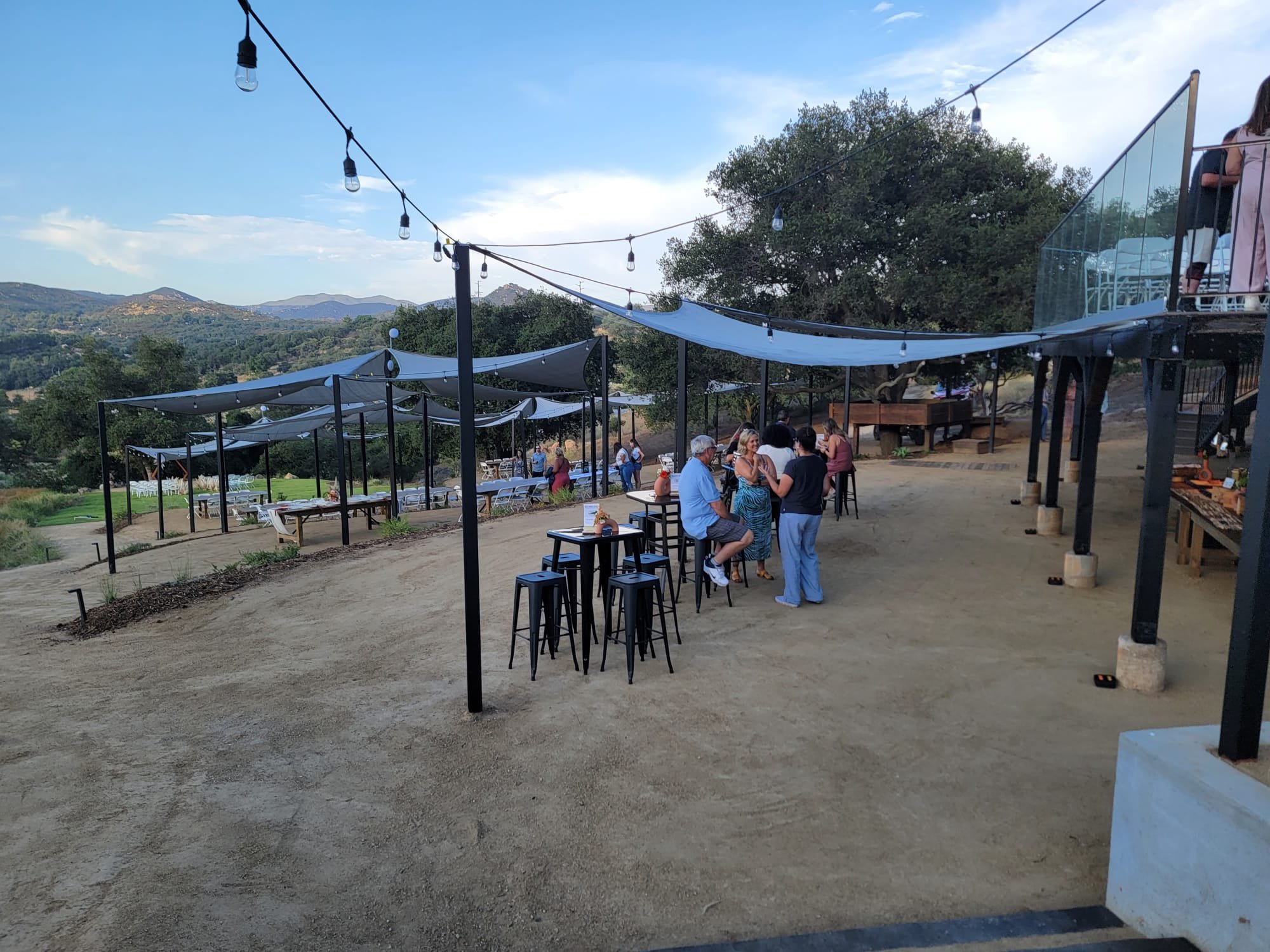
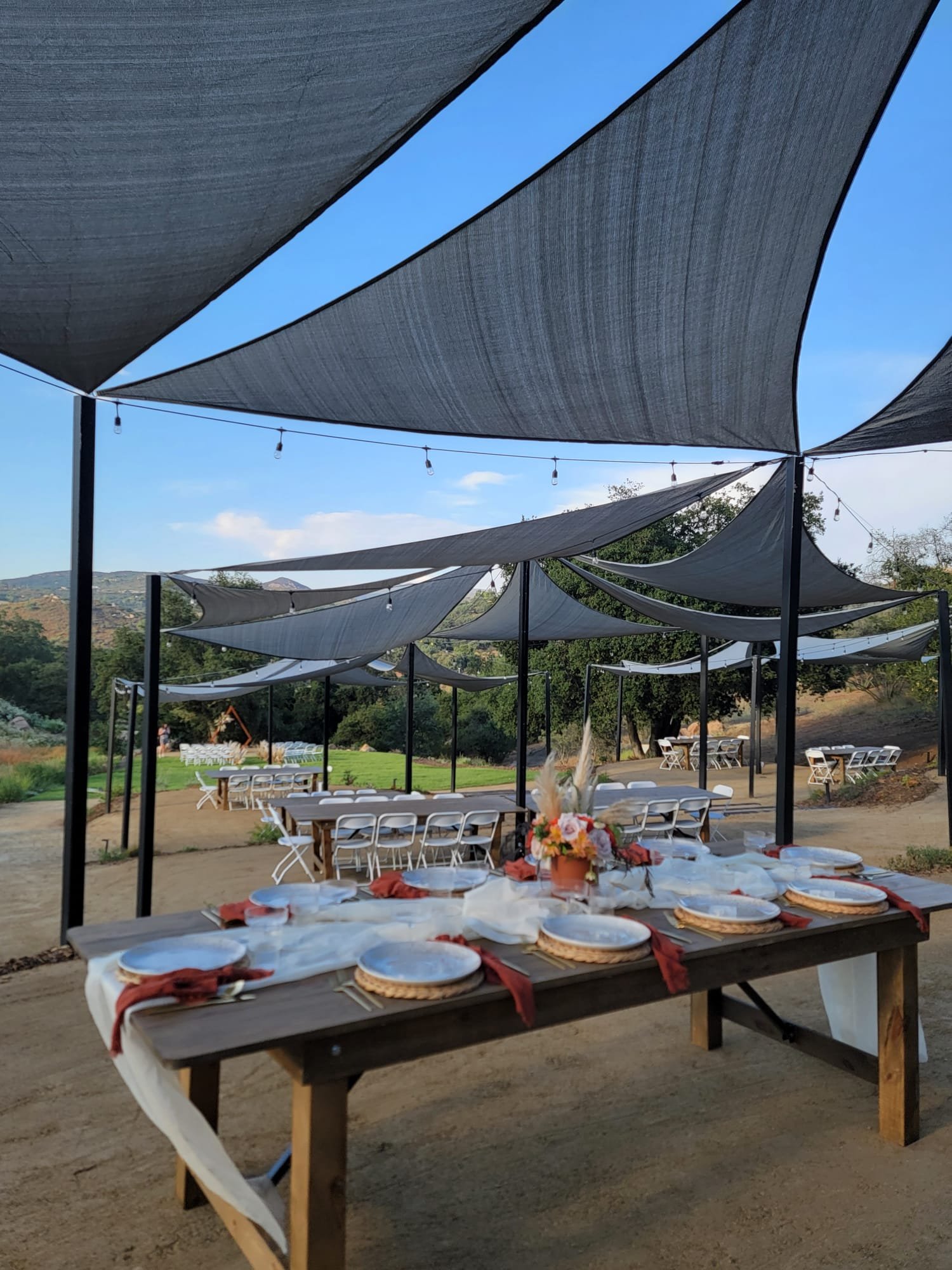
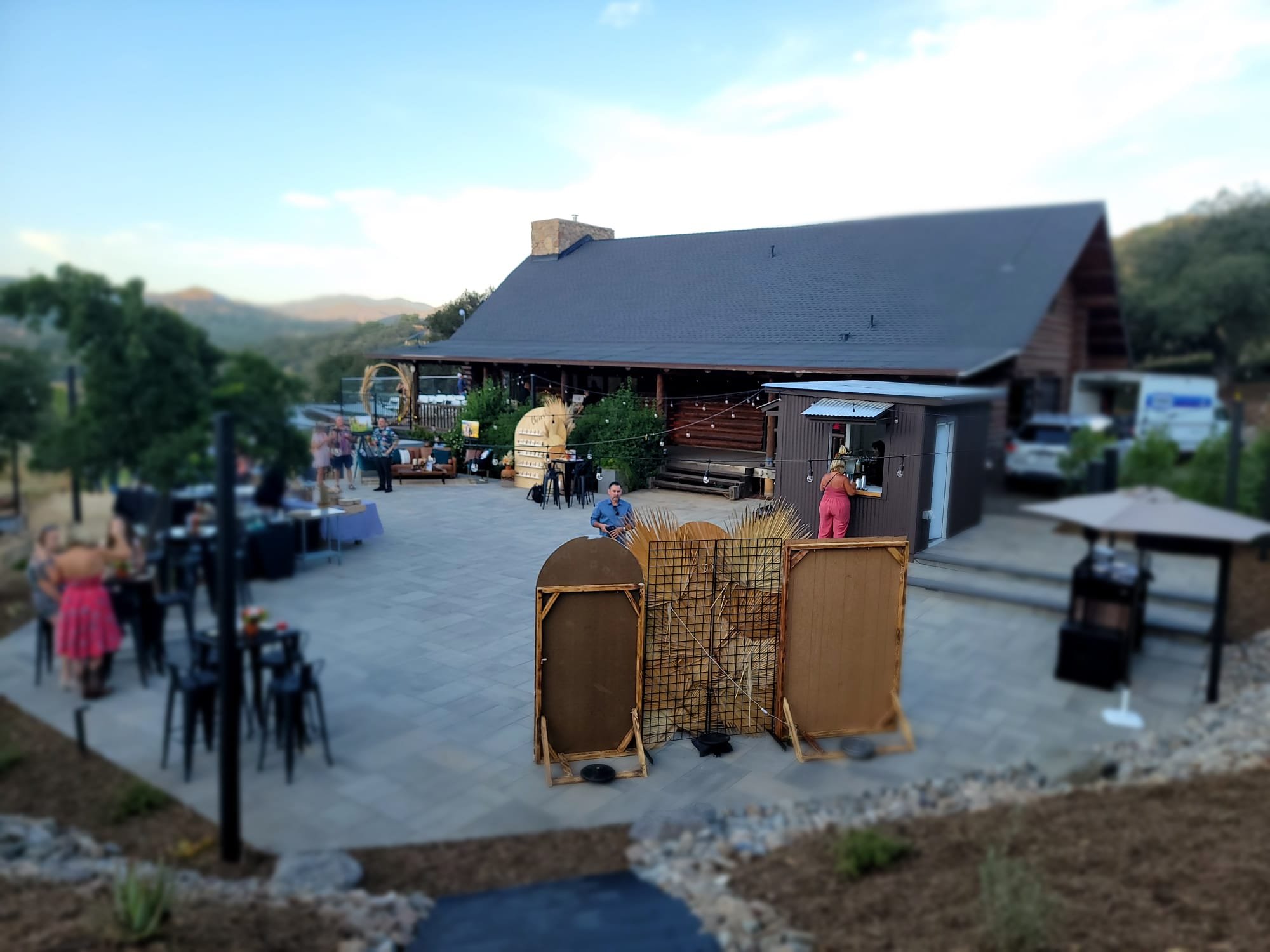
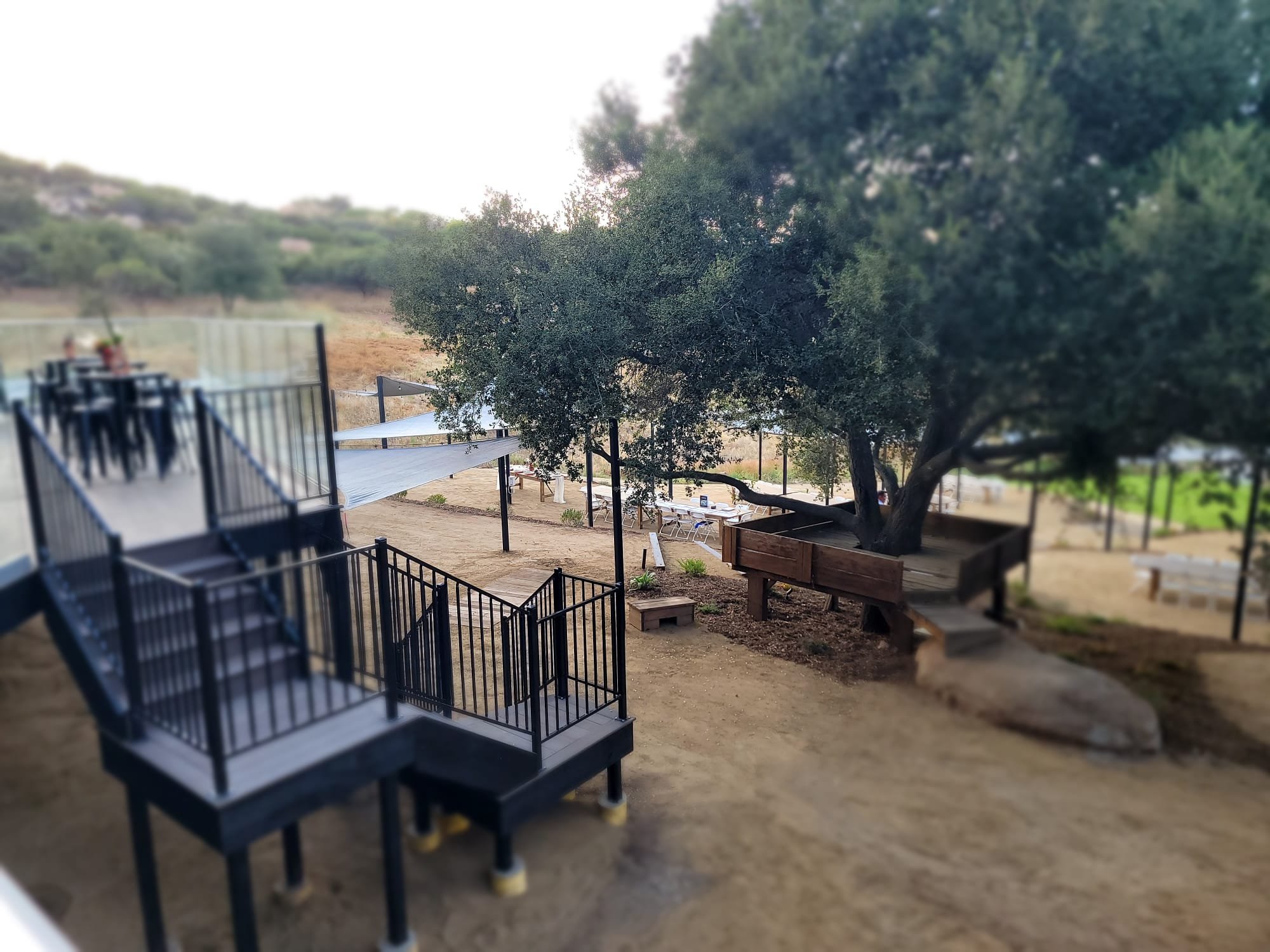
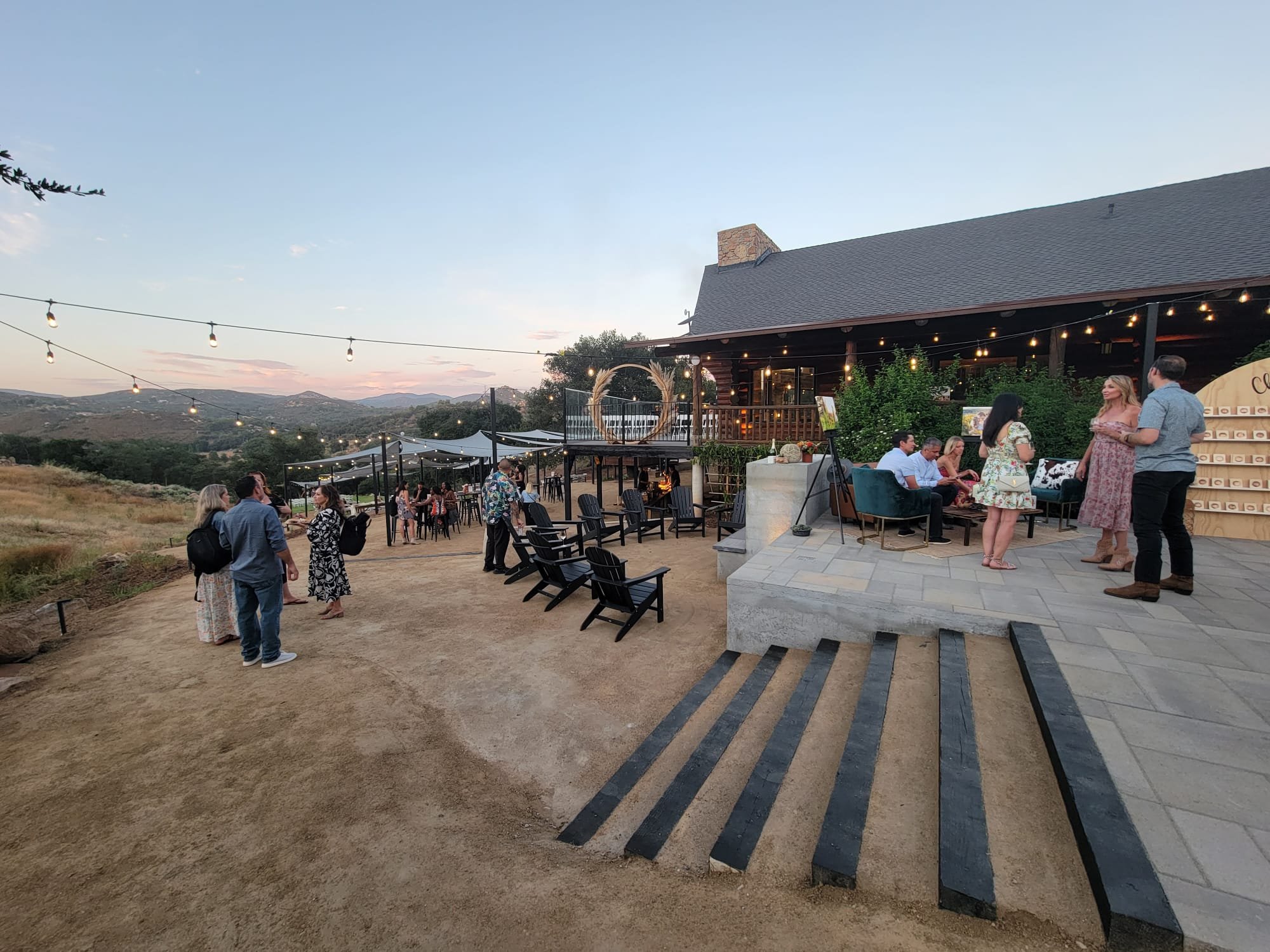
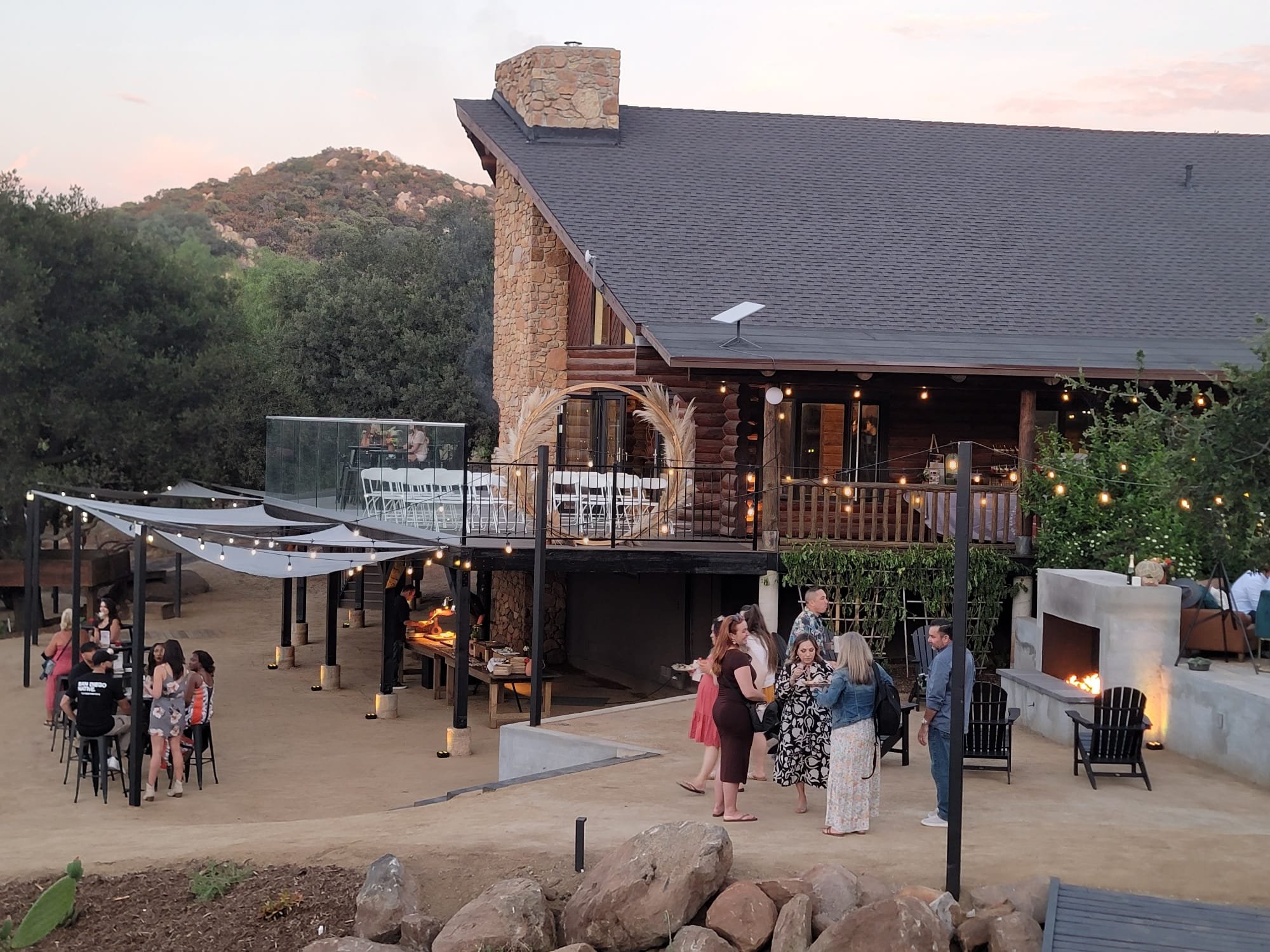
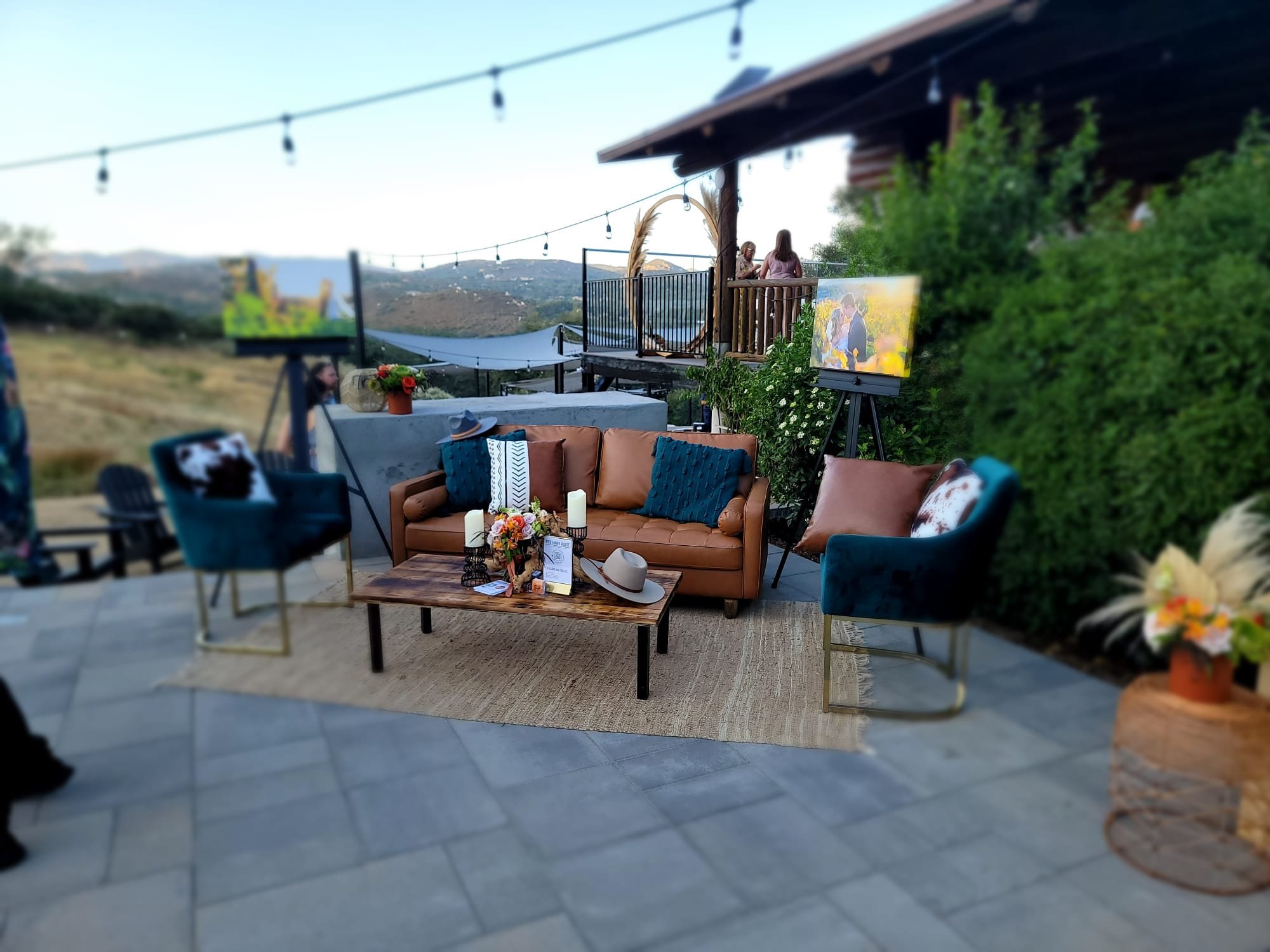
3D VIDEO CONCEPTUAL PRESENTATION
A short 3D film of LASD Studio’s landscape architectural design: Wedding Garden at Red Hawk Ridge in Alpine, a private estate transformed into a ceremonial and reception landscape. Featuring a wide ceremonial lawn, reception terraces, Mediterranean planting, and evening lighting, the garden offers a timeless setting for weddings and celebrations against the backdrop of San Diego’s mountains.
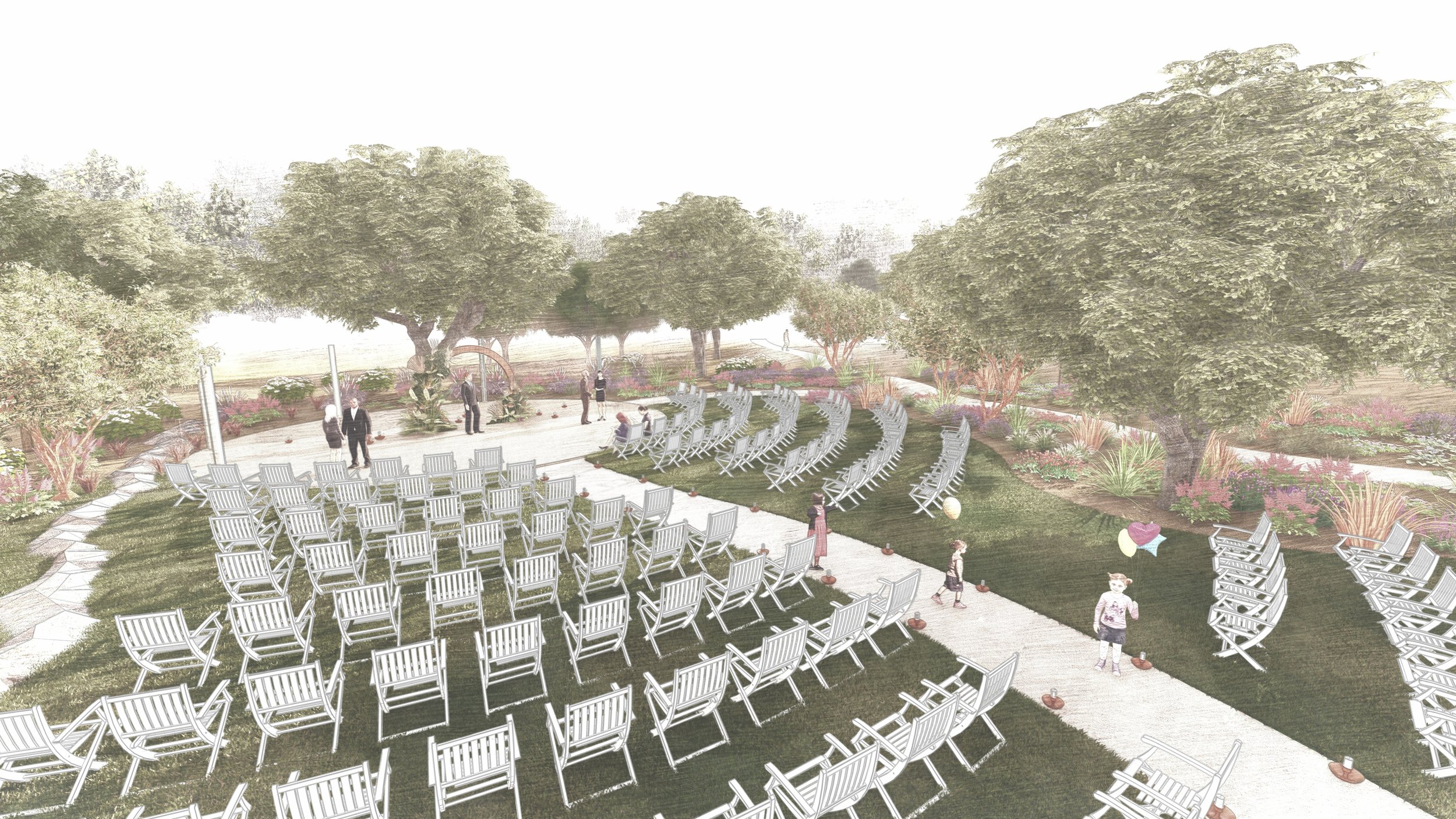
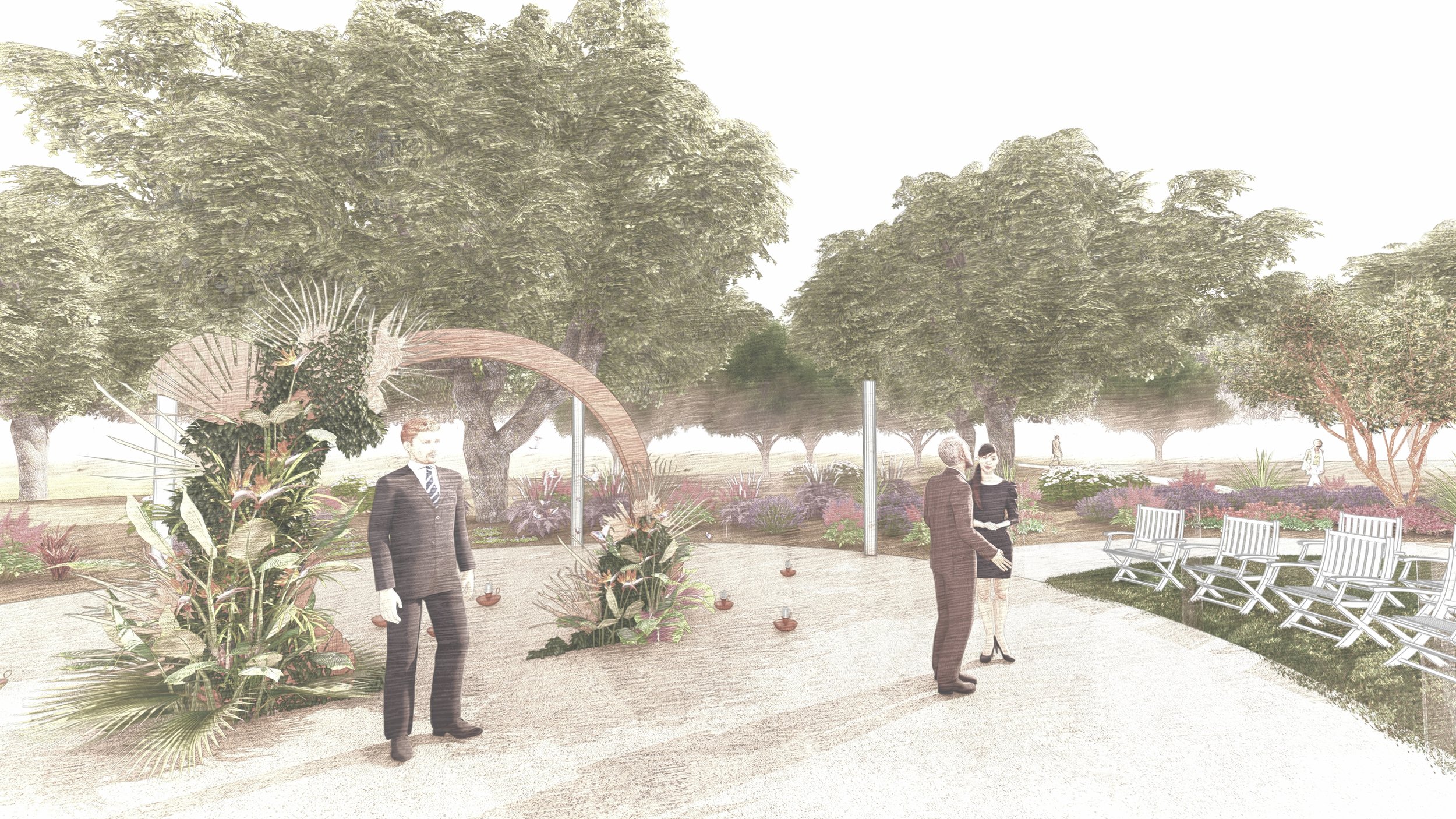
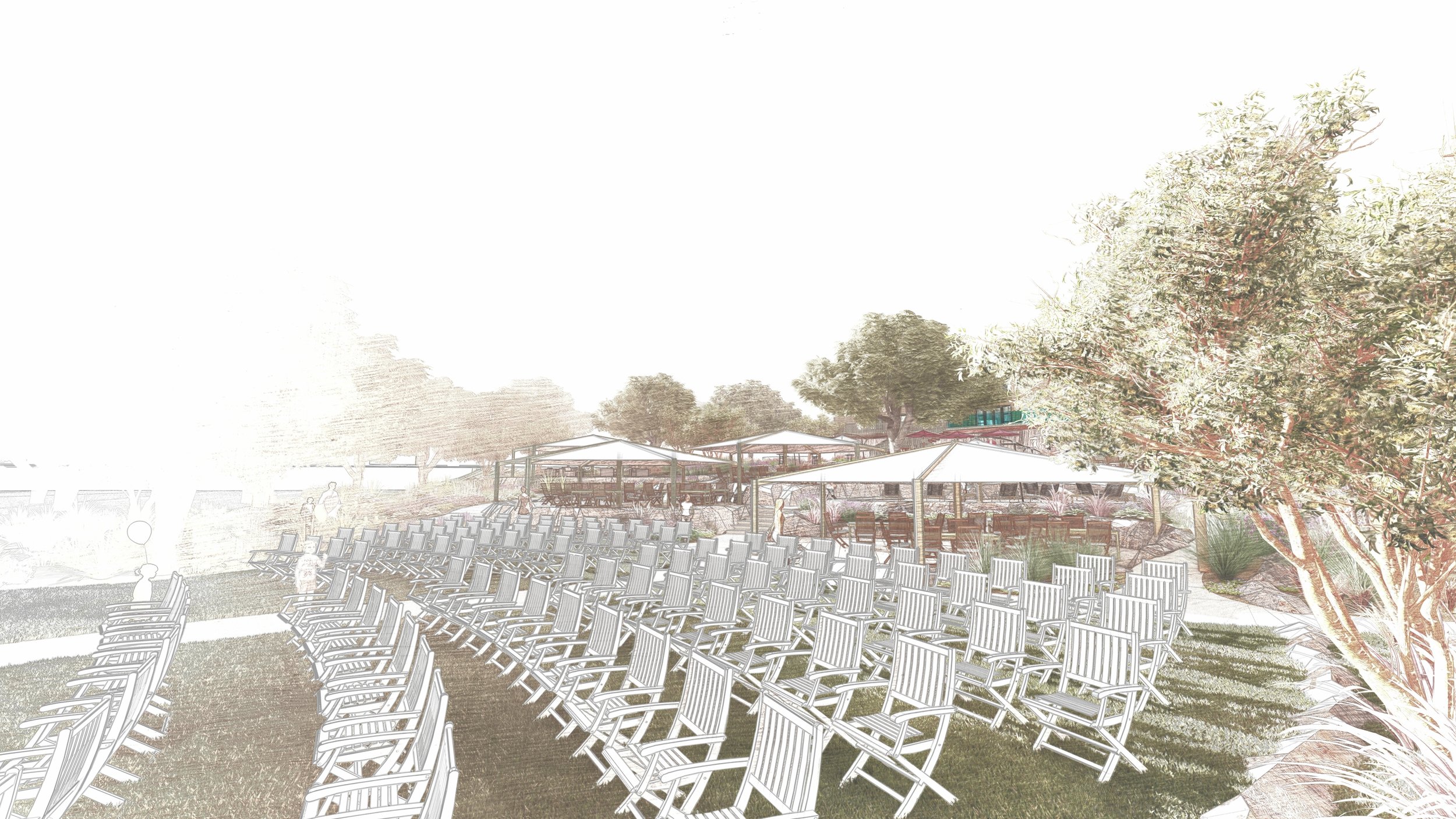
3D VISUALIZATION OF PROPOSED VENUE DESIGN
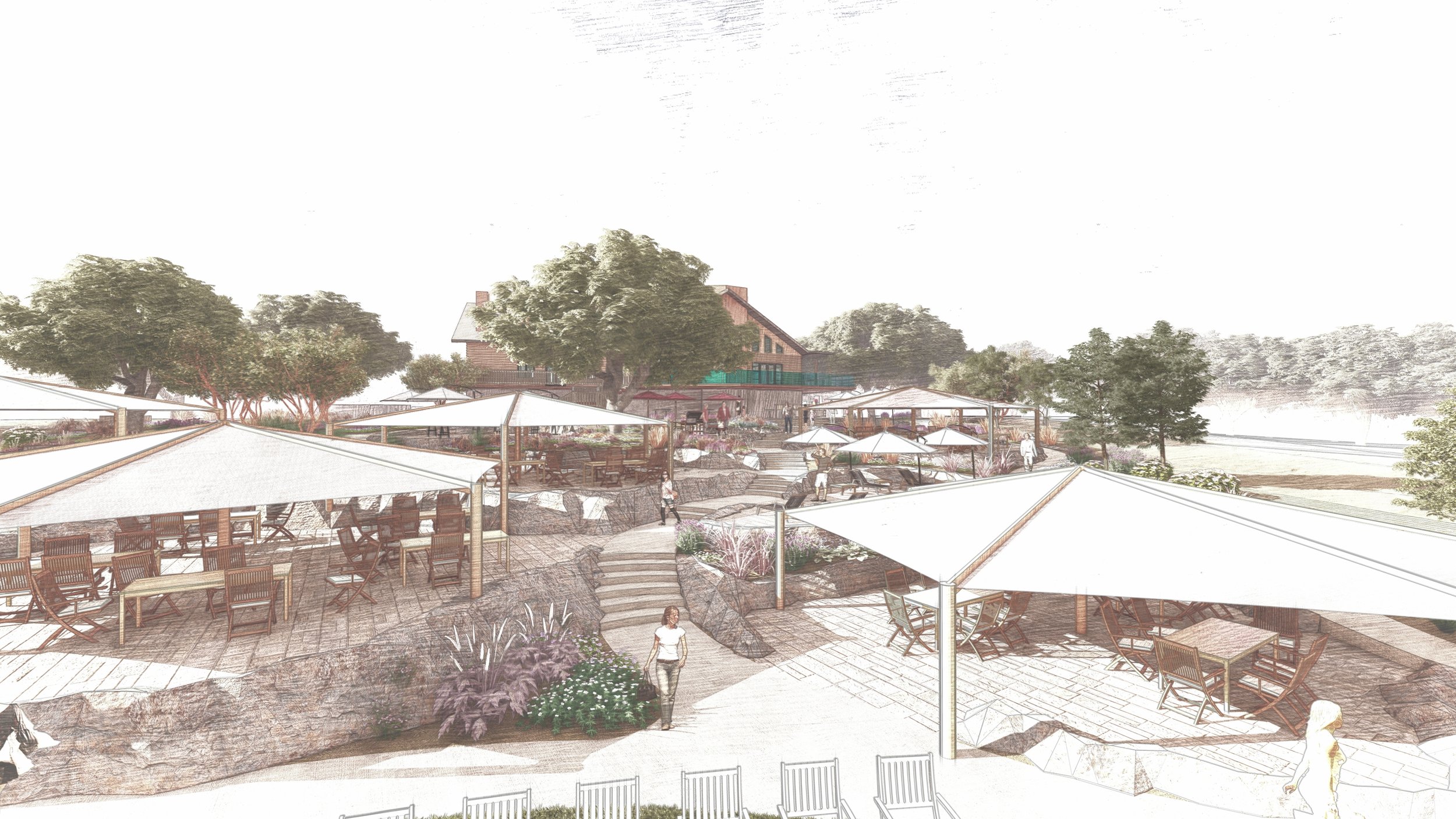
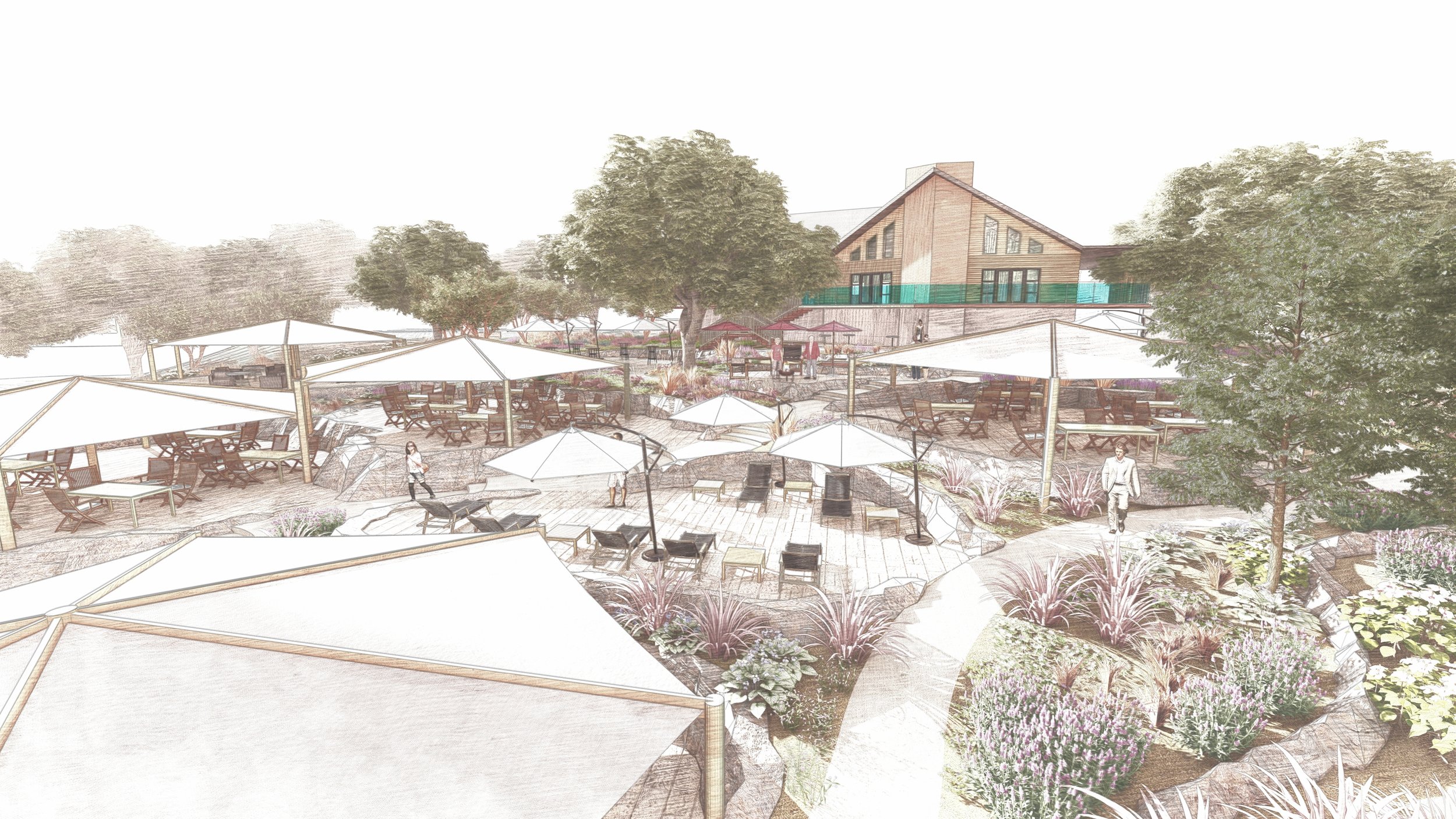
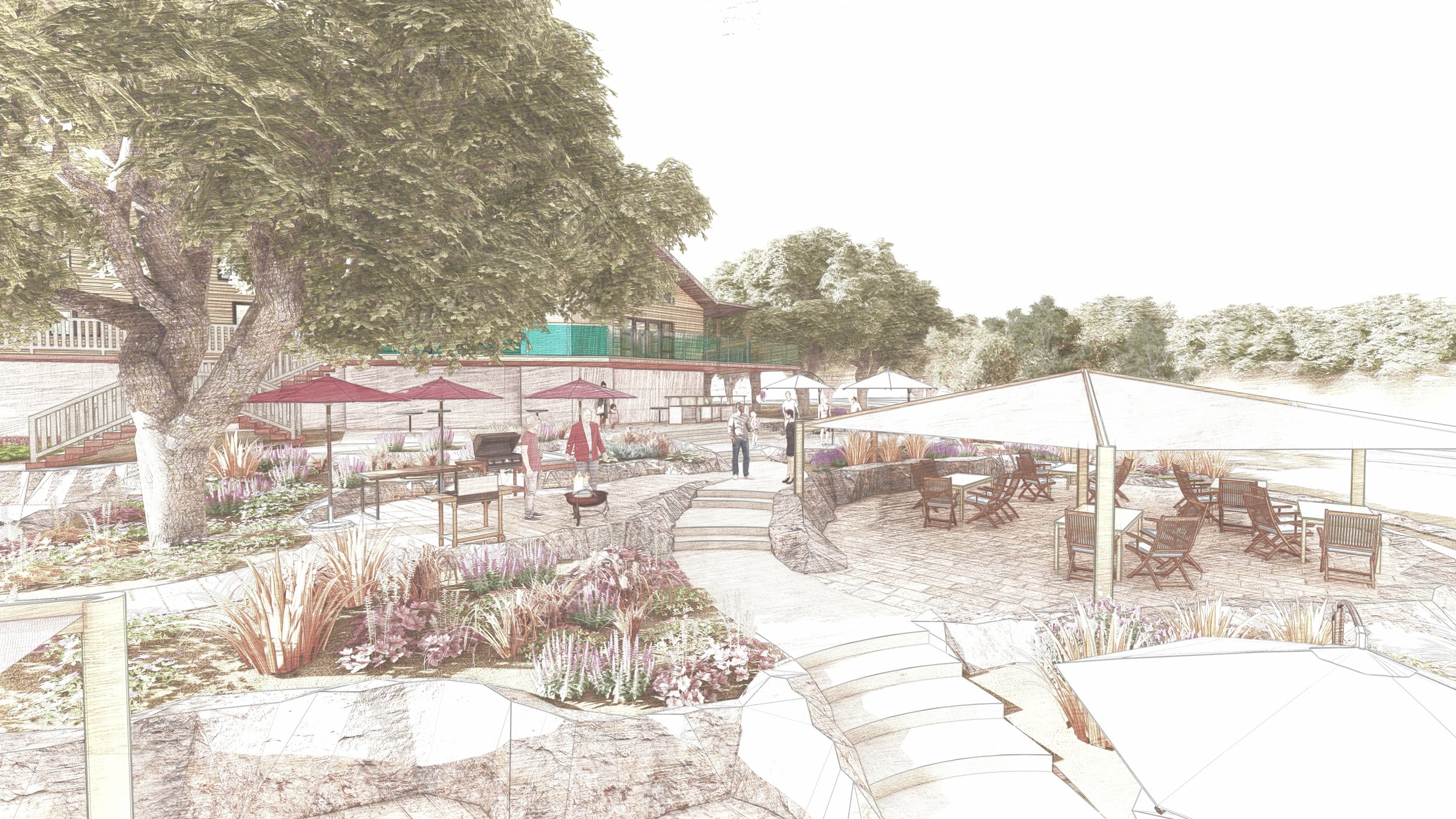
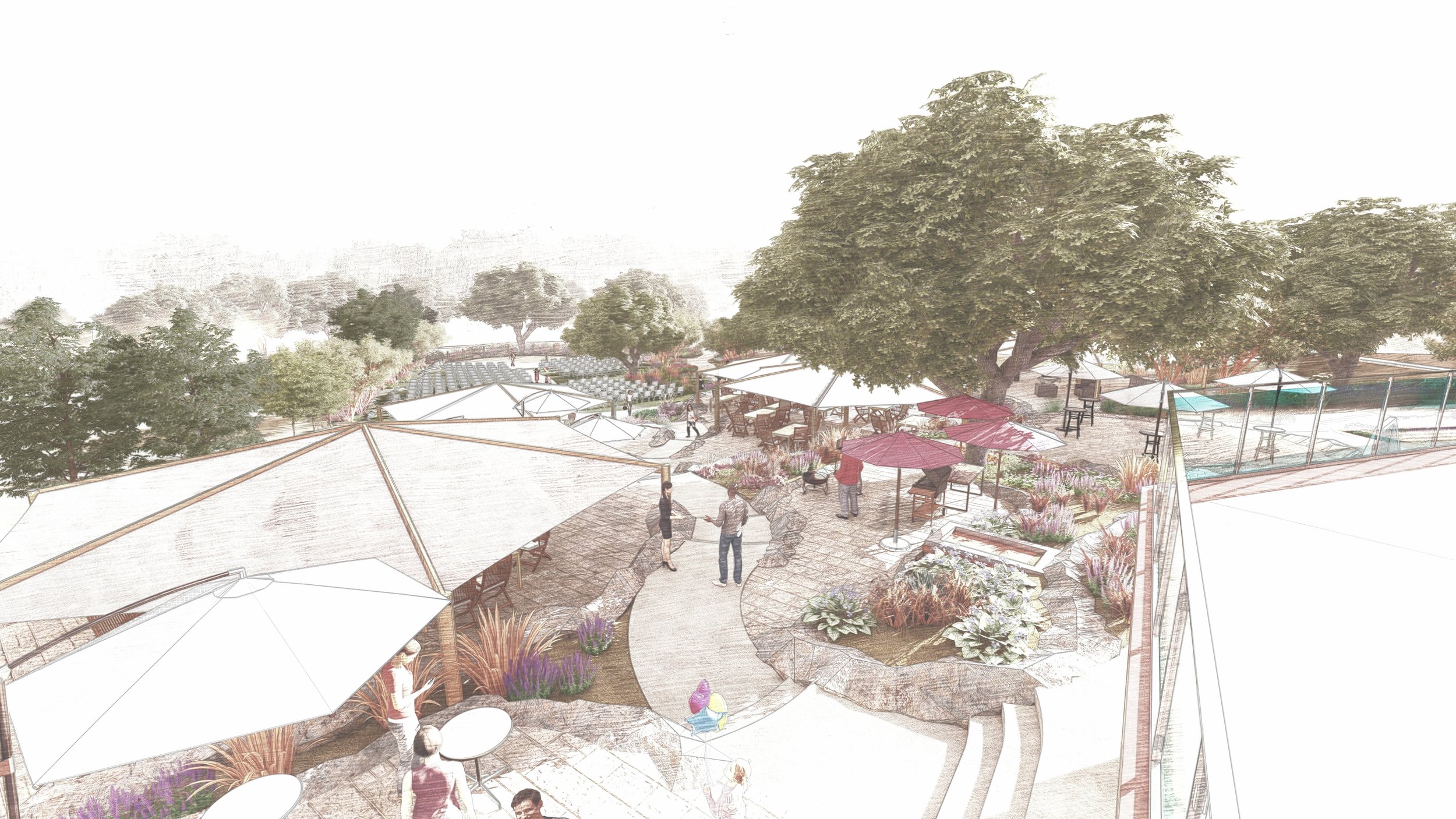
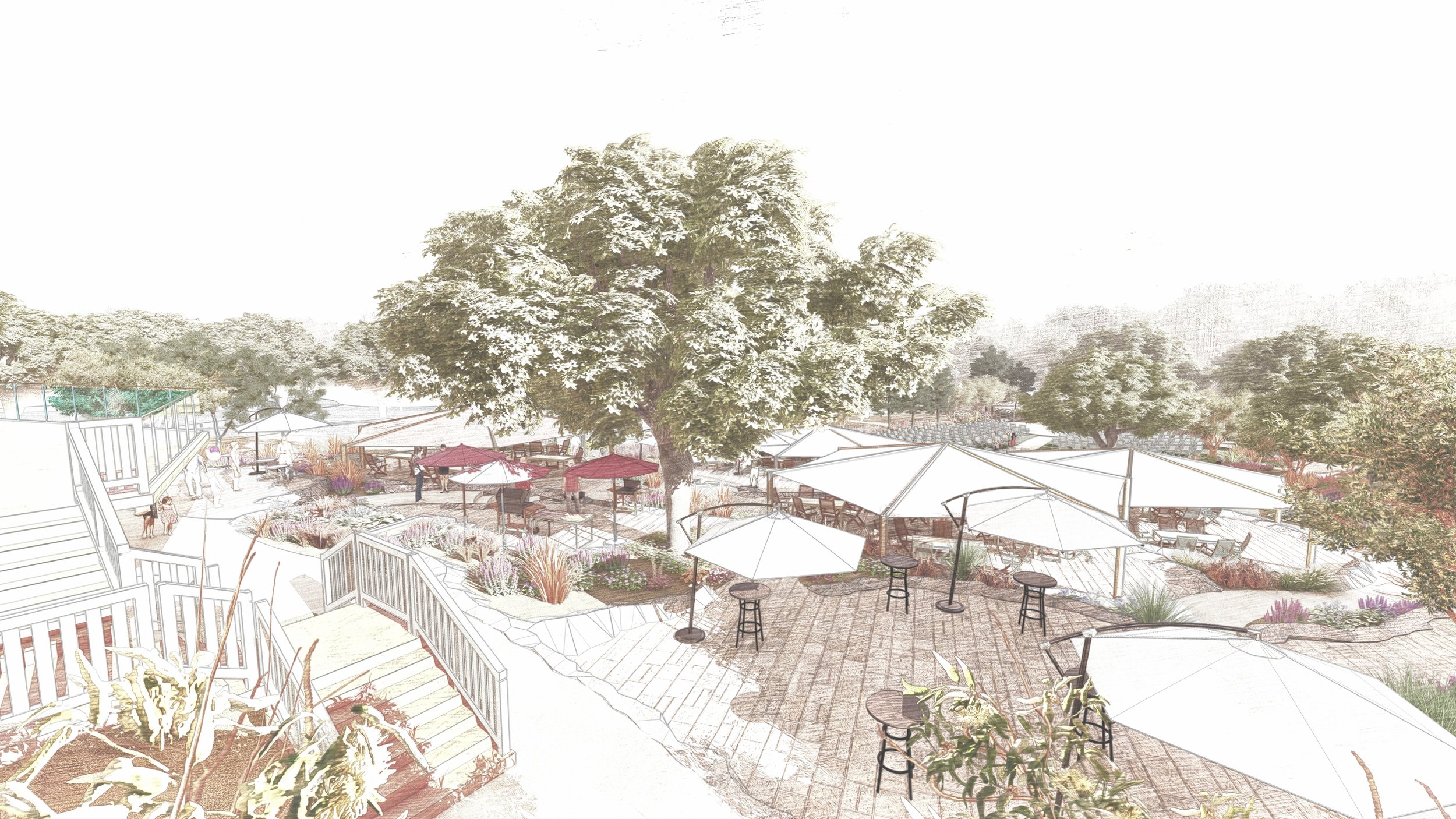
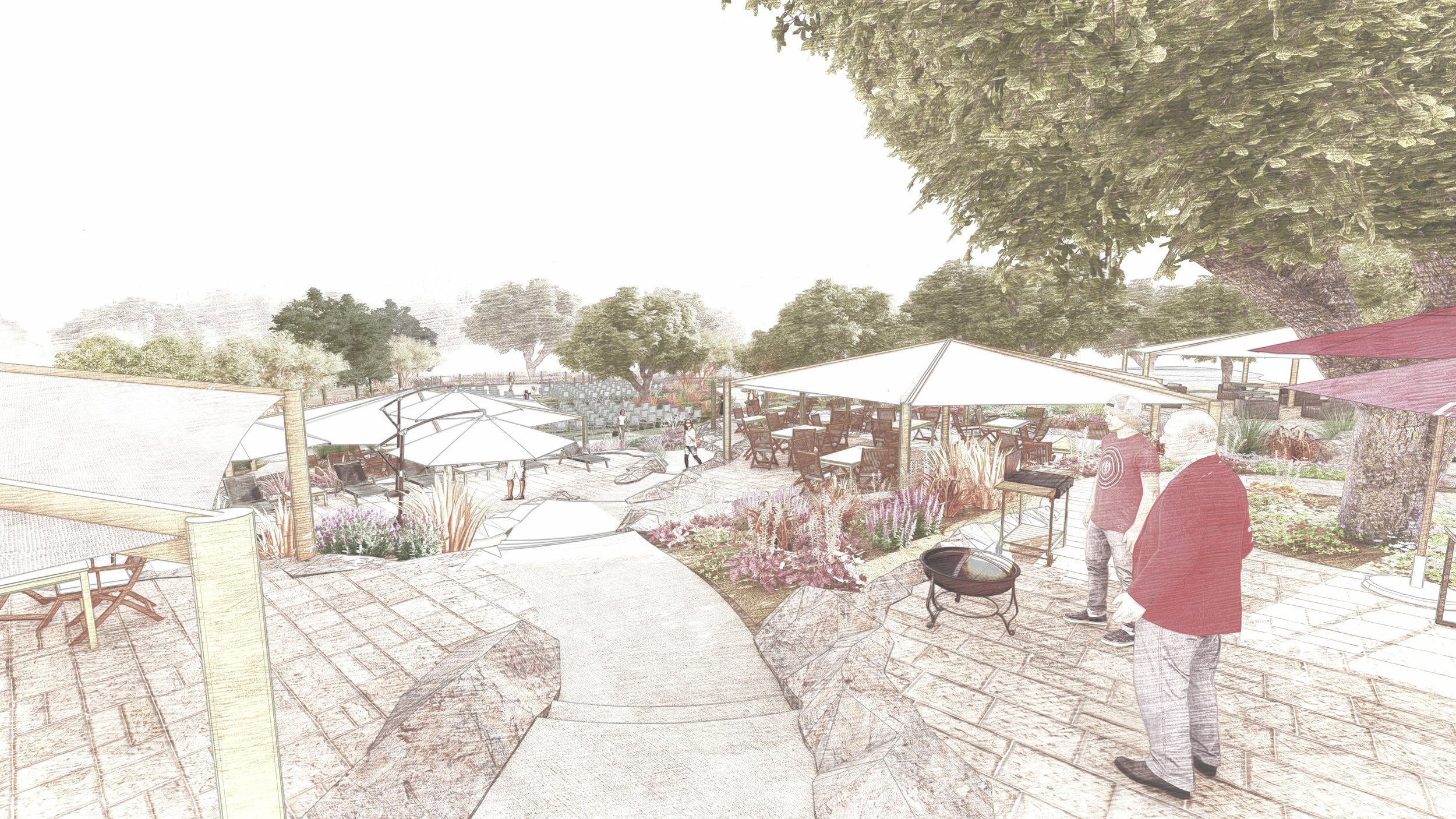
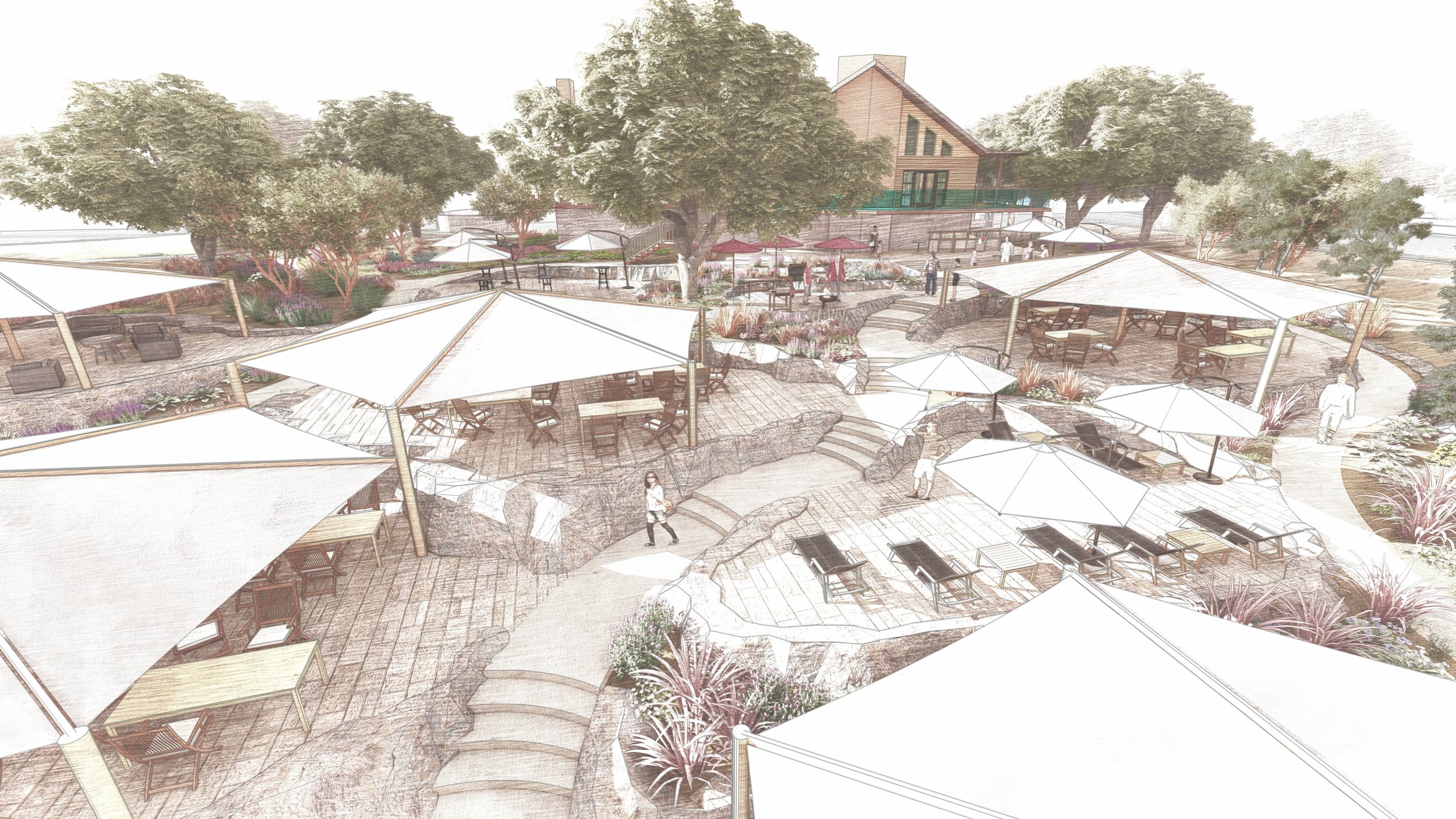
Design Concept
The garden was envisioned as a celebratory landscape - a place where architecture, planting, and open space frame life’s most important moments.
Ceremonial Lawn
A wide, enclosed green framed with shrubs and trees creates a stage for weddings and events, offering views of the surrounding mountains.
Reception Terraces
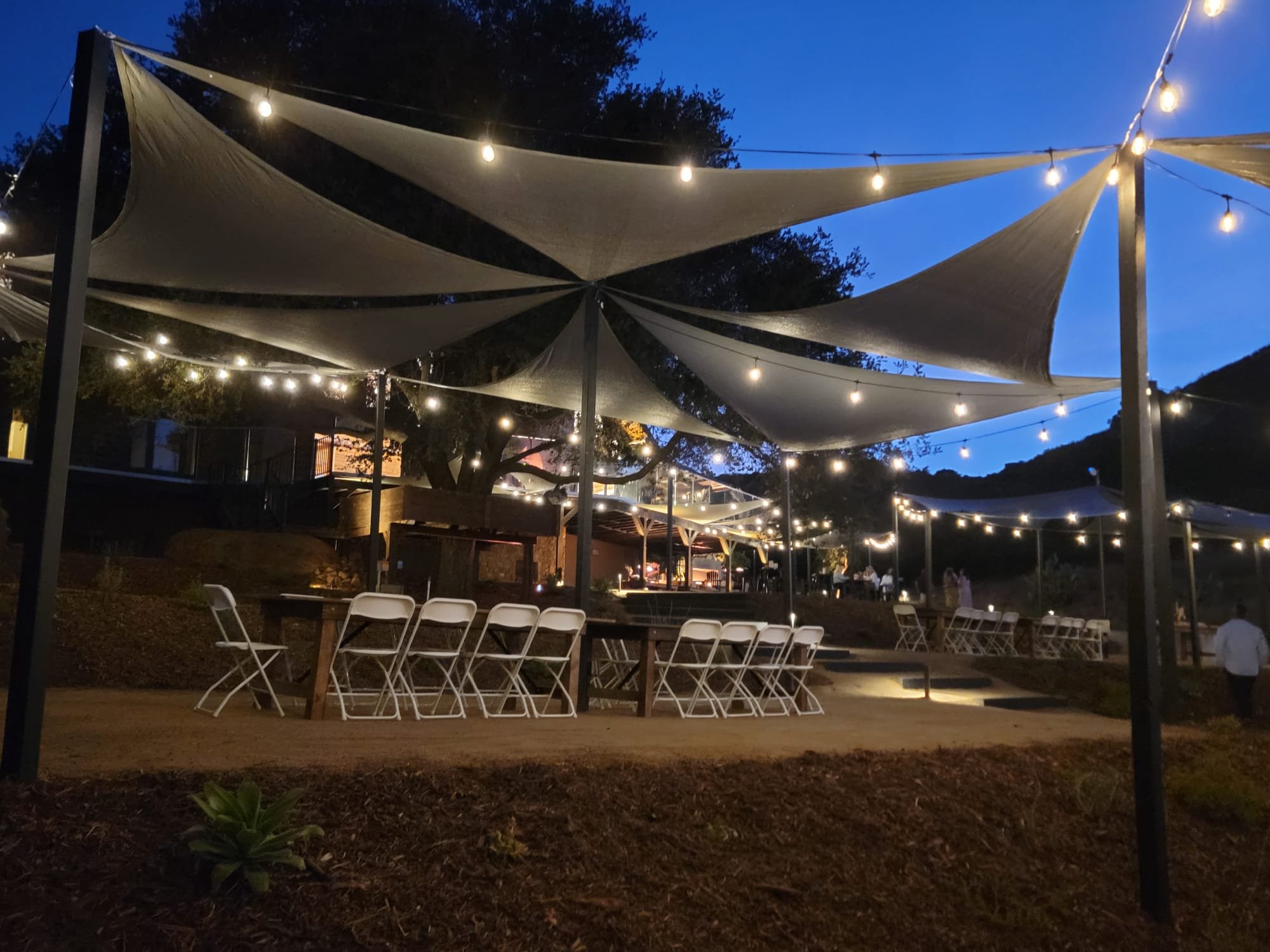
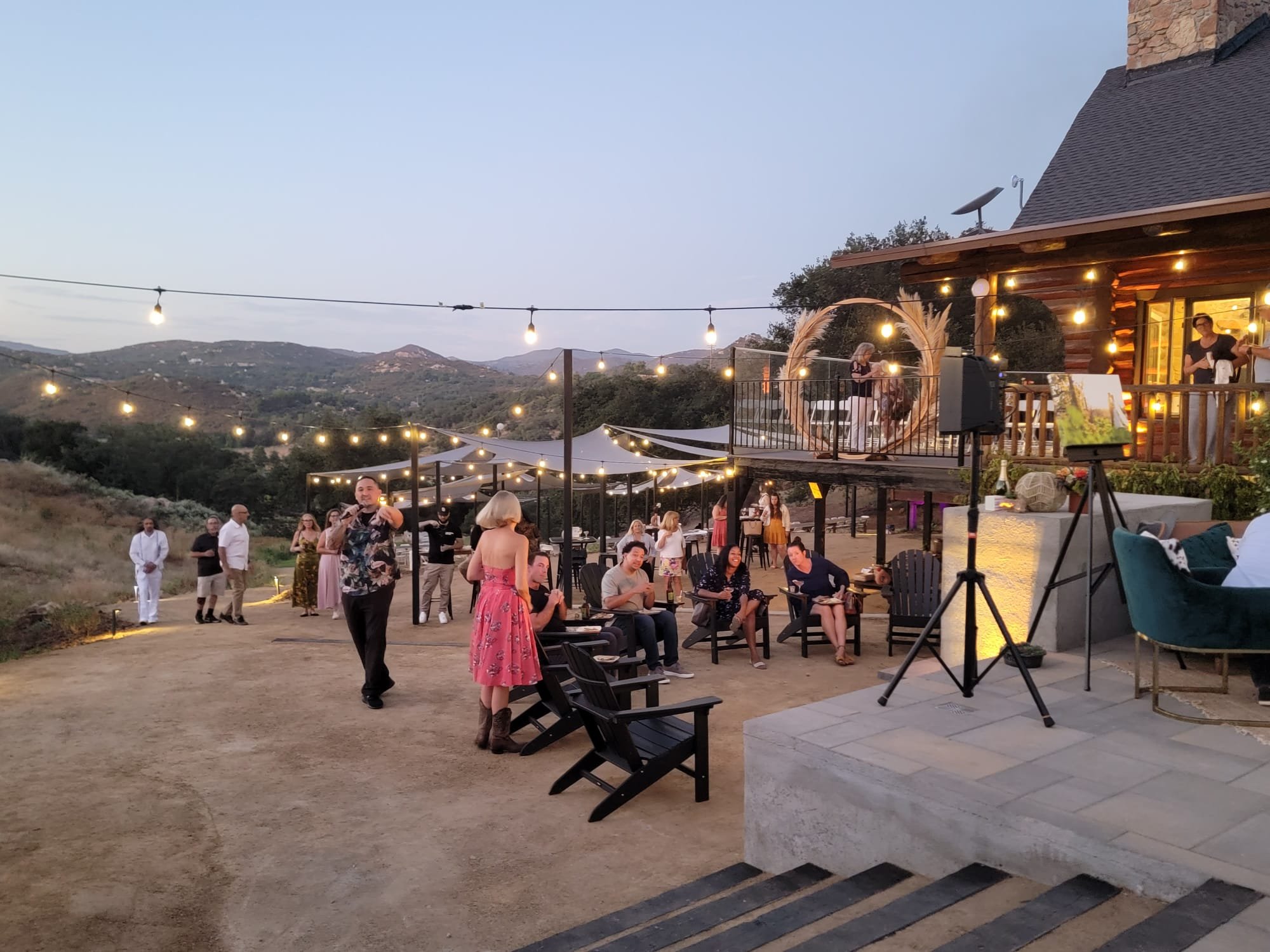
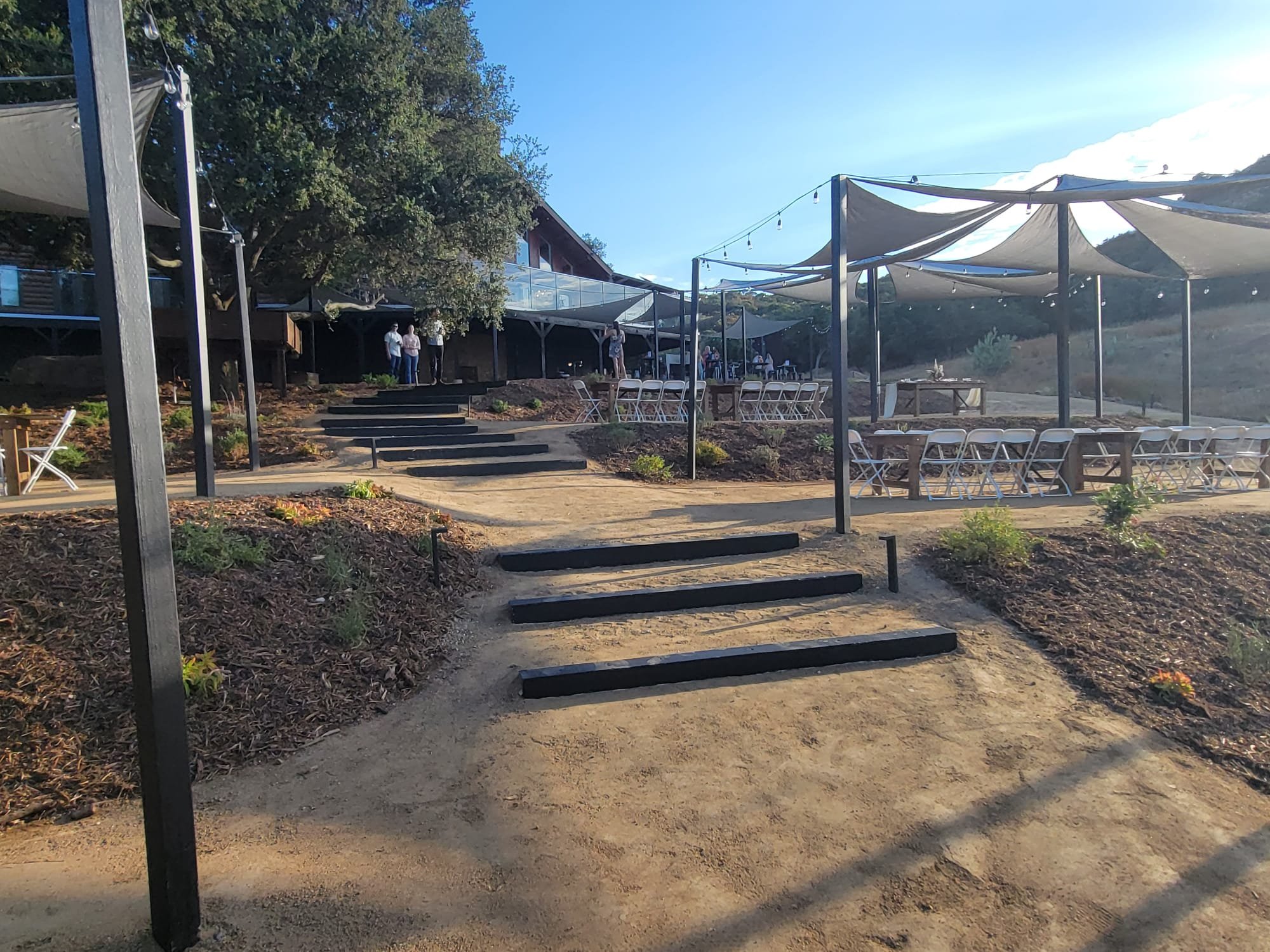
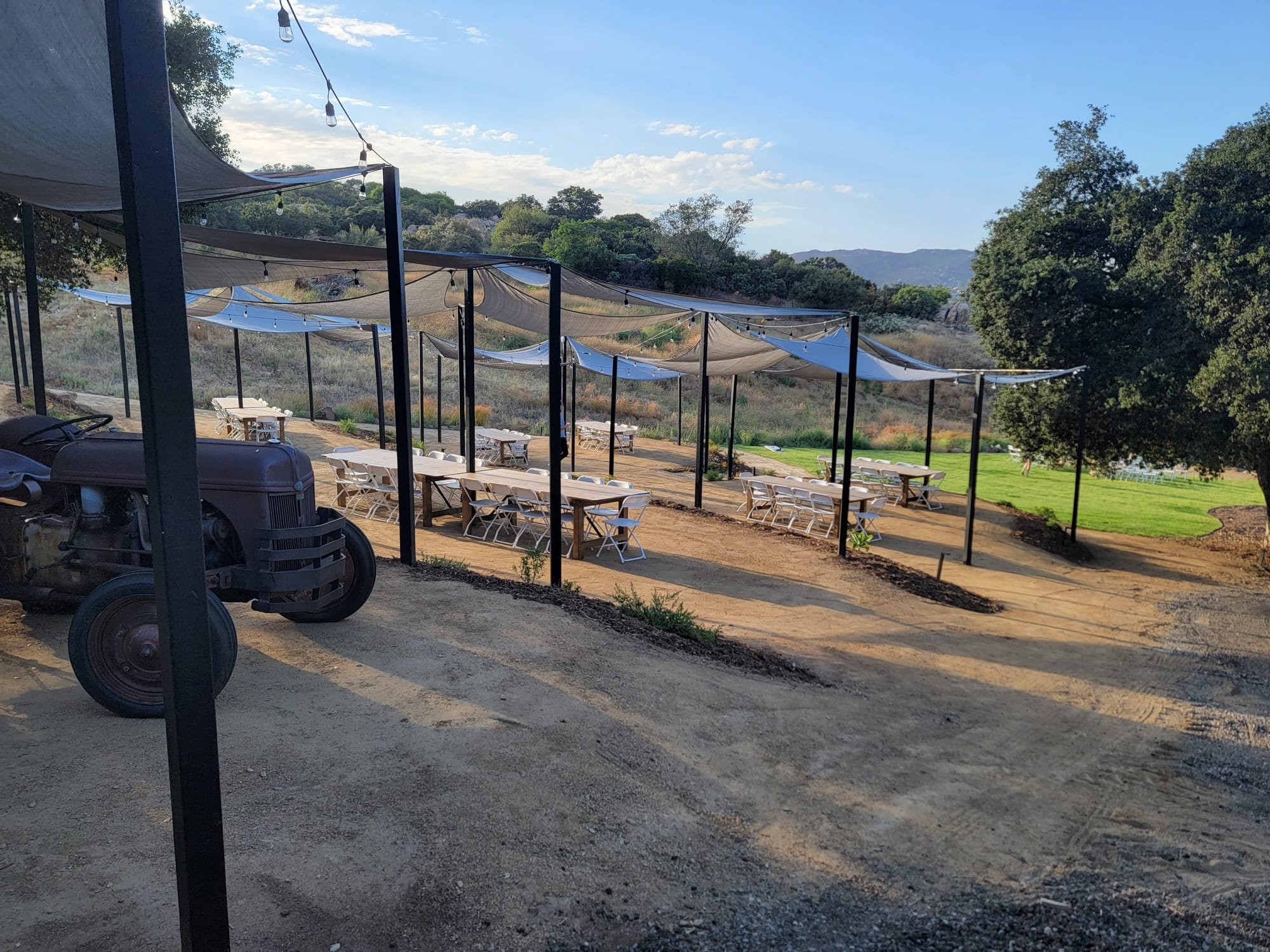
Generous terraces provide flexible areas for dining, dancing, and gathering, designed to accommodate both intimate and large celebrations.
Planting Palette
Native California plants mix with Mediterranean perennials and roses, ensuring year-round beauty, fragrance, and resilience.
Evening Ambience
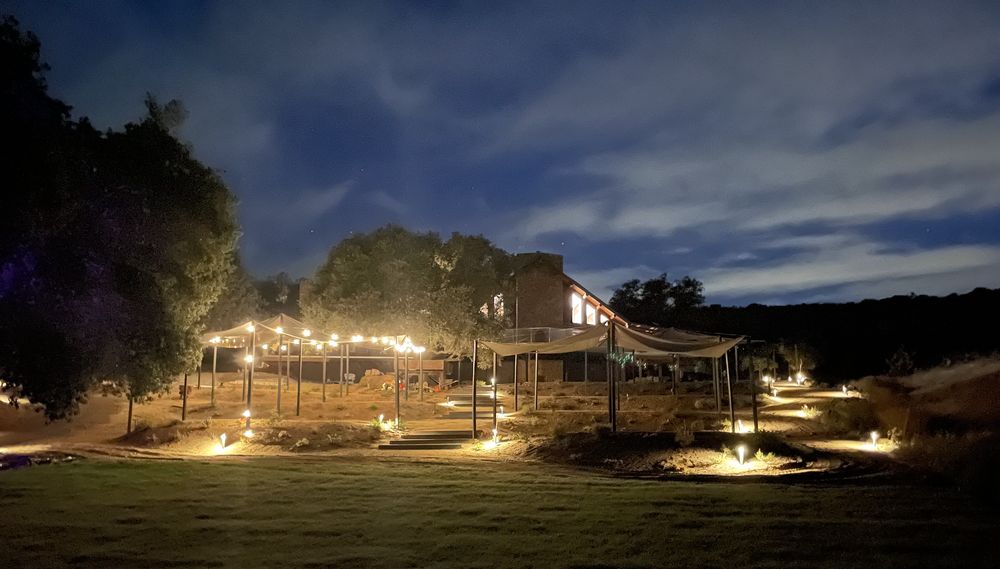
Subtle lighting transforms the garden into a romantic night setting, with illuminated pathways, trees, and terraces creating a magical experience.
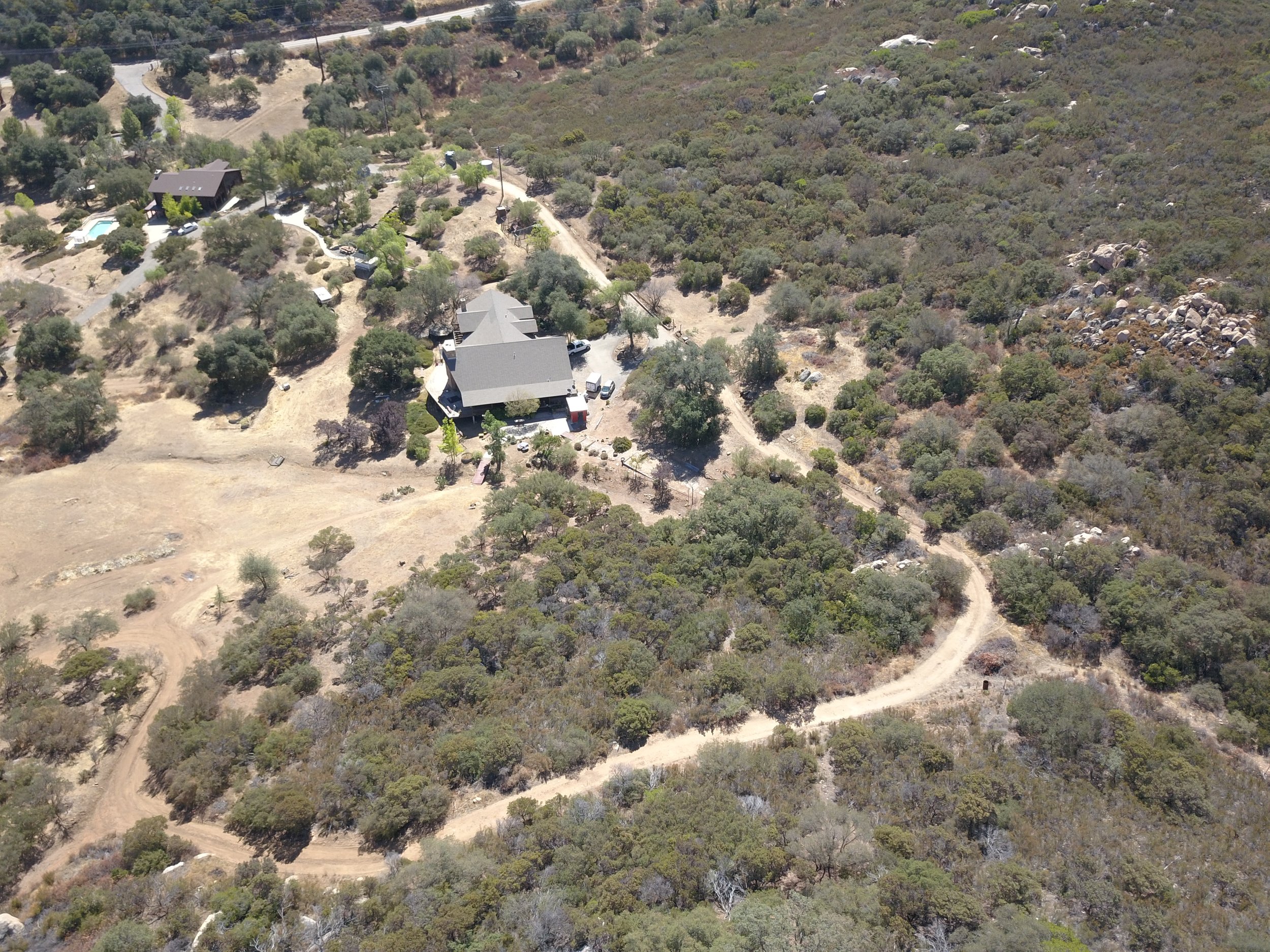
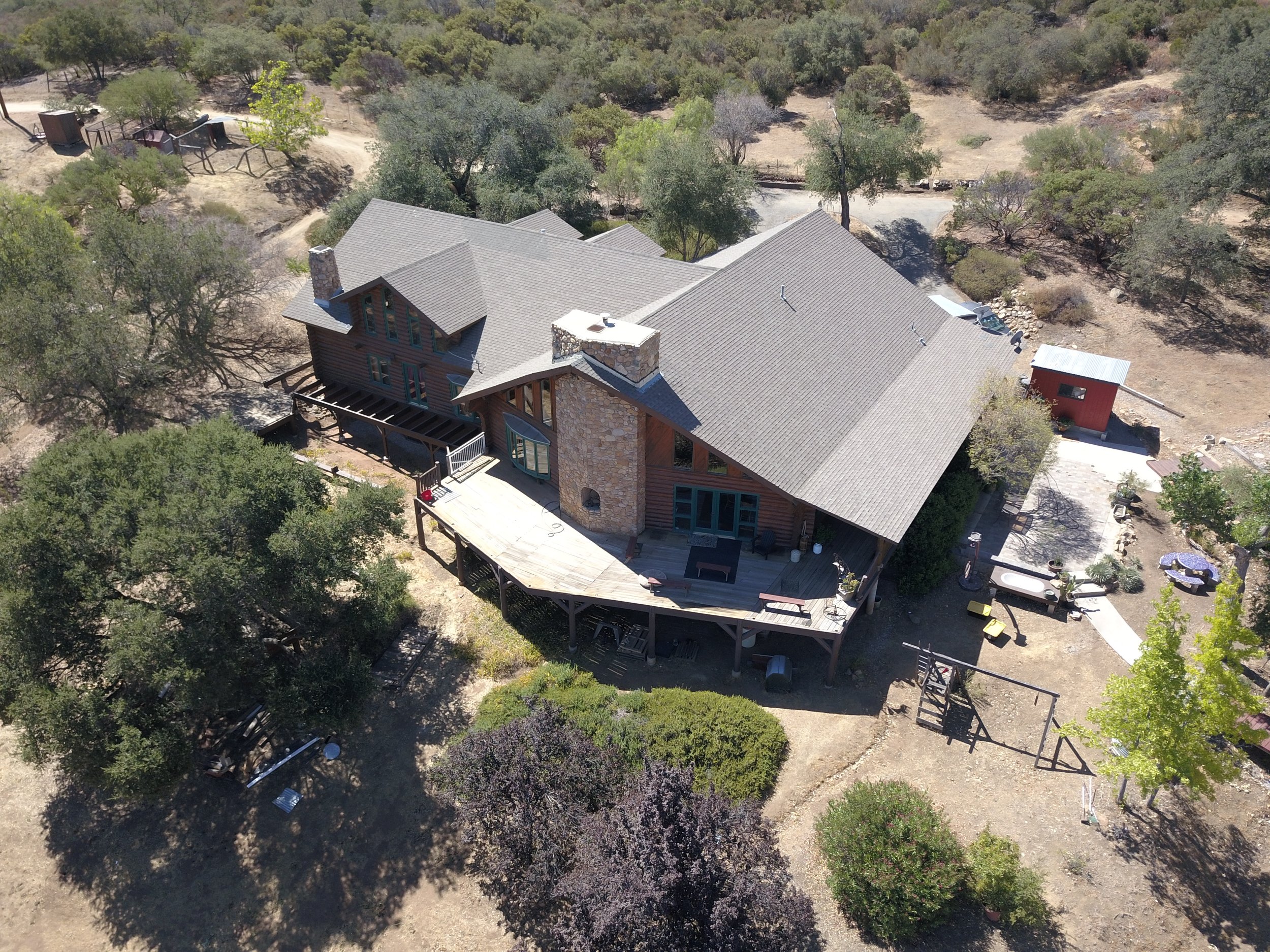
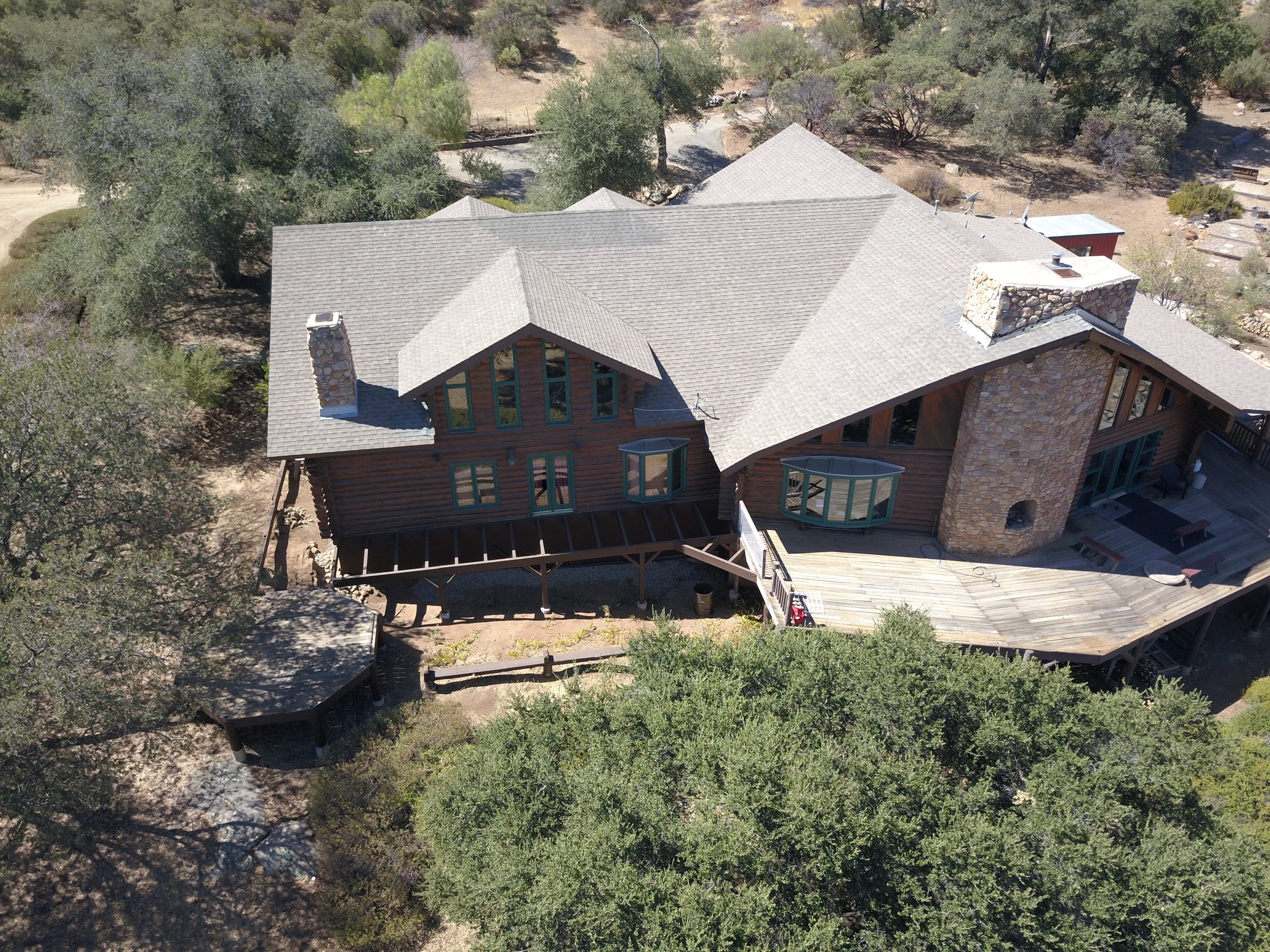
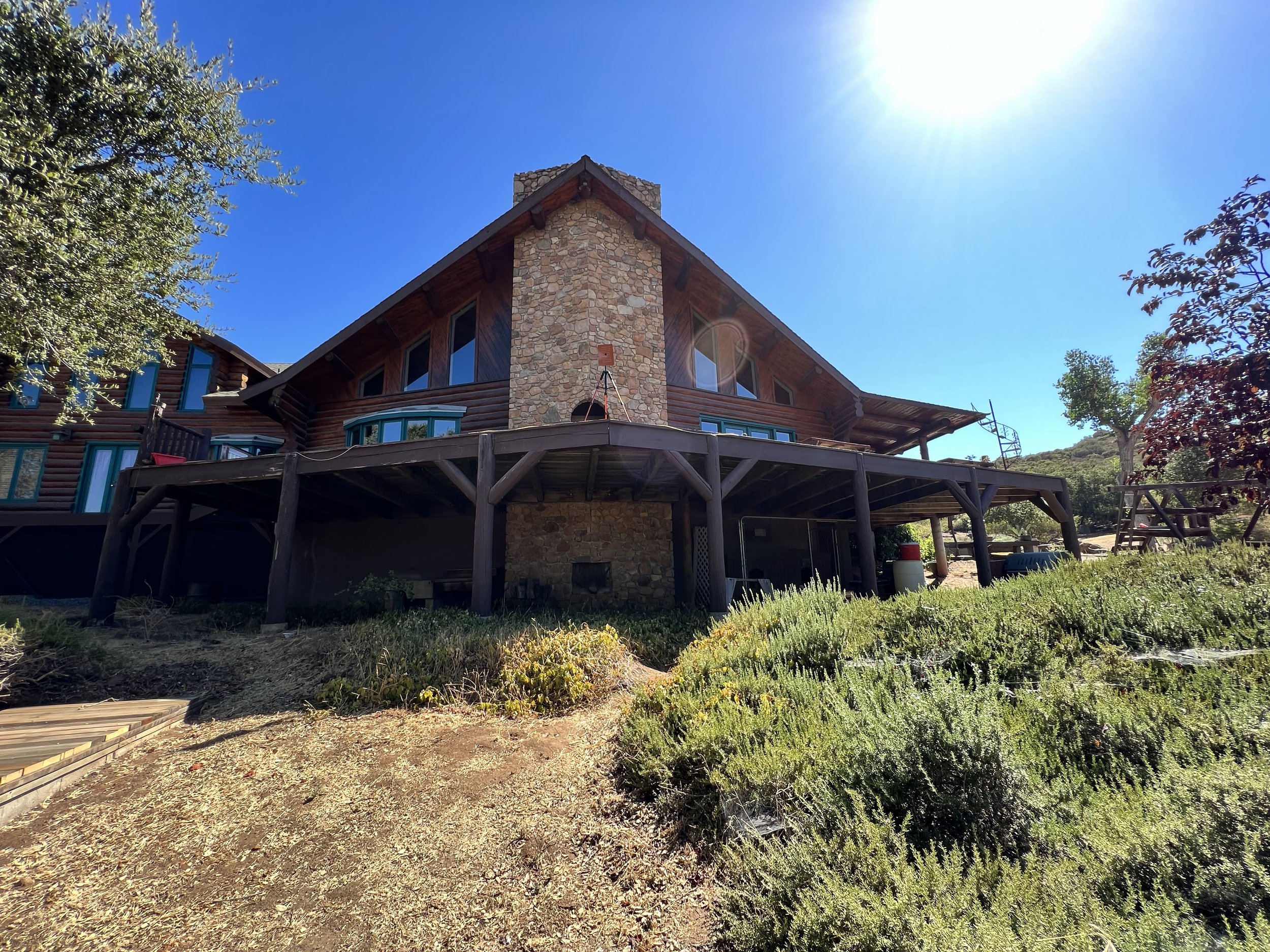
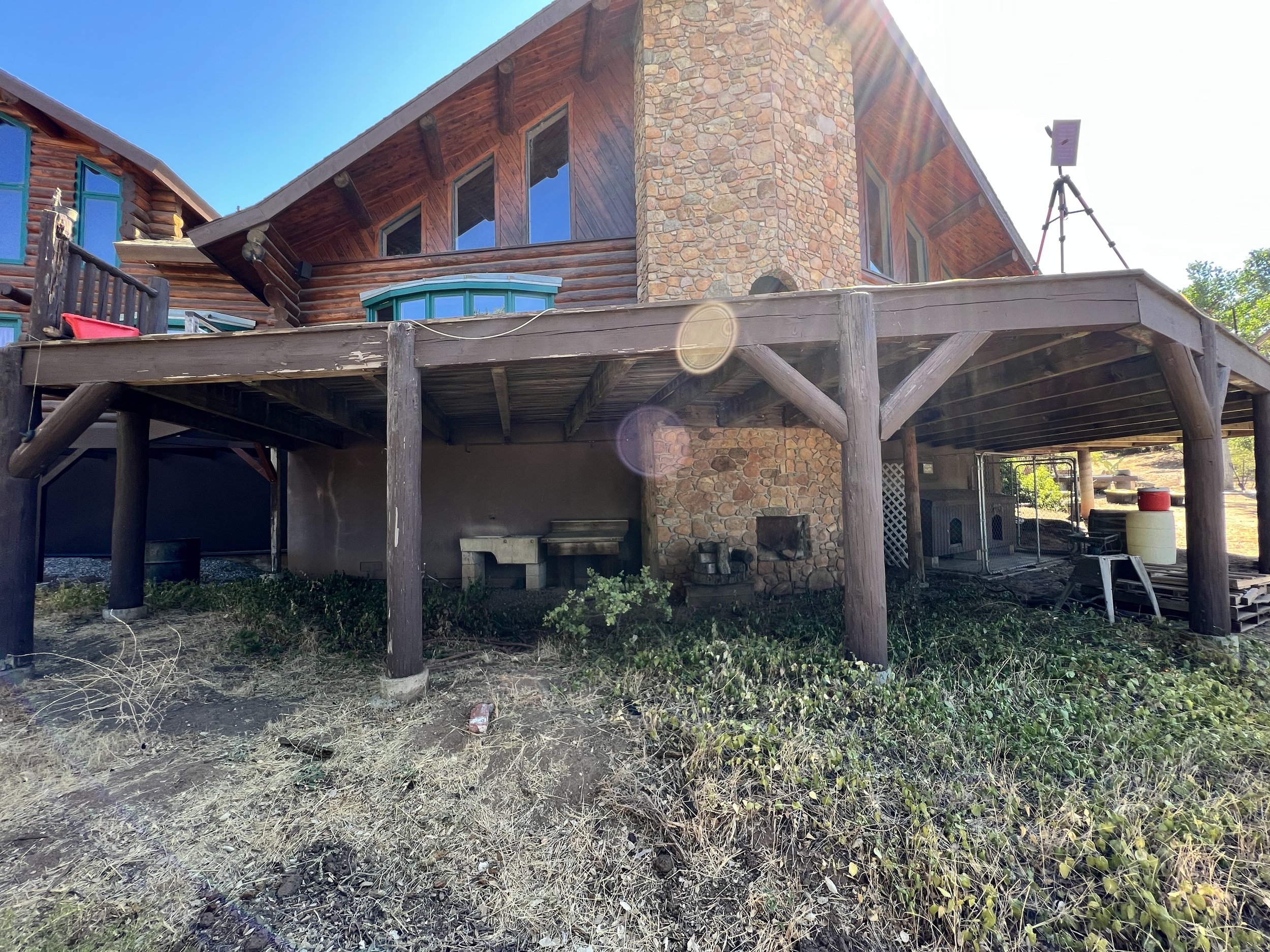
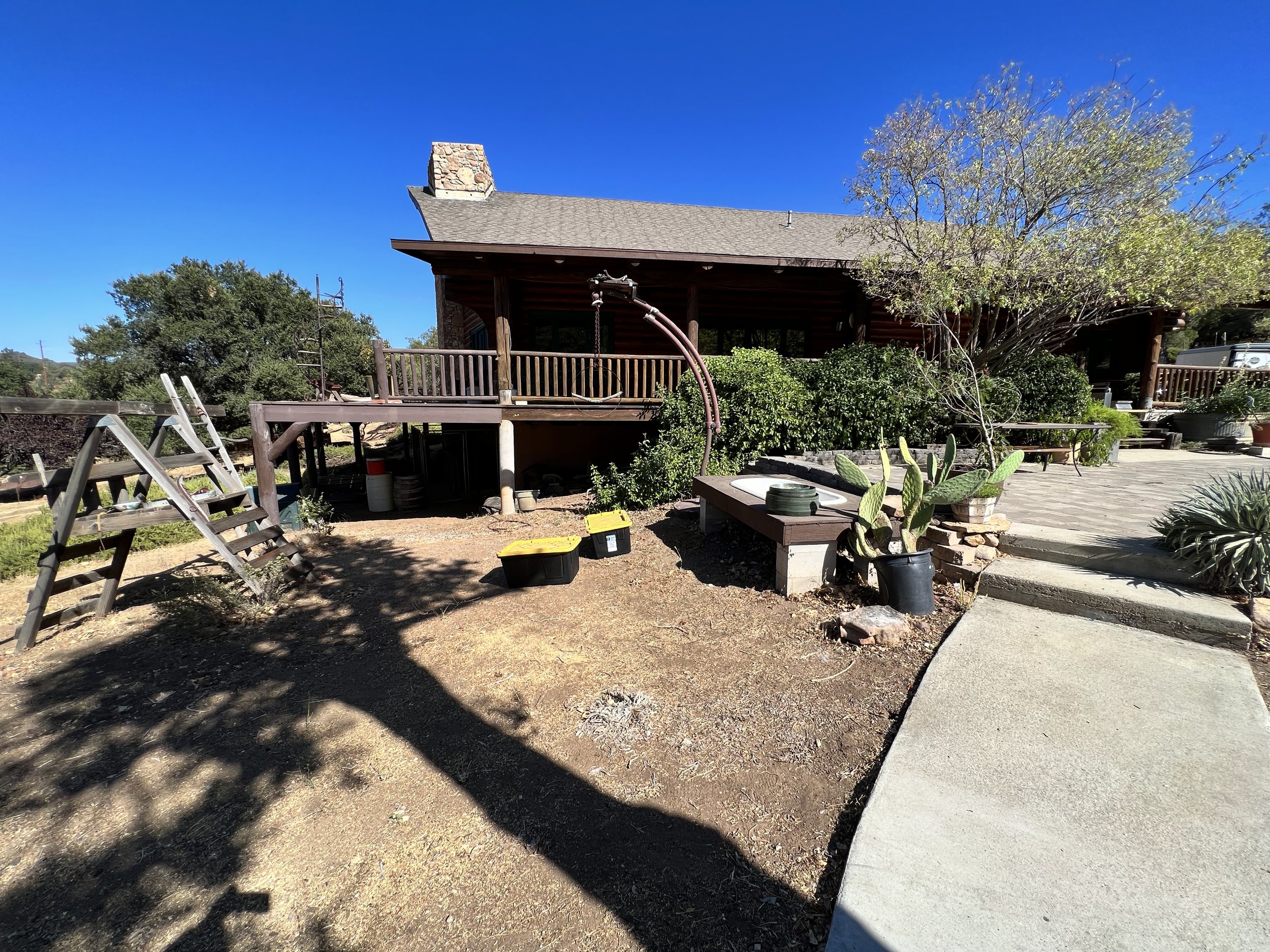
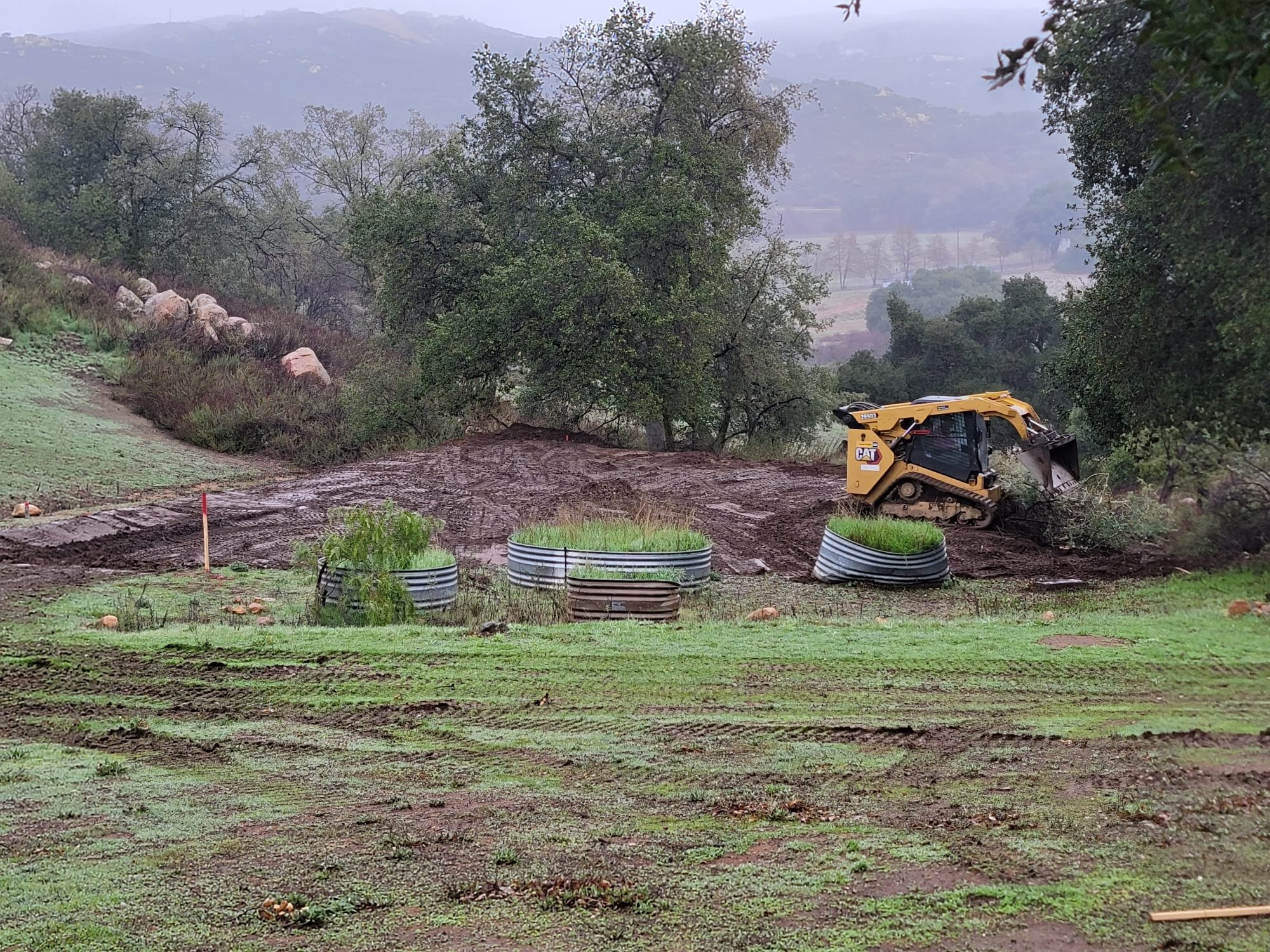
EXISTING LANDSCAPE CONDITION

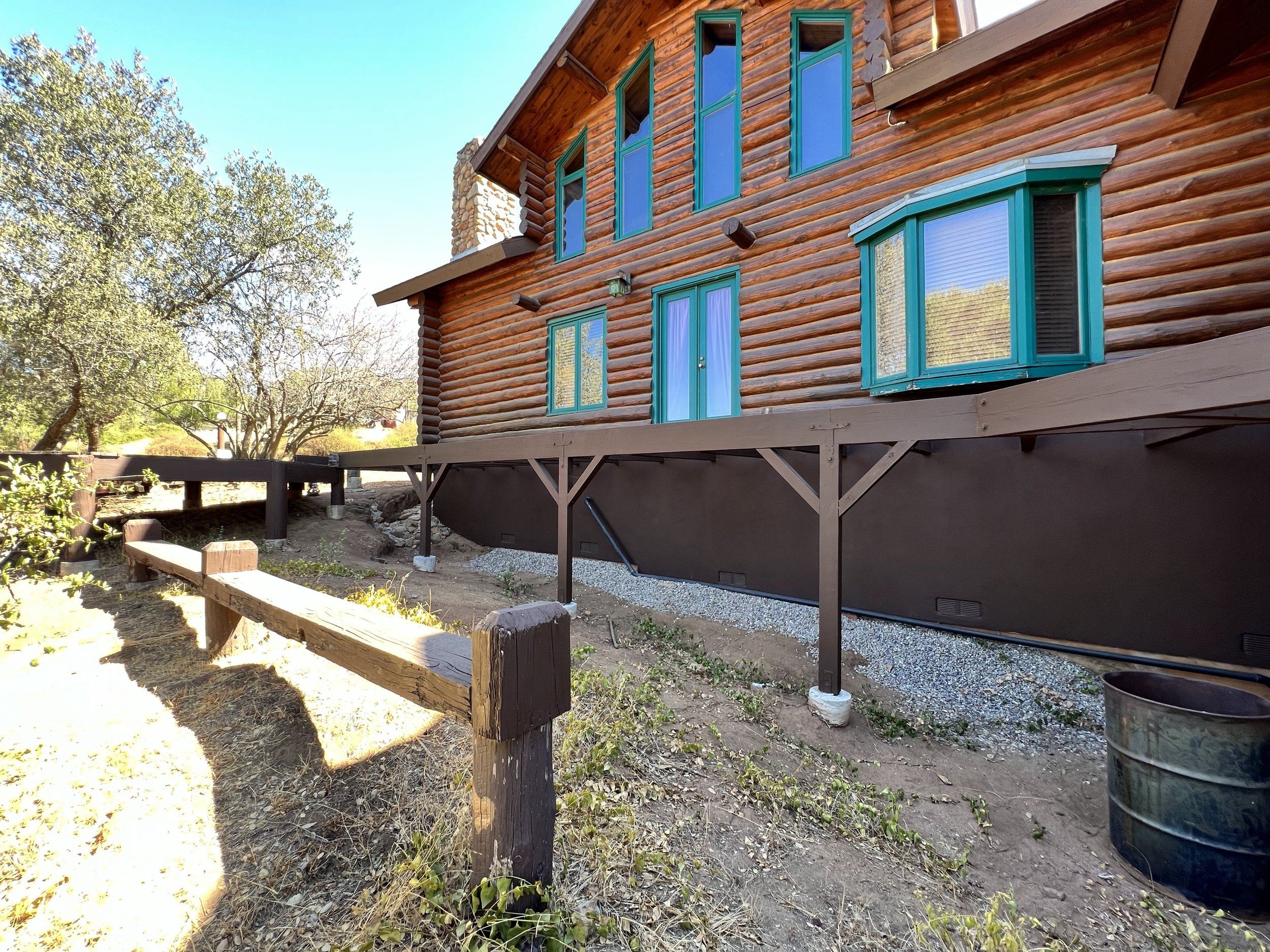
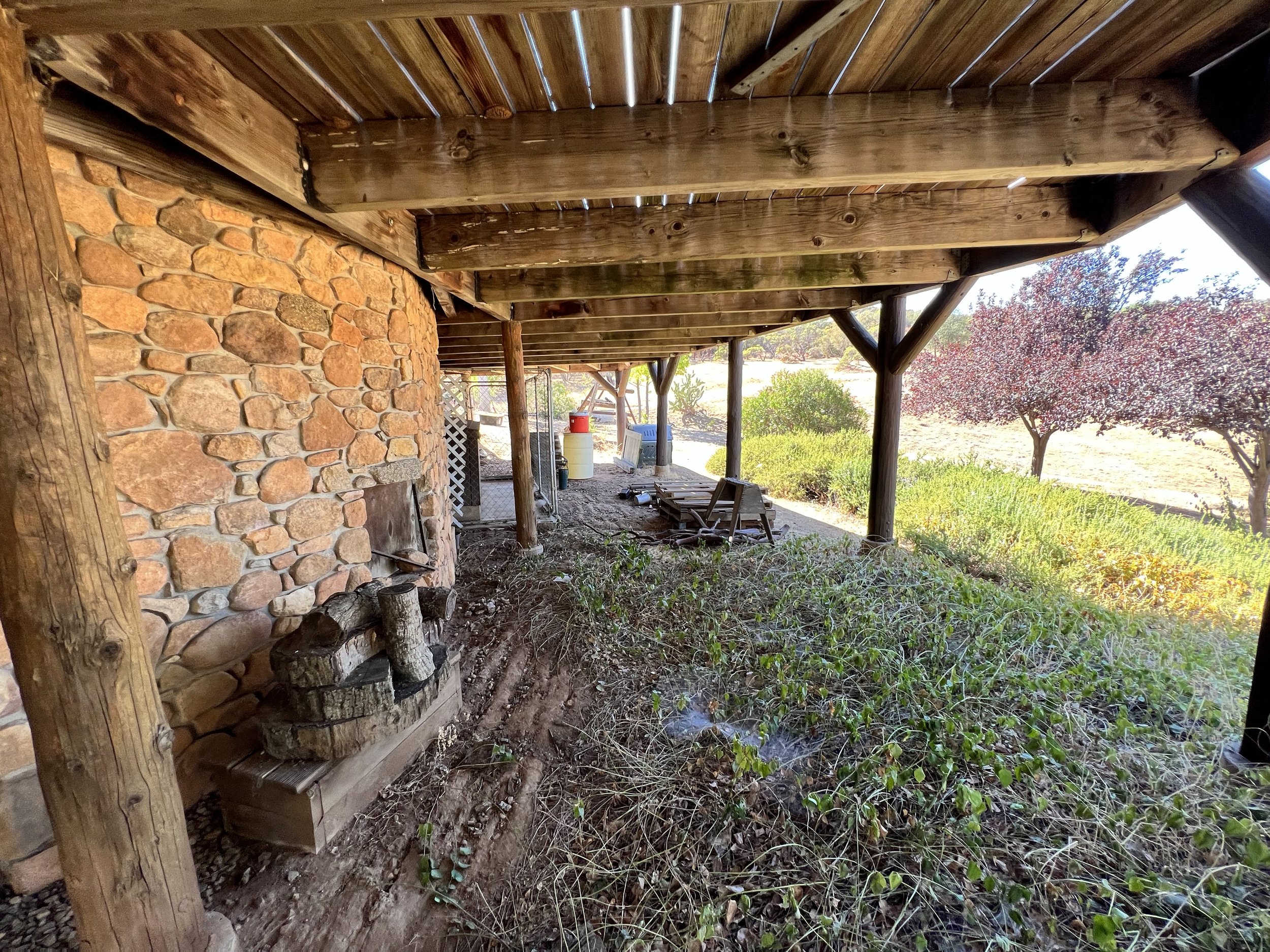
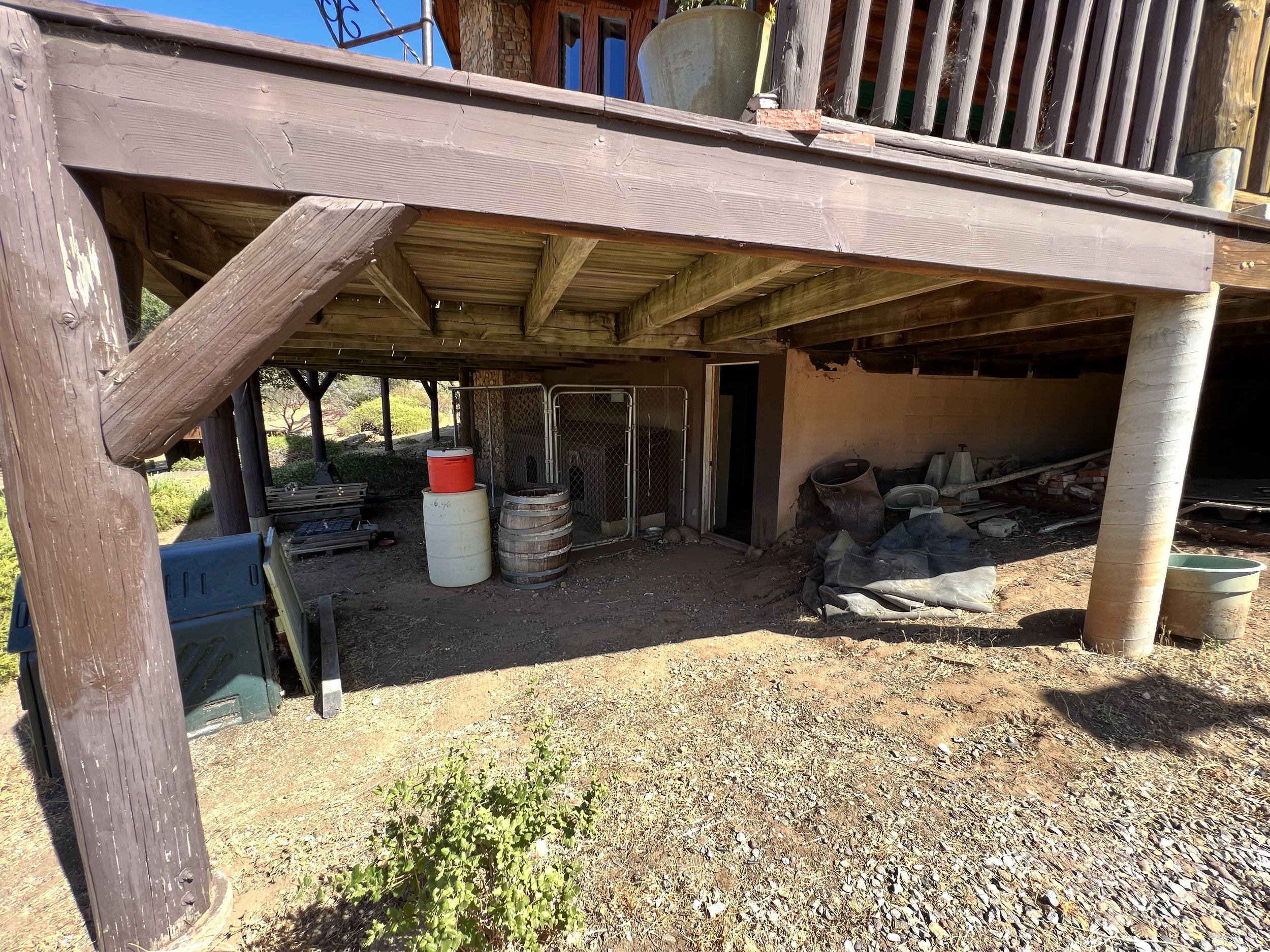
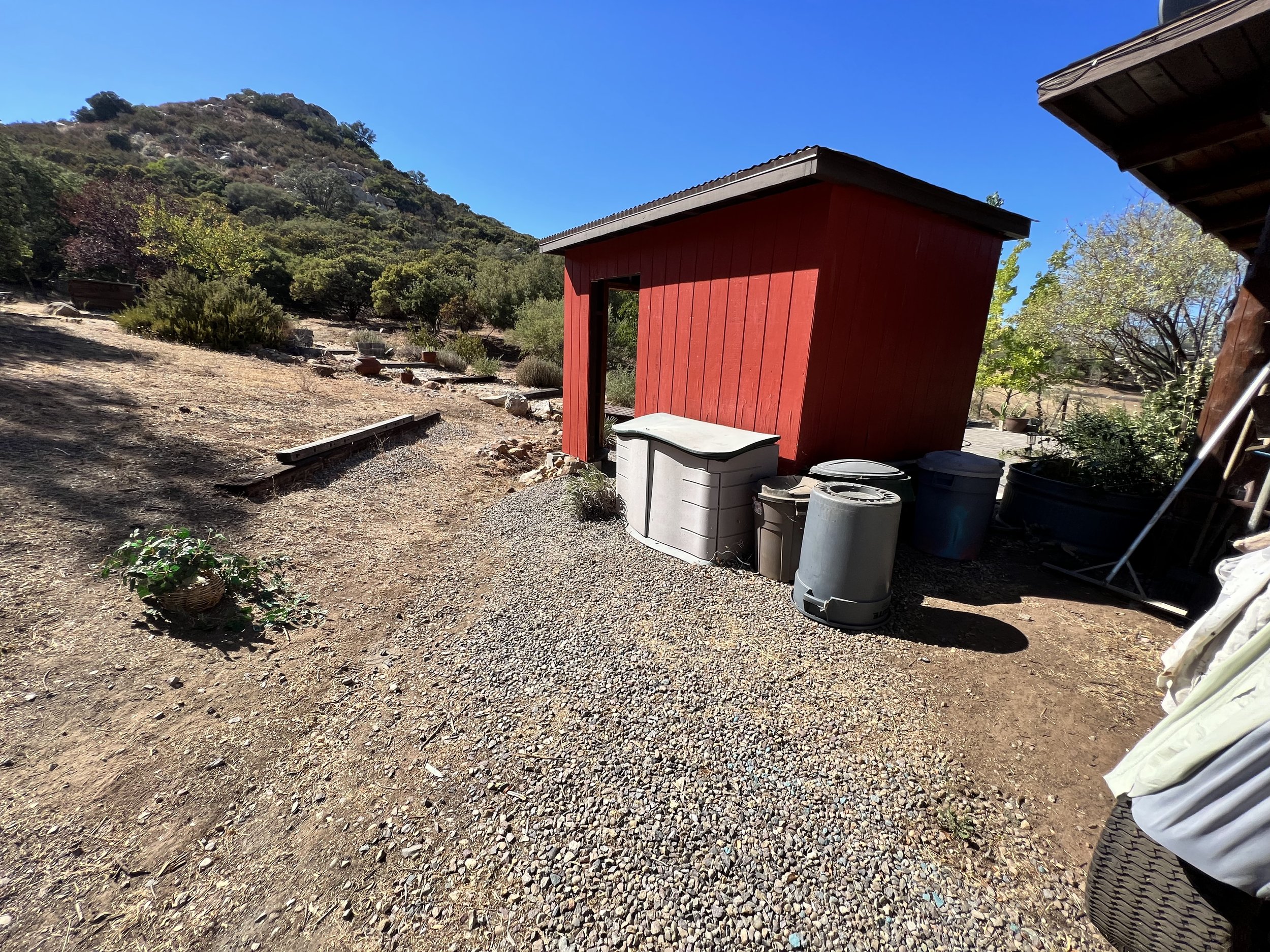
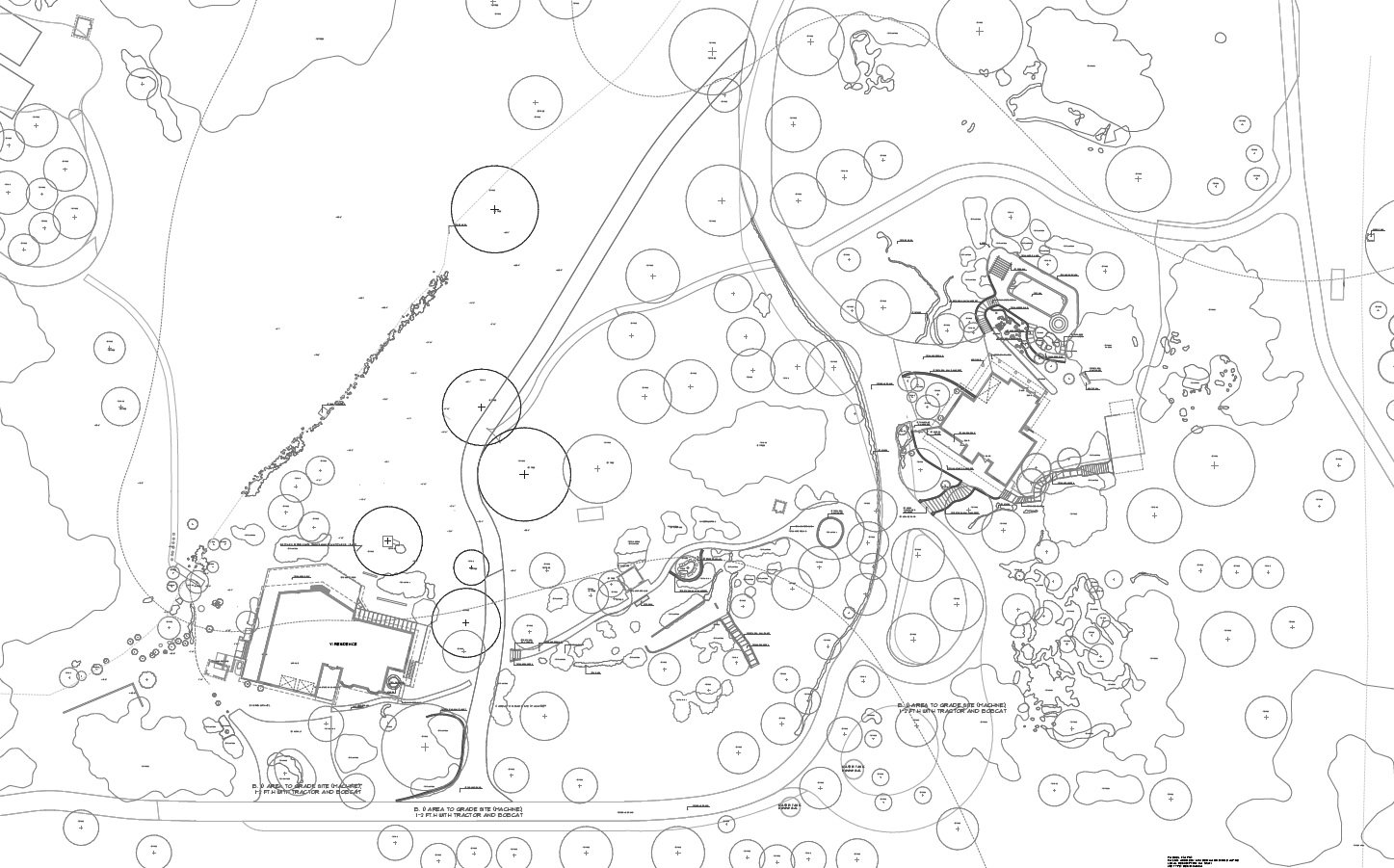
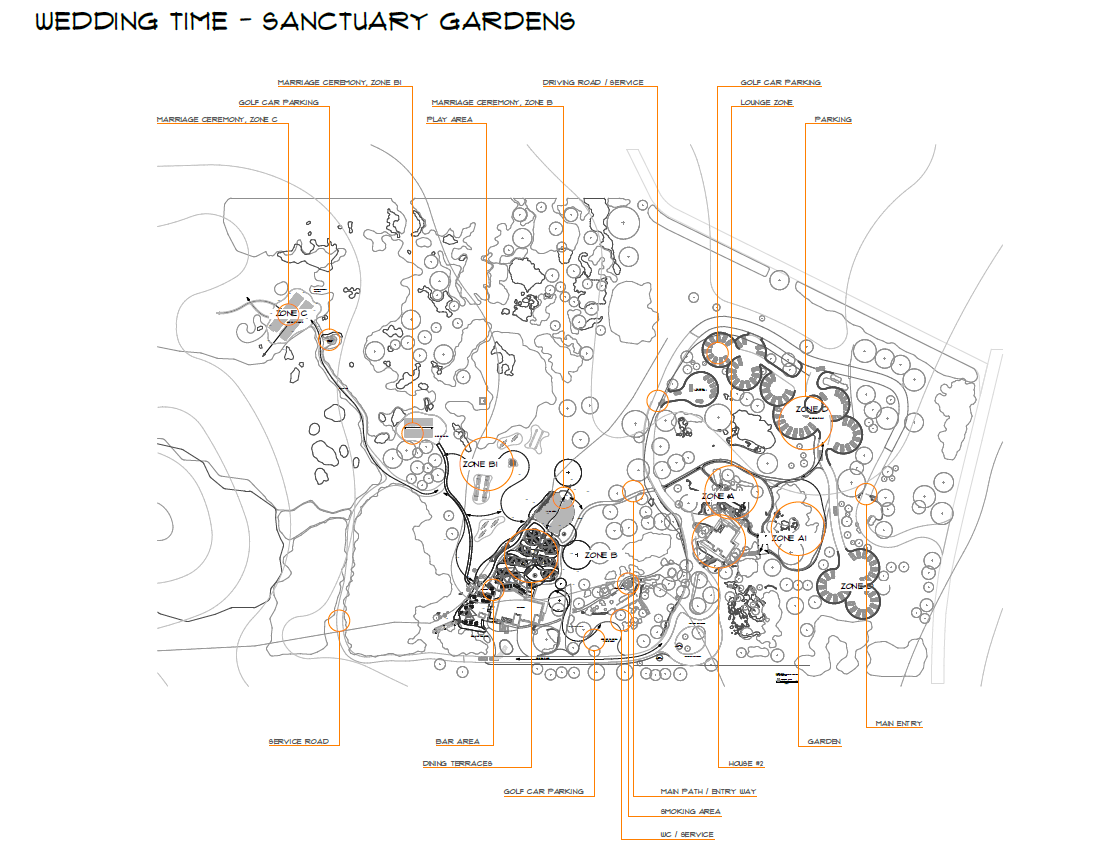
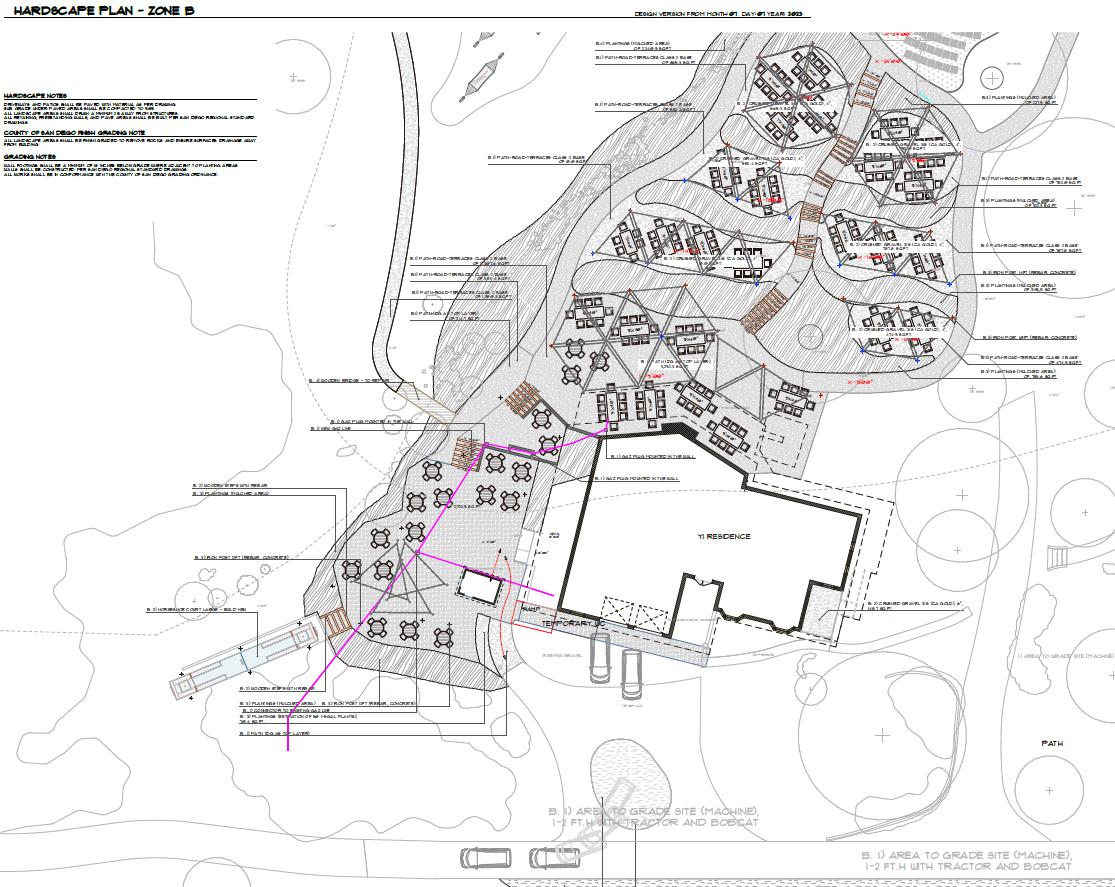
PROJECT DESIGN DRAWINGS
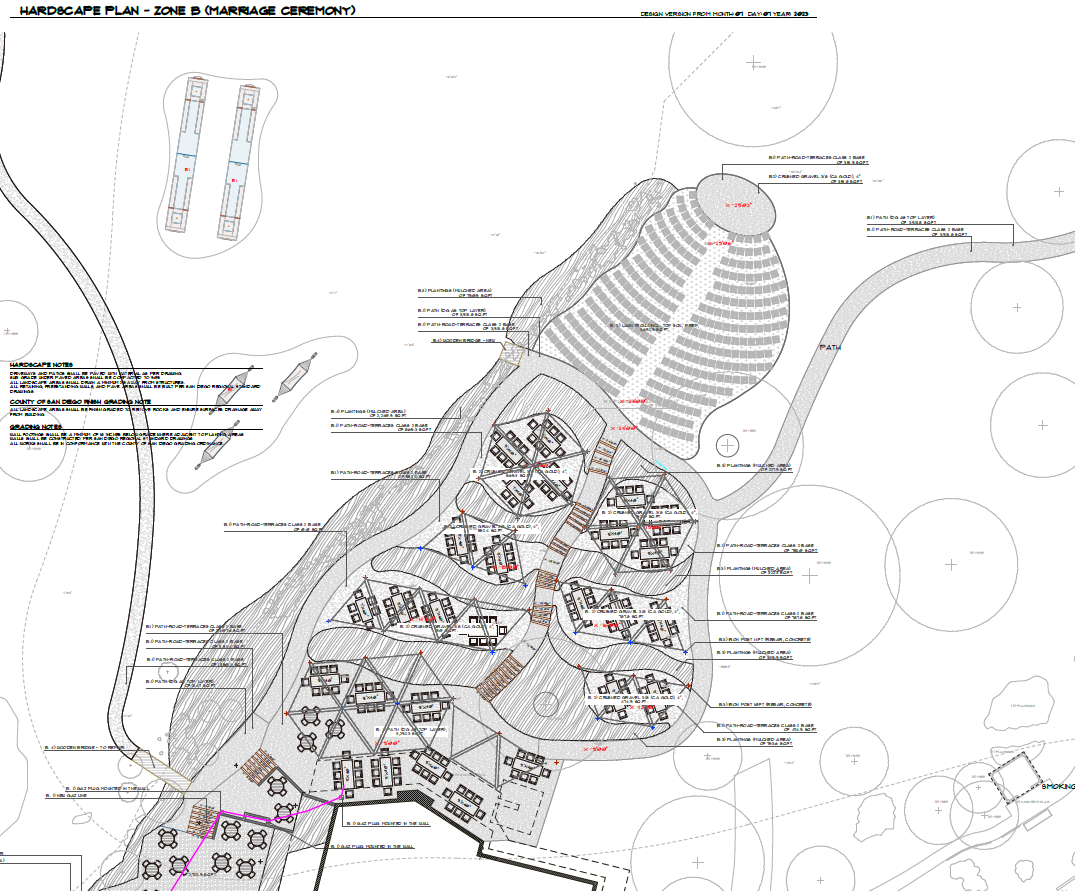
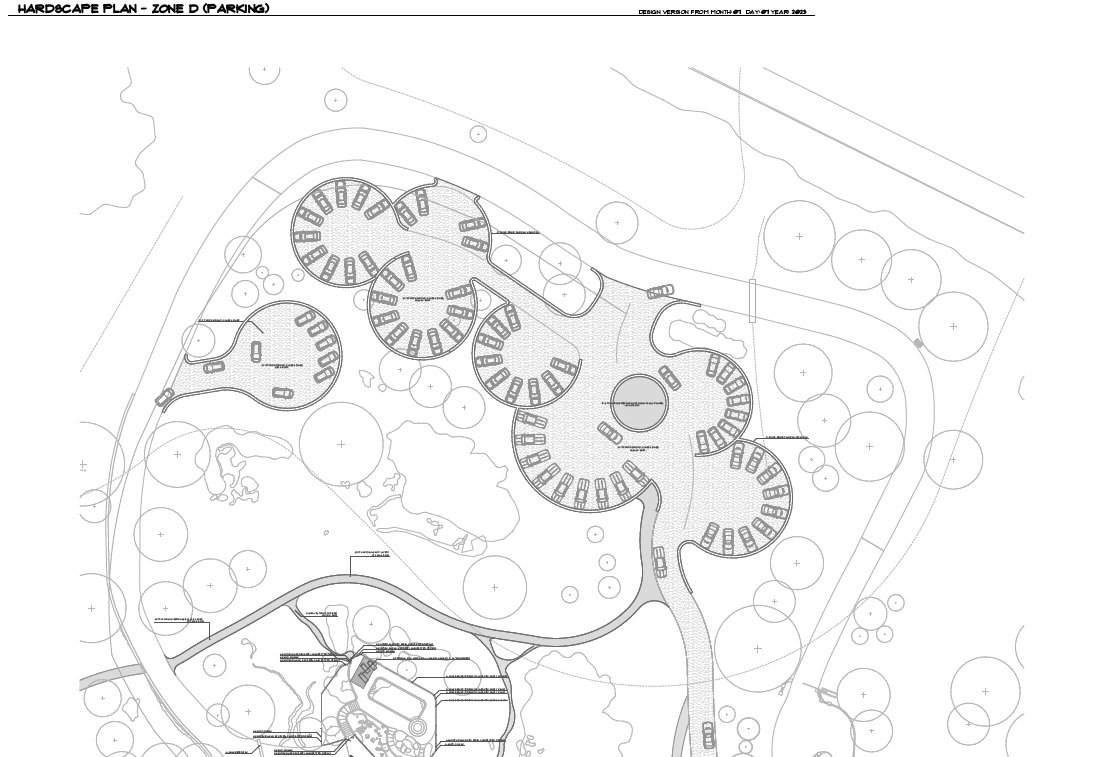
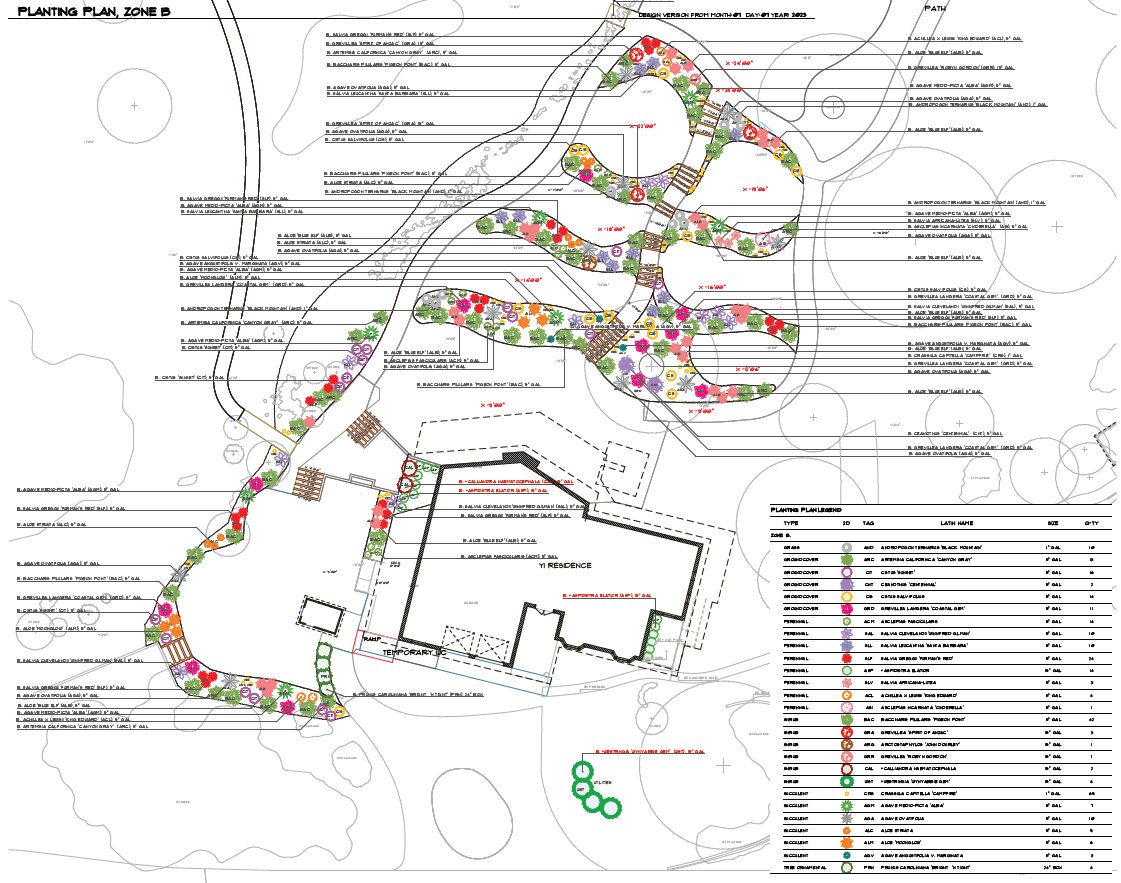
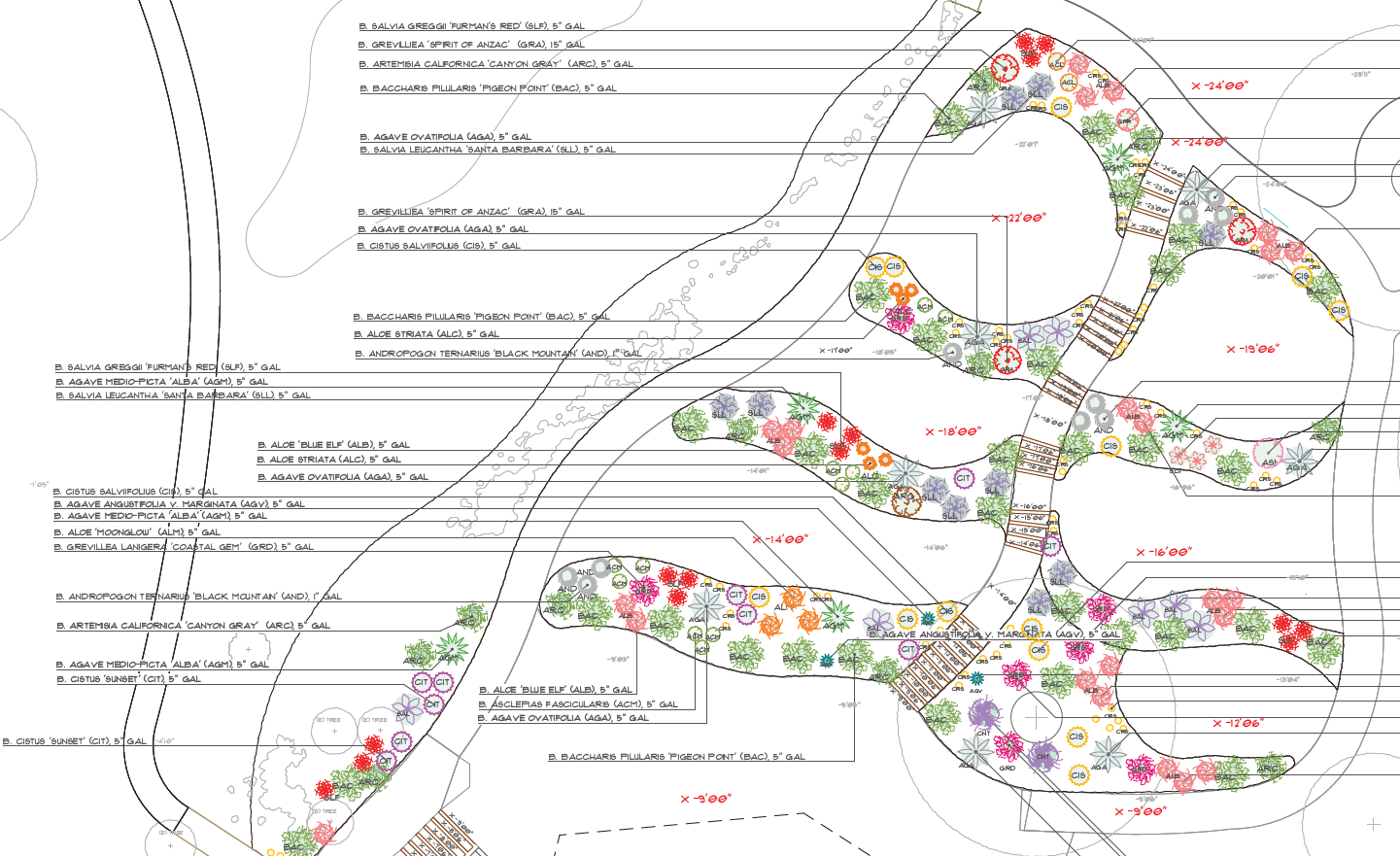
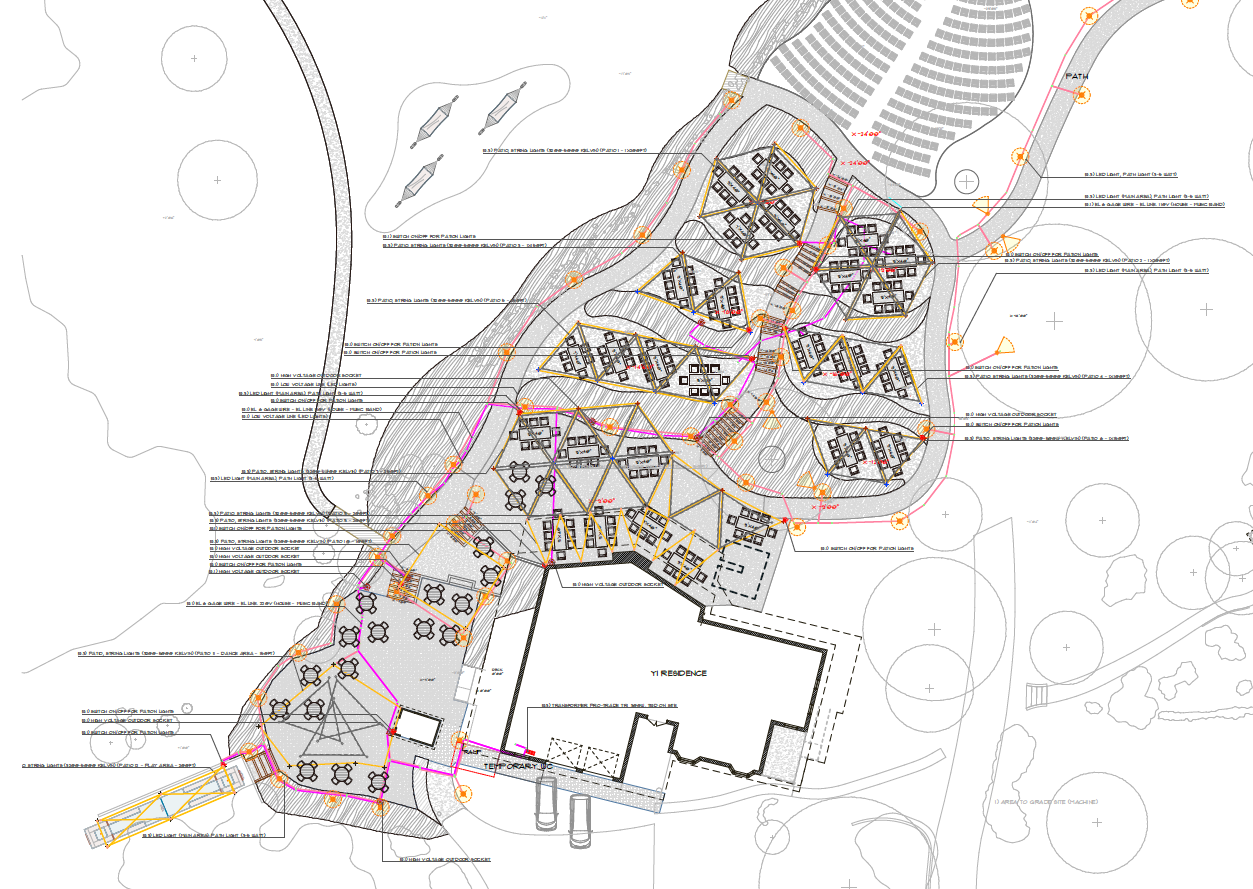
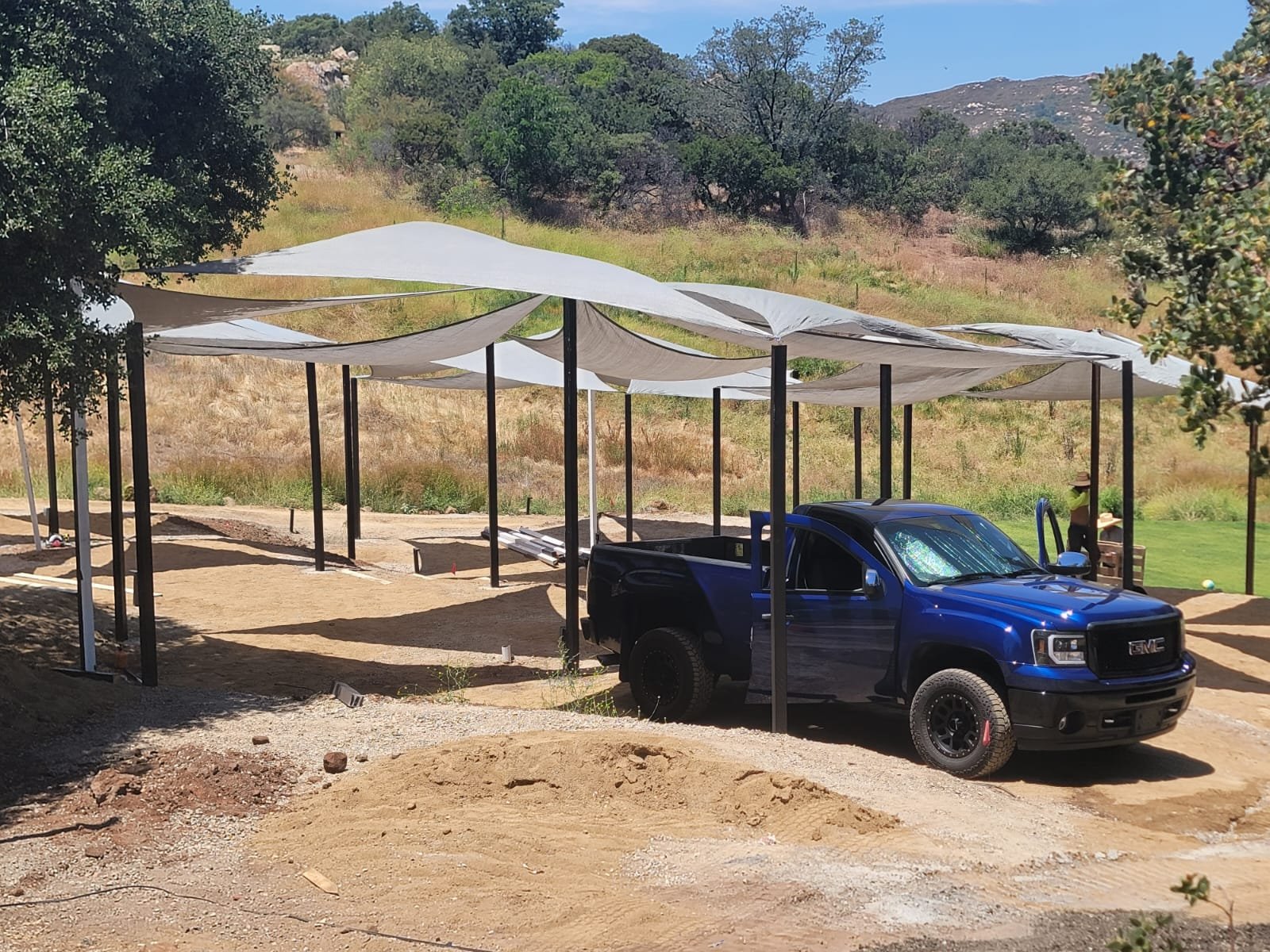
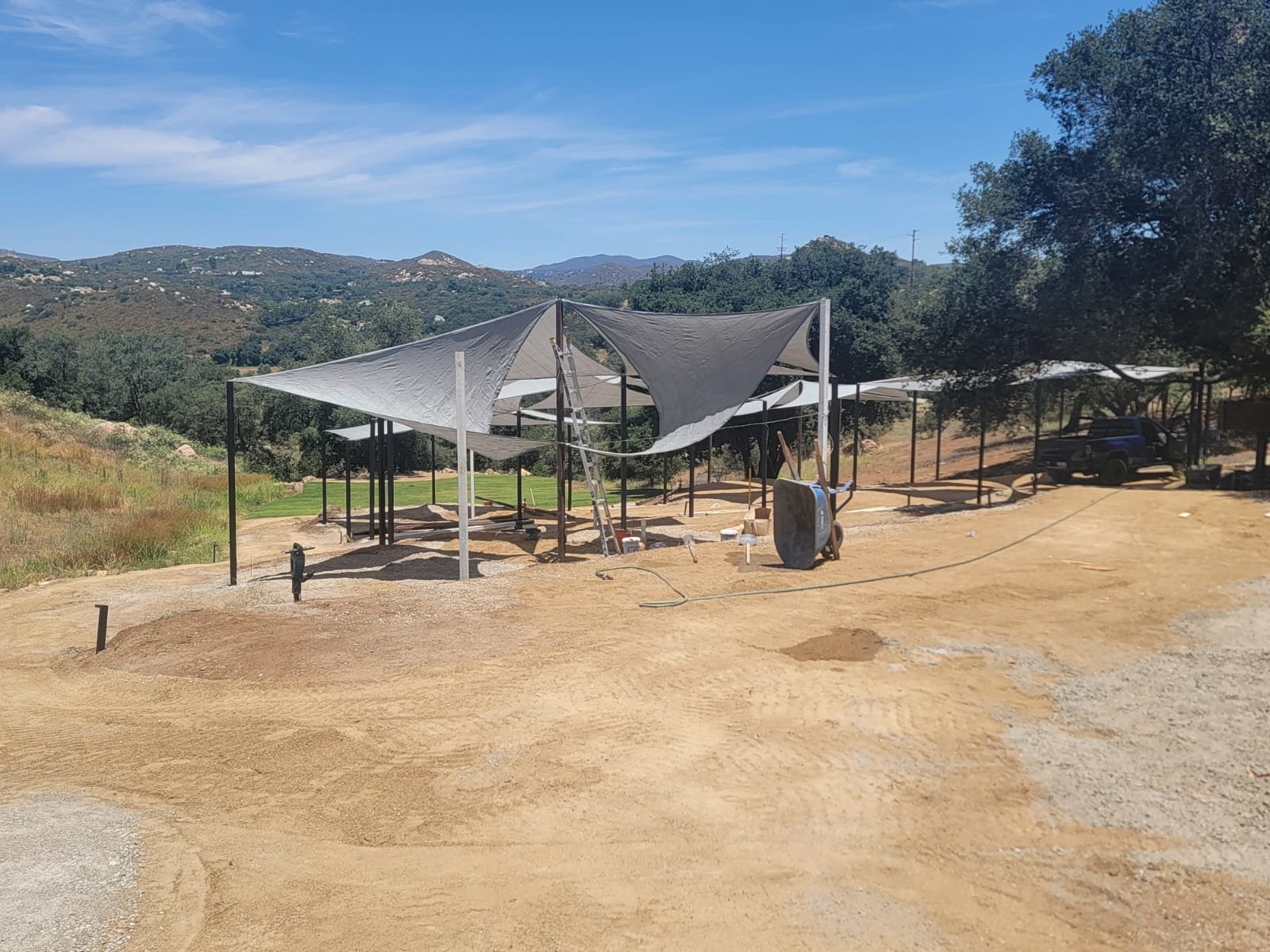
INSTALLATION, LANDSCAPE DESIGN WORK IN PROGRESS
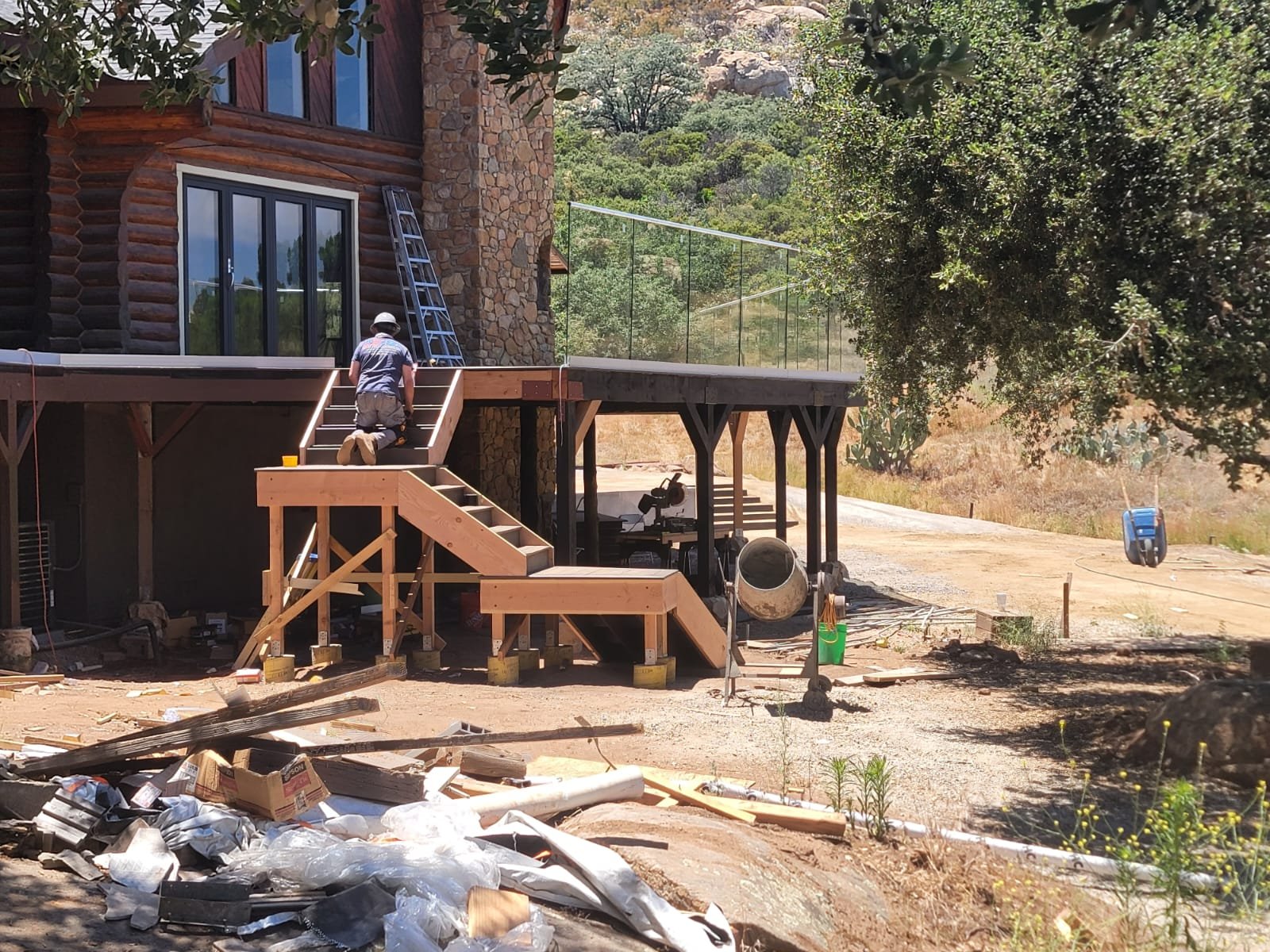
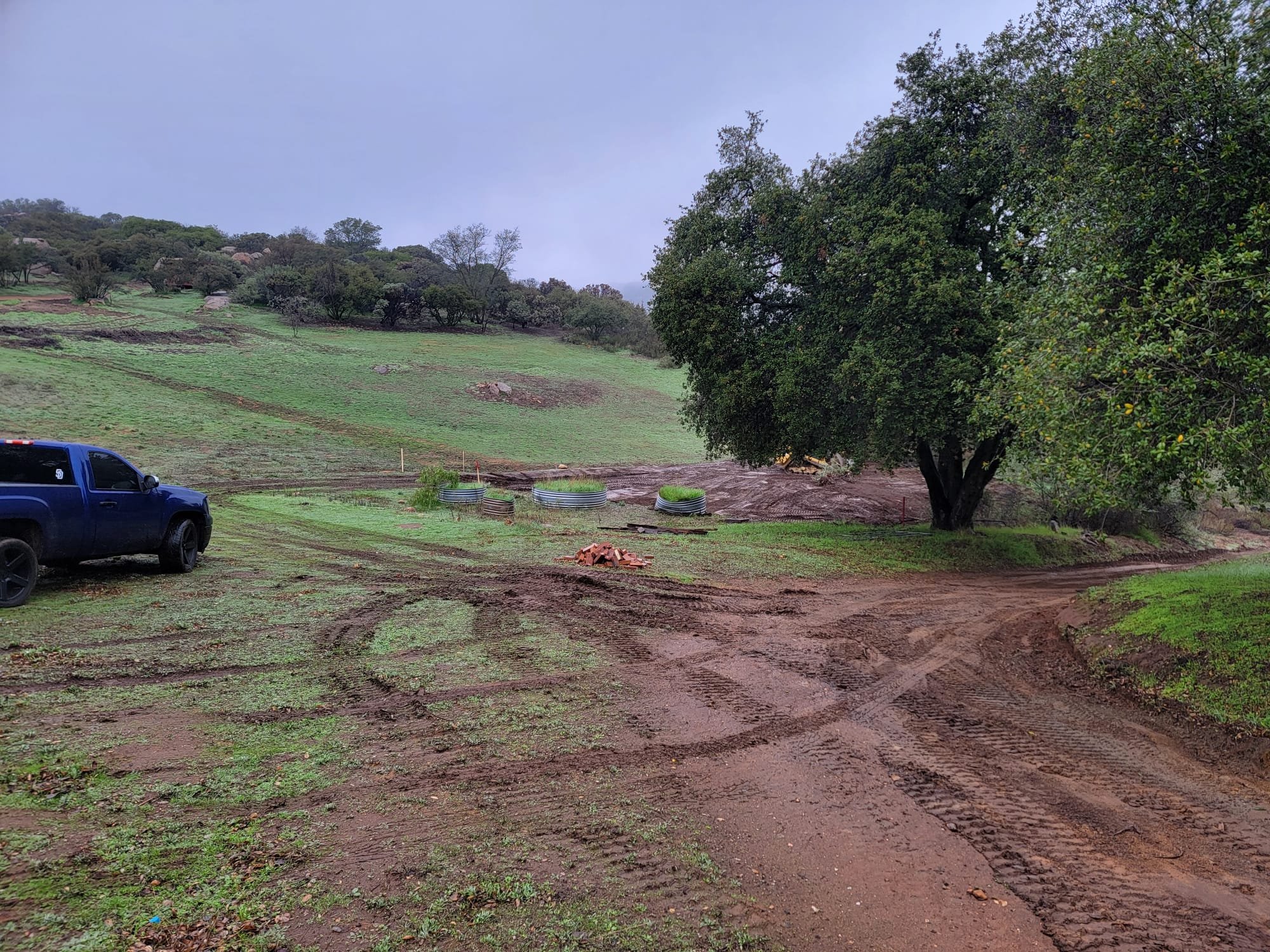

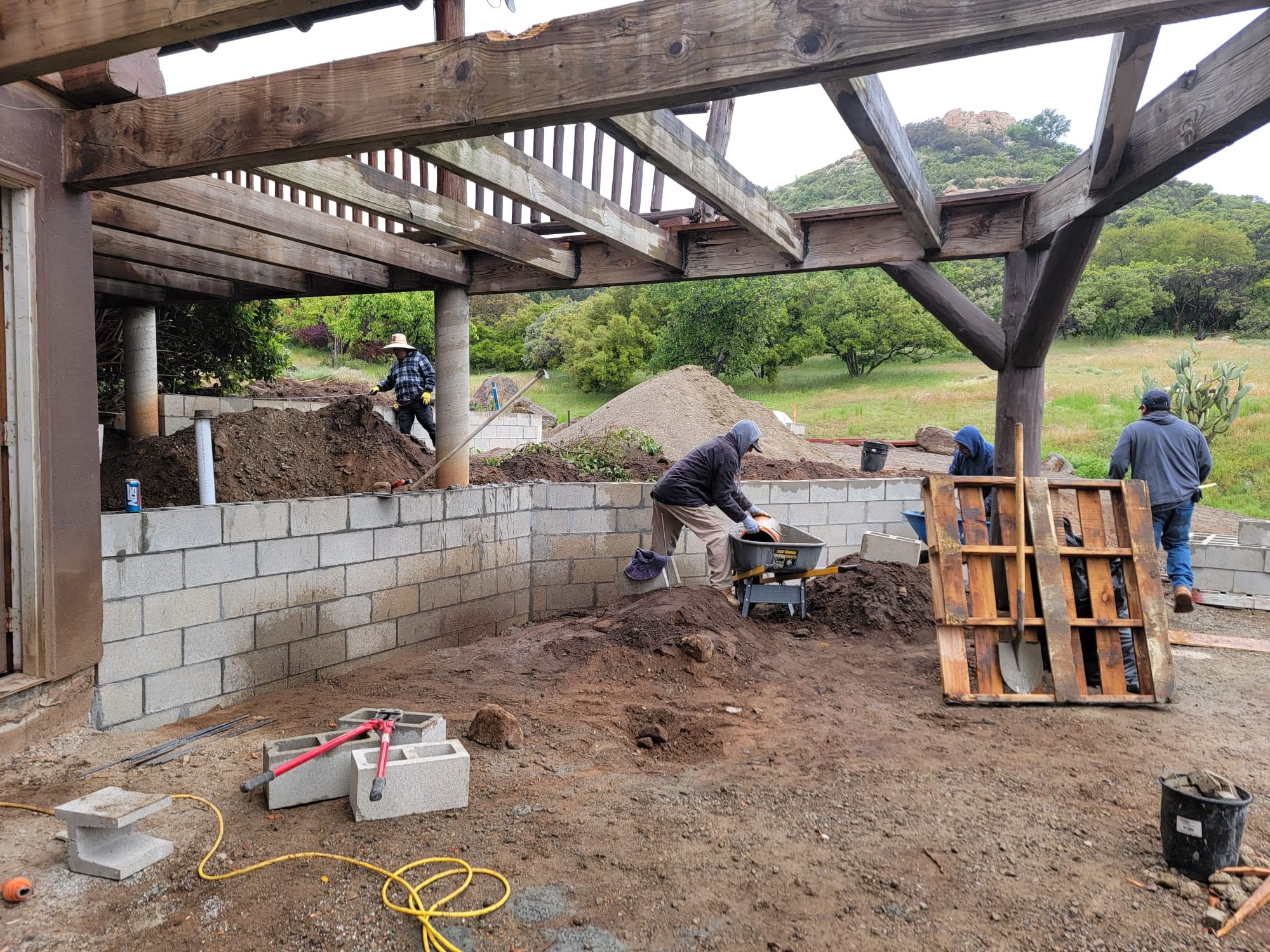
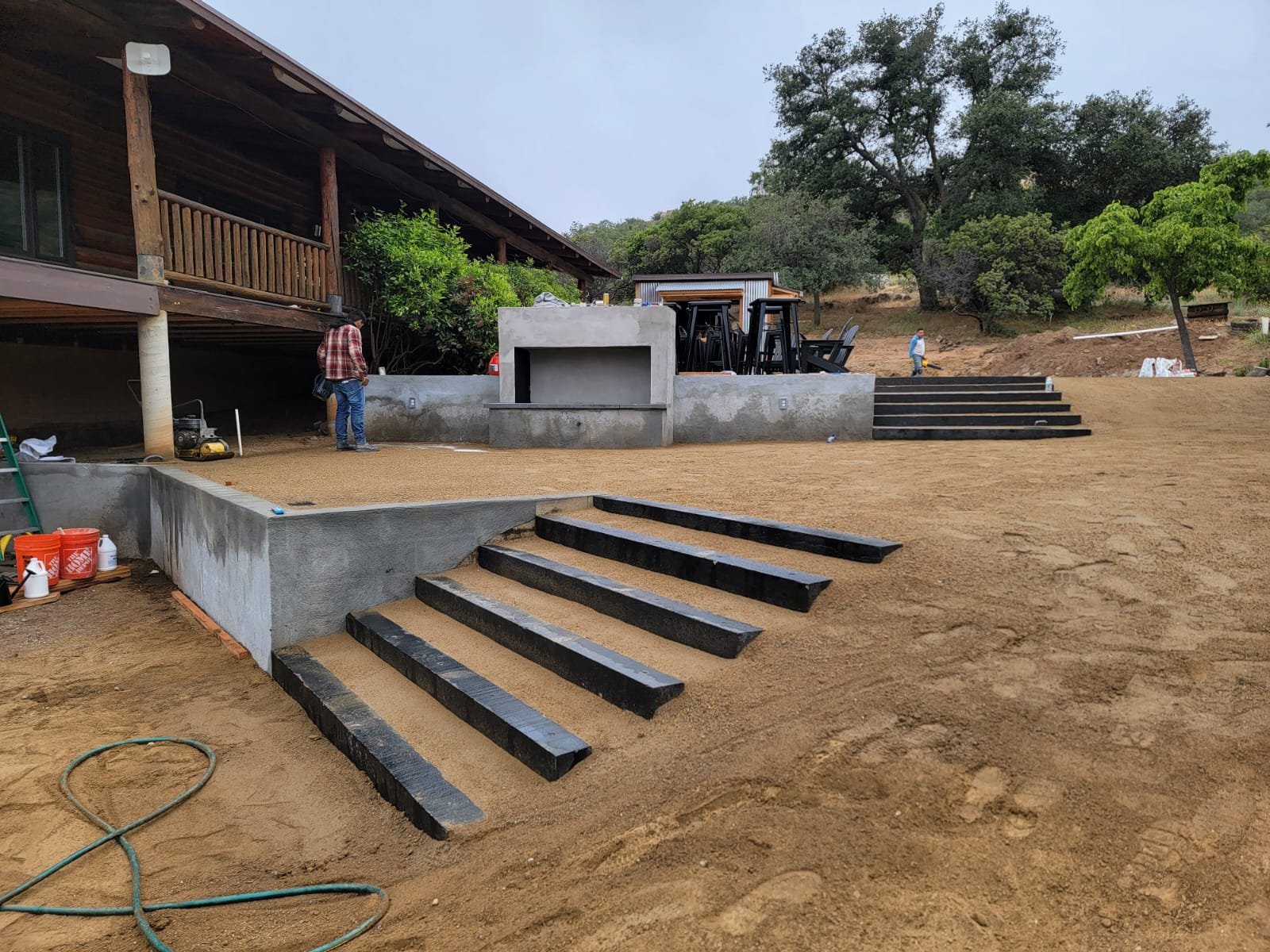
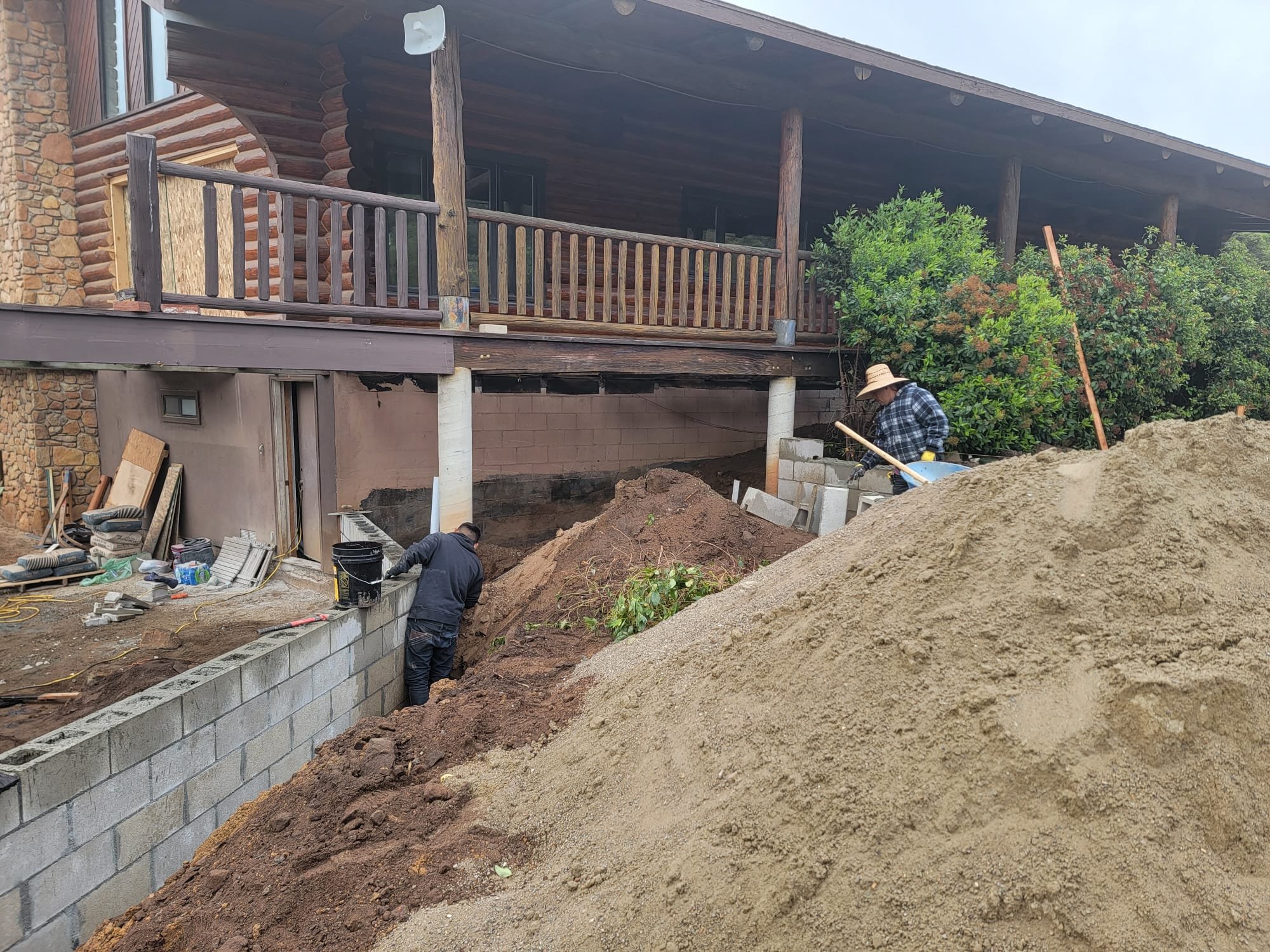
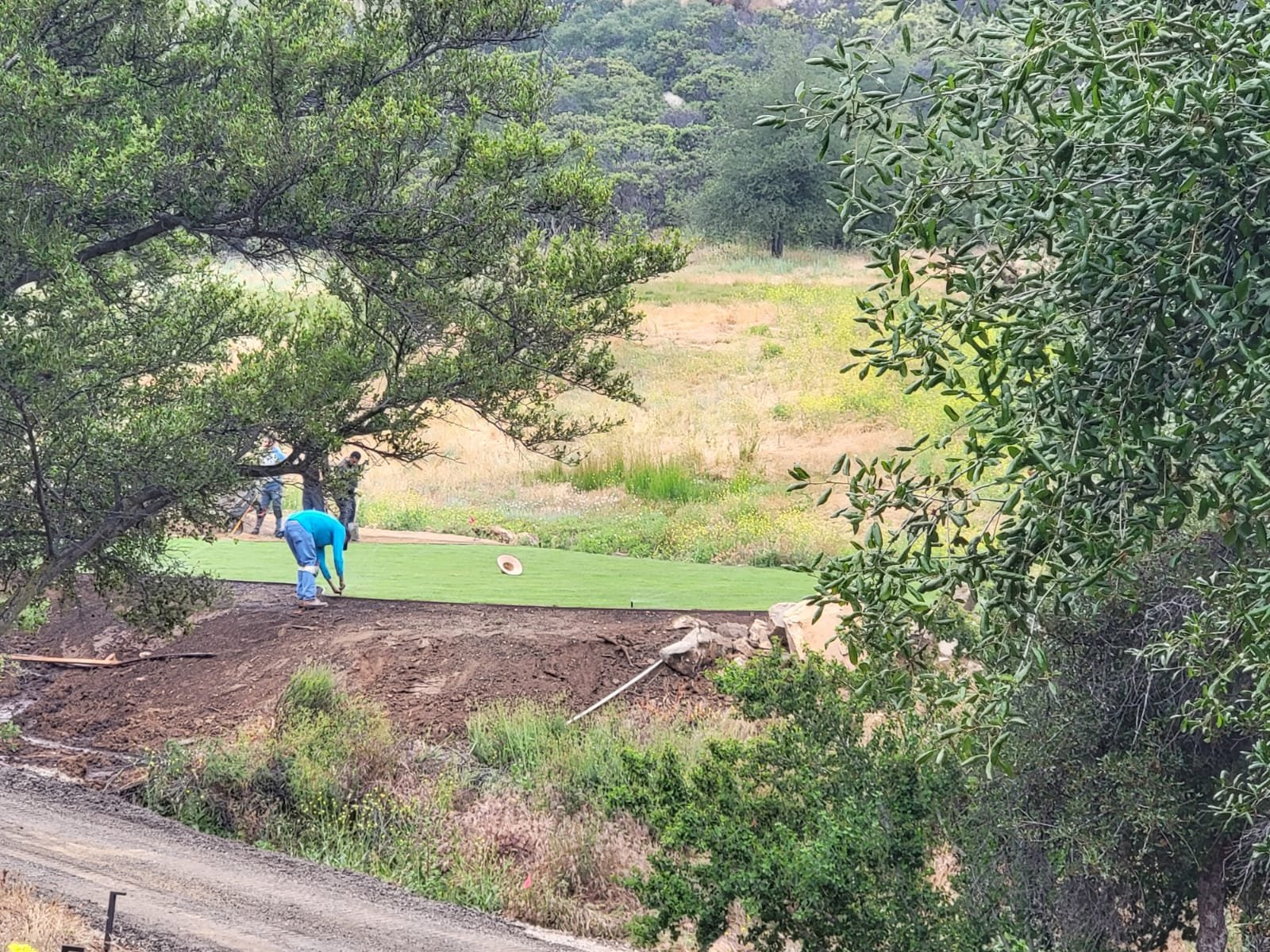
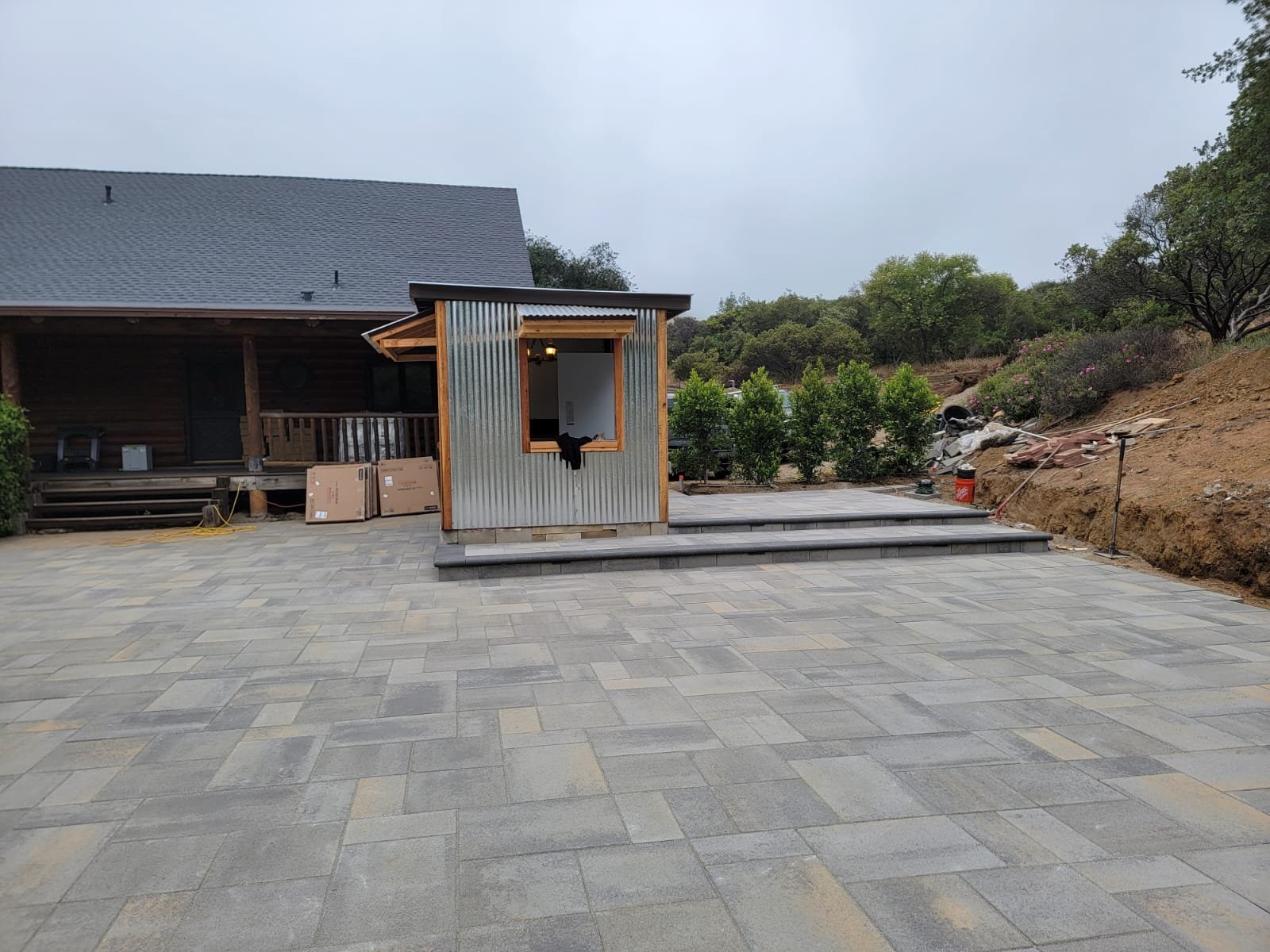
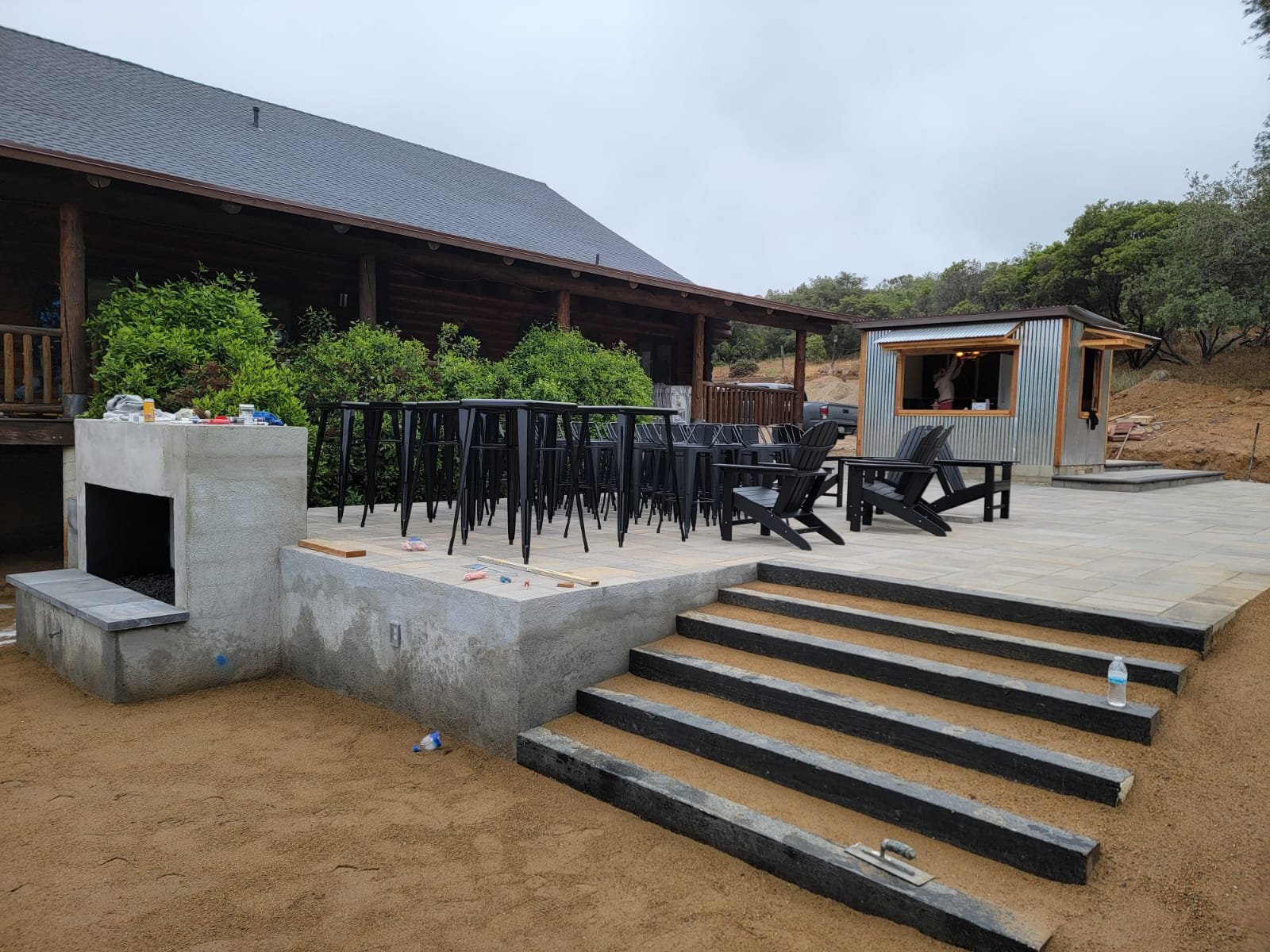
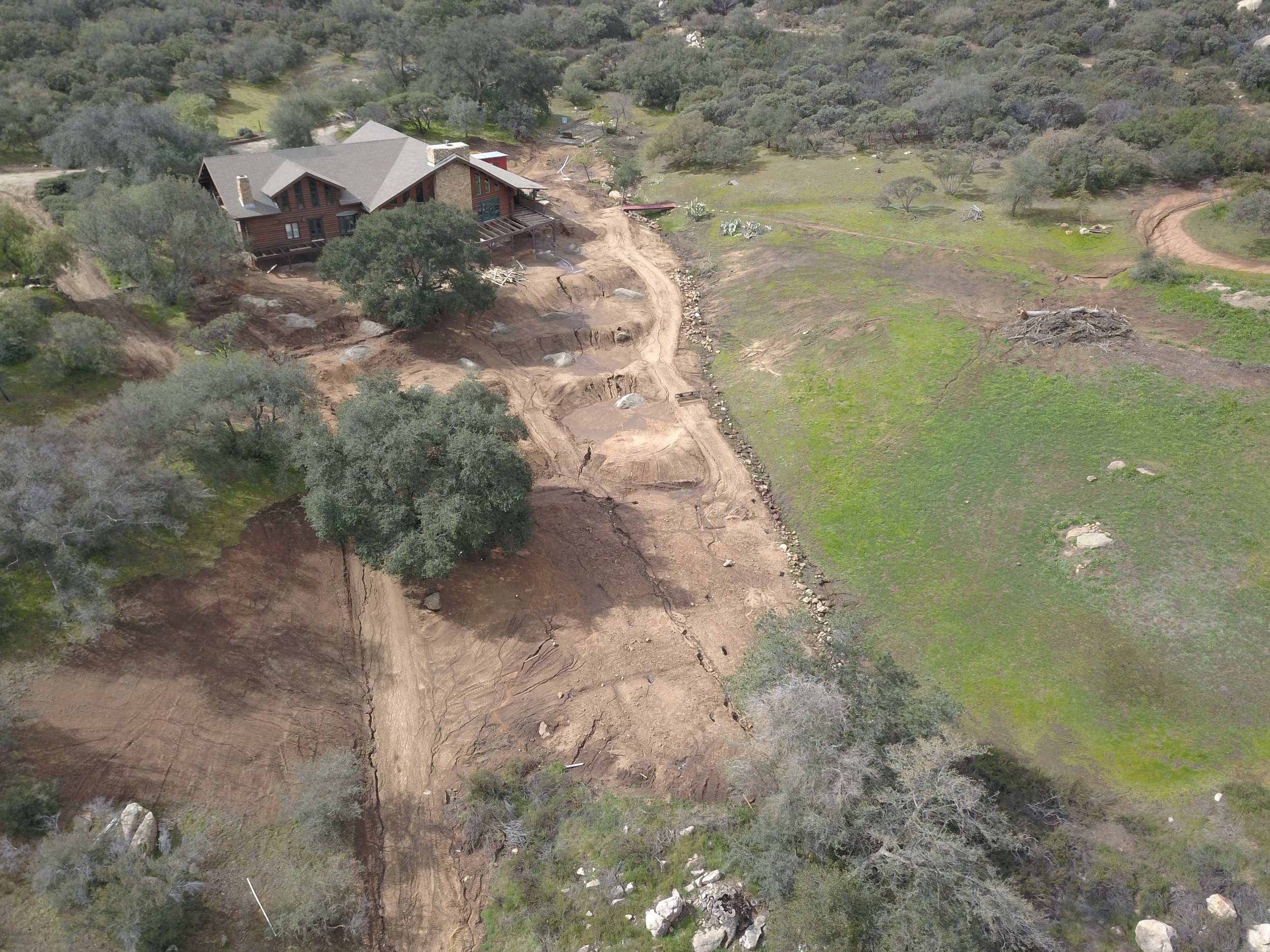
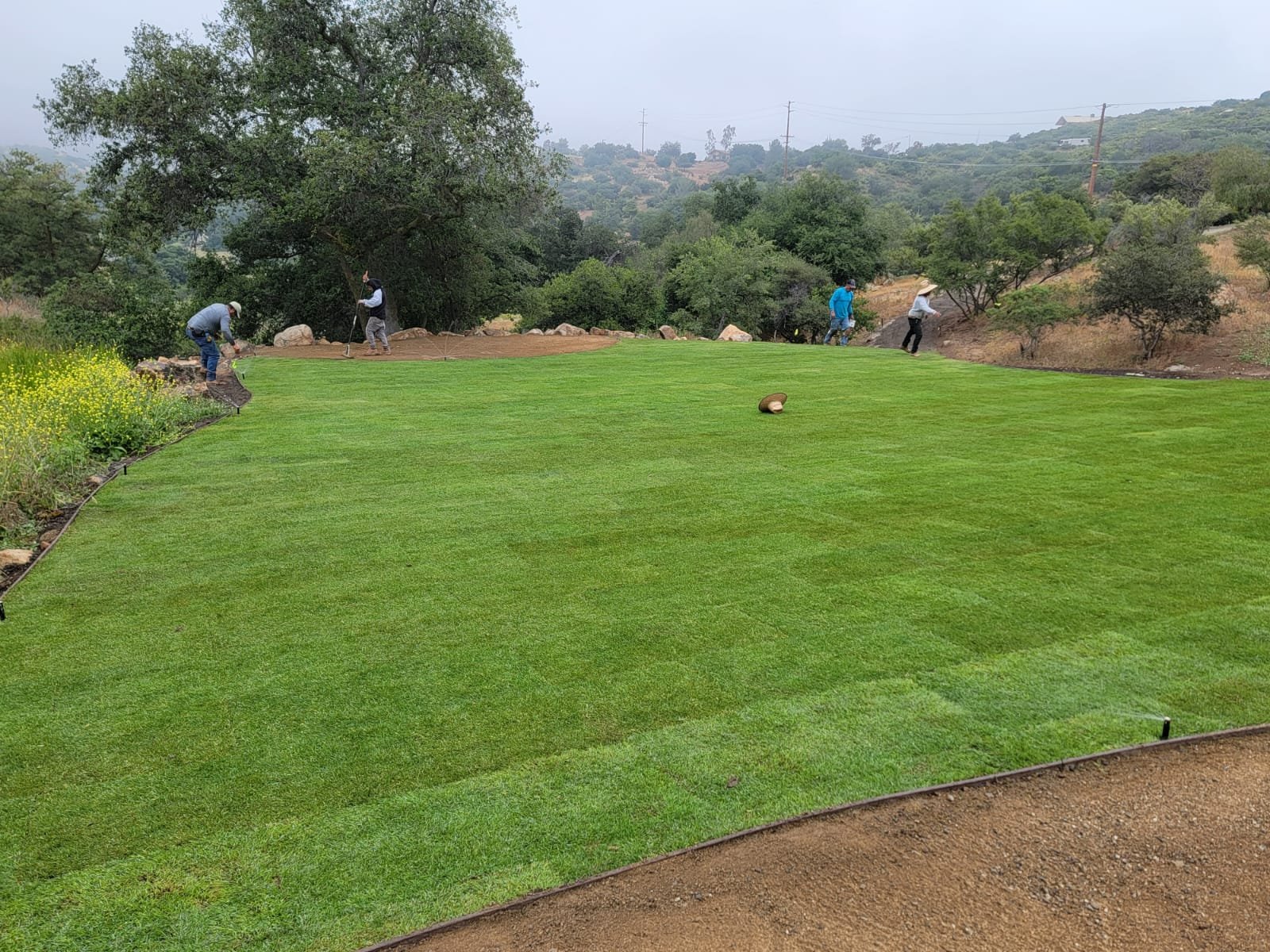
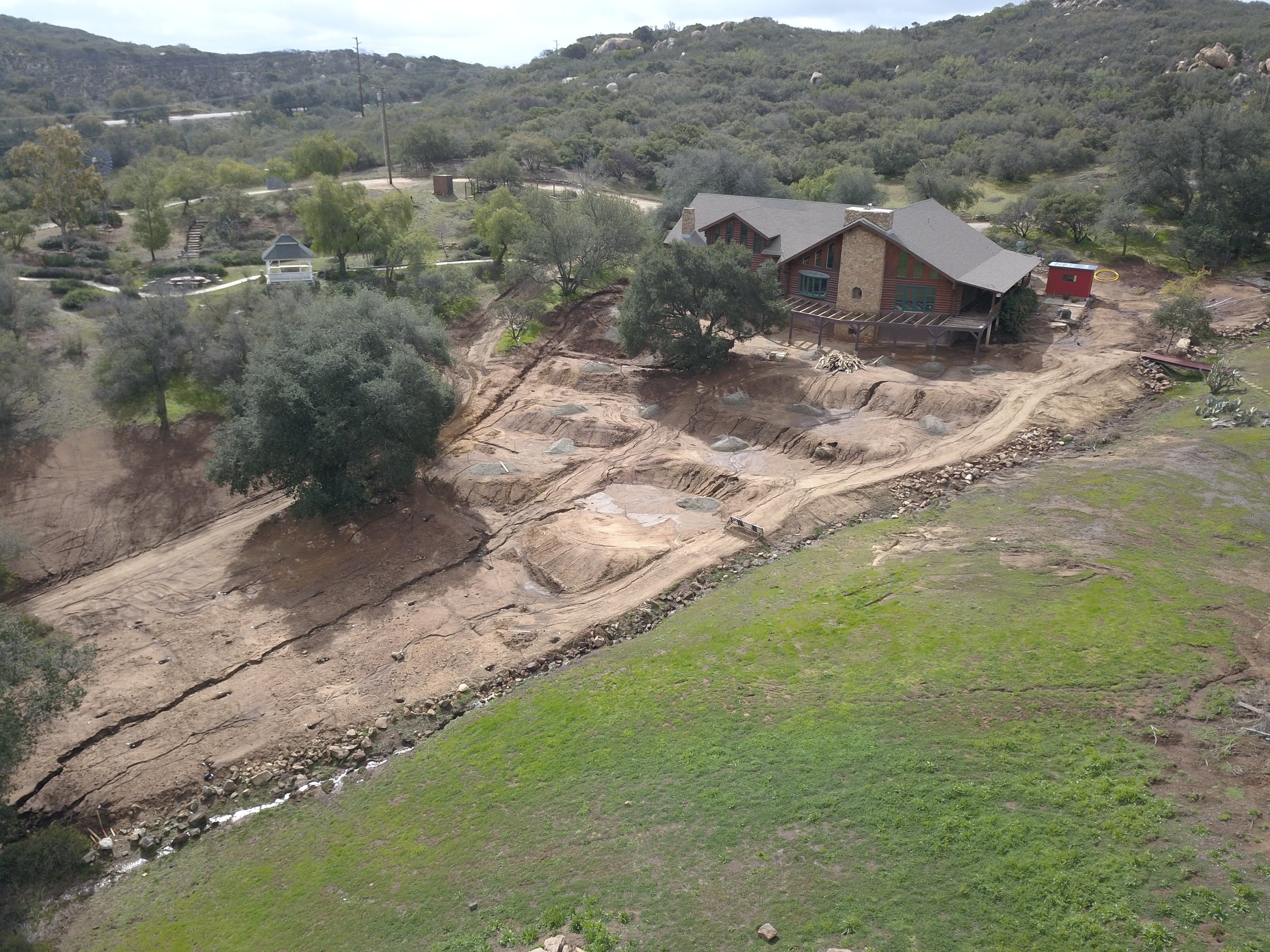
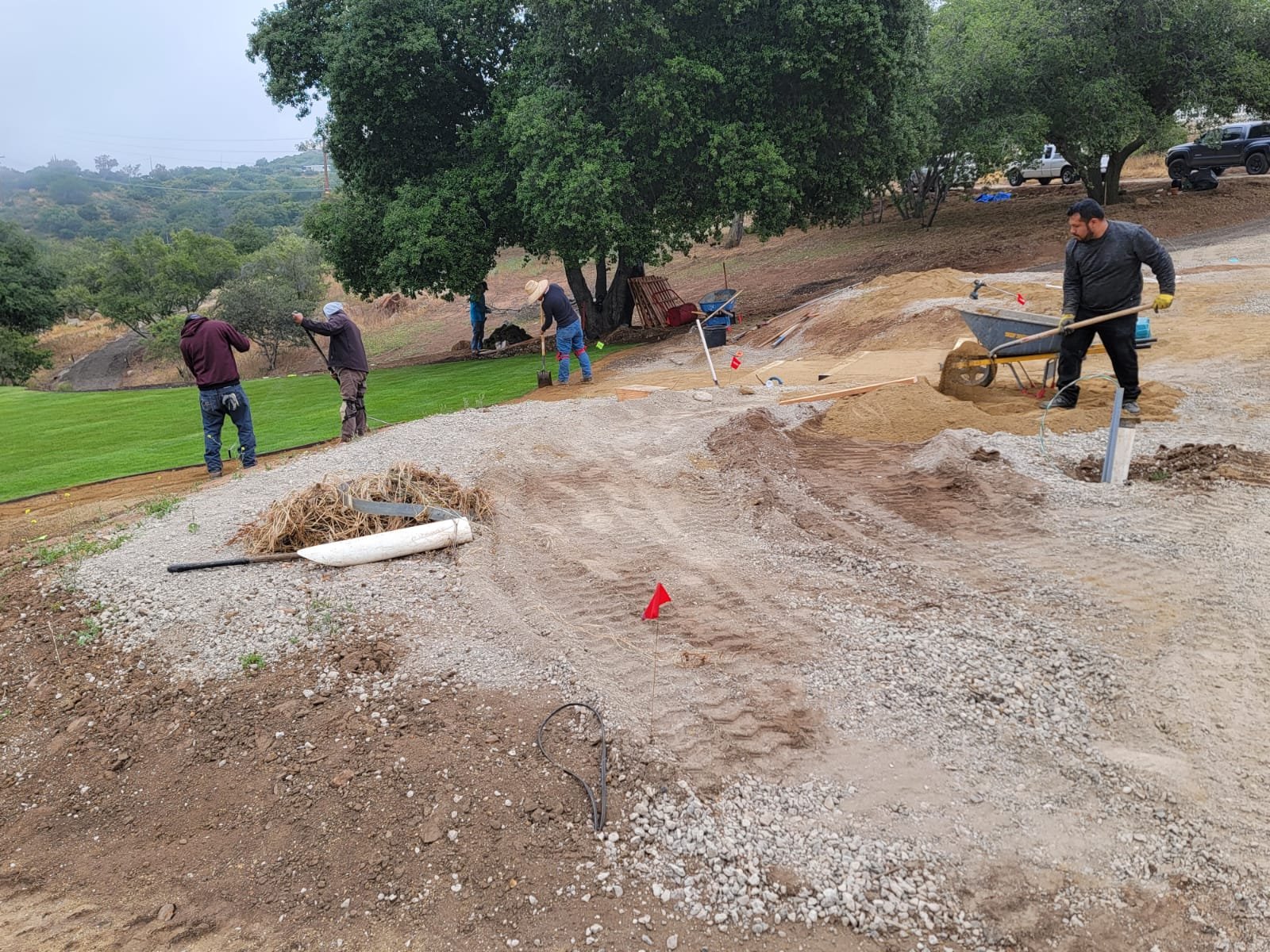
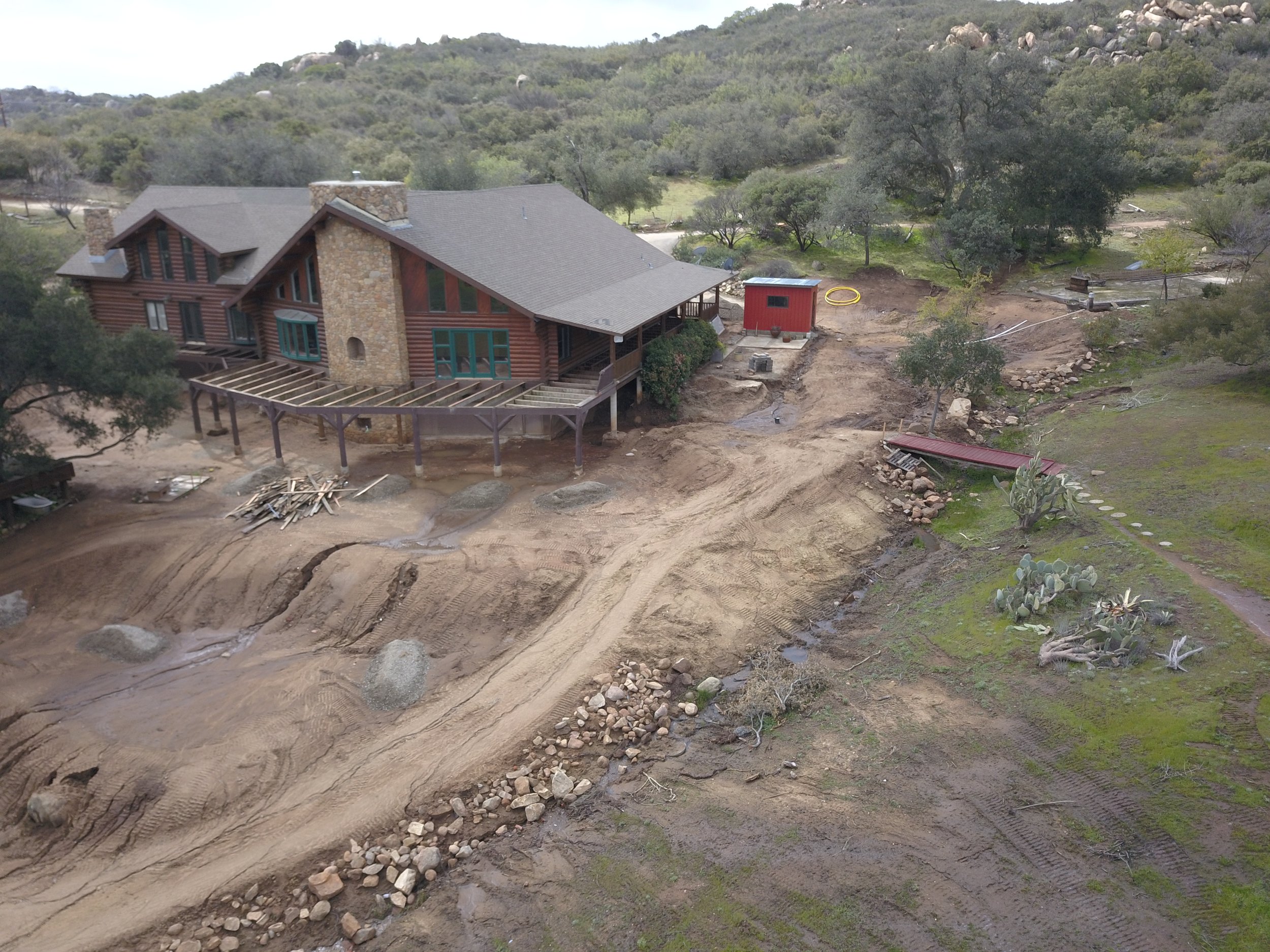
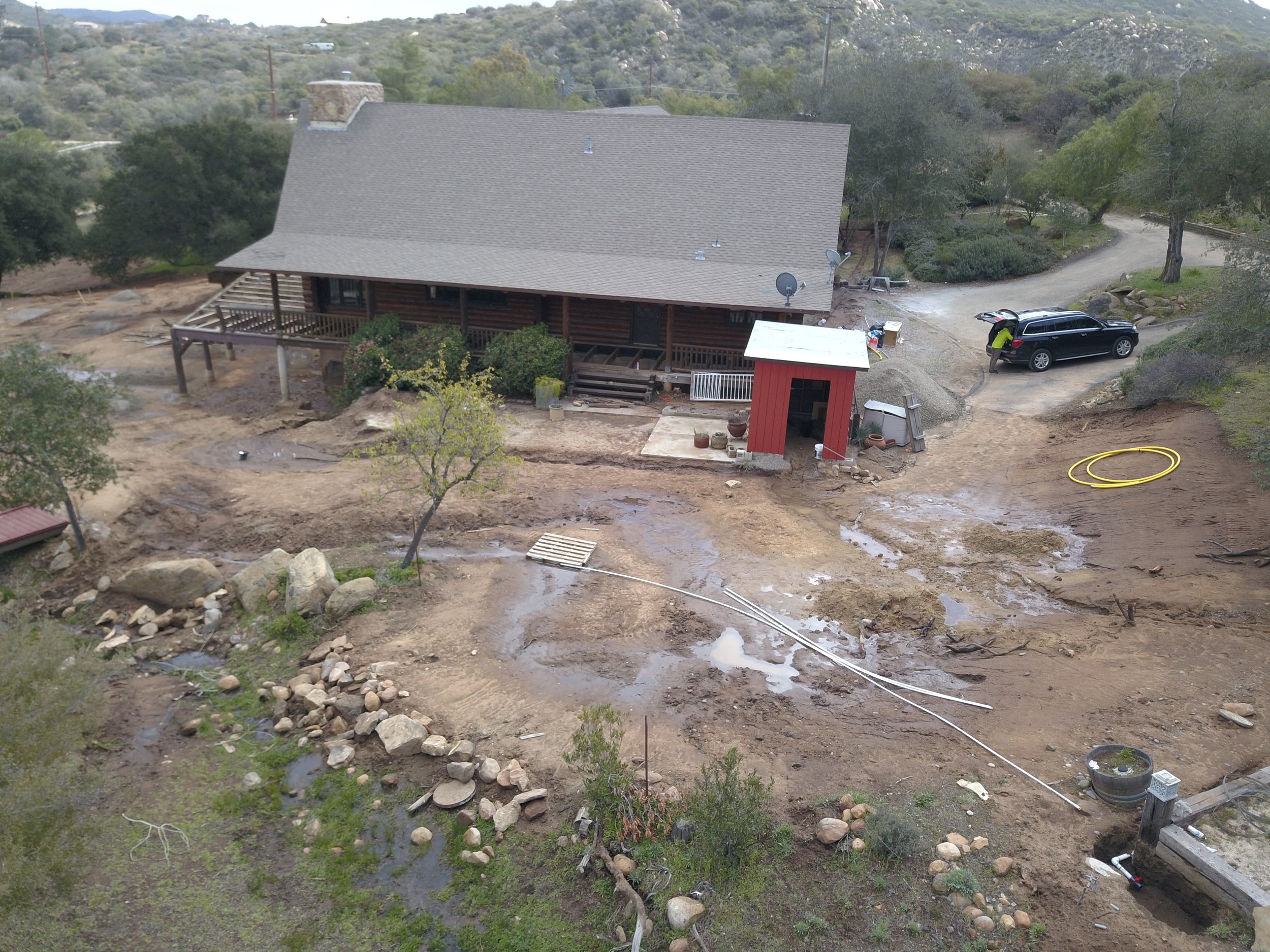
Please check Red Hawk Ridge - https://www.redhawkridgeevents.com/

Award-Winning Butterfly & Bird Garden in Poway, California
A small ecological restoration garden in Poway, California, designed as a private sanctuary for butterflies, pollinators, wildlife and people.
An early LASD Studio garden where extensive lawn was transformed into an intimate living sanctuary for butterflies, birds, pollinators and people.
The Butterfly Garden in Poway, California, is a small ecological restoration project that transforms a neglected, dry landscape into a living private sanctuary for butterflies, pollinators, wildlife and people, designed as a living ecosystem.
Designed entirely by LASD Studio founder Yura Lotonenko, this was one of his first gardens in Southern California, and one of the projects that began shaping the studio’s ecological design philosophy.
The completed landscape received multiple awards through San Diego-area garden tours, but its deeper achievement is quieter. A neglected, water-demanding yard became a place where people could sit among grasses, flowers, stone and birdsong while a small but increasingly complex habitat developed around them.
From Water-Intensive Lawn to Living Habitat
Before the habitat garden could begin, a substantial portion of the existing lawn had to be removed.
This was not simply a visual change. Conventional turf occupied valuable ground while offering limited structural diversity for butterflies, birds and other wildlife. Replacing it created room for a layered landscape of milkweed, nectar-rich flowers, ornamental grasses, shrubs, groundcovers, boulders, permeable gravel and a dry creek.
The transformation reduced the dominance of one uniform surface and introduced multiple ecological conditions: flowers for nectar and pollen, host planting for butterfly life cycles, seeds for birds, protected soil, perching points, shallow water and spaces of shelter.
What had been an open, depleted ground plane became a sequence of living relationships.

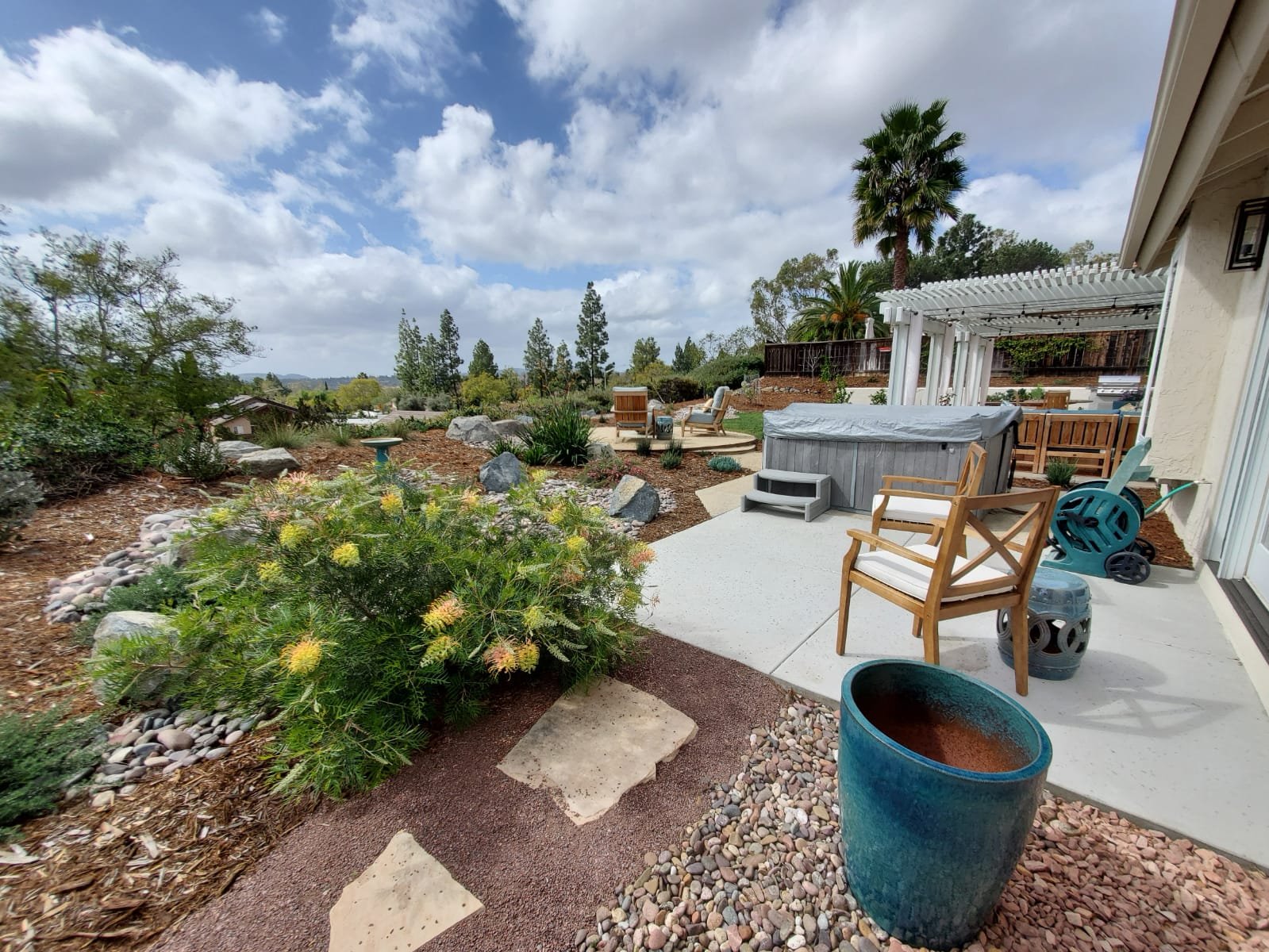
Butterfly garden at sunset with birdbath and seating, Poway, California
Art and Ecology in One Composition
The garden is carefully composed, but it is not static.
Pink grasses catch the low evening light. Boulders hold the structure of the landscape while plants move around them. Gravel and rounded creek stone establish a calm ground plane, and the dry creek traces a natural line through the garden.
During rain, the channel can receive and guide runoff, slowing the movement of water through the property. In dry weather, it remains as a visible memory of water - a sculptural element that organizes the planting and gives the garden a sense of depth.
Paths are suggested through openings between plant masses rather than imposed as rigid corridors. The seating area settles within the planting, oriented toward the garden, birdbath and changing sunset rather than away from them.
This is the project’s artistic and ecological synergy: every practical element contributes to the atmosphere, and every beautiful element participates in how the garden functions.
Our vision was to create more than a decorative garden - it is a synergetic system where plants, pollinators, and people coexist. Carefully selected planting palettes ensure year-round color, fragrance, and habitat. The dry creek feature provides both an aesthetic focal point and a functional stormwater solution, creating a microclimate that cools the backyard naturally.

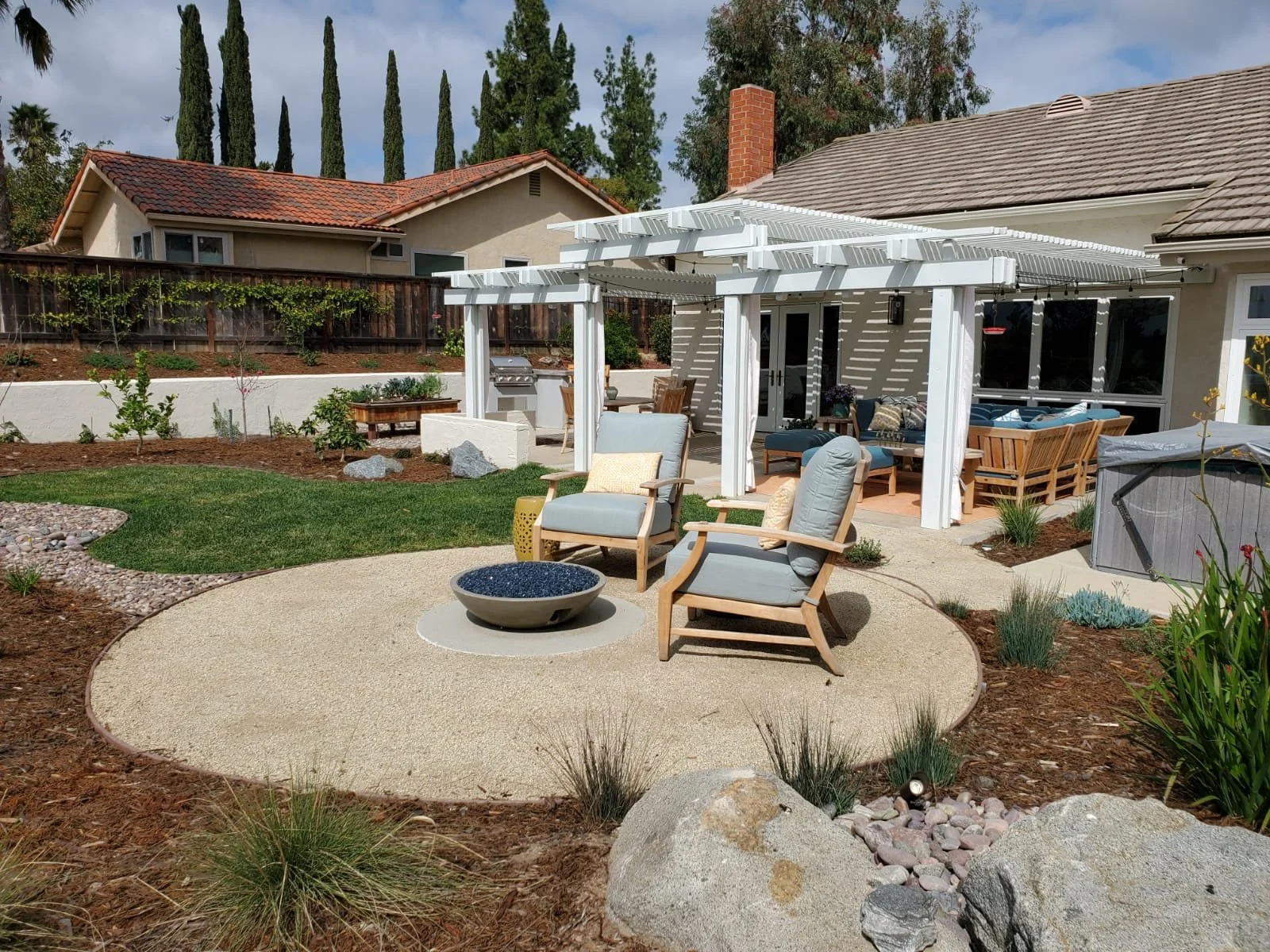
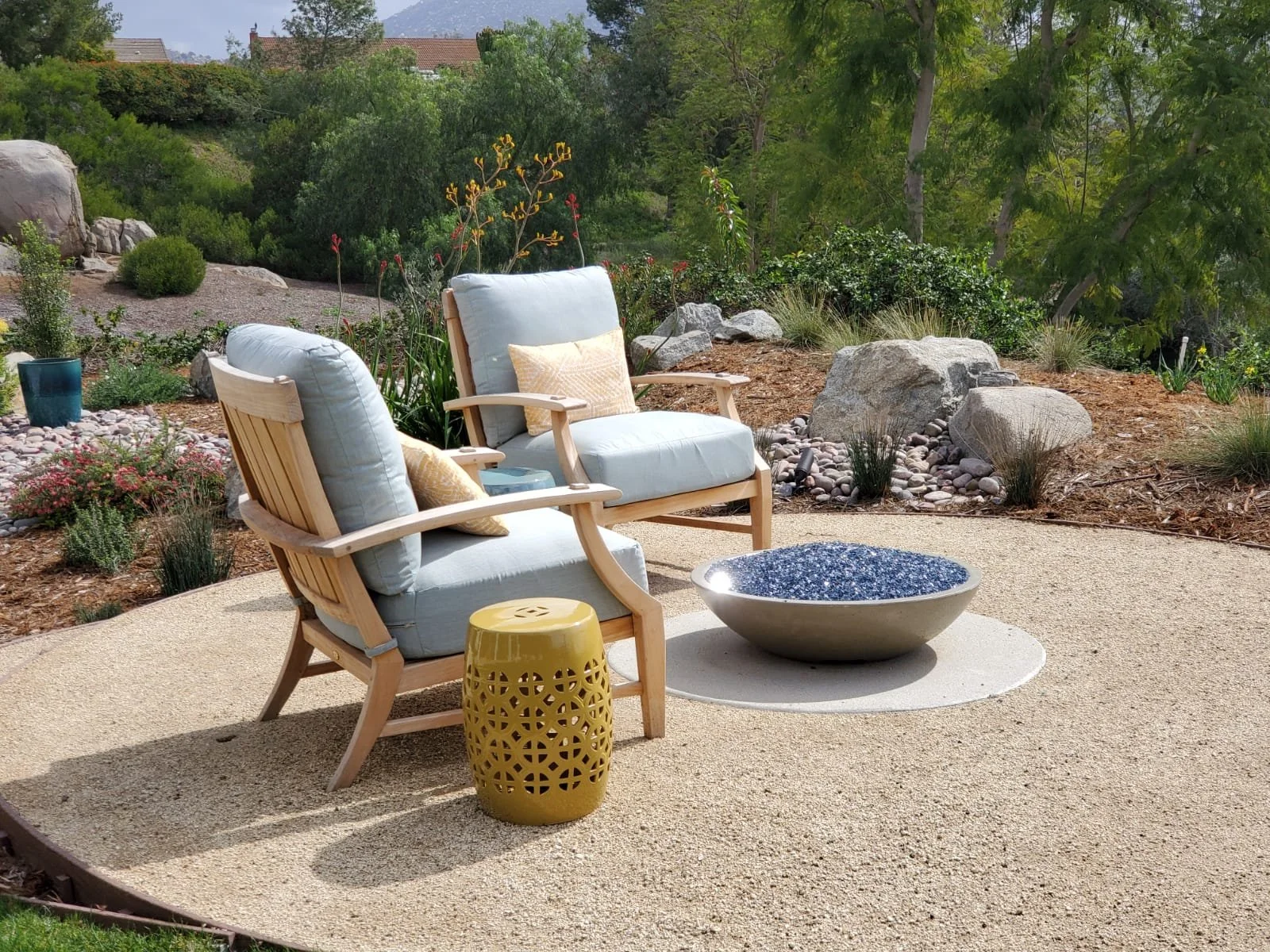
Cozy seating patio with fire bowl in butterfly garden, Poway, California
A Garden for the Butterfly Life Cycle
A butterfly garden cannot be created with flowers alone.
Adult butterflies need nectar, but caterpillars require particular host plants. Milkweed is therefore more than a colorful garden accent: it supports the breeding cycle of monarch butterflies (Danaus plexippus). A longer seasonal sequence of nectar-producing flowers helps extend the garden’s value beyond a single flush of bloom.
Butterflies recorded across San Diego County that may visit suitable Poway gardens include: Monarch - Danaus plexippus, Gulf fritillary - Agraulis vanillae, Western tiger swallowtail - Papilio rutulus, Anise swallowtail - Papilio zelicaon, Common buckeye - Junonia coenia, Painted lady - Vanessa cardui, Orange sulphur - Colias eurytheme.
Their presence depends on season, weather, surrounding habitat and the availability of appropriate nectar and host plants. These species are potential regional visitors rather than a claim that every one has been formally recorded within this garden. The San Diego County butterfly checklist documents the remarkable diversity found across the region.
Bees, moths, hoverflies and other beneficial insects also use flowering landscapes, often performing less visible but equally important work within the garden.
A Birdwatching Garden in the City
The garden was designed not only for butterflies but also as a place for observing birds.
A birdbath provides an open place to drink and bathe, while layered planting offers seeds, insects, perches and protected spaces. Nectar-producing flowers can attract hummingbirds; seed-bearing plants support small songbirds; and insect-rich planting gives wrens and other insectivorous birds somewhere to forage.
Potential visitors within Poway’s wider landscape include: Anna’s hummingbird - Calypte anna, Black-chinned hummingbird - Archilochus alexandri, California quail - Callipepla californica, California towhee - Melozone crissalis, Spotted towhee - Pipilo maculatus, Bushtit - Psaltriparus minimus, Bewick’s wren - Thryomanes bewickii, Lesser goldfinch - Spinus psaltria.
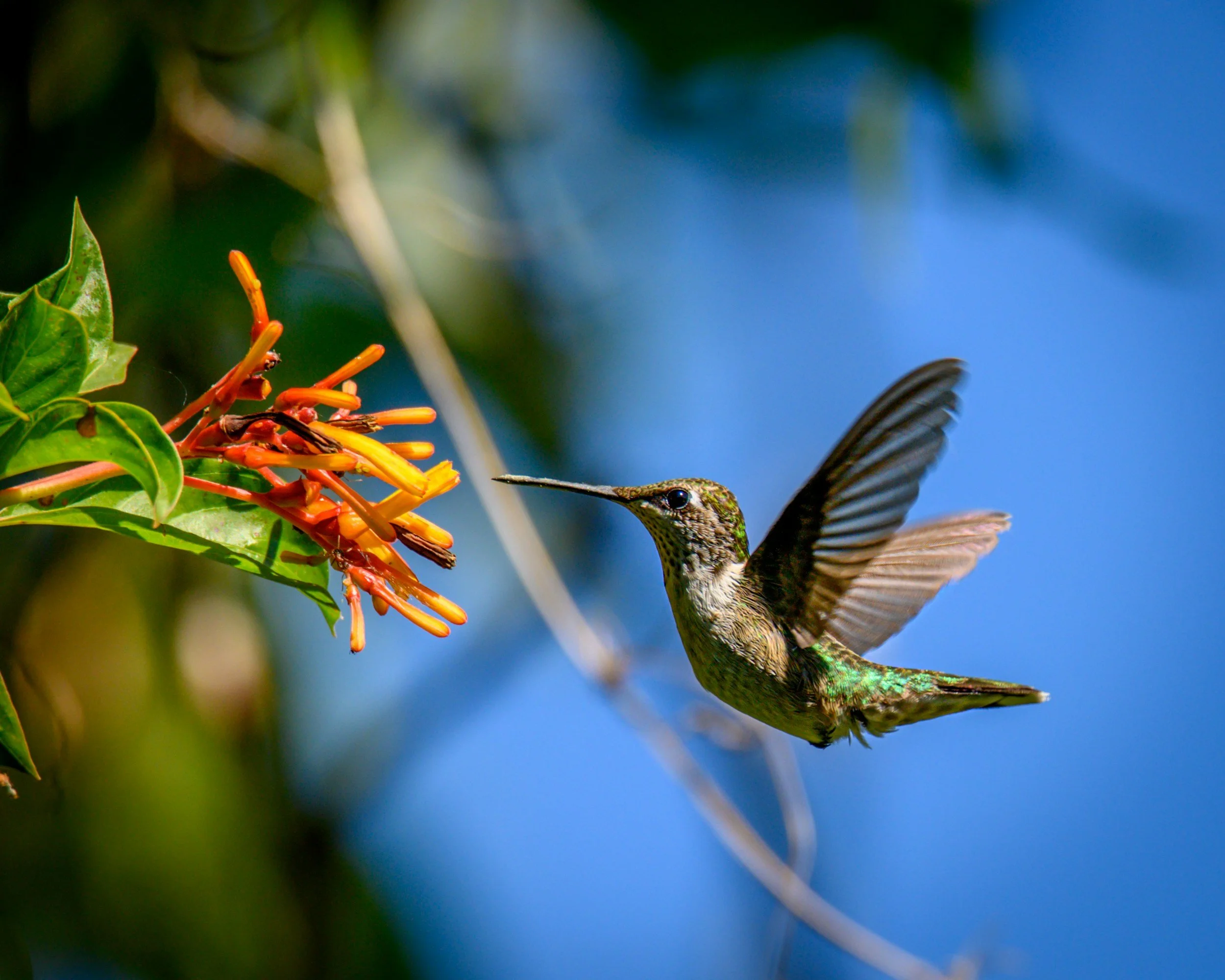
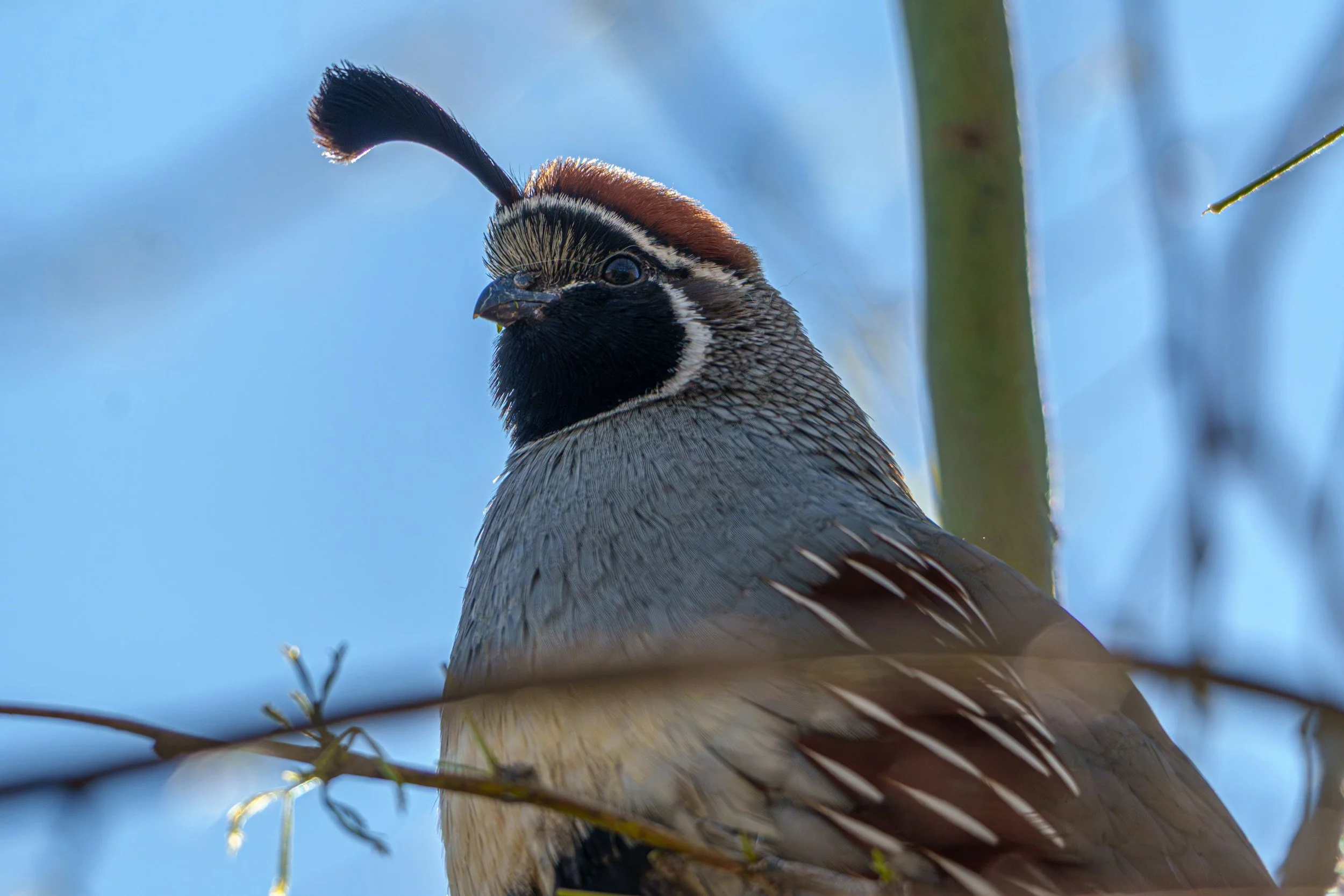
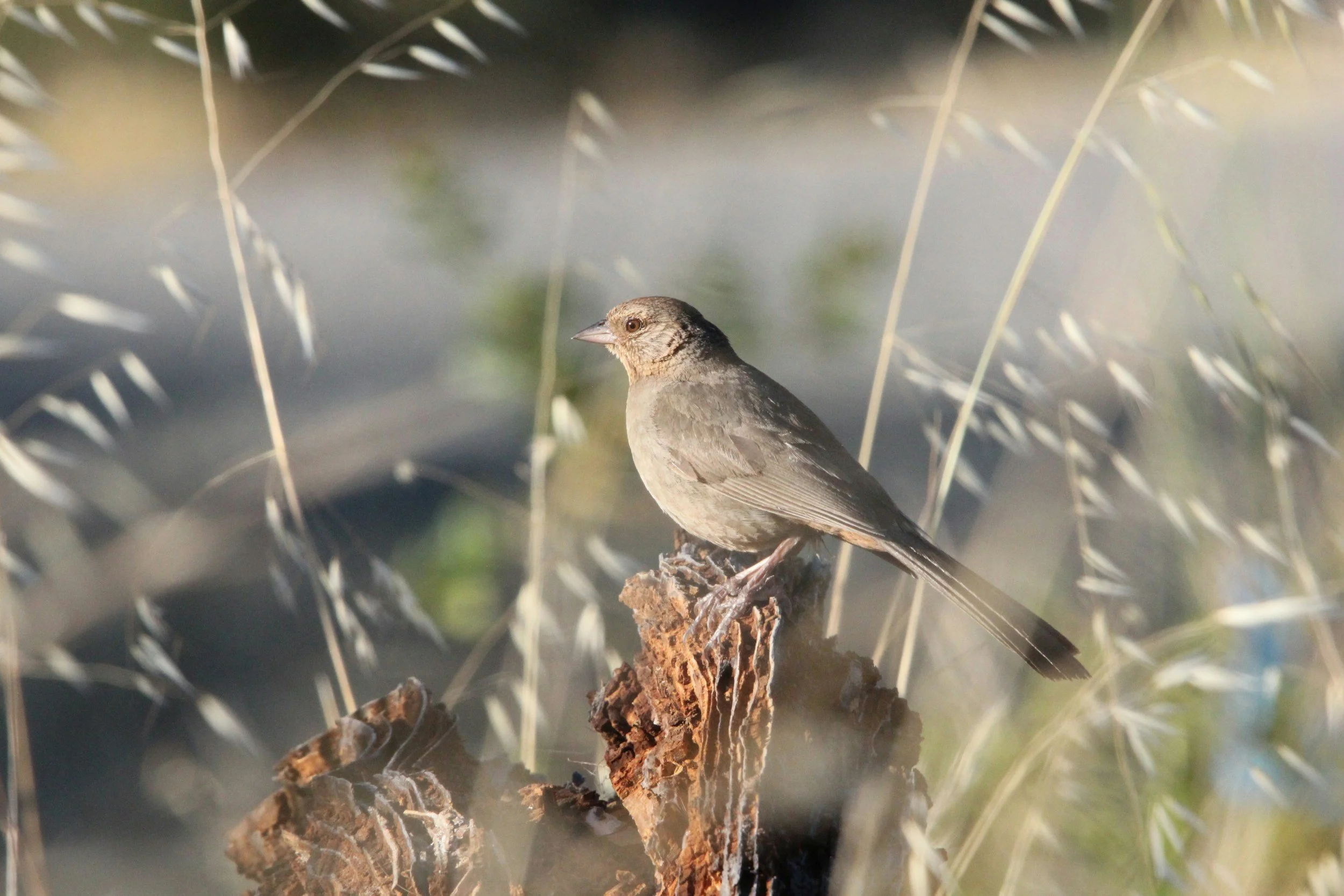
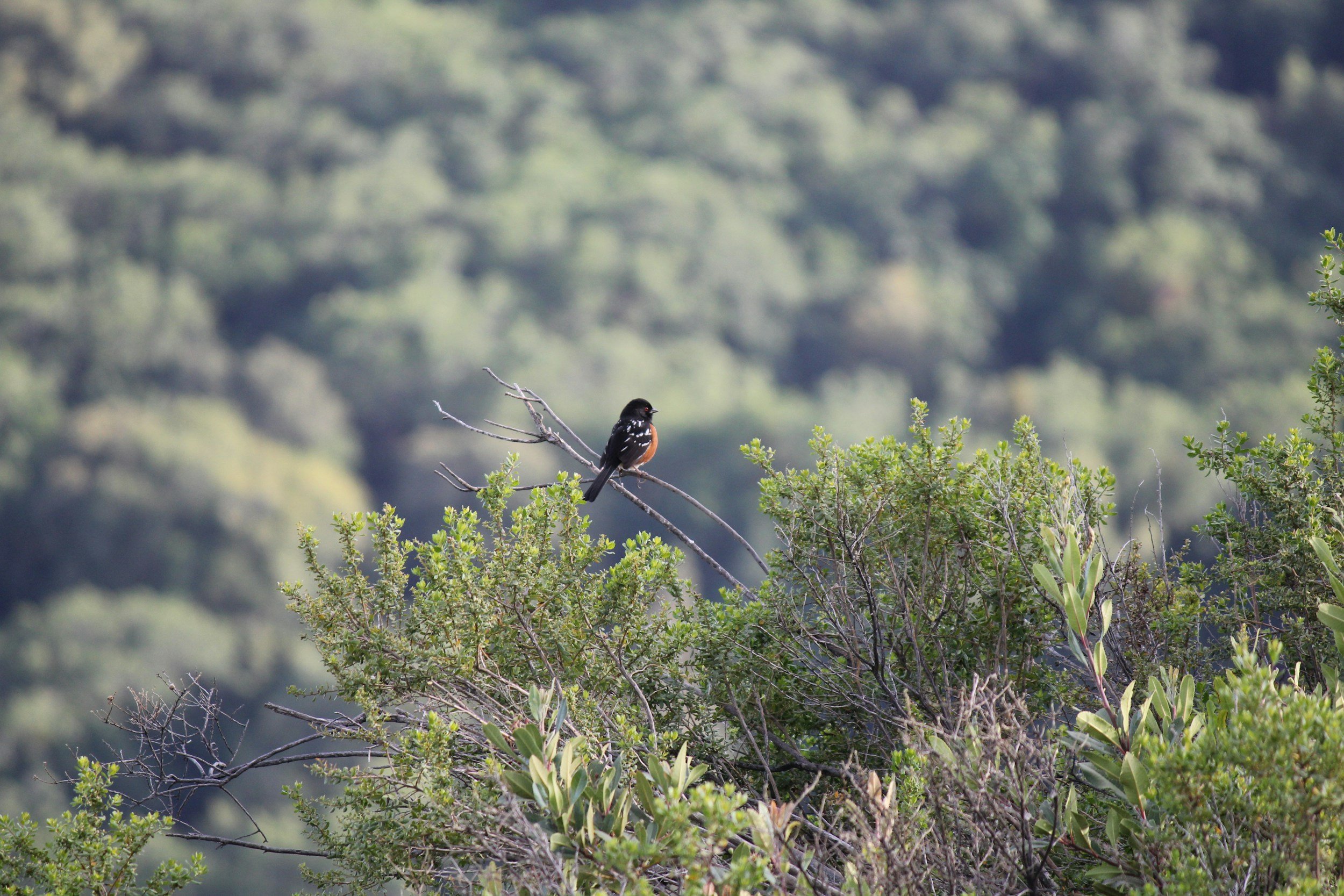
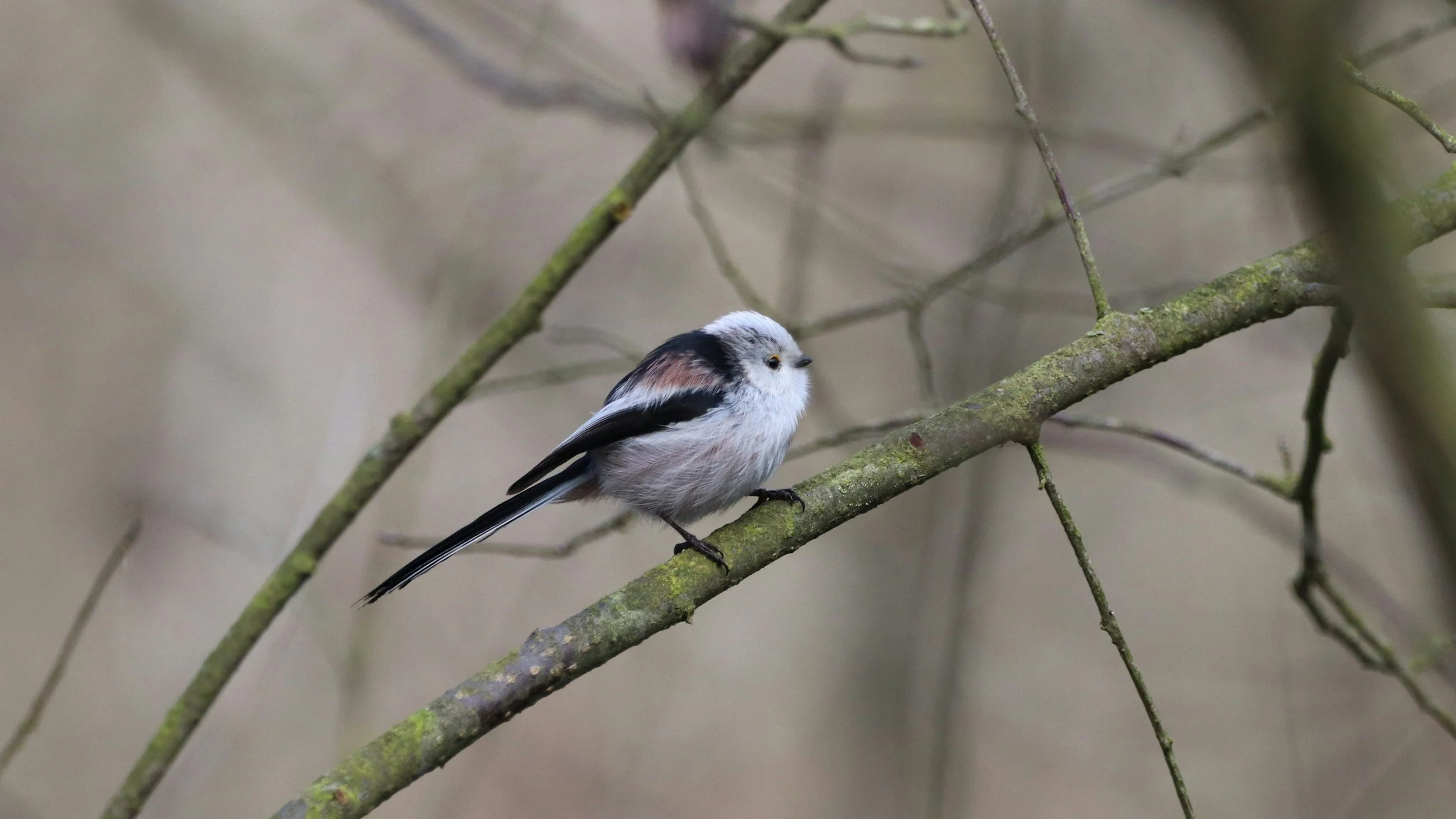
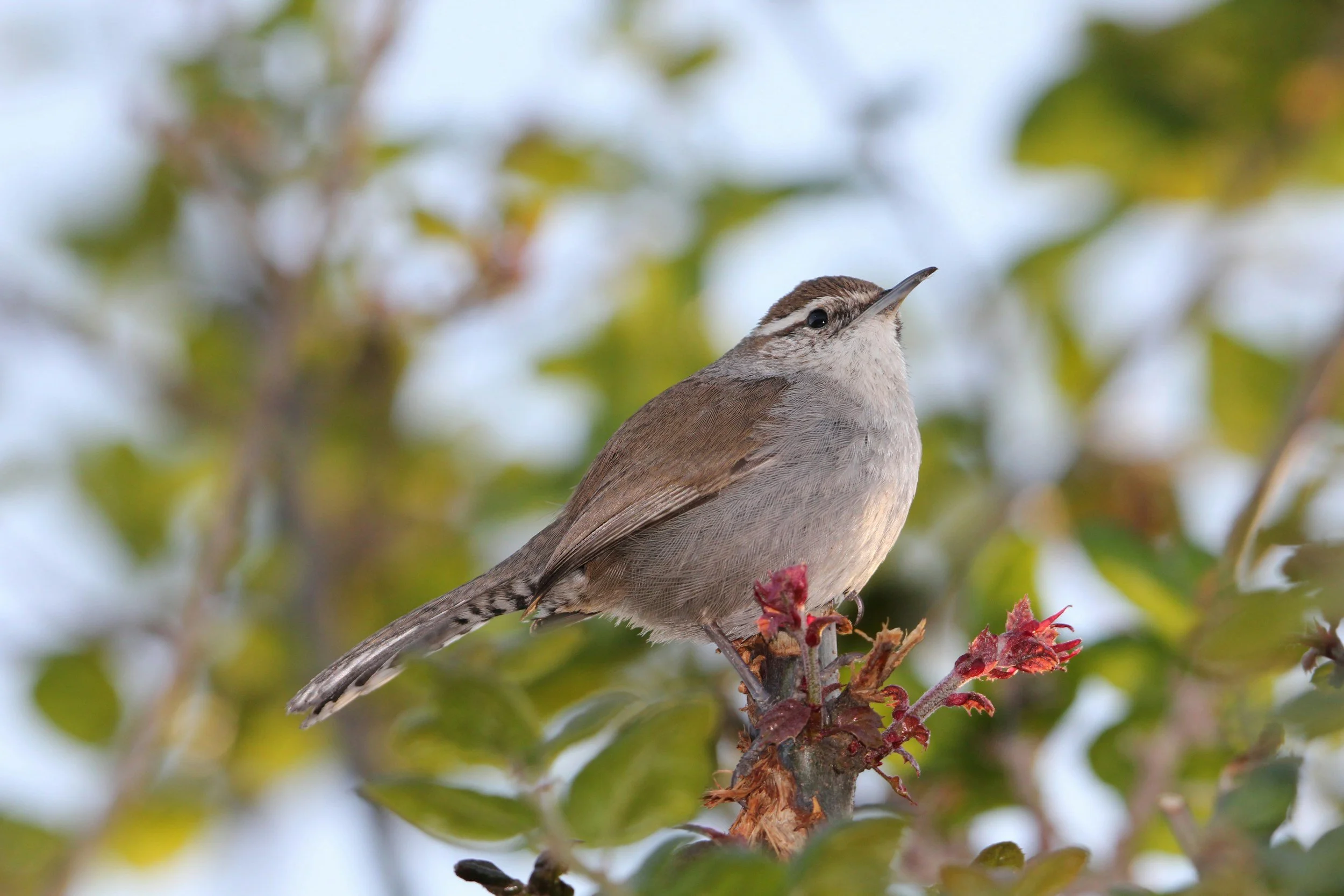
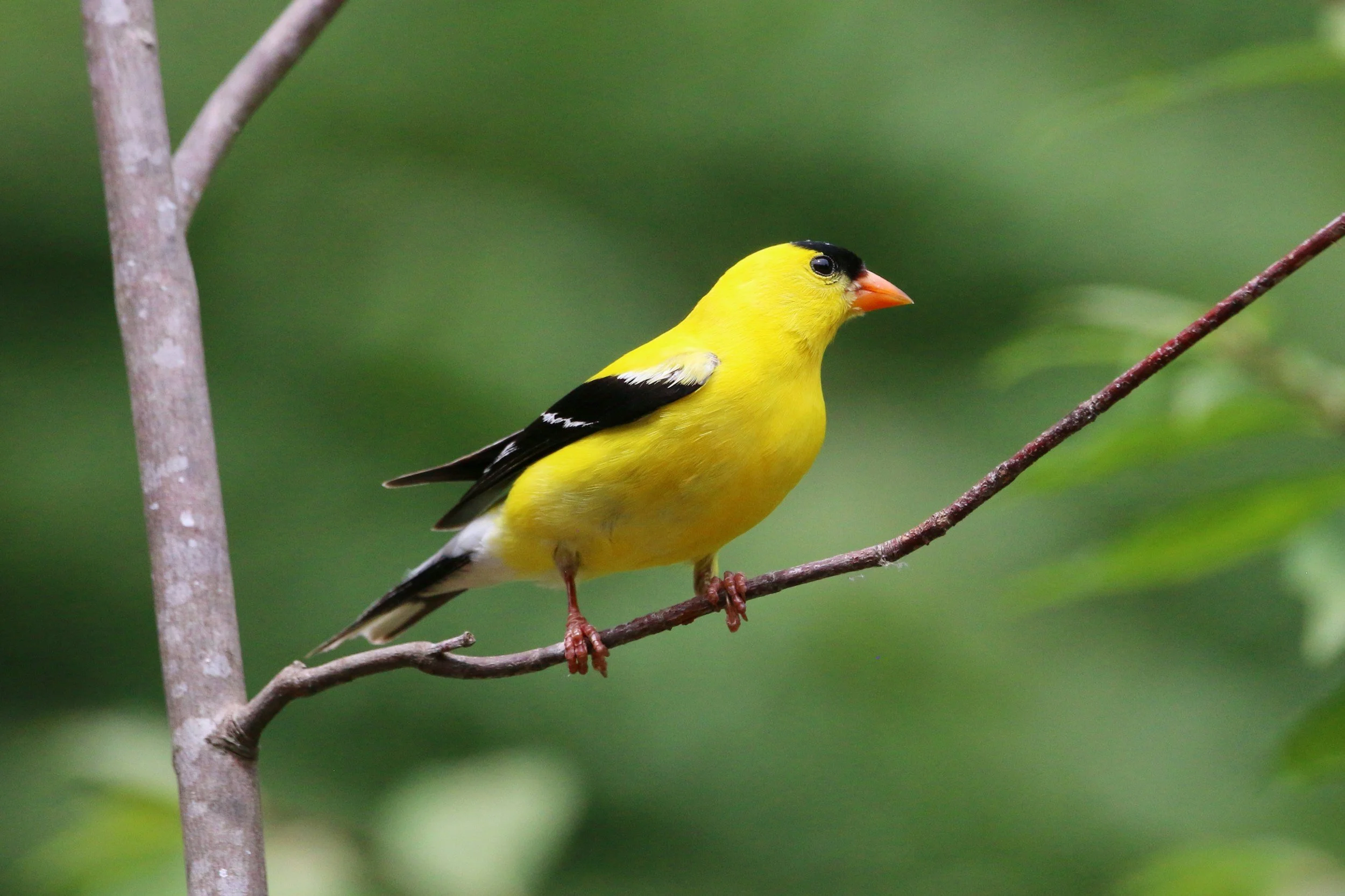
Nearby Blue Sky Ecological Reserve contains riparian woodland, coastal scrub and mixed chaparral, illustrating the wider mosaic of habitat surrounding Poway. Local birding guidance identifies towhees, bushtits, wrens, quail and hummingbirds among the birds expected within this landscape. California Department of Fish and Wildlife · San Diego Bird Alliance
Not every bird is a pollinator. Hummingbirds may carry pollen between tubular flowers, while wrens and other insect-eating birds contribute differently—by participating in the garden’s food web. Together, they bring movement, sound and changing patterns of activity throughout the day.
The Hidden Ecological Challenge: Argentine Ants
One of the garden’s most important lessons appeared only after installation.
The later discovery of invasive Argentine ants (Linepithema humile) revealed that creating habitat involves much more than selecting attractive flowers. A garden may look abundant above ground while less visible pressures are altering its ecological relationships below.
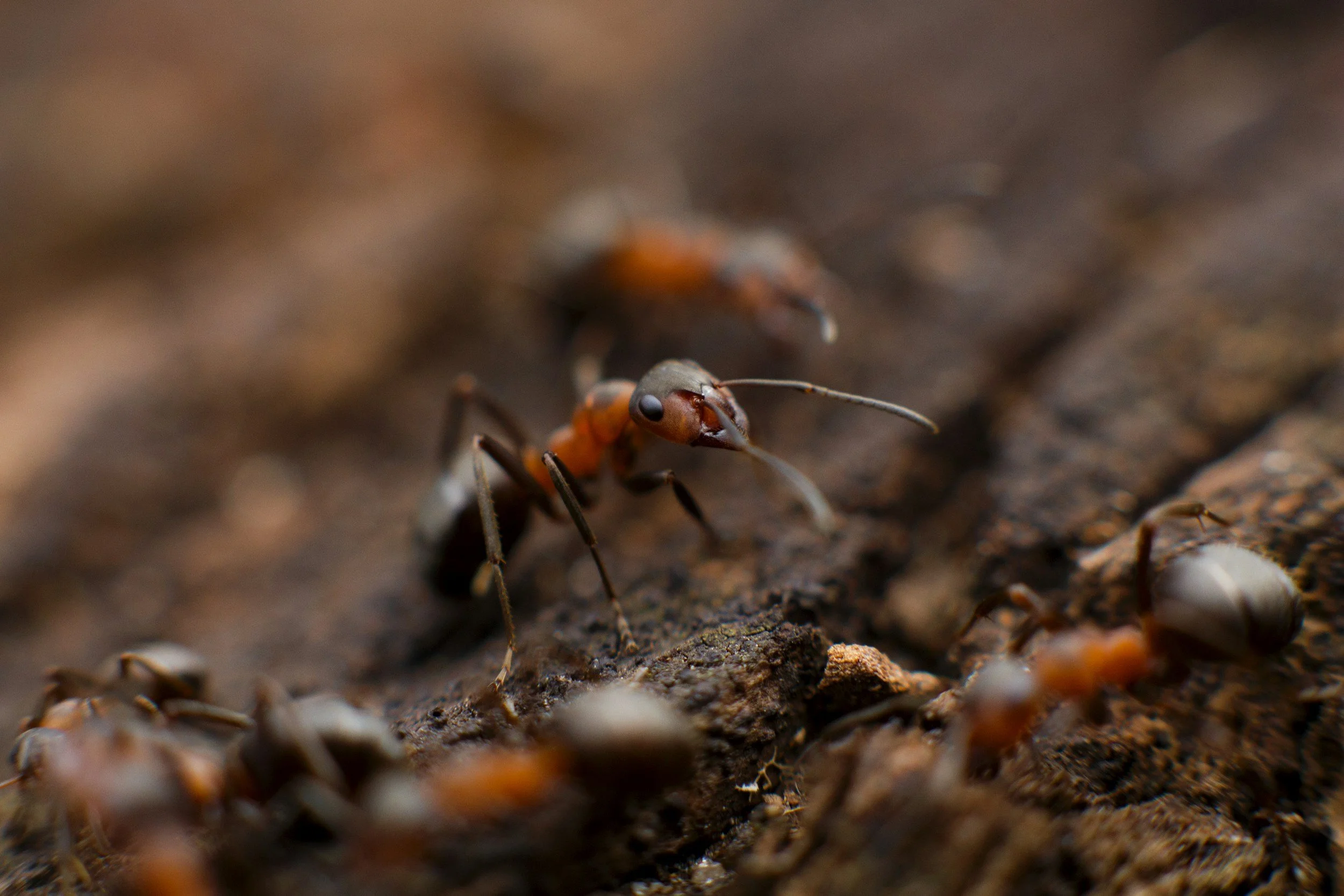
Argentine ants can reach high densities in irrigated urban landscapes. They displace native ant species, interact with honeydew-producing insects such as aphids and scale, and can affect wider arthropod communities. Southern California research has documented their strong effects on native ant communities, particularly near developed landscape edges. Ecology study · UC Riverside Center for Invasive Species Research.
Their presence made observation and carefully targeted management part of the project’s continuing stewardship. Broad, indiscriminate pesticide use could harm the same butterflies and beneficial insects the garden was created to support. The response must therefore be informed, specific and compatible with the larger habitat objective.
This discovery did not diminish the project. It made its ecological purpose more truthful. A living landscape is never finished; it must be watched, understood and guided as relationships change.
A Garden That Evolves with Time
The first year of a habitat garden is primarily about establishment. Roots expand, soil begins responding and the planting learns the site.
During the second and third years, the composition becomes denser and more interconnected. Flowering cycles lengthen, grasses acquire greater presence, birds discover dependable water and forage, and the garden begins to develop its own recognizable rhythms.
Maintenance consequently changes from control to guidance: selective pruning, seasonal adjustment, observation, irrigation refinement and careful responses to emerging pressures.
Over time, the garden becomes less like an installation and more like a place with its own life.
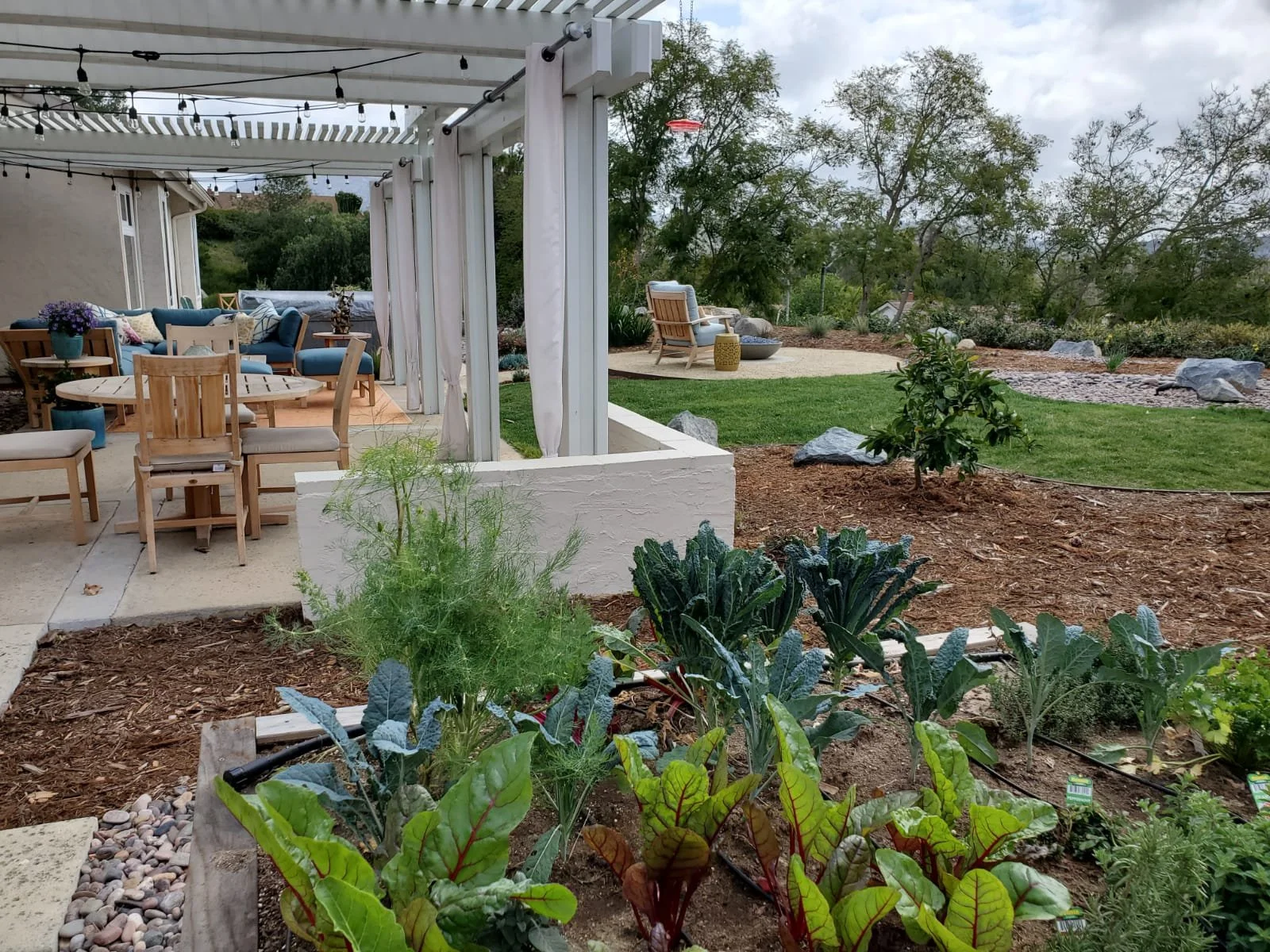
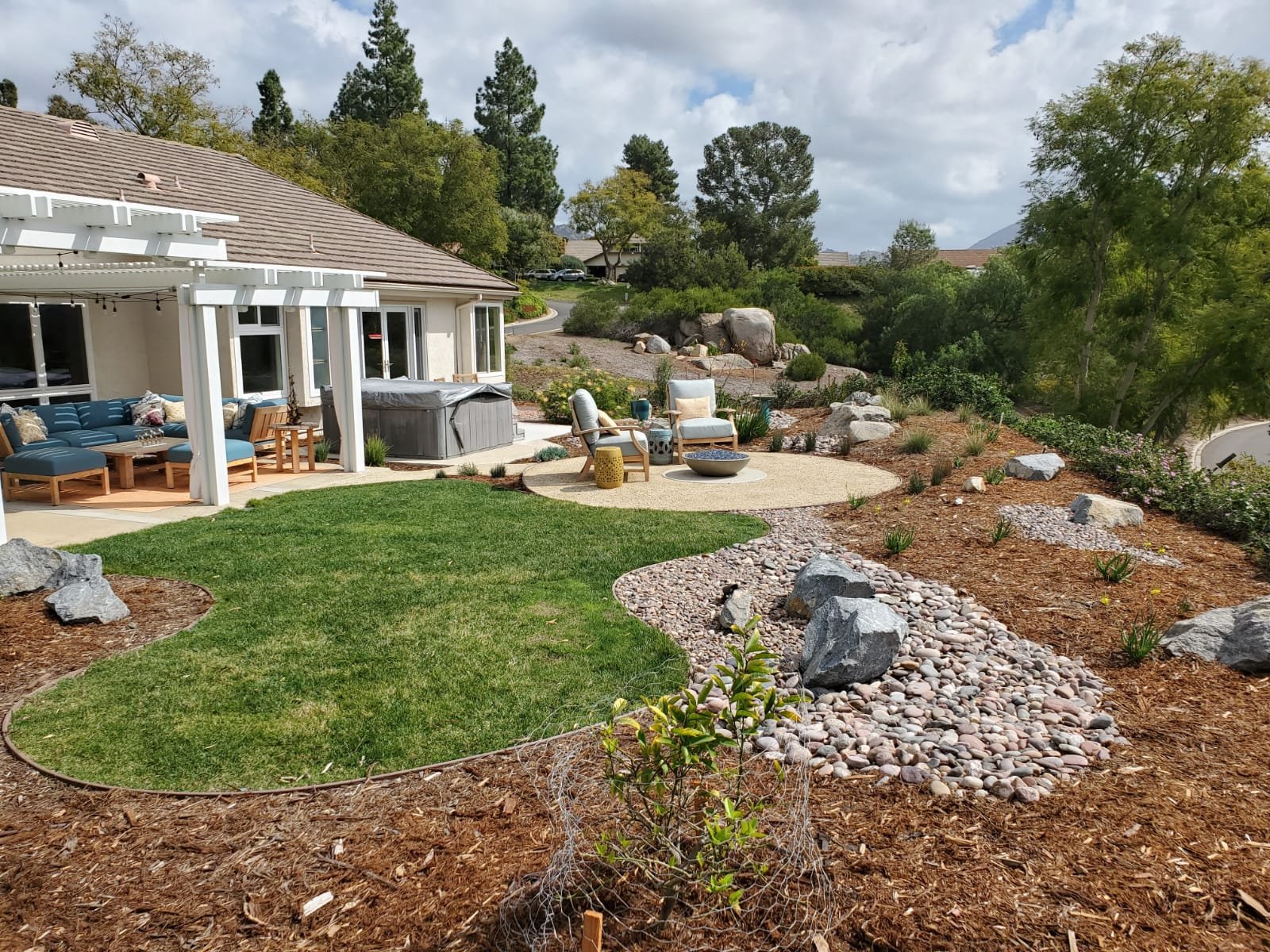
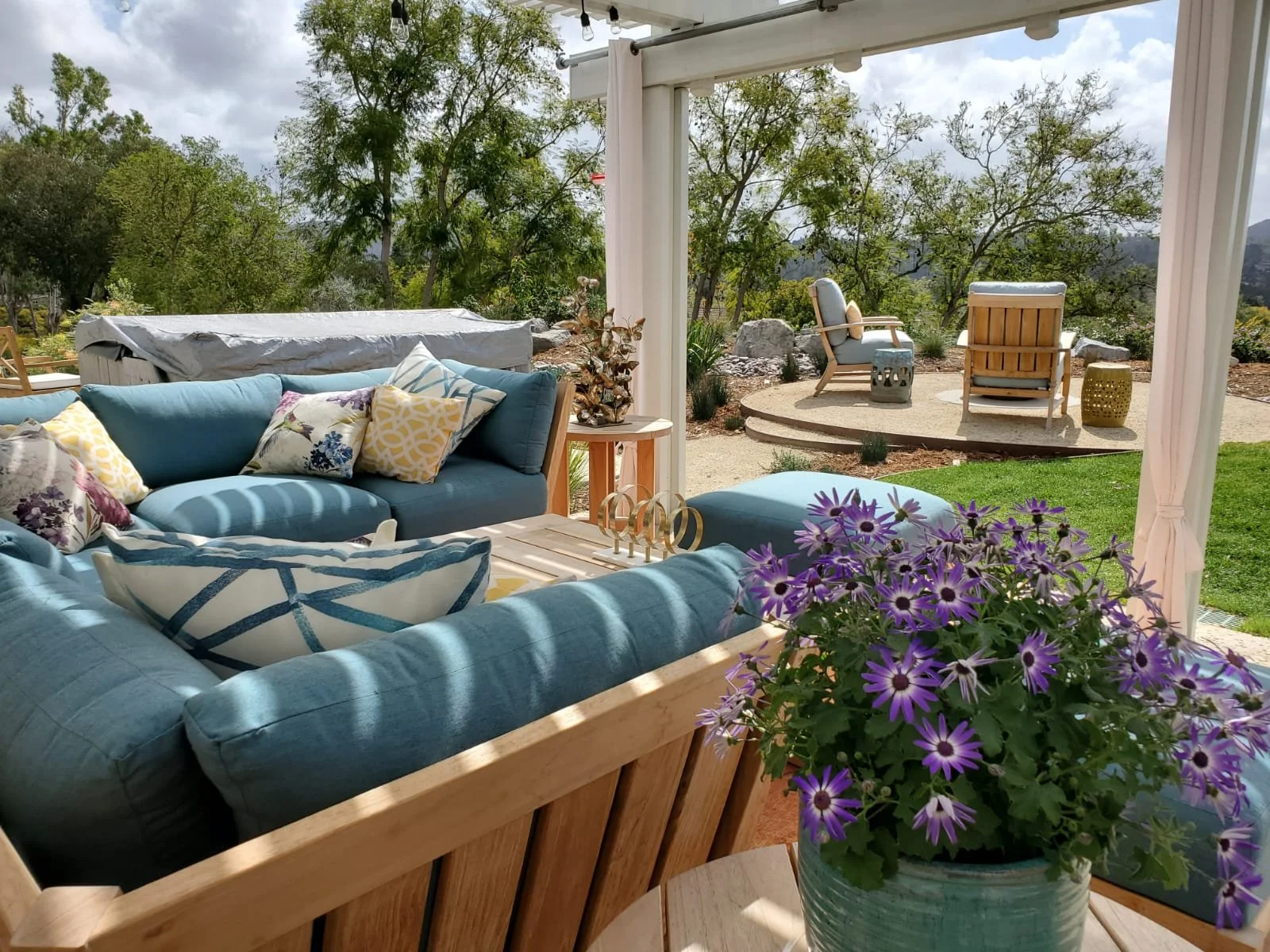
First Year Pictures after the Garden Installation
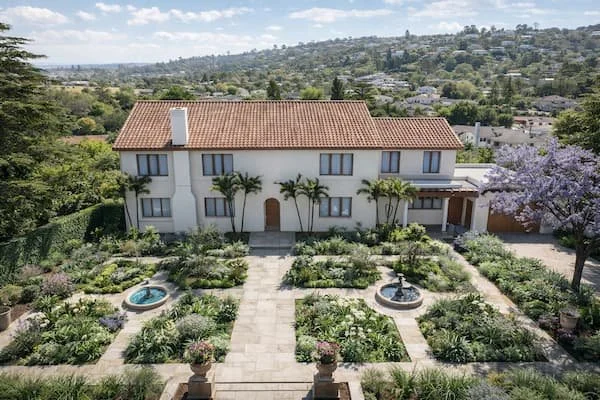
Landscape Design in Hillcrest San Diego - Baroque Garden Project
A Baroque-inspired garden in Hillcrest, San Diego. Designed with symmetry, geometric parterres, and sculpted greenery, this project revives the grandeur of European tradition while adapting to California’s climate and lifestyle.
A Timeless Symphony of Geometry, Ornament, and Elegance
The Baroque Garden in Hillcrest, San Diego, reinterprets the geometry, symmetry and theatrical composition of European Baroque gardens for a contemporary private residence in Southern California.
Rather than copying history literally, the project adapts classical garden principles - axial views, parterres, clipped planting, focal points, ornamental paving and water features - into a modern residential landscape shaped by California climate, lifestyle and maintenance realities.
This project demonstrates LASD Studio’s ability to work with historical garden languages as living design systems. Here, geometry is not decoration alone. It becomes a way to organize movement, frame architecture, create ceremony, guide views and transform a private garden into a composed outdoor room.
The result is a refined residential garden where heritage, structure and contemporary living meet.
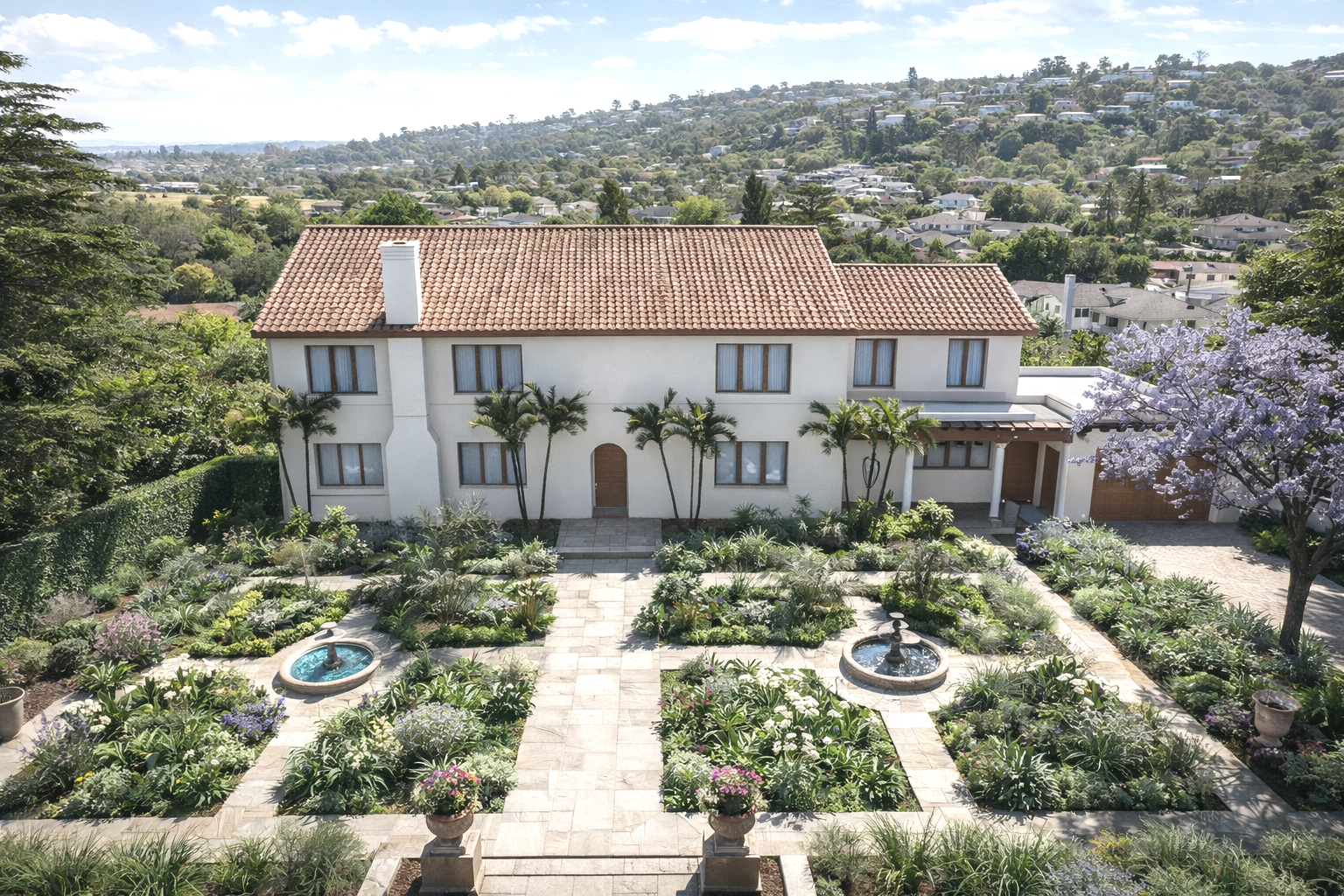
Baroque Garden design in Hillcrest, San Diego. Architectural visualization of vision.
Baroque gardens emerged in 17th century Europe as an extension of architecture into land. Not as decoration, but as structure.
In France and Italy, landscape was organized through long axes, controlled views, and precise ground geometry. Space was read from the house outward. Lines were not arbitrary. They directed movement, framed perspective, and established order.
Designers like André Le Nôtre refined this into a clear spatial language. A central axis anchors the composition. Secondary axes extend and balance it. Parterres define the ground plane. Water reflects light and stabilizes the visual field.
The garden becomes legible. You understand where you are, where you are moving, and how the space is held together.
Video walkthrough of a Baroque-inspired garden in Hillcrest, San Diego, showcasing parterres, symmetry, clipped hedges, fountains, and ornamental design adapted to Southern California living.
Baroque gardens were intended to illustrate the mastery of man over nature in a well structured composition to support architecture of the estate.
Baroque Garden Design Logic in Southern California
The Baroque approach remains relevant because it is not dependent on climate. It is based on structure.
Geometry organizes the site. Paths define circulation. Planting is layered and controlled, not spread loosely across the ground. Clipped forms are used with restraint. Mediterranean and drought-tolerant species replace traditional European palettes.
Water is reduced, but still present as a point of focus.
What remains is the underlying order. Not a historical reconstruction, but a translation into local conditions.
Relationship to Spanish Colonial Revival
Spanish Colonial Revival architecture already carries this logic. In fact there are elements of Baroque architecture that influenced development of Spanish Revival Architectural style. In this proposal - what you see, is symmetry, entry alignment, the way courtyards are framed and defined. Open space is not accidental - It is in order.
This creates a direct connection to Baroque landscape principles.
The garden extends the architecture rather than competing with it. The central axis aligns with the entry. The foreground is held by geometry. Planting softens edges without dissolving structure.
Stone, shadow, and vegetation operate together as one system.
Please visit out
Series of Styles and Epochs of Art that Influenced Landscape Architecture and Garden Design.
Section #4 - The Spectacle of Renaissance & Baroque Gardens
Central to the design is the orchestration of space through symmetry, parterres, and focal points, creating a theatrical garden experience where every path and vista is carefully choreographed. Sculptural plantings, clipped hedges, and decorative paving set the stage, while water features and garden ornaments add layers of refinement.
Beyond its architectural beauty, the garden has been carefully planned with sustainable planting selections that honor the spirit of Baroque grandeur while ensuring year-round vibrancy in San Diego’s environment. This fusion of heritage and innovation results in a living work of art - a private sanctuary that reflects both cultural richness and modern luxury living.
Long Term Performance of Structured Landscapes
A structured landscape changes how a property functions over time.
Movement becomes intuitive. Views are intentional. Maintenance becomes predictable.
The site holds its form as it matures. This is where historical discipline meets contemporary performance. Not style as an image, but as a framework that supports the landscape over decades.