
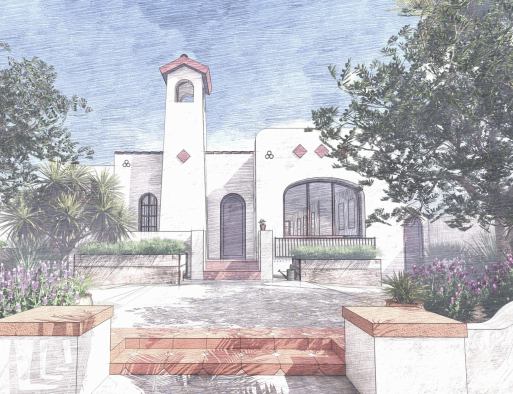
Jardín del Alma: An Eclectic Spanish Revival Garden in Kensington, San Diego
A neglected front lawn is reimagined as a ceremonial garden threshold for a 1925 Kensington home. Mexican vernacular character, Mission influence and Eclectic Spanish Revival architecture converge in a deeply personal Southern California landscape.
Rooted in Spanish traditions, and alive with Mexican spirit.
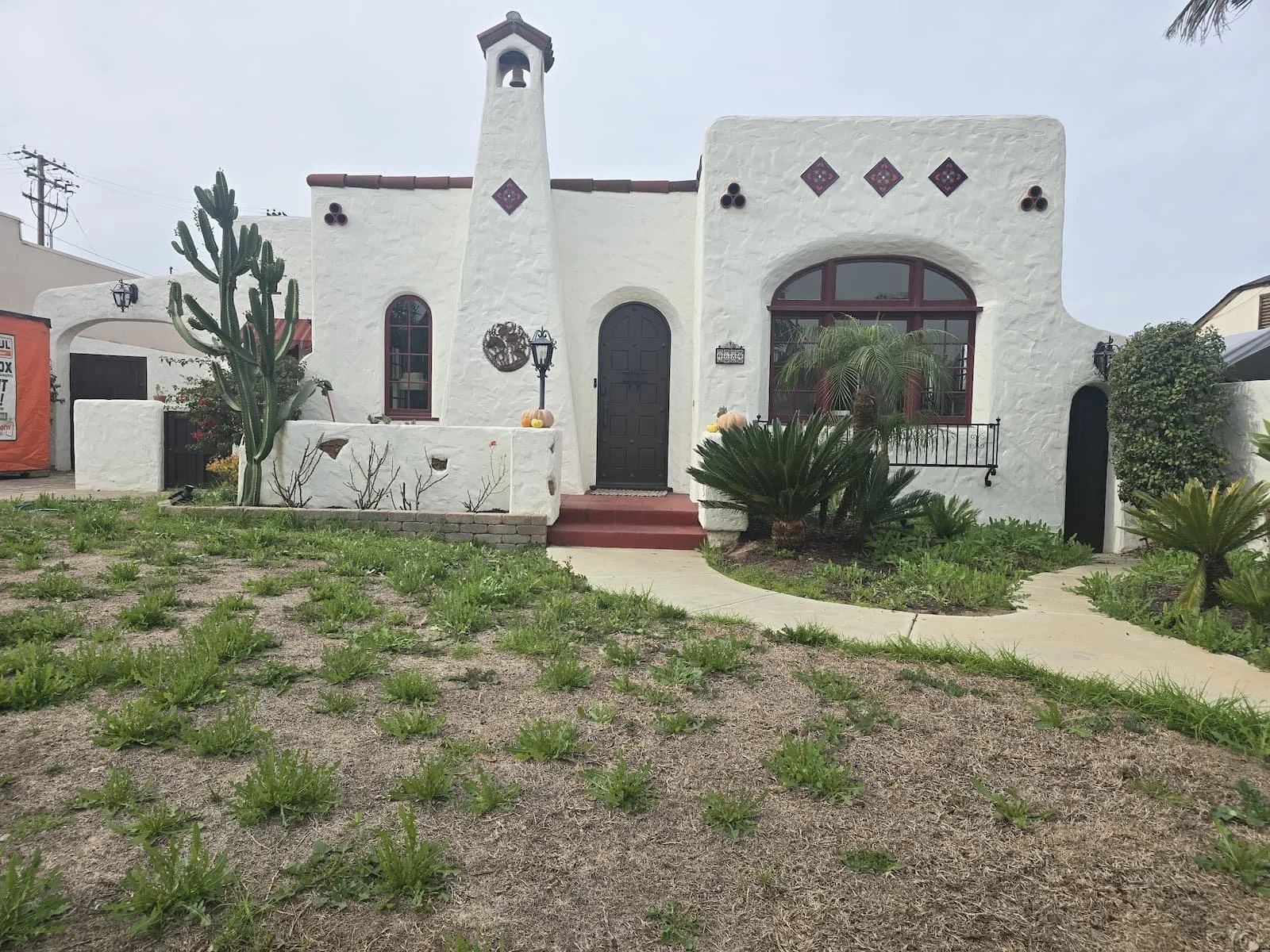
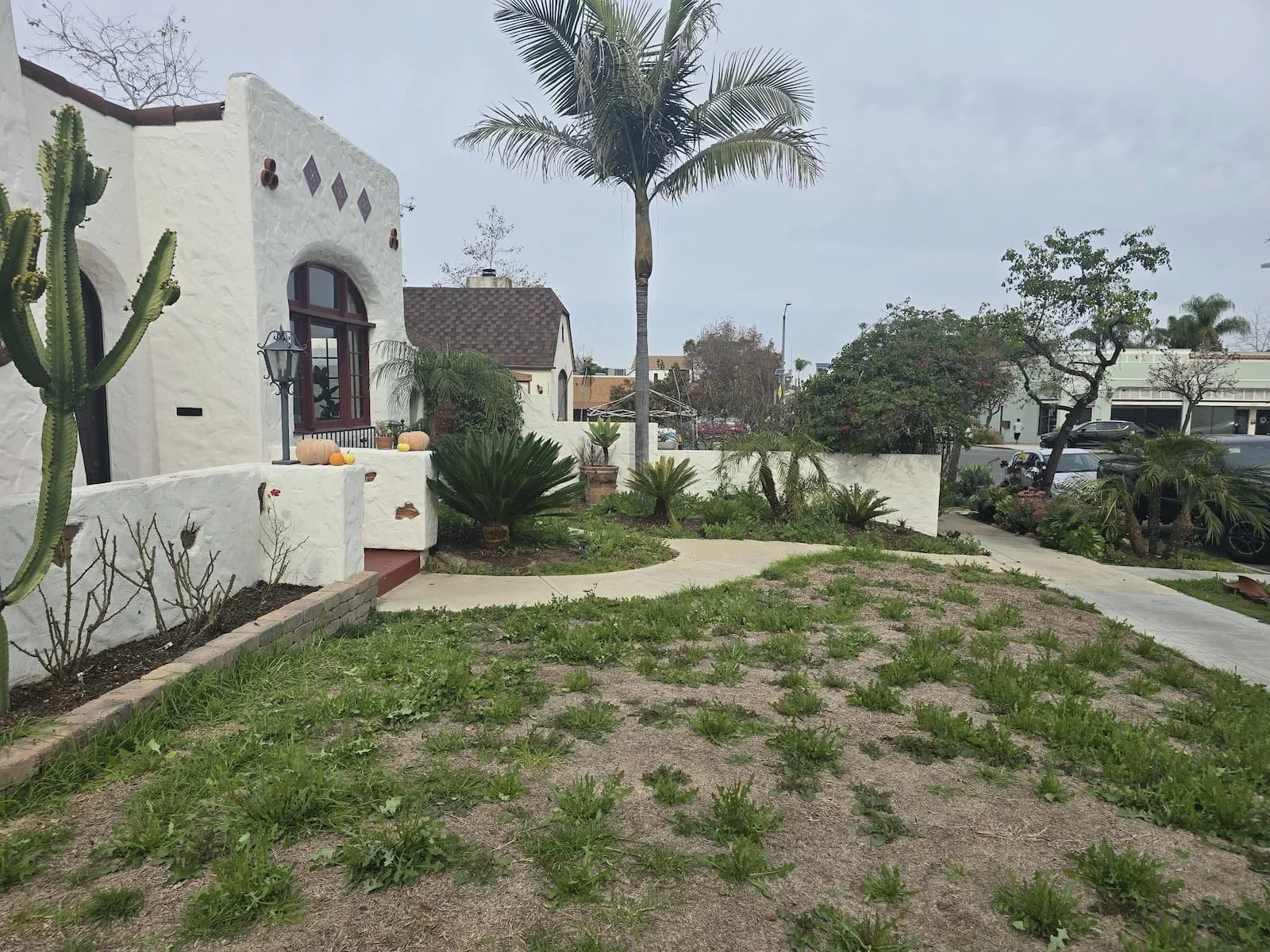
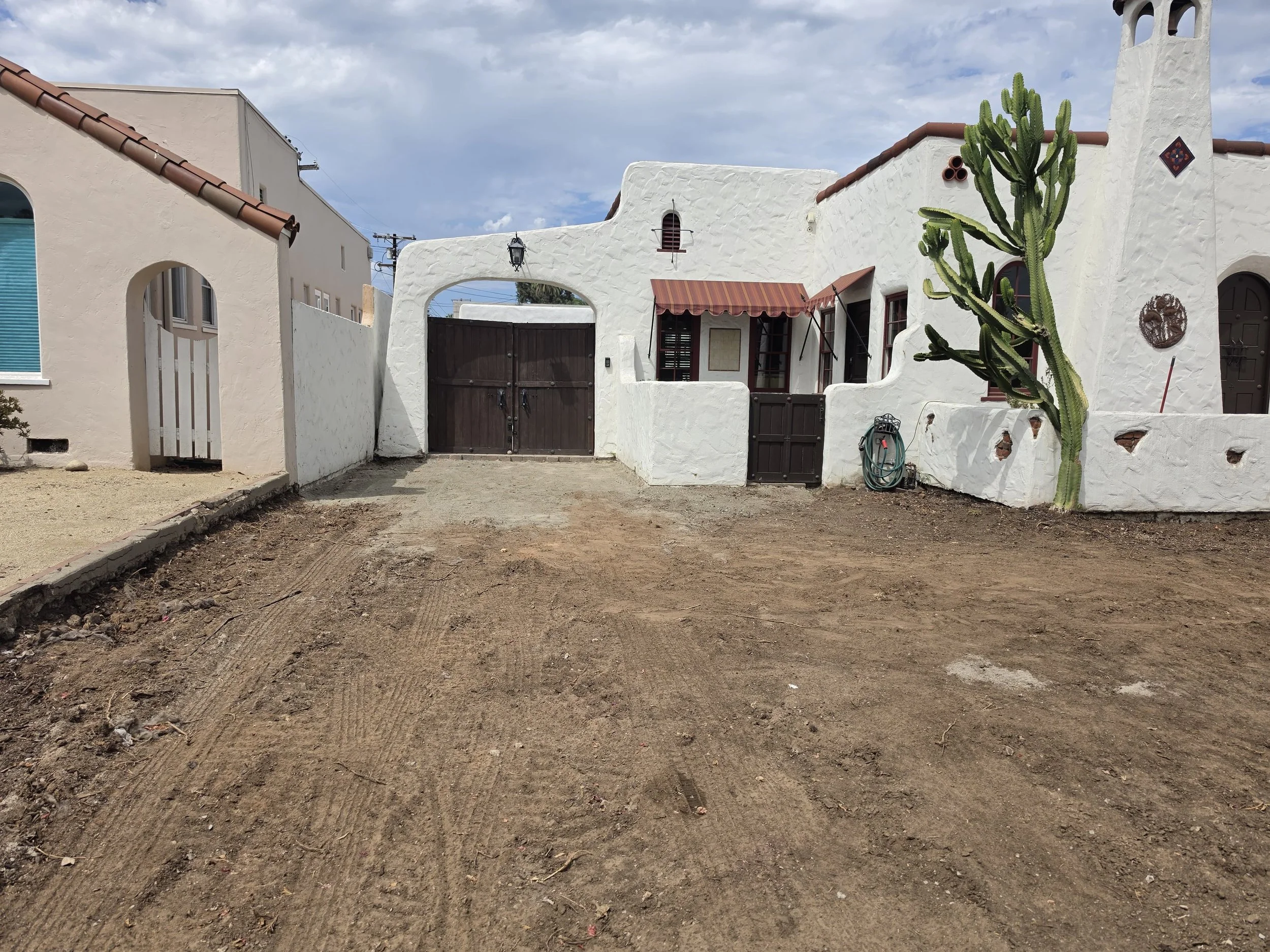
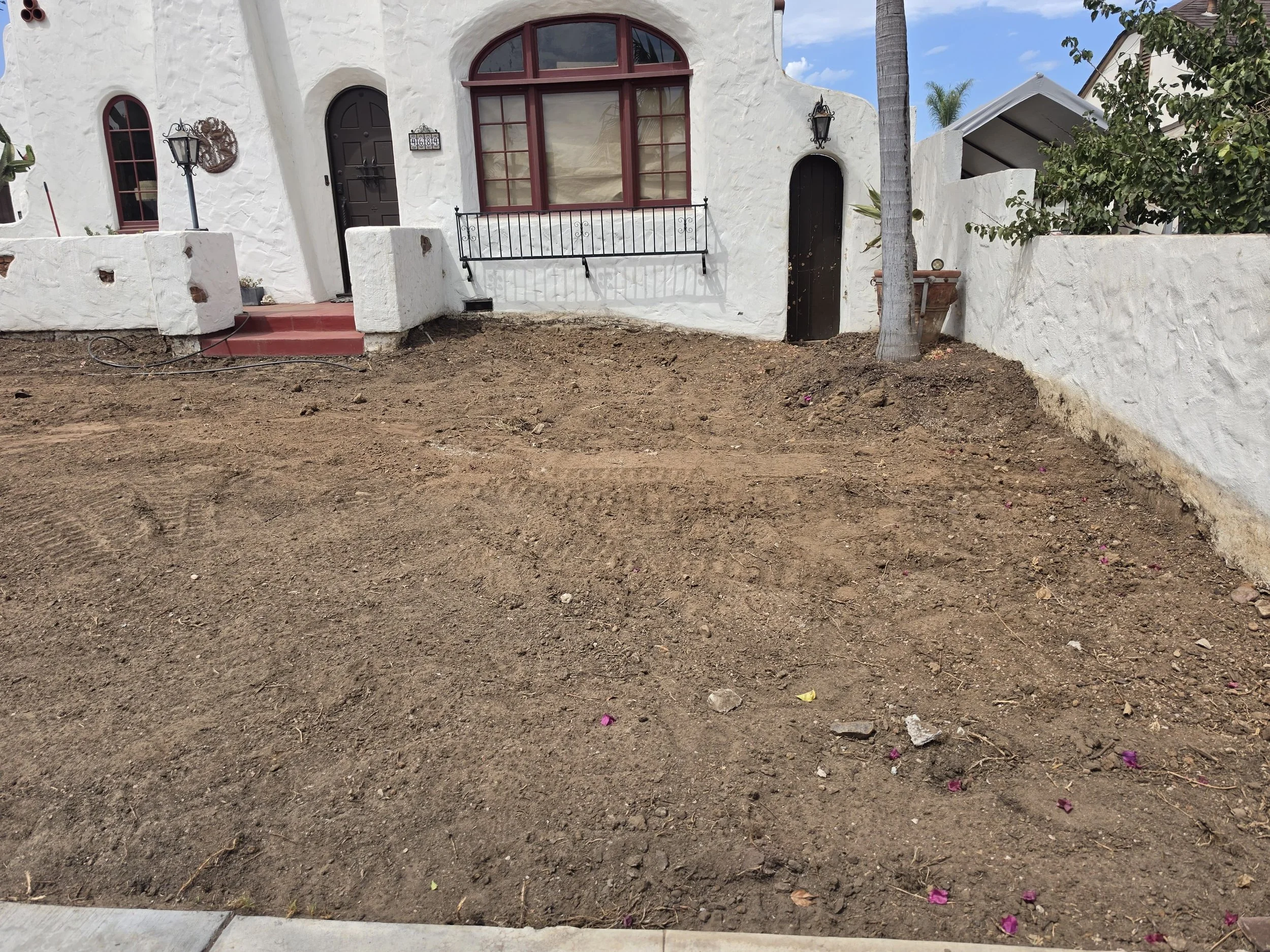
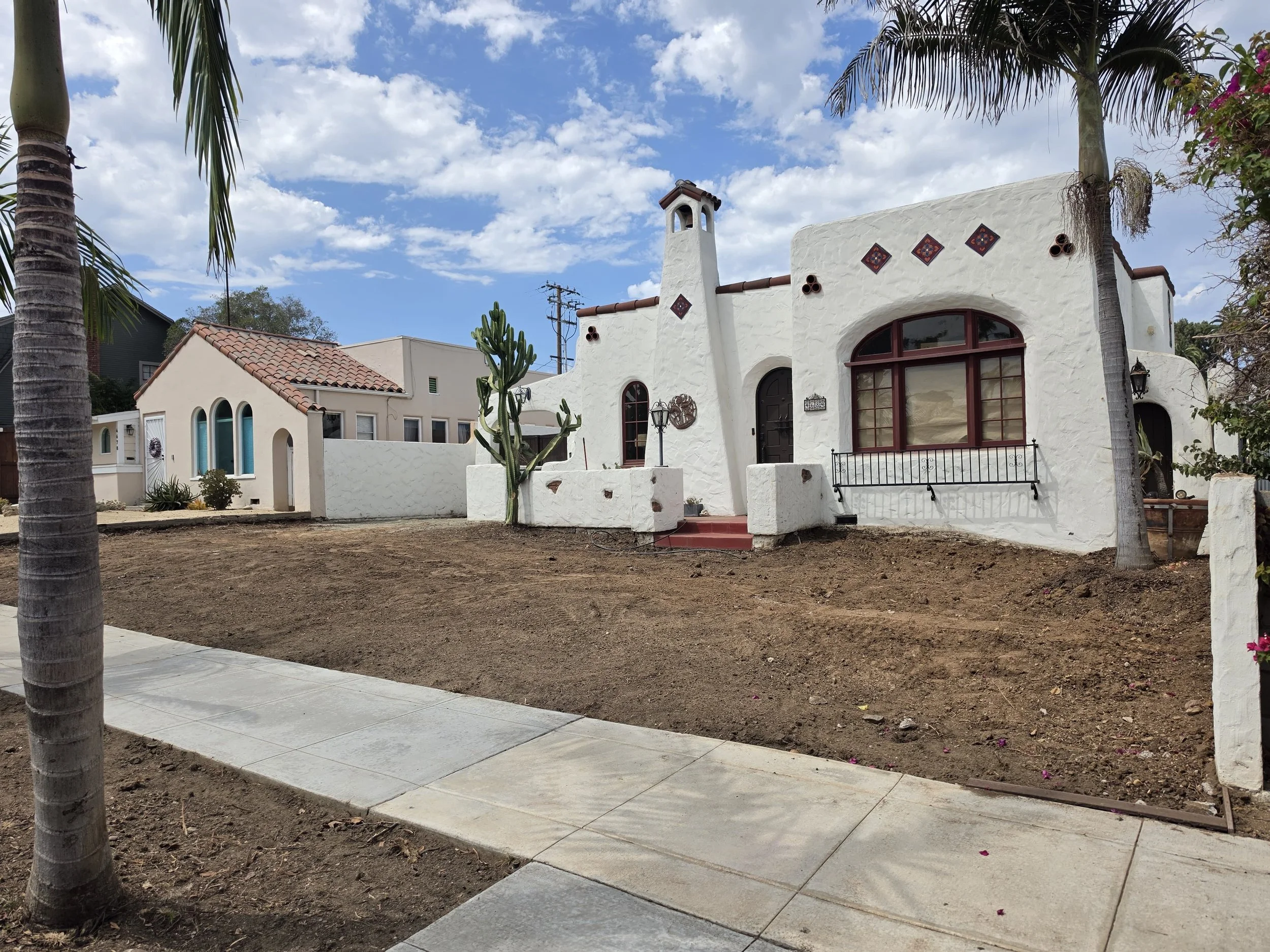
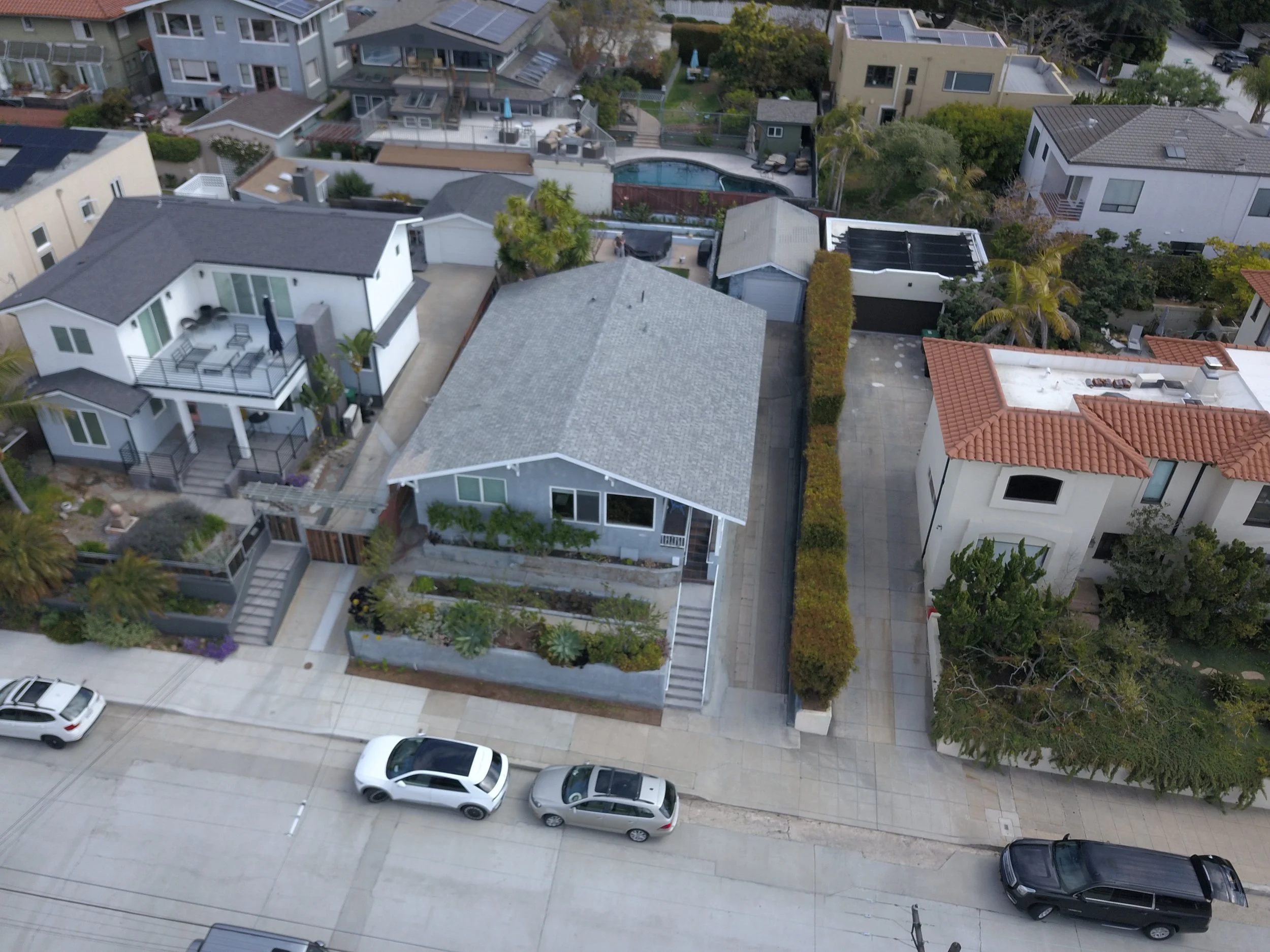
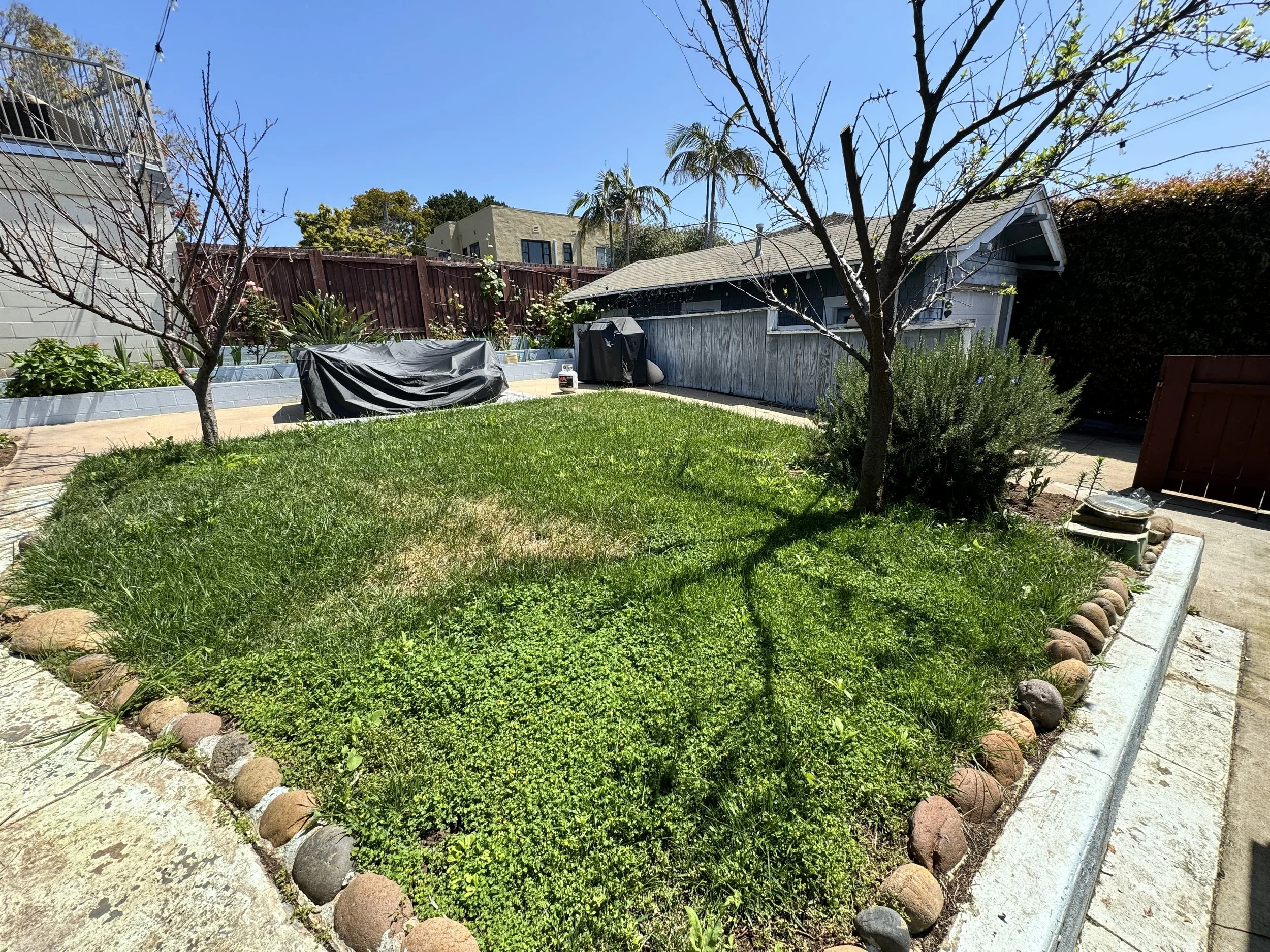
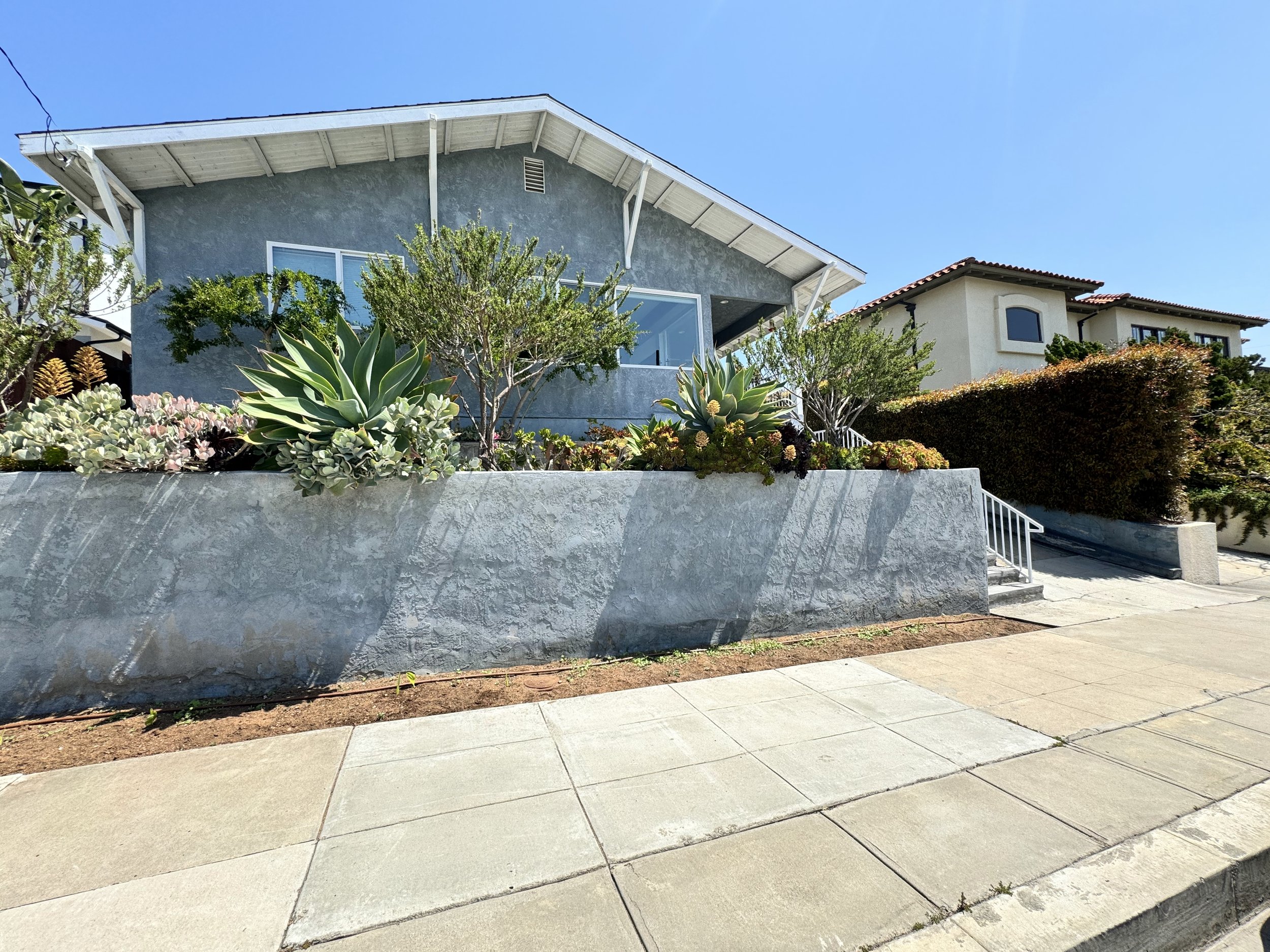
A 1925 Eclectic Spanish Revival residence had been carefully renovated, yet its landscape still belonged to another chapter of the property. A broad front lawn met the architecture without threshold, enclosure, or a clear sense of arrival. The house had recovered its presence; the ground around it had not yet found the same language.
Jardín del Alma began with a precise question: how could a contemporary California garden feel as though it had grown from this particular house - from its bell tower, sculpted white walls, softened geometry, Mission influence, and distinctly Mexican vernacular character?
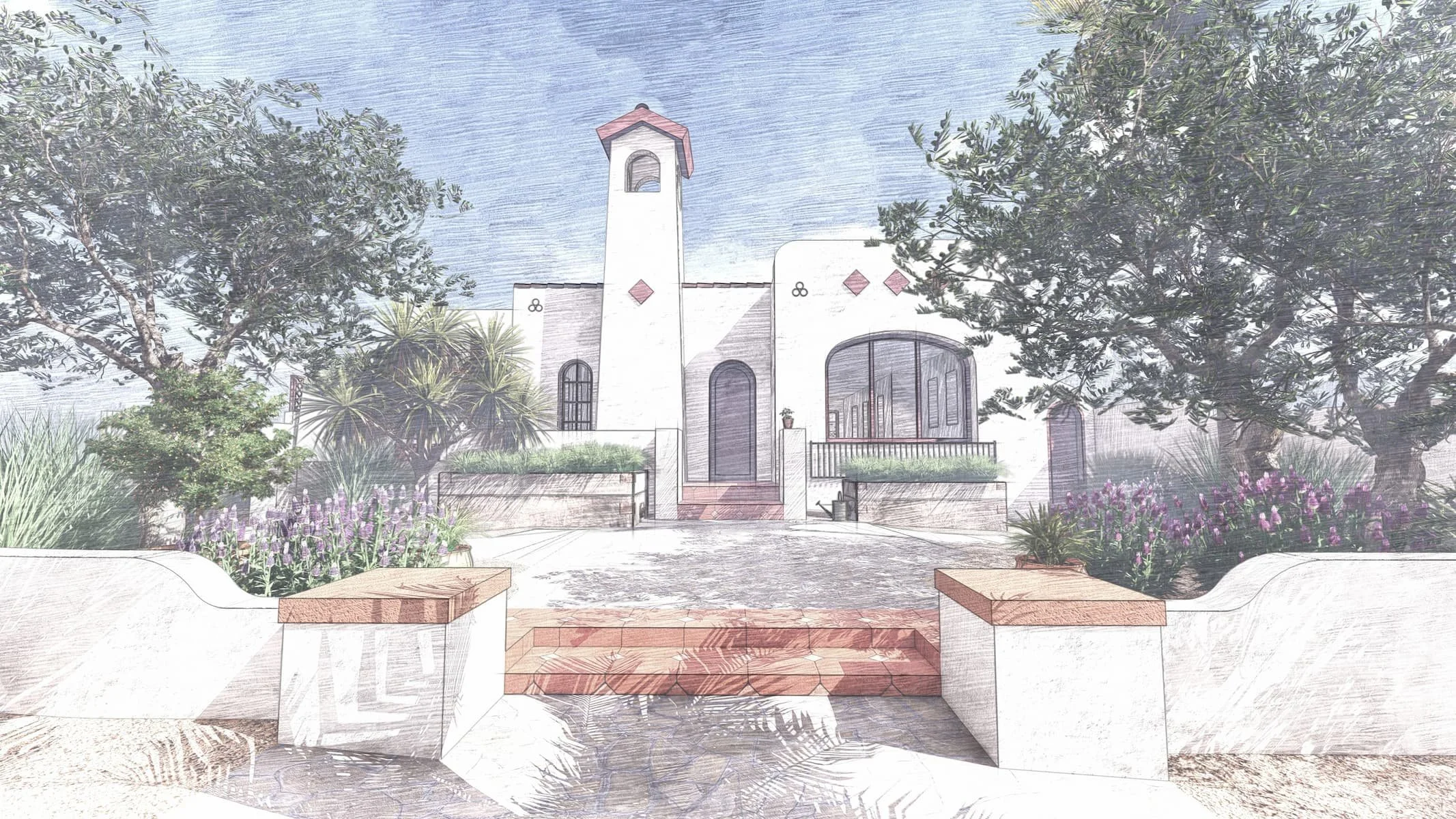
The resulting design introduces a walled entrance, a sequence of intimate garden rooms, and a material palette of hand-finished white stucco, terracotta, ornamental tile, timber, and stone. Architecture, planting, water management, lighting, and daily life are drawn into one composition, allowing the property to feel complete without losing the irregularity and warmth that make the house original.
Where Art and Nature Evolve into Living Legacy - LASD Studio
Location: Kensington, San Diego, California
Project Type: Private Residential Garden, Exterior Design, Eclectic Spanish Revival with Mexican Vernacular and Mission Influence
Design Scope: Complete Garden Design, Planting Design, Hardscape Coordination, Irrigation Strategy, Stormwater Planning, Lighting Design, Fire-Resilient Landscape Planning and Construction Documentation
Construction: Landscape & Beyond, Construction Project Management - John Beaudry
Construction cost: $231,000
Landscape Design Authorship & Project by: LASD Studio
Eclectic Spanish Revival with Mexican, Mission influence.
Where Art and Nature Evolve into Living Legacy. LASD Studio.
The owners approached LASD Studio after completing the renovation of a house with unusual architectural presence. Its asymmetrical massing, bell element, deep openings, and thick, hand-worked walls carried the relaxed character of 1920s San Diego Spanish architecture. The exterior condition around it was far less resolved: a neglected lawn, disconnected paving, exposed parking, and no spatial transition between the public street and the private life of the home.
The brief called for an exterior with architectural belonging. It needed to feel original to the house, welcoming without becoming exposed, expressive without becoming decorative, and capable of supporting ordinary life with the same care as a gathering.
The clients were also asking for confidence before construction: a coherent concept, a defined material language, coordinated technical systems, and enough documentation for the work to be understood and priced before installation began.
Research revealed the cultural language already held within the architecture.
Before drawing, we studied the house.
Local historical research records the residence as a 1925 Spanish Revival house associated with Lewis H. Dodge and the Dodge Construction Company. More precisely, the property belongs to Southern California's Eclectic Spanish Revival tradition: Spanish Colonial Revival forms meet Mission-derived elements and the tactile, hand-made quality of Mexican vernacular architecture. The bell tower, simplified parapets, monolithic walls, and irregular stucco surface give the house a character distinct from more formal, academic interpretations of the style.
That distinction shaped the landscape. A polished Mediterranean composition would have felt too removed from the architecture's hand-made quality. The garden needed weight, texture, enclosure, and moments of imperfection. It needed to be read at the pace of a courtyard, through successive views and close material encounters.
Research also confirmed that the property was not individually historically designated at the time of design. This allowed the exterior concept to develop without the additional historic-review layer attached to a designated resource, while construction, stormwater, fire, and any separately triggered right-of-way requirements remained part of the technical coordination.
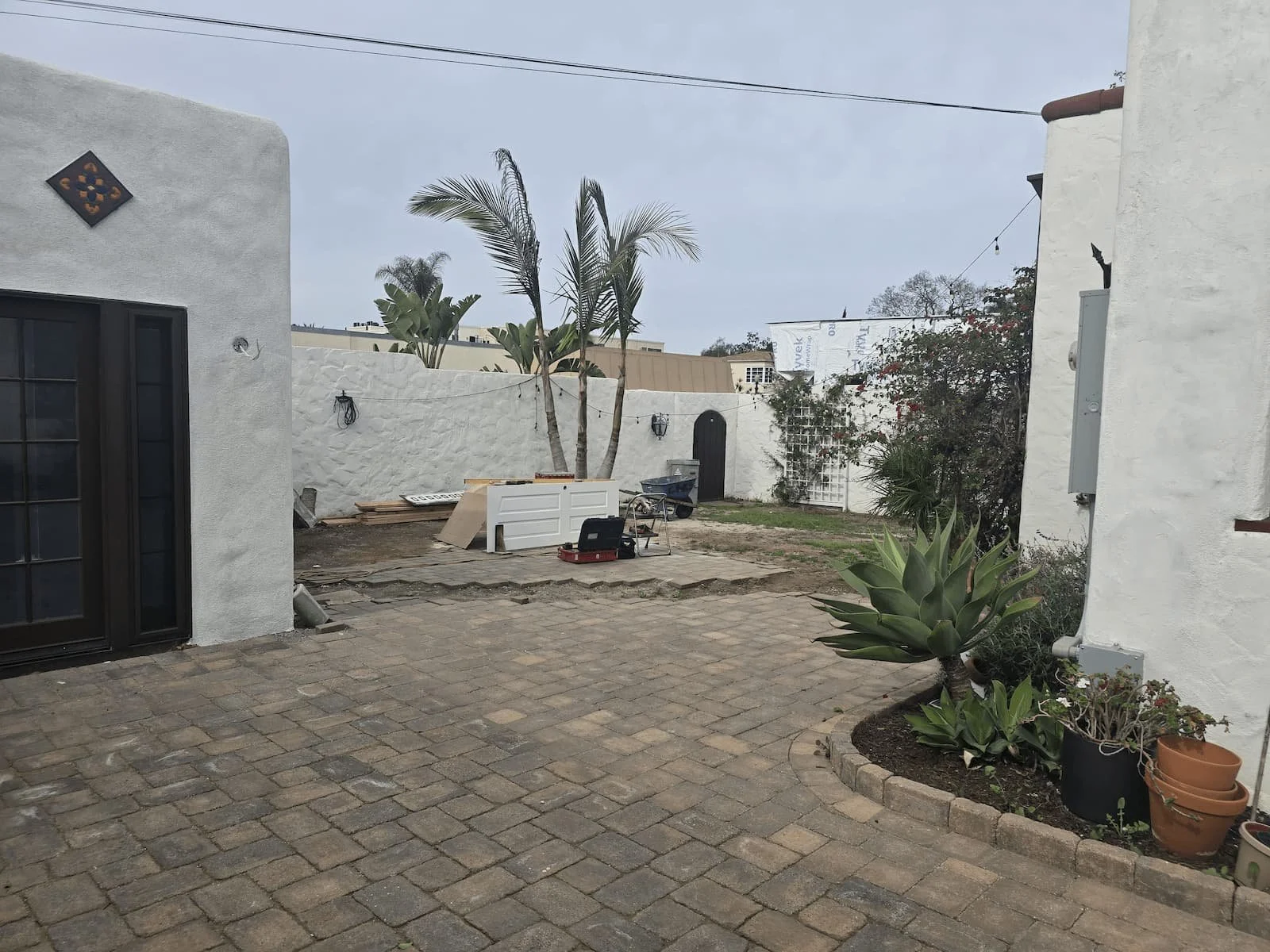
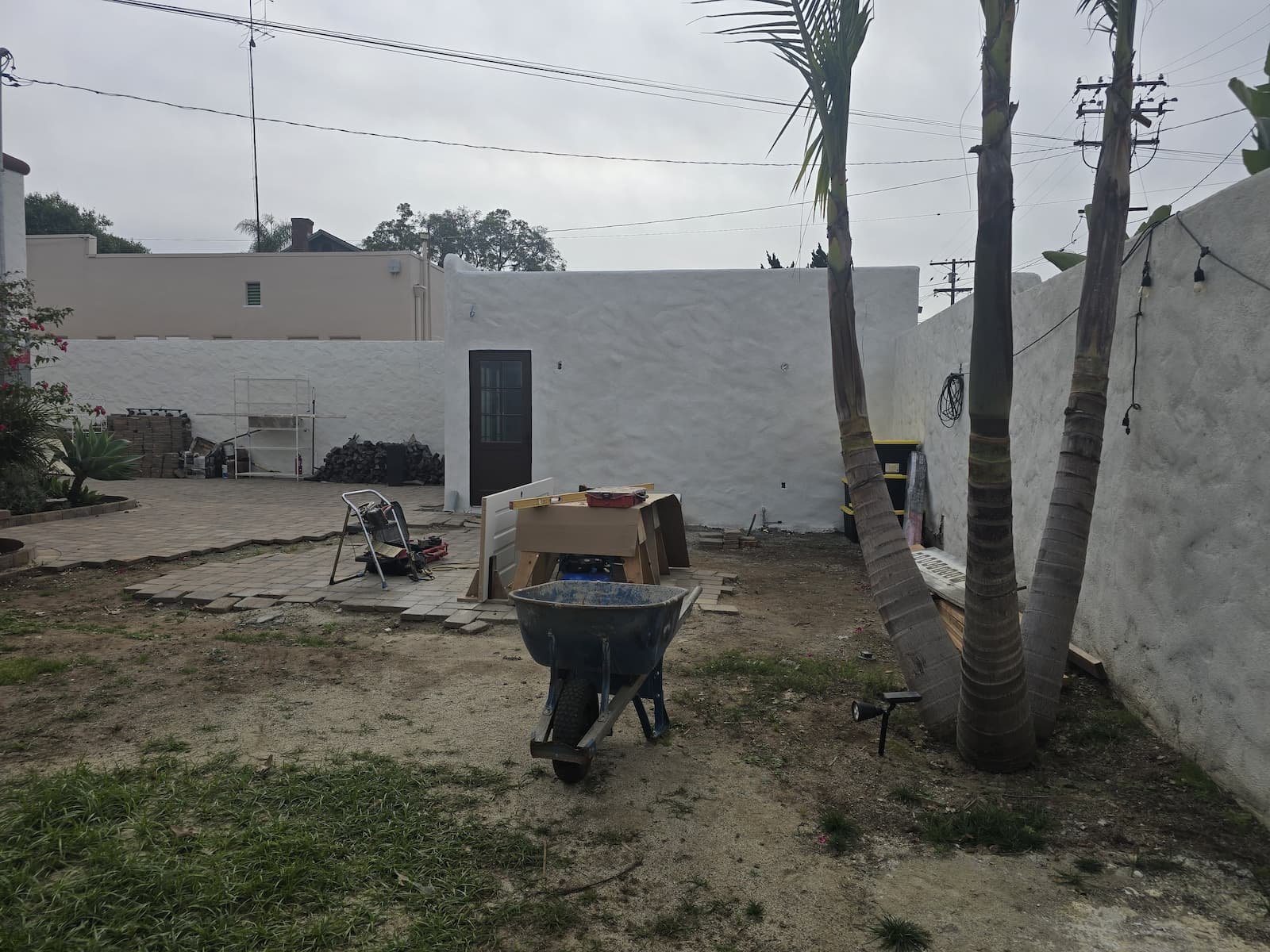
A walled entrance gives the house a proper threshold
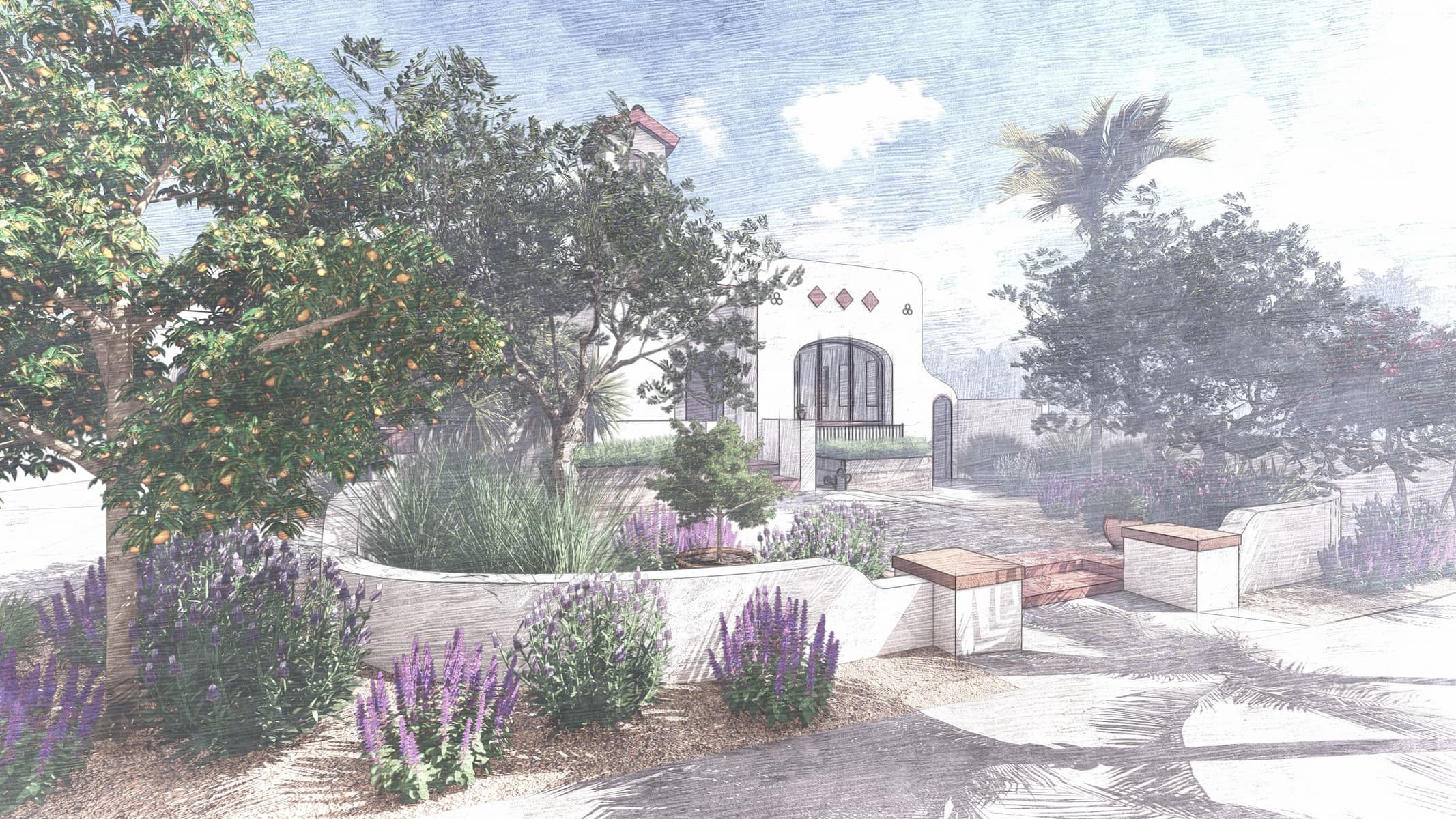
The principal move is a new arrival sequence inspired by the spatial clarity of Andalusian entrances and interpreted through the house's Mexican vernacular and Mission-influenced expression. Low, sculpted walls gather the front garden without sealing it away. Their hand-trowelled white finish echoes the residence, while warm terracotta caps and steps bring colour close to the ground.
From the street, the entrance reads as part of the architecture. Moving inward, it becomes more intimate: the level changes are slowed into generous steps, parking is absorbed into the larger composition, and planting holds the edges and shapes the spaces once occupied by lawn.
The threshold gives the property privacy, but its deeper purpose is compositional. It establishes a moment of pause between street and home, then allows the tower, arched openings, and garden to be discovered gradually.
Terracotta, stone, timber, and stucco carry the story through the ground plane.
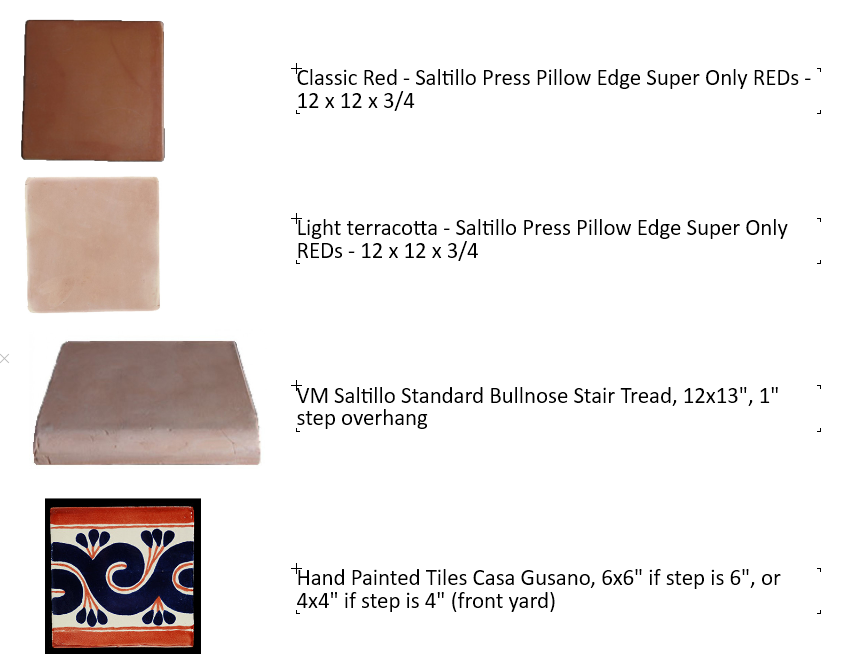
The material palette was developed as a family of related surfaces, with continuity taking precedence over a catalogue of period motifs. Hand-finished white stucco gives the new walls the visual depth of the house. Saltillo and terracotta tones bring warmth to steps and gathering areas. Flagstone introduces a quieter, more irregular walking surface, while selected ornamental tiles create moments of detail at close range.
Timber appears in the pergola and trellis work, where its shadow becomes part of the daily experience of the garden. Concrete and permeable surfaces are used where performance and vehicle access require them, then integrated through colour, alignment, and planting.
Each material has a practical role. Together, they establish continuity between a house built in 1925 and a garden designed for contemporary California life.
The garden unfolds through a sequence of rooms and views.
Jardín del Alma - The Soul Garden - was conceived as a series of moments that reveal themselves over time.
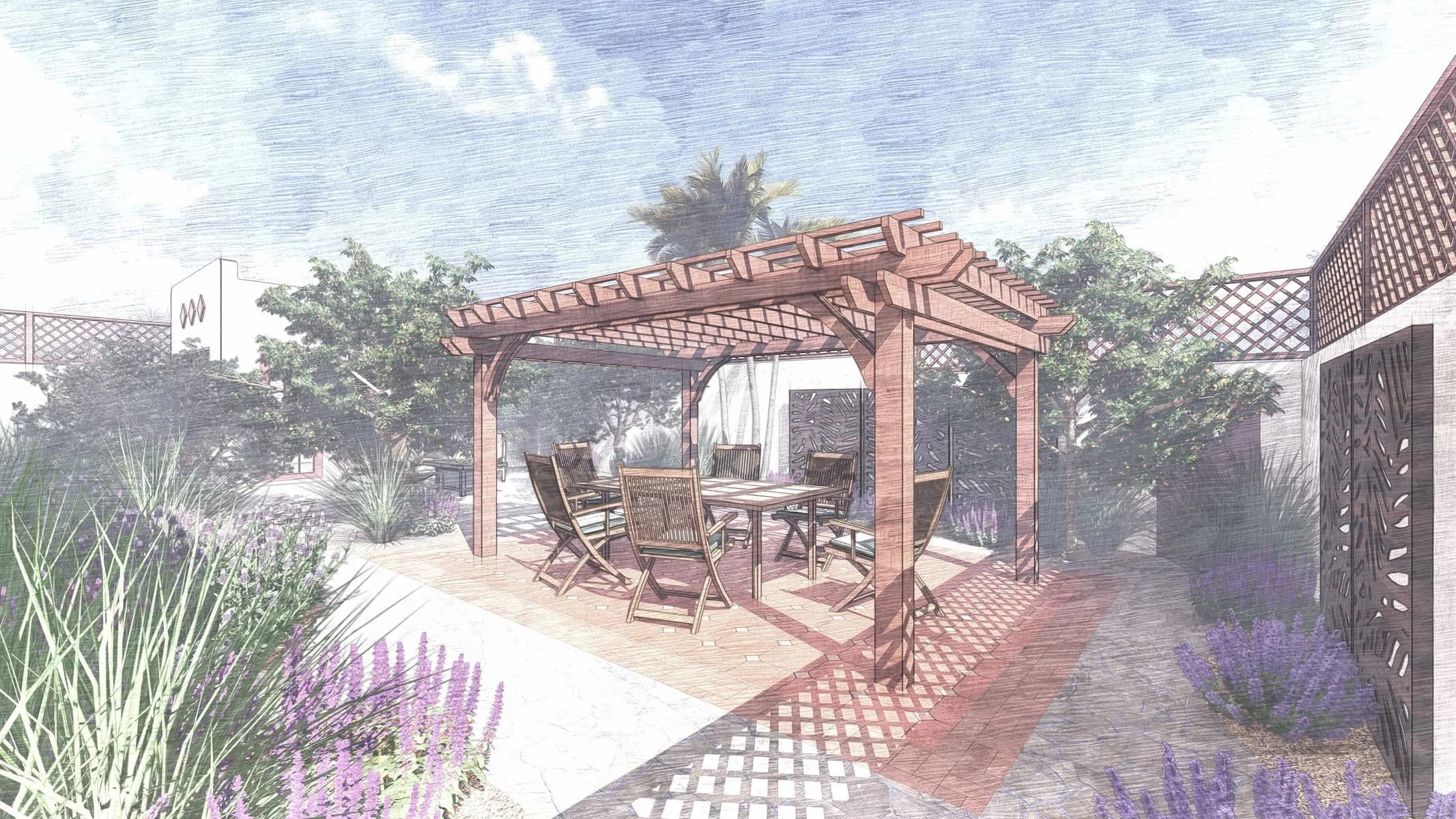
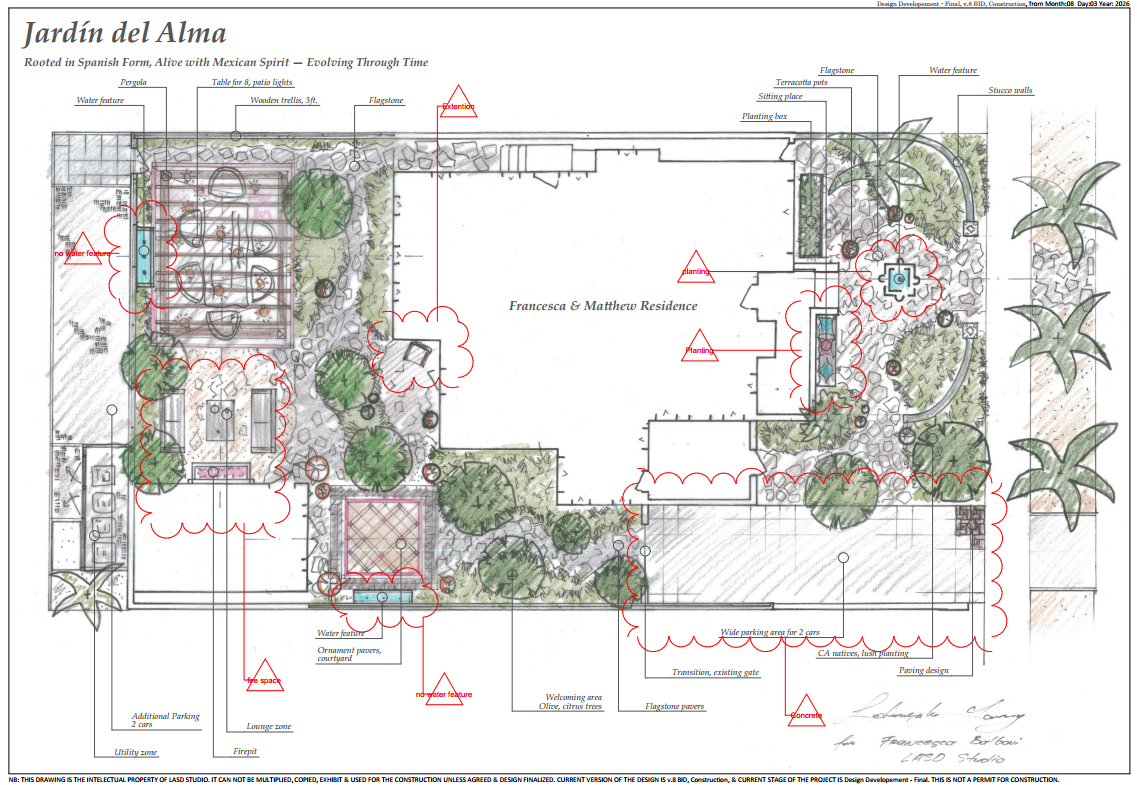
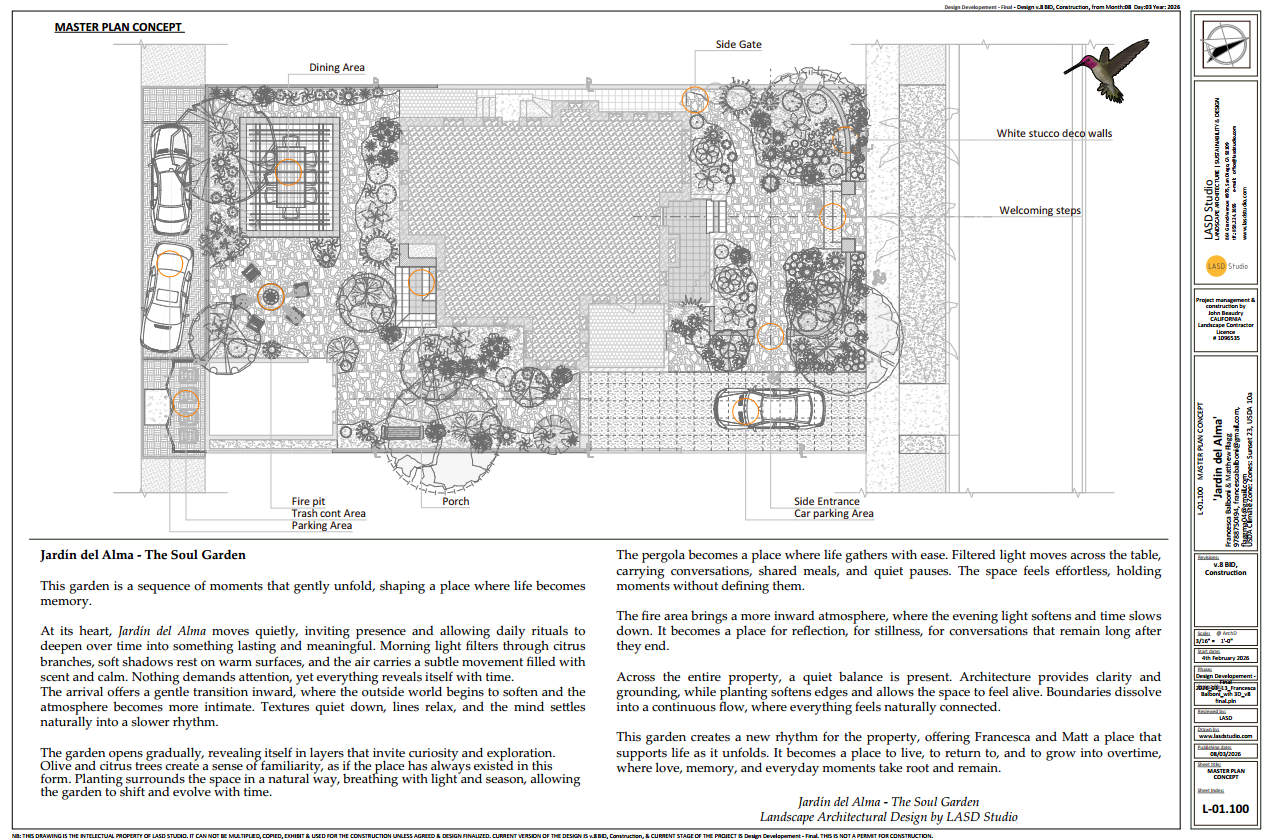
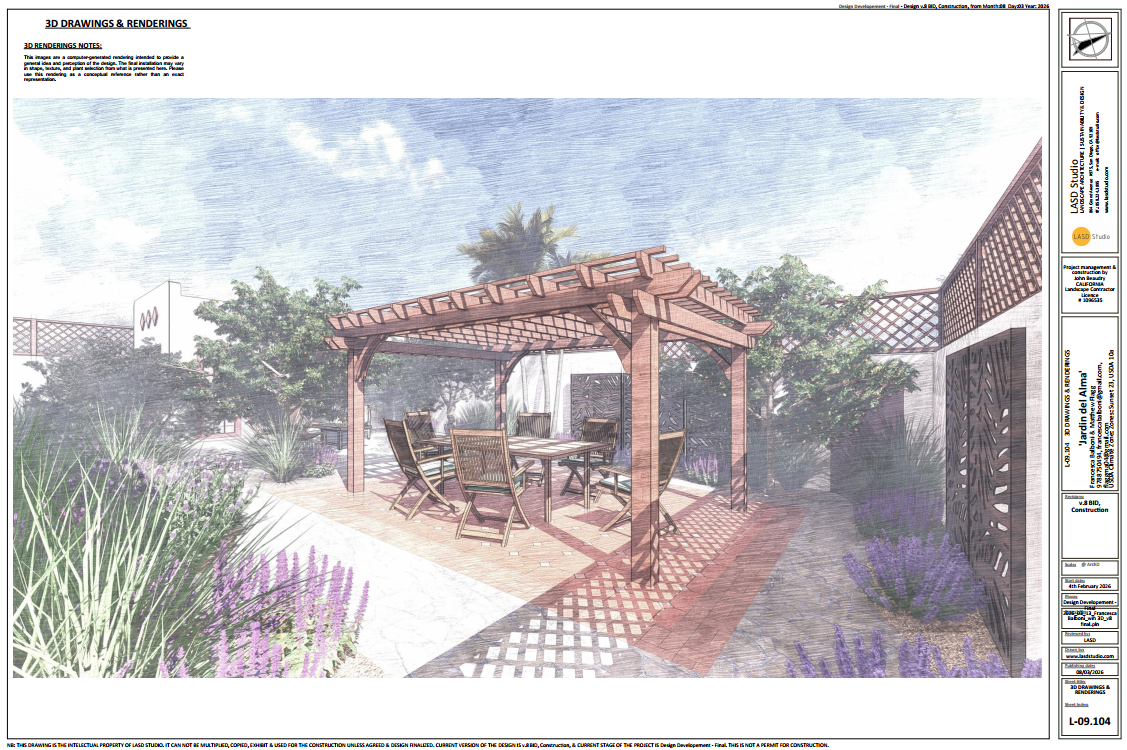
The front arrival carries the most architectural role. In the backyard, the composition loosens. A pergola creates a shaded dining room for eight, with filtered light moving across the table through the day. Nearby, a fire gathering area establishes a more inward atmosphere for evening conversation. Lounge spaces sit within mature structure and new planting, while side passages receive the dimensions, material changes, and planting needed to become deliberate transitions.
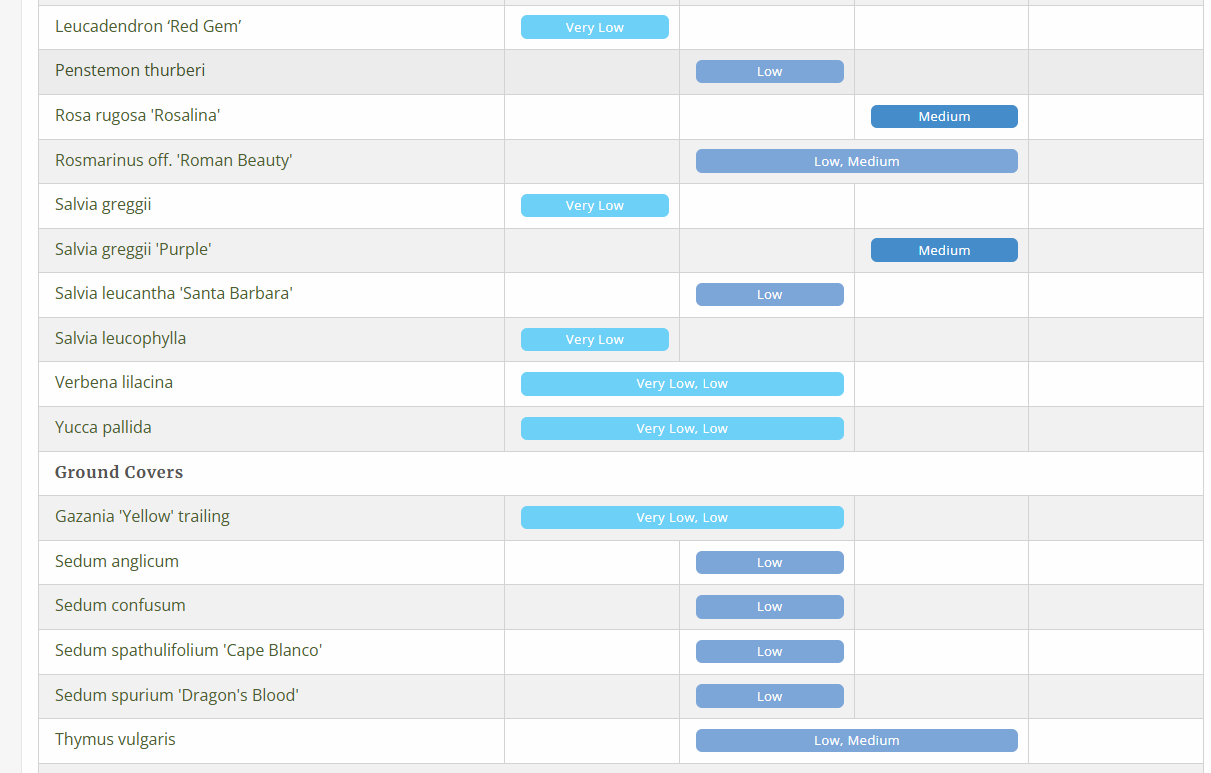
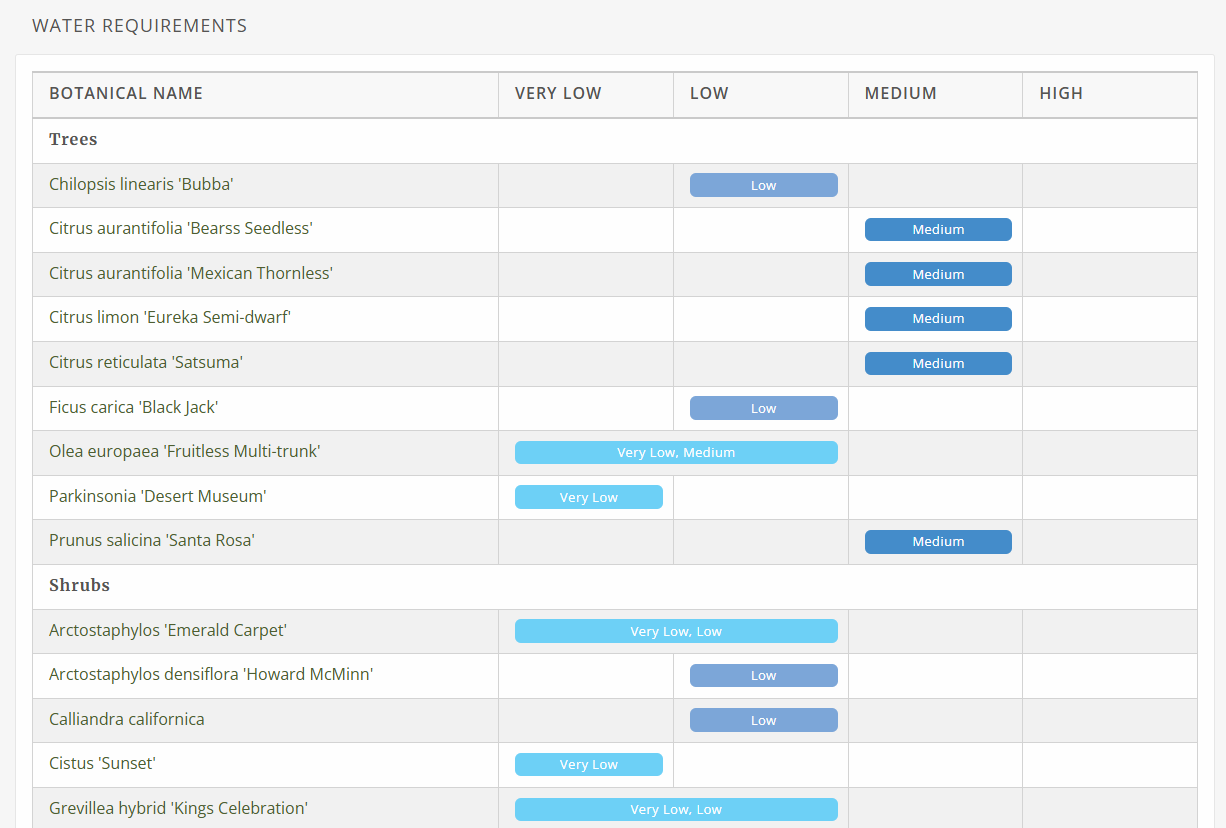
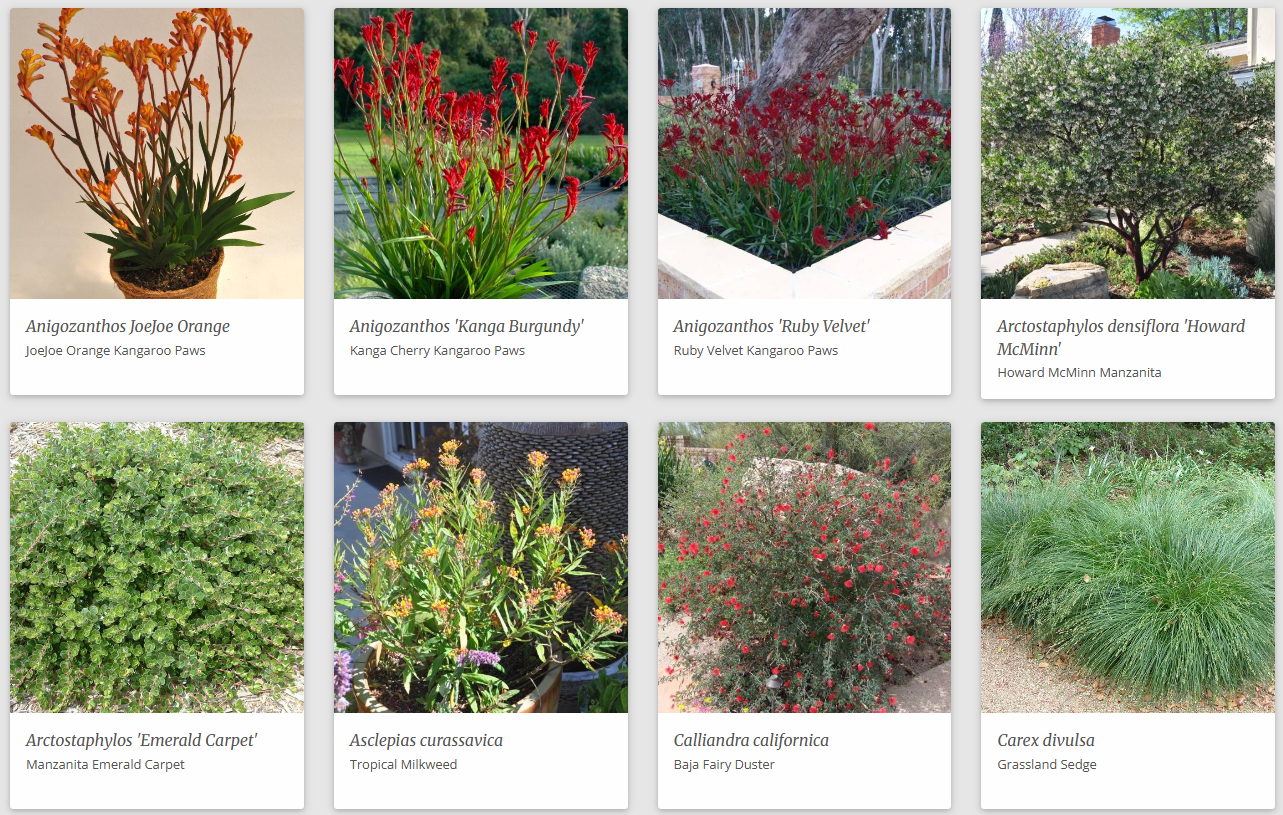
Olive, lemon, mandarin, lime, and fig bring a familiar productive layer to the garden. Rosemary, sage, penstemon, verbena, milkweed, muhly grass, manzanita, agave, and other climate-responsive species form a planting character that is aromatic, textured, and seasonal. The palette holds Mediterranean memory alongside plants suited to Southern California's dry summers, habitat value, and water conditions.
Nothing needs to reveal itself at once. Morning light can belong to the citrus, midday shade to the pergola, and the last part of the evening to the fire circle. Over time, those repeated uses become the identity of the garden.
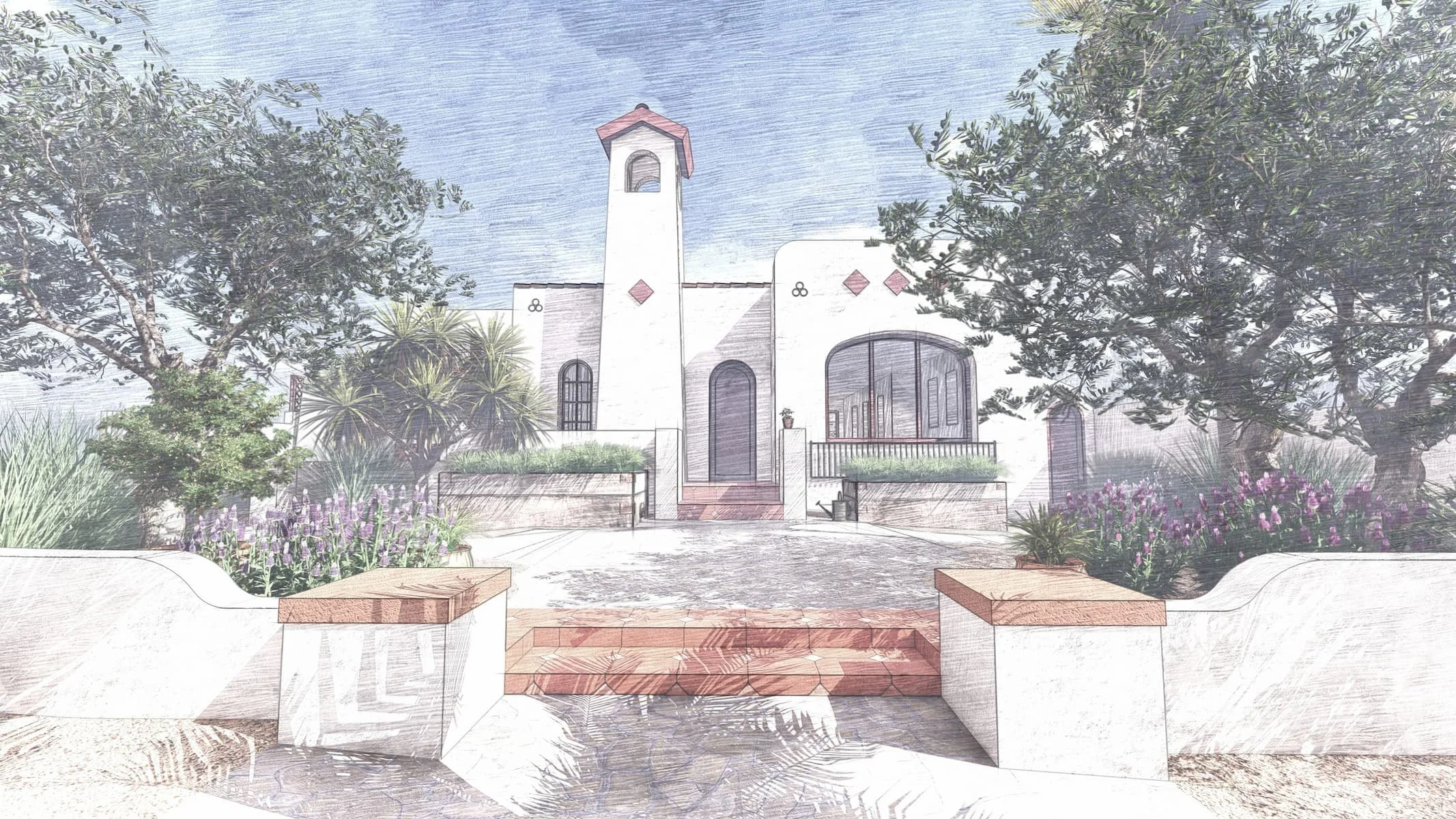
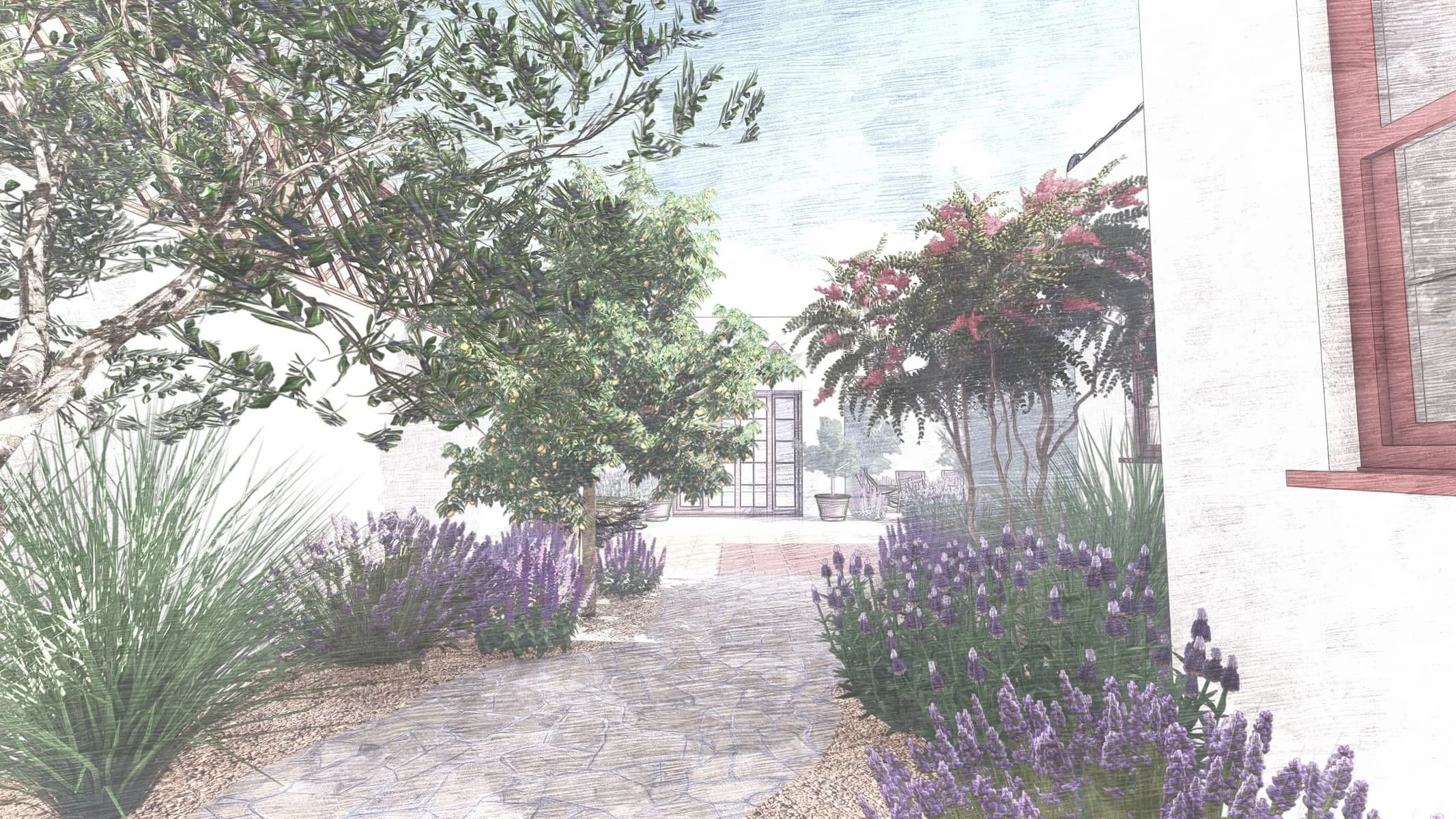
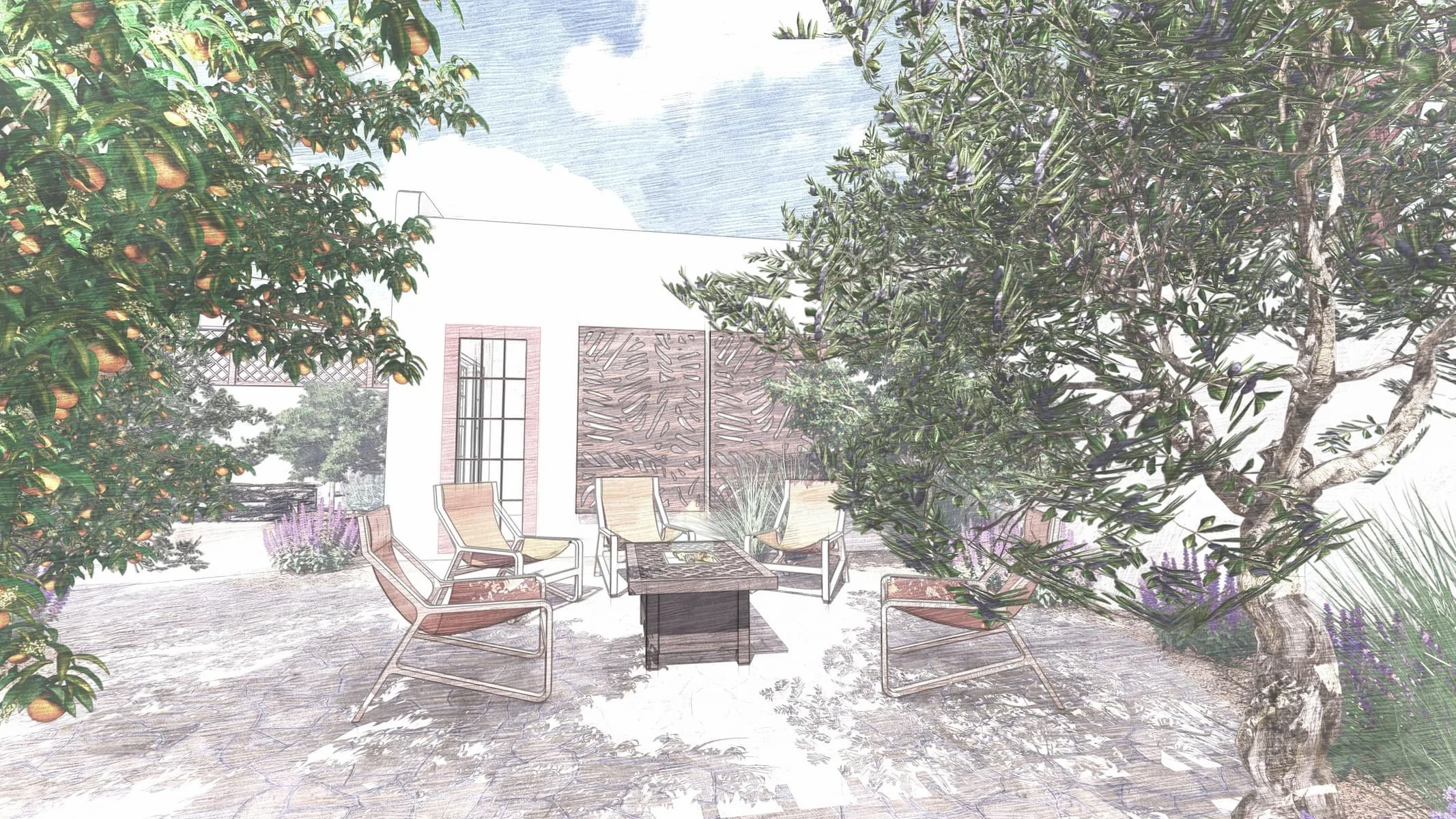
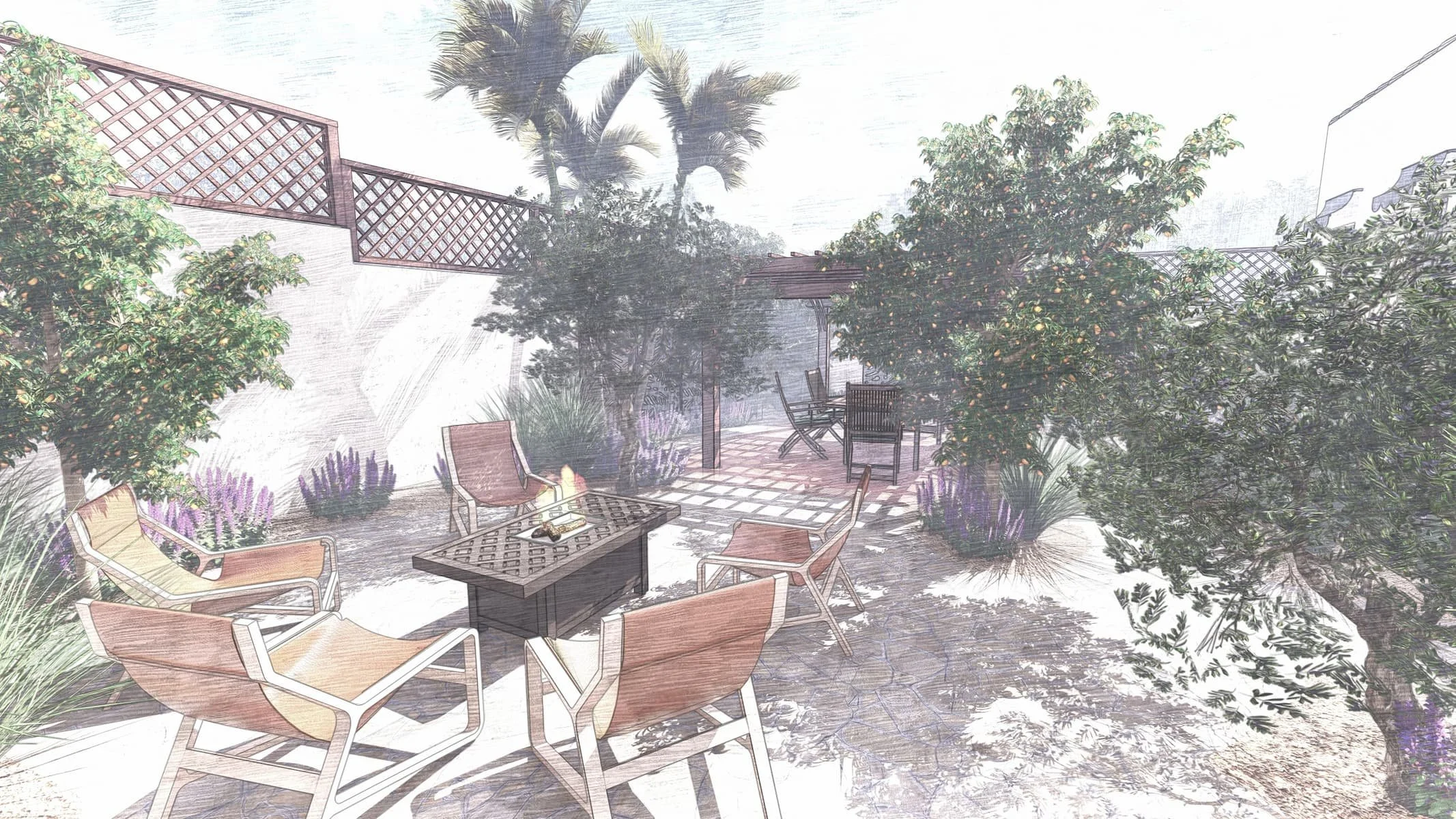
The concept emerged through research, measurement, and a distributed studio conversation
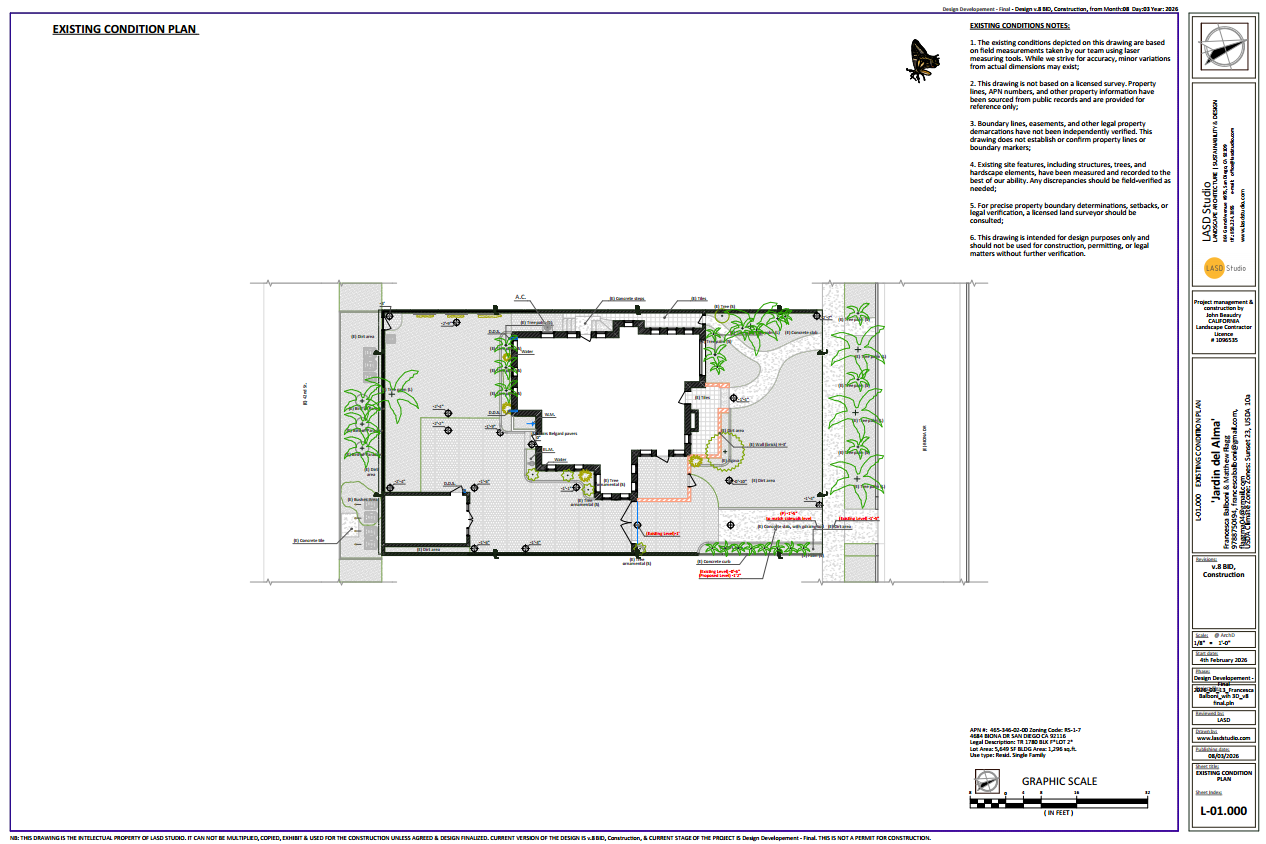
The design process began on site. LASD Studio's California team recorded existing levels, drainage movement, utilities, irrigation, electrical conditions, paving, structures, and vegetation. That information was paired with a detailed client questionnaire, giving the studio a clear account of how the property was used, what the owners valued, and which atmospheres felt true to them.
Historical and architectural research came next. Only then did the wider studio begin its internal design sessions, bringing together perspectives from California, Spain, and Ukraine. The process was curated and creatively directed by Yura, our Creative Director and Design Lead, who developed the central stylistic proposition and guided it through concept selection, spatial refinement, and technical resolution.
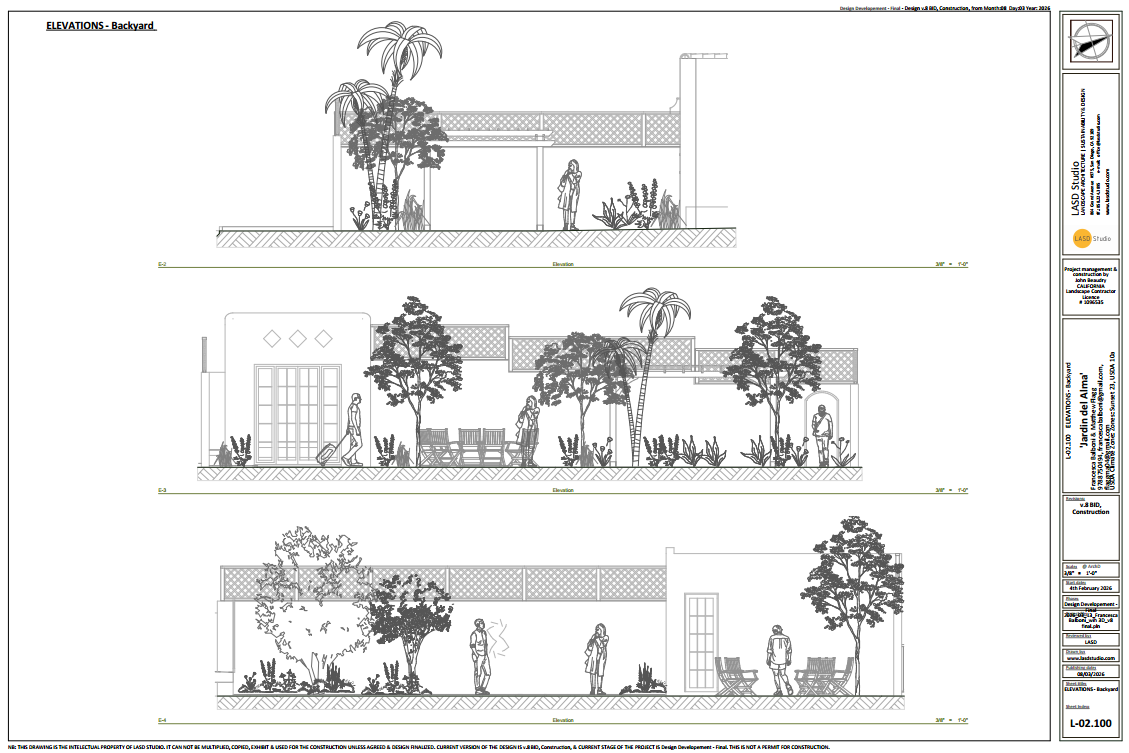
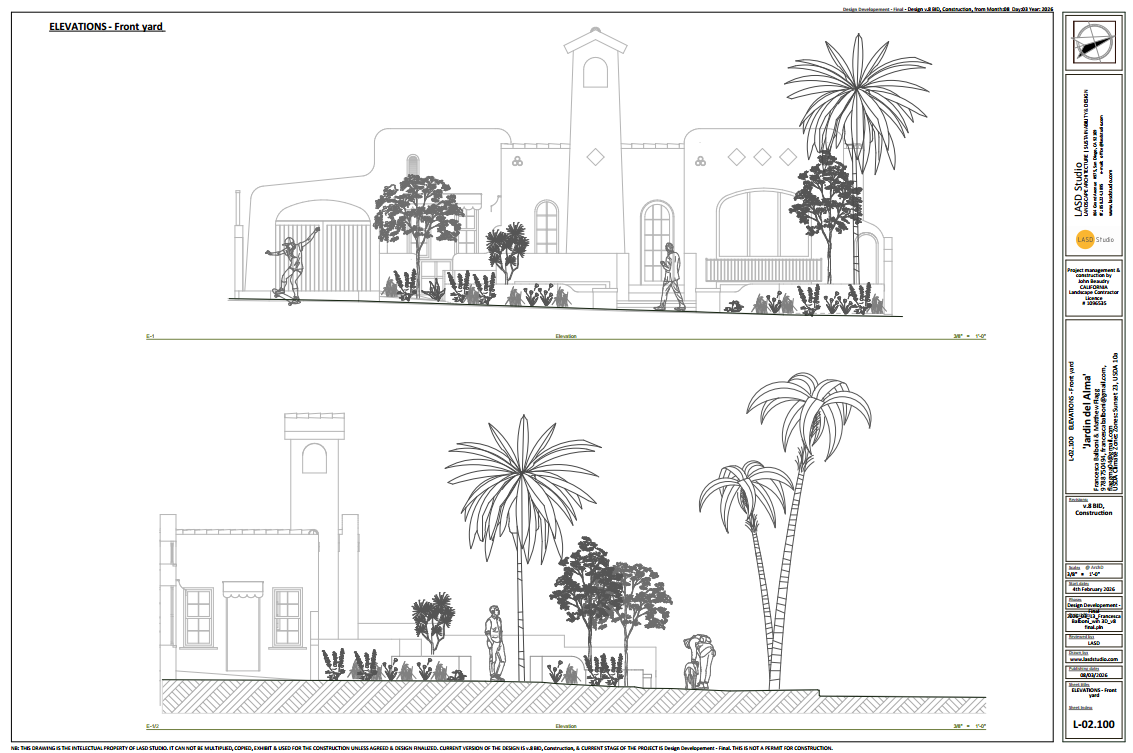
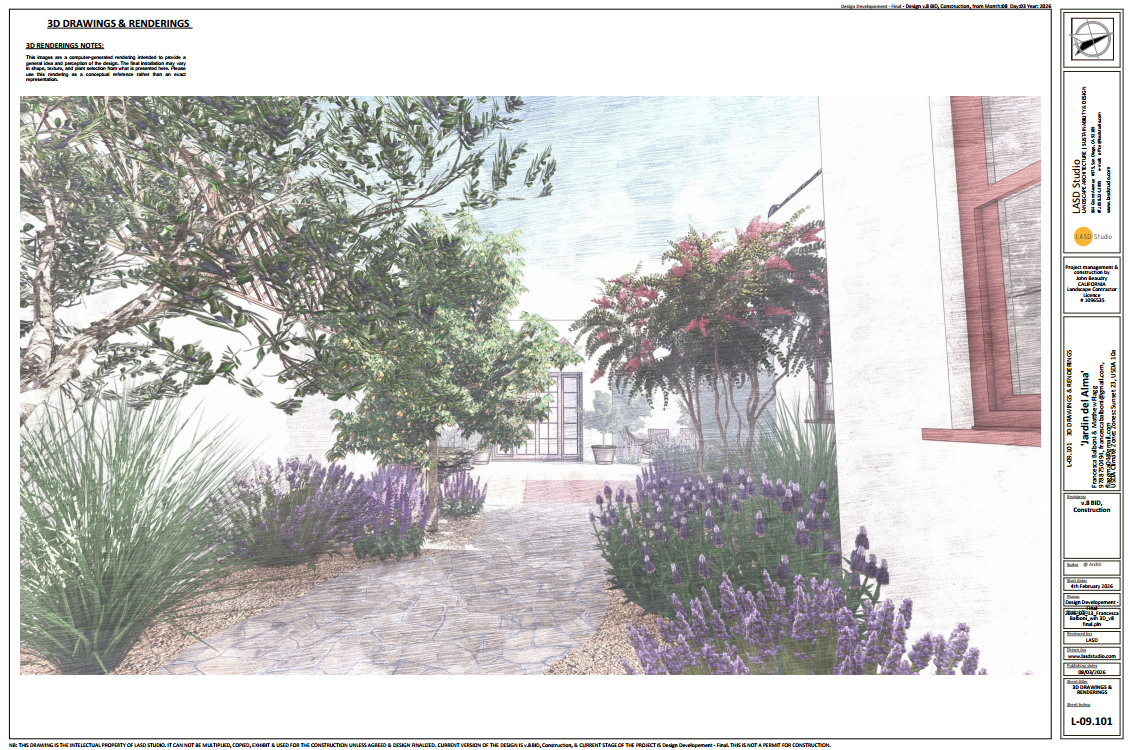
Two related concepts explored the arrival, enclosure, parking, courtyard structure, and backyard rooms. The preferred ideas were consolidated into one master plan, then tested through elevations, material studies, and three-dimensional views. Client presentations and focused revisions carried the selected concept into the final design-development set.
A 24-sheets ArchD design set that carries the garden from atmosphere into construction.
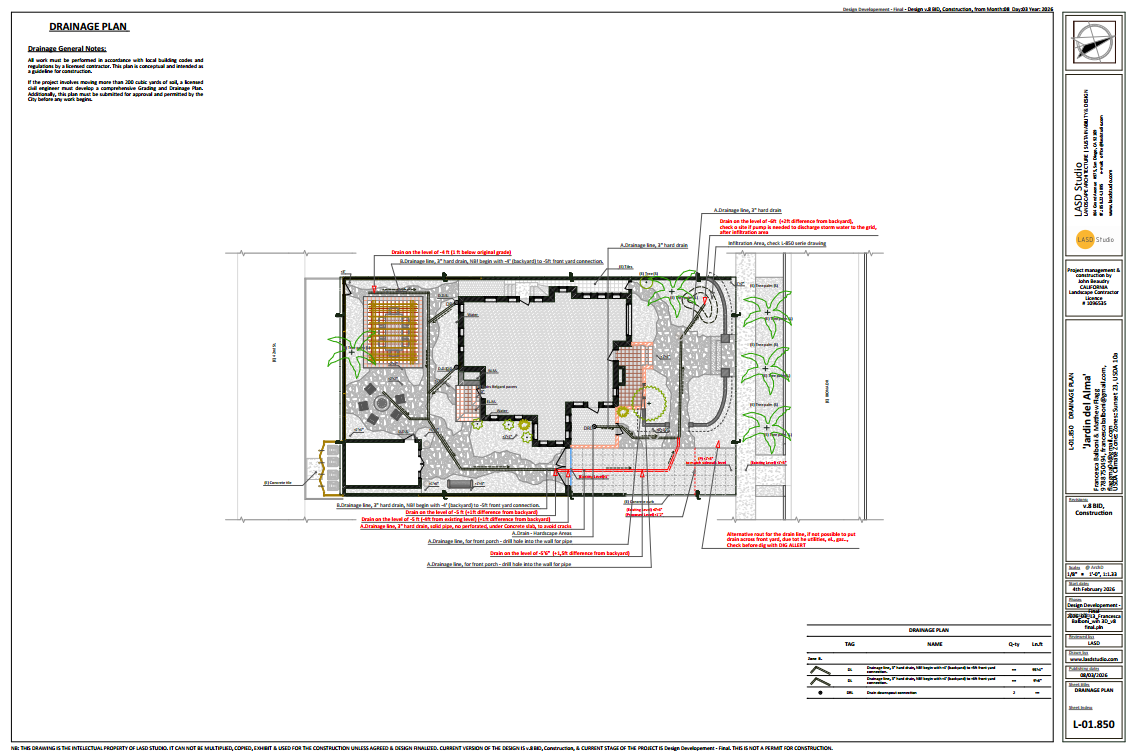
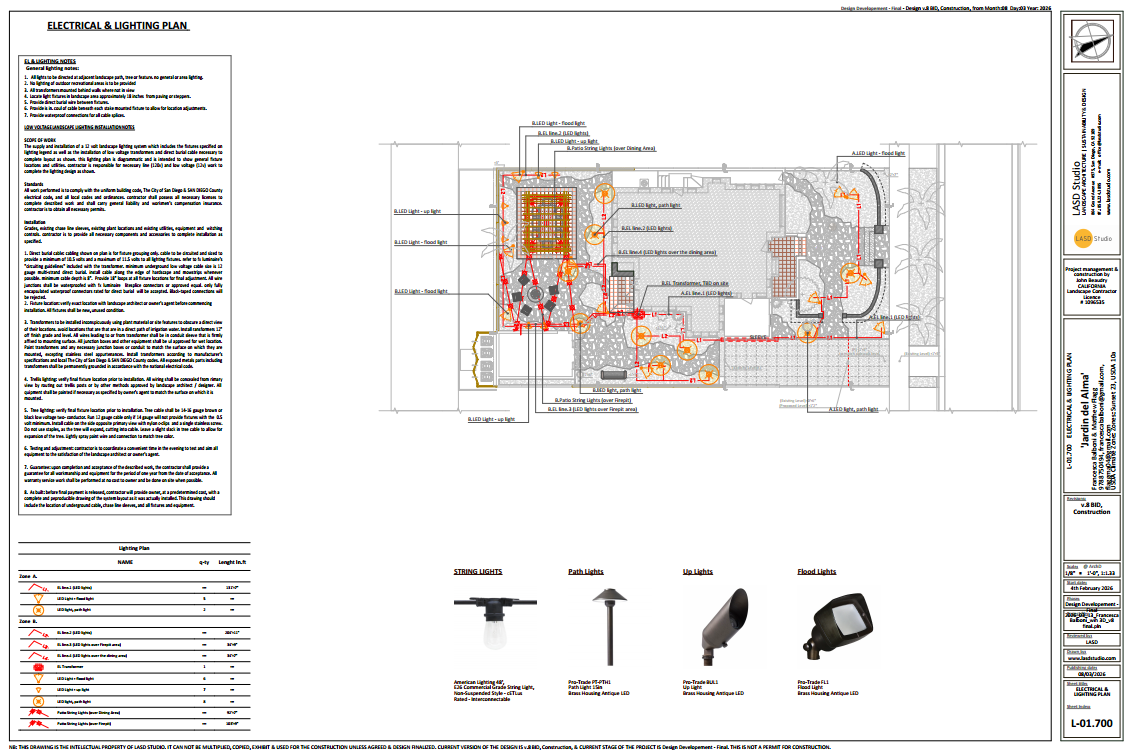
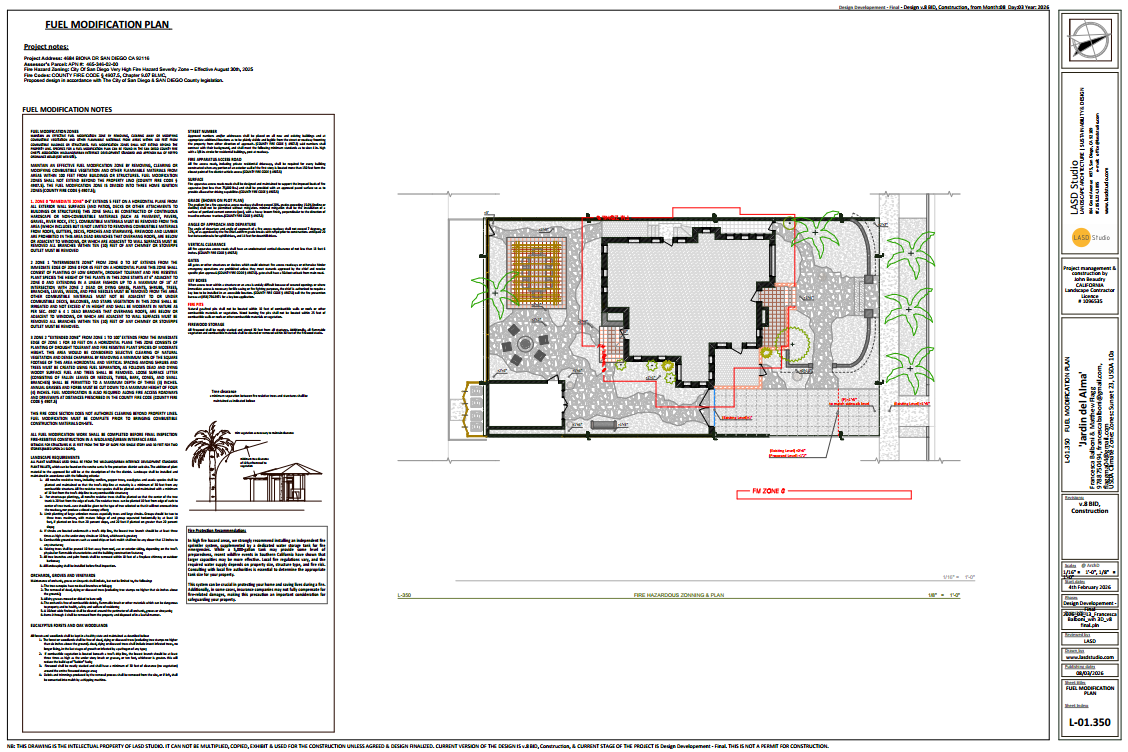
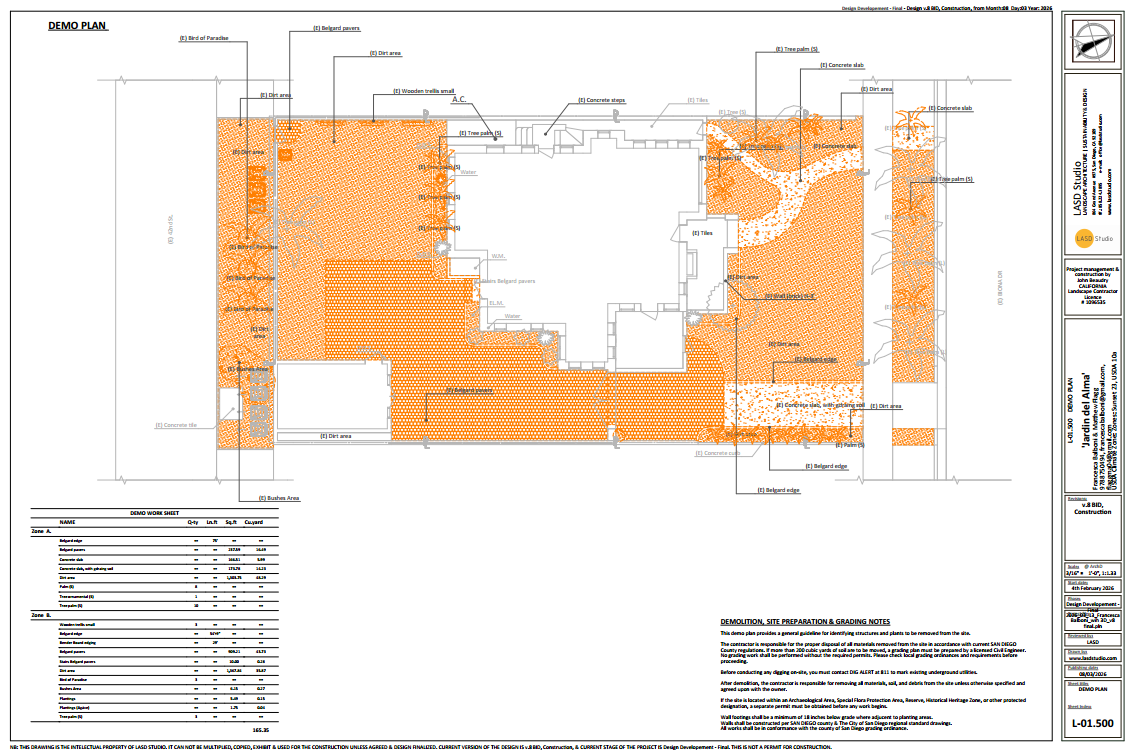
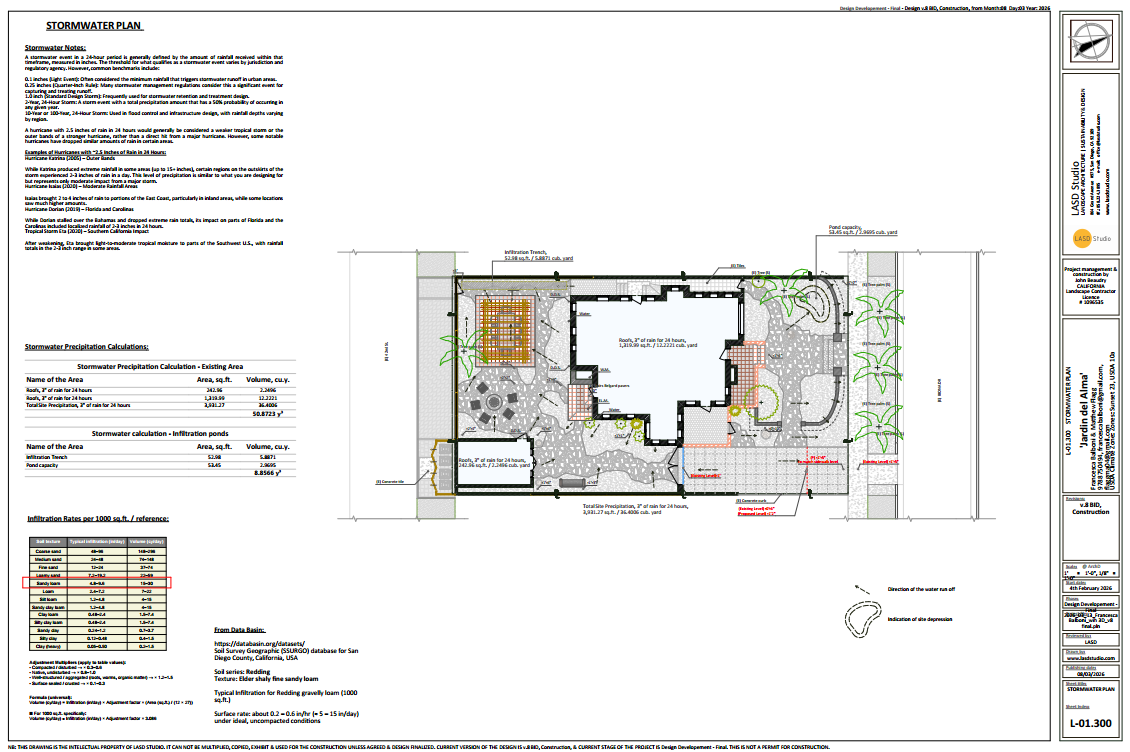
The final project documentation contains 24 coordinated sheets. Alongside the master plan and design visualizations, the set includes existing-condition information, front and backyard elevations, stormwater strategy, fuel-modification planning, hardscape layout and details, demolition scope, planting plans and schedules, electrical and lighting design, irrigation layout and specifications, and drainage coordination.
The hardscape schedule identifies materials and quantities. The planting schedules define species, sizes, and placement. Lighting types, cable routes, irrigation equipment, drip zones, drainage lines, and downspout connections are coordinated across the property. Supplier and product information gives the construction team a clear basis for procurement.
That level of definition also supports a structured construction bid. Contractors can price a common, clearly described scope with coordinated quantities and material information, giving the owners meaningful cost visibility before work advances and a reference point for decisions made during construction.
The visual idea and the technical work belong to the same project. The first gives the garden its character; the second protects that character as it is built.




Material restraint allows the garden to be inhabited
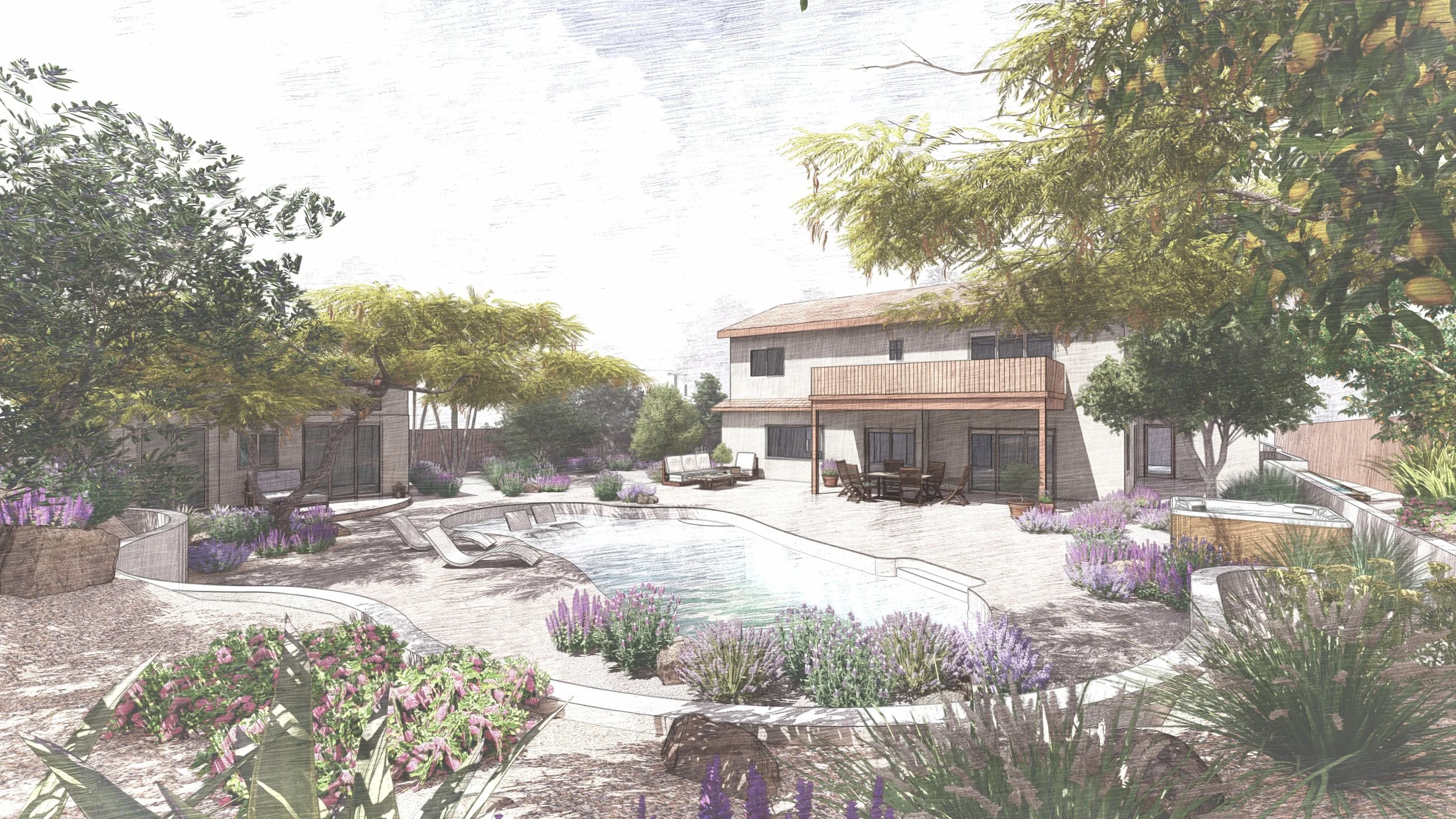
The proposed material language is deliberately limited. Broad surfaces establish continuity between the house, patio and pool, while changes in texture identify thresholds and quieter areas. Warm mineral tones sit naturally beside white walls and the muted greens of Mediterranean-climate planting.
This restraint is practical as well as visual. Fewer material changes give the property a clearer spatial order and reduce the sense that each outdoor area was designed as a separate episode. The details can then carry more weight: the edge where paving meets planting, the depth of a shaded threshold, the way a wall catches evening light.
Bohemian character enters through use and accumulation rather than applied decoration. Pots, furniture, textiles, fallen leaves and the changing form of plants can inhabit a stable framework without making the composition feel unresolved.


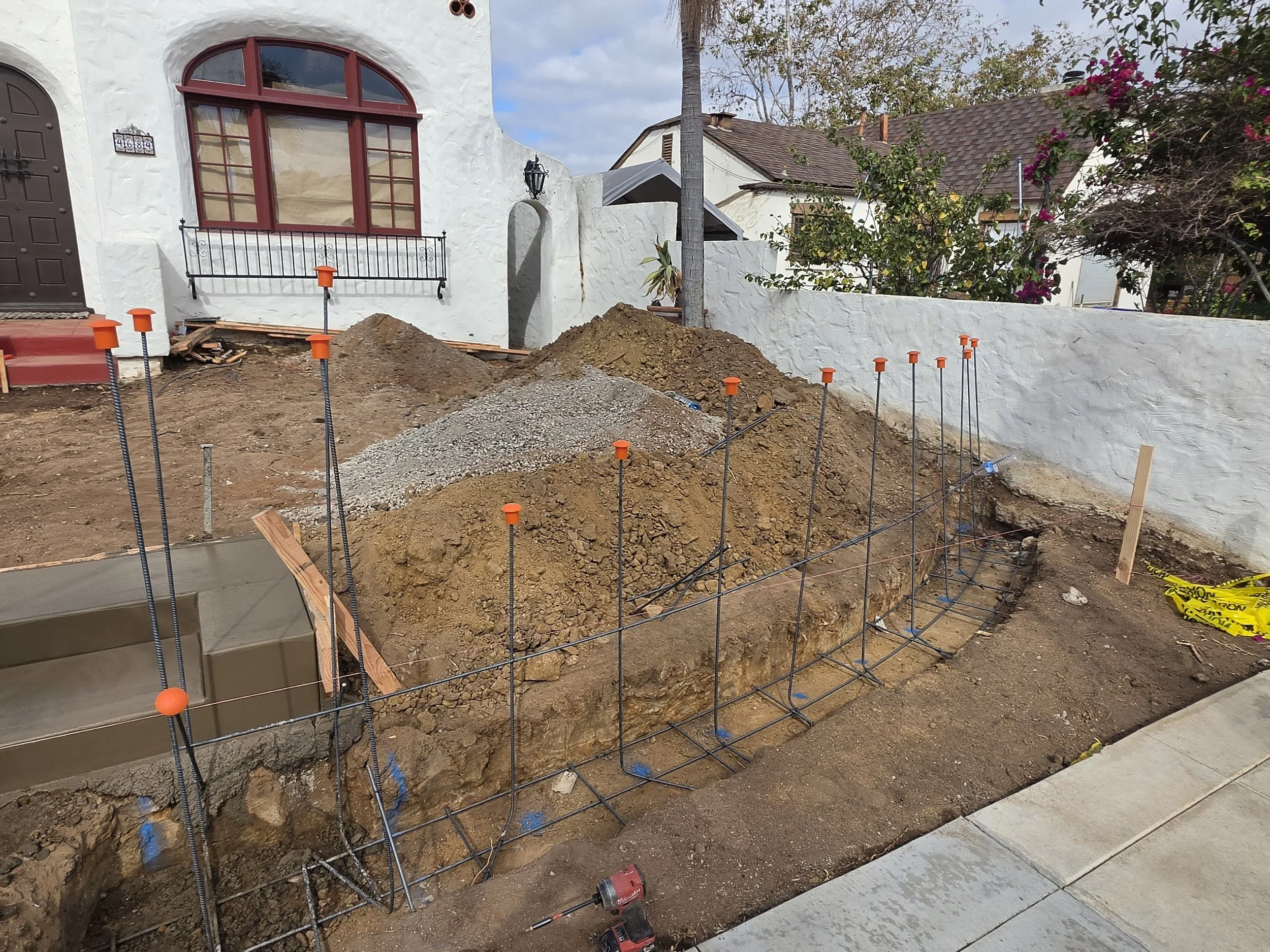
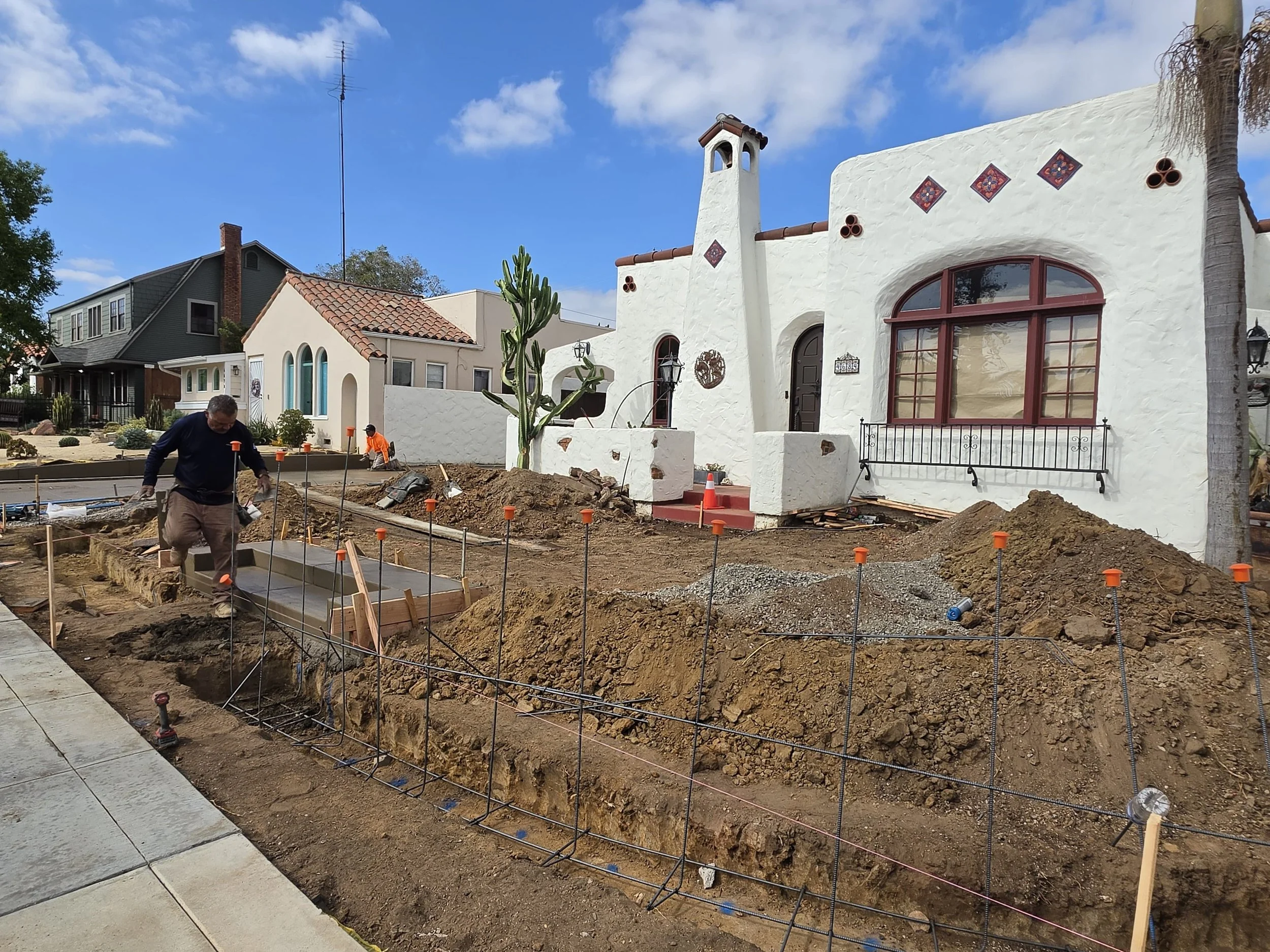
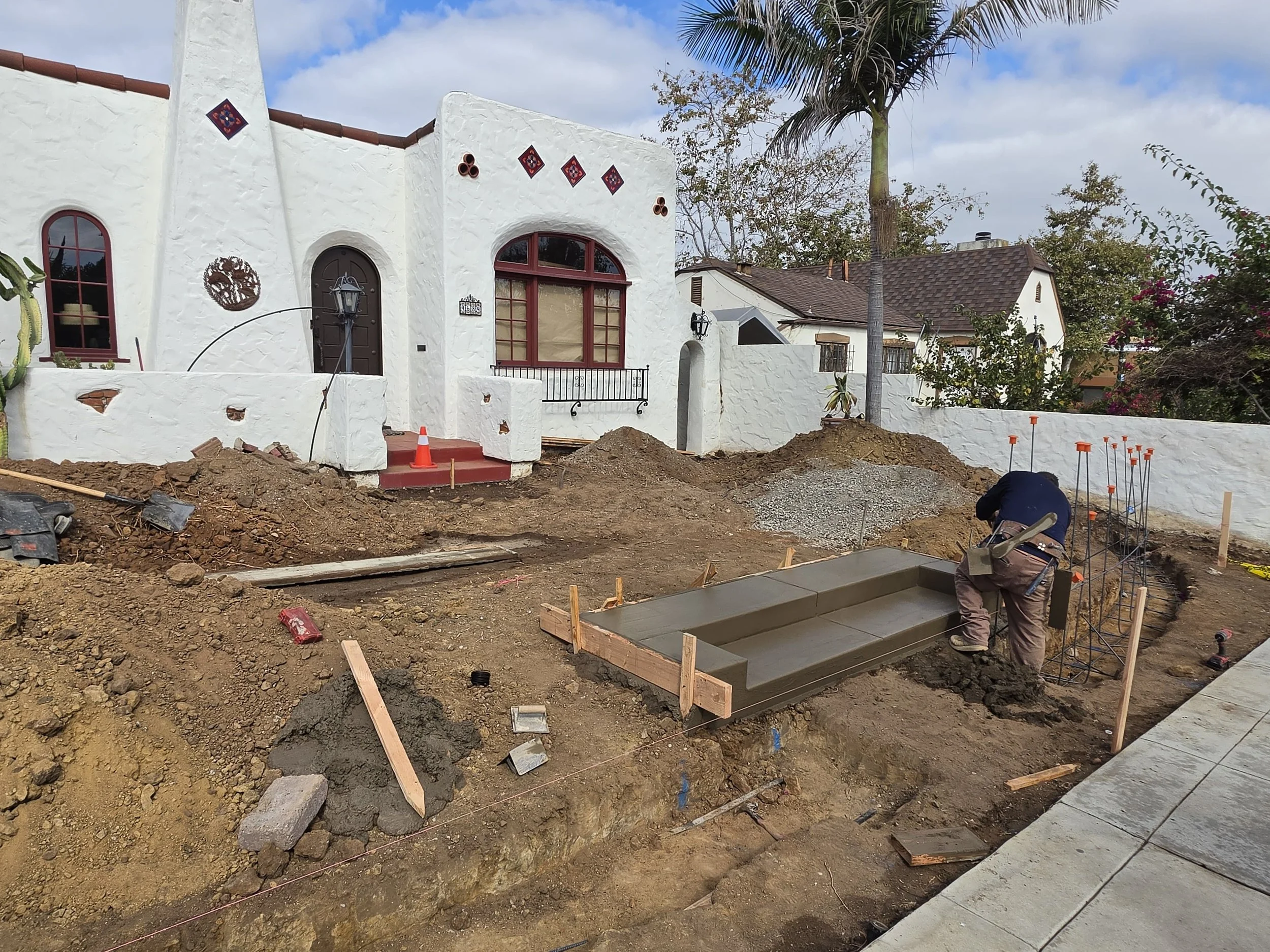
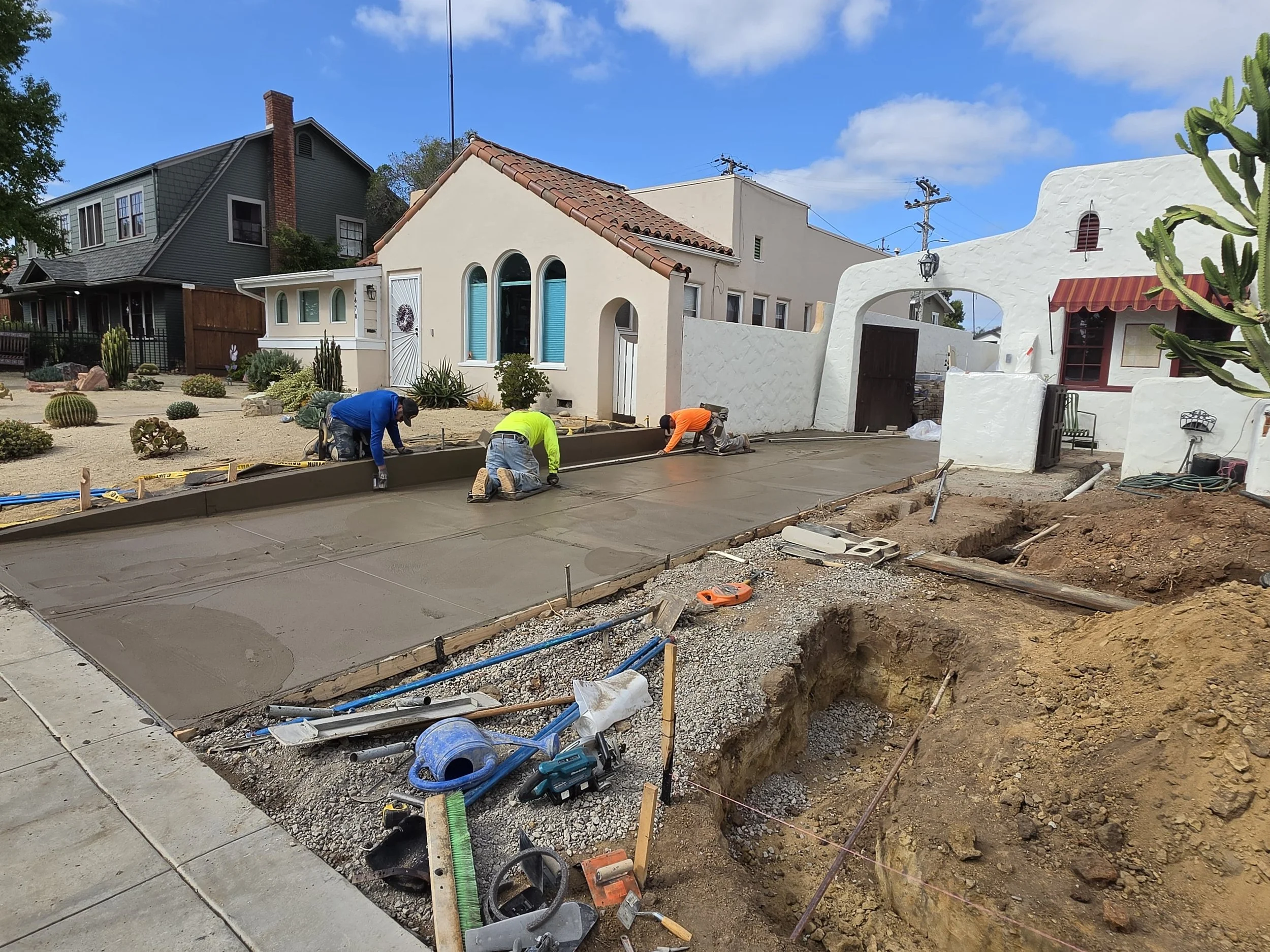
Work in Progress - “Jardín del Alma”
Installation of a Colonial Spanish Revival Landscape with Mexican Vernacular Influences




When architecture carries a real history, the landscape should begin by listening to it
LASD Studio designs private gardens and estate landscapes through architectural research, site measurement, concept development, and coordinated project documentation. For owners restoring an Eclectic Spanish Revival, Spanish Colonial Revival, Mission Revival, or other culturally significant residence in Southern California, the first conversation begins with the house, the site, and the life the landscape needs to hold.
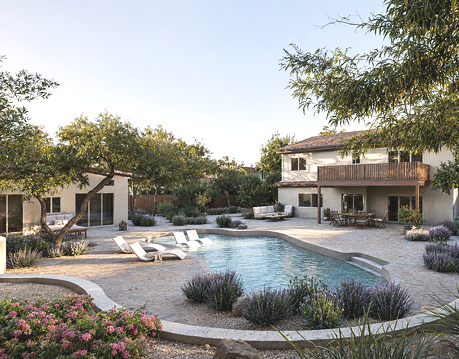
Spanish Colonial Revival Garden in La Jolla, California
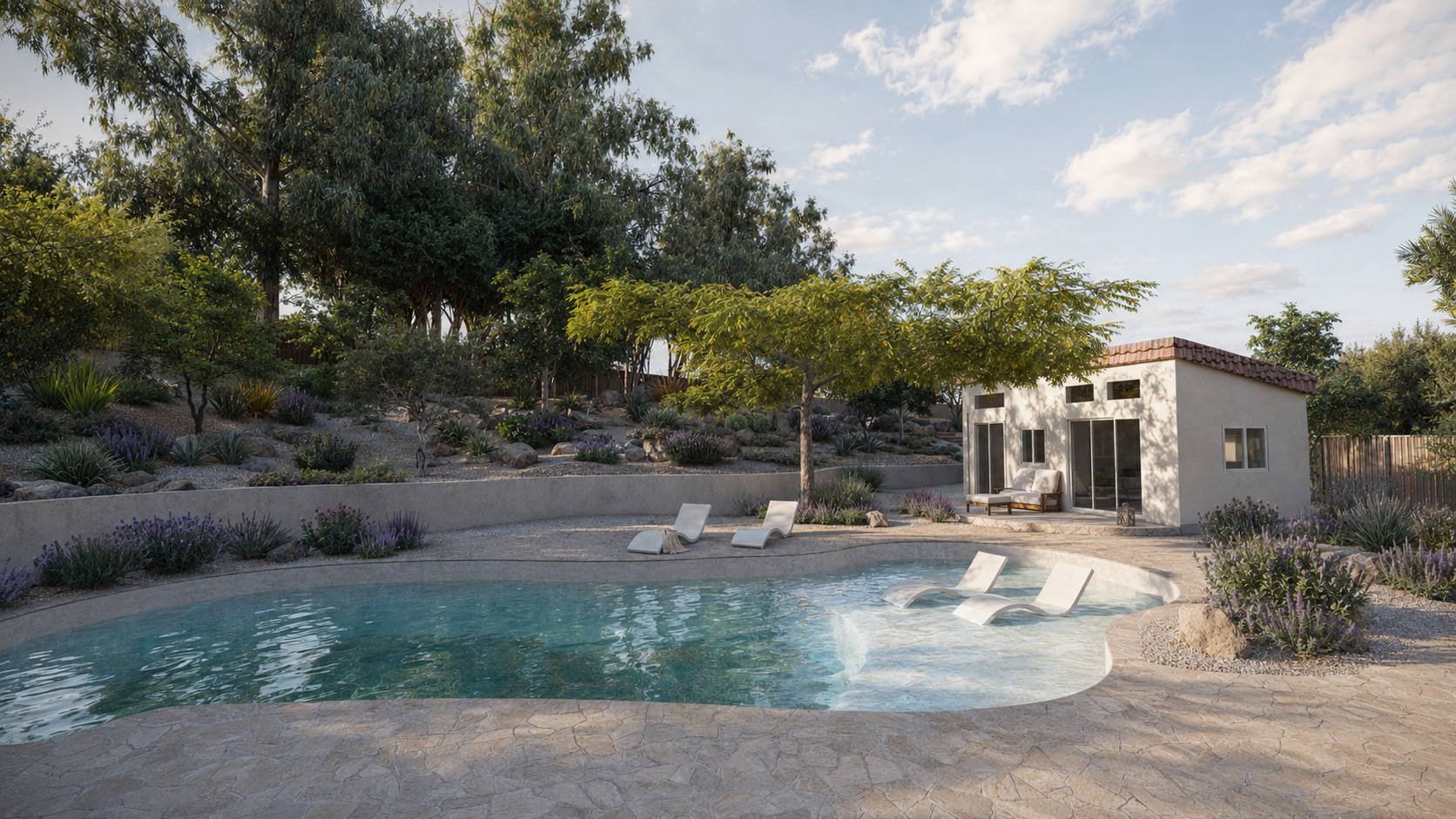
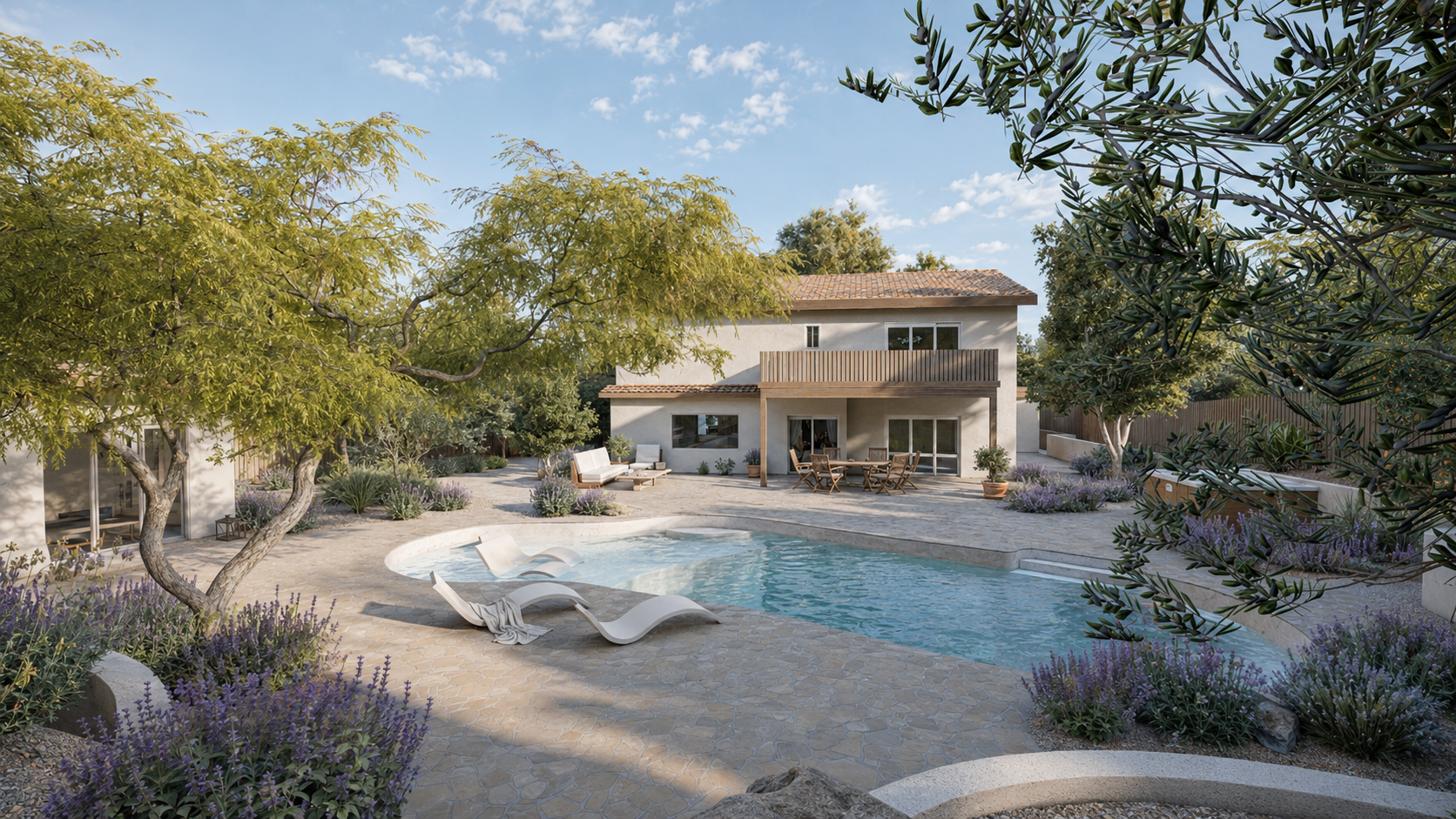
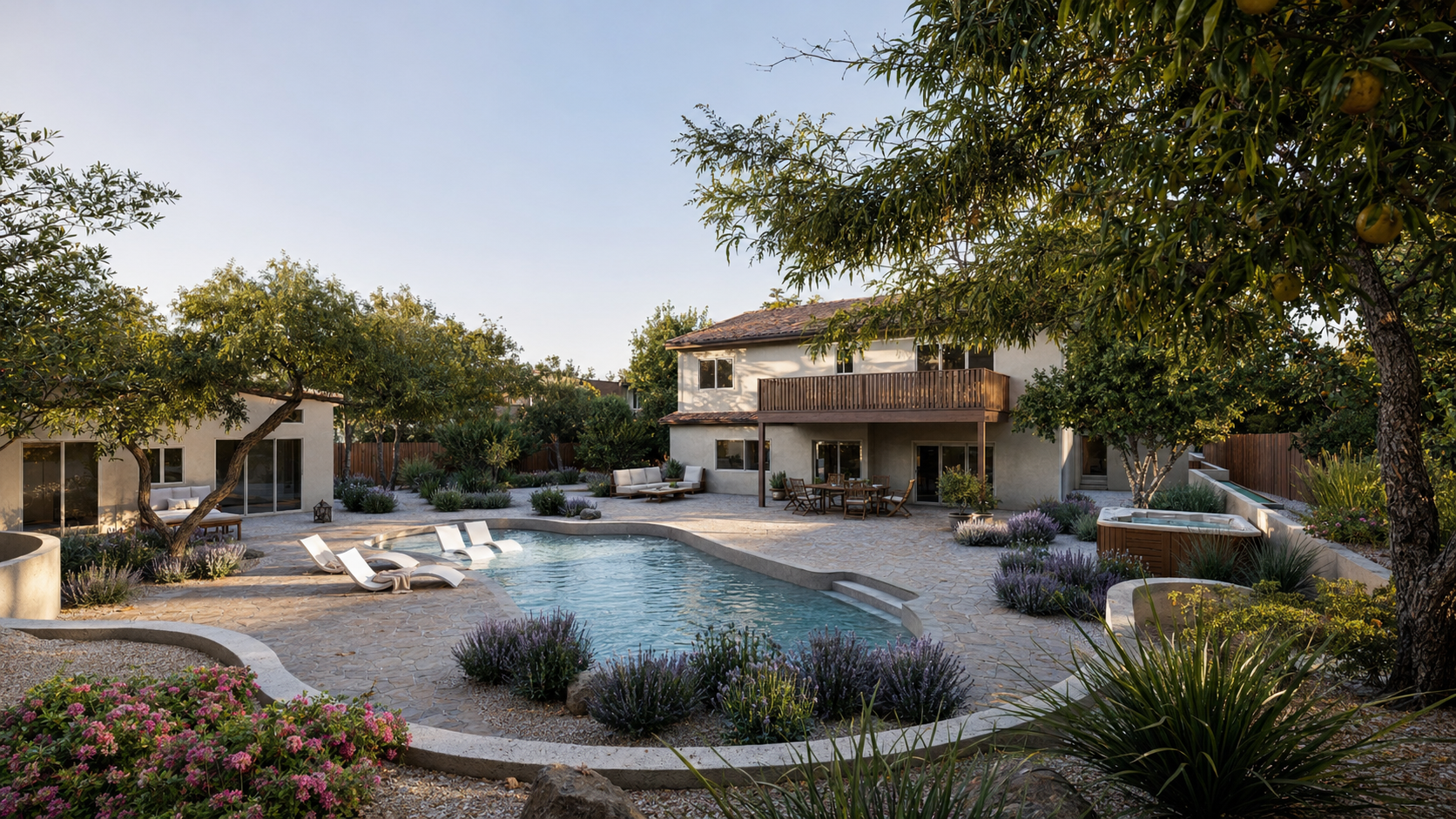
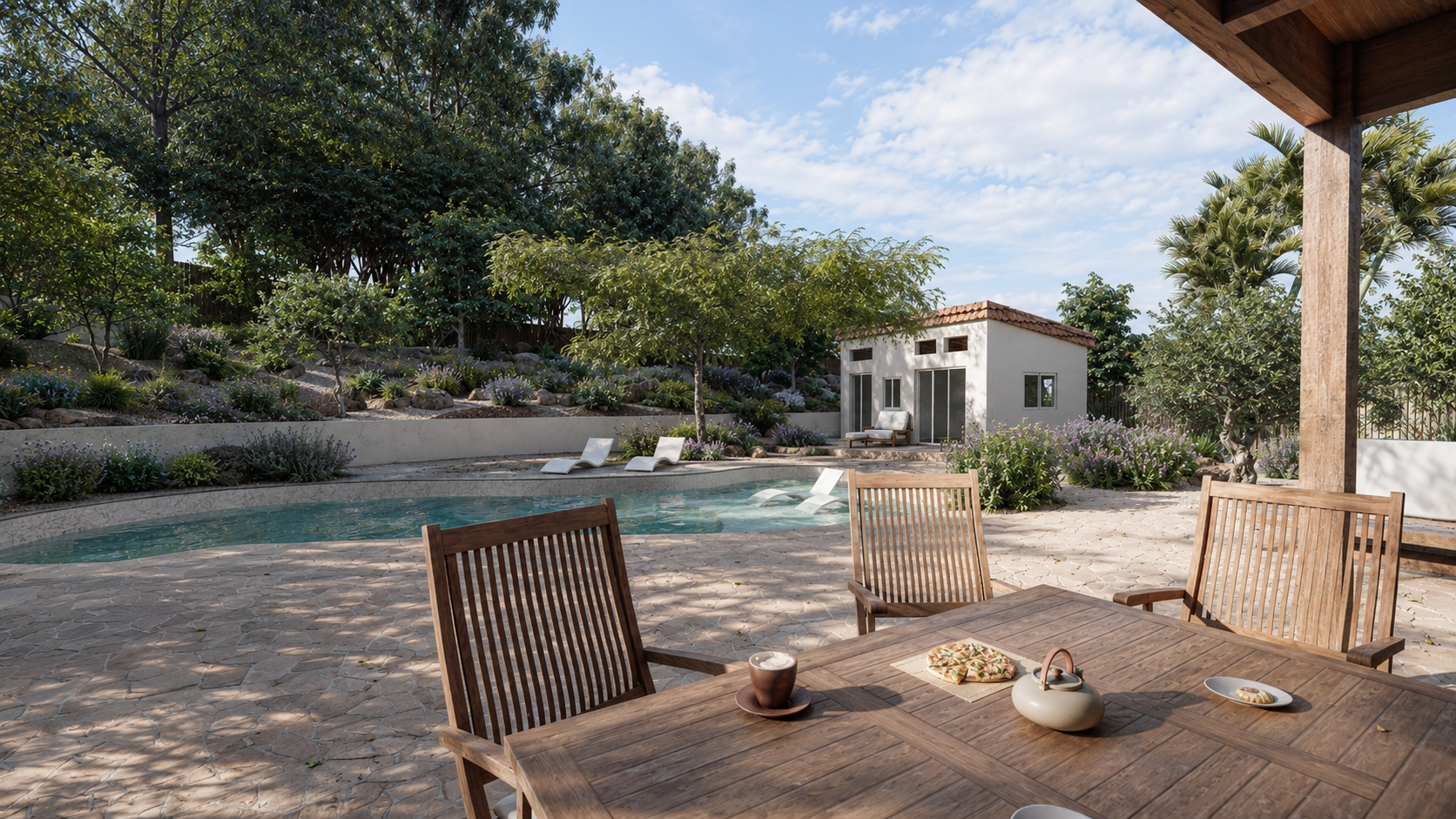
A California Spanish Colonial Revival garden reinterpreted through Bohemian Minimalism, connecting a generous pool terrace, principal patio and secluded guest-house retreat.
A Bohemian Minimalist Interpretation for Contemporary California Life with Spanish Colonial Revival Heritage.
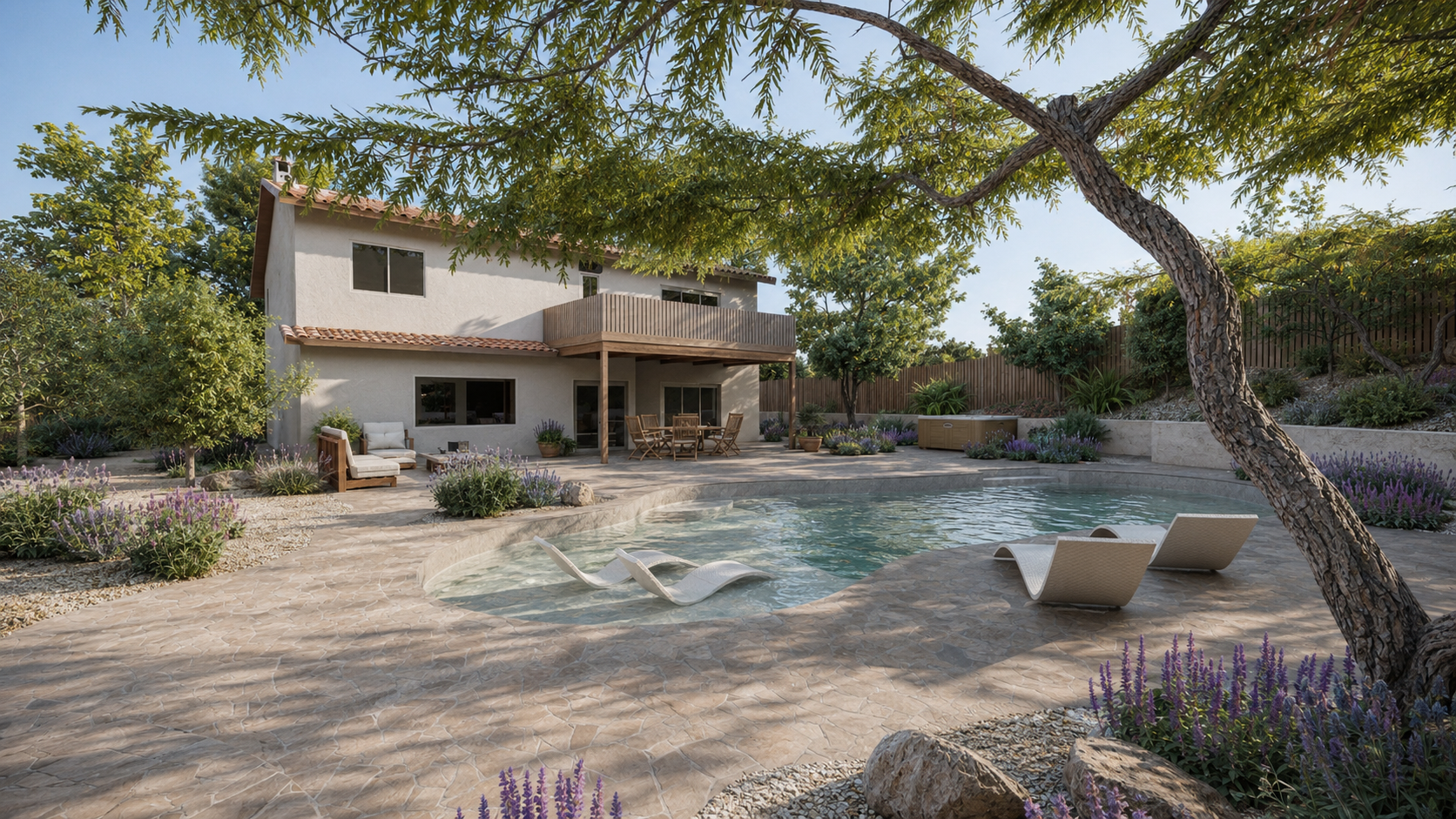
The design brings a generous pool garden, a principal patio and a quieter guest-house retreat into one composed landscape. Spanish Colonial Revival provides the architectural memory. La Jolla’s light, dry summers and outdoor way of living give that memory a contemporary California form.
Location: La Jolla, California
Project Type: Private Residential Garden, Exterior Design, Spanish Colonial Revival
Design Scope: Complete Garden Design, Planting Design, Hardscape Coordination, Irrigation Strategy, Stormwater Planning, Construction Documentation
Construction: by Client’s Contractors
Construction cost: $480,000
Design Studio: LASD Studio
The house carries the gravity of California’s Spanish Colonial Revival tradition: white stucco volumes, deep shadow, generous thresholds and an architecture intended to endure. The landscape was conceived as its contemporary counterpart - lighter, more porous and intimately connected to La Jolla’s climate and outdoor way of life.
LASD Studio named this design language Bohemian Minimalism. Minimalism brings clarity, proportion and quiet spatial order. The Bohemian layer introduces as heritage, softness, movement and freedom: fragrant planting, tactile natural materials, informal paths, shifting shade and the subtle traces of a garden being lived in.
At the center of the composition, the existing pool is transformed from an isolated object into the reflective and social heart of the property. Around it, a sequence of outdoor rooms unfolds - places for dining, gathering, swimming, retreat and unhurried moments beneath the California sky. Open space allows the architecture to breathe, while olive, citrus and oak establish a living canopy above layers of lavender, thyme and sage.
This is not a landscape assembled from decorative gestures. It is an estate garden structured through relationships: permanence and evolution, enclosure and openness, architectural discipline and ecological life. Its character is intended to deepen with time, as planting settles into the architecture and daily rituals gradually become part of the landscape.
The result is a garden that feels composed without becoming formal, generous without becoming excessive, and refined without losing its sense of freedom.
Eclectic Spanish Revival with Bohemian Minimalism. Where Heritage Meets Space, Light, and Freedom. LASD Studio.
A California tradition shaped through adaptation
Spanish Colonial Revival architecture in California has always carried more than one history. Spanish, Mexican, Mediterranean, Moorish and early Californian references were interpreted for a different climate, landscape, taste and actual of residence life. The style became Californian through that process of adaptation.
This La Jolla residence continues the same line of thought. The house establishes a strong architectural vocabulary: white walls, deep shadow, warm surfaces and protected outdoor rooms. The landscape translates those qualities into space. Open ground gives the architecture room to breathe; planted edges temper the scale; water carries reflected light into the center of the property.
Bohemian Minimalism became the working name for this balance. “Minimalism” describes the clarity of the plan and the restraint of the material composition. “Bohemian” describes the softer layer: planting with movement, tactile surfaces, informal occupation and the small traces of life that allow a garden to feel inhabited.
The result is a spacious California landscape whose architectural lineage remains visible without determining every gesture.
Three outdoor rooms establish the rhythm of the property
The principal patio is conceived as the everyday extension of the house. It provides a calm, flexible place for meals, conversation and movement between the interior rooms and the pool. Its value lies partly in what has been left open. Furniture can change, gatherings can grow or contract, and the space still retains a clear relationship with the architecture.
The pool garden forms the largest outdoor room. Here, paving, water and planting are held in a broad composition suited to family life and larger occasions. The planted perimeter gives softness and depth while preserving the sense of space at the center.
The guest-house garden provides a quieter counterpoint. Its scale is more private, with a patio and planting composition that can be experienced independently from the social center of the property. Repeated materials and related planting rhythms keep it connected to the wider design.
Together, these rooms allow the garden to support different forms of occupation across the same day. One can be active while another remains still.
Site Measurement and Existing Conditions
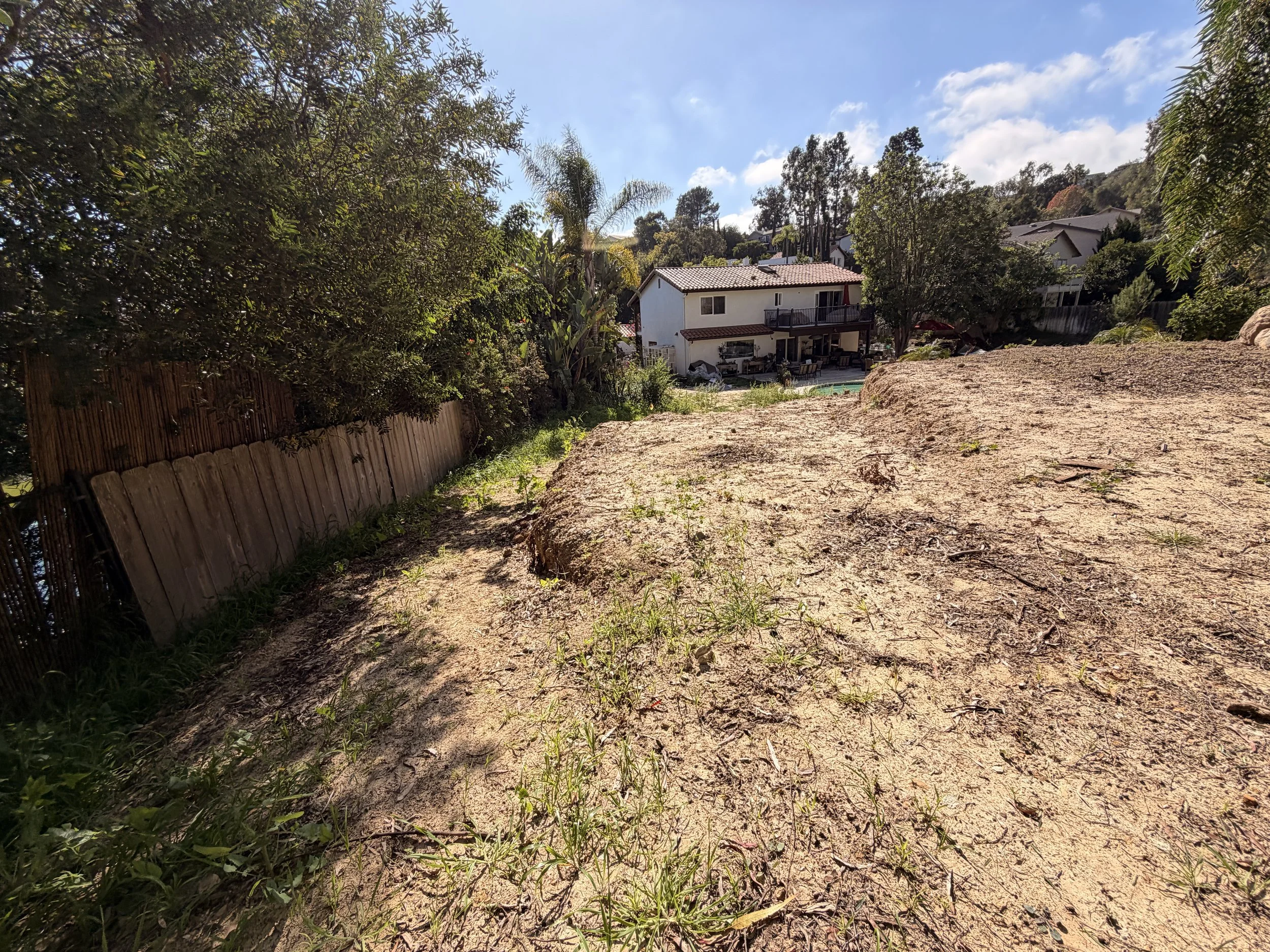
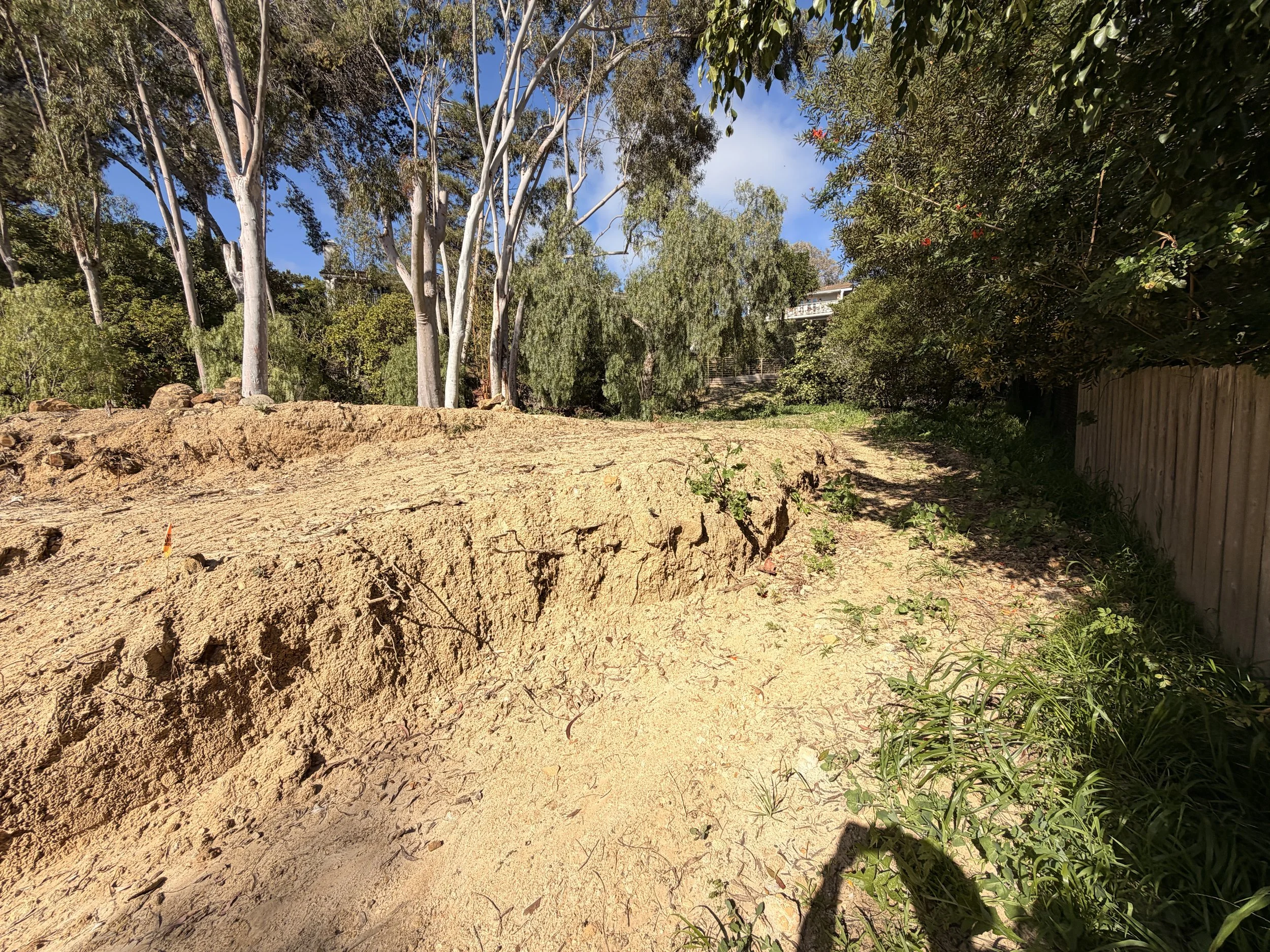
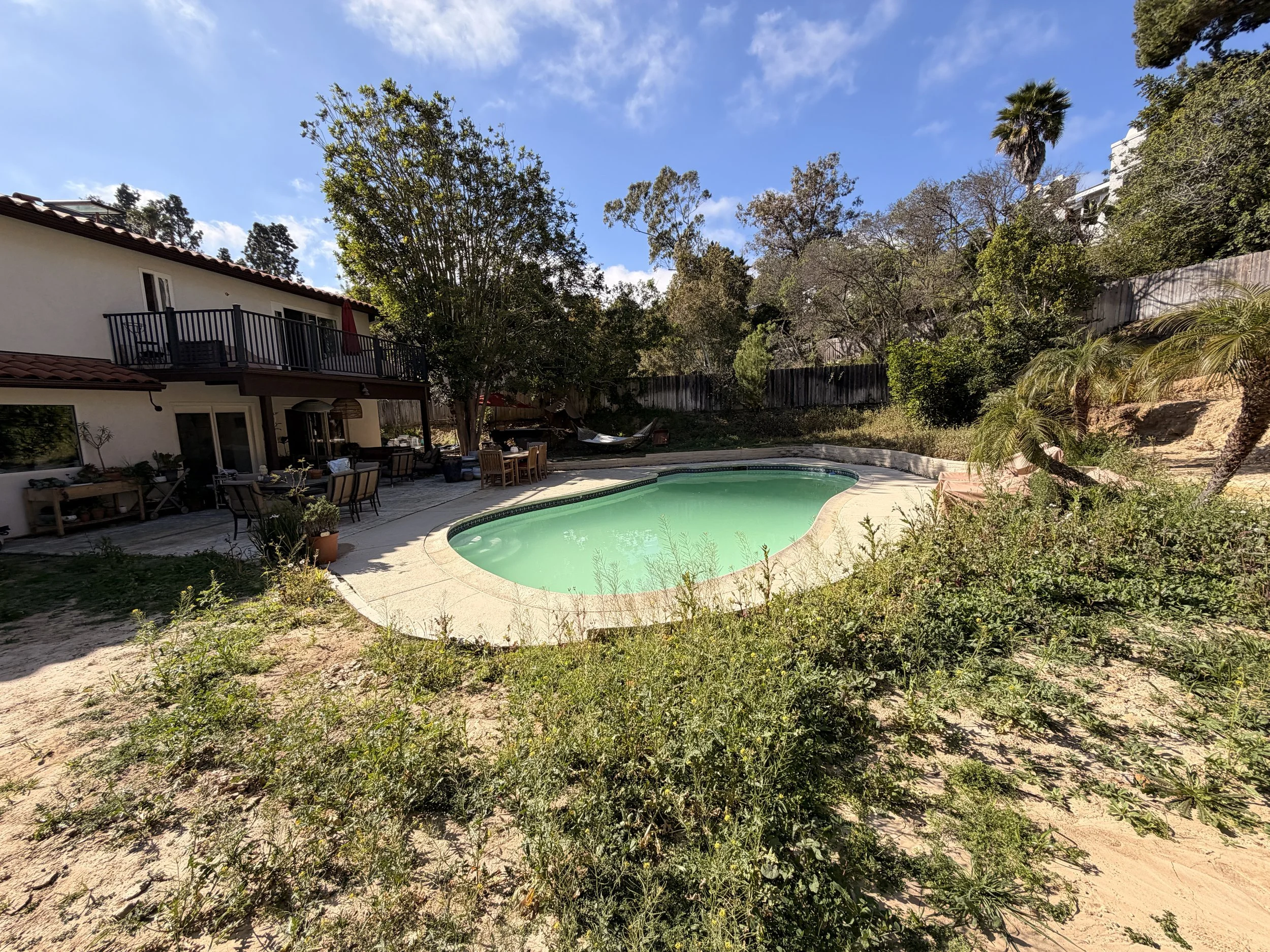
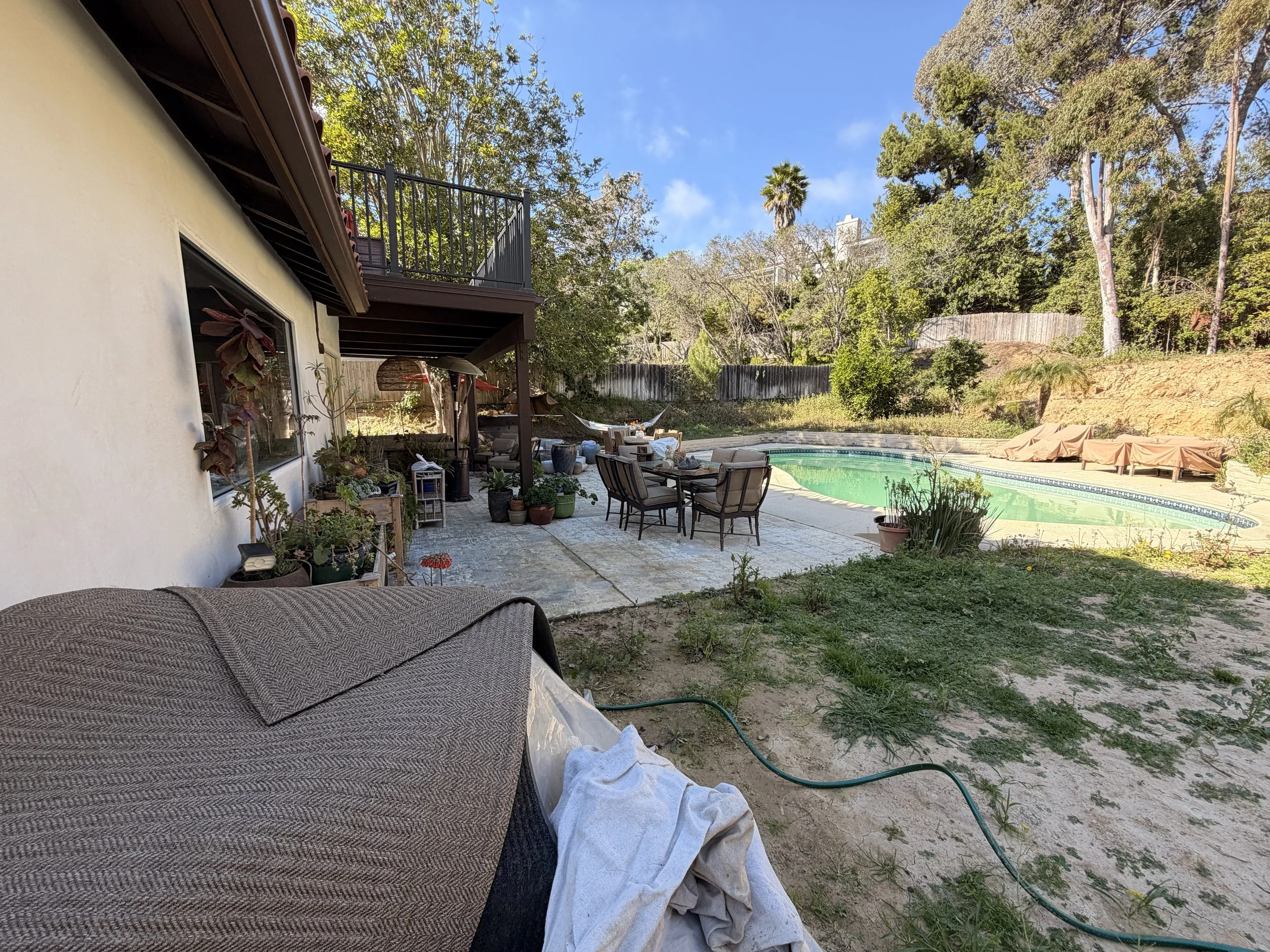
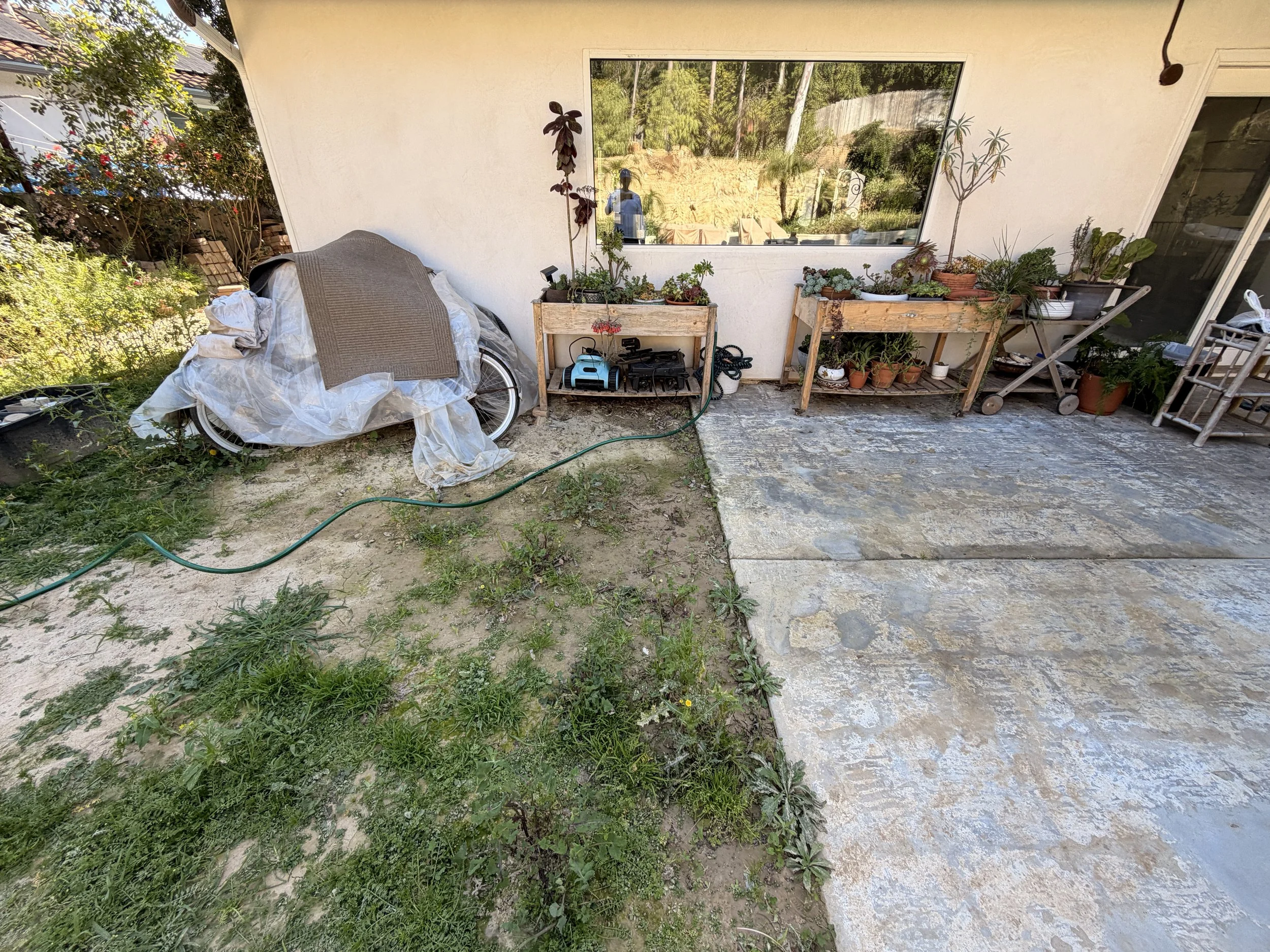
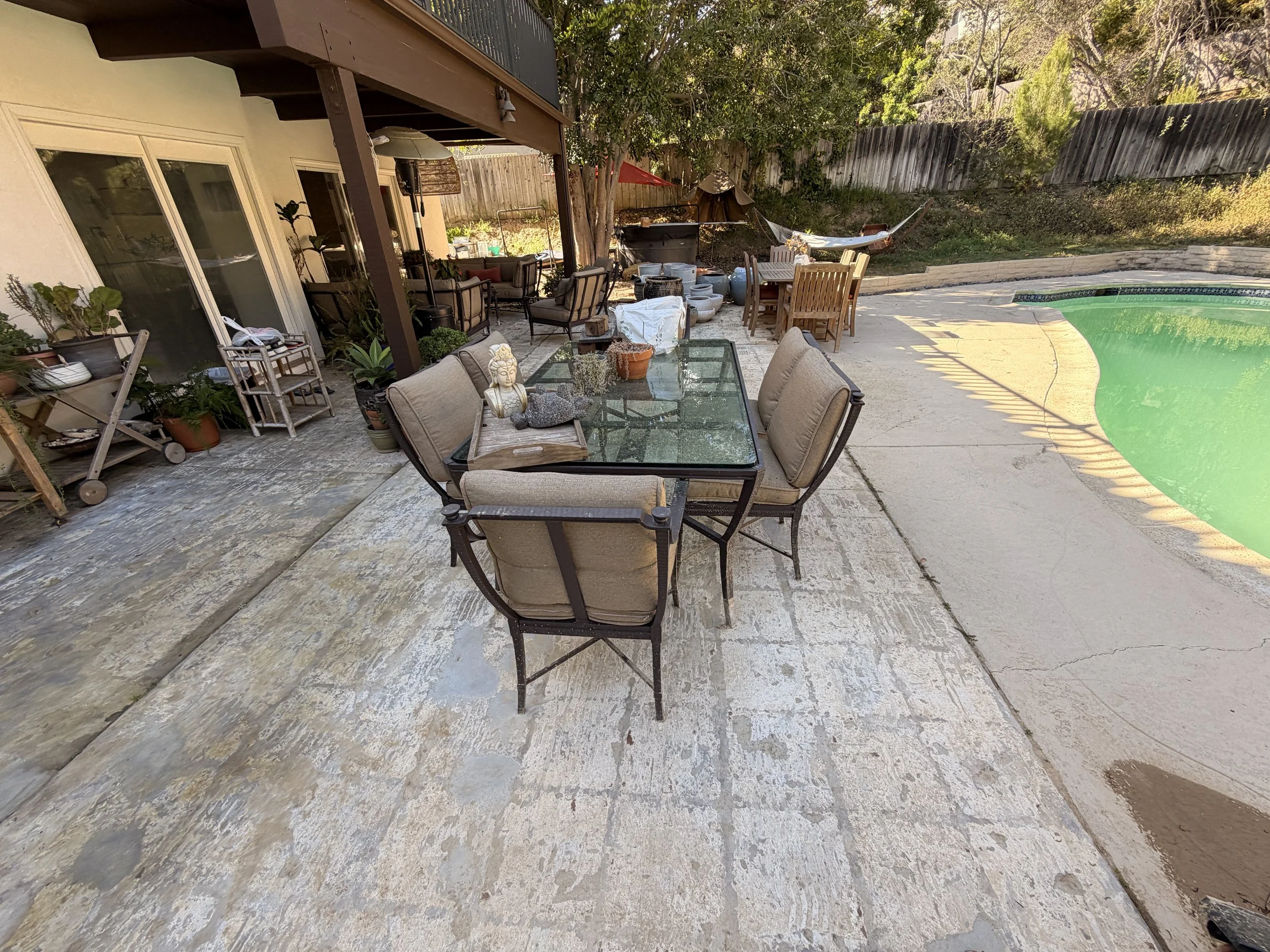
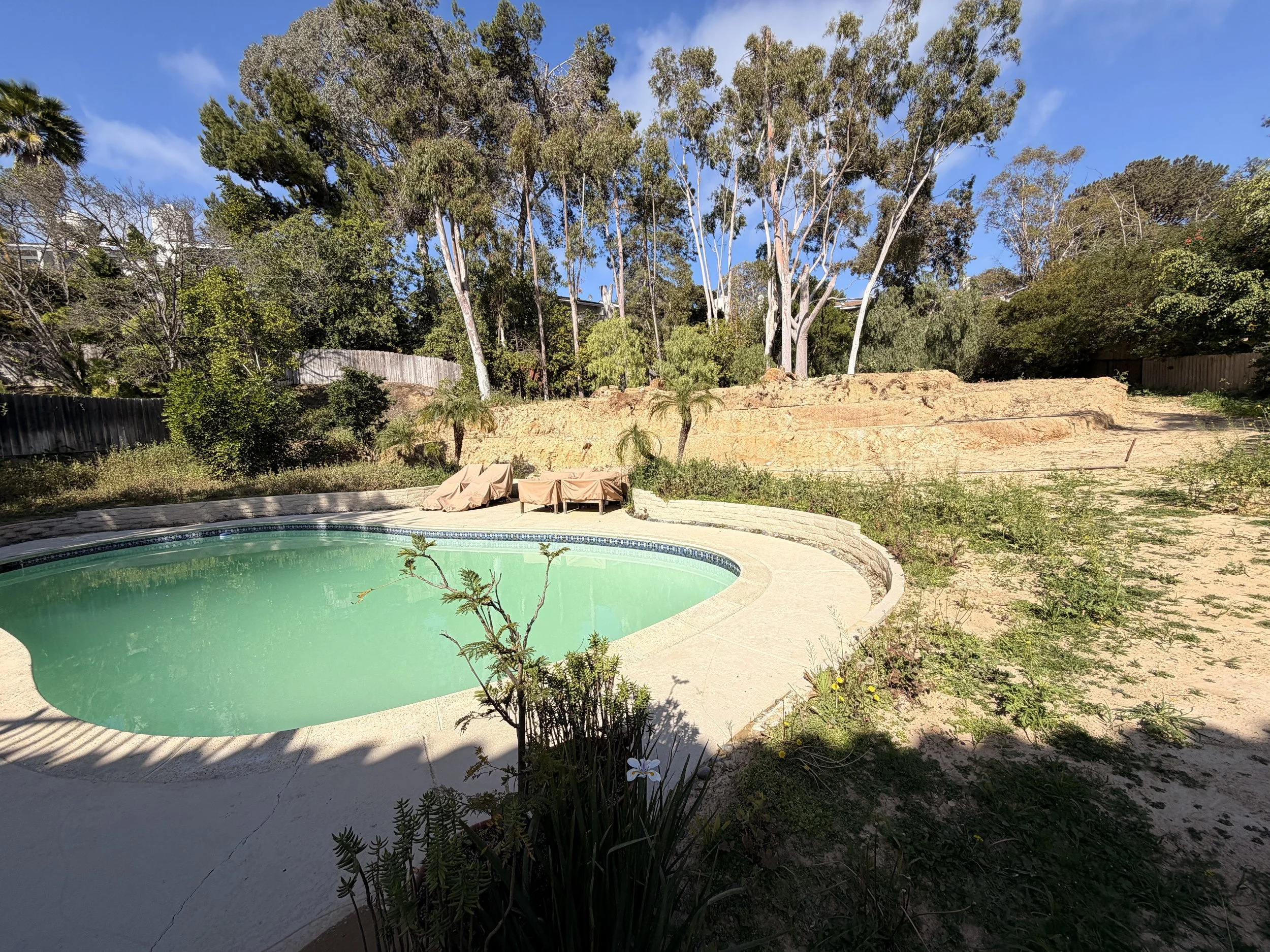
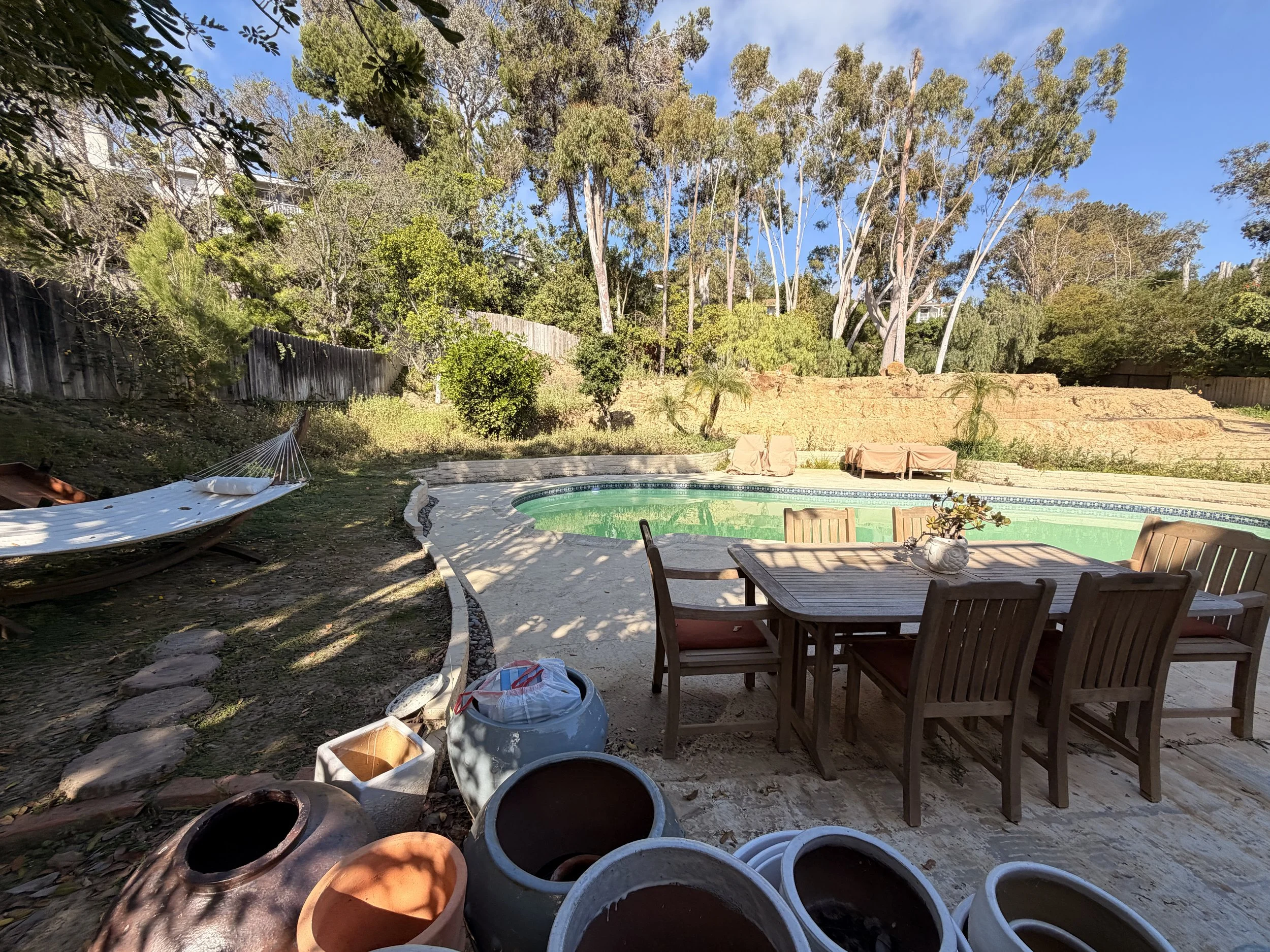
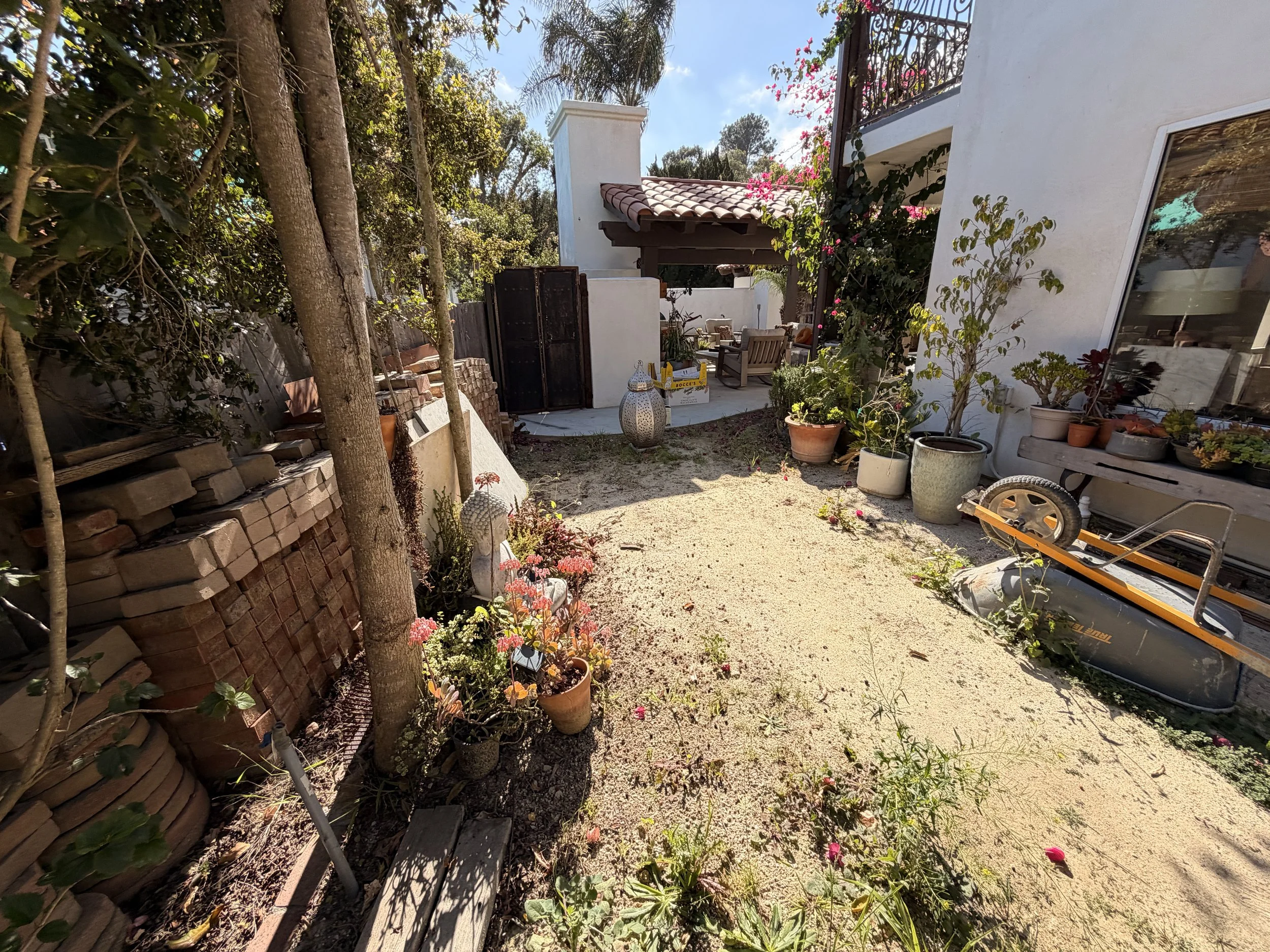
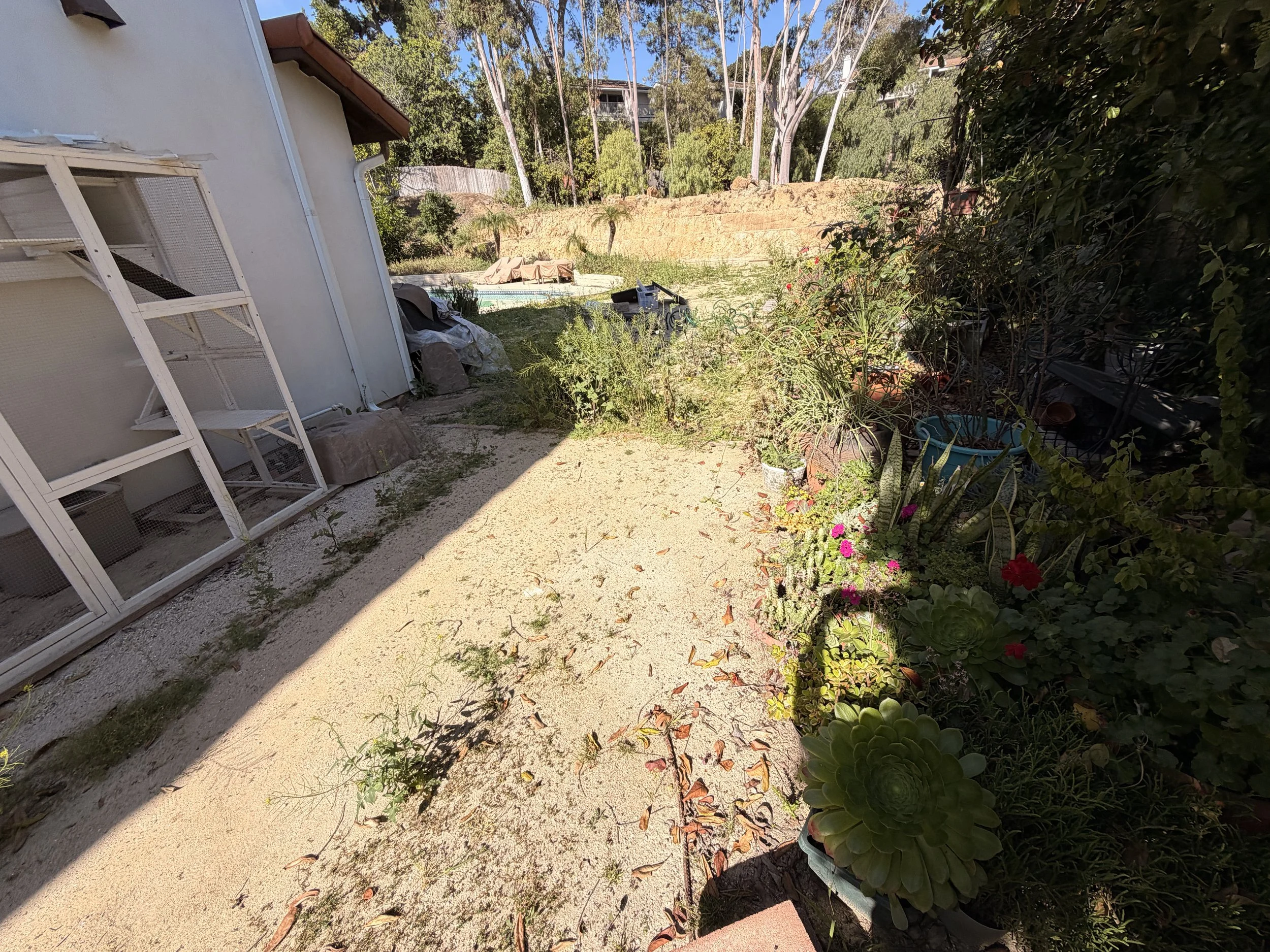
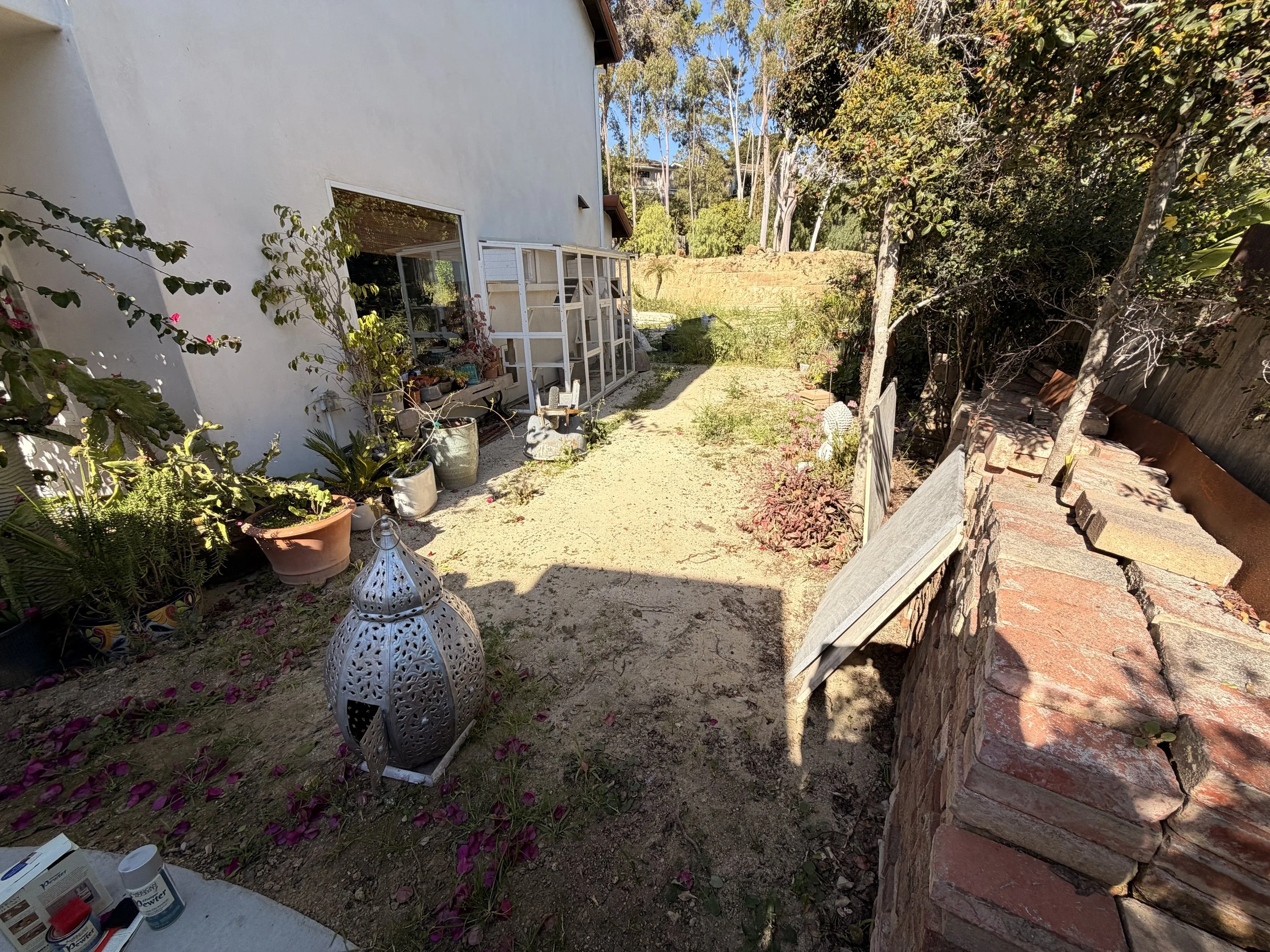
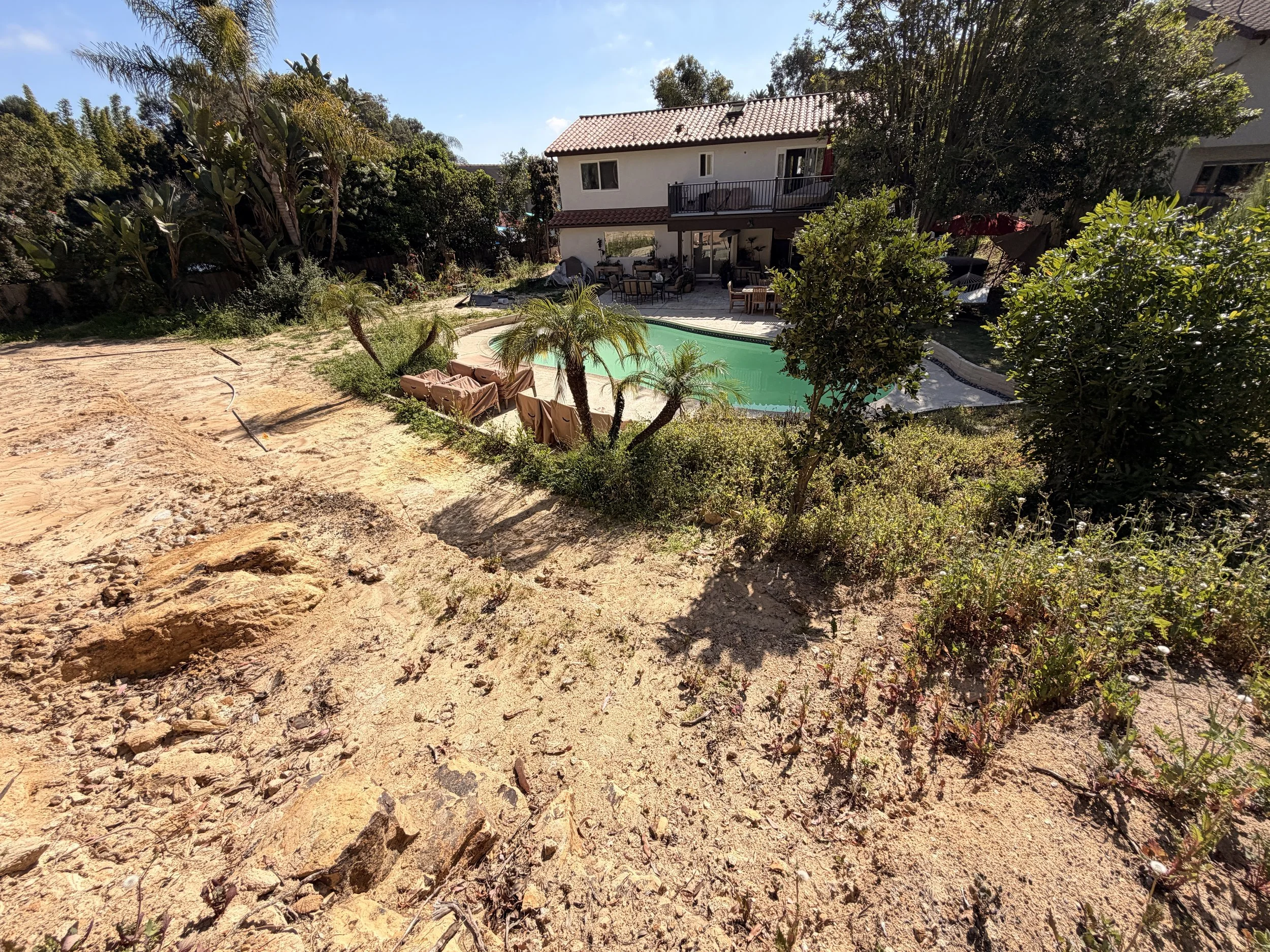
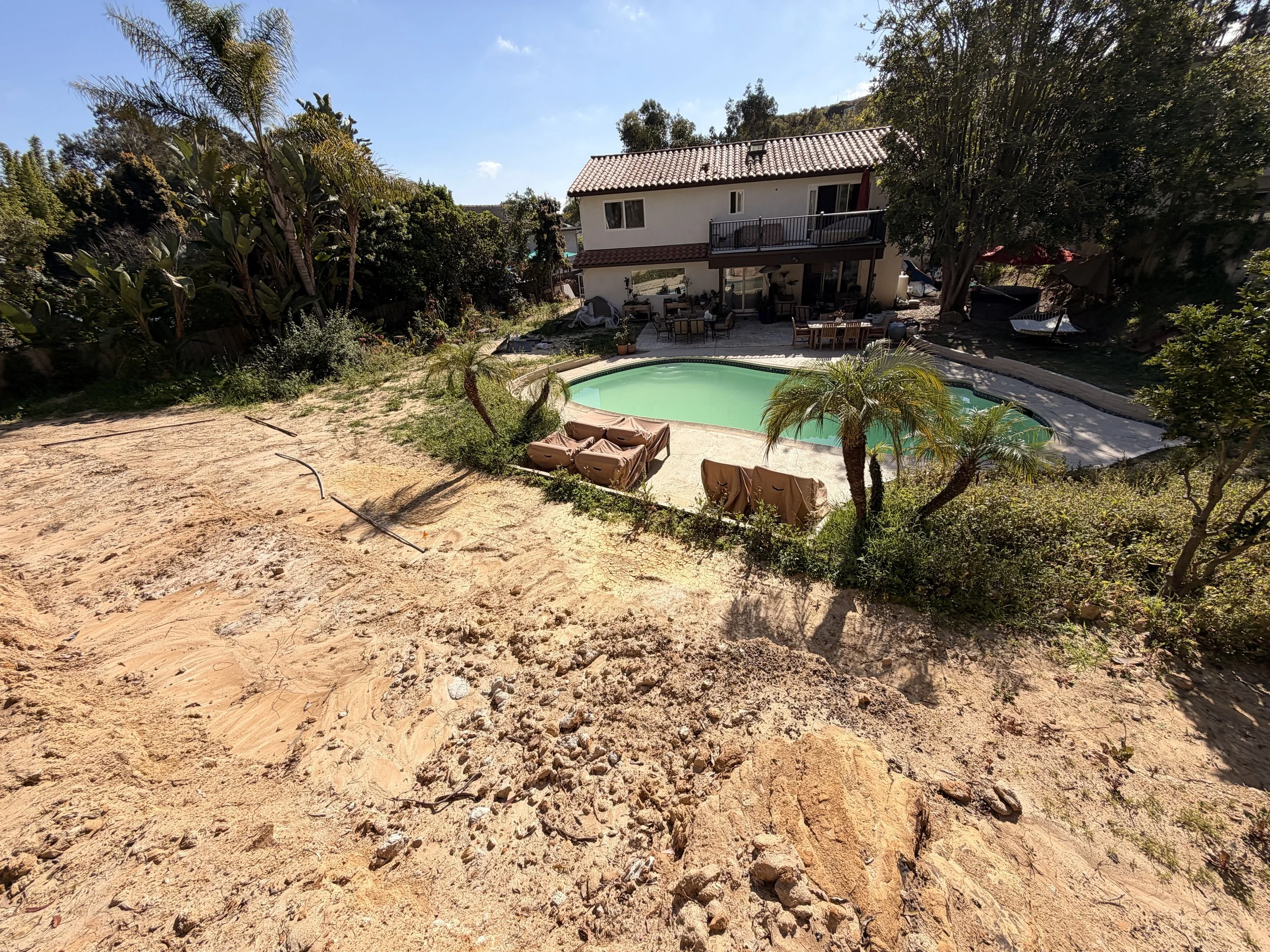
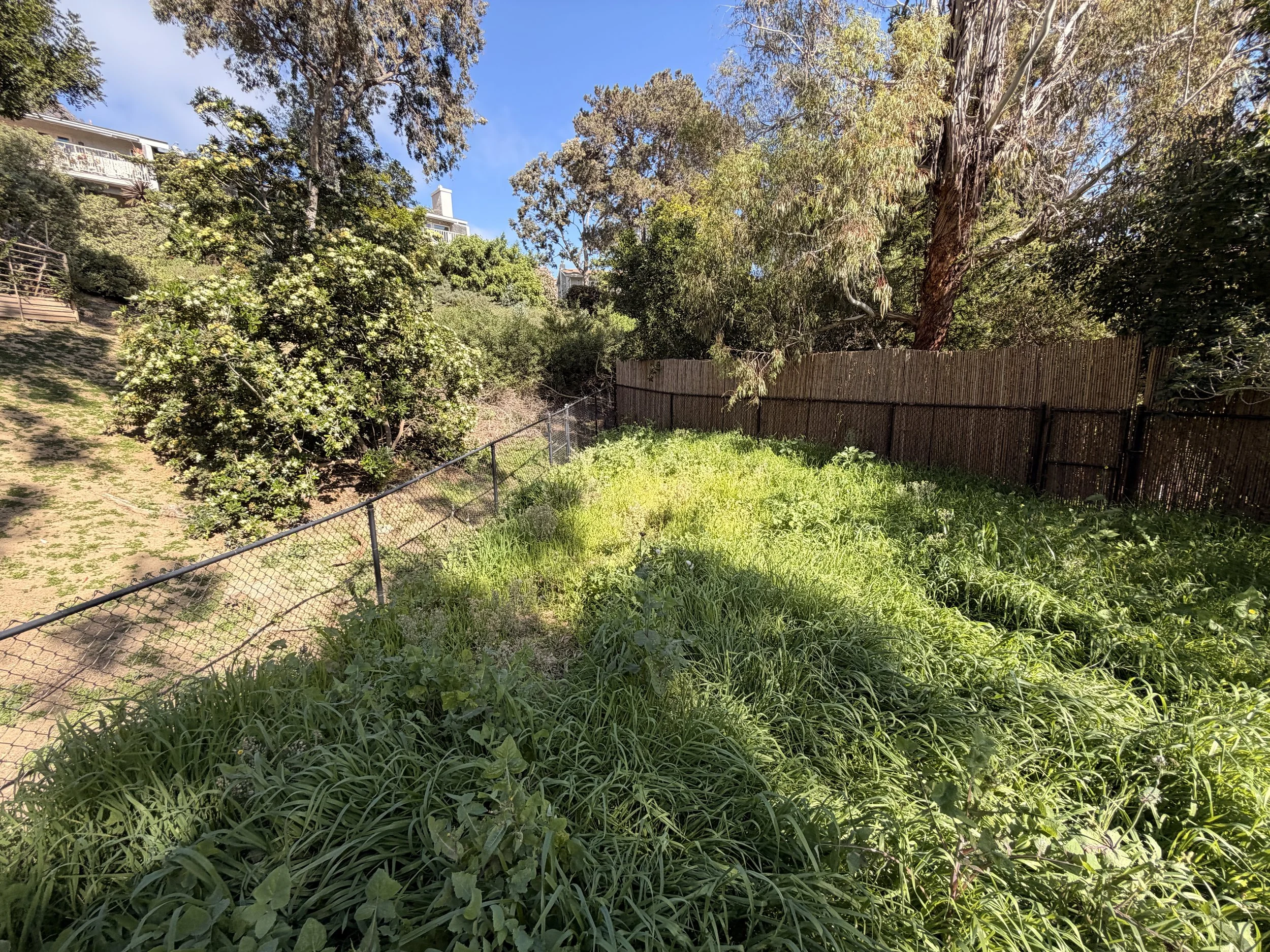
Every project begins with the existing site. Before design decisions are made, the garden has to be measured, walked, photographed and understood as a living system. Existing trees, slopes, walls, drainage & irrigation, ex. paving, utilities, planting areas and access points all influence what the space can become. We are listening and learning. Looking at ecology, hydrology, style, site ecological processes and life of its residents, before we start to create the design.
Water holds the social center
The pool is treated as part of the garden’s spatial structure. Its geometry helps order the principal patio, while its surface introduces movement and reflected light into an otherwise restrained composition.
Across the day, the character of this space changes with the angle of the sun. White architecture becomes warmer in reflection; foliage moves across the water; shade begins to define smaller places along the perimeter. The pool therefore carries both practical and atmospheric work. It supports recreation and gathering, and it also gives the largest outdoor room a measured center.
The surrounding terrace has been kept visually calm so that people, water and planting can provide the variation. This is where the minimalist aspect of the concept becomes most useful: restraint creates capacity for life.
Drawings carry the design from intuition to spatial order
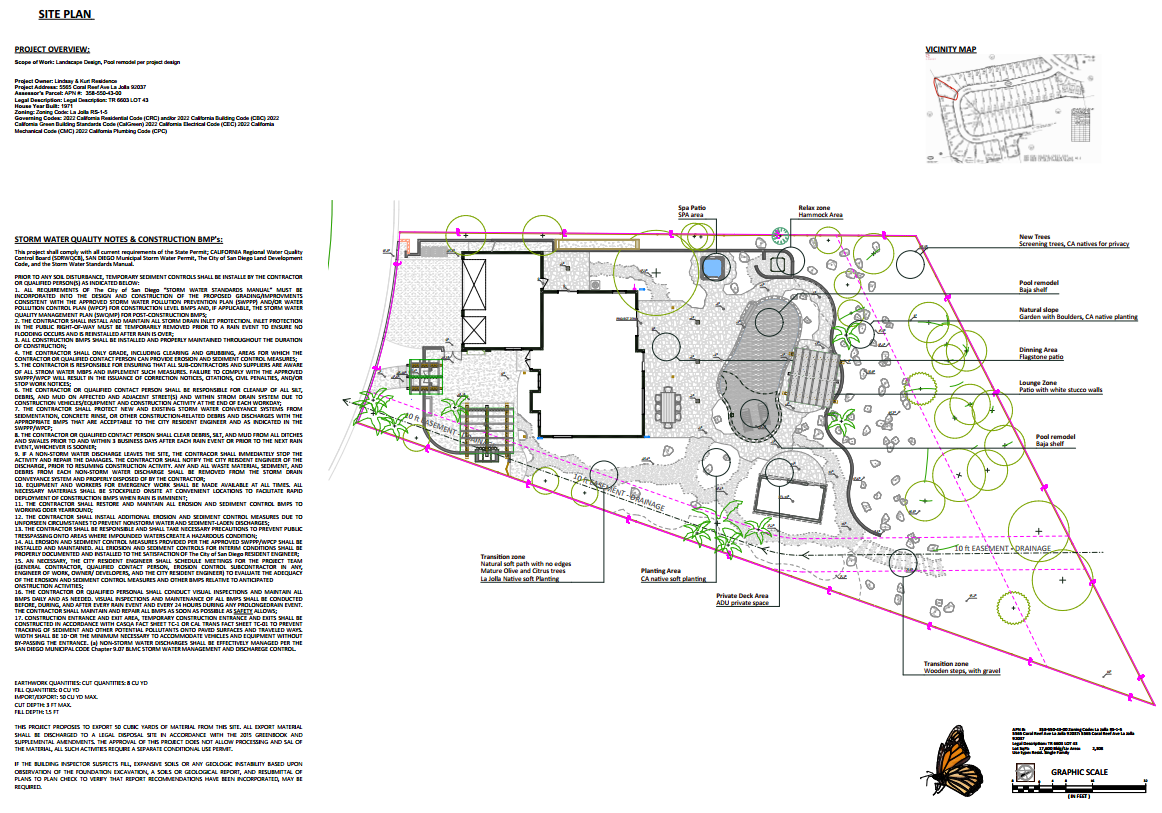
The project developed through several forms of representation because each one answers a different question.
Hand sketches established atmosphere, movement and the relative character of the outdoor rooms. The landscape plan tested proportion, circulation and the relationship between built and planted areas. Three-dimensional studies brought the design to eye level, where enclosure, material transitions and the scale of mature planting could be judged more directly.
The final visualizations describe the intended future character of the proposal. They are close enough to photography to communicate light, texture and occupation, but they remain design instruments. Presented beside the sketches and plans, they allow the reader to trace how an early idea became a coherent spatial proposal.
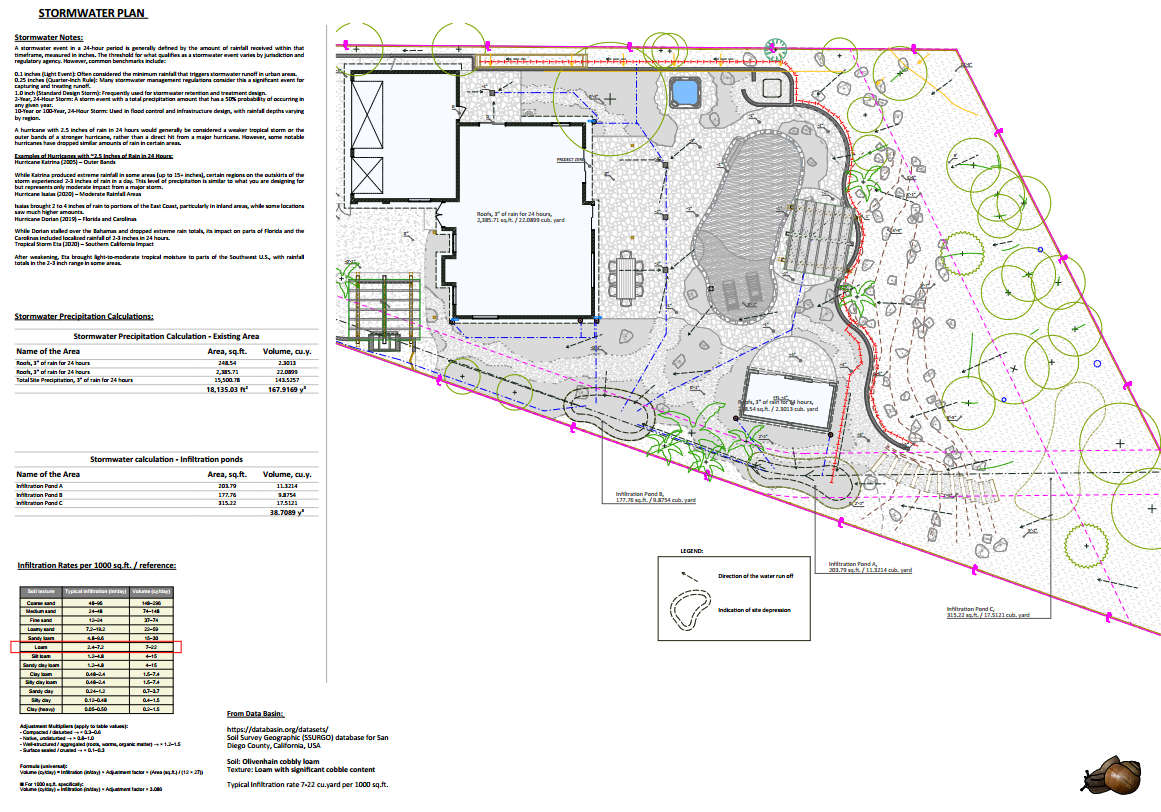
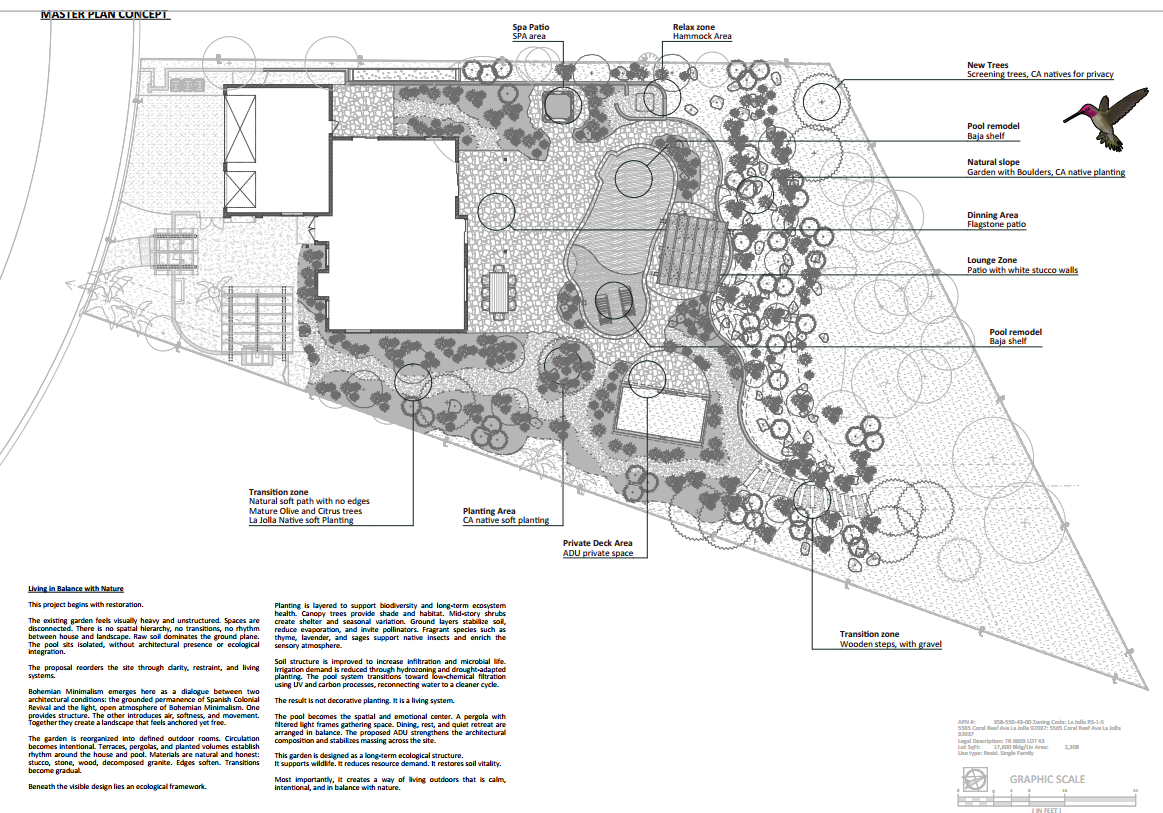
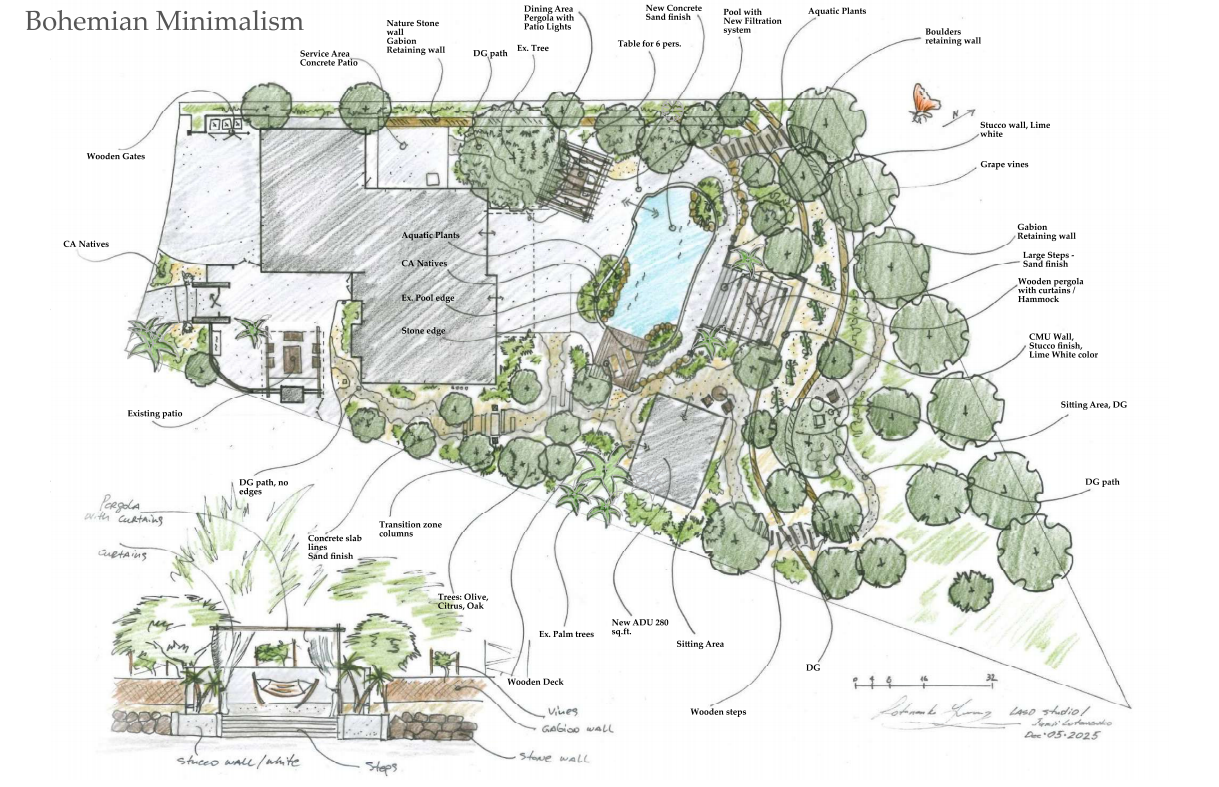
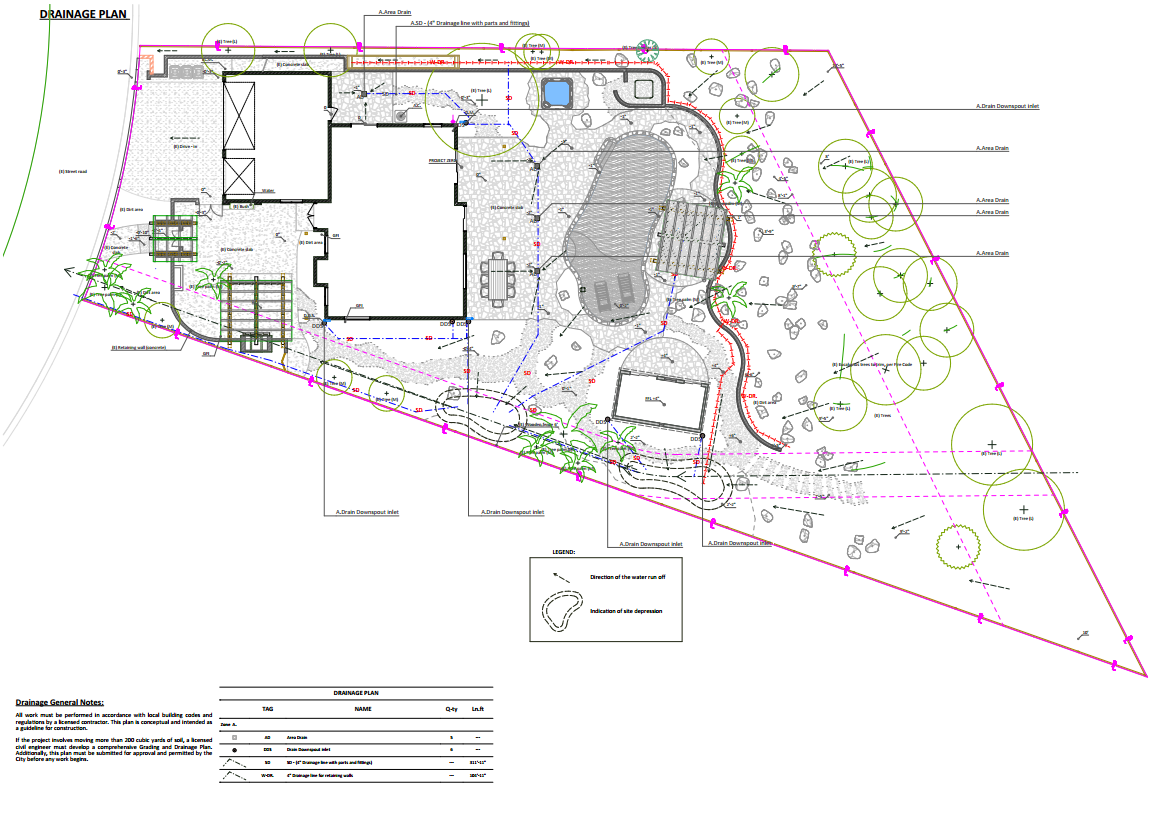
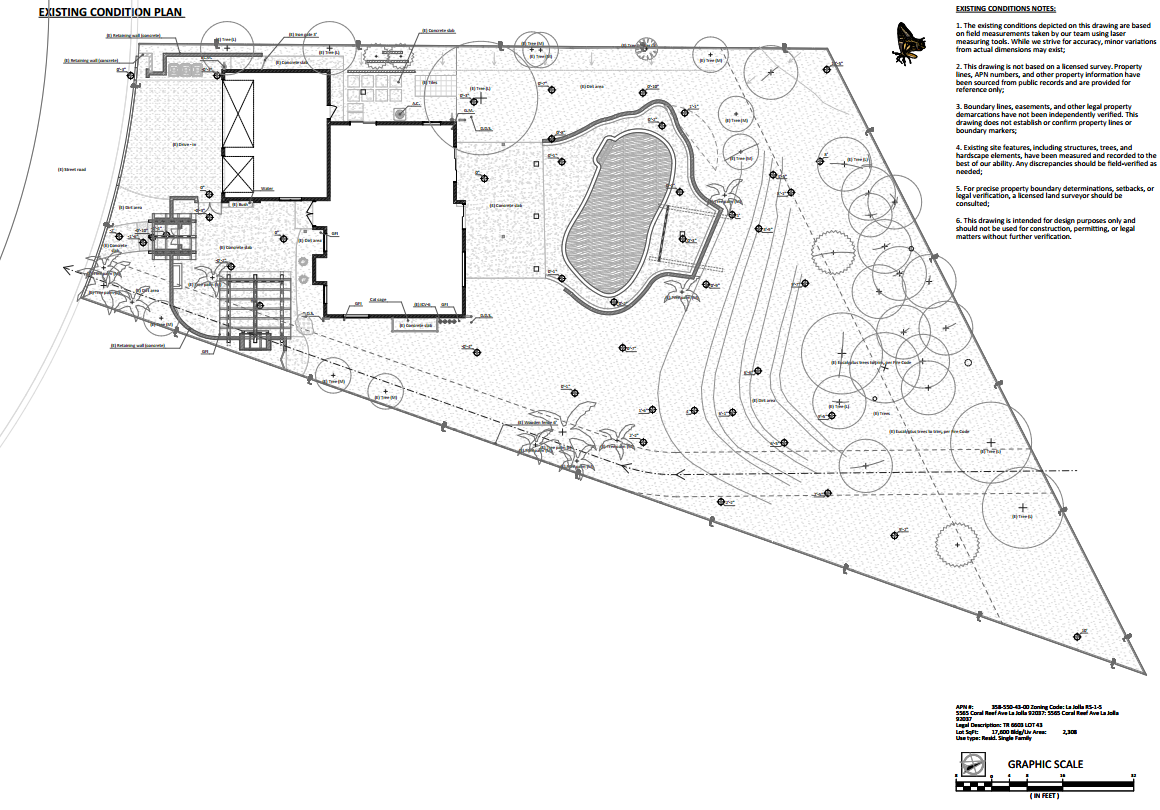
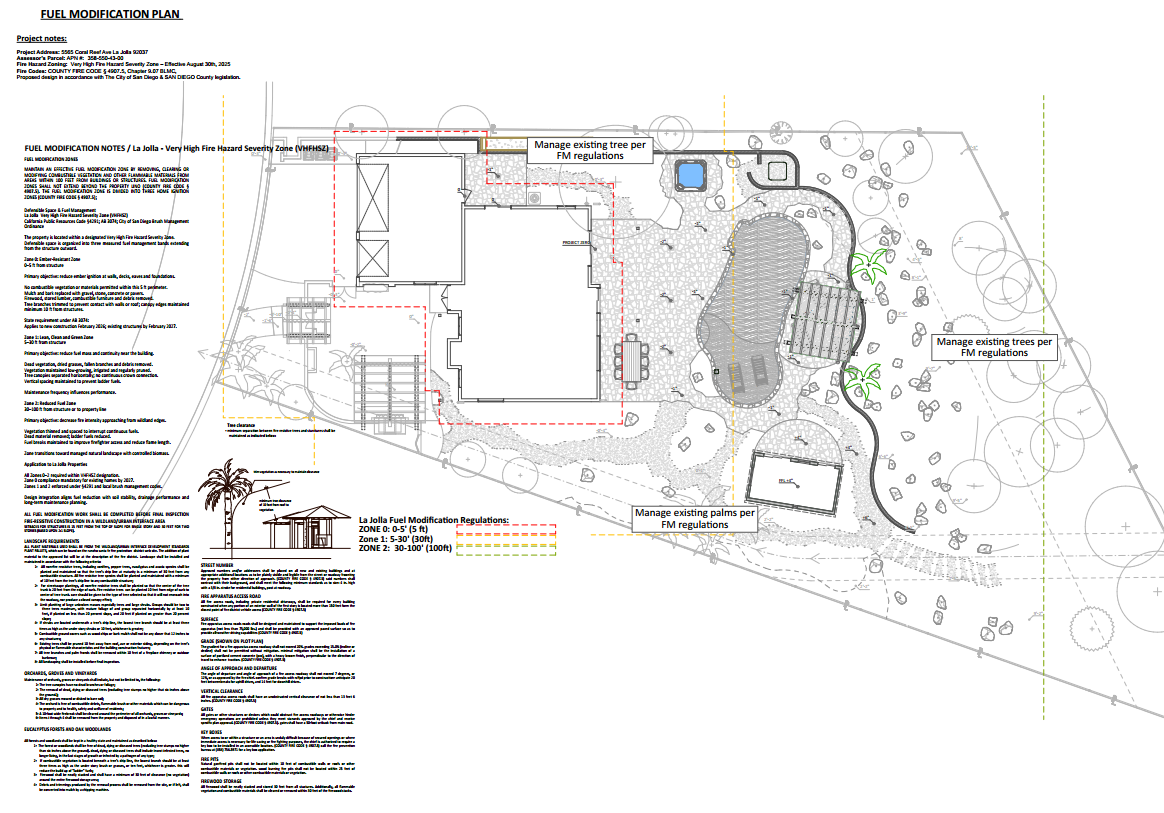
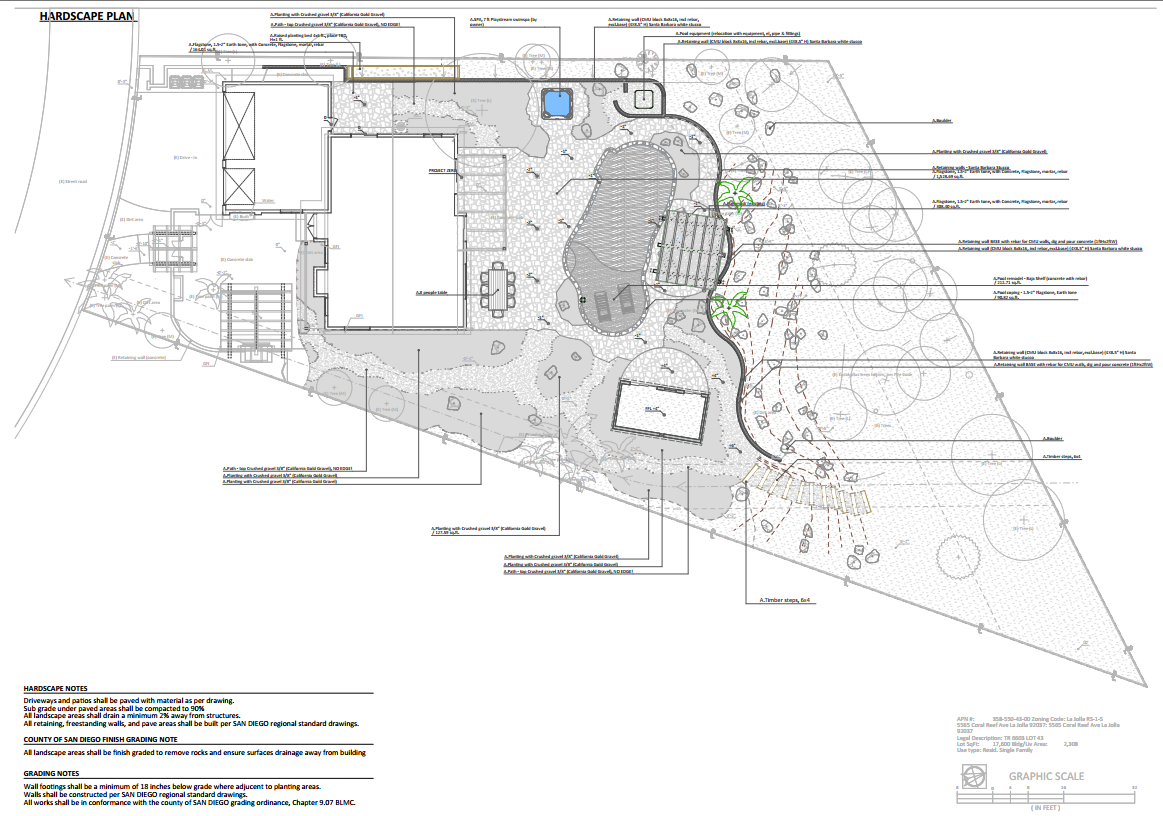

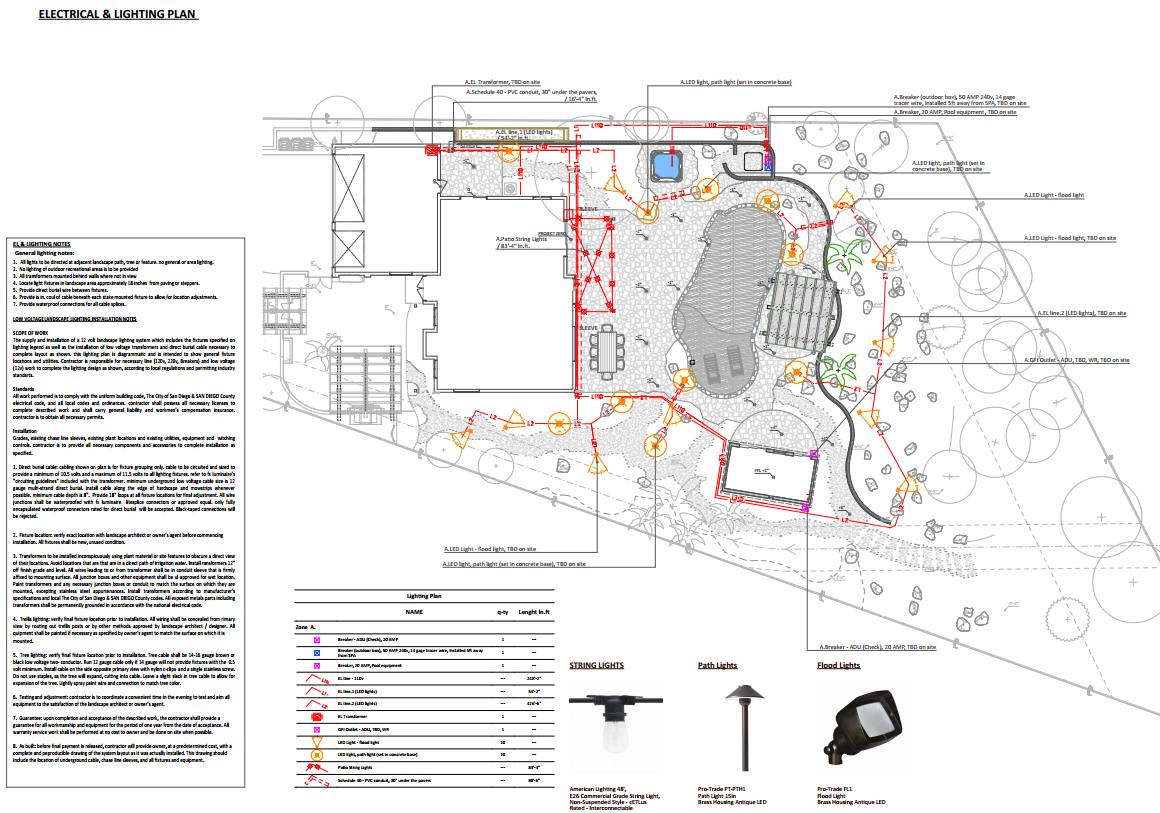
Design Development & Visualizing the Atmosphere / Perception
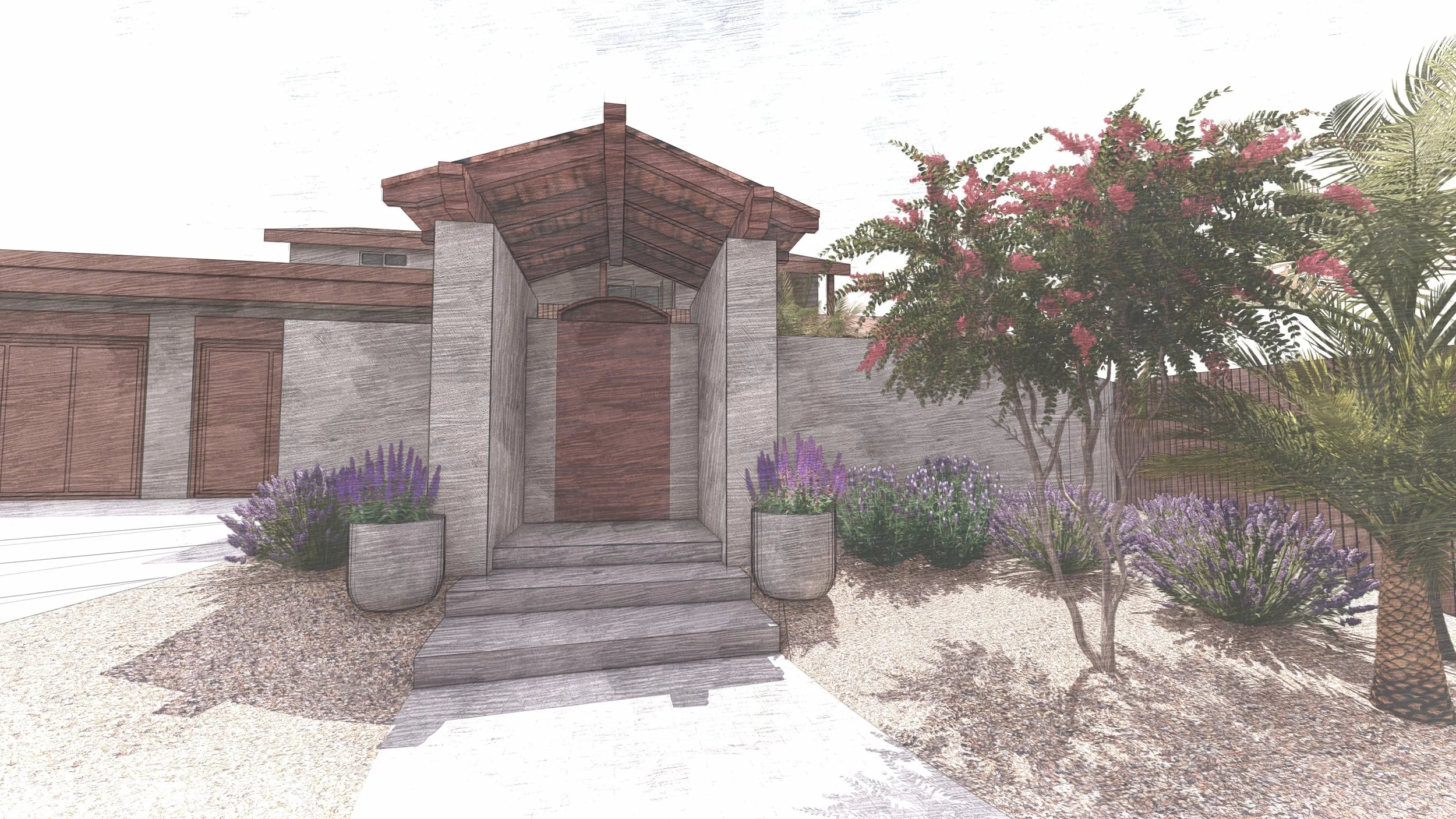
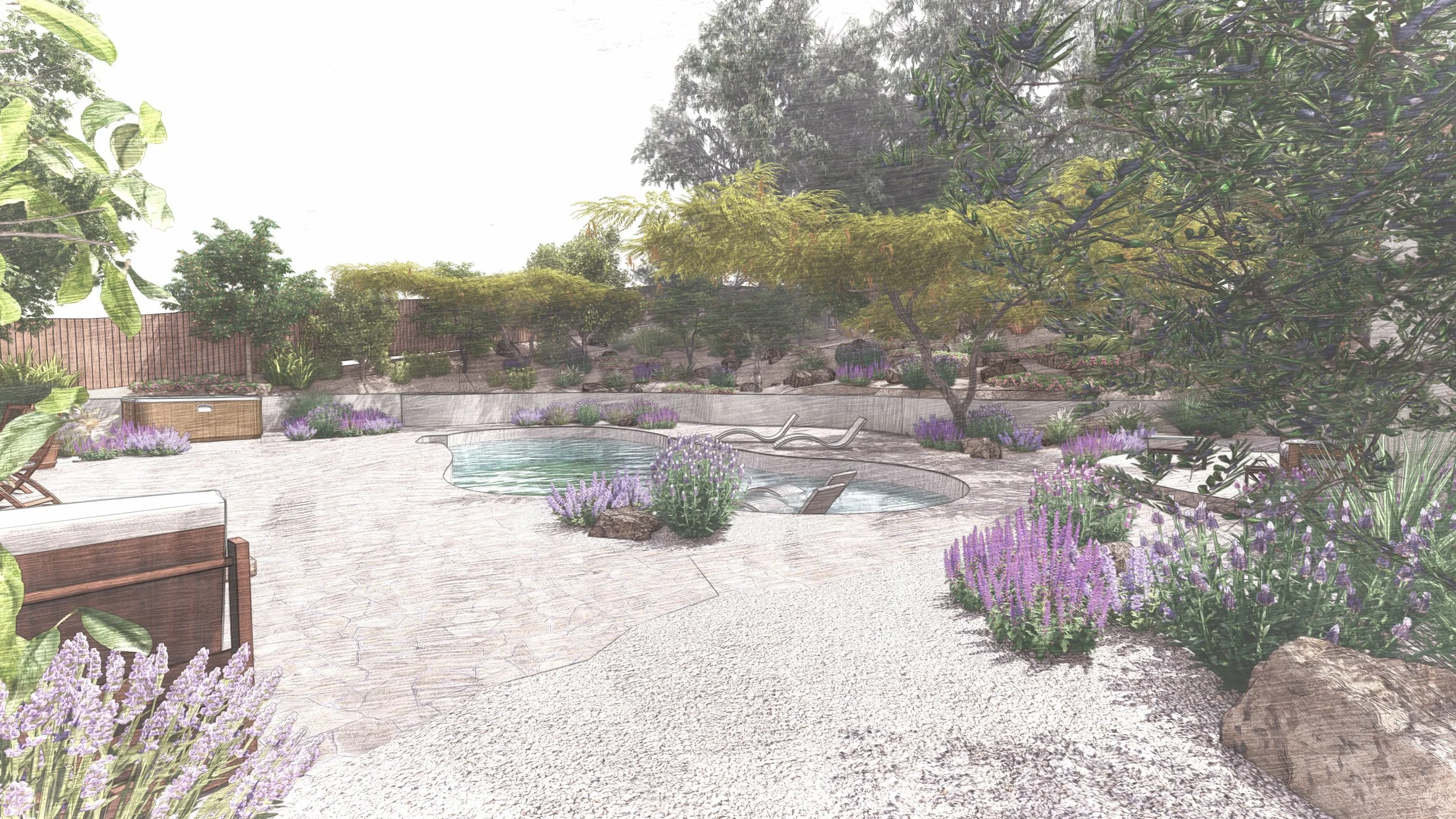
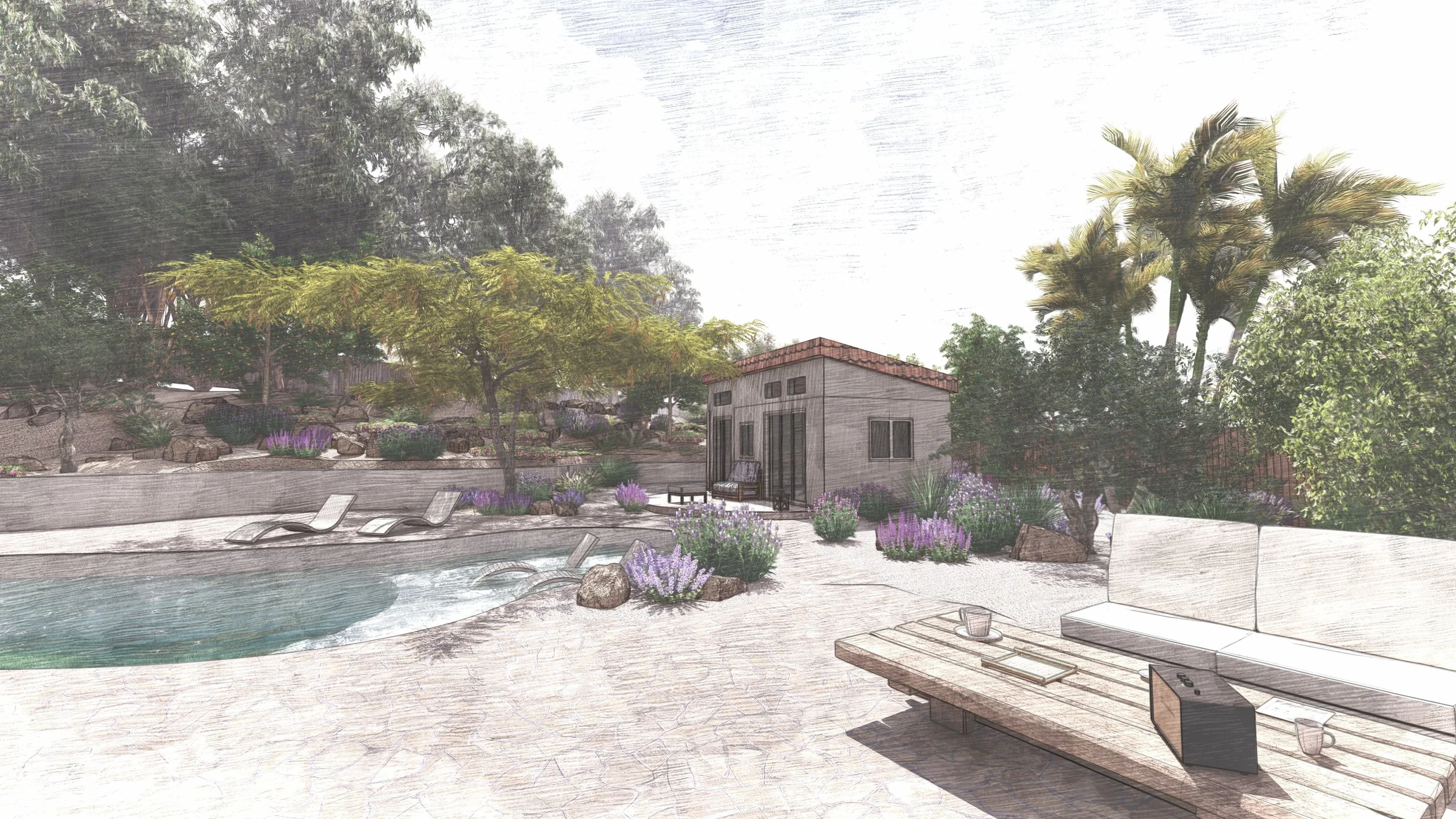
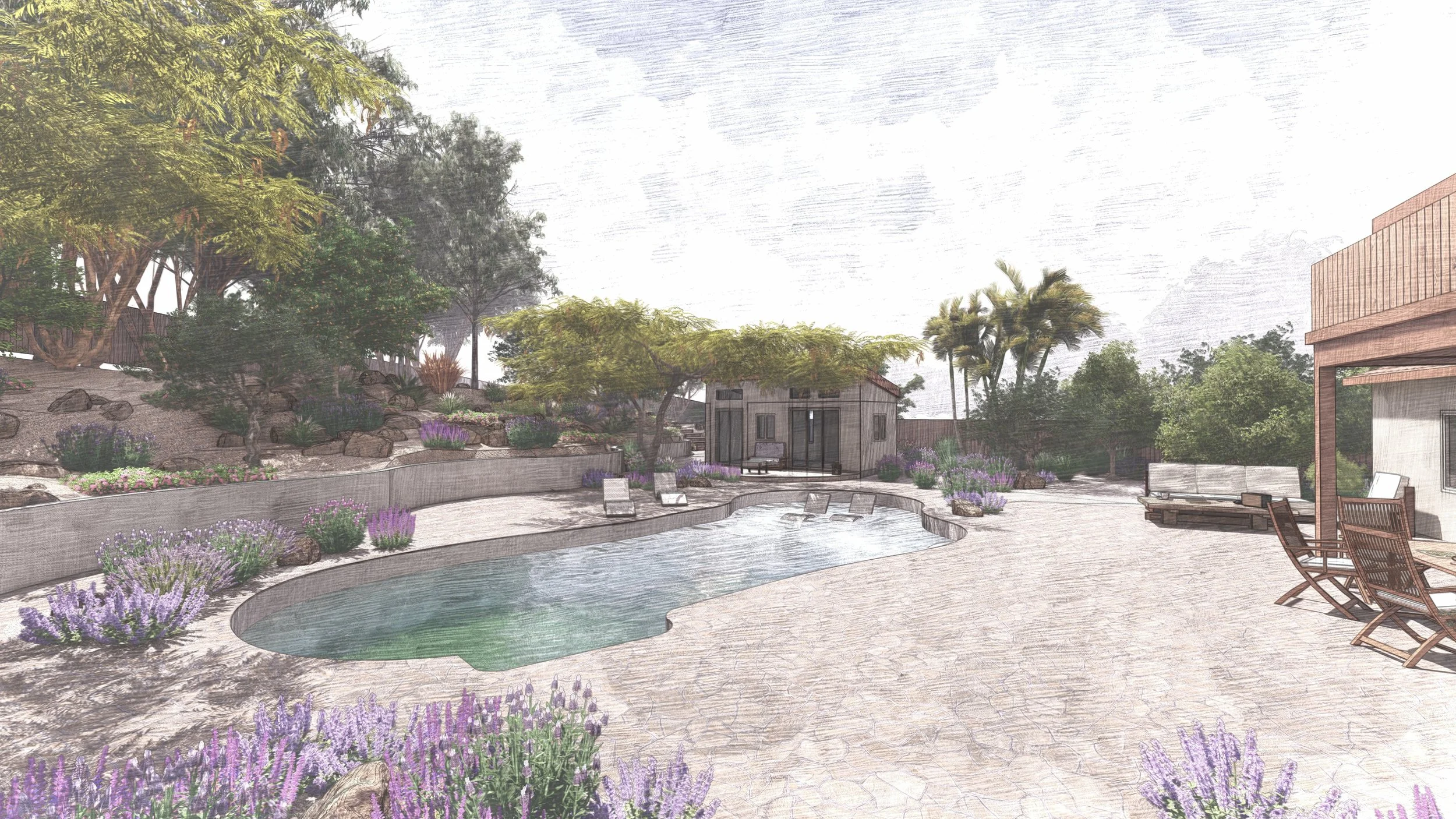
Once the design direction was established, the project moved into visual development. Renderings allowed the clients to understand not only the layout, but the atmosphere of the future garden: the rhythm of gravel paths, the softness of drought-adapted planting, the shade of new trees, the relationship between the patio and the slope, and the feeling of being surrounded by a living garden rather than a decorative yard.
The visualizations became a bridge between idea and construction. They helped communicate scale, planting density, outdoor rooms and the long-term character of the landscape before installation began.
Material restraint allows the garden to be inhabited
The proposed material language is deliberately limited. Broad surfaces establish continuity between the house, patio and pool, while changes in texture identify thresholds and quieter areas. Warm mineral tones sit naturally beside white walls and the muted greens of Mediterranean-climate planting.
This restraint is practical as well as visual. Fewer material changes give the property a clearer spatial order and reduce the sense that each outdoor area was designed as a separate episode. The details can then carry more weight: the edge where paving meets planting, the depth of a shaded threshold, the way a wall catches evening light.
Bohemian character enters through use and accumulation rather than applied decoration. Pots, furniture, textiles, fallen leaves and the changing form of plants can inhabit a stable framework without making the composition feel unresolved.
Planting is allowed to settle into the architecture
The planting plan was conceived as more than the visual finish of the garden. It is living infrastructure: a carefully structured community of plants selected for architectural character, human experience and ecological function.
This approach follows Designing Landscapes as Evolutionary Systems, a framework originally developed by LASD Studio founder and lead designer Yura Lotonenko. It begins with a simple principle: a landscape cannot be understood as a closed composition. Sunlight, water, wind, soil organisms, insects, birds and seeds continually move through it. The role of design is therefore not to create a static image of nature, but to establish the conditions through which life can arrive, interact and evolve over time.
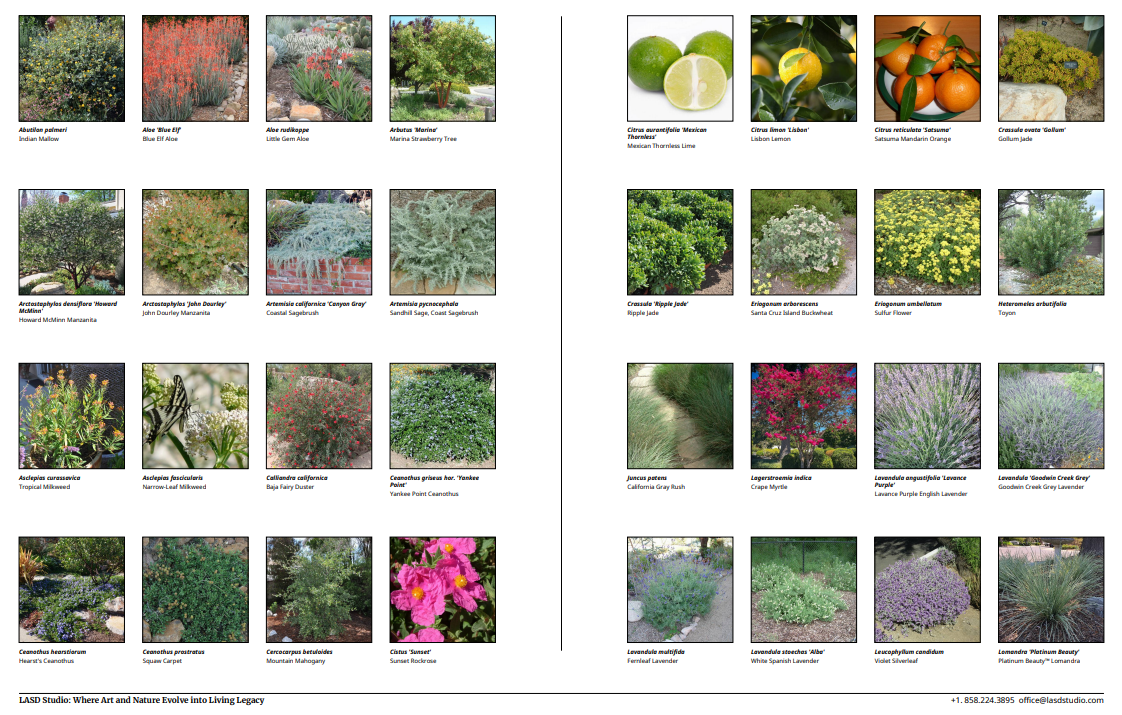
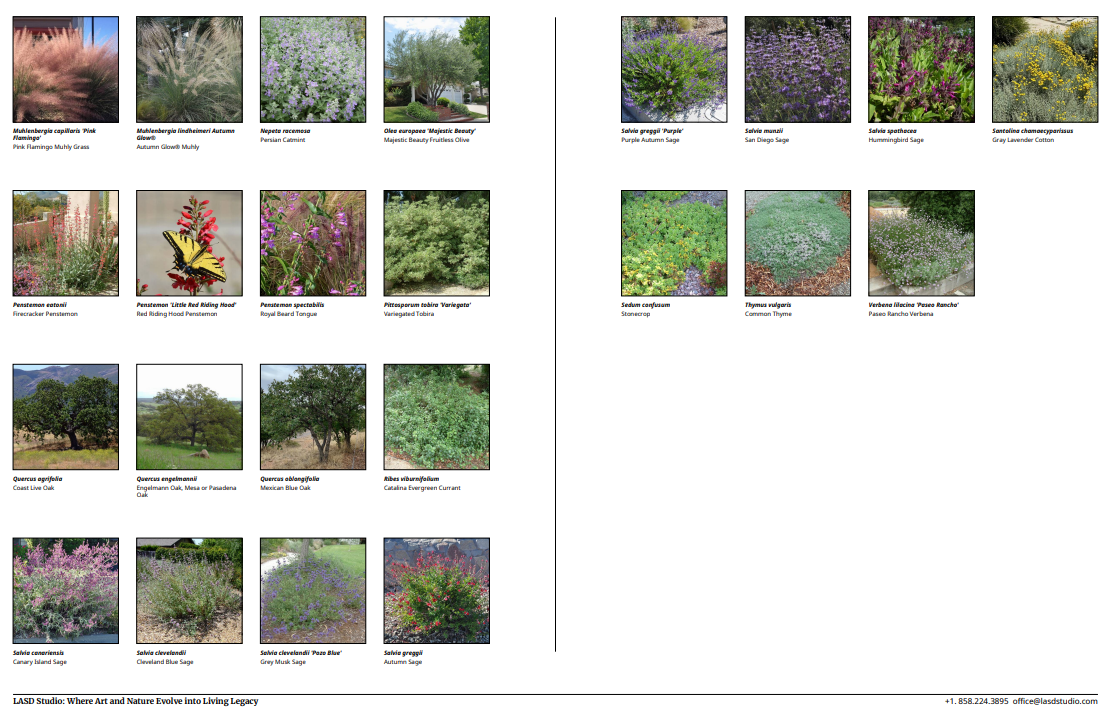
California native species form the ecological backbone of the planting. Coast live oak (Quercus agrifolia) introduces a long-lived canopy with exceptional habitat value. California sages - including Salvia clevelandii, Salvia munzii and Salvia spathacea - bring fragrance, seasonal flowering and nectar into different layers of the garden. The red tubular flowers of scarlet bugler (Penstemon centranthifolius) are particularly attractive to hummingbirds, while ceanothus and native buckwheats provide resources for butterflies, native bees and other beneficial insects.
Together, these plants create more than an ornamental border. They establish places to feed, pause, shelter and move through the property, encouraging the recurring presence of wildlife such as Anna’s and Allen’s hummingbirds, both familiar visitors to San Diego gardens.
The native framework is complemented by olive, citrus, lavender, thyme and myrtle. These climate-adapted species carry the sensory and cultural memory of Spanish Colonial gardens: silvery foliage, aromatic leaves, edible fruit and the changing play of light beneath an evergreen canopy. Their inclusion is deliberate rather than decorative, balancing the architectural identity of the residence with the environmental conditions of coastal California.
The result is a planting composition particular to this house, its residents and its place. It is spacious enough to preserve the clarity of Bohemian Minimalism, yet ecologically layered enough to support a wider living community.
As the garden matures, its character will continue to change. Trees will deepen the shade, flowering cycles will overlap, grasses will move with the coastal air, and birds and pollinators will become part of its daily rhythm. The residents will experience more than a beautiful arrangement of plants: they will inhabit a landscape connected to the larger biodiversity of La Jolla.
This is where the project’s meaning becomes most visible. The garden is designed not only to be seen, but to be visited, inhabited and gradually transformed by life.
Designing Climate-Responsive Gardens in La Jolla, California
For LASD Studio, a garden is a living system shaped by climate, water, soil, plants, people and time.
This La Jolla project reflects our approach to residential garden design in Southern California: thoughtful site analysis, clear spatial organization, detailed planting strategy, water-conscious design and a process that helps clients understand each step from idea to construction.
For private residences, estates and family gardens, LASD Studio develops outdoor spaces that are beautiful, functional and ecologically meaningful.
This project illustrates why garden design is most successful when concept, documentation, construction and planting are carefully coordinated from beginning to end.
Laguna Niguel. An Ecological, Climate - Responsive Garden Design
A Southern California family garden transformed through climate-responsive planting, edible gardens, gravel paths, stormwater thinking, outdoor living spaces and detailed design documentation to support wild-life and biodiversity.
A Contemporary California Mediterranean residential garden shaped through careful site measurement, conceptual design, ecological planting, stormwater planning to live in balance with nature.
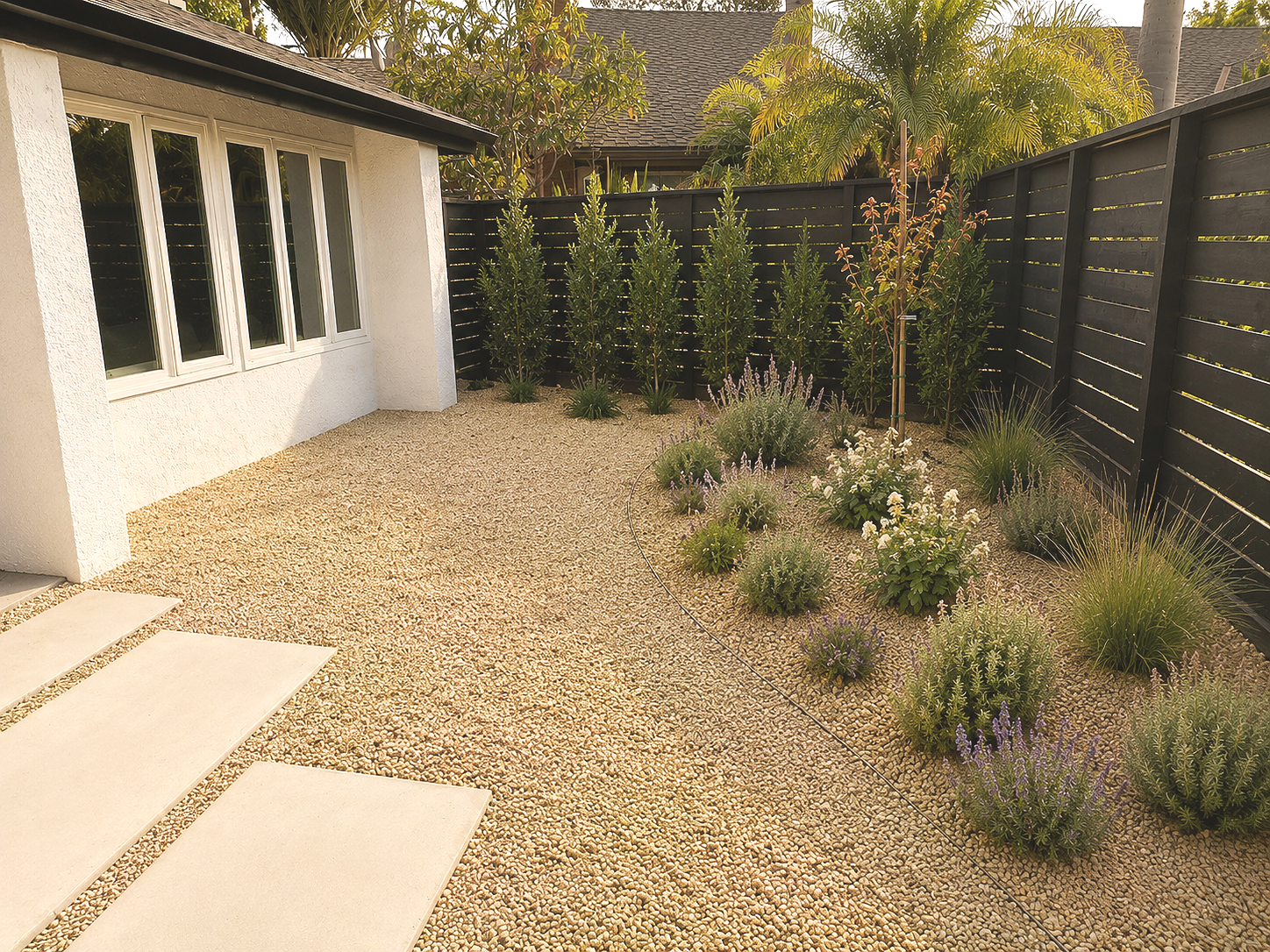
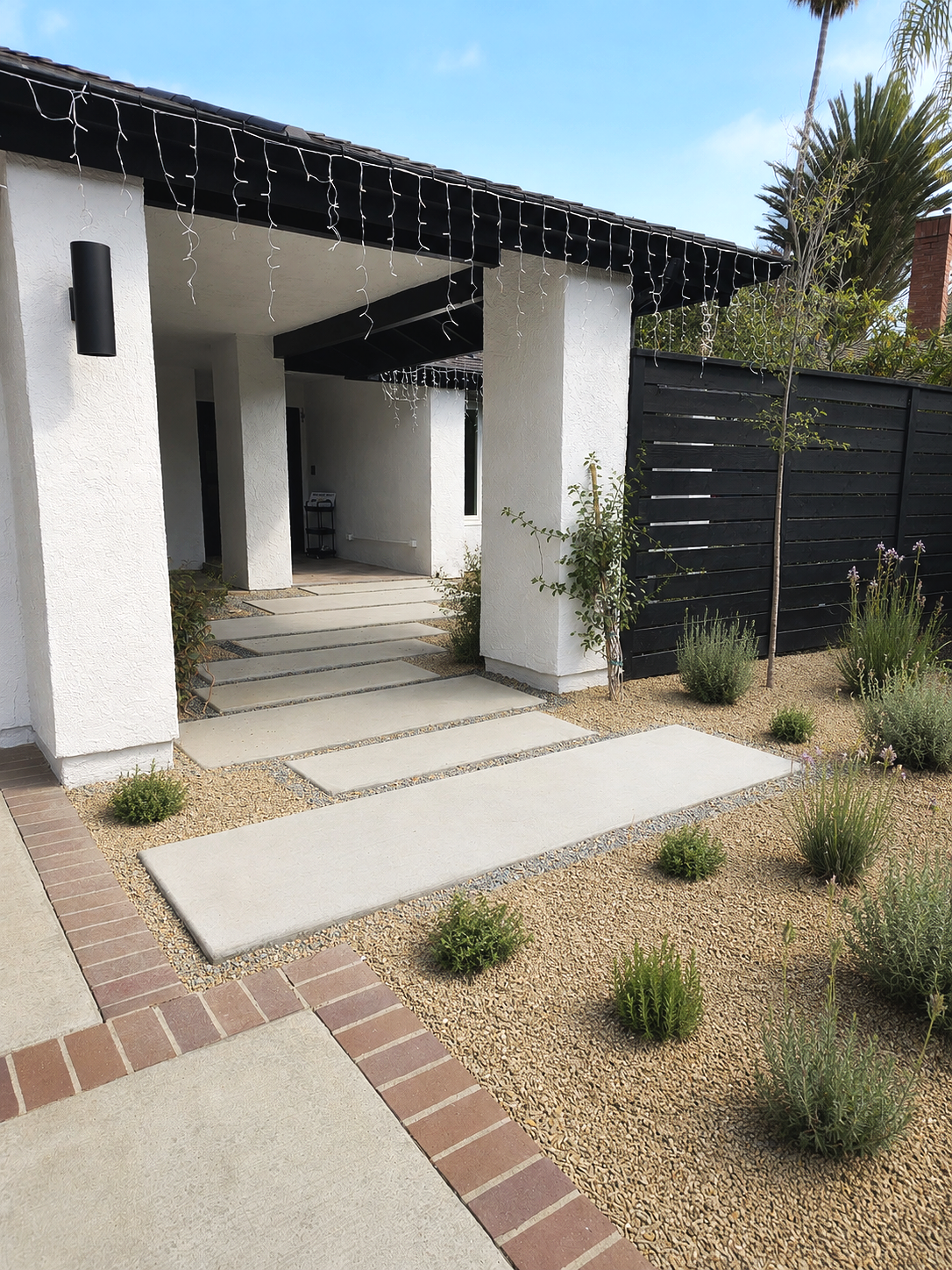
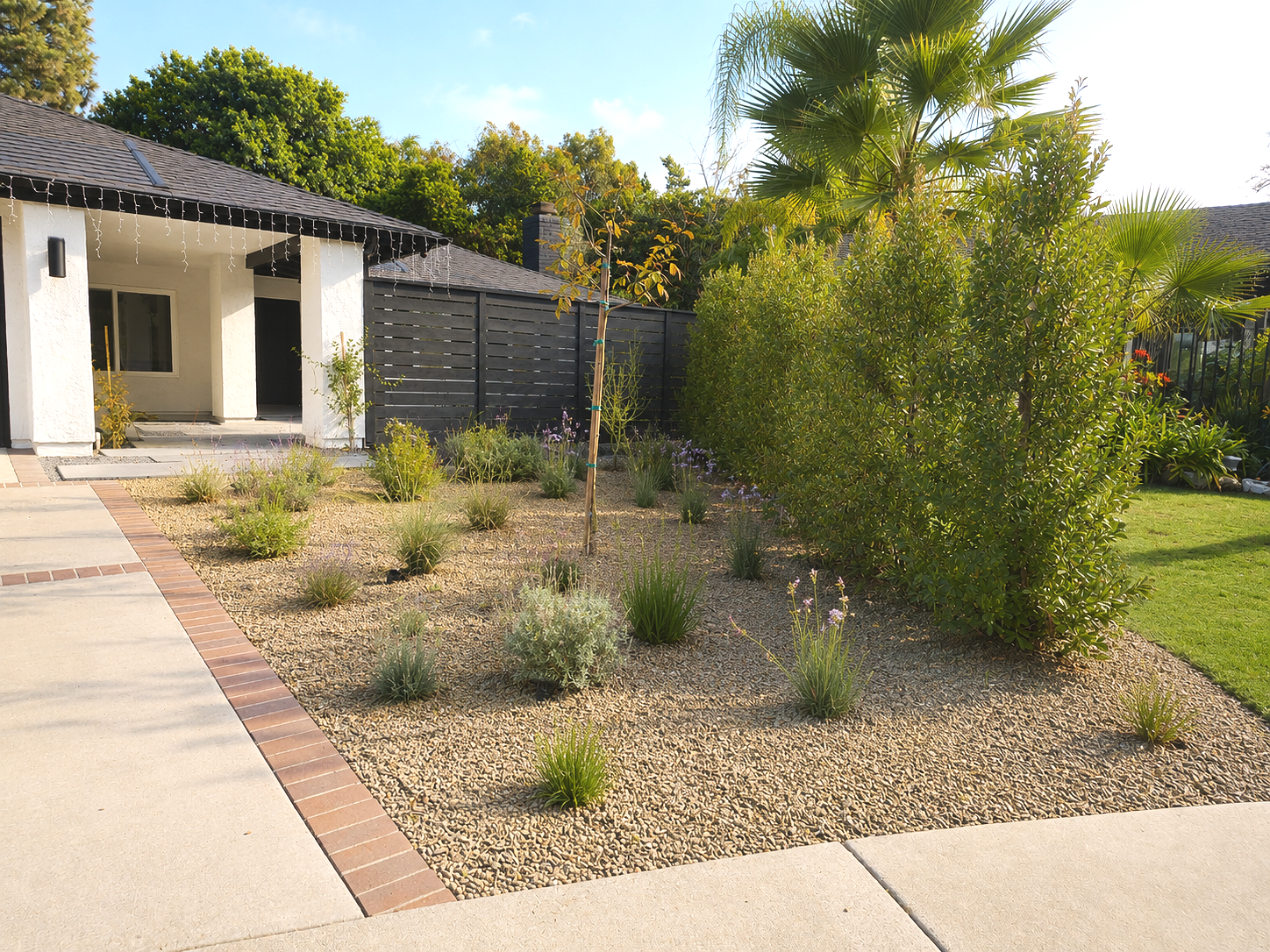
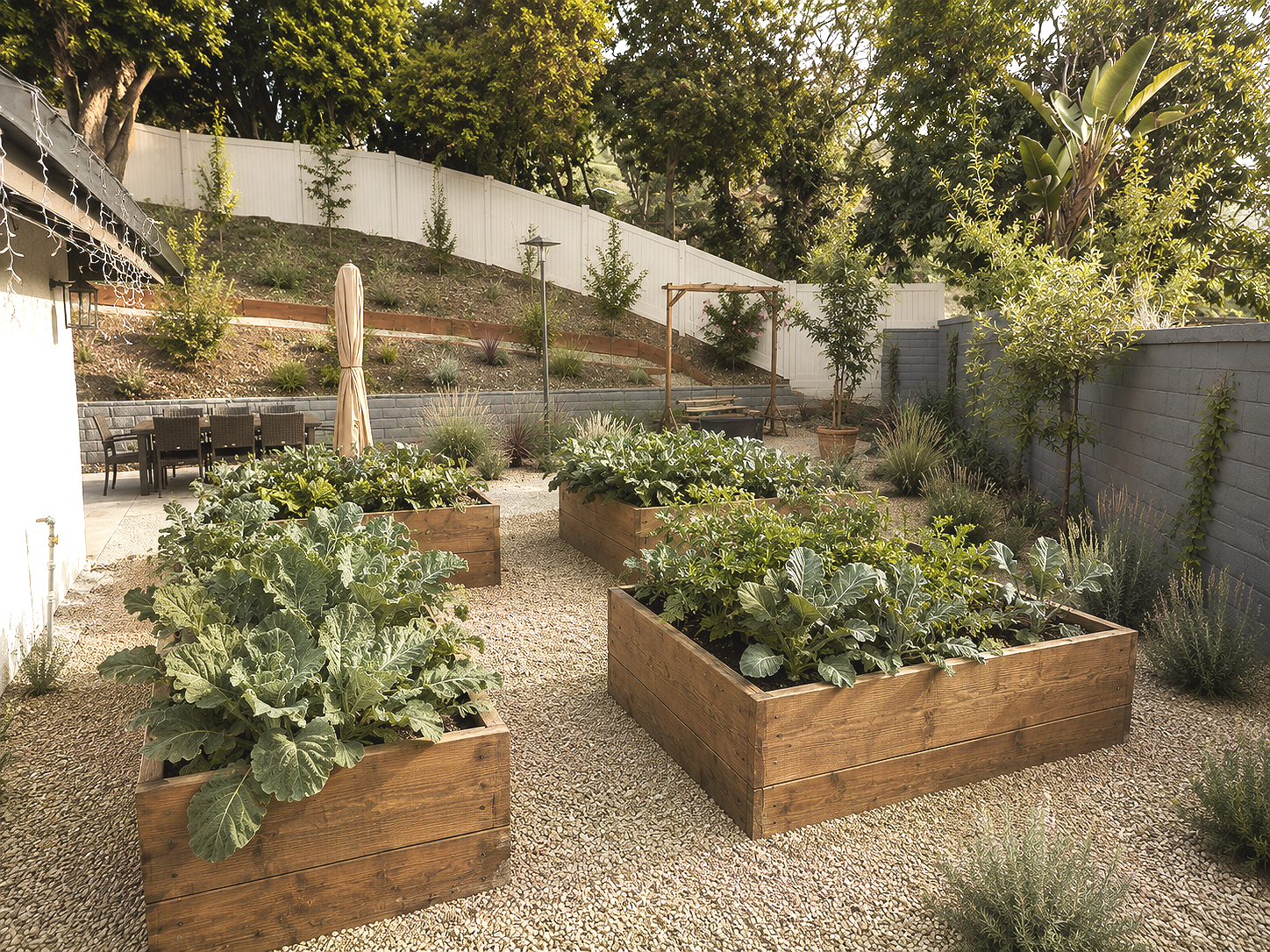
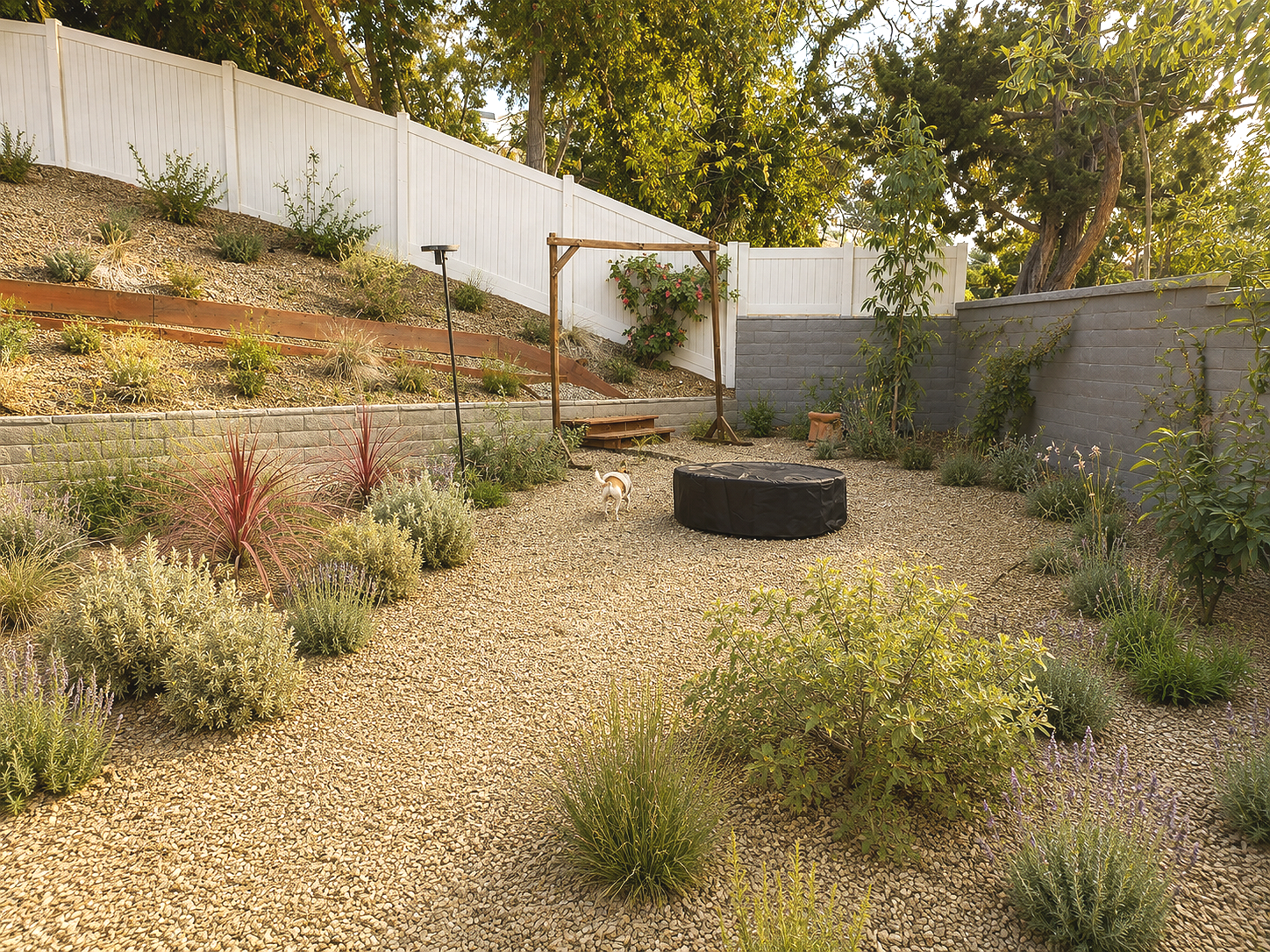
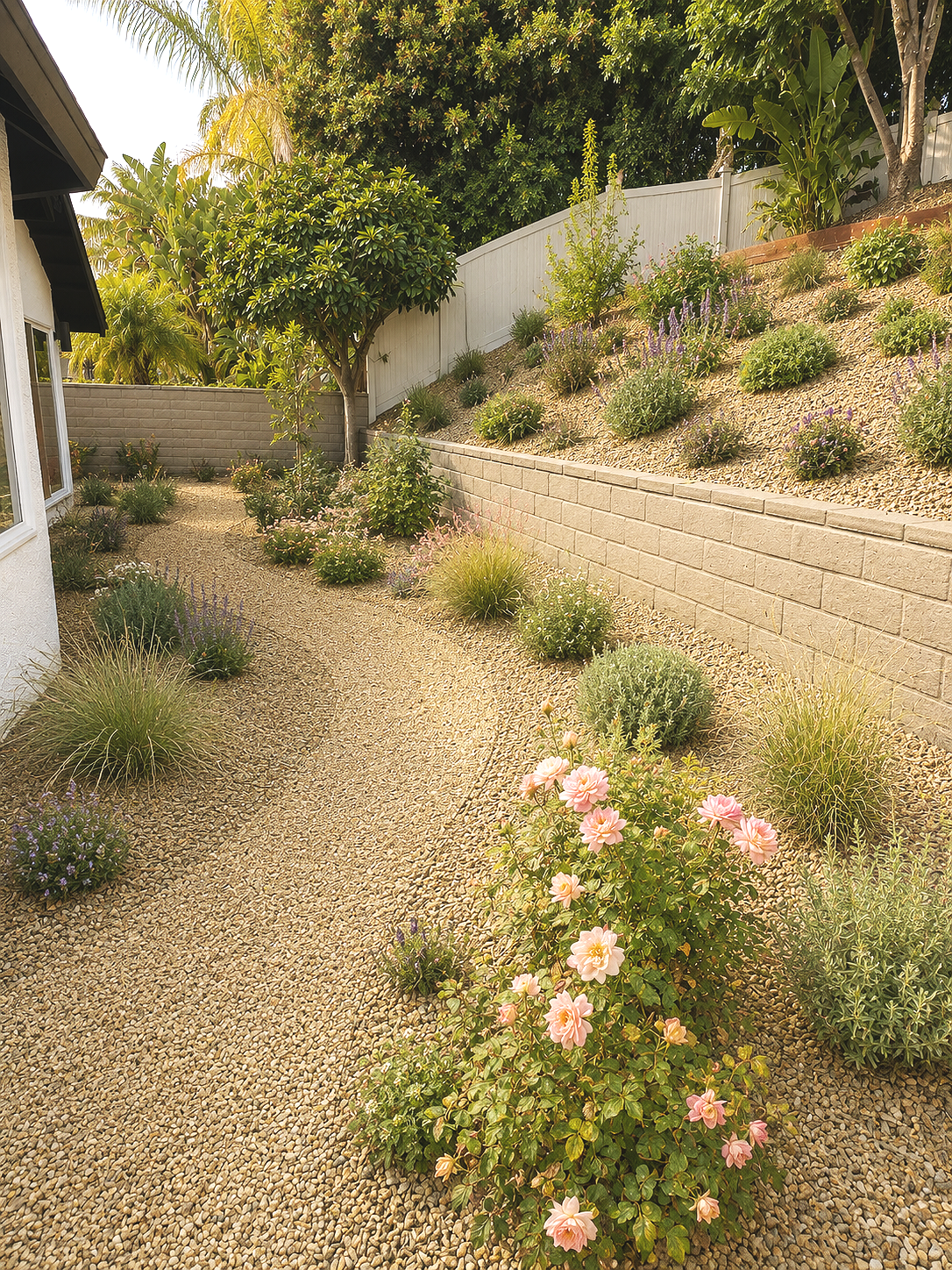
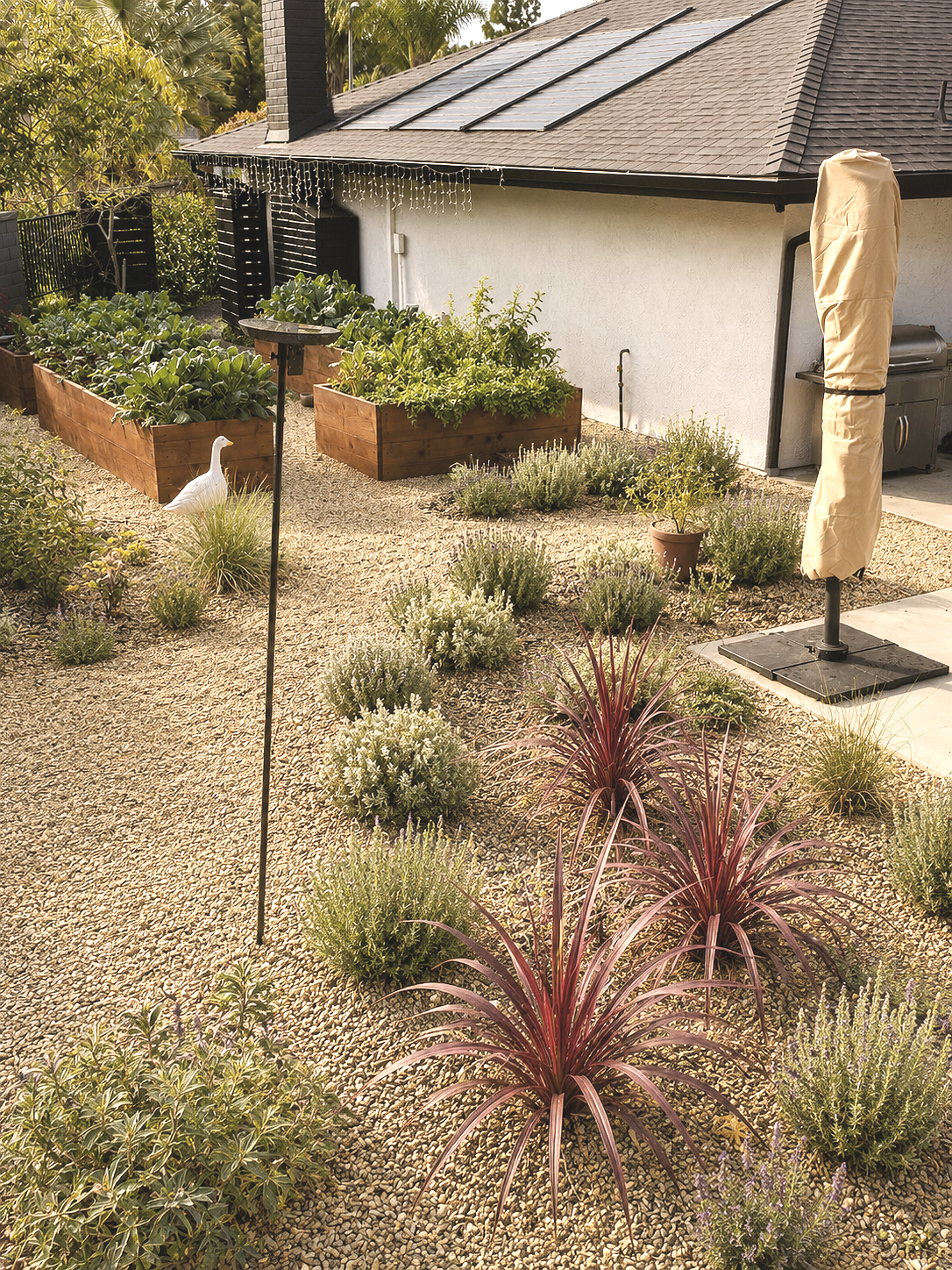
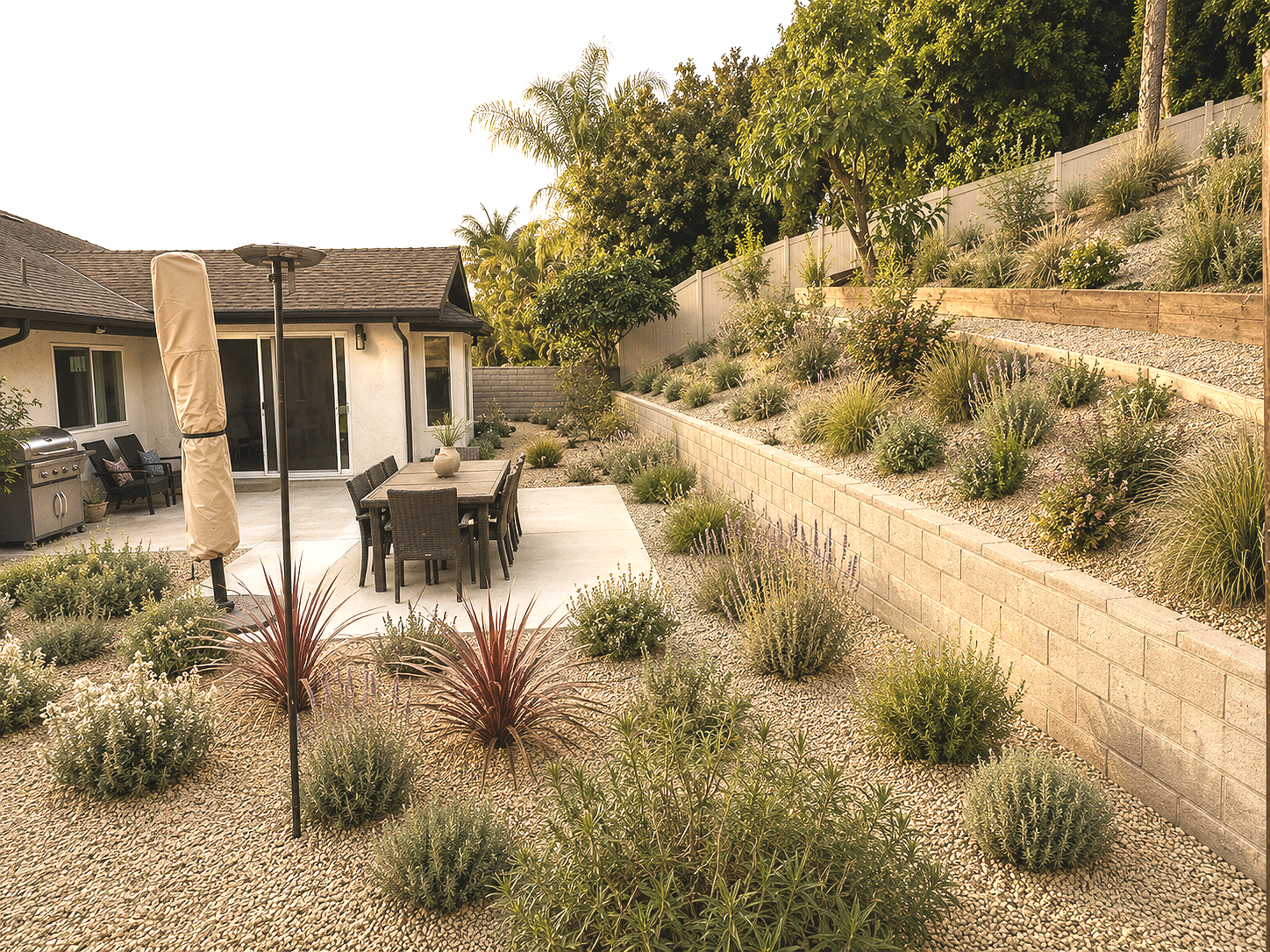
Location: Laguna Niguel, Orange County, California
Project Type: Private Residential Garden, Contemporary California Mediterranean Exterior design
Design Scope: Complete Garden Design, Planting Design, Hardscape Coordination, Irrigation Strategy, Stormwater Planning, Construction Documentation
Status: Built / Installed
Construction: Project Management - John Beaudry, Contractor - Landscape and Beyond, Jeff Miller
Construction cost: $280,000
Design Studio: LASD Studio
Contemporary Living: A Self-Sustaining, Evolving Landscape
Modern California Sanctuary Garden
Concept & Vision
At LASD studio - A garden does not begin with plants. It begins with observation.
For this private residence in Laguna Niguel, the design process started with understanding the existing house, slopes, circulation, sunlight, drainage patterns, retaining walls, views, family use and the daily relationship between indoor and outdoor life. The goal was not simply to replace a lawn or add decorative planting, but to create a more resilient Southern California garden, one that could support outdoor living, food production, biodiversity, water efficiency and long-term comfort.
The result is a layered family garden organized around outdoor rooms, gravel paths, raised vegetable beds, drought-adapted planting, flowering habitat, fruit trees and a more intentional relationship between the house and the surrounding landscape as evolving garden and not static image.
Site Measurement and Existing Conditions
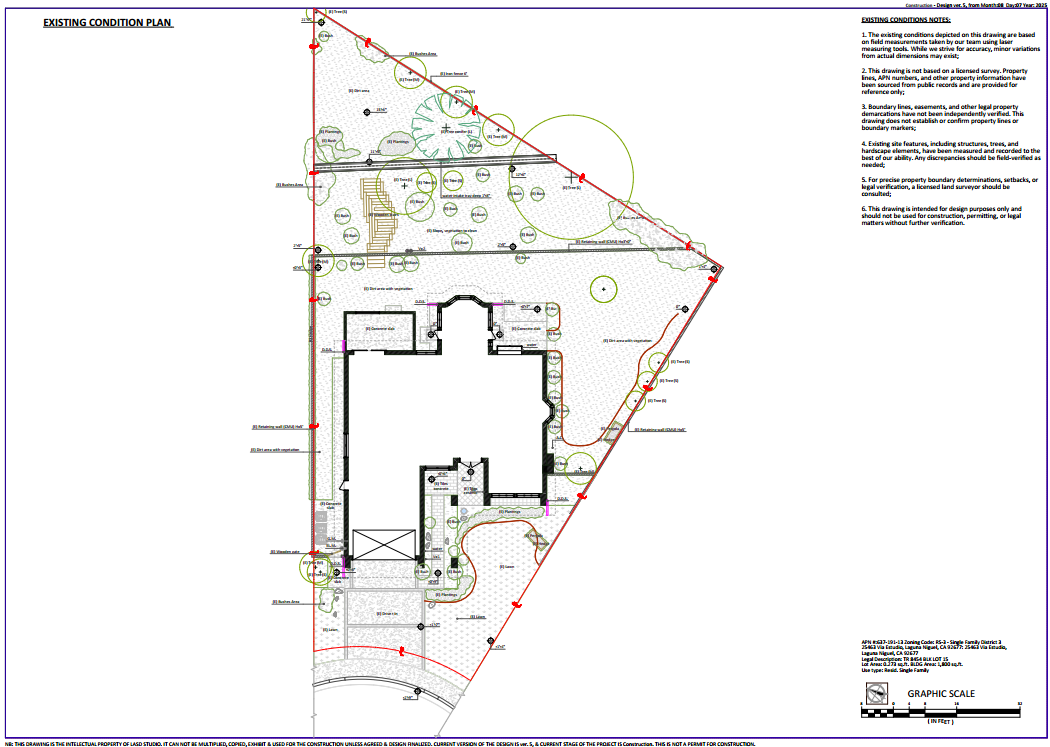
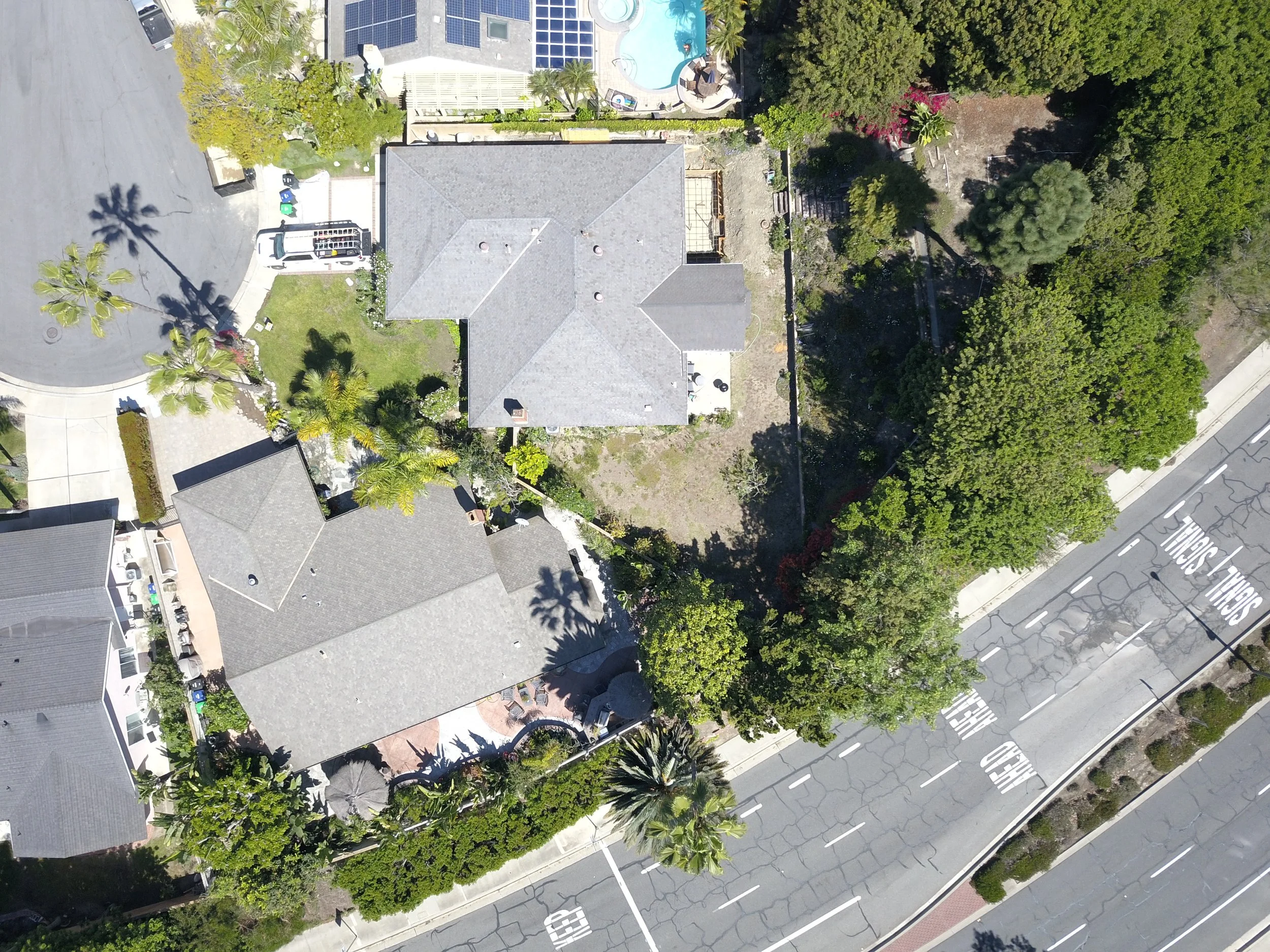
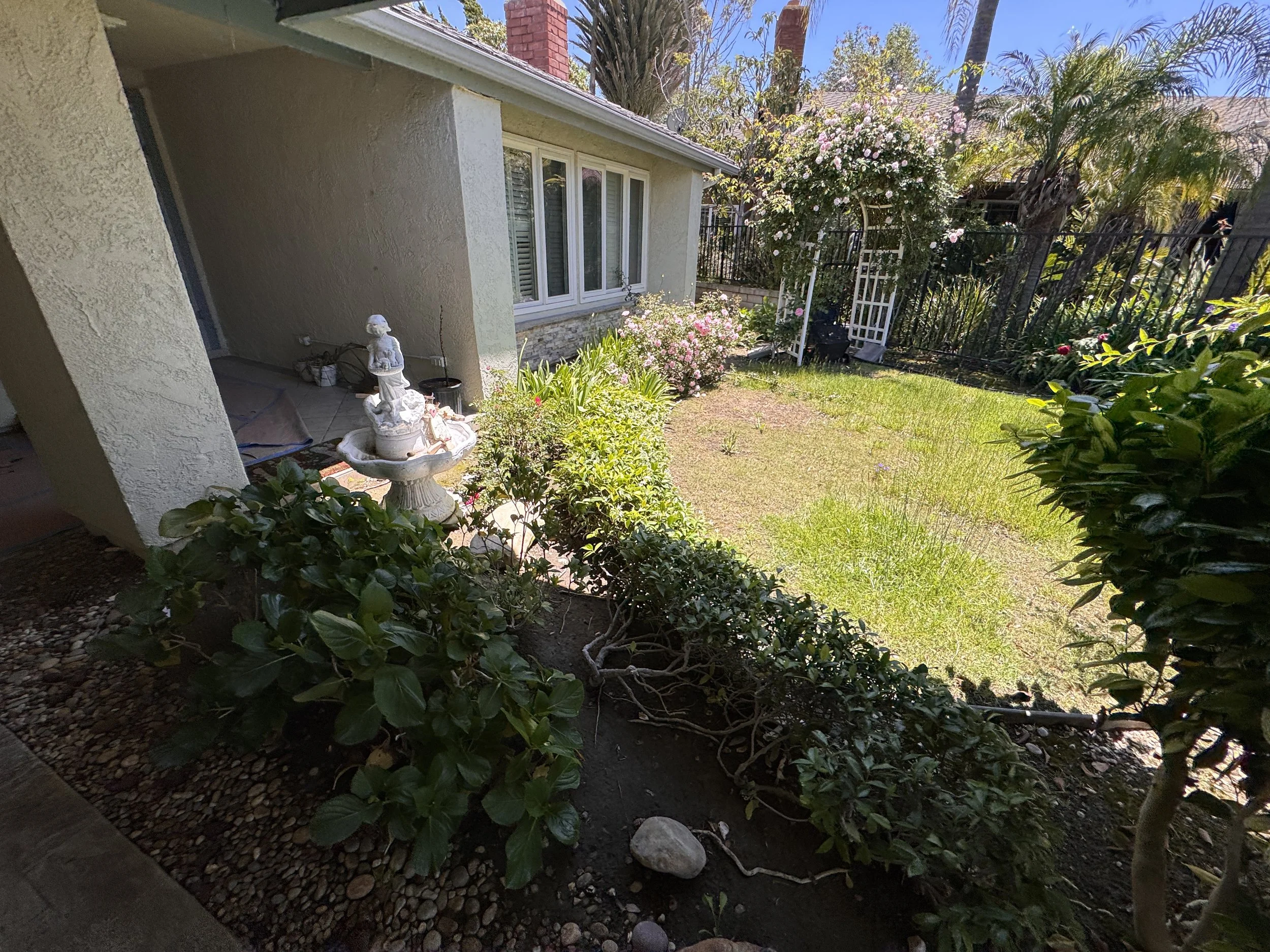
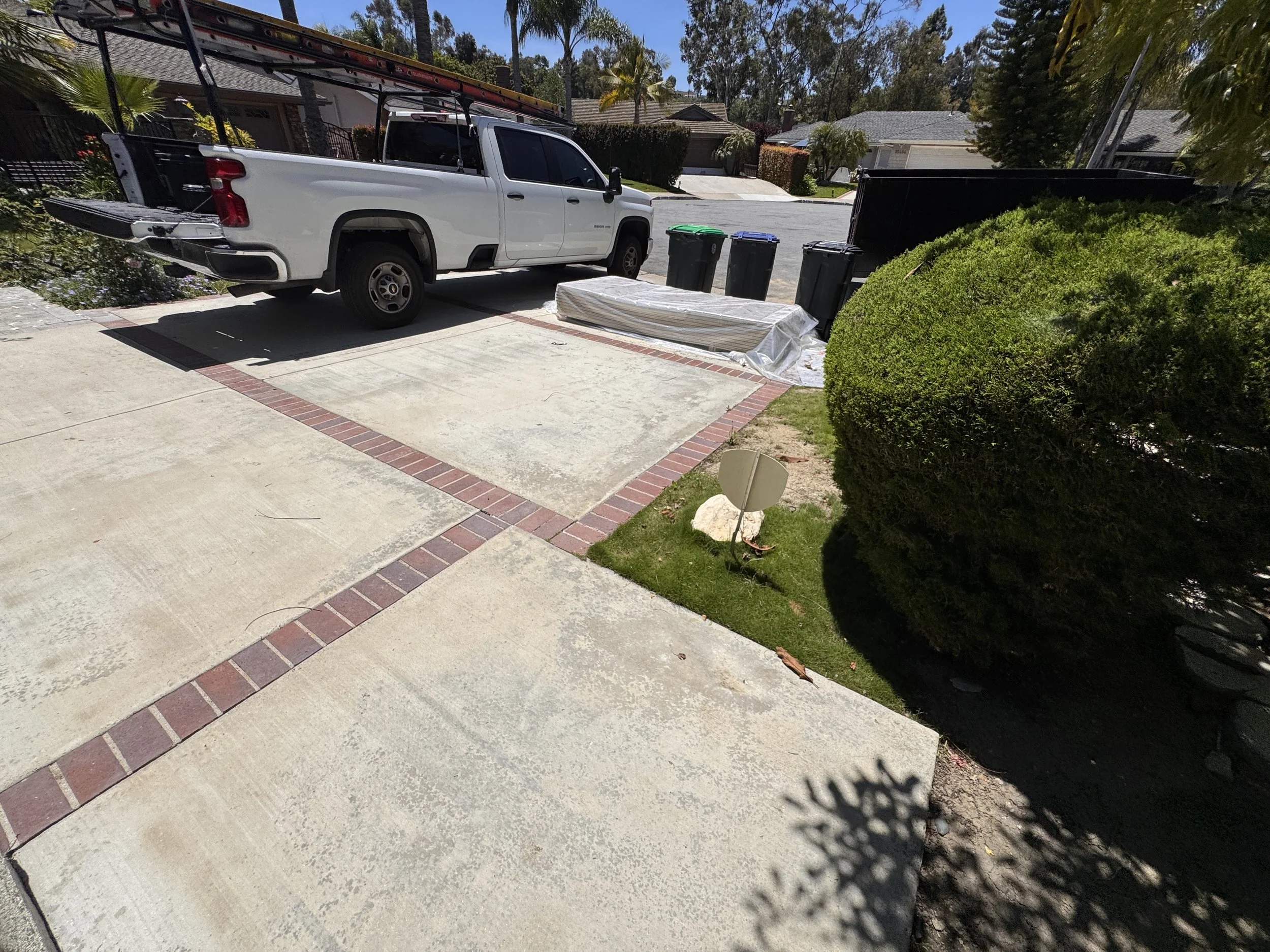
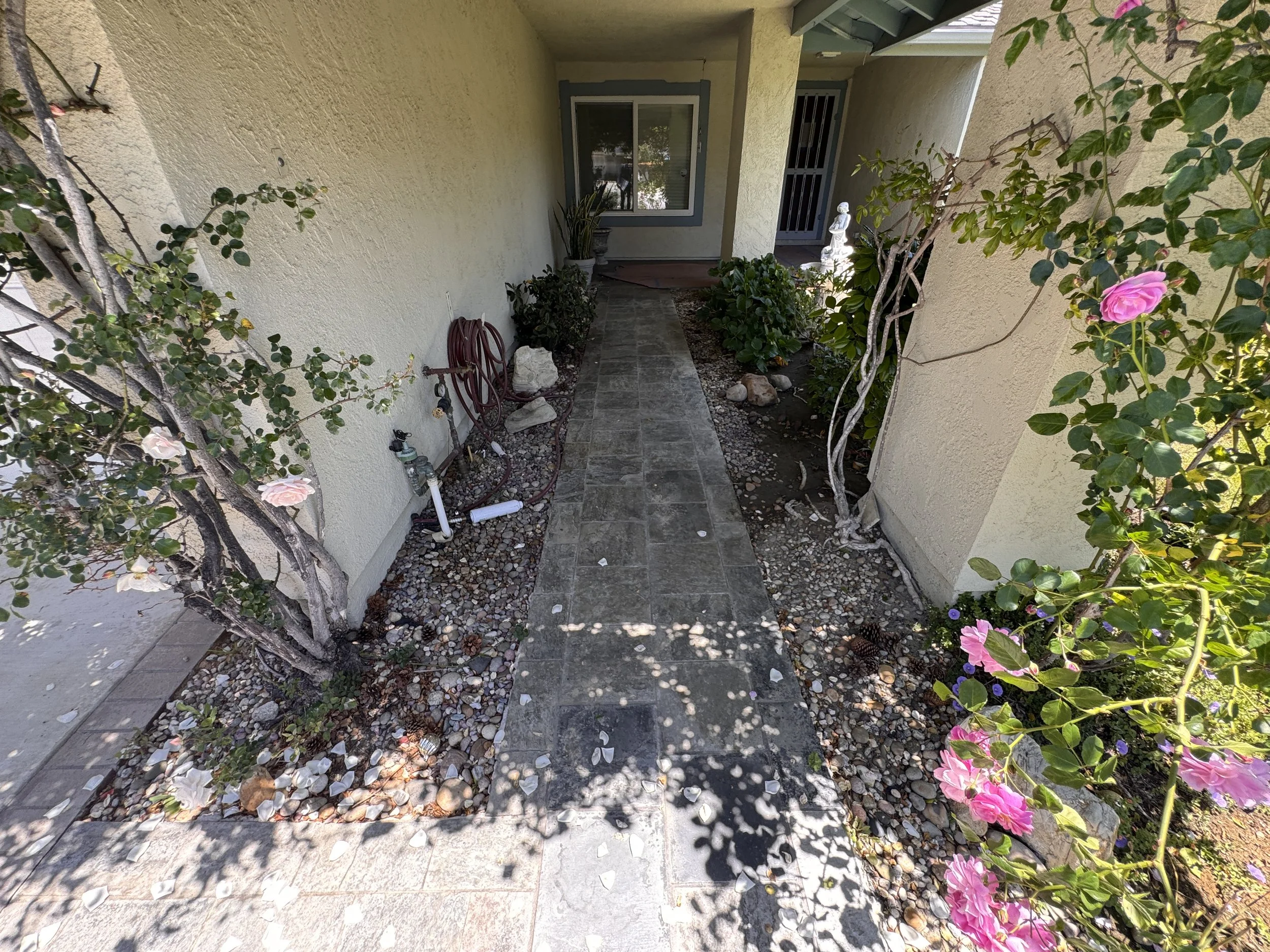
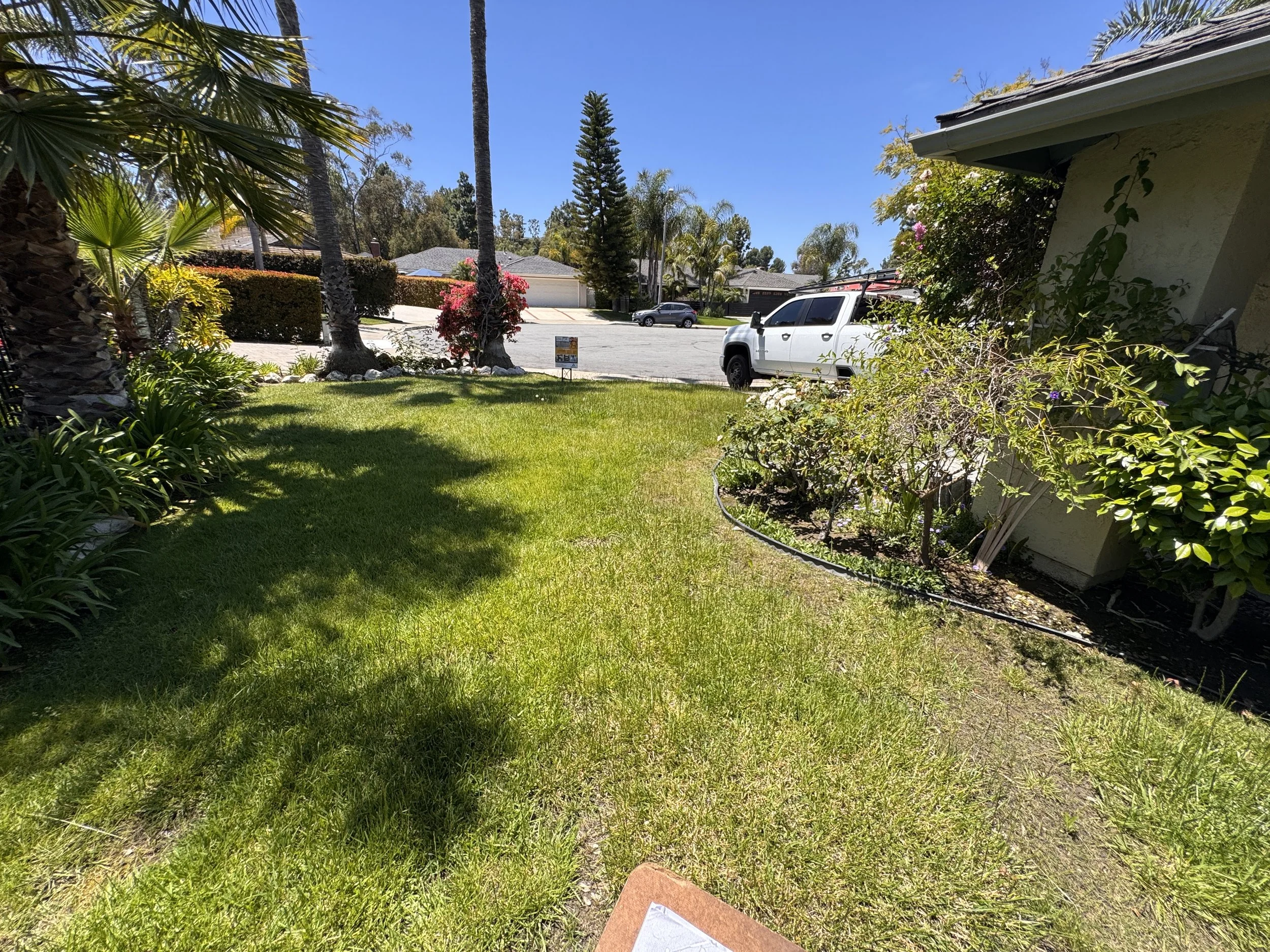
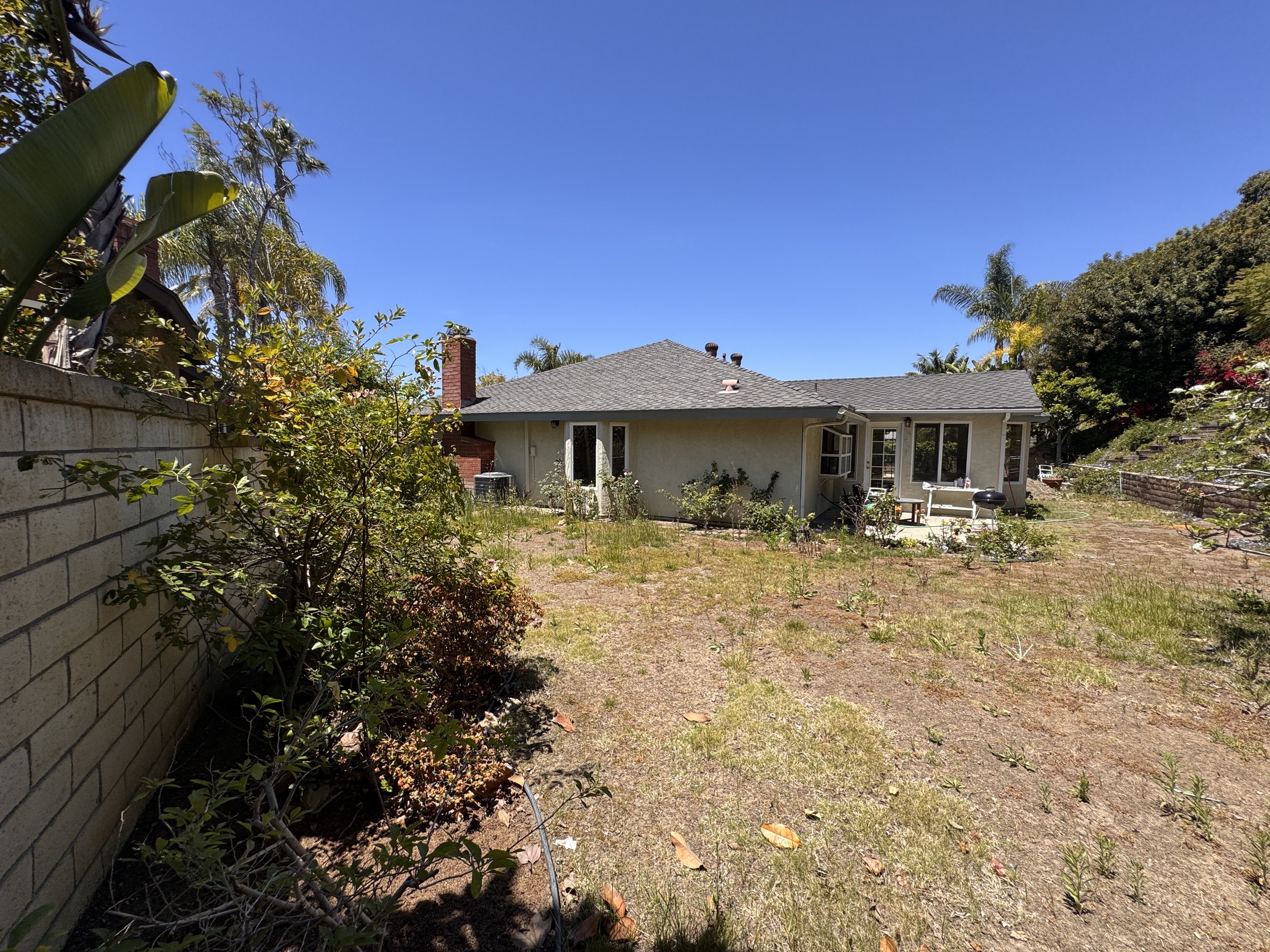
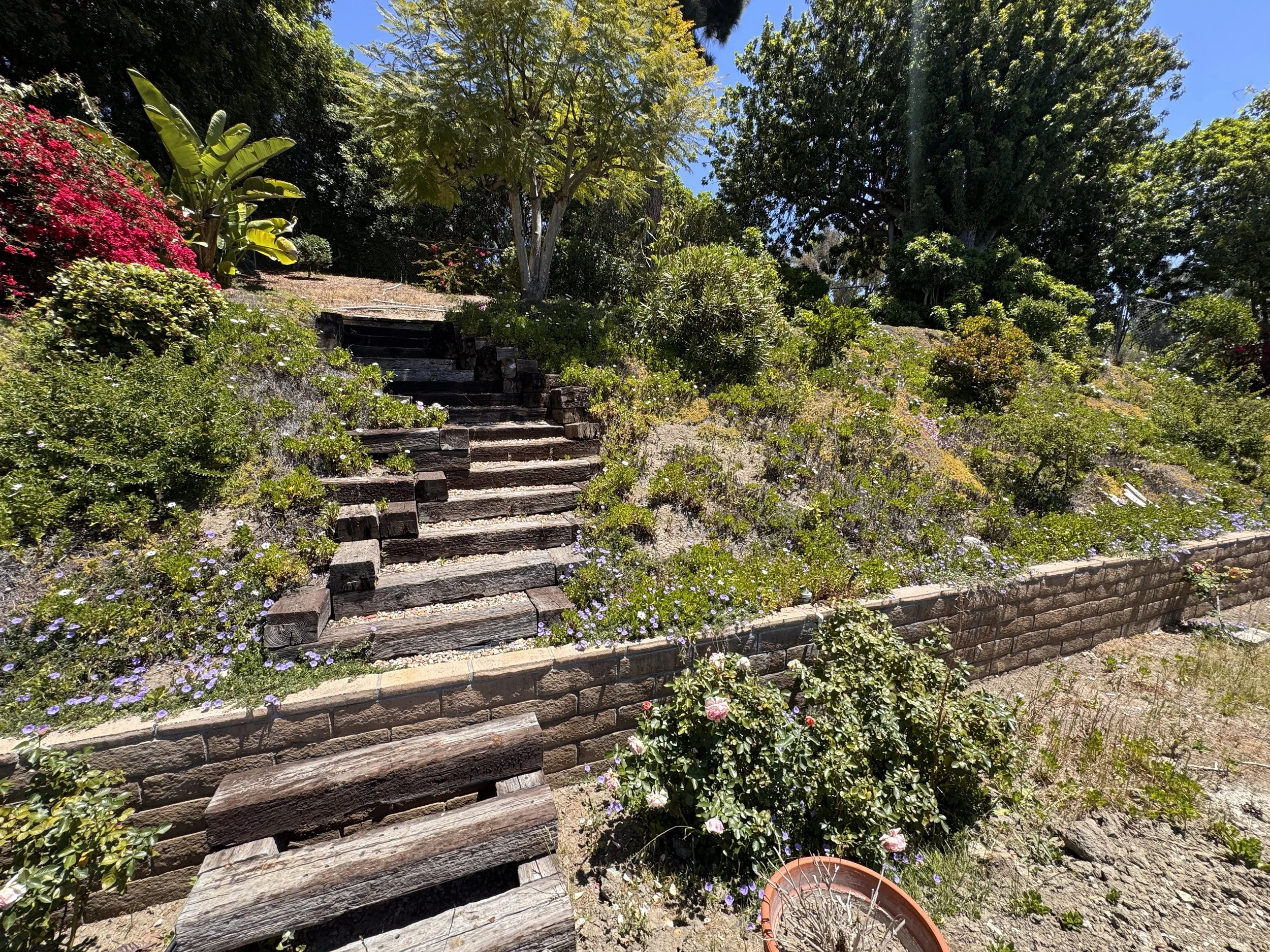
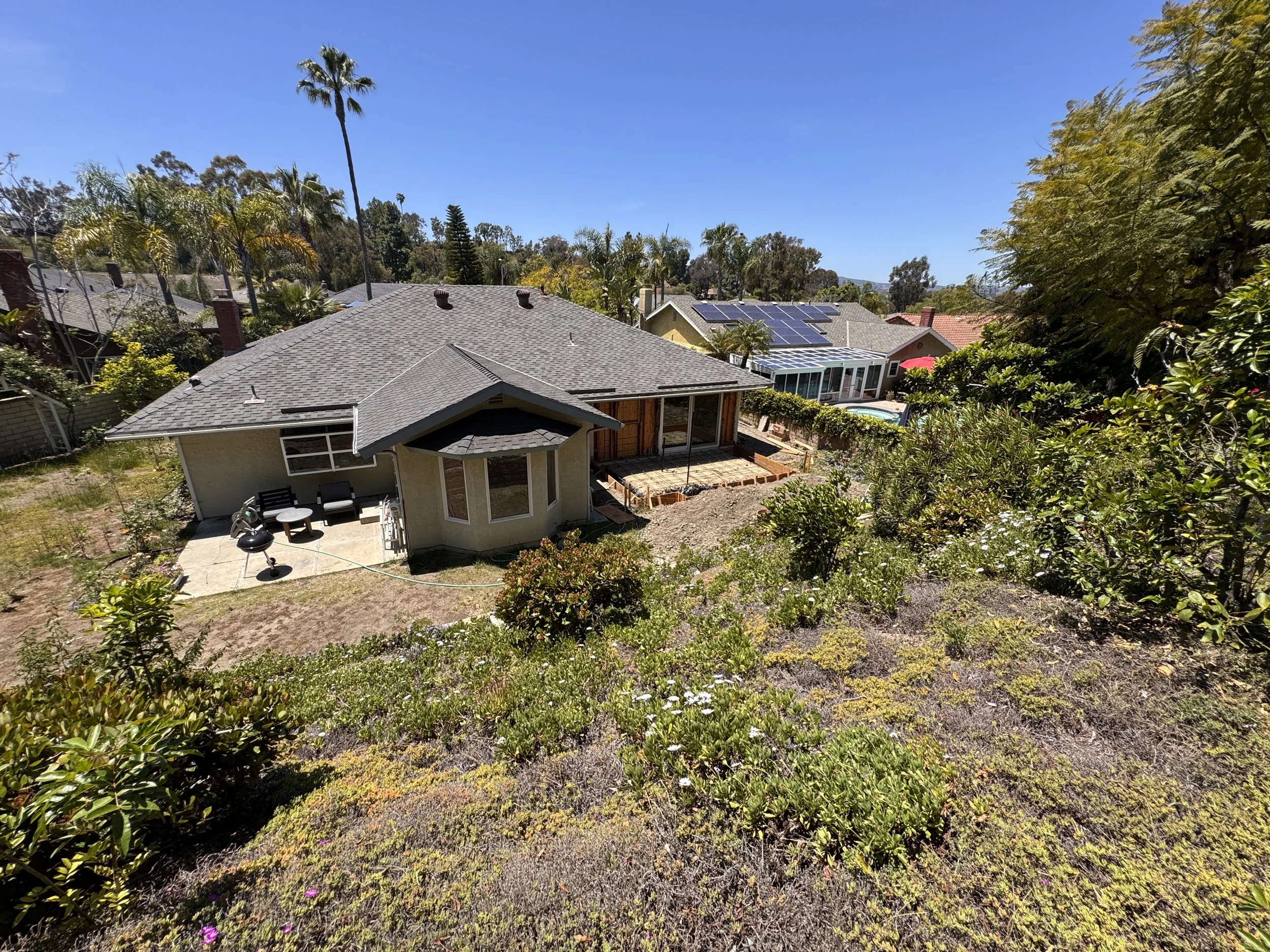
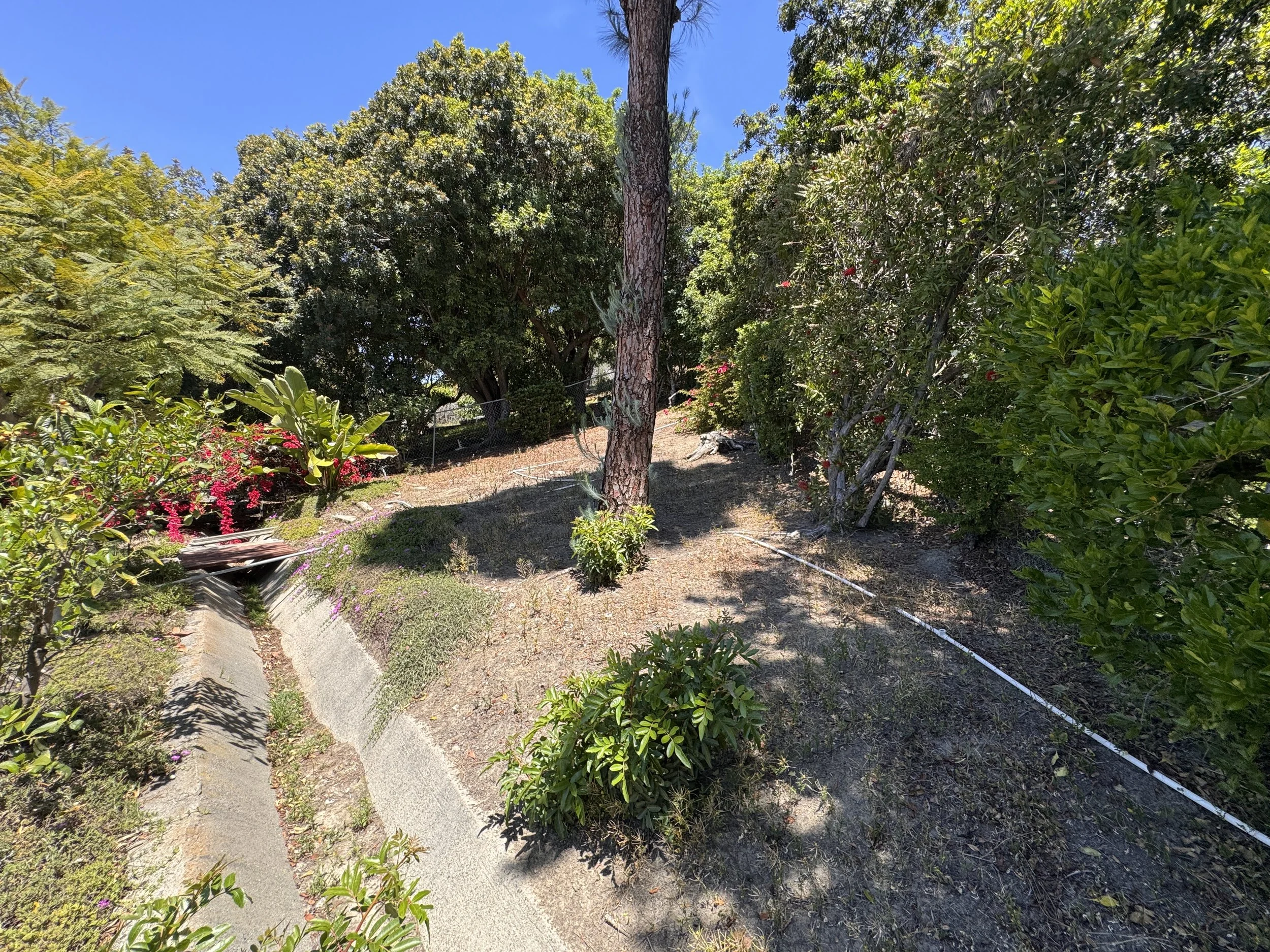
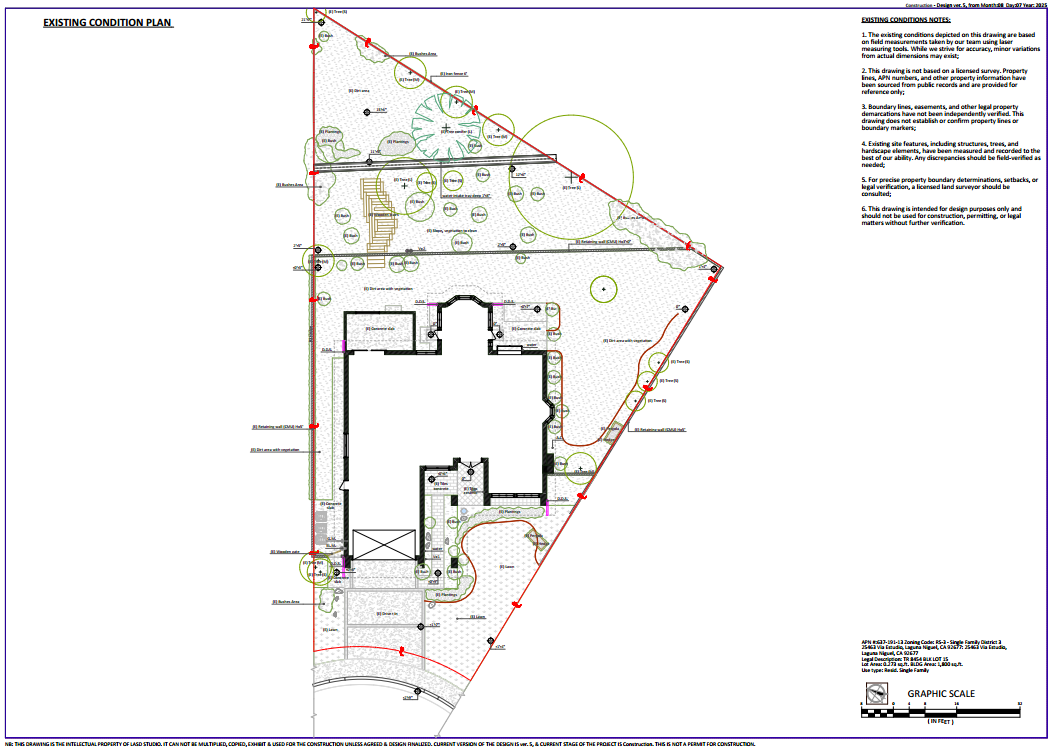
Every project begins with the existing site. Before design decisions are made, the garden has to be measured, walked, photographed and understood as a living system. Existing trees, slopes, walls, drainage & irrigation, ex. paving, utilities, planting areas and access points all influence what the garden can become.
At this Laguna Niguel residence, the site included an existing house, lawn areas, slopes, mature trees, retaining walls, paved patios and areas of underused planting. These conditions became the framework for the design. Instead of erasing the site completely, the proposal worked with its structure keeping what had value, removing what no longer served the family, and reorganizing the garden around a clearer ecological and functional vision.
Exploring the Garden’s Future
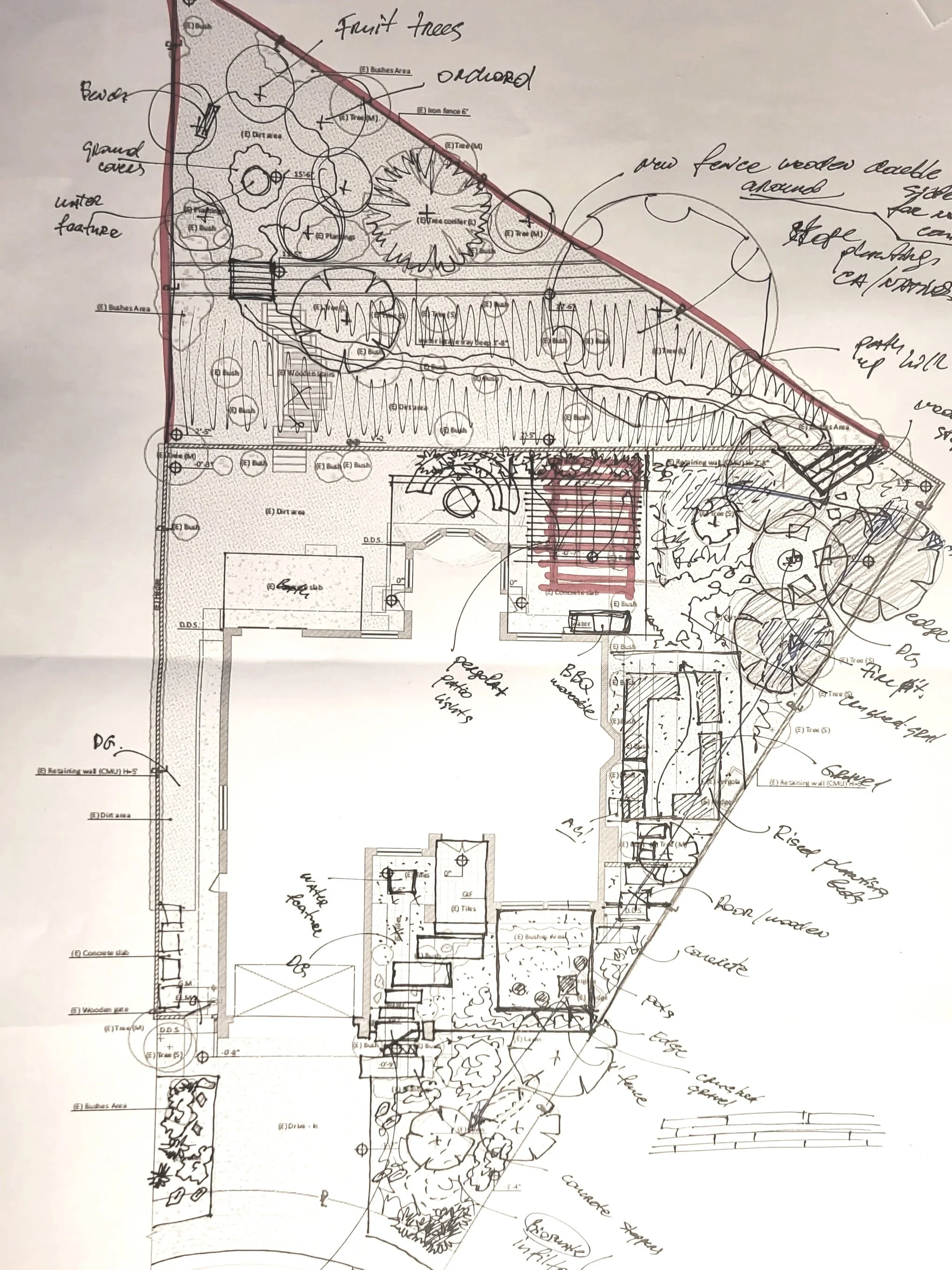
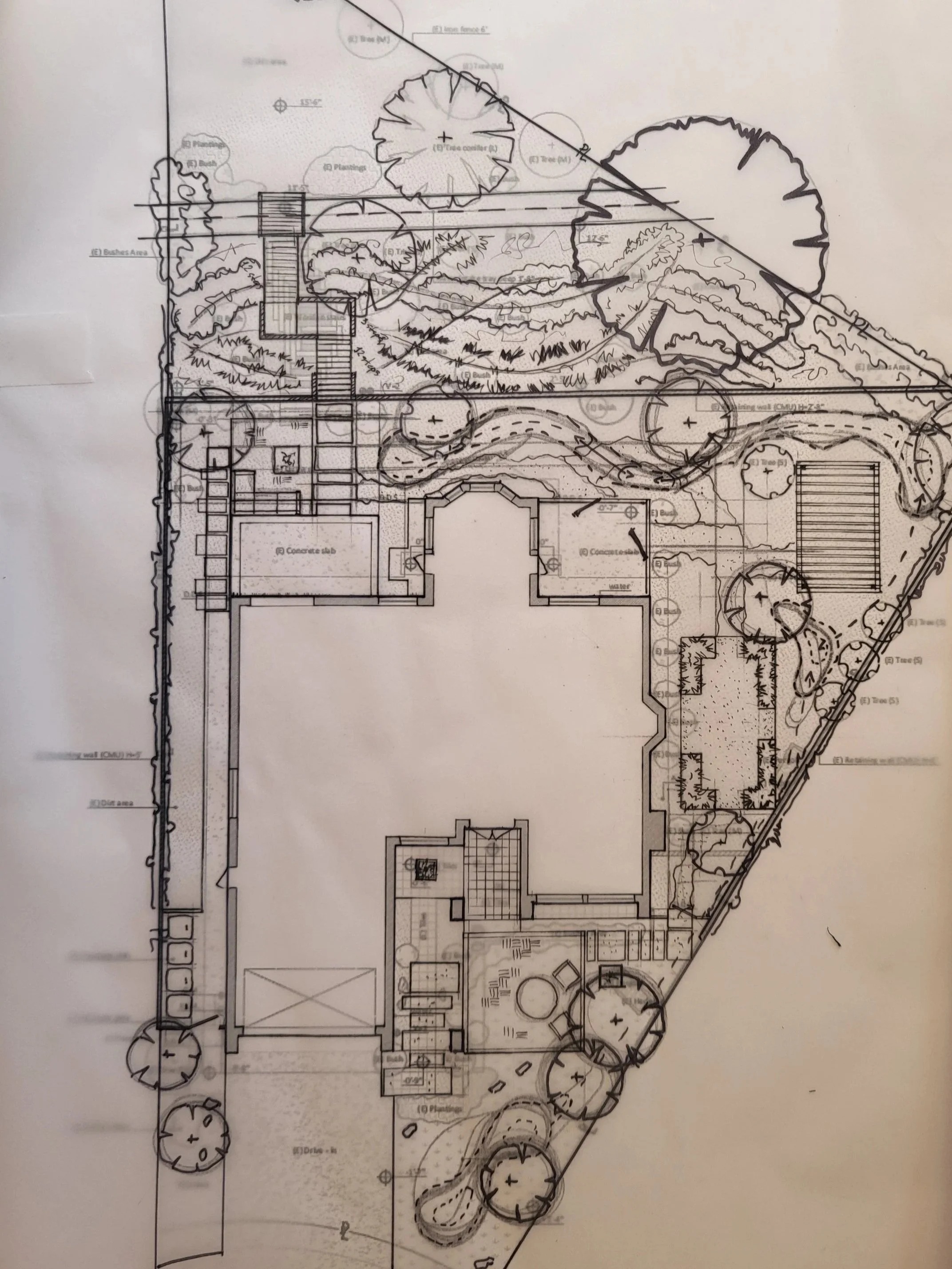
Concept design is where the garden begins to take shape.
At this stage, the project is not yet about final construction details. It is about direction. How should the family move through the garden? Where should outdoor dining happen? Where can food production fit naturally into daily life? Which areas should become quieter, more immersive, more ecological? How can the slope become a planting asset instead of a maintenance problem?
For this project, two conceptual directions were explored. One emphasized a more structured contemporary outdoor living garden to bring style and Identity to the structured design. The other moved toward a softer sanctuary garden, with a more immersive planting experience. Through this process, the final direction emerged as a balance between modern usability and ecological richness.
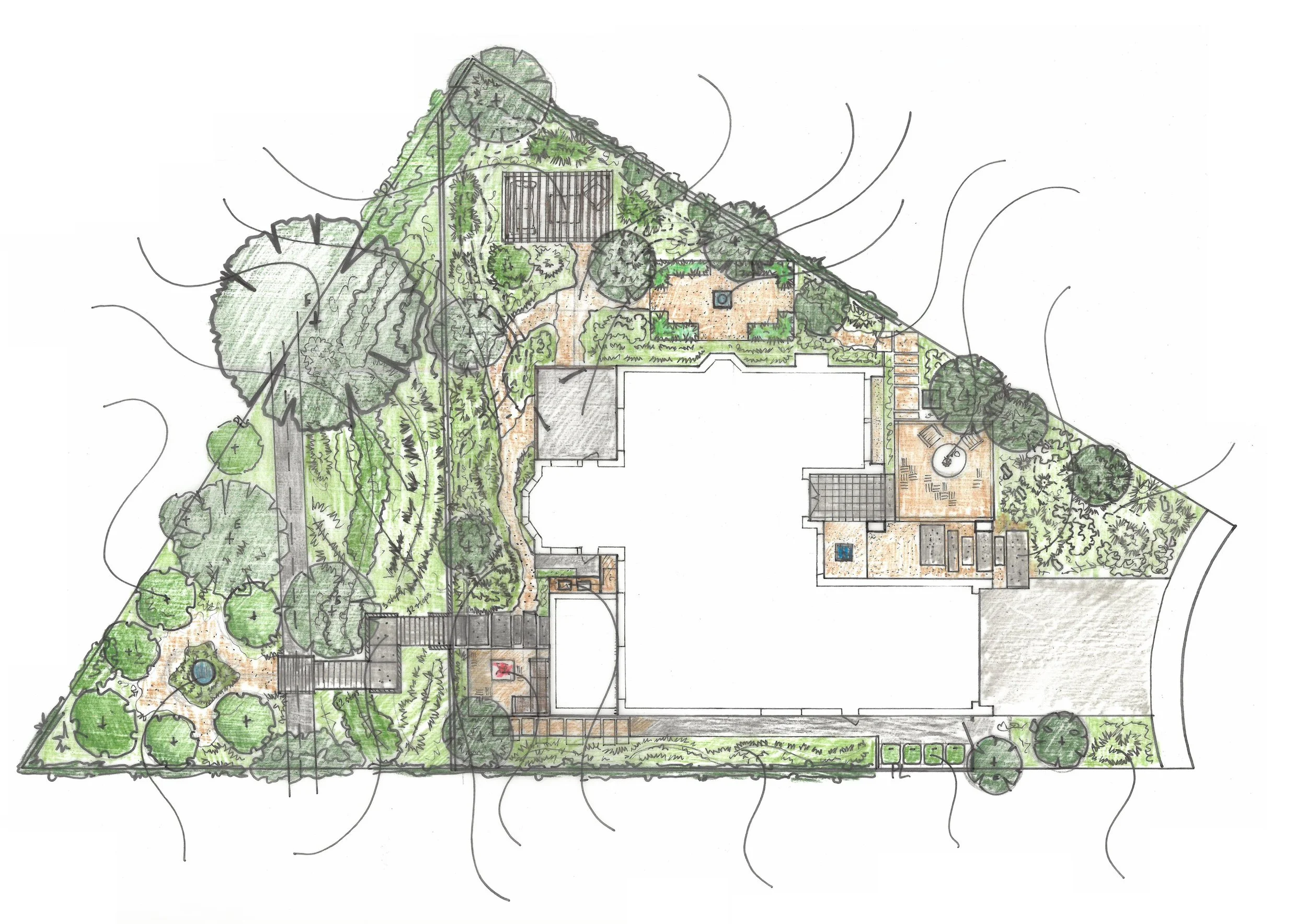
Design Development & Visualizing the Atmosphere / Perception
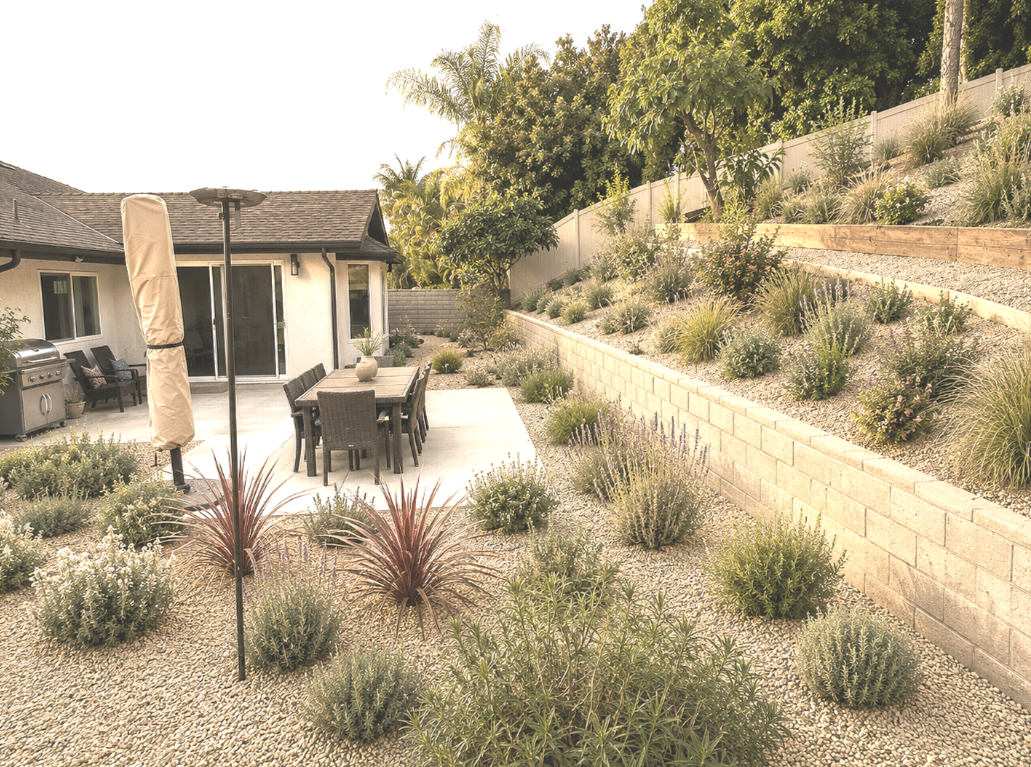
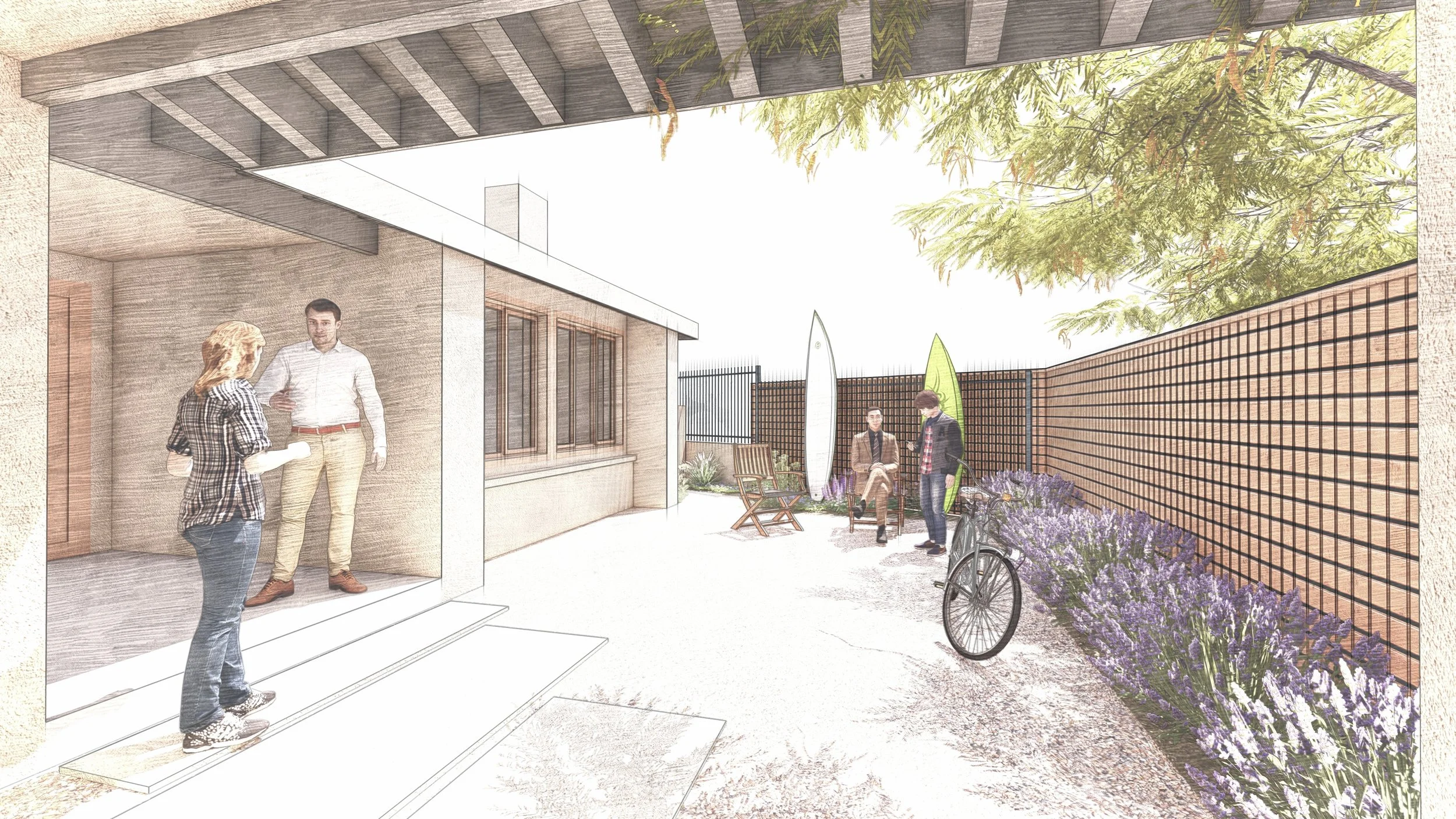
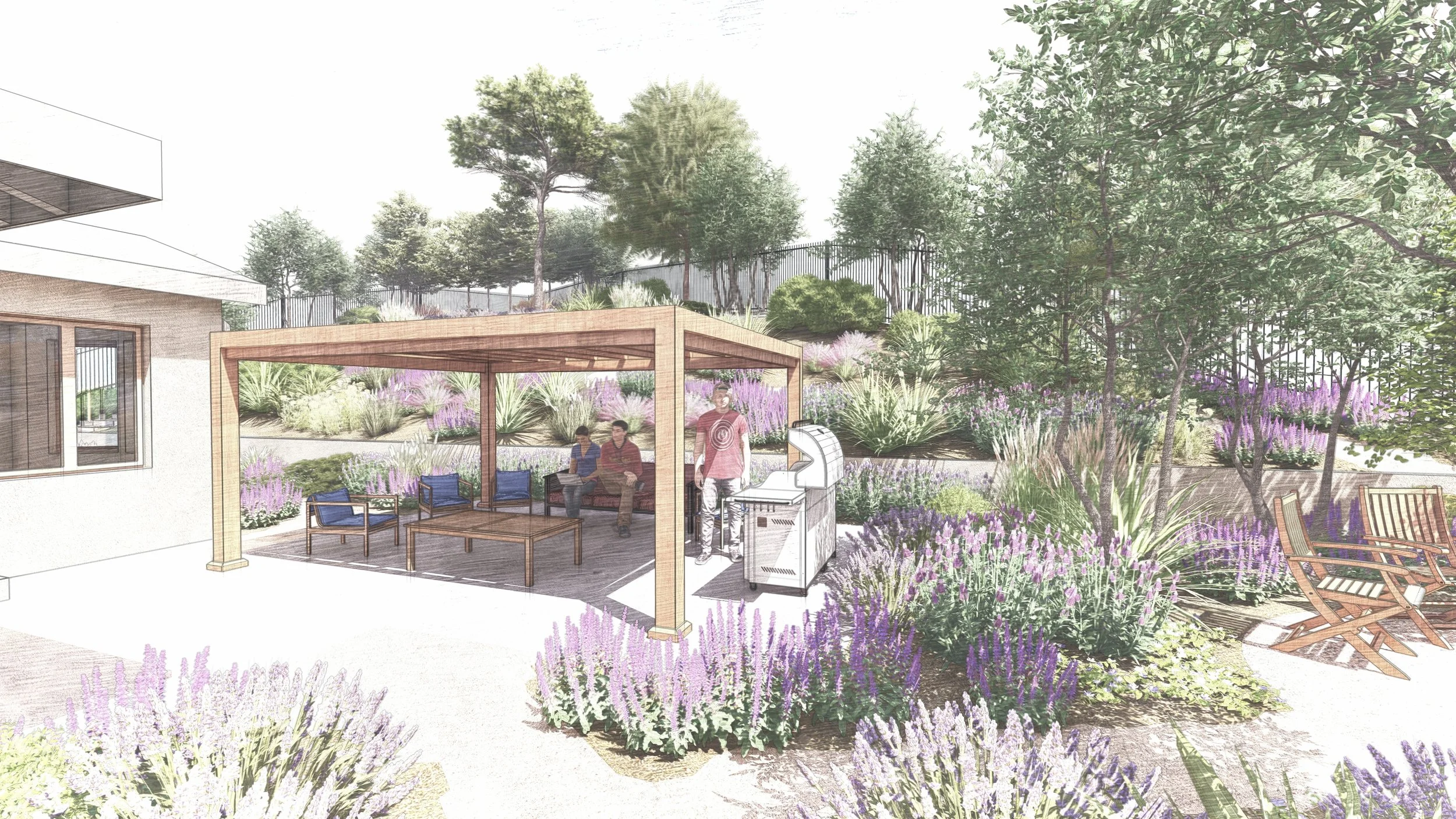
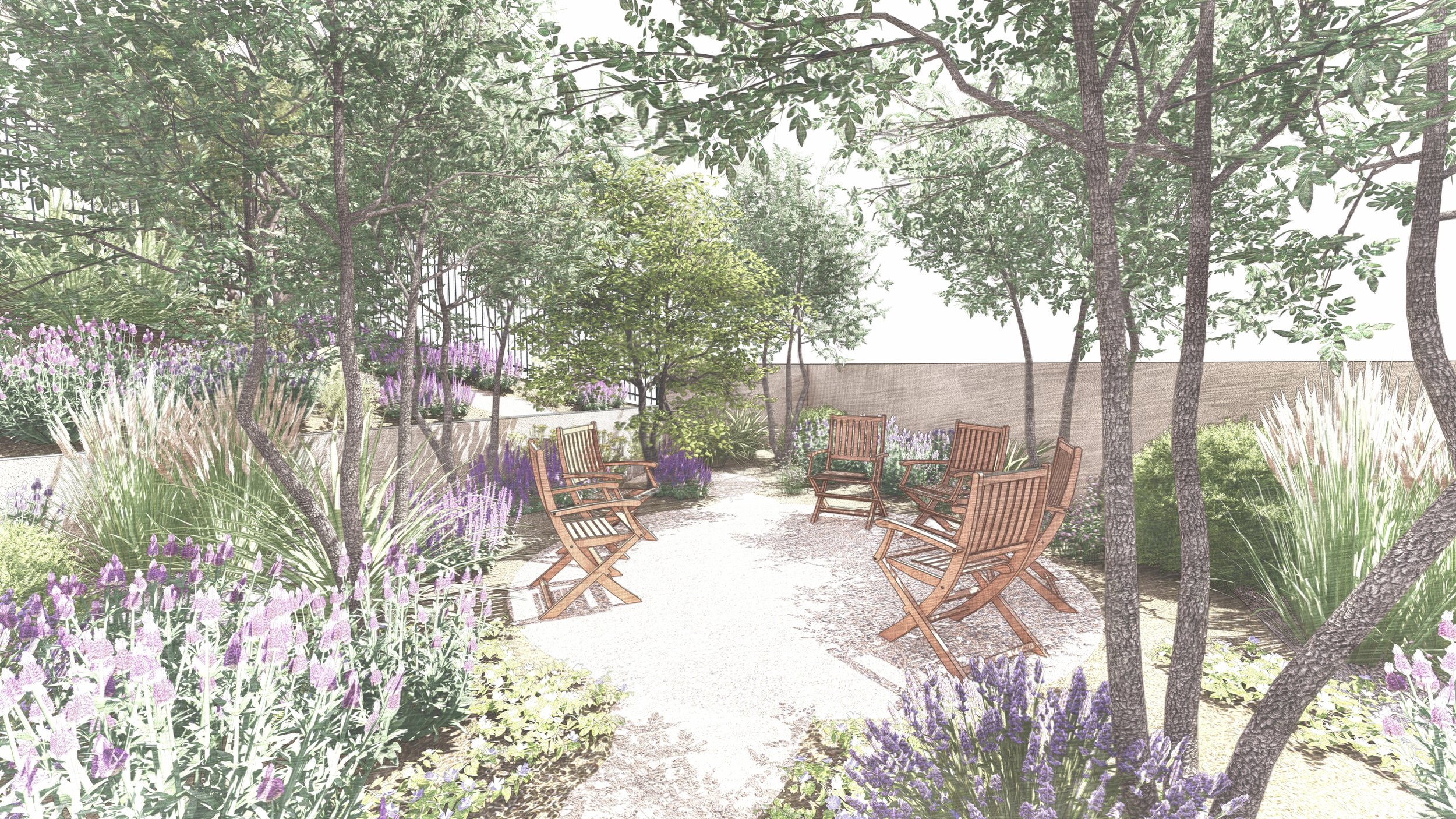
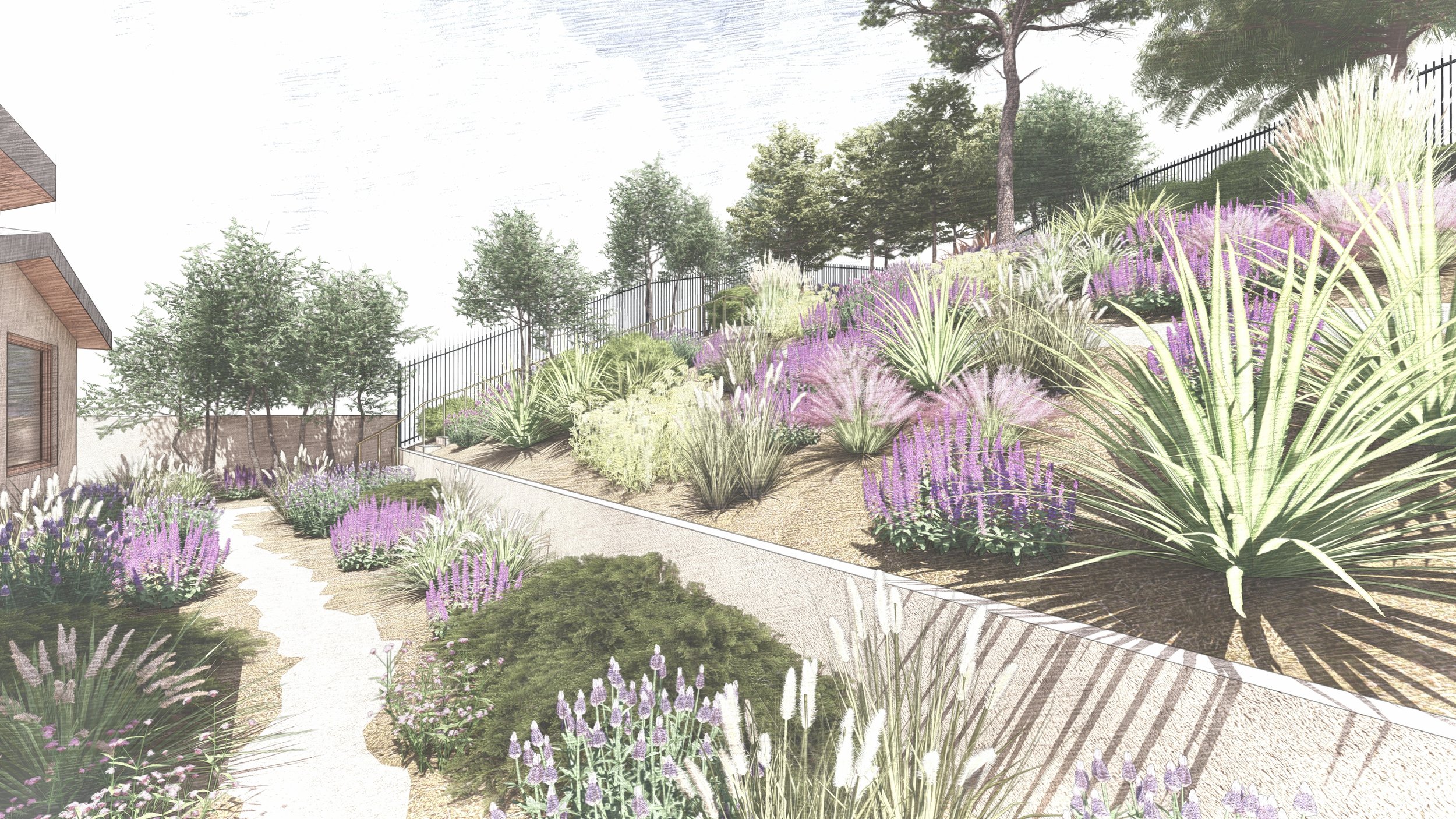
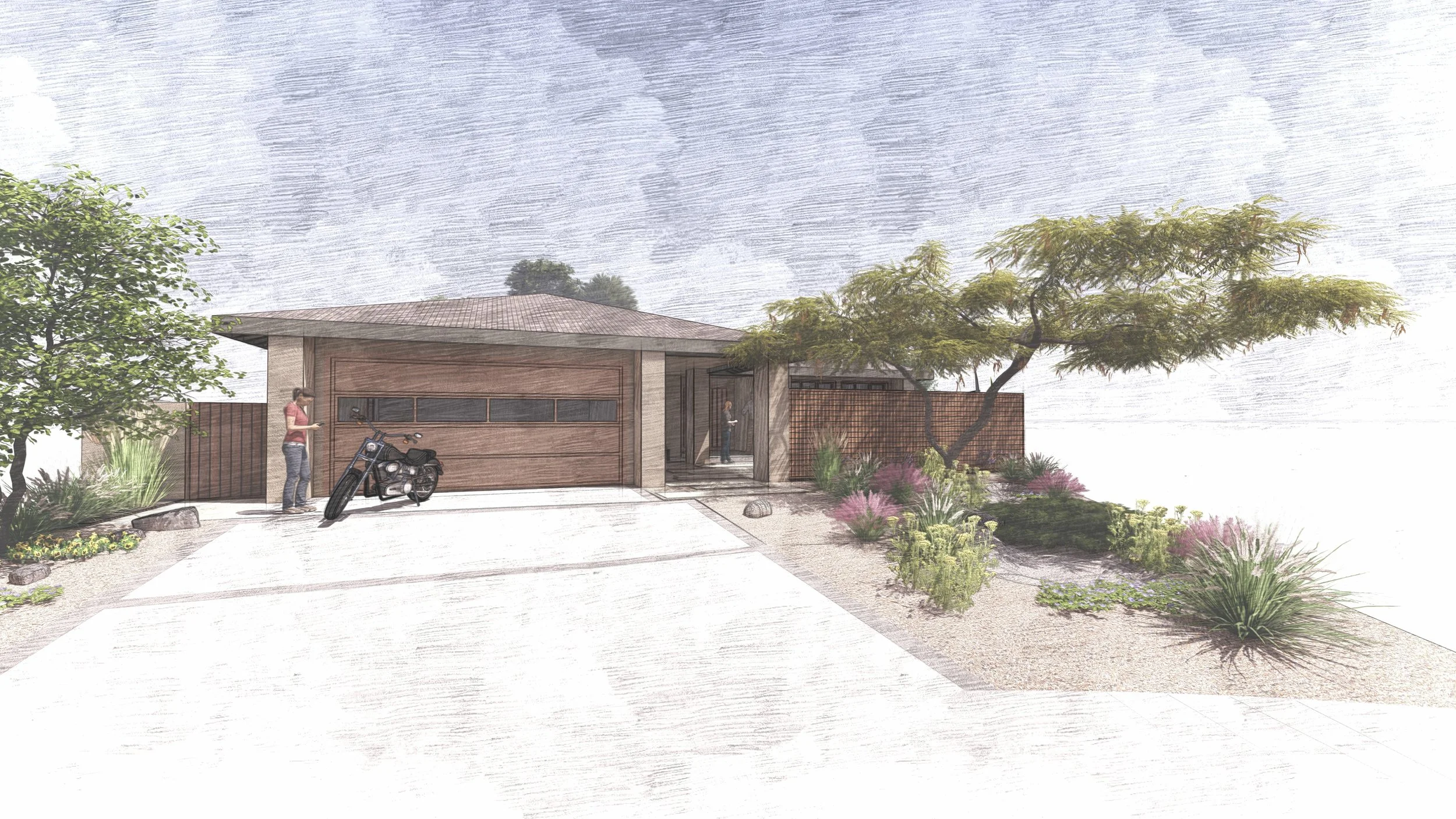
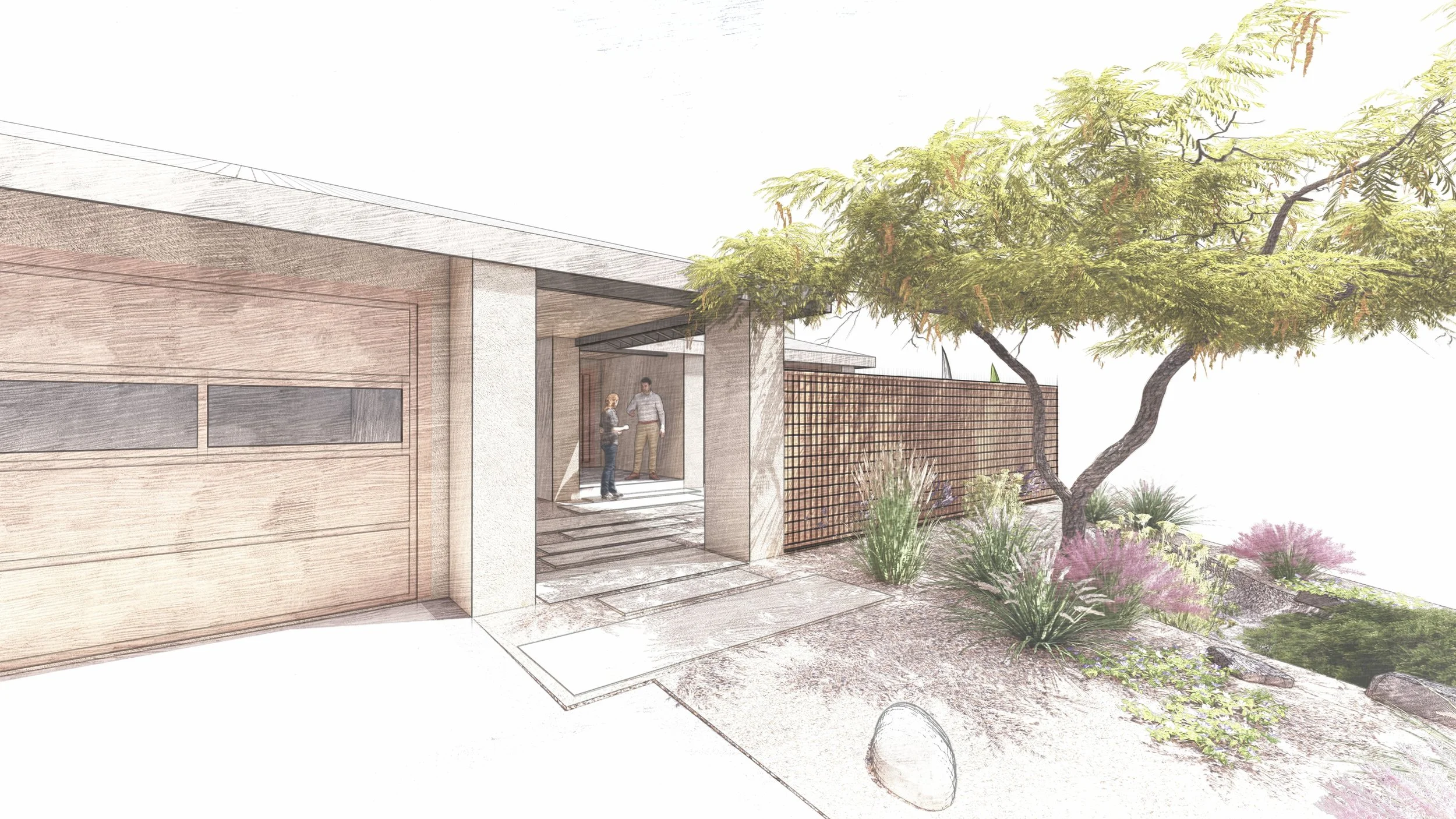
Once the design direction was established, the project moved into visual development. Renderings allowed the clients to understand not only the layout, but the atmosphere of the future garden: the rhythm of gravel paths, the softness of drought-adapted planting, the shade of new trees, the relationship between the patio and the slope, and the feeling of being surrounded by a living garden rather than a decorative yard.
The visualizations became a bridge between idea and construction. They helped communicate scale, planting density, outdoor rooms and the long-term character of the landscape before installation began.
Turning the Concept into a Detailed Buildable Garden
A successful garden is more than a composition. It is a coordinated system of grading, drainage, planting, irrigation, materials, access and maintenance.
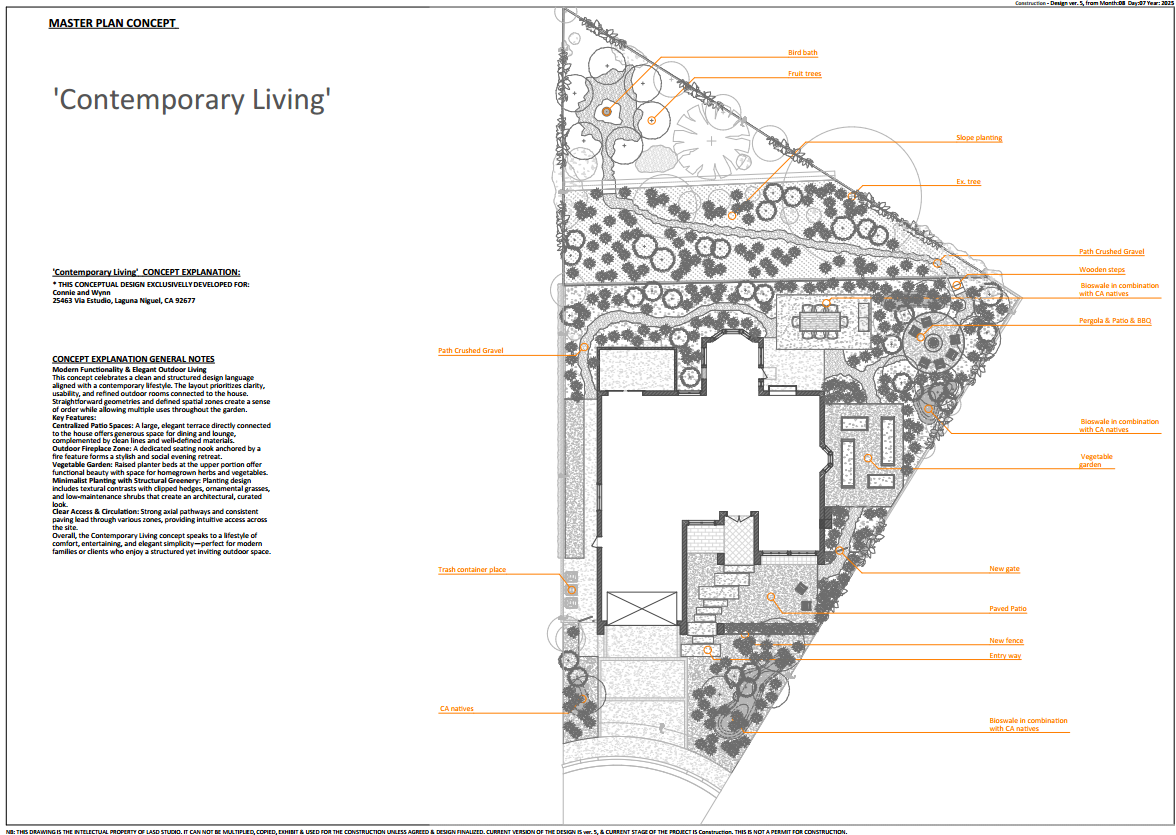
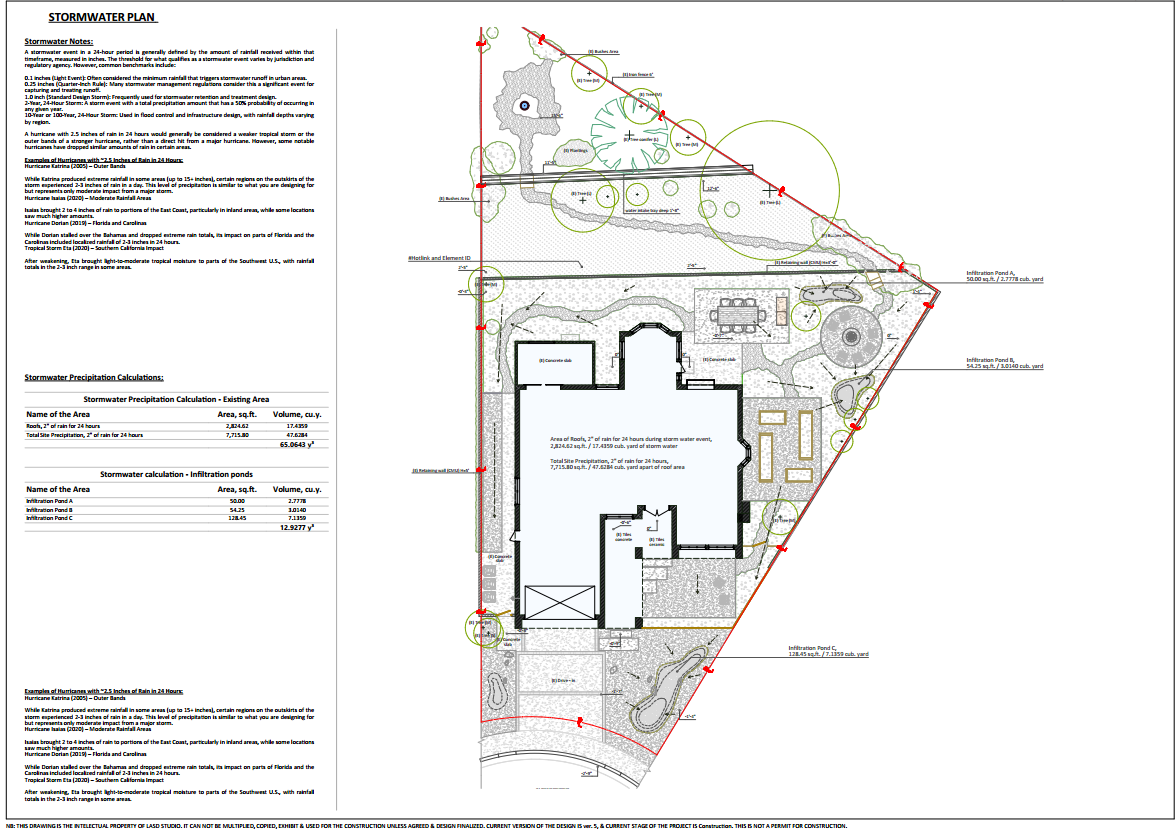
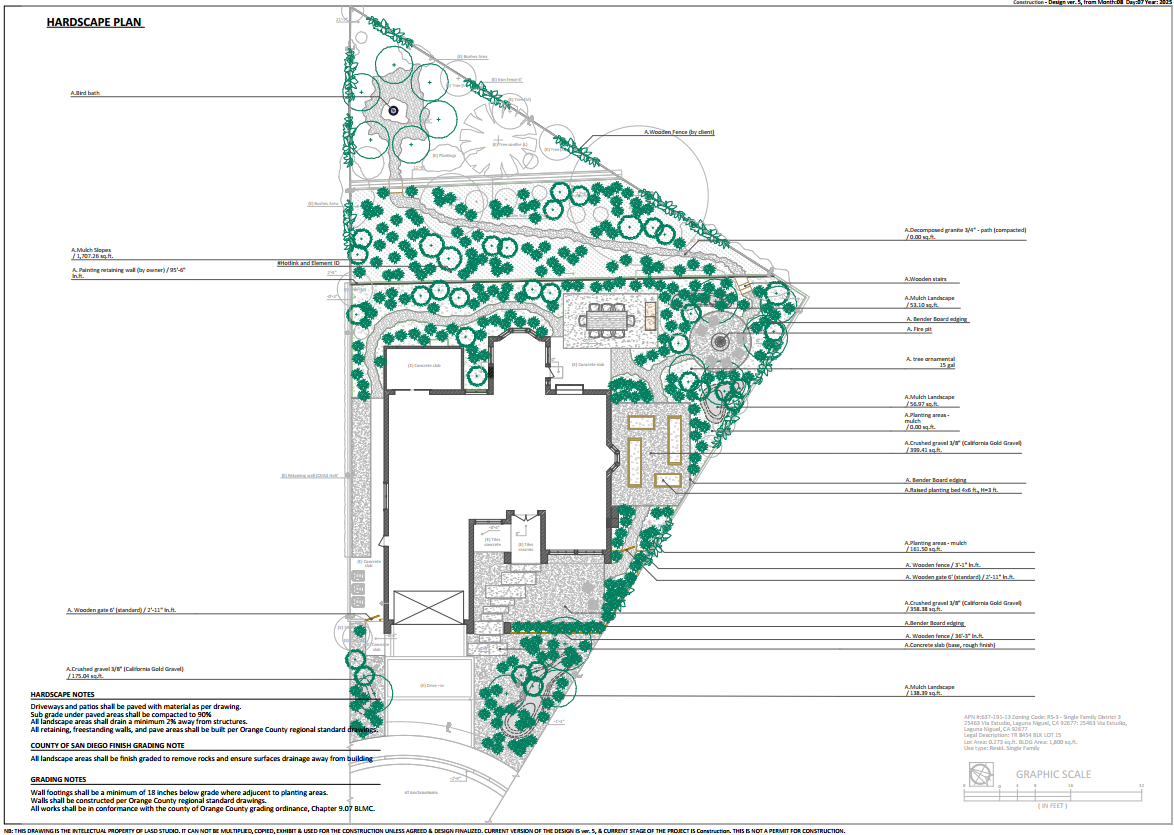
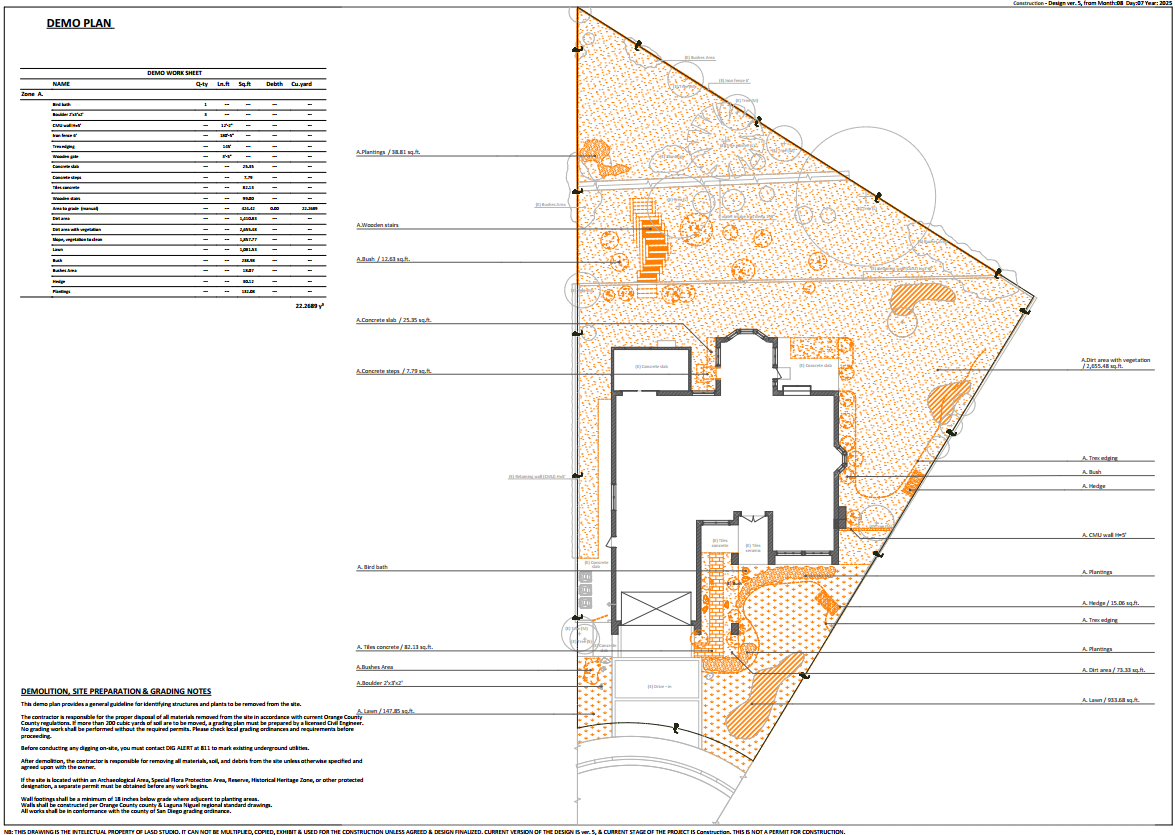
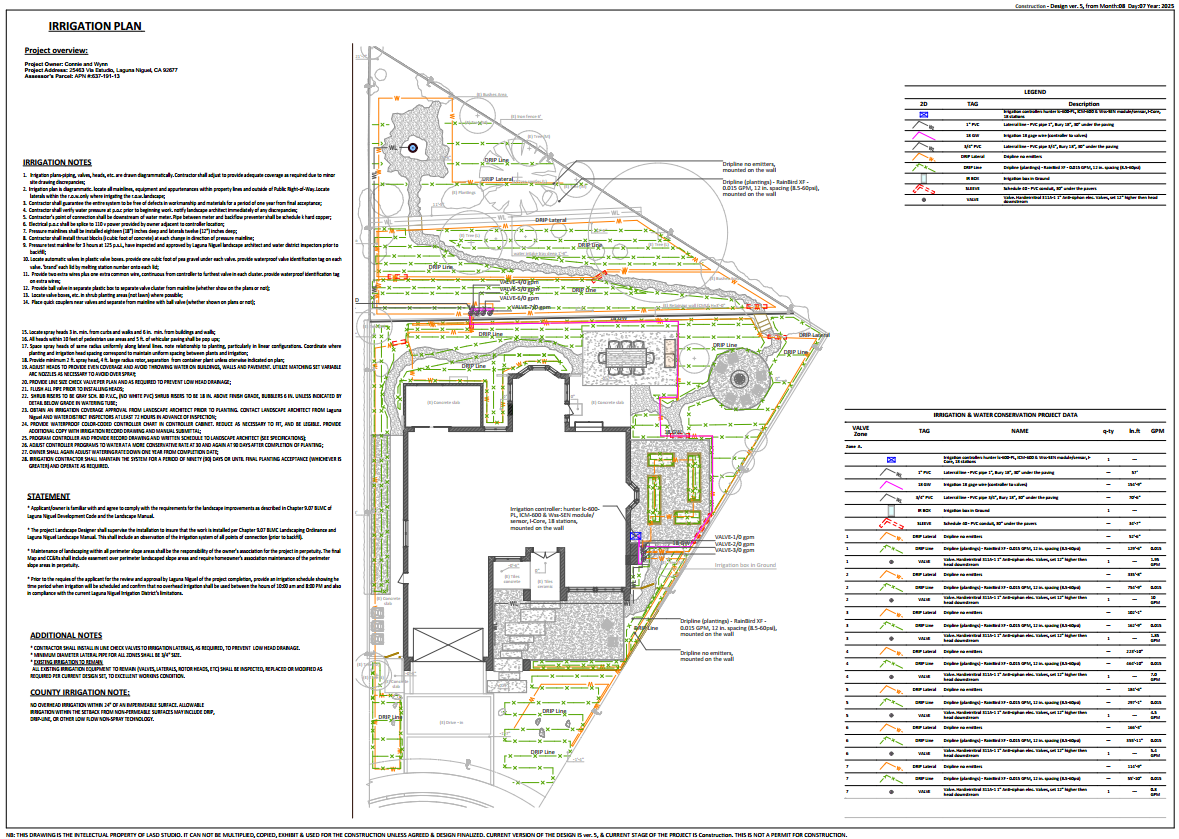
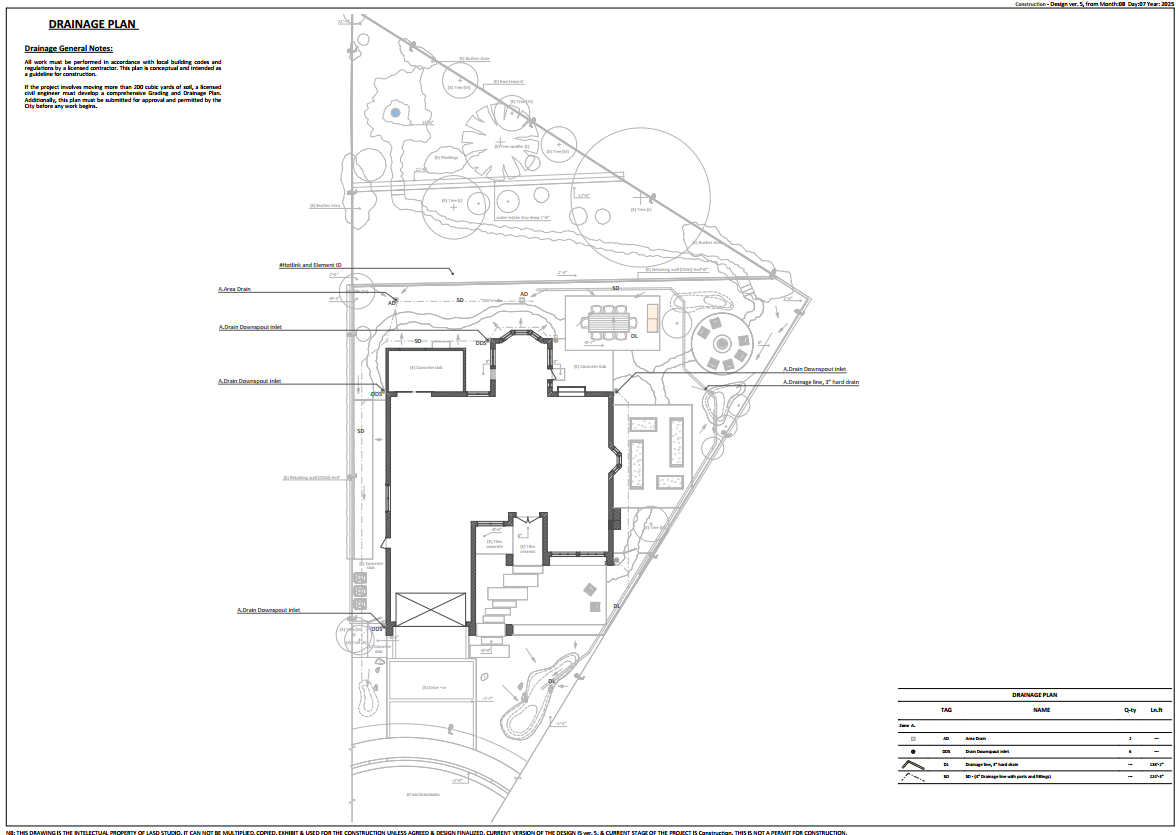
For this project, the design was developed into a construction documentation package that included existing conditions, demolition, hardscape, stormwater, planting, irrigation and drainage drawings. The work addressed lawn removal, front and back yard redesign, slope planting, California-adapted planting, gravel paths, raised vegetable beds, patio spaces and stormwater infiltration areas. In total final standard design package of LASD Studio consists of about 20 ArchD / A1 architectural drawings, to make construction smooth and efficient.
The project also included stormwater calculations and infiltration areas, allowing the landscape to participate in managing runoff rather than sending all water away as waste.
Planting Design
A Living California Native Garden
The planting design for this Laguna Niguel garden was developed as a layered, climate-responsive plant community rather than a decorative arrangement of isolated shrubs. The palette combines trees, flowering shrubs, grasses, perennials, succulents, vines, groundcovers and productive fruiting plants to create a garden that changes over time, supports seasonal life cycles and connects the family to the living systems around them.
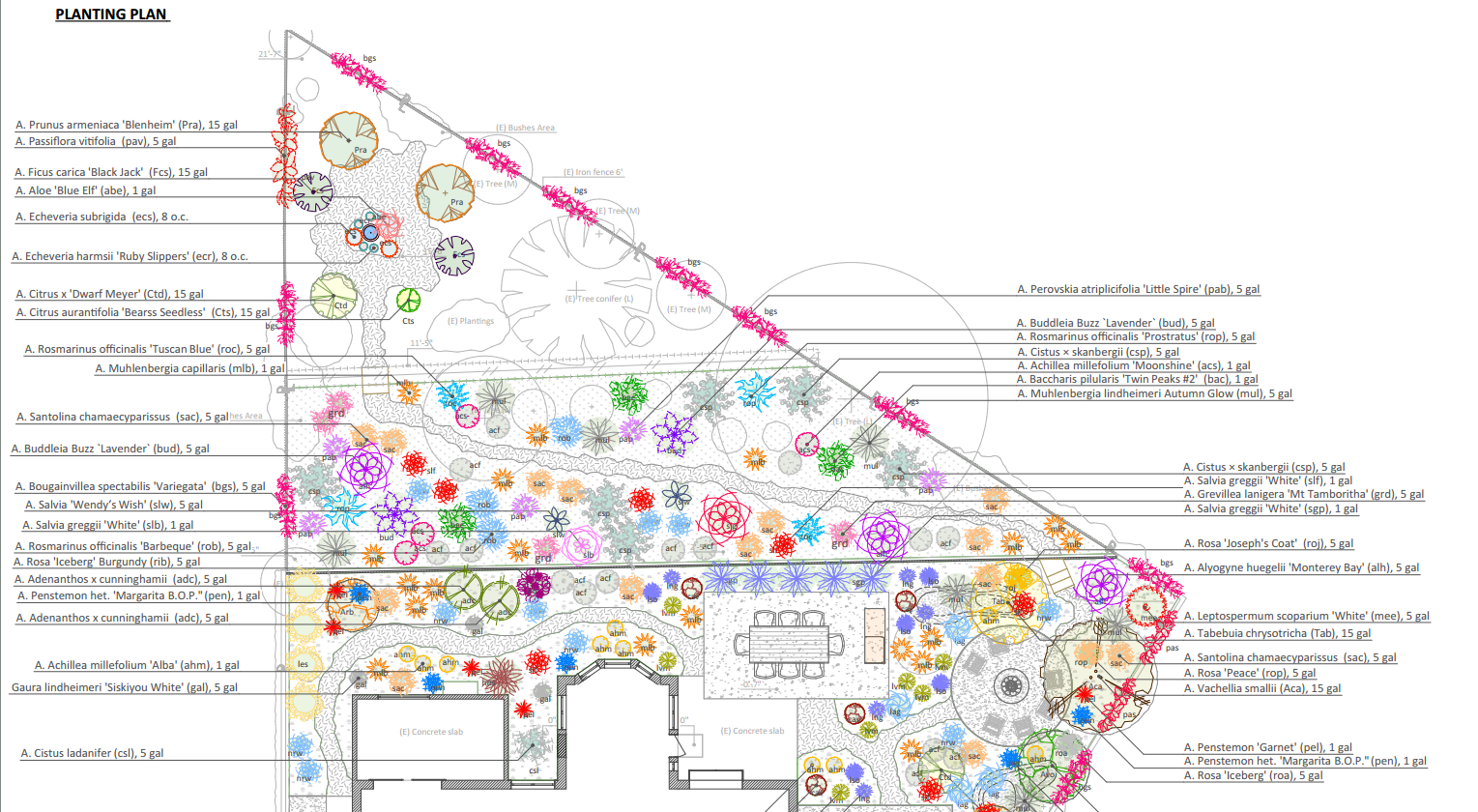
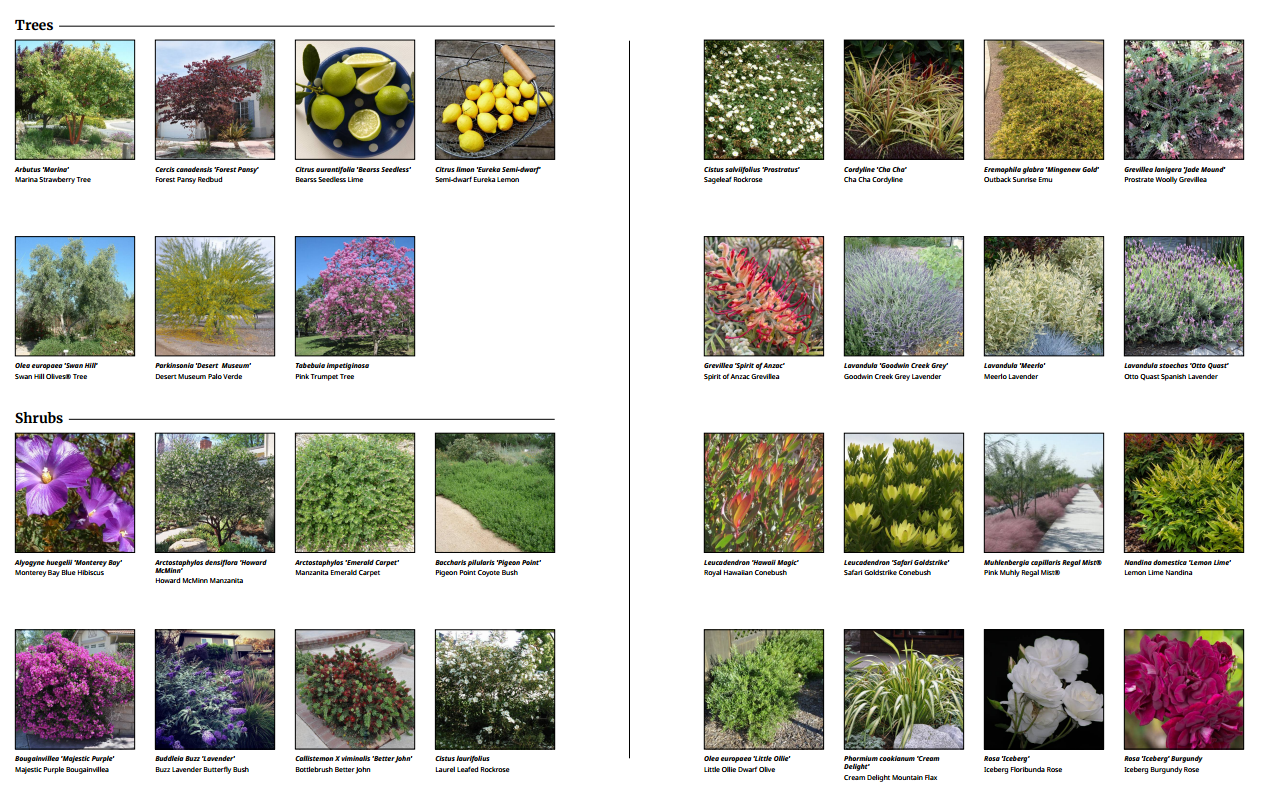
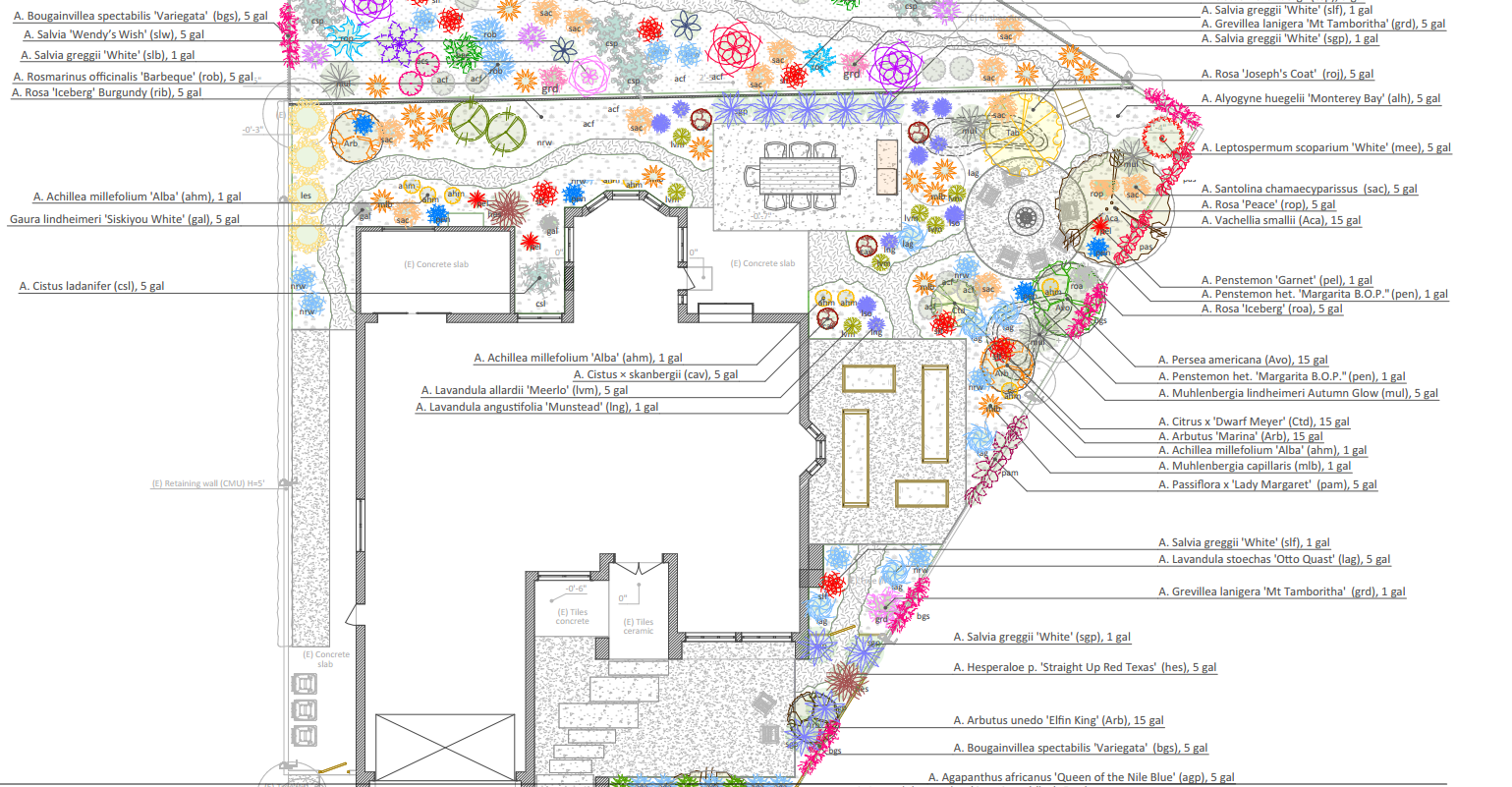
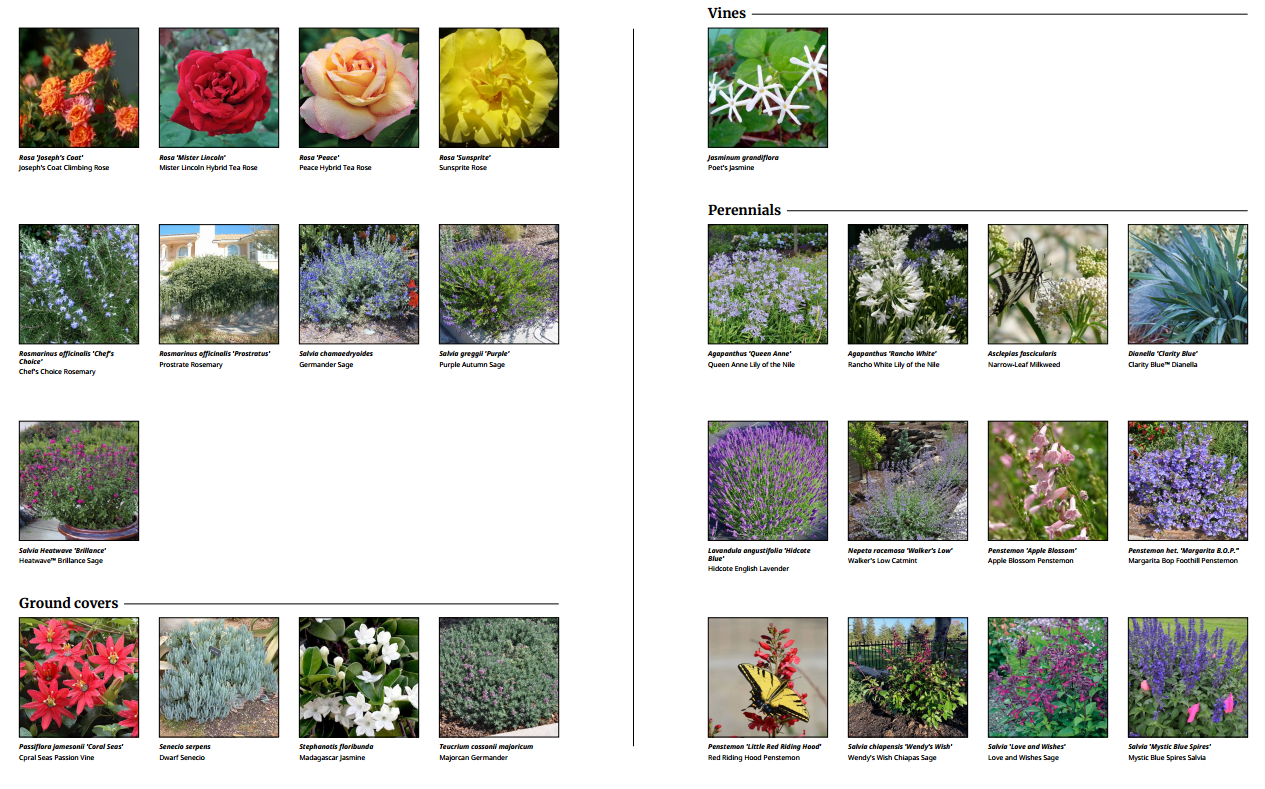
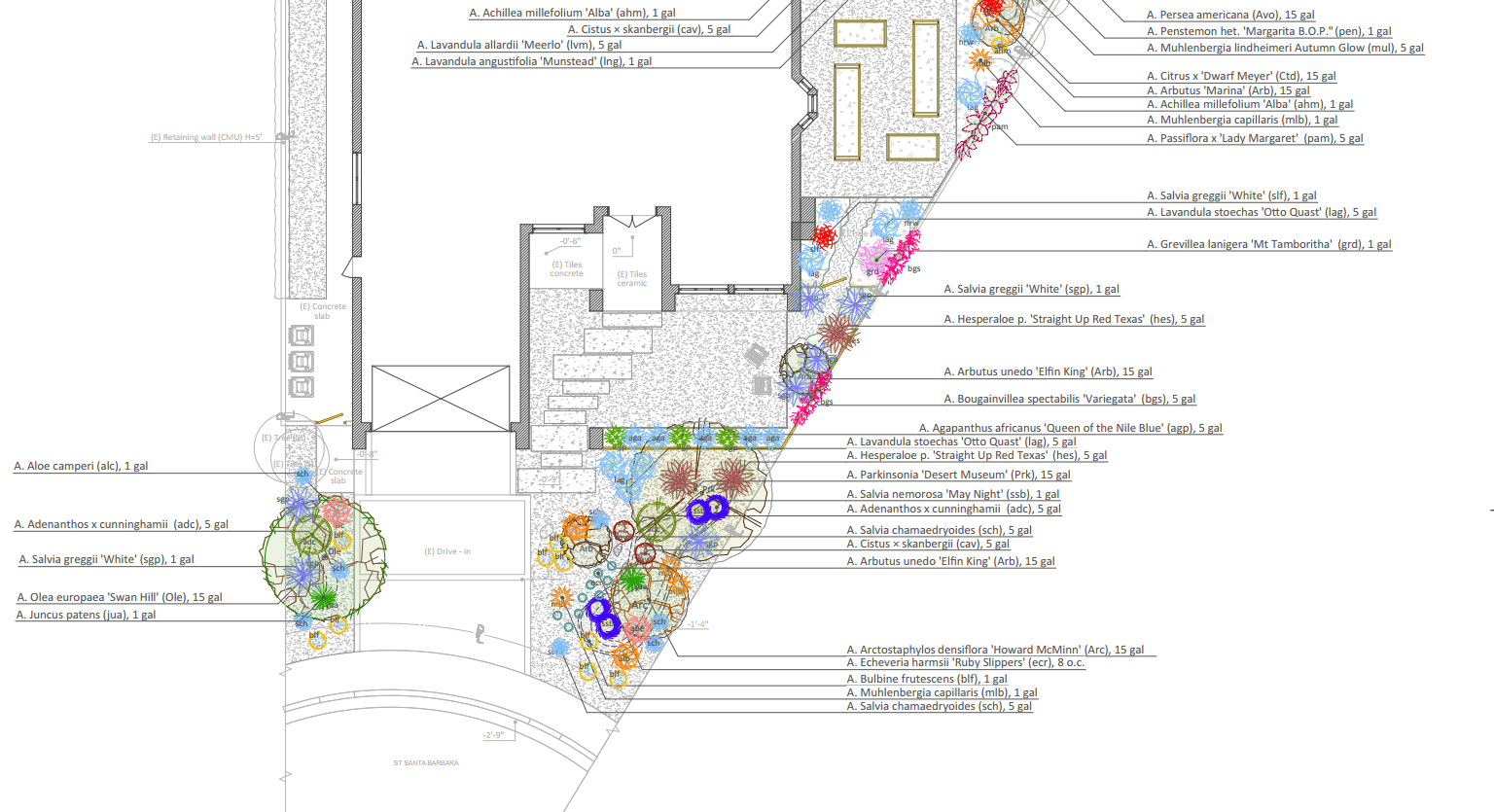
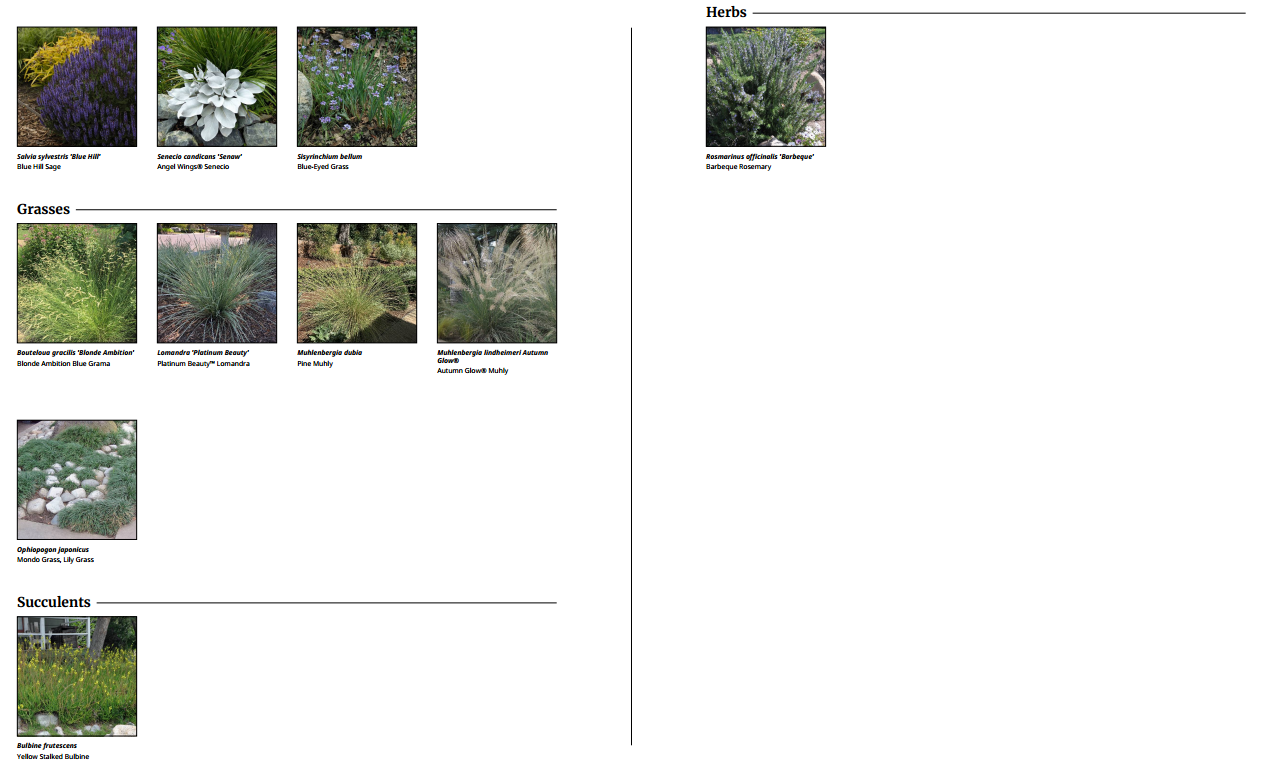
The planting plan was designed for Sunset Zone 24 / USDA Zone 10a and includes a wide range of Mediterranean, California-adapted and habitat-supportive species, including Muhlenbergia capillaris (Muhly Grass), Lavandula stoechas ‘Otto Quast’ (Spanish Lavender), Salvia greggii (Autumn Sage), Asclepias fascicularis (Narrow-Leaf Milkweed), Penstemon heterophyllus ‘Margarita B.O.P.’ (Foothill Penstemon), Arctostaphylos densiflora ‘Howard McMinn’ (Manzanita), Arbutus ‘Marina’ (Marina Strawberry Tree), Parkinsonia ‘Desert Museum’ (Palo Verde), Citrus spp., Ficus carica ‘Black Jack’ (Fig), Persea americana (Avocado), Passiflora spp. (Passion Vine) and Bougainvillea spectabilis ‘Variegata’ (Variegated Bougainvillea).
The goal was not only to reduce lawn, lower water demand or create a more contemporary California garden. The deeper intention was to build a small but functional ecological system: a garden where flowers, foliage, seeds, fruit, shelter, shade, soil life and seasonal change work together.
A Planting Palette Organized by Ecological Function
The garden is structured in layers. Each layer performs a different role, visually and ecologically.
At the upper level, small trees and large shrubs create the garden’s framework. Arbutus ‘Marina’ (Marina Strawberry Tree), Arbutus unedo ‘Elfin King’ (Strawberry Tree), Olea europaea ‘Swan Hill’ (Fruitless Olive), Parkinsonia ‘Desert Museum’ (Palo Verde), Vachellia smallii (Sweet Acacia), Tabebuia chrysotricha (Golden Trumpet Tree) and Arctostaphylos densiflora ‘Howard McMinn’ (Howard McMinn Manzanita) provide vertical structure, filtered shade, nesting potential, flowers, fruit or seed resources. These plants help the garden move beyond surface decoration and become a spatial habitat.
Below this canopy layer, the shrub layer creates cover, texture and seasonal bloom. Adenanthos x cunninghamii (Albany Woollybush), Leptospermum scoparium ‘White’ (Tea Tree), Cistus ladanifer (Rockrose), Cistus × skanbergii, Grevillea lanigera ‘Mt Tamboritha’ (Woolly Grevillea), Baccharis pilularis ‘Twin Peaks #2’ (Dwarf Coyote Brush), Rosmarinus officinalis (Rosemary), Santolina chamaecyparissus (Lavender Cotton), Alyogyne huegelii ‘Monterey Bay’ (Blue Hibiscus), Rosa spp. and Buddleia Buzz ‘Lavender’ create a middle layer of nectar, pollen, scent, evergreen mass and protective cover.
The herbaceous and flowering layer is where much of the pollinator activity happens. Salvia greggii (Autumn Sage), Salvia chamaedryoides (Germander Sage), Salvia nemorosa ‘May Night’, Achillea millefolium ‘Alba’ and ‘Moonshine’ (Yarrow), Penstemon ‘Garnet’, Penstemon heterophyllus ‘Margarita B.O.P.’, Gaura lindheimeri ‘Siskiyou White’, Nepeta × faassenii ‘Six Hills Giant’ (Catmint), Lavandula angustifolia ‘Munstead’, Lavandula allardii ‘Meerlo’ and Lavandula stoechas ‘Otto Quast’ provide repeated flower resources through different parts of the year.
The lower layer of grasses, succulents and groundcovers gives the garden resilience and movement. Muhlenbergia capillaris (Pink Muhly Grass), Muhlenbergia lindheimeri ‘Autumn Glow’, Juncus patens, Bulbine frutescens, Aloe ‘Blue Elf’, Aloe camperi, Hesperaloe parviflora ‘Straight Up Red Texas’, Echeveria harmsii ‘Ruby Slippers’ and Echeveria subrigida help stabilize planting areas, reduce bare soil, create fine-textured visual rhythm and provide habitat niches close to the ground.
The vine and productive layers add another dimension. Passiflora jamesonii ‘Coral Seas’, Passiflora vitifolia, Passiflora ‘Lady Margaret’ and Bougainvillea spectabilis ‘Variegata’ create vertical flowering habitat along fences and garden edges. Fruit trees including Citrus × ‘Dwarf Meyer’ (Meyer Lemon), Citrus aurantifolia ‘Bearss Seedless’ (Lime), Ficus carica ‘Black Jack’ (Fig), Prunus armeniaca ‘Blenheim’ (Apricot), and Persea americana (Avocado) connect the garden to food production as well as flowering and fruiting cycles.
Pollinators, Birds and the Garden Food Web
In ecological terms, the garden is not designed for one species. It is designed as a small network of relationships.
Pollinators need more than one beautiful flower. They need overlapping bloom periods, access to pollen and nectar, shelter, nesting opportunities and reduced chemical disturbance. The Xerces Society describes pollinator-supportive gardens as places that provide abundant flowering plants through the growing season, along with shelter and nesting sites. NRCS guidance also emphasizes the importance of plants that flower across the growing season, because continuous bloom helps support native pollinators when individual species move in and out of activity.
That is why this palette uses multiple flower forms and bloom strategies. Tubular flowers such as Salvia greggii (Autumn Sage), Penstemon heterophyllus (Foothill Penstemon), Hesperaloe parviflora (Red Yucca) and Aloe species are especially valuable for hummingbirds and long-tongued bees. Open, compound flowers such as Achillea millefolium (Yarrow) support small bees, hoverflies and other beneficial insects. Aromatic Mediterranean plants such as Lavandula (Lavender), Rosmarinus officinalis (Rosemary), Nepeta (Catmint) and Santolina provide extended nectar and pollen resources while also giving the garden a sensory character.
Some plants play a more specialized ecological role. Asclepias fascicularis (Narrow-Leaf Milkweed) is particularly important because milkweeds are larval host plants for monarch butterflies. In a garden, this means the plant is not only a flower for adult pollinators; it becomes part of the butterfly’s life cycle. This is a different level of ecological design: the plant supports reproduction, not only visitation.
Birds are supported through a different set of resources. Small trees, shrubs and vines provide perching, cover and potential nesting structure. Fruiting and seed-producing plants such as Arbutus (Strawberry Tree), Ficus carica (Fig), Prunus armeniaca (Apricot), Citrus, Passiflora and grasses such as Muhlenbergia can contribute seasonal food resources. Even more importantly, a pollinator-rich garden supports insects, and insects are a key food source for many birds, especially during nesting season. California native plant organizations emphasize that native and regionally adapted plants help support beneficial insects, birds and broader wildlife communities because they are part of evolved ecological relationships.
The Garden as an Evolving System
The planting plan is not just a list of species. It is a framework for succession.
In the first year, the garden is open and young. Perennials, grasses, succulents and low shrubs begin to establish. Flowers appear quickly from lavender, salvia, yarrow, gaura, penstemon and rosemary. These early species give the garden immediate beauty and provide nectar and pollen while the larger shrubs and trees are still developing.
By the second and third year, the garden becomes denser. Muhlenbergia grasses expand into soft clouds of texture. Salvia, Lavandula, Cistus, Grevillea, Baccharis and Santolina begin to form larger habitat patches. The fruit trees and ornamental trees start to define shade, scale and microclimate. This is when the garden begins to feel less like a new installation and more like a living place.
Over a longer period, the tree and shrub structure becomes more important. Shade patterns change. Some plants will expand, others will be edited. The garden becomes a managed ecological composition, & not wild in the unmanaged sense, but alive, adaptive and intentionally guided.
This is the difference between landscape as decoration and landscape as an evolving system.
From Drawing to Built Garden
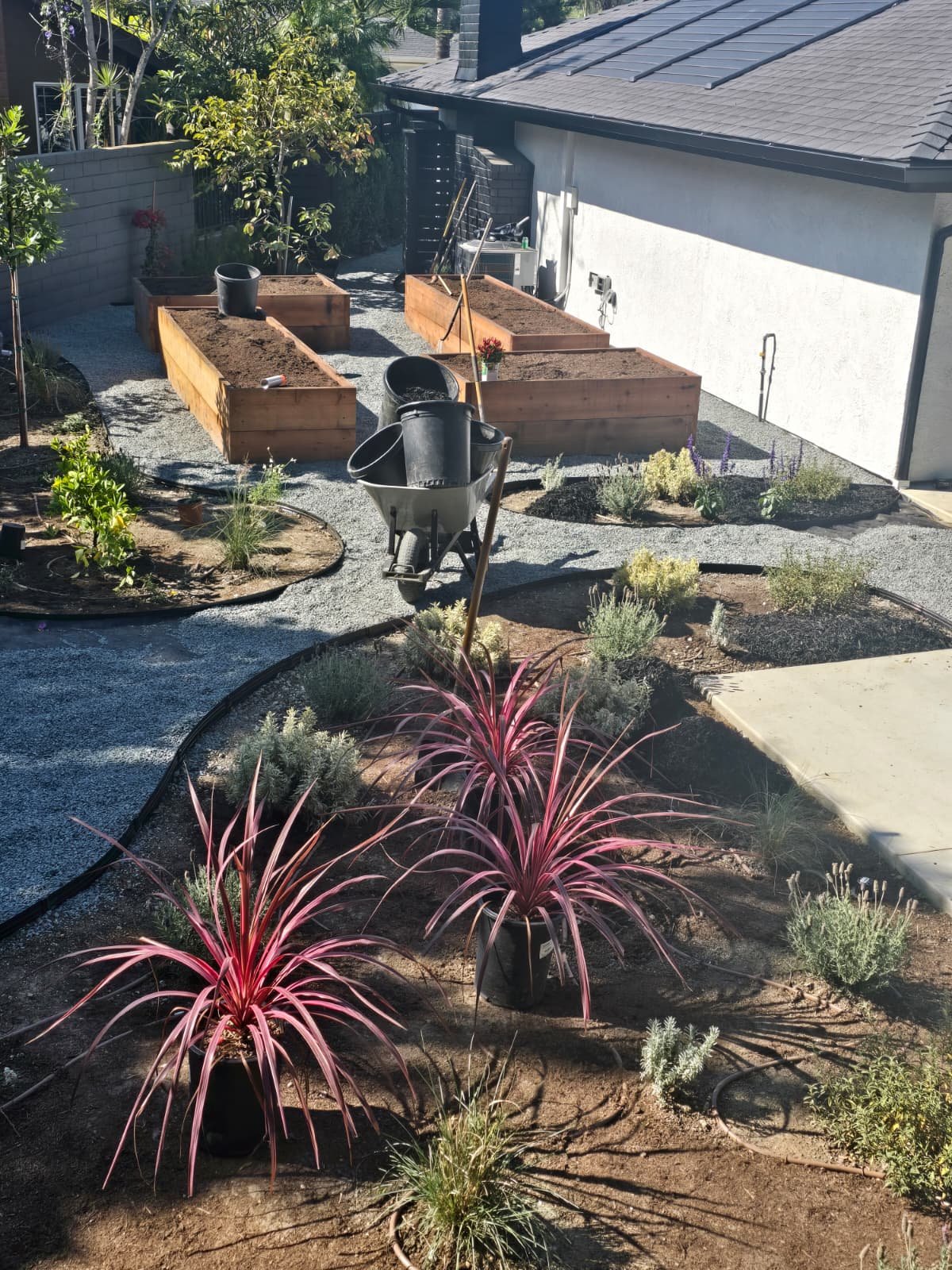
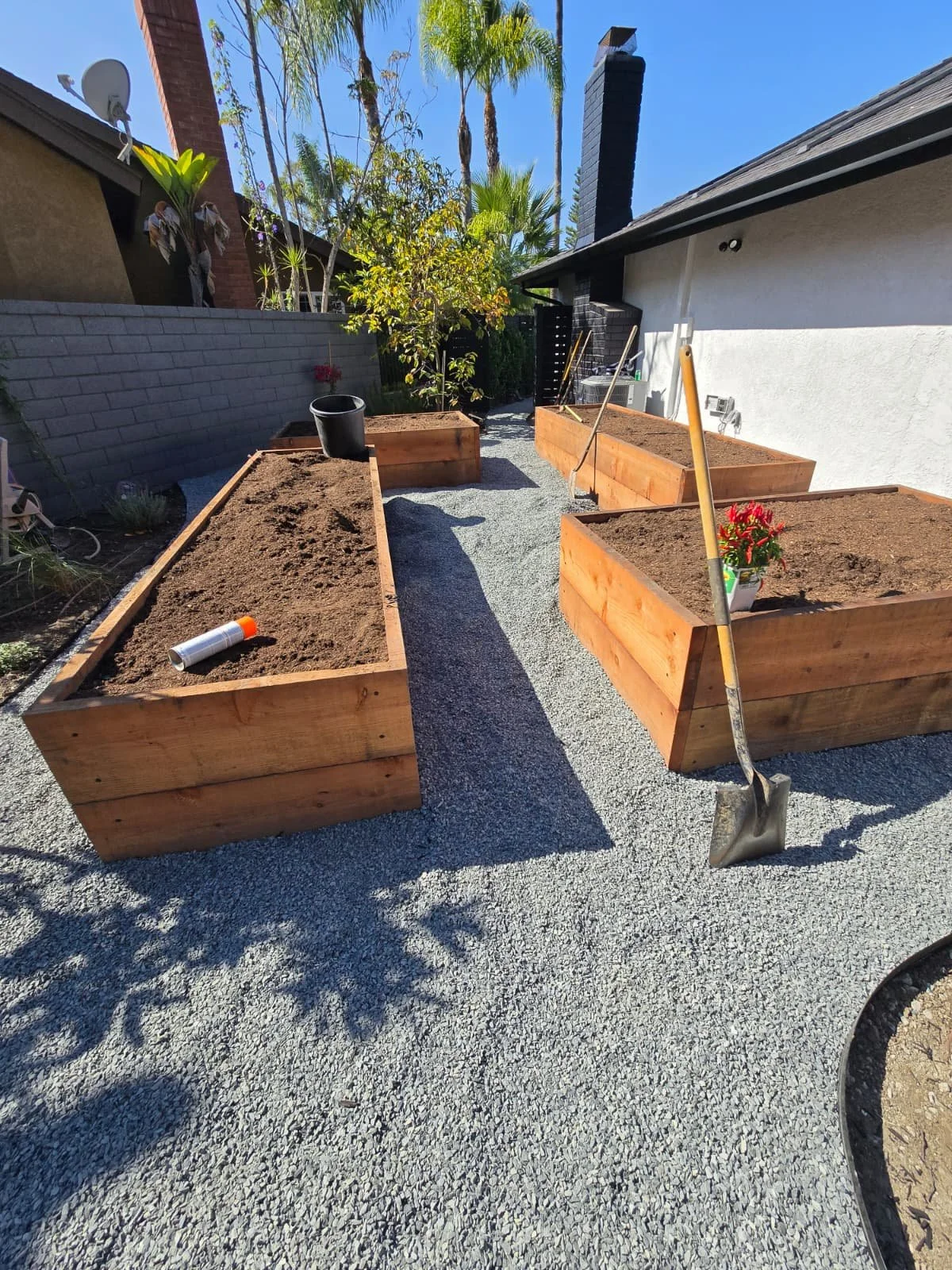
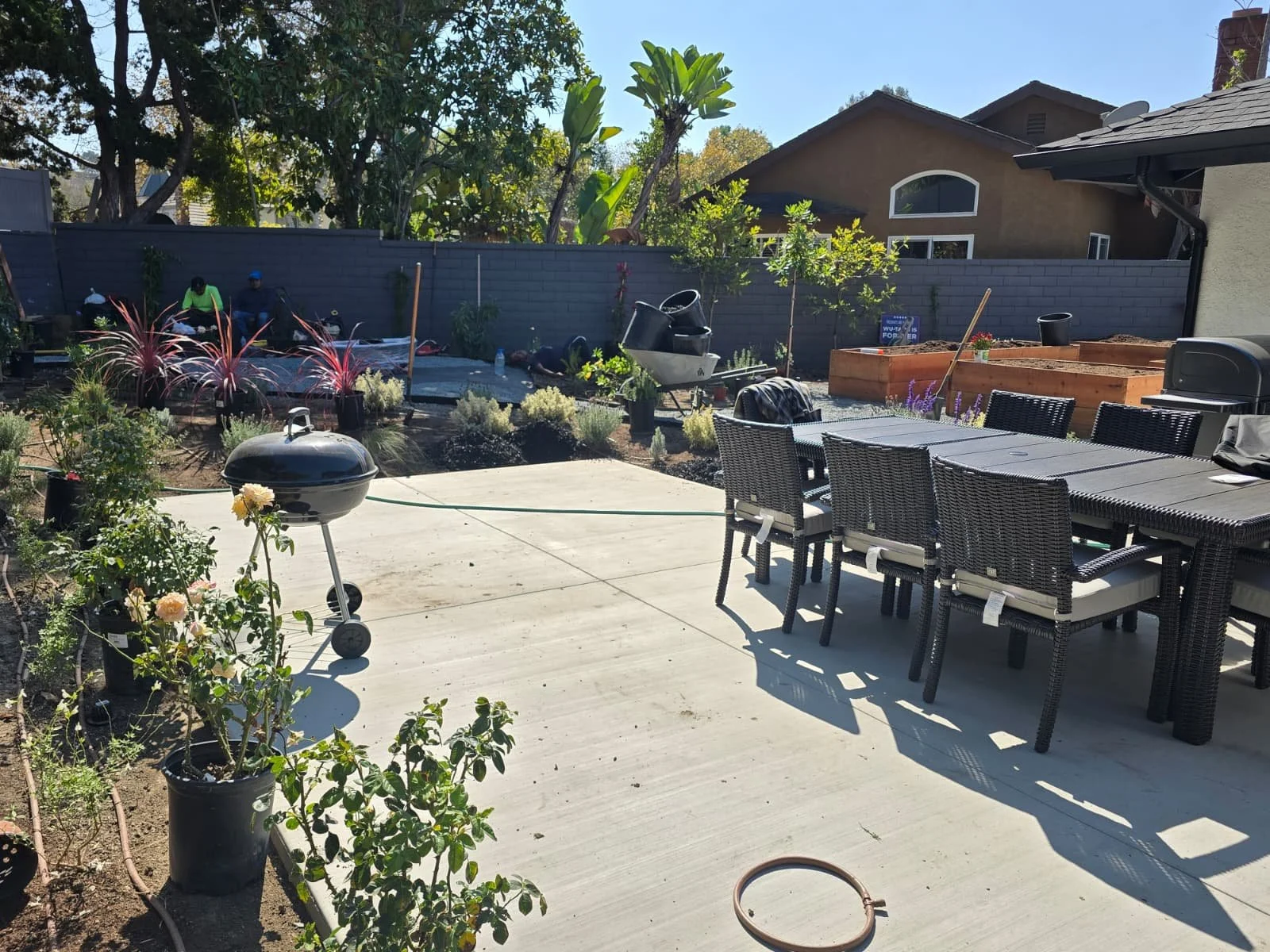
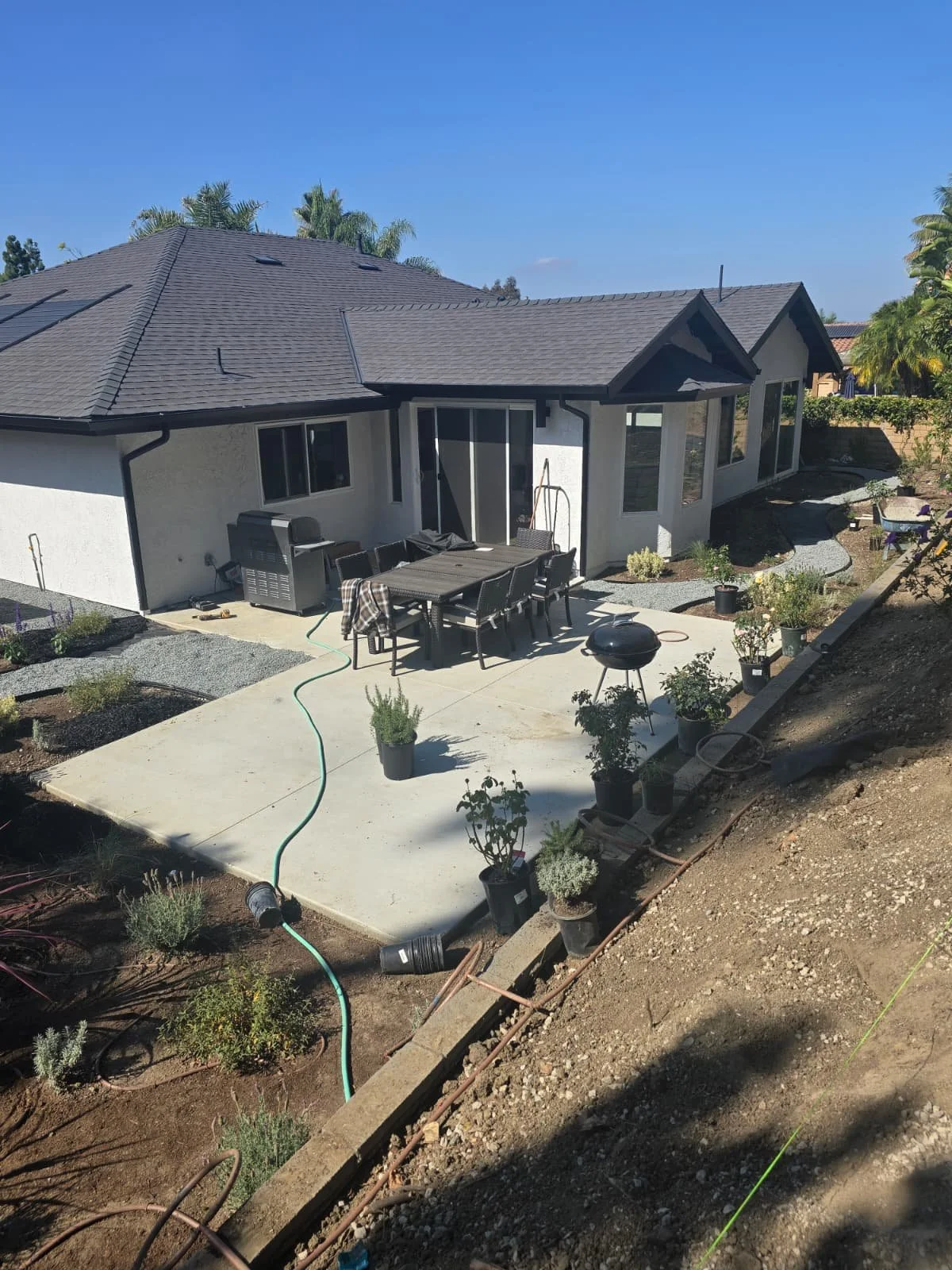
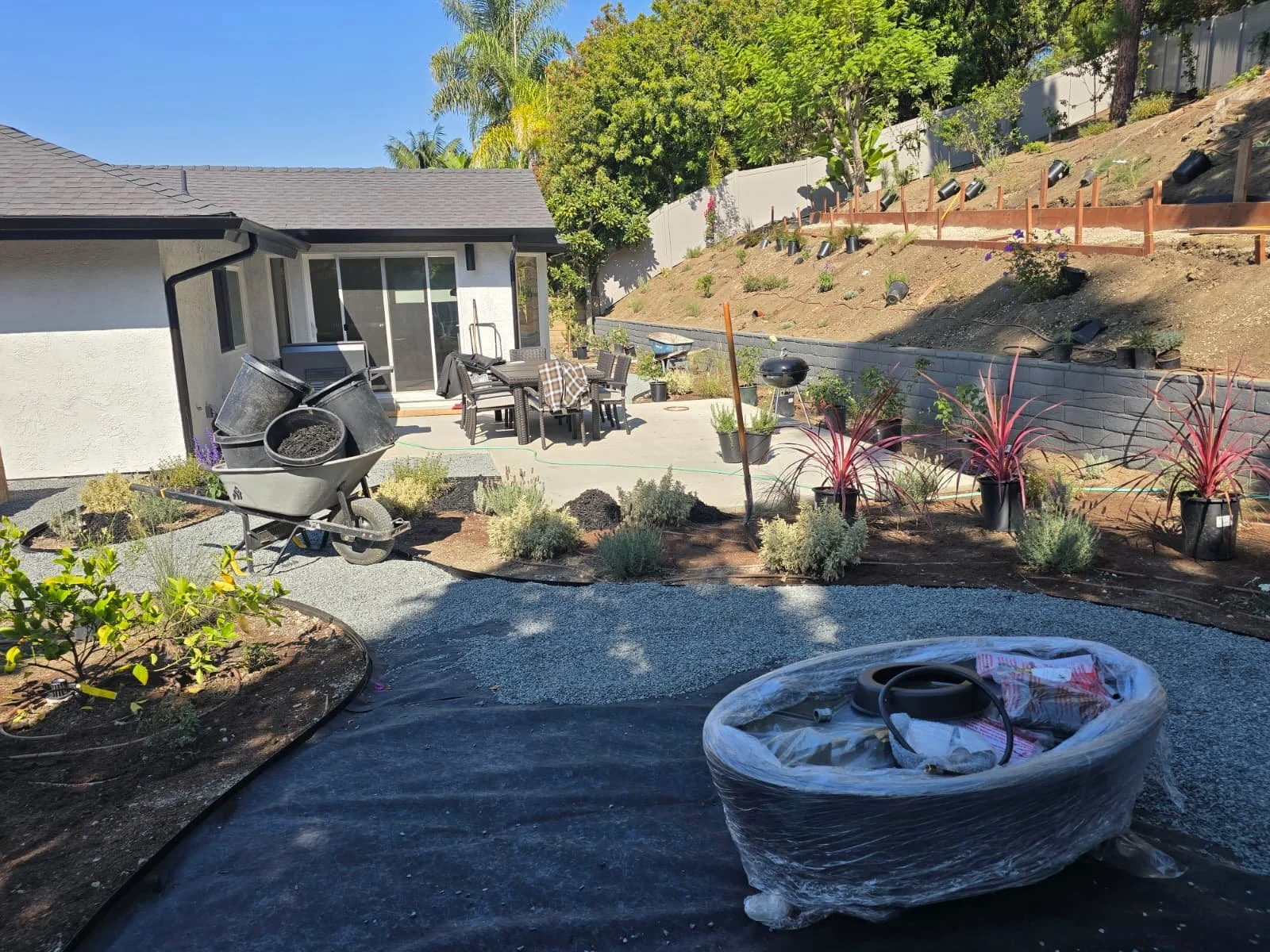
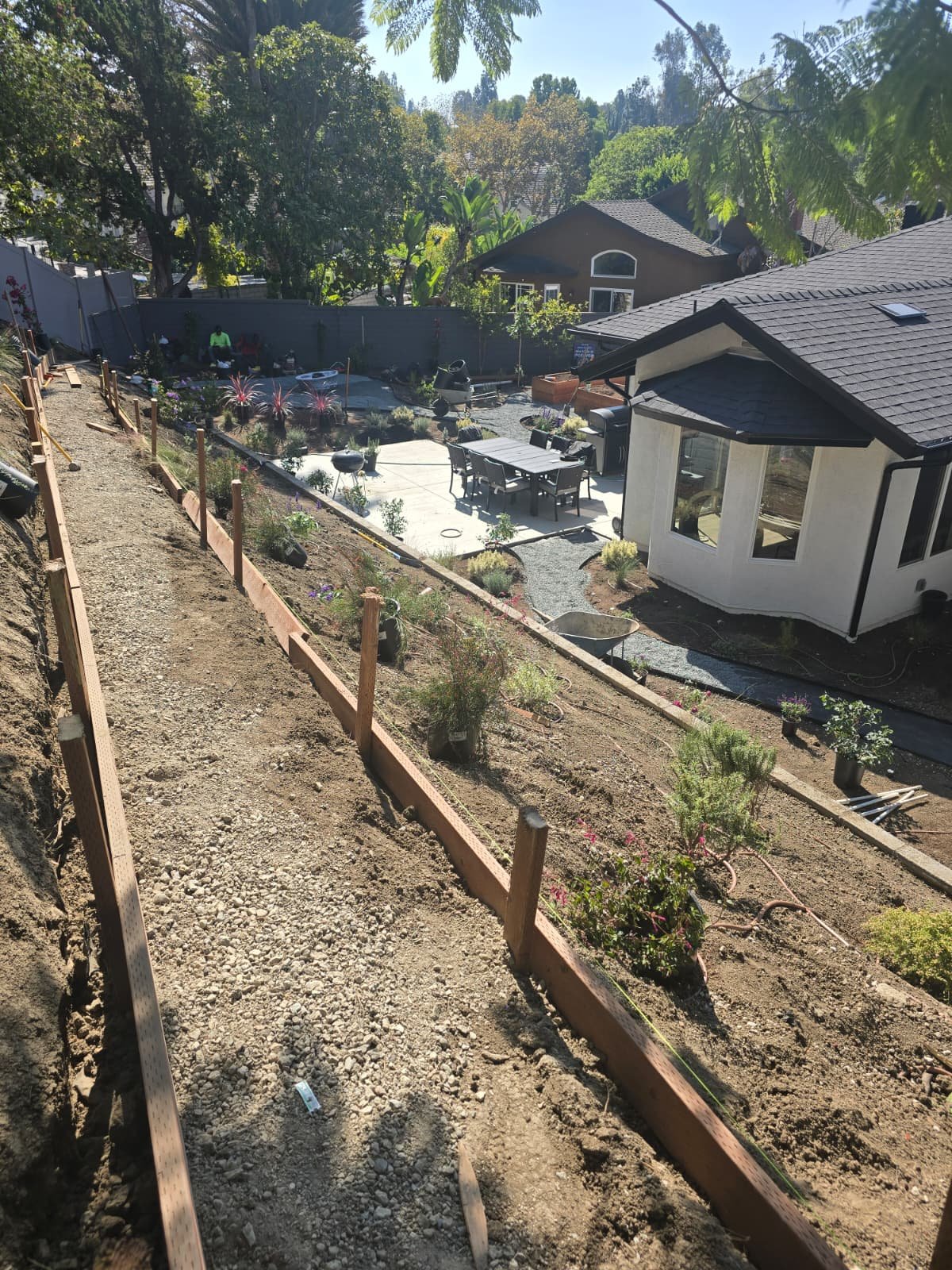
The final garden shows the transformation from concept to lived space. Gravel paths now connect the outdoor rooms. Raised beds bring food production into the garden. Drought-adapted planting begins to establish across the slopes and planting areas. The patio becomes a central gathering space, while the surrounding planting gradually matures into a softer, more layered garden environment.
As with every built project, the construction phase matters deeply. Material choices, planting substitutions, detailing, installation quality and field decisions all influence the final result. This project is also a reminder that good garden design benefits from continued coordination during construction, so the original design intent is protected from concept through installation.
Designing Climate-Responsive Gardens in Southern California
For LASD Studio, a garden is not simply an outdoor decoration. It is a living system shaped by climate, water, soil, plants, people and time.
This Laguna Niguel project reflects our approach to residential garden design in Southern California: thoughtful site analysis, clear spatial organization, detailed planting strategy, water-conscious design and a process that helps clients understand each step from idea to construction.
For private residences, estates and family gardens, LASD Studio develops outdoor spaces that are beautiful, functional and ecologically meaningful.
This project illustrates why garden design is most successful when concept, documentation, construction and planting are carefully coordinated from beginning to end.
Rancho Santa Fe Rewilding Landscape Architectural Design
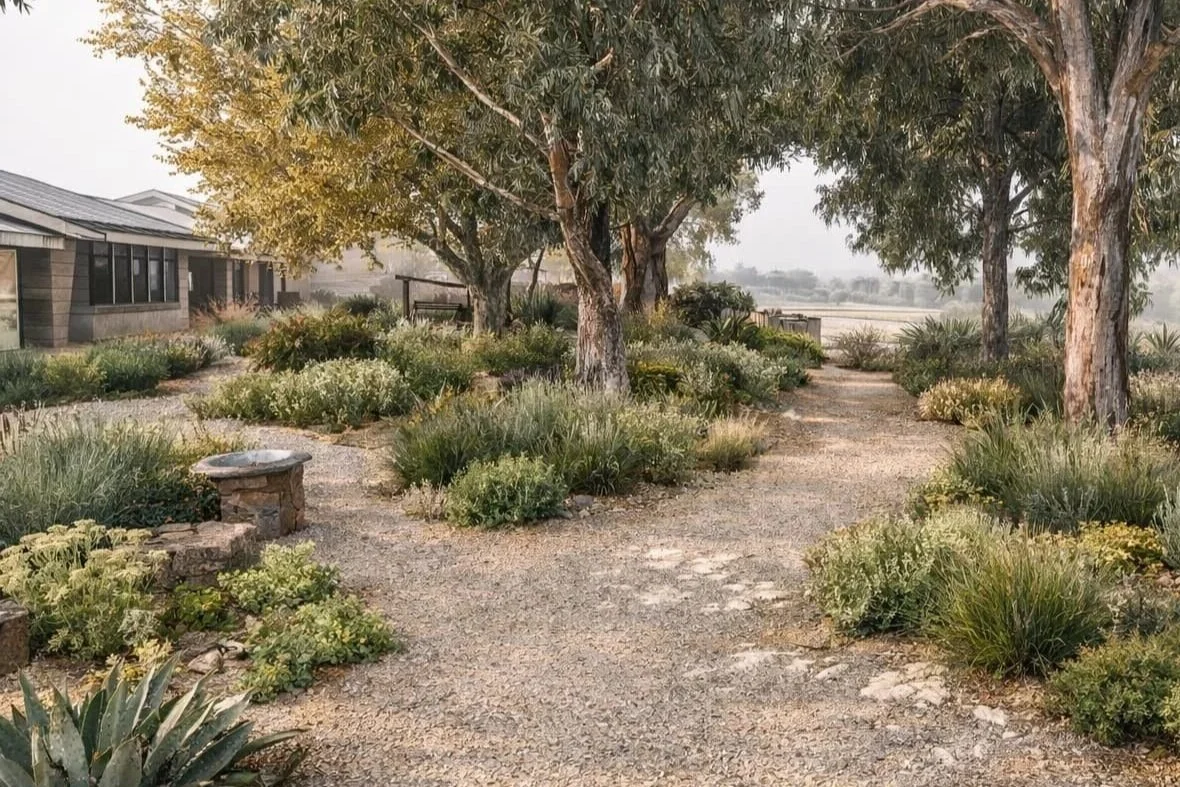
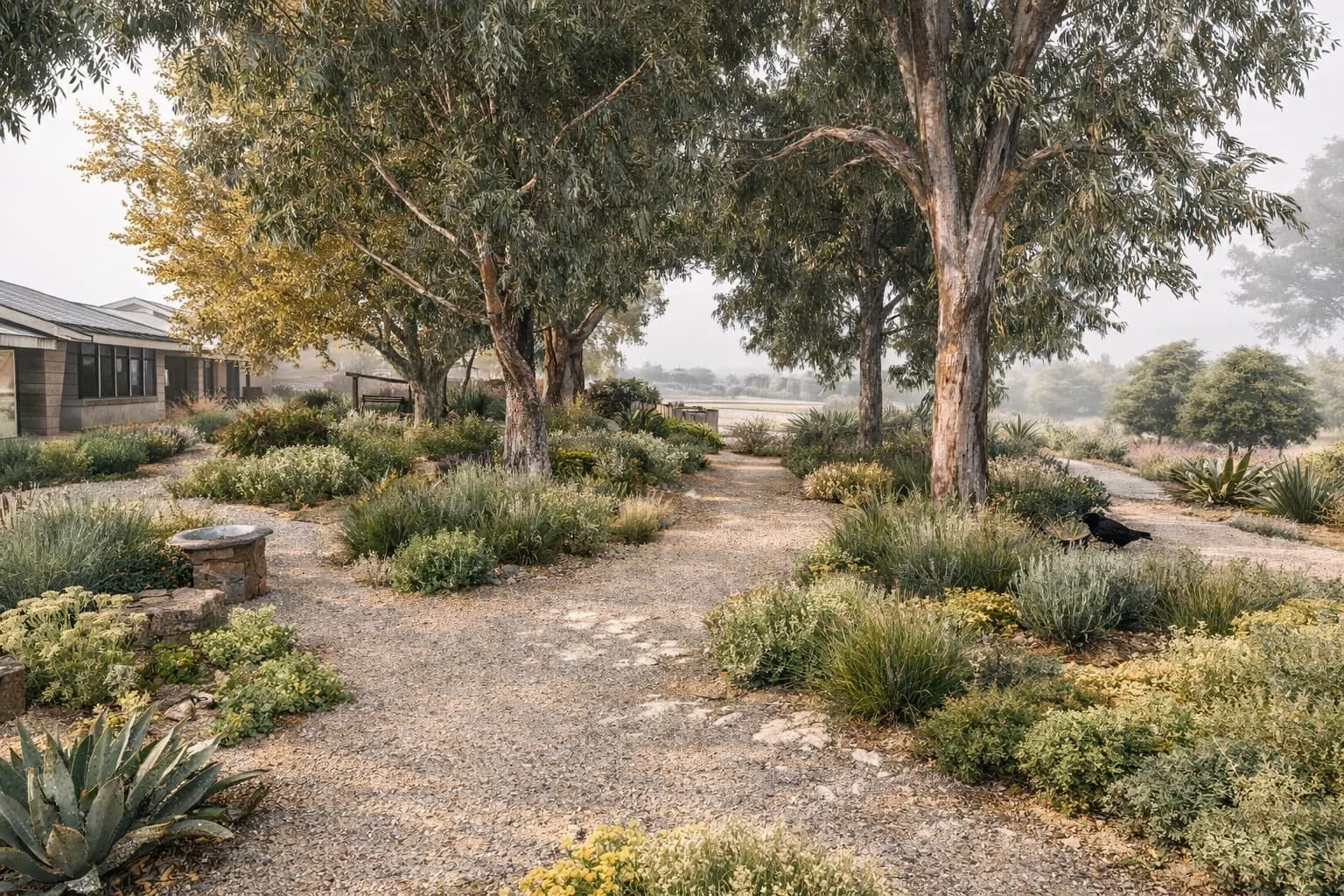
Rancho Santa Fe rewilding garden by LASD Studio - a fire-resilient, biodiversity-driven landscape architecture project integrating California native planting, fuel modification strategy, and long-term ecological design for large-scale estates.
“A Living Legacy: Proudly Designed as an Evolutionary Landscape for Future Generations.”
This project reflects a direction I’ve been developing since 2008: gardens designed as living ecosystems - resilient, biodiverse, and intended to evolve for decades.
In Rancho Santa Fe, where water, wildfire risk, and ecological fragmentation are no longer abstract issues, a garden can either become a fragile surface that demands constant control - or it can become a living system that grows more resilient with time. The Rancho Santa Fe Rewilding Sanctuary Garden was designed as the second kind: a legacy-level ecological landscape that reconnects beauty with function, and elegance with reality.
Created by LASD Studio in collaboration with The Image of Nature, the design rethinks the property as an evolving habitat. It is structured to reduce wildfire vulnerability, regenerate biodiversity, and restore the “biological intelligence” of the land: from soil microbes to pollinators, birds, reptiles, and the predator presence that stabilizes an ecosystem over the long horizon.
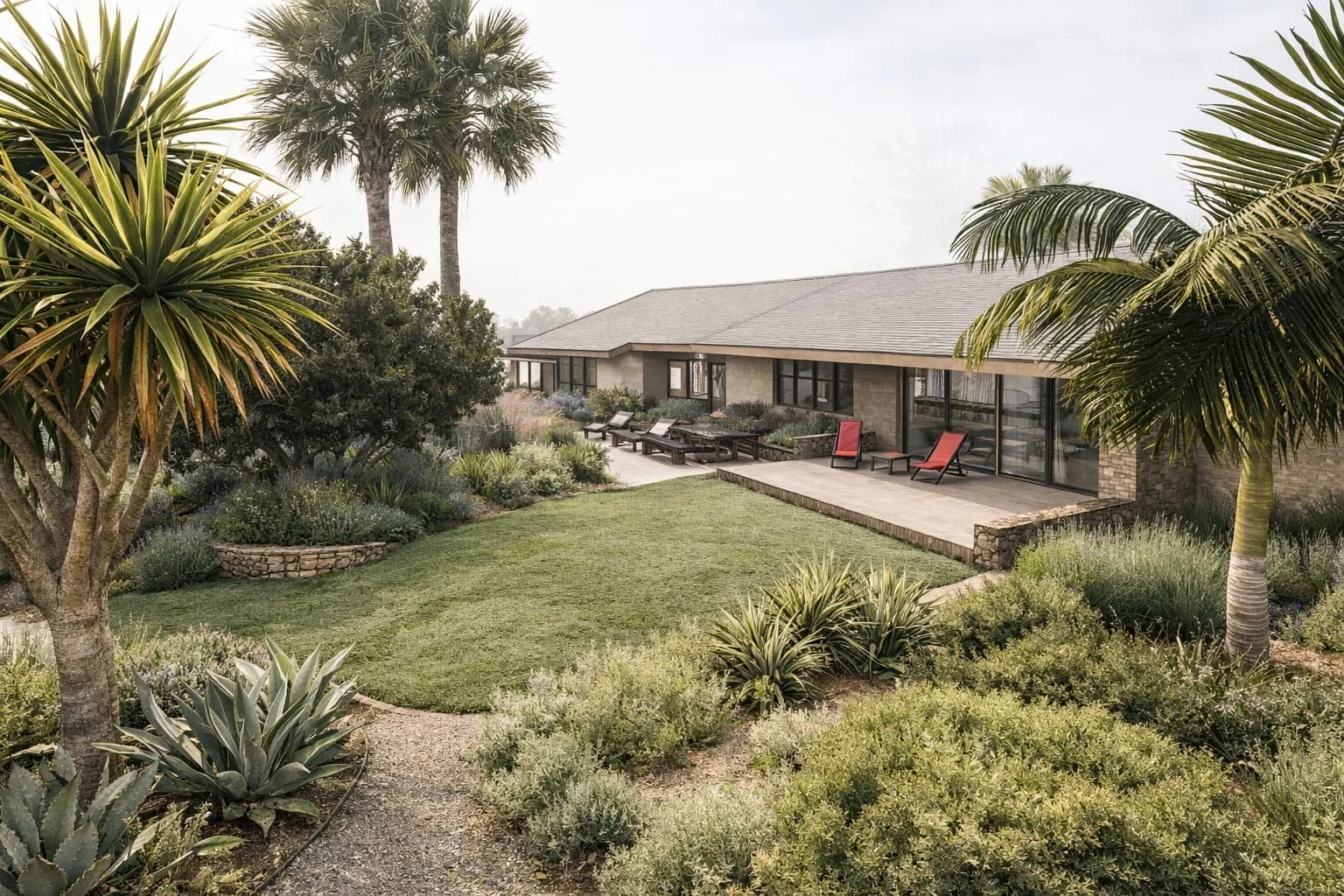
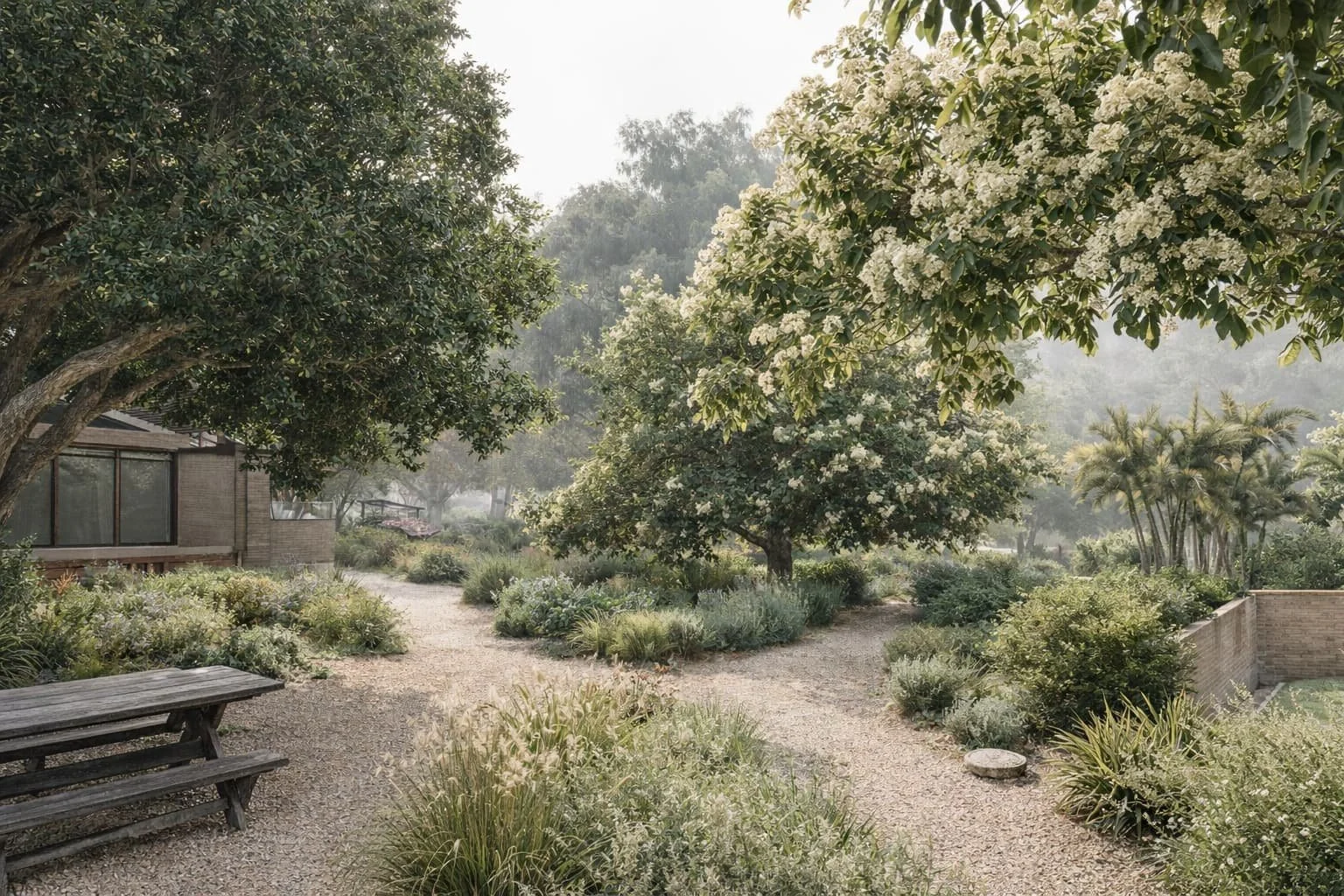
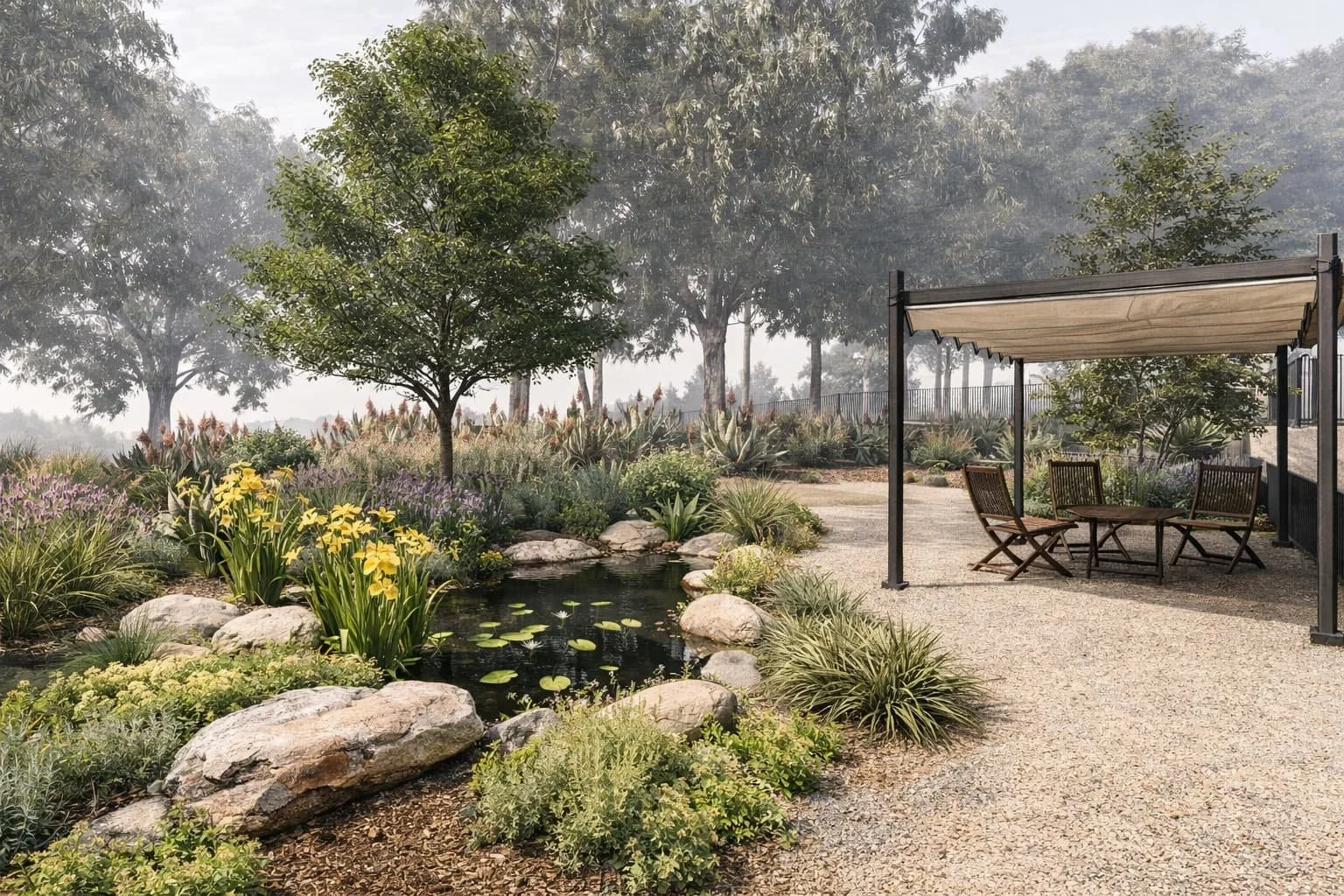
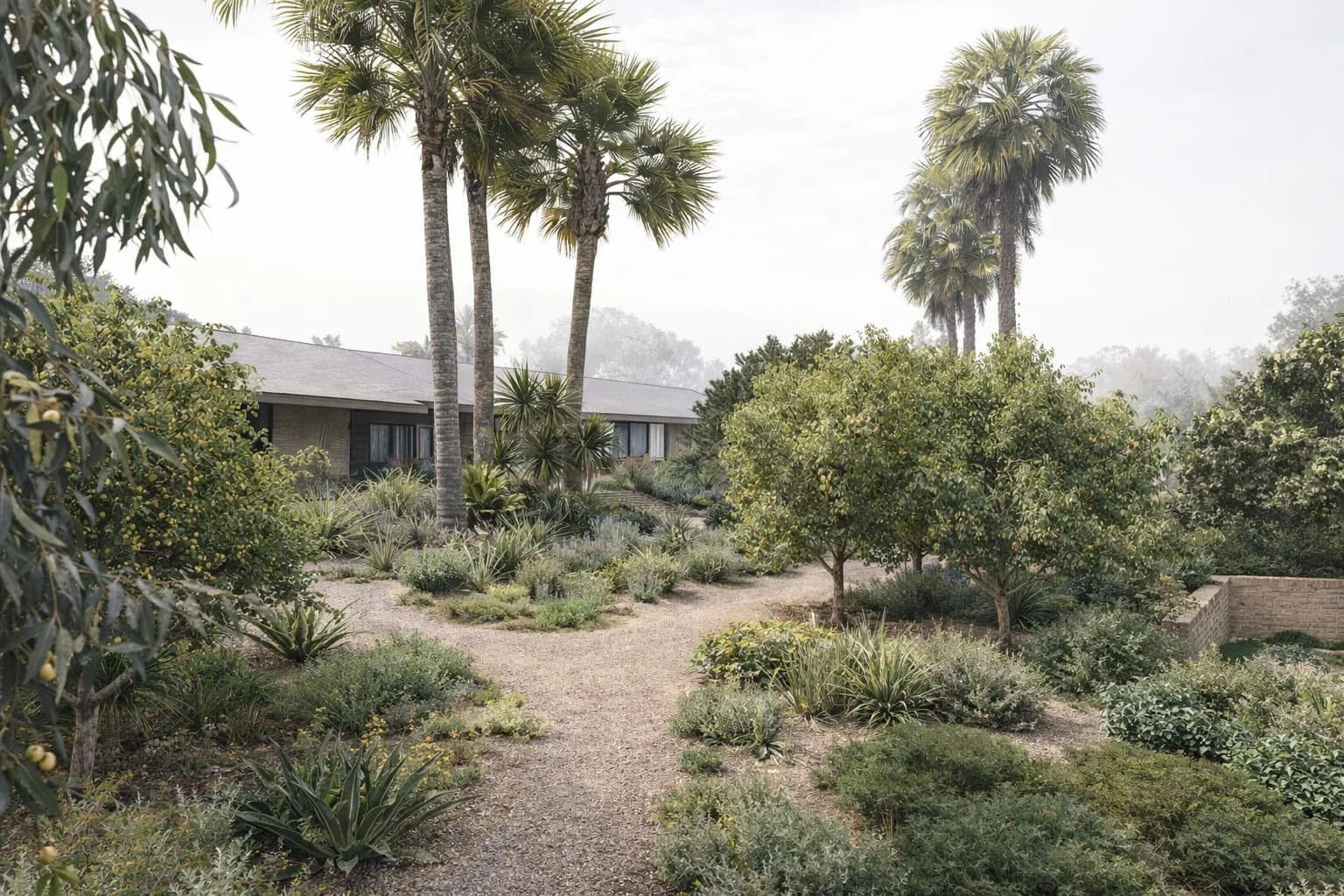
Location: Rancho Santa Fe, California
Project Type: Ecological restoration, per fire-defensible code. Evolving Estate Landscape and Ecological restoration
Design Scope: Concept development, Hardscape design, Irrigation, Drainage, Breath wall design, Lighting plan design, Stormwater Planning, Fuel Modification Plan, Soil and vegetation restoration, Construction Documentation.
Construction cost: $1,260,000
Code compliance & Landscape Architect in Record: Glen Sharrar, The Image of Nature
Fire department: Conor Lenahan, Rancho Santa Fe, Fire Protection District.
Soil testing lab: Wallace Laboratories & Waypoint Analytical
Construction and Fire cleaning: by Client
Design Studio: LASD Studio - Landscape Architecture, Sustainability & Design
A concept exploring how this garden could evolve over time.
Read more about research behind this garden - SoCal Wildlife and Biodiversity Landscape Restoration.
‘Rewilding Sanctuary Garden’, A Living Legacy: Designed as an Evolutionary Landscape.
Concept & Vision
This is not a native garden in the simplistic sense of replacing exotics with natives. It is a designed ecological structure - shaped by fuel modification constraints, drought realities, and the desire to create a property that feels calm, refined, and fully intentional, while also functioning as habitat.
The landscape is organized through a connected system of fire-resilient circulation routes, habitat-based planting typologies, micro-graded landforms that slow and infiltrate rainwater, and a soil restoration strategy that treats biology as foundational infrastructure. The goal is not a single “final image.” The goal is a trajectory: a landscape that becomes stronger, richer, and more self-supporting over time.
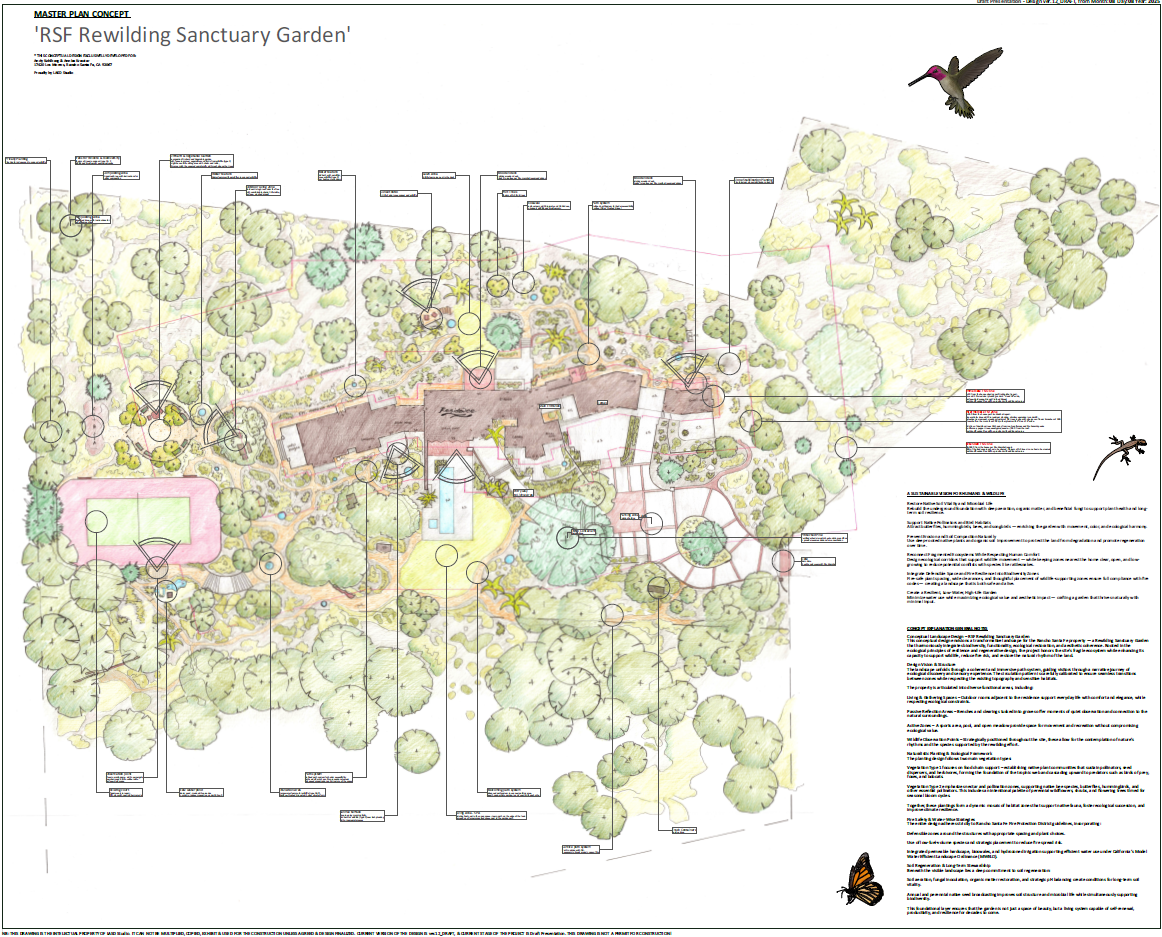
Conceptual Design Sketch, Phase 1. Design
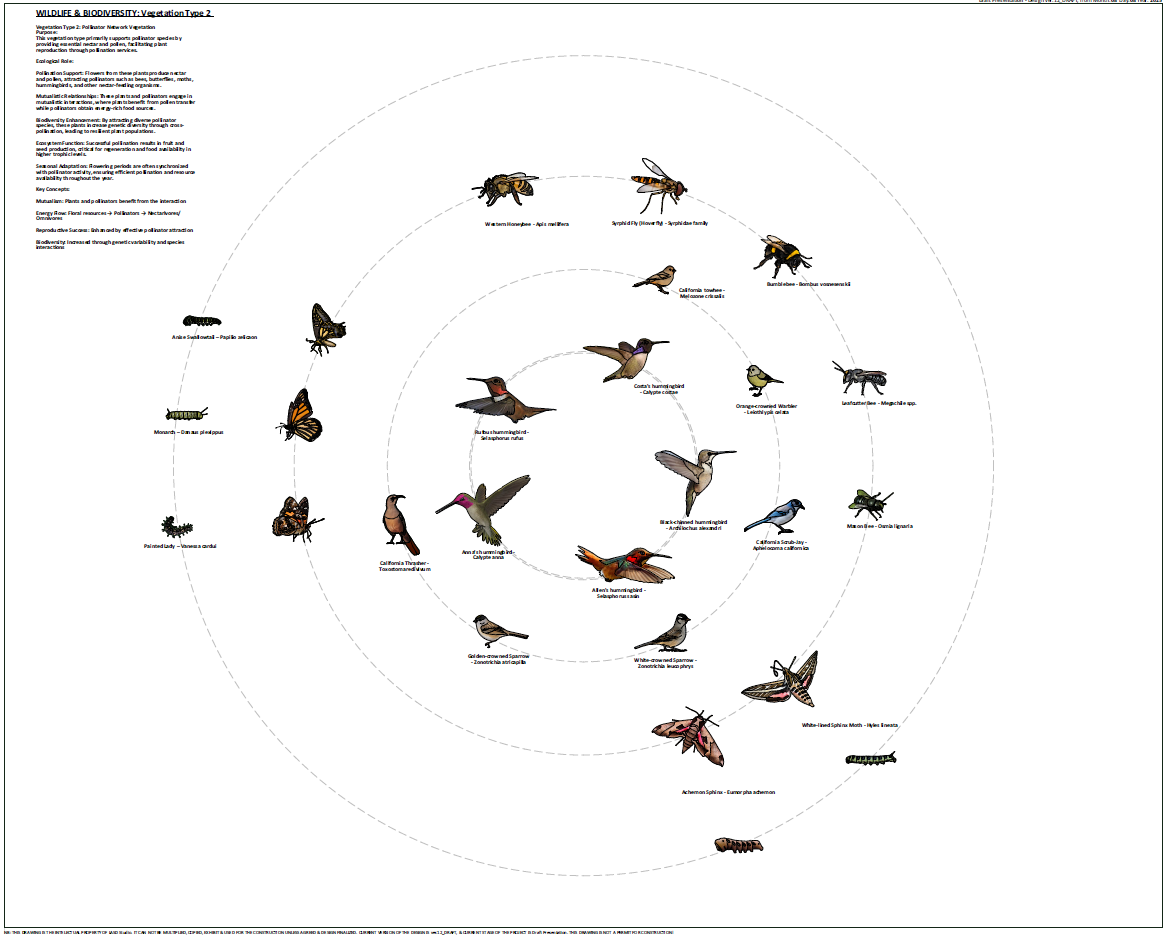
Wildlife and biodiversity, trophic layer establishment of pollinators.
Renderings
The renderings on this page show the intended atmosphere and spatial experience: the way paths become calm firebreaks rather than defensive strips, the way planting masses are shaped as habitat edges, and the way water harvesting can be expressed as landform rather than hidden engineering. These images are not “promises of identical outcomes.” They are a clear design intention - the direction the project is moving toward.
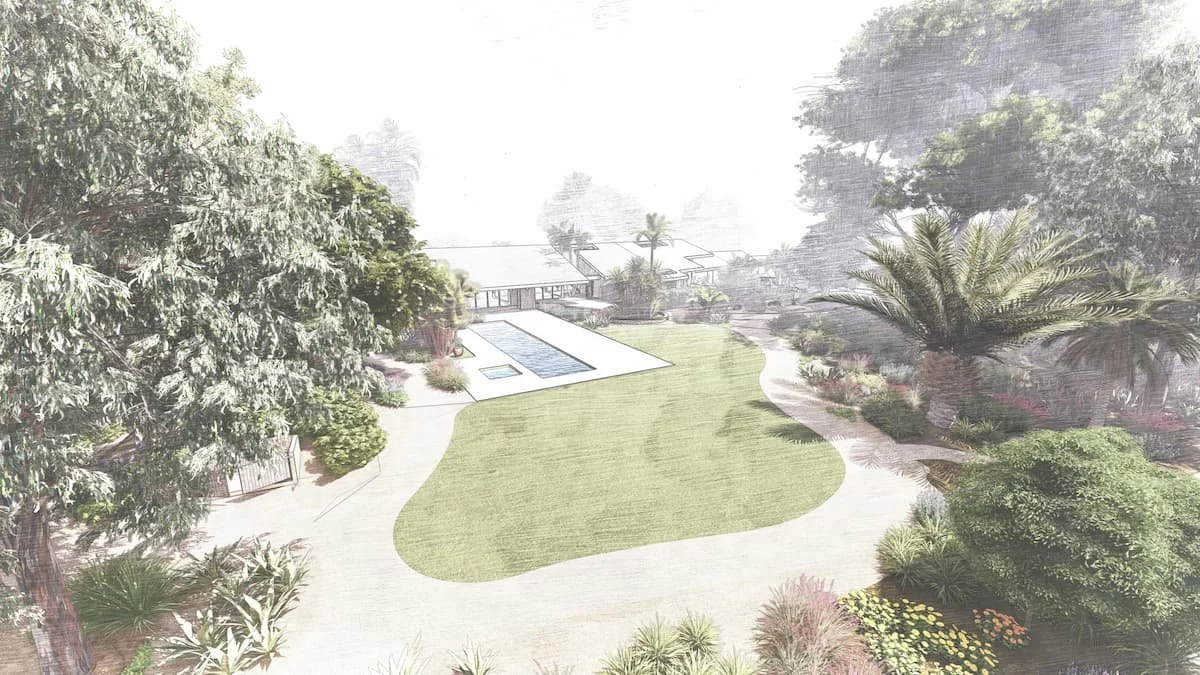
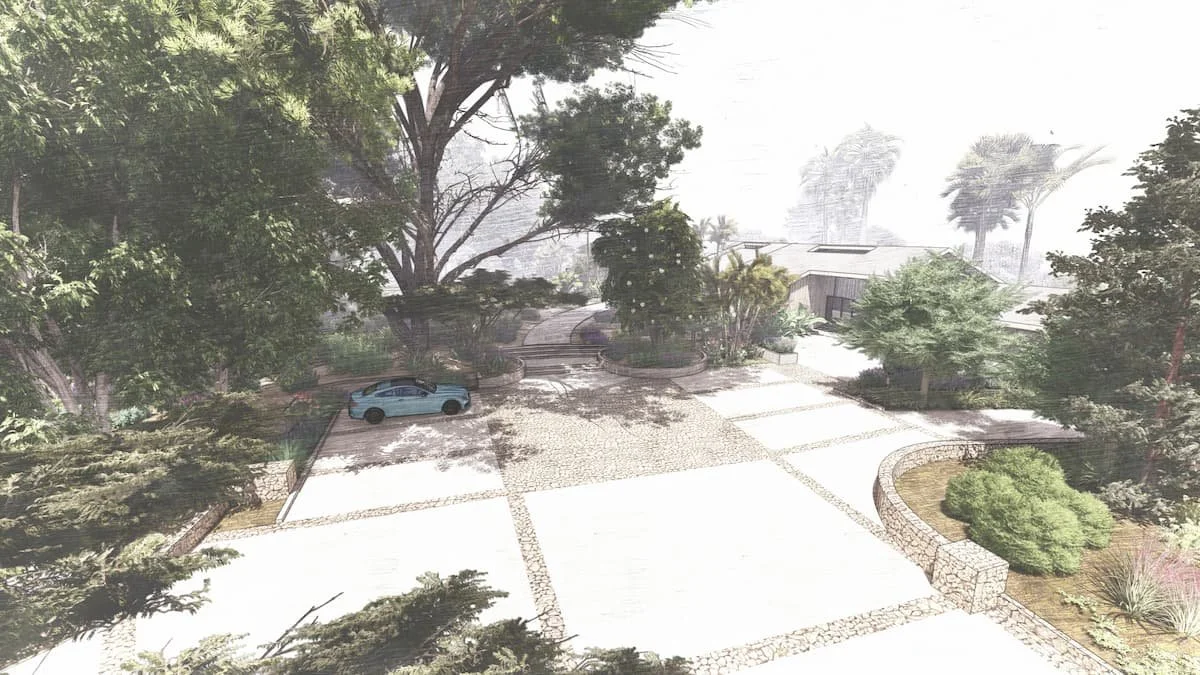
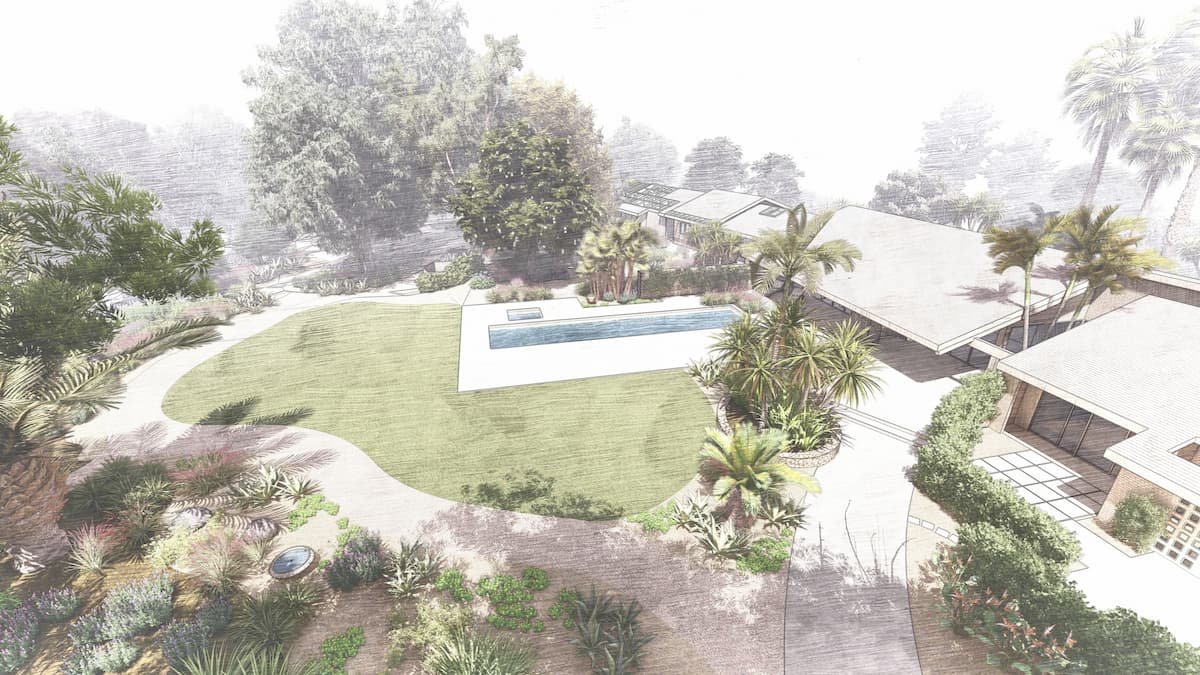
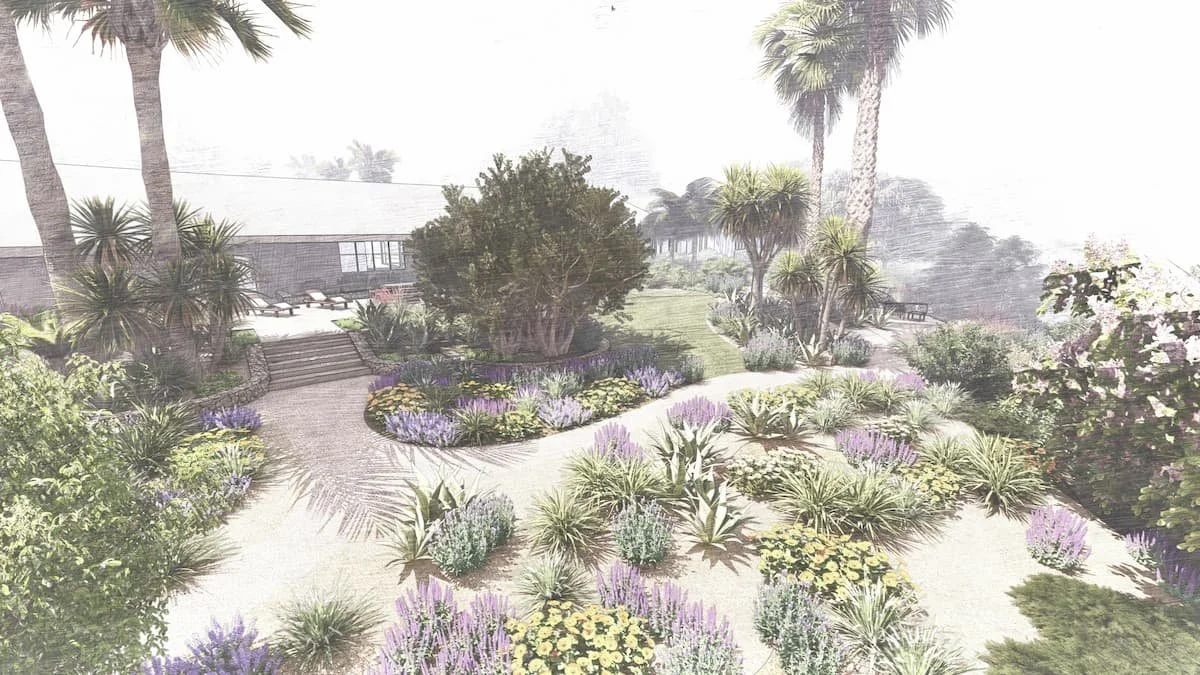
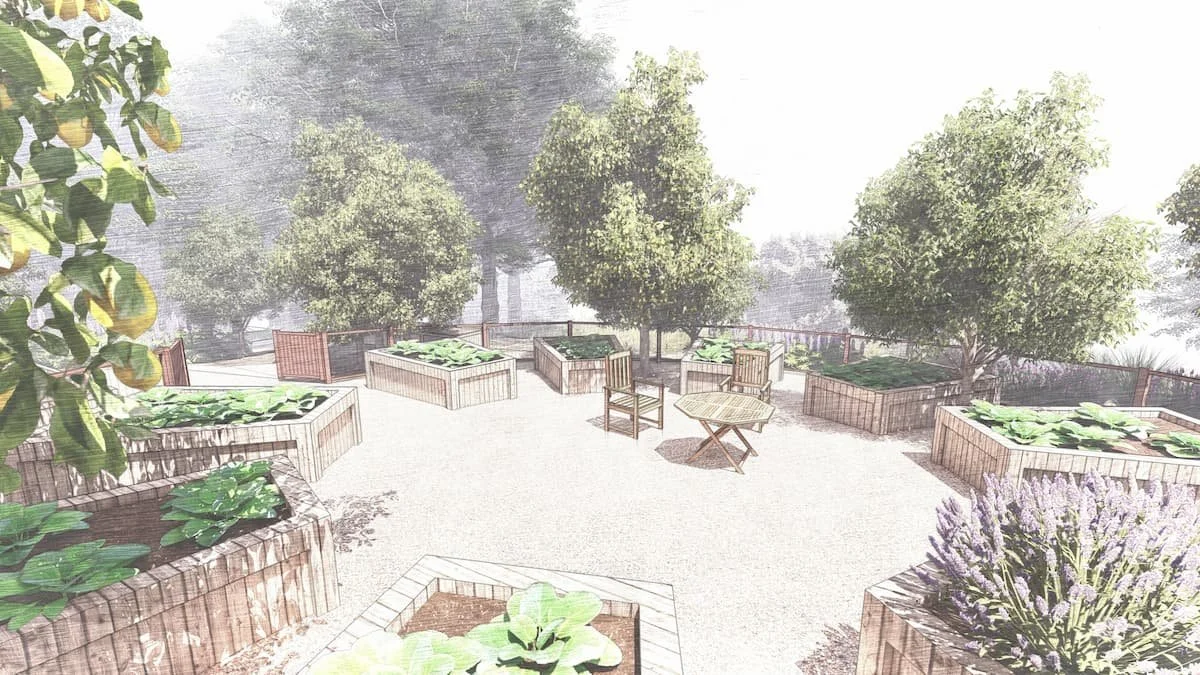
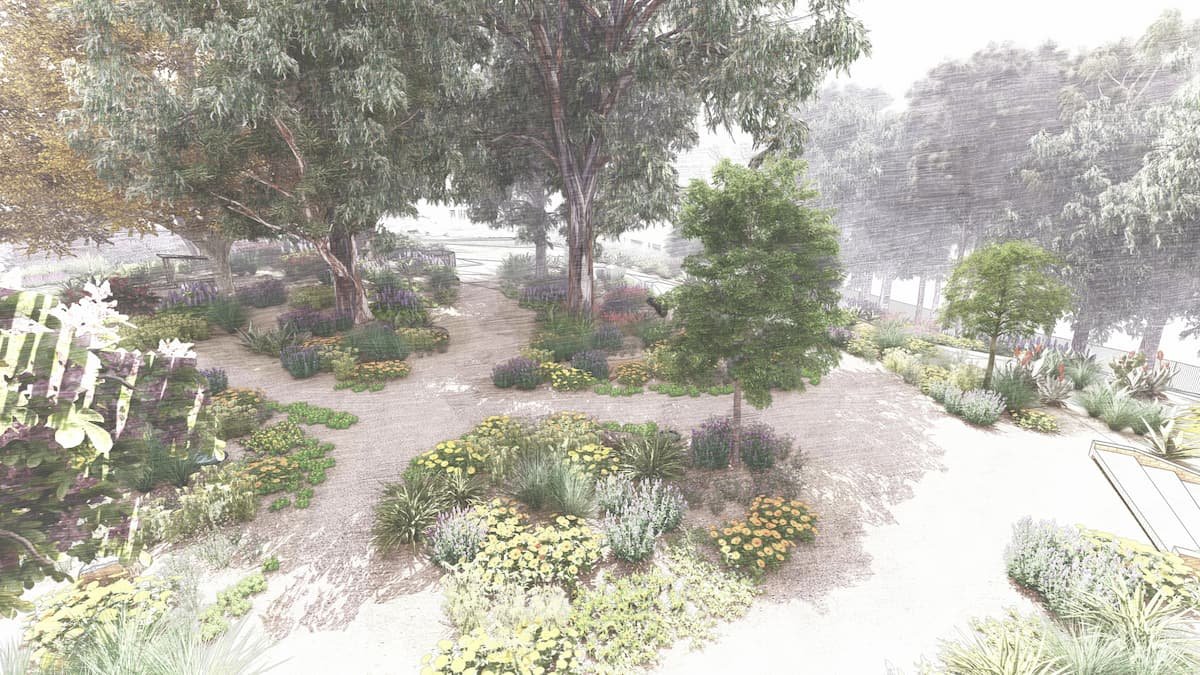
The drawings included here are selected to communicate something most portfolio pages avoid: how the landscape is actually structured to perform.
The master plan provides the overall composition and intent. The fuel modification plan shows how risk constraints become a coherent spatial framework. The grading and bioswale strategy demonstrates how water is slowed, absorbed, and redistributed across the site. The hardscape plan focuses on constructable geometry, circulation logic, and the materials that make the landscape durable. The wildlife and biodiversity diagrams show the habitat logic in a way that is visually legible, and the soil restoration concept explains the phased approach that allows a living system to establish with stability rather than fail through rushed planting.
Context: Why Rancho Santa Fe landscapes must evolve?
Southern California estate landscapes exist inside a set of pressures that continue to intensify: longer dry seasons, rising water costs, greater wildfire volatility, and shrinking habitat continuity. In many high-end properties, the default landscape model still assumes stable climate conditions and unlimited maintenance. That model is becoming fragile.
This project responds by designing the property as an ecological system with structure. It does not rely on heavy irrigation to force appearance. It does not rely on plant novelty as the main aesthetic driver. Instead, it builds a framework where water, fire, biodiversity, and human use are designed together so that each layer supports the others.
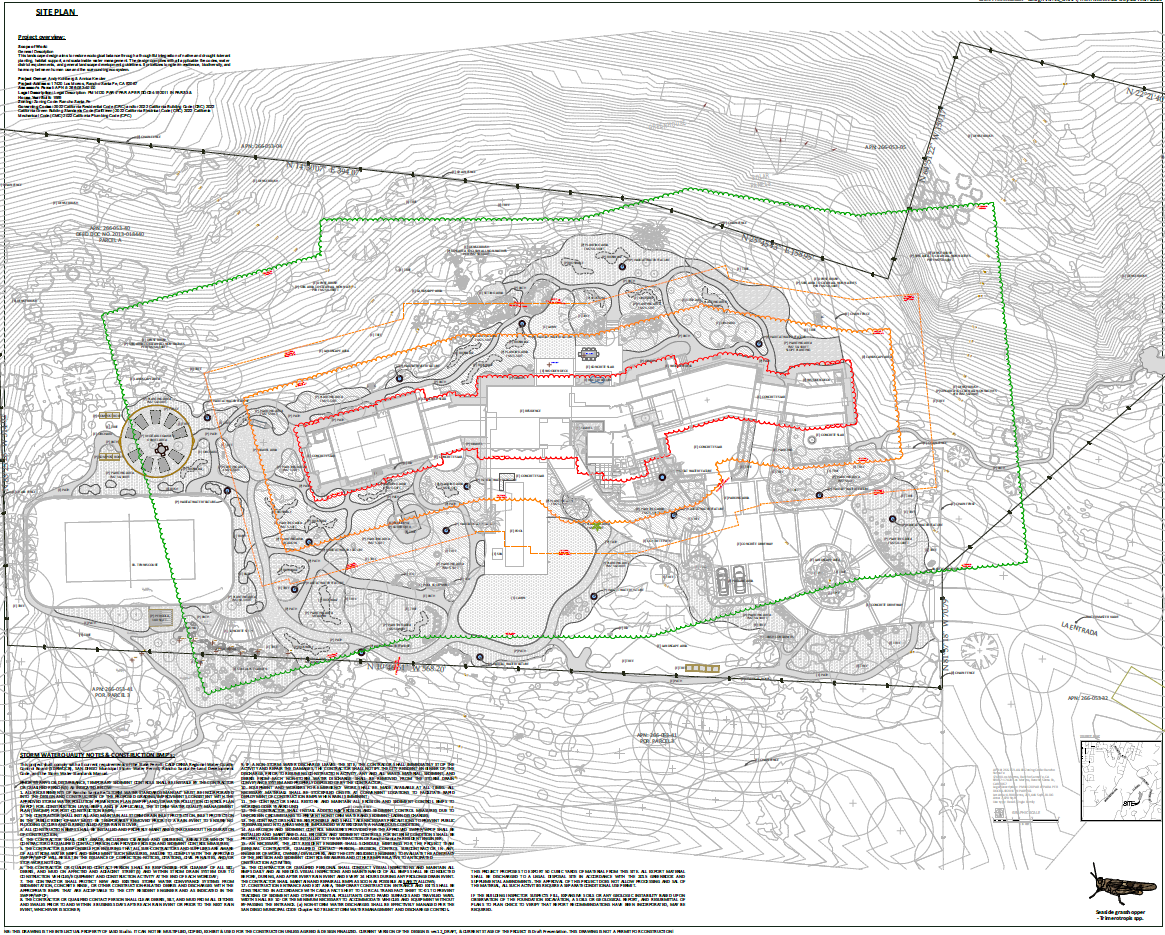
Wild-fire prevention strategy & Design narrative coordination
Fuel modification as design structure, not compromise to the design
Fuel modification requirements often produce landscapes that feel stripped, defensive, and ecologically empty. The design approach here treats fuel modification zones as a framework that can still carry beauty - and can still carry habitat.
Rather than thinking of fuel zones as something that is “drawn over” the design at the end, the zones shape the design from the beginning: how planting is spaced and layered, where circulation routes become natural firebreaks, how maintenance access and visibility are resolved, and how the transitions between zones remain soft instead of abrupt. When this is done correctly, compliance does not erase atmosphere. It becomes part of the logic of the place.
Water harvesting through grading and bioswales
In many landscapes, water is treated as a utility delivered through irrigation. In this project, water is treated as something the land can hold and distribute intelligently - especially during episodic rain events that, if unmanaged, become erosion and loss.
The grading concept is designed to slow runoff, support infiltration, and create subtle moisture gradients across the property. Bioswales are not only technical devices; they become landscape form, shaping planting conditions and supporting microhabitats. Over time, this shifts the site away from dependency and toward resilience.
Soil restoration: biology as infrastructure
A rewilding garden cannot be built on dead soil.
Soil here is treated as living foundation. The restoration approach is phased: stabilizing conditions, improving aeration and structure where needed, introducing and supporting microbial life, and using pilot planting as a feedback loop before scaling larger planting areas. This reduces risk, improves long-term performance, and allows the landscape to establish as a system rather than as a fragile composition that requires constant correction.
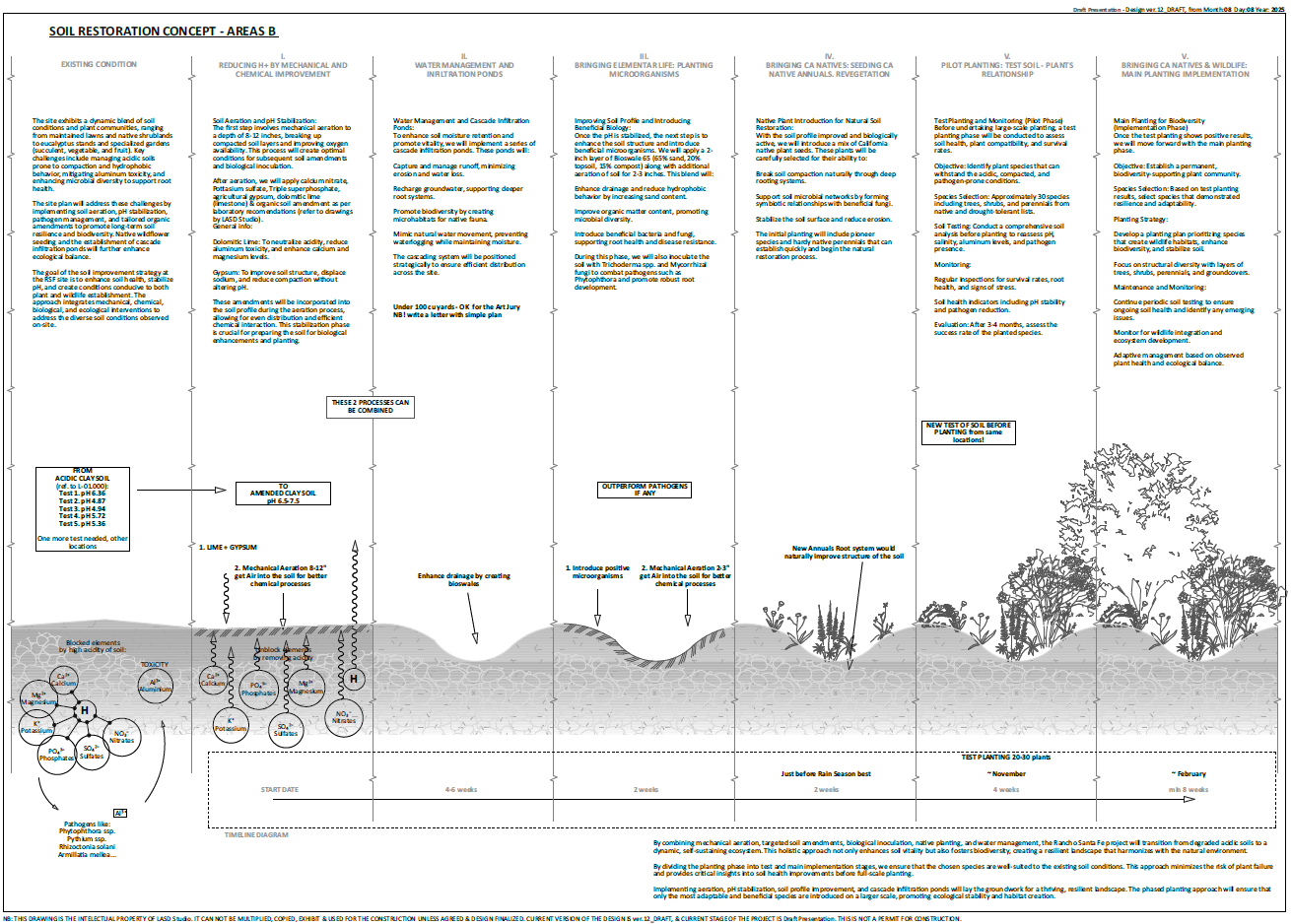
Soil restoration strategy for a long time sustainable development of life
Planting typologies based on habitat and trophic stability
Instead of organizing the planting as a list of species, the project organizes planting as a set of typologies - each with an ecological role.
Some planting zones are structured for trophic network stability: shelter, food chain support, nesting opportunities, and the layered complexity that allows multiple species to coexist. Other zones are structured specifically for pollinator continuity, supporting hummingbirds, bees, butterflies, and seasonal nectar/pollen presence through time. The result is a landscape where biodiversity is not decorative; it is functional and intentional.
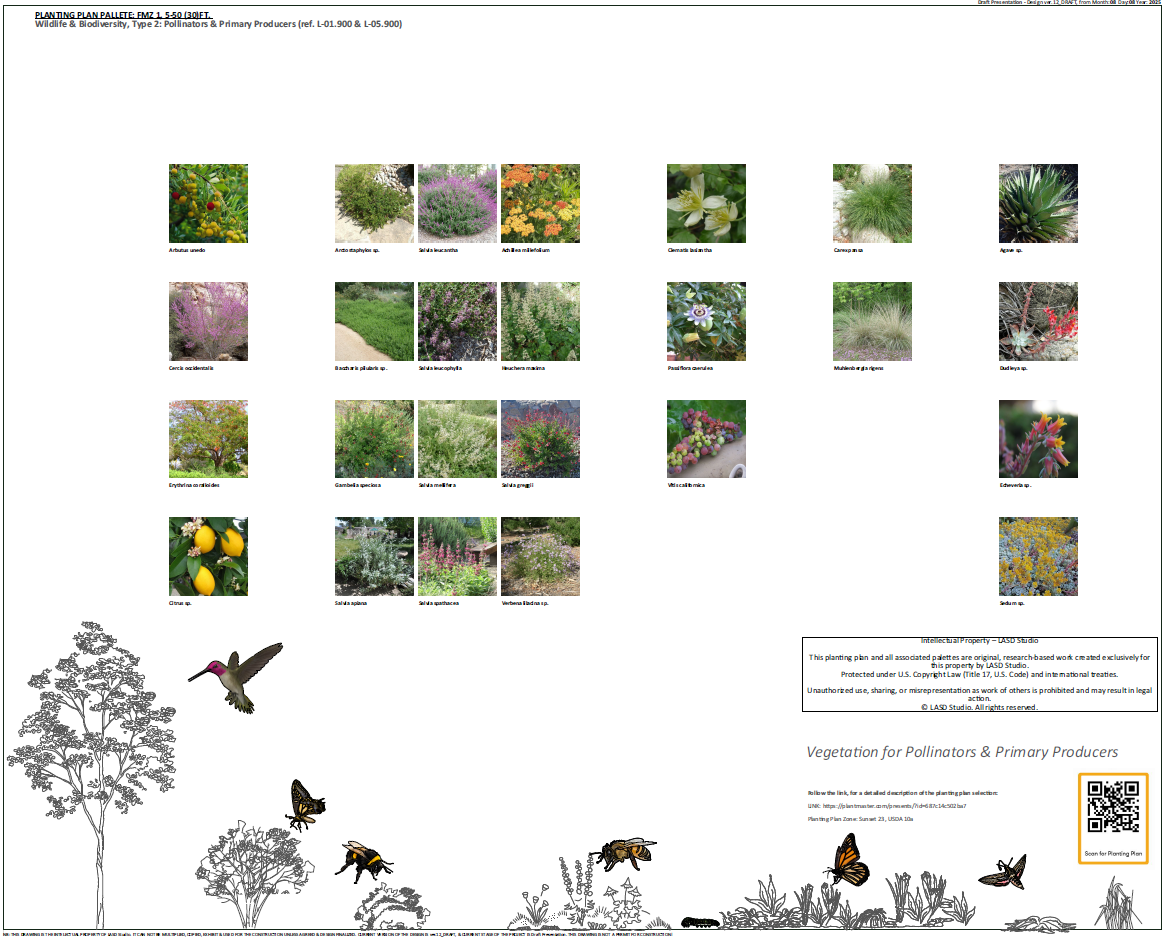
1 of 3 different wildlife and biodiversity specific planting design
Hardscape: elegance that does real work
Hardscape in this project is not separate from ecology. Paths and terraces are designed as both human circulation and risk-aware structure. In fire-prone landscapes, circulation can become strategic firebreak logic without ever feeling like a “fire plan.” When done with care, these routes feel natural and calm — and they are also practical, durable, and buildable.
This is the core LASD Studio approach: maximum ecological performance without losing architectural clarity.
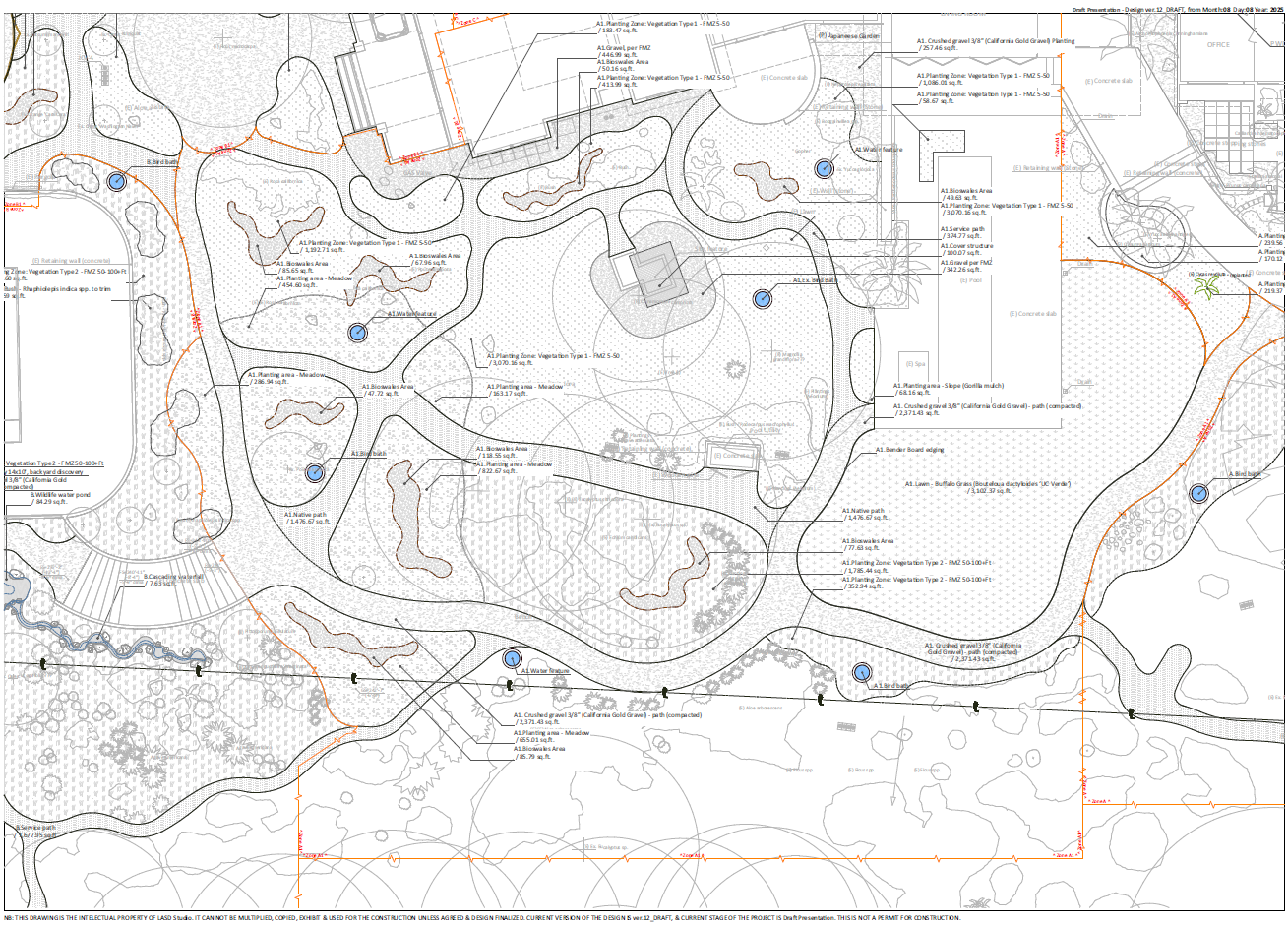
Hardscape, site plan layout
A note on maintenance
A landscape like this does not necessarily require more maintenance - but it requires a different kind of maintenance.
The establishment phase matters. Early monitoring matters. Selective pruning and zone-appropriate upkeep matter. Over time, when the system is structured correctly, the landscape becomes more stable and less wasteful than ornamental landscapes that depend on constant irrigation, constant replacement, and constant aesthetic control.
The Rancho Santa Fe Rewilding Sanctuary Garden is a blueprint for how high-end landscapes can evolve: not into scarcity aesthetics, and not into ecological performance that sacrifices beauty, but into environments where science, atmosphere, and long-horizon resilience exist as one coherent design.
If you are considering a legacy-level landscape in Rancho Santa Fe or coastal Southern California, LASD Studio can share process, phasing, and feasibility during consultation.
Learn more about LASD Studio research - https://www.lasdstudio.com/research
The Pearl of the Sea - A Nautical Garden in San Diego
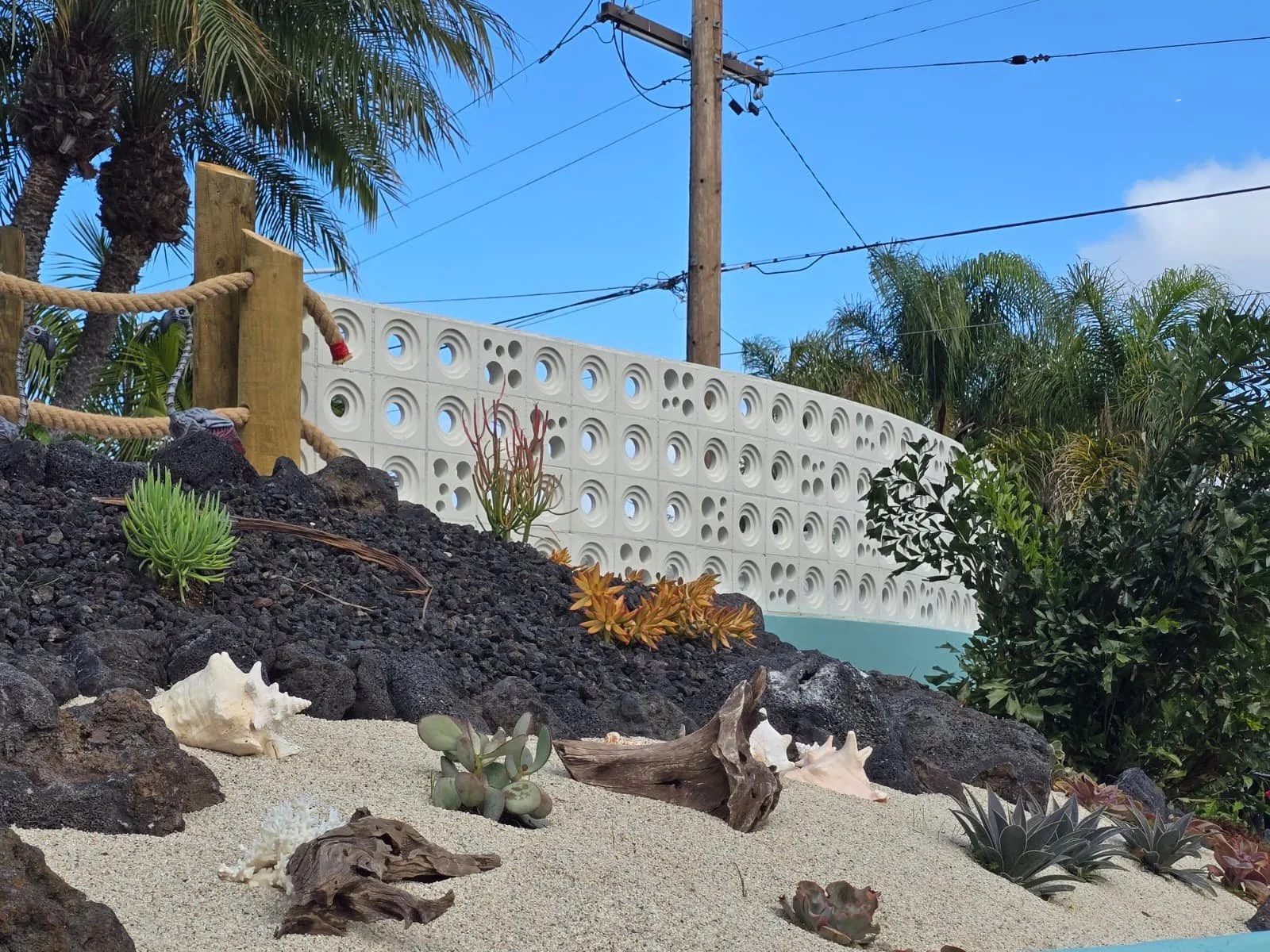
A coastal-inspired front yard transformation in San Diego — The Pearl of the Sea blends art, ecology, and mid-century modern craftsmanship. Designed by LASD Studio, the garden mimics coral life through sculptural concrete, breeze blocks, lava stone, and drought-tolerant planting — a living work of art born from a freediver’s love for the ocean.
A coastal-inspired garden that captures the beauty of underwater life through coral-like planting, sculptural concrete, and sustainable San Diego elegance.
The Pearl of the Sea - video presentation of Mid-Century Modern Landscape Architectural Design
Location: Point Loma, San Diego, California
Project Type: Private Residential Garden, Style- Mid-century Modern, Theme garden - Beach life and Littorals Gardens
Design Scope: Concept development, Hardscape design, Irrigation, Drainage, Breath wall design, Lighting plan design, Stormwater Planning, Construction Documentation
Status: Built / Installed
Construction: Project Management & Planting Plan - John Beaudry, Contractor - Landscape and Beyond, Jeff Miller
Construction cost: $260,000
Design Studio: LASD Studio
Concept & Vision
The clients dreamed of a garden that would let them feel the ocean every day, its colors, textures, and rhythms, right outside their front door. Inspired by their love for the sea, LASD Studio designed The Pearl of the Sea, a coastal-themed landscape that mimics the beauty and harmony of underwater life. This garden blends artistic composition, ecological sensitivity, and innovative hardscape detailing to create one of the most distinctive front-yard landscapes in San Diego. As a freediver deeply in love with the ocean, LASD Studio’s principal Yura Lotonenko immediately envisioned how this garden could embody the serene, living world beneath the waves - transforming that vision into an expressive and sustainable landscape experience.


~ Where breath of the Ocean meets free Spirit ~
Design Narrative
This garden is conceived as a living coral reef emerging from land, a poetic transition from ocean depth to coastal terrain. Each element, from planting to material texture, was carefully chosen to echo the forms and rhythms of marine ecosystems, creating a place that is both sculptural and sustainable.
Concept: Coral reef landscape, a terrestrial expression of the ocean’s life forms,
Theme: Regenerative coastal minimalism with sculptural hardscape detailing,
Location: San Diego, California.

Conceptual Sketch — Coral Planting: The Dream Behind The Pearl of the Sea
Hardscape & Materials - State of Art
The hardscape establishes the primary order of the garden; a continuous surface that carries movement, defines edges, and anchors the experience.
Concrete forms the ground plane.
Poured in long, uninterrupted lines, it extends through the site with a controlled smoothness; within it, aggregated glass is set into the surface, catching light and reflecting it subtly, like fragments beneath shallow water. The effect is not immediate. It reveals itself as you move.
Along the perimeter, a lighter boundary condition is introduced.
Timber posts hold a line without closing it; rope spans between them, softening the edge while maintaining safety. The material responds to touch and weather, shifting over time, remaining consistent with the coastal atmosphere without becoming literal.
A vertical element emerges as a porous wall.
Composed of repeated circular blocks, it filters light rather than stopping it; shadows pass through and change throughout the day, creating a second layer of movement across the ground and adjacent surfaces. The wall holds space while allowing air and light to continue.
Stone is introduced in contrast.
Lava rock gathers in irregular formations, rising slightly from the ground plane, creating moments of density and depth. These elements interrupt the continuity of the surface, offering texture, shadow, and places where the garden begins to thicken.
Finer material is placed closer to the ground.
Shell fragments, driftwood, and coral pieces settle into gravel and sand, not as decoration, but as a change in scale; a transition that draws attention downward, completing the composition through detail rather than emphasis.
Together, these materials do not compete.
They operate as a system; continuous, responsive, and grounded in both structure and atmosphere.
Planting Design
The planting palette was composed to mimic aquatic organisms through color, texture, and form, a living sculpture inspired by coral ecosystems.
Succulents & agaves simulate coral colonies and anemones, thriving in the dry coastal microclimate.
Sedums, echeverias, and mangaves provide fine textures and pastel tones, creating a vibrant undersea color gradient.
Tropical palms and cycads anchor the composition, representing the “surface canopy” and adding vertical drama.
CA native and low-water species ensure sustainability and resilience while maintaining the coastal theme.


The Pearl of the Sea stands as a unique fusion of landscape architecture, art, and ecology - a front yard transformed into a coastal sculpture garden, celebrating San Diego’s maritime spirit. It reflects LASD Studio’s philosophy of designing landscapes as evolving, living systems that tell stories, heal land, and connect people with nature’s deeper rhythms.
This garden is more than a landscape, it is a therapeutic retreat designed to restore balance, spark joy, and create lasting memories. Every element is thoughtfully composed to provide a sense of refuge, rejuvenation, and inspiration.
Landscape Design Project Process & Realization
Creating The Pearl of the Sea was an immersive, six-month journey from concept to completion.
The project began with over three months of dedicated design work: from on-site measurements and client meetings to concept sketches, planting studies, and full technical documentation. Every detail was refined with precision and artistry to ensure that the final result would feel alive, like a coral reef breathing on land.
Construction spanned another three months, involving a team of exceptional craftsmen, artisans, and landscape specialists - people who share LASD Studio’s passion for design, precision, and care for both the vision and the client experience. Every material, texture, and planting placement was handled with deep attention to the project’s soul.


Value & Impact
The Pearl of the Sea transformed the property at 2372 Plum Street, San Diego, into a work of living art - a landscape that redefines curb appeal and architectural identity. Designed and built with a total construction value of approximately $240,000, the project seamlessly merges craftsmanship, ecology, and mid-century modern artistry. Beyond its beauty, the design significantly enhances the property’s market and cultural value, positioning it as one of the most distinctive front yards in the area. It stands as proof that visionary landscape architecture not only enriches daily life, but also becomes a long-term investment in both art and property.
Private Family Landscape Retreat in Mallorca: A Sanctuary of Mediterranean Elegance
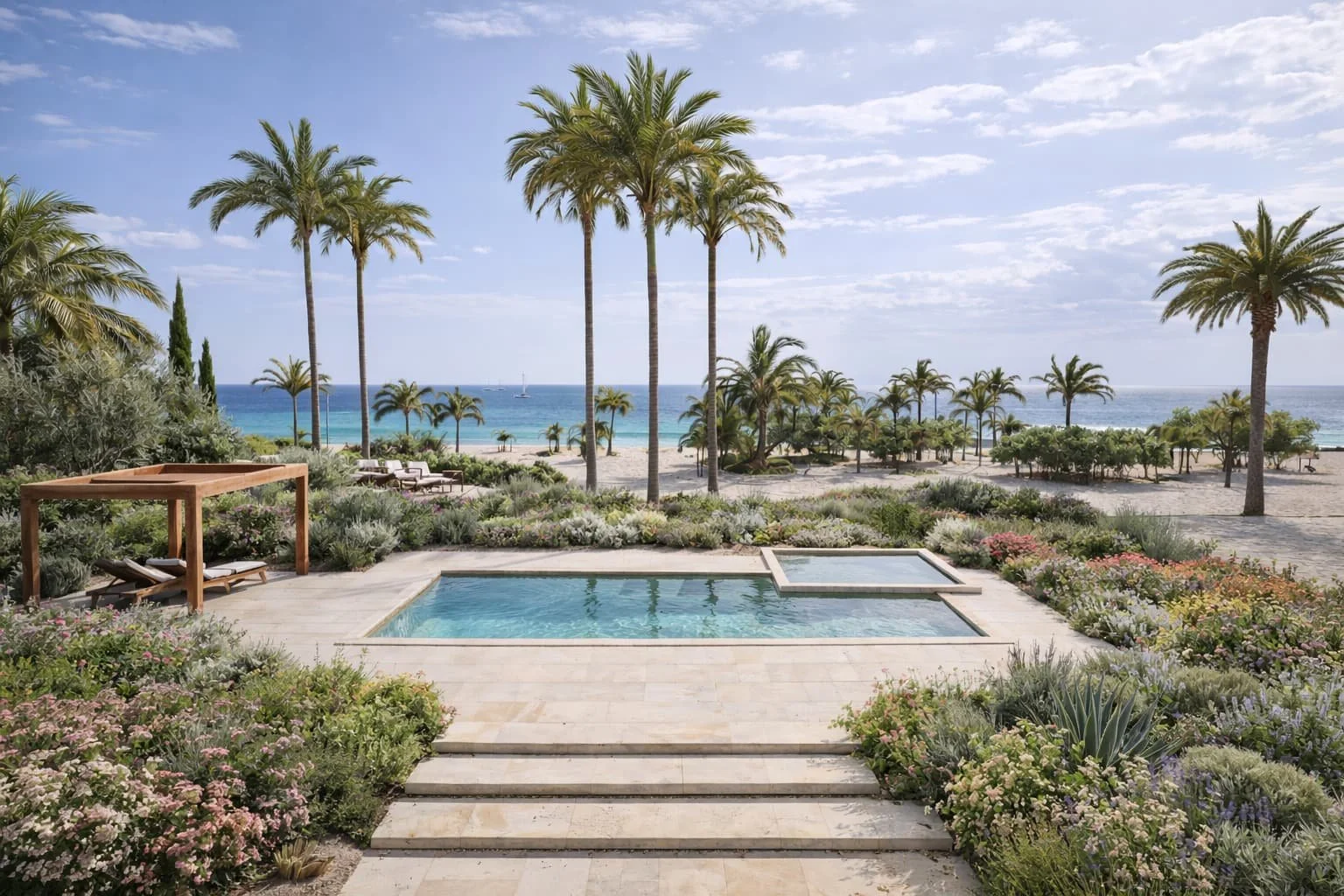
A private family retreat in Mallorca blending Bohemian Minimalism with Mediterranean elegance. This sanctuary features orchards, spa, healing gardens, and panoramic sea views, a landscape where art, ecology, and timeless beauty evolve together.
An exclusive private estate garden blending Bohemian Minimalism with Mediterranean heritage, designed as an evolutionary landscape system for well-being, art, and nature.
This confidential landscape design in Mallorca transforms a private family estate into a living sanctuary. Inspired by Mediterranean ecology, timeless artistry, and evolutionary systems, the garden supports both biodiversity and the refined lifestyle of its owners. Spaces unfold as curated experiences. From shaded patios and healing gardens to orchards, dining terraces, and infinity-like water features. Every element speaks to balance: architectural intertwined with ecological intelligence.
Location: Mallorca, Spain
Project Type: Private Estate Landscape, Exterior and garden Design. Style - Ecological restoration resort
Design Scope: Concept, Masterplan & project documentation development, Planting Plan, Hardscape design, Irrigation, Drainage, Breath wall design, Lighting plan design, Stormwater Planning, fire defensible planning.
Construction cost (Pool & Garden): 1,400,000 Euro
Design Studio: LASD Studio
This short film presents the Private Family Landscape Retreat in Mallorca, designed by LASD Studio. The project transforms a secluded estate into a Mediterranean sanctuary, a garden that is at once private, ecological, and artistic.
Every space reflects our philosophy of evolutionary intelligent landscapes, places where people, art, and biodiversity come together in harmony.
~ A Sanctuary for Mind, Body & Soul ~
~ Garden Features ~
Welcoming Allée - A Journey into Serenity
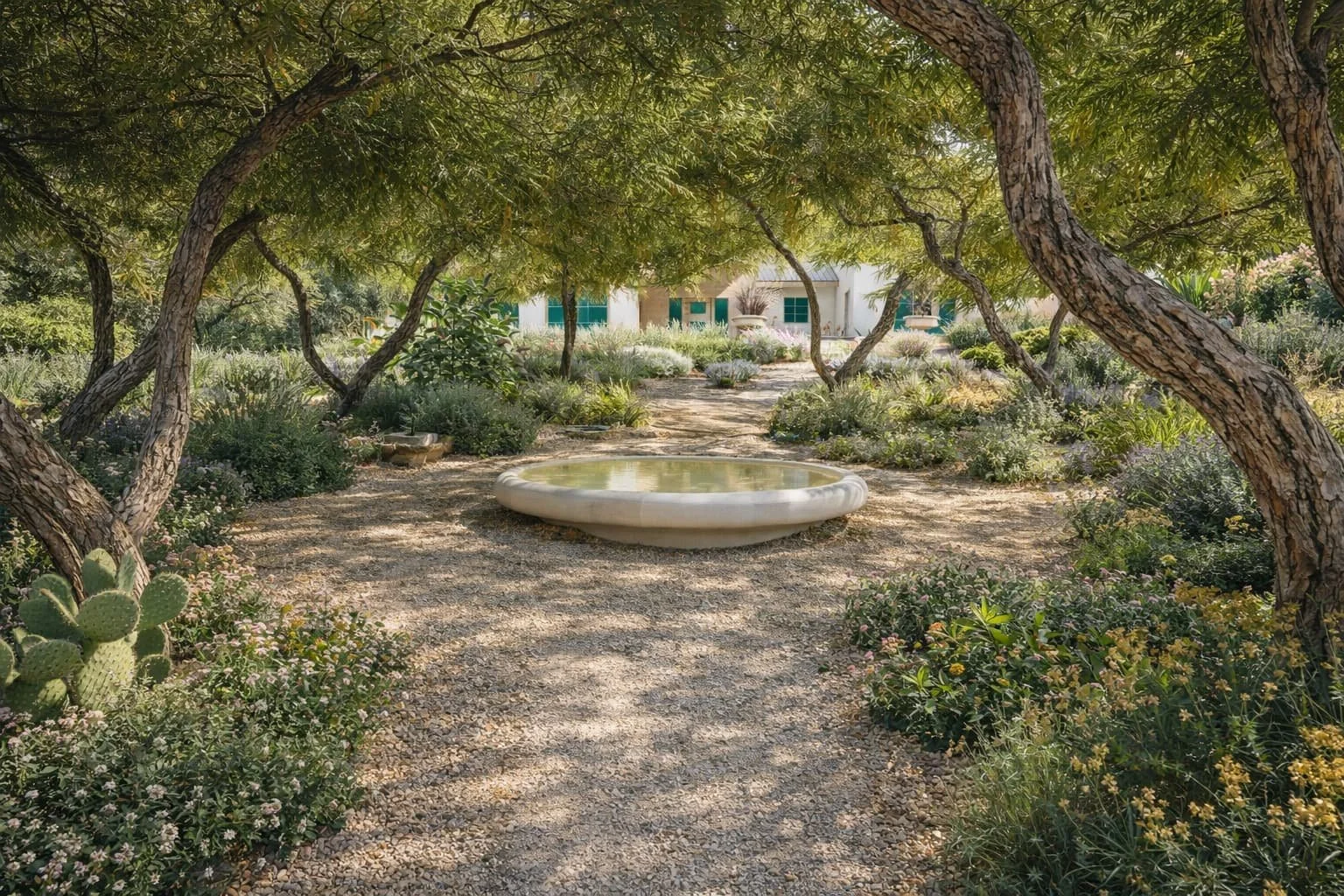
A lush, unstructured jungle that instantly transports you away from the demands of daily business life. As you step into this immersive green corridor, the mind unwinds, welcoming you into a sanctuary of freedom, serenity, and security.
Parking Area
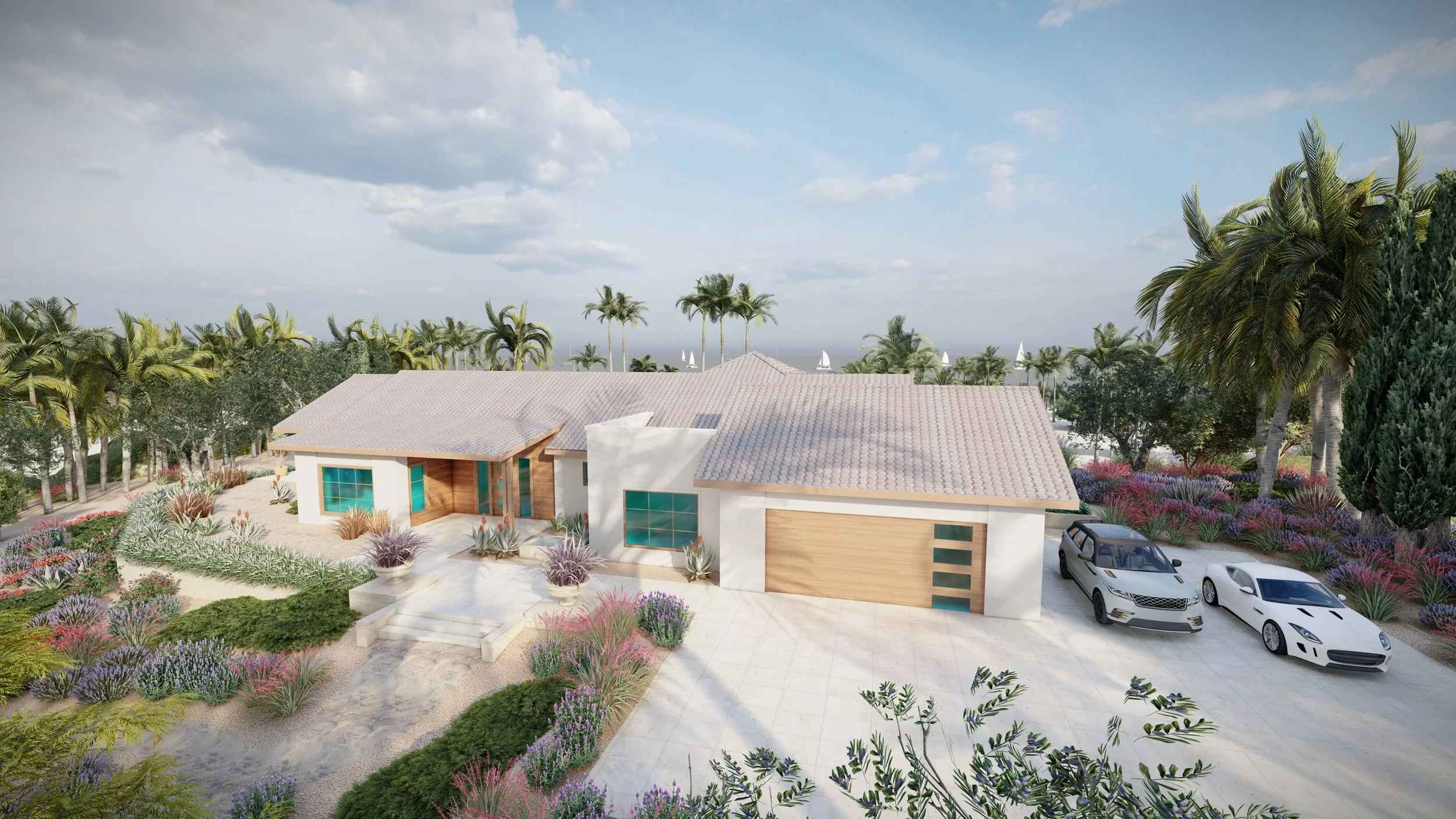
Spacious accommodations for five outdoor parking spaces and two indoor garage spots, ensuring seamless arrivals and departures.
Grand Entrance & Arrival Experience
An elegant, expansive porch—perfect for receiving guests, welcoming loved ones, and bidding them farewell in a space that reflects warmth and hospitality.
The Bionic Garden - A Living Work of Art
A masterfully curated experience of lush botanical diversity:
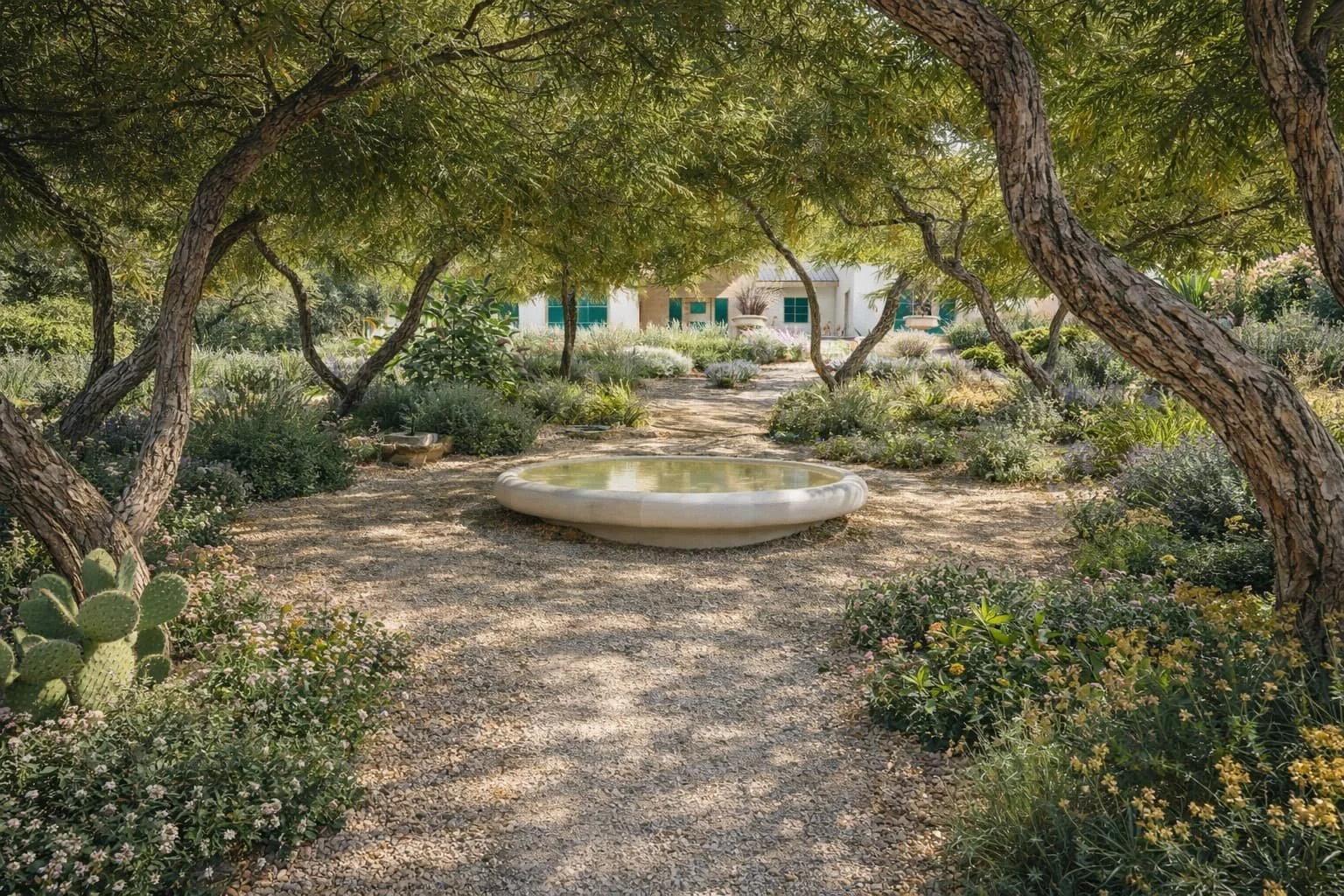
Shaded Garden Patio. Relax beneath a tree canopy, surrounded by vibrant plantings, while gazing at a serene koi pond;
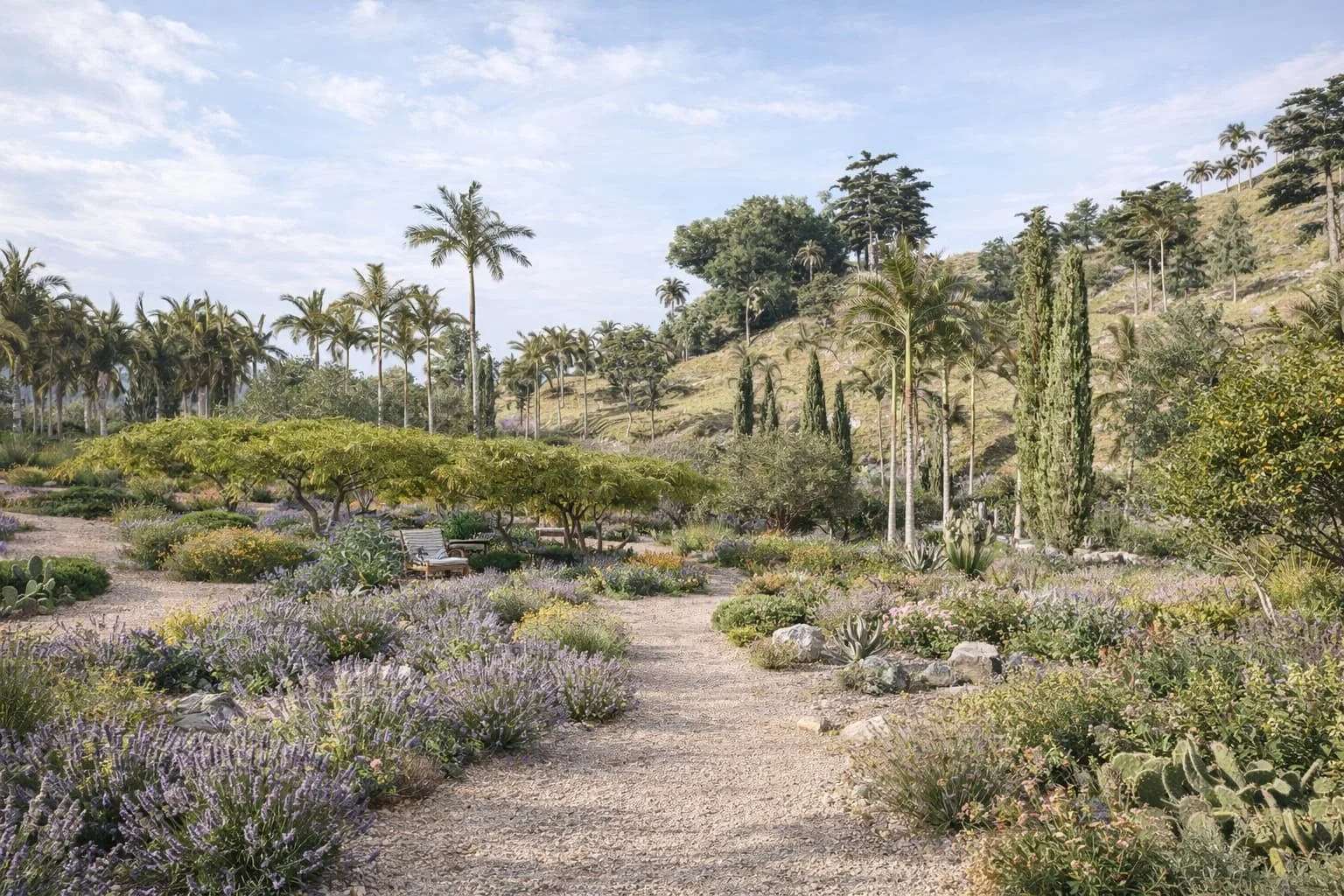
Mediterranean Healing Garden. A poetic composition of succulents, desert flora, and water-wise plants, evoking the raw beauty of wilderness while offering balance to structured modern life.
Fruit & Olive Grove. A classic Mediterranean orchard, designed for moments of spontaneous fruit-picking, while ancient olive trees impart a sense of stability and grounding.
Side Yard Patio
A secluded retreat with calming views of the olive grove, perfect for quiet reflection and intimate gatherings.
~ Dining & Social Spaces: Where Family Life Evolves Outdoors ~
A shaded pergola extends seamlessly from the house, cooling the interiors while offering a refined outdoor dining space. A handcrafted wooden table with elegant seating invites moments of leisure - whether enjoying a book, sipping fine wine, or indulging in conversation.
Contemporary English Garden
Flowing naturally from the dining patio, this space features a soft lawn and stepping stones leading to the lounge, spa, and pool area. A planted slope of Pennisetum and Agapanthus enhances the lush greenery, bridging nature into the living space.
~ Spa, Pool & Fire Lounge: Retreat Rooted in Nature ~
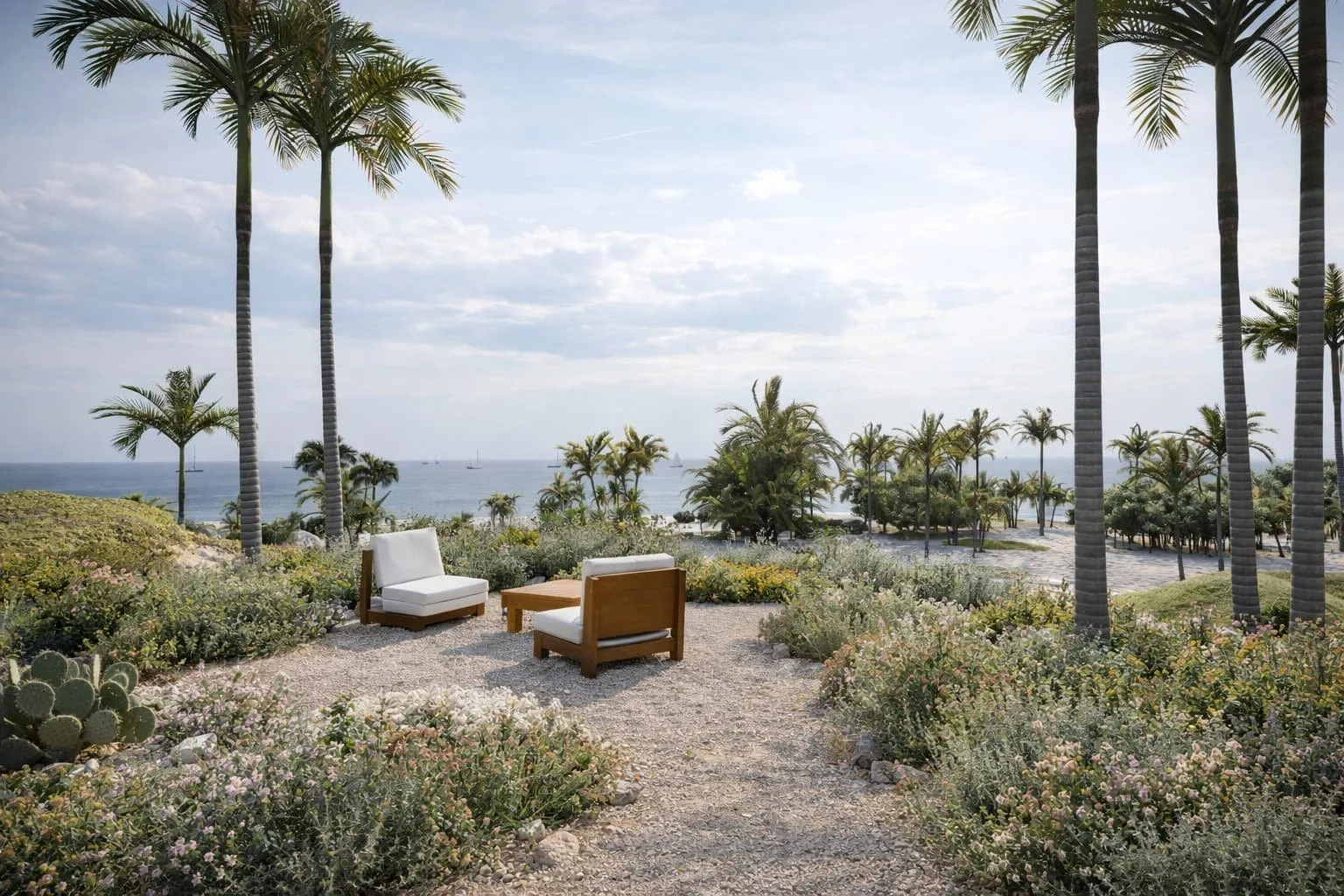
A 12m x 4.5m pool provides a cooling escape during Mallorca’s warm summers, while an adjoining 4m x 4m jacuzzi offers the perfect spot for evening relaxation with family, accompanied by a glass of fine wine. Positioned at one of the highest points in the garden, this area boasts breathtaking views of the bay. A cozy pergola shelters three Baja sun loungers, where one can breathe in the fresh sea air, enhanced by the scent of aromatic herbs planted nearby.
Fire Pit Lounge
A circular stone patio with a sculptural fire pit, surrounded by comfortable seating. A hidden pathway leads to this secluded space-offering an ideal vantage point for watching the sunset, reflecting on the day, and cherishing time with loved ones.



This garden is more than a landscape, it is a therapeutic retreat designed to restore balance, spark joy, and create lasting memories. Every element is thoughtfully composed to provide a sense of refuge, rejuvenation, and inspiration.

Contemporary Japanese Garden Design in San Diego: The Art of Simplicity
A traditional Japanese garden in San Diego, designed with timeless elegance and ecological intelligence. Stone, water, and plants are arranged to create balance, harmony, and a meditative retreat within the Southern California landscape.
Where traditional Japanese garden philosophy meets modern Southern California living.
This project reimagines a San Diego residence as a traditional Japanese garden - a tranquil retreat where art, ecology, and simplicity converge. Inspired by the timeless work of Japanese masters, the garden blends stone, water, and plants into a living composition that evolves with the seasons. From koi ponds and bamboo screens to moss-covered stones and sculptural prunings, every element is designed to balance harmony and contemplation.
A short film of LASD Studio’s Japanese Garden in San Diego - a tranquil retreat blending koi pond, rock garden, bamboo, and seasonal planting. The design reflects the timeless philosophy of Japanese gardens while adapting to the Southern California climate, creating a living sanctuary of harmony, simplicity, and contemplation.
Location: Mission Hills, San Diego, California
Project Type: Japanese Contemporary Garden, Theme garden - Japanese Contemporary Exterior Design
Design Scope: Concept development, Project Documentation, Permitting, Construction Documentation
Construction cost: $320,000
Design Studio: LASD Studio
Welcome to our Traditional Japanese Garden, a serene oasis inspired by the renowned Japanese garden designer, Moso Sosoki. As you step into this tranquil space, you embark on a journey where nature seamlessly blends with meticulously crafted architectural forms, creating a harmonious retreat for the senses.
Our garden's centerpiece is a cozy sitting area, where a table and traditional Japanese chairs invite you to relax and immerse yourself in the surroundings. This heart of the garden is enveloped by various captivating elements that embody the essence of Japanese design.
Enchi Water Pond & Koi Habitat
First, let's stroll over to the water pond, known as Enchi. Here, the gentle ripples of the water are graced by the elegant presence of koi carp, their vibrant colors shimmering beneath the surface. Water lilies float gracefully, adding a touch of tranquility and beauty to this serene aquatic haven.
Karesansui Rock Garden: A Meditative Space
Next, we move to the Karesansui, or rock garden, a masterful composition where the entire space merges into a unified, meditative whole. Larger moss-covered boulders stand as garden sculptures, complemented by a carefully arranged tapestry of flat pebbles, flagstone materials, and varied gravels. These elements intermingle with lush plants, creating a dynamic yet peaceful landscape that invites contemplation.
Japanese Veranda (En): Transition Between Worlds
A unique addition to the house is the Japanese veranda, or 'En.' This elegant space serves as a vital transition, gracefully bridging the interior and exterior worlds. From the veranda, you can experience the garden's beauty while remaining sheltered, making it a perfect spot for quiet reflection or enjoying the changing seasons. Enhancing the garden's aesthetic, our wall decorations feature traditional Japanese bamboo fencing and garden trellises with intricate square slots. These elements not only provide structure but also add a touch of timeless elegance to the surroundings.
Evening Illumination: A Garden Alive at Night
As night falls, the garden comes alive with a thoughtfully designed lighting scheme, transforming it into an enchanting evening retreat. Soft, ambient lights highlight the garden's features, creating a magical atmosphere that invites you to linger and enjoy the tranquility of the night.
Planting Philosophy: Elegance in Every Branch
The plantings throughout the garden have been meticulously selected for their branch structures, leaf shapes, growth patterns, and simple natural aesthetics. Each plant contributes to the garden's overall harmony, ensuring a seamless blend with the architectural elements. We invite you to explore and experience the peaceful beauty of our Traditional Japanese Garden, where every detail has been crafted to offer a serene and harmonious escape from the everyday world.


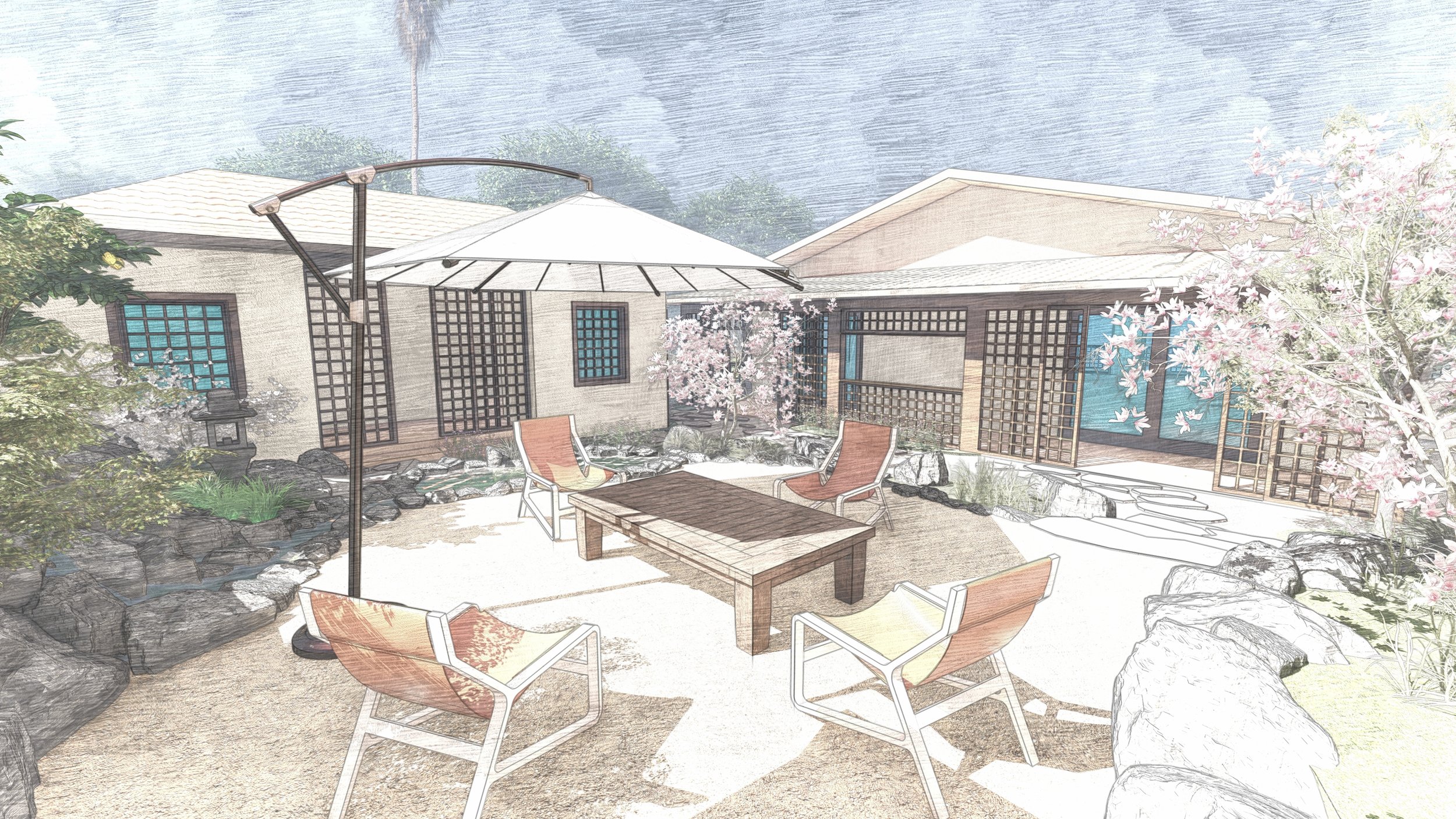


Step into a world where time-honored Japanese garden philosophy meets the elegance of modern design. In this tranquil space, the boundaries between indoor and outdoor blur, allowing nature to flow seamlessly into everyday life.
The wooden lattice screens, with their intricate patterns, invite dappled sunlight to dance across the floors, creating a serene interplay of light and shadow. Outside, a meticulously crafted garden awaits, a sanctuary of stone pathways, gently flowing water, and blossoming trees that whisper the essence of tranquility.
This is more than a garden; it is a harmonious blend of simplicity and sophistication. Here, the ancient art of Japanese landscaping finds new life in contemporary forms, offering a space where you can pause, breathe, and reconnect with the natural world. The presence of modern furniture within this traditional setting is not a clash, but a conversation, a dialogue between the past and present, inviting you to experience the beauty of both.
Every element, from the carefully placed rocks to the thoughtfully designed seating, is an invitation to linger, reflect, and appreciate the delicate balance between nature and human artistry. In this space, the hustle of the outside world fades away, leaving you with a profound sense of peace and a deeper connection to the art of simplicity.
EXISTING CONDITION




PROJECT DESIGN DRAWINGS


LASD Studio taking project from beginning, through permitting process and construction, whether it is new construction of historical designation or landscape renovation private and comercial properties.